As someone who’s been growing his own plants, I can say that one of the most beneficial nutrients I gave my crops is sugar. I know it might sound weird; after all, sugar is deemed unhealthy for people. However, the same can’t be said for plants.
For them, sugar can act as a valuable source of nutrients and energy, thereby boosting the overall quantity and quality of your harvest. In this article, we’re going to answer the question: how often should I use molasses on my plants?
When Should I Add Molasses to My Plants?
When plants start to mature and bloom, they will need more carbohydrates than they can produce. While molasses can be beneficial for plants throughout their entire life cycle, it is best if you add it during your plants’ transition from their vegetative to the blooming stage. The reason is that it is during these stages that their sugar need is at their highest.
With the extra carbohydrates found in molasses, you can give your plants a major boost and help them produce more flowers than usual.
However, before you even grab your bottle of molasses and start pouring it on your plants, here are a few things you should know first.
What is Molasses?
Molasses is basically the by-product of sugar beets or sugar cane and is extracted from the said crops to collect a highly viscous liquid. Despite being a by-product, it is actually rich in essential vitamins and minerals. This explains why molasses can be used to provide plants with the nutrients they need as well.
Using Molasses for Gardening
Using molasses for growing plants is actually something that has been put into practice for quite some time already. Since it contains a lot of calcium, iron, potassium, magnesium, sulfur, and lots of micronutrients, you can use them to provide your plants with a quick source of energy. Apart from that, it can also encourage the growth of microorganisms to help your plants grow.
The key minerals which make molasses healthy for people can be beneficial for plants as well. For instance, calcium and potassium play an important role during a plant’s budding and flowering stages. What makes it even better is the fact that molasses can act as a natural “chelating” agent, thereby binding nutrients so they can be absorbed by the plants.
When molasses are combined with organic fertilizers, you can create food that is used by the healthy microbes found in the soil. The higher the number of healthy microbes, the healthier your plants will get.
Benefits of Using Molasses on Plants
Earlier, we talked about molasses being beneficial for plants. However, how exactly is it good for them? To learn more about it, here are the benefits of molasses on plants worth noting:
It comes with a high carbohydrate content
Due to molasses being a by-product of the sugar refining process, it is packed with carbohydrates which serve as an instant food source for healthy microbes in the soil. By regularly feeding the soil, they will be able to support more beneficial microbes. This, in turn, will provide the plants with more nutrients that are essential for optimal health and growth.
It contains trace minerals
Another important benefit of molasses is that it contains a good amount of trace minerals which are essential for your plant’s growth. These trace minerals come in the form of calcium, iron, potassium, and sulfur which are all helpful in keeping your plants healthy.
It can act as a chelating agent
As mentioned earlier, molasses can act as a chelating agent. This is important since some nutrients are “locked” in the soil, thereby making it hard, even impossible, for plants to absorb. Molasses binds these “locked” nutrients through the process known as chelation.
As a result, molasses will “unlock” those nutrients, making them easy to absorb for the plants.
How to Apply It to Your Plants
Now that you’ve known when you should apply molasses to your plants, the next step is to apply it. Before you do so, do keep in mind that adding molasses into your plant’s feeding cycle is most effective when you combine it with an organic fertilizer. This is because adding molasses will help make all of the fertilizer’s nutrients readily absorbable by your plants.
If you prefer a more DIY approach, you can use blackstrap molasses, particularly the unsulfured type. Once you have it, add it to your fertilizer at around 1/4 cup per gallon. Although you might have heard of some people mentioning that you should spray the solution directly on your plants, the problem is that the residue can end up attracting pests to your grow room.
You can get the most benefits of molasses in your nutrient solution if you use a soil-based system for your plants. However, it can work on hydroponic systems as well. Just make sure to check its pH before you give it since the sugars will make it acidic.
Once your plants are nearing the end of their growing cycle (particularly two to three weeks prior), stop giving them molasses and fertilizers. Instead, you should give them water to “flush” out all those unused nutrients.
If there are still leftover molasses, you can combine it with water at one cup per gallon and then pour it into your compost pile. This way, it can stimulate healthy microbes in there too.
How Often Should I Use Molasses on My Plants?
The reason you’re likely reading this article is to find out how often you should use molasses on your plants. It’s best to use a small amount on individual plants every two weeks or so. While you may be tempted to apply more often, it’s important not to do so. This is because it can even cause damage to your plants, such as causing an imbalance in the pH of the soil.
Should You Use Molasses for Tomatoes?
Molasses can be used for many reasons, including to help your tomatoes. As well as aiding the tomatoes in growth and energy, molasses have also been known to make your tomatoes taste even sweeter too! However, it all comes down to the gardener as to whether they think molasses are suited to their tomato plants.
If you add molasses to your tomatoes, it’s important to add the molasses to water first. This creates a diluted mixture so that you don’t overwhelm your tomato plants. Once diluted, you can either choose to spray or pour it onto your plants. Use once every two weeks in the mornings, for best results.
Should I Use Unsulfured Molasses for Plants?
Yes. It is important to use unsulfured molasses for your plants. If it’s not labeled whether the molasses are sulfur or unsulfured, they are likely unsulfured. This simply means that it’s concentrated and pure sugarcane. However, if they’re sulfured, it means that sulfur dioxide has been added. Unsulfured molasses are then added to your plant directly or can be added to compost tea or liquid fertilizers.
Should You Use Organic Molasses for Plants?
You may be curious as to whether you should use organic molasses for your plants. And it’s encouraged to use organic blackstrap molasses. We’ve already established that unsulfured molasses are the best choice, and when molasses are unsulfured, they can be classed as organic. This is because they’re free from any chemicals or additives.
Does Molasses Fatten Up Buds?
You may be curious as to whether molasses can fatten up your buds. The answer is: absolutely! Much like a human eating sugary foods to help put weight on – the same could be said for your plant buds. Another reason is that it contains potassium. Potassium is known to encourage fast and healthy growth. If you’re looking for fat buds, molasses is the miracle ingredient you’re looking for!
How to Apply Molasses
Applying molasses to your plants is super easy to do. Before you begin, you should dilute your molasses, rather than directly adding it to your plants. For every gallon of water, add around one cup of molasses. Mix well and then add to a sprayer or pour onto your soil. Another method you can use for veggies is to mix around 1/4 cup of unsulfured molasses, 1 cup of milk, and 4 cups of water. Mix well and add to a sprayer.
Whichever method you use, you should not apply it to your plants more than once every two weeks or so. Remember, using molasses too often to feed your plants can cause damage and cause a pH imbalance in the soil.
Conclusion: How Often Should I Use Molasses on My Plants?
Apart from giving plants a major boost, molasses is also capable of warding off pests, thereby making your garden pest-free. Based on experience, I was able to enjoy healthy plants by adding molasses to my fertilizer solution.
If you haven’t tried doing it yet, then now is the time to do so. I personally use the organic blackstrap molasses from Plantation, and so far, the results were impressive.
How about you? Have you tried applying molasses to your plants? If so, what were the results so far? Please leave a comment below. As always, thanks for reading!
FAQs
How do you apply molasses to plants?
ou use molasses as a mulch, spread it around your plants. The amount you put on the plants will depend on how much of a mulch you want. If you are using more than an inch or so, then you can spread it on top of the soil or mix it into the top inch or so of soil.
When should I start planting molasses?
Molasses is a great way to provide nutrition for your plants and is an excellent source of potassium, magnesium, zinc and iron. I started using molasses around five years ago and planted it right after I finished my first season of growing.
It worked well and I started using molasses for everything I grow. Now I’m on to my second season of growing and I’m thinking about planting molasses in my garden next year. Molasses contains a high amount of sugar so it’s best used in combination with other nutrients. I’ve found that it can be very effective when used as a foliar spray. It can also be used as a soil drench. I’ve found that molasses is very effective when used in combination with kelp, fish emulsion or blood meal.
What plants benefit from molasses?
Plants that benefit from molasses include both those that have a preference for the sugar in molasses and others that grow better with it. The best known and most commonly used of these is sugar beet. Molasses is also used to feed pigs, chickens, horses and cattle. It is also used as a fuel for heating and cooking and for making soap.
Molasses is made by pressing or boiling the juice of sugar cane. It can be made from a mixture of sugar cane and sugar beet, but sugar cane is preferred because it has a higher sugar content than sugar beet.
How should I use molasses on my plants?
Molasses is a great plant food, and it has been used by gardeners for centuries. It’s been used as a feed for animals, as well as being an additive in the home for making bread and baked goods. It is rich in nutrients that are readily available to your plants, including calcium, phosphorus, nitrogen, potassium, magnesium, sulfur and iron.
The only downside is that molasses is sticky and can be hard to get out of your soil after application. You can apply it directly to your plants or mix it into a water-soluble fertilizer such as Fish emulsion or Liquid Fertilizer. You can also add molasses to your compost or use it as a mulch.
Does molasses lower pH?
Yes, it can. Molasses is a byproduct of the sugar industry. It’s a thick, dark brown syrup that contains about 40% sucrose. Sugar cane has been around for a long time and has been refined to make many products including molasses. Molasses is acidic, but it doesn’t seem to be as acidic as vinegar or citric acid.
Josephine is an enthusiastic gardener who loves to spend her spare time tending to her garden. She is passionate about growing her own food, and aspires to one day have her own vegetable garden. Josephine is also an animal lover and often takes in stray cats and dogs. She enjoys spending time with her pets in the garden, and is often seen playing with them or watering her plants. Josephine is an avid reader and enjoys learning about new gardening techniques and plants. She is always looking for ways to improve her garden and make it more beautiful. She is a great friend, always willing to lend a helping hand when needed. Josephine‘s passion for gardening and love of animals make her a wonderful addition to any garden.
So you have a termite problem, and are wondering does salt kill termites? What can one use to treat this problem?
Termites are such a nuisance for gardeners as they naturally occur in soils. If you find termites in the garden, it means they have found a good source of food. Termites feed on cellulose that exists in either wood or plant remains.
Termites tend to stay hidden first before spreading especially in an outdoor setting. It’s very hard to spot termites when they are in the larvae stage. However, once they grow, they are attracted to the light and become active in your garden.
Termites can be detrimental to wood structures, that’s why it’s best to destroy them. So does salt kill termites? Let’s learn all about it.
Does Epsom Salt Kill Termites?
Epsom salt is a naturally occurring mineral that can be used in a hundred ways around your home and garden. Many gardeners swear by this inexpensive product, however, personal opinions can be mixed.
Epsom is used in various ways and one of them is to kill termites. This falls in the category of using Epsom as an insect solution. Here are a few ways you can use Epsom salt to kill termites.
As a Mixture. Mix about 240ml of Epsom salt and 5 gallons of water and spray this where you have termites and any other destructive insects. Spray a good amount of this mixture several times in case some insects are too stubborn to die. In the case of termites, spray repeatedly so you can destroy the larvae too. This product not only kills insects but it deters them from your home and garden.
As Dry Epsom Salt. Sprinkling dry Epsom salt in areas where you notice termites or slugs is an effective measure. Epsom salt is known for its effect on insects by drying them up to the point of death. You can use the dry Epsom salt around your young seedlings to keep insects away from them. As a bonus, your seedlings benefit from a boost of magnesium and sulfur.
Termites are attracted to damp places. If you are a homeowner, you need to keep watch on damp areas or wood around your yard. This can become an ideal breeding ground for termites.
In any place where moisture collects, termites will breed there in large numbers. Be sure to remove all such breeding grounds and if it proves impossible, pour a generous amount of Epsom salts in the moist areas to eliminate termites.
Remove every item that causes the ground to be too moist, especially if you live in areas that have a high likelihood of breeding termites. Keep an eye on areas that are pooling water across your garden and yard.
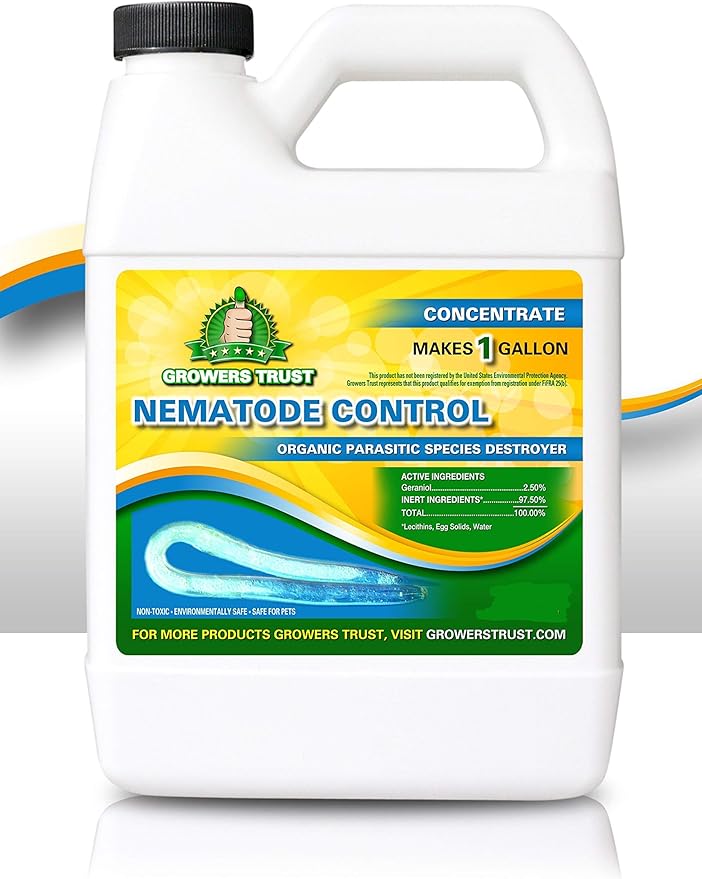
Nematodes are naturally occurring roundworms and they can kill termites. They are an effective natural insecticide because of their gut bacterium. Once a nematode enters a termite’s body, it releases bacteria that start to slowly kill it.
Nematodes are easy to find because they live in a variety of habitats. They do not cause any harm to plants, pets, or humans thus a very organic way to deal with termites. When you introduce nematodes to your garden, they will serve you for a lifetime because they will continue to multiply while keeping the termites at bay. They breed very fast and can start as fast as the first 24 to 48 hours after they are first released. Even if you are facing a huge termite threat, nematodes can kill a ton of termites and other household insects within a very short time.
Boric acid is available in powder form and is one of the best ways to eliminate destructive insects. This acid once ingested, complicates termites or any other insect’s digestive system eventually leading to death. This will take about 3 to 7 days for the acid to work in the insects.
Boric acid is also friendly and less toxic compared to other acids. To use it, prepare a simple concoction of boric acid powder, sugar, and water to attract the termites. Be sure to use a dust mask and goggles when preparing this mixture. The termites will start moving the boric acid back to their colony and start to die off. Add this mixture for 3 to 5 days until you cannot see any termites left.
How Does Salt Kill Termites?
You may be wondering how salt kills termites, and it’s pretty simple really. Salt works as dehydration for termites. If you’re familiar with termites, you’ll know that to thrive, they need a moist environment. With salt acting as a dehydrator, this means that they will dry out and eventually die from lack of water and moisture.
However, depending on the type of termite, it may not be as effective as other methods. For example, if you have dry or damp wood termites, it won’t work as well, and you may need another solution.
Does Epsom Salt Kill Termites?
Yes. The reason Epsom salt kills termites is that it has a high level of magnesium and the magnesium will destroy the termites. What’s great about Epsom salt is that it isn’t harmful to plants or humans too; which isn’t the case for other types of pesticides.
Will Epsom Salt Kill Nematodes?
You may be curious as to whether Epsom salt kills nematodes. And the truth is, it isn’t known whether it kills them or not. As they can survive in so many environments, and some are good, while others are bad; it is simply not known. If you are concerned about a nematode infestation, try using a product that is made to eliminate nematodes, for best results.
Does Epsom Salt Keep Bugs Away?
So we’ve established that Epsom salt can kill bugs, but can they keep bugs away? The answer is…absolutely! It’s thought to both kill bugs and keep them away, which is why it’s such a great solution to use. Use around a cup of Epsom salt for every 5 gallons of water. Mix well, and then add using a sprayer.
How Do I Permanently Get Rid of Termites?
Permanently getting rid of termites can be a challenge. However, there are many ways you can do this. Let’s take a closer look.
Liquid barrier. This works to keep termites away, as well as exterminate any that are already there. What’s great about this method is that you can use it inside and outside of your home.
Bait. If your termite problem is smaller, try using a small amount of poisoned bait. This is just as effective as the liquid method, but simply less radical.
Boric acid. This method works on termites, as well as other bugs. It will take around 3-7 days for your termites to be exterminated. This method is good if you’re looking for a less toxic method.
Diatomaceous earth. If you’re looking for a method that is 100% non-toxic and completely natural, this is the method for you. It’s a slightly slower way of killing termites, but they will eventually dry out and die.
Chemical treatment. We recommend only using this method outside, as it’s not ideal to have in your home. It’s also one of the easiest methods to obtain too.
Good nematodes. Another natural option is using good nematodes. This will only work if your termite problem is on the smaller side. These types of nematodes usually eat insects, like termites.
What Does Salt Do to Termites?
Salt simply dehydrates termites. They begin to dry out and then will eventually die from lack of moisture and water.
What Scent Do Termites Hate?
There are many scents that termites do not like. Some of these include:
cloves
tea tree oil
cinnamon
garlic
geranium
cedarwood
Conclusion: Does Salt Kill Termites?
I hope this post has helped to answer the question: does salt kill termites? Knowing the best way to eliminate termites will save you time and money. Avoid using over-the-counter insect spray or pine sleepers, or even relocation methods in fighting termites.
Insect sprays are known to kill plants and not termites; some of the termites on the surface might be affected but the deeper problem is left untouched. If you have a big termite infestation, use Epsom salt or nematodes. These are some of the best methods you can trust.
So next time someone asks you does Epsom salt kill termites, you know how to answer. Do you have any tips or tricks when it comes to eliminating termites? If so, please feel free to let us know in the comments below. And remember, sharing is caring!
FAQs
Does Epsom salt keep bugs away?
Epsom salt is able to keep different types of bugs away as it kills them slowly. Epsom salt is friendly to use in the garden, in human life, and with your pets.
What does salt do to termites?
Epsom salt is effective on insects and termites alike. Once fed, the insects and termites start to dry off to the point of death within a few days of ingestion.
How do I permanently get rid of termites?
Using Epsom salt for a good amount of time, it will eliminate even the larvae. You can also use nematodes which is an organic way to destroy termites and other insects.
What scent do termites hate?
Termites love to eat a lot of plants and trees, however, it has been recorded that termites do not like the smell of cinnamon, cedarwood, geranium, tea tree oil, garlic buds, and gloves. Termites have an antenna to smell making it easy to choose their food source.
Brian believes the best days are spent outside with soil on your hands. He finds his rhythm in the details of the garden—from carefully tending to established plants to the excitement of propagating new varieties. A true outdoor enthusiast, Brian is here to swap stories, share advice, and celebrate the rewarding work of growing.
Lunchbox sweet peppers plants tend to yield brightly colored miniature peppers. You can as well choose the color of fruit you want by harvesting them at different times.
You can harvest them when they are green, yellow, or orange, or you can just wait for them to become red. They grow to an average length of 6 inches. Lunchbox sweet peppers are the perfect choice for gardens that have limited space or container gardens.
These sweet peppers are great for making various dishes and they taste so great when they are fried.
5. Carmen Sweet Pepper
Carmen sweet pepper is an elongated type of sweet pepper, about 6 inches long. It is an Italian bull’s horn pepper variety that tastes so great especially when fried. Carmen sweet pepper will also change from green to red as they mature.
6. Sweet Chocolate Sweet Pepper
This type of bell pepper variety has its fruit colored like chocolate and it has a very sweet taste. During the early maturing stage of the sweet chocolate pepper, the fruit turns dark brown on the outside and deep red on the inside once they are fully matured.
The sweet chocolate sweet pepper will work great in raw salads as well as roasted dishes.
7. Candy Apple Bell Pepper
The candy apple bell pepper is another great-tasting sweet pepper variety. It has a bulky mass fruit that is about 5 inches and it attains maturity in about 70 days.
8. Gourmet Sweet Pepper
Gourmet sweet pepper is another bell pepper that is characterized by its thick wall and blocky shape. Its appearance is charming and it has bright orange skin and juicy flesh that has a sweet and fruity flavor. They are about 3 inches wide and 5 inches long.
When to Pick Carmen Italian Sweet Pepper?
You may be curious as to when is best to pick the Carmen Italian sweet pepper. With this type of pepper, it’s best to wait until it’s a vibrant red color. The more vibrant the pepper is, the sweeter the taste will be. If you prefer your sweet peppers slightly less sweet, then you can pick them whilst they’re green and they’ll be completely safe to eat.
Bell Pepper Cultivars
There are many bell pepper cultivars that we haven’t yet taken a look at. Here are some other varieties of popular bell peppers, which, of course, will be sweet.
Antebellum. This is a type of bell pepper that is most often dark green. It takes around 73-75 days to reach maturity. It has a high resistance to the mosaic virus.
Bayonet. This is a type of bell pepper that ranges from green to red. It takes a medium amount of time to reach maturity. It has a high resistance to the mosaic virus.
Blitz. This is a type of bell pepper that ranges from light green to red. It takes around 70-75 to reach maturity, once it has been transplanted. It has a high resistance to the mosaic virus.
Garfield. This is a type of bell pepper that ranges from green to orange in color. It grows best in the main growing season. It’s known for its bright orange color and its exceptionally large fruit. It has a high resistance to the mosaic virus.
Galileo. This is a type of bell pepper that ranges from dark green to red. It takes around 70 days to reach maturity.
Are Mini Sweet Peppers the Same as Bell Peppers?
You may be wondering if the mini sweet peppers you see in grocery stores are the same as regular bell peppers. The simple answer is: no. The mini sweet peppers are, of course, significantly smaller in size. As well as the size difference, they are usually much sweeter and much more flavorful than bell peppers. However, just like bell peppers, they come in a range of colors and shapes.
What Are Jingle Bell Peppers?
You may have heard of Jingle Bell peppers, as they’re a popular cultivar for sweet bell peppers. They’re a fast grower and only take around 55 days until they reach maturity and are ready to harvest. These are small peppers that are vibrant red. They’re only around 2 inches in length and just 1.5 inches in width. You can harvest Jingle Bell peppers when they’re green, but they will not be as sweet as you’re likely wanting them to be.
Nutrition of Red Bell Peppers
You may be wondering what the nutrition is when it comes to the sweetest bell pepper. Each cup of chopped, raw, red bell pepper contains the following:
calories: 39
fat: 0.5g
sodium: 6mg
carbohydrates: 9g
fiber: 3.1g
sugar: 6.3g
protein: 1.5g
potassium: 315mg
vitamin c: 190mg
As you can probably tell from the nutritional information, red bell peppers are bursting with both sweetness and goodness.
Final Say: Which Bell Pepper is the Sweetest?
Bell peppers come in different colors such as green, yellow, orange, purple, red, and so on. These peppers can be picked early to derive colorful fruits. But once the majority of these bell peppers are left on the vine to mature, they tend to become red.
So, when it comes to which bell pepper is the sweetest, we have concluded that the red bell pepper takes the lead. Do you have any other answer as to which bell pepper is the sweetest? If so, please feel free to let us know in the comments below. And remember, sharing is caring!
FAQs
How do you pick the sweetest bell pepper?
This is a question I am often asked by friends and family when it comes to peppers. Most people are familiar with bell peppers, but not all know the difference between sweet and hot peppers. Sweet peppers are grown for their delicious flavor, not heat, so the hotter the pepper, the less sweet it will be.
Sweet peppers are typically available year round and can be found in most grocery stores. There are hundreds of varieties of sweet peppers available, including different colors, shapes, sizes, and flavors. They are most commonly found in two categories: yellow and green. Yellow bell peppers are sweeter and milder than green bell peppers. They have a richer flavor and tend to be more tender. Green bell peppers, on the other hand, have a spicy flavor and tend to be crispier. They are generally more popular because they are easier to find in stores. Sweet Bell Peppers peak during the summer months. Some of my favorite sweet peppers include: Anaheims, Maui Kaimoas, Poblanos, and Serranos. Sweet peppers are grown for their delicious flavor, not heat, so the hotter the pepper, the less sweet it will be.
Which is sweeter yellow or orange bell pepper?
There are so many choices: yellow, green, red, orange, purple, and striped.
When it comes to the color of the bell pepper, people have a hard time choosing between these two. Yellow Bell Peppers are the ones that are considered to be the most sweet. They are used to make sauces and soups, especially in Mexico. The flesh can be peeled easily and is usually crunchy.
In addition to being sweet, yellow bell peppers are also high in vitamin A, C, and K. They are low in calories and fat, but have a moderate amount of sodium. Red Bell Pepper These red bell peppers are considered to be spicy. They are used to make sauces and soups, especially in India.
Which bell peppers are the best for cooking?
When you buy bell peppers, you can find them in a variety of colors, shapes, and sizes. Some are round, some are long and skinny, some are shaped like stars, some have stripes, and some are heart-shaped. Some bell peppers are sweet, some are spicy, some are mild, and some are hot. The best way to figure out which bell peppers are the best for cooking is by looking at their size.
For example, the “small green” bell peppers tend to be sweeter and milder than “large” peppers. I generally find that the smaller peppers have a longer cooking time. I’d also suggest using bell peppers that have been picked fresh from the garden – not ones that have been sitting around in the fridge for a long time.
Lunchbox sweet peppers plants tend to yield brightly colored miniature peppers. You can as well choose the color of fruit you want by harvesting them at different times.
You can harvest them when they are green, yellow, or orange, or you can just wait for them to become red. They grow to an average length of 6 inches. Lunchbox sweet peppers are the perfect choice for gardens that have limited space or container gardens.
These sweet peppers are great for making various dishes and they taste so great when they are fried.
5. Carmen Sweet Pepper
Carmen sweet pepper is an elongated type of sweet pepper, about 6 inches long. It is an Italian bull’s horn pepper variety that tastes so great especially when fried. Carmen sweet pepper will also change from green to red as they mature.
6. Sweet Chocolate Sweet Pepper
This type of bell pepper variety has its fruit colored like chocolate and it has a very sweet taste. During the early maturing stage of the sweet chocolate pepper, the fruit turns dark brown on the outside and deep red on the inside once they are fully matured.
The sweet chocolate sweet pepper will work great in raw salads as well as roasted dishes.
7. Candy Apple Bell Pepper
The candy apple bell pepper is another great-tasting sweet pepper variety. It has a bulky mass fruit that is about 5 inches and it attains maturity in about 70 days.
8. Gourmet Sweet Pepper
Gourmet sweet pepper is another bell pepper that is characterized by its thick wall and blocky shape. Its appearance is charming and it has bright orange skin and juicy flesh that has a sweet and fruity flavor. They are about 3 inches wide and 5 inches long.
When to Pick Carmen Italian Sweet Pepper?
You may be curious as to when is best to pick the Carmen Italian sweet pepper. With this type of pepper, it’s best to wait until it’s a vibrant red color. The more vibrant the pepper is, the sweeter the taste will be. If you prefer your sweet peppers slightly less sweet, then you can pick them whilst they’re green and they’ll be completely safe to eat.
Bell Pepper Cultivars
There are many bell pepper cultivars that we haven’t yet taken a look at. Here are some other varieties of popular bell peppers, which, of course, will be sweet.
Antebellum. This is a type of bell pepper that is most often dark green. It takes around 73-75 days to reach maturity. It has a high resistance to the mosaic virus.
Bayonet. This is a type of bell pepper that ranges from green to red. It takes a medium amount of time to reach maturity. It has a high resistance to the mosaic virus.
Blitz. This is a type of bell pepper that ranges from light green to red. It takes around 70-75 to reach maturity, once it has been transplanted. It has a high resistance to the mosaic virus.
Garfield. This is a type of bell pepper that ranges from green to orange in color. It grows best in the main growing season. It’s known for its bright orange color and its exceptionally large fruit. It has a high resistance to the mosaic virus.
Galileo. This is a type of bell pepper that ranges from dark green to red. It takes around 70 days to reach maturity.
Are Mini Sweet Peppers the Same as Bell Peppers?
You may be wondering if the mini sweet peppers you see in grocery stores are the same as regular bell peppers. The simple answer is: no. The mini sweet peppers are, of course, significantly smaller in size. As well as the size difference, they are usually much sweeter and much more flavorful than bell peppers. However, just like bell peppers, they come in a range of colors and shapes.
What Are Jingle Bell Peppers?
You may have heard of Jingle Bell peppers, as they’re a popular cultivar for sweet bell peppers. They’re a fast grower and only take around 55 days until they reach maturity and are ready to harvest. These are small peppers that are vibrant red. They’re only around 2 inches in length and just 1.5 inches in width. You can harvest Jingle Bell peppers when they’re green, but they will not be as sweet as you’re likely wanting them to be.
Nutrition of Red Bell Peppers
You may be wondering what the nutrition is when it comes to the sweetest bell pepper. Each cup of chopped, raw, red bell pepper contains the following:
calories: 39
fat: 0.5g
sodium: 6mg
carbohydrates: 9g
fiber: 3.1g
sugar: 6.3g
protein: 1.5g
potassium: 315mg
vitamin c: 190mg
As you can probably tell from the nutritional information, red bell peppers are bursting with both sweetness and goodness.
Final Say: Which Bell Pepper is the Sweetest?
Bell peppers come in different colors such as green, yellow, orange, purple, red, and so on. These peppers can be picked early to derive colorful fruits. But once the majority of these bell peppers are left on the vine to mature, they tend to become red.
So, when it comes to which bell pepper is the sweetest, we have concluded that the red bell pepper takes the lead. Do you have any other answer as to which bell pepper is the sweetest? If so, please feel free to let us know in the comments below. And remember, sharing is caring!
FAQs
How do you pick the sweetest bell pepper?
This is a question I am often asked by friends and family when it comes to peppers. Most people are familiar with bell peppers, but not all know the difference between sweet and hot peppers. Sweet peppers are grown for their delicious flavor, not heat, so the hotter the pepper, the less sweet it will be.
Sweet peppers are typically available year round and can be found in most grocery stores. There are hundreds of varieties of sweet peppers available, including different colors, shapes, sizes, and flavors. They are most commonly found in two categories: yellow and green. Yellow bell peppers are sweeter and milder than green bell peppers. They have a richer flavor and tend to be more tender. Green bell peppers, on the other hand, have a spicy flavor and tend to be crispier. They are generally more popular because they are easier to find in stores. Sweet Bell Peppers peak during the summer months. Some of my favorite sweet peppers include: Anaheims, Maui Kaimoas, Poblanos, and Serranos. Sweet peppers are grown for their delicious flavor, not heat, so the hotter the pepper, the less sweet it will be.
Which is sweeter yellow or orange bell pepper?
There are so many choices: yellow, green, red, orange, purple, and striped.
When it comes to the color of the bell pepper, people have a hard time choosing between these two. Yellow Bell Peppers are the ones that are considered to be the most sweet. They are used to make sauces and soups, especially in Mexico. The flesh can be peeled easily and is usually crunchy.
In addition to being sweet, yellow bell peppers are also high in vitamin A, C, and K. They are low in calories and fat, but have a moderate amount of sodium. Red Bell Pepper These red bell peppers are considered to be spicy. They are used to make sauces and soups, especially in India.
Which bell peppers are the best for cooking?
When you buy bell peppers, you can find them in a variety of colors, shapes, and sizes. Some are round, some are long and skinny, some are shaped like stars, some have stripes, and some are heart-shaped. Some bell peppers are sweet, some are spicy, some are mild, and some are hot. The best way to figure out which bell peppers are the best for cooking is by looking at their size.
For example, the “small green” bell peppers tend to be sweeter and milder than “large” peppers. I generally find that the smaller peppers have a longer cooking time. I’d also suggest using bell peppers that have been picked fresh from the garden – not ones that have been sitting around in the fridge for a long time.
They are a kind of pepper plant that will yield different colors of fruits such as green, yellow, orange, purple, white, and red. All the structures and shapes of these different colors of peppers tend to be similar no matter their colors.
Bell peppers are native to Central America, South America, and Mexico. However, China is the world’s biggest producer and distributor of this pepper. Summer’s peak through September is one of the best periods you can find these peppers from farmers around you.
These sweet peppers can be enjoyed plain, without a veggie dip, or you can simply cook them in your meal. You can as well stuff bell peppers filled with ground beef, garlic, tomatoes, and onion.
Bell peppers are as well loaded with great vitamins such as vitamin A, vitamin C, potassium, fiber, and so on.
So, which bell pepper is the sweetest? As bell pepper matures on the plant, the color changes from green, yellow, orange, and then to red. Green pepper tends to be more vegetal tasting and it features a bitter flavor. Orange and yellow bell peppers are sweeter.
However, red bell pepper is the sweetest because red bell pepper has been allowed to mature properly on the vine.
Types of Sweet Peppers
As we mentioned, bell peppers are also regarded as sweet peppers. There are many types of sweet pepper but let’s look into some of the types of sweet pepper varieties:
1. Sweet California Wonder Bell Pepper
The California wonder pepper is a variety of sweet bell pepper. This type of pepper is one of the gardener’s most loved sweet pepper varieties. This pepper variety yields a mass of blocky 4 inches of bell pepper fruit.
Sweet California Wonder peppers are garden standard peppers. Their seeds can be obtained in garden centers as well as gardening websites. They can be incorporated into your various dishes in many ways. They are mostly enjoyed as stuffed peppers and are perfect for salads and salsa.
2. Cabernet Sweet Bell Pepper
The cabernet sweet bell pepper is elongated, about 8 inches long. As this bell pepper variety matures, it changes from a glossy green to red fruit. They have a very pleasant and sweet taste. The cabernet sweet bell pepper plant is resistant to the tobacco mosaic virus.
3. Cupid Sweet Pepper
Another great-tasting bell pepper variety is the cupid sweet pepper. You can harvest these peppers in about 55 days if you prefer the green fruit. If you however prefer them red and mature, you should harvest them 75 days after planting.
Lunchbox sweet peppers plants tend to yield brightly colored miniature peppers. You can as well choose the color of fruit you want by harvesting them at different times.
You can harvest them when they are green, yellow, or orange, or you can just wait for them to become red. They grow to an average length of 6 inches. Lunchbox sweet peppers are the perfect choice for gardens that have limited space or container gardens.
These sweet peppers are great for making various dishes and they taste so great when they are fried.
5. Carmen Sweet Pepper
Carmen sweet pepper is an elongated type of sweet pepper, about 6 inches long. It is an Italian bull’s horn pepper variety that tastes so great especially when fried. Carmen sweet pepper will also change from green to red as they mature.
6. Sweet Chocolate Sweet Pepper
This type of bell pepper variety has its fruit colored like chocolate and it has a very sweet taste. During the early maturing stage of the sweet chocolate pepper, the fruit turns dark brown on the outside and deep red on the inside once they are fully matured.
The sweet chocolate sweet pepper will work great in raw salads as well as roasted dishes.
7. Candy Apple Bell Pepper
The candy apple bell pepper is another great-tasting sweet pepper variety. It has a bulky mass fruit that is about 5 inches and it attains maturity in about 70 days.
8. Gourmet Sweet Pepper
Gourmet sweet pepper is another bell pepper that is characterized by its thick wall and blocky shape. Its appearance is charming and it has bright orange skin and juicy flesh that has a sweet and fruity flavor. They are about 3 inches wide and 5 inches long.
When to Pick Carmen Italian Sweet Pepper?
You may be curious as to when is best to pick the Carmen Italian sweet pepper. With this type of pepper, it’s best to wait until it’s a vibrant red color. The more vibrant the pepper is, the sweeter the taste will be. If you prefer your sweet peppers slightly less sweet, then you can pick them whilst they’re green and they’ll be completely safe to eat.
Bell Pepper Cultivars
There are many bell pepper cultivars that we haven’t yet taken a look at. Here are some other varieties of popular bell peppers, which, of course, will be sweet.
Antebellum. This is a type of bell pepper that is most often dark green. It takes around 73-75 days to reach maturity. It has a high resistance to the mosaic virus.
Bayonet. This is a type of bell pepper that ranges from green to red. It takes a medium amount of time to reach maturity. It has a high resistance to the mosaic virus.
Blitz. This is a type of bell pepper that ranges from light green to red. It takes around 70-75 to reach maturity, once it has been transplanted. It has a high resistance to the mosaic virus.
Garfield. This is a type of bell pepper that ranges from green to orange in color. It grows best in the main growing season. It’s known for its bright orange color and its exceptionally large fruit. It has a high resistance to the mosaic virus.
Galileo. This is a type of bell pepper that ranges from dark green to red. It takes around 70 days to reach maturity.
Are Mini Sweet Peppers the Same as Bell Peppers?
You may be wondering if the mini sweet peppers you see in grocery stores are the same as regular bell peppers. The simple answer is: no. The mini sweet peppers are, of course, significantly smaller in size. As well as the size difference, they are usually much sweeter and much more flavorful than bell peppers. However, just like bell peppers, they come in a range of colors and shapes.
What Are Jingle Bell Peppers?
You may have heard of Jingle Bell peppers, as they’re a popular cultivar for sweet bell peppers. They’re a fast grower and only take around 55 days until they reach maturity and are ready to harvest. These are small peppers that are vibrant red. They’re only around 2 inches in length and just 1.5 inches in width. You can harvest Jingle Bell peppers when they’re green, but they will not be as sweet as you’re likely wanting them to be.
Nutrition of Red Bell Peppers
You may be wondering what the nutrition is when it comes to the sweetest bell pepper. Each cup of chopped, raw, red bell pepper contains the following:
calories: 39
fat: 0.5g
sodium: 6mg
carbohydrates: 9g
fiber: 3.1g
sugar: 6.3g
protein: 1.5g
potassium: 315mg
vitamin c: 190mg
As you can probably tell from the nutritional information, red bell peppers are bursting with both sweetness and goodness.
Final Say: Which Bell Pepper is the Sweetest?
Bell peppers come in different colors such as green, yellow, orange, purple, red, and so on. These peppers can be picked early to derive colorful fruits. But once the majority of these bell peppers are left on the vine to mature, they tend to become red.
So, when it comes to which bell pepper is the sweetest, we have concluded that the red bell pepper takes the lead. Do you have any other answer as to which bell pepper is the sweetest? If so, please feel free to let us know in the comments below. And remember, sharing is caring!
FAQs
How do you pick the sweetest bell pepper?
This is a question I am often asked by friends and family when it comes to peppers. Most people are familiar with bell peppers, but not all know the difference between sweet and hot peppers. Sweet peppers are grown for their delicious flavor, not heat, so the hotter the pepper, the less sweet it will be.
Sweet peppers are typically available year round and can be found in most grocery stores. There are hundreds of varieties of sweet peppers available, including different colors, shapes, sizes, and flavors. They are most commonly found in two categories: yellow and green. Yellow bell peppers are sweeter and milder than green bell peppers. They have a richer flavor and tend to be more tender. Green bell peppers, on the other hand, have a spicy flavor and tend to be crispier. They are generally more popular because they are easier to find in stores. Sweet Bell Peppers peak during the summer months. Some of my favorite sweet peppers include: Anaheims, Maui Kaimoas, Poblanos, and Serranos. Sweet peppers are grown for their delicious flavor, not heat, so the hotter the pepper, the less sweet it will be.
Which is sweeter yellow or orange bell pepper?
There are so many choices: yellow, green, red, orange, purple, and striped.
When it comes to the color of the bell pepper, people have a hard time choosing between these two. Yellow Bell Peppers are the ones that are considered to be the most sweet. They are used to make sauces and soups, especially in Mexico. The flesh can be peeled easily and is usually crunchy.
In addition to being sweet, yellow bell peppers are also high in vitamin A, C, and K. They are low in calories and fat, but have a moderate amount of sodium. Red Bell Pepper These red bell peppers are considered to be spicy. They are used to make sauces and soups, especially in India.
Which bell peppers are the best for cooking?
When you buy bell peppers, you can find them in a variety of colors, shapes, and sizes. Some are round, some are long and skinny, some are shaped like stars, some have stripes, and some are heart-shaped. Some bell peppers are sweet, some are spicy, some are mild, and some are hot. The best way to figure out which bell peppers are the best for cooking is by looking at their size.
For example, the “small green” bell peppers tend to be sweeter and milder than “large” peppers. I generally find that the smaller peppers have a longer cooking time. I’d also suggest using bell peppers that have been picked fresh from the garden – not ones that have been sitting around in the fridge for a long time.
Bell peppers come in different varieties as well as colors. We have green bell pepper, yellow bell pepper, orange bell pepper, and red bell peppers. But which bell pepper is the sweetest? Let’s take a closer look.
The bell pepper comes in so many various colors, they can practically be considered a rainbow. This pepper is casually classified as a vegetable because of its versatile role in culinary relations. However, in the world of farming, peppers are generally categorized as fruits.
Bell peppers have been incorporated into our various dishes as they make delicious and colorful additions to our different meals. But what we would like to know is which bell pepper is the sweetest among all the varieties and colors are known. So, let’s get right into this.
Information on Bell Peppers
Bell pepper is a type of fruit cultivar in the group of species Capsicum annuum and they belong to the nightshade family. Bell peppers are also called sweet peppers.
Even though they are from the Capsicum species, they are the only species of Capsicum that does not produce capsaicin. Capsaicin is a chemical present in most peppers and it is responsible for their spiciness. However, bell pepper types don’t have this capsicum species. Therefore, bell peppers are regarded as sweet peppers because they tend to be sweet and not spicy.
They are a kind of pepper plant that will yield different colors of fruits such as green, yellow, orange, purple, white, and red. All the structures and shapes of these different colors of peppers tend to be similar no matter their colors.
Bell peppers are native to Central America, South America, and Mexico. However, China is the world’s biggest producer and distributor of this pepper. Summer’s peak through September is one of the best periods you can find these peppers from farmers around you.
These sweet peppers can be enjoyed plain, without a veggie dip, or you can simply cook them in your meal. You can as well stuff bell peppers filled with ground beef, garlic, tomatoes, and onion.
Bell peppers are as well loaded with great vitamins such as vitamin A, vitamin C, potassium, fiber, and so on.
So, which bell pepper is the sweetest? As bell pepper matures on the plant, the color changes from green, yellow, orange, and then to red. Green pepper tends to be more vegetal tasting and it features a bitter flavor. Orange and yellow bell peppers are sweeter.
However, red bell pepper is the sweetest because red bell pepper has been allowed to mature properly on the vine.
Types of Sweet Peppers
As we mentioned, bell peppers are also regarded as sweet peppers. There are many types of sweet pepper but let’s look into some of the types of sweet pepper varieties:
1. Sweet California Wonder Bell Pepper
The California wonder pepper is a variety of sweet bell pepper. This type of pepper is one of the gardener’s most loved sweet pepper varieties. This pepper variety yields a mass of blocky 4 inches of bell pepper fruit.
Sweet California Wonder peppers are garden standard peppers. Their seeds can be obtained in garden centers as well as gardening websites. They can be incorporated into your various dishes in many ways. They are mostly enjoyed as stuffed peppers and are perfect for salads and salsa.
2. Cabernet Sweet Bell Pepper
The cabernet sweet bell pepper is elongated, about 8 inches long. As this bell pepper variety matures, it changes from a glossy green to red fruit. They have a very pleasant and sweet taste. The cabernet sweet bell pepper plant is resistant to the tobacco mosaic virus.
3. Cupid Sweet Pepper
Another great-tasting bell pepper variety is the cupid sweet pepper. You can harvest these peppers in about 55 days if you prefer the green fruit. If you however prefer them red and mature, you should harvest them 75 days after planting.
Lunchbox sweet peppers plants tend to yield brightly colored miniature peppers. You can as well choose the color of fruit you want by harvesting them at different times.
You can harvest them when they are green, yellow, or orange, or you can just wait for them to become red. They grow to an average length of 6 inches. Lunchbox sweet peppers are the perfect choice for gardens that have limited space or container gardens.
These sweet peppers are great for making various dishes and they taste so great when they are fried.
5. Carmen Sweet Pepper
Carmen sweet pepper is an elongated type of sweet pepper, about 6 inches long. It is an Italian bull’s horn pepper variety that tastes so great especially when fried. Carmen sweet pepper will also change from green to red as they mature.
6. Sweet Chocolate Sweet Pepper
This type of bell pepper variety has its fruit colored like chocolate and it has a very sweet taste. During the early maturing stage of the sweet chocolate pepper, the fruit turns dark brown on the outside and deep red on the inside once they are fully matured.
The sweet chocolate sweet pepper will work great in raw salads as well as roasted dishes.
7. Candy Apple Bell Pepper
The candy apple bell pepper is another great-tasting sweet pepper variety. It has a bulky mass fruit that is about 5 inches and it attains maturity in about 70 days.
8. Gourmet Sweet Pepper
Gourmet sweet pepper is another bell pepper that is characterized by its thick wall and blocky shape. Its appearance is charming and it has bright orange skin and juicy flesh that has a sweet and fruity flavor. They are about 3 inches wide and 5 inches long.
When to Pick Carmen Italian Sweet Pepper?
You may be curious as to when is best to pick the Carmen Italian sweet pepper. With this type of pepper, it’s best to wait until it’s a vibrant red color. The more vibrant the pepper is, the sweeter the taste will be. If you prefer your sweet peppers slightly less sweet, then you can pick them whilst they’re green and they’ll be completely safe to eat.
Bell Pepper Cultivars
There are many bell pepper cultivars that we haven’t yet taken a look at. Here are some other varieties of popular bell peppers, which, of course, will be sweet.
Antebellum. This is a type of bell pepper that is most often dark green. It takes around 73-75 days to reach maturity. It has a high resistance to the mosaic virus.
Bayonet. This is a type of bell pepper that ranges from green to red. It takes a medium amount of time to reach maturity. It has a high resistance to the mosaic virus.
Blitz. This is a type of bell pepper that ranges from light green to red. It takes around 70-75 to reach maturity, once it has been transplanted. It has a high resistance to the mosaic virus.
Garfield. This is a type of bell pepper that ranges from green to orange in color. It grows best in the main growing season. It’s known for its bright orange color and its exceptionally large fruit. It has a high resistance to the mosaic virus.
Galileo. This is a type of bell pepper that ranges from dark green to red. It takes around 70 days to reach maturity.
Are Mini Sweet Peppers the Same as Bell Peppers?
You may be wondering if the mini sweet peppers you see in grocery stores are the same as regular bell peppers. The simple answer is: no. The mini sweet peppers are, of course, significantly smaller in size. As well as the size difference, they are usually much sweeter and much more flavorful than bell peppers. However, just like bell peppers, they come in a range of colors and shapes.
What Are Jingle Bell Peppers?
You may have heard of Jingle Bell peppers, as they’re a popular cultivar for sweet bell peppers. They’re a fast grower and only take around 55 days until they reach maturity and are ready to harvest. These are small peppers that are vibrant red. They’re only around 2 inches in length and just 1.5 inches in width. You can harvest Jingle Bell peppers when they’re green, but they will not be as sweet as you’re likely wanting them to be.
Nutrition of Red Bell Peppers
You may be wondering what the nutrition is when it comes to the sweetest bell pepper. Each cup of chopped, raw, red bell pepper contains the following:
calories: 39
fat: 0.5g
sodium: 6mg
carbohydrates: 9g
fiber: 3.1g
sugar: 6.3g
protein: 1.5g
potassium: 315mg
vitamin c: 190mg
As you can probably tell from the nutritional information, red bell peppers are bursting with both sweetness and goodness.
Final Say: Which Bell Pepper is the Sweetest?
Bell peppers come in different colors such as green, yellow, orange, purple, red, and so on. These peppers can be picked early to derive colorful fruits. But once the majority of these bell peppers are left on the vine to mature, they tend to become red.
So, when it comes to which bell pepper is the sweetest, we have concluded that the red bell pepper takes the lead. Do you have any other answer as to which bell pepper is the sweetest? If so, please feel free to let us know in the comments below. And remember, sharing is caring!
FAQs
How do you pick the sweetest bell pepper?
This is a question I am often asked by friends and family when it comes to peppers. Most people are familiar with bell peppers, but not all know the difference between sweet and hot peppers. Sweet peppers are grown for their delicious flavor, not heat, so the hotter the pepper, the less sweet it will be.
Sweet peppers are typically available year round and can be found in most grocery stores. There are hundreds of varieties of sweet peppers available, including different colors, shapes, sizes, and flavors. They are most commonly found in two categories: yellow and green. Yellow bell peppers are sweeter and milder than green bell peppers. They have a richer flavor and tend to be more tender. Green bell peppers, on the other hand, have a spicy flavor and tend to be crispier. They are generally more popular because they are easier to find in stores. Sweet Bell Peppers peak during the summer months. Some of my favorite sweet peppers include: Anaheims, Maui Kaimoas, Poblanos, and Serranos. Sweet peppers are grown for their delicious flavor, not heat, so the hotter the pepper, the less sweet it will be.
Which is sweeter yellow or orange bell pepper?
There are so many choices: yellow, green, red, orange, purple, and striped.
When it comes to the color of the bell pepper, people have a hard time choosing between these two. Yellow Bell Peppers are the ones that are considered to be the most sweet. They are used to make sauces and soups, especially in Mexico. The flesh can be peeled easily and is usually crunchy.
In addition to being sweet, yellow bell peppers are also high in vitamin A, C, and K. They are low in calories and fat, but have a moderate amount of sodium. Red Bell Pepper These red bell peppers are considered to be spicy. They are used to make sauces and soups, especially in India.
Which bell peppers are the best for cooking?
When you buy bell peppers, you can find them in a variety of colors, shapes, and sizes. Some are round, some are long and skinny, some are shaped like stars, some have stripes, and some are heart-shaped. Some bell peppers are sweet, some are spicy, some are mild, and some are hot. The best way to figure out which bell peppers are the best for cooking is by looking at their size.
For example, the “small green” bell peppers tend to be sweeter and milder than “large” peppers. I generally find that the smaller peppers have a longer cooking time. I’d also suggest using bell peppers that have been picked fresh from the garden – not ones that have been sitting around in the fridge for a long time.
Eunice is an enthusiastic gardener with a passion for growing beautiful flowers. She loves nothing more than spending time in her garden, tending to her plants and enjoying the outdoors. Eunice has been gardening for over 15 years and has developed a unique style of landscaping that is both practical and aesthetically pleasing. She is especially fond of growing roses and enjoys experimenting with different varieties and colors. Eunice takes great pride in her garden and often shares the fruits of her labor with friends and family. In her spare time, she enjoys reading gardening magazines and attending local horticulture events. Eunice is passionate about her hobby and is always eager to share her knowledge and experience with others.
If you notice the leaves turning yellow during the flowering of your plant life cycle it could be a warning sign. Your plants’ leaves may begin to turn yellow for a couple of reasons and we will be discussing this in this post.
When the yellowing of leaves occurs, it is usually something mild that can be fixed easily. You must get to the root of the cause and confer solutions to fix the problem.
This guide will assist you on how to fix the cause of leaves turning yellow during flowering and ways of preventing future occurrences. So, let’s begin.
Leaves Turning Yellow During Flowering
Firstly, when you notice your leave turning yellow towards the end or during their late flowering stage, you should know there’s usually no cause for alarm.
It’s a good indicator that your plants have received adequate nutrients for blooming. Thus, your flowers will invest all their energy and resources in flower production during the final or late weeks. This process is called senescence and it means the yellowing and dying of plants leave naturally.
When you’re certain senescence is what you have, you should refrain from doing anything such as washing off your soil or growing medium. Flushing your plant system will only make matters worse as there was no issue in the first instance. All you need do is sit back and get ready for harvest.
Reasons for Leaves Turning Yellow During Flowering Stage
Generally, when your leaves start to turn yellow, it’s usually caused by a lack or loss of chlorophyll and this is known as chlorosis. When this occurs during the plants’ early flowering phase or anytime during the vegetative phase, it may signify an underlying issue that needs to be resolved.
Below are some of the reasons why you may have yellowing leaves during the flowering stage of your plants:
1. Nutrient deficiency
When one or more nutrients are deficient (especially macronutrients), there will be yellowing of leaves during the flowering stage. Also, an excess quantity of nutrients may cause leaves to turn yellow but this is in rare cases.
To solve the situation, ensure you provide your plants with the correct nutrient scheme and balance the pH for nutrient uptake.
2. Lack of nitrogen
For instance, when you notice the lower part of leaves turns yellow, it may be due to a lack of nitrogen. However, note that in some cases, nitrogen deficiency may not mean an insufficient supply of nitrogen to your plant.
It may signify your pH values are not correct and incorrect pH values can cause specific nutrients to unabsorbable by plant roots. Thus, this can cause nitrogen deficiency.
To fix the issue, check your nutrient scheme to know if there is the right nitrogen amount. If the nitrogen amount is correct, ensure your pH is balanced for optimal nutrient absorption.
3. Temperature
Fluctuating temperatures can cause leaves to turn yellow during flowering especially when the temperature falls out of desired range. The ideal temperature for the day cycle is 80 degrees Fahrenheit while for the night cycle is 60 degrees Fahrenheit.
These temperature ranges must not drop or exceed these values. If it drops or exceeds for more than a day, yellowing of leaves may occur.
4. Light burn and inadequate light
Another culprit is growing light burns. When the grow light is too strong and emits too much heat it can burn the leaves. This in turn will cause the leaves to turn yellow.
To fix the situation, position your grow light a little further from your plants. Also, if your grow lights are dimmable, dim them.
On the other hand, inadequate light can predispose your leaves to turn yellow. This is because they are not receiving enough light in their growing stage. So, ensure your plants receive good light quality for optimal growth.
Inappropriate pH values can cause the leaves to turn yellow during the flowering stage. All nutrients need a particular pH range to adequately be absorbed by plant roots. If the range falls out, there will be a nutrient lockout.
This is solved by ensuring the nutrient pH does not fall out of range. Thus, you need to always monitor the pH range with the right pH meters.
6. Over-watering or under watering
Both over-watering and under-watering can cause leaves to turn yellow during flowering. Over-watering will cause root clogging thereby restricting oxygen flow around the plant roots. This can encourage bad microorganisms and pathogens.
When you notice the dropping of leaves and yellowing of leaves, then it’s likely caused by over-watering.
Solve this issue by watering your plant less. Also, if you have any issues with water drainage, you should resolve the problem so your plant root can breathe easily.
Underwatering can as well cause the yellowing of leaves. If you notice wilted leaves and your plant looking stressed, that may be a sign of under-watering. Solve the issue by watering your plants adequately.
7. Pests
A pest infestation can as well cause the yellowing of leaves during the flowering stage. This is why you should ensure your grow tent is sealed appropriately. Also, ensure you scrutinize any clones or new plants you bring into your indoor garden for pests.
Scrutinize your grow area and plants for any crawling or flying insects. If you notice any, implement means of getting rid of them.
Additionally, keep a good and clean growing space. Avoid over-watering or making a mess around your grow space as this can invite pest infestations.
Should I Remove Yellow Leaves During Flowering?
You may be wondering if it’s best to remove the yellowing leaves during flowering. This is not recommended before you identify the cause of the problem; particularly if your plant is young. If you’ve identified the problem, then you can simply remove the yellow flowers. However, if this is happening near the final weeks of flowering, your plant is simply experiencing senescence and the yellow flowers will likely fall off on their own.
Which Leaves to Remove During Flowering?
If you’re unsure which leaves to remove, simply tackle your pruning the same way you would with veggies. If there are any particularly large leaves or leaves that are looking as though they’re dying, simply pinch them to remove them. However, it’s best not to do this too often; every few weeks or so is best.
Tips of Leaves Turning Yellow During Flowering: Why?
If you’ve noticed that just the tips of your leaves are turning yellow during flowering, there may be a few reasons for this. When flowering occurs, the majority of the energy that the plants receive will be directed to the flowers, rather than the leaves. Because of this, you may notice that the first thing to turn yellow is the tips of the leaves.
Another reason could be due to a lack of nutrients. For example, if your plant is deficient in potassium, the tips will turn yellow, while the rest of the leaf remains green. It could also mean that your plant is deficient in iron. When this happens, yellow veins will appear on the tip of your leaves.
Top Leaves Yellowing Flowering: Why?
If your top leaves are yellowing during flowering, this can be for a few reasons. Let’s take a look at some of the most common reasons.
Root problems. Your plant roots can be damaged for many reasons, including root rot. When there’s a problem with your roots, this impacts the entire plant. This can then lead to a lack of nutrients and eventually, your leaves turning yellow. To check your roots, simply pull your plant out carefully and take a look. They should look white and yellow. However, if they have an off smell and are dark in color, it’s likely that it’s rotten and should be discarded.
Deficiency in nutrients. Depending on what your plant is deficient in, will depend on which part of the leaves are yellowing. For example, if your plant is deficient in nitrogen, it will be yellow all over, starting with the oldest leaves. If your plant is deficient in potassium, the edges of the leaves will first turn yellow, but the inside will be green. If your plant is deficient in magnesium, the yellowing will be patchy and veiny. If your plant is deficient in iron, the yellowing will affect the veins and tips of the leaves first. And finally, if your plant is deficient in sulfur, you’ll know for sure because the yellowing will happen to the new leaves first.
Watering. If you water your plants too much, your roots will drown and will be unable to receive what it needs to thrive, resulting in yellow leaves. If you water your plants too little, your plants can’t absorb the nutrients it needs, and the leaves will turn yellow. This is why it’s important to use well-draining soil.
Soil pH. Most plants do best with a pH of 6.0-7.0. However, you should always check depending on which plant you’re growing, as this can differ slightly from plant to plant. However, if the pH is off from what it should be, your plants will struggle to thrive and the leaves turning yellow will be the first sign of this.
Conclusion: Leaves Turning Yellow During Flowering
When it comes to leaves turning yellow during flowering, most of the time it won’t be anything too serious. However, in other cases, they may signify a serious situation. Whichever the case may be, ensure you are enlightened on determining the situation and how and when to act.
If the leaves turning yellow during flowering happens at the later stage of flowering, it may not mean any issue at all. However, if it happens during the early flowering stage or even during the vegetative stage, it usually signifies an issue that needs to be fixed.
Do you have any tips or tricks when it comes to leaves turning yellow during flowering? If so, please feel free to let us know in the comments below. And remember, sharing is caring!
FAQs
Why are the leaves yellowing during flowering?
The first thing that you need to understand is that this can happen for a number of reasons, so you shouldn’t automatically suppose that it is because of a single factor.
It is usually being caused by a lack of chlorophyll in the leaves.
I’ve seen this in a number of perennials (Iris, Vinca, Echinacea) and it’s been puzzling me for a while. The plants are usually in full flower, but the leaves are yellowing. Is this a sign of stress? I don’t think so because it happens before the plant is stressed by drought or heat or anything else. It’s just happening when the flowers are blooming.
This is a very common problem with many plants, especially when flowering. You can try to correct the problem by using fertilizer during the summer months. It is also common for many plants to start blooming too early, or flowering too late. This may also be due to over watering, or under watering. I know that when I have a lot of blooms on my garden, I water more often than I need to. When I have few blooms, I water less often.
You could be seeing a condition called “flower drop.” That’s what happens when the plant’s energy is used up in the production of flowers. The leaves turn yellow because they’re getting less light.
What are questions that I can ask to determine if my plants should be happy?
1. Is the plant getting enough light?
2. Does the soil have enough nutrients?
3. Are there any diseases or pests in the garden?
4. Are there any pests or diseases on your houseplants?
5. How often is the plant watered?
6. How much light does the plant get?
7. Do you fertilize? If so, how much?
8. Do you have too much or too little water?
9. What are you feeding your plants?
10. Are you giving your plants enough light?
How do I know if it’s leaf burn?
If the leaves have been yellowing for a week or more, and there are no signs of insects or disease, the cause is probably leaf burn. It is common with many plants and can be caused by any number of things. The most common causes are too much water or fertilizer, or exposure to high temperatures (like direct sunlight). Burned leaves may show up as yellowing, wilting, or even spotting on the surface of the leaves. In some cases, it may be best to remove the plant from the affected area and repot it in fresh soil. If this is the case, you may want to use a pot that drains well. Yellowing of leaves is also sometimes seen in plants that have not received enough light. The leaves may look a little scorched, and the plant may seem to be “dying” right before your eyes. But the yellowing will only last a few days.
What are the most obvious causes?
The problem could be that the plant doesn’t have enough fertilizer or nutrients, or that the plant isn’t getting enough water. You might want to try fertilizing in the fall. If it doesn’t help, you can also try planting a plant that grows better in a warmer climate.
Eunice is an enthusiastic gardener with a passion for growing beautiful flowers. She loves nothing more than spending time in her garden, tending to her plants and enjoying the outdoors. Eunice has been gardening for over 15 years and has developed a unique style of landscaping that is both practical and aesthetically pleasing. She is especially fond of growing roses and enjoys experimenting with different varieties and colors. Eunice takes great pride in her garden and often shares the fruits of her labor with friends and family. In her spare time, she enjoys reading gardening magazines and attending local horticulture events. Eunice is passionate about her hobby and is always eager to share her knowledge and experience with others.
One question mostly asked by hydroponic growers is how do I calculate my grow room light? It’s really quite easy to go about this when you have access to the right knowledge. So, this is why we’re going to be giving you the actual grow room light calculator to go about this.
Determining the appropriate light your grow light can cover is important so you can plan properly to get the best yield. Light is directly associated with production or yield; therefore, a feeble light will definitely not suit your plants’ growth.
We will introduce you to various ways to evaluate your grow light coverage using a grow room light calculator. So, continue reading to learn about this.
Grow Room
A grow room is a space where different types of plants can be grown and the growing conditions can be controlled. In a grow room, plants can be grown using grow lights or sunlight, artificial nutrient solutions, soil or non-soil medium, and so on.
Setting up your grow room will require proper planning and putting the right things in place. One of the most important things to put in place is the grow light and you must get the right to grow room light coverage.
Grow Room Lights, Calculator
Grow room light calculator will help you determine the cost of power you will be using during the period of use. There are different ways or tools you can use in evaluating your grow lights’ power consumption. The calculator can be used for most grow light fixtures such as LED CMH, MH, CFL, and HPS.
To evaluate your grow room lights you will need to know some important parameters such as PPF (Photosynthesis Photon Flux) and actual wattage. These parameters are usually listed on the manufacturer’s info of your grow light.
Photosynthesis Photon Flux (PPF)
The entire amount of light in the PAR (Photosynthetic Active Radiation) zone that is emitted by a particular light system every second is known as PPF.
What this means is that PPF calculates the photosynthetic active photons produced by a light source every second. It is measured or expressed in micromoles per second.
Wattage
The amount of electricity or power pulled out of or consumed from the wall is known as wattage (w). When we talk about wattage, there is a difference between actual wattage and labeled wattage.
On a grow light packing, you will likely come across the labeled wattage number that will be boldly seen. However, this may not be the actual wattage. What we need to evaluate grow room coverage is the actual wattage and this can be found if you dig through the information provided by the manufacturer’s data.
Apart from photosynthesis photon flux and wattage values, there are other parameters you can use in calculating the grow room light coverage. So, you can always calculate the grow room light depending on the information you have.
Using Grow Room Light Calculator
To determine the grow room light coverage, simply input your data and use these calculators to evaluate your results:
Note that the grow room light calculator mentioned above is just to have an estimate. Thus, the results that you will get are not the exact evaluations.
Factors to Consider For Grow Room Coverage Calculator
To make your evaluation further accurate, you should put these factors into consideration:
Determine the size space or grow room size you will be growing in.
You should also ensure the grow light you will be using adequately covers your grow space with adequate light. The grow light efficiency should be optimal.
Let’s determine the LED grow light size you will be needing for a particular grow space so your plants can grow excellently. So, to determine this, we need the value of grow light in watts and PAR or PPFD levels.
Even though we use wattage as one of the criteria to determine the power of light, it is not the main deciding unit. The determining factor of light will be the amount of usable light that can reach each square foot of your grow area or space.
In general, the main objective for LED panels should be 32 wattages per square foot of a growing area. This will increase your chances of getting excellent plant growth results.
To evaluate the actual value of wattage needed for a grow room, first determine the size of your grow room. Then go ahead and multiply the value by your desired PPFD range. Then divide the output by the PPFD per wattage of your LED grow light.
You should however note that watts are not the only determiner of your coverage area. Wattage should generally be used for determining the appropriate light fixture size for your grow room. Only use wattage as guidance to evaluate how much power your grow light can offer per square foot of growing space.
For this reason, PPFD (Photosynthetic Active Radiation) and DLI (Daily Light Integral) are the right units for determining the light intensity of a particular grow space. DLI which is Daily Light Integral calculates the total amount of light a plant gets per day. It is measured using the number of moles of photons per square meter daily (mol/m2/d).
Grow Light Distance Calculator
Many factors determine how far the distance should be between your lights. Let’s take a closer look.
First, you’ll need to determine how far your grow light should be from your plants. Unfortunately, there is no one set answer. It all comes down to the variety of plants you’re growing, what type of light you’re using, and also how big your grow tent is.
You may think it’s strange that the variety of plants can affect the distance your grow light should be from the plant, but it definitely does! For example, some plants can thrive in low lights; such as indoor plants. Whereas others like vegetables such as tomatoes need significantly more! Therefore the grow light would need to be much closer.
Other factors that will affect the distance are both the wattage of your lights and the size of your lights. Some grow lights are intense and focus on just one small area, whereas others cover a much larger surface area. It’s also worth mentioning that the higher wattage of your grow lights, produces larger amounts of light, and will determine how close you place it to your plants. You definitely don’t want your plants to burn!
Another aspect you need to consider is the growth stage of your plant. When your plants are new, like seedlings, it goes without saying that they require less light. However, the older they get, the more light they will need, so you’ll likely have to adjust the distance of the grow lights.
You need to calculate all of these factors before you decide how far away your plants need to be from the grow light, and how intense your light needs to be.
Grow Room Calculator Yield
To find out the yield of your grow room, there are many websites that you can use that are fairly accurate. One of my favorites to use is Indoor Yield-O-Rama. This is because it allows you to input the light wattage, the light intensity, your level of gardening expertise, and then which, if any, hydroponic media you use.
It then gives you the estimated crop yield, grows room size, and the amount of light you’ll need for your plants to thrive.
How Many Grow Lights Per Plant?
The amount of grow lights you’ll need for each plant you’re growing depends on several variables. For example, whether you’re growing high-light plants or low-light plants, what stage of growth your plants are at, the size of your grow tent, and how many watts you’ll need for your plants to thrive.
However, the general rule of thumb suggests that for every square foot, you’ll need around 40 watts if you’re using an LED grow light. And if you’re using an HID light, for every square foot, you’ll need around 62 watts.
Final Say on Grow Room Light Calculator
Grow room light calculator will help you evaluate the light intensity required for a specific grow space. This will help you plan and give your plants the appropriate requirements for your plants to grow excellently.
So, you can simply go through our post to learn about grow room light calculator. We hope with the help of our grow light coverage calculator, you can plan and determine the required grow light coverage of your space.
FAQs
How do you calculate grow room lighting?
A grow room may be equipped with one or more grow lights, and the wattage of these lights should match the number of plants you have in your room. Accordingly, one pant requires from 60 to 80 watts and 6 plants from 360 to 400 watts.
What size LED grow light do I need?
A grow light is a lighting system that provides light to the plants in your grow room. Grow lights can be classified into two different categories: fluorescent lights and LED lights. Fluorescent lights are generally used in indoor growing setups, while LED lights are often used in outdoor setups. The most common use for grow lights is to help promote flowering of your plants, but grow lights also play an important role in the vegetative stage of growth as well.
LED lights are becoming increasingly popular because they offer many benefits over fluorescent lights. They use less electricity, produce less heat, and can be used in any room without the need for ventilation. In addition to these advantages, LED lights are capable of producing multiple wavelengths of light, which means they can provide light in all the different colors of the spectrum. This makes them ideal for growing plants in a vegetative stage, as they can help your plants stay healthy and vibrant.
The ideal wattage for LED is 32-50 per square foot.
How close should light be to plants?
The answer is different depending on the plant and the type of lighting. There are a number of factors that you should consider when deciding how close your light should be to your plants, including:
the color temperature of the light the type of plant (light requirement) the height of the plant how much light the plant gets naturally the distance to any other lights in your room. If your plant gets less than 50% light from natural light, then it is important to keep the light as close to the plant as possible. In general, LED lights should be 6 inches over plants.
How do I choose LED grow lights?
LED grow lights are economical and long lasting. However, not all LED grow lights are the same. How do I know what to buy? What is the difference between an HID grow light, LED grow light and CFL? LED Grow Lights The light emitted from an LED grow light is narrow-spectrum, which means it emits a very specific wavelength of light.
This is important because your plants absorb this specific wavelength of light. You need to be careful when choosing an LED grow light that emits the right wavelengths of light. For instance, an LED grow light with a spectrum of about 650 nanometers will grow tomatoes, peppers, and cucumbers. The reason for this is that tomatoes absorb red light. Red light is a type of visible light that plants absorb and use as a source of energy. Blue light is a type of visible light that is reflected off plants. LED grow lights are also known as LED strip lights or light emitting diodes. They’re a great option because they last a long time. In fact, some LED grow lights are rated at 20,000 hours! That’s about 5 years of continuous use.
Eunice is an enthusiastic gardener with a passion for growing beautiful flowers. She loves nothing more than spending time in her garden, tending to her plants and enjoying the outdoors. Eunice has been gardening for over 15 years and has developed a unique style of landscaping that is both practical and aesthetically pleasing. She is especially fond of growing roses and enjoys experimenting with different varieties and colors. Eunice takes great pride in her garden and often shares the fruits of her labor with friends and family. In her spare time, she enjoys reading gardening magazines and attending local horticulture events. Eunice is passionate about her hobby and is always eager to share her knowledge and experience with others.
4. The philodendron red moon can be kept in a wide variety of environments, including indoors and outdoors. However, it does need sunlight to thrive but should be kept in areas with dappled sunlight as direct full sun can cause damage. The red moon is a popular plant in the home because of its striking appearance.
5. The philodendron red moon can grow in well-drained, peat moss, and sphagnum moss-based soil. The plant has an extensive root system and benefits from soil rich in organic matter. It should be watered when the top two inches of soil are dry. It also does not like sudden temperature changes, so it is best to keep it indoors during the winter months.
6. As with most houseplants, the philodendron red moon will be affected by many pests and diseases. When infested with pests such as aphids, spider mites, or whiteflies, the plant can be harmed. It is important to keep the soil moist and clean to avoid these problems. Be careful as the plant is susceptible to bacterial leaf spots and root rot.
7. The philodendron red moon is sensitive to direct bright sunlight. Too much sun can damage the leaves of the plant. Though it grows best in dappled sunlight, it also grows well in bright, indirect sunlight and afternoon shade.
8. The philodendron red moon does not require fertilizers. However, it can benefit from an occasional fertilizer, such as three times a year. This can help boost the plant’s growth.
9. The philodendron red moon can be maintained using regular watering and dappled sunlight. It will need to be repotted every two to three years. This will allow the roots to grow deeper and help prevent the plant from getting too crowded.
10. The philodendron red moon has several uses in the home and garden. They are grown for their striking appearance, beautiful foliage, and ability to keep their leaves green and healthy all year long. When grown indoors they can be used as houseplants, but when grown outdoors they make an ideal ground cover. They also make a great addition to the garden, as they add color and texture.
Now we’ve looked at the Philodendron Red Moon, let’s take a closer look at the Philodendron Red Sun. This plant is also part of the Araceae family. It’s an ornamental plant that’s relatively easy to care for. The leaves are typically red and yellow. They should be kept away from direct sun, but indirect light is ideal. It’s important to keep the soil moist, but not overwatered.
Philodendron Yellow Flame vs Red Moon
Next is the Philodendron Yellow Flame. This plant is a rare find and it’s very expensive to buy. The leaves are huge and yellow. The Yellow Flame is a climber that requires little care and works great as a houseplant. They do best in warm, or at least, humid, conditions. The soil should be kept moist, but not soggy. The leaves need sunlight, but indirect as best, as you want to avoid scorching.
Philodendron Fertilizer Ratio
You may be wondering what the best fertilizer is to use for Philodendron. Typically, a 20:20:20 fertilizer works best. However, it’s always best to research the specific variety of Philodendrons that you’re growing.
Red Philodendron Varieties
There are many red varieties of Philodendron that we haven’t already looked at. Let’s take a closer look at some of our red favorites.
Philodendron Black Cardinal. While the leaves of this plant eventually turn black, they start as a light bronze color. The flowers themselves will be a deep red color. You’ll need to ensure this plant has enough CalMag as it is prone to being deficient in both. It’s important to grow in moist soil.
Philodendron Green Congo. While the leaves eventually turn green, as the name suggests, they do start as bright red. This plant is native to South America. It’s the perfect indoor houseplant that will blow your mind.
Philodendron Burle Marx. If you’re looking for a plant that’s easy to look out for, then look no further. It grows between two to four feet and is an ideal houseplant. When it flowers, they’ll be small and white. The colors can be red, green, or even silver or gold.
Philodendron Martianum. You may know this plant better as the Flask Philodendron and it comes from Brazil. The flowers will be both white and deep red. The spikes can reach up to three feet! This plant can grow quite large so it must have ample space to grow.
Philodendron Red Congo. You may know this better as the Rojo Congo; a popular, exotic hybrid plant. This is a fast-growing Philodendron that has dark red leaves. It grows to around four feet in height and width and makes for the ideal houseplant. While the leaves will start as green, they will eventually turn red, and then back to green again. It should also sprout one red flower too.
Take Home
The philodendron red moon is a rare plant that is grown by dedicated gardeners. It is best to start from a seedling as it will grow fast and easily. If you don’t have this plant yet, it’s time to get yourself one!
Do you have any interesting facts about this much-loved plant? If so, please feel free to let me know in the comments below. And remember, sharing is caring!
FAQs
How can you tell if a philodendron is a red moon?
The leaf color of the red moon philodendron varies from green to reddish with red stems.
How much light does a red philodendron need?
The red moon philodendron can benefit from dappled sunlight or afternoon shade. It will do fine in the shade, too. Avoid direct sunlight in the heat of the day.
How do you take care of a red moon philodendron?
This philodendron does not require a lot of care. You can water it when the soil is dry, but don’t overwater. The plant also thrives in moist to moderately moist conditions.
Is philodendron red heart rare?
Philodendron red heart is a rare cultivar with the color of the leaves and stems making a beautiful addition to any home.
The philodendron red moon is a rare but loved plant that most gardeners love to grow indoors or outdoors. This is a tropical plant that grows in warm, moist rainforests. It is part of the ornamental Philodendron variety. Let’s take a closer look at the plant and some interesting facts.
Description of the Philodendron Red Moon
The philodendron red moon is a tropical plant that grows to be about three feet tall. It can be grown indoors or outdoors.
This plant does best with bright, dappled sunlight and likes mildly moist soil. It should be grown in temperatures between 60 to 80 degrees Fahrenheit. The humidity levels should be kept above 60 percent for the best growth results.
It can be grown in both indoor and outdoor pots. The plant is sensitive to frost and can be damaged by cold temperatures.
Appearance
The philodendron red moon is a tropical plant that has beautiful green and red leaves with red stems.
Propagation
This is a tropical plant that is easy to grow from cuttings. It can be propagated by taking cuttings from the stems or by starting with a cutting and growing it in soil.
It can also be propagated from seed. Growing from seed can be difficult, however, because of its long dormancy period.
1. It is a fast-growing plant that should be grown in a warm environment.
2. The philodendron red moon is a stunning indoor houseplant.
3. The philodendron red moon is a tropical plant that grows best at temperatures between 60-80 degrees Fahrenheit. In areas with colder temperatures, the philodendron red moon will not grow as well.
4. The philodendron red moon can be kept in a wide variety of environments, including indoors and outdoors. However, it does need sunlight to thrive but should be kept in areas with dappled sunlight as direct full sun can cause damage. The red moon is a popular plant in the home because of its striking appearance.
5. The philodendron red moon can grow in well-drained, peat moss, and sphagnum moss-based soil. The plant has an extensive root system and benefits from soil rich in organic matter. It should be watered when the top two inches of soil are dry. It also does not like sudden temperature changes, so it is best to keep it indoors during the winter months.
6. As with most houseplants, the philodendron red moon will be affected by many pests and diseases. When infested with pests such as aphids, spider mites, or whiteflies, the plant can be harmed. It is important to keep the soil moist and clean to avoid these problems. Be careful as the plant is susceptible to bacterial leaf spots and root rot.
7. The philodendron red moon is sensitive to direct bright sunlight. Too much sun can damage the leaves of the plant. Though it grows best in dappled sunlight, it also grows well in bright, indirect sunlight and afternoon shade.
8. The philodendron red moon does not require fertilizers. However, it can benefit from an occasional fertilizer, such as three times a year. This can help boost the plant’s growth.
9. The philodendron red moon can be maintained using regular watering and dappled sunlight. It will need to be repotted every two to three years. This will allow the roots to grow deeper and help prevent the plant from getting too crowded.
10. The philodendron red moon has several uses in the home and garden. They are grown for their striking appearance, beautiful foliage, and ability to keep their leaves green and healthy all year long. When grown indoors they can be used as houseplants, but when grown outdoors they make an ideal ground cover. They also make a great addition to the garden, as they add color and texture.
Now we’ve looked at the Philodendron Red Moon, let’s take a closer look at the Philodendron Red Sun. This plant is also part of the Araceae family. It’s an ornamental plant that’s relatively easy to care for. The leaves are typically red and yellow. They should be kept away from direct sun, but indirect light is ideal. It’s important to keep the soil moist, but not overwatered.
Philodendron Yellow Flame vs Red Moon
Next is the Philodendron Yellow Flame. This plant is a rare find and it’s very expensive to buy. The leaves are huge and yellow. The Yellow Flame is a climber that requires little care and works great as a houseplant. They do best in warm, or at least, humid, conditions. The soil should be kept moist, but not soggy. The leaves need sunlight, but indirect as best, as you want to avoid scorching.
Philodendron Fertilizer Ratio
You may be wondering what the best fertilizer is to use for Philodendron. Typically, a 20:20:20 fertilizer works best. However, it’s always best to research the specific variety of Philodendrons that you’re growing.
Red Philodendron Varieties
There are many red varieties of Philodendron that we haven’t already looked at. Let’s take a closer look at some of our red favorites.
Philodendron Black Cardinal. While the leaves of this plant eventually turn black, they start as a light bronze color. The flowers themselves will be a deep red color. You’ll need to ensure this plant has enough CalMag as it is prone to being deficient in both. It’s important to grow in moist soil.
Philodendron Green Congo. While the leaves eventually turn green, as the name suggests, they do start as bright red. This plant is native to South America. It’s the perfect indoor houseplant that will blow your mind.
Philodendron Burle Marx. If you’re looking for a plant that’s easy to look out for, then look no further. It grows between two to four feet and is an ideal houseplant. When it flowers, they’ll be small and white. The colors can be red, green, or even silver or gold.
Philodendron Martianum. You may know this plant better as the Flask Philodendron and it comes from Brazil. The flowers will be both white and deep red. The spikes can reach up to three feet! This plant can grow quite large so it must have ample space to grow.
Philodendron Red Congo. You may know this better as the Rojo Congo; a popular, exotic hybrid plant. This is a fast-growing Philodendron that has dark red leaves. It grows to around four feet in height and width and makes for the ideal houseplant. While the leaves will start as green, they will eventually turn red, and then back to green again. It should also sprout one red flower too.
Take Home
The philodendron red moon is a rare plant that is grown by dedicated gardeners. It is best to start from a seedling as it will grow fast and easily. If you don’t have this plant yet, it’s time to get yourself one!
Do you have any interesting facts about this much-loved plant? If so, please feel free to let me know in the comments below. And remember, sharing is caring!
FAQs
How can you tell if a philodendron is a red moon?
The leaf color of the red moon philodendron varies from green to reddish with red stems.
How much light does a red philodendron need?
The red moon philodendron can benefit from dappled sunlight or afternoon shade. It will do fine in the shade, too. Avoid direct sunlight in the heat of the day.
How do you take care of a red moon philodendron?
This philodendron does not require a lot of care. You can water it when the soil is dry, but don’t overwater. The plant also thrives in moist to moderately moist conditions.
Is philodendron red heart rare?
Philodendron red heart is a rare cultivar with the color of the leaves and stems making a beautiful addition to any home.
Brian believes the best days are spent outside with soil on your hands. He finds his rhythm in the details of the garden—from carefully tending to established plants to the excitement of propagating new varieties. A true outdoor enthusiast, Brian is here to swap stories, share advice, and celebrate the rewarding work of growing.
Do you know how to make a recirculating DWC system? Well, we’ve got you covered here. Recirculating deep water culture also known as RDWC imitates the traditional deep water culture (DWC) by just adding a few modifications.
Deepwater culture is a type of hydroponic system that ensures your plants have constant access to water, nutrient solution, and oxygen all at once. There are also measures put in place for adequate aeration for optimal plant growth.
Setting up your recirculating deep water culture system is pretty easy when you have the right knowledge. This article will go over what you need to know about how to make a recirculating DWC system and many more. So, read on to learn about this.
Recirculating Deep Water Culture
Recirculating the DWC system works just like deep water culture, however, there are a couple of things that will be redesigned. Both RDWC and DWC have their plant roots immersed in nutrient solution and oxygen-filled solution.
The main advantage and difference to recirculating the DWC system are that it’s ideal for large-scaling hydroponic farming. Therefore, several plants can be grown together with the recirculating deep water culture system.
Recirculating deep water culture system works by tubing several buckets or containers. All these containers are connected to a central reservoir.
The major difference between RDWC and DWC is that nutrient solution gets recirculated in recirculating deep water culture. The nutrient solution moves or circulates from one container to the other and finally the reservoir. But in the traditional DWC, the water does not move and it stays in the container.
DIY Recirculating DWC System
Here, we have outlined the process you can follow when it comes to how to make a recirculating DWC system. So let’s begin:
Materials required
Let’s first take a look at the materials required to build your recirculating DWC system:
5-gallon dark-colored buckets with lids (with a drilled hole of about 3 inches)
Net cups of size 3 inches as the drilled hole
Grow medium (e.g. perlite, Hydroton pebbles, coco coir, and so on)
Follow this procedure to learn how to make a recirculating DWC system:
1. Reservoir
Choose the reservoir where you will be storing your hydroponics nutrient. The inline pump should be set inside your reservoir. Also, an air pump and air stone should be in your reservoir.
2. Set up your buckets or containers
Determine the number of buckets or containers you will be using for your recirculating DWC system. The buckets should have lids where you will make a cutting for your net pot to fit in. Inside your net pots, fill them with your preferred growing medium and this is where your plant will be.
Also, holes should be cut on each side of your bucket and connected to your pipe. This pipe will connect to other buckets and back or down to your reservoir. Each bucket or container must have its air stones.
3. Position your plant
You can grow your seeds indoors with net pots that contain a growing medium and transplant them into your RDWC system. You can grow about 2 or 3 plants in each container. Note that your net pot should have a wide mesh at the base so that the plant root can touch the nutrient water container.
4. PH balancing
The next thing is to balance the pH. Different plants require different pH ranges to grow adequately. However, the general pH range for plants is around 5.5 to 6.5.
So, your recirculating deep water culture system is ready to run. If later on, you decide to add extra containers or buckets, you must also add more nutrient solutions to the reservoir. This is to ensure each plant gets the appropriate amount of nutrients to grow optimally.
We also recommend you have 3 plants maximum for each container so your plants can get a sufficient amount of nutrients and oxygen. Having more than 3 plants may increase the risk of nutrient and oxygen competition which can diminish each plant’s survival rate.
How Does RDWC Works?
Recirculating DWC systems always have their plant root submerged in water. But usually, plant roots don’t always like their roots immersed in water; especially all day as they can suffocate. But why is it different in the deep water culture system? Well, let’s find out.
We have 3 major components and keys to the RDWC system and they are:
Oxygen: The most essential part of both deep water and recirculating deep water culture systems is oxygenation. This is because we have plant roots always immersed in water. Therefore, you need to provide all means of oxygenation so your plant does not choke. So, the use of air pumps and air stones solves this air circulation problem.
Water: We can see that water is a great factor in the structure of the RDWC system. Plants are always being fed oxygen-rich water thereby taking away the need of watering your plants constantly as you would have in traditional soil.
Nutrients: Another great component that makes your RDWC system work perfectly is the hydroponics nutrient supplied to your plants. The nutrient originates or comes from the major reservoir and passes along the pipes to reach each connected container.
RDWC and DWC System: Major Difference
So, in the recirculating deep water culture system, the nutrient-filled water is reused and is not drained. However, the traditional deep water culture nutrient solution always remains in the container. Recirculating DWC also allows for large scaling, unlike the traditional deep water culture system.
Bucket Hydroponic System: How to Make Your Own
You may be wondering how to make your own 5-gallon hydroponic bucket system. If this is the case, then look no further! For this guide, you’ll need the following equipment:
5-gallon bucket
net bucket lid
water pump (ideally, aquarium)
air hose
check valve
clay pebbles
air stones (at least 6 inches in size)
Now all you need to do is:
The first thing you need to do is cut a small amount of your air hose (around a few inches or so). To one end, attach to your pump. Now you’re going to attach your air hose to the check valve. Ensure that air can run freely through your valve before moving on to the next step.
With the rest of your hose, cut a piece that is long enough to reach both the check valve and the bottom of your bucket. Try not to make the space between the two more than around 5ft. If the space between the two is too long, it won’t work as efficiently as it should.
Grab your net bucket lid and drill a hole. The hole should be big enough for your hose to go through. Then add your air stone, as well as the lid, and then connect to your air hose.
Now you’ll need to add your clay pebbles to the net pot, as well as whatever it is you’re planting. Then water and add nutrients. It is that simple!
Best 2 Bucket DWC System
When it comes to a 2 bucket DWC system, there are many options you can choose from. But the one from PA Hydroponics is my personal favorite. It comes already drilled and ready to assemble, with all the components you need. It costs around $80 and includes two buckets, 2 bucket lids, 1 bag of clay rocks, an air pump, 2 air stones, 10ft of the airline, 2 water indicator kits, and 4 starter plugs. You can also choose to drill it yourself, which will save you around $15.
Best Water Pump For Hydroponic Systems
The water pump is very important to your hydroponic system, so you’ll need to invest in a good one. If you’re looking for a good one on a budget, I would choose the VicTsing 80 GPH Submersible Water Pump.
It holds less than 20 gallons and weighs just under 6oz. It has an adjustable flow and a cord length of just under 6 feet. It also comes with two adapters: 1/2″ and 3/8″. It’s popular among growers because of its unbeatable price. It may be small but it definitely does the job.
Another amazing pump is the Hydrofarm Active Aqua 400 GPH Submersible Water Pump. It can hold up to 40 gallons and weighs just under 3lb. It has an adjustable flow and comes with two tubing fittings: 1/2″ and 3/4″. This is much bigger than the first option, and also much pricier; so it may not be best if you’re a beginner to hydroponic growing.
Additional Say on How to Make a Recirculating DWC System
Even though you can simply purchase already made recirculating DWC online, you can also build your own as well. Just follow our outlined procedure on how to build a recirculating DWC system. Do you have any tips on tricks when it comes to making a recirculating DWC system? If so, please feel free to let us know in the comments below. And remember, sharing is caring!
FAQs
How do you build a recirculating hydroponic system?
There are two main options when it comes to building a recirculating hydroponic system. You can either build a completely self-contained system or you can have a water system that is connected to your home’s existing plumbing. When it comes to a completely self-contained system, there are many different options when it comes to building your own hydroponic system. If you want to save some money, you can buy a pre-made hydroponic unit from a local garden supply store.
You can use a pump to recirculate the water through the system. The water should be filtered before entering the pump, and also after leaving it (if using an air-lift pump). If the pump is attached to a drain, you’ll need to make sure the drain is not clogged with debris or any other material that would cause blockage. You could also use a sump pump with a hose to pump the water back into the tank.
Hydroponics is a term used to describe the growing of plants in water using a nutrient rich solution. It is a form of cultivation that can be used to grow vegetables and herbs indoors in controlled environments.
The advantages of this method are the ability to produce large quantities of high quality vegetables and herbs in an indoor environment. The major disadvantage is that it is more labour intensive than traditional methods. I’m not talking about the time it takes to clean up after harvesting, but the initial setup and maintenance of the system.
How does a recirculating hydroponic system work?
A recirculating hydroponic system is a method of growing plants that involves using water and nutrients to nourish plants in a closed system. It is a very efficient way of growing plants, and can be used to grow a wide variety of plants.
The water is pumped into the grow room, and then circulated through a nutrient solution by means of a pump. The pump draws the solution from the reservoir, and pushes it through a series of filters and pumps that carry the solution to where it can be distributed evenly to the plants.
A recirculating hydroponic system is one of the most effective methods for growing healthy plants indoors. It requires no soil, making it perfect for people who have allergies or other concerns about soil-based plants. The nutrient solution is constantly recirculated, providing a constant supply of fresh nutrients and oxygen to the roots. The only thing that goes out of the system is water. The process The key to a successful recirculating hydroponic system is the design of the system. A simple setup will not work, and will need to be modified or replaced over time. This is because the roots of the plant grow and develop differently as they grow. A large number of plants will also require a different system. As a general rule, the size of the system should be proportional to the space you have available.
Eunice is an enthusiastic gardener with a passion for growing beautiful flowers. She loves nothing more than spending time in her garden, tending to her plants and enjoying the outdoors. Eunice has been gardening for over 15 years and has developed a unique style of landscaping that is both practical and aesthetically pleasing. She is especially fond of growing roses and enjoys experimenting with different varieties and colors. Eunice takes great pride in her garden and often shares the fruits of her labor with friends and family. In her spare time, she enjoys reading gardening magazines and attending local horticulture events. Eunice is passionate about her hobby and is always eager to share her knowledge and experience with others.