Tulips are one of the most beloved spring flowers, known for their vibrant colors and elegant shapes. While tulips are relatively easy to grow, the timing for planting is crucial to ensure a healthy and beautiful bloom. This blog will cover when to plant tulips, how to prepare your garden, and the essential tools you’ll need.
Ideal Planting Time for Tulips
Tulips should be planted in the fall to allow the bulbs enough time to establish roots before winter sets in. The best time to plant tulip bulbs is when the soil temperature has cooled to around 50°F (10°C), which usually occurs in late September to early November, depending on your location. Check your gardens Hardiness Zone to ensure you know when you can plant your tulips
Northern regions (Zones 3-5): Plant tulips in late September to early October.
Mid-Atlantic and Southern regions (Zones 6-8): Aim to plant in October through November.
Warm climates (Zones 8-10): You can plant as late as December or even January, but consider chilling the bulbs in your refrigerator for 10-12 weeks before planting since tulips require a period of cold dormancy.
Tulips are cold-hardy plants that thrive when planted before the ground freezes, allowing them to rest through winter and bloom once spring arrives. If you’re planting later than recommended, ensure that the bulbs still have time to root before the harsh frost sets in.
Tulips are dormant in the summer and actively grow during the cooler months. Planting them in the fall gives the bulbs time to form robust root systems before winter. Tulips need this cold period (vernalization) to trigger the flowering process. Planting them too early in warm weather may sprout prematurely, leading to poor growth and bloom quality. On the other hand, planting too late, when the ground is already frozen, will inhibit root development.
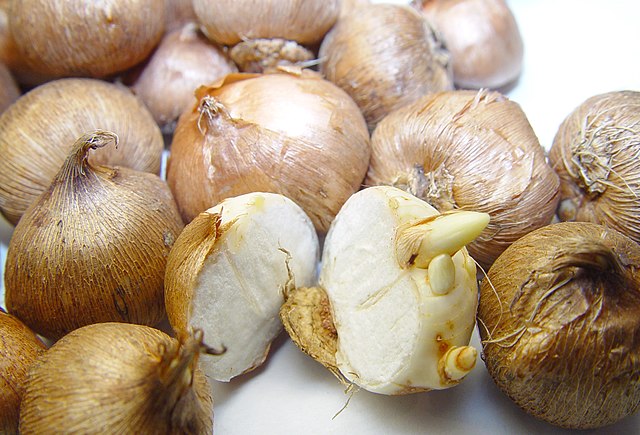
Crocus Tulip bulbs
Preparing Your Garden for Tulips
Before planting tulip bulbs, make sure your gardensoil is well-prepared. Tulips thrive in well-drained soil, so avoid areas that tend to get waterlogged. Here are the steps to follow:
Test your soil: Tulips prefer slightly acidic to neutral soil (pH 6.0 to 7.0). If the soil is too alkaline or too acidic, you may need to amend it by adding compost or soil amendments like sulfur or lime.
Loosen the soil: Use a garden fork or tiller to loosen the top 12-15 inches of soil. Tulips need loose, aerated soil to spread their roots effectively.
Add compost or organic matter: Enrich the soil with organic compost or well-rotted manure. This ensures the bulbs get enough nutrients to produce healthy flowers.
Fertilize (optional): If your soil is lacking nutrients, consider adding a slow-release fertilizer high in phosphorus to promote strong root growth.
Step-by-Step Guide to Planting Tulips
Once your garden is ready, follow these simple steps to plant your tulip bulbs:
Dig holes: Plant bulbs about 6-8 inches deep and 4-6 inches apart, with the pointed end facing upwards.
Place bulbs: Drop the bulb into the hole with the flat root end facing down and cover it with soil.
Water lightly: After planting, water the area lightly to settle the soil around the bulbs.
Mulch (optional): Apply a 2-3 inch layer of mulch over the soil to protect the bulbs from extreme winter temperatures, especially in colder climates.
Essential Garden Tools for Planting Tulips
Having the right tools on hand makes the planting process smoother. Here are some essential gardening tools you’ll need:
Bulb Planter: A bulb planter is a must-have tool for planting tulip bulbs. It allows you to dig perfectly sized holes with ease and precision. Choose one with depth markers for accurate planting.
Garden Fork or Tiller: These are essential for loosening compacted soil and ensuring proper drainage, which is key for healthy tulip growth.
Hand Trowel: A hand trowel is perfect for smaller planting tasks, like digging individual holes for bulbs or working in tight spaces.
Garden Gloves: A sturdy pair of gloves will protect your hands from blisters and soil irritation while planting bulbs.
Watering Can: A watering can with a fine spout helps distribute water evenly over the newly planted bulbs without washing away the soil.
Mulching Fork (optional): If you plan to add mulch to your garden, a mulching fork will make spreading it evenly over the soil easier.
Our Pick
FLORA GUARD Bulb Planter with Depth Mark- Ideal Bulb Transplanter for Planting/Digging – Automatic Soil Release Seed Planting Tool for Planting Tulip, Daffodils, Dahlias and More
$9.99
The must-have tool for planting Tulips. This Bulb planter tells you exactly how deep you need to dig to plant your bulbs. This is my go-to tool for my Tulips planting.
Once your tulips are planted, they require little maintenance through the winter. However, taking a few extra steps will ensure a beautiful display come spring:
Protect from pests: If squirrels or other wildlife are a problem, consider covering the planting area with a wire mesh or using repellents to prevent them from digging up your bulbs.
Avoid overwatering: Tulips do not require much water once planted. Water only if the fall is particularly dry, but ensure the soil is not waterlogged.
Fertilize in spring: Once the shoots emerge in spring, consider giving your tulips a boost with a balanced, water-soluble fertilizer to promote lush blooms.
Conclusion
Planting tulips at the right time ensures you’ll enjoy a stunning spring display. By planting in the fall and using the proper tools and techniques, you’ll give your tulips the best chance to flourish. Remember to prepare your garden with well-drained soil, dig the right depth for your bulbs, and protect them through the winter. With a little effort and the right care, your tulips will bloom beautifully year after year.
FAQ Section: When to Plant Tulips – A Complete Guide
When is the best time to plant tulip bulbs? The best time to plant tulip bulbs is in the fall, about 6 to 8 weeks before the ground freezes. This gives the bulbs time to establish roots before winter. Typically, late September to November is ideal, depending on your climate zone.
Can I plant tulip bulbs in the spring? While it’s possible to plant tulip bulbs in the spring, it’s not recommended. Tulips need cold weather to trigger their growth cycle. If you missed fall planting, consider storing bulbs in the refrigerator for at least 12 weeks to mimic winter conditions before planting them.
How deep should tulip bulbs be planted? Tulip bulbs should be planted at a depth of 6 to 8 inches. Planting at this depth helps protect the bulbs from frost and pests, ensuring they establish strong roots before blooming.
Do tulips need full sun or partial shade? Tulips thrive best in full sun, requiring at least 6 hours of direct sunlight each day. However, they can tolerate partial shade, especially in warmer climates where afternoon sun can be intense.
Can tulips be planted in pots? Yes, tulips can be successfully planted in pots. Use well-draining soil, and make sure the pot is deep enough to plant the bulbs 6 to 8 inches down. Place the pots in a sunny spot and protect them from freezing temperatures during winter.
🌷 Tulip Planting Essentials
Amazon Choice
SONKIR Soil pH Meter, MS02 3-in-1 Soil Moisture/Light/pH Tester Gardening Tool Kits for Plant Care, Great for Garden, Lawn, Farm, Indoor & Outdoor Use (Green)
$9.99
3 METERS IN ONE: Soil moisture level, Soil pH value and Sunlight level could be tested easily according to your need by switching the function button of this soil meter.
NO BATTERY NEEDED: Simply insert the meter into soil, wait few minutes, accurate test results will be displayed on the readout panel. No battery is needed.
Aglaonema, the Chinese evergreen is a low-maintenance and versatile houseplant that comes in wide varieties. This plant is great for adding a bit of color to any working or residential area if well taken care of. In this article, we will give you the best Aglaonema care guide that will help you to get the best out of these stunning plants.
Some of the qualities that make Aglaonema such a popular and ideal houseplant include its unique, lush, and beautiful foliage. With these qualities, there is no reason why you would not consider having this plant in your living or working space. Another great advantage of this plant is that it adapts really well to different environmental conditions. If you want to know what these conditions are and how best to get your Chinese evergreen to thrive in them, keep reading.
Aglaonema
Agloanema, commonly known as the Chinese evergreen is a plant that is Native to the forest areas of Asia. Because this plant grows under canopies of taller plants where it is shielded from direct sunlight, it has adapted to low light conditions. This is one of the qualities that makes it such a good indoor plant.
When planted indoors, they grow to sizes of 12-24 inches in height. They can be almost as wide as they are long and have lance-shaped leaves. Because it starts small and grows quite slowly, you can keep them on your desks for anywhere between 12-18 months before it gets too big.
Few plants are as easy or easier to care for as the Chinese evergreen. Although it is adapted to low light conditions due to its natural habitat, it can also tolerate fluorescent lighting indoors if provided with it.
There are hundreds of different varieties of Aglaonemas and they have different environmental requirements to thrive. It is therefore essential to know the particular variety of the one you have so you can give it just the right growing environments it requires.
Aglaonemas Plant Care
As with all other plants, there are ideal environmental conditions you need to maintain to keep them happy. We will discuss these below.
Temperature
Aglaonema prefers temperatures between 65-75°F degrees Fahrenheit to thrive. They can tolerate temperatures of about 10 degrees Fahrenheit outside this range without suffering any serious damage. Feed your Aglaonema monthly during the spring and summer, when the temperatures are within this range.
Light exposure
Due to the natural habitat of this plant, it prefers bright but indirect sunlight. Never expose it to full sun as it may cause leaf burn and may ultimately kill the plant.
If you keep the plant indoors, artificial or fluorescent light will be enough to keep it alive and growing.
The light tolerance levels vary between Aglaonema varieties. The darker green varieties of this plant can tolerate low light intensities. The ones with lighter-colored leaves, however, prefer bright and indirect light. An example of these light-leafed varieties is the Aglaonema Osaka.
In general, the more colorful varieties of the plant, such as those with pinks, reds, and peaches need more light to maintain their vibrancy.
Newer cultivars of Aglaonema have bright colors such as red and pink. These normally do not do well in low-light conditions. They can, however, survive in such conditions. But if you notice that they are losing their color, simply move them to an area with more light and you should notice their color should start to come back.
Humidity
Chinese evergreen plants prefer more humidity than most homes and indoor spaces can provide. This means that you should provide them with supplemental humidity. You can boost humidity levels in their environment by putting the plant in a pebble tray, using a humidifier, or putting the plants in a group with other plants.
You can also try misting your plants once to a few times each week. This will only make a minor difference in terms of improving humidity levels. It does however offer the potential benefit of getting rid of pests that may be trying to infest your plant.
Soil moisture and watering
Chinese evergreen plants like to stay moist but not soaking wet. When you water the plant, make sure that the water drains completely each time so that it does not get waterlogged. Only water if the first two inches of the soil are dry.
Overwatering can cause the plant leaves to turn yellow, and the roots of the plant to rot. Another sign of overwatering may be the yellowing of the tanks, as well as mushy stalks and leaves.
Repotting
To repot your plants, use good soil with peat and pine bark blended. Never use peat moss directly or by itself as it colds too much water and will not allow the roots of your plant to dry out as needed.
Repot Chinese evergreens once every 12-18 months. Use the same vessel with new soil, and trim away some of the roots and leaves. Repotting should be done in the spring or summer months only, this is when they are actively growing and have the best chance of surviving the repot.
If you are repotting a larger plant, do it every 18-24 months. Use a new pot that is about 2-4″ larger than the current one. This will give room for the plant to grow.
Fertilizing
Any good, balanced houseplant fertilizer will work for Aglaonema. Feed your Aglaonema monthly during the spring and summer while they are actively growing. Reduce the amount of fertilizer you give them in the fall and completely stop feeding in the winter months as the plants enter dormancy.
Providing fertilizer to the plants in the winter when they do not need the nutrients for growth can lead to fertilizer buildup in the soil, which will burn the roots over time.
Rotate your plant
Rotate your Chinese evergreens from time to time so that they get all sides exposed to sunlight so the plant can grow evenly.
Inspect your plants for pests
When taking care of your plants, and dusting the leaves, make sure that you inspect especially the underside of the plant to check for any pests that need to be removed before they cause any damage to the plant.
How to Grow Aglaonema
Aglaonema are very low-maintenance plants that are great for even the novice gardener or plant parent. Here are some points on how to grow Chinese evergreens.
1: Use well-draining soil to grow your plants
They do really well in well-draining soils as they do not like to have their roots permanently submerged in water. You can add some perlite to the potting soil if you need better drainage.
2: Provide them with indirect, bright light
Never expose your Chinese evergreens to direct sunlight as it may burn the leaves.
3: Let the soil dry between waterings
This will give the plant roots room to breathe so the plant can grow efficiently. Water only when the top 2 inches of the soil has dried.
4: Repot
Repot the plant as required.
5: Ideal temperature
Maintain ideal temperatures of between 65-75°F degrees Fahrenheit, and high humidity for your plant to thrive.
6: Fertilize the right time
Fertilize your plants in the spring and summer months and never in the winter.
Aglaonema care indoors is the same as outdoors. The environmental conditions that you should provide the plants are the same regardless of where they are planted. If they are indoors, however, it is easier to get the environmental conditions right as you can manipulate them.
Types of Aglaonema
There are many different varieties of Aglaonema that you can cultivate. In the past, there were only green and cream varieties available. However, there are many different Aglaonema shades that you can find. There are more colorful Aglaonema in colors such as pink, red, and peach. Here are five of the most common varieties;
Aglaonema Commutatum (Emerald Beauty) – also known as the Maria. It is one of the older varieties and has dark green leaves with light green stripes.
Aglaonema (Sparkling Sarah) – has pink stems and midribs. It also has pink mottling on the green leaves of the plant.
Ruby Red – The leaves of this Chinese evergreen variety are a beautiful bright red and have stems with a shade of pink.
Aglaonema Commutatum (Silver Bay) – The leaves of this variety have a light silver leaf variegation.
Siam Aurora Red – has ed stems and midribs. The leaves also have a red frame.
Problems Associated With Chinese Evergreen Plants
While these plants are some of the easiest to take care of, they can have their fair share of issues that you should be aware of in case you ever have to deal with them.
The number one issue is susceptibility to pest infestations. Chinese evergreen plans are susceptible to spider mites, mealybugs, and scale. They get infested most of the time because they are not healthy and stressed. Opportunistic bigs use this window to destroy them.
Keeping your plants in their best health will help you to avoid this. You can also use this leaf wellness spray to prevent infestations.
Yellowing of leaves is another common occurrence. This usually signals that your plants are stressed. Investigate which of their environmental conditions are not ideal and remedy it as soon as possible. Your plants should return to good health in no time.
Dropping leaves or leaf curls are other indicators of stress on plants. This can be a consequence of leaf burn from direct sunlight. If you notice this, move your plants away from sunlight.
Unfortunately, Chinese evergreen plants are toxic to dogs, cats, and horses. If you have any pets in your house, you will need to keep them out of their reach.
Conclusion – Aglaonema Care Guide: How to Grow Chinese Evergreen
Aglaonema are such low-maintenance plants that anyone can keep them in their home or office. So whether you are a novice or an experienced hardener, these plants can be a great addition to your space.
We hope that you found this Aglaonema care guide useful and that you will be well on your way to growing and maintaining these beautiful plants.
The most important thing to do is provide them with the kind of environmental conditions that mimic their natural habitat. These are; high humidity, moderate temperatures, and indirect bright light.
Happy growing!
🌿 Chinese Evergreen Care Products
Indoor Plant Food | All-purpose House Plant Fertilizer | Liquid Common Houseplant Fertilizers for Potted Planting Soil | by Aquatic Arts
If you have ever grown tomatoes in your garden, you will know that tomatoes are very susceptible to aphid infestations. These little critters can cause incredible damage to your crop if you do not take care of them early. In this article, we will be talking about aphids on tomato plants: How to naturally get rid of them. If you have kept tomatoes for long enough, there’s a high likelihood of finding aphids on the plants. Aphids are common, even in an organic garden. They can quickly take over the garden and can be frustrating to deal with. If you are faced with this problem, do not despair. We have a lot of tips, tricks, and control methods that we will give to you.
What Are Aphids?
Aphids are small pests that belong to the family Aphididae. Worldwide, there are more than 4000 species of aphids. They occur mostly in moderate and warm climates. Aphids have tiny bodies that are soft and pear-shaped. A lot of them are similar in size, which is about an eighth of an inch; aphids vary in size. They come in different colors. Depending on the type, they can be pale green, or black aphids on tomato plants, red, yellow, or white aphids on tomato plants. They usually occur in clusters at the base of leaves and stems of plants. They then bite into these plant parts and suck out the liquids inside. Tomato plants usually get infested with potato aphids. This type is usually red aphids on tomato plants. Tomatoes can also get infested with peach aphids, which appear as green bugs on tomato plants. Early in the spring, aphids migrate to tomato fields from hosts in the wild, and then they establish their colonies on the plants. Aphids have a very high rate of reproduction. A single aphid can easily lay up to a maximum of 100 eggs in its lifetime. Because of this, colonies of aphids increase very quickly in population. Aphids in small populations are not a very big problem, however, if they are left untreated, they can completely destroy your crop.
Symptoms of Aphid Infested Tomatoes
Once aphids are present in high numbers in an area, they develop wings that help them spread to form colonies in other areas with susceptible plants, such as a tomato garden. They may be hard to spot if you are not paying attention to them. There are some symptoms that you can look out for. Because aphides like to colonize the bottom parts of leaves, they can easily suck up the sap from the leaves unnoticed. This will cause the leaves to wilt and turn yellow. New growth on the plant may have become stunted growth. The result of this is that the tomato yields will be reduced and the fruits may become deformed. Stunted leaves with a deformed appearance or curled edges are a clear sign of aphid damage on tomato leaves. When these pests suck the sap and nutrients from the leaves and stems of the plant, the leaves will not grow properly. Aphids produce honeydew, a clear and sticky substance that coats the areas that the aphids have been on. Because honeydew is sugary, it attracts ants. If you notice populations of ants on your tomatoes, it could be a sign that you have an aphid infestation. If the leaves and/or stems of your tomato plants appear black, it could be another sign that aphids have been infested. The honeydew produced by aphids can be a haven for sooty mold which paints the plant black. Other symptoms of aphid-infested tomatoes include the wilting of plant stems from the loss of sap by the aphids feeding on them. Although aphids are noticeable to the naked eye, it’s a fact that they can still be very small and difficult to see. The signs and symptoms listed above can help you identify when your tomato plants have been infested so that you can take care of the issue before it becomes a big problem.
Do Aphids Like Tomato Plants?
Tomatoes are great at attracting aphids into gardens. They especially enjoy sucking the sap from young plant leaves and fruits. While aphids are generally attracted to tomatoes, they are not going to cause any damage if they are in small populations. But as soon as the infestation increases and takes over, the destruction of the plant tissues will begin and can eventually kill the plants. In cases where aphids do not kill the plant, they can stunt the growth of plants. This would be a better scenario for the outcome of an infestation. Usually, an aphid infestation kills the plants by overfeeding the sap and transmitting diseases. Aphids feed on the plant sap by sucking it out with their piercing and sucking mouthparts. Tomatoes are quite resilient to large numbers of aphids without suffering much damage. In severe cases, however, symptoms of damage such as leaf curling and stunted plant growth may be observed. The reduced leaf area will expose the fruit to sun scald, which will ultimately reduce yield. Aphids are vectors of certain plant viruses. This means that even if they are not in high enough populations to damage the plants by overfeeding on the sap, they can transport certain viruses that may cause damage or even kill the plants. It is therefore best to take care of an aphid problem because it causes irreversible damage.
How to Get Rid of Aphids on Tomato Plants
Fortunately, there are numerous options you can choose from to get rid of aphids on your tomato plants. There are biological, cultural, physical, and chemical methods you can use. But if you want to be safe and not introduce any potential threats to your crop, it is best to stick to natural options and biological methods such as;
Manual removal
If you spot aphids on your tomato plants while they are still only a few, you can simply pick them and put them in a bucket filled with soapy water to kill them. Check the undersides of tomato leaves to make sure that you get all the pests off. After the first time picking off the aphids, repeat the inspection daily for a few days to check whether or not you may need to take further steps to get rid of them.
Water spray
A water spray with a garden hose is another great way of getting rid of aphids. Use a sharp but gentle blast of water to knock them off the tomato leaves and stems. This will surely decrease the aphid populations. Check every few days again to determine whether you need to repeat the process. Be careful when using a water hose as it may also knock off beneficial insects from your plants, and may break the branches of the plant, especially the young ones.
Bug repellent
Instead of buying store-brand bug repellents, you can use garlic, rosemary, peppermint, water, and dish soap to make your own at home. These are all-natural ingredients and will safely get rid of aphids from your tomatoes, as they are gentle. This mix does not kill the bugs, but what smells will mask the scent of the tomato as the host plant so they will not be able to locate it.
Water and dish soap
A mixture of water and dish soap will also work fine to repel aphids from your tomato plants. Mix a few teaspoons of liquid dish soap with one quart of water. Simply spray this mixture on the plant leaves and it will kill the bugs by suffocating them.
Introduce predatory insects
The introduction of predatory insects into a garden that aphids have infested is one of the most efficient ways to get rid of or control them. Many people introduce insects such as ladybugs and lacewings into their gardens. Birds such as hummingbirds are another great predator of aphids as they love to snack on them. Invite birds into your garden by strategically placing bird feeders in various places and they will help you out a lot.
Diatomaceous earth
Diatomaceous earth (DE) is a powder made from fossilized algae that are rich in silica. It can be deadly to aphids. The edges of the DE grains cut into the soft bodies of aphids, causing them to dry up and die. Sprinkle some DE onto both the soil and your tomato plants to kill aphids. Be careful to select food-grade DE when your purchase it from the store. It is safe for humans and can be used on plants, unlike filter-grade DE which is not. Only apply DE early in the morning or later in the evening when the dew has dried, as it does not work when wet.
Neem oil
Neem oil is a natural bug repellent that is useful against many different types of bugs and insects. It works similarly to insecticidal soap, that is by suffocating the aphids when sprayed on them. It also works systemically by interfering with the hormone receptors in the insects, hence it is referred to as a broad-spectrum insecticide.
Alcohol sprays
Rubbing alcohol is an easily available, affordable, and simple solution to aphid infestations. Mix equal parts water and alcohol in a sprayer bottle, add a teaspoon of soap to make the mixture more effective, and spray it on your infested plants.
Humus
Adding humus as a soil amendment around your tomato plants will control infestations, as aphids do not like it.
Pruning
If you notice that only certain leaves of the tomat0 plant are heavily infested, and perhaps have started showing signs of damage, pruning them off may be the best way to get rid of the clusters of aphids and will stop them from breeding. In summary, natural options such as rubbing alcohol and neem oil are great products to use for treating aphid infestations on tomato plants. If these are unavailable to you, mix a few teaspoons of liquid dish soap with one quart of water. Always make sure to check the undersides of tomato leaves to get rid of aphids efficiently.
How to Prevent Aphids on Tomatoes
As you probably know, prevention is better than cure. Instead of waiting until you get an infestation to deal with, there are certain proactive steps you can take to prevent or minimize the risk of getting an aphid infestation on your tomatoes;
Healthy soil and healthy plants
Insects and other pests prey on weak plants that are growing on low-quality or degraded soil. The best way to avoid this is to build up healthy soil in your garden by mulching or adding organic matter so that there is a constant availability of nutrients to your plants.
Companion planting
Planting fragrant flowers and herbs alongside tomatoes can help control pests. Plants such as marigolds and basil are great insect and pest repellents that can ask the scent of tomatoes, hiding and protecting them from aphids.
Sticky traps
Aphids are attracted to bright colors such as yellow. You can purchase yellow sticky boards and place them around your tomatoes. The aphids will get attracted to them and will get trapped before they get to the plants.
Attract more aphid predators
Aphids have natural predators such as lady beetles, syrphid flies, and lacewings. If you can find a way to grow these insects in your garden, they will do a great job of helping you out with pest control. Setting up birdhouses and feeders in the garden before there is any noticeable infestation may be a great idea t keep it at bay.
Row covers
Place row covers over your tomato plants immediately after planting them. This will help to protect them from extreme weather conditions and changes that could potentially hurt the growth and health of their plants, making them susceptible to opportunistic pests.
🛒 Recommended Products for Aphid Control
Petra Neem Oil for Plants – Organic Neem Oil Spray for Plants,100% Cold Pressed Neem Oil, Pure Neem Oil, All-Natural Neem Oil Concentrate Leaf Polish for Plants – (17 Oz)
We earn a commission if you make a purchase, at no additional cost to you.
Amazon Choice
SONKIR Soil pH Meter, MS02 3-in-1 Soil Moisture/Light/pH Tester Gardening Tool Kits for Plant Care, Great for Garden, Lawn, Farm, Indoor & Outdoor Use (Green)
$9.99
3 METERS IN ONE: Soil moisture level, Soil pH value and Sunlight level could be tested easily according to your need by switching the function button of this soil meter.
NO BATTERY NEEDED: Simply insert the meter into soil, wait few minutes, accurate test results will be displayed on the readout panel. No battery is needed.
We earn a commission if you make a purchase, at no additional cost to you.
06/12/2026 12:05 pm GMT
Conclusion – Aphids on Tomato Plants
Aphids can cause great destruction to tomato plants if left unchecked. It is therefore best to tackle them as soon as you notice them in your garden before they cause devastating that they are very well capable of in large populations. Another great way to deal with a possible infestation is by being proactive and placing systems and measures in place that will prevent infestations from taking place. Use the tips and tricks provided in this article to get rid of aphid infestation problems in your tomato plants so you can get a good harvest. Happy growing!
Are your tomatoes not turning red despite being big enough to be ripe and have been in the ground for long enough? This is a common frustration that many tomato gardeners face. Do not despair, there are ways to diagnose this problem and solutions to it. In this article, we will give you 14 tips for ripening tomatoes.
Tomatoes are some of the most common and versatile vegetables that are used in every household. Fresh garden tomatoes are some of the best and freshest you can ever taste. So it can be discouraging when your tomatoes don’t ripen when you expect them to. Keep reading this article to learn all about tomatoes not turning red.
Tomatoes
Tomatoes are described as edible berries of the plant Solanum lycopersicum, which is commonly referred to as the tomato. The tomato plant originates from South America, Mexico, and Central America.
Many different types and varieties of tomatoes are used for different purposes, such as cooking, salads, pickling, etc.
Indeterminate tomato plant varieties are perennials in their natural habitat, however, they can be cultivated as annuals. Depending on the cultivar, plants can grow up to 1/2-4 inches in width.
Tomatoes can come in different colors too, with most of them turning red when ripe. As a result, it can be quite frustrating when tomatoes don’t turn red when you expect them to.
Why Are My Tomatoes Not Turning Red?
There are different reasons why tomatoes are not turning red.
The first and most obvious reason is that they may not be ripe yet. Tomatoes have a long growing season. Depending on the variety, they may take anywhere between 60 to more than 100 days from the day they are transplanted to when they are ready for harvest. If you are not sure what the exact timeframe for the ripening of your plants is, check the packaging, as this information is usually provided.
Another reason is that some tomatoes are just not red when ripe, so they can not be expected to turn red even when they are ready for harvesting. Some tomatoes have unique colors. Examples of these include;
Sungold cherry, garden peach, and Persimmon, which are yellow when ripe
Black krim, which is a beautiful black color
Green zebra, which is a modern heirloom tomato that is known for its lime green color.
While these tomatoes have unusual colors, they are great to grow if you want to try something different.
As tomatoes mature in the summer, they can become big and overgrown. When it happens, the plants direct most of their energy toward producing more leaves and flowers, instead of ripening the tomatoes.
The number one cause of tomatoes not turning red when the time is right is temperature. Regular tomatoes will not turn red if the temperatures for their ripening are off. Temperatures above 85 degrees Fahrenheit are too high, and anything below 50 degrees Fahrenheit is too low. The bigger risk of the two, however, is the high temperatures that can often occur during a heatwave.
Outside the temperature range of 50-85 degrees Fahrenheit, the tomato plant is unable to produce enough carotene and lycopene that cause the color change for the ripening process. The best temperature for tomato ripening is 70-85 degrees Fahrenheit.
Although tomatoes love heat, too much of it can be bad. Extended periods of heat stress can cause plants to stop developing and this may prevent the tomatoes not to turn red. Too much cold temperatures stop the production of the carotene that is needed for the ripening of the tomato. This usually happens at the end of the growing season.
Excessive watering and feeding of the plants can also be bad. If tomato plants are provided with more nutrients than they need, it can cause them to direct their energy towards producing new growth instead of ripening the fruit.
When Do Tomatoes Turn Red?
Tomatoes have a long growing season. To be a tomato gardener, you must have a lot of patience. Tomatoes will turn red when ripe, provided all their growing and ripening conditions are being met. If you are unsure when exactly this time should be for the particular variety of tomatoes in your garden, check the packaging that the seeds or seedlings came in. The growth period of the tomatoes should be given there. If you do not have access to the packaging, a quick Google search might be helpful to estimate the approximate time you should expect your tomatoes to ripen.
Generally, most tomatoes take between 60 to just over 100 days to ripen. This is between the day they are transplanted into the soil and the day they are ready to harvest. The speed with which they ripen will depend on variety, environmental conditions, and the size of the tomato fruit. For example, cherry tomatoes ripen faster than larger tomatoes.
To get them to ripen at the right time, you have to plant them in the soil at the right time. The best time to do so is to start the seeds about 6-8 weeks before the last frost date.
Keep in mind that not all tomatoes will turn red. Some tomatoes are yellow, orange, purple, or even green when ripe. Know what the variety of the tomatoes you are planting is, so that you know what they should look like when they are ripe.
What to Do When Your Tomatoes Are Not Ripening
Both larger and small tomatoes such as cherry tomatoes not turning red can be due to various reasons, as we have already discussed. Here are 14 tips for ripening tomatoes when they won’t ripen.
1. Stop the plant from growing
One of the major reasons this happens is the result of overgrown plants. This then causes the plant to divert more energy into producing new plant growth, instead of toward the fruit and seed. One way to deal with this is to stop the plant from inefficiently utilizing energy. Do this by pinching or cutting off the top point of the plant that is growing, so that the plant will not get any bigger.
Also, cut off any new flowers that have not produced any fruit yet. They will never be able to do so as there is not enough time left in the growing season.
2. Cut off the outside shoots
Tomatoes are very strong growing plants and produce a lot of foliage. Even if you keep trimming them, shoots keep reappearing. You should always pinch off or cut off any side shots that develop after the plant has matured. Always keep an eye out for them and remove them as soon as they appear. This will save the plant from using energy for growth, which it should rather direct towards fruit ripening.
3. Trim back plant foliage
Like all other plants, tomatoes need light for good growth and health. If there is too much foliage that covers the plant and minimizes the amount of light that it gets, the plant will not grow very strong. Trim off as much of the foliage as you can without damaging the plant. This will enable the plant to get direct sunlight that will warm it up, helping to speed up ripening.
4. Provide heat
If you can provide your plants with some form of heat, it will help ripen them. If you can install grow lights that can increase the temperatures even slightly, the ripening process would speed up.
Tomato plants are great for growing indoors. If your tomatoes were planted in a movable grow bed or pot, moving them indoors where you can control the temperature to make them more suitable for ripening will greatly benefit the plant.
Excessive fertilizing of tomato plants can do more harm than good. Ideally, tomatoes should only be fertilized about 2-3 times during their entire growth cycle. Do not fertilize the plants when they are close to harvest, and this will cause them to direct energy towards growth and not ripening.
7. Reduce watering
Excessive watering can also delay tomato fruit ripening. Reduce the rate of plant watering by only watering when you notice signs of wilting on the plant. This can help to push the plant towards fruit ripening.
8. Wait for cooler temperatures
If your tomatoes are not turning red because of high temperatures, you may just have to wait until the weather cools and ripening resumes.
9. Hang the plant upside down
Uproot whole plants when tomatoes won’t ripen. Hang the plant upside down in a warm and dry room where it will be protected from extreme temperatures and frost. The fruit can ripen as the plant dies. When trying out this method, try to get some of the soil out with the root.
10. Put the tomatoes in a bag with a banana
If you still can’t get your tomatoes to ripen, try this trick of putting them in a bag with a ripe banana. The ripe banana releases ethylene which is a great promoter of tomato fruit ripening. If you choose to try this method, check your tomatoes regularly for any sign of rot. If you notice that any are starting to rot, remove them before they damage the others in the bag.
11. Put the tomatoes in a bag with a ripe apple
This method is the same way as the previous method described, just with a different fruit.
12. Pick individual tomatoes to ripen
You can also pick tomatoes individually to ripen them by placing them on window sills, and they will eventually turn red.
13. Plant the next crop of tomatoes on time
As more of a proactive way to ensure that your tomatoes ripen, plant them at the right time so that they have enough time in the growing season to grow and ripen before the temperature gets bad.
14. Pick the green tomatoes
If all efforts of ripening your tomatoes fail, you can pick them green. Green tomatoes are great for pickling.
Can Tomatoes Ripen Off the Plant?
Normally and ideally, plants should be left on the plant until they ripen, and then they can be picked off, However, some conditions occur that may require you to pick them off the vine and attempt to ripen them indoors. These factors are usually associated with environmental conditions such as temperature and frost.
You can pick unripe tomatoes and ripen them off the plant, provided that you can give them good ripening conditions as described above.
Why Are My Tomatoes Not Ripening? – Summary
Tomatoes are very easy plants to grow, as long as you know the variety and their ideal growing conditions. Key points to remember are that tomatoes won’t turn red if it’s too hot (above 85°F) or too cold (below 50°F), If your tomatoes do not grow well, they may be stressed and this may affect ripening. Smaller tomatoes are the result of stressed tomato plants.
Tomatoes produce carotene and lycopene which will promote ripening at the end of the growing season. Make sure that your plants are provided with good growing conditions so that they can produce enough carotene and lycopene.
Tomatoes are slow to ripen on the vine because they are overfed, overwatered, overgrown, or the weather is too cold. Adjust your maintenance schedules to get the best out of your plants.
We hope this article provided you with enough information, tips, and tricks that you will use to ripen your tomatoes that may not be turning red on their own.
The potato is one of the world’s most commonly grown, consumed, and versatile vegetables. Its ease of growth contributes to its popularity. Knowing how many potatoes will grow per plant is crucial to knowing how your plants will perform and to deciding how many you should plant to fulfill your needs. How many potatoes will grow per plant will depend on certain factors such as the type or variety of potatoes being grown, environmental conditions, and how well their growing needs are being met. Keep reading to know how many potato plants to plant to ensure that you harvest enough to last you and your family until the next growing season.
How Many Potatoes Per Plant?
How many potatoes per plant can you expect from your harvest? Under ideal growing conditions, the average number of potatoes a potato plant can produce per plant is between three and eight. Different varieties may produce fewer or more potatoes than others. The tubers’ sizes may also differ, ranging from small to extra large. If you want to provide for a family, about 40 potato plants may be sufficient for the year. If these plants all grow healthily until harvest, you should expect a harvest of around 125 pounds of potatoes.
How Many Potatoes Grow From One Potato Seed?
Seed potatoes vary significantly in size. A small-sized seed potato is planted whole, and a single potato can be produced per plant. However, Larger seed potatoes can be cut into halves or quarters, grown, and produced between two and four potato plants. Planting seed potatoes whole will usually produce more vigorous plants. It is, therefore, unnecessary to cut the seed potato unless it is huge. A single-seed potato that grows well will produce one plant, and this one plant will produce between 8 and 10 full-sized potatoes. In addition, each potato plant is likely to have a couple of smaller baby potatoes as well.
Do Different Potato Varieties Produce the Same Number of Potatoes Per Seed?
How many potatoes per plant seed can differ between different cultivars? To find out how many potatoes your particular variety will produce, read the plant descriptions on the packaging or the resources available online. However, the average yield per potato plant listed assumes that ideal growing conditions are met for that particular potato variety. If the conditions are not ideal, the plant may produce fewer potatoes or nothing at all.
Ideal Growing Conditions for Optimal Potato Yield
While different potato cultivars will have different specific environmental conditions for maximum yield, here are some things you can do to help ensure that you get optimal productivity out of your potatoes:
1. Planting distance
Potatoes are tubers that grow underground. Because of this, they need plenty of space to grow, so it is important to provide them with sufficient room. If potatoes are planted too closely, young tubers will not grow as well as you would expect them to, resulting in a poor yield. Another reason not to plant them too closely is that they will compete for nutrients, further negatively impacting their growth. Potato plants should be planted 12 -14 inches apart and have 3 feet between rows to achieve the best growth and optimum yield. If you plan to harvest your potatoes at the baby stage, however, you can plant them closer to each other, as they will require less space to grow. If you have adhered to this recommended planting distance, you should not have to worry about the possibility of them crowding up in the soil. They will adjust themselves and spread out as needed, provided the soil they are planted in is right. The plant roots and tubers will grow well.
2. Planting depth
How deep you plant your seed potatoes will have a massive impact on the eventual yield. Seed potatoes need to have enough soil covering them so that no part of the tuber is left exposed. If they do not get completely covered and are exposed to the sun, they will turn green due to the solanine in them. If these potatoes are consumed, they will cause solanine poisoning. Green potatoes should not be eaten and must be immediately discarded. This will lead to a loss of crop yield. The best depth to plant your potatoes is 4-6 inches. Start with this depth and hill them up as the plants continue to grow taller to keep them protected. You can hill your potatoes up by mounding the soil around them with a spade, hoe, or other implement that you have. Hill them up to within 2-3 inches of the plant foliage. Start hilling them when the plants have attained a height of 8-10 inches, and repeat the process when they get new growth of 8-10 inches. The process of hilling your plants will help to provide them with sufficient soil for adequate growth and expansion of tubers underground. The higher level of soil will also help to support the growing foliage on top of the ground. If your plants are not provided with enough soil, they will be exposed to the sun, which will diminish your crop yield.
3. Soil type
Potato tubers need to be planted in loose soil for them to grow well and expand underground. Using loose, soft, and well-draining soil will help to increase your potato yield. Potatoes require plenty of space to spread their roots and grow large potatoes. Growing potatoes in compacted soil will produce only small potatoes as they will struggle to push against the dirt to increase in size.
4. Soil fertility
Soil fertility is an important aspect of increasing your potato yield. Before your potatoes are planted, apply a suitable fertilizer to the soil. It is important to use a fertilizer that is specific for potatoes when you first plant them and mid-way through the season so that they get the boost of nutrients they need to produce as many potatoes as they can. Use a 5-10-10 fertilizer in the planting rows and carefully work it into the soil. Follow the instructions on the packaging container. You must also side-dress the potatoes with the same fertilizer before the first hilling.
5. Soil moisture
Potatoes need adequate, but not too much watering. Potatoes need about 1 to 2 inches of rain per week. If your area does not receive this amount of rain, you will need t give your potatoes supplemental water. Water your potatoes enough to saturate the soil up to the level of the roots and tubers. Water each time the first two inches of the soil feel dry. Going for long periods without watering or adequate water will lead to malformations of your potato tubers, which can lead to poor yields. This is because insufficient moisture will cause the potato tubers to grow slowly if they even grow at all. If you resumed watering your potatoes or got plenty of rain after a period of no rain, it will cause the tubers to grow rapidly and split or develop malformations. To get the best yield out of your potatoes, and get the best shapes, you will need to water them regularly during their growing season.
6. Pests
Pests can have a detrimental impact on your potato crop yield. Treat them as soon as you notice them before they have any significant damage to the plants. Insect pests such as the Colorado potato beetle can completely destroy the foliage of the plants. If this happens, the growth of tubers underground will stop because the plants will not have enough support. Eventually, you will have reduced yield and small potatoes.
7. Sunlight exposure
Like all other plants, potato plants require sunlight to carry out photosynthesis. Without sufficient sunlight, the growth of the plant will slow down and result in your potato yield is poor. Make sure you plant your potatoes in an area that receives at least 6 to 8 hours of direct sunlight each day, for the entire duration of the growing cycle. The plants can and will grow with less light, however, their growth will not be as good as it would be if they received more light. So to get the best growth, health, and ultimately good yield from your potatoes, provide them with plenty of sunlight.
8. Proper hilling
Hilling your potatoes at the time they are first planted, and one or two more times during their growing season will help improve crop yield. Hilling provides support for the growing plant foliage, which will force it to grow upwards toward the sunlight and consequently increase the growth of tubers.
9. Choosing the right potato variety
There are hundreds of potato varieties to choose from that are readily available from local seed stores and online shops. Before you choose the variety to grow. Do a bit of research around it to find out if it is suited to your climate, or if you will be able to provide it with the growing conditions it requires. It is also helpful to know information such as the length of the growing season, the amount of space they need for growth, specific uses of that particular potato, and as well as resistance or susceptibility to disease and parasites. Potato varieties such as Pontiac Red, Kennebec White, and Purple Majesty are all great varieties of potatoes that consistently produce high yields of potatoes. If you are you do not know much about potato varieties, you can begin by researching these three to see which one would be best suited to your environment.
10. Plant your potatoes at the right time
Potato plants have an ideal time that they should be planted to get the best chance of survival. You should plant them when the soil warms up to about 45 degrees Fahrenheit. In most areas, that would be about two weeks after the last frost date. While looking at the timing, it is also key to monitor the soil moisture content. If you have had a wet spring, wait a few weeks until the ground has dried up a bit. If the soil is too wet, it can cause the potato tubers to rot. If you have no choice but to plant potatoes earlier than this, look for the varieties that mature earlier, as they are better able to withstand cold conditions. You can plant these up to six weeks before the last first date.
How Many Potatoes Does a Potato Plant Produce?
Typically, a single potato plant will produce anywhere between 3 and 5 pounds of potatoes. This may be enough to feed a family of four people twice. Keep in mind, however, that different varieties of potatoes will produce different numbers of potatoes. In addition to this, the growing conditions such as sunlight, nutrient provision, adequate growing space, and a good irrigation schedule have to be maintained well to achieve optimum growth.
Can I Use Store-Bought Potatoes as Seeds?
Technically, yes. Store-bought potatoes can be used as seeds to grow potatoes. You will have figured this out when you left potatoes out for too long and they started sprouting. If you plant them in the ground during the right growing season, you should harvest some potatoes. However, potato growth experts advise against using shop potatoes as seeds. They recommend only using certified potatoes to plant in your garden. The reasons for this include that potato growers put sprout inhibitors to slow down the rate of budding when the potatoes are being shipped, and while they are at the store. This may cause the potatoes to grow weak or not produce any growth when planted. Another reason that you should not use shop potatoes as seeds is that they often contain a lot of microorganisms and diseases. These can easily spread to plants and completely destroy all other plants in your garden. Seed potatoes that are certified will come with a guarantee that they are free of any diseases or microorganisms that can destroy the potato and other crops. Certified seed potatoes are usually strong and healthy, and have a higher chance of having vigorous growth, producing large and strong potatoes, and ultimately a good yield.
How Do I Know That My Potatoes Are Growing
Because potatoes grow underground, it may be difficult, especially for new and inexperienced growers to be able to tell what stage their plants are at. It can be difficult to tell whether or not your potato tubers are growing. There are signs that you can look out for. Flowering is a great indicator that your potatoes have started growing. If you want to harvest your potatoes in the baby stage, you can go ahead and do so at this point. After the flowers have come and gone, the foliage at the top of the soil will die back. This is so that the plant will start directing its energy towards growing the tubers larger. If you want to harvest full-sized potatoes, you should do so after the plants have died back. Another way to know that your potatoes have matured is when the stems of the plants have started to go yellow and die off. This usually happens at the end of summer, or early in the fall. If you still want a bit of reassurance that your potatoes are ready to harvest, you can dig a small test spot and get a few tubers out to gauge if they are at your desired harvest size.
Quick Summary – How Many Potatoes Per Plant (and From ONE Seed)
Different varieties of potatoes will produce different amounts of potatoes at harvest time. You will need to read the information on the seed packaging to get an idea of how many potatoes per plant your particular variety will produce. Generally, with potatoes, however, if the plant is healthy, you can expect to dig up about five or six full-size potatoes per plant. Potato plants yield from five to 10 potatoes per plant depending on the variety, climate, and whether the growing conditions of the plants are met. Usually, a single potato plant produces anywhere between 3 and 5 pounds of potatoes. Knowing this can help you to plan how many plants to plant to you can have enough potatoes until the next growing season. Follow the guidelines and tips provided in this article to increase your potato plant harvest. Remember that a single plant has the potential to produce between three and four pounds of potatoes, and a single seed potato will produce above four or five plants. Start from there and then plan how many potato plants to plant for an adequate supply. We hope this article has given you all the information you need to know on how many potatoes per plant you can expect from your potato plant. Happy growing!
🥔 Potato Growing Essentials
Potato Grow Bags,Potato Planters with Flap and Handles,Vegetables Garden Planting Bags for Onion,Fruits,Tomato,Carrot (10gallon-4pack)
The smell and taste of freshly harvested rosemary from the garden have got to be the most refreshing things you can experience. While the process of harvesting is very simple and easy, it is important to know when & how to harvest rosemary the right way so that your plant keeps producing for you to have a long and continuous harvest.
Rosemary is a cut-and-come-again type of crop, meaning the more of it you pick, the more you will be able to harvest. This is provided you do it properly. If you want to learn how to harvest rosemary properly, and get tips on what to do with it afterward, keep reading.
The Rosemary Plant
Rosemary (Salvia rosmarinus) is a perennial herb that can be grown in so many different climates all year round even if they are flowering, as long as the environmental conditions are right.
The rosemary plant is a shrub with fragrant, evergreen, needle-shaped leaves. It can also have white, pink, purple, or blue flowers depending on where it is in its growth cycle. It is native to the Mediterranean region and will survive the winter in warmer climates.
Rosemary however very sensitive to extremely cold conditions such as freezing temperatures. If you have this kind of weather approaching, you might need to harvest all your rosemary before the cold kills it. Either pull the entire plant from the soil or gather the leaves and young stems. You can also just cut the plant all the way back.
If you have plants that are sure to withstand the winter cold, or you live in a place with a warm climate, having one or two will usually be enough for you to use throughout the summer and still have enough to store for use through the fall and winter months.
Rosemary is a herb that makes a great companion for many vegetable dishes such as cabbage, broccoli, and carrots. If you fancy growing and enjoying this herb, learn how to harvest rosemary without killing the plant.
How to Harvest Rosemary Without Killing the Plant
Rosemary has two parts of the plant that you can harvest, these are the new tips or sprigs, and the leave. Both parts of the plant are edible.
Most of the flavor and aromatic oils of rosemary are found in the leaves of the plant. This makes them ideal for use in cooking, making tea, and many other uses. The tender tips of the stems are the best ones to use for cooking. The older ones tend to get woody and tough and are best used to infuse flavors rather than eating.
If your rosemary plant is newly planted, you will need to have to wait until it has grown a bit of length and start to bush out before you start harvesting it.
Step-by-step guide
Step 1: Harvest the plant at the right time
The best time to harvest rosemary is in the spring and summer when the plant is actively growing. Avoid harvesting it in the winter season, when it is dormant.
Step 2: Harvets new shots that are at least 8 inches long
New shoots are best for cooking as they have a lot of flavors and are tender. Shoots that are still too young need to be given time to grow so that you can have a continuous harvest.
Step 3: Cut 3/4 of the plant stems at the maximum
Never harvest all the stems of your plant at any one time. Leaving the plant with some stems will allow it to regenerate.
Step 4: Leave at least a quarter of the branch intact with as many leaves as possible
Leaving branches with some leaves will help your plant to keep producing.
Step 5: Water the plant thoroughly
While harvesting your rosemary, make sure that you keep watering it so that it can continue to put out new shoots.
Step 6: Give the plant some fertilizer
Giving fertilizer to the plant will help it to recover after it gets harvested.
Step 7: Monitor your plant for any spots or signs of unusual development or stress
Keeping a careful eye on your plant will help you to quickly notice any unusual signs on your plant so you can remedy what you can to keep your plant healthy.
How to Cut Rosemary From Plant
Most gardeners cut off full sprigs, and then strip off the leaves depending on the intended use. To strip off the leaves, simply run your fingers along the length of the stem from top to bottom. You can also just pinch them off with your fingers.
Instead of cutting off full sprigs of rosemary, you can also just take individual needles from the plant as needed.
However, you choose to harvest rosemary, always cut the tender, new tips or stems. The best ones to harvest are those that are 8 inches or longer. Identify those and cut off the top 2-3 inches with sharp pruning shears.
How often you harvest your rosemary will depend on a few factors. These factors include the age or size of your plant and how much you harvest at a time.
If you are cutting a few sprigs here and there, you can harvest as often as you like with no fear of overharvesting your plant. If you take a large harvest at a time, about 1/3 of the plant’s total size at any one time, the plant will definitely need more time to recover.
Always use sharp pruners or kitchen scissors to cut off the stems instead of pulling or tugging on the branches. And be careful not to harvest too much at a time or your plant may not be able to recover.
Only pick the healthy stems that have green leaves. If you notice any yellowing, browning, or dry needles, do not harvest them as they may not taste good. You can however cut them off and give the plant a chance to grow healthy foliage.
Regularly trim the plant even if you do not harvest for use. Doing this every two weeks will help to encourage new plant growth. You can freeze some of your trimmed-off rosemary for long-term storage in an airtight container or ziploc bag.
When to Harvest Rosemary
The best time to pick rosemary is in the spring and summer when the plant is actively putting on new growth. It is best to pick the sprigs in the morning after the dew has evaporated before the afternoon heat has set in.
As soon as your plant is established and is putting out new growth, you can harvest it during these time periods. Look out for supple green stems emerging from the already existing branches to know when the plant is ready for harvest.
Are Rosemary Flowers Edible?
Rosemary buds are tiny flowers that appear when the rosemary plant is in bloom. These flowers are edible and can be used for many different things.
They have a slightly sweeter flavor than the leaves. They are perfect for garnishing various dishes and adding colors to salads. They have a similar flavor and aroma to the leaves and stems, only taste a bit sweeter.
What to Do With Freshly Harvested Rosemary
Refrigeration
Freshly picked rosemary can be enjoyed right away but chopping it up and adding it to soups, stews, sauces, or even roasts, or infused into other foods. Any leftovers can be safely stored in a small glass or vase and kept in the fridge for use within a few days. If it is whole sprigs, keep the ends submerged in clean water and they can last for up to two weeks.
Refrigeration is a good short-term storage solution and will keep rosemary fresh for about 2-3 weeks. There is no need to wash the sprigs for refrigeration, it might actually help them store longer. Simply clean them with a damp towel. Place your cleaned sprigs in a container and store them in the crisp drawer of the refrigerator.
Freezing
If you want to store your rosemary for longer, you can freeze it. These silicone ice cube trays are great and easy to use to turn rosemary into ice cubes and store them in an airtight container or ziploc bag so they do not get any off flavors.
Another long-term storage option for rosemary is drying it. Unlike other herbs such as parsley and basil, rosemary does not lose its flavor when dried.
Using a food dehydrator is one quick way of drying the herb. You can dry whole sprigs using a low setting that is suitable for herbs. If you do not own a food dehydrator, use the traditional method of air drying.
For drying, it is best to harvest stems of about 6-8 inches, but any length will do. Hang them up in bunches in a dark, dry, and warm place, or lay them flat on wire racks, and make sure you do not tack them in layers as this may delay drying or even make them rot. Place a tray under the drying herbs so it will help to catch any bits that fall off as the herbs dry.
Keep in mind that dry rosemary is much harder and woody than when it is soft. You can crush or grind the dried leaves to make them easier to cook with, but they retain flavor better if they are kept whole.
How Long is Rosemary Good For?
This fragrant, vigorous, and evergreen herb can be harvested all year round, although the best time to harvest it is in the summer and spring, just before it flowers and when the aromatic oils are at their best and the plant essence is best preserved.
If you take good care of your plant, it will keep producing healthy, and if you harvest it the right way might keep it around for about 15 years or more.
Once harvested, you have multiple options on how to store it:
Refrigerating for up to three weeks
Freezing for up to six months
Drying for as long as you desire
If you do any of these the right way, your rosemary will stay good.
Tips to Improve Your Rosemary Harvest
Rosemary is a relatively drought-tolerant plant, but you must water it regularly if it is in a spot or pot that does not get a lot of rain. This will surely keep your rosemary harvest good. The plant also hates getting too wet, so make sure you grow it in well-draining soil to avoid any water-logged conditions that may kill the plant.
If you are in a colder zone, plant your rosemary in containers so that you can bring them in during the cold winter months.
If your previously healthy plants are getting less vigorous over the growing seasons, take cuttings from them and grow new plants to replace them. They may be losing vigor due to age.
Quick Summary: How to Harvest Rosemary
Knowing and using the right method of harvesting rosemary is key to maintaining the productivity and vigor of your plant, and will determine how long your plant will last. If you want only a little bit to prepare a dish, you can simply just pluck individual needles directly from the plant as needed.
Most gardeners snip off full sprigs and then strip the leaves when they harvest rosemary. This way they only get what they need and leave the plant to keep growing.
Harvest rosemary by snipping sprigs with pruners or kitchen scissors, and avoid any pulling which may damage the plant. Harvest the new growth on the plant to get the best flavor for cooking. New growth will be flexible and lighter green while older growth will be woodier and darker.
We hope you found this article informative and that you will now confidently grow and harvest your rosemary the right way.
Thyme is one of the most commonly grown household herbs due to its ease of growth. To get a prolonged harvest and enjoy more of this herb, you need to know how to harvest thyme without killing the plant.
Thyme grows really fast and well if provided with the right growing conditions, and is an extremely versatile herb for adding flavor in cooking and baking. Keep reading to learn more about this incredible herb.
The Thyme Herb
Thyme, scientific name Thymus vulgaris, is a plant native to the Mediterranean but is currently grown almost everywhere in the world. It is a hardy, perennial plant belonging to the mint family that is extremely easy to grow. Because of this and its size, it can be grown in a variety of areas such as in the garden, on the porch, and in any indoor environment.
This wonderful herb has a pleasant, pungent clover flavor that brings some people, good memories of summer!
Thyme comes in at least 50 varieties with different flavors and fragrances. Different thyme varieties are used for different purposes. These are the fragrant ornamental and culinary varieties. The culinary varieties of thyme are usually evergreen, and the English variety is mostly used in cooking.
Taking care of or maintenance of this herb is quite simple. It does not require much care and develops easily. For starters, it is drought friendly so it has low watering needs. If you are into bees, you will love it even more because it will attract bees to your garden. It is usually harvested in the summer months but depending on the climate where you live, you can easily harvest it late into the fall.
Harvesting Thyme Herb
Harvesting thyme the right way is of utmost importance. It is difficult not to know when the right time to harvest thyme is, as it can be quite easy to tell. The most important thing with harvesting thyme is to wait until the plant has grown to 8″ – 10″ in height. Once it has reached this height, you can safely harvest the herb without the risk of killing the plant.
Only trim a few stems at a time for cooking. If you want to do a larger harvest, you should wait until the plant has developed more and produced larger biomass. Regardless of what stage of growth you harvest your thyme at, always leave a few leaves on the plant for it to regenerate.
When harvesting thyme, do it right before the plant starts to flower. This is when the flavor is the most intense. It reduces after the plant flowers. If you can, always harvest thyme in the morning when the plant’s dew has dried from the leaves. The flavorful essential oils are at their peak at this time.
How to harvest thyme so it keeps growing
Just as important as knowing when to harvest thyme, you need to know exactly how to harvest it without killing the plant. Here are the steps that you need to follow:
If you want enough to cook one dish, simply cut one or two stems by clipping the stems back to the woody section of the plant.
If you want only a few leaves for a smaller meal, rinse the whole stem while it is still on the plant. Then use your fingers or a herb stripper to pull the leaves off the stem.
Whatever purpose you want to harvest your thyme for, you can cut back as much as you want from the plants but always leave about 4-5″ of growth behind so that your plants can regenerate. If you harvest your thyme in this way, you will be able to easily get 2-3 harvests from the same plant before the winter arrives.
Trim your plants regularly. Trimming your plants regularly is very good for them so do not be afraid to do it. It will encourage new growth to keep coming, while also helping keep the plant in a compact shape. This is especially desirable if you are growing your plant indoors or in a compact space. When you trip, always be careful to leave at least five inches of growth. This will keep your plant thriving.
The first time you harvest your thyme, do not harvest more than a third of the plant. This way your plant will keep growing and establish well, then you will be able to harvest more from it in the future. If you overharvest it early on, it may not recover.
Trim your thyme plant whenever it gets leggy to encourage continuous growth.
How to Preserve Thyme
As we have already mentioned, a healthy maintained thyme plant can produce so much herb that you can harvest and store, even more, if you have multiple growing plants. Depending on how long you wish to store your thyme, there are various ways that you can preserve it.
Store fresh spring
Keep a fresh spring or sprigs of thyme in a glass of cool water, like you would keep flowers in a vase. Change the water regularly and make sure that the glass never runs dry. You can keep them fresh for a couple of weeks this way.
Refrigeration
Fresh thyme leaves that are still attached to the stem can be kept fresh in the refrigerator for about a week or two before they go bad or loses their flavor. Store fresh thyme leaves in the refrigerator in an airtight container with damp paper towels. They will help to maintain freshness.
Drying
If you want to store the herbs for a longer period though, drying might be the best way to do it. The good news is that thyme is one of the easier herbs to dry. If the temperatures are warm enough, you can even let it air dry.
To dry your thyme:
Gently rinse off harvested thyme stems in cool water from the tap or fill a sink or bowl and wash them thoroughly.
Pat them dry with a paper towel or a clean towel and then let them air out for about two years or until they are completely dry.
Gather the stems into bundles that you can use per dish that you prepare. Tie the stalks of the bundles together at their ends using a string or twine. Hang the bundles in a dark, warm, and well-ventilated area. Spread them out on a paper towel, rack, or tray in a single layer, especially in a humid area. Keep them away from direct sunlight.
You can place the herb bundles in paper bags with slits if you wish. This will protect the herbs as they dry and catch leaves that may fall off.
Expect to wait about 2-3 weeks for the herbs to dry. The exact amount of time will depend on the humidity levels and other environmental conditions. Because thyme leaves a quite small, check on them regularly as they may dry quicker than expected. You will know that the leaves are sufficiently dry when they turn crispy and start crumbling. At this stage, you can take and store them in storage containers, and label and use them as you go. Stored this way, your thyme can last for up to two years. The one disadvantage of dried thyme is that it does not have as strong of a flavor as its fresh counterpart. But you will still get to enjoy it.
Another option for long-term storage option for thyme is freezing. You can do this by chopping the leaves up into small pieces, putting them in ice cube trays, and then filling them up with water all the way. Frozen thyme can store for a few months. If however, your thyme starts to turn brown before you use it, it is best to toss it as consuming it in that state may be unsafe.
You can also make herb oil cubes. Pick thyme leaves from the stems and place them in an ice cube tray. Cover the leaves with olive oil and store them in the freezer. These cubes will last for a few months and will be convenient for easy cooking as you can take one or two cubes and toss them into a pan to cook.
Conclusion – How to Harvest Thyme Without Killing the Plant
Thyme is an incredibly versatile herb that is so easy to grow and enjoy. To keep enjoying the long-term benefits of growing this plant, it is important to know how to harvest thyme without killing the plant. If you follow the advice provided in this article, you should confidently be able to grow, harvest and store your thyme so you can enjoy it for as long as you like, whether it is in or out of season.
Do you like a bit of heat if your food? That zang when you bite into your meal. If this is you, you may want to know when to pick jalapenos so you can get the ideal flavor and heat level that you want. Jalapeno peppers are extremely easy to grow and if you enjoy them, you can grow them at home regardless of the amount of space that you have. Let’s keep reading to find out more.
What Are Jalapeno Peppers?
Jalapeno is a medium-sized chili pepper cultivar belonging to the species Capsicum annuum. These peppers grow fairly slowly and because of this, it can be quite tough to tell when they are ready for harvest. The peppers are a summer favorite for gardeners everywhere. They add some spice to dishes without the overwhelming heat that some peppers have. Give them a good amount of heat and sunlight and they will grow happily and produce a pepper with a lovely mild taste that can be used in many dishes such as salsas, stir-fries, and nachos and to make the sauce. Jalapenos can easily be grown in containers and on the ground. So even if you don’t have a lot of garden space, you can still be able to grow and enjoy these peppers at home. Jalapeno plants produce a large yield of dozens of glossy green fruits that are easy to grow if provided with the right growing conditions. On the Scoville scale, which is the measure of the hotness or spiciness of peppers, they are in the range from 2500 to 8000 and are considered mildly hot. The compound capsaicin gives hot peppers their heat. When jalapenos are fully ripe and have a red color, the level of capsaicin is higher and results in the peppers being hotter than when they are still green.
Harvesting Jalapenos
Harvesting jalapenos is an easy process. If you follow the guidelines that will be provided in this article, you can confidently harvest them right. Continual harvest of peppers is good for them and will encourage the plant to keep producing more. Therefore, it is impossible to use up peppers by picking them often. As long as you harvest them, they will keep blossoming and producing more peppers. On the other hand, if you leave the peppers too long on the plant, your red jalapenos will start to rot or will not last very long after you pick them. No matter the color of your papers when you pick them, always pick them before the frost falls. Peppers are a summer crop and are therefore very sensitive to cold weather. They may suffer frost damage if the temperature falls below 40 degrees Fahrenheit. If you are not quite prepared to harvest your peppers or they are not quite ready as the cold weather approaches, you can cover the entire plant with fleece covers. This way you might be able to save the peppers from damage.
How Do I Know When My Jalapenos Are Ready to Pick?
When it comes to harvesting jalapenos, when do you know or decide when your peppers are ready to pick? You pick your jalapenos when they are the right color depending on the level of heat you want. Jalapenos turn red as they mature, and as they mature their level of heat increases. Most people prefer to harvest their jalapenos when the fruits are dark green and only have mild heat. If you are unsure that your green jalapenos are ready for harvest, check their appearance. They should be picked when they are about 3-5″ in size, and feel firm to the touch.
How to Tell When Jalapenos Are Ripe
Telling when jalapenos are ripe can be tricky because they are usually harvested off the same branch and start in. And if you grow them at home, you may have a different variety to the ones you find at the store so they may look different. When you plant your own jalapenos at home, start harvesting them when they are about 5 to 6 months old. After this period, the peppers should be at least 3-5 inches long. They are then ripe and ready to harvest. The exact length of the pepper will depend on the variety you are growing, as well as the growing conditions that you have provided for them. If your plants are grown in an area that does not receive a lot of sunlight, they may be smaller and take longer to mature. Regardless of size, mature peppers are deep green or red, as soon as they get these colors, they are ripe and ready to pick.
How to Harvest Jalapenos – Simple Guide
Once you have ascertained that your peppers are ready to harvest, you need to do it properly so that your plants keep producing fruit. Here are the steps you need to follow;
1. Locate the peppers that have your desired heat level
Green jalapenos will have a mild flavor. The lighter the shade of green, the milder the pepper is likely to be. As the peppers mature and get a red color, they get hotter. The redder they are, the more heat they will have.
2. Hold the branch that has the jalapenos you want to harvest
This is so that you can support the stem while plucking the peppers so that it does not break.
3. Cut off the pepper
With your free hand, use a pair of sharp running shears or garden scissors to cut off the pepper at the base where it attaches to the main stem. While doing this, do not give in to the urge to tug on twits the peppers of the plant even if they give you a hard time. This may end up leading to damage to your plant.
When to Harvest Jalapenos
Knowing when to pick jalapenos off the plant is important to get a good harvest. Jalapenos take anywhere between 70 and 85 days to mature, from the day they are transplanted outside. At this stage, they should have a firm texture, have dark green pods, and be 3-4 inches long. If you are looking for mild heat from your peppers, pick the younger green ones off the plant. The younger ones will have a light green color and will not have any corking, which is the appearance of little stretch marks on the body of the jalapeno. When jalapeno peppers grow fast, the skin has to stretch quickly and this results in the pepper having little lines or striations on them. When you see these marks on the pepper, that is a clear indication that it is ready to pick and healthy. Different jalapenos have different levels of heat. If you prefer mild to no heat, the best varieties to go for are the Mammoth Jalapeno, TAM Jalapeno pepper, or the heatless Coolapeño pepper. You can get seeds for many of these varieties on the Etsy online marketplace.
Can You Ripen Jalapenos Indoors?
If you can not wait for your jalapeno peppers to mature while still on the plant, or if a branch with some peppers that have not ripened breaks off, you can harvest them indoors. Jalapenos can be ripened off the vine. This process can take period of a couple of days to a few weeks. The speed with which this happens will depend on various conditions such as the ambient temperature in which they are kept, as well as whether the peppers themselves have started changing color. Jalapenos, just like other peppers can ripen indoors, on a windowsill or countertop. The ideal temperature to get this to happen is at least 70 degrees Fahrenheit for quick results. If the peppers are at the end of the growing season, you can cut off branches with immature jalapeno peppers and hang them upside down indoors, or stick them in water to speed up the ripening process. Keep in mind however that after your peppers have been harvested, they will no longer grow in size. They will only ripen but remain the same in size.
How to Preserve Jalapenos
Depending on the size of your harvest, as well as how long you would like to store your jalapenos, there are various methods that you can use to preserve them. These are;
Refrigeration: If you plan to consume your jalapenos in about two weeks, you can store your peppers in a ziploc bag and store them in the vegetable drawer of your fridge. Make sure that both the peppers and storage bag are completely dry before you store them
Freezing: You can store jalapenos in the freezer for up to eight months. Before freezing, wash and dry them carefully and store them whole in freezer bags. You can use your frozen peppers in stews, soups, and other dishes. You will obviously have to thaw them out before doing so, and they may lose a bit of crunch from when they are fresh. Just keep them in mind. If, for whatever reason, your frozen peppers start to turn black before you consume them, toss them away as they may no longer be suitable to eat.
Food dehydrator: dehydrated jalapeno peppers can be stored for up to a year. To prepare them, thoroughly wash and dry them with a dry towel or let them air dry. Cut your washed peppers into even pieces. Ly them on a flat tray and make sure that they do not overlap so that they can dry properly. Dehydrate your peppers at 125 degrees Fahrenheit for 6 to 12 hours. You will see that your peppers are completely dry when they become leathery (if you want to rehydrate later), or when they get brittle (if you want to grind them into powder). Store your dehydrated peppers in sealable containers and keep the, away from the sun.
Pickling: Some gardeners prefer to pick their jalapeno peppers early. Green jalapenos are crispy and crunchy and are great for pickling. So if you want to pickle your peppers, pick them when they are still young and green, and you can keep them for as long as you like.
When you harvest your peppers for storage in whichever method you prefer, yous should also consider saving some seeds for the next planting season. This will save you money and the trouble of having to look for new seeds or seedlings. Another advantage of growing jalapenos from your own seeds is that those peppers will be better adapted to your growing environment, and will have a higher chance of survival and production with each passing growth season.
Conclusion – When to Pick Jalapenos
Jalapenos are an extremely easy crop to grow. You can grow them both indoors and outdoors, as long as you can provide ideal growing conditions for them, they will grow beautifully and successfully. Harvesting jalapenos is an important factor in their growth and getting a successful harvest. Knowing when and how to harvest your peppers is absolutely crucial if you want your plant to keep producing. Knowing what indicators to look out for, that show that your peppers are ready for harvest will determine the quality of your crop, as well as how long your plant will keep growing. If you like a mild eat on your peppers, harvest them while they are still young and green in color. If you love hot peppers, wait for your peppers to turn red because at thing stage they will have a lot of heat. Pick your jalapenos often so that they can keep producing more fruit for you to enjoy. Do not worry about any possibility of having too much fruit, because you can always store your peppers for as long as you with with the different methods provided in this article. Never wait for all your peppers to ripen before harvesting them, as this will slow down the growth and productivity of the plant. Keep harvesting for it to keep growing. You cannot out-pick the plant. We hope you found all the information, tips and tricks pin this article useful, and you will not confidently grow and harvest your jalapenos knowing that you are doing it right. Happy growing!
Homegrown potatoes are arguably better than anything you can buy at a supermarket. Growing them however can be a bit tricky if you are inexperienced. One of the key things with growing them at home is to know when to pick potatoes.
Knowing how to harvest and handle homegrown potatoes after harvest will help you to end up with the maximum possible harvest your garden can produce. You will also be able to store them for a long, even through the winter months. To get to know when to pick potatoes, keep reading.
The Potato Plant
Solanum tuberosum, commonly known as potato is one of the most commonly grown and consumed vegetables worldwide. It is a staple for many traditional dishes and is used to make many fast food dishes and snacks.
Potatoes are a cool-weather vegetable and can be grown as a winter crop in areas with a warm climate. They belong to the nightshade family of plants which also has peppers, tomatoes, and eggplants.
The potato plant has green leaves that grow on top of the soil and help you to see where your potatoes are planted. It also has a tuber, which is the enlarged underground portion, which we refer to as “the potato”. The tuber develops underground once the plants get to about 6-8 inches in height. This usually happens around 5-7 weeks after planting.
There are over 100 types of potatoes. They differ in skin and flesh colors, shapes, and sizes. Some of these are ideal for mashing, roasting, frying, and for making salads. Potatoes are also nutritious. The skin is especially nutrient-rich and provides u to 45% of an adult’s daily vitamin C and 18% potassium requirements.
Growing Potatoes
Potatoes will grow well as long as they are provided with the right growing conditions. They do well in most types of soils and will produce a lot of good potatoes for your harvest.
Grow potatoes in an area where they will receive at least 6 hours of direct sunlight. The soil should be fertile, loose, and well-draining. Refrain from using any hard or compacted soil as it will lead to disfigured potatoes and will make harvesting difficult when the time comes. You can improve the quality of the soil by adding compost, and soil amendments, and preparing the soil before planting.
The ideal soil pH for growing potatoes is acidic and should be between 5.8 and 6.5. The temperature should be 45 to 55 degrees Fahrenheit.
The best time to plant potatoes is in the spring 2 to 4 weeks before the frost day in your area. The temperatures should still be ideal at this time. If planted at the right time, you should expect to harvest them late in the summer and can store them through the fall and winter months.
Harvesting Potatoes
Harvesting potatoes can seem tricky, but it is pretty simple if you know what you are doing. Knowing when to pick potatoes is also key. They are best harvested on dry days as harvesting in the mud when it is raining may cause issues. Since you cannot see the tubers underground while you harvest, you need to be extremely careful not to puncture the tubers. If the soil is loose, it should be pretty easy to maneuver with your fingers, this will help you to avoid cutting on causing bruising on the skin of the potatoes.
Potatoes can tolerate light frost, but when the first hard frost is expected, it’s time to get out the shovels and start digging potatoes.
Knowing the right time to harvest potatoes and doing so will keep the vegetables from sitting too long in the ground, and will reduce the chances of attack by pathogens that target potatoes.
The size of your tubers should be about the size of a chicken egg or bigger when you harvest them. You can leave them to grow a bit more if you prefer. You should use a digging fork from around the edges and work your way into where your potatoes are planted. This should help loosen the soil without puncturing the potatoes. Once the soil has loosened, you can use your fingers to feel around and get the potatoes that you want out.
Here are some considerations to keep in mind when harvesting potatoes:
Toughen up your potatoes for storage before harvesting them, by limiting how much you water them after the middle of August.
Before harvesting your entire crop, dig up a small test hill to see how big or mature your plants are. The skin of mature potatoes will be thick and firmly attached to the potato flesh. Those that are still young will have thin skin that comes off the potato when gently rubbed.
If the soil is wet when you harvest the potatoes, let them air dry completely before storing them.
Check for any green pots on your harvested potatoes, if it is just superficial and can be trimmed off, the potatoes should be fine to keep. If the green goes deep into the flesh, throw away the potatoes as they may be poisonous.
Cure your potatoes before long-term storage. Do this by letting them sit in temperatures of 45 to 60 degrees Fahrenheit for about two weeks. This time will give the potatoes time to heal or harden any small cuts that may be present. You do not need to cure them if you are going to eat them right off the ground.
Store potatoes in a cool, dry, and dark place after harvesting. Too much light will turn them green, rendering them unsuitable for eating.
Store the potatoes that are damaged, diseased, or bruise-free to avoid any storage problems.
Store your potatoes in baskets, cardboard boxes, or crates with holes on the sides so the vegetables get enough ventilation to prevent rot.
Regularly check on your stored potatoes and remove any ones that may get damaged or start to rot before they infect the others.
When to Harvest Potatoes in Containers
Whether you are harvesting potatoes from the ground, grow bags, containers, or grow beds, the method to follow is the same. When to pick potatoes, and how exactly to do it, will be the same.
Once your potato plants start to flower, you know it is almost time to harvest. Wait for a bit, just until the flowers start to dry and drop off the plant. After this happens, the potatoes will remain tender for about 2-3 weeks.
If you prefer to pick your potatoes at this stage, keep in mind that you will need to eat them soon after harvest as they do not store well. They are delicious but have really thin skins that affect their shelf life.
To harvest larger, more mature potatoes, you should leave them for longer than this in the soil. Growing them in a potato grow bed will help you easily monitor the size of your potatoes.
The longer you intend to let your potatoes grow for, the more you will need to protect them from animals, children, and pets so they can grow and mature well.
Because potatoes can be damaged by frost, you should always harvest them just before the frost hits, whether they are mature or still in their baby stage.
How to Know When Potatoes Are Ready to Harvest
So how do you know the best time to pick potatoes? Knowing when to harvest potatoes can be quite easy. Once the potato tubers have started to set, they are ready to harvest. You will know that they have reached this stage when you notice them flowering.
To harvest baby potatoes, dig up potatoes just as the plants have started to flower. Wait until the tops of the vines have completely died to harvest full-size potatoes. This shows that the plant has now directed all of its energy into growing the tubers.
As you figure out when to pick potatoes, watch out for other symptoms of disease with the die-off of your plants, as not all browning and die-off are part of the plant’s natural cycle.
Potatoes can tolerate light frost, however, when the first hard frost is expected you should pull off the shovels and start digging potatoes. So you should harvest all your potatoes before the frost hits or you might lose your crop.
If you do not harvest your potatoes, you will create a perennial patch of potatoes. Potatoes left in the ground and not harvested will either grow new plants, or sprout and produce new plants in the spring of the following growth season. Which of these happens will depend on the climate where you live.
How to Store Potatoes
How you store your harvested potatoes depends on the size of your harvest and how long you intend to store them for. If you are harvesting potatoes to consume within a few days, storage should not be a concern as you can store them anywhere.
To store them for longer, however, you should find them some space in a cool place with temperatures of between 38 to 40 degrees Fahrenheit. If you store them in a warm place, they will be susceptible to diseases, decreasing their shelf life.
The storage space for potatoes also needs to have a humidity of about 80%, or the tubers will wither and dry out.
Make sure that the place is also not exposed to sunlight as this will cause the greening of the potatoes. Fresh air and ventilation are crucial for storing potatoes, airtight containers should not be used.
Never store potatoes with apples. The ethylene gas from apples will cause the potatoes to spoil.
Avoid storing potatoes in the fridge. This is because after potatoes are harvested, they convert starch to sugar depending on the temperature. They will do this if stored in the fridge, and the potatoes taste weird. Another reason is that storing potatoes in the fridge leads to an increase in the levels of acrylamide. This compound is produced when you cook potatoes at high temperatures. Acrylamide causes cancer in animals, so there is a good chance it might also be harmful to humans.
Depending on the variety, potatoes can last 4-6 months if stored well.
Conclusion – Know the Best Time to Pick Potatoes
Growing and harvesting potatoes at home is one of the most satisfying things to do. Digging them up makes for a fun activity that can be done with kids. Knowing when to pick potatoes and the best method to harvest will ensure that you get the best harvest and can store your potatoes well if you wish.
We hope you found this article on how to know the best time to pick potatoes informative and helpful.
Happy growing.
🥔 Potato Harvesting Tools
Potato Grow Bags,Potato Planters with Flap and Handles,Vegetables Garden Planting Bags for Onion,Fruits,Tomato,Carrot (10gallon-4pack)
We earn a commission if you make a purchase, at no additional cost to you.
Amazon Choice
SONKIR Soil pH Meter, MS02 3-in-1 Soil Moisture/Light/pH Tester Gardening Tool Kits for Plant Care, Great for Garden, Lawn, Farm, Indoor & Outdoor Use (Green)
$9.99
3 METERS IN ONE: Soil moisture level, Soil pH value and Sunlight level could be tested easily according to your need by switching the function button of this soil meter.
NO BATTERY NEEDED: Simply insert the meter into soil, wait few minutes, accurate test results will be displayed on the readout panel. No battery is needed.
A garden hose pressure washer can serve as a great tool for cleaning different surfaces and objects in your garden. Whether you want to clean your aged deck, stained concrete, dirty fence, and so on, a pressure washer can get the job done easily. But what size garden hose for pressure washers? Let’s find out.
Rather than using your regular low-pressure hose to clean these surfaces, you can simply connect your regular garden hose to a pressure washer. However, you also need to get the ideal garden hose size that will fit the pressure washer for optimal results.
A garden hose pressure washer will help you get rid of any dirt that may be deposited in any porous material. Hence, this makes the pressure washer an effective tool for cleaning brick, wood, mortar, and paving tiles. So, here is an informative guide about garden hose pressure washers and what size garden hose is for pressure washers.
Garden Hose Pressure Washer
A garden hose pressure washer is an electric-powered tool that is designed to take in water from a regular garden hose and this toll generates an increased water pressure. This works with the help of the mechanical pump that forces the water flowing in to move up through a narrow hose and out through the nozzle by directing the flow of water.
5 Main parts of a pressure washer
Before you begin to work on these tools, you should have some info about the various parts of a pressure washer. We have 5 main parts to a pressure washer and they are:
Water pump: this is responsible for pumping water with enough force to bring about high-pressure output used for cleaning tough materials.
Engine or motor: gas or electricity is what the engine or motor runs on. So, an electric pressure washer will require plugging into an electrical outlet. Then the one that runs on gas will require the gas tank to be filled before use.
Water inlet: the water inlet needs to be connected to the garden hose to supply constant water to the pressure washer.
High-pressure hose: once water can flow into the pressure washer, it is pumped out through the high-pressure hose. Now, this hose tends to vary in length but they are usually about 20 to 50 feet.
Wand and nozzle attachments: you can find the wand at the end of the high-pressure hose which is installed with the nozzle attachment. The direction and water output of the pressure washer can be controlled by this wand. There is a trigger that needs to be squeezed on the wand for water to spray out of the nozzle at the end of the wand.
What Size Garden Hose for Pressure Washers: Ideal Size
The common garden hose size diameters include 5/8, 3/ 4, and half inches. However, when it comes to connecting your garden hose to a pressure washer, you might want to consider going for a bigger size such as one inch or 1 ¼ inch.
The reason is that once the water from the pressure washer enters the garden hose, more room is required to move or flow through. Therefore, to ensure there is adequate space for increased water flow, a wider end of the garden hose is required.
A garden hose with a diameter size of one and a quarter inches can take up to 2000 PSI. Hence, this can handle almost nearly all types of pressure washers you may find without allowing them to destroy your plant or flare up your area.
With a diameter size of one inch, it can handle up to 1500 PSI. This size is ideal for high-end pressure washers. However, if the pressure washer is more low-end, then it can still handle it.
The length of the hose may not really matter except the hose is extremely long. You can go for a length of 25 feet of hose for your balconies, patio, as well as small yards. However, when you’re dealing with bigger yards, you will need a longer length (as long as 50 feet) to get to corners that are hard to reach. But know that longer hose length filled with water will feel heavy to carry or drag around.
You can have a decrease of about 4 PSI per 100 feet for an average 5/8 inch supply hose. What most manufacturers recommend is a pressure washer with a minimum of 20 PSI.
Can a Longer Garden Hose Decrease Water Pressure?
The length of the garden hose can truly affect the pressure of water as well as the rate of flow. If the length of the water hose is long, it can lower the flow of water and vice versa.
Sometimes spraying your face with some water can feel refreshing, especially in hot weather outdoors. A regular garden hose stream is not so forceful, so if it touches your face, it may not cause any harm.
However, you need to take care when using a garden hose pressure washer if it is releasing very high water pressure. If this high-pressure water sprays on your face, it may cause serious damage to some parts of your face.
Your eyes may be seriously affected and it may cause serious bruising and abrasions on the skin. Therefore, ensure you learn how to handle this tool with proper care.
You can further take some good steps by wearing protective eyewear, closed-toe shoes, and gloves just to keep yourself safe.
Can You Use an Expandable Hose With a Pressure Washer?
To put it simply, yes you can. However, the hose must be between your hose and the water inlet of the washer. If you’re unsure whether you can do this with your expandable hose, try referring to the manufacturer’s guide for more detailed information.
DIY Garden Hose Pressure Washer
If you’re wondering how to make your own pressure washer from the comfort of your home, then look no further. You’ll just need the following four supplies:
plastic pen
plastic cable ties
super glue
garden hose
Now all you need to do is:
Choose a pen. The pen should be easy to dismantle and have a similar width to your hose.
Disassemble. Disassemble the pen completely so you’re left with singular components. The only parts you’ll need are the tip and the main plastic bulk of the pen. The rest can be recycled or reused for another project.
Glue. Using your super glue, glue the tip and plastic back together again and leave it to dry.
Insert pen. Place the dried pen into your hose so that it fits snugly (place it around halfway into the hose itself) – this is why the width of the pen must be similar to the width of the hose. Take two cable ties and tie both around the end to ensure the pen stays firmly in place.
Test. Slowly turn on your tap and check that it isn’t too aggressive. Your DIY garden hose pressure washer is now ready to use!
What if I Have Weak Water Pressure?
You may notice that it’s not the pressure nozzle that’s the problem, but your water pressure itself. If this is the case, you can test this and fix the problem with ease. Let’s take a closer look.
Grab a bucket and fill it with water and add around 1/4 cup of bleach. Coil your hose and place it into the bucket, completely covered in water. Leave for at least 8 hours and then move the hose to a second bucket. This should have clean water in and leave for another hour or two. Reattach the hose itself to your tap and turn on the water, allowing any excess badness to wash away.
Where to Buy High-Pressure Hose Clamps?
You can buy high-pressure hose clamps from many stores, online, and in person. However, I’ve found that the easiest place to find high-pressure hose clamps is Amazon. In terms of ease and price, it doesn’t get better than Amazon for high-pressure hose clamps. These are essential for any budding gardener. Just be sure to buy the correct size for your hose.
Final Word: What Size Garden Hose for Pressure Washers?
A garden hose pressure washer can do a great job cleaning lots of surfaces and objects. And this article provides an informative guide on the things you need to know about this useful tool.
If you’re looking for an average of the size you’re most likely to use for a garden hose pressure washer, the best size to use is around 1 1/4 inches. This allows good water flow and good power – both of which are imperative for an effective pressure washer. Do you have any tips or tricks when it comes to what size garden hose for the pressure washer to use? If so, please feel free to let us know in the comments below. And remember, sharing is caring!
FAQs
How do I make my garden hose high pressure?
You can get more pressure on your garden hose by simply turning the bolt on the PRV clockwise on your main water supply near your water meter.
Can you attach the pressure washer to the hose?
Yes, it is possible to attach a pressure washer to your hose. Select a nozzle that fits and connect the pressure washer to the water supply line with the garden hose.
Does the length of a hose affect water pressure?
Yes, the length of the hose can have some effect on the water pressure. This implies that the longer the pipe of the hose, the more the water pressure will drop.
Can you use a 100 ft water hose on a pressure washer?
You can use a 100 feet water hose on a pressure washer. Just know that a longer hose tends to minimize the water pressure slowly.
You can soak beans before planting and make the germination process faster, which can sometimes be derailed by external factors.
Why pay more for green beans when you can grow your own? It is one of the easiest ways to save money if you have a garden. If you saved some seeds from last year’s harvest, you don’t need to buy new seeds as you can use the same ones to plant a new crop.
One of the easiest ways to guarantee germination for your green beans is to germinate them in water. When kept moist for several days, the outer shell cracks open and begins to sprout without having to push through any soil or planting matter in the process.
Soaking seeds in water increases your germination rate and reduces potential diseases that prevent the seeds from proper germination.
Which Seeds Are Appropriate for Soaking?
Seeds with hard coats are the best for soaking. They include beans, peas, pumpkins, squash, corn, etc. Smaller seeds like carrots, lettuce, radishes, and the like are hard to soak and don’t need it at all.
But do you know you can soak your flower seeds before sowing? For example, sunflower, sweetpea, lupine, and nasturtium take to soaking very well.
How to Soak Beans Before Planting
This is an easy process. However, the three ways you can do it are as follows:
Option 1. Put the seeds in a shallow bowl and cover them with water. Leave them for several days, observing them daily until you see them sprouting. Once they are fully sprouted they are all ready for planting.
Option 2. Soak in an acidic environment by adding a tablespoon of coffee or a few drops of kitchen vinegar. The idea is to create conditions where the seeds first get warm and dump to germinate. The acidic environment creates the warmth that the seeds need to germinate quickly.
Option 3. Use a wet paper towel or napkin for germinating your green bean seeds. Wet your paper towel with water but don’t make it too wet. Lay the paper towel on a clean surface and spread a single layer of seeds, leaving enough room between them and around the edges. Fold the other half of the towel over or lay another towel on top of the seeds. Secure the borders to ensure no seed falls out and set them aside. Place the wrapped seeds into a Ziploc bag or a jar and tightly shut them to hold in moisture and keep them in a warm area out of direct sunlight. Check for sprouting after five days by opening the paper towels likely and peeking in without unwrapping all of the seeds. If they haven’t germinated yet, reseal the bag and leave them for a few more days.
How Long to Soak Bean Seeds Before Planting?
Soak your seeds long enough for them to swell but not too long before they begin to turn sour and rot. Overnight is a reasonable amount of time, although many sources recommend 8 to 12 hours and no more than 24 hours.
Too much soaking will cause the seeds to start decomposing. If you use boiling water, the soaking time decreases. Most people swear by using warm water and soaking at bedtime and removing them first thing in the morning. Hard seeds like beans benefit from scarification before soaking, but be careful not to puncture the seed completely.
Other Considerations: Soak Beans Before Planting
Don’t soak your seeds the night before rain is expected but wait until the forecast promises a good planting season. This helps you be able to get into the garden and not compact the soil too much. You don’t want to hold onto seeds you already germinated; instead, you want to immediately get them in the ground.
Remember, just because you soaked your seeds doesn’t mean you will not need to water them as soon as you plant them. Your seeds will only hold the right amount of moisture around the seed, not around the soil. They will need more water around the soil to necessitate their growth.
For those who use damp paper towels for germinating the seeds, be delicate with the seeds when moving them to the garden or the pot to avoid breaking the stem or root. Don’t worry if the shoot is on its side; gravity will help it find its way down or up.
Saving Green Bean Seeds – Step by Step
So to be able to plant your seeds, you will need to have saved them from the previous harvest. Saving green bean seeds is easy; all you have to do is follow a few steps.
Select a few healthy plants you would want to save the seeds from until the final harvest. Select the first plants to produce mature beans, tall and robust with dark green leaves with a high number of pods.
Step 2: Mark the seed-grown plants and wait
To ensure you don’t destroy your harvest early, you can try tying something around them. Let the pods grow to maturity before you harvest them.
Step 3: Pick the dried-out pods
Please wait until the pods turn completely brown before you harvest them. There should be no green on them at all. You will know the seeds are ripe when you shake the pods and hear the rattle of beans moving around inside. Squeeze the pods, and they should be crunchy to the touch, then you know they are ready to pick.
Step 4: Remove the seeds from the pods
Once you harvest the dry beans, remove them from the pods safely without damaging the seeds. Examine every seed, saving only the perfect ones. Throw away any seed eaten by insects, wrinkled, or has a different color from the rest of them.
Place the seeds on a paper towel to air dry for several days and finally, store them in a clean, dry container that is labeled waiting for the next season to plant them.
How to Germinate Beans Fast
You may be wondering what the quickest way to germinate beans is. While many beans can be germinated both indoors and outdoors, I find it best to do it inside, where you have control over all factors. When they’re ready to grow outdoors, they can be transplanted outside with ease.
Some quick germination methods for beans are:
Method #1. Place seeds in a bowl and cover with water. Leave in a warm, dry place and check daily. After a few days, your beans should begin to sprout.
Method #2. Grab a seed and try to fill each hole with potting soil. Add seeds to the soil and keep on a heat mat.
Method #3. Grab a paper towel and soak it in water. Rinse the towel until it’s moist, but not dripping. On one side of the towel, add the seeds and then fold the other half of the paper towel over the top. Add the towel to a plastic bag and keep it at room temperature, out of direct sunlight.
It’s important to keep the conditions as ideal as possible during germination, as this is the most important time of a plant’s life. Some key factors you should consider are:
Warm environment. Germination is sped up by a warm environment, so using grow lights, a heat mat, or even the use of a greenhouse will aid your germination.
Weather. It’s best to plant seeds when the soil is at its warmest, which is often during the day. Some say that it’s best to soak your seeds in warm water, and then place them in warm soil, around late morning.
What Do Green Beans Look Like When They Sprout?
You may be curious as to what green beans look like when they sprout. Green beans go through four stages in their life, and they look different in each one. Let’s take a closer look.
The first stage is the seed. This is what it starts as, and what needs to be planted for your seed to grow.
The second stage is germination. This stage is sometimes also known as sprouting. This means that the roots of the plant are beginning to form. At this point, they’ll be loops start to form in the soil. They’re usually firm and thick.
The third stage is growth. This is the stage where your beans will really start to take shape. You’ll often notice that the leaves at the bottom are the largest; this is to ensure the plant can absorb everything it needs to thrive. At this point, you should also see the beginnings of a small plant.
The final stage is flowering. With plants such as green beans, you can expect them to flower after around two months. At this time, you may notice that wildlife such as insects and birds are interested in your plants.
Can I Plant Fresh Green Bean Seeds?
It’s not recommended to use fresh green bean seeds for your planting, but instead, it’s best to leave them on the plant until they start to change in color and rattle when shaken. This is likely to take a few extra weeks, but it’s the best way to do this. Once you’ve harvested them, take them out from the pods and leave them inside for a few weeks. Once ready to plant, shell them.
Final Thoughts: Soak Beans Before Planting
To soak green beans before planting couldn’t be easier! You can also save yourself some good-quality seeds from your green beans. Don’t shy away from keeping your seeds, especially if you notice the variety you’re growing is excellent.
Do you have any tips or tricks when it comes to soaking beans before planting? If so, please feel free to let us know in the comments below. And remember, sharing is caring!
FAQs
Do green beans need to be soaked before planting?
Green beans are one of the easiest vegetables to grow, but they do have a few quirks. They require a long growing season, but if you have a greenhouse, or can plant them early in your garden, they will produce well.
Yes. Green beans must be soaked in a solution of water and potassium nitrate for at least 6 hours, up to 24 hours. Potassium nitrate is available at your local garden center. This step will help the bean seeds to germinate more quickly, as well as make them more resistant to disease.
If the instructions say to soak them for 24 hours, then they are probably just referring to an old-fashioned method of planting.
Newer methods call for rinsing the beans to get rid of any excess dirt and sand, and then planting them right away. I don’t think soaking for 24 hours is necessary. If you soak beans in a solution of water and salt, it helps prevent bean disease. There are two diseases that can affect beans. The most common is Fusarium wilt, which occurs when the soil is too wet and cool and the roots have no air circulation. Soaking the beans in a solution of water and salt is supposed to kill off any spores that might be on the beans when they are planted. The other type of bean disease is Phythophthora root rot. This occurs when the soil is too dry and hot, with no air circulation. Soaking beans in a solution of water and salt also kills off any spores that might be on the beans when they are planted.
How do you soak green beans?
Soaking beans is very easy. Just place the seeds in a bowl and cover them with water. Let the seeds soak for at least 8 hours or up to 12 hours depending on your beans. After they are soaked, drain the seeds and place them in a mesh bag (or paper towel) in a warm place where they will germinate. You want the temperature to be around 80 degrees Fahrenheit. The ideal temperature for germination is between 70-80 degrees.
The seeds need light but not direct sunlight. If you put the seeds in direct sunlight, they may get scorched. Keep the seeds out of the fridge or freezer because this can stop the germination process.
How do you dry green bean seeds for planting?
Depends on how much seed and the climate you live in. It is not necessary to dry them completely. They will germinate more easily if they are moist, but not soaking wet. If your seeds are damp or wet, you can place them on a cookie sheet and put it in an oven on the lowest setting, about 200 degrees F for an hour or two. This will dry them out just enough so they will sprout.
Tomato plants can be prone to a bunch of unimaginable problems or diseases capable of taking a toll on the entire crop. The good news is that you can avoid the various problems or diseases that tomato plants tend to be susceptible to. This is why we will be looking into disease resistant tomatoes.
There are over 60 different diseases tomato plants are inclined to catch. With so many unpleasant diseases tomatoes tend to be prone to, it is only right you select the best varieties that can be resistant to most of these various tomato-related diseases.
Diseases-resistant tomatoes have been selected and bred for years to resist some common diseases they tend to be vulnerable to. So, let’s look into the list of disease-resistant tomatoes we can go for when planning on growing our juicy tomatoes.
Selecting Disease Resistant Tomatoes
Even though you can take some measures to manage these diseases such as crop rotations, drip irrigation, sterilization of garden tools, and so on, all these will only control these issues to a limited range. The key to decreasing the issue of tomato disease relies mainly on choosing disease-resistant tomatoes.
The selection of disease-resistant tomatoes has helped a lot in reducing the risk of tomatoes being vulnerable to different diseases. However, this does not guarantee the total immunity of tomatoes to all kinds of diseases. Of all these diseases resistant varieties, no single tomato variety resistant to all diseases has been developed yet. For this reason, when choosing tomato disease-resistant varieties, we recommend you select the ones applicable to your garden.
For instance, a particular tomato breed may thrive or flourish in your garden. On the other hand, this same tomato variety may end up catching a tomato-related disease from another gardener two states away. Therefore, if verticillium wilt or tobacco mosaic virus was once a problem in your garden region in the past years, it is only ideal to choose the tomato variety resistant to this disease.
Disease Resistant Tomatoes
Each variety of tomato resistance is mainly resistant to some or most tomato diseases. However, they aren’t resistant to all types of tomato-related diseases.
When you purchase your disease-resistant tomato seeds varieties, the seed packets or seed labeling often has some abbreviations. These abbreviations or letters mark the disease-resistant variety for that specific tomato breed. Therefore, it’s important to read these abbreviations right so you can know which varieties you are purchasing.
Understanding codes for disease resistant tomatoes
Here is a list of some of the most common disease-resistant tomato variety codes you may find and their meaning:
Apart from these codes, other codes such as HR or IR may as well be written next to the codes. HR means High Resistance and IR means Intermediate Resistance.
Multiple letters seen in a tomato disease-resistant variety name means the tomato is resistant to more than one disease.
So now that we have an idea of some codes you may come across, let’s look at an example. If you come across a seed labeled VFNT, it simply means that the seed has been bred to resist verticillium wilt, fusarium wilt, nematode, and tobacco mosaic virus.
In all this, keep in mind that the label you find on the seed package is simply an indicator. The performance of a specific tomato variety will depend on various factors such as rainfall, soil content, environment, and plant care.
Choosing the Right Tomato Breed for Your Garden
A type of tomato variety may thrive well in your garden and this same variety may not do well for someone else in another state.
This is majorly due to different climates and different soil that produce different patterns for the same tomato variety. Even those regions with slight variations in climate (temperature, rainfall, and air quality) can still cause the same tomato variety to flourish differently for different regions.
For instance, Septoria leaf spot and early blight are tomato-related diseases that tend to progress or thrive in humid regions such as the eastern United States. Therefore, if you live in these regions, it would be wise to select tomato varieties that are resistant to early blight and Septoria leaf spots.
Guidelines for Choosing Tomato Breed
The guidelines below will assist you further on how to find out and select which tomato variety best suits your region:
Recognize the vulnerability your region tends to face – The first important step is to discern which tomato diseases are common in your region. You can do some findings by asking your local nursery owner or having a chat with your local gardeners. You can also put a call through to your local extension office to know which tomato diseases are frequently recorded by local gardeners.
Understand resistant code on the seed package – It’s also important you learn what codes are written on the seed package. We’ve given you some tips above to understand codes you may find on the seed package.
Choose the best that suits your region – At the end of it all, ensure you choose the best tomato variety that suits your region.
Which Tomato Breed is the Hardiest?
Here is a list of some of the best tomato varieties resistant you can go for:
Bush big boy
Bush early girl
Sweet tangerine
Fourth of July
Big beef
Celebrity
Umamin
Super tasty
Big daddy
Summer girl
All of these varieties will resist the most common tomato diseases. That includes nematode, verticillium, fusarium, and tobacco mosaic virus.
Additional Say on Disease Resistant Tomatoes
Knowing a great list of tomato-resistant varieties isn’t just enough. Even after you’ve purchased a hardy tomato breed that can sufficiently avoid these diseases, you need to also imbibe some measures so your plant can flourish.
Here are some preventive measures to take:
Crop rotation.
If you’ve worked on any diseased plant, ensure you disinfect your gardening tools.
Water at the base of the plant.
Maintain moisture conditions and avoid wet and humid conditions that may entertain diseases.
Mulch your soil.
Tomato Seeds Resistant to Blight
Before we look at varieties that are resistant to blight, we must first identify what blight is. You may know blight better as late blight, tomato blight, or potato blight. It unfortunately can cause catastrophic problems for your tomatoes. It’s a fungal disease that will quickly lead tomatoes to rot and die. The more humid the environment, the more likely this is to happen.
Some of the most common seeds resistant to blight are as follows:
Blush beefsteak F1. It’s sweet and juicy, which is unusual for a beefsteak tomato. This tomato usually fruits between July and October, and the best thing about it is that it’s incredibly resistant to blight.
Crimson cherry F1. A sweet but tangy tomato that’s small in size. It’s best at preventing late and early blight. It has an outstanding yield and will continue to fruit until the first frost begins.
Crimson plum F1. If you’re looking to make an incredible Bolognese or ragu, this is the tomato choice for you. It doesn’t contain many seeds and has a rich flavor. This tomato usually fruits between July and October.
Crimson crush F1. Flavorful and fantastic tasting. Even if other plants have blight, the Crimson Crush is hardy enough to not be affected.
Fusarium Wilt Resistant Tomato Varieties
If you’re looking for tomato varieties that are resistant to fusarium wilt, then look no further! You should try one of the following options:
Porterhouse
Sungold
Yellow Pear
Big Daddy
Rutgers
Summer Girl
Super Sauce
Bacterial Wilt Resistant Tomato Varieties
If you’re looking for tomato varieties that are resistant to bacterial wilt, then look no further! You should try one of the following options:
Tropic Bay
Venus
Neptune
Saturn
Kewalo
Disease Resistant Heirloom Tomatoes
If you’re looking for heirloom tomato varieties that are disease resistant, there are many to choose from. Let’s take a closer look at some of the best.
Cherokee Purple: resistant to bacterial speck, fusarium wilt 1, 2, and 3, tomato spotted wilt virus, verticillium wilt, and root-knot nematode
Black Velvet F1: disorder resistant
Caiman F1: resistant to fusarium wilt 1 and 2, tobacco mosaic virus, verticillium wilt, tomato spotted wilt virus, tomato leaf mold, and root-knot nematode
Fargo Yellow Pear: disorder resistant
Delicious: disorder resistant
Damsel F1: resistant to root-knot nematode, late blight, and verticillium wilt
Aosta Valley: resistant to early and late blight
Green Zebra: resistant to Septoria leaf spot and late blight
Legend: resistant to late blight
Chocolate Sprinkles: resistant to fusarium wilt 1, fusarium crown rot, tobacco mosaic virus, and root-knot nematode
Garden Peach: resistant to late blight
Cauralina F1: resistant to fusarium wilt, fusarium crown root, and tomato mosaic virus
Italian Heirloom: resistant to late blight
Marglobe: resistant to fusarium wilt 1 and 2
Chiapas: resistant to early and late blight, and Septoria leaf spot
Mt. Gold: resistant to fusarium wilt 1 and 2
Grandma’s Pick F1: resistant to verticillium wilt, root-knot nematode, and fusarium wilt 1
New Yorker: resistant to verticillium wilt
Mt. Rouge: resistant to root-knot nematode and late blight
Marbonne F1: resistant to tomato mosaic virus and fusarium wilt
Conclusion
I hope this post has helped you to identify the best disease-resistant tomatoes, as well as how best to find the right variety for you. It’s getting easier and easier to grow disease-resistant tomatoes; just be sure to check the abbreviations on any tomato seeds that you buy. Do you have any tips or tricks when it comes to disease-resistant tomatoes? If so, please feel free to let us know in the comments below. And remember, sharing is caring!
FAQs
Which tomato variety is resistant to blight?
Mountain Magic F1 (Medium) is resistant to blight.
If you see symptoms of bacterial blight on your tomato plants, remove them by cutting the stems at the base of the plant. Make sure to wash your hands after removing the infected parts so you don’t spread the bacteria around. If you see the bacteria on the leaves, you can spray them with a mixture of water and bleach to kill the bacteria.
Which tomato variety is resistant to bacterial wilt?
The best known varieties are “Green Zebras” and “Roma”. There are also a number of hybrids that have been bred for this resistance.
If you see any signs of Verticillium wilt, you should remove the plants from the soil as soon as possible to prevent further damage. If you are unable to remove the plants from the ground, you can treat the soil with a fungicide such as copper or sulfur to prevent the disease from spreading.
Are cherry tomatoes disease resistant?
Cherry tomatoes are a great choice for any gardener looking to add a little variety to their vegetable garden. Liike most other types of tomatoes, cherry tomatoes are susceptible to various diseases.
However, they are resistant to a wide variety of diseases, and in some cases the resistance is due to the plant’s own immune system.
Are heirloom tomatoes disease-resistant?
Heirloom tomatoes are not resistant to the major diseases that affect tomato crops, but they can be used as a food source when combined with other plants and insects that provide natural pest control. The best way to prevent diseases is by growing tomatoes in a healthy garden environment that includes annuals and perennials, mulching, regular watering and harvesting regularly.
How do you know if bacteria is wilting of tomatoes?
The first thing to check is whether or not the plant has any signs of disease. There are a number of ways to tell. One of the most reliable is the color of the tomato. If it’s dark green, it’s probably ok. If it’s light green, it may be starting to decay. If it’s yellow or brown, it’s most likely too far gone. Another way is to press your thumb on the stem of the tomato and see how it feels. If it’s waxy, it’s ok. If it’s dry and hard, it’s dead. You can look at the underside of the leaves. If the leaves have turned yellow, this is a sign of bacterial wilt.
What is the hardiest tomato plant?
A tomato plant can be grown in almost any location, but it’s important to choose a site that offers the proper amount of sunlight. Tomatoes are a warm-weather crop, so they need lots of sun. They also like plenty of water, so make sure that you water regularly and give the leaves a good soaking once or twice a week. If you have a big enough garden space, tomatoes are the perfect addition to any vegetable garden. There are many varieties of tomatoes, and many are very different in hardiness. We have found that the most hardy tomato is
Tomato worms are one common pest that bothers tomato plants and they can ruin your plants. They may look fierce and dangerous, but do tomato hornworms bite?
The huge green tomato worm can grow up to 4 or 5 inches long and they are one of the longest types of caterpillar. There is nothing more devastating than finding tomato worms in your garden feeding on your sweet tomato fruits.
The fact that the tomato worm has a stinger-like horn shape, some may be scared of them. So, if you’ve got tomato worms in your garden and you’re wondering if they bite then you should read on to know the answer to this. We will also discuss what you can do to get rid of these troubling worms.
What Are Tomato Worms?
Tomato worms, also known as hornworms are huge caterpillars that have a tail that looks like a horn. They love to chew on tomatoes, meaning tomato is their favorite food. They not only enjoy fruits, but they can also feed on plant leaves as well as their stems. These worms will eat plant leaves and can render your plant leafless.
Tomato worms will as well feast on other plant’s fruits such as eggplant, pepper, potato, and tobacco plants.
Do Tomato Hornworms Bite?
Even though these worms may look scary and savage, they are not stingers. Therefore tomato worms do not bite. They are harmless to humans and you can even pick them up off your plants anytime you sight them.
Where Do Tomato Worms Come From?
Tomato worms come from eggs laid by the adult moth. These moths are huge heavy-bodied insects that have narrow front wings. They are gray-brown and can have yellow spots on their abdomen.
Life cycle
The tomato worm life cycle begins as eggs are laid by the adult moths. These eggs are laid by the female after mating around summer and the eggs are laid on the host such as tomato, pepper, eggplant, etc. The eggs are oval and smooth with a light green color.
Next, the eggs hatch into caterpillars and the caterpillars are the worms that begin to feed and grow. The caterpillars can feed up until late summer or early fall.
Once they begin to feed and grow, in about 3 to 4 weeks, they become matured green caterpillars. This matured caterpillar will drop from the plants they are feeding into the soil and burrow into the soil. In the soil, they will change or transform into pupae. The pupae will stay in the soil and thrive through winter.
After surviving through winter, the pupae will emerge as adult moths during spring. Then the moths start another generation around mid-summer by depositing their eggs on their host plant.
Identifying Caterpillar on Tomato Plant
The tomato worm caterpillars may be hard to notice because they are green and can blend with your green plants. But once you notice any caterpillar of about 4 to 5 inches of green color and horn-like shape on your plant, then that’s a sign of tomato worm infestation. You need to act fast. If you delay any longer, they will continue to spread causing even bigger problems.
They are capable of devouring your plant leaves and causing serious damage a night. Once they grow bigger and older, they consume more and more. Those fully matured tomato caterpillars can consume a lot at that stage.
So, because of their green camouflaging color, you may not notice them on time. However, you should look closely and also look for droppings and follow the trail.
You can as well identify these worms with black lights. Once it gets dark, scrutinize your plant with the black lights. Tomato worms usually come out in the dark to feed and they will glow in the dark.
Let’s take a look at some control measures we can take to mitigate the situation.
Controlling Tomato Worms
There are various methods of getting rid of tomato worms and they include:
Handpicking
Tomato worms will not bite you so you can simply handpick them when you notice them in your garden. This process may take a while, but it’s totally worth it as you will be saving your plants.
After handpicking them, you can simply drop them in hot soapy water to kill them. You can as well feed them to your chicken or any birds if you raise them.
Spray the plant with soap and water
Another natural way to get rid of these worms is to spray them with liquid dish soap mixed with water. Spray your entire plant and worms until they are all covered. Doing this should eliminate them without causing any havoc to your plants.
Bacillus Thuringiensis (BT)
If the two natural methods we mentioned above don’t work, you can go for natural pesticides. It is safe to use on your plant and also safe for humans. Bacillus thuringiensis is a natural bacteria found in soil. The worm consumes these bacteria and its digestive system becomes paralyzed and it will eventually die.
Beneficial insects can as well be used to control tomato worms. However, they can only work for a small population. Examples of these beneficial insects are ladybugs, lacewings, paper wasps, and so on. You can obtain these beneficial insects online or from your local garden stores.
Chemical insecticides
Chemical insecticides can be used to control these worms. However, they may not be safe for your organic garden. Notwithstanding, there are good options such as sevin insecticides which are non-systematic. This means they will not penetrate plant tissues and you can simply wash them off after their job is done.
Signs of Tomato Worms Infestation
When you begin to notice your plant leaves having holes or becoming wilted, then you need to have a close inspection of your plant.
You may also notice droppings of these worms on your tomato leaves or the ground. Also, if there are any green caterpillars around your plants, that may be a sign of tomato worm infestation.
Are Tomato Worms Poisonous?
Now that we know that tomato worms do not bite humans, you may be wondering if they are poisonous. You can safely touch tomato hornworms without being concerned about them biting, stinging, or being poisonous. However, you should never ingest these worms. If they are ingested, they may be toxic as tomatoes are part of the nightshade family and these worms remove the toxins from the plant. It’s important to seek medical advice if this happens.
What is the Best Tomato Worm Killer?
When killing tomato hornworms, it’s best to use a low-risk pesticide. There are many low-risk pesticides you can use. But some of my personal favorites are Spinosad, insecticidal soap, or Bacillus thuringiensis. Let’s take a closer look at all three.
Spinosad. It’s derived from a natural microorganism. Can kill tomato hornworms through contact, or ingestion. However, ingestion is the most effective. You’ll notice the effects within one to two weeks. Be sure you keep a watchful eye on it until it’s dried, as it can be harmful to bees.
Insecticidal soap. This doesn’t need to be ingested; contact is enough, but it must be direct. It’s effective against hornworms and what’s great about this is that it isn’t harmful to good insects.
Bacillus Thuringiensis. A bacteria that derive from the soil. Contact is not enough for this pesticide, it must be consumed by the tomato hornworms. The younger the caterpillars, the more effective this method will be. This method is ideal if you’re looking to protect bees and insects.
Can a Tomato Hornworm Sting?
If you take a close look at the tomato hornworm, they are quite terrifying. They look as though they could be dangerous, but as well as not being poisonous, and not being able to bite, they also can not sting you. Apart from being harmful to your garden, they can’t cause any damage to humans whatsoever! They’re nowhere near as scary as they first appear.
Can Bearded Dragons Eat Hornworms?
Bearded dragons have a very versatile diet, and you may be wondering if you can feed them hornworms. And the answer is, absolutely. However, it’s best to buy the hornworms from a reputable store. Hornworms are used as food for many reptiles besides bearded dragons, such as geckos and chameleons.
Hornworms are easy for your bearded dragons to digest, as well as being a great source of calcium and hydration.
Are Tomato Hornworms Poisonous to Dogs?
We’ve mentioned that tomato hornworms can cause problems if ingested by humans, and the same can be said if ingested by your pets. Tomato hornworms can be poisonous to your dogs, so it’s important to seek veterinary advice if you think your dog has swallowed any.
Conclusion: Do Tomato Hornworms Bite?
Tomato worms may look fierce and dangerous but they do not bite humans. However, the damage they will do to your plants can be very serious. Ensure you monitor your plants closely, especially their favorite plants which are tomato, pepper, eggplants, and tobacco plants.
I hope this post has helped to answer the question: “do tomato hornworms bite?” and given you an idea of how to prevent and control them if you do manage to get an infestation. While they can be a nuisance to your garden, it’s a super easy problem to resolve. Do you have any tips and tricks when it comes to removing hornworms? If so, please feel free to let us know in the comments below. And remember, sharing is caring!
FAQs
Do hornworms bite humans?
Hornworms are not harmful to humans. However, they can cause damage to plants. The eggs and larvae are very destructive. They eat grass, soil, and roots. They can also kill plants.
A hornworm may bite if it feels threatened or cornered. They also may bite if they are hungry. If they are hungry, they may be trying to feed on the roots of a plant.
The most common cause of a hornworm bite is in the spring. The adults are out looking for food and the young ones are out looking for mates.
Are green hornworms poisonous?
Some people think that the green hornworm is poisonous because it tastes bad, and they won’t eat it. Others think that the green hornworm is poisonous because it has a very hard exoskeleton which doesn’t easily break down in the stomach. But, they are not.
Where do tomato hornworms go during the day?
Tomato hornworm caterpillars are active during the day, and they may be feeding on leaves or other parts of plants. If you find a large number of them, try to see where they are hiding. Look for places where they might have access to foliage and leaves. You can also check under shrubs and trees for signs of feeding. Hornworms will leave a silken web on their food source. You can also look for frass, or insect droppings.
Tomato hornworms (Manduca sexta) are large, dark-colored caterpillars with a horn on their head and antennae. They feed on the leaves of tomatoes and other nightshade plants like eggplant and peppers. Hornworm larvae chew holes in plant leaves to feed on sap and then pupate. When they emerge as adults, they’ll feed on foliage until they reach maturity.
How do you prevent tomato worms?
Tomato worms are not a problem for everyone. I can’t say that I have ever had problems with them, but when I did, I didn’t know what to do about it. So I want to share some tips on how to get rid of tomato worms in your garden. Tomato Worms – What are they? A common pest for tomatoes, the tomato worm is a small insect, which can be up to 2 inches long. They are most often seen in the garden when the temperatures are warm and humid. You may see them crawling around the base of plants, or laying eggs in the soil. How do you get rid of them? The best way to prevent tomato worm damage is to pick off any infested leaves, and destroy the eggs in the soil. Another good method is to grow plants in containers, so that you can take them out of the garden if they begin to appear. If you do need to control these pests, the easiest solution is to use a systemic pesticide. These products work by killing the pest from the roots down, which will help reduce any future problems. This is one of the best ways to prevent tomato worms, and many other plant pests.
Should you store tomatoes in high or low humidity in the refrigerator to extend their shelf life, or where is the right place to keep them?
There is no joy like going to the farmers market or the grocery store and shopping for your week or months-long groceries. However, before you spend a ton of money on these expensive fruits and vegetables, be sure you know how to them fresh for the longest.
Let’s learn the proper humidity of vegetables that will enable us to store our fresh produce in the right place in the refrigerator.
The Refrigerator
A refrigerator has many compartments to store different kinds of foods. The two drawers in the bottom of your refrigerator are called crisper drawers, and they preserve your vegetables. If you want your vegetables and fruits to last long, it matters where you put them.
Most vegetables should go into the high humidity drawer, while most fruits should go into the low humidity. Of course, there are some exceptions to this, so let’s look into it.
Some crisper drawers are labeled fruit and vegetable making it easy to know where to keep your supplies. You can adjust the humidity level of the drawer by moving the slider. The high setting allows the slider to close the window and hold more air and moisture inside. At the same time, a low humidity setting allows the slider to open the window, letting in more air out of the drawer.
So Why Does it Matter: Vegetables Low or High Humidity?
It matters because of ethylene. Ethylene is a plant hormone available in fruits and vegetables. Lots of fruits and vegetables release this hormone as a sign for fruit vegetables to ripen.
Not all vegetables respond to Ethylene the same. For susceptible vegetables, this gas makes them get over-ripe and go bad very fast. For example, suppose you trap an ethylene-sensitive vegetable like lettuce inside a high-humidity drawer when it’s closed with an ethylene-producing fruit like an apple; in that case, the lettuce will go bad fast.
Now you know why your veggies have been going bad too fast. It’s because you mixed them with the wrong vegetables and fruits, and kept the drawer closed.
However, opening the little window in the drawer to make it a low-humidity drawer is enough to let the Ethylene out. The rest of the refrigerator is big enough to dilute this gas for a limited effect on the rest of the produce in the refrigerator. Ethylene is a plant hormone and does not affect people at all.
So Do You Store Tomatoes in High or Low Humidity?
That said, what should you store in a low-humidity-open window drawer? Fruits and vegetables that produce Ethylene should be stored there. These include apples, tomatoes, avocadoes, citrus fruit, kiwi fruit, blueberries, green onions, melons, okra, peaches, mushrooms, nectarines, plums, grapes, and pears.
What about the high-humidity closed window drawer? In this drawer, you should store fruits and vegetables that are sensitive to the effects of ethylene. They include – zucchini, carrots, cauliflower, broccoli, asparagus, cucumbers, leafy greens, green beans, lettuce, peppers, peas, spinach, and summer squash.
The humidity settings on both of these drawers work best when the drawers are 2/3 full. Ensure that you do not stock up on these drawers too full.
Now to answer the question, should you store tomatoes in high or low humidity? If you have to keep them in the refrigerator, store them in low humidity with an open window. However, the best way to store them is out at the counter.
The Best Way to Store Your Produce
It is best to store your produce in the packaging you bought them in. If you need to change it, loosely wrap it in paper or perforated plastic bags. Allow your produce to breathe. This allows the ethylene gas to escape, keeping away any extra moisture from getting trapped inside. Extra moisture is a breeding ground for bacteria and can make your produce go bad fast.
There are plastic vented containers that you can buy to help you store your produce in better condition. They help keep your fruits and vegetables in a healthy state, away from any danger of rot. They have a tray that collects the water sitting in a puddle of water, and the lid is invented to let the Ethylene out. These two qualities keep your produce fresh.
Is Everything Else Stored in the Refrigerator?
Please note, not everything belongs in the refrigerator! Some fruits and veggies will do best when left on the counter. And the best thing is the more you see them, the much you are bound to eat them.
Bananas and tomatoes are some of the food that should never go into the refrigerator. The refrigeration temperatures keep bananas from getting any riper and sweeter. Tomatoes will get a mealy texture and lose their natural flavor when refrigerated. Keeping your tomatoes out of the compressed humidity helps them last longer.
Citrus fruits can also be stored at room temperature on the counter for 7-10 days. If they are refrigerated, they pick up some odors from the refrigerator.
Melons, summer squash, cucumber, eggplant, and zucchini all do better on the counter at room temperature. Once melons ripen, consume them within 7 days. The vegetables can only last a couple of days on the counter, so use them as soon as you can.
Some fruits and vegetables even ripen better if you leave them on the counter. If you are not ready to eat them when they get ripe, you can now put them in the refrigerator to extend them a few days. Fruits like avocados, apples, kiwis, peaches, nectarines, pears, and plums all fall into this category.
Once you cut your fruit and vegetables, all the remaining pieces should be refrigerated and used within 2 to 4 days.
Best Humidity for Vegetable Drawer
You may be wondering what the humidity should be for your vegetable dray. Well, the truth is, the refrigerator vegetable drawer humidity setting all depends on which fruit and vegetables you’re storing. For example, some prefer high humidity, while others prefer low.
Generally, it’s best to keep your drawer at low humidity. This is to stop the food from perishing too quickly. If your food is prone to rotting quickly, opt for low humidity. If your food is prone to wilting quickly, opt for high humidity. Let’s take a closer look at some examples.
Some foods that should be kept in a high-humidity drawer are as follows:
strawberries
watermelon
asparagus
eggplant
green beans
okra
peas
cucumber
lettuce (and other leafy greens)
peppers
cauliflower
broccoli
carrots
Brussels
herbs
Some foods that should be kept in a low-humidity drawer are as follows:
peaches
pears
plums
avocado
bananas
figs
mangoes
melons
apples
papayas
kiwis
What Should the Humidity of Refrigerator Be?
You may be curious as to what the humidity of your refrigerator should be. It may surprise you that many factors can affect the humidity of your fridge, which is why you should be careful where you store certain foods. For example, foods that are prone to wilting should be kept in a high-humidity drawer. Whereas foods that are prone to rotting quickly should be kept in a low-humidity drawer.
The humidity can change when:
You open your fridge. If you leave your fridge open for more than a few seconds, warm air will enter the fridge and even when closed, the humidity will have risen dramatically.
Contents. This is why it’s recommended to allow food to come to room temperature before you place it in the fridge. If you place hot food into the fridge, the humidity will rise dramatically.
All you need to know is the best places to store certain foods; at either high or low humidity. The temperature of your refrigerator often changes slightly throughout the day, so there is no set humidity in your fridge should be.
Humidity Control in Fridge for Vegetables
You may be curious about how to control the humidity in your fridge for foods like fruits and vegetables. The best way is to use the zones in your fridge correctly. For example, foods prone to perishing quickly such as plums and pears should be kept in low humidity. Whereas foods prone to wilting, such as asparagus, need to keep in high humidity.
You should also only leave your fridge open for very short bursts of time, and never place hot food directly into the fridge. Both of these will help to control the humidity in the fridge.
Should Tomatoes Be Stored in the Refrigerator?
It is not recommended to store tomatoes in the refrigerator, but that’s not to say you can’t if you want to. It’s not recommended because it can alter both the flavor and texture – and not for the better! However, if you opened your tomatoes, or chopped them pre-emptively, you should keep them in the fridge, in an airtight container, for best results.
Conclusion: Tomatoes High or Low Humidity?
It is essential to learn the nitty-gritty of every sector of life, and learning about high or low humidity for veggies is part of our daily life. The last thing we want is for you to spend all the money shopping only to lose half of the stuff you bought because you stored them in the wrong place.
Remember always to keep your refrigerator clean and well-stocked for that quick dinner when you are running late from work. Besides, appreciate your counter and pantry where you also store other types of foods. Keep your potatoes in the pantry in a cool, dry place away from moisture.
I hope this post has helped to answer the question of whether it’s best to keep tomatoes in high or low humidity. If you have any tips or tricks when it comes to storing tomatoes, please feel free to let us know in the comments below. And remember, sharing is caring!
FAQs
What is the best way to store tomatoes?
The best way to store tomatoes is in a cool, dark place. Tomatoes are sensitive to light and heat. So what you should do is store them in an open window drawer that has low humidity.
However, the answer to this question depends on your needs and goals. If you just want to store tomatoes for a few days, there are several ways that can work. I have found the easiest way is to simply put them in a plastic bag in the refrigerator. This will keep them safe and preserve their flavor. If you want to store tomatoes for longer periods of time, then you will need to use something different.
Generally speaking, a refrigerator is not a very good place for storing tomatoes. They will shrivel and lose flavor if left at room temperature.
The first thing I do with any produce is cut it into slices.
Then I place them on a baking sheet lined with parchment paper. I then cover the whole thing with a plastic wrap and put it in the fridge. This helps keep the produce from drying out and keeps it fresh for longer.
How does the ripening process work?
When the tomato is ripe it releases a chemical into the pod. This chemical causes the pod to ripen. It also allows the fruit to be eaten. This process is called “ripening” or “de-greening.” The skin of the tomato is made up of two layers, the exocarp and the endocarp. The exocarp is the outermost layer of the fruit. The endocarp is the innermost layer. The exocarp is what you see when you pick up the tomato. It is the part that has been cut off from the stem. The endocarp is the part that is left on the stem. It is the part that is used in canning. It is important to note that both layers are edible.
This is the best way I’ve found to keep my tomatoes from turning green. The idea is to keep them in the refrigerator. As long as they are kept cool and out of direct sunlight, they should remain fresh for a week or two.
What’s a good alternative to canning them?
If you don’t want to can them, your best bet is to freeze them.
You’ll want to let them thaw out first, then place them in the fridge. This should keep them from getting moldy.
Do you have bluegill in your aquarium and you’re wondering what do bluegill eat? We will let you know in this post.
Generally, various fish needs special care no matter the type of fish you choose to raise. It is pretty easy to care for various fish, especially the bluegill, as they require you to provide them basic care such as clean water, good space, as well as fish feed.
Bluegill fish will feed on a whole lot of things, so read on to discover what do bluegill eat.
Facts About Bluegill Fish
Bluegill fish are long-bodied freshwater sunfish. They are native to North America and they dwell mostly in lakes, rivers, and ponds. Bluegill fish are one common loving fish raised among aquarium hobbyists.
They are quite friendly fish to have in your home aquarium and they possess some fascinating habits you would love to witness. Habits like doing hide and seek from predators by taking cover at the back of any covering or shield in your aquarium.
They can grow up to 2kg to 2.5 kg in weight. Bluegill can also grow as long as 12 inches or more. They can live up to 4 or 6 years.
Bluegill fish are carnivores. This implies they are capable of feeding on other little types of fish or small animals. So, here is what you can feed your bluegill fish in your aquarium:
1. Minnows
One common little fish to feed your bluefish is a minnow. Minnows are normally dropped around feeding time in the aquarium and the bluegill fish goes hunting them. You can trim the minnow’s tail and not worry about shedding blood in your aquarium. Trimming is done so they won’t be able to swim and it will be easier for your bluegill fish to catch and feed on them.
2. Shiner fish
Shiner fishes are little fish you can feed your bluegill with. Their size is about 2 to 3 inches which makes them perfect for feeding matured bluegill fish. You can purchase them from bait shops and they are also used as bait for capturing bluegill fish in the wild.
3. Shad fish
Shad fish are tiny and they can be fed to bluegill fish. Although they might be scarce to find, they can be added to the list of food to feed bluegill.
4. Baitfish
The baitfish are primarily used in the wild for catching bluegill fish from their natural habitat. Bluegill enjoys feeding on baitfish; especially the bigger-sized bluegill fish. Most bluegill keepers prefer feeding them with baitfish because they are readily available in pet shops. They are also not so pricey.
5. Suckerfish
Little fish like the sucker is also included in the food for your bluegill fish. This slender cylindrical-bodied fish is one of the bluegill favorites and they will enjoy feeding on these little fishes.
6. Larvae & insects
Larvae and insects are not left out of the various kinds of food you can feed your bluegill. As we mentioned earlier, bluegill fish feast on little animals such as larvae and insects. Examples are crickets, grasshoppers, and mealworms. If you wish to lure bluegill to the surface in their wild natural habitat, insects are best used as bait.
TetraPond Pond Sticks 2.65 Pounds, Pond Fish Food, For Goldfish And Koi
We earn a commission if you make a purchase, at no additional cost to you.
06/12/2026 08:02 pm GMT
7. Water insects
Another food you can feed your bluegill is water insects they are rich in nutrients for your fish. They will feed on insect larvae, mosquito larvae, any eggs laid in water, and even water bugs.
8. Crustacean
Crustaceans such as small freshwater shrimps and small crayfish are not left out of food to feed your bluegill fish. They can be purchased easily from fish or feed shops.
9. Zooplankton
It is the young bluegill fish that mostly feed on zooplankton and this also supplies them with adequate nutrients to grow.
10. Fish pellets & dried worms
Bluegill fish will also feed on dried worms and fish pellets. They are cheap and available in fish or feed shops.
Other bluegill foods you can also add to your fish feed are terrestrial insects and water insects.
Stocking Density for Bluegill in an Aquarium
Bluegill fish requires adequate spacing. Therefore, they can take up to 50 to 70 gallons of water. The required pH should fall around 6.8 to 7.2. Bluegill fish can also live along with tank mates of other species of fish.
Additional Note: What to Feed Bluegill in an Aquarium
When feeding your aquarium bluegill, you will need to monitor them. You should feed them during the day and the feeding session should be short (about 15 seconds). Also. try not to overfeed them as this could lead to your tank being polluted. Remove any leftover food and readjust the feeding portion the next time.
What to Feed Baby Bluegill?
You may be wondering what the best food is to feed your baby bluegills. Let’s take a closer look at what you should include in their diet. Bluegills eat both other animals and plants. You can expect them to enjoy foods such as plants, insects, and other small fish or insects.
You may want to consider adding the following to your tank for your bluegills: bloodworms and baby brine shrimp. They’ll also enjoy fish flakes, pellets, or even frozen food such as krill. If you’re looking for a less expensive option, fish flakes are a great starting point. However, you must offer other foods to ensure they’re getting a balanced diet.
When Do Bluegill Spawn?
You may be curious as to when bluegill spawns. This usually takes place in June, but it can happen anytime from May to August. You should ensure that have you your gravel in the tank so that the bluegills can make a nest. It’s also important to keep the temperature of the aquarium between 68-80F.
How Fast Does Bluegill Grow?
How quickly bluegills grow depends on a variety of aspects. Such as the type of bluegill, how healthy and active they are, and also the size of the area they’re kept in. However, some estimations can be made. Bluegills can take up to five years before they’ve fully matured. However, if they’re in a large area of water, they may not stop growing!
After around a year, it should be around 4-6 inches in length. After two years of age, it should be around 6-8 inches in length. After three years of age, it should be around 8-8.8 inches in length. After four years of age, it should be around 8.8-9.4 inches in length. After five years of age, it should be around 10 inches in length.
Typically, in the wild, bluegill lives for around 5-6 years. However, their lifespan can double if they’re kept in captivity. It’s also worth noting that where the growing season is longer, due to warmer weather, bluegill will grow more quickly.
Bluegill Temperature Range
Bluegill fish are tolerant to many temperatures, which is why they’re a great fish to have. They can tolerate temperatures as high as 95F! However, for your bluegills to thrive and grow to a good, healthy size, the tank should be kept between 68-80F, for best results.
Do Hybrid Bluegill Reproduce?
You may have heard that the hybrid bluegill can not reproduce. However, this is not the case! While it’s more often for them to be sterile than not, they can sometimes still reproduce. What’s most interesting about when hybrid bluegills reproduce is that the offspring will be one of two species: the bluegill, or green sunfish.
Conclusion: What Do Bluegill Eat?
I hope this post has helped to answer the question “what do bluegill eat?” and given you an idea of what diet is best to ensure your bluegill fish are thriving. Do you have any tips and tricks when it comes to supplying your bluegill with the best diet? If so, please feel free to let us know in the comments below. And remember, sharing is caring!
FAQs
What do Bluegill fish eat?
The diet of a fish can be a very important part of its life. Some fish are carnivores; others are omnivores; and some are herbivores. In addition to the food they eat, the diet of each fish species is affected by the type of water it lives in and its size. The food in a fish’s diet may change throughout its life. For example, when a fish reaches sexual maturity, it may begin eating a different diet than it did before that time.
A bluegill’s diet is based on the foods that are found in a natural environment.
The food of choice for bluegills in an aquarium is a mix of pellets and live foods, according to the University of Michigan. Pellets are made up of ground fish meal, fish oil, corn and other ingredients that help grow the fish, while live foods include small invertebrates like shrimp, mosquito larvae and daphnia. Live foods may also be available as frozen or canned items.
They will eat any pellet food available, and they are not picky about what kind of food they eat. Pellets are also easier to handle for the fish than flakes. Flake food is more expensive than pellets and has a longer shelf life. You can get the same nutrients in a smaller amount from pellets.
Do they eat a lot?
Yes they do, and you should definitely consider feeding them a pretty broad diet so the they may get all the nutrients that they need.
They are a bit like a catfish in that they have a very strong, aggressive bite.
If you don’t want them to die, try feeding them meat chunks (cat, dog, rabbit, etc). A popular food for them in tanks are frozen bloodworms.
What are the best kind of pellets for them?
The most commonly recommended food for bluegills in an aquarium is the algae-based “semi-pellet” diet, which contains protein, vitamins and minerals. Other foods include small pieces of shrimp or other crustaceans and live plants. Bluegills are bottom-feeding fish that eat primarily algae, insects and other plant material.
Can they feed alongside other fish?
They can be kept with other types of fish such as catfish and sunfish. Diet Bluegills feed on microalgae (sometimes called “semi-pellets”) and small organisms such as worms, insect larvae, mollusks, and detritus. These organisms are found in the water column. Bluegills also eat zooplankton, the microscopic animals that drift through the water. Bluegills are omnivorous. They will eat both plant and animal matter. The preferred food is a diet of live algae and detritus (decaying plant and animal matter) found in the bottom of an aquarium.
Unusual things may occur with your cucumber plants such as them turning round. Then you begin to wonder: Why do I have a round cucumber?
This is due to them noticing an unusual growth pattern of cucumbers. Instead of the familiar long protruding shape of a cucumber, the cucumbers turn out to be deformed and round in shape.
Most times, it could be due to external influences such as water, light, heat, nutrients, pests, and diseases, as well as pollination. And sometimes, it might be the type of variety that was planted.
Although, cucumbers are a very fast-growing plant, such that, they can start producing fruits and can be harvested within six weeks after planting, with all things being equal. If you put the right things into practice, getting a successful result of long green juicy cucumbers is possible.
Let’s get more answers to your question: why do I have a round cucumber?
Round Cucumber Varieties
Different varieties of cucumbers come in different shapes and sizes. Apart from the regular long thin green cucumbers, which can be up to 8 inches in length and 2 inches in diameter, there are other types.
There is the fat and dwarf type of cucumbers. Their lengths are usually about 5 to 6 inches. And there are also round types of cucumbers too. So it happens that cucumbers can take different types of forms due to their variety.
Why Are Your Cucumbers Round?
Sometimes, you get to your garden or even at the grocery store and you see cucumbers with unusual shapes, unlike the regular long thin ones.
This keeps you bothered because you’ve put in the work to grow your cucumber plants. You are also in the expectation of harvesting the type of cucumbers you want.
Let’s take a look at the reasons why cucumbers become round and deformed.
1. Shortage of nutrients
A situation whereby there’s a shortage of nutrients available to cucumbers can be unpleasant to the plants. This can lead to the cucumber becoming round, stout, or short. And then you keep wondering and asking; why do I have a round cucumber?
Cucumbers require lots of nutrients while growing. Before planting your cucumber, prepare the soil first by mixing compost and organic mulch in the soil. Do this a few weeks ahead of planting your cucumbers.
This will help in making the necessary nutrients available for the plants. However, you can first add little or no fertilizer to the soil if it’s fertile. Once you notice a kind of abnormal growth or unusual changes in your cucumbers, like yellowing, get a fertilizer with an NPK of 5-5-10.
The plants need lots of phosphorus, potassium, and even more, nitrogen to be healthy again.
Water in the right proportion is a necessity for cucumber plants for healthy growth. This means not watering your cucumber plants well can affect the growth of the cucumbers. This will result in a low harvest and deformed cucumbers.
Lack of water also leads to wilting of the plants in the sun due to dehydration. The solution is for you to water your plants once or twice every week, depending on the condition of the soil, if it’s wet or not.
Make sure you always check for soil dryness to know when it needs watering.
Water the plants more if it is dry. This way, they get to have enough water for themselves but endeavor not to over-water the plants.
Another factor that can affect the looks of cucumbers is the environment where they are being planted. The soil for growing cucumbers must be well-draining. This helps to foster the aeration, draining, and circulation of water in the soil.
Another factor to look out for is the temperature. If the temperature is below 50 degrees Fahrenheit and no form of light is available to the plants, their growth will be stunted. Furthermore, a high temperature of around 95 degrees Fahrenheit and above is a no-no for these plants. This will reduce pollination, thereby resulting in lower plant yield, fruit size, shape, and quality.
4. Poor pollination – Why are my cucumbers round?
The main cause that can be attributed to underdeveloped or deformed cucumbers is pollination. The cucumbers won’t develop well or will have stunted growth if the flowers are not pollinated fully. On the same plant, there are cucumber cultivars with male and female flowers.
To transfer the pollen in them, they need pollinators. Hence, the lack of pollinators like bees, hummingbirds, and butterflies, in the garden, may lead to the ineffectiveness of the pollination process. To have more pollinators come to your cucumber garden, grow plants that have much pollen and nectar.
Furthermore, adopt more natural and eco-friendly methods of preventing the rampaging of pests in your garden. Like handpicking, shielding, and setting traps. Do this instead of the use of pesticides. This is because pesticides will kill the pollinating insects also.
Tips for Growing Better and Healthy Cucumbers
The following cucumber growing tips will help you in growing healthy cucumbers and harvesting quality cucumbers in your garden:
You can start your cucumbers with seeds indoors. Start them indoors three to four weeks ahead of the time you will be transplanting them into the ground.
Make sure the temperature of the soil is above 70 degrees Fahrenheit before you transplant the seedlings directly or plant the seeds in the ground.
If you’re planting the seeds directly, plant the seeds with a space of at least 36 inches apart.
Cucumber plants prefer loose well-draining soil. Hence, don’t choose a location with hard soil and small planting space.
The best soil to plant your cucumbers in is light and lovely sandy soil.
For clay soil, mix peat or compost in the soil for better soil.
Add more compost to the soil once you notice the appearance of new shoots. This helps the buds to grow more.
The habitat where your cucumber plants are grown must have good drainage. This will help the plants not to get rotten because the surrounding won’t get waterlogged. Hence, water gets to drain quickly.
Types of Round Cucumber
Many cucumbers actually grow round, so if you’re growing these varieties and notice that they’re growing round in shape – it simply means you’re looking after them as they should be, and they’re thriving! Let’s take a closer look at some of the most popular varieties.
Lemon cucumber
You may be wondering what does a lemon cucumber look like? And these cucumbers get their name because they simply look like lemons! Their scientific name is Cucumis sativus and they’re a fast-growing cucumber. When full-sized, they’re around 2-3 inches in length. While they are small, they are absolutely delicious! They are mild in taste and work well in a salad. What’s great about lemon cucumbers is that not only are they lemon shaped, but they’re also yellow too!
It’s important to plant your lemon cucumbers in a place where they have full sun. They need full sun to thrive. They do best in temperatures between 60-90F. As well as this, they’ll need around an inch of water per week to keep the soil moist. It’s important to keep the routine of watering your plants, so as not to stress your cucumbers.
The pH of the soil should be between 6.5-7.0 and if cared for, will reach maturity in around 60 days.
Apple crystal cucumber
The scientific name for this cucumber is Cucumis sativus and they’re a fast-growing cucumber. When full-sized, they’re around 3 inches in length. It gets its name because once grown, it looks just like a green apple; in shape and color. It’s a sweet variety that works well in dishes such as salads.
This cucumber needs around 6-8 hours of sunlight per day to thrive. They do best in temperatures above 60F. They’ll need watering 2-3 times a week.
The pH of the soil should be around 6.5-7.0, and if cared for, will reach maturity in around 60-70 days.
Mandurian round cucumber
The scientific name for this cucumber is Cucumis melo and they’re a fast-growing cucumber. When full-sized, they’re around 2 inches in length. It is often mistaken for a small watermelon! And this variety is another great addition to salad dishes.
This cucumber needs around 6-8 hours of sunlight per day to thrive. They do best in temperatures around 85F. They’ll need watering around once a week. However, you’ll need to increase this in hotter months.
The pH of the soil should be around 5.6-7, and if cared for, will reach maturity in around 65-80 days.
Maroon cucumber
The scientific name for this cucumber is Cucumis anguria and they’re a fast-growing cucumber. When full-sized, they’re around 2 inches in length. It’s usually pale green, is mild in flavor, and works well in dishes such as salad.
This cucumber needs full sun to thrive and soil should be kept moist at all times. The temperature should be kept between 60-90F.
The pH of the soil should be slightly acidic, and if cared for, will reach maturity in around 60-65 days.
Cucamelon
The scientific name for this cucumber is Melothria scabra and they’re a fast-growing cucumber. When full-sized, they’re around an inch in length. They’re quite bitter, which is quite unusual for a cucumber!
This cucumber needs full sun to thrive and be sure to give at least one inch of water per week. The temperature should be around 78F.
The pH of the soil should be slightly acidic, and if cared for, will reach maturity in 65-75 days.
Conclusion: Round Cucumbers
At this point, it is certain that you already have an answer to the question: why do I have a round cucumber?
With the tips mentioned above on how to improve the unpleasant state of cucumbers, you should now be able to get the best results out of your quest of planting cucumbers. Do you have any of your tips and tricks when it comes to round cucumbers? If so, please feel free to let us know in the comments below. And remember, sharing is caring!
FAQs
Are round cucumber edible
If the cucumber is not the variety that is round in shape, then it is not edible. When cucumbers grow into a round deformed shape, it means they are not healthy and they are low in quality. Hence may not be a good idea to eat them.
What causes curved cucumber
Deformity in the development of cucumbers is a result of factors like ineffective pollination process, shortage of nutrients, lack of water, and many others.
Why are my cucumbers yellow and round
A number of factors can lead to your cucumbers being yellow and round but the main cause for it is poor pollination. This is when there are not many pollinators in your cucumber garden. Pollinators help to affect the process of pollination and fertilization of the pollen in the male and female flowers. Other factors like overwatering, lack of nutrients available to the plants, and others can lead to cucumbers becoming yellow and round.
As someone who’s been growing his own plants, I can say that one of the most beneficial nutrients I gave my crops is sugar. I know it might sound weird; after all, sugar is deemed unhealthy for people. However, the same can’t be said for plants. For them, sugar can act as a valuable source of nutrients and energy, thereby boosting the overall quantity and quality of your harvest. In this article, we’re going to answer the question: how often should I use molasses on my plants?
When Should I Add Molasses to My Plants?
When plants start to mature and bloom, they will need more carbohydrates than they can produce. While molasses can be beneficial for plants throughout their entire life cycle, it is best if you add it during your plants’ transition from their vegetative to the blooming stage. The reason is that it is during these stages that their sugar need is at their highest. With the extra carbohydrates found in molasses, you can give your plants a major boost and help them produce more flowers than usual. However, before you even grab your bottle of molasses and start pouring it on your plants, here are a few things you should know first.
What is Molasses?
Molasses is basically the by-product of sugar beets or sugar cane and is extracted from the said crops to collect a highly viscous liquid. Despite being a by-product, it is actually rich in essential vitamins and minerals. This explains why molasses can be used to provide plants with the nutrients they need as well.
Using Molasses for Gardening
Using molasses for growing plants is actually something that has been put into practice for quite some time already. Since it contains a lot of calcium, iron, potassium, magnesium, sulfur, and lots of micronutrients, you can use them to provide your plants with a quick source of energy. Apart from that, it can also encourage the growth of microorganisms to help your plants grow. The key minerals which make molasses healthy for people can be beneficial for plants as well. For instance, calcium and potassium play an important role during a plant’s budding and flowering stages. What makes it even better is the fact that molasses can act as a natural “chelating” agent, thereby binding nutrients so they can be absorbed by the plants. When molasses are combined with organic fertilizers, you can create food that is used by the healthy microbes found in the soil. The higher the number of healthy microbes, the healthier your plants will get.
Benefits of Using Molasses on Plants
Earlier, we talked about molasses being beneficial for plants. However, how exactly is it good for them? To learn more about it, here are the benefits of molasses on plants worth noting:
It comes with a high carbohydrate content
Due to molasses being a by-product of the sugar refining process, it is packed with carbohydrates which serve as an instant food source for healthy microbes in the soil. By regularly feeding the soil, they will be able to support more beneficial microbes. This, in turn, will provide the plants with more nutrients that are essential for optimal health and growth.
It contains trace minerals
Another important benefit of molasses is that it contains a good amount of trace minerals which are essential for your plant’s growth. These trace minerals come in the form of calcium, iron, potassium, and sulfur which are all helpful in keeping your plants healthy.
It can act as a chelating agent
As mentioned earlier, molasses can act as a chelating agent. This is important since some nutrients are “locked” in the soil, thereby making it hard, even impossible, for plants to absorb. Molasses binds these “locked” nutrients through the process known as chelation. As a result, molasses will “unlock” those nutrients, making them easy to absorb for the plants.
How to Apply It to Your Plants
Now that you’ve known when you should apply molasses to your plants, the next step is to apply it. Before you do so, do keep in mind that adding molasses into your plant’s feeding cycle is most effective when you combine it with an organic fertilizer. This is because adding molasses will help make all of the fertilizer’s nutrients readily absorbable by your plants. If you prefer a more DIY approach, you can use blackstrap molasses, particularly the unsulfured type. Once you have it, add it to your fertilizer at around 1/4 cup per gallon. Although you might have heard of some people mentioning that you should spray the solution directly on your plants, the problem is that the residue can end up attracting pests to your grow room. You can get the most benefits of molasses in your nutrient solution if you use a soil-based system for your plants. However, it can work on hydroponic systems as well. Just make sure to check its pH before you give it since the sugars will make it acidic. Once your plants are nearing the end of their growing cycle (particularly two to three weeks prior), stop giving them molasses and fertilizers. Instead, you should give them water to “flush” out all those unused nutrients. If there are still leftover molasses, you can combine it with water at one cup per gallon and then pour it into your compost pile. This way, it can stimulate healthy microbes in there too.
How Often Should I Use Molasses on My Plants?
The reason you’re likely reading this article is to find out how often you should use molasses on your plants. It’s best to use a small amount on individual plants every two weeks or so. While you may be tempted to apply more often, it’s important not to do so. This is because it can even cause damage to your plants, such as causing an imbalance in the pH of the soil.
Should You Use Molasses for Tomatoes?
Molasses can be used for many reasons, including to help your tomatoes. As well as aiding the tomatoes in growth and energy, molasses have also been known to make your tomatoes taste even sweeter too! However, it all comes down to the gardener as to whether they think molasses are suited to their tomato plants. If you add molasses to your tomatoes, it’s important to add the molasses to water first. This creates a diluted mixture so that you don’t overwhelm your tomato plants. Once diluted, you can either choose to spray or pour it onto your plants. Use once every two weeks in the mornings, for best results.
Should I Use Unsulfured Molasses for Plants?
Yes. It is important to use unsulfured molasses for your plants. If it’s not labeled whether the molasses are sulfur or unsulfured, they are likely unsulfured. This simply means that it’s concentrated and pure sugarcane. However, if they’re sulfured, it means that sulfur dioxide has been added. Unsulfured molasses are then added to your plant directly or can be added to compost tea or liquid fertilizers.
Should You Use Organic Molasses for Plants?
You may be curious as to whether you should use organic molasses for your plants. And it’s encouraged to use organic blackstrap molasses. We’ve already established that unsulfured molasses are the best choice, and when molasses are unsulfured, they can be classed as organic. This is because they’re free from any chemicals or additives.
Does Molasses Fatten Up Buds?
You may be curious as to whether molasses can fatten up your buds. The answer is: absolutely! Much like a human eating sugary foods to help put weight on – the same could be said for your plant buds. Another reason is that it contains potassium. Potassium is known to encourage fast and healthy growth. If you’re looking for fat buds, molasses is the miracle ingredient you’re looking for!
How to Apply Molasses
Applying molasses to your plants is super easy to do. Before you begin, you should dilute your molasses, rather than directly adding it to your plants. For every gallon of water, add around one cup of molasses. Mix well and then add to a sprayer or pour onto your soil. Another method you can use for veggies is to mix around 1/4 cup of unsulfured molasses, 1 cup of milk, and 4 cups of water. Mix well and add to a sprayer. Whichever method you use, you should not apply it to your plants more than once every two weeks or so. Remember, using molasses too often to feed your plants can cause damage and cause a pH imbalance in the soil.
Conclusion: How Often Should I Use Molasses on My Plants?
Apart from giving plants a major boost, molasses is also capable of warding off pests, thereby making your garden pest-free. Based on experience, I was able to enjoy healthy plants by adding molasses to my fertilizer solution. If you haven’t tried doing it yet, then now is the time to do so. I personally use the organic blackstrap molasses from Plantation, and so far, the results were impressive. How about you? Have you tried applying molasses to your plants? If so, what were the results so far? Please leave a comment below. As always, thanks for reading!
FAQs
How do you apply molasses to plants?
ou use molasses as a mulch, spread it around your plants. The amount you put on the plants will depend on how much of a mulch you want. If you are using more than an inch or so, then you can spread it on top of the soil or mix it into the top inch or so of soil.
When should I start planting molasses?
Molasses is a great way to provide nutrition for your plants and is an excellent source of potassium, magnesium, zinc and iron. I started using molasses around five years ago and planted it right after I finished my first season of growing.
It worked well and I started using molasses for everything I grow. Now I’m on to my second season of growing and I’m thinking about planting molasses in my garden next year. Molasses contains a high amount of sugar so it’s best used in combination with other nutrients. I’ve found that it can be very effective when used as a foliar spray. It can also be used as a soil drench. I’ve found that molasses is very effective when used in combination with kelp, fish emulsion or blood meal.
What plants benefit from molasses?
Plants that benefit from molasses include both those that have a preference for the sugar in molasses and others that grow better with it. The best known and most commonly used of these is sugar beet. Molasses is also used to feed pigs, chickens, horses and cattle. It is also used as a fuel for heating and cooking and for making soap.
Molasses is made by pressing or boiling the juice of sugar cane. It can be made from a mixture of sugar cane and sugar beet, but sugar cane is preferred because it has a higher sugar content than sugar beet.
How should I use molasses on my plants?
Molasses is a great plant food, and it has been used by gardeners for centuries. It’s been used as a feed for animals, as well as being an additive in the home for making bread and baked goods. It is rich in nutrients that are readily available to your plants, including calcium, phosphorus, nitrogen, potassium, magnesium, sulfur and iron.
The only downside is that molasses is sticky and can be hard to get out of your soil after application. You can apply it directly to your plants or mix it into a water-soluble fertilizer such as Fish emulsion or Liquid Fertilizer. You can also add molasses to your compost or use it as a mulch.
Does molasses lower pH?
Yes, it can. Molasses is a byproduct of the sugar industry. It’s a thick, dark brown syrup that contains about 40% sucrose. Sugar cane has been around for a long time and has been refined to make many products including molasses. Molasses is acidic, but it doesn’t seem to be as acidic as vinegar or citric acid.
So you have a termite problem, and are wondering does salt kill termites? What can one use to treat this problem?
Termites are such a nuisance for gardeners as they naturally occur in soils. If you find termites in the garden, it means they have found a good source of food. Termites feed on cellulose that exists in either wood or plant remains.
Termites tend to stay hidden first before spreading especially in an outdoor setting. It’s very hard to spot termites when they are in the larvae stage. However, once they grow, they are attracted to the light and become active in your garden.
Termites can be detrimental to wood structures, that’s why it’s best to destroy them. So does salt kill termites? Let’s learn all about it.
Does Epsom Salt Kill Termites?
Epsom salt is a naturally occurring mineral that can be used in a hundred ways around your home and garden. Many gardeners swear by this inexpensive product, however, personal opinions can be mixed.
Epsom is used in various ways and one of them is to kill termites. This falls in the category of using Epsom as an insect solution. Here are a few ways you can use Epsom salt to kill termites.
As a Mixture. Mix about 240ml of Epsom salt and 5 gallons of water and spray this where you have termites and any other destructive insects. Spray a good amount of this mixture several times in case some insects are too stubborn to die. In the case of termites, spray repeatedly so you can destroy the larvae too. This product not only kills insects but it deters them from your home and garden.
As Dry Epsom Salt. Sprinkling dry Epsom salt in areas where you notice termites or slugs is an effective measure. Epsom salt is known for its effect on insects by drying them up to the point of death. You can use the dry Epsom salt around your young seedlings to keep insects away from them. As a bonus, your seedlings benefit from a boost of magnesium and sulfur.
Termites are attracted to damp places. If you are a homeowner, you need to keep watch on damp areas or wood around your yard. This can become an ideal breeding ground for termites.
In any place where moisture collects, termites will breed there in large numbers. Be sure to remove all such breeding grounds and if it proves impossible, pour a generous amount of Epsom salts in the moist areas to eliminate termites.
Remove every item that causes the ground to be too moist, especially if you live in areas that have a high likelihood of breeding termites. Keep an eye on areas that are pooling water across your garden and yard.
Nematodes are naturally occurring roundworms and they can kill termites. They are an effective natural insecticide because of their gut bacterium. Once a nematode enters a termite’s body, it releases bacteria that start to slowly kill it.
Nematodes are easy to find because they live in a variety of habitats. They do not cause any harm to plants, pets, or humans thus a very organic way to deal with termites. When you introduce nematodes to your garden, they will serve you for a lifetime because they will continue to multiply while keeping the termites at bay. They breed very fast and can start as fast as the first 24 to 48 hours after they are first released. Even if you are facing a huge termite threat, nematodes can kill a ton of termites and other household insects within a very short time.
Boric acid is available in powder form and is one of the best ways to eliminate destructive insects. This acid once ingested, complicates termites or any other insect’s digestive system eventually leading to death. This will take about 3 to 7 days for the acid to work in the insects.
Boric acid is also friendly and less toxic compared to other acids. To use it, prepare a simple concoction of boric acid powder, sugar, and water to attract the termites. Be sure to use a dust mask and goggles when preparing this mixture. The termites will start moving the boric acid back to their colony and start to die off. Add this mixture for 3 to 5 days until you cannot see any termites left.
How Does Salt Kill Termites?
You may be wondering how salt kills termites, and it’s pretty simple really. Salt works as dehydration for termites. If you’re familiar with termites, you’ll know that to thrive, they need a moist environment. With salt acting as a dehydrator, this means that they will dry out and eventually die from lack of water and moisture.
However, depending on the type of termite, it may not be as effective as other methods. For example, if you have dry or damp wood termites, it won’t work as well, and you may need another solution.
Does Epsom Salt Kill Termites?
Yes. The reason Epsom salt kills termites is that it has a high level of magnesium and the magnesium will destroy the termites. What’s great about Epsom salt is that it isn’t harmful to plants or humans too; which isn’t the case for other types of pesticides.
Will Epsom Salt Kill Nematodes?
You may be curious as to whether Epsom salt kills nematodes. And the truth is, it isn’t known whether it kills them or not. As they can survive in so many environments, and some are good, while others are bad; it is simply not known. If you are concerned about a nematode infestation, try using a product that is made to eliminate nematodes, for best results.
Does Epsom Salt Keep Bugs Away?
So we’ve established that Epsom salt can kill bugs, but can they keep bugs away? The answer is…absolutely! It’s thought to both kill bugs and keep them away, which is why it’s such a great solution to use. Use around a cup of Epsom salt for every 5 gallons of water. Mix well, and then add using a sprayer.
How Do I Permanently Get Rid of Termites?
Permanently getting rid of termites can be a challenge. However, there are many ways you can do this. Let’s take a closer look.
Liquid barrier. This works to keep termites away, as well as exterminate any that are already there. What’s great about this method is that you can use it inside and outside of your home.
Bait. If your termite problem is smaller, try using a small amount of poisoned bait. This is just as effective as the liquid method, but simply less radical.
Boric acid. This method works on termites, as well as other bugs. It will take around 3-7 days for your termites to be exterminated. This method is good if you’re looking for a less toxic method.
Diatomaceous earth. If you’re looking for a method that is 100% non-toxic and completely natural, this is the method for you. It’s a slightly slower way of killing termites, but they will eventually dry out and die.
Chemical treatment. We recommend only using this method outside, as it’s not ideal to have in your home. It’s also one of the easiest methods to obtain too.
Good nematodes. Another natural option is using good nematodes. This will only work if your termite problem is on the smaller side. These types of nematodes usually eat insects, like termites.
What Does Salt Do to Termites?
Salt simply dehydrates termites. They begin to dry out and then will eventually die from lack of moisture and water.
What Scent Do Termites Hate?
There are many scents that termites do not like. Some of these include:
cloves
tea tree oil
cinnamon
garlic
geranium
cedarwood
Conclusion: Does Salt Kill Termites?
I hope this post has helped to answer the question: does salt kill termites? Knowing the best way to eliminate termites will save you time and money. Avoid using over-the-counter insect spray or pine sleepers, or even relocation methods in fighting termites.
Insect sprays are known to kill plants and not termites; some of the termites on the surface might be affected but the deeper problem is left untouched. If you have a big termite infestation, use Epsom salt or nematodes. These are some of the best methods you can trust.
So next time someone asks you does Epsom salt kill termites, you know how to answer. Do you have any tips or tricks when it comes to eliminating termites? If so, please feel free to let us know in the comments below. And remember, sharing is caring!
FAQs
Does Epsom salt keep bugs away?
Epsom salt is able to keep different types of bugs away as it kills them slowly. Epsom salt is friendly to use in the garden, in human life, and with your pets.
What does salt do to termites?
Epsom salt is effective on insects and termites alike. Once fed, the insects and termites start to dry off to the point of death within a few days of ingestion.
How do I permanently get rid of termites?
Using Epsom salt for a good amount of time, it will eliminate even the larvae. You can also use nematodes which is an organic way to destroy termites and other insects.
What scent do termites hate?
Termites love to eat a lot of plants and trees, however, it has been recorded that termites do not like the smell of cinnamon, cedarwood, geranium, tea tree oil, garlic buds, and gloves. Termites have an antenna to smell making it easy to choose their food source.
Lunchbox sweet peppers plants tend to yield brightly colored miniature peppers. You can as well choose the color of fruit you want by harvesting them at different times.
You can harvest them when they are green, yellow, or orange, or you can just wait for them to become red. They grow to an average length of 6 inches. Lunchbox sweet peppers are the perfect choice for gardens that have limited space or container gardens.
These sweet peppers are great for making various dishes and they taste so great when they are fried.
5. Carmen Sweet Pepper
Carmen sweet pepper is an elongated type of sweet pepper, about 6 inches long. It is an Italian bull’s horn pepper variety that tastes so great especially when fried. Carmen sweet pepper will also change from green to red as they mature.
6. Sweet Chocolate Sweet Pepper
This type of bell pepper variety has its fruit colored like chocolate and it has a very sweet taste. During the early maturing stage of the sweet chocolate pepper, the fruit turns dark brown on the outside and deep red on the inside once they are fully matured.
The sweet chocolate sweet pepper will work great in raw salads as well as roasted dishes.
7. Candy Apple Bell Pepper
The candy apple bell pepper is another great-tasting sweet pepper variety. It has a bulky mass fruit that is about 5 inches and it attains maturity in about 70 days.
8. Gourmet Sweet Pepper
Gourmet sweet pepper is another bell pepper that is characterized by its thick wall and blocky shape. Its appearance is charming and it has bright orange skin and juicy flesh that has a sweet and fruity flavor. They are about 3 inches wide and 5 inches long.
When to Pick Carmen Italian Sweet Pepper?
You may be curious as to when is best to pick the Carmen Italian sweet pepper. With this type of pepper, it’s best to wait until it’s a vibrant red color. The more vibrant the pepper is, the sweeter the taste will be. If you prefer your sweet peppers slightly less sweet, then you can pick them whilst they’re green and they’ll be completely safe to eat.
Bell Pepper Cultivars
There are many bell pepper cultivars that we haven’t yet taken a look at. Here are some other varieties of popular bell peppers, which, of course, will be sweet.
Antebellum. This is a type of bell pepper that is most often dark green. It takes around 73-75 days to reach maturity. It has a high resistance to the mosaic virus.
Bayonet. This is a type of bell pepper that ranges from green to red. It takes a medium amount of time to reach maturity. It has a high resistance to the mosaic virus.
Blitz. This is a type of bell pepper that ranges from light green to red. It takes around 70-75 to reach maturity, once it has been transplanted. It has a high resistance to the mosaic virus.
Garfield. This is a type of bell pepper that ranges from green to orange in color. It grows best in the main growing season. It’s known for its bright orange color and its exceptionally large fruit. It has a high resistance to the mosaic virus.
Galileo. This is a type of bell pepper that ranges from dark green to red. It takes around 70 days to reach maturity.
Are Mini Sweet Peppers the Same as Bell Peppers?
You may be wondering if the mini sweet peppers you see in grocery stores are the same as regular bell peppers. The simple answer is: no. The mini sweet peppers are, of course, significantly smaller in size. As well as the size difference, they are usually much sweeter and much more flavorful than bell peppers. However, just like bell peppers, they come in a range of colors and shapes.
What Are Jingle Bell Peppers?
You may have heard of Jingle Bell peppers, as they’re a popular cultivar for sweet bell peppers. They’re a fast grower and only take around 55 days until they reach maturity and are ready to harvest. These are small peppers that are vibrant red. They’re only around 2 inches in length and just 1.5 inches in width. You can harvest Jingle Bell peppers when they’re green, but they will not be as sweet as you’re likely wanting them to be.
Nutrition of Red Bell Peppers
You may be wondering what the nutrition is when it comes to the sweetest bell pepper. Each cup of chopped, raw, red bell pepper contains the following:
calories: 39
fat: 0.5g
sodium: 6mg
carbohydrates: 9g
fiber: 3.1g
sugar: 6.3g
protein: 1.5g
potassium: 315mg
vitamin c: 190mg
As you can probably tell from the nutritional information, red bell peppers are bursting with both sweetness and goodness.
Final Say: Which Bell Pepper is the Sweetest?
Bell peppers come in different colors such as green, yellow, orange, purple, red, and so on. These peppers can be picked early to derive colorful fruits. But once the majority of these bell peppers are left on the vine to mature, they tend to become red.
So, when it comes to which bell pepper is the sweetest, we have concluded that the red bell pepper takes the lead. Do you have any other answer as to which bell pepper is the sweetest? If so, please feel free to let us know in the comments below. And remember, sharing is caring!
FAQs
How do you pick the sweetest bell pepper?
This is a question I am often asked by friends and family when it comes to peppers. Most people are familiar with bell peppers, but not all know the difference between sweet and hot peppers. Sweet peppers are grown for their delicious flavor, not heat, so the hotter the pepper, the less sweet it will be.
Sweet peppers are typically available year round and can be found in most grocery stores. There are hundreds of varieties of sweet peppers available, including different colors, shapes, sizes, and flavors. They are most commonly found in two categories: yellow and green. Yellow bell peppers are sweeter and milder than green bell peppers. They have a richer flavor and tend to be more tender. Green bell peppers, on the other hand, have a spicy flavor and tend to be crispier. They are generally more popular because they are easier to find in stores. Sweet Bell Peppers peak during the summer months. Some of my favorite sweet peppers include: Anaheims, Maui Kaimoas, Poblanos, and Serranos. Sweet peppers are grown for their delicious flavor, not heat, so the hotter the pepper, the less sweet it will be.
Which is sweeter yellow or orange bell pepper?
There are so many choices: yellow, green, red, orange, purple, and striped.
When it comes to the color of the bell pepper, people have a hard time choosing between these two. Yellow Bell Peppers are the ones that are considered to be the most sweet. They are used to make sauces and soups, especially in Mexico. The flesh can be peeled easily and is usually crunchy.
In addition to being sweet, yellow bell peppers are also high in vitamin A, C, and K. They are low in calories and fat, but have a moderate amount of sodium. Red Bell Pepper These red bell peppers are considered to be spicy. They are used to make sauces and soups, especially in India.
Which bell peppers are the best for cooking?
When you buy bell peppers, you can find them in a variety of colors, shapes, and sizes. Some are round, some are long and skinny, some are shaped like stars, some have stripes, and some are heart-shaped. Some bell peppers are sweet, some are spicy, some are mild, and some are hot. The best way to figure out which bell peppers are the best for cooking is by looking at their size.
For example, the “small green” bell peppers tend to be sweeter and milder than “large” peppers. I generally find that the smaller peppers have a longer cooking time. I’d also suggest using bell peppers that have been picked fresh from the garden – not ones that have been sitting around in the fridge for a long time.
Lunchbox sweet peppers plants tend to yield brightly colored miniature peppers. You can as well choose the color of fruit you want by harvesting them at different times.
You can harvest them when they are green, yellow, or orange, or you can just wait for them to become red. They grow to an average length of 6 inches. Lunchbox sweet peppers are the perfect choice for gardens that have limited space or container gardens.
These sweet peppers are great for making various dishes and they taste so great when they are fried.
5. Carmen Sweet Pepper
Carmen sweet pepper is an elongated type of sweet pepper, about 6 inches long. It is an Italian bull’s horn pepper variety that tastes so great especially when fried. Carmen sweet pepper will also change from green to red as they mature.
6. Sweet Chocolate Sweet Pepper
This type of bell pepper variety has its fruit colored like chocolate and it has a very sweet taste. During the early maturing stage of the sweet chocolate pepper, the fruit turns dark brown on the outside and deep red on the inside once they are fully matured.
The sweet chocolate sweet pepper will work great in raw salads as well as roasted dishes.
7. Candy Apple Bell Pepper
The candy apple bell pepper is another great-tasting sweet pepper variety. It has a bulky mass fruit that is about 5 inches and it attains maturity in about 70 days.
8. Gourmet Sweet Pepper
Gourmet sweet pepper is another bell pepper that is characterized by its thick wall and blocky shape. Its appearance is charming and it has bright orange skin and juicy flesh that has a sweet and fruity flavor. They are about 3 inches wide and 5 inches long.
When to Pick Carmen Italian Sweet Pepper?
You may be curious as to when is best to pick the Carmen Italian sweet pepper. With this type of pepper, it’s best to wait until it’s a vibrant red color. The more vibrant the pepper is, the sweeter the taste will be. If you prefer your sweet peppers slightly less sweet, then you can pick them whilst they’re green and they’ll be completely safe to eat.
Bell Pepper Cultivars
There are many bell pepper cultivars that we haven’t yet taken a look at. Here are some other varieties of popular bell peppers, which, of course, will be sweet.
Antebellum. This is a type of bell pepper that is most often dark green. It takes around 73-75 days to reach maturity. It has a high resistance to the mosaic virus.
Bayonet. This is a type of bell pepper that ranges from green to red. It takes a medium amount of time to reach maturity. It has a high resistance to the mosaic virus.
Blitz. This is a type of bell pepper that ranges from light green to red. It takes around 70-75 to reach maturity, once it has been transplanted. It has a high resistance to the mosaic virus.
Garfield. This is a type of bell pepper that ranges from green to orange in color. It grows best in the main growing season. It’s known for its bright orange color and its exceptionally large fruit. It has a high resistance to the mosaic virus.
Galileo. This is a type of bell pepper that ranges from dark green to red. It takes around 70 days to reach maturity.
Are Mini Sweet Peppers the Same as Bell Peppers?
You may be wondering if the mini sweet peppers you see in grocery stores are the same as regular bell peppers. The simple answer is: no. The mini sweet peppers are, of course, significantly smaller in size. As well as the size difference, they are usually much sweeter and much more flavorful than bell peppers. However, just like bell peppers, they come in a range of colors and shapes.
What Are Jingle Bell Peppers?
You may have heard of Jingle Bell peppers, as they’re a popular cultivar for sweet bell peppers. They’re a fast grower and only take around 55 days until they reach maturity and are ready to harvest. These are small peppers that are vibrant red. They’re only around 2 inches in length and just 1.5 inches in width. You can harvest Jingle Bell peppers when they’re green, but they will not be as sweet as you’re likely wanting them to be.
Nutrition of Red Bell Peppers
You may be wondering what the nutrition is when it comes to the sweetest bell pepper. Each cup of chopped, raw, red bell pepper contains the following:
calories: 39
fat: 0.5g
sodium: 6mg
carbohydrates: 9g
fiber: 3.1g
sugar: 6.3g
protein: 1.5g
potassium: 315mg
vitamin c: 190mg
As you can probably tell from the nutritional information, red bell peppers are bursting with both sweetness and goodness.
Final Say: Which Bell Pepper is the Sweetest?
Bell peppers come in different colors such as green, yellow, orange, purple, red, and so on. These peppers can be picked early to derive colorful fruits. But once the majority of these bell peppers are left on the vine to mature, they tend to become red.
So, when it comes to which bell pepper is the sweetest, we have concluded that the red bell pepper takes the lead. Do you have any other answer as to which bell pepper is the sweetest? If so, please feel free to let us know in the comments below. And remember, sharing is caring!
FAQs
How do you pick the sweetest bell pepper?
This is a question I am often asked by friends and family when it comes to peppers. Most people are familiar with bell peppers, but not all know the difference between sweet and hot peppers. Sweet peppers are grown for their delicious flavor, not heat, so the hotter the pepper, the less sweet it will be.
Sweet peppers are typically available year round and can be found in most grocery stores. There are hundreds of varieties of sweet peppers available, including different colors, shapes, sizes, and flavors. They are most commonly found in two categories: yellow and green. Yellow bell peppers are sweeter and milder than green bell peppers. They have a richer flavor and tend to be more tender. Green bell peppers, on the other hand, have a spicy flavor and tend to be crispier. They are generally more popular because they are easier to find in stores. Sweet Bell Peppers peak during the summer months. Some of my favorite sweet peppers include: Anaheims, Maui Kaimoas, Poblanos, and Serranos. Sweet peppers are grown for their delicious flavor, not heat, so the hotter the pepper, the less sweet it will be.
Which is sweeter yellow or orange bell pepper?
There are so many choices: yellow, green, red, orange, purple, and striped.
When it comes to the color of the bell pepper, people have a hard time choosing between these two. Yellow Bell Peppers are the ones that are considered to be the most sweet. They are used to make sauces and soups, especially in Mexico. The flesh can be peeled easily and is usually crunchy.
In addition to being sweet, yellow bell peppers are also high in vitamin A, C, and K. They are low in calories and fat, but have a moderate amount of sodium. Red Bell Pepper These red bell peppers are considered to be spicy. They are used to make sauces and soups, especially in India.
Which bell peppers are the best for cooking?
When you buy bell peppers, you can find them in a variety of colors, shapes, and sizes. Some are round, some are long and skinny, some are shaped like stars, some have stripes, and some are heart-shaped. Some bell peppers are sweet, some are spicy, some are mild, and some are hot. The best way to figure out which bell peppers are the best for cooking is by looking at their size.
For example, the “small green” bell peppers tend to be sweeter and milder than “large” peppers. I generally find that the smaller peppers have a longer cooking time. I’d also suggest using bell peppers that have been picked fresh from the garden – not ones that have been sitting around in the fridge for a long time.
They are a kind of pepper plant that will yield different colors of fruits such as green, yellow, orange, purple, white, and red. All the structures and shapes of these different colors of peppers tend to be similar no matter their colors.
Bell peppers are native to Central America, South America, and Mexico. However, China is the world’s biggest producer and distributor of this pepper. Summer’s peak through September is one of the best periods you can find these peppers from farmers around you.
These sweet peppers can be enjoyed plain, without a veggie dip, or you can simply cook them in your meal. You can as well stuff bell peppers filled with ground beef, garlic, tomatoes, and onion.
Bell peppers are as well loaded with great vitamins such as vitamin A, vitamin C, potassium, fiber, and so on.
So, which bell pepper is the sweetest? As bell pepper matures on the plant, the color changes from green, yellow, orange, and then to red. Green pepper tends to be more vegetal tasting and it features a bitter flavor. Orange and yellow bell peppers are sweeter.
However, red bell pepper is the sweetest because red bell pepper has been allowed to mature properly on the vine.
Types of Sweet Peppers
As we mentioned, bell peppers are also regarded as sweet peppers. There are many types of sweet pepper but let’s look into some of the types of sweet pepper varieties:
1. Sweet California Wonder Bell Pepper
The California wonder pepper is a variety of sweet bell pepper. This type of pepper is one of the gardener’s most loved sweet pepper varieties. This pepper variety yields a mass of blocky 4 inches of bell pepper fruit.
Sweet California Wonder peppers are garden standard peppers. Their seeds can be obtained in garden centers as well as gardening websites. They can be incorporated into your various dishes in many ways. They are mostly enjoyed as stuffed peppers and are perfect for salads and salsa.
2. Cabernet Sweet Bell Pepper
The cabernet sweet bell pepper is elongated, about 8 inches long. As this bell pepper variety matures, it changes from a glossy green to red fruit. They have a very pleasant and sweet taste. The cabernet sweet bell pepper plant is resistant to the tobacco mosaic virus.
3. Cupid Sweet Pepper
Another great-tasting bell pepper variety is the cupid sweet pepper. You can harvest these peppers in about 55 days if you prefer the green fruit. If you however prefer them red and mature, you should harvest them 75 days after planting.
Lunchbox sweet peppers plants tend to yield brightly colored miniature peppers. You can as well choose the color of fruit you want by harvesting them at different times.
You can harvest them when they are green, yellow, or orange, or you can just wait for them to become red. They grow to an average length of 6 inches. Lunchbox sweet peppers are the perfect choice for gardens that have limited space or container gardens.
These sweet peppers are great for making various dishes and they taste so great when they are fried.
5. Carmen Sweet Pepper
Carmen sweet pepper is an elongated type of sweet pepper, about 6 inches long. It is an Italian bull’s horn pepper variety that tastes so great especially when fried. Carmen sweet pepper will also change from green to red as they mature.
6. Sweet Chocolate Sweet Pepper
This type of bell pepper variety has its fruit colored like chocolate and it has a very sweet taste. During the early maturing stage of the sweet chocolate pepper, the fruit turns dark brown on the outside and deep red on the inside once they are fully matured.
The sweet chocolate sweet pepper will work great in raw salads as well as roasted dishes.
7. Candy Apple Bell Pepper
The candy apple bell pepper is another great-tasting sweet pepper variety. It has a bulky mass fruit that is about 5 inches and it attains maturity in about 70 days.
8. Gourmet Sweet Pepper
Gourmet sweet pepper is another bell pepper that is characterized by its thick wall and blocky shape. Its appearance is charming and it has bright orange skin and juicy flesh that has a sweet and fruity flavor. They are about 3 inches wide and 5 inches long.
When to Pick Carmen Italian Sweet Pepper?
You may be curious as to when is best to pick the Carmen Italian sweet pepper. With this type of pepper, it’s best to wait until it’s a vibrant red color. The more vibrant the pepper is, the sweeter the taste will be. If you prefer your sweet peppers slightly less sweet, then you can pick them whilst they’re green and they’ll be completely safe to eat.
Bell Pepper Cultivars
There are many bell pepper cultivars that we haven’t yet taken a look at. Here are some other varieties of popular bell peppers, which, of course, will be sweet.
Antebellum. This is a type of bell pepper that is most often dark green. It takes around 73-75 days to reach maturity. It has a high resistance to the mosaic virus.
Bayonet. This is a type of bell pepper that ranges from green to red. It takes a medium amount of time to reach maturity. It has a high resistance to the mosaic virus.
Blitz. This is a type of bell pepper that ranges from light green to red. It takes around 70-75 to reach maturity, once it has been transplanted. It has a high resistance to the mosaic virus.
Garfield. This is a type of bell pepper that ranges from green to orange in color. It grows best in the main growing season. It’s known for its bright orange color and its exceptionally large fruit. It has a high resistance to the mosaic virus.
Galileo. This is a type of bell pepper that ranges from dark green to red. It takes around 70 days to reach maturity.
Are Mini Sweet Peppers the Same as Bell Peppers?
You may be wondering if the mini sweet peppers you see in grocery stores are the same as regular bell peppers. The simple answer is: no. The mini sweet peppers are, of course, significantly smaller in size. As well as the size difference, they are usually much sweeter and much more flavorful than bell peppers. However, just like bell peppers, they come in a range of colors and shapes.
What Are Jingle Bell Peppers?
You may have heard of Jingle Bell peppers, as they’re a popular cultivar for sweet bell peppers. They’re a fast grower and only take around 55 days until they reach maturity and are ready to harvest. These are small peppers that are vibrant red. They’re only around 2 inches in length and just 1.5 inches in width. You can harvest Jingle Bell peppers when they’re green, but they will not be as sweet as you’re likely wanting them to be.
Nutrition of Red Bell Peppers
You may be wondering what the nutrition is when it comes to the sweetest bell pepper. Each cup of chopped, raw, red bell pepper contains the following:
calories: 39
fat: 0.5g
sodium: 6mg
carbohydrates: 9g
fiber: 3.1g
sugar: 6.3g
protein: 1.5g
potassium: 315mg
vitamin c: 190mg
As you can probably tell from the nutritional information, red bell peppers are bursting with both sweetness and goodness.
Final Say: Which Bell Pepper is the Sweetest?
Bell peppers come in different colors such as green, yellow, orange, purple, red, and so on. These peppers can be picked early to derive colorful fruits. But once the majority of these bell peppers are left on the vine to mature, they tend to become red.
So, when it comes to which bell pepper is the sweetest, we have concluded that the red bell pepper takes the lead. Do you have any other answer as to which bell pepper is the sweetest? If so, please feel free to let us know in the comments below. And remember, sharing is caring!
FAQs
How do you pick the sweetest bell pepper?
This is a question I am often asked by friends and family when it comes to peppers. Most people are familiar with bell peppers, but not all know the difference between sweet and hot peppers. Sweet peppers are grown for their delicious flavor, not heat, so the hotter the pepper, the less sweet it will be.
Sweet peppers are typically available year round and can be found in most grocery stores. There are hundreds of varieties of sweet peppers available, including different colors, shapes, sizes, and flavors. They are most commonly found in two categories: yellow and green. Yellow bell peppers are sweeter and milder than green bell peppers. They have a richer flavor and tend to be more tender. Green bell peppers, on the other hand, have a spicy flavor and tend to be crispier. They are generally more popular because they are easier to find in stores. Sweet Bell Peppers peak during the summer months. Some of my favorite sweet peppers include: Anaheims, Maui Kaimoas, Poblanos, and Serranos. Sweet peppers are grown for their delicious flavor, not heat, so the hotter the pepper, the less sweet it will be.
Which is sweeter yellow or orange bell pepper?
There are so many choices: yellow, green, red, orange, purple, and striped.
When it comes to the color of the bell pepper, people have a hard time choosing between these two. Yellow Bell Peppers are the ones that are considered to be the most sweet. They are used to make sauces and soups, especially in Mexico. The flesh can be peeled easily and is usually crunchy.
In addition to being sweet, yellow bell peppers are also high in vitamin A, C, and K. They are low in calories and fat, but have a moderate amount of sodium. Red Bell Pepper These red bell peppers are considered to be spicy. They are used to make sauces and soups, especially in India.
Which bell peppers are the best for cooking?
When you buy bell peppers, you can find them in a variety of colors, shapes, and sizes. Some are round, some are long and skinny, some are shaped like stars, some have stripes, and some are heart-shaped. Some bell peppers are sweet, some are spicy, some are mild, and some are hot. The best way to figure out which bell peppers are the best for cooking is by looking at their size.
For example, the “small green” bell peppers tend to be sweeter and milder than “large” peppers. I generally find that the smaller peppers have a longer cooking time. I’d also suggest using bell peppers that have been picked fresh from the garden – not ones that have been sitting around in the fridge for a long time.
Bell peppers come in different varieties as well as colors. We have green bell pepper, yellow bell pepper, orange bell pepper, and red bell peppers. But which bell pepper is the sweetest? Let’s take a closer look.
The bell pepper comes in so many various colors, they can practically be considered a rainbow. This pepper is casually classified as a vegetable because of its versatile role in culinary relations. However, in the world of farming, peppers are generally categorized as fruits.
Bell peppers have been incorporated into our various dishes as they make delicious and colorful additions to our different meals. But what we would like to know is which bell pepper is the sweetest among all the varieties and colors are known. So, let’s get right into this.
Information on Bell Peppers
Bell pepper is a type of fruit cultivar in the group of species Capsicum annuum and they belong to the nightshade family. Bell peppers are also called sweet peppers.
Even though they are from the Capsicum species, they are the only species of Capsicum that does not produce capsaicin. Capsaicin is a chemical present in most peppers and it is responsible for their spiciness. However, bell pepper types don’t have this capsicum species. Therefore, bell peppers are regarded as sweet peppers because they tend to be sweet and not spicy.
They are a kind of pepper plant that will yield different colors of fruits such as green, yellow, orange, purple, white, and red. All the structures and shapes of these different colors of peppers tend to be similar no matter their colors.
Bell peppers are native to Central America, South America, and Mexico. However, China is the world’s biggest producer and distributor of this pepper. Summer’s peak through September is one of the best periods you can find these peppers from farmers around you.
These sweet peppers can be enjoyed plain, without a veggie dip, or you can simply cook them in your meal. You can as well stuff bell peppers filled with ground beef, garlic, tomatoes, and onion.
Bell peppers are as well loaded with great vitamins such as vitamin A, vitamin C, potassium, fiber, and so on.
So, which bell pepper is the sweetest? As bell pepper matures on the plant, the color changes from green, yellow, orange, and then to red. Green pepper tends to be more vegetal tasting and it features a bitter flavor. Orange and yellow bell peppers are sweeter.
However, red bell pepper is the sweetest because red bell pepper has been allowed to mature properly on the vine.
Types of Sweet Peppers
As we mentioned, bell peppers are also regarded as sweet peppers. There are many types of sweet pepper but let’s look into some of the types of sweet pepper varieties:
1. Sweet California Wonder Bell Pepper
The California wonder pepper is a variety of sweet bell pepper. This type of pepper is one of the gardener’s most loved sweet pepper varieties. This pepper variety yields a mass of blocky 4 inches of bell pepper fruit.
Sweet California Wonder peppers are garden standard peppers. Their seeds can be obtained in garden centers as well as gardening websites. They can be incorporated into your various dishes in many ways. They are mostly enjoyed as stuffed peppers and are perfect for salads and salsa.
2. Cabernet Sweet Bell Pepper
The cabernet sweet bell pepper is elongated, about 8 inches long. As this bell pepper variety matures, it changes from a glossy green to red fruit. They have a very pleasant and sweet taste. The cabernet sweet bell pepper plant is resistant to the tobacco mosaic virus.
3. Cupid Sweet Pepper
Another great-tasting bell pepper variety is the cupid sweet pepper. You can harvest these peppers in about 55 days if you prefer the green fruit. If you however prefer them red and mature, you should harvest them 75 days after planting.
Lunchbox sweet peppers plants tend to yield brightly colored miniature peppers. You can as well choose the color of fruit you want by harvesting them at different times.
You can harvest them when they are green, yellow, or orange, or you can just wait for them to become red. They grow to an average length of 6 inches. Lunchbox sweet peppers are the perfect choice for gardens that have limited space or container gardens.
These sweet peppers are great for making various dishes and they taste so great when they are fried.
5. Carmen Sweet Pepper
Carmen sweet pepper is an elongated type of sweet pepper, about 6 inches long. It is an Italian bull’s horn pepper variety that tastes so great especially when fried. Carmen sweet pepper will also change from green to red as they mature.
6. Sweet Chocolate Sweet Pepper
This type of bell pepper variety has its fruit colored like chocolate and it has a very sweet taste. During the early maturing stage of the sweet chocolate pepper, the fruit turns dark brown on the outside and deep red on the inside once they are fully matured.
The sweet chocolate sweet pepper will work great in raw salads as well as roasted dishes.
7. Candy Apple Bell Pepper
The candy apple bell pepper is another great-tasting sweet pepper variety. It has a bulky mass fruit that is about 5 inches and it attains maturity in about 70 days.
8. Gourmet Sweet Pepper
Gourmet sweet pepper is another bell pepper that is characterized by its thick wall and blocky shape. Its appearance is charming and it has bright orange skin and juicy flesh that has a sweet and fruity flavor. They are about 3 inches wide and 5 inches long.
When to Pick Carmen Italian Sweet Pepper?
You may be curious as to when is best to pick the Carmen Italian sweet pepper. With this type of pepper, it’s best to wait until it’s a vibrant red color. The more vibrant the pepper is, the sweeter the taste will be. If you prefer your sweet peppers slightly less sweet, then you can pick them whilst they’re green and they’ll be completely safe to eat.
Bell Pepper Cultivars
There are many bell pepper cultivars that we haven’t yet taken a look at. Here are some other varieties of popular bell peppers, which, of course, will be sweet.
Antebellum. This is a type of bell pepper that is most often dark green. It takes around 73-75 days to reach maturity. It has a high resistance to the mosaic virus.
Bayonet. This is a type of bell pepper that ranges from green to red. It takes a medium amount of time to reach maturity. It has a high resistance to the mosaic virus.
Blitz. This is a type of bell pepper that ranges from light green to red. It takes around 70-75 to reach maturity, once it has been transplanted. It has a high resistance to the mosaic virus.
Garfield. This is a type of bell pepper that ranges from green to orange in color. It grows best in the main growing season. It’s known for its bright orange color and its exceptionally large fruit. It has a high resistance to the mosaic virus.
Galileo. This is a type of bell pepper that ranges from dark green to red. It takes around 70 days to reach maturity.
Are Mini Sweet Peppers the Same as Bell Peppers?
You may be wondering if the mini sweet peppers you see in grocery stores are the same as regular bell peppers. The simple answer is: no. The mini sweet peppers are, of course, significantly smaller in size. As well as the size difference, they are usually much sweeter and much more flavorful than bell peppers. However, just like bell peppers, they come in a range of colors and shapes.
What Are Jingle Bell Peppers?
You may have heard of Jingle Bell peppers, as they’re a popular cultivar for sweet bell peppers. They’re a fast grower and only take around 55 days until they reach maturity and are ready to harvest. These are small peppers that are vibrant red. They’re only around 2 inches in length and just 1.5 inches in width. You can harvest Jingle Bell peppers when they’re green, but they will not be as sweet as you’re likely wanting them to be.
Nutrition of Red Bell Peppers
You may be wondering what the nutrition is when it comes to the sweetest bell pepper. Each cup of chopped, raw, red bell pepper contains the following:
calories: 39
fat: 0.5g
sodium: 6mg
carbohydrates: 9g
fiber: 3.1g
sugar: 6.3g
protein: 1.5g
potassium: 315mg
vitamin c: 190mg
As you can probably tell from the nutritional information, red bell peppers are bursting with both sweetness and goodness.
Final Say: Which Bell Pepper is the Sweetest?
Bell peppers come in different colors such as green, yellow, orange, purple, red, and so on. These peppers can be picked early to derive colorful fruits. But once the majority of these bell peppers are left on the vine to mature, they tend to become red.
So, when it comes to which bell pepper is the sweetest, we have concluded that the red bell pepper takes the lead. Do you have any other answer as to which bell pepper is the sweetest? If so, please feel free to let us know in the comments below. And remember, sharing is caring!
FAQs
How do you pick the sweetest bell pepper?
This is a question I am often asked by friends and family when it comes to peppers. Most people are familiar with bell peppers, but not all know the difference between sweet and hot peppers. Sweet peppers are grown for their delicious flavor, not heat, so the hotter the pepper, the less sweet it will be.
Sweet peppers are typically available year round and can be found in most grocery stores. There are hundreds of varieties of sweet peppers available, including different colors, shapes, sizes, and flavors. They are most commonly found in two categories: yellow and green. Yellow bell peppers are sweeter and milder than green bell peppers. They have a richer flavor and tend to be more tender. Green bell peppers, on the other hand, have a spicy flavor and tend to be crispier. They are generally more popular because they are easier to find in stores. Sweet Bell Peppers peak during the summer months. Some of my favorite sweet peppers include: Anaheims, Maui Kaimoas, Poblanos, and Serranos. Sweet peppers are grown for their delicious flavor, not heat, so the hotter the pepper, the less sweet it will be.
Which is sweeter yellow or orange bell pepper?
There are so many choices: yellow, green, red, orange, purple, and striped.
When it comes to the color of the bell pepper, people have a hard time choosing between these two. Yellow Bell Peppers are the ones that are considered to be the most sweet. They are used to make sauces and soups, especially in Mexico. The flesh can be peeled easily and is usually crunchy.
In addition to being sweet, yellow bell peppers are also high in vitamin A, C, and K. They are low in calories and fat, but have a moderate amount of sodium. Red Bell Pepper These red bell peppers are considered to be spicy. They are used to make sauces and soups, especially in India.
Which bell peppers are the best for cooking?
When you buy bell peppers, you can find them in a variety of colors, shapes, and sizes. Some are round, some are long and skinny, some are shaped like stars, some have stripes, and some are heart-shaped. Some bell peppers are sweet, some are spicy, some are mild, and some are hot. The best way to figure out which bell peppers are the best for cooking is by looking at their size.
For example, the “small green” bell peppers tend to be sweeter and milder than “large” peppers. I generally find that the smaller peppers have a longer cooking time. I’d also suggest using bell peppers that have been picked fresh from the garden – not ones that have been sitting around in the fridge for a long time.
If you notice the leaves turning yellow during the flowering of your plant life cycle it could be a warning sign. Your plants’ leaves may begin to turn yellow for a couple of reasons and we will be discussing this in this post.
When the yellowing of leaves occurs, it is usually something mild that can be fixed easily. You must get to the root of the cause and confer solutions to fix the problem.
This guide will assist you on how to fix the cause of leaves turning yellow during flowering and ways of preventing future occurrences. So, let’s begin.
Leaves Turning Yellow During Flowering
Firstly, when you notice your leave turning yellow towards the end or during their late flowering stage, you should know there’s usually no cause for alarm.
It’s a good indicator that your plants have received adequate nutrients for blooming. Thus, your flowers will invest all their energy and resources in flower production during the final or late weeks. This process is called senescence and it means the yellowing and dying of plants leave naturally.
When you’re certain senescence is what you have, you should refrain from doing anything such as washing off your soil or growing medium. Flushing your plant system will only make matters worse as there was no issue in the first instance. All you need do is sit back and get ready for harvest.
Reasons for Leaves Turning Yellow During Flowering Stage
Generally, when your leaves start to turn yellow, it’s usually caused by a lack or loss of chlorophyll and this is known as chlorosis. When this occurs during the plants’ early flowering phase or anytime during the vegetative phase, it may signify an underlying issue that needs to be resolved.
Below are some of the reasons why you may have yellowing leaves during the flowering stage of your plants:
1. Nutrient deficiency
When one or more nutrients are deficient (especially macronutrients), there will be yellowing of leaves during the flowering stage. Also, an excess quantity of nutrients may cause leaves to turn yellow but this is in rare cases.
To solve the situation, ensure you provide your plants with the correct nutrient scheme and balance the pH for nutrient uptake.
2. Lack of nitrogen
For instance, when you notice the lower part of leaves turns yellow, it may be due to a lack of nitrogen. However, note that in some cases, nitrogen deficiency may not mean an insufficient supply of nitrogen to your plant.
It may signify your pH values are not correct and incorrect pH values can cause specific nutrients to unabsorbable by plant roots. Thus, this can cause nitrogen deficiency.
To fix the issue, check your nutrient scheme to know if there is the right nitrogen amount. If the nitrogen amount is correct, ensure your pH is balanced for optimal nutrient absorption.
3. Temperature
Fluctuating temperatures can cause leaves to turn yellow during flowering especially when the temperature falls out of desired range. The ideal temperature for the day cycle is 80 degrees Fahrenheit while for the night cycle is 60 degrees Fahrenheit.
These temperature ranges must not drop or exceed these values. If it drops or exceeds for more than a day, yellowing of leaves may occur.
4. Light burn and inadequate light
Another culprit is growing light burns. When the grow light is too strong and emits too much heat it can burn the leaves. This in turn will cause the leaves to turn yellow.
To fix the situation, position your grow light a little further from your plants. Also, if your grow lights are dimmable, dim them.
On the other hand, inadequate light can predispose your leaves to turn yellow. This is because they are not receiving enough light in their growing stage. So, ensure your plants receive good light quality for optimal growth.
Inappropriate pH values can cause the leaves to turn yellow during the flowering stage. All nutrients need a particular pH range to adequately be absorbed by plant roots. If the range falls out, there will be a nutrient lockout.
This is solved by ensuring the nutrient pH does not fall out of range. Thus, you need to always monitor the pH range with the right pH meters.
6. Over-watering or under watering
Both over-watering and under-watering can cause leaves to turn yellow during flowering. Over-watering will cause root clogging thereby restricting oxygen flow around the plant roots. This can encourage bad microorganisms and pathogens.
When you notice the dropping of leaves and yellowing of leaves, then it’s likely caused by over-watering.
Solve this issue by watering your plant less. Also, if you have any issues with water drainage, you should resolve the problem so your plant root can breathe easily.
Underwatering can as well cause the yellowing of leaves. If you notice wilted leaves and your plant looking stressed, that may be a sign of under-watering. Solve the issue by watering your plants adequately.
7. Pests
A pest infestation can as well cause the yellowing of leaves during the flowering stage. This is why you should ensure your grow tent is sealed appropriately. Also, ensure you scrutinize any clones or new plants you bring into your indoor garden for pests.
Scrutinize your grow area and plants for any crawling or flying insects. If you notice any, implement means of getting rid of them.
Additionally, keep a good and clean growing space. Avoid over-watering or making a mess around your grow space as this can invite pest infestations.
Should I Remove Yellow Leaves During Flowering?
You may be wondering if it’s best to remove the yellowing leaves during flowering. This is not recommended before you identify the cause of the problem; particularly if your plant is young. If you’ve identified the problem, then you can simply remove the yellow flowers. However, if this is happening near the final weeks of flowering, your plant is simply experiencing senescence and the yellow flowers will likely fall off on their own.
Which Leaves to Remove During Flowering?
If you’re unsure which leaves to remove, simply tackle your pruning the same way you would with veggies. If there are any particularly large leaves or leaves that are looking as though they’re dying, simply pinch them to remove them. However, it’s best not to do this too often; every few weeks or so is best.
Tips of Leaves Turning Yellow During Flowering: Why?
If you’ve noticed that just the tips of your leaves are turning yellow during flowering, there may be a few reasons for this. When flowering occurs, the majority of the energy that the plants receive will be directed to the flowers, rather than the leaves. Because of this, you may notice that the first thing to turn yellow is the tips of the leaves.
Another reason could be due to a lack of nutrients. For example, if your plant is deficient in potassium, the tips will turn yellow, while the rest of the leaf remains green. It could also mean that your plant is deficient in iron. When this happens, yellow veins will appear on the tip of your leaves.
Top Leaves Yellowing Flowering: Why?
If your top leaves are yellowing during flowering, this can be for a few reasons. Let’s take a look at some of the most common reasons.
Root problems. Your plant roots can be damaged for many reasons, including root rot. When there’s a problem with your roots, this impacts the entire plant. This can then lead to a lack of nutrients and eventually, your leaves turning yellow. To check your roots, simply pull your plant out carefully and take a look. They should look white and yellow. However, if they have an off smell and are dark in color, it’s likely that it’s rotten and should be discarded.
Deficiency in nutrients. Depending on what your plant is deficient in, will depend on which part of the leaves are yellowing. For example, if your plant is deficient in nitrogen, it will be yellow all over, starting with the oldest leaves. If your plant is deficient in potassium, the edges of the leaves will first turn yellow, but the inside will be green. If your plant is deficient in magnesium, the yellowing will be patchy and veiny. If your plant is deficient in iron, the yellowing will affect the veins and tips of the leaves first. And finally, if your plant is deficient in sulfur, you’ll know for sure because the yellowing will happen to the new leaves first.
Watering. If you water your plants too much, your roots will drown and will be unable to receive what it needs to thrive, resulting in yellow leaves. If you water your plants too little, your plants can’t absorb the nutrients it needs, and the leaves will turn yellow. This is why it’s important to use well-draining soil.
Soil pH. Most plants do best with a pH of 6.0-7.0. However, you should always check depending on which plant you’re growing, as this can differ slightly from plant to plant. However, if the pH is off from what it should be, your plants will struggle to thrive and the leaves turning yellow will be the first sign of this.
Conclusion: Leaves Turning Yellow During Flowering
When it comes to leaves turning yellow during flowering, most of the time it won’t be anything too serious. However, in other cases, they may signify a serious situation. Whichever the case may be, ensure you are enlightened on determining the situation and how and when to act.
If the leaves turning yellow during flowering happens at the later stage of flowering, it may not mean any issue at all. However, if it happens during the early flowering stage or even during the vegetative stage, it usually signifies an issue that needs to be fixed.
Do you have any tips or tricks when it comes to leaves turning yellow during flowering? If so, please feel free to let us know in the comments below. And remember, sharing is caring!
FAQs
Why are the leaves yellowing during flowering?
The first thing that you need to understand is that this can happen for a number of reasons, so you shouldn’t automatically suppose that it is because of a single factor.
It is usually being caused by a lack of chlorophyll in the leaves.
I’ve seen this in a number of perennials (Iris, Vinca, Echinacea) and it’s been puzzling me for a while. The plants are usually in full flower, but the leaves are yellowing. Is this a sign of stress? I don’t think so because it happens before the plant is stressed by drought or heat or anything else. It’s just happening when the flowers are blooming.
This is a very common problem with many plants, especially when flowering. You can try to correct the problem by using fertilizer during the summer months. It is also common for many plants to start blooming too early, or flowering too late. This may also be due to over watering, or under watering. I know that when I have a lot of blooms on my garden, I water more often than I need to. When I have few blooms, I water less often.
You could be seeing a condition called “flower drop.” That’s what happens when the plant’s energy is used up in the production of flowers. The leaves turn yellow because they’re getting less light.
What are questions that I can ask to determine if my plants should be happy?
1. Is the plant getting enough light?
2. Does the soil have enough nutrients?
3. Are there any diseases or pests in the garden?
4. Are there any pests or diseases on your houseplants?
5. How often is the plant watered?
6. How much light does the plant get?
7. Do you fertilize? If so, how much?
8. Do you have too much or too little water?
9. What are you feeding your plants?
10. Are you giving your plants enough light?
How do I know if it’s leaf burn?
If the leaves have been yellowing for a week or more, and there are no signs of insects or disease, the cause is probably leaf burn. It is common with many plants and can be caused by any number of things. The most common causes are too much water or fertilizer, or exposure to high temperatures (like direct sunlight). Burned leaves may show up as yellowing, wilting, or even spotting on the surface of the leaves. In some cases, it may be best to remove the plant from the affected area and repot it in fresh soil. If this is the case, you may want to use a pot that drains well. Yellowing of leaves is also sometimes seen in plants that have not received enough light. The leaves may look a little scorched, and the plant may seem to be “dying” right before your eyes. But the yellowing will only last a few days.
What are the most obvious causes?
The problem could be that the plant doesn’t have enough fertilizer or nutrients, or that the plant isn’t getting enough water. You might want to try fertilizing in the fall. If it doesn’t help, you can also try planting a plant that grows better in a warmer climate.