Category: Soils & Plant Nutrients

  • Starting Seeds In Rockwool Cubes – How To Do It Successfully

    Starting Seeds In Rockwool Cubes – How To Do It Successfully

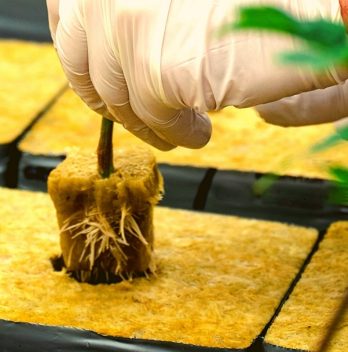
    Starting seeds in Rockwool cubes can be a great process for your plant’s growing experience. Rockwool is a soil-free medium or substrate that can be used for starting seeds. They can as well be used in hydroponics or stem rooting.

    Rockwool offers so many benefits to almost any type of plant which makes it popular and best-loved among most growers.

    This article attempts to enlighten you on germinating seeds in Rockwool cubes and more, so read on to learn.

    Let Us Get To Know What Rockwool Cubes Are

    Rockwool is made from spinning chalk and basalt rock, which are then formed into a thick mat of natural fibers. The combinations are made to look like the consistency of cotton candy. The spun fibers are then combined with a binding agent. The materials are pressed and formed into cubes which we know as Rockwool cubes. Mostly, Rockwool cubes can come in one or two inches sizes: although, you can also obtain bigger Rockwool cubes of about four inches.

    The smallest Rockwool sizes are the most appropriate for starting seeds, leaf cuttings, and stem propagation. Bigger rock wool cubes are mainly used to grow denser plants.

    Get to Know What Rockwool Cubes Are

    A Guide On Germinating Seeds In Rockwool Cubes

    It is important to know how to germinate seeds for hydroponics with rockwool. Seed germination (whether for hydroponics or conventional soil planting) requirements can sometimes demand careful and precise planning or processes. Take for instance moisture requirements: moisture is an essential factor when it comes to seed germination

    Therefore, a Rockwool cube is a great choice to use in germinating seeds because it can retain moisture. Rockwool cubes will keep your seeds moist while preventing them from sitting in a waterlogged environment. They can retain just the right amount of water to keep your seeds from drying out thereby improving seed germination.

    Read more about How to Use Rapid Rooters Plugs

    How To Start Seeds In Rockwool

    • The first step to take in germinating seeds in Rockwool cubes is the preparation of the Rockwool cubes. Rockwool cubes need to be soaked in pH-adjusted reverse osmosis water before use. They don’t require too much soaking; however, ensure the cubes are fully absorbed in water.
    • Soaking is required because rockwool cubes usually have a high pH of about 7.8 but your seeds will require a pH of 5.5 which is a slightly acidic medium. This way, your seeds will have the best chance of germinating and sprouting appropriately.

    • Remove the Rockwool cubes from the soaked water and give them a gentle shake to take off the excess water. However, don’t squeeze them. Now your cubes are ready to be placed in your germinating tray.
    • Most rockwool cubes have holes in them, so get your seeds and drop them into the holes of the Rockwool cubes. With a toothpick or other identical objects, gently push down the seeds to the bottom holes.
    • Now squeeze the rockwool hole to close them or simply break off a little piece of the Rockwool from the sides to cover the top. The seeds need to be placed in a dark environment.
    • Next, cover the rockwool cubes with a humidity dome so that they can maintain a humid environment. Keep them at 70 to 80 degrees. Now you can place them in a gentle grow light.
    • You can maintain a moist environment by misting them with a spray bottle whenever you notice them drying out. Sprouting should be noticed after a couple of days, depending on the plant seeds that you are germinating.

    Benefits Of Start Seeds In Rockwool

    Here are the benefits your seeds stand to enjoy by using rockwool cubes for germinating seeds.

    • Water Retention: Rockwool cubes have excellent water retention capacity which is very essential for the germination of your seeds. At the same time, Rockwool will not waterlog your system. It can drain excess water, retaining just the right amount of water needed by your seeds to germinate.
    • Air Circulation: Rockwool cubes will provide good air circulation and oxygenation of the root system.
    • Clean: Rockwool is a clean or sterile medium and it doesn’t have any weeds, pathogens, or pests.
    • Reusable: Rockwool cubes don’t decompose over time. Therefore, it can be reused over again.
    • Safe: they are made from natural materials. Thus, it is very safe to use for your germinating seeds because it doesn’t contain any toxic substances.

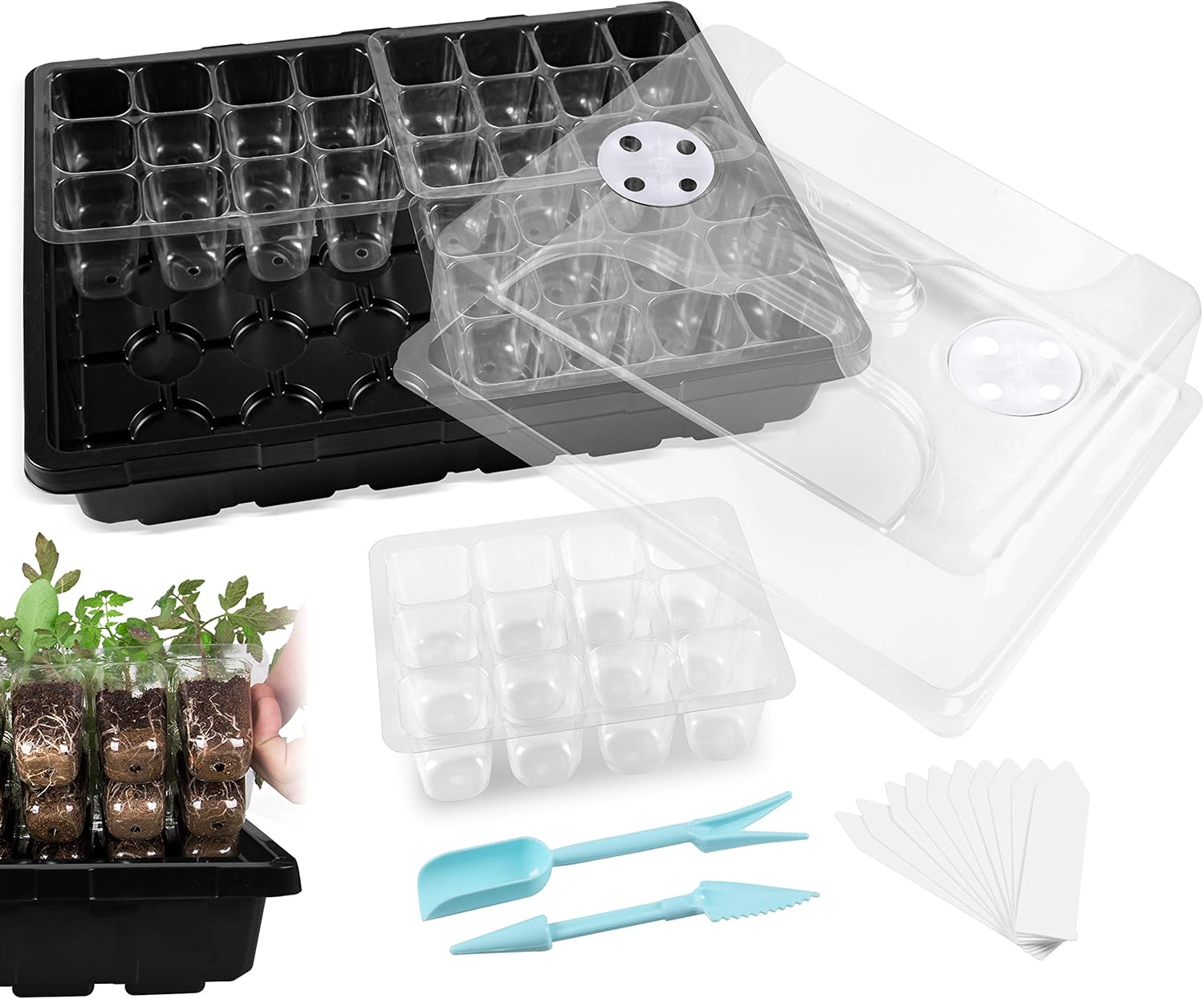
    Sturdy Seed Starter Tray With Humidity Dome Seedling Trays
    81WFa5tuqjL. AC SL1500

    Common Problems With Germinating Seeds In Rockwool

    While rockwool is a very reliable medium to use for germinating seeds, it is not without its fair share of troubles. Here are some of the most common problems and how you can tackle them head-on if you ever experience seeds not sprouting in rock wool.

    • Temperature

    One of the most popular problems associated with seeds not sprouting in rockwool is the temperature. It could be that the temperature is too hot or too cold to support germination. If you investigate and find this to be the case with your seeds not sprouting, move your rockwool cubes into a warmer or colder environment as required. If this is not possible, you can purchase a germination chamber such as this one which comes with a heat mat tray that can be used to attain more favorable temperatures, especially in colder climates.

    • Poor seed quality

    Sometimes all the conditions may be right in your rockwool cubes, but if the seeds are of poor quality, the rate of germination will be low or completely zero. Poor seed quality is mostly due to the degradation of the seed. This usually happens over time. Seed death or degradation starts to happen as soon as the seed is mature and viable.

    Generally, seeds will have high germination rates for the 2-3 years of their lives with an average of 80% success. Once this rate hits about 75%, the seeds start to lose their ability to germinate quickly. As a result, old seeds have poor quality and will not germinate properly. Be sure to use the freshest and newest seeds to germinate in rockwool.

    To try and increase the shelf life of your seedlings, carefully store them in airtight glass jars and place them in the refrigerator or freeze them. You can put a little bit of powdered milk or wrap the seeds in a paper towel to absorb excess moisture.

    • pH Imbalance

    Rockwool has a naturally high pH, which makes it highly alkaline when wet. A lot of seeds germinate poorly in alkaline conditions and prefer slightly acidic ones. To get the right pH for your plants, irrigate the rockwool cubes with an acidic nutrient solution to re-balance the pH of the growing environment.

    • Mold

    Although rockwool has a high moisture content that prevents plant roots from dying out, this moisture can promote the growth of fungi. These fungi will encourage seeds to mold and rot instead of germinating properly. If you notice mold starting to form, irrigate less.

    • Insufficient airflow

    Insufficient airflow through the Rockwool cubes can also create problems for seed germination. To prevent this issue from occurring, avoid crushing or compressing your rockwool so that it retains enough air pockets to allow for sufficient airflow.

    What Is The Best Time To Transplant Rockwool Seedlings

    Knowing when to transplant rockwool seedlings is an important determining factor in getting good survival rates for transplanted seedlings. 

    Transplant seedlings when they reach a height of about 2-3 inches in height. Also, check that the roots of the seedlings are beginning to poke out at the bottom of the cubes. By this time, they should also have developed a full set of two to three sets of true leaves.

    After your seedlings in the rockwool cubes have developed and are ready to transplant, simply plug the cubes and plant them directly into your grow sites and your plants are ready to go!

    How To Care For Seedlings In Rockwool

    Taking good care of seedlings post-germination is also important to ensure a successful crop. Here are the measures that you need to take to;

    • Before you need to transplant the seedlings, place the Rockwool cubes in a nursery tray and cover it with a humidity done to ensure that the moisture stays locked in and the Rockwool never runs dry
    • Maintain an environmental temperature of between 70 and 80 degrees Fahrenheit 
    • Keep the rockwool cubes moist by consistently spraying them with water every few days when you notice them starting to dry out.
    • Remove the Rockwool cubes from the humidity cube and place them under the light as soon as the seeds start to sprout

    Closing Remarks- Starting Seeds In Rockwool Cubes

    Rockwool cubes are a great substrate for seed starters. They are safe and will provide your seed with good moisture and oxygen for optimal germination.

    They come in various sizes and shapes and they can blend into different growing systems. So, give your seeds an excellent germinating chance with Rockwool.

    FAQ’s

    Why won’t my seeds germinate in rockwool?

    The problem might be that they are not getting enough light. Rockwool is a great product for growing plants and it has been used for centuries. It’s made from ground-up volcanic rock so it provides nutrients and structure for plants to grow. It also helps maintain moisture in the growing medium. There are many different types of rockwool, each with its own unique properties.

    Rockwool is like a sponge and absorbs all moisture from the air. It’s great for storing seeds but if you put them in it they won’t get a chance to germinate. You need to keep your seed starting containers dry and make sure you water the soil before you cover the seeds with the rockwool. I would use vermiculite for a seed starting medium because it’s a bit drier than the rockwool.

    Do seedlings need nutrients in rockwool?

    As long as they are not sitting in wet rockwool, yes. If you do not want to water them, use a bulb planter and keep them in a shaded area. If you’re going to be transplanting them to larger containers, you can add some nutrients to the potting mix if you want to. If you have the fertilizer that comes with the plant, that will be fine. You could also use a diluted liquid fertilizer such as a 10-10-10.

    How often should you water seedlings in rockwool?

    Rockwool needs more frequent watering than soil because it does not absorb water as well. It is best to water your Rockwool when the top inch or so of the material is wet, which usually happens within 24 hours. It is important to keep the surface of the material damp, but not wet. If the Rockwool dries out too much, it will crack and become brittle. If you see a rockwool plant that appears to be drying out, cut off the top few inches and let it dry out again before re-watering. Once you have cut back on the water supply, wait for the top inch or so of the material to be wet again, and then re-water. You can also use a spray bottle with a fine mist setting to apply water directly to the Rockwool.

    Can I start seeds in rockwool cubes?

    It would be fine as long as you keep it moist enough. I think it should be fine to use sand or even peat moss as long as it’s not very wet. As far as keeping it moist, I have a few suggestions:
    1. You can put a humidifier in the room where the cubes are.
    2. You can put a small fan in the room with the cubes and blow on them.
    3. You can use a misting system (like a misting bottle). I’ve heard of people putting plastic bags over their plants and then cutting holes in the bags to spray water into. That way the plant doesn’t dry out.

    Recommended Products


    MIXC 3-set 144-cell Sturdy Seed Starter Tray With Humidity Dome Seedling Trays Growing Starting Germination Kit Seed Starter Clone Tray for Microgreens Soil Blocks Rockwool Cubes Wheatgrass Hydroponic
    We earn a commission if you make a purchase, at no additional cost to you.

  • Potassium Sulfate For Plants – Is It Soluble, And How Do You Use It?

    Potassium Sulfate For Plants – Is It Soluble, And How Do You Use It?

    Most farmers and at-home gardeners often wonder about the use of potassium sulfate for plants, whether it dissolves in the soil and how exactly to use it. Here we discuss this fertilizer so that farmers can have a better understanding of it and its application.

    Potassium sulfate is an excellent source of potassium for plants. It provides the essential plant nutrient in a stable PH-neutral form. With some brands certified as organic, you can choose from a wide variety of commercially available brands.

    Potassium fertilizers come in different types.  If you don’t understand their differences, it can be difficult to distinguish them.  Potassium sulfate is the best choice for both organic and conventional gardeners.

    Is Potassium Sulfate Soluble?

    Not all potassium sulfate fertilizers are alike. There are synthetic potassium sulfates and those that are organic certified. The potassium sulfate that comes from natural mining sources is the one that is certified organic. This potassium has not undergone any kind of further processing.

    Is Potassium Sulfate Soluble?

    Unfortunately, some unprocessed raw materials are not water-soluble. They carry unwanted minerals that do not help the plant when put into the soil. Only a few sources of organic potassium sulfate are soluble. Knowledgeable sales staff should be able to tell you the source of their fertilizers. And whether their product is soluble or not.

    While some brands of potassium sulfate fertilizer claim to be 100% soluble,  potassium sulfate itself has low solubility when compared to other potassium fertilizers such as potassium chloride. This may present challenges when it is applied in the soil, as it will not dissolve well through irrigation.

    It is also important to know the grade of the potassium fertilizer you are buying. Large particles of potassium sulfate are barely soluble and not a good choice. The best grade is the fines with small particles about 0.015mm and below. Fine grades dissolve more easily and are better to use in foliar sprays or irrigation.

    Check this organic fertilizer from Down to Earth that provides a source of potassium, magnesium, and sulfur for your plants.

    Essential Functions of Potassium Sulfate in Plants

    Potassium sulfate helps to complete a majority of essential functions in plants. Some of these functions include:

    • Activating enzyme reactions
    • Synthesizing proteins
    • Forming starch and sugars
    • Regulating water flow in leaves and cells

    In most cases, potassium in the soil is too low to support healthy plant growth. And for this reason, you can choose to add potassium sulfate to the soil in which you grow your plants.

    How To Use Potassium Sulfate In Soil

    A potassium deficiency in plants usually manifests itself in leaves turning yellow. To provide fast-acting potassium to such plants, it is best to use foliar feeding sprays. The foliar spray made from clean water and soluble potassium stops the problem from spreading.

    Highly concentrated potassium fertilizer can burn the leaves. Be sure to use mild concentrations of foliar sprays. You would rather spray a mild concentration many times rather than use the concentrated one. Fertilizer packaging also usually comes with directions on it. You can also follow the application directions on the packaging if you are unsure.

    The application rate depends on the quality of your soil.  Apply 2 pounds of potassium sulfate per 100 square feet or 2 tablespoons per gallon of water.

    How To Use Potassium Sulfate In Soil

    What Does Potassium Sulfate Do For Plants?

    As we have already stated, potassium sulfate is a source of potassium for plants. Potassium is an essential plant nutrient. Soils normally have an insufficient concentration of this nutrient to support healthy plant growth, so it needs to be supplemented via the addition of fertilizer.

    So what does potassium sulfate do for plants when it is present in the soil? The addition of potassium sulfate to the soil will help improve the yield and quality of the plants that you are growing. It does this by positively contributing to essential plant functions such as activating the reactions of enzymes, the synthesis of proteins, the formation of starches and sugars, as well as the regulation of water flow in the leaves and cells. When these plant functions are supported, it sets the plants on a great path to good health and productivity.

    Potassium sulfate is also a source of sulfur, another plant nutrient. Sulfur is used by plants to synthesize protein and is also required for enzyme function. Just like potassium, sulfur can too be deficient in soils. This deficiency will lead to inadequate plant growth.

    Both the nutrients that plants get from potassium sulfate fertilizer are crucial for the health and well-being of plants. They must be provided with these nutrients in the right concentrations. An excess or lack of one or both of these nutrients will have your plants sick in no time.

    How Much Potassium Sulfate Per Gallon?

    Knowing the correct application rate of potassium sulfate is very important. Too little can greatly hamper the growth and plants and too much may burn otherwise healthy plants.

    If you are doing a soil drench, the recommended dosage is 1-2 tablespoons per gallon of water. Make sure that this solution is evenly mixed before evenly drenching the soil with it.

    The recommended dosage for potassium sulfate, if you are going to spray it on the plant leaves, is 1/2-1 teaspoon per gallon of water. Apply with even coverage over the leaves for the best results.

    It is vital to know how to use potassium sulfate fertilizer. This is because it is different from other potash fertilizers. Its solubility may be low, and therefore will have different rules of application. To avoid damaging your plants, follow the prescribed application rates.

    When Should You Add Potassium Sulfate To Your Garden?

    So when should you apply potassium sulfate to your plants in the garden? Is it something to do as often as you irrigate or is there a particular time to do it? As with other nutrients, plants only take up potassium when they are in their active growth stage. On top of that, the soil in which they are planted has to be moist. The soil has to be moist or the potassium sulfate fertilizer has to be applied in liquid form so that the plants can take it up efficiently.

    The best time to apply or add potassium sulfate to your plants is from early spring to late summer, which is when plants are in their best growth phase. Adding the fertilizer at the wrong time in the growth cycle of the plants will only result in waste, as it will not be taken up and used efficiently for the intended purposes.

    Conclusion

    This article provided you with information to help answer the questions that you had about the use of potassium sulfate for plants. Just like the human body, plants also experience a lack of necessary nutrients in the soil. A fertilizer that replenishes the plant’s nutrients is the same as supplements that humans need. Likewise, as you take your supplement today, be sure to check if your plants need some.

    Before purchasing fertilizer of any kind for your plants, check whether they are natural or synthetic. Organic potassium for plants is best and will be obtained from natural or organic potash fertilizers.

    FAQs

    What is the best way to add potassium to soil?

    Potassium (K) is one of the most important plant nutrients. It is present in soil in different forms and functions as a catalyst for many plant processes. In general, potassium is an essential nutrient for plants. It is not readily available from the soil. Plants can absorb potassium only when it is present in solution (e.g., in water). The amount of potassium in soil is very low and is also easily leached by rainfall and irrigation.

    The best way to add potassium to soil is to apply potassium fertilizer in the form of potassium chloride. This material is soluble and has a high concentration of potassium. It is very easy to work with and can be applied either as a liquid or as granules. However, if you want to get the most out of your potassium fertilizer, you need to know how much potassium fertilizer to use. If you do not know the right amount, you will not get the full effect of your application. Potassium is an important plant nutrient. It is needed for proper development of roots and other plant parts. Plants absorb potassium from the soil. They cannot take potassium directly from their food (plants use photosynthesis to produce energy). Instead, they absorb potassium from the soil. You need to supply potassium to plants in two forms: organic and inorganic. Potassium in the form of organic material is found in soil and in organic matter that has been added to the soil. It can also be found in fertilizers. Potassium in the form of inorganic material is found in fertilizers.

    How do you make liquid potassium fertilizer?

    Plants use potassium to help build strong cell walls, improve photosynthesis, and maintain proper cellular levels of electrolytes. Potassium is an essential nutrient for plants and is considered a macronutrient. Like many other nutrients, potassium is used by plants in small amounts. Most plants will use potassium at the rate of 1% of their dry weight. To make liquid potassium fertilizer, mix a 1-pound bag of granular potassium chloride with water and stir to dissolve. Add 1/4 pound of magnesium sulfate per gallon of water and stir again. Filter the mixture through a fine mesh strainer to remove any remaining solids. Store the fertilizer in a glass container.

    What plants need a lot of potassium?

    Potassium is an essential mineral for plant growth. It is needed in the formation of chlorophyll, and it also helps regulate water and sugar levels in plants. 

    Potassium is also involved in the production of chlorophyll, and is used to make cell walls and connective tissue. Plants require potassium to help them absorb nutrients from the soil.  The amount of potassium you need to feed your plants depends on several factors. These include:

    The type of plant you’re feeding. Plants that are grown in soil tend to require more potassium than those that grow in water. Some types of plants, such as tomatoes, require only a small amount of potassium to grow. Other plants, such as cacti, will need a lot of potassium. The time of year when you feed the plant. When you feed a plant in the spring, it will absorb more potassium than it will when you feed it during the summer.

  • How Much Soil Is Needed For A 5-Gallon Pot?

    How Much Soil Is Needed For A 5-Gallon Pot?

    Container gardening can take some calculations, especially if you’re working with a strict budget. You wouldn’t want to buy anything you don’t need. Knowing how much soil is needed for a 5-gallon pot can ensure you don’t have waste.

    You’ll also need to determine how much fertilizer or water will keep plants in pots of this size thriving. The crop you choose to grow will also influence the soil, water, and fertilizer needs. These are just some factors you need to consider when container gardening.

    In this article, I share how a 5-gallon pot looks, its capacity, and how much soil and water you’ll need for it. 

    5-Gallon Pot Size And Capacity

    You can use a 5-gallon pot or container to grow various crops or flowers. You can even create a bonsai tree display to freshen your indoor areas. Here’s what you need to know about 5-gallon pots before purchasing one:

    5-Gallon Pot Dimensions

    The dimensions of 5-gallon pots differ. Some are wider, while others are deeper. Whether the bucket or container is round or squared also has an influence. 

    Round Pots: The average rounded 5-gallon pot is 12-15 inches tall and has a diameter of 10-12 inches. 

    Squared Pots: A squared 5-gallon bucket typically has a width of 9-11 inches and a lenght of 9 – 12 inches. Most are about 12 – 16 inches deep. 

    The mold used by manufacturers and the specific design of the pot are responsible for these variations. 

    5-Gallon Pot Capacity

    A 5-gallon pot can produce enough fruit or veggies for one person, depending on what you plant. Some crops that grow great in containers and do well in pots of this size include:

    Tomatoes: You can plant cherry or bush tomatoes in a 5-gallon pot. Don’t plant more than one plant per pot. If your plant is healthy, you can harvest about 300 cherry tomatoes and 10-30 pounds of bush tomatoes per season. 

    Eggplant: A 5-gallon pot can house only one eggplant at a time. You’ll harvest up to 15 eggplants from one tree.

    Peppers: You can plant any pepper variety in a 5-gallon pot. Your crop yield will depend on the type you choose. Plant one or two pepper plants per container. 

    Cucumbers: Plant one cucumber per 5-gallon bucket. Use a trellis to help it grow upward. 

    Broccoli: You can grow one broccoli head in a 5-gallon pot. Continue to water your plant after the initial harvest – some plants produce another head.

    Brussels Sprouts: One brussels sprout tree will fill a 5-gallon pot. If your plant gets heavy, stake it. You’ll harvest about five sprouts per week, adding up to more than 30 over the season. 

    How Much Soil Is Needed For A 5-Gallon Pot?

    You’ll need about 0.7 cubic feet of soil to fill a 5-gallon pot. The type of soil you use, what you want to plant, and how it reacts to water will influence this amount.

    If you’re planting crops, you won’t have to fill your pot all the way to the top. Before purchasing potting soil, be sure to research the crops you want to plant in your container garden. You might need less than 0.7 cubic feet per 5-gallon pot. 

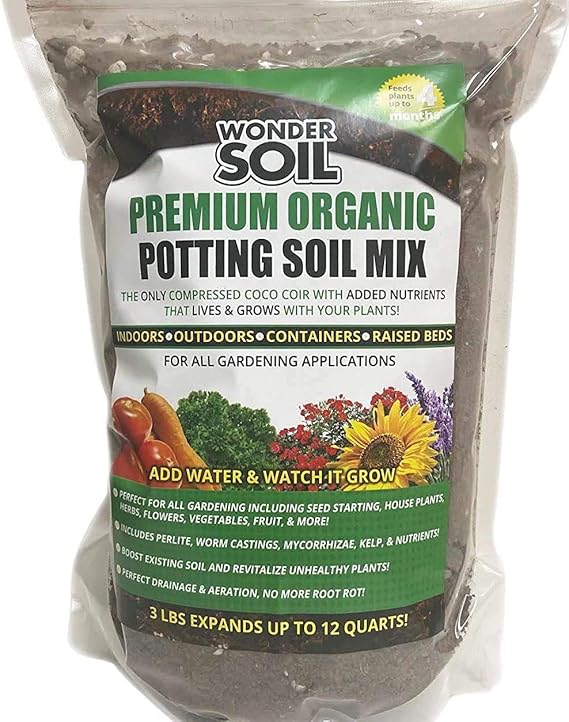
    WONDER SOIL Organic Potting Soil | Ready to Plant Coco Coir Fully Loaded with Nutrients

    How Much Soil Is Needed For A 5-Gallon Pot

    How Much Water Is Needed Per Gallon Of Soil?

    On average, you’ll require 2½ gallons of water for a 5-gallon pot filled with soil. This will vary depending on the crops you planted and how well your soil drains. Here’s what you’ll need for other sized pots:

    • 1-gallon pot: ½ gallon of water
    • 3-gallon pot: 1 ½ gallon of water
    • 7-gallon pot: 3 ½ gallons of water
    • 9-gallon pot: 4 ½ gallons of water
    • 11-gallon pot: 5 ½ gallons of water

    Using A 5-Gallon Terracotta Pot: What You Need To Know

    Terracotta is a type of fired modeling clay used to create beautiful pots for gardens. You can use them indoors or out and plant flowers, fruits, or vegetables in them. Just take note:

    • Terracotta clay is porous and absorbs water. You’ll have to water your crops more often or give them more per session if you want them to grow successfully.
    • These pots are fragile. Place them in an area where you won’t move them.
    • Place your terracotta pots in shaded areas to keep them cool. If they dry out fast, they’ll absorb more water.
    • Plant crops that prefer dry soil like beans, corn, and eggplant.
    • Use terracotta pots when planting crops prone to developing root rot or soil diseases. 

    The Benefits Of Container Gardening – How Much Soil Is Needed For A 5-Gallon Pot?

    Whether you plant your crops in 5-gallon pots, other containers, or a square-foot garden, there are many benefits to keeping your crops raised. Here are my favorites!

    Space Saving: You’ll use less space when planting your crops in pots. It’s an ideal solution if you don’t have land or need to garden on a balcony.

    Control: You’ll have more control over your soil, watering sessions, and plant needs when using a raised gardening method. 

    The Benefits Of Container Gardening

    Portable: Planting in 5-gallon or bigger buckets allow you to move your garden around. This is extremely helpful, especially if you live in an area that gets hot days and cold nights.

    Variety: Planting in buckets allow for more variety. You can grow one crop per container to ensure you grow something of everything without the different crops impacting one another.

    Less Work: You won’t have as much maintenance work when planting in pots. There’ll be fewer weeds to pluck, and working with the crops in your containers won’t be as strenuous. 

    Final Words – How Much Soil Is Needed For A 5-Gallon Pot?

    How Much Soil Is Needed For A 5-Gallon Pot? Gardening in a 5-gallon pot is practical and easy. You’ll use less soil and water and have a wider variety of crops. There are different designs and materials to choose from, so shop around until you find a pot that works for you!

    I hope this article was helpful and a good read. If you have more questions about gardening in containers or different-sized pots, ask them in the comments.

  • Coffee Grounds On Tomato Plants: Why And How

    Coffee Grounds On Tomato Plants: Why And How

    Adding coffee grounds on tomato plants may benefit your crops. Here’s a few reasons to try it!

    Organic gardening can seem impossible when you’re starting out. The market is flooded with synthetic fertilizers, and gaining knowledge about organic ones takes time. Coffee grounds are a quick, easy-to-use organic fertilizer that even beginners can master.

    In this article, I explain how you can keep your garden organic with coffee grounds on your tomato plants, what coffee does for your soil, and how tomatoes can benefit if you add it to your soil mix. 

    Organic Gardening With Coffee Grounds As Fertilizer For Tomatoes

    Although not scientifically proven, many gardeners believe coffee grounds benefit their tomato plants.

    There’s no concrete evidence to show coffee grounds make tomatoes grow faster or kill pests around them. However, gardeners have taken it upon themselves to test this theory out. 

    Many tomato plant enthusiasts report a difference in their tomato gardens compared to when they weren’t using coffee grounds. Coffee grounds are a popular fertilization method for organic gardening.

    Will Coffee Grounds Kill Plants?

    Coffee grounds won’t necessarily kill your plants, but they may hold some disadvantages. 

    Tomato plants love acidic soil. Coffee grounds bring the pH balance of soil down, making it perfect for this red fruit. The plants next to them don’t like this as much. You might want to skip the coffee grounds if you grow different crops in the same beds as your tomatoes. 

    Coffee grounds can leave other crops without the nutrients they need and suck the water in the soil up. This can stunt growth. 

    Your plants may even dehydrate. Coffee grounds group together to form a thick, hard layer. This can stop water from running through the soil to your plant’s roots. 

    Do Coffee Grounds Add Nitrogen To Soil?

    Apart from making the soil acidic, one of the biggest advantages for tomato plants is the nitrogen present in coffee grounds. Most gardeners use coffee grounds in their organic gardens because of this. 

    Coffee grounds contain nitrogen, phosphorus, and potassium. These vital minerals fertilize the soil and help you grow healthy tomatoes. Coffee also acts as a slow-release fertilizer to ensure your tomato plants are fed for a longer period.

    Reasons To Add Coffee Grounds On Tomato Plants

    Although none of these benefits have been proven, you can still add coffee grounds to the soil around your tomato plants for the next reasons.

    Coffee Grounds Contain Vital Minerals

    Coffee grounds are packed with minerals like nitrogen, calcium, magnesium, potassium, phosphorus, iron, and zinc. Adding them to your soil will slowly release these to your plant roots.

    Coffee Grounds Contain Vital Minerals

    Tomato plants need these nutrients for healthy growth. Potassium helps them photosynthesis while nitrogen encourages stronger leaf growth. Magnesium improves fruit quality. 

    Coffee Grounds Make Soil More Acidic

    Tomatoes thrive in acidic soil. Adding coffee grounds will lower the pH level of your soil to help it meet your plants’ requirements. 

    You should use coffee grounds mixed into peat moss for the best results. The acidity in the coffee grounds will reduce over time.

    Take Out Time to Also Read:

    Coffee Grounds May Prevent Fungal Diseases – Coffee Grounds On Tomato Plants

     Some harmful fungal diseases that affect tomato plants include anthracite fruit rot and early flight. Many gardeners claim that coffee grounds help combat these diseases and keep their plants healthy. 

    Coffee Grounds May Keep Pests Away

    The love slugs have for tomato plants is one-sided. These critters can harm your harvest, leaving ugly and inedible tomatoes behind.

    Researchers tested the effect coffee grounds have on slugs, and it turns out that they don’t want to come near it. There’s no reason to not give this slug repellent a try!

    Cats also don’t like the smell of coffee, so they won’t use your soil as a litter box if you use grounds. 

    Caribou Coffee, Medium Roast Ground Coffee – Caribou Blend 20 Ounce Bag

    Coffee Grounds On Tomato Plants

    How Do You Add Coffee Grounds To Tomato Plants?

    There are many options if you want to add coffee grounds to your organic garden. Here are some ways you can use it to benefit your tomato plants:

    Mixing Coffee Grounds Into The Soil

    You can simply mix some coffee grounds into your soil before planting your tomato seeds or seedlings. This will allow it to act as a root fertilizer.

    The coffee grounds will ensure nitrogen levels in your soil rise. It will also help keep pests away and make the soil more acidic and favorable for tomato growth.

    Just be careful to not add too much to your soil. Doing this can cause drainage issues and harm other plants nearby.

    Use Coffee Grounds In Your Compost – Coffee Grounds On Tomato Plants

    Mixing coffee grounds into your already established compost is the best and safest way to use it. This will ensure your plants receive the benefits of coffee grounds and the compost you choose.

    Your final compost mix should contain a 1 to 4 green to brown ratio. Coffee grounds are considered a green compost material.

    Use Coffee Grounds As A Mulch

    Mulch helps keep moisture in the ground, prevents weed growth, and promotes a healthy composition. Mixing coffee grounds into your regular mulch will ensure your tomato plants get extra nitrogen.

    Add Coffee Grounds In The Water

    You can create a liquid fertilizer by making coffee with coffee grounds and water. You should add no more than 2 cups of ground with 5 gallons of water. 

    I suggest spraying it on your tomatoes at least once a week.

    How Do You Add Coffee Grounds To Tomato Plants

    Wrapping Up – Coffee Grounds On Tomato Plants

    Coffee grounds are relatively cheap, easy to get, and even easier to use in an organic garden. Adding it to your tomato beds can greatly benefit them and help you harvest more healthy tomatoes than ever before!

    While no concrete evidence has been penned about the use of coffee grounds on tomato plants, many gardeners live by it. It’s a key ingredient in keeping tomato plants healthy when organic gardening. If you keep the ratio of coffee grounds to other soil nutrients balanced, you have nothing to lose by at least trying.

    I hope you found this article helpful and enjoyed reading it. If you have more questions about using coffee grounds in your garden, ask them in the comments.

  • What Are The Tiny Grey Bugs In Houseplant Soil?

    What Are The Tiny Grey Bugs In Houseplant Soil?

    If you are growing any type of houseplant, you may wonder what are those tiny grey bugs in houseplant soil and how to treat them.

    There are many types of houseplants that are easy to grow, however, bugs are a big problem for houseplants. To help us understand these tiny grey bugs, let’s learn what they are and how to control them.

    What Are The Tiny Grey Bugs In Houseplant Soil?

    Houseplants are home to a number of beneficial insects, including ladybirds, lacewings, and hoverflies. But houseplants also harbor a range of pests that can cause problems for you and your plants. One common pest is the small grey bug, which feeds on the roots of houseplants.

    These tiny grey bugs are actually called nematodes. They can be parasites or predators. These are not normal bugs, but microscopic creatures that can harm other insects, mites, or worms.

    Nematodes - Tiny Grey Bugs In Houseplant Soil

    Nematodes have a hard outer covering and move slowly through the soil. They feed on bacteria and other tiny organisms in the soil. Some species can even eat other nematodes. We have a lot of different types of nematodes, some of which are good for plant growth.

    Click Here to Get Info About:

    How Do The Tiny Grey Bugs In Houseplant Soil Affect The Plants?

    Some nematode species can be harmful to houseplants. A common problem with these is called root gall. This is when a worm has entered the roots of a houseplant and started feeding on them. If a worm gets into the root system of a plant, it may cause damage to the plant. The root cells can be destroyed, and nutrients can be lost from the plant. This can make the plant weak, or it can even kill it.

    The plant will not grow as well as it could, and may even die. This can happen when you have a new plant in your house. If you have not looked after the plant properly, you may have just placed it in your house. It may have been bought from a garden centre or other shop.

    The most common type of nematode is called the roundworm. This is a common pest in the soil around houseplants. It is often found in soil that has been treated with fertiliser. This can attract many different types of pests to the soil. These nematodes can feed on bacteria and other microorganisms in the soil, and then move up into the roots of plants. They are usually found in soil that is high in nitrogen. This is because they feed on bacteria and fungi, which are more common in nitrogen-rich soil.

    What Are The Causes Of Nematode Infestation?

    The most common cause of nematode infestation in the garden is the use of contaminated seeds. If you buy seeds and plants from a reputable supplier, there is no reason why you should not have a healthy garden. It is important to remember that most seeds sold as organic or heirloom are not free from contamination.

    What Are The Symptoms Of Nematode Infestation?

    There are different types of nematodes that cause symptoms in your garden. Some are visible, others are not. The most common symptom is a general weakening of the plant, however, this can be caused by a number of other factors.

    How Can I Prevent Nematode Infestation?

    Nematode infestation can be avoided by buying only from a reputable supplier who ensures that their stock is free from contamination. The supplier should also provide a guarantee for the quality of the eggs and larvae.

    How Do I Treat Nematodes? – Tiny Grey Bugs In Houseplant Soil

    Nematode treatment should only be carried out by a professional. You should only use a professional pest control service, or you will risk spreading them further around your home. Professional treatments are best carried out using specialised equipment and techniques.

    Preventing the spread of nematodes is easier than treating them. The best way to prevent nematode problems is to avoid over-watering your garden and lawn, especially during summer.

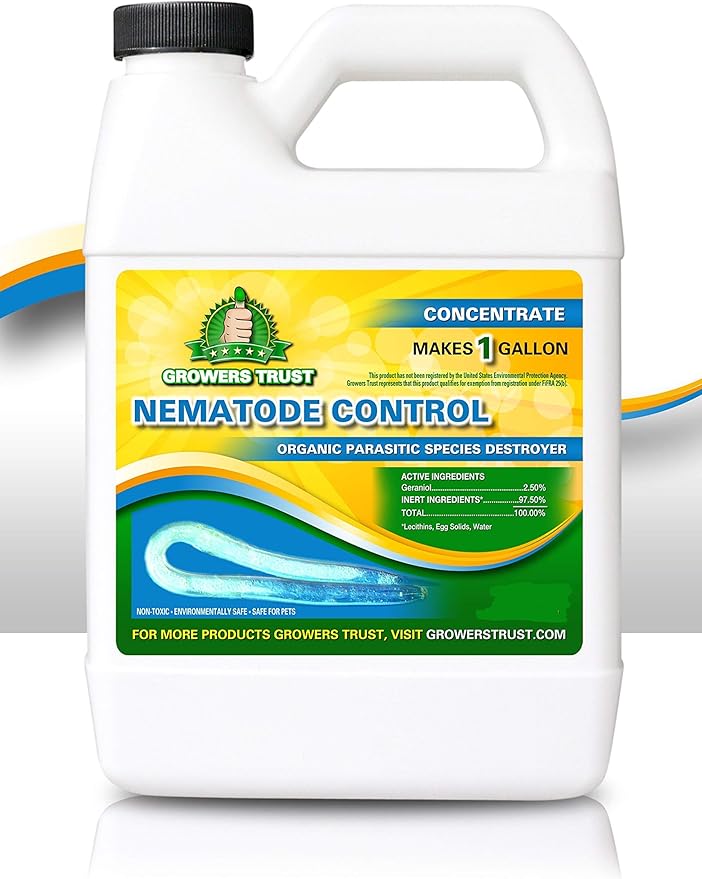
    Growers Trust Nematode Control Non-Toxic, Biodegradable – Natural Nematode -Treatment (Solution Makes 5 Gallon RTU )

    81CEzu3uaZL. AC SY879

    The best time to treat for nematodes is when you see the first signs of damage, and as soon as possible. This will reduce the risk of spreading the infestation to other parts of your garden.

    You can try to prevent nematode infestations by applying a pesticide to your garden at least two weeks before planting, but it may not always be effective.

    Take Home – Tiny Grey Bugs In Houseplant Soil

    The earlier you notice and deal with the tiny grey bugs in houseplant soil, the better in ensuring your plant’s safety. We recommend that you check your plants every two weeks for signs of infestation, and if you do find bugs, remove them from your houseplant immediately. You don’t want to be doing any damage to the plant while you’re trying to get rid of it.  The earlier you get rid of them, the better.

    FAQ’s

    What are these tiny grey bugs?

    These tiny grey bugs are some of the most destructive pests you will ever come across n your houseplants.

    How do you get rid of mites in houseplant soil?

    The best way to remove them from your houseplants is to wash your plant and use a spray bottle to wet the leaves thoroughly and spray them with a solution of water, dish soap and a few drops of dishwashing liquid. Do this once every week or two and the mites will disappear.

    Are soil mites harmful to plants?

    Yes, they are harmful to the plants but the good news is that they are easy to get rid of!  A good way to keep them under control is to wash your plant thoroughly and spray it with a solution of water, dish soap and a few drops of dishwashing liquid. Do this once every week or two and you will be fine!

    What do houseplant mites look like?

    They look like tiny grey bugs that crawl around on your plant leaves. They can be found on the underside of the leaf and often near the midrib of the leaf.  If you notice that your houseplants have become stunted or have yellowing leaves, this is a sure sign that they are infected with mites. If this happens, you should contact your local nursery for advice on how to deal with the problem. It is completely safe to use dishwashing liquid to control mites on your houseplants. You just need to make sure that you use the right dilution. It is best to use a 10-20% solution. A 20% solution means that you will be spraying your plants with 1 part dishwashing liquid to 10 parts of water. The dishwashing liquid will help to loosen up the soil so that the mites can be washed away.

  • Does Potting Soil Go Bad? The Truth About This

    Does Potting Soil Go Bad? The Truth About This

    If you’ve been in a situation where you find an old bag of potting soil and you wonder if can be of any use; then you’re not alone. The potting soil may just have been sitting outside the shed for a while and it may have you wondering what to do about it. Does potting soil go bad? We will deeply look into this question in this article.

    Soil that is of great quality is required to successfully grow plants whether indoor or outdoor. Potting soil ensures the plant grows in an adequate medium. It ensures our plant receives the appropriate nutrient, care, and more for healthy plant growth.

    Most times, when we purchase potting soil, we may get more than what we need. So, some soil tends to remain and this makes us keep them. But what we would like to know is this: does potting soil go bad?

    Does Potting Soil Go Bad? Get To Know The Truth

    Does potting soil go bad? The truth of the matter is that potting soil doesn’t have a particular expiry duration. However, it can go bad if it has been kept for a long time. Also, not storing potting soil appropriately can cause it to go bad.

    Does Potting Soil Go Bad

    How long Can Potting Soil Be Stored?

    Once you’ve opened your potting soil, it should last around 6 to 12 months. Then for potting soil that has not been opened, it can be stored for about 1 year or two years.

    What Is Potting Soil Composed Of?

    You should know that not every potting soil contains the same ingredients and this is because various potting soil has different purposes. There is potting soil designed specifically for indoor use and they are usually well-draining soil. Outdoors potting soil on the other hand is made to retain moisture longer.

    But let’s look at the general composition of potting soil for a container garden:

    • Peat Moss: peat moss is a fibrous material that contains nutrients such as nitrogen and phosphorus for the growth of a plant.
    • Perlite: this is a volcanic glass material and this composition helps improve water retention, soil aeration, and drainage.
    • Vermiculite: this is a mineral that enhances soil water retention as well as soil aeration.
    • Bark: bark is a shredded pine bark that helps increase soil aeration and water retention.

    Why Will Potting Soil Go Bad?

    Usually, potting soil is inclined to go bad due to the presence of degradable ingredients they are made up of. The majority of potting soil is made up of peat moss and other organic ingredients that tend to decompose over time. Peat moss for instance is at its best for about 1 to 2 years. So, after this, peat moss can start to decompose and make the potting soil go bad.

    Why Will Potting Soil Go Bad

    When this soil goes bad, it usually leads to the soil losing water retention and aeration. Hence, this makes the soil inappropriate to be used on any potted plant.

    Check Out A Guide On Feeding A Pitcher Plant – How To Do It

    How To Tell Your Potting Soil Has Gone Bad

    Most potting soil does come with expiration dates so you can simply check the expiration date. However, there are times the expiration date isn’t clear. Or the expiration date has faded out. You can still determine when your potting soil has gone bad or expired through other means.

    So, you can further tell if your potting soil has gone bad by doing some checking, and here are some signs to tell you that it has gone bad:

    1.    Foul Smell

    Once you begin to perceive this foul, rotten egg smell, that’s an indication that your potting soil has gone bad. The reason you perceive this bad smell is mainly because of the anaerobic bacteria that grow in this old, damp, and compacted soil.

    2.    Soil Compaction

    When your soil is compacted, it means it feels heavy or tightly packed. This is one common issue faced with old potting soil that comprises peat moss. Peat moss is best used from around 1 to 2 years of buying it and after this duration, the soil begins to go dense as it composes of other organic materials.

    https://m.media-amazon.com/images/I/71lBK3kYw1L._AC_SX569_.jpg
    71lBK3kYw1L. AC SX569

    3.    Mold Formation

    Once you notice mold growing out of your potting soil, it has gone bad. This situation often occurs when the soil is stored inappropriately. For instance, storing potting soil that is damp in a closed bag for a long time can, especially during warm weather can cause the soil to begin to form mold.

    4.    Insects Invasion

    Insect invasion or infestation is another clear sign your potting soil has gone bad. Small insects such as fungus gnats thrive in soil, particularly moist soil. These insects can access your potting soil even when it’s closed through very tiny openings.

    Once they access your soil, they begin to multiply by laying eggs. Inside your potting soil mix. They tend to encourage decomposition in a way that’s not healthy.

    Read more about All You Need To Know About The Purple Aloe Vera

    Tips For Maintaining A Fresh Potting Soil

    If you won’t be using your potting soil mix right away or you won’t be using all the soil, there are things you can do to maintain this soil mix for some period.

    • Store your unused or unopened potting soil in a dry and cool container. Then once you’ve opened the potting soil bag, store it in a dry and cool air-tight container.
    • You can revive your potting soil by mixing it in more nutrients if it has lost its nutrients before it expires.
    • Blend or mix your old soil with fresh potting mix.

    Conclusion – Does Potting Soil Go Bad?

    Potting soil does go bad so if you find out that your old potting mix starts to give a foul odor or it’s bringing out mold; then it’s a sign the soil has gone bad.

    We have discussed some details about potting soil going bad and we hope this piece of information has enlightened you.

    FAQ’s

    How do you know if potting soil is bad?

    When potting soil has gone bad it will show some signs. The signs to determine your potting soil has gone bad include foul odor, mold formation, soil compaction, and insect infestation.

    Is it okay to use old potting soil?

    You can use old potting soil if the soil has no pests or diseases. So, ensure what you’ve used the soil to plant is totally healthy. However, sterilizing the potting soil mix is ideal for use against the next year’s planting season.

    How long can you keep a bag of potting soil?

    A potting soil that has not been opened can be kept and used for a duration of 1 to 2 years. However, once you have opened the potting soil, it will begin to degrade and you will have about 6 months to store it.

    How do you rejuvenate old potting soil?

    To rejuvenate your old potting soil, do the following: Spread and lay out the soil so you can clean the soil by taking out any debris such as rotted plant roots, weeds, and dead leaves. Then clean with water, mix the soil with a fresh mix, and add a slow release fertilizer. After doing all this, let the soil cure by storing it in a dark and dry place for about 2 weeks then you can use it.

  • 5 Advantages of Organic Lawn Care

    5 Advantages of Organic Lawn Care

    Have you been thinking about converting your lawn to organic care, but aren’t sure if it’s worth the switch? There are many advantages of organic lawn care that may persuade you! 

    In this post, we’ll outline some of the key benefits of making the change. Keep reading to learn more.

    What is Organic Lawn Care?

    Organic lawn care is an approach to lawn care that focuses on using natural methods to achieve a healthy lawn. This includes avoiding the use of synthetic chemicals, such as herbicides, pesticides, and fertilizers. Instead, organic lawn care relies on practices such as mowing, aeration, and top dressing to promote a healthy lawn. 

    While organic methods may take more time and effort than traditional methods, they are often more effective in the long run and provide numerous benefits for both people and the environment. In addition, organic lawn care is often less expensive than traditional methods, making it a great option for budget-conscious homeowners.

    5 Advantages of Using Organic Methods for Lawn Care

    From using organic lawn fertilizer to trying a mulching mower for your lawn, there are all kinds of benefits of organic lawn care. Here are some of the best. 

    1. A Healthier Lawn With Stronger Root Development

    A healthy lawn is the foundation of a beautiful landscape. Not only does it provide a green space for recreation and relaxation, but it also helps to filter air and water, reduce noise pollution, and stabilize the soil. A key element of a healthy lawn is strong root development. 

    Unfortunately, many traditional lawn care methods involve the use of synthetic fertilizers and pesticides, which can damage roots and impair their ability to absorb nutrients. Organic lawn care focuses on nurturing the soil and promoting the growth of healthy grass through the use of natural ingredients. 

    Organic fertilizers are made from natural materials such as plants, animals, and minerals. They often contain a mix of essential nutrients that can help to promote healthy plant growth. In comparison, synthetic fertilizers are usually made from chemical products that may not be as effective at providing the necessary nutrients. 
    Organic fertilizers are often easier for plants to absorb, which means that more of the nutrients are available for use by the plant. This can lead to healthier plants with strong root systems. 

    Synthetic fertilizers can sometimes have the opposite effect, causing nutrient deficiencies that can damage plants and stunt their growth. For these reasons, organic fertilizers are generally considered to be better for your plants and their root development.

    As a result, organic lawn care can lead to a healthier lawn with stronger root development.

    organic lawn fertilizer

    2. Difficult (If Not Impossible) to Overapply

    When it comes to lawn care, many homeowners want to do everything they can to ensure a healthy, green lawn. However, they may not be aware of the potential risks associated with using synthetic pesticides and fertilizers. 

    These products can easily be overused, causing harm to the environment and potentially posing a health risk to people and pets. In contrast, organic lawn care solutions are much more difficult to overapply. 

    This is because they are derived from natural sources and break down quickly in the environment. As a result, they are much safer for use around the home and garden. 

    For those looking for a more eco-friendly and sustainable option, organic lawn care solutions are the way to go.

    3. Reduces Pollution of the Water and Soil

    The use of chemical-based lawn care products can have a negative impact on the environment. These products can pollute the water and soil, and they can also be harmful to wildlife. 
    Organic lawn care solutions are a much safer option, and they can also be just as effective. By using organic products, you can help to reduce pollution and protect the environment. In addition, organic lawn care solutions are often more affordable than their chemical-based counterparts. 

    So, not only are you doing your part to protect the planet, but you’re also saving money in the process.

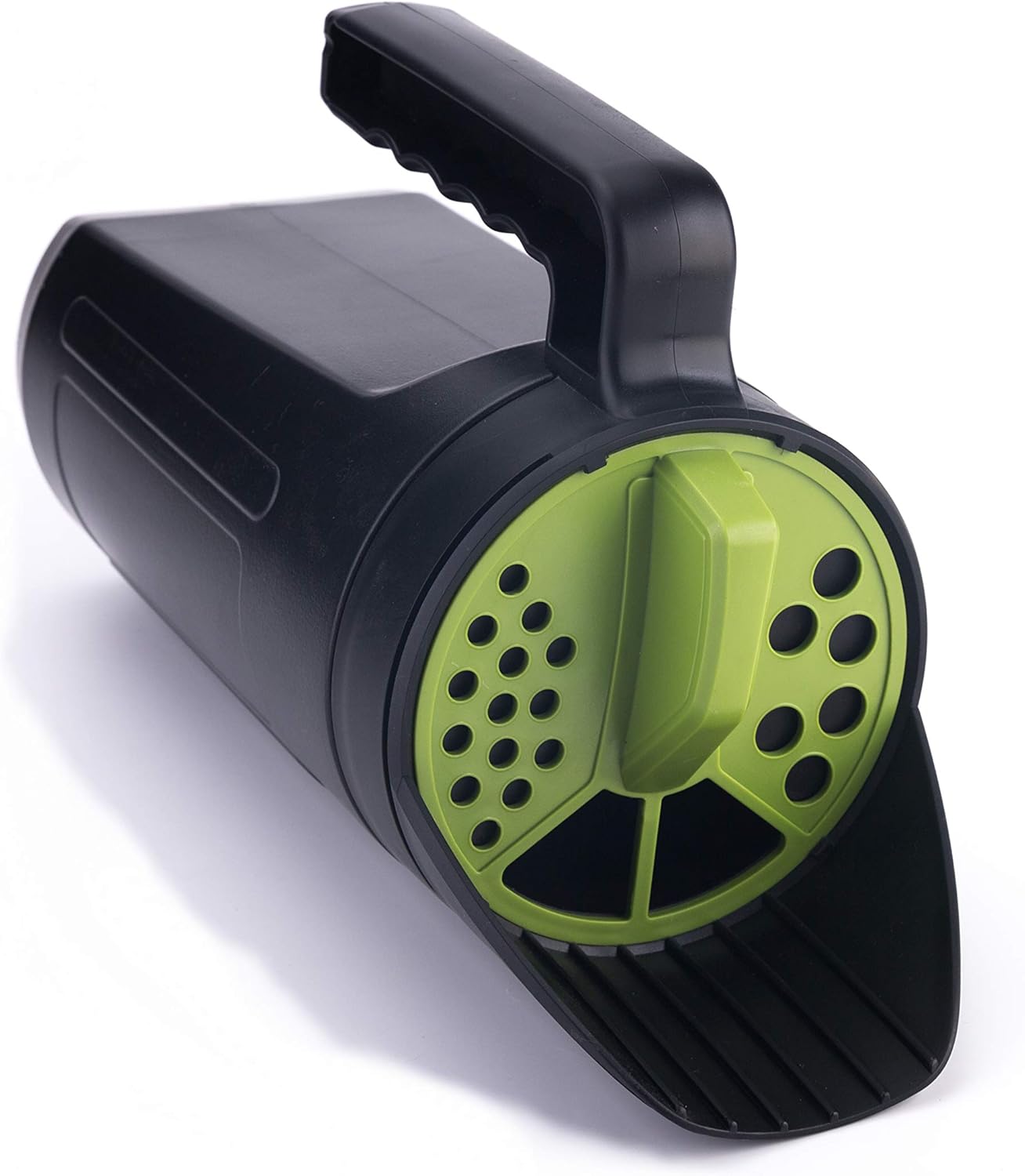
    Hand Spreader Shaker

    71hZfbzVS L. AC SL1500

    4. Grass is Less Likely to Suffer from Pests and Diseases

    A healthy lawn is the foundation of a beautiful landscape. Unfortunately, many conventional lawn care products contain harmful chemicals that can damage grass and make it more susceptible to pests and diseases. 

    Fortunately, several organic lawn care solutions can keep your grass healthy and green without the use of harsh chemicals. One of the biggest benefits of organic lawn care is that it is less likely to harm beneficial insects such as ladybugs and bees. In addition, organic products are often made from natural ingredients that are gentle on grass and won’t cause long-term harm. 

    As a result, organic lawn care is an effective way to maintain a healthy lawn without using harsh chemicals.

    5. Saves a Ton of Money

    A healthy lawn is the foundation of a beautiful landscape. However, keeping a lawn looking its best can be a costly and time-consuming endeavor. Synthetic fertilizers and pesticides are often used to achieve the desired results, but these products can be expensive and may have harmful side effects. 

    Fortunately, there are organic lawn care solutions that can be just as effective as traditional methods, but without the same cost or environmental impact.

    Organic lawn care begins with choosing the right grass variety for your climate and soil type. Once you have established a healthy lawn, you can then implement organic management practices such as mowing high, watering deeply and infrequently, and using organic fertilizers and pest control methods. 

    These techniques may take a bit more effort than using synthetic products, but they will save you money in the long run and are better for the environment. With a little effort, you can have a healthy, beautiful lawn that is safe for your family and pets and requires no harmful chemicals.

    Why Wait? Go Green With Your Lawn Care for a Greener Lawn Today

    Switching to organic lawn care is a great way to improve your home’s environment and help out the planet. Not only will you be doing something good for the earth, but you may also find that organic methods are more effective and save you time in the long run. Have you tried any of these organic lawn care tips?

  • All About Supertunia Vista Bubblegum!

    All About Supertunia Vista Bubblegum!

    If you are interested in learning all about Supertunia vista bubblegum, we will look at it in this article.

    Supertunia Vista Bubblegum is a common plant used by most gardeners in landscaping. In this article, we will look at the history of Supertunia Vista Bubblegum and how to care for it. We will also see the many benefits that this plant has to offer.

    What is Supertunia Vista Bubblegum?

    The Supertunia Vista Bubblegum is a type of petunia hybrid that is a member of the Solanaceae family. In USDA Zones 10-11, they are grown as perennials, but in cooler areas, they are grown as annuals.

    The beautiful flowers of this plant are great for attracting hummingbirds and butterflies. They are a particularly popular plant thanks to the fact they tend to be heat and drought tolerant.

    What Is Supertunia Vista Bubblegum - The  History

    Supertunia Vista Bubblegum – The Appearance and Uses

    The leaves of the Supertunia Vista Bubblegum are green. The flowers of this plant are pink in color red-purple veins. They appear in clusters and have a sweet scent.

    These flowers bloom from planting to a hard frost and are known for being excellent bloomers. They are easy to care for and their stunning blooms make for an attractive addition to any garden.

    It has several different uses which include: gardening, home décor, and landscaping. Supertunia Vista Bubblegum is a herbaceous perennial that grows up to 12-24 inches tall. 

    The most common use for Supertunia Vista Bubblegum is as a hanging basket or in a planter. This plant can be placed on a sunny window sill or in an artificial light setting. It can also be used as a patio plant or landscape plant.

    Supertunia Vista Bubblegum – Propagation

    This plant can be propagated by either seed or cuttings. The best time to propagate this plant is during the summer months. 

    The best way to propagate this plant is by using cuttings. To do this, take a cutting from the top of the petunia plant, be sure to cut a soft, flexible leaf and wrap it in a damp paper towel. Fill a plastic container with a mixture of equal parts peat moss, sand, and plant food.

    Dip the end of the stem in rooting hormone and then make a small hole in the soil mixture. Carefully place the end of the stem in the hole and push soil around it to keep it in place.

    Burpee Bone Meal Fertilizer | Add to Potting Soil | Strong Root Development | OMRI Listed for Organic Gardening

    618a4ZruCgL. AC SX569

    Keep the container out of direct sunlight and water the cutting well.  After about three weeks, carefully check to see if roots have formed. Once the roots have formed, you can remove it from the container and plant it in a new pot of fresh potting soil.

    Click Here to Get Info about:

    Supertunia Vista Bubblegum – Care

    This plant can be grown in both sun and part sun. Supertunia Vista Bubblegum thrive when they get six or more hours of sun a day, but they can also grow in four to six hours of partial shade a day.

    It is also important to water this plant well.  The plant needs medium watering to keep the soil moist. This plant can also benefit from being fertilized on a regular basis.

    Fertilize your soil:  Your soil will be better off if provided with the right nutrients.  Fertilize your Supertunia Vista Bubblegum in the spring by using a slow-release fertilizer such as Osmocote.

    Manage diseases:  Supertunia Vista Bubblegums are often disease resistant. However, they can be suspectable to root rot, gray mold, late blight, and tobacco mosaic virus. The plant might also get pests such as aphids, flea beetles, slugs, and snails.

     To prevent these problems, keep your Supertunia Vista Bubblegum well-watered and look out for any pests or changes in the plant.  You should also keep the soil moist, but not soggy.

    Repot your plant: The best time to repot this plant is in the spring. This will cause less stress to the plants.

    Water thoroughly, but do not overwater and if you notice any sign of disease, re-pot immediately.

    Check Out 11 Best West Facing Window Plants

    Final Remarks

    The Supertunia Vista Bubblegum is a beautiful plant to grow.  It will produce stunning pink flowers with red-purple veins.

    If you have trouble growing it in your climate, look for it at a plant nursery. It’s quite easy to grow, but do not be surprised if it takes a while for it to mature.

    FAQs

    Is Supertunia Vista Bubblegum a perennial?

    In USDA zones 10-11, the Supertunia Vista Bubblegum is grown as a perennial. However, in cooler areas it is grown as an annual.

    What color do bubblegum petunias come in?

    The Supertunia Vista Bubblegum is noted for its signature pink flowers with red-purple veins. However, petunias can come in almost all colors except brown and black.

    How big do Supertunias get?

    The Supertunia Vista Bubblegum can grow to be 12-24 inches tall. They are a particularly great size for growing in hanging baskets and flower pots.

    How long do Supertunias last?

    How long a Supertunia plant last depends on if it is grown as a perennial or annual. A Perennial will regrow every spring, whereas an annual will live for just one growing season, then die off.

  • Get To Know Some Of The Best Worms For Vegetable Garden

    Get To Know Some Of The Best Worms For Vegetable Garden

    Many types of worms are great soil amenders so adding them to our gardens is very beneficial. But which of these various types of worms is one of the best for our vegetable gardens? Best worms for vegetable garden will be discussed in this article.

    If you have a farm that you grow vegetables on, then you should know that come certain worms can help to boost your soil quality. Below the surface of the soil inhabits an ecosystem with life that include worms. So, these worms provide some health benefits to our garden soil.

    Below the surface of your soil, these beneficial worms are adding great nutrients and even aerating your soil. But what types of worms are great for our vegetable gardens? Let’s find out.

    Best Worms For Vegetable Gardens

    So, what are the best worms for vegetable gardens? Below we have listed some of the best worms for your vegetable gardens:

    1.    Earthworms

    When it comes to the best worms for vegetable gardens, we can put earthworms as one of the best. Usually, earthworms are naturally in our soil and they tend to be down below the ground. We may not even know that these worms are down below our soil.

    Earthworms help the soil by fertilizing the soil with their excrete and they also help aerate our soil. Once you’ve confirmed the presence of earthworms in your soil, that’s an indication that your soil has good organic matter.

    Best Worms For Vegetable Gardens - Earthworms

    Additionally, worms help digest any organic matter that you add to your soil system. They do this by assisting in the decomposition of the organic matter added by their feeding activities.

    2.    Nightcrawlers (Lumbricus Terrestris)

    Nightcrawler worms are also great to be used for vegetable gardens. These types of worms are just like earthworms because they also help breakdown organic matter thereby making these nutrients available to your plants. Nightcrawler worms also help aerate the soil by burrowing into the soil.

    3.    Red Wigglers (Eisebia Foetida) – Best Worms For Vegetable Garden

    Red wiggler is another good worm that can be added to your vegetable garden. However, it is best to add red wiggler worms to raised bed as this will help keep them contained.

    Unlike other worms species such as earthworm and nightcrawler that tend to burrow into the ground, red wigglers don’t burrow. Rather, these worms often remain in the upper layer of the topsoil, meaning they are surface dwellers.  They can tolerate higher temperatures.

    Red wigglers breathe via their skin and they need to remain moist. So, ensure you don’t let these worms dry out. You can help with moisture by adding a layer of mulch so the soil can remain moist. Do this once you’ve released red wigglers into your vegetable garden.

    These worms are pretty efficient in decomposing scraps from your vegetables in your compost pile or worm bin and their droppings. Their urine is very useful for your plants and your garden.

    Live Red Wiggler Composting Worms from Meme’s Worms (100ct – 1/10th lb)

    71wceNUHI9L. AC SX569

    Should Red Worms Be Introduced Into Our Garden?

    Earthworms are natural dwellers that you can find sitting down below your soil. However, red wigglers may not be found naturally in your garden. You may need to introduce red wigglers from outside source.

    But introducing red wiggler worms into your garden may not be the best option. Red wigglers are active critters that tend to move so they can move away from your soil area.

    If you want to get good results, you will need to keep these worms contained. Setting them up in a raised bed with a huge amount of mulch and keeping them in the vermicompost bin is a good plan. Alternatively, if you have a manure pile, then you can use them on the pile.

    Is It Possible For Earthworms And Red Worms To Live Together?

    The fact is that red worm and earthworm lifestyle is totally different. Hence, it’s hard for them to compete with resources.

    Red wigglers don’t burrow into the soil as earthworms do. So, introducing red wigglers in the topmost part of your soil can probably get them eaten by birds. They can even move away from your garden or garden bed.

    So, because of the differences in how earthworms and red worms live, not all situations or environments are suitable for them.

    Earthworms, for instance, tend to burrow deep into the soil and they like a cool environment but they can’t tolerate heat. However, red worms are surface dwellers that can tolerate heat.

    Also, earthworms like a huge compost bin so that they can have the chance to burrow deep down. For red worms, on the other hand, you should use them with vermicompost bin or use them on a manure pile.

    So, the ideal thing is to allow earthworm remain in their base down below as they assist in processing the waste and aerating the soil. Then red worms can remain on the top soil as they also help process waste.

    Click Here to Get Info about:

    What Are The Benefits Of Adding Worms To Garden?

    Worms such as earthworms, nightcrawlers, and the like can be of great help to our garden. Usually, we may not even be aware they are doing their good work.

    • Beneficial worms help digest all organic matter that enters our soil system. The worm’s activities help degrade organic matters.
    • Worms help by making all nutrients available to the plants. They do this by pre-digesting organic matter.
    • Worms such as earthworms and nightcrawlers dig deeper into the soil thereby aerating the soil.
    What Are The Benefits Of Adding Worms To Garden

    Conclusion On Best Worms For Vegetable Garden

    Earthworms, nightcrawlers, red worms, and the likes can be very helpful to our gardens, especially vegetable gardens. Best worms for vegetable gardens have been discussed in this post. So, you can help boost the production of your vegetable garden by introducing these beneficial worms when necessary.

    FAQ’s

    What kind of worms are best for vegetable garden?

    The kind of worms that are great for your vegetable garden includes earthworms, nightcrawler, and red worms. Earthworms and nightcrawlers dwell deep down in the soil. Then red worms usually prefer the surface of the soil.

    Are worms good for gardens?

    Yes, some species of worms are great for our gardens. Worms such as earthworms help improve the fertilization of the soil as well as aerate the soil.

    Should I put worms in my garden?

    Although beneficial worms such as earthworms are naturally present in our soil, you should only add them to your garden when it is necessary.

  • Can You Grow A Bedroom Snake Plant? 

    Can You Grow A Bedroom Snake Plant? 

    Is it possible to grow a bedroom snake plant meaning it will always be in your bedroom and not any other part of your home?

    Snake plants are easy to grow both indoors and outdoors.  When grown indoors, they can be kept in any part of the house – living room, bedroom patio, bathroom, etc.

    About Snake Plant

    The snake plant is one of the easiest houseplants to grow because of its versatility.  It does well in any type of lighting and it only needs to be watered when the soil drys out.  

    When grown outdoors, it does well in bright indirect light.  It can also be planted in containers.  It’s very easy to maintain and will grow quickly.

    It also makes a good gift for anyone who loves snake plants. The leaves are generally dark green with green-banded leaves and with a yellow border. They are a great size for growing indoors as they can grow anywhere from six inches to eight feet.

    The common or garden snake plant is also known as mother-in-law’s tongue because of the shape of its leaves.  It is native to tropical Western Africa. 

    It has become one of the most popular houseplants because of its easy care and fast growth.  Snake plants can be grown in a sunny location in any type of lighting.  It does best in sandy well-drained soil.

    Care And Maintenance For A Bedroom Snake Plant

    Check Out What Is The Bleeding Heart Flower Meaning?

    Bedroom Snake Plant Growing Conditions

    Snake plants growing in the bedroom require proper growing conditions that include:

    A cool and humid room

    Snake plants grow best in temperatures between 65 to 85 degrees Farenheit. The ideal humidity level is between 30 to 50 percent. A humidifier can help to maintain moisture in very dry conditions. 

    Soil

    Snake plants can grow in a loose, well-drained potting mix and they go well with sandy soils. The proper growing environment for your bedroom snake plant is a large, well-lit room with air circulation.

    Light

    Snake plants do well in bright, indirect light indoors. They can grow in many different lighting conditions including full sun, partial sun, and shade. However, be careful placing them directly under a window because the heat may damage the plant.

    Watering

    Watering can be a problem for snake plants. Too much water can cause problems for snake plants. They only need to be watered when the soil is dried out. 

    Pruning

    Snake plants are hardy plants and will need to be pruned now and then.  Simply prune the lower old leaves that are dead and leave the newer ones, which means they don’t need to be pruned. Pruning can cause damage if not properly done.

    T4U 8 Inch Plastic Plant Pots – Indoor Self Watering Planter Flower Pot with Drainage Hole

    71JsrKWot2L. AC SX569

    Care And Maintenance For A Bedroom Snake Plant

    It is important to keep your snake plant healthy and happy by following these maintenance tips:

    Tip 1: Remove dead leaves as they appear

    Dead leaves stagnate the growth of your plant so remove them as often as they appear.

    Tip 2: Water your snake plant occasionally

    Water your snake plant when the soil is dry. They do not need to be watered frequently.

    Tip 3: Keep your snake plant in bright light

    Your snake plant will grow best if it has bright, indirect light.

    Tip 4: Repot your snake plant every two years

    It is recommended that your snake plant be repotted every two years as the soil may dry out and the roots may become too cramped for the plant to grow.

    Tip 5: Keep the leaves clean and free from debris

    Clean your snake plant regularly with a soft brush or a damp cloth. Remove any dead leaves or debris that accumulate.

    Tip 6: Fertilize your snake plant

    Though snake plants don’t need to be fertilized, it can be beneficial. Fertilize with a mild cactus fertilizer during the growing season and do not fertilize in winter. 

    Tip 7: Check for insects

    If you see any signs of disease or insect infestation, consult your local gardening expert.

    Tip 8: Protect from frost

    Keep your snake plant indoors and away from cold drafts during winter. 

    Read more about An Indepth Study On Alocasia Sumo

    Final Words – Bedroom Snake Plant

    The snake plant is one of the easiest to grow and more so in your bedroom. It does not need a lot of attention and will reward you with its beautiful leaves.

    It is a great plant to grow indoors and it is beginner friendly since it does not need much maintenance. The plant can also be easily propagated through seeds or cuttings, which makes it an affordable option for beginning gardeners.

    FAQs

    Can snake plant be kept in the bedroom?

    Yes, snake plants can grow in the bedroom as long as you provide enough light.

    What is the best way to propagate snake plants?

    Snake plants can be propagated by dividing the roots or by leaf cuttings.

    Do snake plants help you sleep?

    Snake plants are a good source of oxygen which can help you sleep better.

    Do plants steal your oxygen at night?

    Snake plants do not steal your oxygen at night but they do produce oxygen. You can sleep as long as you want with the snake plant. They produce oxygen that helps you sleep.

    Where should you place a snake plant?

    Snake plant can be placed both indoors and outdoors and continue thriving. Indoors it does best in an area with bright indirect light.

  • Is a Mushroom a Producer or What Can It Be Called? 

    Is a Mushroom a Producer or What Can It Be Called? 

    Is a mushroom a producer or a decomposer?  What class would you classify mushrooms especially if you want to start growing them?

    Have you ever grown mushrooms? Mushrooms are fungi and they have a very unique appearance. 

    Fungi can be single-celled or very complex multicellular organisms that often grow on dead organic matter, such as wood, plant material, and decaying matter.  There are millions of species of fungus, including many edible ones.

    Is a Mushroom a Producer?

    Fungi can be saprobic, parasitic, or mutualistic. Saprobes eat organic material and are decomposers. Decomposers play an essential part in the survival of the ecosystem.

    Mushrooms are decomposers and they only eat dead organisms. They break down the nutrients in the dead
    organisms they consume, then return them to the food web. Mushrooms will eat dead producers or
    consumers. 

    Defining a producer and decomposer:

    Is a mushroom a producer? A producer is an organism that produces food for itself and other organisms. Producers, which are plants, use energy and simple inorganic molecules to create organic compounds.

    In the case of mushrooms, they are decomposers. Mushrooms break down dead plants and animals and then release simple inorganic molecules back into the environment. 

    The decomposers are those organisms that eat dead organic matter, such as insects, to get its energy. For example, earthworms eat the soil and convert the organic matter to new soil for plants to grow in.  So, the earthworm is a decomposer and not a producer.

    Growing Mushrooms

    Growing mushrooms is not for the fainthearted.  If you have never grown mushrooms before, it is important to start with compost and a tray. The more you grow, the more you will learn about the various species.

    For beginners, we recommend starting with the most common species of mushroom: the shiitake. The shiitake is easy to grow, and it’s a good beginner’s mushroom because they are quite forgiving.

    We also recommend growing oyster mushrooms. Oyster mushrooms are delicious when they are young, but they can grow to be very large. If you like oyster mushrooms, you will be pleased with the variety of sizes and flavors available in your garden.

    For growing mushrooms you will need:

    • For best results, use a 14×16-inch tray about six inches deep.
    • Mushroom compost material.
    • A spade or garden fork.
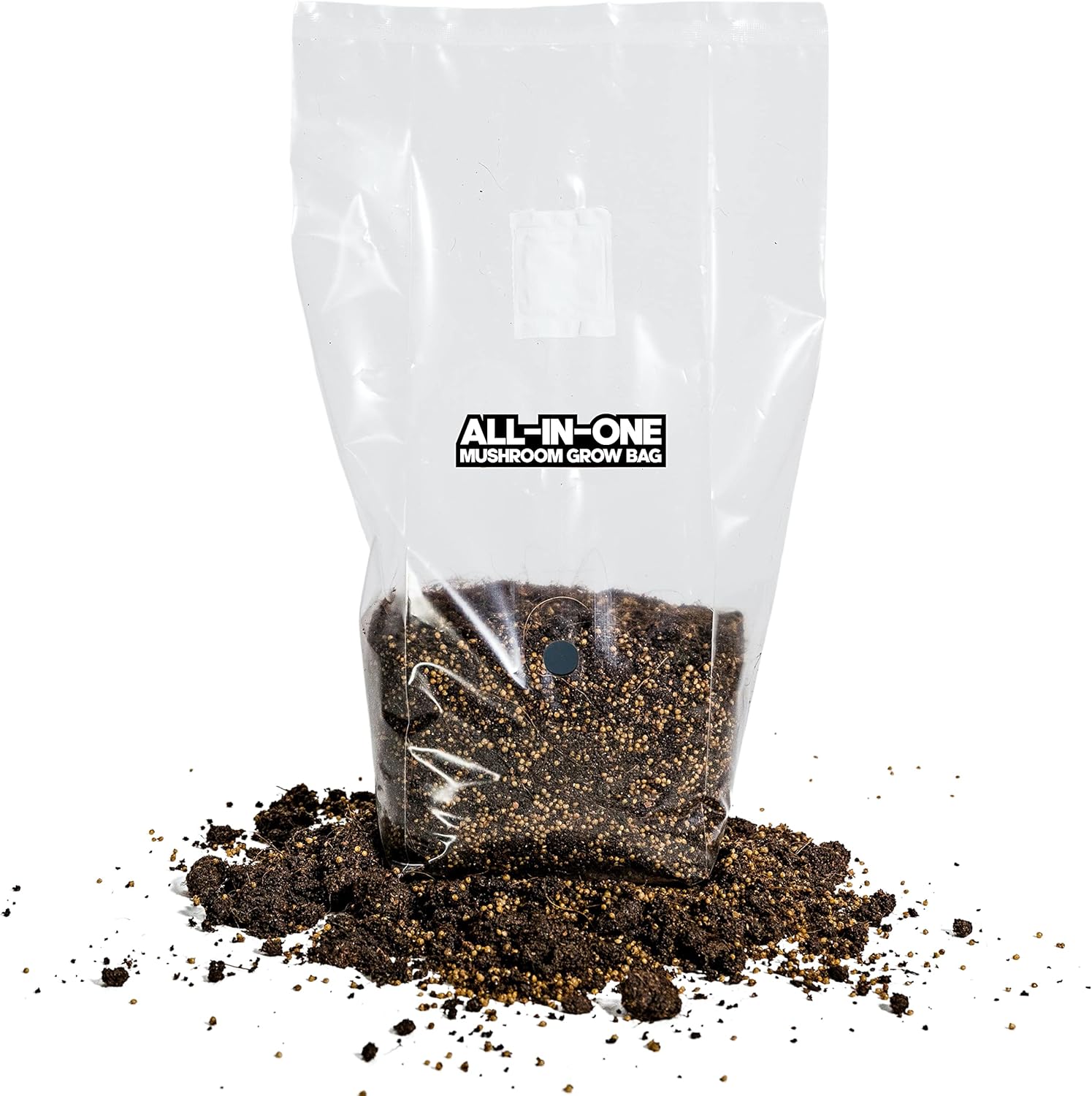
    • A mushroom spawn bag. The most common mushroom spawn bags are made from polypropylene. The advantage of using a mushroom spawn bag is that it keeps your mushrooms from getting waterlogged.
    • Heating pad.
    • Potting soil.
    • Spray bottle.

    Mushroom Grow Bag with Sterilized Grain and Substrate

    81 B7riHPIL. AC SL1500

    Step-by-step directions:

    Step 1. Preparing the mushroom tray

    Use a 14×16-inch tray about six inches deep. The tray should resemble seed flats. Fill your trays with mushroom compost material and then sprinkle spawn on top. 

    Step 2. Growing the mushrooms

    For the first three weeks, use a heating pad to keep the soil temperature at 70 degrees Farenheit. Once white, rootlike growths called mycelium appear lower the temperature to 55 to 60 degrees Farenheit. Cover the mycelium with about an inch of potting soil.

    Be sure to always keep your soil moist during the growing period. Also, be sure to keep your growing tray out of direct sunlight. 

    Step 3. Harvesting the mushrooms

    After three to four weeks, the mushrooms will be ready to harvest. You know that they are ready to harvest when the caps open fully and separate from the stems. 

    Use a sharp knife to carefully cut the mushroom at the stem, do not pull it out. Wrap the mushrooms in paper towels then place them in open plastic bags or paper bags and keep them in the fridge. You can now use the mushrooms in recipes or freeze them for later use.

    Are all Autotrophs producers

    In Conclusion – Is A Mushroom A Producer?

    So is a mushroom a producer or a decomposer?  As we have seen in the above article, a mushroom is a decomposer and not a producer. 

    Read more about Best Oyster Mushroom Substrate.

    FAQs

    What is a mushroom classified as?

    A mushroom is a fungus that forms fruiting bodies and spores. Fruiting bodies are the reproductive structures of the mushroom.

    The most common form is a spore-producing structure called a cap. Caps can be single or multiple and can be attached to the substrate or free-standing.

    A spore-producing structure called a stalk grows from the base of the cap. Mushroom stalks can also be free-standing or attached to the substrate.

    Does mushroom belong to Basidiomycetes?

    Yes. Mushrooms are basidiomycetes which are a diverse and abundant group of fungi. They comprise of around 1/3 of all known fungal species.

    Why is a mushroom not a plant?

    Plants are the dominant life forms on Earth. Plants have a root system, photosynthetic leaves, and reproductive structures. Mushrooms are not plants. They do not have roots, they do not produce chlorophyll, and they do not photosynthesize. Mushrooms are fungi that form fruiting bodies and spores.

    Are all Autotrophs producers?

    An autotroph is a type of organism that can produce its own food using inorganic substances. So, autotrphos are producers.

  • The Ideal Blueberry Soil PH Requirement

    The Ideal Blueberry Soil PH Requirement

    It is necessary to maintain an ideal pH for the blueberry soil so the plant can flourish. Blueberry soil pH can range from 4.2 to 5.5 so this implies that they need acidic soil to thrive and yield fruits.

    The pH of the soil is one of the most important things to put in place when planting blueberries. For you to properly plan your blueberry planting, you need to know the status of your soil and do the appropriate amendments necessary for your plant to flourish.

    The information we will be provided in this article will outline more about blueberry soil requirements.

    Blueberry Soil PH: The Ideal PH Requirement

    So, the correct pH level you should provide for the soil for growing your blueberry is between 4.2 to 5.5 and this shows that acidic soil is the best pH for the plant.

    This pH range for blueberry is pretty unique given the fact that most vegetables and fruit plants thrive well in a soil pH range between 6.5 to 7.5.

    But when it comes to blueberry plants, if you want to follow the usual pH range for most fruits and vegetables (which is around 6.5 to 7.5), the plant’s growth can slow down, show yellowish leaves, and even produce only a few fruits or no fruit at all. This is why you need to test your soil and lower the pH when necessary.

    Blueberry Soil PH: The Ideal PH Requirement

    To reduce the pH of your soil, you can simply amend it by adding sulfur to the soil. This sulfur can be in form of elemental sulfur, sphagnum peat moss, or you can simply use a widely available sulfur amendment gotten from your local garden stores.

    Check Out Giraffe Retractable Garden Hose Reel – The Best Garden Hose Out There On The Market

    How You Can Test The Soil To Determine Soil PH

    When you plan to grow blueberry, it is very important to determine the status of your soil pH. Once you’re able to determine the soil pH, you can know the right amendments to do. The appropriate pH status required to grow blueberry ranges from 4.2 to 5.5

    You can determine the soil pH by simply obtaining some soil samples in the area of the plant site you will be planting your blueberries and submit this sample to a lab.

    Now, once you’ve identified the status of your soil, you can now decide on the appropriate soil amendments for your soil. If the soil is high in pH, this means you should amend the soil by lowering the pH and if the soil level pH is low, you can leave it but make sure the level is between 4 to 5 pH levels.

    Read more about Growing The Pink Spider Lily From Seed

    Way Of Amending Soil PH To Suit Blueberry

    So, below are some great ways you can amend the soil pH:

    1.    Sulfur – Blueberry Soil PH

    Sulfur should be applied to the planting site. But if you would be making use of sulfur to amend your soil to plant blueberry, it is recommended to amend your soil pH the fall before you plant. It is suggested you do this because it can take several months for the pH to be amended after sulfur application.

    Monterey LG7115 Dr Soil Acidifier Granules Iron and Elemental Sulfur Acidic Fertilizer, 7 lb

    Blueberry Soil PH

    2.    Sphagnum Peat Moss – Blueberry Soil PH

    Sphagnum peat moss is also great to be used to amend the soil. This is particularly if your soil has not been amended yet and you wish to plant your blueberries this spring. So, the addition of an acidic growing medium such as sphagnum peat moss can be added to the planting site to help amend the soil.

    This method will even be more ideal if the originally the soil pH is around 5.5 to 7.0. So, just add about 4 to 6 inches of sphagnum peat moss to the upper layer of about 6 to 8 inches of the soil.

    We recommend you go further by amending the whole planting site for your blueberries. This is because the roots of blueberries are inclined to expand and outwards. Hence, it is better to amend a soil area of about 2 to 3 feet wide just to ensure the roots of the blueberries plant have access to acidic soil.

    3.    Fertilize With An Acidic Fertilizer – Blueberry Soil PH

    Blueberry soil pH planting site can as well be amended using acidic fertilizer. Some of these acidic fertilizers include ammonium sulfate, ammonium nitrate, or sulfur-coated urea.

    Guidelines For Planning Out A Blueberry Planting Site

    Let’s further look into some guidelines to put you through planning out a blueberry planting site:

    1. You should begin soil amendments by planning ahead because the soil can need several months to adjust once it has been amended. If possible, you can amend the soil in the fall before you plant
    2. At your planting site, you need to plant blueberries 5 feet apart. It may seem like this distance looks far, but the plant is capable of growing out and filling the space. Just make sure you don’t plant too close because it can create competition amongst the plants and it can even increase the chances of insect and disease damage.
    3. Make sure the blueberry variety you’re purchasing is from a reliable or reputable store.
    4. Preferably, don’t plant against a wall because the wall may generate extra heat that can cause damage to the leaves of the plant.
    5. You can expect 6 to 8 pounds of fruits each year for each plant and begin 3 to 4 years after planting.

    Final Note On Blueberry Soil PH

    Blueberry soil pH needs to be in the right range which is around 4.2 to 5.5 because this pH range will ensure blueberry plant thrives well and produce.

    Soil testing should be the first factor to consider when planning your garden site for your blueberry and once you’ve determined the pH level, just amend the soil accordingly to suit blueberry growth.

    FAQ’s

    How do I make my soil acidic for blueberries?

    You can make your soil acidic for blueberries planting by simply adding sulfur to your soil, amending it with sphagnum peat moss, or fertilize the soil using acidic fertilizer.

    Should you put lime on blueberry bushes?

    The addition of lime to soil usually neutralizes the soil pH to a pH range of around 6.0 to 7.0. However, blueberry needs an acidic soil of lower pH (which is between 4.2 to 5.5) to flourish. So, lime may not be so great in helping blueberry plant amend their soil to the right pH range.

    Can I put coffee grounds on my blueberry plants?

    You may decide to put coffee grounds on your blueberry plants because they are highly acidic. However, if your soil is already high in nitrogen and you apply coffee ground, it may stunt the growth of flowers and fruit production.

    How do you add sulfur to blueberries?

    Sulfur helps amend blueberry soil by lowering their pH, so if you want to reduce the pH range of sandy soil, you need to add ¾ pound of sulfur per 100 square feet of the garden planting site.

  • Tips When Growing The Pink Spider Lily From Seed

    Tips When Growing The Pink Spider Lily From Seed

    In this article, we will learn how to grow the pink spider lily and the perfect conditions to provide this plant so that it thrives.

    The Pink Spider Lily also known as the Resurrection lily or “surprise lily,”  is a popular plant among gardeners. It is a bulbous plant with large flowers. The flowers have an amazing fragrance and are bright pink.

    These flowers are also known for their longevity. They bloom just when many other blossoms are fading, adding a late-season pop of beautiful color. These flowers have unique trumpet-shaped blooms.

    This makes them very appealing to gardeners. They do not require a lot of space and are low maintenance. They require moderate water during the summer.

    How To Grow The Pink Spider Lily

    What does the pink spider lily symbolize

    Tip #1: Bulb germination

    Bulbs are usually the best way to start your Pink Spider Lily. This will ensure that you get a healthy plant with no problems. Plant the bulbs with 1/4 inch exposed above the soil. The soil should be organically rich and well-drained. 

    Plant the bulbs about six to nine inches apart. At maturity, they will grow to be 18 to 24 inches tall. In addition to planting in gardens, you can also grow them in pots.

    Tip #2: Sun and watering needs

    Your Pink Spider Lily should be planted in an area where it will get full sun to partial shade. They have moderate watering requirements, no more than one inch of water a week.

    Tip #3: Blooming

    The flowers will bloom from late summer to fall. They have a beautiful pink color with a very fragrant smell. The flowers will cluster atop tall stems.

    Tip #4: Feeding your pink spider lily:

    Pink Spider Lillies do not need fertilizer. Some people may choose to supplement the soil with organic fertilizer before planting, but it is not necessary in most cases.

    Handheld Fertilizer/Grass Seed Spreader

    81Yz4oz7sKL. AC SL1500

    Tip #5: Transplanting

    You can transplant your lilies the first thing in spring or fall when the flowers begin to die back. Be sure to move them to an area where they will get full sun to partial shade with well-drained soil.

    Use a trowel to carefully loosen the soil around the bulbs. Then, carefully slide the trowel underneath the bulbs and gently lift them from the soil. Separate the bulbs and remove any that are rotten.

    Carefully move the bulbs to their new location and plant them at the same depth they were before. The bulbs can be sensitive when they are moved so they make take some time before they begin growing again.

    Summary

    The Pink Spider Lily is one of the lilies that are commonly grown by gardeners.  They are easy to grow and bloom easily when provided with the right growing conditions. As you try to grow your own, have a happy time!

    FAQs

    What does the pink spider lily symbolize?

    The pink spider lily symbolizes the purity of a woman and the innocence of a child. The flower is associated with the goddess Diana, who was worshipped in ancient times as the patroness of women and children. The flower’s name comes from the Latin word for “spider,” which is associated with the goddess.

    Are pink spider lilies poisonous?

    Pink Spider Lilies are poisonous if eaten. Their poison severity is low and can cause abdominal pain, salivation, shivering, nausea, vomiting, and diarrhea.

    Is spider lily an indoor plant?

    Yes, spider lily is both an indoor and outdoor plant. It benefits from full sun and should be placed in a sunny spot. However, it will still grow in semi-shade if given enough light.

    Do spider lilies spread?

    Spider lilies are perennial plants and do not spread. It is native toand Asia. It has an upright growth habit and grows to around 18-24 inches tall.

  • Detailed Information About Alocasia Azlanii

    Detailed Information About Alocasia Azlanii

    The Alocasia Azlanii is a beautiful, dark purple foliage that has darker edging and purple veins that make the leaves look like a stormy sky.

    Alocasia Azlanii is beautiful foliage that has dark purple leaves with darker purple veins. It makes a beautiful addition to any landscape and can be planted in a variety of locations. Alocasia Azlanii has a widespread and the foliage can get up to two feet tall.

    This plant is easy to grow, needs minimal care, and will tolerate drought.  You should grow it in full sun or partial shade. The Alocasia Azlanii will bloom in spring and fall continuously if it is not cut back after it blooms.

    If you are looking for a plant that has a good amount of foliage and flowers but does not require much maintenance this plant is a perfect choice.

    About the Aclocasia Azlanii

    The Alocasia Azlanii is a plant native to Brunei. It is a species of flowering plant that is a member of the family Araceae. The Azlanii is one of the 97 Alocasia species known around the world.

    Though rare, the plant makes a beautiful tropical houseplant. However, it is important to note that the plant is toxic to pets.

    What is the rarest Alocasia

    Description:

    This plant grows up to two feet tall. The plant grows into a mound shape with deep green to purple glossy leaves. The leaves are shaped like a fan and have a leathery texture. The edges of the leaves are serrated and are covered in fine hairs.

    Alocasia Azlanii Planting Requirements:

    Soil

    Alocasia Azlanii requires well-drained potting soil. It grows best in average to fertile, well-drained soils.

    The ideal soil temperature is about 65 to 75 degrees F. The plant does not tolerate frost. Alocasia Azlanii has been cultivated in gardens for centuries.

    Propagation

    Alocasia Azlanii can be propagated from seed or by division. Seeds germinate readily and should be sown at least two weeks before the last frost. Sow seeds 1/2 inch deep in a sunny location and keeps moist until germination occurs. Cover lightly with a plastic bag to help create humidity.

    Plant Grow Lights Indoor

    71BNrFOeD3L. AC SL1500

    Fertilize

    Provide additional fertilizer when the plants begin to grow vigorously. Keep plants evenly moist but do not let them get wet. Fertilize with a 10-10-10 fertilizer once every two weeks.

    Watering

    Water during dry spells, but avoid over-watering. Once the top two inches of soil are dry then it is time to water again.

    Dividing

    For best results, divide the plant in spring or fall. Divide the rhizomes in fall by planting each piece three to four inches deep in a pot or flat. Each piece should be three to four inches wide at the top of the root ball and at least two inches wide at the bottom.

    Repotting

    Repotting the alocasias every two to three years by digging up the plant, loosening the roots, and repotting into a new container using a sphagnum moss mix.

    Pests & diseases

    There are no pests or diseases associated with this plant.  Aphids and whiteflies may be a problem; spray with insecticidal soap or horticultural oil as needed.

    In Conclusion

    The Alocasia Azlanii is one of the most beautiful plants you can ever grow.  You will find it to be very easy and rewarding. I have been growing this plant for years, but have never had a problem with it.

    It has always done well and has even bloomed in my pots. This is the perfect plant to grow indoors or out. It does not get too big and is not too heavy.

    Alocasia Azlanii does not require complicated growing conditions to thrive. It’s one plant you can grow easily with easily available conditions. Use regular potting soil and some fertilizer to nourish the plant.

    A good consistent wearing schedule works best for this plant, watering once the top two inches of soil are dry.  As far as pests go, Alocasia Azlanii is generally fine, but may suffer from spider mites, mealybugs, scale, and aphids. If you are interested in growing this plant, why not give it a try?

    Read more about Jungle Velvet Calathea – Plant Care Tips.

    FAQs

    What is Alocasia Azlanii?

    Alocasia azlanii is a member of the araceae family, and is native to Brunei. It has deep green to purple waxy leaves that are oval-shaped.

    How big can Alocasia Azlanii grow?

    The Alocasia Azlanii can grow to be up to two feet tall. It can make a beautiful tropical houseplant.

    What is the rarest Alocasia?

    Alocasia azlanii is a rare plant in cultivation.

    Can you propagate Alocasia from leaves?

    No, this plant cannot be propagated from leaves but you can propagate it from stem cuttings or seeds. The temperature of the ideal growing environment for Alocasia azlanii is between 65 to 75 degrees F.

  • The Magnificent Red Spider Lily And All There Is To Know

    The Magnificent Red Spider Lily And All There Is To Know

    The red spider lily or the Lycoris radiate blooms in the late summer and early fall. As a carefree plant that grows easily, it is capable of growing in most parts of the country.

    Also known as the hurricane lily, it is a herbaceous perennial plant that has a wide variety of uses. It can be used as a groundcover or on borders.

    The red spider lily has a beautiful, distinct look. In this article, we will give you all the information you need to know about this plant.

    History Of The Red Spider Lily

    The red spider lily is native to Southeast Asia. In 1854, Captain William Roberts of the U.S. Navy acquired three red spider lily bulbs from Japan.  Though described to be “in such a dry condition that they did not show signs of life until the War between the States” they were eventually planted in America.

    Despite their conditions, the three bulbs survived and grew in their new home in North Carolina. They began spreading across the Southern United States before becoming popular nationwide.

    It is considered to be one of the most beautiful plants in the world. It is also one of the easiest plants to grow. The coral-red flowers have exceptionally long stamens which give the plant a unique look.

    Characteristics Of The Red Spider Lily

    The red spider lily has vibrant, coral-red flowers that have a slight golden sheen in the sunlight. The petals are delicate and curl inward and the stamens of the flower are long, wiry, and prominent.

    The red spider lily has a nice aroma that is not too overwhelming. This plant bloom depends on your location, blooming from late summer to early fall.  The flowers are large, red, and bloom for about two weeks.

    Propagation

    This plant is easy to propagate as it can be grown from bulbs. When planting bulbs, you need to make sure that you plant them in an area where there is enough light.

    The bulbs should be planted at a depth of about four to six inches and should be in a place where they will get full or partial sunlight. Water them well and keep them moist until they sprout.

    Growing

    The red spider lily grows from a bulb that can be planted in fall or early spring.  The bulbs of this plant are very easy to grow and need little care. They can grow in USDA zones 6-10. 

    Red spider lilies are very hardy and can handle most conditions. They should be planted in soil that is well draining and rich in organic matter.

    The soil should have moderate moisture so it will not dry out. During the growing season, they will need around one inch of water a week.

    Breathable Jute Fabric Raised Garden Planter Bed

    81PpsRNwZfL. AC SL1500

    Maintenance

    The red spider lily has very little maintenance. You just need to water the plant about one inch of water a week and that is it. It does not need much fertilizer.

    It is best to feed high-nitrogen fertilizer in the spring, as this will provide the plant with the nutrients it needs for growth. A fertilizer that is high in potassium and phosphorus can be beneficial after bloom to help with root growth and hardiness.

    Soil

    The red spider lily likes well-draining soil that has good drainage. The soil should be rich in organic matter. Ideally, the soil should be slightly alkaline.

    Temperature

    The red spider lily does not like cold temperatures. If you are growing them in zones six or seven, it is best to add mulch to protect the leaves and exposed bulbs from cold winter weather.

    Humidity

    The red spider lily does best in relative humidity around 40-50%.

    What does a red spider lily symbolize

    Harvesting

    When you want to harvest the red spider lily, wait until it has finished flowering. Then cut the stalk at the base of the plant. After you harvest it, place your flower in a vase of water.

    In Conclusion

    The red spider lily is one of the most attractive plants one can grow in America. These flowers are stunning and make your lawn or garden look so beautiful. Why not try growing them today?

    Read more about Growing The Pink Spider Lily From Seed.

    FAQs

    What does a red spider lily symbolize?

    The red spider lily symbolizes final goodbyes and the story goes that they grow wherever people part ways for good. The red spider lily is also said to guide the dead through the cycle of rebirth in Buddhism.

    Can I touch a red spider lily?

    It is not recommended that you touch a red spider lily due to its fragility. If you choose to cut them for a bouquet, be very careful. 

    Do Red spider lilies come back every year?

    Yes, red spider lilies will bloom annually in most cases. They are hardy perennials that prefer well-draining soils. They grow best in full or partial sun, and they are drought tolerant.

    Do Red spider lilies grow wild?

    Yes, they can be found growing naturally in the southeastern United States.

  • Does Fertilizer Go Bad? – An In-depth Look

    Does Fertilizer Go Bad? – An In-depth Look

    Does fertilizer go bad or does it last forever without losing any of its nutrients all this time?  This is a question we seek to answer in this article.

    Fertilizer is the most important part of the soil.  It helps to improve the quality and quantity of crop output.  It is the most expensive component of a farm.

    Without fertilizer, it would be impossible to produce enough food for everyone.  So, if fertilizer goes bad, how can you know that the fertilizer you are using is good?  How long does it last?  Will it lose its nutrients over time?

    We will answer some of these questions in this article. In the process of answering these questions, we will also learn more about fertilizers.

    The purpose of this article is to educate people about how to use fertilizers, so that they may make better decisions about their use.  Also, we want to provide farmers with information on the benefits of proper fertilization.

    Does Fertilizer Go Bad?

    In most cases, dry fertilizer doesn’t go bad but it can lose its effectiveness over time depending on the type of fertilizer. 

    Fertilizer comes in dry and liquid forms. If properly stored, most dry crystallized fertilizer and dry granular fertilizer can last indefinitely.

    Liquid organic fertilizer can last for 5-8 years and liquid mineral fertilizer can last for up to 10 years. Fertilizers that contain AI’s (active ingredients) found in weed and pest control products generally last for 1-4 years. This is because pFertilizersesticides and herbicides will lose their potency over time.

    If you have a container with your fertilizer you should keep it closed and stored away from heat or sunlight.  The best way to store your fertilizer is in the shade. Be sure that the area you are storing it in is also dry as well.

    Fertilizer that has nitrogen-rich ingredients may leach some of that nitrogen if they get too wet or too hot. Just be extra careful when storing nitrogen-rich fertilizers to prevent this from happening.

    If you are unsure about the fertilizer you purchased, ask the store where you bought it. They may be able to tell you the amount of time until you need to use the fertilizer.

    What is a Good Fertilizer For Plants?

    You should use a fertilizer that is formulated for your specific plant.  Most fertilizer products are labeled with their nitrogen (N), phosphorus (P), and potassium (K) content.

    Fertilizers typically contain these nutrients in the form of chemical compounds, which may be inorganic or organic.  The chemical composition of fertilizers varies widely and is often proprietary to the manufacturer.

    As a general rule, many plants prefer fertilizers that are rich in nitrogen. Nitrogen-rich fertilizers can include nitrate, ammonia, ammonium, or urea, plus micro-nutrients. 

    Phosphorus-rich fertilizers include rock phosphate, ammonium phosphates, ammonium polyphosphate, phosphoric acid, calcium orthophosphate, and nitric phosphates. Plants do need magnesium, as magnesium helps improve crop yield. 

    Magnesium-rich fertilizers include dolomitic limestone and seaweed meal.  If you have a fertilizer that is labeled with the nutrients you want to add, then it will be better for your plants. 

    If you have no idea what nutrient you want to add to your soil, then a general balanced fertilizer may be best.  There are many different types of general fertilizers, so you should choose one that includes the nutrients you want to add.

    The Most Common General Fertilizers Are:

    Organic fertilizers, such as compost, peat moss, and fish emulsion.

    Inorganic fertilizers, such as ammonium nitrate, ammonium sulfate, triple superphosphate, diammonium phosphate, and monoammonium phosphate.

    General fertilizers are usually labeled with their N, P, and K content.  You can use a general fertilizer with any nutrient content, but if you are adding a specific nutrient to your soil, then you should use a fertilizer that is labeled with that nutrient.

    Home Jungle – Organic Indoor Houseplant Superfood Fertilizer

    61w+QF18VpL. SL1500

    Does Fertilizer Lose Its Nutrients?

    Does fertilizer go bad?  If you have bought liquid fertilizer that has overstayed at the store, it is possible that it will not be as effective as it should but dry fertilizer should not go bad in the right conditions. If you fertilize your lawn or garden every month, you might want to consider how long your fertilizer is available to your plants.

    Some fertilizer products are formulated to be used for a specific period, and if the product is overstayed, the plant’s nutrient value will be affected.

    How long does dry fertilizer last

    Take-Home – Does Fertilizer Go Bad?

    So does fertilizer go bad?  Most dry crystallized fertilizer and dry granular fertilizer can last indefinitely when properly stored.

    Liquid organic fertilizer stays good for 5-8 years and liquid mineral fertilizer can stay good for up to 10 years. Fertilizers that contain active ingredients generally last for 1-4 years.

    Organic fertilizers are very similar to natural ones in terms of going bad.  Though it’s organic, you can’t keep it for far too long, it will not be potent or helpful to your plants as all the nutrients will be too weak to make an impact.

    Read more about What Is The Best Fertilizer For Green Beans? Find Out Here.

    FAQs

    How long does dry fertilizer last?

    If properly stored, most dry crystallized fertilizer and dry granular fertilizer can last indefinitely. Fertilizers that contain active ingredients found in weed and pest control products generally last for 1-4 years.

    How long can fertilizer be stored?

    If properly stored, most dry crystallized fertilizer and dry granular fertilizer can last indefinitely. Liquid organic fertilizer can last for 5-8 years and liquid mineral fertilizer can last for up to 10 years. Fertilizers that contain active ingredients found in weed and pest control products generally last for 1-4 years.

    Does fertilizer lose its potency over time?

    Some types of fertilizer will lose potency over time.  However, if the fertilizer is kept properly stored and used correctly, it will last longer than most other commodities.

    Is old fertilizer useful?

    Yes, old fertilizer is still good.  The only thing to consider is that the fertilizer may not be as potent as the new fertilizer.  Old dry fertilizer should be used to replenish nutrients in the soil.

  • 3 Ways On How To Propagate Rosemary 

    3 Ways On How To Propagate Rosemary 

    Have you ever wondered how to propagate rosemary? There are several ways to propagate rosemary that we will look at today to help us learn how to do it correctly.

    Rosemary is one of the most common herbs that most gardeners love to grow. It is easy to grow and has good taste.  It does not require much space and can be grown anywhere.

    It only needs to be watered every one to two weeks, but if you want it to produce more leaves, you will have to water it more often.  The leaves can be used for flavoring food or tea.  Rosemary also makes an attractive garden plant.

    It is easy to grow and has many uses in the kitchen.  Some people even use rosemary as a herb in their cooking.

    You can dry the leaves and use them for tea, as well as for other purposes.  They are also good to dry and use for soap making.

    How To Propagate Rosemary

    propagate rosemary in water

    Knowing how to propagate rosemary is helpful if you are an avid gardener. To propagate rosemary, we need to first understand what it is.  Rosemary is a perennial herb that grows from a root system.  There are several ways to propagate rosemary that include:

    Growing the plant from seed

    The most common way to propagate rosemary is by seed propagation.  Seeds are the easiest way to propagate rosemary because they are relatively quick to start and easy to get. Rosemary seeds germinate in about 15-25 days and require lots of warmth.

    Growing from cuttings

    Rosemary can also be propagated by cutting.  Rosemary cuttings should be taken from healthy sprigs four to six inches long.  Rosemary cuttings will root easily in containers or soil and are easy to grow. 

    Strip the leaves off of the bottom two inches of the branch and dip in growth hormone if possible. If using growth hormone, you can place the cutting directly in well-drained soil. If not, place the cutting in a glass of water with the bottom two inches of the stem submerged for three to four weeks. Once there are mature roots you can plant them in potting soil.

    Rosemary cuttings should be pruned off regularly to encourage new growth. Though division is a great way to propagate other plants, it does not work well for rosemary. Division involves digging up a plant and dividing the root stems into individual sections.

    Layering

    Another common way to propagate rosemary is through layering. Layering involves getting stems to develop new roots while still attached to the parent plant. To do so, start by digging a trench that is approximately two inches deep and one inch wide at the spot where the stem of the rosemary reaches the ground.

    Using a sterilized sharp knife, carefully strip the leaves and bark from the bottom of the stem. Then, place it in the trench while leaving about two to three inches of foliage and stem intact at the tip.

    To pin the stem in the ground, use a garden staple and refill the trench with soil. Regularly water the layered stems until you see rootlets have grown and new growth appears where the exposed tip is.

    To check for new roots, very carefully dig around the area of the buried stems. This process is successful but can take many months to achieve. 

    Hanging Cylindrical Hydroponic Planter and Stand

    81Qj9n05HiL. AC SL1500

    How To Propagate Rosemary From Cuttings

    Propagating rosemary from cuttings is easy. There are several ways you can do this, and it depends on what you want to achieve.

    You can use this method if you want to keep some plants alive for the winter. In addition, if you just want to grow more plants next year you can use this method.

    To do so, you will need to grow a cutting and take it into a propagator where it will root and grow into a new plant.  To grow rosemary from cuttings, follow these steps:

    Step 1: Prepare the cuttings

    Cut off a sprig about four to six inches long and remove the leaves from the bottom two inches.

    Step 2: Water the cuttings

    Propagate rosemary in water by placing the cuttings in the water for around three to four weeks.

    Step 3: Take the cuttings out of the water

    Carefully remove the cuttings from the water, and place them in a tray of moist soil.

    Step 4: Place the cuttings in a propagator

    Grow your new cutting in a tray of well-drained potting soil, preferably in a warm environment, and water regularly. 

    Step 5: Plant the rosemary cuttings

    Once the cuttings are ready, take the cuttings out of the tray.  You can plant the cuttings in a pot filled with compost, or you can plant them in a large container such as a garden or patio planter. You can also plant the cuttings directly into your garden.

    Rosemary propagation is one of the easiest to do especially when you have a healthy rosemary plant.  The most important thing to consider is the way you prepare your cuttings so that they root easily and fast.  

    Final Words On How To Propagate Rosemary

    No more wondering about how to propagate rosemary, as the methods are discussed above and all of them are successful.  Your choice of propagation method depends on the results you want to achieve and the amount of time you are giving your plant. Knowing how to propagate rosemary is easier than one may think.

    For example, if you want this low-maintenance plant with a nice aroma, you can let it grow from cuttings from a well-grown plant and plant them. Also, remember that you can successfully propagate rosemary using cuttings because you will end up with many small plants.

    If you plant from seed, you have to wait for these plants to grow before they produce leaves, which is time-consuming.  When propagating seeds you can choose between sowing them in soil and using seed trays. Knowing how to propagate rosemary is beneficial for any gardener.

    Read more about General Information About Grape Tomatoes vs Cherry Tomatoes. 

    FAQs

    How to grow rosemary from seed?

    The simplest method for growing rosemary is from seed. This is recommended when you wish to establish a new plant in a pot or garden bed, or if you want to grow a rosemary hedge in your garden. Rosemary can be sown as soon as the soil has been warmed up. To sow, simply sprinkle seed evenly over the surface of a prepared bed and water well.

    How to propagate rosemary from cutting?

    A cutting taken from an established plant will root more quickly than seeds. Simply take a cutting, leave it in water, and water well. The cuttings can be rooted in a single growing season.

  • How Deep Do Tomato Roots Grow?

    How Deep Do Tomato Roots Grow?

    These types of soil are composed of loam and sand, with low clay content. These soils are good for growing root crops such as beans, carrots, and lettuce. The rich, organic matter in loam soil will help your tomatoes grow large and flavorful.

    Loam soil is great for holding moisture while still providing proper drainage. It works well for a variety of plants.

    Type 2: Sandy soils

    Sandy soils are made up of gritty textures including sand and gravel, often with high sand content. These soils are pracical for growing root vegetables and herbs native to the Mediterranean. Tomatoes can grow in sandy soil that is slightly acidic. 

    Type 3: Clay soils

    These types of soil are composed of very fine mineral particles, with high clay content. Clay soil provides tomatoes with important nutrients to grow strong and healthy. However, clay soil can be heavy so it is best to mix it with another type of soil.

    Type 4: Peat soils

    Peat soil is made from organic materials that have been decomposed. They are good for growing root crops such as parsnips, turnips, radishes, beetroot, carrots, and potatoes. Peat moss can be a particularly great option for growing tomatoes. 

    Vegetables Garden Planting Bags


    81blRra2fdL. AC SL1500


    Growing Tomatoes

    As we have seen above, tomato roots are deep and need at least two to three feet. They can be grown in a variety of soils including loam, peat, clay, and sand. Planting tomatoes requires proper soil preparation and spacing.

    This is especially true if you want to get a yield of 10-20 pounds per plant.  In this case, you need to make sure that your soil has plenty of nutrients for the plants to grow well and that there is ample space between each plant.

    We have some great tips on how to prepare the soil and planting depth for your tomatoes.

    • If you are having trouble with your soil, then you may need to add compost or topsoil to it.
    • You should also make sure that your soil is well-drained. This means that you should not have standing water in your planting area. If you are unsure if the soil is well-drained, then you can test it by putting a small bucket in your planting area. If water drains out of the bucket quickly, then your soil is good for planting. If it does not drain, then you should add more compost or topsoil to your planting area.
    • If you are planting in pots, then you will need to make sure that your pot is at least two feet deep.
    • If you are planting directly in the ground, then you will need to make sure that you are planting a full 2/3 of the plant underground. This depth will give your plants plenty of room to grow and get bigger.
    • You should also make sure that you use fertilizer on your plants. 
    • If you want to plant your tomatoes indoors, then you will need to make sure that you keep your plant area at a temperature of around 70 degrees Fahrenheit. 
    • You will also want to make sure that you water your plants thoroughly. Watering your plants thoroughly will help your plants to get bigger and produce more tomatoes.
    How deep should a raised garden bed be for tomatoes

    In Conclusion – How Deep Do Tomato Roots Grow?

    It is important to know deep do tomato roots grow before you get planting. The depth of tomato plants is generally between two to three feet. Different soils can be used and again even the type matters. 

    Read more about Timber Grow Lights For Plants – Grow Light Info.

    FAQs

    How deep and wide do tomato roots grow?

    The roots can reach a depth of two to three feet, with lateral roots reaching up to two feet. In the field, they grow as a network of fine roots that are used to absorb water and nutrients from the soil.

    Is 12 inches deep enough for tomatoes?

    You should provide tomato plants with at least two to three feet of depth to provide them plenty of room to grow.

    How deep should a raised garden bed be for tomatoes?

    The depth of the raised garden bed should be at least 12 inches deep.

    How deep do cherry tomato roots grow?

    Cherry tomatoes roots will grow to be around two feet deep.

    If you are thinking of growing tomatoes, it is important to know just how deep do tomato roots grow to prepare your soil before planting.

    Tomatoes are a warm-season vegetable and like most plants, they need to be grown in the right type of soil to perform at their best.  This article will help you understand how deep your roots should be planted. This will help ensure that you prepare the correct soil for your tomato plants to grow in.

    You can use this information to ensure that you plant your tomatoes in the correct soil. In addition, you can also ensure that your plants are growing in the right way.

    How Deep Do Tomato Roots Grow?

    So, how deep do tomato roots grow? The depth of your roots depends on the type of soil you are planting in. 

    In most cases, tomato roots will grow between two to three feet. It is important to know just how deep you need to plant your tomato roots so that you can ensure that the soil is prepared correctly before planting.

    Here are some of the types of soil you can plant your tomatoes in.

    Type 1: Loam soils

    These types of soil are composed of loam and sand, with low clay content. These soils are good for growing root crops such as beans, carrots, and lettuce. The rich, organic matter in loam soil will help your tomatoes grow large and flavorful.

    Loam soil is great for holding moisture while still providing proper drainage. It works well for a variety of plants.

    Type 2: Sandy soils

    Sandy soils are made up of gritty textures including sand and gravel, often with high sand content. These soils are pracical for growing root vegetables and herbs native to the Mediterranean. Tomatoes can grow in sandy soil that is slightly acidic. 

    Type 3: Clay soils

    These types of soil are composed of very fine mineral particles, with high clay content. Clay soil provides tomatoes with important nutrients to grow strong and healthy. However, clay soil can be heavy so it is best to mix it with another type of soil.

    Type 4: Peat soils

    Peat soil is made from organic materials that have been decomposed. They are good for growing root crops such as parsnips, turnips, radishes, beetroot, carrots, and potatoes. Peat moss can be a particularly great option for growing tomatoes. 

    Vegetables Garden Planting Bags


    81blRra2fdL. AC SL1500


    Growing Tomatoes

    As we have seen above, tomato roots are deep and need at least two to three feet. They can be grown in a variety of soils including loam, peat, clay, and sand. Planting tomatoes requires proper soil preparation and spacing.

    This is especially true if you want to get a yield of 10-20 pounds per plant.  In this case, you need to make sure that your soil has plenty of nutrients for the plants to grow well and that there is ample space between each plant.

    We have some great tips on how to prepare the soil and planting depth for your tomatoes.

    • If you are having trouble with your soil, then you may need to add compost or topsoil to it.
    • You should also make sure that your soil is well-drained. This means that you should not have standing water in your planting area. If you are unsure if the soil is well-drained, then you can test it by putting a small bucket in your planting area. If water drains out of the bucket quickly, then your soil is good for planting. If it does not drain, then you should add more compost or topsoil to your planting area.
    • If you are planting in pots, then you will need to make sure that your pot is at least two feet deep.
    • If you are planting directly in the ground, then you will need to make sure that you are planting a full 2/3 of the plant underground. This depth will give your plants plenty of room to grow and get bigger.
    • You should also make sure that you use fertilizer on your plants. 
    • If you want to plant your tomatoes indoors, then you will need to make sure that you keep your plant area at a temperature of around 70 degrees Fahrenheit. 
    • You will also want to make sure that you water your plants thoroughly. Watering your plants thoroughly will help your plants to get bigger and produce more tomatoes.
    How deep should a raised garden bed be for tomatoes

    In Conclusion – How Deep Do Tomato Roots Grow?

    It is important to know deep do tomato roots grow before you get planting. The depth of tomato plants is generally between two to three feet. Different soils can be used and again even the type matters. 

    Read more about Timber Grow Lights For Plants – Grow Light Info.

    FAQs

    How deep and wide do tomato roots grow?

    The roots can reach a depth of two to three feet, with lateral roots reaching up to two feet. In the field, they grow as a network of fine roots that are used to absorb water and nutrients from the soil.

    Is 12 inches deep enough for tomatoes?

    You should provide tomato plants with at least two to three feet of depth to provide them plenty of room to grow.

    How deep should a raised garden bed be for tomatoes?

    The depth of the raised garden bed should be at least 12 inches deep.

    How deep do cherry tomato roots grow?

    Cherry tomatoes roots will grow to be around two feet deep.

  • How To Use Ph Up And Down In Hydroponics – The Perfect Adjustment

    How To Use Ph Up And Down In Hydroponics – The Perfect Adjustment

    When it comes to hydroponics, learning how to use pH up and down is essential to maintaining healthy plants throughout their growing process.

    The pH is one of the most important aspects to consider when growing your plants. It can be used to determine the overall health of the plants. If your water has a high pH, it can mean that you are having trouble keeping your roots healthy.

    There are many reasons why your pH may be off. Your tap water could have a higher pH than normal, which is due to the alkalinity of the water.

    What Does pH Mean?

    pH is a measure of acidity or alkalinity in an aqueous solution and can be expressed as a number from 0 to 14. A pH between 7 and 8 is considered neutral (or neither acidic nor alkaline). The lower the pH, the more acidic the solution is, and the higher the pH, the more alkaline the solution is.

    In hydroponics, you want your nutrient solution to be around 5 or 6 pH.  Your plants need the proper balance of nutrients and minerals to grow optimally. If the pH is too high or too low, it can lead to nutrient deficiencies and disease.

    How Do pH Up And Down In Hydroponics?

    1. Buying pH Up and Down

    Many gardening stores and online retailers sell a product called pH Up and Down. It features two bottles of liquid, one for increasing pH levels and one for decreasing pH levels. This product allows you to adjust the pH levels for your plants by adding base or acid.

    After testing your water or soil, you can add either a small amount of base or acid. Add just one drop at a time before you achieve your desired pH levels. Be sure to thoroughly read the instructions before using.

    2. The easiest way is to use a pH meter

    A pH meter is an easy-to-use, inexpensive tool that helps you determine the exact pH of your nutrient solution.  You simply add the meter to the water or soil you are testing and follow the instructions on the label. The meter will tell you the exact pH of the solution.

    You can find pH meters online, in superstores, and in most gardening centers. They are generally easy to use and efficient.

    3. Another option is to use an inexpensive aquarium pH controller

    These are available in stores or online. They are easy to use and work well for small systems. They come with a built-in pH meter. They not only monitor but also control the pH level of water.

    You will need to calibrate them every once in a while.  You can do this by adding some water with a known pH to the tank and then adding the controller.

    4. Another option is to use a soil pH indicator

    These are available at most garden centers or online. They are very cheap and work well for small systems. It works by inserting a small strips into the solution. 

    The strip will then indicate the pH level of your soil. The colors of the strip will indicate the pH level of your soil after testing.

    5. An even better option is to use an auto-pH controller

    An auto-pH controller is an automated pH correction system that automatically monitors and adjusts the pH in your solution. These controllers can be purchased from most hydroponic supply stores. They are very easy to use, require no maintenance, and will make sure you have a perfect pH in your solution every time.

    Amazon Choice
    SONKIR Soil pH Meter, MS02 3-in-1 Soil Moisture/Light/pH Tester Gardening Tool Kits for Plant Care, Great for Garden, Lawn, Farm, Indoor & Outdoor Use (Green)
    $9.99
    • 3 METERS IN ONE: Soil moisture level, Soil pH value and Sunlight level could be tested easily according to your need by switching the function button of this soil meter.
    • NO BATTERY NEEDED: Simply insert the meter into soil, wait few minutes, accurate test results will be displayed on the readout panel. No battery is needed.


    We earn a commission if you make a purchase, at no additional cost to you.
    06/21/2026 09:05 pm GMT

    How Do I Keep My Hydroponic Plants Happy?

    Keep your plants healthy with proper nutrition.  Make sure you use a balanced fertilizer that has all the nutrients your plants need.  Use a good-quality liquid fertilizer that will not contain any harmful chemicals. The best way to ensure that your plants get the nutrients they need is to use a nutrient solution that has all the required nutrients in the proper balance.

    One of the most important parts of keeping your plants healthy is to make sure they have enough light.  If you are using a grow light, be sure to adjust it so that it shines on the plants evenly.  Many types of plants need direct, full light to grow at their maximum rate.

    It is also important to keep the hydroponic water temperature for your plants at 65 to 80°F.  If you are growing indoors, make sure that your lights are set on a timer so that the lights turn off and on automatically each day.

    Keep your plants healthy by adding fresh air.  Make sure to open the windows in your grow room as often as possible to provide plenty of fresh air.  If possible, most plants will also benefit from a few hours outside every day.

    In Summary – pH Up And Down

    The ph up and down in hydroponics as we have learned above is essential for the growth of these plants. Hydroponics being a sensitive method to grow plants fast requires the proper growing conditions otherwise the plants will fail.

    ph up and down solution

    FAQs

    How to use ph up and ph down?

    After testing your water or soil, you can add either a small amount of base or acid from your pH up and down kit. Add just one drop at a time before you achieve your desired pH levels. Be sure to thoroughly read the instructions before using pH up and down in your garden.

    What happens if you use ph up and down in the same water?

    In this case, the command ph up will be ignored and the ph down will be executed.

  • A Detailed Guide On What Type Of Fertilizer For Tomatoes

    A Detailed Guide On What Type Of Fertilizer For Tomatoes

    Tomato being a heavy feeder tells us that the plant is a hungry plant that likes to be fed with fertilizer for them to flourish. What type of fertilizer for tomatoes do you think is best considering the fact that tomato is a nutrient-loving plant?

    Tomatoes will thrive well when you supply them with lots of fertilizer or nutrients to grow throughout their season. No matter the type of fertilizer you use (organic or chemical), it can boost the growth and production of tomatoes by providing extra nutrients required for tomato plants to flourish.

    But the question we would like to know and discuss is what type of fertilizer for tomatoes is best? We would also discuss about the best type of fertilizer for container tomatoes.

    What Type Of Fertilizer For Tomatoes? The Ideal NPK Ratio

    When it comes to choosing the ideal fertilizer for tomato plants, go for a fertilizer that has a balanced ratio of the three main elements. These main elements include the regular NPK (nitrogen, phosphorous, and potassium). So, they should be balanced in a ratio such as 10-10-10.

    Alternatively, you can choose a fertilizer where the middle value (which is phosphorous) is greater than the first number (which is nitrogen). An example is a fertilizer ratio value of 2-3-1.

    What Type Of Fertilizer For Tomatoes? The Ideal NPK Ratio

    Click Here to Get Info About:

    What To Consider Before Deciding The Type Of Fertilizer To Use For Tomatoes

    But one important thing to note when considering what type of fertilizer for tomatoes is to know the status of your soil. Get to know the current nutrient content of your soil and you can know this by simply doing a soil test.

    After testing your soil, the result gotten will determine the type of fertilizer to use. For instance, if your soil is correctly balanced or high in nitrogen, a fertilizer that has a low value of nitrogen should be used. Then the phosphorus value should be higher. An example of this type of fertilizer is 5-10-5 or a 5-10-10 fertilizer mix.

    On the other hand, if the result of your soil test shows it lacks nitrogen or it is a low nitrogen, then a balanced fertilizer such as 8-8-8 or 10-10-10 should be used to prepare the soil of your tomato plant.

    However, if you don’t have the capacity to have a soil test, you can just assume the soil you have is balanced and make use of a higher value of phosphorous tomato plant fertilizer. But make sure the soil has not had any experience of a sickly tomato plant in the past or this may not interfere with your result.

    Another important thing to be aware of when it comes to fertilizing tomato plants is to avoid using too much nitrogen. The results of excess nitrogen supplied to tomato soil usually give rise to lush, green leaves, with very few tomatoes.

    Therefore, if you have experienced the problem stated above (very few tomato yield), then you can consider providing a bit more phosphorous to the plant rather than a balanced tomato fertilizer.

    Dr. Earth Organic 5 Tomato, Vegetable & Herb Fertilizer Poly Bag

    51OVz6TDz0L. AC

    Fertilizer For Tomatoes: The Nutrients Needed

    As we have mentioned, tomato requires 3 major nutrients and they are nitrogen, phosphorous, and potassium. The tomato plant also requires lots of other nutrients apart from the regular NPK as each of these nutrients serves some crucial tasks for plants.

    Let’s briefly look at some details on these major nutrients as well as some other nutrients:

    • Nitrogen: Supplying your tomato with nitrogen fertilizer is important and it will help maintain the leaves of the plant. However, when you use excess nitrogen, the resulting tomato plant usually gives rise to more leaves rather than more tomato fruits. Therefore, you may notice a bushy tomato plant and little tomato fruit yield when you use too much nitrogen.
    • Phosphorus: Another crucial fertilizer needed for the tomato to grow adequately is phosphorous. Phosphorous is required by your tomato plant for the growth of roots and fruits. This nutrient is an essential component for the first phase and last phase of the development of the tomato plant.
    • Potassium: Potassium assists your tomato plant to grow rapidly and produce flowers. It is these flowers that end up turning into fruits.

    So, apart from the major NPK nutrients, tomato plants also require other small nutrients and elements to grow and some of them include calcium, magnesium, zinc, boron, and so on. Let’s look briefly into some of these smaller nutrients.

    • Magnesium: magnesium helps your tomato plant to remain green and it can help enhance the quality of flowers and fruits of your tomato plant.
    • Calcium: calcium can help in producing strong tomato plants. This element will also help in proper root development and leaf development.
    • Boron and Zinc: both boron and zinc can assist in the flowering process and fruit ripening of your tomato plant.

    Best Fertilizer For Tomatoes In Pots – What Type Of Fertilizer For Tomatoes

    You can either use organic or chemical fertilizer for your potted tomato. But here are some nice homemade fertilizers you can use for your container tomatoes:

    1. Fertilizer Containing Nitrogen

    Corn gluten meal, rabbit poo, and manure are great organic homemade nitrogen-containing nutrients or fertilizers you can use for your potted tomato plant.

    1. Fertilizer Containing Phosphorous

    Human urine, kelp meal, sunflower seeds, soya beans, and pumpkin or squash seeds are good fertilizers that is phosphorous-containing that you can use for your potted tomato plant.

    Best Fertilizer For Tomatoes In Pots - What Type Of Fertilizer For Tomatoes
    1. Fertilizer Containing Potassium

    Fertilizer that contains potassium that you can use for your potted tomato plant includes wood ash, banana peels, potato peels, orange peels, sweet potato peels, and cucumber peels.

    Conclusion – What Type Of Fertilizer For Tomatoes

    Tomato plants are heavy feeders so it is important you supply them with some good fertilizer so you can enjoy optimal yield. What type of fertilizer for tomatoes has been discussed here and we have also mentioned some nice fertilizers to use for your potted tomato plants.

    FAQ’s

    What type of fertilizer is needed for tomatoes?

    The type of fertilizer needed by the tomato plant should be a balanced ratio fertilizer that has the three main elements which are nitrogen, phosphorous, and potassium (NPK). An example of a balanced fertilizer for tomatoes is 10-10-10.

    What can I use to fertilize my tomato plants?

    You can make use of a liquid type of fertilizer like compost or worm casting every 14 days to fertilize your tomato plant.