Category: Composting

  • Using Mushroom Soil For Gardens

    Using Mushroom Soil For Gardens

    Having good soil is important for any garden, no matter what you are growing. Fortunately, there are many different soils and fertilizers you can use for improving the soil in your garden. Using mushroom soil for gardens can be a great option to provide the nutrients your plants need to thrive.

    Though many people may not be familiar with mushroom soil, it can be a great option for many people. In fact, it is a suitable option for most gardens when it is properly used. Many people are even now beginning to make the switch to this practical and healthy option for their garden.

    What Is Mushroom Soil?

    Mushroom soil, also known as the spent mushroom substrate or mushroom compost, is a soil-like material that remains after a mushroom crop. It is the steam pasteurized, partially composted leftovers from mushroom growing media after the crop has been harvested.

    Mushroom soil can be used directly in garden beds or can be composted for an additional six to 12 months until it becomes odorless. It contains a variety of different ingredients, such as wheat straw, horse manure, hay, corn cobs, cottonseed hulls,  brewer’s grain, cocoa bean hulls, ground soybeans, seed meal, peat moss, and ground limestone. This helps give it plenty of beneficial nutrients to help mushrooms, and later other crops, grow successfully.

    In addition, it may also contain pesticide residue, along with grubs and other insects. Mushroom soil will vary slightly, depending on the location and what the farmer added to it. It is generally readily available, as you can find it at many gardening stores and it is affordable.

    Mushroom compost comes with many benefits including improving the water capacity, soil temperature, and microbial activity. In addition, it also improves the structure of soil while even amending clay-like soils over time.

    Mushroom soil is great for providing essential nutrients and also important micro-organisms to vegetable gardens,  along with perennials, trees, and shrubs. Oftentimes, the nutrients in it will contain 1-2% nitrogen, 0.2% phosphorus, and 1.3% potassium, though this will vary by each type.

    Read more about When To Fertilize Tomatoes Plants?

    What Is Mushroom Soil Good For?

    So, you may wonder, is mushroom soil good for gardens? Since mushroom soil is a slow-release, organic plant fertilizer, it is great for use in many vegetable and fruit gardens. In addition, you can even use it for perennials, shrubs, and trees as well.

    Mushroom soil should not be used to completely replace soil but should be mixed. A ratio of 75% soil and 25% mushroom compost is often a good mix for most gardens.

    Pasteurized Mushroom Substrate 5 LB Bag Made Perfectly to Field Capacity

    81JyoBkTgWL. AC SX569

    Mushroom soil is also particularly great for lawns. By adding it to newly seeded lawns, it will help the seeds germinate as they retain water. In addition, it can help prevent birds from eating your seeds.

    Since it does have a high salt level, it is not a good option for blueberries, cranberries, rhododendrons, azaleas, and camellias. However, in most cases, its other nutritional benefits outweigh its high salt content.

    Mushroom spent substrate that has been weathered for six months or more is particularly great for garden beds. Not only does it improve the structure of the soil, but it also provides important nutrients for growing plants.

    When fresh, mushroom compost can even work to prevent weeds from popping up, as it is dense. In addition, over time it can help amend clay soil, making it more usable.

    How To Use Mushroom Soil For Gardens

    Mushroom compost is often available at gardening centers. It is generally available as  SMC or SMS (stands for spent mushroom compost and spent mushroom substrate). It comes from mushroom farmers that have used the soil for growing their mushrooms and no longer have a use for it.

    You can use it for lawns, gardens, and potted plants, as it will help improve the soil. For gardens, you can top-dress with the compost or till it into the soil, around three to six inches deep. For potted plants, you can use it to make up to one-quarter of the volume of the soil in the container.

    How to Use Mushroom Soil For Gardens

    In addition, it is great for adding to newly seeded lawns. You can add it on top of the seeded lawns to achieve the most benefits from it.

    Mushroom compost also works great in a vermicomposter. After using it as worm bedding, it will create a rich fertilizer that is full of beneficial microorganisms, making it great to use for your soil.

    Is Mushroom Soil Good For Raised Beds?

    Yes, mushroom compost is a great addition to raised garden beds. You can top-dress the garden bed with the compost to help your plants receive the most benefits from it. As it breaks down, you can work it into the soil.

    Is Mushroom Soil The Same As Compost?

    Mushroom soil is commonly used as compost, as you don’t want to use only mushroom soil in your garden. You can continue to compost it over time, as it can benefit from composting for an additional six to 12 months.

    To help boost mushroom soil, you can add compost tea or regular compost. This will help restore microorganisms in the soil and help further break it down. In addition, you can also add it to your tumbler compost as well.

    Is Mushroom Soil the Same as Compost?

    FAQs

    When should you not use mushroom compost?

    Mushroom compost is good for any purpose. It is a great additive to a soil mix, as well as fertilizer for plants. The only time I would not use mushroom compost is when the compost is not hot enough (at least 160 degrees F) and/or contains large amounts of wet leaves or straw. If it’s not hot enough, the compost will not be able to kill bacteria and fungi that can make the compost unsafe.

    How does mushroom compost work?

    Mushroom compost is a mix of chopped or shredded plant matter, soil, and various nutrients. It can be used as an organic fertilizer to grow plants and garden vegetables.

    Mushroom compost can be made using many different ingredients, including wheat straw, sawdust, paper mulch, and chicken manure. The materials are mixed together and then moistened with water. This mixture is then spread out in a large container and left to rot. In about two weeks, the compost will have turned into a dark brown or black mixture. The compost can then be used to grow mushrooms. A mushroom farm uses a lot of mushroom compost, but you can make your own at home. If you use a combination of wheat straw, sawdust, and paper mulch, you can make a compost that’s very similar to what mushroom farmers use.

    I have had great success with mushroom compost. Use 2 parts soil to 1 part mushroom compost. Use it on both the surface and the bottom of the pot or container. Do not use the mushroom compost when it is wet.

    Why is it so beneficial for a garden?

    Mushroom compost is a natural and free way of fertilizing your garden. It contains beneficial microbes, fungi and bacteria that help in the breakdown of organic material into nutrients that are absorbed by plants. Benefits of Mushroom Compost: Mushrooms are very rich in vitamins and minerals. They contain vitamin B1, B2, B6, C, K, calcium, magnesium, potassium, phosphorus and iron.

    Mushroom compost is a natural, low-cost alternative to commercial fertilizer. It’s a great way to nourish your plants without the hassles of fertilizers.

    What do you use mushroom compost for?

    It depends on what you want to grow. If you have a lot of weeds and need to get rid of them, then you can mix it in with your soil. It is used to make soil healthy. If you have a garden with flowers and vegetables, you can use the compost to make the soil healthy. It will increase the amount of nutrients in the soil and make the soil more moist.

    Using Mushroom Soil for Gardens

    Mushroom soil comes from the crops of growing mushrooms and contains things such as wheat straw, horse manure, hay, corn cobs, cottonseed hulls,  brewer’s grain, cocoa bean hulls, ground soybeans, seed meal, peat moss, and ground limestone. However, it does vary by location, as different farmers may add different things to their mushrooms to help them grow.

    Mushroom soil can be used right away once mushrooms have been harvested, or it can be composted for another six to 12 months. It is great for use on lawns, garden beds, and potted plants, and you can find it at most gardening centers. It provides nutrients, helps the soil retain moisture, and improves the structure of the soil.

    Do you have any questions regarding how to use mushroom soil for gardens? If so, please ask any questions regarding mushroom soil and its uses in the comment section down below.

  • Is Horse Manure Good For Vegetable Gardens?

    Is Horse Manure Good For Vegetable Gardens?

    Fertilizer is essential when it comes to soil maintenance. The reason is that it helps make the important nutrients that are needed in the soil readily available. But you might be wondering if horse manure is good for vegetable gardens. Certainly, it is.

    Maintaining healthy soil and nutritious soil is a good way of enhancing the growth and quality of your plants. Organic waste such as horse manure may sound stinky and unpleasant, but trust me; they can help you produce great yields.

    Regardless of all these issues, horse manure is still one of the best but in its composted form. It’s certain that by now you’re already curious to know why horse manure is good for vegetable gardens. Let’s dive into more details about this information.

    Is Horse Manure Good For Gardens?

    Horse manure is often easily accessible in rural areas or you can obtain them from reputable suppliers. Hence, horse manure can indeed make a reasonable and inexpensive fertilizer. It’s even better if you’re not a fan of synthetic fertilizer as horse manure is purely natural.

    Horse manure is one of the best options for your garden. It is rich in nitrogen, phosphorous, and potassium and these 3 nutrients are essential for the healthy growth of plants.

    Is Horse Manure Good For Gardens

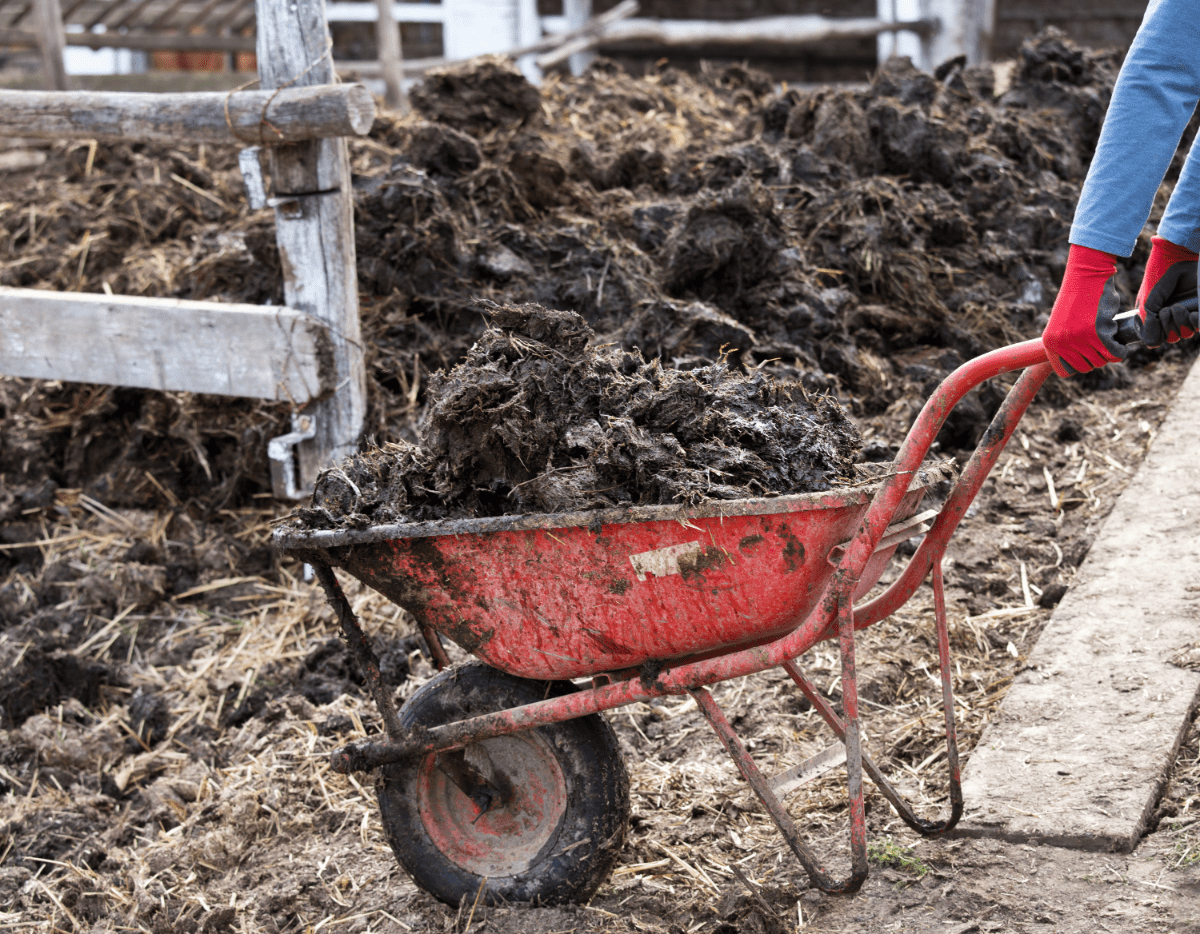
    However, fresh horse manure shouldn’t be used right away but the composted form is better. Horses often have a hard time digesting what they eat.

    Horse poop tends to have undigested organic components like grass, weed, and seeds in it.  And this causes seaweeds to grow all over the garden when they use raw horse manure. This is why composting is recommended before use.

    The process of making a compost pile is not an easy one but I promise you that your effort will be worth it in the end.

    Read more about Can You Compost Chicken Bones And Turn Them Into Manure?

    Horse Manure For Garden: Tips On Making Horse Manure Compost Pile

    Composting is when naturally occurring microbes break down organic matter. Note that for horse manure to be finally called compost, it should look like a perfect soil-like material.

    The idea is for it to have lots of roughage and a high level of nutrients. It will help make the soil in the best form with all the nutrients to aid plant growth and health.

    Making Horse Manure Compost Pile

    Firstly, note that what can make all this possible is heat. Heat is what can help make a pathogen, seed weed-free compost. A byproduct of composting is heated. Getting and maintaining the level of degree that can help achieve this is a major hassle here.

    A temperature of 100 degrees should do the trick. This is definitely achievable with consistency and a lot of trial and error.

    Heap Formation

    The pile will be in form of a heap. The heap should have everything necessary in the right quantity To achieve a perfect result and also to arrive at an answer to if horse manure is good for vegetable gardens. Make sure the heap is big enough. Air should be made possible to get to the heart and then composting can circulate through the air. The high heat is usually in the heart. Some old netting can be used.

    To get a well-shaped pile with a bigger heart, form two different rings of 2cm each. Make sure the floor is bare; don’t use any coverings on the floor. Microbes and worms will be able to make their way into the heap to do their continuous work of composting.

    That being said, you can go ahead and fill one of the rings with horse manure and other needed materials. The height of the heap you’re making should be about a meter. Your horse manure should go in first.

    Let this first layer be about 15cm and make the surface even. Use a hose to spray water on the pile if it is dry to make it moist but not wet. You don’t want the composting process to be slowed down and all your effort in vain. The main focus is for the big heat to accumulate in the heart of your pile. This can be achieved when everything goes well. Sprinkle a handful of the general-purpose fertilizer on your pile.

    Nitrogen And Green Matter

    Nitrogen is needed for effective composting but in moderation. Then the green matter is next to go in. The green matter must be about 50 percent of the heap.

    Repeat the whole process but remember to check for moisture in the horse manure. You can increase microbes by sprinkling lime on your heap. It makes your compost less acidic.

    RAW Nitrogen (2 oz)

    61zSF3cO7HL. AC SX569

    Ventilation

    Ventilation can be created by drilling about four holes in the middle with long sticks that can reach the base of the heap. Retain heat, and moisture and prevent rain from getting your heap soaked by using old clothing to cover your heap.

    If this procedure outlined so far is being followed correctly, composting will begin and go on successfully.

    Turn Your Compost

    The compost needs to be turned in after 3 weeks. Transfer the heap into the second ring. Make sure the outer part is in the middle this time around. Water the heap if need be and repeat other procedures too. This way, composting will go around.

    Is It Safe To Eat Vegetables Grown In Horse Manure

    You might be wondering if it is safe to eat vegetables grown in horse manure.  Remember the best way to use horse manure is to let it pass through the composting stage. By now, your question about knowing if horse manure is good for vegetable gardens should have been answered.

    Using fresh horse manure straight away is very risky as it can burn your plants and it usually contains unwanted substances such as undigested grass, weed, seeds, and so on. Composting will also help the manure to undergo sterilization from unwanted microbes.

    Therefore, the best thing is to let your horse manure go through the process of composting before use in your vegetable gardens.

    Are you making use of manure tea from diluted horse poo as folia feed? If yes, avoid pouring them on plants that you’ll be harvesting to eat within a week. Ensure to wash consumable plants after harvest.

    Is It Safe To Eat Vegetables Grown In Horse Manure

    Can You Put Too Much Horse Manure In Your Garden?

    Yes, it’s possible to apply too much horse manure in your garden. This may cause nitrate leaching.  Therefore, always ensure you only match the application of horse manure to your crop’s demand.

    What Is The Best Manure For A Vegetable Garden?

    Horse manure remains one of the best for vegetable gardens but only in its composted form. Horse manure compost contains a high level of rich nutrients and roughage that looks like soil and blends well with soil.

    It contributes to and improves the general well-being of the soil, vegetables, and garden generally.

    How Do You Make Horse Dung Into Fertilizer Rust?

    To successfully turn horse dung into fertilizer, build the optimum pile of dung that is three feet high. If the pile is too small, the heat you will need to apply will dissipate very quickly and will not reach the temperatures that you need to successfully compost.

    Maintain constant airflow through your pile. This will help prevent odors, achieve high temperatures and complete the composting process in a short period.

    Monitor the temperature and maintain it in the range of 50 – 100 °F. Increase the temperature gradually and then drop it to ambient over several weeks. Your temperatures should never exceed 160 °F as high temperatures may immobilize the microorganisms needed to carry out the decomposition process.

    What Vegetables Do Not Like Horse Manure?

    Vegetable root crops such as beets, carrots, radishes, and potatoes are particularly sensitive to adding horse manure. This is because it contains a high amount of nutrients that can burn plants if applied at high concentrations. Salad greens are another type of vegetable that can get burned or damaged by horse manure.

    To avoid any negative impacts on your plants from using horse manure, make sure that it is well-composted or diluted with other materials that can tone down its potency.

    How Long Does Fresh Horse Manure Take to Compost?

    It takes about four to six weeks to turn raw stable waste into manure if you do it properly. It does however take some effort. To achieve this, you will need to maintain the right moisture content in your compost heap to provide the ideal environment for bacteria to carry out the composting. If you are not getting any rain and the pile is getting dry, spray it with a garden hose until the material is just damp and has the consistency of a wrung-out sponge. If you over-water by accident, simply add a heap of dried leaves to the pile.

    Keep the heat up in the compost until it resembles dark brown garden soil. At this stage, it will be safe to use in your garden.

    Be careful when compositing horse manure. Compost piles can easily catch on fire, so be careful to keep them away from buildings or any combustible materials.

    How Much Nitrogen Does Horse Manure Have?

    Undiluted horse manure contains low levels of nitrogen, about 1 to 2% dry weight. It supplies small amounts of nitrogen to the soil via a slow release. When the horse manure is mixed with woody bedding, for example, the resulting product will tie up nitrogen leading to a deficiency in the crop.

    What is The pH of Composted Horse Manure?

    Horse manure is not as acidic or alkaline as would be expected. The actual pH of the manure depends varies according to the diet of the horse but will be somewhere in the range between 6.6 and 7.5.

    Manure from horses that are fed grain-based diets tends to be more acidic, while those fed a more hay-based diet will produce alkaline or neutral manure.

    The manure can become more acidic or more basic depending on how it is composted. It will become more acidic if it is composted in an oxygen-rich environment. The opposite will be true for oxygen-poor environments.

    Conclusion – Is Horse Manure Good For Vegetable Gardens

    Is Horse Manure Good For Vegetable Gardens?

    From the clear illustration in this article, your question about if horse manure is good for vegetable gardens must have been answered.

    So, the knowledge about horse manure being good for planting when it’s in its composted form can be shared with other people for them to know.

    FAQ’s

    What is the best manure for a vegetable garden?

    The best type of manure for vegetables is compost. This is a mixture of plant material, including both organic and inorganic matter. Compost is made by mixing your kitchen waste with a small amount of sawdust or straw, then adding a handful of leaves, grass clippings and other organic matter. The whole mix is then left to rot over time.

    If you use too much, you’ll need to add more fertilizer later, but if you don’t use enough, the plant will need to work harder at absorbing nutrients from the soil. A few shovelfuls should be plenty to get started.

    Is all horse manure good for vegetables?

    It’s best to get your manure tested first. That way if you do have an issue you can treat it before using it. I wouldn’t put horse manure in the garden directly. You can buy a horse manure spreader to spread it on the lawn, but if you’re trying to grow food or flowers it’ll need to go into the compost pile. I would avoid putting anything organic into a compost pile or worm bin as they will contain pathogens and disease causing organisms. It’s best to get your manure tested first. That way if you do have an issue you can treat it before using it.

    How long before you can use horse manure?

    If you are using horse manure for your garden, you should wait at least six months before you can start sowing your seed. This is because horse manure has a high nitrogen content and will leach too much nitrogen from the soil if it is applied in the first few weeks of the growing season. This is true even if you don’t fertilise your garden with manure.

    How should I apply horse manure for my garden?

    If you are going to use manure as a fertilizer, then it’s not a problem. Just mix with your regular fertilizers and apply like you would any other fertilizer.

    Manure can be applied as a natural fungicide. It is one of the best natural fungicides. You can make a compost tea with manure by mixing 1 part manure to 5 parts water. Apply this tea to plants and weeds. It will prevent most fungus problems.

    What is the maximum amount of manure per square foot we should apply to the garden?

    I would say 1 cubic yard of manure per 20 square feet (or one cubic yard per 100 square feet). This assumes the bed is 10 feet wide and the rows are 3 feet apart. You could also calculate it as 1 cubic yard per 25 square feet.

    If you have an average of 10 square feet per row, that’s 10 times as much manure per row than per square foot. If you want to grow a lot of veggies, you’ll need more than 1 cubic yard of manure per 20 square feet or 25 square feet. I would guess that you’d need at least 3 cubic yards per 20 square feet or 4 cubic yards per 25 square feet, just to have enough nutrients in the soil for the veggies to grow well.

  • Adding Nitrogen Supplements For Plants

    Adding Nitrogen Supplements For Plants

    Adding nitrogen supplements for plants is a sure way to enhance the essential macronutrients that your plants need to thrive.

    Nitrogen is one of the essential macronutrients that your plant needs to grow. Without it, your plans will stop growing and lose their beauty.

    Without a vital nitrogen source, you have plants suffer from slow growth, lack of color, and low yields. Eventually, poor nitrogen levels make your plans weak enough to succumb to diseases or pest infestations.

    Let’s figure out how to add nitrogen supplements for plants so you can get a bumper harvest from your favorite vegetables.

    Why Do Plants Need Nitrogen?

    Nitrogen is the primary fuel that plants need to grow. Its main purpose is to help plants grow big and maintain green foliage and stems. It is used in many processes in a plant, for example, to send the size proteins chlorophyll amino acids and enzymes.

    An excellent nitrogen source helps your plants grow big and strong, allowing them to set fruit easily.

    Signs That Show Deficiency Of Nitrogen

    Stunted growth. This is the number one sign that your plants do not have enough nitrogen. Sometimes it can be hard to pick up this sign if you are a new gardener or you don’t have healthier plans to compare to.

    Yellowing of the leaf color. The easiest way to spot nitrogen deficiency is by looking at the leaves and supporting any lightening or yellowing of the leaf color. This is called chlorosis. Nitrogen-deficient plants have leaves that take on a yellow-green or go full yellow if the levels are too low.

    How To Add Nitrogen Supplements For Plants

    Regular editions of nitrogen to your soil are essential for the health of your plants. Are some of the options you can try

    Add composted manure

    Animal waste is high in nitrogen. However, you cannot add it directly to your soil as it will burn your plants. The type of manure you vary in its hotness. You will need to compost it before adding it to your garden for at least 6 months. You can toss in food or garden waste when making your compost manure as long as they’re free from pests and diseases.

    Chicken, goat, or rabbit manure can be used in composting. Chicken manure is considered the hottest, so you must compost it first. Cow, goat, and rabbit manure is not as hot, and it would add them to your soil with the reduced chance of burning your crops. However, it is safer to compost it before adding it directly to your garden.

    It takes time for the manual to decompose and work its way well into the soil, so if you want the nutrients immediately, this is not your solution. However, it works best in the long term.

    Use green manure crop

    Using cover crops to fix your nitrogen deficiency is one of the ways to add nitrogen to your soil. The main difference between growing a green manure cover crop and planting legumes or beans is that a cover crop is not grown for harvest. You plant your green manure crop at the start of the season or in the off-season and leave it to grow.

    The disadvantage of using green covers is that removing them from the garden takes a long time and effort.

    Grow nitrogen-fixing plants

    Nitrogen-fixing plants mean they will add nitrogen to your soil as they grow. The two common ones are beans and legumes.  Instead of absorbing nitrogen from the soil, these plants fix the nutrients by adding them. Consider growing beans and legumes where your soil has shown signs of nitrogen deficiency. This is one reason that crop rotation helps in making your soil better.

    It is vital to understand that you should not fertilize the soil where you want to grow beans. This protects your soil from too much nitrogen.

    Mix coffee grounds with the soil

    Ground coffee can help you make your soil better. They are an excellent nitrogen source, and you can either add them to your compost pile or mix it directly into your soil. It takes time to break down and release the nutrients into the soil, so it cannot offer short-term help. However, it provides your long-term soil benefits and keeps iterated, improving the drainage.

    Use fish emulsion

    Fish emulsion is a nitrogen-rich fertilizer with a ratio of 5-1-1. This means that it provides nitrogen to your plants in the right quantity, avoiding burning them. One of the benefits of using fish emulsion is that it contains other macronutrients that benefit your plants, like sulfur, calcium, magnesium, sodium, and chlorine.

    You can buy fish emulsion as a concentrated form from most garden centers and mix it with water before application. The average ratio is 2 to 3 tablespoons of fish emulsion for every gallon of water. Pour it into the soil or spray the leaves of your plants.

    If you have a fish tank, don’t dump out the water.  This water is a free lite version of the fish emulsion as the fish poops in the water, and these droppings contain plenty of nitrogen. Use this water to water your plants, making the nutrients available immediately for the plants to use.

    Organic Wild Fish Fertilizer and Plant Supplement

    71d6sbdJMuL. SL1500

    Use mulch

    Mulching is an ideal way to add nitrogen into your soil is a long-term goal. Using grass clippings, lay them on your soil and leave them to decompose.  Once they do, they will reach nitrogen back into the soil.

    adding nitrogen to soil

    Buy an actual plant fertilizer

    Chemical fertilizers contain a good amount of nitrogen as well as organic ones. You can choose to add a plant fertilizer that has an NPK ratio of 10-10-10 or 20-20-20. The first number in this ratio indicates the amount of nitrogen in that fertilizer, so using one with a larger first number gives you a significant boost to your soil.

    However, chemical fertilizers fade away faster and can also burn your plans if you provide too much nitrogen at once. The organic ones are the best because they usually have lower numbers and take longer to be absorbed.

    FAQs

    Why is nitrogen important for plants?

    Nitrogen is the most important element for healthy plant growth. Plants need it to grow and thrive. A general rule of thumb is that if your soil is nutrient deficient, adding 10-15% nitrogen will bring it back to a healthy level. Most plants do better with high levels of nitrogen, but too much can cause leaf burn.

    How do I add nitrogen to my plants?

    If you have a small space, you may be able to add nitrogen directly to your plants without having to go through soil.

    Some commercial fertilizers contain nitrogen as well. If you have a large area or want to use soil, nitrogen can be added through the soil as well. You can buy nitrogen in liquid form at the garden center, but it is expensive and not very effective. It also takes a long time to break down in the soil. You can also add ammonium nitrate or urea, which are the two most common nitrogen sources. Urea is usually sold in powder form at the store, but you can also buy bags of liquid urea fertilizer. This is the quickest way to add nitrogen to the soil. Ammonium nitrate is more expensive than urea, but it breaks down faster and is safer to handle. There are many other types of nitrogen that you can use as well. You can even add a nitrogen source to your water.

    What are the most popular nitrogen fertilizers?

    There are many different types of nitrogen fertilizer available. The main two types are urea (N46. and ammonium nitrate (AN). They differ in how quickly they are released into the soil, and how fast the plant will use them. Ammonium Nitrate Ammonium nitrate is a slow-release fertilizer that increases the amount of N in the soil, making it available to the plants for a longer period of time. Ammonium nitrate is also called AN or ammonium nitrate fertilizer. It contains nitrogen, phosphorus, and potassium. The N content is usually from 10% to 50% and is sometimes called “nitrogen-rich” fertilizer. It is used for lawns and greenhouses. Ammonium nitrate can be applied at rates of 25 pounds per 1,000 square feet. Ammonium nitrate can be spread on the surface or incorporated into the soil by mixing with other fertilizers, compost, or soil amendments. Ammonium nitrate can be applied in liquid form, a dry granular form, or as an organic fertilizer. Fertilizing with ammonium nitrate will make more nitrogen available in the soil than if you just apply fertilizer without it. The amount of fertilizer you need depends on your climate, soil type, and crop type. It is also important to add phosphorus and potassium to the soil to balance the amount of nitrogen and phosphorus in the soil. Urea is a fast-release fertilizer that increases the amount of N in the soil for a short period of time. It has a higher N content than ammonium nitrate and is usually applied at rates of 12 to 20 pounds per 1,000 square feet. Urea is usually applied when the plants are actively growing.

    Conclusion

    Unlike other nutrients adding too many nitrogen supplements for plants at once can be problematic. You need to add a little at a time, ensuring that your soil has the right amount of nitrogen throughout. Using organic methods to add nitrogen levels to your ground is the best.

  • Is Nitrogen Organic Or Inorganic – A Deeper Look

    Is Nitrogen Organic Or Inorganic – A Deeper Look

    Is nitrogen organic or inorganic, and in what form is it available? Does compost or commercial inorganic fertilizers matter?

    Nitrogen is one of the most difficult nutrients to manage in crop production. Compost is known to contribute substantial nitrogen for crops.  However, it is challenging to synchronize its release from these materials as the plant demands.

    Careful management of organic nitrogen fertilizer is required to meet most crop requirements and avoid undesirable losses to the environment. We will therefore look at these two types of compounds and their uses.

    Is Nitrogen Organic Cause Inorganic – What Is Organic Nitrogen?

    Organic nitrogen can be described as nitrogen atoms that occur in organic compounds. Organic nitrogen is common in soils in the form of organic matter. This includes residues of decomposing anemometer plants and humus.

    These organic compounds contain nitrogen that incorporates into the organic matter during soil development. The organic matter in the soil depends on the temperature trends and long-term moisture contents.

    For example, cultivation decreases organic matter content in the soil due to the oxidation of these organic compounds. This leads to reducing the organic nitrogen for crop intake.

    Organic nitrogen plays an integral part in crop production and soil nitrogen cycling.

    What Is Inorganic Nitrogen?

    Inorganic nitrogen is the nitrogen atoms that occur in the inorganic compounds. Inorganic compounds do not contain hydrogen and carbon as essential components like organic compounds. Many other chemical elements make up the inorganic compounds.

    For example, nitrates and ammonium dominate the inorganic fraction of the soil.  These are the primary form that plants can take for their needs. The other forms of inorganic nitrogen in the soil are nitrites and nitrogen gas.

    The Differences Between Organic And Inorganic Nitrogen

    The significant difference between organic and inorganic nitrogen is that the inorganic forms of nitrogen occur in inorganic compounds, and organic nitrogen occurs in organic compounds.

    Organic nitrogen includes proteins, amino acids, nucleotides, and nitrogen bonds to residues animal matter and decomposing plant material.

    Inorganic nitrogen contains inorganic compounds nitrates, nitrites, ammonium, and nitrogen gas.

    Organic Sources

    Animal manure

    Waste from grass-eating animals is an excellent nitrogen source once it is well composted. Raw manure can burn your plants because the nitrogen is more volatile. Composting at a high temperature for an extended period could generate enough heat that kills weeds seeds available in the manure.

    Compost

    Compost manure contains all of the nutrients food for healthy plants. Although the exact required dosage depends on the material composted, this includes nitrogen. Compost manure is one of the best to improve and enrich the soil.

    Green manure

    Cover crops like peas, clovers, alfalfa, and other legumes are best in absorbing nitrogen from the air and releasing it into the soil. When you grow these cover crops in your garden, they improve your soil by the fact they are growing in it. Green cover crops at the end of the growing season provide you with a double dose of nutrients and natural compost. When the plant is in crop rotation in your vegetable garden, be sure to include the green manure over to the crop rotation.

    Soybean meal

    This is similar to cottonseed meal and is a slow-release source of nitrogen that comes from ground soybeans.

    Blood meal

    Blood meal comes from the waste of slaughterhouses. It is an essential source of nitrogen that burns your plant if over-applied. Do not apply blood meal to young seedlings, burning them to death.  However, as it is water-soluble you can mix it with water or apply it through the irrigation system.

    Cottonseed meal

    The best organic nitrogen source is slightly acidic but provides nitrogen in a slow-release form.

    Feather meal

    Chicken feather meal is specifically dried and formed into pellets that make it easy to use as granular fertilizer. Feather meal has an average release rate that helps the small break down proteins to make nitrogen available for the plant’s roots.

    Inorganic Sources

    Ammonium sulfate

    Ammonium sulfate is a soluble, readily available source of nitrogen and sulfur. It contains 21% nitrogen and 24% sulfur in its dry form. This fertilizer is suitable as a top dresser because it has a lower nitrogen volatilization risk than the surface-applied urea.

    Ammonium nitrate

    Ammonium nitrate is an odorless compound with 33 to 34% of nitrogen. This fertilizer can be applied on the surface or mixed into the soil. It contains ammonium that lowers the pH of the soil in case it’s too acidic. The ammonium and nitrate result in a reduced risk of volatilization compared to urea. The nitrate provides a direct source of nitrogen since it contains ammonium.

    Urea

    Urea is a highly soluble dry matter that you can use as a starter top-dress or broadcast. You can also use fertilizer mixes, either dry or liquid. This fertilizer has high levels of nitrogen to at least 45 to 46%. If you apply urea on the surface, you must mix it into the soil by tillage, watering, or rainfall.

    811aobKaL+L. SL1500

    Urea ammonium nitrate

    Urea ammonium nitrate is a soluble readily available nitrogen source with about 20 to 32% of nitrogen. It can be applied as a starter or broadcasted into already growing plants. When used, the UNA should be incorporated into the soil to avoid the volatilization of the area available in this fertilizer.

    Anhydrous ammonia

    This compound has the highest percentage of nitrogen of all the fertilizers. It contains 82% nitrogen and tends to be the cheapest nitrogen source ever. The best fertilizer is a high-pressure liquid that you can apply before or after seeding as long as you will not allow direct seed contact. Store Anhydrous ammonia under high pressure in specifically well-maintained equipment or facility well protected for safety reasons.

    Potassium nitrate

    It is also known as nitric acid and is considered a specialty fertilizer. It is either a white powder or colorless transparent crystal containing 40% nitrogen and 46% potassium. This fertilizer does not lower the pH of your soil.

    Diammonium phosphate

    DAP is a dry fertilizer that contains at least 18% nitrogen and 46% phosphates. After mixing into the soil, it releases free ammonia that may cause seed injury. To prevent such damage to your seed, limit band applications.

    Monoammonium phosphate

    This fertilizer contains readily available nitrogen sources at 11%,  phosphate at 52%, and sulfur at 1.5%. It is a dry, granular material applied alone or blended with other compounds such as potash. You can either broadcast, band use, or place it in the seed furrow. MAP is an excellent starter fertilizer that lowers the soil pH.

    Chilean nitrate

    Chilean nitrate is useful in organic and conventional farming estimated by the USDA/NOP in 2003. It has 16% nitrate and sodium.

    FAQs

    What is the difference between organic and inorganic nitrogen?

    There is a big difference between organic and inorganic nitrogen. Inorganic nitrogen is found in soil. Organic nitrogen is found in living organisms and their waste products. Plants take inorganic nitrogen from soil, then use it to produce amino acids that make up proteins and nucleic acids. Organic nitrogen also comes from dead plant and animal matter that decomposes in the soil.

    In some areas of the country, you will find a great deal of organic matter. The organic matter makes a great environment for the microorganisms that decompose the organic material into nitrates and other nutrients that can be taken up by plants. In other areas of the country, there is not much organic matter. This is why fertilizer companies add synthetic nitrogen fertilizers to the soil. They are inexpensive and easy to apply. A good rule of thumb is that if you want your plants to grow fast, you should use more synthetic nitrogen fertilizers than organic nitrogen fertilizers. However, if you want your plants to have more leaves, then you should use more organic nitrogen fertilizers.

    Can you use either on a lawn?

    If you have a lawn, you can fertilize it with both organic and inorganic fertilizer. You can fertilize your lawn with inorganic nitrogen by adding manure or commercial fertilizer to the soil. You can fertilize your lawn with organic nitrogen by adding composted manure, food scraps, or other organic material to the soil. How do you know if your lawn needs more nitrogen? There are several ways to check the health of your lawn. The first thing to look for is healthy green grass. If your lawn has a lot of brown grass, your lawn may be low on nitrogen. To test the pH of your lawn, use a pH meter.

    What is nitrogen good for in plants?

    Nitrogen is an essential component of proteins, DNA, and chlorophyll, and is therefore necessary for plant growth. Most soils contain varying amounts of nitrogen, but many areas of the country lack sufficient levels of nitrogen to support plant growth. Nitrogen is an important nutrient for crops like corn, soybeans, wheat, and alfalfa, as well as turf grasses, trees, and shrubs. Plants take up nitrogen from the air and from the soil in which they grow. Inorganic nitrogen is the chemical form of nitrogen that plants can use. Nitrogen applied to soil can be in the form of nitrate (NO3-) or ammonium (NH4+).

    How is nitrogen prepared?

    Nitrogen can be found in the atmosphere as nitrogen gas (N2. and nitrogen in aqueous solution as nitrate ions (NO3−) or nitrite ions (NO2−). Nitrogen that is present in the atmosphere is present in its elemental form. It is converted to an aqueous solution of nitrate or nitrite ions by bacteria, algae, fungi, and plants.

    Conclusion

    inorganic forms of nitrogen

    So is nitrogen organic or inorganic? Nitrogen is available in both organic and inorganic matter. Depending on your kind of gardening – organic or conventional,  it is your choice to go for the nitrogen you want. It is also essential to know the amount of nitrogen your plants are getting from a particular fertilizer.

    Read more about Adding Nitrogen Supplements For Plants.

  • Does Adding Sand To Clay Soil Work?

    Does Adding Sand To Clay Soil Work?

    Is it true that adding sand to clay soil makes it better, or is this just a traditional myth passed on from one generation to another?

    There’s no doubt working with heavy soil is a pain. Wrestling with this heavily compacted soil in your garden strains both your body and the plants.

    This soil sticks to your shoes and your working tools and seems to be more challenging to garden with it than any other type of soil. But even with all its disadvantages, clay soil has its benefits.

    If your garden is made up of clay soil, don’t despair; clay has many benefits that it offers. Let’s look at how you can fix your clay soil to make it easier to work with and allow you to reap a good harvest.

    Identifying Clay Soil

    How can you tell that your garden has clay soil? Clay  soil can be easily identified by:

      • It feels rather sticky and dense to the touch

      • Clay is smooth to touch especially when rubbed between the finger and the thumb.

      • It has high moisture and can be rolled into a ball or other shapes without cracking.

      • Heavy clay is shiny when rolled into any shape and then rubbed softly with your hands.

    Identifying Clay Soil

    Adding Sand To Clay Soil

    A notion has been in circulation for many years that says that adding sand to clay soil helps lighten it up. This is an old traditional myth that has no scientific evidence of its efficiency.

    If you add sand to clay soil, it turns your soil into something as hard as wet cement. Any clay soil treated this way becomes tough and eliminates every possibility of both good and harmful living organisms in it.

    What To Do If You Have Clay Soil

    So instead of using sand for clay soil, it is best to reach for an organic matter like leaf mold compost manure or well-aged manure and add it to your clay soil.

    The organic matter never goes wrong in any of the soil types it’s added to.  When added to clay soil:

      • It lightens the soil texture

      • Adds nutrients

      • Discourages compaction

      • Improves drainage and aeration

      • Provides more space

      • Moderates the soil temperature

    All these features are essential for plant growth.

    So to amend your clay soil add as much organic matter as you can; mixing it into your existing clay soil is the aim.  And if you have sand-clay soil because you have started adding some, use the organic matter.   However, before improving the clay, carry out a soil test to incorporate phosphorus, lime, and whatever other nutrients your soil requires.

    Steps To Amend Your Clay Soil

      • Use a spade to loosen the existing soil if it is it’s a small part, or use a tiller to loosen the existing soil over a large area

      • Spread about 2 inches of compost on top of the things soil and mix it with the clay soil

      • Repeat the process two or three times, working in your clay soil until you’re satisfied that it is thoroughly mixed up. Ensure that your clay soil is relatively dry; walking on wet clay soil will damage the structure you’re trying to improve.

      • Spread a few inches of compost over the ground between the plants and the soil and use a narrow spade to turn the compost into the soil

      • Repeat this method at least once, and your soil is ready for planting. Ensure that you work in small patches until your entire garden has freshly turned soil

    When To Do It

    The fall season is a great time to mix your clay with compost because the weather is drier than in the spring. Another reason why it is good to do this in autumn is because of the cooler temperatures that are more pleasant to work under. It becomes an annual part of your soil maintenance to add compost to your clay just before winter.

    In the long run, regular applications of compost manure and other organic matter will continually improve your cell structure and overall health. Therefore, it will become much easier for you to walk in this kind of soil and for your plants to grow in.

    Black Kow Composted Cow Manure 4 lb. Size (1 Bag)

    810sH8R7KlL. AC SY879

    Clay Soil It’s Still A Suitable Type Of Soil

    It is one of the few soils that provides an excellent foundation for healthy plant growth. Its potential lies in its unique properties, making it one of the best soil types for plant growth. The individual particles that make up the clay soil are small compared to other soil types such as sandy loam or silt.

    Clay soil has a more significant water holding capacity due to these tiny particles. They can hold in water and nutrients for your garden and lawn needs very well. If you manage clay soil well it requires less irrigation, less fertilizer yet produces some of the healthiest plants around the world.

    Even if you may feel like you want to differ with the statements above, maybe because you have heavy clay that clods on your boots and tools when working, it is best to test your soil before you make any changes. A soil test takes the guesswork away and provides clear statistics of the composition of your soil. The extension agent can advise what type of crops to grow in the particular soil.

    Your test results could also include ways to improve your clay soil, along with helpful information about its organic matter nutrients and pH. It is advisable to carry out this soil test every 3 to 4 years.

    Ways On How You Can Improve Your Clay Soil

      • To help your soil drain better and reduce trampling’s make raised beds before planting.

      • Consider adopting a new gardening hack of not digging, especially in your raised beds, so that you don’t mix the soil afresh; instead, you use the already well-drained topsoil.

      • Add some extra calcium to your clay soil to help the soil particles separate inside of the clump together.

    Ways On How You Can Improve Your Clay Soil
      • Add lime and gypsum to your clay soil to active ingredients of commercial clay improvers; however, before you add the rest of your garden, test on a small area first to see the changes.

      • Add plenty of bulk organic matter like composted bark old manure to improve the soil and the plant’s nutrients.

      • To reduce summer cracking when the sun is too hot, apply organic mulches around trees and plants to help conserve moisture.


    FAQs

    What is the difference between sandy and clay soil?

    Many soils are a mixture of sand, silt and clay. Sandy soil is a mixture of sand and clay. However, clay soil contains more sand than the other two soils. The most important factor in determining what type of soil you have is to determine if it is an acid or alkaline soil.

    Soil acidity is determined by the amount of lime (calcium) present in the soil. Soils with high amounts of lime are called alkaline. Alkaline soil is good for growing a variety of crops because they like to grow in an alkaline environment. On the other hand, soil that has too much lime is acidic. Acidic soils have low pH levels. Low pH levels make plants grow poorly, and also can cause problems for humans who are sensitive to acidity. Soil pH levels range from 0 to 14. The lower the number, the more acidic the soil is. For example, soil with a pH level of 7 would be considered neutral. A pH level between 5 and 6 would be considered slightly acidic.

    Most soils are classified as acid or alkaline. Clay soils are classified as acid or alkaline, but they are usually classified as alkaline. Clay soil tends to be more alkaline than other soils, because the clay particles are larger and hold onto more alkaline substances. The clay particles also tend to absorb the water in the soil, and prevent the water from reaching the root zone. Therefore, clay soil needs more water than other soils.

    How can I make my clay soil more Sandy?

    Soil compaction is what makes clay soil sandy. If you want to make your soil more sandy, then you need to compact it less. The best way to do this is to use a tiller.

    What are the best soil amendments for clay soil?

    Clay soils are usually high in organic matter and low in nutrients. Clay soils require compost or other organic matter. They should be worked in a way that allows the nutrients to leach into the soil. This can be done by tilling, sub-soiling, or using a rototiller.

    Does lime break up clay soil?

    It depends on how you want to use it. If you are going to add it to your lawn, you can mix it with your soil, but if you are adding it to the soil underneath your lawn, you will want to mix it with your topsoil. It will break up the clay, which is what you need. You will want to let it dry, then mix it into your topsoil.

    Conclusion

    One last word on gardening on your clay soil go for plants that naturally adapt well in clay soil. It is best to work with plants that do well in clay soil than try to force other plants to grow in it. An extension officer should advise you on plants that would do well in your kind of soil especially after soil test results.

    That said, remember adding sand to clay soil is ultimately killing your clay soil and not adding any value to the sandy soil.

  • Making Soil More Acidic

    Making Soil More Acidic

    Good soil is one of the most important aspects of having a successful garden. Without good soil, your plants will struggle to grow and in some cases, they might not grow at all. Making soil more acidic can help certain plants not only grow but also strive.

    Based on local geography, soils mineral content varies, which in return affects its acidity or alkalinity levels in the soil. This is measured on a pH scale, which allows people to conveniently determine the acidity on their soil. Based on the plants you are growing, you can then research the pH levels they need and test the levels in your soil, adjusting them as needed.

    How To Test For Acidity

    Before starting your garden, it is best to test the acidity levels in your soil. Different plants need more acidic levels, whereas others don’t need much acidity at all. Fortunately, you can use a pH test to determine how acidic your soil is.

    The best time to test the acidity levels of your soil is in the fall. This will then give you plenty of time to adjust your soil if need be before you plant your garden.

    How To Test For Acidity

    When testing your soil, use a hand shovel to dig about four to six inches down to obtain a sample. Once you dig up a good chunk of soil, remove any rocks, sticks, and debris from the soil. In addition, you also want to break up any large clumps of soil.

    In a large bowl, add around one cup of soil along with enough water to make it into the mud. Then, add 1/2 cup of vinegar and stir it into your mud. If your mud begins to foam, fizz, or make bubbles, your soil is alkaline.

    If no bubbling occurs, repeat the process as you did above by making mud with one cup of soil. Then, add 1/2 cup of baking soda and stir it in your mud mixture. If the mud begins to fizz, bubble, or foam, your soil is acidic.

    Using A pH Testing Kit

    You can also test the soil using a soil pH testing kit. This will give you an exact number of acidic your soil is. The pH test works on a scale of 0-14.

    To use a pH testing kit, dig up soil from four to six inches down and remove any rocks and debris. Then, place one to three teaspoons of soil in a clean glass. Pour distilled water into the glass to the same level of the soil.

    Luster Leaf 1601 Rapitest Test Kit for Soil pH, Nitrogen, Phosphorous and Potash

    81lMIyoIrfL. AC SX569

    Shake the mixture well into it becomes well combined and then let it sit for 30 minutes. Then pour your soil sample through a coffee filter, collecting the water into a new clean glass. Be certain to get as much liquid out of it as you can.

    Then place the pH strip into the liquid you collected and leave it in their according to the package’s instructions. Once it has been in the water for as long as it needed to be, compare the color of the strip to the chart of the package.

    It is a good idea to repeat the process with samples from different parts of your garden. This will help you get a good idea of the average pH levels of the soil in your garden.

    Why Acidity Levels Matter

    Many plants thrive in acidic soil because the pH provides them with the nutrients they need to grow. In addition, pH levels in the soil also play a vital role in fertility. By having an ideal acidity level in your soil, the microbiological activity of the soil increases, which leads to improved soil nutrient recycling and release.

    The pH levels in soil also work to maximize the nutrients of N, P, and K that come from fertilizers. Many plants will do best with a pH level that is right in the middle of the scale, however, it does vary by species of plant.

    Why Acidity Levels Matter

    How To Make Soil More Acidic

    Fortunately, if your soil is not acidic enough for your plant’s needs, there are several ways you can increase the acidity levels. Before adjusting your soil‘s acidity, make sure to test multiple areas of your soil to find the average pH level of your garden.

    One of the easiest and most effective ways for how to increase soil acidity is by composting. Since compost is rich in organic matter, it makes your soil more acidic gradually over time, which creates the most benefits for your plants. In addition, it not only improves the structure of the soil but also creates additional benefits for plant growth.

    In addition, you can also use compost tea to increase acidity. Simply add one to two cups of your compost to one to two gallons of water. Allow it to sit for 48 hours, stirring regularly, then strain the compost and spray the liquid in your soil for fast-acting nutrients.

    You can also use organic mulch, coffee grounds, and peat moss to help increase the acidity levels in your soil. In addition, you can also buy soil acidifier at gardening and department stores that is not only easy to use but also effective at improving the pH levels in your garden. However, it can be more expensive than the other options.

    FAQs

    What increases the acidity in the soil?

    There are several factors that can affect soil acidity, for example:

    The amount of nitrogen in the soil. The higher the nitrogen content, the more acidic the soil will be. The type of soil. Soil with clay in it tends to be more acidic than soil with sand in it. Soil with a high calcium carbonate content (found in chalk) tends to be less acidic than soil with a lower calcium carbonate content.

    You will increase the acidity of soil if you use any type of chemical fertiliser. This has nothing to do with what kind of chemical it is or how much it contains, but rather whether you have used a nitrogen, phosphorus and potassium containing chemical or not. 

    How is acidity measured?

    Soil pH is measured on a scale from 0 to 14, where 2.0 is neutral, and below 3.0 is acidic and above 4.0 is alkaline.

    The most common way to test your soil for pH is with a soil testing kit, or with an inexpensive test kit that you can buy at the grocery store or hardware store. To determine if your soil is acidic or alkaline, you can do this with the following procedure:

    1. Fill a bucket with water, and mix in 2 teaspoons of salt per gallon of water.

    2. Stir the soil thoroughly with your hands, and then add it to the water.

    3. Allow the mixture to sit for 5 minutes, and then test the pH with a pH meter.

    4. Record the pH of your soil on a pH chart, and then calculate the percentage of acidity

    If the soil is more acidic than 5 percent, add 1 tablespoon of lime per quart of soil to increase the pH.

    If the soil is more acidic than 15 percent, add 1 teaspoon of sulfur per quart of soil to increase the pH.

    What should I do when my soil has too much acidity?

    You should add some neutralizing agent to the soil. One way to do this is to add lime. Lime is an alkaline compound, so it will neutralize the acidity of your soil.

    How do I fertilize acidic soil?

    The best way to fertilize acidic soils is to use a compost tea that has been produced from compost. The compost will have a high pH and therefore the compost tea will also be high in pH. This means that it will be good at neutralizing acidity.

    What is the most widely used way of making soil more acidic?

    There are a number of ways you can acidify your soil.

    Two of the most common: Lime and Wood Ashes. These are often recommended as “natural” methods for acidifying soils, but they should be used as little as possible as they are highly toxic.

    Lime is an inorganic source of calcium carbonate. The lime reacts with water and releases carbon dioxide gas (CO2).

    The benefits of adding lime are that it increases soil pH, improves drainage, and improves soil structure. It also helps to increase organic matter and nutrient content. The disadvantages are that it can cause high levels of soil salinity, and can be detrimental to some plant species (especially those that like a slightly alkaline soil). It should be noted that lime is not a fertilizer, but rather an acidifying agent.

    Improving Your Soil: Making Soil More Acidic

    Knowing how to make soil acidic can help improve the growth of the plants in your garden. It can provide your plants with the important nutrients they need in order to thrive.

    Before planting your garden, it is a good idea to test the pH levels of your soil in several places to determine if your soil needs more acidity. In addition, be sure to research the plants you are going to add to your garden to find out what pH levels those specific plants require.

    Compost is a great way to improve the acidity of your soil. In addition, you can also use compost tea, mulch, peat moss, and coffee to improve acidity. You can even buy soil acidifier from stores to help enhance your soil.

    Do you have any questions regarding making soil more acidic? If so, please ask any questions about acidic levels in soil in the comment section below.

  • Where To Buy Compost Tea And How To Apply It

    Where To Buy Compost Tea And How To Apply It

    There are lots of benefits to using compost tea in your garden. If you are wondering where to buy compost tea we have an answer for you here. We will let you know where you can buy compost tea and what your plants stand to benefit from it.

    Compost tea is a blend of organic matter that will improve your soil with regard to appropriate soil wellness. Feeding your garden with compost tea is great. It will support plant growth and supply your plants with adequate nutrients.

    What is Compost Tea

    Compost tea is a mixture of liquid nutrients and beneficial, oxygen-loving microbes found in finished compost. These beneficial microorganisms include fungi, protozoa, nematodes, bacteria, and arthropods. The beneficial microbes are extracted from compost by the means of a brewing procedure. Accurate compost tea will consist of all the microorganisms present prior to brewing.

    Read more about Compost Tea Feeding Schedule 

    Where to Buy Compost Tea

    One place you can buy compost tea is in the stores. They are usually sold in powder form. They can be purchased in manufacturing industries and farms. You can also find them in big box stores such as Lowes, Home Depot, Walmart, etc.

    You can also try some independent nurseries or garden centers. Compost tea can as well be bought online.

    Another good option if you are willing to go through the stress is to make compost tea yourself. We have outlined below how you can prepare compost tea.

    In any of these outlets listed above, they are usually sold in any of these three forms:

    • The powder which is soluble needs to be mixed with water.
    • Teabags (needs to be steeped in water).
    • Liquid concentrate (needs to be diluted in water).

    Super Compost Tea

    61jnAHJe0oL. AC SL1426

    How to Make Compost Tea, DIY

    Preparing compost tea can be a bit messy but it’s quite simple to make. It will even be easier if you already make your own composting or vermicomposting.

    First is to get matured compost and put about 5 handfuls of compost in a 5-gallon bucket. Now fill it up with water. Important note before using your water is to allow the water to sit for about 24 hours. In case you use chlorinated water, it will evaporate out. You don’t want to kill all the helpful bacteria and microbes.

    You can now use a stick to mix or stir if you don’t want to use a bubbler. As you mix up your compost tea, you unlock all the water-soluble nutrients. Then allow the mixture to sit for about 24 to 48 hours so they can get strong and nutritious for your plants.

    You can stir again after a couple of hours like in the morning and evening. This way it can get some nice aeration.

    Now your compost tea should be ready in a day or two and you can go ahead and apply them. You can use a watering can, spray bottle, or pump spray for application. You can also deliver it to the base of your plant as a soil drench for deeper penetration.

    Applying Compost Tea Correctly

    Compost tea should be applied on cool and clear days with temperatures above freezing and below 80 degrees Fahrenheit. So apply them early morning or late evening. Never apply during the day with too much heat so you don’t kill all the beneficial microbes. Plants that will mostly benefit from compost tea applications are flowers, fruits, and vegetables.

    Applying Compost Tea Correctly

    Compost tea applications during the transplanting period will boost your plant defense mechanism against pathogens and pest disease. It can as well be applied to seedlings or plants that are established at their growing seasons.

    Benefits of Using Compost Tea

    Your garden will enjoy lots of benefits from compost tea. Therefore, these benefits include:

    • Compost tea comprises of higher concentration of helpful microorganisms. They will improve the protection mechanism of your plants against any form of disease, pest as well as erosion.
    • It is natural organic plant food. On the contrary to synthetic fertilizers containing chemicals that can harm the plant ecosystem or cause fertilizer burns.
    • Compost tea will boost the capacity of your soil to retain water.
    • It can be used directly on plant leaves as well as soil, unlike solid compost that can only be applied to the soil.
    Benefits of Using Compost Tea

    FAQ’s

    What makes good compost tea?

    Compost tea is a liquid fertilizer made from the decomposition of organic matter in the form of compost. You can collect organic matter from your home, such as food scraps, leaves, coffee grounds, grass clippings, eggshells, and wood. It’s also a good idea to collect materials from outside, such as grass clippings, weeds, and leaves.

    Compost tea is a natural, organic way to get rid of unwanted garden pests. It is made by adding a small amount of compost to water and letting it sit for about two weeks. Compost tea is an environmentally friendly way to get rid of garden pests. It does not contain any pesticides and is safe for people and animals to drink. 

    What kinds of nutrients should it contain?

    It contains nutrients that are essential for plant growth, including nitrogen, phosphorous, potassium, and trace elements like calcium, magnesium, iron, zinc, copper, boron, molybdenum, manganese, and sulfur.

    How do I use compost tea?

    Compost tea is a simple and easy way to add nutrients back into your garden soil. Compost tea can be used for everything from fertilizing to keeping plants healthy. To make compost tea, mix one part compost with three parts water. This mixture should be stirred or shaken until it is well combined. You can also use a spray bottle to apply the compost tea directly to the soil in your garden.

    When you use compost tea in your garden, make sure that it is diluted properly. This will prevent the tea from running off your plants and causing problems. You can dilute compost tea by adding five times as much water as compost to the mixture. For example, if you mix one cup of compost with five cups of water, the mixture will have a 5:1 ratio. If you have a spray bottle, this will be even easier.

    You can also use compost tea for indoor plants. Make sure to dilute the compost tea enough so that the solution does not burn your plants. You can use one part compost to three parts water in the case of indoor plants. If you do this, you will need to spray the plants regularly, but it will still be a good alternative to using commercial fertilizers. Compost tea is a great way to improve the health of your garden soil.

    It can be applied to your garden or lawn by mixing it with water at a ratio of 1 part tea to 5 parts water.

    Additional Note

    You can water your plants with compost tea about once a week. Therefore, apply and water your plant with compost tea as often as you want. They will never burn your plants and they will generate adequate nutrients for your plant growth.

    You can water your established fruits or vegetables directly with compost tea. No need to be disturbed about introducing toxins to your diet because compost tea is completely organic and safe.