Table of Contents
Here in Switzerland, we are in the midst of a very long and uncommon heatwave. Personally, I love the heat, but my garden….not so much.
My family and I planned a weekend away during the heatwave, and I had to come up with a quick solution for keeping my plants alive while we were away. In the past, we relied on bigger temperature swings, rain once or twice a week, and a neighbor to pop over to water everything twice a week, which has always worked… until this summer.
That’s why I had to come up with a self-watering system before our weekend away. Since I don’t have a link to a water faucet, the self-water system has to be self-contained.
But why are self-watering system bottle drip systems everywhere online?
I’m glad you asked. Actually, self-watering system bottle drip systems are great, using passive gravity or wicking to create a limited drip flow of water. You fill up a plastic water bottle (from 0.25 to 2.0 liters), connect it to the bottle adapter, in my case, the Blumat Bottle adapter with clay cone, and then you can expect an output of about .3 liters per day.
The bottle drip system is intended to water your plants for a couple of days, depending on the size of the water bottle you use.
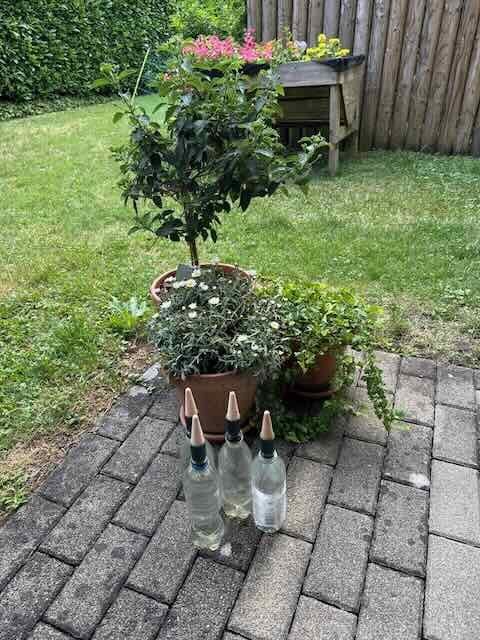
My Plastic Self-Watering System Bottle Setup
I chose to use the Blumat Bottle adapter with small plastic water bottles of 0.25 liters. Unfortunately, with the short notice, I couldn’t organize larger bottles in time. My preference would be 2-liter bottles; with more water, I was hoping that the increased water weight/gravity would slightly increase the flow.
Now, again, we are in full summer with temperatures soaring 95F/35 °C for over 10 days
I installed the Blumat Watering adapters into several terracotta pots containing flowers:
- Sunflower
- Latana
- Petunia
- Blue Marguerite Daisy
- Marguerite Daisy
- Zinnia Yellow and Orange
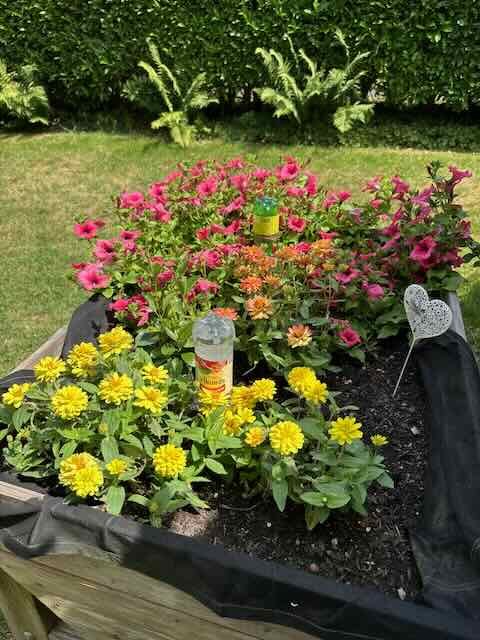
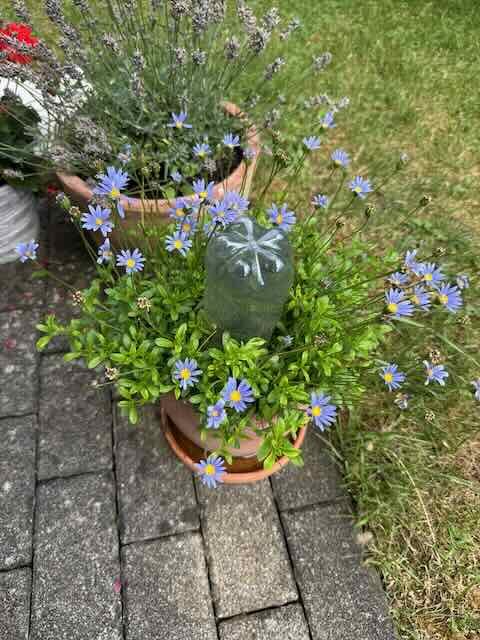
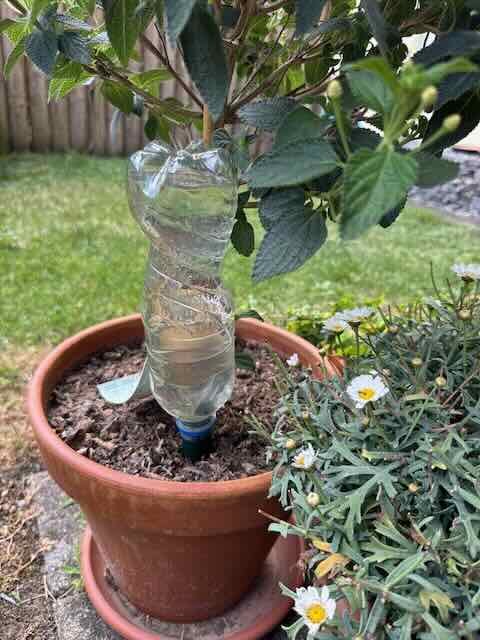
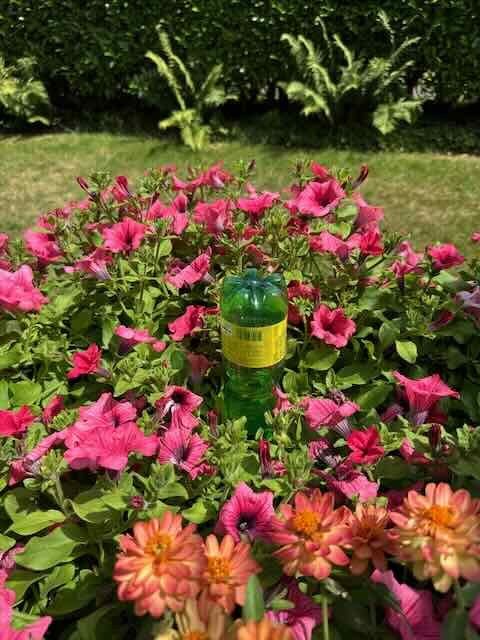
Important note: I learned that there are two things that aren’t highlighted enough in the instructions, but you should do them to prepare the setup.
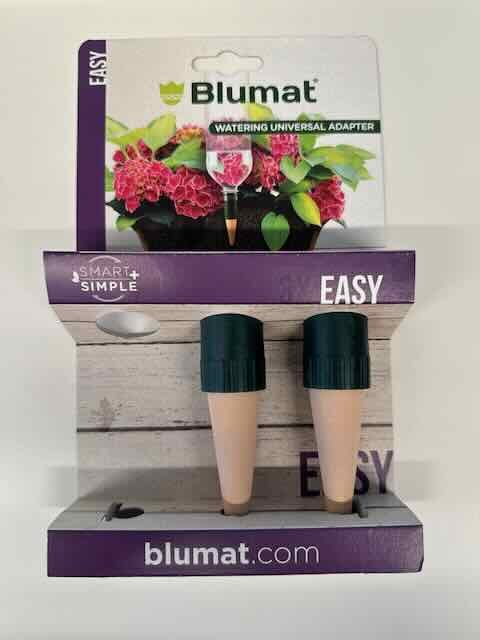
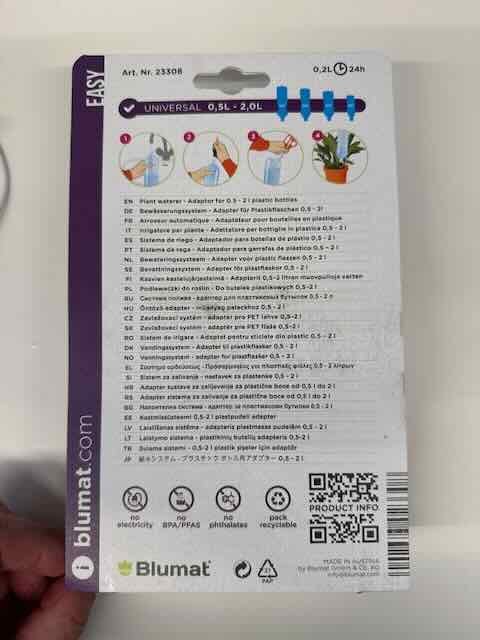
- Soak the terracotta tips in water for about 15 minutes so they are completely soaked through, making it easier for the water to flow through.
- Poke big enough holes in the bottom of the bottle. Somehow, when I was testing very small holes in the bottles, it created a vacuum inside the bottles, preventing the water from flowing. Once I opened the holes more, it worked better.
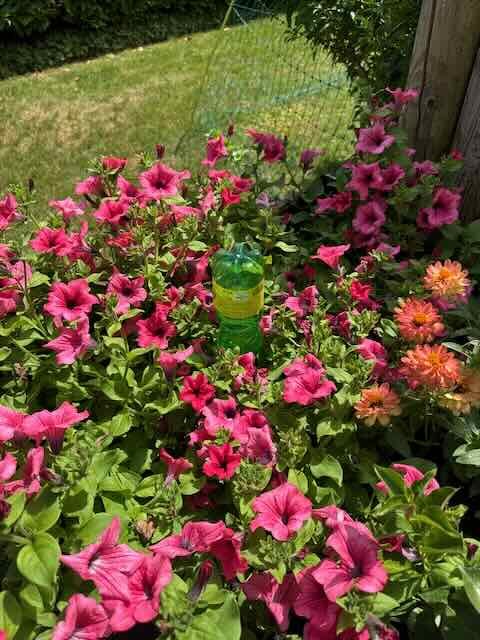
What happened?
Well, my garden experiment was not 100% succesful. However, I really believe this was down to the temperatures we are experiencing and not the watering system. After inspecting the watering systems, they were working, and water was flowing; however, due to the high temperatures and the terracotta pots’ placement on a stone terrace, it effectively created a 3x heat factor on the plants.
I inspected the
Additionally, my pots don’t have a mulch layer to protect the
Did my experiment fail? Not quite, as my flowers did survive, although a bit slumpy. The best indicator of underwatering in my garden is our Sunflower, as it is the first flower to droop its leaves. However, the plans survived even during this massive heat wave, so it is not a total failure but definitely a learning.
How to prepare the watering system for next time
Next time, I will ensure I test well in advance before a trip, for starters. Things I would prepare for next time to ensure better watering of my garden.
- Use larger bottles of water to ensure enough water is available to the plants
- Add mulch on top of the
soil to help with the heat and evaporation of the water that is being delivered - Moving pots or using shade cloths more strategically in the garden for less sun while I’m away to ensure that they have a better chance in higher temperatures
A little bit of pre-vacation preparation will go a long way. I also encourage you to thoroughly test your watering system before you leave your plants unattended. Run a test and continually monitor the
Until next time, keep growing!

Brian believes the best days are spent outside with soil on your hands. He finds his rhythm in the details of the garden—from carefully tending to established plants to the excitement of propagating new varieties. A true outdoor enthusiast, Brian is here to swap stories, share advice, and celebrate the rewarding work of growing.