Author: Eunice

  • Tomatos or Tomatoes – Which is the Correct Plural?

    Tomatos or Tomatoes – Which is the Correct Plural?

    Tomatos or tomatoes? What should more than one tomato be called? You may sometimes find it not so easy to remember how to spell some words because pluralization in English can at times be complicated. But you can still find an easy way to remember how to spell most of these words.

    Tomatoes are one delicious fruit that contains a good amount of essential nutrients for human development. It is often believed that tomato is a type of vegetable. But technically speaking, it is a fruit that is derived from the tomato plant.

    Most people often get the spelling of the delicious red food that goes by the name tomato wrong, especially when it comes to the plural spellings. When it comes to the spelling of some words in English, there are different rules to be followed, especially when it has to do with the construction of plural words.

    In this post, we will compare tomatos and tomatoes and find out which is the correct spelling. So, let’s delve into this.

    Some Info About Tomato – Tomatos or Tomatoes

    The big, round, pulpy, tomato berry is from the genus Solanum of the nightshade family. There are more than ten thousand tomato varieties you can find.

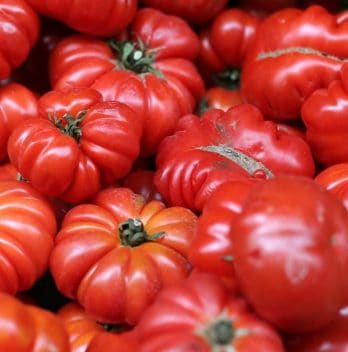
    The tomato is mostly red. However, some varieties can be yellow, orange, pink, black, green, or purple. But what we mostly see is usually red tomatoes.

    If you wish to see or find a multiple-color variety of tomato, you can just head to your local farm shop or greengrocer.

    Some Info About Tomato

    As we mentioned earlier, tomato is a type of fruit but sometimes it can be regarded as a type of vegetable. So, it is an edible fruit that can be eaten raw and integrated into foods like salads, or you can cook them in different meals.

    This tomato fruit is loaded with many great nutritional benefits. This includes being a great source of vitamin C, folate, potassium, and vitamin K. They are also rich in antioxidants that can help get rid of toxins.

    This great-tasting fruit is also rich in lycopene which is available to us naturally. This lycopene is a very strong antioxidant that is crucial for the health of the prostate gland that is found in men. Also, some reports have claimed that lycopene can minimize and protect against certain types of cancer.

    Tomatos or Tomatoes: Which is the Correct Plural Form?

    It’s general knowledge to always add –s to noun words when you’re referring to the word in the plural. However, this may not be the case for some words.

    Generally, when it comes to spelling nouns in English words that end with –o, the plural form of the word often ends with –s added to the words. For example, we have words like -zoos, patios, radios, studios, embryos, avocados, tacos, videos, and so on that end with –s. However, this is not the case for words like a tomato that ends with –s.

    Correct Plural Form - Tomatoes Or Tomatos

    Some people usually make the mistake of adding –s to tomato when it comes to using tomato in the plural. But this is wrong. This is mostly because the singular word for ‘tomato’ doesn’t contain –e at the end of the word. So, it can be understandable when some people get the plural spelling wrong by just adding –s to the end of the word.

    However, the ideal or correct way of spelling tomato in the plural form is to add –es. Hence, the correct spelling for the plural of tomato is tomatoes.

    Other words ending with –o, just like a tomato, also fall into this same category of adding –es to form plural words. Below is a list of other words apart from tomato that also ends with –o that needs –us to be added to the end of their words to form the plural word:

    • Potatoes
    • Heroes
    • Torpedoes
    • Mosquitoes
    • Echoes
    • Vetoes
    • Buffaloes

    Tomato or Tomatoe: Which is the Correct Singular Form?

    It’s understandable if some people get the spelling of tomato confused. This is why we need to know what the right spelling is.

    The correct singular spelling is “tomato.” The singular form or spelling of tomato doesn’t require the addition of ‘e’ to it.

    Sow Right Seeds – Tomato Seed Collection for Planting – 10 Varieties

    Tomatoes Or Tomatos

    Health Benefits of Tomatoes – Tomatos or Tomatoes

    Tomatoes are wonderful food that can offer us great nutritional benefits that can aid in proper body functioning. Some of these benefits include:

    • Tomatoes are a wonderful source of vitamin C and vitamin K. It is also rich in potassium and folate (or vitamin B9).
    • Tomato can be beneficial to your blood pressure control and it can serve as a protection against heart disease. So, regular consumption of tomatoes can help reduce or protect against heart disease; which includes heart attacks and strokes.
    • They are a great source of fiber that can provide around 1.5 grams per average-sized tomato.
    • These fruits are great antioxidants that can help flush out toxic radicals from your system.
    • The lycopene found in tomatoes can help reduce the risk of cancer as well as give some protection against cancer.
    • Your skin can also benefit from tomato use. For instance, food that is based on tomatoes is rich in lycopene as well as other plant compounds that may protect against sunburn. Some studies have even shown that individuals that consume 1.3 ounces (i.e. 40 grams) of tomato paste get about 16 grams of lycopene. Now, when this is combined with olive oil every day for 10 weeks, it can cause 40% fewer sunburns.

    Nutritional Value of Tomatoes

    You may be wondering what the nutritional value is when it comes to tomatoes. Let’s take a closer look. Every 100g of tomatoes contains the following:

    • calories: 18
    • fat: less than 1g
    • cholesterol: 0mg
    • sodium: 5mg
    • carbohydrates: 3.9g
    • fiber: 1.2g
    • protein: less than 1g

    Popular Varieties of Tomatoes

    There are hundreds of varieties of tomatoes; big and small, ranging in color and flavor. But some varieties are more popular than others. Let’s take a closer look.

    • Roma Tomatoes. You may know Roma tomatoes better than plum tomatoes. These types of tomatoes are usually somewhere between small and medium in size. They’re usually sweet, plump, and flavorful. Perfect for soups and salads.
    • Cherry Tomatoes. They’re small tomatoes that tend to explode with flavor as you eat them. I find that these tomatoes work well as a snack, or in sauces.
    • Beefsteak Tomatoes. These are large and plump in size. These work great for when you’re looking for tomato slices to add to your burgers. They’re often mild in flavor, but very juicy.
    • Heirloom Tomatoes. These tomatoes aren’t typically uniform, coming in a selection of sizes and colors. These tomatoes are usually sweet and rich in flavor. These tomatoes work well in any dish and are known as the “purest” tomatoes.
    • Vine Tomatoes. As the name suggests, they grow on the vine and are then sold that way. This means that they’ll be as fresh as possible when you pick them off the vine. They’re versatile and can be used in many dishes.
    • Green Tomatoes. Green tomatoes can either be ripened or unripened; depending on the variety. Green tomatoes are surprisingly common in the US. They have a different taste from usual tomatoes and they can even be quite sour. They’re typically firm, but not as juicy as other varieties.
    • Grape Tomatoes. These are the smallest cherries. They aren’t particularly juicy, but because of their size, you may not want to use them in cooking and they may be best suited as a snack.

    Tomatoes Tomatos Saying

    You may have weird the expression, “tomato, tomahto”, or, “potayto, potahto”; both of which are used interchangeably. It simply means that you have differences, but you’ll have to agree to disagree.

    As well as this, it was also made famous in a popular song by Ella Fitzgerald and Louis Armstrong, called Let’s Call the Whole Thing Off. The lyrics are, “you like potayto, I like potahto, you like tomayto, and I like tomahto, potayto, potahto, tomayto, tomahto, let’s call the whole thing off”. This is essentially saying that we have our differences, but let’s settle this now and stop.

    It is also a cultural difference. British people tend to see “tomahto”, whereas Americans tend to say “tomayto”. Either way is correct!

    Do You Say: Some Tomato or Some Tomatoes?

    If you have more than one tomato, you should say some tomatoes, rather than some tomato. Some tomato does not make grammatical sense and should not be used when you have more than one tomato.

    Tomato Plural Dictionary – What Does the Dictionary Say?

    If you take a look at dictionary.com, tomato is described as a noun, and the plural for a tomato is to·ma·toes.

    tomatoes tomatos saying

    Final Say – Tomatos or Tomatoes

    Even though there may be different ways of tomato pronunciations, the right spelling must be followed. So, when it comes to spelling tomato, there is only one way to spell this word. The word tomato is often misspelled and this is common when it comes to their plural spellings.  But ‘tomato’ is the correct singular spelling, while ‘tomatoes’ is the correct plural spelling.

    Do you know of any other words that end in -o, that are then added with an -es plural? If so, please feel free to let us know in the comments below. And remember, sharing is caring! 

    FAQs

    Which is correct tomatos or tomatoes?

    People often misuse or misspell the word ‘tomato particularly when it has to do with the plural spelling. Even though most words that ends with -o usually have s added to their back when it comes to their plural spelling, this isn’t the case for tomato. So,’Tomatoes is the correct spelling for the plural of the word tomato.

    How to spell tomatoes or tomatos?

    The singular spelling for tomato is ‘tomato’ then the plural is spelled ‘tomatoes.’ So, take note not to get these confused.

    Do you say tomatoes or tomatos?

    Often times words that ends with -o have -s added to them when we want to spell them in their plural form. For example, videos, radios, tacos, and so on. But for the case of tomato that also ends with -o, the plural form is totally different. The correct plural word is tomatoes.

    Why is tomatoes spelled with an E?

    Tomatoes is spelled with E because this is the way the plural of tomato is spelled. Instead of adding -s to the back of the ‘tomato’ word, -es is added to form the plural word for tomato.

  • Polka Dot Plant Leggy: Best Ways to Troubleshoot

    Polka Dot Plant Leggy: Best Ways to Troubleshoot

    Polka dot plant leggy is one common issue faced when growing this lovely plant. So, if you’re experiencing this issue and you’re wondering how to fix it then you’ve come to the right place because we will explore everything about polka dot plant turning leggy.

    The Polka dot plant is one charming plant that is loved because of its radiant colors. The foliage of this lovely plant is characterized by this specked polka-dotted look. The variegated color can come in pink, red, or white marked with splashes of dark green.

    However, when this cheerful plant starts to turn leggy, it tends to spoil its beauty so this causes some concern. Polka dot plant leggy troubleshooting will be explored in this post so let’s delve in.

    Polka Dot Plant Leggy – What Does This Situation Mean?

    Polka dot plant leggy is caused by the stem of your plant growing longer than it should be. Therefore, the plant becomes outstretched and this kind of situation can cause the plant to fall over and grow fewer leaves. This creates an untidy and unappealing look for a polka-dot plant.

    Plants such as polka dot tend to become leggier as they grow old. But take note that this isn’t because the plant is unhappy, but the aesthetic beauty is reduced.

    Let’s dive in further and see the reason why the polka dot plant turns leggy.

    Reasons: Polka Dot Plant Turning Leggy and Possible Solutions

    The cheerful polka dot plant can grow leggy due to a few different reasons:

    1. Poor lighting

    One major reason for polka dot plant turning leggy is poor lighting or lack of light. Once the lighting system is poor, the stem will begin to stretch trying to reach out to any light. Polka dot plant leggy results in a weak and thin stem and it usually contains lesser leaves.

    Lack of light reduces the ability of the plant to photosynthesize. This causes the plant to save some energy and reach the closest source of light by quickly producing emergency growth.

    Solution: Provide bright indirect light to all parts of polka dot plants that are indoors. We recommend you position your plant near a window that will provide morning sun to the plant. However, if there isn’t a bright spot to put your polka dot plant, an artificial grow light can do the job fine.

    2. Over-fertilization

    Excess fertilization of the polka dot plant can result in the production of fast growth but limp and weak growth. This also results in a yellowy-green color. Then it may be accompanied by the leaves on the base of the plant becoming yellow, turning brown, and then dying off.

    Even though the polka plant really needs feeding just to maintain its outstanding and luscious foliage; excess feeding can cause different growth issues. This can be more serious if the nitrogen content is on the high side. It can cause different growth issues such as weak stem and leggy growth.

    Liqui-Dirt Nano Powder All-Purpose Organic Complete Plant Food

    Nitrogen does indeed help polka dot plants produce new cell growth, especially leaf and stem so it is crucial for the survival of the plant. However, when it gets too much, it can cause your plant to grow rapidly causing a leggy appearance.

    Solution: Make sure you provide the right amount of fertilization to your polka dot plant. Ideally, we recommend you fertilize your polka dot plant once a month during its growing season (usually summer or spring). Then fertilization should be ceased during winter. These plants are fast growers so you can do diluted houseplant fertilization. A little compost addition can be added just to boost its nutrient.

    3. Unsuitable pot size

    Not using the right size of pot can cause the polka dot plant to turn leggy. If the pot size is too big, you may end up having a leggy plant. The plant will grow rapidly just to fill up the available space in the container. So, the bigger the space, the leggier your polka-dot plant gets.

    Solution: If you have an oversized issue, it’s best to repot the plant into a smaller pot. Then after you must have repotted into the appropriate pot size, you will further need to prune your plant as it grows.

    4. Watering

    The watering requirement of polka dots needs to be met. If you over-water or under-water the polka dot plant, it can result in the leggy plant. The soil of the polka dot needs to be a bit damp but not soggy.

    Solution: Water the polka dot plant only when the top soil (about half or one inch) feels dry. When watering, make sure you water well.

    Reasons For Polka Dot Plant Turning Leggy And Possible Solutions - Watering

    Click here to get info about:

    5. Age

    Polka dot plants are inclined to grow taller and leggier as they grow old or mature. If you leave the plant to grow naturally, it will eventually produce flower spikes. Although flowering may seem interesting, we recommend you don’t allow the plant to flower because it can die off once it has finished flowering. The blooms of polka dots aren’t as charming as the foliage.

    Solution: Cultivate the act of pruning your polka dot regularly to prevent or hold them off from flowering.

    6. Temperature – Polka dot plant leggy

    Because the polka dot originates from warm environments such as tropical areas, it likes a warm environment. Again, polka dots are fast growers; especially if you provide them with the right growing conditions. We don’t want fast growth because this can cause leggy growth.

    Solution: Adjusting the temperature by reducing it to slow down the growth helps prevent leggy growth. This won’t affect the growing plant. So, keep the plant at room temperature between 65 to 70 degrees.

    Polka Dot Plant Leaves Falling Off

    If you notice that the leaves are falling off of your polka dot plant, then we’re here to help you identify the reasons and what to do to potentially save your polka dot plant. Let’s take a closer look.

    • Overwatering. If you overwater your plants, this is the most common reason for leaves falling off of any plant. Overwatering can lead to your plants becoming weak and soft, therefore depriving them of the nutrients it needs to thrive. If this happens, try pruning your plant and removing any unwanted roots.
    • Underwatering. If you don’t water your plants enough, the leaves will become parched, and eventually, the leaves will become crispy and begin to fall off.
    • Dry Soil. Watering your soil is also important to your plant’s health. If you don’t, the soil will become dry and the leaves will start to shed.
    • Natural Shedding. Sometimes, plants do just shed their leaves. This is a natural process of your polka dot plant maturing and aging naturally. The leaves lowest on your plants will start to shed first. It should be around 1-2 leaves every few months or so. If they’re falling more often than this, it’s not natural and is a problem that you’ll need to tackle, by finding the source of the issue.

    Polka Dot Plant Indoor Care

    When looking after your polka dot plant indoors, there are a few ways you can ensure that your plant thrives. Here are a few of our top tops.

    • Light. Ensure your polka dot plant isn’t in direct light and this will cause your plant to fade. It should be bright, but not in direct sunlight.
    • Location. A windowsill is a great spot for your polka-dot plant. Not only is it warm, but it doesn’t receive too much sunlight, typically; which is ideal.
    • Keep Away From Pets. The polka dot plant is toxic to pets, so it’s important to keep it out of reach to keep them safe.
    • Season. Polka dot plants are great as they can be grown throughout any season, at any time of the year. This is why it’s the ideal houseplant.
    • Water. Only water when the top layer of soil is dry. Keep an eye on the plant for any signs that it needs watering.

    Reasons For Polka Dot Plant Turning Leggy And Possible Solutions - Temperature

    Polka Dot Plant Problems

    There can be many problems that will arise if you don’t look after your polka dot plant correctly. Let’s take a closer look.

    • Loss of Pattern. This will happen if your polka dot plant is not receiving enough light. Your plant may turn completely uniform in color.
    • Weak Stem. Your polka-dot plant stem should be firm, but if overwatered, it will become limp and weak.
    • Shedding Leaves. Unless it’s only a few leaves over a few months, this is usually a sign that your polka-dot plant is dying.
    • Shriveling. This means that your plant is thirsty and will fast become dehydrated if not regularly watered when needed.
    • Brown Spots. Whether these spots appear at the tips of the leaves, or leaves turn entirely brown. This is a sure sign your polka-dot plant needs extra care and attention.

    Conclusion – Polka Dot Plant Leggy

    Polka dot plant leggy troubleshooting has been discussed here so if you find your polka dot growing leggy, we hope our guide can help you resolve the situation. Do you have any tips or tricks to do when your polka dot plant grows leggy? If so, please feel free to let us know in the comments below. And remember, sharing is caring! 

    FAQs

    How do you prune leggy plants?

    You can prune a leggy plant by shortening the stems and branches by cutting back to just the leaf node. In the process of totally removing large stems, ensure you cut close to the main stem as possible or all the way to the bottom of the plant.

    Can you prune a polka dot plant?

    You can certainly prune your polka dot plant and this can help maintain a clean and healthy-looking plant. Pruning can be done at any time of the year but it’s best to avoid pruning during winter because this can affect the growth.

    How do I make my polka dot plant Fuller?

    If you want to encourage fuller growth for your polka dot plant, try to pinch back the tip of the stem from time to time all through its growing season.

    What does it mean when a plant is leggy?

    A leggy plant means the plant has grown a very long stem with just a few leaves on its top. Usually, it is a plant that needs to reach for light that grows leggy.

  • How to Cool Grow Tent: 6 Best Tips

    How to Cool Grow Tent: 6 Best Tips

    One common issue indoor growers wrestle with heat. Ensuring your grow tents remain cool is of great importance so your plants can successfully make it to harvest time. So, we will be giving you the best tips on how to cool grow tents.

    Fortunately, there are various things you can do to manage heat and ensure your grow tent is kept cool. So, by the end of this article, you should be able to know how to maintain a cool grow tent for the optimal growth of your plant.

    Tips on How to Cool Grow Tent 

    You must keep your grow tent cool and prevent building up excess heat. Too much heat can cause your plant to burn or even damage some of your growing equipment.

    Depending on the extent of heat you’re managing or the size of grow tent you have, you may require one or several methods to keep your grow tent cool. Therefore, ensure you take into account the extent of heat you’re handling to know the approach to take in solving the situation.

    However, even if the heat issue you have is not so big, we recommend you integrate more than one method for effective results.

    So, below are some of the best tips on how to cool grow tent:

    1. Use an air conditioner

    One easy and fast way to cool your grow tent is to use an air conditioner. If you’re using a small tent, you can use one small air conditioner. It can be placed outside, close to your small grow tent in the same room you placed your tent. However, if you’re using a bigger tent, you will require a bigger air conditioner.

    The only downside to this is that an air conditioner may cost you more electricity usage especially if your growing on a large scale. But all in all, using an air conditioner to cool your grow tent is one of the best and most effective methods you can go for.

    2. Inline and exhaust fans

    Another great method of cooling grow room tent is by making use of a combination of inline and exhaust fans. This will cycle in and out of the air in your tent. These fans work by bringing in fresh air into the grow tent and this is done by an inline fan. While the exhaust fan moves the inside air, which is usually hot, outside the grow tent.

    3. Change your grow light to LED

    If you continue to have heat problems in your grow tent, you may want to check the type of grow light you’re using. Some grow lights such as household CFL, HID, HPS, etc, produce more heat. Switching to grow light that will produce heat lesser heat (such as LED, fluorescent grow light, etc) may be required.

    These grow lights will even save you energy as they consume less power and are more effective for growing plants.

    However, if you plan to stick with other types of grow light that emits more heat, you will have to put in extra work to manage the excess heat.

    led grow lights lumens

    4. Use oscillating fans

    Ensure you set up fans inside your grow tent. If you’re using a small tent, one or two portable oscillating fans are enough. If you however have a bigger tent, you will require several oscillating fans to cool down your grow tents.

    As you’re planning to purchase your grow light, always add fans to these plans. The wattage of your grow light will determine how many fans to use. Higher grow light wattage will require more fans and vice versa.

    5. Proper ventilation of tents

    Generally, your grow tent should have proper ventilation such as inlet and outlet vents. Not just that, your grow tent should also have regular vents which may have layers of mesh covering that allow airflow. The combination of inlet and exhaust fans with these vents makes it more effective.

    6. Proper ventilation for grow lights

    Grow light with proper vent allows cool air to be passed across the grow light during operation. We recommend you always go for grow light that has vents on all sides. Set up the necessary fans towards your grow light vent to allow the passage of cool air across the grow light.

    How to Heat Up Grow Tent

    As well as cooling down your grow tent, you may also want to know how to heat your grow tent. Here are some easy ways to ensure your grow tent remains warm enough during the colder seasons.

    • Location. Try moving your grow tent inside to another room, or changing the ventilation. Doing one of these options will instantly provide warmth for your grow tent.
    • Use More Light. An easy way to get warmth is to add more light. As long as the light is evenly spread throughout your grow tent, this is a sensible option.
    • Heater. Heaters are only effective in smaller rooms as they don’t release too much heat. But if you have a small grow tent, this would be ideal.
    • Lower Your Fans. If you use your fans less often than usual, it’ll be warmer than usual. You could also install a thermostat in your grow tent, but this isn’t often recommended.
    • Air Diffuser. Create your own air diffuser by using ducting and running it around your grow tent.

    How to Add AC to Grow Tent

    The easiest way to add AC to your grow tent is to use a portable or small air conditioning unit. If you use one of these, you can simply wheel it into your grow tent. This is ideal if you don’t want to spend time installing AC units.

    Best Small AC for Grow Tent

    There’s a huge selection of portable AC units to use for your grow tent. However, I’ve found that some work far better than others in grow tents. Here are two of my favorites.

    The first is the Serene Life SLPAC10 Portable Air Conditioner. It can be used as an AC unit, fan, or dehumidifier. It can cover around 500 feet and has a voltage capacity of 120V. It works best in a 5×9 grow tent. It is known for being quite a noisy AC unit, so if you’re sleeping or working near your grow tent, this unit may not be ideal. However, it’s great at reducing humidity and controlling the temperature in the tent.

    The second is the Black & Decker BPACT12WT Portable Air Conditioner. It can be used as an AC unit, fan, or dehumidifier. It can cover around 500 feet and has a voltage capacity of 110V. It works best in an 8×8 grow tent. Much like the first, it is known for being noisy; but unfortunately, I’ve found this the case with most AC units. However, it’s easy to use and maintain; as well as great at controlling humidity.

    DIY AC for Grow Tent

    You can even make your own AC for your grow tent. To do this, you’ll need to put in time and effort and have varying equipment. For this, you’ll need the following equipment:

    • ducting
    • drill
    • hose
    • fan
    • bucket
    • cooling pads
    • water pump

    Now all you need to do is:

    1. Drilling. Grab your 5-gallon bucket and fill it with 2 gallons of water. Make a mark where the water reaches and drill holes just above the line you’ve marked. Only make as many holes as you can without damaging the bucket.
    2. Cooling Pads. Cut your cooling pads to size. Around 33″x13″ is ideal. Glue together.
    3. Hose. Connect your house by using tubing to fit the size of your pump. Make holes every 1-2 inches.
    4. Water Pump. Use a 12V water pump and connect the hose to check it works adequately. Cover your 5-gallon bucket with a lid.
    5. Fan. Use a 12V fan; the lower the better, as this continually be running. You can place the fan beneath the lid.
    6. Add Ducting. Place your DIY AC unit outside the tent and add ducting to insert into the entrance of your tent.

    how to heat up grow tent

    Final Thoughts: How to Cool Grow Tent

    With that said, we do hope you have learned some tips on how to keep your grow tent cool. Remember, for an effective result; ensure you go for more than one option or technique we listed above. Do you have any tips or tricks for cooling down a grow tent? If so, please feel free to let us know in the comments below. And remember, sharing is caring!

    FAQs

    How hot is too hot in grow tent?

    The question of whether or not there’s a limit to how hot a grow tent should be has been discussed on this site many times. The problem is that the answer is different for everyone, depending on their tolerance level and what kind of grow they’re doing. I’ve seen some grow tents that are so hot that you can barely walk into them.

    I’ve read that the heat should be between 55-65 degrees, but there are other sources that say that the heat should be around 50-55 degrees.

    How do I keep my grow tent cool?

    If you were growing outside you wouldn’t have to worry about keeping your plants cool. If your plants were outside they would naturally cool the air down in their leaves. 

    However, in a growe tent you do need to take precautions. There are a couple of ways you can keep your grow tent cool. You can use an AC unit to cool the room, or you can use fans to circulate the air in the room. The best way to keep your grow tent cool is to use an AC unit. A properly sized AC unit will keep your grow room cool enough for you to be comfortable in the room and keep it cool enough for your plants to thrive.

    It is not always easy to find the right grow tent that will suit your needs, and this affects the way that heat is dispersed throughout the inside. Many growers end up with a grow tent that does not fit their needs or they end up having to spend money on something that is not a good investment. When selecting a grow tent you should consider the following: Size You want to make sure that you purchase a grow tent that is the correct size for your needs. It is a good idea to get a grow tent that is the same size as your current grow tent.

    How do I know if my plants are too cold?

    Cold temperatures can cause damage to some plants. Plants that are too cold are less likely to bloom, grow and develop healthy buds and leaves. You can tell if your plant is too cold by the way it looks, whether or not its leaves are wilting and the color of the soil. 

  • Best Fertilizer for Green Beans: Updated for 2023

    Best Fertilizer for Green Beans: Updated for 2023

    Using the best fertilizer for green beans when growing the plant will no doubt greatly improve the yield.

    The importance of fertilizers in the place of plant growth cannot be emphasized enough. These supplemental nutrients help plant yield. This is why we would be looking into some fertilizers needed by your green bean to thrive.

    Green beans are one loved vegetable amongst other plants. They are very nutritious and easy to grow if you gain the right knowledge about them.

    In this post, we will be looking at some of the best fertilizers for green beans. So, continue reading to gain some knowledge about this.

    Brief About Green Beans Vegetable

    Before we delve into fertilizers for green beans, let’s discuss some things that you should know about green beans and the nutrient requirement of green beans.

    Green beans which are also known as string beans or snap beans are green vegetables with huge nutritional benefits. There are over 130 varieties of green beans in the world presently.

    Green beans are of two varieties namely bush bean and pole bean. This variety majorly distinguishes them based on their growing styles.

    Brief About Green Beans Vegetable

    Bush beans are inclined to grow compactly and usually don’t require support. They are therefore perfect to be grown in raised beds as well as in a garden with little space. Their growth height is usually around 12 to 24 inches tall.

    Pole beans on the other hand are inclined to grow in a vining manner and will usually require support such as a trellis or cage. The growing height of pole beans can be as tall as 6 feet or more.

    Green beans are also loaded with great nutrients. It has a high amount of Chlorophyll, which can greatly help reduce the chances of having cancer. For women of childbearing age, green beans are a great method of improving fertility.

    Apart from the above, green beans have some other wonderful health benefits such as reducing the risk of obesity, diabetes, heart disease, and mortality generally. Green beans contain calories, fat, carbohydrate, sugar, protein, calcium, iron, etc.

    Fertilizer for Beans

    Generally, bean plants are not so demanding when it comes to fertilization requirements. This is because they are legumes and they basically fix nutrients such as nitrogen. Therefore, they are capable of supplying some of their nitrogen usually. So, all you need may just be a 3 to 4 inches layer of work in compost.

    However, if you have less fertile soil or they lack just one crucial nutrient, your green bean plant may not flourish well.

    Do a soil test to determine the status so you can know if there are any deficiencies in essential nutrients.

    Luster Leaf 1601 Rapitest Test Kit for Soil pH, Nitrogen, Phosphorous, and Potash, 1 Pack

    81lMIyoIrfL. AC SL1500

    Homemade fertilizer for green beans

    Homemade fertilization of green beans can be derived using organic materials such as fish emulsion, compost tea, as well as other organic fertilizers.

    Bean Fertilizer

    Here are some major fertilizers that tend to increase the growth rate of beans:

    Phosphorous – Best fertilizer for green beans

    Phosphorus is one essential nutrient bean plants need to majorly develop a good root system. But as we have mentioned earlier, beans are not heavily nutrient-requiring. Therefore, you can simply use a 3 inches layer of compost to enhance the growth of your green bean plant.

    But in the case where your garden soil test result shows that phosphorous is insufficient or lacking, you can use a 5-10-10 fertilizer. You can optionally make use of 1 pound of bone meal per 100 square feet to achieve moderate nutrient feeding.

    Potassium

    Potassium is another nutrient that can help green beans to grow efficiently. It is like a supporting nutrient in the growth of beans.

    Although potassium doesn’t really offer a major effect on the stem or growth like nitrogen and phosphorus would, potassium will still help in keeping beans healthy. This will therefore encourage or support the growth of the green beans.

    Potassium - Green Beans Vegetable

    A moderate supply or feeding of compost is fine to supply the needed potassium for green beans.

    However, if the soil tests in your garden show very low or infertile potassium, you should make use of 5-10-10 fertilizers. Alternatively, you can make use of 10 pounds of ground granite or 10 pounds of greensand per square foot.

    Is nitrogen needed in beans?

    The very first fertilizers any gardener would think of when it comes to the growth of the plant is nitrogen fertilizers. However, when it comes to legumes such as beans, these plants are nitrogen fixers.

    Hence, they are capable of fixing nitrogen into the soil and this nitrogen is gotten from the air.

    Therefore, avoid supplying your green beans with fertilizer rich in nitrogen because this can hurt your plant. Excess nitrogen can result in excess stem and leaf growth and offer you little or small beans.

    Growing Green Beans

    Green beans are very easy to grow. They are warm-loving crops that should be planted when the danger of frost has elapsed in your zone.

    The ideal growing temperatures for green beans range from 65 degrees Fahrenheit to 85 degrees Fahrenheit. For that successful seed germination, the temperature of your soil should be around 55 degrees Fahrenheit.

    So, once you’ve planted your green beans, monitor your beans to notice any signs of nutrient deficiencies.

    One sign of low nitrogen level is expressed by slow growth and pale green or yellow leaves. You can help the plant by spraying a balanced liquid spray on the green bean plant. This will supply direct nutrients to the plants rather than the soil first.

    Best Branded Fertilizers for Green Beans

    There are many branded fertilizers you can use for your green beans, but I’ve found that some are far better than others. Let’s take a closer look at some of our personal favorites.

    • Miracle-Gro All Purpose Plant Food. This is usually the most popular fertilizer to use on your green beans. It’s an all-around favorite and Miracle-Gro is one of the most trusted brands when it comes to gardening. You can use this fertilizer every few weeks on your green beans and you’ll quickly see the effect. This fertilizer is 24-8-16.
    • Old Farmer’s Almanac Fertilizer. This fertilizer is completely organic and made just for veggies, such as green beans. It helps both growth and root structure. This fertilizer is 8-4-8.
    • Osmocote Vegetable Plant Food. Easy to use and can be used for both perennials and veggies, such as green beans. It helps both root structure and plant growth. This fertilizer is 15-9-12.
    • Miracle-Gro Shake ‘n’ Feed. As mentioned, you can’t go wrong with Miracle-Gro, as it’s such a well-trusted and loved brand. It contains a range of micronutrients, as well as calcium. This fertilizer is 8-2-12.
    • Jobe’s Organic Vegetable Fertilizer. This product is absolutely ideal for green beans. It has a range of benefits besides producing tasty green beans, such as helping the soil and warding away any unwanted pests and diseases. As well as this, it’s also organic. This fertilizer is 2-7-4.
    • Dr. Earth Organic Fertilizer. Another great choice for any green bean enthusiast. It’s non-GMO, bursting with goodness and microbes, and even pro-biotics. This fertilizer is 4-6-3.

    Best Fertilizer Without Nitrogen

    Low nitrogen or nitrogen-free options are important when working with green beans. Some of the best options to use are:

    • bone meal
    • wood chips
    • potash
    • wood ash
    • cow manure
    • kelp meal
    • seaweed fertilizer

    Best Liquid Fertilizer for Beans

    The best liquid fertilizer for green beans is without a doubt Miracle-Gro All Purpose Plant Food. It’s a 24-8-16 fertilizer and is a multi-use fertilizer that can be used for any of your gardening needs. Just simply use your liquid fertilizer every few weeks to start seeing top results.

    pH for Green Beans

    The soil pH when growing green beans is very important. It should be kept anywhere from 6-6.5. This means that the soil should just be a little acidic. If this need isn’t met, it’s unlikely that your green beans will thrive and will likely have stunted growth.

    If you test your soil and notice your soil is too acidic, you’ll need to add something alkaline, such as powdered lime to neutralize the soil. The more acidic your soil is, the more powdered lime you’ll have to add to reach the correct pH of 6-6.5.

    If you test your soil and notice your soil is too alkaline, you’ll need to add something acidic, such as sulfur. The more alkaline your soil is, the more sulfur you’ll have to add to reach the correct pH of 6-6.5.

    fertilizer without nitrogen

    Conclusion on Best Fertilizer for Green Beans

    The basis of what you need to know about the best fertilizer for growing green beans has been covered in this guide. To attain the best possible result, ensure you first test your soil to determine any nutrient deficiency. Then supply your green beans plant with the appropriate fertilizer.

    So, anytime you need to grow green beans, consider any of the above fertilizers mentioned to help boost your plant yield. Be careful when applying to make sure you are applying the proper way.

    Do you have any tips or tricks for choosing the best fertilizer for green beans? If so, please feel free to let us know in the comments below. And remember, sharing is caring! 

    Read more about Discover Types Of String Beans You Can Grow

    FAQs

    What is a good fertilizer for green beans?

    I’ve grown green beans successfully in the past using the following mix: 20-30% Nitrogen (N) 40-50% Phosphorus (P) 10-15% Potassium (K) The only thing I can think of that would help is to add some sulfur. If you have any, use it, as sulfur is an essential nutrient for plants. The best time to plant green beans is from mid-May to early June. You can start seeds indoors or buy plants ready to be transplanted.

    How often do you fertilize green beans?

    You should fertilize your green beans when they are 4 to 6 inches tall, because that’s when they start to produce seeds. Use a fertilizer that has a low phosphorus-to-nitrogen ratio. This will allow your plants to focus on making seeds instead of growing roots. You should also try to keep the phosphorus-to-nitrogen ratio around 1:3 or 1:5. If you live in an area where your soil is acidic, then you should fertilize your green beans with a compound called lime. Lime is a form of limestone that has been treated with sulfur.
    In general, fertilize our beans once a week.

    What nutrients do green beans need to grow?

    Nitrogen, phosphorus and potassium are the three main nutrients for growth of plants.
    Green beans are easy to grow, and they grow well even in average soil. They prefer full sun, but will tolerate partial shade.
    They can be grown year-round in most climates, but if you live in a cold climate, it is best to start them indoors in late winter or early spring.

    How do I grow green beans?

    Seeding green beans is easy. They like to be planted about one inch deep and three inches apart. They also like to be fertilized at planting time with compost, manure or a general purpose fertilizer. As soon as they have sprouted, thin the plants to two inches apart. Water them frequently, especially during the first few weeks. If you are growing green beans in containers, keep them watered until they are tall enough to handle their own weight. In the fall, you can harvest your beans and store them for winter eating.

    How can I increase the yield of my green beans?

    The yield of your green bean crop is directly related to the amount of sunlight that reaches the plant during its growth period. During the early stages of growth, the plant needs to grow quickly, and therefore must be able to capture as much light as possible. The more light it can capture, the bigger it will get. As a result, your plants will be larger and the yields will be greater.
    Also, the quality of your green bean crop is directly related to the soil conditions in which the plants are growing. The more nutrients that are available to the plant, the better the quality will be.

  • Are Beefsteak Tomatoes Determinate or Indeterminate?

    Are Beefsteak Tomatoes Determinate or Indeterminate?

    Ever wondered: are beefsteak tomatoes determinate or indeterminate? Let’s look into this. The bulky meaty beefsteak tomato fruit is one loved tomato variety that can be a great addition to your home garden.

    One common classification you may come across on the label of a tomato plant or a tomato seed packet is indeterminate or determinate. What these two terms are majorly talking about is the growing style of the tomato plant.

    So, regarding the beefsteak tomato, most people would like to know if this tomato variety is determinate or indeterminate so they can select the appropriate tomato for their garden. Not to worry because we will be enlightening you by looking more into this.

    About Beefsteak Tomato Plant

    Beefsteak tomatoes are huge, bulky, meaty, and juicy tomato variety and it is botanically named Solanum Lycopersicum.

    They are one of the largest types of tomato in terms of weight. They can weigh up to a pound or even more. Their color ranges from vibrant red to pink, and then orange. The majority of beefsteak tomatoes have a smooth shape but we can also have ribbed varieties such as Coustralee and Red Ponderosa.

    Beefsteak has this classic tomato flavor and with their different varieties, they can offer a different sweet taste.

    About Beefsteak Tomato Plant

    This tomato plant tends to grow up to 6 feet tall and their late-maturing plant will yield an abundant harvest around 85 days after planting. The size of the beefsteak tomato variety makes it a perfect choice for summer sandwiches or sliced snacks with a sprinkle of sea salt.

    Are Beefsteak Tomatoes Determinate or Indeterminate?

    So the question we would like to know is: are beefsteak tomatoes determinate or indeterminate? The answer is beefsteak tomato variety is primarily indeterminate.

    But let’s further look into what determinate and indeterminate tomatoes are to understand their characteristics.

    Determinate tomato

    Determinate tomato growth is mostly fixed. They will grow and mature to a fixed size and their growth will cease once and they will produce their fruits all at once. But they are still highly productive.

    Therefore, they have a limited growth pattern. This makes them perfect for container gardening or for planting in areas with limited growing space.

    The majority of determinate tomato varieties tend to grow about 4 to 5 feet long. They are also regarded as a bush-type variety because of their small and compact size. Hence, they usually do not require support or staking, or a cage.

    Miracle-Gro AeroGarden Red Heirloom Cherry Tomato Seed Pod Kit

    81ZfIPMMgQL. AC SX569

    Indeterminate tomato: Is beefsteak tomato determinate or indeterminate?

    Beefsteak tomatoes are indeterminate. Indeterminate tomatoes on the other hand tend to grow in a vining manner. They will continue to grow and yield fruits throughout their growing season. So their growth won’t cease until frost kills them.

    This tomato plant variety can also grow in a bulky shrub manner. Therefore, indeterminate tomatoes usually need staking or caging.

    They really don’t have a particular growing length. But we can roughly say they can grow up to 3 feet long in a place that has a short growing season. They can also grow more than 6 feet long in an area with a long growing season.

    You can grow indeterminate comfortably in places where this tomato variety can have the chance to grow upwards and as long as a trellis. Indeterminate tomato variety is also ideal for farmers who wish to have smaller batches of tomatoes spread across their growing season.

    Growing Beefsteak Tomato

    The majority of beefsteak tomato variety often takes up to 85 days to attain maturity and harvest. This is usually unachievable in most parts of the United States. Therefore, we recommend you begin your seedlings indoors.

    Seedlings should be commenced indoors about 6 to 8 weeks before your region’s first frost of spring. They should be ready for transplanting by this time. Around March is usually the best time to plant beefsteak tomatoes indoors.

    Seeds should be sown in flats and you should continue to care for them until they attain a height of at least 8 inches. Make sure you harden off the seedlings before you transplant them.

    Once it’s time to transplant, select a sunny spot and a properly draining garden bed. Supply beefsteak tomato plants with direct sunlight of at least 8 hours or even more daily. Also, ensure no shadows are cast from any nearby trees or buildings.

    Remember before planting, you should work in compost or other organic amendments into the soil. You should also integrate a starter fertilizer just to get your little plants off to a good start.

    There should be adequate spacing to encourage good air circulation. Spacing should be around 19 to 36 inches apart. Beefsteak tomato usually requires lots of spacing as well as training and support.

    Caring For Beefsteak Tomato

      • One major part of caring for beefsteak tomatoes as they grow is staking. Staking is important to train your plant the right way or else they will begin to bend towards the ground.

      • Ensure you minimize weed growth by removing unwanted weeds and mulch between the rows. You will also be conserving moisture by doing this.

      • Apply fertilizer every 3 weeks.

      • Water is about 1 to 2 inches deep per week.

      • You should know that all beefsteak tomato varieties are susceptible to pests and diseases. Therefore, we encourage you to always monitor your plant so you can identify and solve the problems as soon as you notice them.

      • Prune your plants appropriately once they begin to grow. Ensure you trim off any sucker, leaves, as well as stems just below the first branch that has fruits or clusters. This will keep leaves off the ground and doing this can reduce the chances of disease and pests. This should be done weekly all through their growing season and make sure the plant doesn’t grow more than one or two main stems. Doing this will make the plant grow easier with a trellis and will encourage better branching.

    Caring For Beefsteak Tomato

    Why Are My Beefsteak Tomatoes Small?

    Unfortunately, beefsteak tomatoes growing on the small side is one of the most common problems that occur when growing them. This can happen for a range of reasons, including lack of water, pests, disease – and so much more! These reasons can then cause stunted growth. Let’s take a closer look.

    • Wrong variety. It may be that you’ve done nothing wrong at all and that you have simply purchased the wrong seeds. If this is the case, they’ll definitely be on the smaller side if they’re not beefsteak tomatoes!
    • Lack of water. Tomatoes are very thirsty plants and they need plenty of water to keep them moist and juicy. So much so, that the top 4-6 inches of water need to be kept moist at all times. It’s also best to water in the morning.
    • Root problems. When transplanting your tomatoes to a garden, root problems can occur if you do not do this gently enough. The roots of beefsteak tomatoes are very prone to breaking, so as long as you’re careful, this shouldn’t happen.
    • Not enough sunlight. Tomatoes need lots of direct sunlight, to thrive. If you plant them in shade, or somewhere that doesn’t receive much light, this is sure to stunt the growth and end with smaller tomatoes.
    • Too much fertilizer. While small amounts of fertilizer will help your tomatoes to thrive, too much can have the complete opposite effect. Not only can it stunt growth, but it can also change the flavor too! Using a low-nitrogen fertilizer is ideal.
    • Suckers. Too many suckers can cause the growth of your tomatoes to slow down rapidly. This is why it’s best to remove as many as you can from your tomato plant to encourage plump tomatoes.
    • Heat. The temperature of your environment is very important when it comes to beefsteak tomatoes. The hotter it is, the less likely they are to survive. If it is particularly hot, just ensure your tomatoes are kept watered and offer them adequate shade.

    Beefsteak Tomato Sprouts – How Long Does It Take?

    You may be wondering how long it will take for your beefsteak tomatoes to sprout from a seedling. If cared for correctly, you’ll notice signs of sprouting from around 5-10 days after planting.

    Beefsteak Tomato Plant Flowering – How Long Does It Take?

    You may be wondering how long it will take for your beefsteak tomatoes to flower. The truth is, it all comes down to the variety that you’re growing. However, it can be anywhere from 20-60 days. The general rule of thumb is that the larger the variety, the longer they’ll take to flower.

    Beefsteak Tomato Varieties

    There are over 50 different varieties of beefsteak tomatoes. Ranging from orange in color, to pink, to deep red. However, some are tastier than others. Let’s take a look at my top 6.

    • Orange Wellington Hybrid. This type of beefsteak tomato is medium in size and doesn’t have many seeds at all. They’re bright in color but have a sweet flavor profile. What I love about this type is that they can last all season, in all types of weather; when cared for correctly.
    • Delicious. Bursting with flavor, but it has quite a traditional taste. It’s not too sweet and it’s not too acidic. Perfect for slicing and it should go without saying – absolutely delicious!
    • Cherokee Purple. The perfect combination of sweet, yet smoky. As the name suggests, this tomato is extremely dark in color. They are large and extremely tasty.
    • Big Pink Hybrid. This type of tomato is medium in size and as the name suggests, is a blush pink color. It’s slightly sweet in flavor.
    • Darkstar Hybrid. These can come in a range of colors but are on the smaller side of beefsteak tomatoes. It’s a rich tomato flavor but doesn’t have much acidity.
    • Brandywine Pink. If you’re a fan of sweet tomatoes, this is the variety for you. This is known as one of the sweetest, if not the sweetest, beefsteak tomatoes.

    Beefsteak Tomato

    Conclusion: Are Beefsteak Tomatoes Determinate or Indeterminate?

    So, we have concluded that the beefsteak tomato is an indeterminate plant variety and not a determinate variety. Indeterminate tomato variety tends to grow in a vining manner and they will keep growing and yielding fruits all through their growing season.

    Do you have any other useful facts about beefsteak tomatoes? If so, please feel free to let us know in the comments below. And remember, sharing is caring! 

    FAQs

    How do I know if I have determinate or indeterminate tomatoes?

    Tomatoes are an easy-to-grow plant that can be grown indoors or out. Some varieties are determinate, which means they grow to a certain size, while others are indeterminate, which means they continue growing until the plants are harvested.

    A determinate tomato is a small, round tomato. Indeterminate tomatoes are larger, and they keep growing for many years. Indeterminate tomatoes tend to be more popular in warm climates. They are also more prone to fungal diseases than determinate tomatoes. Determinate tomatoes need to be transplanted at least twice a year. Determinate tomatoes are generally considered to have fewer diseases than indeterminate tomatoes.

    Determinate tomatoes are usually less expensive than indeterminate tomatoes.

    Can you tell which kind a tomato is by looking at it?

    You can’t tell by looking at a tomato plant if it is determinate or indeterminate. It is determined by the number of nodes on the stem. Indeterminate means that the plant will keep growing, producing more leaves, until it reaches a certain size. Determinate means that the plant will stop growing once it reaches a certain size. The main difference between the two types of tomatoes is the time to maturity. Indeterminate tomatoes will take longer to mature than determinate ones, so they are more productive over the long run. Beefsteaks are determinate, so they don’t keep growing. Indeterminate tomatoes will produce for several weeks and then stop producing. Determinate tomatoes will only produce for a few days.

    Are beefsteak tomatoes determinate or indeterminate?

    The answer is that they are indeterminate, and there are many reasons for this. First of all, the tomato plant does not have a single determinate fruit in the usual sense of the word. Instead, it produces a variable number of fruit, which can be anywhere from 1 to about 20 or 30 depending on the variety.

    Are beefsteak tomatoes easy to grow?

    Beefsteak tomatoes are easy to grow and can be harvested at the end of summer. They are a good choice for beginners because they are hardy, long-lasting and have a compact growing season. In addition, they are easy to grow and maintain, and they are available at most grocery stores.

    Beefsteak tomatoes are the largest tomato that can be grown in the home garden, and they have a compact growing season. Their fruits are usually harvested when they are ripe and red, and they do not require much care to produce large amounts of fruit. They are a good choice for beginning gardeners because they are relatively easy to grow, and they are available at most grocery stores.

    In general, you can plant beefsteak tomatoes in late spring or early fall. You can also plant them in the fall if your soil is still cool enough. If your soil is too warm, you may get more heat stress.

  • Plants That Look Like Aloe Vera: Comprehensive List

    Plants That Look Like Aloe Vera: Comprehensive List

    The plant aloe vera is one type of houseplant commonly found in most homes. Aloe vera is characterized by its fleshy leave that looks triangular and the color can range from light to dark green. But are you aware that some plants have a good resemblance to aloe vera? Plants that look like aloe vera will be highlighted here in case you’re looking for a substitute for aloe vera.

    Other types of plants share some good resemblance with aloe and this characteristic similar appearance includes the leaves and the flowers.

    So, there are succulents that look like aloe vera that can be substituted for the plant. Plants that look like aloe vera will be listed here so let’s begin.

    7 Plants That Look Like Aloe Vera

    1. Agave plant

    The plant agave is one common example of a plant that looks like aloe vera. It is a stemless plant that is perennial. The leaves of the agave plant look big and fleshy just like aloe plants. Agave plant leaves can be broadened or narrowed to form a dense root rosette. Then the end of the leaves forms a sharp point and most species of agave have bent or straight spines on their edges just like aloe vera. The plant agave usually comes in various colors such as green, gray, or blue-green.

    Additionally, agave plant has fibrous roots and this allows them to attach themselves to rocks or trees. So, this allows them to create their support system for growing vertically high above the ground level.

    Plants That Look Like Aloe Vera - Agave Plant

    Caring for agave plants is almost the same as caring for aloe plants. So, just like aloe vera, the plant is hardy and can be grown indoors easily.

    Check Out A Detailed Guide On How To Germinate Seeds With Paper Towels

    2. Maguey plant

    The maguey plant is another succulent that looks like a cactus plant due to the thorny edges on the foliage. So, most people may think this is a cactus that looks like an aloe vera plant.

    This plant is related to agave plants. Maguey plants can grow and attain a height of up to 20 feet depending on their variety. Therefore, this plant may look like a different species altogether. Maguey plant leaves look broad and long just like aloe plants.

    Maguey is a good choice for houseplants and a west-facing window suits them because they are a low-light-tolerating plant. This plant also doesn’t need to be watered too much because over-watering can lead to root rot.

    3. Haworthia

    Another great substitute for the aloe plant is the haworthia plant. The plant is also pretty easy to grow indoors due to their light and water requirements that are easy to meet.

    Haworthia shares the same family classification as the aloe vera plant. Similar to aloe plants, the foliage of haworthia grows in a rosette pattern and emerges from the stem axis of the plant. Haworthia plant has foliage with white bands that looks raided on the surface and this is why the haworthia is regarded as a zebra plant.

    SUPER SALE – Haworthia Collection 3 Plants – Easy to grow/Hard to kill – 2″ Pot

    61MTfPWtQIL. AC SX679

    4. Gasteria succulent

    Gasteria is a type of succulent with fleshy leaves that are arranged in a rosette form. The foliage of gasteria is long and they have this rough texture. They may also possess some colors and markings depending on the species.

    The succulent of gasteria grows up to twelve inches or more and it has green-gray leaves with a tiny bit of orange hue. The flowers of gasteria can range from pink to yellow and they usually bloom during the fall months. The blooms gasteria produces are almost the same as that of aloe vera and haworthia. So, these are similar-looking plants suitable to be grown indoors.

    Also, gasteria succulents are less sensitive to climate conditions. Hence, the plant can’t tolerate extreme temperatures and they don’t demand too much water like aloe would.

    5. Yucca

    Another plant that looks like aloe vera is yucca and they are related to agaves. But there is a bit of a difference in the leaves and shapes. The plant yucca also has this rosette foliage form that is sword-shaped and known to be tough. Yucca has this whitish bloom that grows at the upper part of its stem in big terminal panicles.

    6. Snake plant

    Snake plant is one popular houseplant that looks a bit like aloe vera. The plant is characterized by dark green, lance-shaped leaves that form a dense rosette pattern when grown in a pot or container.

    Snake plants can attain a height of about 4 feet and this depends on how the plant is bred. Also, the darker stripes and borders on the leaves can differ greatly.

    7. Young pineapple plant

    Before the plant pineapple bears fruit, the young plant pineapple can easily be confused with the aloe vera plant. The foliage of young pineapple resembles the ones seen on aloe vera leaves, and also just like in gasteria plant leaves or yucca leaves.

    Similar to other plants listed above, their leaves are in a rosette pattern with sharp spines along the edges to protect the plant as well as the fruit.

    Unlike the lengthy oval-shaped leaves of most succulent plants, the young pineapple leaves tend to be more rounded. They also have these pointed tips rather than straight ends as you would find on most other plants you will find in this family classification.

    Aloe Type Succulents

    When it comes to types of aloe plants, there are actually over 500 species! But I thought I’d share some facts about some of my top 10 choices when it comes to aloe succulents. Let’s take a closer look.

    • Aloe Broomii. You’ll see this type of plant often as it’s a very common ornamental plant. They work best outdoors in a gravel or rock-type environment. They have light green leaves and wildlife such as birds will enjoy this plant.
    • Aloe Crosby’s Prolific. This is essentially a mini aloe. It usually has orange or red flowers and is ideal for a flower bed.
    • Aloe Ferox. You may know this succulent better than cape aloe. This plant contains the gel you’ll so often see in products such as after-sun and skincare. It’ll be brown and have orange flowers.
    • Aloe Cameronii. In fall, it turns a deep red color, which is why it’s so well-loved. You may know it better than red aloe.
    • Aloe Barbadensis Miller. Another common type is the Barbadensis Miller. It has yellow flowers and contains the gel that soothes products such as after-sun. This is known to help wounds such as burns heal more quickly.
    • Aloe Petricola. You may know this type of aloe better than stone aloe. It’s grown from the winter but usually peaks in the summer months. It requires little attention and can grow in many environments. It’s bright in color, which is the main attraction of this plant.
    • Aloe marlothii. This plant can grow up to 5 feet tall. The leaves are usually a dark red color, whereas the flowers are much lighter, such as red or orange.
    • Aloe Hereroensis. You may know this plant better than sand aloe. This plant is ideal to use in flower beds. It has red flowers, but dark red spines.
    • Aloe Rubroviolacea. This plant is known better as Arabian aloe. It gets its name because it’s such a hardy plant and can do well in dry conditions. You can use this plant in many places, such as flower beds and gardens. This type of aloe can last throughout the year and will change color depending on the season.
    • Aloe ciliaris. An ideal houseplant, but can also be kept outside too. One of the main perks of this plant is that it can grow quickly. It blooms during cooler months and has orange flowers.

    Aloe Vera Plant vs Agave

    While the aloe vera plant and the agave plant look very similar, there are actually a few differences between the two; and they are definitely not the same. One of the main differences is size. Aloe is usually much smaller than agave. As well as this, aloe leaves contain the beneficial gel we use for skincare products, whereas the agave plant doesn’t.

    aloe type succulents

    Conclusion: Plants That Look Like Aloe Vera

    Plants that look like aloe vera are nice for substitution. However, you may not get the medicinal or beneficial use aloe vera plant provides. But you can still get some similar growing conditions as aloe plants.

    Do you know of any other plants that look like aloe vera? If so, please feel free to let me know in the comments below. And remember,  sharing is caring! 

    FAQs

    Is my plant Agave or aloe?

    Even though agave and aloe look similar, you can still determine if your plant is agave or aloe by looking at the differences. Agave is characterized to have bigger and spinier leaves compared to aloe. Agave plants have their spines to be very sharp whereas aloe plant spines are often soft to feel.

    Is Agave the same as aloe?

    Agave and aloe plants may look quite similar, but there are some differences between them. For instance, agave is usually bigger and possesses sharp spines on their leaves. Then aloe vera leaves on the other hand are serrated but not so sharp.

    What plant looks like aloe vera but isn’t?

    There are several plants that look like aloe vera but they are actually not aloe. Some of these plants include maguey, agave, yucca, haworthia, gasteria succulent, and young pineapple plant.

    Is Yucca an aloe plant?

    Yucca is often mistaken to be an aloe plant but it isn’t an aloe plant. Yucca plants have this leaf texture with some smooth edge on each side so this gives yucca plants a similar look to those found on the base of the leaves of aloe plants.

  • Simple Super Soil Recipe: Updated for 2023

    Simple Super Soil Recipe: Updated for 2023

    Learn what a simple super soil recipe is and grow your plants like a pro with super soil. A simple super soil recipe is the combination of soil in addition to some amendments used to supply optimal nutrients throughout the entire life cycle of a plant.

    There are great benefits of using simple super soil such as long-lasting, nutrient availability, it can be recycled, and so on. We will teach you how to make this amazing simple super soil recipe.

    Know What a Super Soil Recipe Is

    A super soil recipe is a mixture of various soil and amendments that contains adequate nutrients for all the life cycles of a plant. The mixture of super soil requires composting or a cooking process that can last around 1 to 3 months.

    The cooking process breaks down minerals and amends the soil from the beneficial bacteria this process produces. These beneficial bacteria create an ecosystem that will coexist with the root of your plant root system.

    How to Make Simple Super Soil Recipe

    Making simple super soil recipes is pretty easy. Just follow our guidelines and make yourself an amazing super soil.

    Ingredients

    Below are the recipes required for making a simple super soil recipe for a 90-gallon soil:

    • 6 by 8 tarp to hold soil
    • 5-gallon bucket
    • Shovel
    • Grow green filter water
    • 2 bags of base soil, root organic which contains lots of beneficial ingredients
    • Half a cup of dolomite
    • A quarter cup of azomite for trace elements
    • Half a cup of Epsom salt
    • 1 bag of coco coir
    • 5lbs bone meal or fish meal for phosphorous
    • 3 cups of kelp meal for feeding the microbes
    • 15 to 20lbs of organic earthworm castings
    • 2 bags of regular potting soil
    • 1 bag of perlite to help with soil aeration

    Worm Castings Organic Fertilizer, Wiggle Worm Soil Builder, 4.5-Pounds

    Steps to making a simple super soil recipe

    Go ahead and set up all your ingredients and let’s begin.

    Step 1

    Get your 5-gallon bucket and pour in the bone or fish meal, azomite, Epsom salt, dolomite, and kelp meal and mix them all up. Set the mixture aside. Now, get your tarp and spread it on the floor and pour out your organic base soil and add the earthworm casting. Add some perlite to help with soil aeration and mix them nicely and evenly.

    Step 2

    Get the mixed ingredients in the 5-gallon bucket and spread them on top of the mixture of earthworm casting and root organic. Add the regular potting soil and coco coir. Next, go ahead and mix with a shovel.

    Step 3

    Grab your hose and sprinkle about 2 gallons of water. Make sure not to saturate the mixture, just wet it. Grab your shovel and mix.

    Cooking process

    Once you’re done mixing, you can transfer the mixture into 3 different 30 gallons buckets and allow it to cook. In this cooking process, the bacteria and fungi start breaking down amendments of the super soil. This process allows the nutrients in the soil to mix readily available for your plants.

    Super Soil - Cooking Process

    Depending on how long you wish to grow your super soil, the cooking process can take around 1 to 3 months.

    If you’re looking at growing just flowers, you can simply cook your soil for about a month. However, if you want to grow an entire seasonal crop, we recommend composting or cooking your super soil recipe for the full 3 months.

    When the process is completed, the final product is available to be used for outdoor or indoor cultivation.

    Benefits of Using Super Soil

    The benefits of using super soil include:

    1. No extra maintenance, all you need do is water your plant weekly.
    2. No stress of continually adding nutrients because super soil already contains all growing nutrients required throughout the life cycle of your plant.
    3. Super soil is great for both indoor and outdoor growing use.
    4. Super soil can be reused and reconditioned every season. Thus it saves you the cost of buying or building new soil from the scratch.
    5. You will enjoy a long-lasting garden effect.
    Know What A Super Soil Recipe Is

    Organic Super Soil Recipe

    If you’re looking to make your own organic super soil, then look no further. It doesn’t require too many ingredients and it’s super easy to make. For this organic super soil, you’ll need the following products:

    • 8 bags of organic potting soil
    • 3lbs rock phosphate
    • 3/4 cup of Epsom salts
    • 25-50lbs of organic worm castings
    • 5lbs of bone meal
    • 5lbs of bat guano
    • 5 lbs blood meal
    • 1/2 cup azomite
    • 1/2 cup dolomite
    • 2 tablespoons of humic acid

    Then all you need to do is add all the ingredients together and leave it for at least a month, for the best results. Once you’re ready to use, be sure to use this soil at the bottom. And watch the magic happen to your plants.

    How to Make Your Own Living Soil

    Making your own living soil doesn’t have to be difficult. If you’re unsure what living soil is, it’s simply soil that’s full of life. For example, you’ll usually find earthworms, fungi, arthropods, and many more within the soil and they make the nutrients that will help your plants to thrive. So how do you go about making it? Let’s take a closer look.

    The first thing you need to do is have a solid starting base. The best way to do this is with 1/3 aeration, 1/3 peat, and 1/3 compost. Once you have your base mix, you can begin adding the nutrients that will help your plants to thrive, these are very important.

    You should use around 1/2 per cubic foot of soil of whatever nutrients you’d like to add. I find that either a fish meal or crustacean meal works best, or you can use a mixture of both. As well as this, you may want to add micronutrients too; such as worm castings and kelp meal.

    Taking a look deeper into your living soil, you’ll also need to provide a calcium-rich environment. While it’ll already contain some calcium, I’ve found that it simply isn’t enough. Adding ingredients such as lime and rock phosphate can be really beneficial to your soil.

    For your living soil, that’s all you really need. However, for the most important part, you’ll need to leave your soil to sit for at least a month. It should be kept moist during this time. This gives the soil time to optimize and will allow for best results.

    The best thing about this soil is that you can use it again and again. However, every time you harvest, be sure to add extra compost of worm castings. This is so the soil can be renourished and will be just as effective as it once was.

    It’s also worth mentioning that minerals are important to add to your soil, I typically use equal parts rock dust, basalt, and gypsum for best results.

    There are many recipes you can follow, but this is one of my personal favorites:

    • 1/3 peat
    • 1/3 aeration
    • 1/3 compost

    And then for every cubic feet of your soil, you’ll need the following:

    • 1/2 cup of kelp meal
    • 1/2 cup of crustacean meal
    • 1/2 cup of neem meal
    • 4 cups of minerals, using the guide above

    Bottom Line: Simple Super Soil Recipe 

    The bottom line is making a simple super soil recipe is a great thing if you want long-lasting nutrient availability for your plants. Your plants will enjoy a lifetime nutrient supply and you won’t have to worry about adding extra nutrients.

    Follow our guidelines and make yourself an amazing super soil recipe. We hope you found our post on the simple super soil recipe helpful. Happy growing! Do you have any tips or tricks when it comes to making your own simple super soil? If so, please feel free to let us know in the comments below. And remember, sharing is caring!