Tag: Hydroponics

  • How to Water Indoor Plants While on Vacation

    How to Water Indoor Plants While on Vacation

    Planning a vacation is exciting, but leaving your indoor plants behind can be stressful. If you’re worried about how to keep your plants hydrated while you’re away, don’t worry! You can use several easy methods to ensure your plants stay healthy until you return. We’ll cover the best techniques for how to water indoor plants while on vacation.

    1. Use Self-Watering Planters

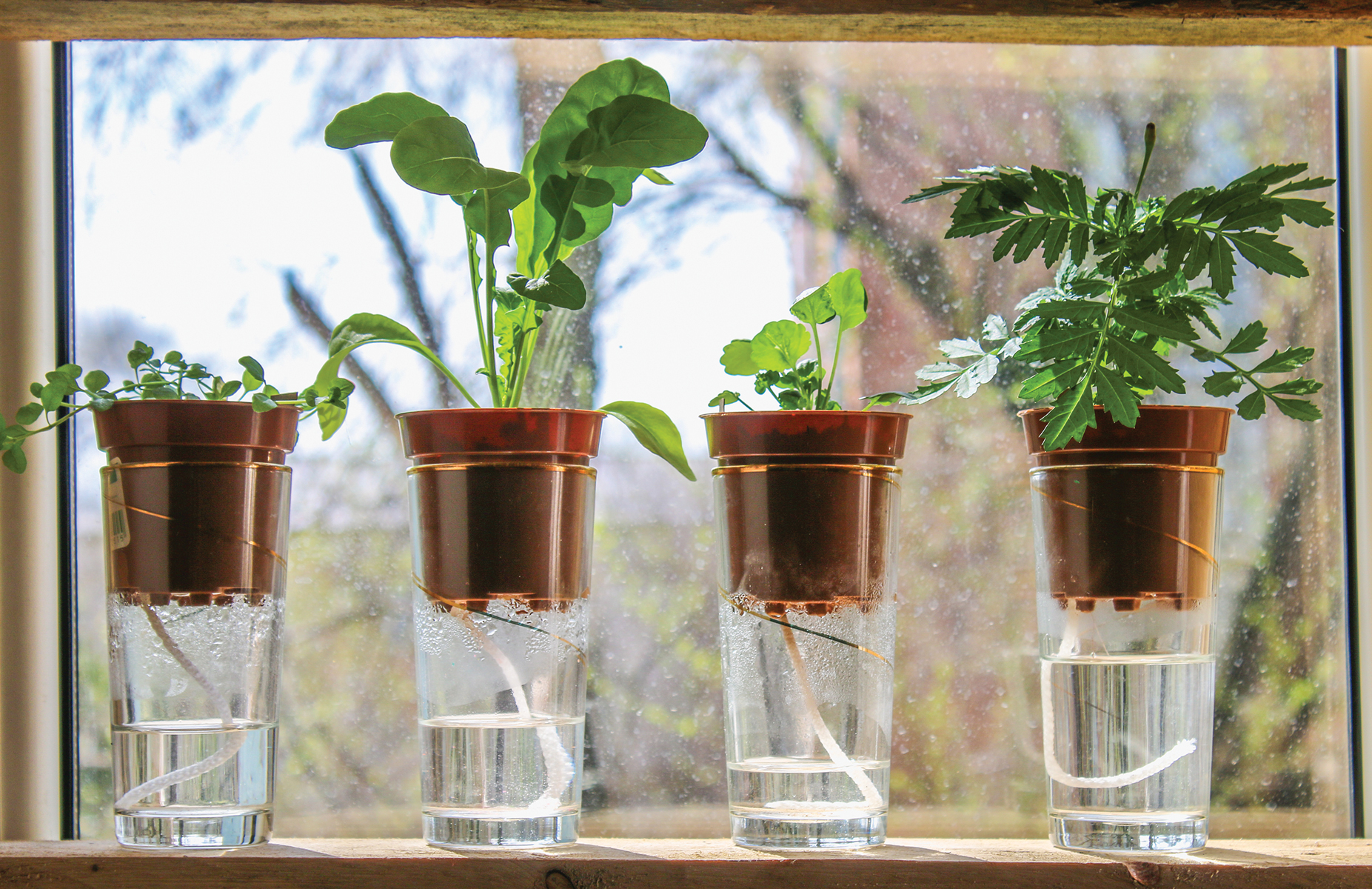
    Investing in self-watering planters is one of the most reliable ways to keep your plants hydrated while you’re on vacation. These pots have a built-in reservoir at the bottom, which holds water and allows the plant to absorb it as needed. This system keeps the soil moist for up to two weeks, depending on the reservoir’s size and the plant type. It’s an easy and stress-free solution for longer trips.

    How it works: The plant draws water from the reservoir through a wick, only absorbing what it needs. This helps prevent overwatering and underwatering, giving you peace of mind while you’re away.

    Amazon Choice
    Indoor Self Watering Planters with Drainage Holes and Saucers
    $26.99

    Practical Size Combo: Combines 6 different size…

    We earn a commission if you make a purchase, at no additional cost to you.
    01/30/2026 05:04 am GMT

    2. DIY String Watering System

    A simple DIY option is the string watering method. Yes, that’s right. A cotton string and a pot of water are all you need to create a DIY self-watering system.

    Here’s how it works:

    • Fill a container with water and place it next to your plant.
    • Insert one end of the string into the water and bury the other end a few inches into the plant’s soil.
    • The cotton string will slowly draw water from the container into the soil, keeping your plant hydrated.

    This method is excellent for shorter vacations and works well with plants that don’t require too much water.

    Amazon’s Choice
    Self Watering Rope
    $5.69

     50 Feet 1/4 Inch Self Watering Rope for Plants Wicking Cord for Garden Watering Wick Rope f…

    We earn a commission if you make a purchase, at no additional cost to you.
    01/30/2026 05:04 am GMT
    Self Watering Planter Insert for Pots
    $42.39

    Automatic Plant Waterer & Plant Accessories (12Pack)

    We earn a commission if you make a purchase, at no additional cost to you.
    01/30/2026 05:04 am GMT

    3. Watering Globes or Spikes

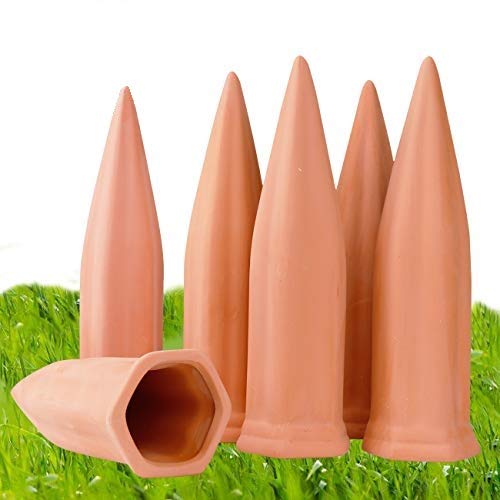
    Watering globes or watering spikes are another easy solution. These devices release water slowly into the soil, preventing your plants from drying out while you’re gone. Fill the globe, attach a spike to a water-filled bottle, and insert it into the soil. The water will be dispensed gradually, keeping the soil moist for several days.

    Watering globes are perfect for more miniature houseplants, while spikes can be used for larger pots or outdoor containers.

    Best Seller
    Plant Watering Globes Set of 4 – Small Self Watering Globes for Indoor & Outdoor Plants
    $24.99

    Multicolored, Automatic, Glass Watering Bulbs for Everyday Use

    We earn a commission if you make a purchase, at no additional cost to you.
    01/30/2026 06:04 am GMT
    Amazon’s Choice
    Terracotta Vacation Plant Waterer
    $21.99

    Wine Bottle Watering Stakes Slow Release Plant Watering Spikes Self Watering Devices for Indoor O…

    We earn a commission if you make a purchase, at no additional cost to you.
    01/30/2026 05:04 am GMT

    4. Group Your Plants Together

    If you’re only going away for a week or less, another helpful tip is to group your plants together in one area. Plants create a mini-humid environment that helps retain moisture when placed close together. Please place them in an area with indirect sunlight to avoid drying them out too quickly.

    Before you leave, water all the plants thoroughly to ensure they stay hydrated longer.

    How to Water Indoor Plants While on Vacation

    5. Ask a Friend or Hire a Plant Sitter

    Yes, the option for those who want to be a millionaire game is to phone a friend. If you will be away for an extended period, the most reliable method is to ask a friend or neighbor to check on your plants or hire a plant sitter. This way, you’ll have someone who can water your plants, check the soil, and ensure they’re doing well in your absence.

    FAQ: How to Water Indoor Plants While on Vacation

    1. How long can indoor plants go without water?
    Most indoor plants can go without water for 1-2 weeks, depending on the plant type, pot size, and environment. Succulents can last longer without watering.

    2. What is the best method for watering plants while on vacation?
    Using self-watering planters or watering globes is highly effective, as they provide a consistent water supply over time.

    3. How do self-watering planters work?
    Self-watering planters have a reservoir that holds water, and the plant absorbs it as needed through a wick system.

    4. Can I use a DIY method to water plants while away?
    Yes! The string method is a simple DIY option where a cotton string slowly wicks water from a container into the plant’s soil.

    5. Should I ask a friend to water my plants?
    For extended trips, it’s a good idea to ask a friend or hire a plant sitter to ensure your plants are properly cared for.

    đź’§ Vacation Watering Solutions

    Self Watering Planter Insert for Pots
    $42.39

    Automatic Plant Waterer & Plant Accessories (12Pack)

    We earn a commission if you make a purchase, at no additional cost to you.
    01/30/2026 05:04 am GMT
    Top Choice
    Large Self Watering Pots for Indoor Outdoor Plants, Flower Plant Pots
    $21.99
    Pros:
    • Indoor or Outdoor use
    • 1-2 weeks of water
    • Durable Design
    • Available in multiple colors
    We earn a commission if you make a purchase, at no additional cost to you.
    01/29/2026 10:04 pm GMT
  • Recirculating DWC System: Easy Way to Make

    Recirculating DWC System: Easy Way to Make

    Do you know how to make a recirculating DWC system? Well, we’ve got you covered here. Recirculating deep water culture also known as RDWC imitates the traditional deep water culture (DWC) by just adding a few modifications.

    Deepwater culture is a type of hydroponic system that ensures your plants have constant access to water, nutrient solution, and oxygen all at once. There are also measures put in place for adequate aeration for optimal plant growth.

    Setting up your recirculating deep water culture system is pretty easy when you have the right knowledge. This article will go over what you need to know about how to make a recirculating DWC system and many more. So, read on to learn about this.

    Recirculating Deep Water Culture

    Recirculating the DWC system works just like deep water culture, however, there are a couple of things that will be redesigned. Both RDWC and DWC have their plant roots immersed in nutrient solution and oxygen-filled solution.

    The main advantage and difference to recirculating the DWC system are that it’s ideal for large-scaling hydroponic farming. Therefore, several plants can be grown together with the recirculating deep water culture system.

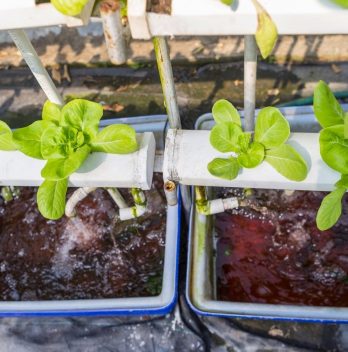
    Recirculating deep water culture system works by tubing several buckets or containers. All these containers are connected to a central reservoir.

    Building recirculating deep water culture system is not so difficult, even for hydroponics first-time growers and we will show you how.

    The major difference between RDWC and DWC is that nutrient solution gets recirculated in recirculating deep water culture. The nutrient solution moves or circulates from one container to the other and finally the reservoir. But in the traditional DWC, the water does not move and it stays in the container.

    DIY Recirculating DWC System

    Here, we have outlined the process you can follow when it comes to how to make a recirculating DWC system. So let’s begin:

    Materials required

    Let’s first take a look at the materials required to build your recirculating DWC system:

    • 5-gallon dark-colored buckets with lids (with a drilled hole of about 3 inches)
    • Net cups of size 3 inches as the drilled hole
    • Grow medium (e.g. perlite, Hydroton pebbles, coco coir, and so on)
    • Tubing (PVC) for connecting each bucket
    • Central reservoir (40 to 55 gallons)
    • Air pump and air stone (for oxygenation)
    • Inline water pump
    • Seeds or seedlings
    • Hydroponics nutrient solution
    • PH meter and other kits
    • PPM meter

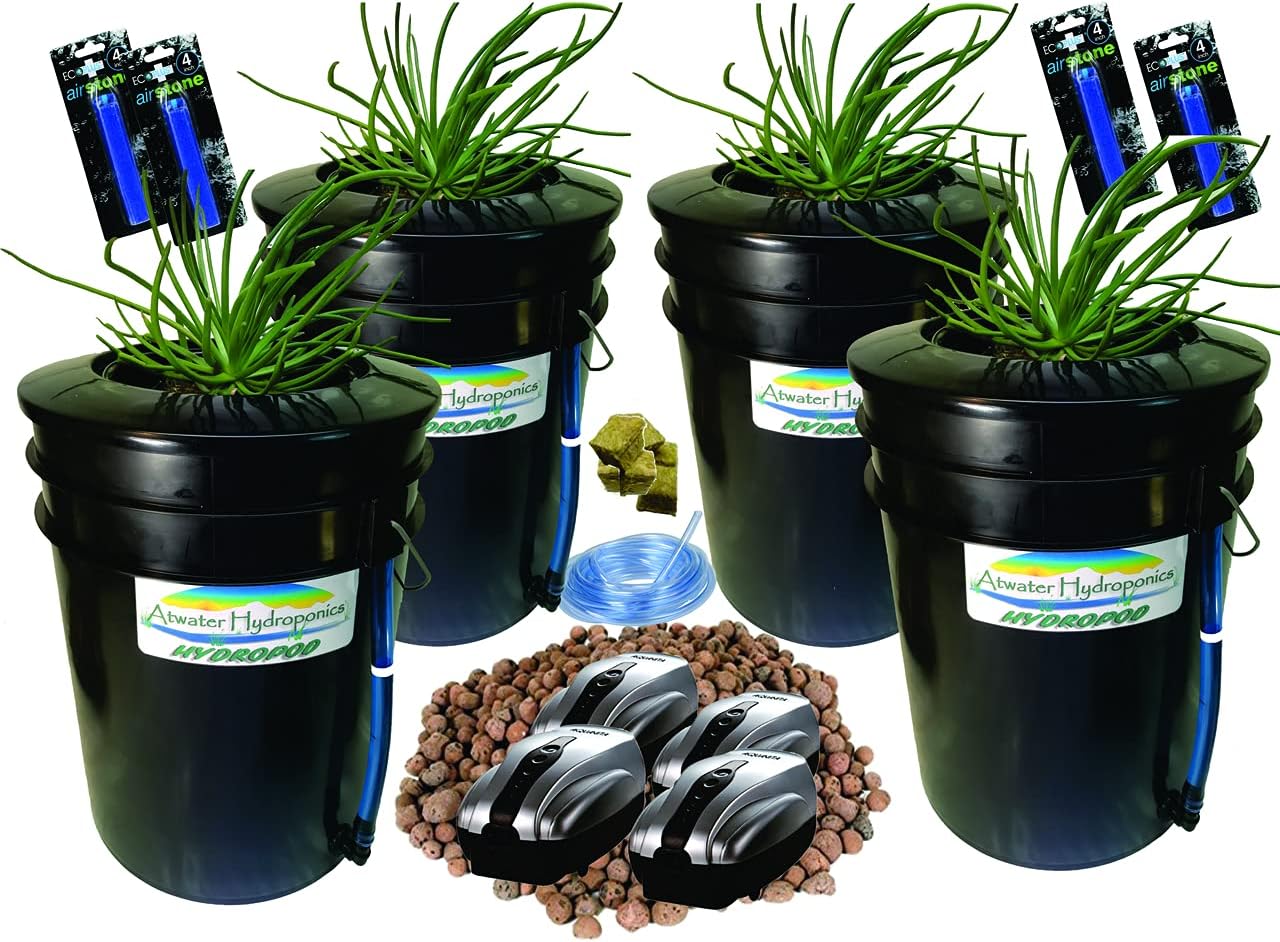
    The Atwater HydroPod – Standard (4 SITE w/ 8″ Baskets) A/C Powered Dual DWC Deep Water Culture & Recirculating Drip

    71g3bM39efS. AC SL1280

    Recirculating DWC plans: Procedure

    Follow this procedure to learn how to make a recirculating DWC system:

    1. Reservoir

    Choose the reservoir where you will be storing your hydroponics nutrient. The inline pump should be set inside your reservoir. Also, an air pump and air stone should be in your reservoir.

    2. Set up your buckets or containers

    Determine the number of buckets or containers you will be using for your recirculating DWC system. The buckets should have lids where you will make a cutting for your net pot to fit in. Inside your net pots, fill them with your preferred growing medium and this is where your plant will be.

    Also, holes should be cut on each side of your bucket and connected to your pipe. This pipe will connect to other buckets and back or down to your reservoir. Each bucket or container must have its air stones.

    3. Position your plant

    You can grow your seeds indoors with net pots that contain a growing medium and transplant them into your RDWC system. You can grow about 2 or 3 plants in each container. Note that your net pot should have a wide mesh at the base so that the plant root can touch the nutrient water container.

    Position Your Plant

    4. PH balancing

    The next thing is to balance the pH. Different plants require different pH ranges to grow adequately. However, the general pH range for plants is around 5.5 to 6.5.

    So, your recirculating deep water culture system is ready to run. If later on, you decide to add extra containers or buckets, you must also add more nutrient solutions to the reservoir. This is to ensure each plant gets the appropriate amount of nutrients to grow optimally.

    We also recommend you have 3 plants maximum for each container so your plants can get a sufficient amount of nutrients and oxygen. Having more than 3 plants may increase the risk of nutrient and oxygen competition which can diminish each plant’s survival rate.

    How Does RDWC Works?

    Recirculating DWC systems always have their plant root submerged in water. But usually, plant roots don’t always like their roots immersed in water; especially all day as they can suffocate. But why is it different in the deep water culture system? Well, let’s find out.

    We have 3 major components and keys to the RDWC system and they are:

    • Oxygen: The most essential part of both deep water and recirculating deep water culture systems is oxygenation. This is because we have plant roots always immersed in water. Therefore, you need to provide all means of oxygenation so your plant does not choke. So, the use of air pumps and air stones solves this air circulation problem.
    • Water: We can see that water is a great factor in the structure of the RDWC system. Plants are always being fed oxygen-rich water thereby taking away the need of watering your plants constantly as you would have in traditional soil.
    How Does RDWC Works
    • Nutrients: Another great component that makes your RDWC system work perfectly is the hydroponics nutrient supplied to your plants. The nutrient originates or comes from the major reservoir and passes along the pipes to reach each connected container.

    RDWC and DWC System: Major Difference

    So, in the recirculating deep water culture system, the nutrient-filled water is reused and is not drained. However, the traditional deep water culture nutrient solution always remains in the container. Recirculating DWC also allows for large scaling, unlike the traditional deep water culture system.

    Bucket Hydroponic System: How to Make Your Own

    You may be wondering how to make your own 5-gallon hydroponic bucket system. If this is the case, then look no further! For this guide, you’ll need the following equipment:

    • 5-gallon bucket
    • net bucket lid
    • water pump (ideally, aquarium)
    • air hose
    • check valve
    • clay pebbles
    • air stones (at least 6 inches in size)

    Now all you need to do is:

    1. The first thing you need to do is cut a small amount of your air hose (around a few inches or so). To one end, attach to your pump. Now you’re going to attach your air hose to the check valve. Ensure that air can run freely through your valve before moving on to the next step.
    2. With the rest of your hose, cut a piece that is long enough to reach both the check valve and the bottom of your bucket. Try not to make the space between the two more than around 5ft. If the space between the two is too long, it won’t work as efficiently as it should.
    3. Grab your net bucket lid and drill a hole. The hole should be big enough for your hose to go through. Then add your air stone, as well as the lid, and then connect to your air hose.
    4. Now you’ll need to add your clay pebbles to the net pot, as well as whatever it is you’re planting. Then water and add nutrients. It is that simple!

    Best 2 Bucket DWC System

    When it comes to a 2 bucket DWC system, there are many options you can choose from. But the one from PA Hydroponics is my personal favorite. It comes already drilled and ready to assemble, with all the components you need. It costs around $80 and includes two buckets, 2 bucket lids, 1 bag of clay rocks, an air pump, 2 air stones, 10ft of the airline, 2 water indicator kits, and 4 starter plugs. You can also choose to drill it yourself, which will save you around $15.

    bucket hydroponic system

    Best Water Pump For Hydroponic Systems

    The water pump is very important to your hydroponic system, so you’ll need to invest in a good one. If you’re looking for a good one on a budget, I would choose the VicTsing 80 GPH Submersible Water Pump.

    It holds less than 20 gallons and weighs just under 6oz. It has an adjustable flow and a cord length of just under 6 feet. It also comes with two adapters: 1/2″ and 3/8″. It’s popular among growers because of its unbeatable price. It may be small but it definitely does the job.

    Another amazing pump is the Hydrofarm Active Aqua 400 GPH Submersible Water Pump. It can hold up to 40 gallons and weighs just under 3lb. It has an adjustable flow and comes with two tubing fittings: 1/2″ and 3/4″. This is much bigger than the first option, and also much pricier; so it may not be best if you’re a beginner to hydroponic growing.

    Additional Say on How to Make a Recirculating DWC System

    Even though you can simply purchase already made recirculating DWC online, you can also build your own as well. Just follow our outlined procedure on how to build a recirculating DWC system. Do you have any tips on tricks when it comes to making a recirculating DWC system? If so, please feel free to let us know in the comments below. And remember, sharing is caring! 

    FAQs

    How do you build a recirculating hydroponic system?

    There are two main options when it comes to building a recirculating hydroponic system. You can either build a completely self-contained system or you can have a water system that is connected to your home’s existing plumbing. When it comes to a completely self-contained system, there are many different options when it comes to building your own hydroponic system. If you want to save some money, you can buy a pre-made hydroponic unit from a local garden supply store.

    You can use a pump to recirculate the water through the system. The water should be filtered before entering the pump, and also after leaving it (if using an air-lift pump). If the pump is attached to a drain, you’ll need to make sure the drain is not clogged with debris or any other material that would cause blockage. You could also use a sump pump with a hose to pump the water back into the tank.

    Hydroponics is a term used to describe the growing of plants in water using a nutrient rich solution. It is a form of cultivation that can be used to grow vegetables and herbs indoors in controlled environments.
    The advantages of this method are the ability to produce large quantities of high quality vegetables and herbs in an indoor environment. The major disadvantage is that it is more labour intensive than traditional methods. I’m not talking about the time it takes to clean up after harvesting, but the initial setup and maintenance of the system.

    How does a recirculating hydroponic system work?

    A recirculating hydroponic system is a method of growing plants that involves using water and nutrients to nourish plants in a closed system. It is a very efficient way of growing plants, and can be used to grow a wide variety of plants.

    The water is pumped into the grow room, and then circulated through a nutrient solution by means of a pump. The pump draws the solution from the reservoir, and pushes it through a series of filters and pumps that carry the solution to where it can be distributed evenly to the plants.

    A recirculating hydroponic system is one of the most effective methods for growing healthy plants indoors. It requires no soil, making it perfect for people who have allergies or other concerns about soil-based plants. The nutrient solution is constantly recirculated, providing a constant supply of fresh nutrients and oxygen to the roots. The only thing that goes out of the system is water. The process The key to a successful recirculating hydroponic system is the design of the system. A simple setup will not work, and will need to be modified or replaced over time. This is because the roots of the plant grow and develop differently as they grow. A large number of plants will also require a different system. As a general rule, the size of the system should be proportional to the space you have available.

  • Hydroponics Medium Types

    Hydroponics Medium Types

    Let’s talk hydroponics medium types. Hydroponics medium is one of the types of growing medium that may be used for growing plants. A growing medium basically involves any solid material which may be fibers, sponge, pebbles, shreds, or barks. These materials are used to hold nutrient solutions and then slowly released to plant roots.

    So, when using the hydroponic system, the grower does not depend on soil to support plants and supply nutrients. You would rather depend on a selected hydroponic media to provide support for the roots and maintain water content.

    While there are different systems of hydroponics you should know about, these systems work on the basis of suitable materials. This means that the growing media you chose for growing your plants will be as important as the system you use them in.

    The hydroponics growing medium involves the selection of a wide variety of growing media to be used. This is a guide on how to use the hydroponic growing media and the hydroponics medium types are also discussed. The strength of the different growing media is also discussed.

    Before we delve into the major hydroponics medium types, let’s discuss what the medium of hydroponics truly means.

    What Is The Medium Of Hydroponics?

    The growing medium of hydroponics involves a system where the plant growing medium takes the place of soil. The medium does not act as a nutrient provider like the soil but serves as a support to keep the plant upright. Virtually inert materials are used as a growing medium.

    The Hydroponics growing medium basically involves a simple soil-less material that is largely porous. This feature makes it possible for moisture and oxygen to be well circulated to the root system of the plant. Where a non-porous hydroponic material is used, there will be a need for more watering.

    The use of hydroponics growing medium and continuous watering of plants with ordinary water will not yield fruits. For you to get any meaningful result, you must water the plant with nutrient-filled nutrients. This is because, unlike the soil, the hydroponics medium lacks nutrients for growth.

    Although it cannot be said that one hydroponic growing media is better than another, some are easier to use. There are however a lot of factors that must be considered when picking a growing media. The system with which you will use it, and how it’s designed are big factors to consider.

    The goal of a hydroponic system is basically to keep the roots of plants moist- not saturated nor soggy. Where the growing system allows for too much water, the roots will suffocate from lack of oxygen. This would very easily lead to root dying or rot.

    Major Hydroponic Growing Media

    The following are the major types of hydroponics growing media:

    ·         Coconut Coir

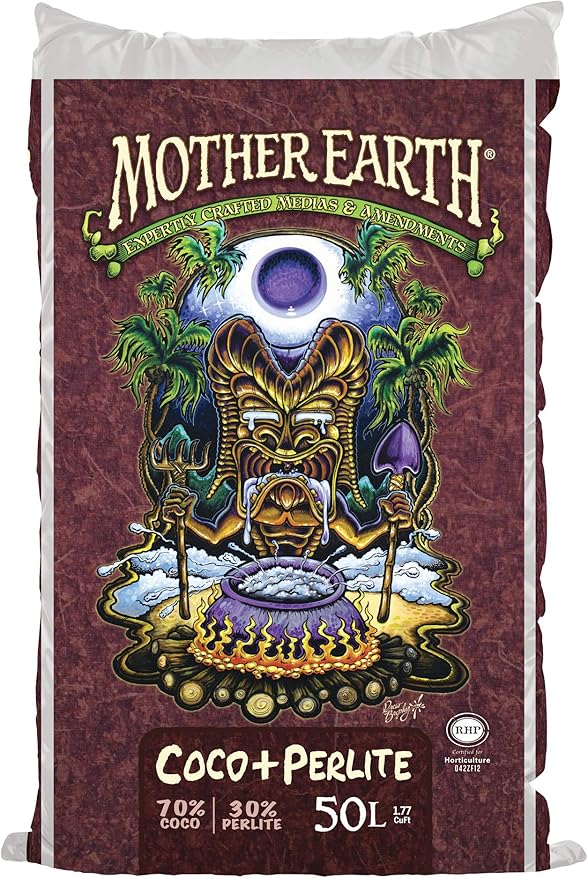
    Also referred to as coco coir; it is made from the outer husk of coconuts. Coco coir is a byproduct made from the rough, brown, fibrous husks of coconuts. It is an entirely organic material that holds water exceptionally well and allows for proper aeration. It is also an eco-friendly material, completely renewable, and can easily be composted when no longer needed. Most users use it alongside other media like perlite for best results.

    Coco Bliss Premium Coconut Coir Pith 10 lbs Brick/Block

    Hydroponics Medium Types

    ·         Rockwool – Hydroponics Medium Types

    This is a fascinating material for hydroponic growing media for plants. This material is created by melting rock and thereafter spinning it into fibers. The Rockwool fibers are thereafter compressed into cubes of different sizes used for hydroponic plant growing.

    This media has good water retention abilities and excellent aeration. The drawbacks of this media are that it is not environmentally friendly and it has high pH content. The dust from the fiber may also cause a serious irritant to the eyes.

    ·         Expanded Clay Pellets

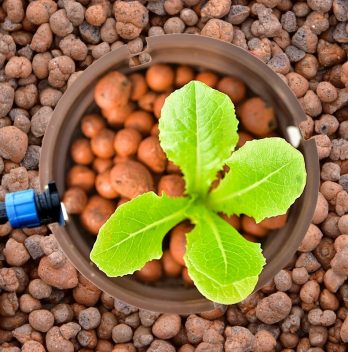
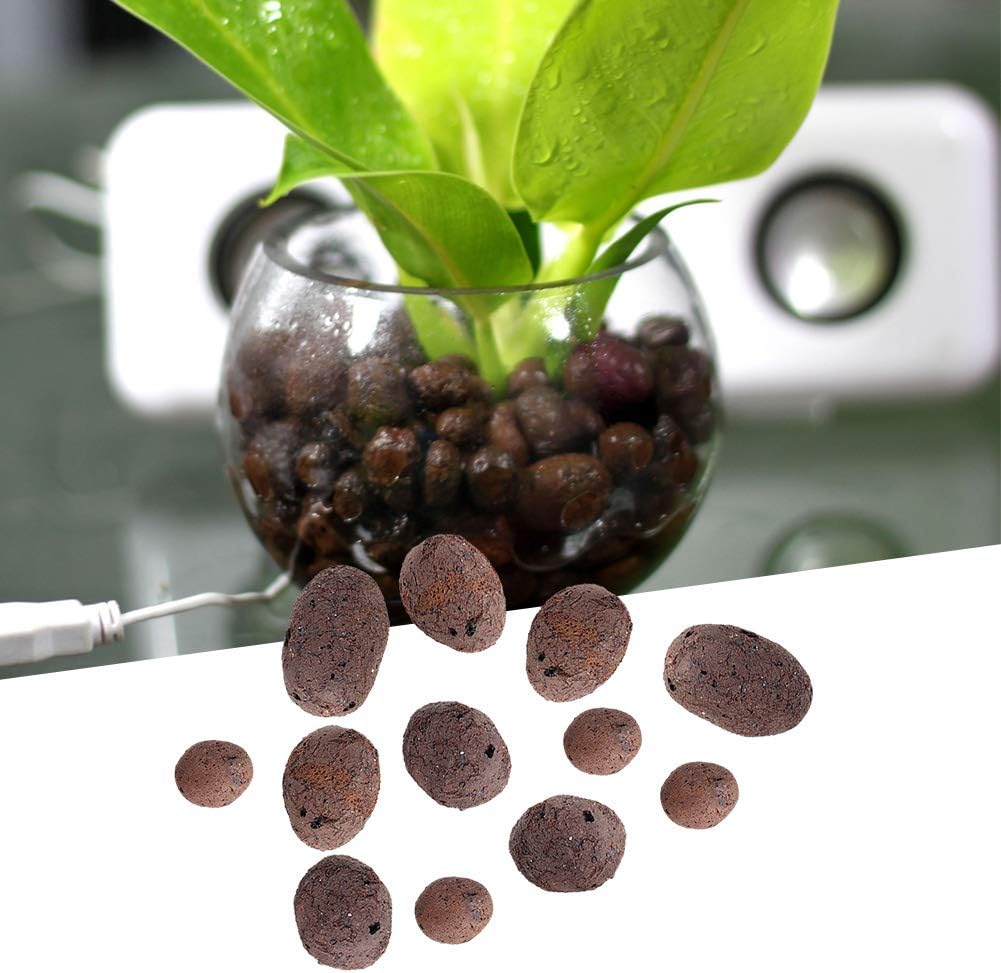
    This is one of the most used hydroponic media used in recent times. It is made by expanding clay so as to form round balls of porous material. The clay pellets have the advantage of having a neutral pH level, being reusable, and releasing almost no nutrients to the soil.

    ·         Rocks And Gravel

    Natural rocks gravel processed from rocks such as perlite and vermiculite are also used as growing media. They have the advantage of being cheap, readily available, and drain very well. The downside however is that they are heavy and hold very little water. This makes them very undesirable in systems where the root relies on some water.

    ·         Perlite – Hydroponics Medium Types

    This is one of the most common growing media. Perlite is usually made from volcanic glass. When the volcanic glass which normally contains tiny pockets of water is subjected to high temperature, the water expands.

    This expansion creates thousands of tiny pores from which perlite is gotten. Due to the small size of the perlite, it is used to add drainage, water, and air to a plant growing medium.

    Major Hydroponic Growing Media - Perlite

    Hydroponic Growing Medium Alternatives

    If you are not interested in using hydroponic growing media, you may consider the use of hydroponic alternatives. Below are some growing alternatives:

    • Sawdust: the use of sawdust has recorded some success as a hydroponic growing medium alternative. There are lots of factors that come into play in determining how well this works. The type of wood used and how pure such wood was are a few. Also, there is a high possibility of sawdust being contaminated by diseases or pathogens.
    • Rice Hulls: this is the byproduct of the rice milling process. This process usually involves the use of the coating of unprocessed rice which has peeled off. This alternative is usually used in places where rice processing is largely a practice.
    • Sand: sand is another widely used alternative to the hydroponic growing medium. One major con with the use of sand is that it lacks the ability to retain water and it has very poor aeration abilities. Sand is usually packed together making it difficult for roots to be exposed to air. It however has the advantage of being readily available.
    Hydroponic Growing Medium Alternatives

    Hydroponics Medium Types Conclusion

    Hydroponics Medium is a system as you have seen above that can be used for plant cultivation. It largely involves the absence of soil when growing plants. It offers plants the advantage of media with water retention abilities and excellent aeration.

    Some of the major hydroponic media and their alternatives are discussed above. If you are interested in trying out this method of plant cultivation, this should be a good guide for you.

    FAQ’s

    What Is The Medium Of Hydroponics?

    The growing medium of hydroponics involves a system where the plant growing medium takes the place of soil. The medium does not act as a nutrient provider like the soil but serves as a support to keep the plant upright. Virtually inert materials are used as a growing medium.
    The Hydroponics growing medium basically involves a simple soil-less material that is largely porous. This feature makes it possible for moisture and oxygen to be well circulated to the root system of the plant. Where a non-porous hydroponic material is used, there will be a need for more watering.
    The use of hydroponics growing medium and continuous watering of plants with ordinary water will not yield fruits. For you to get any meaningful result, you must water the plant with nutrient-filled nutrients. This is because, unlike the soil, the hydroponics medium lacks nutrients for growth.
    Although it cannot be said that one hydroponic growing media is better than another, some are easier to use. There are however a lot of factors that must be considered when picking a growing media. The system with which you will use it, and how it’s designed are big factors to consider.
    The goal of a hydroponic system is basically to keep the roots of plants moist- not saturated nor soggy. Where the growing system allows for too much water, the roots will suffocate from lack of oxygen. This would very easily lead to root dying or rot.

  • Drip Rings Hydroponics

    Drip Rings Hydroponics

    In both hydroponics and aquaponics, moisture and nutrient solution needs to get to the right place for your plant to grow optimally. Using drip rings in your hydroponics or aquaponics is a great way of conveying water or nutrient to your plants.

    Drip rings hydroponics will deliver the nutrients to your plant root thereby maintaining adequate moisture level to your root zone. Your grow media are not left out as well as they will also take in and retain some good moisture that will be available for your pants’ use.

    Therefore, there’s no worrying or issues of dryness or in your hydroponics plants or even grow mediums. We are all about easy gardening and we will be teaching you how to make your drip rings hydroponics. We will also be recommending some drip rings you can purchase, so read on for more info.

    Hydroponic Drip Ring

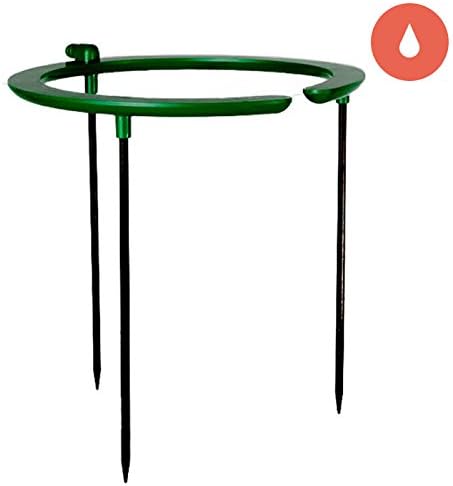
    Hydroponics drip rings is a round-shaped ring used in delivering water and nutrient to grow mediums and plants roots. The drip rings hydroponics has holes that have been strategically poked to emits water and nutrient content directly into your plant and grow media. It is also fitted with a half-inch water inlet that you can use to plug any watering configuration.

    Therefore, it is an irrigation system that assists in sustaining an evenly consistent moisture environment in the root zone. You can use these drip rings for irrigating soil, peat, as well as hydroponic media.

    Hydroponic Drip Ring

    The hydroponics drip rings can be used in both indoor and outdoor gardens and they will make a great irrigation system for your garden.

    DIY Drip Rings Hydroponics

    It is pretty easy to make your DIY drip rings. We have made things easy for you by giving you a step-by-step way of making your drip ring.

    Materials

    • Wires (small and big wires)
    • Clips to holding
    • Plastic or rubber tubing
    • Pairs of pliers for bending wires
    • T fittings for connecting your drip ring
    • PVC cutter, a poker, or any cutting tool to make holes around your drip lines

    All these materials can be obtained from your local hydroponic store or online shopping sites.

    Steps On How To DIY Drip Ring Hydroponics

    Follow these steps to begin your DIY ring setup:

    Step 1

    The first step is to cut the tube and connect the two ends with the T fittings. You will need to cut the tubing according to the size of your plant bed or the individual plant area you wish to cover.

    Step 2

    Drill some holes around the drip ring. You can drill 5 or more holes depending on the length of your tube ring.

    Step 3

    Then your drip ring is ready to be positioned on your plant bed or individual plant area. You can use the T fitting for your hydroponic nutrient water inlet.

    Ensure you clean your hydroponics drip rings between each growing cycle.

    Some Recommended Drip Rings Hydroponics

    If you don’t want to go through the stress of the DIY process, you can simply purchase readymade drip rings for your hydroponics garden. Here is some recommended drip ring you can go for:

    1.    HYDROFLOW HGC748086 Irrigation Fitting Rain Ring Drip Emitter

    The hydroflow rain ring drip emitter is a convenient irrigation ring that can be used in the soil as well as hydroponics. They are durable and suitable for both indoors and outdoors use.

    The ring has specific holes that will allow water nutrients to rain over your plants and it will totally cover your hydroponic growing media. Therefore, it can be used for any type of growing media.

    The hydroflow rain drip emitter is very easy to clean between every grow cycle. The parts will come apart easily for cleaning and inspection. When it’s time to clean, just soak and rinse it with any cleaning solutions such as citric acid, peroxide, or any soft bleaching water mixture.

    It has a half-inch water inlet that can be easily plugged into any watering design. It comes with 3 removable stakes that will hold the ring in the perfect spot and it can be placed at any desirable watering height.

    2.    Bloom Brothers GGWR06 Inch Hydro Halo Water

    The bloom brothers hydro halo is another effective drip ring you can use in your hydroponic garden. It is suitable for all growing media and can be used for both indoor hydroponics and outdoor purpose.

    It features 3 stand removable stakes that help keeps the drip ring in one position. If you want, you can use the drip ring without the stakes.

    It is pretty durable thus, can be used for years and it’s easy to clean between every grow cycle.

    71bFqkjYjIL. AC SL1500

    3.    HydroHat 6″ Drip Ring Plant Watering System

    The HydroHat drip ring plant watering system is also a good option to go for. It will evenly emit water and nutrient solution around your plant base.

    This drip ring can be used for all types of grow media and it’s suitable for both indoor and outdoor gardening purposes. It is also long-lasting and quite easy to clean.

    41jpfGivRaL. AC

    Final Say On Drip Rings Hydroponics

    There’s nothing major about constructing your drip rings. Building a drip ring for your hydroponic garden is pretty easy and you can get it done with a couple of parts. Just follow our steps on DIY drip rings.

    However, if you don’t want to go through the stress of building your drip rings, you can simply go for one of our recommended drip rings.

    All in all, making use of drip rings hydroponics will offer your hydroponics plants lots of benefits that will ensure your plants grow optimally.

    Read more about Drip Irrigation For Tomatoes In Containers.

  • How To Build A Recirculating Deep Water Culture System

    How To Build A Recirculating Deep Water Culture System

    If you would like to know how to build a recirculating deep water culture system, we will enlighten you on this. We have various types of hydroponic systems and recirculating deep water culture system is one of them.

    Recirculating deep water culture system (DWC) is one of the most convenient, easy to build, and moderate cost hydroponic systems you can go for. So let’s explore how to build a recirculating deep water culture system.

    What Is A Deep Water Culture & Recirculating Deep Water System?

    Deepwater culture (DWC) is a method of hydroponic system gardening whereby plants’ roots are suspended or submerged in a nutrient-rich solution and oxygenated water. There is a reservoir used to store the nutrient and water solution for plants use.

    Now, this deep water culture system has different types and recirculating deep water culture (RDCWC) is the one we are going to be talking about.

    In a regular or traditional deep water culture, there’s the stress of monitoring each system’s pH, nutrient level, and so on. It is only ideal for a small system. However, if you wish to have a larger system that will contain more plants, recirculating deep water system should be your choice.

    Learn How To Build A Recirculating Deep Water Culture System

    Recirculating deep water culture system is the combination of different deep water culture systems through some connecting pipes.

    The major difference between deep water culture and recirculating deep water culture is that the nutrient water solution in RDCWC will be pumped from a big reservoir. Then it will be passed through other small systems and returns to the reservoir. Thus creating a re-circulation.

    Materials Required

    A big nutrient reservoir, small gallon of buckets, net pots, air stones, air tubing, air pumps, growing medium, nutrient solution, pH meter, and connecting pipes, grow lights for indoor purpose.

    Step 1

    Obtain a big reservoir tank for storing nutrient solutions. Now, this big tank will be linked to every other small reservoir for each plant. Then all the small tanks or reservoirs will be connected by pipes.

    It is this big tank that will pass or supply nutrient solutions to other small tanks. It will now be returned or recirculated back into the big tank. An inline water filter is used to control and recirculate the water. The roots of your plants will be totally suspended on this nutrient solution.

    big reservoir tank RDCWC

    Note that the big reservoir needs to be stored in a light-proof container.

    Step 2

    Obtain some air pump and air stone to be put in the big tank and each small tank. Air stones will produce bubbles that encourage gas exchange and good aeration in combination with air pumps. So, this will keep the root of your plants well oxygenated as oxygenation is paramount to the survival of your plants in RCDWC.

    Step 3

    Next use net pots to hold your plants in. The net pots have holes that will allow your plant roots to reach below the nutrient water solution.

    Then go ahead to fill the net tots with a growing medium like perlite, clay pellets, pebbles, lava rocks, and so on.

    Step 4

    When you’re done setting up your deep water culture system, ensure you check the pH value. Always sustain a pH range of 5.5 to 6.5 for optimal growth.

    The nutrient solution in your reservoir can be replaced once a week or once in two weeks. Also, ensure you always check the nutrient conditions in your reservoir with an EC meter and PPM meter.

    Deep Water Culture (DWC) Hydroponic Bubbler Bucket Kit

    7159OGi2CaL. AC SX569

    Plants That Can Be Grown In Recirculating Deep Water Culture System

    So, plants that can be grown in recirculating deep water culture system include:

    Tomatoes, lettuce, herbs, squash, pepper, cucumbers, and so on.

    Benefits Of Recirculating DWC System

    Below are the benefits you stand to gain when using recirculating deep water culture system for planting:

    • Recirculating deep water culture system is very easy to set up and the components are easily accessible.

    • This system is cost-effective. Also, maintenance is not demanding once your system is up and running. There is less worrying about clogging or blocked pipes or systems.

    • You enjoy the faster growth of plants because nutrients are absorbed directly and easily. Also, the rich oxygenated system encourages faster nutrient uptake.

    • Taller or larger plants can be grown in the recirculating deep water culture system.

    • The watering scheme is very easy.

    • The fertilization requirement is not demanding as the plants are always submerged in nutrient-filled water solutions.

    Benefits Of Recirculating DWC System

    FAQ’s

    How do you set up a recirculating deep water culture?

    You’ll need a PVC pipe with an internal diameter of at least 12 inches (30 cm), and ideally the bottom end should be threaded. You’ll also need a pump, some tubing to connect the pump to the pipe, and a valve.
    You’ll also need a few other things: A tank. A plastic or stainless steel tank is best for this, but if you don’t have one available, you can still grow plants, but the water quality will be poor. You may also need a heating element if you want to keep your growing area warm. A reservoir. This is a container that holds water when it’s not being used to grow plants. It’s usually connected to the tank, so the water level in both containers remains the same. Pots. These are the main part of the system. You’ll need at least two pots, though more would be better. An air pump. If you have a standard garden pump, you should be able to adapt it to work as an air pump, by placing it in a bucket with some holes drilled in the lid. The potting mix. For this you’ll need a small amount of compost or peat, and some kind of plant food.
    Fill the potting mix with water until it’s about 3/4 of the way full. Add the growing mix, using at least twice as much as the volume of the water you added. Pump the water through the tubing and into the potting mix in the reservoir, so that the water mixes with the potting mix. Leave the pump running for around 10 minutes. You can check how well the mix is draining by looking at the surface of the water in the reservoir. If it’s still relatively full, turn off the pump and leave the potting mix undisturbed overnight. The next day, check that the water has drained away. If it hasn’t, restart the pump. The first time you do this, you may need to add more fish emulsion to achieve the right consistency. Keep an eye on the level of the water in the reservoir. It should be just below the top of the growing mix. If the water level starts to rise, stop pumping. The extra water will drain away. When the water reaches the top of the growing mix, stop pumping again and wait a few minutes before restarting the pump. This will allow the water to drain away completely. When you restart the pump, keep an eye on the level of the water in the reservoir. It should be at the top of the growing mix. Repeat the process every day or two, until the water level in the reservoir is about 3/4 of the way down the potting mix. If you want to grow plants, you’ll need some kind of light. You can use any kind of light that’s appropriate for your plants, but a combination of fluorescent and regular lighting is probably best. You’ll also need a thermostat. This is a device that controls the temperature of your growing area, so you can maintain a constant temperature throughout the day.

    How much air is needed for a DWC system?

    The short answer is that it depends on the plants you are growing. If you are growing plants that do not have a lot of surface area, then you will need more air than if you were growing plants with a lot of surface area. If you are growing plants in pots, then you will need more air than if you were growing them in a tray or other container.

    Recirculating DWC Hydroponic System Conclusion

    We hope by now you have learned how to build a recirculating deep water culture system.

  • Deep Water Culture System Designs

    Deep Water Culture System Designs

    Deep water culture system is one common type of hydroponics system among hydroponic growers. The design is not so difficult and the materials needed are accessible and won’t cost you much stress. So, this article attempts to give you some information about deep water culture system designs.

    So, let’s dive in to gain some knowledge.

    Deep Water Culture System Designs Setup

    Deep water culture system designs are pretty easy to set up. What it takes to construct this system is so easy and it will be worth any hydroponics grower time. Now if you love to learn and create new things by putting them together, designing a deep water culture system will interest you.

    Let’s take a look at the materials used in constructing deep water system designs and the various types you can go for. All these materials can be purchased on Amazon, a local hydroponics supply store, or home depot.

    Materials Needed For DIY DWC System

    • Gallon buckets
    • Net poles for holding plants
    • Air pump and airstones for tank oxygenation
    • Airline tubing
    • Nutrient solution
    • pH control kit
    • Growing media to be filled inside the net poles

    Deep Water Culture (DWC) Hydroponic Bubbler Bucket Kit

    Types of Deep Water Culture System Designs

    1. Traditional Method: Attach the pump to the airline tubing and link the tubing to the airstone. Now put the airstone in the bucket and fill up the container with water. Do the necessary pH adjustments and put in your nutrients and begin seeding. As your plants begin to sprout and germinate, the roots will begin to touch the water. Your plants will receive adequate nutrients and water and they begin to enjoy optimal growth.

    2. Recirculating Deep Water Culture System: the recirculating DWC is great for both beginners and large scale. This method consists of several individual buckets or containers. These buckets are all linked to a central reservoir which circulates to feeds the plants in each bucket and returns to its reservoir. Make sure you calibrate each bucket and always monitor the pH and adjust accordingly.

    3. Bubbleponics: the bubbleponics is similar to the common deep water culture system. However, it is only perfect for small plants that their root system isn’t long enough to reach the nutrient reservoir. This system makes use of a water pump which is placed inside the reservoir. Oxygenated water is pumped towards the net cups where it can reach the roots of the plants. It flows along with the growing medium to wicks up water and later returns into the reservoir tank.

    Bubbleponics

    4. Kratky Method: the Kratky method is similar to the regular DWC but it just doesn’t make use of a water pump. The design of the Kratky method is set up in a way that there is a gap between the surface of the nutrient mix and plant roots. Half of the roots are submerged in the nutrient mix and the other half is left hanging in the air. The roots of the plants adapt and grow longer downwards as the water level drops.

    Deep Water Culture Requirements: How It Works

    • Nutrients: the nutrients in your DWC system will need to be monitored closely to maintain pH balance. The pH level should be between 5.5 to 6.5.
    • Aeration: air circulation is essential in the DWC system because plants require oxygen for optimal growth. Thus, air pumps are very important in the deep water culture system. The size of the tank will determine the size and strength of the pump. We recommend you use an air pump of 2 outlets or more. This way, you can attach air stones separately and this will deliver oxygen adequately. Keep the air pumps running at all times to maintain a well-aerated solution. Failure to do this can cause your plants to die quickly.
    • Reservoir: your reservoir can be a dark container. Make sure light doesn’t enter the reservoir to prevent algae growth. The algae growth can decrease air circulation to your root. We recommend you cover the top of your reservoir tank with a reflective material. This will reflect light away from your reservoir tank preventing your tank from light and heat.

    FAQ’s

    What are the most common deep water culture designs?

    The most commonly used type of grow box is the so called “deep water culture” or DWC hydroponic systems. These are very popular because they can be set up and run with minimal technical skills, they are very efficient in terms of light and space utilization and they are easy to maintain. They also provide a great variety of different plants in a very simple way.

    Pros: Very cheap and easy to setup and run.

    However, the disadvantage of these systems is that they are not very efficient in terms of light and space utilization.

    How does DWC hydroponics work?

    DWC uses a series of small chambers that are used to house plants and to provide them with the nutrients they need to grow. The chambers are connected to each other by a network of tubes, which is the way in which water passes through the system. The roots of the plants are suspended in a nutrient solution, which is pumped from one chamber to another, depending on the plant’s needs.

    DWC is a complete hydroponic system that allows you to grow your own plants without soil, water or electricity. The roots of the plant are in contact with a nutrient-rich liquid while the leaves receive light from an LED lamp. DWC uses the principle of nutrient recycling. It works by first filtering and recycling nutrients from the plant’s roots through a perforated plate into a nutrient solution.

    The plant absorbs the nutrients and grows. When the plant needs more nutrients, it is harvested and the process is repeated. DWC has the potential to produce food for a family of four on a single acre of land with no water or electricity. The benefits of growing your own food are numerous. You will save money, have better quality food and know exactly where your food comes from. Plus, you can grow your own food in a very safe way.

    DWC can be used to grow crops in space, as well as to provide plants with the essential nutrients they require for growth.

    Is it becoming popular?

    Hydroponic DWC gardening is one of the fastest growing trends in the world today. It’s not just for green thumbs anymore, it’s for anyone with a green thumb and an open mind! You can grow your own fruits, vegetables, herbs, even flowers. Hydroponics systems have been around for a long time but they were only used by the military and NASA. Hydroponics is a way to grow plants without soil.

    IS there an obvious best design?

    No. This is a difficult question because they are not the same. Both have their benefits and disadvantages. You need to think about what you want from your plants and choose accordingly.

    DWC Hydroponics

    As we have mentioned, deep water culture system designs are easy to construct and it offers a maximum yield of crops.  However, always have in mind that aeration is the key in deep water culture system designs.

    So, you can try any types of these DWC systems and enjoy greater yield.

  • Cheapest Hydroponic Growing Medium

    Cheapest Hydroponic Growing Medium

    Just because hydroponic is a soil-free system does not mean we would not have anything to support our plants. This is why we have the hydroponic growing medium that replaces soil or dirt. So, if you’re searching for the cheapest hydroponic growing medium, then look through our guide.

    We have outlined the cheapest hydroponic growing medium with the right information and some great tip to make your search easy. So, read on to know your best pick.

    What Is A Hydroponic Growing Medium?

    A hydroponic growing medium is a soil-free component that helps to hold sturdy or support the plant root system in the hydroponics. However, it does not provide nutrients. It is a permeable material therefore it can absorb and hold moisture, nutrients, and oxygen for the root system which is needed to grow healthily.

    A hydroponic grow medium can also be a non-permeable material. You just have to increase the watering schedule so your plant root does not dry out.

    Types And Characteristics Of Hydroponic Growing Medium

    Before we dive into the cheapest hydroponic growing medium, let’s have an idea about the types and characteristics of some grow medium.

    There are various hydroponic mediums available for your hydroponic use. Any type works great. They simply depend on the type of plant you wish to grow, the type of hydroponic system been used, and your preference.

    There are so many growing mediums are accessible to suit your needs, budget, and preference. We have listed a few of the most common types of hydroponic growing medium used.

    1. Rockwool

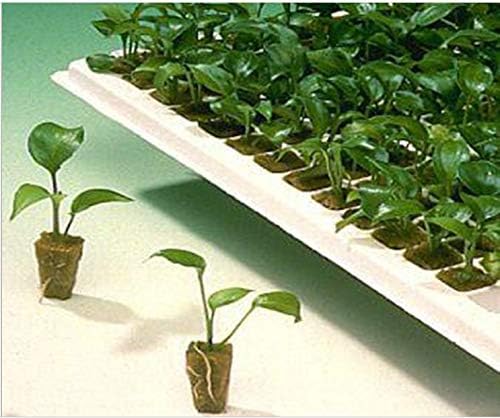
    Rockwool is one soil-free hydroponic growing medium that has been in existence for a long period. It’s been longed used for plant starters and cloning. It is an inert media made from melting rock and other processes. Rockwool is meant to be pre-soaked and it has been shaped into cubes, slabs, or blocks.

    Rockwool is now been used in place of starter plugs which helps in rapidly encouraging the sprouting of seeds in your farm.

    Rockwool

    2. Coco Coir

    Coco coir is a famous and best-loved growing medium among hydroponic farmers. They come from the husk of coconuts and are great for hydroponic plant support and moist retention.

    The soilless coco coir is loved because of its awesome characteristic protection of seed and makes them start strong. It will protect your seeds from buildup salt and too much sunlight that can harm your seeds. At the same time being a good medium free of fungi or pathogens.

    3. Oasis cube

    Oasis cubes is another great grow media comparable to Rockwool and they are made for both seeds and cuttings. It is an inert growing media that require no pre-soaking and has a neutral pH.

    4. Expandable Clay Pebbles or Pellets

    The expandable clay pebbles or pellets also called hydroton pellets is a pH neutral grow media. They are great supports for your plants which will also fit in net pots and they are reusable. Although they are not so cheap, they are cost-effective and great for your hydroponic plants.

    5. Perlite

    Perlite is another great media used for hydroponics. Apart from being a growing media, it is commonly used as soil additives by traditional soil growers. It is made from heating volcanic glass.

    Perlite is not as good as standalone media. It is usually mixed with other grow media such as vermiculite, coco coir, as well as soil, and it’s usually mixed 50/50. Perlite is less expensive and it’s reusable.

    Perlite

    6. Vermiculite

    Vermiculite can be compared to perlites and it is made from heating mineral rocks till it expands into pebbles. It is mostly used in a mixture with other grow media.

    4 Recommended Cheapest Hydroponic Growing Medium

    We have listed some recommended cheapest growing medium you can go for:

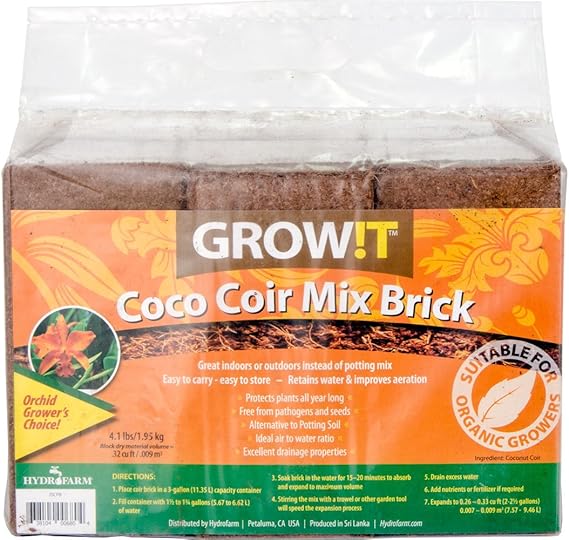
    1.    GROW!T JSCPB – Coco Coir Mix Brick (Pack of 3)

    Grow!t coco coir mix is an awesome organic growing medium for your seeds and seedlings to germinate and start strong. It is one of the cheapest good quality coco coir and it’s easy to store and it expands very well. It is also biodegradable and renewable.

    Another advantage we admire is that it offers protection against pathogens and fungi, therefore, giving your plant healthy growth. It also protects against the build-up salt.

    Grow!t coco coir mix is a soil-free medium that holds water adequately and there’s no risk of plant drowning. It conveys nutrients throughout your plant root thereby improving plant development. It also has good aeration.

    Pros

    • Great water retention, nutrient circulation, and aeration.
    • Offers protection for your plants.
    • Expandable and easy to store.
    • No over-saturation problems.

    Cons

    • May need washing.
    Cheapest Hydroponic Growing Medium - Coco Coir

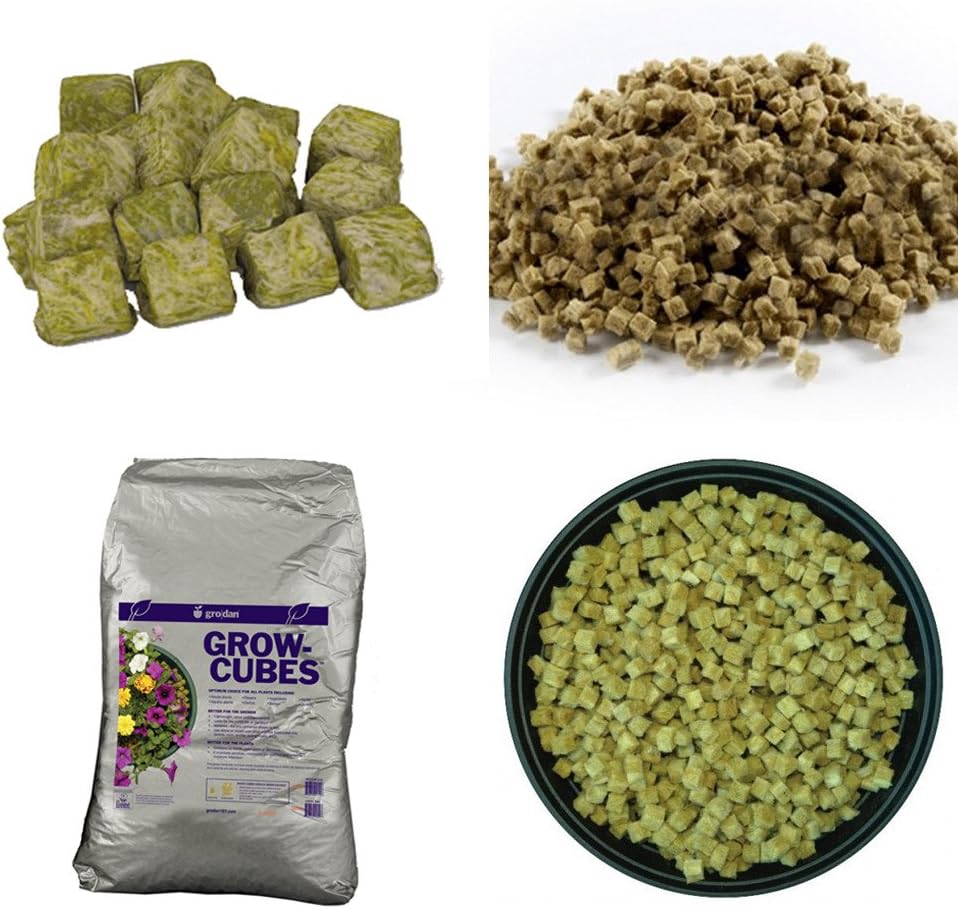
    2.    Grodan Mini Cubes Rockwool Hydroponic Grow Media + THCity Gloves – 2 Gallon Bag

    The Grodan mini cube is a type of Rockwool and it is an inexpensive hydroponic growing medium. It comes in a cotton-like candy fiber and has been compacted into various shapes such as blocks, cubes, or slabs.

    Grodan mini cube will serve as a great anchor for your hydroponic plants in their various developmental stages. This type of growing media will retain moisture and deliver nutrients to your plant root. It is great in providing good air circulation (oxygen) for the growth of your plant.

    We admire the fact that it comes with a pair of lovely gloves for your comfort and protection when handling your medium.

    If you wish, the cuttings or seedlings you started in Grodan mini cube can be transplanted to dirt or your soilless growing medium. Grodon will work fine if all other growing conditions are met.

    The downside is that they need to be presoaked and the pH range will need to be monitored.

    All in all, this is a good option you can consider when choosing the cheap hydroponic growing medium if all other conditions are met.

    Pros

    • Retains moisture.
    • Delivers nutrients to plant roots.
    • Good air circulation.
    • Comes with fine pair of gloves.

    Cons

    • Needs to be presoaked.
    71mhBuNB7fL. AC SL1000

    3.  1.5 inch Rockwool/Stonewool Grow Cubes

    1.5 inches Rockwool is another cheap and available option for your hydroponic growing medium. It can be used for seed starters, root cuttings, and so on.

    This medium provides a good anchor for your plant even for starter plants. It has great air circulation and excellent drainage properties. It also conveys nutrients to your plant root for adequate and rapid growth.

    You can either use it for your garden hobby or commercial growing purpose. The size is excellent to fit into a standard flat grow tray.

    Even though it requires presoaks before use, overall this is a good option you can consider when choosing the cheapest hydroponic growing medium.

    Pros

    • Affordable.
    • Great for seed starters and cuttings.
    • Provides anchor for plants.
    • Great air circulations, drainage, and delivers nutrients.

    Cons

    • Requires presoak.
    51jpB7a1%2BNL. AC
    1. Clay Pebbles – 100g Hydroponic Clay Pebbles Growing Media Anion Clay Rocks

    Clay pebble is another cheap soil-free hydroponic growing medium as well as aquaponics. It is safe and reliable and does not emit any toxic substances. They are also free from pests and diseases.

    This growing medium is great support for your plant root and has excellent retention of moisture. It is as well a good transport media for nutrients. Another positive thing is that they are capable of storing nutrient and releasing it to the plant root slowly.

    They might not be the best of the best, but you can work your way around it.

    Pros

    • Support plants root.
    • Great water retention.
    • Great in transporting nutrients.

    Cons

    • Needs washing because they are dusty.

    Points To Consider When Choosing The Cheapest Growing Medium

    You need to put into consideration some points when choosing the cheapest hydroponic growing medium. We have outlined these points and they will help you make the right decision.

    • Water Holding Capacity: one important point to know when choosing your growing medium is its water retention. Because nutrients are dissolved in water, the medium needs to be able to hold water and transport nutrient solution for the usefulness of your plant growth.
    • Good Anchor: because there is an absence of soil that gives support: the growing medium should be able to provide an adequate anchor to hold your plant sturdy.
    • Aeration: the growing medium must have good air circulation which is required for your plants’ growth.
    • Affordability and Availability: you should also consider if the growing medium is affordable and available in your region.

    You should also note that apart from choosing the right growing medium, all other growing conditions need to be met for you to have a smooth and running hydroponic garden.

    Points to Consider When Choosing the Cheapest Growing Medium

    FAQ’s

    What growing medium is best for hydroponics?

    One favorite growing medium is perlite. It’s lightweight, easy to mix into any solution and has a great absorption rate. The only thing is that it doesn’t seem to hold moisture very well. You can buy pre-mixed bags at your local gardening store. There are some good reasons to use coco coir. It’s cheap, light weight, easy to mix with water and will absorb up to 5 times its weight in water. The only thing is that it is not very absorbent so you will need to add more fertilizer to it than if you were using a more absorbent medium like peat moss or vermiculite. .

    Can rocks be used in hydroponics?

    I would suggest using them as an addition. If you are not familiar with hydroponics, it is a method of growing plants using nutrient solutions. It works by having the roots in a solution and the plant uses the water to transport nutrients into the root system. There are two basic types of hydroponic systems: a hanging basket system and a tray system. In a tray system, the roots are grown in a tray of nutrient solution and they are submerged in the solution. The roots grow down into the solution and the solution is constantly being replaced. This is a slow growing method because the roots are growing into the nutrient solution rather than pushing through it. In a hanging basket system, the roots grow out of the nutrient solution.

    Is perlite a good hydroponic medium?

    Perlite is a hydrophilic, air-filled, spherical, glassy volcanic rock. It does have some beneficial qualities, but like any other growing medium it has some drawbacks too. One big drawback is that it is very light, almost weightless, so you have to hold it up for your plants or they won’t grow well. Another major drawback is that it is a poor nutrient medium. It is a very poor nutrient medium. It does contain some nutrients, but the nutrients are so low in quantity that it is basically worthless as a nutrient source.
    Additionally, it is a very light material and will expand when wet.

    Do you need soil for hydroponics?

    No, you don´t. What is the best soil for growing plants? Hydroponic systems can be a little tricky to set up, but once it’s set up and running, it’s an easy way to grow a variety of crops. If you’re planning on growing hydroponically, then you’ll need a container that will hold water and your plant roots.
    These containers are called “soil-less” or “water-less.” Water-less containers are designed to be used in a hydroponic system. The main purpose of this system is to grow plants using water, rather than soil. In hydroponic gardening, you need to keep your roots constantly moist, so water-less containers are perfect for this type of gardening. It can be easy to start seeds or seedlings in a hydroponic system. This method is also great for indoor gardens.

    Conclusion

    Hydroponic growing medium supplies your plants good moisture so your plants do not dry out. They also convey nutrients and can act as a buffer in case your pump or any other essential part fails.

    All in all, before you settle finally for a particular medium, try and experiment with the various medium. This way, you can pin down the appropriate growing medium for your plant’s growing needs.

    Various plants have different growing needs and they will thrive with different growing mediums. Also, make sure all other growing requirements are met.

    We recommend you give your system a trial and error so you can perfect all the needs of your hydroponic system.