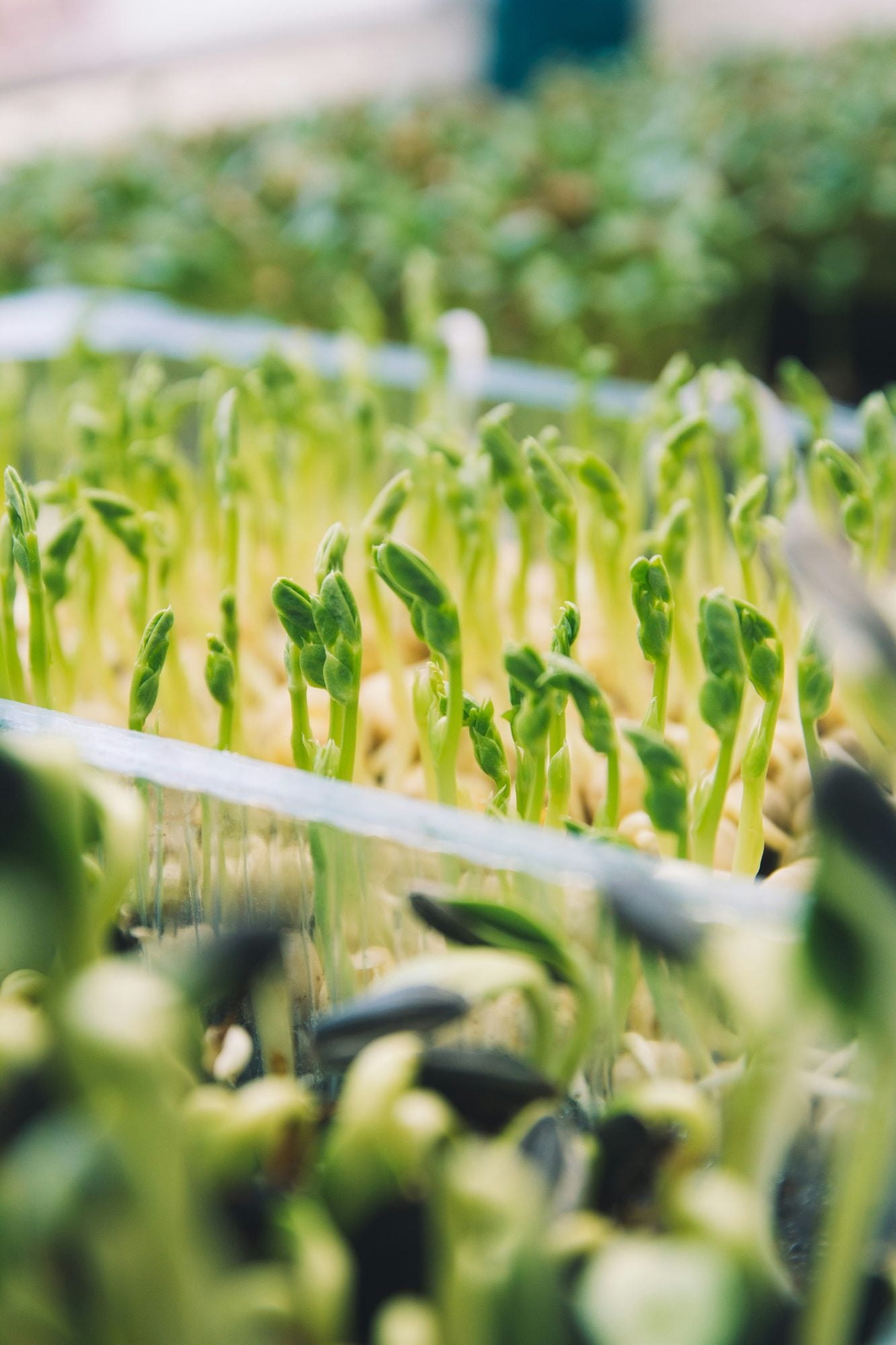
Growing microgreens at home is one of the fastest and easiest ways to add fresh, nutrient-packed greens to your meals year-round. These tiny vegetables pack concentrated flavor and nutrition, ready to harvest in just 7-14 days. Whether you have a sunny windowsill or a small countertop, you can grow fresh microgreens with minimal equipment and effort.
What Are Microgreens?
Microgreens are young vegetable seedlings harvested when they’re 1-3 inches tall, right after the first true leaves appear. Unlike sprouts, which you eat root and all, microgreens are cut above the
What You’ll Need to Get Started
Growing Containers: Shallow trays work best, about 1-2 inches deep. You can use seedling trays, disposable aluminum pans, or even takeout containers with drainage holes. For consistent results, consider an indoor herb garden setup with built-in lighting.
Growing Medium: Microgreens grow well in potting
Seeds: Choose untreated, organic seeds specifically sold for microgreens. Regular garden seeds work but may have been treated with chemicals. Start with easy varieties like radish, broccoli, or mustard greens for your first batch.
Light Source: Microgreens need 12-16 hours of light daily. A sunny south-facing window works, but LED grow lights give more consistent results year-round and prevent leggy growth.
🛒 Recommended Microgreens Supplies
iDOO Herb Garden Indoor with LED Grow Light, Built-in Fan, Auto-Timer, Adjustable Height Up to 11.3″, 12Pods-


1FT Plant Grow Lights for Indoor Plants Full Spectrum, Grow Lights for Seed Starting, Succulent, 20W(2 10W), Sunlight White, 2-Pack

Zyzykeji grow lights is Designed with 3 light tubes and 3 flexible goosenecks, auto timer function, 3 modes & 10 dimmable Levels, red, blue & white full spectrum grow light is the best choice for your plant growth.

Step-by-Step Growing Guide
1. Prepare Your Tray: Fill your container with 1-2 inches of moistened potting mix. Level it gently but don’t pack it down. The
2. Sow Seeds Densely: Sprinkle seeds evenly across the surface. Unlike regular gardening, you want seeds touching or nearly touching—about 10-15 seeds per square inch. For larger seeds like sunflower or peas, soak them overnight first.
3. Cover and Keep Dark: Cover seeds lightly with
4. Uncover After Germination: Once sprouts reach 1-2 inches tall (usually 2-4 days), remove the cover and move the tray to your light source. Keep
5. Provide Light and Air: Position your tray under grow lights or near a bright window. Good air circulation prevents mold, so run a small fan nearby or keep a window cracked if weather permits.
6. Harvest and Enjoy: Cut microgreens with clean scissors just above the
Best Microgreens for Beginners
Radish: Ready in 6-8 days, spicy flavor, nearly foolproof. Perfect first crop.
Broccoli: Mild, slightly sweet, ready in 10-12 days. High in sulforaphane, an anti-cancer compound.
Sunflower: Nutty, crunchy texture, ready in 10-14 days. Requires de-hulling after soaking.
Pea Shoots: Sweet, tender, ready in 12-14 days. Great in stir-fries and salads.
Common Problems and Solutions
Mold on
Leggy, Pale Microgreens: Not enough light. Move closer to your light source or upgrade your grow lights for better intensity. Microgreens need bright light to develop deep color and compact growth.
Seeds Not Germinating: Check seed freshness and moisture levels. Some varieties need pre-soaking (sunflower, peas). Temperature matters too—most microgreens prefer 65-75°F.
Storage and Serving Ideas
Fresh-cut microgreens stay crisp in the refrigerator for 5-7 days when stored properly. Wrap them loosely in a damp paper towel inside a container or plastic bag. Don’t wash until you’re ready to use them, as excess moisture speeds decay.
Add microgreens to sandwiches, smoothies, omelets, or as a garnish for soups and entrees. Their concentrated flavor means a little goes a long way—a handful adds serious nutrition and restaurant-quality presentation to any meal.
Keep Growing Year-Round
One of the best things about microgreens is continuous production. Start a new tray every 3-4 days for a constant supply of fresh greens. With multiple trays rotating, you’ll never run out. Many growers find this rhythm works perfectly with composting their kitchen scraps, creating a sustainable cycle in their kitchen garden.
Growing microgreens at home requires minimal space, equipment, and time—yet delivers maximum nutrition and flavor. Start with one easy variety today, and within a week, you’ll be harvesting your first crop of homegrown superfoods.