Category: Tips & Guides

  • Grow Light Vs Regular Light

    Grow Light Vs Regular Light

    More people are indulging in indoor gardening and creating the ideal growing environment will enhance the growth of your indoor plants. Understanding the difference between grow light vs regular light is important so you can provide your indoor plants’ lights for their growing needs.

    Both lights will supply your plants with lights but the light intensity or efficiency they will supply your plants are dissimilar. So grow lights and regular lights are designed in a different manner.

    If you’ve ever wondered about what difference is there between grow light vs. regular light, we will enlighten you in this post. So, let’s begin.

    What Is A Grow Light?

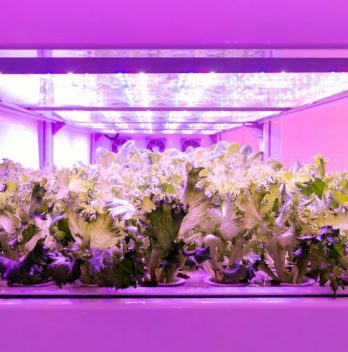
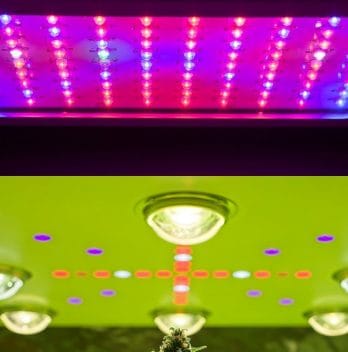
    Before we look into grow light vs. regular light, let’s firstly discuss what a grow light is. A grow light is referred to as an electrical light specially designed to grow various plants. The primary function of grow light is to imitate the work done by sunlight which will ensure your indoor plants grow adequately.

    These grow lights emit specific colors that stimulate plants’ growth. However, not all lights are designed to produce the same light spectrum and they all have a different wavelength of light.

    So, some people may wonder if grow lights can be replaced with the regular lights we use at the home, office, etc. Well, the answer is yes, while in some cases it’s no.

    What Is A Grow Light

    What Are Regular Lights?

    We have a wide range of regular lights which are basically designed as an artificial light source for illuminating dark spaces. People make use of regular lights almost on a daily basis and they help us clearly in the dark.

    They are used to lighten up a room, office, etc as the sun begins to set and as the day goes dark. Regular lights are also used in the garage, the entrance of your door. Some are even used within your vehicles and so on.

    Grow Light vs. Regular Light

    It is possible to make use of both grow light and regular lights bulbs to grow your indoor plants. But what is the difference between grow light vs. regular light? Here are some comparisons between the two lights:

    1.    The Intensity Of Power Between Grow Lights Vs Regular Lights

    When it comes to power or light intensity, grow lights offer more power than a regular light bulb. You can find various grow lights with different light intensities in the market.

    Now, light intensity is needed to enhance the rate of photosynthesis. This guarantees that your plants have adequate light energy to grow. So it is paramount you provide your plants with the right dose of power intensity.

    The Intensity Of Power Between Grow Lights Vs Regular Lights

    2.    Spectrum Of Light

    Light comprises of different wavelength that makes up the spectrum of light. So, all types of light bulbs produce a certain wavelength. However, not all types of light bulbs will produce the appropriate wavelength that will mimic the sunlight which is required for plants’ growth.

    Most grow lights are specially designed to emit the right wavelength that will enhance almost all the growth stages of your plant. However, when it comes to a regular light bulb, they may only be efficient for certain growth stages of your plant.

    3.    Heat Dissipation

    Heat is an important factor to consider when deciding the type of grow light to use on your indoor plant. If the heat emitted is too much and placed close to your plant, it can cause harm to them. However, you can position your lights at a safe distance from your plants.

    The fact is most regular lights produce more heat compared to grow lights. So, if you’re using regular lights for growing, ensure you position them at a safe distance.

    4.    Durability

    The durability of grow light is usually shorter compared to regular light. This is because grow light tends to burn out quickly.

    5.    Energy Efficiency

    Most regular light bulbs are energy efficient. On the other hand, most grow light will consume a lot of energy. However, there are certain low energy consuming grow lights you can go for.

    MARS HYDRO TS 1000W Led Grow Light 3x3ft Daisy Chain Dimmable Full Spectrum LED Growing Lights

    712STTzYpUL. AC SX569

    Different Grow Lights

    We have 3 main types of grow lights and they include:

    1. Fluorescent Grow Light

    Fluorescent grow light is one great light used to supply light energy spectrum to indoor plants. They are low emitting light, thus making them safe to be placed close to plants. The low emitting heat fluorescent light is also suitable for fragile seedlings and clones.

    However, most fluorescent lights are not as intense as HPS or LED lights but they will do a fine job with your growing plants.

    1. Light-emitting Diodes (LED)

    Light-emitting diodes are one of the most efficient grow lights you can use for your indoor plants. They are more focused and will give your plants optimal light intensity. LED grow light will supply your plant with a wide range of light spectrum for them to grow adequately.

    The light can even be positioned a little far from plants and still give your plant good lightning.

    1. High-Pressure Sodium (HPS)

    High-pressure sodium is also known as high-intensity discharge (HID) is another type of grow light you can use for your indoor plants. Although they will require much distance from plants because of their high emitting heat, they will still supply your plant with good lights for their growing needs.

    Other Types Of Grow Light

      • Incandescent Bulb: this type of light has been in existence for a long time. Incandescent bulbs are not so great because the light spectrum they produce is inefficient for plants’ growth. Thus, they aren’t appropriate for plants, especially during photosynthesis. However, they have been replaced with more efficient, durable, and safer options.

      • Halogen: halogen lights are not so great but they will still supply your plant what they need to grow.

    FAQ’s

    Can I Use a regular light as a grow light?

    Regular bulbs are fine for growing plants, but they’re not very efficient. The efficiency of the plant growth is directly related to the amount of light you put out and the length of time you expose the plants to that light. You can get a lot more bang per watt with an LED array or fluorescent tube. LEDs are a bit more expensive, but if you’re trying to save money (which is understandable) then LEDs will be your best bet. You’ll probably want to look for a fixture that mounts the light on a heat sink, so you can get a little extra cooling for your plants.

    Can any LED light be used as a grow light?

    In general, no. LEDs have a maximum current rating (for most), which means they cannot be operated at high power levels (which is the only way to get high light output). That said, you can certainly use LEDs in an environment that doesn’t require very high power, but they’re not really intended for that purpose.

    Is a grow light better than natural light?

    When you’re growing plants indoors, you don’t want to be dependent on the sun. There are a few options for indoor gardeners who need sunlight to help with their plant growth. A grow light is one of them. Grow lights are used to mimic the conditions found in nature, which makes it an ideal option for growing plants indoors. Grow lights allow you to use artificial lighting, which makes it a much more practical option than natural sunlight. This also means that you can have full control over when you turn your lights on and off. You can choose to turn your lights on during the day or at night, which gives you the best time to work with your plants. Grow lights also mimic the natural light cycle. Plants respond to changes in the natural light cycle by growing at different times of the day. By using grow lights, you can make sure that your plants get the right amount of light.

    Whats the difference between a grow light and a regular light?

    The big difference is that in a grow light, the spectrum of the light is tuned to the needs of a plant to stimulate photosynthesis. This means that the reds are higher, the blues lower, and the greens in between. It’s not the same as a regular light which has a continuous spectrum.
     The light spectrum for plants is more like that of the sun than a regular light. And the way that it works is that the blue part of the spectrum (which is the part of the light that plants need to grow) is stronger than the red part.

    Grow Light Vs. Regular Light: Conclusion

    Grow light and regular light are definitely two different lights that perform different functions.

    Grow lights are designed for plants needs while regular lights are meant for daily use in most homes. But regular lights can still provide a certain light spectrum for plants’ growth but they aren’t as efficient as grow light.

  • How To Use Hydroton Clay Pebbles

    How To Use Hydroton Clay Pebbles

    Hydroton clay pebbles are a great growing medium to use in your hydroponics systems. If you’re wondering how to use Hydroton clay pebbles in your hydroponic garden, we will let you know in this post.

    Hydroton clay pebbles are widely used by hydroponic and aquaponics growers as well as some soil gardeners. We have listed all you need to know about Hydroton clay pebbles as well as how to use them in your hydroponic garden. We also look at their benefits and downsides to using them. So, let’s get right into it.

    What is Clay Pebbles Hydroponics?

    Hydroton, also known as lightweight expanded clay aggregates or pellets. They are known by many names. You may come across these names in stores or other places under the names such as Hydroton pellets, clay balls, hydrocorn, leca clay, etc. These names are all the same thing from the same production standpoint.

    They are made from heating clay up to about 2,000 degrees Fahrenheit until they pop (just like popcorn) and expands into a lightweight permeable growing medium.

    What is Clay Pebbles Hydroponics

    These clay pebbles may come in circular balls of different sizes and they will support your plant with good airflow and water. They are popularly used in the ebb and flow or flood and drain system, but they can be used in other types of hydroponic systems.

    How To Use Hydroton Clay Pebbles (For Hydroponics)

    1. Rinse Thoroughly

    The first thing you want to do is to rinse or wash your Hydroton clay pellets thoroughly. This step is very important because the clay balls have plenty of dust. This may cause the clay pebbles to rub against each other thereby accumulating dust and cause friction in your system of transport.

    1. Soak The Pebbles

    The next step is to soak your clay pellets for at least 6 hours and at most 24 hours. This will make water absorption easier for your plants as the clay balls would have already been filled with water.

    1. Plant

    Proceed to planting by spreading your seeds over the clay pebbles. Make use of small net pots halfway filled with pebbles and cover the seed with more clay pebbles. You can also transplant seedlings into your hydroponic system by using Rockwool to germinate your seeds.

    As your plants grow, you should remove them and rinse from once in a while. This will prevent toxic build-up that can clog your plants and prevent them from absorbing nutrients. If you notice any whitish residue at the top of your plants, that’s a sign you need to rinse your plant and clay pebbles.

    Mother Earth HGC714123 Hydroton Original Expanded Clay Pebbles

    712CSBOaEFL. AC SY879
    1. Nutrient Application

    Once you’ve washed your clay pebbles, proceed to add your nutrient solution to your reservoir. Then your system is ready to go.

    How To Use Hydroton Pellets (For Soil)

    Hydroton clay pebbles are mostly used in soil gardening to attain excellent water retention and airflow. Let’s look at 3 ways Hydroton balls can be used in soil:

    1. Used Alone Or As Soil Mix: in soil gardening, Hydroton can be used alone or mixed in soil (in the ratio of 30% Hydroton and 70% soil). This will enhance the water holding capacity of your soil.
    2. Add To The Base Of Soil: another way to use Hydroton in your soil garden is to add them at the base of your growing container. It should be below the layer of your soil and this will increase its draining mechanism.
    3. Crush: you can also crush the clay pebbles and mix them with soil. This will help keep your plants hydrated as well as improve air circulation.

    Benefits Of Using Hydroponic Pebbles

    Here are some benefits of using Hydroton clay pebbles:

    • Reusable & Cost-Effective: Hydroton clay pebbles can be used over and over again. Thus, making them durable and cost-effective.
    • Excellent Water Drainage: even with their top-notch water and nutrient retention, they also have excellent water draining capacity. The pores in the pebbles allow for space-enhancing which gives their drainage property. They also give room for optimal airflow.

    • Neutral pH: you need not worry about any reaction or impact by these clay balls because they are neutral to pH. You can use them in combination for your soil or hydroponic garden foundation.
    • Sterile: expanded clay pellets are a sterile growing medium that will help keep bacteria and insects at bay during plant growth. They are also environmentally friendly.
    • Non-sticky & Easy To Harvest: Hydroton clay balls are non-sticky. Thus, they are easy to pull out during harvest or when you want to rinse them.
    • Crushable: they can be easily crushed if you want to enhance water retention for your plants’ germination.

    Downsides To Hydroton Pebbles

    Even though Hydroton clay pebbles offer great benefits, there are still some downsides to them. They include:

    • Heavy: From our knowledge of clay, they are usually quite heavy. Therefore, Hydroton clay pebbles are also heavy especially when you use them in an ebb and flow system.
    • Dusty & Requires Rinsing: Clay balls are always dusty and it’s necessary for them to be washed before use. If you fail to wash them before use, the dust will clog your system and cause blockage which is a big issue.
    • Drainage: Even with Hydroton clay pebble top-notch draining mechanism, it can also be its con. Clay balls are capable of draining so well that they can actually dry out rapidly. But this is not a big if you always maintain a constant flow of water and nutrient.
    Downsides To Hydroton Pebbles

    FAQ’s

    How do you use clay pebbles?

    Clay pebbles are an excellent medium for growing a wide variety of plants. To grow a plant you need to have something to absorb nutrients, water and light. Clay pebbles provide all of these things. They are porous, allowing air, water, and light into the earth to reach the roots.
    If you mix sand with clay pebbles, it will be easier to work with. You can also use a mixture of gravel and clay pebbles. The clay pebbles are a great soil amendment. In addition to their ability to hold moisture and nutrients, they also add small particles of rock to the soil. This helps prevent erosion by holding down the soil and reduces the amount of runoff water. Clay pebbles are also very beneficial to the soil because they absorb nutrients. So, by adding clay pebbles you can improve the soil. If you are growing vegetables, you can use clay pebbles in a pot or tray as a medium. They are inexpensive and easy to use. If you are growing plants for a large space, clay pebbles are ideal because they are light and can be mixed together easily. You can also use clay pebbles in your garden beds. You can add them at the base of a plant or under it.

    Do I need to soak clay pebbles?

    Clay pebbles should be soaked in water for several days before being used in the garden. If you do not follow these steps, your plants will likely die because of lack of nutrients.
    Plant seeds in pebbles are very simple. You can plant your seeds in pebbles by putting the pebbles in a flat container or pot and covering the seeds with sand. Then fill the container or pot with soil. Water the pebbles and cover them with soil. Keep the soil moist until the seedlings start sprouting.

    Can you put clay pebbles on top of soil?

    Yes, you can.

    Can you reuse clay pebbles?

    Yes, you can. There are a few ways to reuse clay pebbles. The first method is by simply making more clay pebbles out of your existing ones.Or, simply sprinkle them in soil and let them sit.

    Gardeners have used natural materials like clay, pebbles, sand and gravel to make beautiful containers for plants for centuries.

    How do you sterilize pebbles?

    I use a solution of water, bleach and hydrogen peroxide. It’s a simple mixture that works for me.

    How To Use Hydroton Clay Pebbles: Final Say

    We can see there are many great benefits to using expandable Hydroton clay pebbles. They offer excellent drainage properties and good aeration. They are also long-lasting and reusable which makes them more cost-effective.

    So if you’re thinking of how to use Hydroton clay pebbles, look through our guide and enlighten yourself on all you need to know. Happy growing folks!

  • Hydroponic Medium Gravel

    Hydroponic Medium Gravel

    Hydroponic grow medium is important to support our plants and there are various options to choose from. Gravel is another nice medium to use so, giving hydroponic medium gravel a trial won’t hurt.

    Grow media helps hydroponic plants with good anchor, water draining and retention, regular transportation of air and nutrients, and a host of other great things.

    Gravel is a type of medium that is locally available and easily accessible to use as a growing medium in your hydroponic garden. It would interest you to know that they were one of the very first mediums to be used in hydroponic growing.

    In this guide, we will be discussing the benefits of using hydroponic medium gravel in your garden as well as a few downsides you may find using them. We will also be discussing hydroponic sand and more. So, let’s get right into it.

    Hydroponic Gravel

    There are different grow mediums to use in the hydroponic garden and these grow mediums must attain some specific satisfactory characteristics to make a great medium. These characteristics include chemically inert, offer adequate air circulation, and great water retention as well as good draining features.

    Hydroponic medium gravel offers most of these great features. Although there are a few downsides to them, they are just not so serious and you can work your way around them.

    Hydroponic Sand

    Even though our knowledge of hydroponics garden means a soil-free garden: however, sand is one type of grow medium that can be used.

    Sand is very cheap and easy to get because they occur in nature. However, sand is pretty heavy to use and it will require once in a while sterilization to prevent non-beneficial microorganisms from breeding. Also, the water retention of sand is not so great compared to other types of growing media. At the same time, the nutrient solution may not hold so well. This is greatly caused by their small size which has reduced their surface area.

    Both sand and gravel have similar properties, but most people end up going with gravel as they offer better function.

    Sand and gravel are so easy to come by and a lot of hydroponic growers may overlook these fine materials as a growing medium. They will both offer good benefits to your hydroponic garden and can be a starter media. However, they may not work for everyone in all situations.

    Advantages Of Gravel Hydroponics

    1.    Water Draining & Aeration

    Hydroponic medium gravel offers great features such as water draining and good air circulation which make them great to use in your hydroponic garden. It is nearly impossible to overwater with gravel because of its great draining properties.

    Water Draining & Aeration

    However, they don’t have the ability to trap water because of their high draining feature. Thus, you will have to keep up with getting a good irrigation system that will deliver water to your plant root.

    2.    Accessible

    Gravel can be found in nature laying anywhere around you, thus making them very accessible.

    3.    Cost-effective

    Just as they are easily accessible, they are also cost-effective. Even if you don’t find them in nature anywhere around you, you can easily purchase them at a low cost. So, if you’re short of cash, gravel is a good option to go for.

    4.    Easy To Clean

    Cleaning your gravel before use is important and the good thing is that it’s very easy to clean.

    5.    Surface Area

    The surface area of gravel is great which creates contact with the roots. This encourages optimal water and nutrient absorption. However, you need to ensure the surface area is smooth with no sharp edges. This is to prevent injury to the root of your plants from friction especially when you move your container. Therefore, always go for the polished gravel rather than the sharp ones.

    Organic Expanded Clay Pebbles Grow Media for Hydroponics, Aquaponics, Aquaculture Garden

    71KCr0H0n5S. AC SX569

    6.    Reusable

    Another good advantage of gravel is that it can be reused. Thus, you enjoy long-lasting use. All you need do is to take them out of your grow bed and spread out the gravel after each use for them to dry out. Also, wash and rinse them thoroughly and remove any dead roots and debris. Then you put them back into your grow bed as they are ready to be reused.

    Disadvantages Of Hydroponic Medium Gravel

    Below are some downsides to using hydroponic medium gravel in your hydroponic garden:

    • Weight Issues: The weight of gravel is one of their main drawbacks. Their weight might hinder you if like to move your growing plants. Also, your plant beds must be strong enough to hold their weight especially if they have to be raised above ground level.

    • Needs To Be Sashed: Pure gravel may come with a lot of dirt or particles. Thus, they need to be washed to prevent these particles from clogging your system.

    • PH Imbalance: Gravel may cause pH imbalance because it may react with the water solution. Depending on the type of parent material of your gravel, some of this gravel rock can increase the pH level. This may cause plants’ inability to take in nutrients because each nutrient requires a particular pH range for adequate nutrient uptake. Thus, this can cause a nutrient lockout. You will need to always monitor the pH and adjust accordingly to get on top of the situation.

    • Plant Root Drying Out: Because of their high draining properties, they have that much ability to hold water. Thus. Your plants may dry out quickly. You can resolve this by setting up a good irrigation system that will always keep your plant moist.

    pH imbalance

    FAQ’s

    Can you use gravel for hydroponics?

    Yes, gravel is a good substrate to grow in hydroponics, especially for houseplants.
    Gravel provides a lot of surface area for roots to grow on. In addition, the spaces between the rocks provide aeration and allow water to drain away. Gravel is not as good for growing tomatoes or other crops that require a lot of nutrients, but it is suitable for houseplants.
    Small rocks are often used as a substrate for growing hydroponically, and large rocks can also be used. As long as they are not too large, they will work just fine. You may need to add some type of fertilizer to the substrate. The best substrate for growing is a mixture of sand and pebbles. I have heard of people using gravel for their indoor gardens, but I don’t know if they use small stones or large ones.

    What rocks are used for hydroponics?

    For hydroponic growing, rocks of varying sizes are used. The size and shape of the rock affects the absorption of water by the rock. In general, smaller rocks absorb more water than larger ones, but that is not always the case. The most common types of rocks used are granite, slate, marble, and basalt. 

    It depends on the type of rock you use and what you are growing in the system. For example, the absorption rate of the rock will vary depending on its size.
    If you use a small rock for a hydroponic system, you should choose one that is dense enough to prevent the nutrients from leaking out. If you use a large rock, you should choose one that is porous enough to allow the nutrients to penetrate the rock. If you are using a hydroponic system in an aquarium or fish tank, then the rock should be fine, because the water level in the aquarium or tank is usually at or near the surface. However, if you are using a hydroponic system in a bucket or other vessel, then the rock should be large enough to prevent the nutrient solution from spilling over the top.

    Can I use river rocks in hydroponics?

    You can use river rock as a substrate for your plants. They may not be the best option, but it’s worth a try. If you don’t have enough space to grow your plants in a larger container, then river rock will do the job. You can use it to make a grow bed. A substrate is something that plants grow on and absorb nutrients from. The two main substrates are sand or peat moss.
    These two substrates are often used with hydroponics because they allow water to easily flow through. River rock is not a good substrate for hydroponic use. It has small holes and cracks, which could hold water. It could also cause problems with the nutrients flowing into the plant. Another issue is that if you use river rock, you might find that you need to change your pH level more often than you would with sand or peat moss.
    You should consider the following points when using river rock in a hydroponic garden: You should make sure that the river rock is not contaminated with heavy metals and other pollutants, as these can cause health problems. You should also make sure that the river rock has a good drainage system.

    Hydroponic Medium Gravel: Final Say

    We can see that using gravel as a medium in your hydroponics garden is not so bad. Even though gravel may not be one of the best grow mediums to use in your hydroponic garden, it can still serve some good purposes.

    Both sand and gravel can be used as a growing medium. However, most hydroponic growers will go with gravel as they are more reliable.

    So, that’s what we have on hydroponic medium gravel and we hope you’ve learned two or more things. Happy growing!

  • Stackable Gardening Containers

    Stackable Gardening Containers

    Vertical gardening is an interesting type of gardening, but do you know how to set them up from the scratch? This is where vertical stackable gardening containers come in. They are popular growing tools in the techniques of indoor vertical gardeners.

    Vertical gardening is a wonderful idea if you are short of grow space and you wish to maximize yield in a limited space. So, stackable gardening containers can help you achieve this and they come in different sizes and shapes to suit your plants.

    In this post, we will be looking at what you need to know about vertical stackable gardening and more. So, continue reading to gain some knowledge.

    What Are Stackable Garden Containers?

    Stackable gardening containers are ready-made containers used in creating or setting up a vertical garden from the scratch. They are easy to set up and can be obtained online or from any garden center.

    You can also make a DIY version using different materials such as woods, small plastic pots, grow bags, PVC tubes, etc. But to save yourself the stress, you should purchase a ready-made container as it will make your work easier and faster.

    What Are Stackable Garden Containers

    Guidelines On Growing With Stackable Garden Planters

    For a better vertical growing experience, you need to plan and put some things into consideration before you purchase your stackable container.  Below are some guidelines you can follow on growing with and choosing your stackable container:

    1.    Sunlight Location & Space Availability

    Deciding the appropriate location for your plants to receive sunlight is one crucial factor to consider. This will determine the type of variety to grow in your vertical garden.  The space available will as well determine what type of plant variety to grow.

    Take for instance, when you set up your containers and your planters are too close to other vertical containers, there might be an issue with other lower container levels. The upper levels may receive more light than the lower levels which can cause the upper levels to flourish more than the lower levels. This same situation may also occur if your containers are too close to the tree or walls.

    The good thing is that this can be solved by planting low light requiring plants or plants that require partial shade for the lower levels. On the other hand, you should grow plants that need full sunlight on the upper-level containers.

    Plants such as vegetables and fruits will do well under full sunlight. Your plant’s label or seed packet label should contain the plant’s sun requirement. Thus, you can make a good decision with this information by matching the location you have with your planter.

    Sunlight Location & Space Availability

    2.    Potting Mix To Use

    The recommended potting mix to use in your vertical garden is a partially acidic garden or flowering potting mix. The potting soil mix should be abundant in organic matter and should be well-draining. It should also have good water retention and good air circulation.

    3.    Maximum Number Of Planter Levels

    The maximum number of planter levels fall between the ranges of 3 to 10. You can get some planters designs that will allow you to start with 3 to 5 levels and add up more levels with time if need be.

    However, there are some downsides to stacking these containers. They can tip over if they are not rigid to the ground. But you can introduce some form of additional support to hold them down. A central rod or bar can be used to hold the container still.

    Although, as the plant grows with time: the plants gain more stiffness and mass which spread across the root on each level. This may help hold the levels steady from the wind.

    4.    Number Of Containers Per Level

    We can have the number of containers for each level to be around 3 to 6 with 4 pots. However, this can differ.

    For bigger and strong plants such as strawberries, one plant per pot is recommended. But if you’re growing smaller plants such as pine berries, you can grow up to 3 or more plants in a single container. Thus, this will increase the number of plants for each container or level.

    Amazing Creation Stackable Planter Vertical Garden

    81naZIMyGrL. AC SX569

    5.    Fertilizing

    The nutrient application will depend on the type of plant you have. Supply the right fertilizer quantity according to the plants’ actual needs. Also, if you notice any slight change in growth, adjust the fertilizer according to your plants’ need.

    Fertilizer application will encourage strong and healthy plant growth. To your potting soil mix, you can add humus or compost together with NPK fertilizer. Also, you we recommend adding mulch for soil protection and moisture retention. Mulch will as well help control soil pH.

    6.    Vertical Plant Watering

    Next, we look at how to water your vertical containers. Some of these vertical container models are made using the ‘flow-through design.’ This means all you need do is to water the upper level of the container and the water will flow through and reach other levels.

    You can be sure the upper level that receives most water is not totally submerged in water because the soil is well-draining. They will also ensure the soil retains moisture without the need for additional watering.

    However, with the flow-through method, ensure you monitor the lower or last level to see if water or moisture gets through to them. If they aren’t receiving moisture, this means you have to water them directly.

    FAQ’s

    What vegetables grow in stacked pots?

    You can grow a lot of different things in a stacked pot. A good rule of thumb is that if you can plant it in the ground, it can be grown in a stacked pot. Some plants like to grow tall, some prefer shorter growth, and some grow better with an open structure. But as long as they have enough growing space, you can grow them in a stacked pot.

    Stacking pots is great because it allows you to grow more than one plant at once, saving money and reducing space in your garden. It also allows you to grow more crops at once by using a vertical growing method.

    How do you use stacking pots?

    The first step when stacking pots is to remove all of the soil from the bottom of the pots. Remove any pots that are cracked or damaged, and make sure the potting mix is well drained. You can use a garden trowel to scrape out the mix from the bottom of the pot. Fill the bottom half of the pots with the same soil mixture as the top half. Then fill the pots with a new potting mix. For most plants, fill the pots up to two-thirds of the way with potting mix. Fill the last third with either vermiculite, peat moss, or perlite.

    When it comes to planting, you want to start filling the pots with your seeds, seedlings, and cuttings. Start with the seeds and seedlings first. If you have a tray of seeds, you can put them in the middle of the pots, filling the pots halfway. Then fill the rest of the pots with the same soil mixture as the top half of the pots.

    For the next step, you will need to transplant your seedlings. Take each plant out of its pot, and remove the roots from the potting mix. Place the plant into the new potting mix in the bottom half of the pot. Do not push the plant into the soil, but place the root ball gently into the new potting mix. Add some more potting mix on top of the roots until they are covered. Plants should be watered every day for the first week.

    How do you choose good containers for your plants?

    You can buy a variety of containers and see which ones you like. Small Medium Large

    You can also purchase containers made from materials such as: Wood Porcelain Glass Stainless steel Aluminum Polyethylene Plastic

    There are several things to consider when choosing a container. The first is how much space you have available.

    You will want to make sure that the container you choose has enough room for your seeds to grow. If you need to grow many different varieties, you will want to look for a large container. Next, you will want to look at what type of container you would like to use. Are you planning on growing vegetables? Do you want to grow herbs? Or do you just want a container to hold some flowers? In general, you can choose between a glass, ceramic, or plastic container. Glass containers are the most common, and they are usually fairly inexpensive. Ceramic containers are also popular because they are durable and heat resistant. Plastic containers are also quite durable, but they may not be as heat resistant. You will also want to look at how much space you have available.

    You should make sure that your containers have drainage holes in them, so that if there is a water problem, it will drain out instead of staying in the soil.

    Conclusion On Stackable Gardening Containers

    There’s no disputing that vertical gardening is a fun way of gardening and stackable gardening planters can help you achieve this. They come in different sizes and shapes which offer you the options of choosing the ones that will suit your growing plants’ needs.

    Even if you live in a small spaced apartment or have just a small outdoor garden space, vertical gardening will offer you the chance of growing in any small space. So, take advantage of that small space you have in your home or garden and grow any type of crops with stackable gardening containers.

  • Are COB LEDs Better

    Are COB LEDs Better

    Are you wondering if COB (Chip On Board) LEDs are better for growing plants than other types of LED? You’ve probably heard of different talks on how COB LED grow lights are one of the best in the market. But is this really true?

    Well, it is true that COB LED lights offer some great advantages to growing plants. COB LED lights are definitely better than normal LED and some other types of LED because they offer more diodes and better lumen.

    Let’s take a look at some information on COB LED light, their features, and many more. So keep reading to learn more info.

    What Is A COB LED?

    The manner in which LED diodes are packed together is generally known as a chip on board (COB). They are the new LED technology and are packed together to form a single and powerful light source.

    A lot of tiny LEDs are arranged side by side of each other on a substrate to form one single module. Thus, they are packed together to give a single and highly powerful light source.

    Generally, there are two types of LED lights and they are chip on board, COB, and the surface mount diode, SMD. Just like COB LED lights are great for growing, SMD LED lights are also fine. Both devices have their benefits. But let’s find out if COB LEDs are better than other types of LED.

    What Is SMD Light?

    Before we look into if COB LEDs are better, let’s take a look at the surface mount device. Surface mount device SMD is the most common type of LED light sold in the market. The LED chips are merged to form a print circuit board (PCB) which is established on a flat object that is rectangular in shape.

    SMD has the ability to accommodate 3 diodes on the same chip and it can work with up to 6 contacts. It can also work with different colors and can create any color by adjusting the output level from each diode on the chip.

    Are COB LEDs Better? Advantages Of LED COB

    Here are some benefits you stand to gain growing with COB LED lights:

    • Highly Efficient: Using COB LED lights to grow for your indoor growing plants are better because they offer more input power. Thus, you get better efficient input with lesser power consumption.
    • Excellent Light Spectrum For Plants: They are available in different colors. Thus, they will offer your plants the right spectrum for your plants‘ growing needs.
    • Deep Plant Canopy Penetration: COB penetration goes very deep and will even penetrate far beneath your plants’ canopy. This is thanks to their large LED chip that is more powerful compared to a single diode.

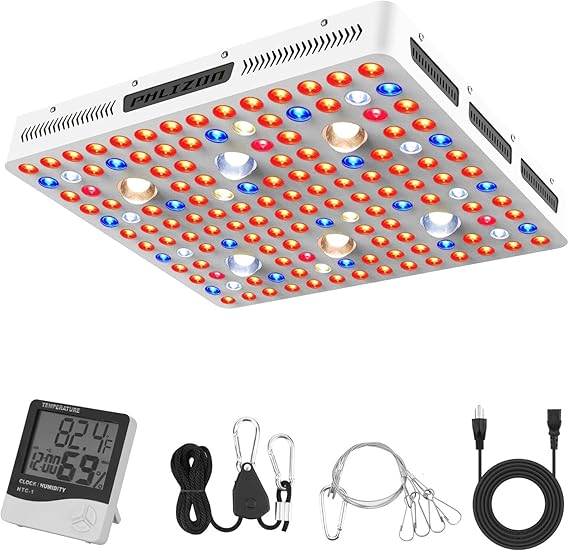
    Phlizon CREE Cob Series 1000W LED Plant Grow Light Full Spectrum Indoor Plants

    • Better Light Density: Their tightly packed small diodes allow them to offer much better and higher light density.
    • Higher Light Speed: Unlike other smaller light fixtures that need to spreads out from a central point, COB will cover the plants more evenly. This is because COB lights are arranged apart on a large fixture thereby encouraging better light speed that will cover your plants evenly.
    • Minimal Heat: COB lights are known to emit lower heat making them safe to be placed close to plants.

    Disadvantages Of COB LED Light

    The disadvantages of using COB LED light are not so much. So let’s look at their disadvantages:

    One major disadvantage of using COB LED lights is that if one of the lights fails or spoils, you would have lost that particular or entire fixture. Now, if you were making use of the only COB LED lights for your entire to grow space, one failed COB light means a large portion of light has been lost. This is because it will affect a large part of your light.

    Are COB LEDs Better: COD Vs. SMD LED Light

    Both COB and SMD LED lights are great. However, let’s look at how both advantages over the other:

    • More Diode: Both COB and SMD LED lights have multiple diodes. However, COB chips have up to 9 or more diodes while SMD has 3 diodes on a single chip. Thus COB lights will offer more light intensity, thereby making them more effective.
    • Efficiency: The efficiency of these two LEDs works at various rates and that’s because they are built with different features. Talking about SMD, the efficiency is not so great but it will still get the job done. COB on the other hand will offer your garden optimal productivity. Thus, making them an excellent option for plant growing requirements.
    Efficiency
    • Color Temperature: The color temperature in SMD is more flexible as there is a possibility of changing colors. It offers varieties of colors because of the primary color used in SMD. COB on the other hand does not offer color change flexibility. They are built to adhere to a single color temperature.
    • Affordability: Generally, LED lights are cost-effective and are more durable. LED lights also consume minimal energy, thus saving you on the energy bill. Thus, both SMD and COB are affordable. However, if we want to look at it from the manufacturing cost, SMD will be more costly than COB. The material cost for SMD is around 15%, while COB material cost about 10% of the manufacturing cost.
    • Brightness: The lumen generated by the chips will greatly depend on the brightness. SMD LED makes use of about 50 to 100 lumen per watt. COB works with a higher lumen and the least value is 80 lumen per watt. Thus COB LED lights give more brightness.

    FAQ’s

    What are the problems with COB LED’s?

    Some people feel that COB LED lights are one of the worst types of light for growing plants.

    The problem with COB LED lights is that they only emit light in one direction. This means that all of the light that is emitted is right at your plants.

    In fact, it is possible that every single ray of light that comes out of your COB LED light will be hitting your plant. This means that all of the light energy that comes out of the COB LED light is wasted. One way to look at this is that it is like trying to grow plants in an aquarium. It is impossible to get enough light into the aquarium because all of the light that is coming in is hitting the glass. If you were to move the plants out of the aquarium then you could see the full effect of the light. You would see that the plants were getting more light than they ever did in the aquarium. There are many other disadvantages to COB LED lights. They do not emit enough light to grow plants. They are expensive and they use a lot of energy. COB LED lights are also very loud.

    How do you choose between COB LED lighting and traditional incandescent or halogen lights?

    Well, that’s where it gets tricky. So if you’re looking for an LED light to replace your old light, here are some things to consider: Does it need to be bright? You don’t want a super bright light, because the cost is just going to be astronomical. If you can get away with a 50W or 75W light, that will usually be the best bet.

    How long do COB LEDs last?

    The lifespan of a COB LED is typically measured in years, not months. For example, the Cree XP-E2 is rated for 5,000 hours. It is also designed to have a very high lumen output (2700 lumens) with an average CRI of over 90. However, the lifespan is more than likely going to be shorter than what is stated on the product label.

    Are COB LEDs Better: Final Thoughts

    On our final thoughts on if COB LEDs are better; we would say both COB and SMD LED lights are great for growing. This is because LED lights are generally superior compared to other types of light.

    However, we have seen that COB stands out in terms of its brightness and other great features they offer.

  • Aerating Water For Plants

    Aerating Water For Plants

    Do you know if aerating water for your plants is necessary? Well, definitely yes! Have you ever wondered how plants can sit a long time in a hydroponic system without drowning? The trick is the air supplied. If you don’t provide your hydroponic plants with adequate oxygen, they will drown or suffocate.

    The root of plants must be supplied with air for optimal growth so aerating water for plants is important. So, plants require oxygen to breathe or respire.

    In this post, we will be talking about how to aerate your plants, the importance of aerating your plants, and more. So, read on to learn about this.

    How To Aerate Water For Plants

    When you aerate your water for hydroponic plants, you’re introducing dissolved oxygen (DO) to the system. The dissolved oxygen is usually ready to be assimilated by the plant roots. So, we can aerate our hydroponic system in the following ways:

    1.    Airstone With Air Pump

    One of the easiest ways of aerating water for plants is by using air stone connected to an air pump. They are very affordable and easily accessible. Air stones also come in different sizes and shapes, thus you will always find one that is suitable for your hydroponic system.

    Airstone With Air Pump

    So, air stone provides oxygenation by pushing the air pump through the stones. Because the air stone is quite porous, the air is split into a large bunch of bubbles. However, this large bubble may not be so efficient. This is because large bubbles tend to rise rapidly and they may end up not reaching plant roots.

    The good news is that the air stones we find in the market now generate smaller bubbles. Thus, this makes their job done more efficiently.

    2.    Automatic Siphon System

    The automatic siphon mechanism provides air to the plants by exposing the plant root system. This process is common in the ebb and flow system whereby the grow bed is drained and the plant root system is exposed to air.

    The automatic siphon system comes in various forms. They include loop, bell, and U shape and all of these mechanisms work on the same principle.

    The mechanism of action works this way: when the water level in the grow bed moves up and rises, it gets to a point it begins to go down. The water levels go down a tube called the standpipe. As the standpipe fills up, there is a suction created with a vacuum that pulls the water away from the grow bed.

    So the plant root is exposed to air for a while and the water goes up again and the process repeats on and on.

    Auto-Siphon Mini with 6 Feet of Tubing and Clamp

    71z5heMj5sL. AC SL1500

    3.    Air Diffuser

    Using an air diffuser is another method of supplying aerated water to your plant root. Air diffusers comprise bendable tubes with holes in them that help emit air into water. Even though air stones are capable of distributing air evenly, air diffusers will supply smaller bubbles. Thus, most of these smaller bubbles usually get to the plant roots.

    This is the biggest advantage of air diffusers over air stones (bubbles size). However, various brands are now manufacturing sir stones with smaller bubbles because of the growing interest in hydroponics.

    4.    Oxygen Gap

    Some hydroponics system like Kratky method and NFT offers oxygen through an air gap. The nutrient solution should be placed in the grow bed. Allow the plant root to touch the nutrient solution and leave a gap for the rest of the plant body. There will always be enough air between the air gap created and the nutrient solution that will ensure the plant receives oxygen.

    5.    Root Hanging

    The last method we will be looking at for aerating water for plants is root hanging. Vertical and Aeroponic system often makes use of root hanging. Rather than allowing the root to sit in a nutrient solution, the nutrient solution can simply be splashed or pumped across the system and comes back to the reservoir. Vertical hydroponics makes use of pumping nutrients. On the other hand, the Aeroponic system makes use of spraying their nutrient solution.

    root hanging

    Importance Of Aerating Water For Plants

    Aerating your water for plants is very crucial when it comes to hydroponic gardening. So, let’s look at the importance of aerating the water in your plants for their optimal growth:

    • Nutrient Uptake: aerating your water for plants is important so that nutrients can be adequately absorbed by the plants’ roots. Thus, when your plants can absorb adequate nutrients, they will grow healthier and result in abundant yield.

    • Bacteria Build-up Is Reduced: with optimal dissolved oxygen, the roots are able to respire and there will be a drastic decrease in bacteria build-up. However, if the dissolved oxygen drops, it will cause anaerobic bacteria and fungi to build up. These bacteria build-up affects the plant root and restricts the roots from absorbing important nutrients. So, we definitely want to avoid such.

    • Respiration: just as animals and human beings respire, plants also respire. Oxygen is assimilated through the roots of the plants. This same oxygen is also absorbed through the plants’ stomata as well as their stem pores.

    Aerating Plants In The Soil

    Plants in the soil aren’t left out from dissolved oxygen (DO). They also assimilate important nutrients in the soil through oxygenation. Of course, the air present in the atmosphere provides these soil plants oxygen. Plants can also receive oxygen through air pockets in the soil.

    They can also obtain dissolved oxygen from nature through rainwater. Rainwater assimilates dissolved oxygen from the atmosphere before reaching the earth or soil.

    However, over-watering your plants can prevent the soil plant from accessing these air pockets thereby reducing dissolved oxygen. This will in turn cause your plant to drown or suffocate. So, ensure you don’t overwater your soil plants.

    FAQ’s

    What is aeration?

    Aeration is the process of adding oxygen to your aquarium or pond water. This is done by placing a sponge, air pump, or other air diffuser in the water and allowing the water to circulate. It is also possible to place an air stone directly into the water and allow it to bubble. Aeration is especially useful for aquariums or ponds that have very little movement in the water.

    The increased oxygen levels will encourage more fish, plants, and invertebrates to inhabit the tank or pond.

    What is a sponge?

    Sponges are made up of tiny pockets, called spicules, which are packed tightly together to form a strong and resilient structure. They are usually soft and absorbent, and can be found in both marine and freshwater environments. A marine sponge is often used as an underwater filter. Sponges are also used as filters on land, since they can absorb pollutants from the air as well as water.

    What is an air pump?

    Air pumps are small, portable devices that use compressed air to create bubbles that are dispersed through a diffuser. Air pumps are available in many different sizes and types. Most people use air pumps to aerate their aquariums, ponds, and water gardens.

    The air pump is one of the most essential tools for any aquarist. It is used to create bubbles, which helps oxygenate the water and remove ammonia and nitrates.

    What is an air stone?

    An air stone is a small device that creates bubbles. There are several different types of air stones available. Some of these air stones can be attached to a tank or pond for continuous bubbling. Others require manual operation, and are often used to aerate water when it is not being filtered or pumped.

    What is a bubble wort?

    A bubble wort is a piece of equipment that uses bubbles to aerate water. Bubble worts are typically used on a regular basis, so the bubbles will continue to disperse throughout the tank or pond. The bubbler must be used with the air pump to produce the bubbles.

    How important is considering the water for plant growth?

    Water is a very important part of your garden. It’s what keeps the plants alive and allows them to grow. If you water your plants too often, it will cause the soil to become dry and compacted. This will lead to slower plant growth and can even kill them! If you don’t aerate your soil every few months, it can actually cause your plants to be more susceptible to diseases.

    Aerating Water For Plants Final Thoughts

    There are lots of benefits to aerating water for your plants growing needs. Ensure you provide optimal air to your plants’ roots so they can flourish and give you abundant yields.

  • What Size Smart Pot For Indoor Grow

    What Size Smart Pot For Indoor Grow

    You may be wondering what smart size pot you should grow for your indoor garden. We’ve got the answer for you here.

    Pots come in various shapes and sizes but the important thing is do you know which to go for? Too small a pot may limit your plants’ growth. While too big pot may occupy all the space which will make you require lots of soil.

    We’ve got some information for you when it comes to what size smart pot to grow for your indoor garden. So, let’s get right into it.

    What Size Smart Pot Is Required For Indoor Grow

    There are lots of benefits when you start growing with smart pots that you may end up not going back to regular pots after your experience.

    When it comes to what size smart pot for indoor grow, finding the appropriate size is crucial to your plant’s growth. The good news is that there is a general rule as to which size to choose. So, this general rule tells us to pick a smart pot that is double the size of our regular pot.

    What Size Smart Pot Is Required For Indoor Grow

    Take, for instance, if you would normally make use of a 2-gallon regular pot size then you should go with a smart pot size of about 5 gallons.

    This is because smart pots have a great draining system that allows for optimal airflow. So, smart size pot tends to dry out faster. For this reason, there’s no issue of over-watering. The only thing is it will require you to water more frequently. The pot may dry out completely within a day or two using a 5-gallon size.

    Smart Pot Sizes To Use For Indoor Grow

    What size smart pot you should use for indoor grow will depend on the type of plants you’re growing. Ideally, most plants will require a 5-gallon size smart pot.

    But if you’re looking at allowing your plant to grow bigger (vertically or horizontally) you will need a bigger pot. You can go as high as 7 to 10 smart size gallon pot or even 15-gallon depending on how big you want your plant to grow.

    Another thing you might want to know is if you can grow more than one plant in a single smart pot. Well, this is quite possible. You can have 2 or 3 plants in a 15-gallon smart pot. However, we would not encourage you to do this.

    This is because there will be competition for resources between plants. If you want to grow more than one plant, it is better or advisable to just obtain a smaller size smart pot for each plant.

    Smart Pots 20-Gallon Smart Pot Soft-Sided Container

    615vYgFYJdL. AC SL1200

    Advantages Of Growing With Smart Pots Sizes

    1. Enables Easy Root Network

    The smart size encourages easy root networks and there’s no issue of root-bound. Unlike the regular pot or container, roots may run into edges thereby causing a spaghetti-like, tangled-up root mess. Now, this may cause plant choking at the end causing root-bound.

    But with a size smart pot, there is an easy series of root networks that allows for optimal air circulation. It also gives the wall of the root an air prune root.

    1. No Over-watering Issue

    Over-watering is one thing you can never worry about when using a size smart pot for growing. The smart pot enables easy flow of excess water which helps the soil dry out thereby no water logging issue. However, this implies you watering your plant from time to time as your soil dries out.

    1. Encourages Rapid Growth

    Because of the good root network formation and excellent oxygen flow, this encourages rapid growth. The oxygen encourages faster growth, especially in the vegetative phase.

    1. Encourages Short Or Wider Growth Space

    Unlike regular pots, smart-sized pots are broader and shorter in size. Thus, it encourages your plant to grow wide rather than tall. Therefore, this will save you vertical space.

    1. No Tipping Over Of Plants

    You can grow large plants and train them to grow wider with smart pot size. So, because they grow wider, it’s rare for them to tip over no matter how big your plant grows.

    1. Portable

    Another advantage we admire is smart pot portability. You can purchase a smart size pot you can carry if you plan to move your container around. Using a 10-gallon smart size pot will weigh about 50 pounds when filled with soil and water. You should ask yourself if you can move this much around.

    Smart pots dimensions:

    20 gal size- 20 x 20 x 15.5 inches; 10.24 Ounces

    10 gal size- 16 x 16 x 11.5 inches; 5.28 Ounces

    5 gal size- 12 x 0.5 x 12.5 inches; 5.29 Ounces

    Draw Backs Of Growing With Smart Pots Sizes

    Even though growing with smart size pots offers lots of benefits, there are still some disadvantages to it. So, let’s take a look at some of them:

    1. Excess Water Runoff & Requires More Watering

    Smart size pots are not capable of holding water for long as there is an excess flow of water. You will also require a bigger growing tray to collect excess water and also empty them accordingly. Also, as the water dries out faster, you will need to catch up on watering your plants more frequently.

    Excess Water Runoff & Requires More Watering
    1. Space Requirement

    There is also the need for more horizontal space. Therefore, you may find it a bit hard to fit them in a portable grow tent unlike fitting a regular container. Now, the big tray which collects excess water will even take more space.

    But on the good side, training your plants to grow wide or horizontally will allow you to manage the situation well.

    FAQ’s

    What should determine the size of smart pot that I use?

    The best thing about smart pots is that they are easy to use. You don’t need any special skills to grow plants in one. All you need is a small amount of money and a smart pot. The best way to learn how to grow plants in a smart pot is to buy one and get growing!

    There are a few things that will determine how big your smart pot should be for your plants. The size of the plant itself, the space it takes up in your room and whether you plan to use it outside or not. You just need to know which plants you want to grow and what size smart pot you want to use. The size of the pot is also determined by the number of plants you will be growing. If you are planning on growing one plant per pot then you can expect to need a smaller pot than if you want to grow more than one plant per pot.

    If you are growing your plants outside then the size of the pot will depend on how much sun and wind you will be getting. If you have a shady patio then you will probably want a larger pot than if you have a sunny garden. The space in your room will also determine the size of the pot you need. If you have a small room then you will need a smaller pot than if you have a large room. You also need to consider whether you plan to use your smart pot as an indoor or outdoor container. If you plan to use it outside then you will need a larger pot than if you are going to keep it indoors. There is no reason why you can’t grow plants in smart pots if you live in a place that has good weather and enough sun.

    What’s the best smart pot for indoor use?

    There are so many options and they are all different sizes. You want something that is going to give you the most light for your money. You want to be able to use it with different types of lights. You want to be able to move it around to change the angle of the light, and be able to get the best light from any direction.

    The best smart pot for indoor growers is the smallest size. A small grow light can fit into a space that may have been used for other things. A small smart pot can provide just the right amount of light and nutrients. It is also easy to clean.

    Are their sizes good options for indoor cannabis cultivation?

    The smart pots grower system is a great solution for small to medium sized cannabis growers who want to grow indoors in an eco-friendly way. They have many advantages and benefits over traditional growing systems.

    The smart pots grower system also allows you to monitor and control your plant growth remotely. If you notice any problems with your plants, you can do something about it right away and keep track of individual plants.

    And if you use a smart pot, you don’t need to use soil or soil blocks. This means that you can save money and not have to buy expensive soil for your plants. You can also use a variety of different soils if you like. All you need to do is put the potting soil into the smart pot, water it well, and then place your plant inside. You don’t need to worry about any soil particles getting into your plants. All of this in a smaller pot for your pot plants!

    What Size Smart Pot For Indoor Grow Final Say

    When it comes to what size smart pot for indoor grow, the least size should be 5-gallon as this is ideal for most growers. You can as well move to 7 gallons if you want a bit bigger plant. Now, if you desire to grow a larger plant, you should go for a 10 or 15-gallon size.

    So, we hope this post has helped you in choosing the right size smart pot for your plant growing needs.