Category: Soils & Plant Nutrients

  • How Long For Tomatoes To Germinate – Number Of Days To Germination

    How Long For Tomatoes To Germinate – Number Of Days To Germination

    Have you ever wondered how long it takes for tomatoes plant to germinate? For those who are interested in keeping a garden or just having some freshly grown fruits around, then tomato is a great option.

    Knowing how long tomatoes take to germinate and how best to nurture the plant if it is to attain a bounteous yield is thus important. There are different factors that affect the growth of tomatoes and which may help boost their growth or reduce their growth substantially.

    The general timeline before a tomato is matured enough for harvesting is also discussed in this guide. Now, let’s begin with getting to know how long it takes for tomatoes to germinate and things that will aid successful germination.

    How Long Do Tomatoes Take To Germinate: Number Of Days

    So, looking at the average number of days for the germination of tomato seeds, tomato seeds usually germinate between day 5 and day 11 after planting.

    The viability of the seed, type of soil, and nurturing will determine how quickly germination will occur.

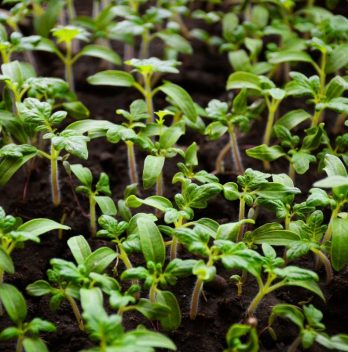
    Germination is usually demonstrated by tiny green leaves sprouting from the spots where the seeds were planted. It is usually best to plant evenly as this makes for ease in determining whether the seeds have germinated or not.

    So, let’s look into factors that affect the germination of tomato seeds.

    Factors That Influence The Germination Time For Tomatoes

    The following factors would usually influence how fast a tomato seed germinates:

    1. Viability Of Seed: Where the tomato seed planted is viable, it will likely germinate fast. Where this is not the case, the whole germination process will very likely become slow. A seed is said to be viable when there is a high percentage of the possibility of the seed growing when planted. Seed viability is mostly influenced by the storage temperature of the said seed.
    2. Storage Length Of Seed: Tomato seeds usually last for a reasonably long period of time in storage. When they are properly stored, they can last for a period of 4 or 5 years. However, the longer the storage period, the more time it would take for the seed to germinate.
    3. Pre-soaking Of Seeds: When tomato seeds are too dry, it takes a longer period to germinate. It is, therefore, best to soak seeds in warm water for at least 12 hours before planting. This will help soften the seed coat and speed up the germination process.
    4. Temperature: This is a very important factor that can affect the germination of a seed. It would be of great ease for the seeds to germinate quickly at a temperature between 70-80 degrees Fahrenheit. Where the temperature is lower than 70F it may take a longer time to germinate or it may not germinate at all. The same thing happens where the temperature goes way above 80F.

    Hydrofarm GCTR 10 Gal Tomato Garden Planting Grow System with 4 Foot Trellis Wheels

    610tKwyEBuL. AC SY879

    Things To Consider Before Planting Tomato Seeds

    1. Suitable Location: This is one of the first factors to be put into consideration when planting tomatoes seeds. The location where the seeds are planted in some situations influences the overall growth and germination timeframe. Whether the tomato seeds will be grown indoors or outdoors in the garden should be considered at this stage.
    2. Best Time To Plant: The most suitable time to grow tomatoes is usually towards the end of January up until about the end of March. Between this time frame, the amount of sunlight, soil water content and overall temperature is perfect to grow tomatoes.
    3. Seeds Spacing: The seeds should be spaced sufficiently so as to allow for some space within which the plant may spread. The ideal intra-row spacing should be about 20-40cm. Sufficient spacing has a way of improving the overall yield of the plant.
    4. Plant In Loamy Soil: Although tomato plants are not very picky about which soil they can grow in, it is always best to plant in loamy soil. A well-drained, fertile loam soil with a pH level between 5.8-7.0. Provision of the soil with some manure a few weeks or days before planting will also strengthen the suitability of the soil.

    How To Nurture Tomato Seeds After Planting

    The following should be done after the seeds have been planted to ensure that it germinates at the best possible time, and flourish as it grows.

    1.    Ensure That The Soil Is Watered Adequately

    Tomato seeds usually require a reasonable amount of water in the soil for quick germination. So, after planting, ensure that watering is done at the right proportion. If the soil happens to be too dry, the seed may not be able to break dormancy, while if too wet, the seed may rot. To prevent any of these extremities, a reasonable amount of water must be supplied.

    How To Nurture Tomato Seeds After Planting

    2.    Ensure That There Is Sufficient Sunlight Provided After Germination

    The tomatoes seeds may not need much sunlight to germinate. But after germination has occurred, it requires sufficient sunlight. This means that if the seeds were planted in planting pots or indoors, they should be taken out and exposed to sufficient sunlight after germination.

    3.    Weed Management: How Long For Tomatoes To Germinate

    If the best result is desired, the plant should be weeded from time to time to reduce the number of weeds contesting for the soil nutrients with the tomatoes plants. The tomatoes plants are fragile and may not be able to thrive in the presence of tough weeds.

    4.    Harvest Fruit At The Right Time

    It is usually best to leave tomatoes on the plants so they can ripen naturally. Where this is allowed, the flavor is improved greatly.

    When the plant starts making fruits, prune some of the older leaves to make space for the inflow of sunlight. The fruits also need some sunlight to ripen fast.

    5.    Store The Tomatoes Properly After Harvesting

    To retain the original spicy flavor of the tomatoes, ensure that it is stored properly. One way of doing this is to make a tomato sauce and then freeze it for future use.

    Store The Tomatoes Properly After Harvesting

    FAQ’s

    How long does it take for tomato seeds to germinate indoors?

    You can grow tomatoes from seed indoors. I would recommend starting them in a small container that will fit on your windowsill. Keep the temperature around 70°F. They will start growing within a week or two. Once they are growing, you can transplant them to a larger pot and continue growing them outdoors.

    Under optimal conditions they take between 5 and 10 days to germinate.

    How do I make tomato seeds germinate faster?

    Seeds that germinate fast are usually a result of a seed lot with a very high viability, so it’s not something you can replicate. However, if you have a slow-germinating seed lot, you can try to speed things up by soaking your seeds for a few days in water. This has been shown to increase germination rate, but only if the seeds have been stored properly beforehand.

    You can also increase the rate at which tomato seeds germinate by placing them in a warm environment for a few days. I’ve found that putting them in a plastic bag on top of the fridge for 2-3 days has done the trick. However, I wouldn’t recommend this if you’re going to be moving them to a greenhouse as it might result in seedling death due to cold shock.

    Why aren’t my tomatoes germinating?

    We all know that tomatoes are a difficult plant to grow. You can’t just throw them in the ground and expect them to thrive. They need lots of sun, good soil, and plenty of water to produce fruit. But if you want to get your hands on some cherry tomatoes in the summer months, you’re going to have to work for it.

    It’s possible that your plants need to be watered more often or have their soil mixed with something like sand or perlite.

    It could be that your seeds are too old. If you’re not sure how old they are, you can test this by placing them in water overnight. The next day, they should float if they are still fresh. If they sink, then you know they are old. When it comes to germination, there is no such thing as too old. You just need to make sure the seeds are properly acclimated to their new environment.

    Can you start tomato seed in water?

    You can try to start the seeds in a glass of water. Water will keep the seeds moist and also helps the roots to grow longer. You may also add some nutrients to the water to help the seeds germinate.

    How deep should tomato seeds be?

    They should be planted about 1/8th of an inch deep. You just have to make sure that you press the soil on top lightly so that that it is well covered.

    Why are my tomato seeds not germinating?

    It could be that your seeds are too old. If you’re not sure how old they are, you can test this by placing them in water overnight. The next day, they should float if they are still fresh. If they sink, then you know they are old. When it comes to germination, there is no such thing as too old. You just need to make sure the seeds are properly acclimated to their new environment.

    How Long For Tomatoes To Germinate? Conclusion

    As we have seen from the above, tomato seeds will usually germinate between 5 to 11 days depending on a number of factors. To get the best possible result in your tomato farm or garden, ensure to note the above.

    It is for you to decide whether you want your tomatoes planted outdoors or indoors. Whichever you decide, ensure that they are properly nurtured as this is the best way to achieve results.

  • Alfalfa Meal Fertilizer Benefits

    Alfalfa Meal Fertilizer Benefits

    Ever wondered if you can make use of an alfalfa meal in your garden? Alfalfa meal fertilizer can be used for other things but gardeners know there can be benefits from using it in their garden.

    Alfalfa meal is a natural fertilizer that can be incorporated into your garden soil and drive great benefits for your plants’ growth.

    If you are the one that likes to stick with organic fertilizer rather than synthetic fertilizer, then alfalfa meal is one natural fertilizer you can go for.

    This natural fertilizer works great with different types of crops especially cole crops that include broccoli, cabbage, kale, Brussels sprouts, cauliflower, and so on.

    The place of fertilizers cannot be underplayed in the growth of plants. With so many benefits this natural fertilizer offers; let’s look into what benefits our garden plants stand to gain using alfalfa meal fertilizer.

    About Alfalfa Plant

    Before we discuss the huge benefits of using the fertilizer, let’s mention a few things you should know about the Alfalfa meal:

      • Alfalfa is a richly leguminous perennial plant.

      • Derived by fermenting the adult seeds and plants of the plants.

      • The plant contains enormous nutritional benefits for other plants and soil-dwelling organisms.

      • Some of the major minerals which the plant may provide include Nitrogen, Phosphorus, Calcium, Potassium, Magnesium, Sulphur, Iron, Manganese, Boron Copper, Zinc, and other minerals In small proportions.

      • The alfalfa meal NPK analysis is 2.8-0.29-2.4, and it is an excellent addition to the compost pile for nitrogen. The fertilizer is entirely organic and non-GMO.

      • Used a great deal as a soil supplement. This is because it has the potential to re-energize the soil potential and increase the organic composition of the soil.

    About Alfalfa Plant

    Can I Use Alfalfa Pellets As Fertilizer?

    This alfalfa natural fertilizer can come in a meal or pellet for your garden use. The common type seen at the feed store is mostly the pellets. Use these pellets in your garden. All you need is to input a little extra work.

    You can simply soak this pellet just to break them up. Then you get your resulting alfalfa meal.

    Alfalfa For Garden: Alfalfa Meal Fertilizer Benefits

    Using alfalfa meal in your garden as soil amendments and compost activator is a great idea. It will supply the soil in your garden with the required soil amendments especially after the soil has depleted its nutrients from the plants’ previous growing season.

    Major Benefits Of Using Alfalfa Meal Fertilizer

    Here are some of the major benefits of using alfalfa meal fertilizer in your garden.

    1.    Nutrients Provided To The Soil

    Known for the great array of nutrients it offers to the soil and plants on it. Some of the nutrients provided include:

    • NPK Nutrient: Provides good NPK which is balanced. Can also help improve the soil quality. The NPK is usually placed somewhere around 3-1-2.

    • Vitamins: In addition to other nutrients, vitamins such as A, B, and E are also present in a reasonable proportion in the meal.

    • Minerals: So, minerals such as magnesium and iron are also present in substantial quantities in the meal.

    Down to Earth Organic Alfalfa Meal Fertilizer Mix 2.5-0.5-2.5, 5 lb

    51+3dIYF2mL. AC

    So, the presence of this wide variety of nutrients makes for the potent nature of the fertilizer.

    2.    Multiple Purpose Use

    The Alfalfa Meal fertilizer can serve multiple functions. Used as a mulch material, weed blocker, fertilizer for plants, and even as feed for livestock. The preparation of the Alfalfa plant may vary depending on the final purpose it is intended to serve.

    3.    Excellent Crop Cover

    Another major benefit of Alfalfa is that it serves as crop cover. When planted, it usually grows very fast and covers the soil. This makes it difficult for weeds to survive. It also has deep, strong roots which in most situations help to break down strong clay soil.

    4.    Presence Of Triacontanol

    One major benefit of this fertilizer is the presence of triacontanol. This is a naturally-occurring component that helps to promote healthy root development in plants. This component also helps in substantially improving the yield in crops. It also fixes the nitrogen content of the soil.

    5.    Hold Moisture In The Soil

    This fertilizer while absorbing much of its weight in water, it also holds moisture conveniently. Therefore, this aids the soil’s moisture retention.

    Hold Moisture In The Soil

    6.    Nematodes Suppression

    The use of this fertilizer can also help in suppressing to a great proportion the amount of nematodes in the soil.

    How To Use Alfalfa Meal Fertilizer

    Now we understand the huge advantage that comes with using alfalfa meal fertilizers. Let’s get into how to properly use the fertilizer:

      • So, in heavy applications, use about 50 pounds for 1,000 square feet.

      • For a medium application, about 25 pounds should be used for 1,000 square feet.

      • In light application, about 12 pounds of fertilizer should be used for 1,000 square feet.

    For the best possible result to be attained, the following should be noted when using the fertilizers:

      • Alfalfa meal fertilizer is an alkaline substance. As such, it should not be used for plants that do well with acid soil.

      • After the alfalfa meal has been spread on the desired potion of land, rake it into the soil and water the soil.

      • The fertilizer is usually powdery and dusty. As such, a protective cover should be worn when it is being used to protect the face of users.

      • So, ensure to put leftover alfalfa meal in a good container to prevent mice from having access to it. Mice love the meal and putting it in soft bags would easily attract them.

    FAQ’s

    How long has alfalfa meal been used by farmers?

    Alfalfa is a perennial legume that is very nutritious. The plant grows in the wild and has been cultivated for thousands of years. It was first domesticated by the Ancient Romans and its seeds were used as a food source and a fertilizer for crops. Alfalfa has been used by farmers for centuries because of its ability to improve soil quality and produce a high yield of nutritious, high-quality hay.

    What are different ways that alfalfa meal is used?

    Alfalfa meal is a byproduct of the processing of alfalfa and contains a high protein content. The protein content ranges between 25% to 45% of the dry matter. Alfalfa meal is used as a source of protein for livestock and poultry feed and as an ingredient in pet food. It is also used in the manufacture of plastics, detergents, and other products.

    What plants benefit from alfalfa meal?

    It can also be used to help keep weeds down and as a soil conditioner.

    It is a great soil conditioner because of its nitrogen and phosphorous content. It is not as expensive as other feed supplements and is often used to help keep weeds down.

    Plants like alfalfa meal. The roots of plants are made of mostly protein, carbohydrates, and minerals.

    Alfalfa meal is used as a fertilizer for gardens, lawns, and farm land. It is commonly fed to livestock such as chickens, cows, pigs, and horses.

    How do I use alfalfa meal as fertilizer?

    Alfalfa meal is an excellent nitrogen source that can be used in many different ways. One of the easiest uses for alfalfa meal is to spread it on a lawn or garden to provide a slow release nitrogen source for your plants. You can also mix it with other fertilizers like liquid fish emulsion and add it to the soil around seedlings or young plants to help stimulate growth. Alfalfa meal is available at many feed stores or you can buy it online.

    When you are using alfalfa meal as a fertilizer, you will want to spread it on top of the soil and not directly on the plants themselves. This is because alfalfa meal is not a plant food. It is more like a slow release nitrogen source than a true fertilizer. It is also not good for your lawns or gardens if you use it this way. You should only use alfalfa meal as a fertilizer when you want to encourage growth in your plants. If you do decide to use alfalfa meal as a fertilizer, make sure you spread it correctly. There are a few different ways to do this depending on the type of fertilizer you are using. If you are using a granular fertilizer, mix it with water and then spray the mixture onto the soil surface.

    Conclusion On Alfalfa Meal Fertilizer Benefits

    There is a need to use a supplement to improve plant growth and soil performance. So, the Alfalfa meal for plants has a great advantage over other soil supplements.

    There is a wide array of benefits that the use of this fertilizer can give to the soil and plants. This fertilizer is very potent both for outdoor use and indoor plant use.

    So, make sure to observe some of the key guides on how to use and apply this fertilizer.

  • Do I Live In A Jerusalem Artichoke Growing Zone?

    Do I Live In A Jerusalem Artichoke Growing Zone?

    Though they may not be as popular as other root vegetables, Jerusalem Artichokes are commonly found throughout North America. If you plan to grow them, you will want to know your Jerusalem Artichoke growing zone. This will help ensure you live in the right environment that will allow them to flourish.

    Fortunately, the great thing about Jerusalem Artichokes is that they have the capability to grow in many different areas. In fact, they grow so easily that they are almost considered invasive in some areas. They can be a great plant to grow for gardeners of all experience levels.

    What Are Jerusalem Artichokes?

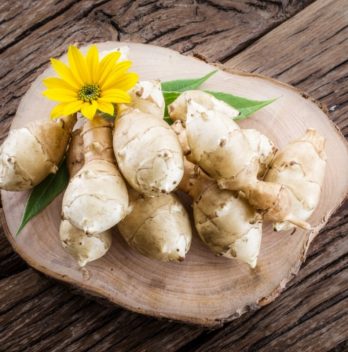
    Despite their name, Jerusalem Artichokes are actually native to North America, not Jerusalem and they have no relation to artichokes. They are a type of root vegetable that belongs to the sunflower family. They are also called sunchokes and they are typically prepared like a starchy vegetable.

    Sunchokes have a white flesh that is nutty, sweet, and crunchy, similar to chestnuts when raw. When you bake them in their skins, they become similar to potatoes while having a mild taste like artichoke hearts.

    You can eat sunchokes either raw or cooked. However, for some people, they can cause excess gas due to the fact they store energy as inulin.

    During the summer, they sport tall, yellow flowers. They can grow to be 6-10 feet tall and 3-5 feet wide. Sunchokes are a great plant to grow for novice gardeners.

    There are a few different varieties of Jerusalem Artichokes, with French Mammoth White, Golden Nugget, and Fuseau being the most common. These varieties are all great for growing in your garden.

    French Mammoth White sunchokes are very popular and produce good-sized, white tubers that are knobby.  The Golden Nugget variety has a tapering tuber and a flavor that is smooth.  The Fuseau variety is popular for producing large, smooth tubers early on that exhibit somewhat of a smoky flavor.

    Jerusalem Artichoke Growing Zones

    Due to their adaptability and hardiness, Jerusalem Artichokes are able to grow in a variety of areas. They do well when grown in Zones 3-9. The artichoke zone is can vary depending on where you live.

    Since they do best in cooler environments, it is not recommended to grow them in zone nine and above. However, you can still have success growing them in these zones, but there is no guarantee that they will thrive.

    Jerusalem Artichokes due best in full sun or partial shade. Ideally, you want them to get at least six hours of sun a day. You can research to make sure where you live is a Jerusalem Artichoke growing zone.

    Jerusalem Artichoke Growing Zones

    They can grow in just about every soil type, even in heavy clay soil. However, they do not do well in soggy conditions. Their ideal soil is fertile and loose, while also being well-drained and slightly alkaline.

    Though they are capable of handling drought, they do best with at least one weekly watering. Their ideal temperature for growing is between 65 to 90 degrees Fahrenheit.

    How To Plant Jerusalem Artichokes

    The ideal time to plant your sunchoke tubers is in early spring. You should plant them when the soil is at least 50 degrees. If you think you might have a hard freeze, add a layer of mulch to protect them from the cold.

    You should space the tubers 12 to 18 inches apart, around five inches deep. The eyes of the tubers should be facing upwards and they should weigh at least 1.75 ounces in order to have a good harvest. Your soil should be damp, but you do not want it to be wet.

    Where to Get Jerusalem Artichoke Tubers for Planting

    You can purchase Jerusalem Artichoke tubers at most gardening stores. In addition, they are also readily available online as well, which is great if you don’t live close to a gardening store. They are often very affordable to buy and you can purchase them in bulk quantities.

    5 Tubers Jerusalem Artichokes AKA Sunchokes, Sunroot for Planting or Eating-None

    91D0RKpVmsS. AC SX569

    When To Harvest Them

    The best time to harvest Jerusalem Artichokes is between October to December. However, they can be flavorful and sweeter after experiencing a frost or two.  In general, they take between 110 to 150 days to reach full maturity.

    If you want to extend your harvest, you can add a thick layer of mulch to protect the sunchokes from frost. You can use a fork, hand rake, or your hands to carefully locate the tubers or simply just pull up the stalk from the base. You typically want to wait to harvest them until the flowers have died.

    How To Store Them

    Jerusalem Artichokes do not have as long of a shelf life once harvested as other starchy vegetables such as potatoes have. You can store them in your fridge for around 10 days or so. You can also keep them in a root cellar that is 32 degrees Fahrenheit or colder for a couple of months.

    It is best to store them in perforated plastic bags or slightly vented containers. They should be slightly damp in order to prevent them from shriveling.

    In addition, you can also freeze cooked Jerusalem Artichokes. After cooking, allow them to fully cool before putting them in an airtight container or a Ziploc bag in the freezer. Freeze them for up to three to six months and allow them to cool for a couple of hours in the fridge or heat them up directly out of the freezer.

    How To Store Them

    FAQs

    Where can you grow Jerusalem artichokes?

    Jerusalem artichokes, also known as sunchokes or sunflower artichokes, are native to Eurasia and North America. They grow best in temperate climates with rich, fertile soil that is high in organic matter. They prefer a cool season growing environment, but can tolerate heat and drought. The tubers can be harvested when they’re about 6 inches long and the leaves are beginning to turn yellow.

    Are Jerusalem artichokes easy to grow?

    Jerusalem artichokes require warm temperatures for germination, so you’ll want to plant them in spring. Space the plants at least 18 inches apart and water regularly until the tubers are ready to harvest. If you live in a cold climate, you can plant in fall and then wait until spring to dig up the tubers. You can also grow sunchokes from seed.
    The Jerusalem artichoke (Helianthus tuberosus) is an herbaceous plant which is widely grown in Europe, Australia and the United States. The artichoke has been cultivated since ancient times, but it was not until the 19th century that it became a major food crop. The tubers of this plant are generally stored in a cool, dark place for use throughout the year, or canned or frozen for later use.

    How much sun do Jerusalem artichokes need?

    They need full sun. Jerusalem artichokes are a form of the sunflower (Helianthus tuberosus). They grow very well in dry soils and are hardy. They require a long growing season, but have a relatively short growing time once planted. They also tolerate a wide range of temperatures.

    Can you eat a Jerusalem artichoke raw?

    Jerusalem artichokes are delicious raw or cooked. They’re best when they’re fresh, so make sure to eat your tubers right away. These members of the sunflower family are grown for their edible tuber and are available in most supermarkets. 
    They’re also a good source of vitamins and minerals. They have a slightly nutty taste and are a bit like a potato with a softer texture. You can also bake, boil or microwave them. For a different taste, try adding them to mashed potatoes, pasta dishes or pizza.

    Do Jerusalem artichokes need to be refrigerated?

    It’s a good idea to store them in the refrigerator if you’re planning on using them within a few days. They do have a shelf life of up to 6 months, but if you’re going to use them soon after buying, they can last up to 3 weeks in the refrigerator. They should be stored at room temperature for best results though.

    Are Jerusalem artichokes good for you?

    The artichoke has a great nutritional profile, and is packed with vitamins A, B, C, and D.

    They also contain inulin, which is a prebiotic fiber that can help promote digestive health. Healthy and delicious, the Jerusalem artichoke is a vegetable that everyone should be eating!

    What are Jerusalem artichokes used for?

    There are a number of ways that you can use Jerusalem artichokes. They can be roasted or steamed, mashed or added to soups, stews or pasta dishes. They can be boiled, fried or baked. In fact, there are so many ways that you can prepare these roots, that it’s hard to know where to start. I recommend roasting them with olive oil and garlic. You can add these to soups, salads or pasta dishes. They are also great for making bread or using in place of potatoes in a mashed potato recipe. Jerusalem artichokes also make a great addition to smoothies. You can blend them into a smoothie or add them to a smoothie bowl.

    Growing Your Own Jerusalem Artichokes

    Jerusalem artichokes are great for gardeners of all experience levels and do best in zones 3-9. They are native to North America and tend to grow in abundance due to their hardiness. Not only do they produce beautiful yellow flowers, but they also produce edible tubers you can eat raw or cooked.

    Sunchokes taste especially good after one or two frosts occur. They tend to develop a stronger flavor and are often sweeter as well. However, they do not keep as long as other starchy vegetables and they should be kept in a cool, damp environment.

    Do you have any questions regarding your Jerusalem Artichoke growing zone? If so, please ask any questions regarding sunchokes and how to grow them in the comment section down below.

  • Tomato Plant Diseases Curled Leaves And Possible Remedies

    Tomato Plant Diseases Curled Leaves And Possible Remedies

    Tomato leaves curling is one garden problem that may present itself to your garden. Experiencing tomato plant diseases curled leaves in your garden can be pretty frustrating and worrisome. But don’t stress! There are some possible remedies you can go for to help your tomato plant leaves curling and we will discuss that here.

    You should however know that not all tomato plant diseases infected leaves curling are solvable. But it’s good to know that some of the tomatoes plants can be helped but others are unsolvable. You can however take some measures to avoid future occurrences of this type of situation.

    This is why we would be looking at the causes of tomato plant diseases curled leaves and more.

    Reasons Tomato Leaf May Curl

    Tomato leaves curling is one common issue gardeners encounter. There are several reasons you may be experiencing tomato plant leaves curling in your garden. The first thing to know is that not all tomatoes curling are due to infectious diseases.

    Your tomato leaves curing may be due to physiological reasons, herbicide drift or damage, as well as infestation.

    • Physiological reasons are the most common and they are mostly caused by environmental stress.
    • Herbicide drift or damage is caused by herbicides spreads on your plants.
    • Then we have an infestation from a virus which is majorly caused by 3 viruses. They are curly top virus (spread by leaf-hoppers), tomato yellow leaf curl virus (spread by whiteflies), and mosaic virus.

    For the purpose of this article, we will be looking into more details on tomato plant disease curled leaves.

    Tomato Plant Diseases Curled Leaves And Possible Remedies

    One culprit to your tomato leaves curling is a virus. There are 3 main viruses that can cause your tomato plant to curl. They include:

    1.    Curly Top Virus: Tomato Plant Diseases Curled Leaves

    Symptoms: Once you notice the top portion of the plant curling upward or the whole leaves pointing upwards, it may be a sign of the curly top virus.

    Curly top virus in tomato plant is caused by leaf-hoppers pests chewing your tomato plant. The pest mostly chooses one plant to chew. The good thing is that the virus won’t spread to other plants even if the infected and uninfected tomato plants are touching each other.

    But when these leaf-hoppers bugs chew on an infected plant and fly to chew on another uninfected plant, chances are the leaf-hopper bugs will give the uninfected plant that virus.

    You can still allow the plant to attain maturity and harvest your crop. This is if the plant is already growing fruit, the plant can still produce ripened fruit. However, if they were infected in their early stage, their growth may be stunted and ripen prematurely.

    But the best thing to do is to get rid of the plant to avoid leaf-hoppers spreading the virus to uninfected plants when they chew on them.

    Organic Neem Bliss 100% Pure Cold Pressed Neem Seed Oil

    4176HQtT+WL

    2.    Tomato Yellow Leaf Curl

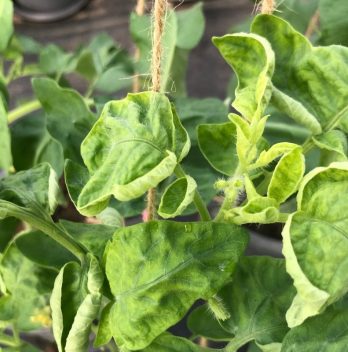
    Symptoms: Leaves can curl upward or downward and the leaf can roll in a cup-like fashion. More symptoms are marginal yellowing of leaves, leaf size reduction, dropping of flowers or fruit, and stunted plant growth.

    Tomato yellow leaf curl is spread by whiteflies. The best thing to do is to keep the population of whiteflies in your garden under control. You can do this by spraying neem oil once or twice every week so whiteflies won’t come close to your plant. But once the disease infected the plant and manifested, it’s hard to get rid of it.

    However, you can also do this to help your plant: get a big trash bag and wrap it by covering the whole tomato plant. Then tie the open end of the bag around the tomato trunk at soil level.

    Cut the plant off at the soil level and allow it to sit in the hot sun for a day or two. This will kill all the whiteflies that contain most of the virus. Then begin a neem spraying scheme after this.

    3.    Tomato Mosaic Virus

    Symptoms: Leaves rolling upwards and coloring of leaves such as internal browning. The plant may also have stunted growth.

    Tomato Mosaic Virus

    The best thing is to remove infected plants and get rid of them. This mosaic virus can live in the soil for up to 2 years. Therefore, when you’re watering your tomato plant, water the base and never allow water to splash over the leaves.

    When you do this, it will reduce the chances of the mosaic virus getting into your plant leaves. This is just in case the mosaic virus still lives in the soil.

    The best way to overcome the tomato mosaic virus is to grow resistant varieties.

    Other Reasons For Tomatoes Leaves Curling

    Apart from disease-related issues, tomato plant leaves can be all curled up for other reasons. We have physiological reasons which are often resolvable. Then we have the herbicide drift.

    • Physiological Reasons: Physiological reasons are caused by environmental stress. This environmental stress can include heat, under watering, overwatering, dry weather, excess nitrogen application, etc. Usually, the leaves won’t change their green color but they will curl upward and most of these causes are remediable.
    • Herbicide Drift: This is when you spray herbicide in your garden or you live close to where one has been sprayed, some of the residues can drift over your tomato plants. This can cause your tomato leaves to curl. Your plant may recover from this. But if they don’t it’s best you pull out the whole plant and dispose of it.
    Other Reasons For Tomatoes Leaves Curling

    Preventive Measures For Tomato Plant Leaf Curl

    Tomatoes may be easy to grow but they can as well be tricky to grow. You need to keep a close eye on your tomatoes as they grow so you don’t miss even the slightest changes that may occur. So, always watch your tomatoes plant and act as soon as you notice any problem.

    Another great tip is to go for virus infestation is to plant resistant tomato varieties of these diseases.

    FAQ’s

    How do you treat curled tomato leaves?

    Curling is a disease that affects only tomatoes. It is caused by viruses, bacteria or fungi. It appears when there is high humidity. When a plant is affected by the disease it can look like a leaf that has been rolled up. The disease can also affect the fruits.If you are treating your tomatoes for this problem, you should look for the symptoms of the disease and follow these steps:
    – Check the leaves for signs of wilting or yellowing
    – Look for any other problems with the leaves – they may be unevenly coloured, or they may have spots or crinkles on them
    – If you can see signs of a fungal infection, there may be some mould on the leaves – if so, remove the leaves and disinfect the area where they were growing
    – If you have found that the cause of your curled tomato leaves is a virus, you should first make sure that the virus is not spreading to other plants in your garden. You can do this by spraying a product called ‘Bordeaux mix’. This is a spray that contains a pesticide that kills viruses.
    You can use an anti-fungal spray. You can also remove the affected leaves.

    Tomato leaves can be also damaged by insects. I would recommend using Bt for them. There are many types available, some that are used against leaf feeding caterpillars and some that are used against slugs. It’s best to use a combination of the two. The Bt products that are used against leaf feeding caterpillars work very well. Bt for slugs is effective at controlling them in the garden, but it will not kill the slugs in your greenhouse .

    Can you cure tomato leaf curl virus?

    Tomato leaf curl virus (TLCV) is one of the most devastating viruses in the world and has been present for years. It causes serious damage to tomato crops worldwide. There is no known cure for TLCV, and it is difficult to grow tomatoes without being infected by it. However, there are some ways to control TLCV, including using chemical sprays, breeding, and grafting. These methods are expensive and time-consuming. 
    The most common method of controlling TLCV is through the use of resistant varieties. Tomato plants that have a resistance gene against TLCV can be grown without being affected by the virus. Although the resistant varieties are available, they are not always effective in preventing the spread of the virus, and they do not always produce good yield. Insecticides are the most common way to control TLCV, but they may not be as effective as expected. The virus is carried by aphids and thrips, and they can transmit the virus to other tomato plants in the same field, or to other plants in the same garden. Insecticides that kill these pests are not 100 percent effective against TLCV, because it can be transferred to another plant through the insecticide’s residual effect. In some countries, farmers use an organic method to prevent the virus from spreading. They plant two tomato crops, one with the resistant varieties and one without. This allows the virus to remain in the soil and prevent it from spreading.
     

    Closing Remark On Tomato Plant Diseases Curled Leaves

    Tomato plants having all curled up leaves may be solvable or not. The key to solving tomato plant leave curl is to correctly identify the problem before you administer any solution.

  • Making Soil More Acidic

    Making Soil More Acidic

    Good soil is one of the most important aspects of having a successful garden. Without good soil, your plants will struggle to grow and in some cases, they might not grow at all. Making soil more acidic can help certain plants not only grow but also strive.

    Based on local geography, soils mineral content varies, which in return affects its acidity or alkalinity levels in the soil. This is measured on a pH scale, which allows people to conveniently determine the acidity on their soil. Based on the plants you are growing, you can then research the pH levels they need and test the levels in your soil, adjusting them as needed.

    How To Test For Acidity

    Before starting your garden, it is best to test the acidity levels in your soil. Different plants need more acidic levels, whereas others don’t need much acidity at all. Fortunately, you can use a pH test to determine how acidic your soil is.

    The best time to test the acidity levels of your soil is in the fall. This will then give you plenty of time to adjust your soil if need be before you plant your garden.

    How To Test For Acidity

    When testing your soil, use a hand shovel to dig about four to six inches down to obtain a sample. Once you dig up a good chunk of soil, remove any rocks, sticks, and debris from the soil. In addition, you also want to break up any large clumps of soil.

    In a large bowl, add around one cup of soil along with enough water to make it into the mud. Then, add 1/2 cup of vinegar and stir it into your mud. If your mud begins to foam, fizz, or make bubbles, your soil is alkaline.

    If no bubbling occurs, repeat the process as you did above by making mud with one cup of soil. Then, add 1/2 cup of baking soda and stir it in your mud mixture. If the mud begins to fizz, bubble, or foam, your soil is acidic.

    Using A pH Testing Kit

    You can also test the soil using a soil pH testing kit. This will give you an exact number of acidic your soil is. The pH test works on a scale of 0-14.

    To use a pH testing kit, dig up soil from four to six inches down and remove any rocks and debris. Then, place one to three teaspoons of soil in a clean glass. Pour distilled water into the glass to the same level of the soil.

    Luster Leaf 1601 Rapitest Test Kit for Soil pH, Nitrogen, Phosphorous and Potash

    81lMIyoIrfL. AC SX569

    Shake the mixture well into it becomes well combined and then let it sit for 30 minutes. Then pour your soil sample through a coffee filter, collecting the water into a new clean glass. Be certain to get as much liquid out of it as you can.

    Then place the pH strip into the liquid you collected and leave it in their according to the package’s instructions. Once it has been in the water for as long as it needed to be, compare the color of the strip to the chart of the package.

    It is a good idea to repeat the process with samples from different parts of your garden. This will help you get a good idea of the average pH levels of the soil in your garden.

    Why Acidity Levels Matter

    Many plants thrive in acidic soil because the pH provides them with the nutrients they need to grow. In addition, pH levels in the soil also play a vital role in fertility. By having an ideal acidity level in your soil, the microbiological activity of the soil increases, which leads to improved soil nutrient recycling and release.

    The pH levels in soil also work to maximize the nutrients of N, P, and K that come from fertilizers. Many plants will do best with a pH level that is right in the middle of the scale, however, it does vary by species of plant.

    Why Acidity Levels Matter

    How To Make Soil More Acidic

    Fortunately, if your soil is not acidic enough for your plant’s needs, there are several ways you can increase the acidity levels. Before adjusting your soil‘s acidity, make sure to test multiple areas of your soil to find the average pH level of your garden.

    One of the easiest and most effective ways for how to increase soil acidity is by composting. Since compost is rich in organic matter, it makes your soil more acidic gradually over time, which creates the most benefits for your plants. In addition, it not only improves the structure of the soil but also creates additional benefits for plant growth.

    In addition, you can also use compost tea to increase acidity. Simply add one to two cups of your compost to one to two gallons of water. Allow it to sit for 48 hours, stirring regularly, then strain the compost and spray the liquid in your soil for fast-acting nutrients.

    You can also use organic mulch, coffee grounds, and peat moss to help increase the acidity levels in your soil. In addition, you can also buy soil acidifier at gardening and department stores that is not only easy to use but also effective at improving the pH levels in your garden. However, it can be more expensive than the other options.

    FAQs

    What increases the acidity in the soil?

    There are several factors that can affect soil acidity, for example:

    The amount of nitrogen in the soil. The higher the nitrogen content, the more acidic the soil will be. The type of soil. Soil with clay in it tends to be more acidic than soil with sand in it. Soil with a high calcium carbonate content (found in chalk) tends to be less acidic than soil with a lower calcium carbonate content.

    You will increase the acidity of soil if you use any type of chemical fertiliser. This has nothing to do with what kind of chemical it is or how much it contains, but rather whether you have used a nitrogen, phosphorus and potassium containing chemical or not. 

    How is acidity measured?

    Soil pH is measured on a scale from 0 to 14, where 2.0 is neutral, and below 3.0 is acidic and above 4.0 is alkaline.

    The most common way to test your soil for pH is with a soil testing kit, or with an inexpensive test kit that you can buy at the grocery store or hardware store. To determine if your soil is acidic or alkaline, you can do this with the following procedure:

    1. Fill a bucket with water, and mix in 2 teaspoons of salt per gallon of water.

    2. Stir the soil thoroughly with your hands, and then add it to the water.

    3. Allow the mixture to sit for 5 minutes, and then test the pH with a pH meter.

    4. Record the pH of your soil on a pH chart, and then calculate the percentage of acidity

    If the soil is more acidic than 5 percent, add 1 tablespoon of lime per quart of soil to increase the pH.

    If the soil is more acidic than 15 percent, add 1 teaspoon of sulfur per quart of soil to increase the pH.

    What should I do when my soil has too much acidity?

    You should add some neutralizing agent to the soil. One way to do this is to add lime. Lime is an alkaline compound, so it will neutralize the acidity of your soil.

    How do I fertilize acidic soil?

    The best way to fertilize acidic soils is to use a compost tea that has been produced from compost. The compost will have a high pH and therefore the compost tea will also be high in pH. This means that it will be good at neutralizing acidity.

    What is the most widely used way of making soil more acidic?

    There are a number of ways you can acidify your soil.

    Two of the most common: Lime and Wood Ashes. These are often recommended as “natural” methods for acidifying soils, but they should be used as little as possible as they are highly toxic.

    Lime is an inorganic source of calcium carbonate. The lime reacts with water and releases carbon dioxide gas (CO2).

    The benefits of adding lime are that it increases soil pH, improves drainage, and improves soil structure. It also helps to increase organic matter and nutrient content. The disadvantages are that it can cause high levels of soil salinity, and can be detrimental to some plant species (especially those that like a slightly alkaline soil). It should be noted that lime is not a fertilizer, but rather an acidifying agent.

    Improving Your Soil: Making Soil More Acidic

    Knowing how to make soil acidic can help improve the growth of the plants in your garden. It can provide your plants with the important nutrients they need in order to thrive.

    Before planting your garden, it is a good idea to test the pH levels of your soil in several places to determine if your soil needs more acidity. In addition, be sure to research the plants you are going to add to your garden to find out what pH levels those specific plants require.

    Compost is a great way to improve the acidity of your soil. In addition, you can also use compost tea, mulch, peat moss, and coffee to improve acidity. You can even buy soil acidifier from stores to help enhance your soil.

    Do you have any questions regarding making soil more acidic? If so, please ask any questions about acidic levels in soil in the comment section below.

  • How To Pick A Good Artichoke

    How To Pick A Good Artichoke

    Do you know how to pick a good artichoke? Artichokes are great-tasting vegetables but so many people have little knowledge on how to select a good artichoke. This veg may look a bit intimidating and odd, but they are actually quite easy to prepare.

    Artichoke can be pretty difficult to make. This is usually because of its poky and tightly packed leaves that may seem difficult to dive into. But once you’ve learned to properly cut or trim them and even prepare them, you get to enjoy the tender leaves and their great-tasting flavor.

    In this article, we will be looking at how to pick a good artichoke. We will also be looking at how to trim them properly and prepare them. So continue reading to gain some knowledge on how to choose artichokes and more.

    About Artichoke Plants

    Artichoke is an herbaceous perennial plant. They come from members of Asteraceae family and this family also includes thistles, sunflowers, and dandelions. Most people often think of thistles as prickly weeds, but artichoke has shown that not all weeds are insignificant.

    The majority of the commercial artichoke plant in the United States are grown in California and this is where the main artichoke harvest takes place. This is usually from March through June.

    About Artichoke Plants

    Artichokes may look intimidating and digging into those prickly packed leaves may even cause poked fingers. This may be really frustrating. However, if you don’t mind digging into those tightly packed leaves, you will be rewarded with a slightly tannic, extra nutty, and absolutely delicious outcome.

    Tips On How To Choose An Artichoke

    Here are some tips that will help you pick a good artichoke:

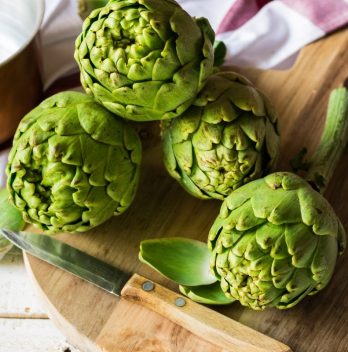
      • One obvious sign of a good artichoke is when they feel heavy in your hand. If you however don’t feel that heaviness or it feels very light, it may be that the artichoke has lost a lot of moisture. It may have also lost some water-soluble nutrients and even some flavor.

      • Another way to know how to pick a good artichoke is to scrutinize the shape. The thorny-packed leaves should be tight and hugging towards the center of the vegetable. Basically, the appearance should not be like a blooming succulent or flower.

      • Another point to note is that once the leaves are opening up from the center, then the artichoke has very likely been sitting out far too long or has become old.

      • Furthermore, the stem will look brown if was cut for just a few hours. However, the stem shouldn’t feel slimy or dry.

    Check out 4 Useful Tips to Help You Choose the Best Organic Seed Starting Mix

    Types Of Artichoke Plants

    Normally, there are two major types of artichoke and they are:

      • Globe artichoke: This type of artichoke is round, large, and globe-like. It is known as the originally improved artichoke and is sometimes referred to as French artichoke. They are about the size of a softball and pretty green. This artichoke variety tends to bud in the first year. They usually reach harvest early (as early; as 75 days).

      • Baby artichoke: the baby artichoke is about 2 to 3 inches long when they are fully matured.

    Types Of Artichoke Plants

    Other Types Of Artichoke:

      • Violetta artichoke: this artichoke variety is a heavy producer of side buds. It is an heirloom variety from Italy. It is characterized by its fascinating purple bud known for its tenderness. This artichoke variety produces elongated (about 3 inches) and 5 inches wide artichoke. Violetta artichoke needs only about 3 foot spacing between plants because it is a smaller plant.

      • Bog heart artichoke: this artichoke variety is a painless one with no prickly leaves. These are basically new varieties and they can handle warm weather. They can even be grown as an annual from seed. They can attain a length of 5 and a half inches.

      • Jerusalem artichoke: this is also known as sunchoke, sunroot, or wild sunflower. They tend to grow about 5 feet to over 9 feet. The part which is edible is a tuber part that looks like ginger root and they are around 3 to 4 inches long.

    Read more about the Difference Between Thai Basil And Regular Basil

    How To Properly Trim Artichoke

    To properly trim an artichoke isn’t so complicated. You just have to understand the process. It requires putting in some extra work after you must have harvested it so it becomes edible.

    Do the following to trim artichoke properly:

      • With a serrated knife, the top third layer of artichoke bud should be trimmed off.

      • Then take away the two outer layers of the leaves around the stem.

      • Next, make use of kitchen shears to trim the sharp tips off the remaining outer leaves.

      • Also, cut off the stem if you want the artichoke to sit flat. If not, just peel it off with a paring knife.

      • The peeled artichoke should be put in a bowl of lemon water. This is to maintain a fresh artichoke until you’re ready to stem.

    3 Pack Garden Pruning Shears Stainless Steel Blades Handheld Pruners Set with Gardening Gloves

    71rnsJKQ oL. AC SL1500

    Preparing Artichoke

    Some parts of the artichoke aren’t ideal or pleasant to eat. These unpleasant sides include the stem, the hard outer leaves, and the choke itself. The main focus for preparing artichoke is centered around removing the bits.

    The stem is quite wood. Therefore, cutting them off is the ideal thing to do. You can use your hands, paring knife, or a small-sized knife to remove the first or two outer layers of the leaves. But take note, this may be pretty daunting to peel as you dive into the layers.

    Then cut off the upper inch of the artichoke. This way, any remaining pointy heads will be removed and you have an opening to remove the artichoke. Then with the help of a melon baller or a spoon, take away any fuzzy filaments around the artichoke.

    Find out How To Trim Basil To Promote Growth

    Storing Artichoke

    To store artichoke, put them in a loosely wrapped plastic in the fridge. If the artichoke is fresh, it can last up to a week. But it’s best you use them as soon as possible to enjoy their freshness.

    FAQ’s

    What part of the artichoke do you eat?

    The artichoke is actually the edible flower bud of the globe artichoke (Cynara scolymus). The plant grows in a large head with many small greenish-yellow flowers. Each flower has five petals and a long stalk. The buds are the part of the plant used for cooking.

    Artichokes are members of the thistle family, which also includes sunflowers and chamomile.

    How do you know if an artichoke is ripe?

    It’s a question we’ve all asked ourselves, and there are two simple ways to tell. The first is that it should be firm and feel heavy for its size, with a nice, bright green color. A fresh one can be picked at any time of year. The second way to tell if an artichoke is ripe is to cut it in half and look at the bottom.

    If the leaves on the bottom are dry and papery, then it’s probably ready.

    It’s often hard to say. There is no single sign of ripeness. You can use your senses and look for the following signs: The leaves should be slightly brown (not green) The stems should be slightly brittle The center leaves should be closed, not open. The heart of the flower should be dark purple, not white or yellow. If you have access to a fresh market, then you can ask them.

    I always buy artichokes at the farmers market when they are in season. I usually try to buy them when they are the most colorful. But they also seem to have a different level of ripeness, depending on where they are from.

    They are not really easy to find fresh at a local market. Most of the artichokes that I buy are already cooked and they don’t last long in the fridge.

    Basically, what does a healthy artichoke look like?

    Well, it should have a bright green color, the leaves should be tightly closed, and the bottom of the stem should be firm and dark green. If you cut an artichoke in half, you’ll see the pale yellow inner part of the artichoke that is not edible.

    How do you store raw artichokes?

    I store raw artichokes in a bag of ice (or in the fridge) in the crisper drawer for up to two days.

    When you’re ready to use them, just trim off the stem and pull off the tough outer leaves. I’ve also found that they keep much longer if you cook them first and then store them as you would any other vegetable.

    How To Pick A Good Artichoke: Conclusion

    It’s really easy to know how to pick a good artichoke if you have the right knowledge. Simply look into the tips we gave on how to properly choose a good artichoke.

  • Carrot Seed Germination Time

    Carrot Seed Germination Time

    Carrots are one of the most popular vegetables to grow among gardeners of all experience levels. Not only are they packed full of beneficial nutrients, but they also taste great in many different dishes. If you are planning to grow them in your garden, you will want to know carrot seed germination time.

    In order for a successful harvest, it is important to know how correctly grow carrots. It is important that you have the right conditions in order to let them grow. You want to take careful consideration when growing any vegetable.

    Planting Carrots From Seed

    Once you get the hang of it, carrots are a relatively easy plant to grow. They are biennials, meaning they use the energy they get from the sun to build up big, starchy roots during the winter.

    Carrot seeds do best when they are planted in loose, sandy soil. It is best to plant them in the cooler seasons of the growing season, whether spring or fall. Depending on the variety, they take anywhere from two to four months to grow.

    Before planting your garden, till your soil is at least 12 inches down, make sure there are no rocks or clumps of soil that could impede on growth. Opt to use coffee grounds as a fertilizer instead of nitrogen-rich manure or fertilizer, as they will cause carrots to fork as they grow.

    In some cases, your best option may be to plant carrots in a raised garden bed. This is a good choice if you have soil that is rocky or heavy clay.

    Carrots do best when planted in full sunlight. However, if need be, they will likely do alright in partial sun. When planting your seeds, sow them 1/4 inch deep, 2-3 inches apart in rows that are one foot apart.

    Keep the soil moist by frequently watering your carrots. They can be harvested as immature as baby roots, where they will be sweeter and crunchier. You can also let your carrots grow to be several inches long. Generally, you want them to be bright orange in color and at least 1/2 inch wide.

    How Long Do Carrots Take To Germinate?

    In general, carrots will take six to 10 days to germinate if given optimal conditions. However, it may take two to three weeks for them to germinate. Though uncommon, there is the chance that it can take up to seven weeks for the process to happen.

    Plant Grow Bags 7 Gallon Heavy Duty Thickened with Handles & Large Harvest Window

    71P38n FybL. AC SX569

    Ideal Conditions f¡For Germination: How Long For Carrots To Sprout?

    For ideal carrot germination, you will need proper soil temperature, air circulation, and humidity. For best results, the soil should be somewhere from 65-85 degrees Fahrenheit. A humidity dome can also help speed up the process.

    The soil should be kept wet, but not soggy. There should be proper aeration in the soil, which you can achieve by tilling. It is best to use new, fresh seeds as older seeds will take longer to germinate.

    The colder your soil is, the longer it will likely take to germinate. When the temperature is in the 50s, you can likely expect the seeds to take 10 to 17 days to germinate. If the weather is in the 40s or below, it can take up to seven weeks to germinate, if it does at all.

    Not only will germination take less time when it is between 65-85 degrees Fahrenheit, but there will also be a much higher germination rate. Generally, the best time to plant carrot seeds is in spring, though you can also plant them in the fall as well.

    Ideal Conditions for Germination: How Long for Carrots to Sprout

    Germinating Carrots With A Paper Towel

    If need be, you can germinate your carrot seeds in a paper towel. First, spray a paper towel so it is damp but not soaking wet. Place your carrot seeds spaced apart so they are not touching and then place the paper towel in a plastic bag to trap in the moisture.

    To help the process, place the seeds somewhere warm. Once they are germinated, you can carefully place them in your gardens. Though this is not the ideal way to germinate your seeds, it will generally work.

    How Much Should You Water Carrots?

    In general, carrots will need one inch of water a week. You should keep the soil damp, but it should not be soaked. You don’t want the soil to get hard on top.

    If carrots get too much water they can end up forming weird shapes and having a bitter taste. Too little water and they will likely not grow. In warmer weather, you will need to water your garden more often to ensure they will grow.

    How Much Should You Water Carrots

    Be sure to also regularly weed your carrot garden, though be careful to not accidentally uproot your carrot plants. You don’t want any weeds or plants blocking the sunlight from your carrot plants. In order to strive, your carrots will need plenty of sunlight.

    FAQs

    How do you germinate carrot seeds fast?

    This is the way I have found to be the quickest and easiest to germinate them. Put about 2 cups of fine sand in a large glass jar or bowl. Fill it with water until it’s almost full. Remove the dirt from your seeds by removing the paper coat from the seeds. Add your seeds to the jar or bowl and gently mix in the sand, covering all of the seeds.

    If you don’t get every seed covered, don’t worry, just add more sand. Leave your seeds for 2-3 days. After that, they should be ready to be planted. The process is very easy and can be done in less than 30 minutes. When planting, fill a small container with water and place the seeds in the water. They should float for a while, but not for long. After 5 minutes, remove the seeds from the water and carefully drain the excess water. Then, place your seeds on a piece of paper towel and allow them to dry. Planting them directly into soil may take too much time. This method works best if you are using a large container or jar as your planting pot.

    How do I know they have germinated?

    It’s easy to tell when your seeds have germinated. The first sign will be a tiny sprout starting to emerge from the seed. When it’s done growing, the sprout will start to elongate and become a seedling.

    How long does it take to grow a carrot from a seed?

    It depends on the seed, soil, weather and other factors. The general rule is that it takes at least two months for a carrot seed to germinate and grow into a carrot plant, but it could take as little as a month. If you are starting from seed indoors, it could be as long as 6-8 weeks depending on the conditions.

    What’s a good way to prepare the soil?

    I would use a 1/2″ potting mix. 1/2 of the pot should be filled with potting mix, and the other 1/2 should be filled with peat moss. When planting the seeds, make sure they are evenly distributed in the pot, and then water them well. I usually put the pots in a sunny window for about a week, and then move them to a window that is slightly shaded.

    Why won’t my carrot seeds germinate?

    When you plant seeds, the seed should be fully covered with soil. If you look at the bottom of a packet of carrot seeds, you should see the root vegetable clearly. You should also see that the seed is fully planted.

    If you don’t see anything, then you need to check the following:

    1. Have you watered it enough?

    2. Is the seed moist?

    3. Did you plant the seed deep enough in the soil?

    1. Was the soil damp or dry when you planted the seed?

    2. Did you plant the seed on the right day?

    3. Is there sufficient water?

    4. Was the seed in a sunny place?

    5. Did you put the seed on the right kind of soil?

    6. Is the soil loose?

    7. Are you sure you have the right seeds?

    8. Has the seed been treated with fertilizer?

    Carrot Seed Germination Time: Know Before You Grow

    In general, you can expect your carrots to germinate within six to 10 days. However, it is not uncommon for them to take two to three weeks for germination to happen. In some cases, they may take up to seven weeks to complete the process.

    For the quickest germination time, plant new, healthy carrot seeds in spring. Plant them in soil that is well aerated, with loose, sandy soil being the best option. Make sure to keep the soil wet but not soaked and that they are receiving plenty of sunlight.

    The ideal temperature for germination is between 65-85 degrees. Carrots will also be able to germinate when temperatures are in the 50s. In some cases, they may also germinate in the 40s, but that will not always happen.

    You can also germinate them in damp paper towels that are placed in a plastic bag in a warm environment. Though this may not work as well as planting the seeds in the soil, it is still a reliable option overall.

    Do you have any questions regarding carrot seed germination time? If so, please ask your germination questions or any questions regarding growing carrots in the comment section down below.