Category: Organic Food

  • How To Grow Tomatoes Upside Down – Can You Do This?!

    How To Grow Tomatoes Upside Down – Can You Do This?!

    So, you want to grow tomatoes upside down? You’re in the right place – find all the information you need here!

    Whether you consider it a fruit or veggie, we can agree that tomatoes taste great. This summer crop grows easily and requires little maintenance. If you’re limited on space or want to try a new way to plant yours, using the upside-down method might be what you’re looking for. 

    In this article, I share how you can grow tomatoes upside down in your backyard, list some tips to help you succeed, and explain the benefits you’ll see when planting this way. 

    How To Grow Tomatoes Upside Down

    Growing tomatoes upside down is relatively easy if you have the right equipment and care instructions. Here’s some tips!

    Equipment you’ll need:

    • 5 Gallon bucket
    • Hand drill
    • Tomato plant seedlings
    • Lightweight soil mix
    • Coffee filter or a few sheets of newspaper
    • Sturdy frame
    • Mulch or peat moss

    Create your own upside-down tomato plant hanger by hanging buckets from a sturdy frame of your choice. 

    1. Drill hanging holes at the sides of each bucket and draining ones at the bottom. 
    2. Secure the bottom holes with coffee filters or newspaper.
    3. Fill your pots with soil and mix mulch or peat moss in.
    4. Spread your seedlings and cover them with a thin layer of soil.
    5. Water your tomato seedlings every day and watch them grow!

    Tips For Growing Tomato Plants

    Choose The Right Planter

    You can’t grow your upside-down tomatoes without the right planter! Buy a pre-made one at your local nursery or build it according to your needs. A 5-gallon bucket is a great size to work with. You should also buy sturdy gardening hooks to hang your pots. 

    Pick The Perfect Spot – Grow Tomatoes Upside Down

    The success of crops has a lot to do with their location. Your tomato plants will need at least 8 hours of daily sunlight. The spot you pick for growing your upside-down tomatoes should also be easy-accessible since you’ll need to water them frequently. 

    Use Fertile Soil

    Potting soil is nutrient-rich and works great for growing tomatoes in pots. You can fertilize your soil before you plant and again when your tomato plants are about 6 weeks old.

    Remember to replace your soil if you’re planting for the new season in the same buckets to avoid nutrient depletion. 

    Choose The Right Variety

    Not all tomatoes grow the same, and some varieties work better for upside-down gardening. For starters, smaller tomatoes grow better hanging than big ones. 

    Tumbling Toms: These yellow or red tomatoes are excellent for hanging pots. They produce fruit in about 70 days. 

    Yellow Canary: You can harvest this tomato variety in approximately 55 days, and they need less light than others to thrive. 

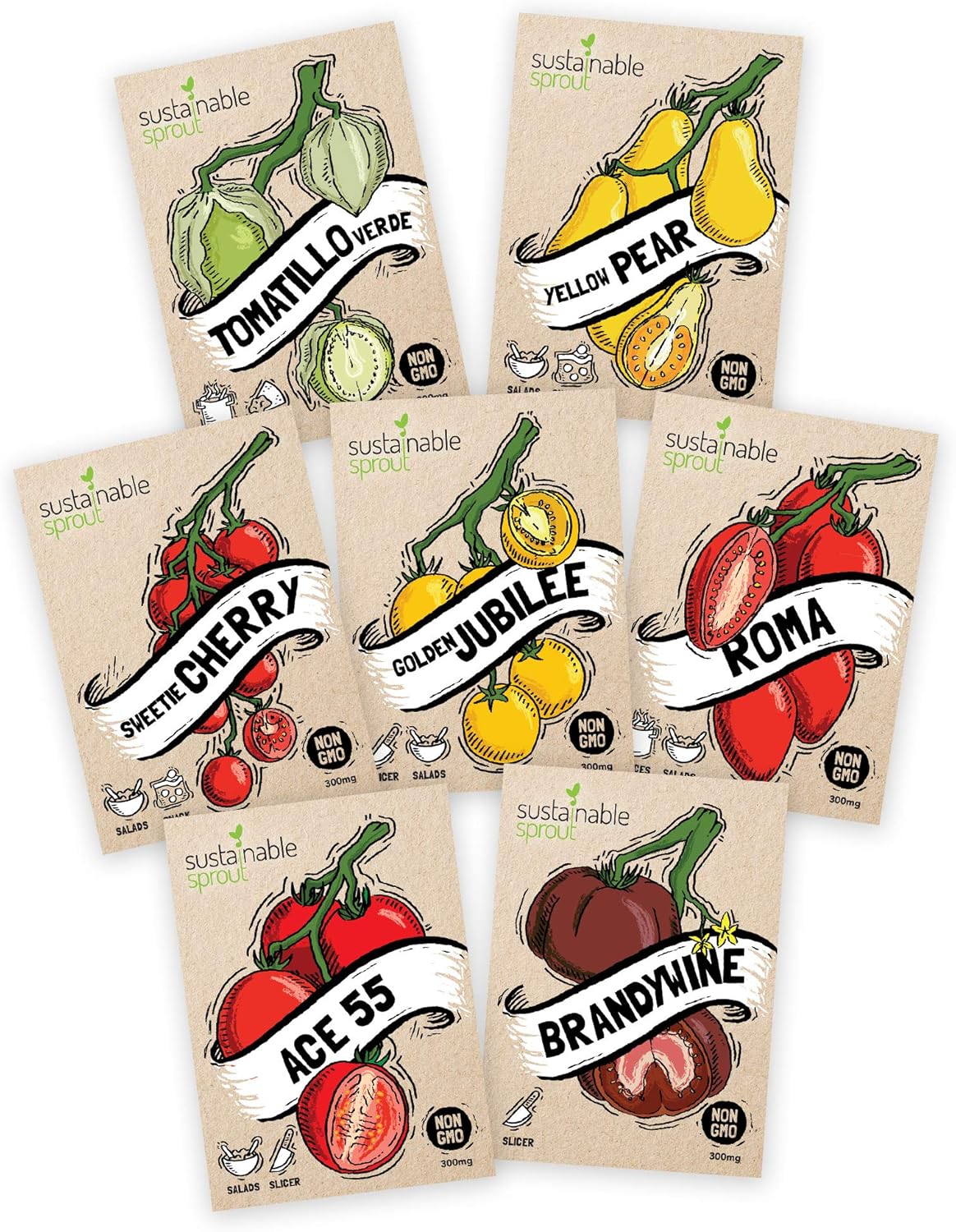
    14 Rare Tomato & Tomatillo Garden Seeds Variety Pack for Planting Outdoors & Indoor Home Gardening

    91Vnej RPpL. AC SL1500

    Quick Tips For Maintaining Healthy Tomato Plants

    • Avoid shady areas. Sunlight is your friend!
    • Keep your soil damp but not wet. 
    • Water your tomatoes twice on hot days.
    • Add fertilizer every 4 to 6 weeks. 

    The Benefits Of Growing Tomato Plants Upside Down

    Growing tomatoes upside-down definitely has its ups! Here’s some benefits of this method:

    Space Efficient: If you’re limited on space, you can hang your tomato plants wherever possible. Hanging pots don’t take up much space. 

    Control: Upside-down growing gives you more control over how much water your tomato plants receive. The risk of overwatering decreases, and you’re more likely to give enough water too. 

    Reduces Pests and Diseases: Root rot, infestations, and pest risks are decreased when planting tomatoes in hanging pots. These critters will have trouble reaching your plants, and since you’ll have control over how much water each pot gets, the chances of rotting roots are slim. 

    Extended Season: Hanging pots are easy to move around during seasonal changes. You can place them in different spots to ensure your plants still get enough sunlight. 

    Click Here to Get Info About:

    Issues And Solutions When Growing Tomatoes Upside Down

    Tomatoes love water, sun, and space to spread their roots. Consider these problems you can run into when growing this fruit upside down:

    Inadequate Moisture: Basic science tells us that gravity pulls water. If your soil drains too well, most water will run through the holes at the bottom of your pots, leaving little nutrients for your plants to soak up. 

    Add enough newspaper or coffee filters to cover these holes and slow gravity down. 

    Poor Production: Tomatoes need a lot of sun to produce healthy fruits. Heavy pots typically hang from roof overhangs or a tree with some shade to support their weight. This will influence your plant’s sunlight exposure. 

    Ensure you have a sturdy enough trellis to carry the weight of soil-filled pots and your tomatoes that you can place in direct sunlight.

    Issues And Solutions When Growing Tomatoes Upside Down

    To Sum It Up, Grow Tomatoes Upside Down

    Growing tomatoes in pots is always a good idea if you don’t have much space to work with. Hanging them in the air is even better!

    Your tomato crops will succeed if you have a sturdy enough trellis or hook, a good pot, and the right soil, water, and sunlight balance. Adding care and love to the mix will help you harvest fruits all season long and likely beyond.

    I hope this article was helpful. If you enjoyed reading it or have more questions, let me know in the comments.

    FAQ’s

    Which tomatoes grow the best upside down?

    Small tomato varieties like cherry and Roma grow the best upside down. Since their fruits aren’t big, your hanging pots will have an easier time carrying their weight.

    Do hanging tomato plants grow upside down?

    Tomato plants don’t really grow upside down. Instead, they hang. If you plant them in hanging pots, they’ll drape downwards, creating an upside-down effect.

    Why do you put tomatoes upside down?

    There are many benefits to growing tomatoes upside down. You may also choose to use this method if you have limited space or no backyard.

    Are used coffee grounds good for tomatoes?

    You can use coffee grounds to help keep your tomato plants healthy. It contains nitrogen, phosphorus, and potassium, which benefit tomato growth.

  • How Many Tomato Seeds Per Hole Is Ideal?

    How Many Tomato Seeds Per Hole Is Ideal?

    Starting your own tomato from seeds at home can be a good way to save money. After all, most people would love to eat fresh fruits and vegetables made in the comfort of our homes. But do you know how to go about growing tomatoes from seeds? Is tomato easy to grow from seeds? How many tomato seeds per hole are ideal to be planted? We shall answer these questions and more here.

    Tomatoes are juicy and delicious and they are used in different cooking. Tomatoes are easy to grow but when it comes to sowing their seeds, you need to plant their seeds correctly. This is where the question of how many tomato seeds should be planted in each hole.

    Let’s look into planting tomato seeds. How many tomato seeds per hole will be discussed here and other related things so let’s begin.

    How Many Tomato Seeds Per Hole?

    It may be fine to put one seed of tomato per hole. However, putting an extra seed or even up to three can serve as a backup plan in case one of the seeds doesn’t sprout successfully. This maximizes the chance of your seed emerging. Looking at the seed germination rate we can understand the reason why more than one seed is advised to be sown.

    How Many Tomato Seeds Per Hole
    • Seed Germination Rate

    Seed germination rates are the probabilities that a particular seed will emerge and grow into a plant. Different plant species have various germination rates. This implies that you should consider seed germination rate when you’re growing any seed.

    Tomatoes for instance have a germination rate to be 75% which is fairly high. Therefore, if plant about 50 seeds, you should have about 37 of them germinate successfully. So, looking at this rate, it means that there is a one in four chance or 25% chance that the seed can fail to germinate.

    Other growing factors such as the age of seed, temperature, and so on, can affect the rate at which the seeds germinate successfully.

    Read more about How Long For Seeds To Germinate?

    Why More Than One Seed Is Recommended Per Hole

    Because each tomato seed has about 25% chance of failing, adding an extra seed can reduce the chance of both failing. So, with two tomato seeds, you have about 6.25% chance of both failings. This means you’ve further increased the germination rate.

    So, when you sow three tomato seeds per hole, you’ve drastically reduced the chances of the seed failing to 1.56%.

    However, we advise you don’t overcrowd the hole if you’re planting bigger varieties of tomatoes. Then if you’re short of tomato seeds, then two seeds should be fine.

    If after sowing two seeds and both germinate, just pluck out the weak or shorter one and leave the strong one.

    How Deep Should Tomato Seed Be Sown?

    How many tomato seeds per hole have been answered. Now, we would like to know how deep tomato seeds should be sown.

    Tomato seeds grown in containers should be sown half an inch deep into the soil. Make sure you don’t sow the seed deeper than this because it can make it hard for the seed to sprout successfully.

    Watering Requirements For Tomato Seeds

    Moisture is a crucial factor for the growth of tomato seeds together with nutrients. However, you need to avoid over-watering the seeds. Over-watering can cause the water to drain down the soil‘s nutrients. This can cause the germination rate to diminish.

    The soil only needs to be moist for seed germination and you can make use of sprinkler to wet the soil. Water in the morning and before evening. But during the cold season, water only once then you can increase watering if the soil surface is dry.

    Where Can Tomato Seeds Be Grown?

    Tomato seeds need to be grown where they can get full or maximum sun exposure. Growing tomato seed in a container is a good idea depending on your climate. However, if your region is in the colder part, you should position the container with the tomato seeds on a windowsill for it to receive maximum sun exposure.

    The container seed needs to be moist at all times and ensure the container has an adequate drainage hole to take out excess water. Also, ensure you provide the proper warm growing temperature for the seeds.

    Coast of Maine OMRI Listed Tomato and Vegetable Plant Potting Soil Compost Blend

    61n84Vr5eSS. AC SX569

    So, after the seeds have emerged into seedlings and the seedlings have attained at least 3 inches, they can be transplanted. You can transplant them into a bigger container or just transplant them outdoors in your backyard.

    Once you’ve successfully transplanted the tomato seedlings in your backyard, it’s recommended to give them some support with a wooden stick alongside the plant. Alternatively, you can build iron or wooden mesh to support your plant. Doing this can further help prevent the end rot of tomatoes.

    If you reside in a cold region, you need to protect your plant by covering them with polytunnel so that the growth of the tomato plan won’t be affected in an adverse way.

    When To Plant Tomato Seeds

    How Many Tomato Seeds Per Hole? We recommend you sow your tomato seeds around late February to middle March if you will be growing them indoors or in a greenhouse. Then if you wish to sow tomato seeds outdoors, you should sow them around late March to early April.

    However, if you find yourself sowing tomato seeds indoors in the earlier part of the year, you need to ensure the plants are lined up against a window that is facing south.

    When To Plant Tomato Seeds

    Final Word

    To boost the chance of your tomato seed germinating, you need to sow more than one seed per hole. How many tomato seeds per hole need to be gotten right and we have established that sowing at least two seeds can help your plant emerge successfully.

    FAQ’s

    Can you plant 2 tomato plants in the same hole?

    It is not ideal to plant two tomato plants in the same hole because this can cause overcrowding which causes the root to tangle and reduce the growth. If you sowed two seeds in a hole and the two emerge successfully, simply pluck out the shorter or weaker one.

    How many tomato seeds do you put in the ground?

    We recommend you put at least two tomato seeds in the ground so that if one seed fails to grow, the second one can serve as a backup plan.

    How many tomatoes can one seed grow?

    One tomato seed can give rise to one tomato plant. it is important not to overcrowd your tomato plant so it can grow and flourish optimally.

    Can I put multiple seeds in one hole?

    Yes, you can put multiple seeds in one hole because this can further boost the chance of the seed emerging. However, if you’re growing a bigger variety of a plant, you should avoid overcrowding the hole with too many seeds.

  • Why Is There White Mold On Avocado

    Why Is There White Mold On Avocado

    Have you noticed white mold on avocado fruits and are wondering what the problem is?  In this article, we will discuss mold and why it forms to make it easier for you to understand.

    In the world of agriculture, we have many problems that are caused by the environment. One of them is water. This problem is quite common in different areas around the world. And one of the most common types of water pollution is the contamination of soil with chemicals or pathogens that can cause serious diseases to humans and animals. In this case, we should be very careful and always look for a solution to this problem.

    There is another problem in the world of agriculture that is more common than water pollution. That is the presence of harmful microorganisms in the air or in the soil that are harmful to plants and animals. The most common of these harmful microorganisms is mold, which is often associated with various diseases. And, in this case, it is also very important to know why is there white mold on avocado?

    What Is Mold?

    Mold is a fungus that has the ability to grow in almost any environment. This means that it can grow in places such as soil, water, air, and even in your body. Mold is a type of fungus that is found in the form of colonies or groups of cells. These cells are not separated from each other, but they are stuck together. It is possible that this fungus can cause many different diseases.

    In the case of mold, one of the most common diseases is called mold disease. This is a type of fungal infection that causes the appearance of white, gray, brown, or black mold on fruits and vegetables. In some cases, mold may also be found in the air. This can be caused by the presence of fungi that have contaminated the air we breathe. This is known as airborne mold.

    Mold is not a type of fungus that is only found in the soil or on the ground. It can be found in almost every environment. And it is not only a problem for plants and animals. Mold can also be a problem for humans. In fact, there are many cases in which the mold has contaminated food and has caused serious illnesses to people.

    Click Here to Get Info About:

    What Causes White Mold On Avocado?

    White mold on avocado can be caused by various fungi. It is very common for the spores to be carried to the avocado from the soil. They can also be carried by wind or water. Once it enters the avocado, it starts growing rapidly and can cause serious rotting in the fruits.

    MSC International Joie Fresh Stretch Pod for Avocados, LFGB Approved, One Size, Green

    81+hn7XHrnL. AC SL1500

    The best way to prevent the growth of this fungus is to avoid exposing them to wet conditions. Does white mold on avocado affect ripe fruits? The mold you see on the surface of the fruit is not mold. It is actually an enzyme that has formed on the skin of the fruit. This is harmless and does not affect the flavor or appearance of the fruit.

    Read more about How To Propagate Fig Tree? – Efficient Method

    How Do You Remove White Mold From Avocado?

    The best way to remove white mold from avocado is to cut off the infected area. If you are unable to cut the mold off the avocado, you can put on gloves and spray a mixture of water and bleach on the mold. Be sure to thoroughly wash your hands after removing the mold.

    You can remove all the affected area with a knife. You can also cut off the whole plant. And you can put it in a plastic bag and keep it in the refrigerator for several days. This will destroy the mold. If you do not have time to do this, you can try to spray some chemical pesticides or fungicides. But make sure that the chemicals you use are not too strong. Or else, they will contaminate your avocado fruits.

    How can you prevent white mold on avocado? You can prevent white mold on avocado by keeping the soil around the plant dry. Avoid putting wet soil near the avocado because this can cause the avocado to get moldy.

    How Do You Remove White Mold From Avocado

    Finally, White Mold On Avocado

    White mold on avocado does not harm the avocado as fast as it appears on the surface unless you leave it there long enough. However, if you peel the white mold, you may find a black mold under the surface of the avocado. This is because the black mold is an indication of the decay of the avocado. So, if you want to prevent white mold on avocado from making them rot, you should eliminate it as fast as you first notice it.

    You should keep it away from moisture. This means that you should keep the avocado in a plastic bag. You can also put it in a bowl away from water.

    FAQ’s

    What is white stuff on avocado?

    Avocados are one of the most nutritious fruits around. They are high in vitamin C, potassium, and fiber, and they have a healthy dose of omega-3 fats. The white stuff on avocado is the mold that is beginning to form and will cause your fruits to rot if not eliminated as early. 

    Can moldy avocado make you sick?

    You can eat moldy avocado if the rotting has not happened inside the avocado flesh.  However, if the avocado has black color inside, its already rotten.  

    What does avocado fungus look like?

    Avocado fungus looks like a white mold that grows on the skin of avocados. It is harmless and usually appears during the storage of avocados after they have been picked. It is possible for avocado fungus to grow in your refrigerator. This happens when you leave avocados out for too long without refrigerating them properly. When this happens, the fungus can get into the avocado skin and grow on the surface.

    How do you treat avocado fungus?

    If you notice avocado fungus growing on your avocados, there are several things that you can do to prevent this from happening again. The best thing you can do is to store your avocados in the refrigerator. This will stop the growth of the fungus. If you notice the fungus on your avocados, you should throw the avocados out.

  • All About Supertunia Vista Bubblegum!

    All About Supertunia Vista Bubblegum!

    If you are interested in learning all about Supertunia vista bubblegum, we will look at it in this article.

    Supertunia Vista Bubblegum is a common plant used by most gardeners in landscaping. In this article, we will look at the history of Supertunia Vista Bubblegum and how to care for it. We will also see the many benefits that this plant has to offer.

    What is Supertunia Vista Bubblegum?

    The Supertunia Vista Bubblegum is a type of petunia hybrid that is a member of the Solanaceae family. In USDA Zones 10-11, they are grown as perennials, but in cooler areas, they are grown as annuals.

    The beautiful flowers of this plant are great for attracting hummingbirds and butterflies. They are a particularly popular plant thanks to the fact they tend to be heat and drought tolerant.

    What Is Supertunia Vista Bubblegum - The  History

    Supertunia Vista Bubblegum – The Appearance and Uses

    The leaves of the Supertunia Vista Bubblegum are green. The flowers of this plant are pink in color red-purple veins. They appear in clusters and have a sweet scent.

    These flowers bloom from planting to a hard frost and are known for being excellent bloomers. They are easy to care for and their stunning blooms make for an attractive addition to any garden.

    It has several different uses which include: gardening, home décor, and landscaping. Supertunia Vista Bubblegum is a herbaceous perennial that grows up to 12-24 inches tall. 

    The most common use for Supertunia Vista Bubblegum is as a hanging basket or in a planter. This plant can be placed on a sunny window sill or in an artificial light setting. It can also be used as a patio plant or landscape plant.

    Supertunia Vista Bubblegum – Propagation

    This plant can be propagated by either seed or cuttings. The best time to propagate this plant is during the summer months. 

    The best way to propagate this plant is by using cuttings. To do this, take a cutting from the top of the petunia plant, be sure to cut a soft, flexible leaf and wrap it in a damp paper towel. Fill a plastic container with a mixture of equal parts peat moss, sand, and plant food.

    Dip the end of the stem in rooting hormone and then make a small hole in the soil mixture. Carefully place the end of the stem in the hole and push soil around it to keep it in place.

    Burpee Bone Meal Fertilizer | Add to Potting Soil | Strong Root Development | OMRI Listed for Organic Gardening

    618a4ZruCgL. AC SX569

    Keep the container out of direct sunlight and water the cutting well.  After about three weeks, carefully check to see if roots have formed. Once the roots have formed, you can remove it from the container and plant it in a new pot of fresh potting soil.

    Click Here to Get Info about:

    Supertunia Vista Bubblegum – Care

    This plant can be grown in both sun and part sun. Supertunia Vista Bubblegum thrive when they get six or more hours of sun a day, but they can also grow in four to six hours of partial shade a day.

    It is also important to water this plant well.  The plant needs medium watering to keep the soil moist. This plant can also benefit from being fertilized on a regular basis.

    Fertilize your soil:  Your soil will be better off if provided with the right nutrients.  Fertilize your Supertunia Vista Bubblegum in the spring by using a slow-release fertilizer such as Osmocote.

    Manage diseases:  Supertunia Vista Bubblegums are often disease resistant. However, they can be suspectable to root rot, gray mold, late blight, and tobacco mosaic virus. The plant might also get pests such as aphids, flea beetles, slugs, and snails.

     To prevent these problems, keep your Supertunia Vista Bubblegum well-watered and look out for any pests or changes in the plant.  You should also keep the soil moist, but not soggy.

    Repot your plant: The best time to repot this plant is in the spring. This will cause less stress to the plants.

    Water thoroughly, but do not overwater and if you notice any sign of disease, re-pot immediately.

    Check Out 11 Best West Facing Window Plants

    Final Remarks

    The Supertunia Vista Bubblegum is a beautiful plant to grow.  It will produce stunning pink flowers with red-purple veins.

    If you have trouble growing it in your climate, look for it at a plant nursery. It’s quite easy to grow, but do not be surprised if it takes a while for it to mature.

    FAQs

    Is Supertunia Vista Bubblegum a perennial?

    In USDA zones 10-11, the Supertunia Vista Bubblegum is grown as a perennial. However, in cooler areas it is grown as an annual.

    What color do bubblegum petunias come in?

    The Supertunia Vista Bubblegum is noted for its signature pink flowers with red-purple veins. However, petunias can come in almost all colors except brown and black.

    How big do Supertunias get?

    The Supertunia Vista Bubblegum can grow to be 12-24 inches tall. They are a particularly great size for growing in hanging baskets and flower pots.

    How long do Supertunias last?

    How long a Supertunia plant last depends on if it is grown as a perennial or annual. A Perennial will regrow every spring, whereas an annual will live for just one growing season, then die off.

  • How To Propagate a Fig Tree? – Efficient Method

    How To Propagate a Fig Tree? – Efficient Method

    In this guide, we will learn how to propagate a fig tree and provide it with the right growing conditions that this plant requires.

    A Fig tree is a large, deciduous tree. It grows best in full sun and well-drained soil. It can be propagated from seed, grafts, or cuttings.

    The best time to plant a fig tree is during spring. This tree is drought tolerant but needs regular watering to survive.

    If you are looking to buy a fig tree, we recommend you purchase one from a reputable nursery. Fig trees take at least 10 years to grow to maturity.

    What To Consider When You Propagate a Fig Tree

    Best Time To Propagate a Fig Tree: If you want to have a good quality fig tree, then it should be planted during spring. This is because fig trees need lots of sunlight and it also needs a good amount of water. The best time to plant a fig tree is from April to May. However, the fig trees can be planted throughout the year as they do not require winter dormancy.

    Location For Propagating Fig Tree: The fig tree requires ample sunlight. Therefore, you need to place it where it gets direct sunlight. The best location for this tree is a sunny spot. You can either use a pot or directly plant this tree in the ground.

    What To Consider When You Propagate Fig Tree

    Watering And Feeding Fig Trees: A fig tree requires a lot of water. So, you need to make sure that you provide your fig tree with a sufficient amount of water. If you have an irrigation system, then you don’t need to worry about watering. But if you don’t have an irrigation system, then you should take care of watering your fig tree manually. You should provide your fig tree with enough amount of water at least twice a week.

    Feeding Fig Tree: The fig tree is a deciduous tree which means it requires lots of nutrients. You need to feed your fig tree every month. You should add high-quality fertilizer to your soil.

    Click Here for Info About:

    How To Propagate Fig Trees

    The propagation of a fig tree is quite simple. You can either propagate your fig tree by seeds, cuttings or grafting. However, if you want to make the process easier, you can use a container that will help you to plant a fig tree without worrying about the root system.

    How To Propagate Through Seeds

    Seeds are used for direct seeding. You can sow the seeds directly in your garden or in a pot. This is the most popular method for propagating fig trees.

    The seeds germinate best when the temperature is between 65 to 75 degrees F (18 to 24 degrees C). When you sow the seeds, you should place them in a soil mix with a high-nitrogen fertilizer. You can also use a mixture of compost and peat moss.

    Perfect Plants Celeste Fig Tree Live Plant, 1 Gallon, Includes Care Guide

    511GeTdvgLL. AC SX569

    To get the right soil mix, you need to add organic matter to the soil, like compost and peat moss. Add four to six inches of the mixture of soil, compost and peat moss to the pot.

    Make sure that the mixture is moistened thoroughly before sowing the seeds. If the soil is dry, then it will be difficult to germinate the seeds. When the seeds start sprouting, cover the seeds with a thin layer of mulch or a sheet of plastic to keep the seedlings warm. The best time to sow the seeds is during spring.

    How To Propagate Through Cuttings

    For this method, you will need a cutting from your tree. You can take cuttings from the branches that have a lot of leaves or from the branches that have no leaves.

    To make sure that the branch has no leaves, you can remove all the leaves except the bud. Then, soak the cuttings in water for at least one hour.

    Place the cuttings in a shallow tray filled with a rooting hormone. Make sure that the soil mix in the tray is moistened before placing the cuttings in it.

    Place the tray inside a lighted area that has a temperature between 65 to 75 degrees F (18 to 24 degrees C). The best time to plant cuttings is during spring.

    How To Propagate Through Grafting

    For this method, you will need a branch with a lot of leaves from your fig tree. You can use a softwood branch that is not more than two inches in diameter. You will need a hardwood branch that is more than three inches in diameter.

    After you remove all the leaves from the branches, soak them in water for at least one hour. Cut the branches at a 45-degree angle and remove the bark. You will need to remove all the wood from the branches so that they are just bare branches.

    To do this, you can use a knife or a pair of pruners. Make sure that the branches are clean of any wood or other materials.

    Then, insert the hardwood branch into the softwood branch. Make sure that the two branches are inserted deeply enough so that they are firmly held together. Wrap the roots of the softwood branch with aluminum foil.

    Place the wrapped softwood branch in a shallow tray filled with a rooting hormone. Place the tray in a lighted area with a temperature between 65 to 75 degrees F (18 to 24 degrees C). The best time to plant grafts is during spring.

    Check Out All You Need To Know About Garden Hose Size

    Final Remarks

    If you are looking to propagate a fig tree you can follow the above guide to help you propagate from seeds, cuttings or grafting.  In a few years, you will enjoy figs from your own tree for the rest of your life.

    FAQ’s

    Can you grow a fig tree from a cutting?

    Yes, it is possible to grow a fig tree from cuttings taken from the rootstock of an established tree. It is, however, important to use the right rootstock as it will determine the type of fig tree that you will grow. The rootstock determines the number of leaves and flowers on the tree, the length of the flowering season, the shape of the fruit, the colour of the fruit and the size of the fruit.

    Can you root fig tree cuttings in water?

    Yes, you can do this. You can either keep the cuttings in moist soil or in water. The best time to root fig tree cuttings is when they are dormant. Cuttings should be kept at a constant temperature of between 10-25°C and at a relative humidity of 50 – 80%.

    When should fig trees be propagated?

    Fig trees can be propagated at any time during the year. It is important to remember that figs have a very long flowering period, which means that they cannot be propagated all year round. During the summer months, fig tree cuttings should be taken from the rootstock of an established tree. In the autumn and winter, fig tree cuttings can be taken from dormant rootstocks of fig trees.

    How long does it take for a fig tree cutting to root?

    It can take anywhere from 3 months to 1 year. It depends on the age of the cutting, the size of the fruit, and the conditions of the rootstock.

  • Will Butternut Squash Ripen Off The Vine?

    Will Butternut Squash Ripen Off The Vine?

    Do you know how and when to determine if butternut squash is ready for harvest? Will butternut squash ripen off the vine or not? These questions and more shall we answer in this insightful post.

    Butternut squash which is a winter squash is a rich-tasting squash that can be incorporated into sweet and savory dishes. This squash is one type of squash that is most loved amongst growers.

    Butternut squash is this kind of squash that is characterized by this hard outer skin. This squash can even be stored in a cool and dry spot for as long as 6 months once it has matured.

    Will butternut squash ripen off the vine or not is what we would like to know. We will also discuss how to tell if butternut squash is ready for harvesting, how to store butternut squash, and so on. So, let’s dig in.

    Will Butternut Squash Ripen Off The Vine?

    It may be possible for butternut squash to get ripened off the vine. But usually, it’s better to allow butternut squash to remain on the vine so they can get ripen. Leaving them on the vine to ripen allows them to taste better and even last longer.

    However, there are some situations that cause us to harvest our butternut squash early. Winter is the most common cause for growers to harvest their butternut squash very early. So, if your region experiences winter earlier than expected, butternut squash can be harvested early. Then you can use curing techniques just to improve the length of the storage.

    Butternut Squash Ripen Off The Vine

    How To Ripen Butternut Squash Off The Vine

    So, if the frost in your region is predicted to come earlier than expected, then harvesting your butternut squash is advisable so they won’t freeze on the vine.

    You may get lucky trying to ripen butternut squash off the vine. So, here are some tips on how to ripen butternut squash off the vine:

    • Clip the butternut from the vine and aim to leave several inches of stem. Do this the morning before the frost.
    • Then try curing the unripe squash by storing it at 80 to 85 degrees Fahrenheit. Also, provide a humidity range of 80 to 85 percent for 10 days.
    • This curing procedure is used to extend the storage life of butternut squash by hardening the skin, healing the wounds, and ripening the immature squash.

    Read more about Get To Know Some Of The Best Worms For Vegetable Garden

    How To Tell When Butternut Squash Is Ripe

    It may seem a bit tricky to determine when butternut squash is ripe. But with the right knowledge, you can know when this squash is ripe.

    To get a sweet and better-tasting butternut squash, it is important you harvest them at the right period. If butternut squash is left too long on the vine, it can get rotten. On the other hand, if butternut is picked too early, you will get an unripe and less sweet fruit.

    gonicc 8″ Professional Premium Titanium Bypass Pruning Shears (GPPS-1003)

    Will Butternut Squash Ripen Off The Vine

    Most growers like to work on the duration of time to tell when butternut squash is ready for harvest. For instance, if butternut squash was planted on time during summer, the squash may get ripened in late September or sometime in October.

    However, there are 3 main factors that determine when butternut squash is ready for harvesting and they are discussed below:

    1.    Color And Length – Will Butternut Squash Ripen Off The Vine

    Once butternut squash is matured, the squash will usually attain a length of 12 inches. Also, you should notice a deep tan color once the fruit is ripe. But to get a better-matured squash, the color should help you determine the ripeness of the squash.

    2.    Test Using Fingernail

    The fingernail test is one good method to know when to harvest your butternut squash. The test is simply done by pushing your fingernail through the skin of the butternut squash. The squash isn’t ready for picking if the skin punctures. Then if the skin of the butternut squash feels very hard and refuses to be punctured, then it is ripe.

    3.    Brown Color Of The Stem – Will Butternut Squash Ripen Off The Vine

    The butternut squash is attached to the vine of the fruit by a short stem. During most of butternut squash growing season, the stem is often green. But once the fruit begins to ripen, you will notice the stem starts to turn brown. Again, when the stem is totally brown and dried, it’s a good indication that the fruit is matured.

    Storing Butternut Squash

    So, after you must have cured your harvested butternut squash, simply wipe or brush out any dirt on the fruit. Then make sure you keep them dry. Butternut squash should be stored in a cool and dry place. The temperature range should be between 50 to 55 degrees Fahrenheit. Examples of this type of spot are places like a cool basement or even a garage attached to your home.

    Make sure you store your butternut squash in its own place. Don’t store them together with other types of fruits. They should be stacked on shelves or placed in a container with holes so they can get good air circulation.

    Check Out What Is The Bleeding Heart Flower Meaning?

    How Long Does it Take for Butternut Squash to Mature?

    Butternut fruits are ready for harvest around 50 – 55 days after the fruits are set. It can take up to 110 days to reach this point, depending on which variety you planted. The growing conditions of your squash will also impact how fast it matures.

    The butter boy hybrid squash and autumn glow variety are ready to harvest in just 80 days! You can enjoy a Waltham butternut in about 85 days. If you planted the argonaut hybrid butternut, your fruit will be ready to eat in 140 days.

    How Do You Grow a Big Butternut Squash?

    Butternut needs nutrient-rich, well-draining soil. You should ensure they’re planted in a spot with a minimum of 6 hours of direct sunlight daily. If you want your butternut squash to grow big, you should thin the flowers out to give each one enough space. Consistent moisture is another critical component for success.

    You can plant bigger butternut varieties if large fruit is your goal. Experimenting with fertilizer and sunlight exposure could also lead to unexpected sizes!

    How Big Does a Butternut Squash Grow?

    The mature size of a butternut squash varies depending on which type it is. Varieties like the liscia have an average weight of 4.4 lbs when ripe. Waltham butternuts only reach 1.7 – 2 lbs.

    How Many Days Does it Take to Grow Butternut Squash?

    On average, butternut squash takes 110 days to grow. However, you can reduce this time. If you start your seedlings indoors, they’ll mature faster when planted outside. Adding extra fertilizer and planting your butternut in nutrient-rich soil can also help this fruit mature faster.

    Growing your butternut in a more favorable environment will impact the time it takes to mature. Greenhouses tend to deliver more fruit in a shorter timeframe.

    Can You Grow Butternut Squash in The Fall?

    Butternuts are typically grown during spring and summer. You’ll have to check the expected frost dates in your area to determine if you can grow yours in the fall. It’s best to plant butternut squash about two weeks after the last frost is expected. Growing butternut squash in the fall will likely be a success if you have a greenhouse or indoor setup.

    What Temperature Does Butternut Squash Need to Grow?

    Butternut squash seeds need soil that’s at least 70°F to germinate. If the temperature is around 95°F, they have an even better chance! You should start growing this fruit once the frost has passed. Your crop will do best in direct sun.

    Why is My Butternut Squash Green Inside?

    There are a few reasons why your butternut squash flesh might be green. The most common is that the fruit isn’t ripe yet. Butternut squash flesh turns yellow as it ripens.

    If you’re sure that the fruit is mature, it might be damaged. Butternuts with damage spoil fast and turn green when they start decaying. This is accompanied by an odor. Lastly, your squash might be a hybrid.

    Final Words – Will Butternut Squash Ripen Off The Vine

    Even though it’s mostly better to leave your butternut squash on the vine to become ripe, there are still some cases that can cause anyone to harvest them before ripening on the vine. Frost is the most common reason why growers want to harvest their squash on time.

    After all, it’s better to harvest your butternut squash even if they’re underripe than to lose your entire crop to frost.

    So, we hope we’ve been able to answer the question: Will butternut squash ripen off the vine?

    FAQ’s

    Can you pick butternut squash when it’s green?

    You may pick butternut squash when it’s green or if the skin is hard. However, you should know that the appropriate color to pick butternut squash when it’s ripe is a deep tan color.

    What can you do with unripe butternut squash?

    You may get lucky if you try to ripen the unripe butternut squash you may have. You should store the unripe butternut squash at a temperature of 80 to 85 degrees with a humidity range of 80 to 85 percent.

    How do you know when butternut squash is ripe?

    You can know if butternut is ready for harvesting if the outer rind is tan in color. It should not have any trace of green spot and it should have a hard skin. Also, the skin should be hard that when you puncture the fruit with your fingernail, it should be hard to puncture.

    How do you ripen butternut squash on the vine?

    You can ripen butternut squash on the vine by providing it with some sun. This is because sunshine helps squash ripen. So, turn the plant from time to time so that all parts of the plant can get proper sun.

  • How Much Sun Does Lettuce Need? Which Is Ideal, Little Or Excess Sunlight?

    How Much Sun Does Lettuce Need? Which Is Ideal, Little Or Excess Sunlight?

    How much sun does lettuce need is what we would like to know. Do you know if you should give your lettuce little or extra sunlight? We will find out soon.

    Lettuce is an excellent veggie that is loved by many and used in most homes when it comes to cooking. You can incorporate lettuce in almost every dish including sandwiches, soups, and so on. No wonder this veggie is loved by many and it’s only logical for anyone to want to have this tasty veggie in their garden.

    But for you to enjoy the best production of lettuce, you need to provide some growing conditions and one important growing condition is sunlight. You need to know the ideal sunlight requirement for lettuce; if it needs enough sunlight or little sunlight.

    How much sun does lettuce need will be answered in this post. So, let’s delve into this.

    How Much Sun Does Lettuce Need? Lettuce Sun Requirements

    The fact is that lettuce doesn’t need too much sun exposure. But the plant also needs some time under sunlight to flourish. Therefore, it is crucial you know the right sun requirement for lettuce. If not, you may end up having little or nothing to harvest.

    How much sun does lettuce need is one important question that should be on your mind. When you know this, you are a step ahead of averting any problem that may come with improper sun exposure to your lettuce plant.

    How Much Sun Does Lettuce Need? Lettuce Sun Requirements

    However, when it comes to determining the ideal duration to provide sun to lettuce plants, you need to know the type of lettuce variety you are growing.

    There are different lettuce varieties and some of them include Romaine lettuce, Butterhead lettuce, Crisphead lettuce, and leaf.

    Generally, lettuce is fine with around 6 hours of sun exposure. However, some varieties can take more duration that is around 10 to 12 hours of sun exposure. But if it’s not possible to supply your lettuce with as much as 10 to 12 hours of sun duration, then 6 hours of sun exposure is generally fine.

    Also, you don’t have to follow any specific time to provide lettuce with sun. The sun exposure can be in the morning or even in the afternoon.

    Read more about How Long Does It Take For Zucchini To Grow?

    Is Too Much Sunshine Exposure Bad For Lettuce?

    As we mentioned earlier, lettuce does not need excess sun direct sun exposure. The truth is that no variety of lettuce likes or thrives well under hot weather.

    If lettuce is left under hot weather for a long time, the plant begins to lose more water. Bolting occurs which means you get limited or no fresh lettuce leaves and the plant begins to end its growing process.

    Then this usually results in lettuce plant that seeds and flowers really fast than it should. Hence, the result is bitter-tasting lettuce.

    Salad Greens Lettuce Seeds Heirloom Vegetable Seed 23,000 Seeds for Planting Indoors and Outdoor 10 Packs

    71gWvteVyLL. AC SX569

    How Can Lettuce Be Shielded From Excess Sun Exposure?

    The goal of planting lettuce by most growers is to get that big leafy leaves that are used for most cooking applications. Nobody wants to end up with bitter-tasting lettuce that is a result of excess sun exposure.

    So, how do we shield our lettuce plant from excess sun exposure? Let’s look into this;

    1.    Select The Right Variety Such As Hardy Lettuce Varieties

    There are some lettuce varieties that can tolerate more heat. So, you can go for this type of lettuce variety especially if you live in a hot region.

    Examples of such heat tolerating lettuce varieties include Summer Bibb Blend, Green Salad Bowl, and Bibb Buttercrunch.

    2.    Use Shade Covers To Protect Lettuce

    Shielding lettuce leaves from direct sunshine should is another way to protect the plant from excess sun exposure. Once the temperature is high (around 60 to 65 degrees Fahrenheit), your lettuce plant will be prone to bolting.

    Using shade covers can act as a barrier between your lettuce plant and the excess sun exposure.

    3.    Early Season Planting – How Much Sun Does Lettuce Need?

    You can plant lettuce in the early season and you don’t need to wait for sunlight to begin planting. Lettuce can begin to sprout with a temperature that is as low as 39 degrees Fahrenheit.

    Early Season Planting Lettuce

    Then once the weather temperature begins to fall around 60 to 65 degrees Fahrenheit, your lettuce should almost be ready to be harvested.

    Click Here to Get Info About:

    4.    Use Natural Shade

    Natural shades can be used to shield your lettuce plant from too much sunshine. Natural shades such as trees or other tall-growing plants are easy to be used to shield lettuce from direct excess sun exposure.

    You can even aim to plant your lettuce close to these trees or taller plants in a way that partially shades lettuce.

    Just set your lettuce plant in relation to the direction of light all through the day. For instance, you can set your lettuce plant by shading them away from hot afternoon sun rays. Then lettuce plant should be set to receive adequate sun rays in the morning.

    Can Lettuce Grow Under Partial Shade?

    It is possible for lettuce to grow under partial shade and partial shade can even provide protection from heat. However, adequate light is required for the plant to germinate appropriately.

    Therefore, if you still want to grow lettuce under partial shade, just make sure you grow the seeds under adequate light so they can germinate.

    So, once the germination stage has elapsed and the seeds have successfully sprouted, then you can transplant them to partial shade.

    Conclusion On How Much Sun Does Lettuce Need

    Lettuce light requirement is an important factor to consider when growing this tasty vegetable. Provide lettuce with the right duration of sun exposure so they can grow and produce well.

    How much sun does lettuce need has been answered in this post and we hope this can help you plan how to provide lettuce with the ideal sun exposure.

    FAQ’s

    Does lettuce need full sun?

    Yes, lettuce does need full sun as they can benefit from it. However, you should provide full sun only for a specific period which is about 6 hours. Excess sunshine can harm the plant especially when the weather is very hot.

    Does lettuce grow well in the shade?

    Yes, it is possible for lettuce to grow under shade. But when you want to begin the process of growing lettuce from seeds, the seeds will require bright light to germinate, so shade won’t benefit seed germination.

    Can lettuce grow in partial shade?

    Yes, lettuce can be grown under partial shade and partial shade can offer protection from extreme heat. However, when it comes to seed germination for lettuce, it will need direct sun to sprout.