Category: Organic Food

  • Tomatoes High or Low Humidity: How Best to Store

    Tomatoes High or Low Humidity: How Best to Store

    Should you store tomatoes in high or low humidity in the refrigerator to extend their shelf life, or where is the right place to keep them?

    There is no joy like going to the farmers market or the grocery store and shopping for your week or months-long groceries. However, before you spend a ton of money on these expensive fruits and vegetables, be sure you know how to them fresh for the longest.

    Let’s learn the proper humidity of vegetables that will enable us to store our fresh produce in the right place in the refrigerator.

    The Refrigerator

    A refrigerator has many compartments to store different kinds of foods. The two drawers in the bottom of your refrigerator are called crisper drawers, and they preserve your vegetables. If you want your vegetables and fruits to last long, it matters where you put them.

    Most vegetables should go into the high humidity drawer, while most fruits should go into the low humidity.  Of course, there are some exceptions to this, so let’s look into it.

    The Refrigerator

    Some crisper drawers are labeled fruit and vegetable making it easy to know where to keep your supplies. You can adjust the humidity level of the drawer by moving the slider. The high setting allows the slider to close the window and hold more air and moisture inside. At the same time, a low humidity setting allows the slider to open the window, letting in more air out of the drawer.

    So Why Does it Matter: Vegetables Low or High Humidity?

    It matters because of ethylene. Ethylene is a plant hormone available in fruits and vegetables. Lots of fruits and vegetables release this hormone as a sign for fruit vegetables to ripen.

    Not all vegetables respond to Ethylene the same. For susceptible vegetables, this gas makes them get over-ripe and go bad very fast. For example, suppose you trap an ethylene-sensitive vegetable like lettuce inside a high-humidity drawer when it’s closed with an ethylene-producing fruit like an apple; in that case, the lettuce will go bad fast.

    Now you know why your veggies have been going bad too fast. It’s because you mixed them with the wrong vegetables and fruits, and kept the drawer closed.

    However, opening the little window in the drawer to make it a low-humidity drawer is enough to let the Ethylene out. The rest of the refrigerator is big enough to dilute this gas for a limited effect on the rest of the produce in the refrigerator. Ethylene is a plant hormone and does not affect people at all.

    So Do You Store Tomatoes in High or Low Humidity?

    That said, what should you store in a low-humidity-open window drawer? Fruits and vegetables that produce Ethylene should be stored there. These include apples, tomatoes, avocadoes, citrus fruit, kiwi fruit, blueberries, green onions, melons, okra, peaches, mushrooms, nectarines, plums, grapes, and pears.

    What about the high-humidity closed window drawer? In this drawer, you should store fruits and vegetables that are sensitive to the effects of ethylene. They include – zucchini, carrots, cauliflower, broccoli, asparagus, cucumbers, leafy greens, green beans, lettuce, peppers, peas, spinach, and summer squash.

    The humidity settings on both of these drawers work best when the drawers are 2/3 full. Ensure that you do not stock up on these drawers too full.

    Now to answer the question, should you store tomatoes in high or low humidity? If you have to keep them in the refrigerator, store them in low humidity with an open window. However, the best way to store them is out at the counter.

    The Best Way to Store Your Produce 

    It is best to store your produce in the packaging you bought them in. If you need to change it, loosely wrap it in paper or perforated plastic bags. Allow your produce to breathe. This allows the ethylene gas to escape, keeping away any extra moisture from getting trapped inside. Extra moisture is a breeding ground for bacteria and can make your produce go bad fast.

    LUXEAR Fresh Produce Vegetable Fruit Storage Containers 3Piece Set, BPA-free

    71bo9AXKDNL. AC SX679

    There are plastic vented containers that you can buy to help you store your produce in better condition. They help keep your fruits and vegetables in a healthy state, away from any danger of rot. They have a tray that collects the water sitting in a puddle of water, and the lid is invented to let the Ethylene out. These two qualities keep your produce fresh.

    Is Everything Else Stored in the Refrigerator?

    Please note, not everything belongs in the refrigerator! Some fruits and veggies will do best when left on the counter. And the best thing is the more you see them, the much you are bound to eat them.

    Bananas and tomatoes are some of the food that should never go into the refrigerator. The refrigeration temperatures keep bananas from getting any riper and sweeter. Tomatoes will get a mealy texture and lose their natural flavor when refrigerated. Keeping your tomatoes out of the compressed humidity helps them last longer.

    Citrus fruits can also be stored at room temperature on the counter for 7-10 days. If they are refrigerated, they pick up some odors from the refrigerator.

    Melons, summer squash, cucumber, eggplant, and zucchini all do better on the counter at room temperature. Once melons ripen, consume them within 7 days. The vegetables can only last a couple of days on the counter, so use them as soon as you can.

    Is Everything Else Stored In The Refrigerator

    Some fruits and vegetables even ripen better if you leave them on the counter. If you are not ready to eat them when they get ripe, you can now put them in the refrigerator to extend them a few days. Fruits like avocados, apples, kiwis, peaches, nectarines, pears, and plums all fall into this category.

    Once you cut your fruit and vegetables, all the remaining pieces should be refrigerated and used within 2 to 4 days.

    Best Humidity for Vegetable Drawer

    You may be wondering what the humidity should be for your vegetable dray. Well, the truth is, the refrigerator vegetable drawer humidity setting all depends on which fruit and vegetables you’re storing. For example, some prefer high humidity, while others prefer low.

    Generally, it’s best to keep your drawer at low humidity. This is to stop the food from perishing too quickly. If your food is prone to rotting quickly, opt for low humidity. If your food is prone to wilting quickly, opt for high humidity. Let’s take a closer look at some examples.

    Some foods that should be kept in a high-humidity drawer are as follows:

    • strawberries
    • watermelon
    • asparagus
    • eggplant
    • green beans
    • okra
    • peas
    • cucumber
    • lettuce (and other leafy greens)
    • peppers
    • cauliflower
    • broccoli
    • carrots
    • Brussels
    • herbs

    Some foods that should be kept in a low-humidity drawer are as follows:

    • peaches
    • pears
    • plums
    • avocado
    • bananas
    • figs
    • mangoes
    • melons
    • apples
    • papayas
    • kiwis

    What Should the Humidity of Refrigerator Be?

    You may be curious as to what the humidity of your refrigerator should be. It may surprise you that many factors can affect the humidity of your fridge, which is why you should be careful where you store certain foods. For example, foods that are prone to wilting should be kept in a high-humidity drawer. Whereas foods that are prone to rotting quickly should be kept in a low-humidity drawer.

    The humidity can change when:

    • You open your fridge. If you leave your fridge open for more than a few seconds, warm air will enter the fridge and even when closed, the humidity will have risen dramatically.
    • Contents. This is why it’s recommended to allow food to come to room temperature before you place it in the fridge. If you place hot food into the fridge, the humidity will rise dramatically.

    All you need to know is the best places to store certain foods; at either high or low humidity. The temperature of your refrigerator often changes slightly throughout the day, so there is no set humidity in your fridge should be.

    tomatoes stored in the refrigerator

    Humidity Control in Fridge for Vegetables

    You may be curious about how to control the humidity in your fridge for foods like fruits and vegetables. The best way is to use the zones in your fridge correctly. For example, foods prone to perishing quickly such as plums and pears should be kept in low humidity. Whereas foods prone to wilting, such as asparagus, need to keep in high humidity.

    You should also only leave your fridge open for very short bursts of time, and never place hot food directly into the fridge. Both of these will help to control the humidity in the fridge.

    Should Tomatoes Be Stored in the Refrigerator?

    It is not recommended to store tomatoes in the refrigerator, but that’s not to say you can’t if you want to. It’s not recommended because it can alter both the flavor and texture – and not for the better! However, if you opened your tomatoes, or chopped them pre-emptively, you should keep them in the fridge, in an airtight container, for best results.

    Conclusion: Tomatoes High or Low Humidity?

    It is essential to learn the nitty-gritty of every sector of life, and learning about high or low humidity for veggies is part of our daily life. The last thing we want is for you to spend all the money shopping only to lose half of the stuff you bought because you stored them in the wrong place.

    Remember always to keep your refrigerator clean and well-stocked for that quick dinner when you are running late from work. Besides, appreciate your counter and pantry where you also store other types of foods. Keep your potatoes in the pantry in a cool, dry place away from moisture.

    I hope this post has helped to answer the question of whether it’s best to keep tomatoes in high or low humidity. If you have any tips or tricks when it comes to storing tomatoes, please feel free to let us know in the comments below. And remember, sharing is caring!

    FAQs

    What is the best way to store tomatoes?

    The best way to store tomatoes is in a cool, dark place. Tomatoes are sensitive to light and heat. So what you should do is store them in an open window drawer that has low humidity.

    However, the answer to this question depends on your needs and goals. If you just want to store tomatoes for a few days, there are several ways that can work. I have found the easiest way is to simply put them in a plastic bag in the refrigerator. This will keep them safe and preserve their flavor. If you want to store tomatoes for longer periods of time, then you will need to use something different.

    Generally speaking, a refrigerator is not a very good place for storing tomatoes. They will shrivel and lose flavor if left at room temperature.

    The first thing I do with any produce is cut it into slices.

    Then I place them on a baking sheet lined with parchment paper. I then cover the whole thing with a plastic wrap and put it in the fridge. This helps keep the produce from drying out and keeps it fresh for longer.

    How does the ripening process work?

    When the tomato is ripe it releases a chemical into the pod. This chemical causes the pod to ripen. It also allows the fruit to be eaten. This process is called “ripening” or “de-greening.” The skin of the tomato is made up of two layers, the exocarp and the endocarp. The exocarp is the outermost layer of the fruit. The endocarp is the innermost layer. The exocarp is what you see when you pick up the tomato. It is the part that has been cut off from the stem. The endocarp is the part that is left on the stem. It is the part that is used in canning. It is important to note that both layers are edible.

    This is the best way I’ve found to keep my tomatoes from turning green. The idea is to keep them in the refrigerator. As long as they are kept cool and out of direct sunlight, they should remain fresh for a week or two.

    What’s a good alternative to canning them?

    If you don’t want to can them, your best bet is to freeze them.

    You’ll want to let them thaw out first, then place them in the fridge. This should keep them from getting moldy.

  • Round Cucumber: 4 Top Reasons Why This is Happening

    Round Cucumber: 4 Top Reasons Why This is Happening

    Unusual things may occur with your cucumber plants such as them turning round. Then you begin to wonder: Why do I have a round cucumber? 

    This is due to them noticing an unusual growth pattern of cucumbers. Instead of the familiar long protruding shape of a cucumber, the cucumbers turn out to be deformed and round in shape.

    Most times, it could be due to external influences such as water, light, heat, nutrients, pests, and diseases, as well as pollination. And sometimes, it might be the type of variety that was planted.

    Although, cucumbers are a very fast-growing plant, such that, they can start producing fruits and can be harvested within six weeks after planting, with all things being equal. If you put the right things into practice, getting a successful result of long green juicy cucumbers is possible.

    Let’s get more answers to your question: why do I have a round cucumber? 

    Round Cucumber Varieties

    Different varieties of cucumbers come in different shapes and sizes. Apart from the regular long thin green cucumbers, which can be up to 8 inches in length and 2 inches in diameter, there are other types.

    There is the fat and dwarf type of cucumbers. Their lengths are usually about 5 to 6 inches. And there are also round types of cucumbers too. So it happens that cucumbers can take different types of forms due to their variety.

    Round Cucumber Varieties

    Why Are Your Cucumbers Round?

    Sometimes, you get to your garden or even at the grocery store and you see cucumbers with unusual shapes, unlike the regular long thin ones.

    This keeps you bothered because you’ve put in the work to grow your cucumber plants. You are also in the expectation of harvesting the type of cucumbers you want.

    Let’s take a look at the reasons why cucumbers become round and deformed.

    1.    Shortage of nutrients

    A situation whereby there’s a shortage of nutrients available to cucumbers can be unpleasant to the plants. This can lead to the cucumber becoming round, stout, or short. And then you keep wondering and asking; why do I have a round cucumber? 

    Cucumbers require lots of nutrients while growing. Before planting your cucumber, prepare the soil first by mixing compost and organic mulch in the soil. Do this a few weeks ahead of planting your cucumbers.

    This will help in making the necessary nutrients available for the plants. However, you can first add little or no fertilizer to the soil if it’s fertile. Once you notice a kind of abnormal growth or unusual changes in your cucumbers, like yellowing, get a fertilizer with an NPK of 5-5-10.

    The plants need lots of phosphorus, potassium, and even more, nitrogen to be healthy again.

    Cucumber Fertilizer 8-16-36 Powder 100% Water Soluble Plus Micro Nutrients and Trace Minerals

    Why Are My Cucumbers Round

    2.    Lack of water 

    Water in the right proportion is a necessity for cucumber plants for healthy growth. This means not watering your cucumber plants well can affect the growth of the cucumbers. This will result in a low harvest and deformed cucumbers.

    Lack of water also leads to wilting of the plants in the sun due to dehydration. The solution is for you to water your plants once or twice every week, depending on the condition of the soil, if it’s wet or not.

    Make sure you always check for soil dryness to know when it needs watering.

    Water the plants more if it is dry. This way, they get to have enough water for themselves but endeavor not to over-water the plants.

    Click here to get more info about:

    3.    The environment of the plants

    Another factor that can affect the looks of cucumbers is the environment where they are being planted. The soil for growing cucumbers must be well-draining. This helps to foster the aeration, draining, and circulation of water in the soil.

    Another factor to look out for is the temperature. If the temperature is below 50 degrees Fahrenheit and no form of light is available to the plants, their growth will be stunted. Furthermore, a high temperature of around 95 degrees Fahrenheit and above is a no-no for these plants. This will reduce pollination, thereby resulting in lower plant yield, fruit size, shape, and quality.

    The Environment Of The Plants

    4.    Poor pollination – Why are my cucumbers round?

    The main cause that can be attributed to underdeveloped or deformed cucumbers is pollination. The cucumbers won’t develop well or will have stunted growth if the flowers are not pollinated fully. On the same plant, there are cucumber cultivars with male and female flowers.

    To transfer the pollen in them, they need pollinators. Hence, the lack of pollinators like bees, hummingbirds, and butterflies, in the garden, may lead to the ineffectiveness of the pollination process. To have more pollinators come to your cucumber garden, grow plants that have much pollen and nectar.

    Furthermore, adopt more natural and eco-friendly methods of preventing the rampaging of pests in your garden. Like handpicking, shielding, and setting traps. Do this instead of the use of pesticides. This is because pesticides will kill the pollinating insects also.

    Tips for Growing Better and Healthy Cucumbers

    The following cucumber growing tips will help you in growing healthy cucumbers and harvesting quality cucumbers in your garden:

    • You can start your cucumbers with seeds indoors. Start them indoors three to four weeks ahead of the time you will be transplanting them into the ground.
    • Make sure the temperature of the soil is above 70 degrees Fahrenheit before you transplant the seedlings directly or plant the seeds in the ground.
    • If you’re planting the seeds directly, plant the seeds with a space of at least 36 inches apart.
    • Cucumber plants prefer loose well-draining soil. Hence, don’t choose a location with hard soil and small planting space.

    • The best soil to plant your cucumbers in is light and lovely sandy soil.
    • For clay soil, mix peat or compost in the soil for better soil.
    • Add more compost to the soil once you notice the appearance of new shoots. This helps the buds to grow more.
    • The habitat where your cucumber plants are grown must have good drainage. This will help the plants not to get rotten because the surrounding won’t get waterlogged. Hence, water gets to drain quickly.

    Types of Round Cucumber

    Many cucumbers actually grow round, so if you’re growing these varieties and notice that they’re growing round in shape – it simply means you’re looking after them as they should be, and they’re thriving! Let’s take a closer look at some of the most popular varieties.

    Lemon cucumber

    You may be wondering what does a lemon cucumber look like? And these cucumbers get their name because they simply look like lemons! Their scientific name is Cucumis sativus and they’re a fast-growing cucumber. When full-sized, they’re around 2-3 inches in length. While they are small, they are absolutely delicious! They are mild in taste and work well in a salad. What’s great about lemon cucumbers is that not only are they lemon shaped, but they’re also yellow too!

    It’s important to plant your lemon cucumbers in a place where they have full sun. They need full sun to thrive. They do best in temperatures between 60-90F. As well as this, they’ll need around an inch of water per week to keep the soil moist. It’s important to keep the routine of watering your plants, so as not to stress your cucumbers.

    The pH of the soil should be between 6.5-7.0 and if cared for, will reach maturity in around 60 days.

    Apple crystal cucumber 

    The scientific name for this cucumber is Cucumis sativus and they’re a fast-growing cucumber. When full-sized, they’re around 3 inches in length. It gets its name because once grown, it looks just like a green apple; in shape and color. It’s a sweet variety that works well in dishes such as salads.

    This cucumber needs around 6-8 hours of sunlight per day to thrive. They do best in temperatures above 60F. They’ll need watering 2-3 times a week.

    The pH of the soil should be around 6.5-7.0, and if cared for, will reach maturity in around 60-70 days.

    Mandurian round cucumber

    The scientific name for this cucumber is Cucumis melo and they’re a fast-growing cucumber. When full-sized, they’re around 2 inches in length. It is often mistaken for a small watermelon! And this variety is another great addition to salad dishes.

    This cucumber needs around 6-8 hours of sunlight per day to thrive. They do best in temperatures around 85F. They’ll need watering around once a week. However, you’ll need to increase this in hotter months.

    The pH of the soil should be around 5.6-7, and if cared for, will reach maturity in around 65-80 days.

    Mandurian round cucumber

    Maroon cucumber

    The scientific name for this cucumber is Cucumis anguria and they’re a fast-growing cucumber. When full-sized, they’re around 2 inches in length. It’s usually pale green, is mild in flavor, and works well in dishes such as salad.

    This cucumber needs full sun to thrive and soil should be kept moist at all times. The temperature should be kept between 60-90F.

    The pH of the soil should be slightly acidic, and if cared for, will reach maturity in around 60-65 days.

    Cucamelon

    The scientific name for this cucumber is Melothria scabra and they’re a fast-growing cucumber. When full-sized, they’re around an inch in length. They’re quite bitter, which is quite unusual for a cucumber!

    This cucumber needs full sun to thrive and be sure to give at least one inch of water per week. The temperature should be around 78F.

    The pH of the soil should be slightly acidic, and if cared for, will reach maturity in 65-75 days.

    Conclusion: Round Cucumbers

    At this point, it is certain that you already have an answer to the question: why do I have a round cucumber? 

    With the tips mentioned above on how to improve the unpleasant state of cucumbers, you should now be able to get the best results out of your quest of planting cucumbers. Do you have any of your tips and tricks when it comes to round cucumbers? If so, please feel free to let us know in the comments below. And remember, sharing is caring! 

    FAQs

    Are round cucumber edible

    If the cucumber is not the variety that is round in shape, then it is not edible. When cucumbers grow into a round deformed shape, it means they are not healthy and they are low in quality. Hence may not be a good idea to eat them.

    What causes curved cucumber

    Deformity in the development of cucumbers is a result of factors like ineffective pollination process, shortage of nutrients, lack of water, and many others.

    Why are my cucumbers yellow and round

    A number of factors can lead to your cucumbers being yellow and round but the main cause for it is poor pollination. This is when there are not many pollinators in your cucumber garden. Pollinators help to affect the process of pollination and fertilization of the pollen in the male and female flowers. Other factors like overwatering, lack of nutrients available to the plants, and others can lead to cucumbers becoming yellow and round.

  • Best Substrate for Oyster Mushrooms: Ultimate Guide

    Best Substrate for Oyster Mushrooms: Ultimate Guide

    The oyster mushroom is a popular edible mushroom that is loved by many. Different substrates can be used for growing this oyster mushroom. But do you know which is the best substrate for oyster mushrooms? Let’s find out.

    Oyster mushrooms are a group of gilled mushrooms, and this means they are classified as fungi. However, they are the type of fungi that is totally different from plants. Oyster mushrooms can be enjoyed in your various dishes. They are also known for their great health benefits.

    So, this article covers what you need to know about growing an oyster mushroom, choosing the best substrate for oyster mushrooms, and so on. So, continue reading for some knowledge on this.

    About Oyster Mushroom

    The popular edible oyster mushroom (Pleurotus ostreatus) is a member of the Pleurotus genus. The oyster mushroom is a close relative to the king oyster mushroom, and the oyster mushroom is one of the most cultivated mushrooms around the world.

    These mushrooms were first cultivated by the Germans during World War II. Then this mushroom is now been grown commercially around the world for food.

    The shape of the oyster mushroom tends to be a funneled-shaped cap. It has a white to light brown, to a darker brown color. The flesh is white, then the gills appear whitish-yellow and run up a short off-center stem. The gills of oyster mushrooms tend to be recurrent, and the stalks are short and stout.

    You can find oyster mushrooms in the forest in both temperate and tropical climates. These mushrooms are saprotrophic and are mostly found as fungi on hardwood trees. They can as well be found in unhealthy dying or dying trees or on decaying conifer woods.

    Surprisingly, oyster mushrooms are carnivores that kill and digest nematodes just to obtain nitrogen from them.

    Oyster mushrooms are edible and can be enjoyed in various dishes such as pasta and stir-fries. These mushrooms can be eaten raw or you can cook them. They also offer impressive health benefits.

    What is the Best Substrate for Oyster Mushrooms?

    Generally, when it comes to choosing the best substrate for mushrooms, straw is the most used for growing mushrooms. However, there are other varieties of substrate that you can go for. It all depends on what you have available.

    Other substrates such as wheat straws, sawdust pellets, coffee grounds, cardboard, coco coir, as well as other agricultural waste by-products all make an ideal growing medium for oyster mushrooms. Just go for the substrate that is easier to access.

    Wood pellets are also a great substrate to be used for your oyster mushroom. This is because they come sterilized. You just need to add water to get a good growing substrate for your mushrooms.

    growing oyster mushrooms

    How Do You Make Oyster Mushroom Substrate?

    A substrate is a medium for growing things. A substrate is used to grow mycelium that provides the root of the mushroom. Now, this is essential for the successful cultivation of mushrooms.

    Preparing your substrate refers to the process of inoculation. Now inoculation is the point where you add the mushroom spawns to your growing medium.

    So, when it comes to making or preparing your substrate for oyster mushrooms, you need to be very careful not to contaminate the substrate. Contamination can encourage mold to begin to grow on the substrate and mushrooms, which is what we don’t want.

    Therefore, ensure you wash your hands properly and use a clean kitchen gloves. Then use mild bleach to wipe down all surfaces to eliminate any microorganisms or germs.

    Once you’ve successfully prepared the growing substrate, you can then proceed to the next stage. You can learn further about how you can grow this mushroom below.

    How to Grow Oyster Mushrooms

    Growing oyster mushrooms can be an easy thing if you get the right knowledge about them. Although oyster mushrooms are usually seen growing abundantly in the wild, you can grow oyster mushrooms in your home.

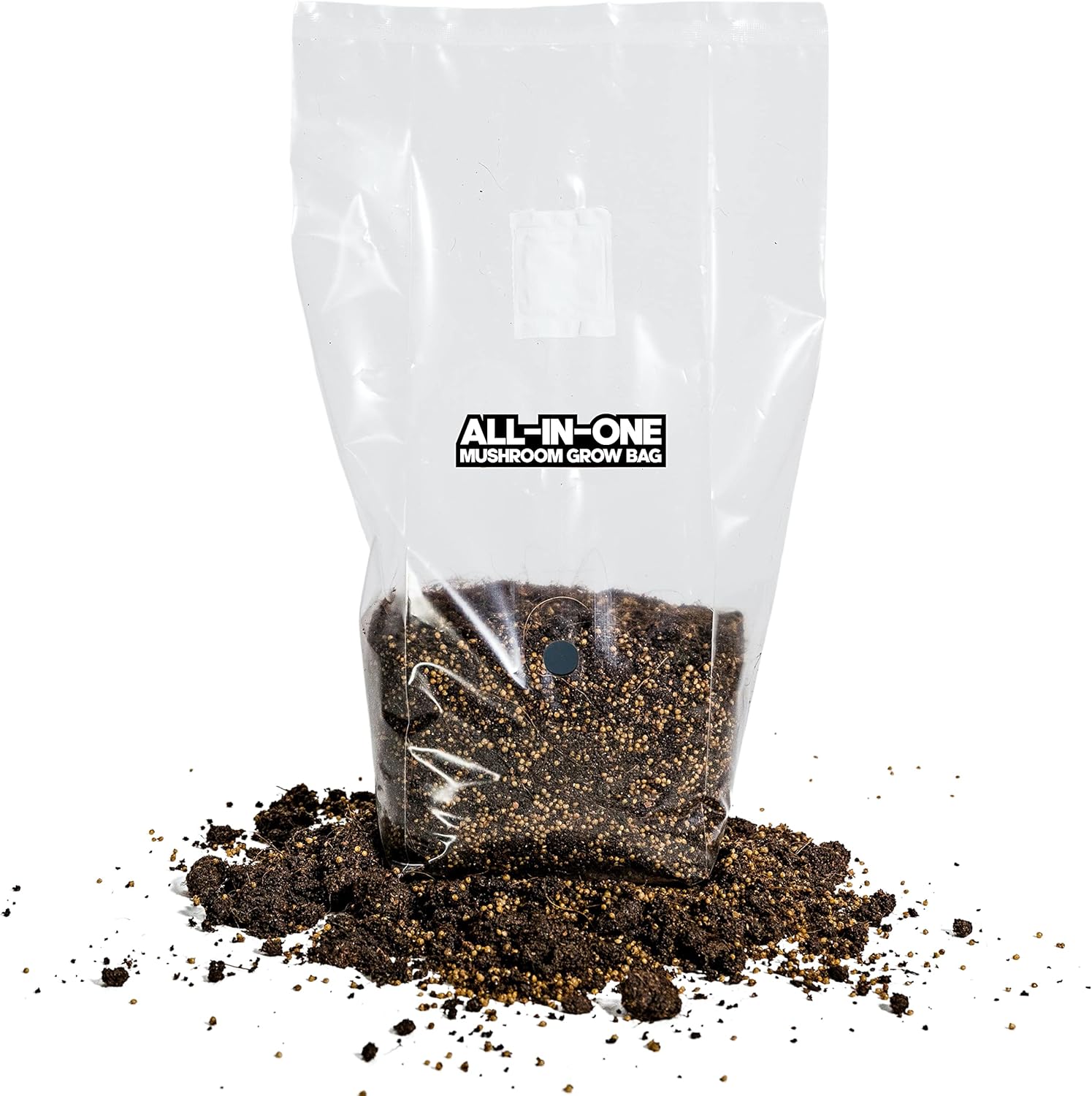
    Mini All-in-One Mushroom Grow Bag

    Here is a quick guide on how you can grow oyster mushrooms at home:

    Supplies needed

    To grow oyster mushrooms, you need to prepare your growing site and procure your growing materials. Here are the important supplies you will need:

    • Growing substrate (e.g. sawdust, straw, coffee grounds, and so on)
    • You will need oyster mushroom spawn
    • Then you will need growing bags or containers (note that oyster mushrooms can be grown in buckets or even Ziploc bags)

    However, you can obtain ready-made growing kits for your oyster mushrooms from some retailers.

    The process of growing oysters can be broken down into 3 phases:

    Oyster mushroom growth stages

    1. Inoculation

    The substrate material of your choice is mixed with the oyster mushroom spawn. The growing medium, which is the substrate, should be placed in the bag or container. Make sure there are holes or air filters in the bag for air exchange.

    1. Incubation

    Next, place the bags in a warm dark room. This is to incubate and begin the first phase of growth.

    For the spawn to grow a full web of root-like threads of mycelium and colonize the growing medium; it only needs about 10 to 14 days to achieve this.

    1. Fruiting

    The mushroom will begin fruiting once the growing substrate has been totally colonized by the spawn. Then the bags or containers will need to be exposed to autumn-like conditions with fresh oxygen, low light levels, high humidity, and cooler temperatures.

    Doing this will signal the mycelium to begin to produce mushrooms. The small pins will start to sprout. So, you will start to notice oyster mushroom pins coming out from the holes of the bag.

    The last surviving response of the mycelium results in fruiting. In the wild, this fruiting is a result of the response to stress from the mycelium that happens due to changes in the environment.

    Hence, imitation of this stress in the form of starvation will give rise to the survival response in your bag or container.

    In just about 5 to 7 days, the tiny pins sprouting will grow and develop into a full-size mushroom.

    Oyster Mushroom Cultivation Using Sawdust

    If you’re wondering how to cultivate oyster mushrooms using sawdust, then look no further. For this recipe, you’ll need the following ingredients:

    • 5 cups of sawdust (ensure you use hardwood pellets)
    • 1.4 liters of water
    • 1 cup of wheat bran

    Now all you need to do is:

    1. Once you’ve measured your ingredients, place your pellets and water into a container, and mix well. At this point, it should look more like the sawdust you’re familiar with. You can use either warm or cool water for this.
    2. Once your pellets are sawdust and loose, add your cup of wheat bran. Distribute evenly in the sawdust and mix well.
    3. Now add the sawdust mixture to grow bags. For every grow bag, you’ll need around 4 lbs and 4oz of the mixture.
    4. Once you’ve added the mixture to your grow bag, you’ll need to add a filter to help fight against contamination. Add the filter and then fold the top of the bag over a few times.
    5. Place the grow bag(s) into a pressure sterilizer. They can be placed on top of one another. Ensure the bags aren’t in direct contact with the base of the sterilizer. Add the water and place something heavy on top to secure the bags. Then leave for around two and a half hours.
    6. Leave to cool for around 8 hours, or overnight. Add grain spawn to your bags and tie them with a zip tie. Shake the bag well.
    7. Leave for around 10-21 days before you notice any results. However, check frequently to see if any problems or contamination are occurring. Once colonization has happened, your mushrooms are set to fruit! Simply cut off the top of your bag and get ready to grow!

    Best Wood for Oyster Mushrooms

    If you’re wondering what the best wood is for oyster mushrooms, then look no further. You can use either softwood or hardwood. However, I prefer to use softwood. Common favorites for mushrooms are soft maple, aspen, or birch sweet gum.

    How to Sterilize Mushroom Substrate

    You can sterilize the mushroom substrate with or without a pressure cooker. We’ll be taking a look at how to do both. Sterilization is important for some mushroom substrates as it’s the best way to avoid contamination. It’s important to note that simply boiling the substrate probably isn’t enough. Temperatures must be above 120C to remove all pollutants.

    Using a pressure cooker, all you need to do is add the substrates to the cooker and cover them with water. Add the lid and allow the temperature to reach 120C to sterilize your substrate.

    If you can not use a pressure cooker for this, you can try fractional sterilization. This is boiling jars until they reach 120C. You can use either an oven or an autoclave for this. However, this may cause your substrate to dry out and render it unusable, so you have to be extremely careful when using this method.

    best wood for oyster mushrooms

    Conclusion: Best Substrate for Oyster Mushrooms 

    When it comes to selecting the best substrate for oyster mushrooms, it really comes down to which substrate you can easily obtain. Most types of substrates will work just fine. Therefore, you can simply go for what you have available.

    Do you have any other ideas for the best substrate for oyster mushrooms? If so, please feel free to let us know in the comments below. And remember, sharing is caring! 

  • Which Bell Pepper is the Sweetest: 8 Tasty Types

    Which Bell Pepper is the Sweetest: 8 Tasty Types

    4.    Lunchbox Sweet Peppers

    Lunchbox sweet peppers plants tend to yield brightly colored miniature peppers. You can as well choose the color of fruit you want by harvesting them at different times.

    You can harvest them when they are green, yellow, or orange, or you can just wait for them to become red. They grow to an average length of 6 inches. Lunchbox sweet peppers are the perfect choice for gardens that have limited space or container gardens.

    These sweet peppers are great for making various dishes and they taste so great when they are fried.

    5.    Carmen Sweet Pepper

    Carmen sweet pepper is an elongated type of sweet pepper, about 6 inches long. It is an Italian bull’s horn pepper variety that tastes so great especially when fried. Carmen sweet pepper will also change from green to red as they mature.

    6.    Sweet Chocolate Sweet Pepper

    This type of bell pepper variety has its fruit colored like chocolate and it has a very sweet taste. During the early maturing stage of the sweet chocolate pepper, the fruit turns dark brown on the outside and deep red on the inside once they are fully matured.

    The sweet chocolate sweet pepper will work great in raw salads as well as roasted dishes.

    7.    Candy Apple Bell Pepper

    The candy apple bell pepper is another great-tasting sweet pepper variety. It has a bulky mass fruit that is about 5 inches and it attains maturity in about 70 days.

    Candy Apple Bell Pepper

    8.    Gourmet Sweet Pepper

    Gourmet sweet pepper is another bell pepper that is characterized by its thick wall and blocky shape. Its appearance is charming and it has bright orange skin and juicy flesh that has a sweet and fruity flavor. They are about 3 inches wide and 5 inches long.

    When to Pick Carmen Italian Sweet Pepper?

    You may be curious as to when is best to pick the Carmen Italian sweet pepper. With this type of pepper, it’s best to wait until it’s a vibrant red color. The more vibrant the pepper is, the sweeter the taste will be. If you prefer your sweet peppers slightly less sweet, then you can pick them whilst they’re green and they’ll be completely safe to eat.

    Bell Pepper Cultivars

    There are many bell pepper cultivars that we haven’t yet taken a look at. Here are some other varieties of popular bell peppers, which, of course, will be sweet.

    • Antebellum. This is a type of bell pepper that is most often dark green. It takes around 73-75 days to reach maturity. It has a high resistance to the mosaic virus.
    • Bayonet. This is a type of bell pepper that ranges from green to red. It takes a medium amount of time to reach maturity. It has a high resistance to the mosaic virus.
    • Blitz. This is a type of bell pepper that ranges from light green to red. It takes around 70-75 to reach maturity, once it has been transplanted. It has a high resistance to the mosaic virus.
    • Garfield. This is a type of bell pepper that ranges from green to orange in color. It grows best in the main growing season. It’s known for its bright orange color and its exceptionally large fruit. It has a high resistance to the mosaic virus.
    • Galileo. This is a type of bell pepper that ranges from dark green to red. It takes around 70 days to reach maturity.

    Are Mini Sweet Peppers the Same as Bell Peppers?

    You may be wondering if the mini sweet peppers you see in grocery stores are the same as regular bell peppers. The simple answer is: no. The mini sweet peppers are, of course, significantly smaller in size. As well as the size difference, they are usually much sweeter and much more flavorful than bell peppers. However, just like bell peppers, they come in a range of colors and shapes.

    What Are Jingle Bell Peppers?

    You may have heard of Jingle Bell peppers, as they’re a popular cultivar for sweet bell peppers. They’re a fast grower and only take around 55 days until they reach maturity and are ready to harvest. These are small peppers that are vibrant red. They’re only around 2 inches in length and just 1.5 inches in width. You can harvest Jingle Bell peppers when they’re green, but they will not be as sweet as you’re likely wanting them to be.

    Nutrition of Red Bell Peppers

    You may be wondering what the nutrition is when it comes to the sweetest bell pepper. Each cup of chopped, raw, red bell pepper contains the following:

    • calories: 39
    • fat: 0.5g
    • sodium: 6mg
    • carbohydrates: 9g
    • fiber: 3.1g
    • sugar: 6.3g
    • protein: 1.5g
    • potassium: 315mg
    • vitamin c: 190mg

    As you can probably tell from the nutritional information, red bell peppers are bursting with both sweetness and goodness.

    bell pepper

    Final Say: Which Bell Pepper is the Sweetest? 

    Bell peppers come in different colors such as green, yellow, orange, purple, red, and so on. These peppers can be picked early to derive colorful fruits. But once the majority of these bell peppers are left on the vine to mature, they tend to become red.

    So, when it comes to which bell pepper is the sweetest, we have concluded that the red bell pepper takes the lead. Do you have any other answer as to which bell pepper is the sweetest? If so, please feel free to let us know in the comments below. And remember, sharing is caring!

    FAQs

    How do you pick the sweetest bell pepper?

    This is a question I am often asked by friends and family when it comes to peppers. Most people are familiar with bell peppers, but not all know the difference between sweet and hot peppers. Sweet peppers are grown for their delicious flavor, not heat, so the hotter the pepper, the less sweet it will be.

    Sweet peppers are typically available year round and can be found in most grocery stores. There are hundreds of varieties of sweet peppers available, including different colors, shapes, sizes, and flavors. They are most commonly found in two categories: yellow and green. Yellow bell peppers are sweeter and milder than green bell peppers. They have a richer flavor and tend to be more tender. Green bell peppers, on the other hand, have a spicy flavor and tend to be crispier. They are generally more popular because they are easier to find in stores. Sweet Bell Peppers peak during the summer months. Some of my favorite sweet peppers include: Anaheims, Maui Kaimoas, Poblanos, and Serranos. Sweet peppers are grown for their delicious flavor, not heat, so the hotter the pepper, the less sweet it will be.

    Which is sweeter yellow or orange bell pepper?

    There are so many choices: yellow, green, red, orange, purple, and striped.

    When it comes to the color of the bell pepper, people have a hard time choosing between these two. Yellow Bell Peppers are the ones that are considered to be the most sweet. They are used to make sauces and soups, especially in Mexico. The flesh can be peeled easily and is usually crunchy.

    In addition to being sweet, yellow bell peppers are also high in vitamin A, C, and K. They are low in calories and fat, but have a moderate amount of sodium. Red Bell Pepper These red bell peppers are considered to be spicy. They are used to make sauces and soups, especially in India.

    Which bell peppers are the best for cooking?

    When you buy bell peppers, you can find them in a variety of colors, shapes, and sizes. Some are round, some are long and skinny, some are shaped like stars, some have stripes, and some are heart-shaped. Some bell peppers are sweet, some are spicy, some are mild, and some are hot. The best way to figure out which bell peppers are the best for cooking is by looking at their size.

    For example, the “small green” bell peppers tend to be sweeter and milder than “large” peppers. I generally find that the smaller peppers have a longer cooking time. I’d also suggest using bell peppers that have been picked fresh from the garden – not ones that have been sitting around in the fridge for a long time.


    4.    Lunchbox Sweet Peppers

    Lunchbox sweet peppers plants tend to yield brightly colored miniature peppers. You can as well choose the color of fruit you want by harvesting them at different times.

    You can harvest them when they are green, yellow, or orange, or you can just wait for them to become red. They grow to an average length of 6 inches. Lunchbox sweet peppers are the perfect choice for gardens that have limited space or container gardens.

    These sweet peppers are great for making various dishes and they taste so great when they are fried.

    5.    Carmen Sweet Pepper

    Carmen sweet pepper is an elongated type of sweet pepper, about 6 inches long. It is an Italian bull’s horn pepper variety that tastes so great especially when fried. Carmen sweet pepper will also change from green to red as they mature.

    6.    Sweet Chocolate Sweet Pepper

    This type of bell pepper variety has its fruit colored like chocolate and it has a very sweet taste. During the early maturing stage of the sweet chocolate pepper, the fruit turns dark brown on the outside and deep red on the inside once they are fully matured.

    The sweet chocolate sweet pepper will work great in raw salads as well as roasted dishes.

    7.    Candy Apple Bell Pepper

    The candy apple bell pepper is another great-tasting sweet pepper variety. It has a bulky mass fruit that is about 5 inches and it attains maturity in about 70 days.

    Candy Apple Bell Pepper

    8.    Gourmet Sweet Pepper

    Gourmet sweet pepper is another bell pepper that is characterized by its thick wall and blocky shape. Its appearance is charming and it has bright orange skin and juicy flesh that has a sweet and fruity flavor. They are about 3 inches wide and 5 inches long.

    When to Pick Carmen Italian Sweet Pepper?

    You may be curious as to when is best to pick the Carmen Italian sweet pepper. With this type of pepper, it’s best to wait until it’s a vibrant red color. The more vibrant the pepper is, the sweeter the taste will be. If you prefer your sweet peppers slightly less sweet, then you can pick them whilst they’re green and they’ll be completely safe to eat.

    Bell Pepper Cultivars

    There are many bell pepper cultivars that we haven’t yet taken a look at. Here are some other varieties of popular bell peppers, which, of course, will be sweet.

    • Antebellum. This is a type of bell pepper that is most often dark green. It takes around 73-75 days to reach maturity. It has a high resistance to the mosaic virus.
    • Bayonet. This is a type of bell pepper that ranges from green to red. It takes a medium amount of time to reach maturity. It has a high resistance to the mosaic virus.
    • Blitz. This is a type of bell pepper that ranges from light green to red. It takes around 70-75 to reach maturity, once it has been transplanted. It has a high resistance to the mosaic virus.
    • Garfield. This is a type of bell pepper that ranges from green to orange in color. It grows best in the main growing season. It’s known for its bright orange color and its exceptionally large fruit. It has a high resistance to the mosaic virus.
    • Galileo. This is a type of bell pepper that ranges from dark green to red. It takes around 70 days to reach maturity.

    Are Mini Sweet Peppers the Same as Bell Peppers?

    You may be wondering if the mini sweet peppers you see in grocery stores are the same as regular bell peppers. The simple answer is: no. The mini sweet peppers are, of course, significantly smaller in size. As well as the size difference, they are usually much sweeter and much more flavorful than bell peppers. However, just like bell peppers, they come in a range of colors and shapes.

    What Are Jingle Bell Peppers?

    You may have heard of Jingle Bell peppers, as they’re a popular cultivar for sweet bell peppers. They’re a fast grower and only take around 55 days until they reach maturity and are ready to harvest. These are small peppers that are vibrant red. They’re only around 2 inches in length and just 1.5 inches in width. You can harvest Jingle Bell peppers when they’re green, but they will not be as sweet as you’re likely wanting them to be.

    Nutrition of Red Bell Peppers

    You may be wondering what the nutrition is when it comes to the sweetest bell pepper. Each cup of chopped, raw, red bell pepper contains the following:

    • calories: 39
    • fat: 0.5g
    • sodium: 6mg
    • carbohydrates: 9g
    • fiber: 3.1g
    • sugar: 6.3g
    • protein: 1.5g
    • potassium: 315mg
    • vitamin c: 190mg

    As you can probably tell from the nutritional information, red bell peppers are bursting with both sweetness and goodness.

    bell pepper

    Final Say: Which Bell Pepper is the Sweetest? 

    Bell peppers come in different colors such as green, yellow, orange, purple, red, and so on. These peppers can be picked early to derive colorful fruits. But once the majority of these bell peppers are left on the vine to mature, they tend to become red.

    So, when it comes to which bell pepper is the sweetest, we have concluded that the red bell pepper takes the lead. Do you have any other answer as to which bell pepper is the sweetest? If so, please feel free to let us know in the comments below. And remember, sharing is caring!

    FAQs

    How do you pick the sweetest bell pepper?

    This is a question I am often asked by friends and family when it comes to peppers. Most people are familiar with bell peppers, but not all know the difference between sweet and hot peppers. Sweet peppers are grown for their delicious flavor, not heat, so the hotter the pepper, the less sweet it will be.

    Sweet peppers are typically available year round and can be found in most grocery stores. There are hundreds of varieties of sweet peppers available, including different colors, shapes, sizes, and flavors. They are most commonly found in two categories: yellow and green. Yellow bell peppers are sweeter and milder than green bell peppers. They have a richer flavor and tend to be more tender. Green bell peppers, on the other hand, have a spicy flavor and tend to be crispier. They are generally more popular because they are easier to find in stores. Sweet Bell Peppers peak during the summer months. Some of my favorite sweet peppers include: Anaheims, Maui Kaimoas, Poblanos, and Serranos. Sweet peppers are grown for their delicious flavor, not heat, so the hotter the pepper, the less sweet it will be.

    Which is sweeter yellow or orange bell pepper?

    There are so many choices: yellow, green, red, orange, purple, and striped.

    When it comes to the color of the bell pepper, people have a hard time choosing between these two. Yellow Bell Peppers are the ones that are considered to be the most sweet. They are used to make sauces and soups, especially in Mexico. The flesh can be peeled easily and is usually crunchy.

    In addition to being sweet, yellow bell peppers are also high in vitamin A, C, and K. They are low in calories and fat, but have a moderate amount of sodium. Red Bell Pepper These red bell peppers are considered to be spicy. They are used to make sauces and soups, especially in India.

    Which bell peppers are the best for cooking?

    When you buy bell peppers, you can find them in a variety of colors, shapes, and sizes. Some are round, some are long and skinny, some are shaped like stars, some have stripes, and some are heart-shaped. Some bell peppers are sweet, some are spicy, some are mild, and some are hot. The best way to figure out which bell peppers are the best for cooking is by looking at their size.

    For example, the “small green” bell peppers tend to be sweeter and milder than “large” peppers. I generally find that the smaller peppers have a longer cooking time. I’d also suggest using bell peppers that have been picked fresh from the garden – not ones that have been sitting around in the fridge for a long time.

    Some Info On Bell Peppers

    They are a kind of pepper plant that will yield different colors of fruits such as green, yellow, orange, purple, white, and red. All the structures and shapes of these different colors of peppers tend to be similar no matter their colors.

    Bell peppers are native to Central America, South America, and Mexico. However, China is the world’s biggest producer and distributor of this pepper. Summer’s peak through September is one of the best periods you can find these peppers from farmers around you.

    These sweet peppers can be enjoyed plain, without a veggie dip, or you can simply cook them in your meal. You can as well stuff bell peppers filled with ground beef, garlic, tomatoes, and onion.

    Bell peppers are as well loaded with great vitamins such as vitamin A, vitamin C, potassium, fiber, and so on.

    Read more about How To Cross Breed Pepper Plants: Helpful Guidelines

    Which Bell Peppers Are the Sweetest?

    So, which bell pepper is the sweetest? As bell pepper matures on the plant, the color changes from green, yellow, orange, and then to red. Green pepper tends to be more vegetal tasting and it features a bitter flavor. Orange and yellow bell peppers are sweeter.

    However, red bell pepper is the sweetest because red bell pepper has been allowed to mature properly on the vine.

    Types of Sweet Peppers

    As we mentioned, bell peppers are also regarded as sweet peppers. There are many types of sweet pepper but let’s look into some of the types of sweet pepper varieties:

    1.    Sweet California Wonder Bell Pepper

    The California wonder pepper is a variety of sweet bell pepper. This type of pepper is one of the gardener’s most loved sweet pepper varieties. This pepper variety yields a mass of blocky 4 inches of bell pepper fruit.

    Sweet California Wonder peppers are garden standard peppers. Their seeds can be obtained in garden centers as well as gardening websites. They can be incorporated into your various dishes in many ways. They are mostly enjoyed as stuffed peppers and are perfect for salads and salsa.

    2.    Cabernet Sweet Bell Pepper

    The cabernet sweet bell pepper is elongated, about 8 inches long. As this bell pepper variety matures, it changes from a glossy green to red fruit. They have a very pleasant and sweet taste. The cabernet sweet bell pepper plant is resistant to the tobacco mosaic virus.

    3.    Cupid Sweet Pepper

    Another great-tasting bell pepper variety is the cupid sweet pepper. You can harvest these peppers in about 55 days if you prefer the green fruit. If you however prefer them red and mature, you should harvest them 75 days after planting.

    14 Sweet & Hot Peppers Seeds Variety Pack 700 Seeds Non-GMO Peppers Seeds


    91OegOWXWVS. AC SY741


    4.    Lunchbox Sweet Peppers

    Lunchbox sweet peppers plants tend to yield brightly colored miniature peppers. You can as well choose the color of fruit you want by harvesting them at different times.

    You can harvest them when they are green, yellow, or orange, or you can just wait for them to become red. They grow to an average length of 6 inches. Lunchbox sweet peppers are the perfect choice for gardens that have limited space or container gardens.

    These sweet peppers are great for making various dishes and they taste so great when they are fried.

    5.    Carmen Sweet Pepper

    Carmen sweet pepper is an elongated type of sweet pepper, about 6 inches long. It is an Italian bull’s horn pepper variety that tastes so great especially when fried. Carmen sweet pepper will also change from green to red as they mature.

    6.    Sweet Chocolate Sweet Pepper

    This type of bell pepper variety has its fruit colored like chocolate and it has a very sweet taste. During the early maturing stage of the sweet chocolate pepper, the fruit turns dark brown on the outside and deep red on the inside once they are fully matured.

    The sweet chocolate sweet pepper will work great in raw salads as well as roasted dishes.

    7.    Candy Apple Bell Pepper

    The candy apple bell pepper is another great-tasting sweet pepper variety. It has a bulky mass fruit that is about 5 inches and it attains maturity in about 70 days.

    Candy Apple Bell Pepper

    8.    Gourmet Sweet Pepper

    Gourmet sweet pepper is another bell pepper that is characterized by its thick wall and blocky shape. Its appearance is charming and it has bright orange skin and juicy flesh that has a sweet and fruity flavor. They are about 3 inches wide and 5 inches long.

    When to Pick Carmen Italian Sweet Pepper?

    You may be curious as to when is best to pick the Carmen Italian sweet pepper. With this type of pepper, it’s best to wait until it’s a vibrant red color. The more vibrant the pepper is, the sweeter the taste will be. If you prefer your sweet peppers slightly less sweet, then you can pick them whilst they’re green and they’ll be completely safe to eat.

    Bell Pepper Cultivars

    There are many bell pepper cultivars that we haven’t yet taken a look at. Here are some other varieties of popular bell peppers, which, of course, will be sweet.

    • Antebellum. This is a type of bell pepper that is most often dark green. It takes around 73-75 days to reach maturity. It has a high resistance to the mosaic virus.
    • Bayonet. This is a type of bell pepper that ranges from green to red. It takes a medium amount of time to reach maturity. It has a high resistance to the mosaic virus.
    • Blitz. This is a type of bell pepper that ranges from light green to red. It takes around 70-75 to reach maturity, once it has been transplanted. It has a high resistance to the mosaic virus.
    • Garfield. This is a type of bell pepper that ranges from green to orange in color. It grows best in the main growing season. It’s known for its bright orange color and its exceptionally large fruit. It has a high resistance to the mosaic virus.
    • Galileo. This is a type of bell pepper that ranges from dark green to red. It takes around 70 days to reach maturity.

    Are Mini Sweet Peppers the Same as Bell Peppers?

    You may be wondering if the mini sweet peppers you see in grocery stores are the same as regular bell peppers. The simple answer is: no. The mini sweet peppers are, of course, significantly smaller in size. As well as the size difference, they are usually much sweeter and much more flavorful than bell peppers. However, just like bell peppers, they come in a range of colors and shapes.

    What Are Jingle Bell Peppers?

    You may have heard of Jingle Bell peppers, as they’re a popular cultivar for sweet bell peppers. They’re a fast grower and only take around 55 days until they reach maturity and are ready to harvest. These are small peppers that are vibrant red. They’re only around 2 inches in length and just 1.5 inches in width. You can harvest Jingle Bell peppers when they’re green, but they will not be as sweet as you’re likely wanting them to be.

    Nutrition of Red Bell Peppers

    You may be wondering what the nutrition is when it comes to the sweetest bell pepper. Each cup of chopped, raw, red bell pepper contains the following:

    • calories: 39
    • fat: 0.5g
    • sodium: 6mg
    • carbohydrates: 9g
    • fiber: 3.1g
    • sugar: 6.3g
    • protein: 1.5g
    • potassium: 315mg
    • vitamin c: 190mg

    As you can probably tell from the nutritional information, red bell peppers are bursting with both sweetness and goodness.

    bell pepper

    Final Say: Which Bell Pepper is the Sweetest? 

    Bell peppers come in different colors such as green, yellow, orange, purple, red, and so on. These peppers can be picked early to derive colorful fruits. But once the majority of these bell peppers are left on the vine to mature, they tend to become red.

    So, when it comes to which bell pepper is the sweetest, we have concluded that the red bell pepper takes the lead. Do you have any other answer as to which bell pepper is the sweetest? If so, please feel free to let us know in the comments below. And remember, sharing is caring!

    FAQs

    How do you pick the sweetest bell pepper?

    This is a question I am often asked by friends and family when it comes to peppers. Most people are familiar with bell peppers, but not all know the difference between sweet and hot peppers. Sweet peppers are grown for their delicious flavor, not heat, so the hotter the pepper, the less sweet it will be.

    Sweet peppers are typically available year round and can be found in most grocery stores. There are hundreds of varieties of sweet peppers available, including different colors, shapes, sizes, and flavors. They are most commonly found in two categories: yellow and green. Yellow bell peppers are sweeter and milder than green bell peppers. They have a richer flavor and tend to be more tender. Green bell peppers, on the other hand, have a spicy flavor and tend to be crispier. They are generally more popular because they are easier to find in stores. Sweet Bell Peppers peak during the summer months. Some of my favorite sweet peppers include: Anaheims, Maui Kaimoas, Poblanos, and Serranos. Sweet peppers are grown for their delicious flavor, not heat, so the hotter the pepper, the less sweet it will be.

    Which is sweeter yellow or orange bell pepper?

    There are so many choices: yellow, green, red, orange, purple, and striped.

    When it comes to the color of the bell pepper, people have a hard time choosing between these two. Yellow Bell Peppers are the ones that are considered to be the most sweet. They are used to make sauces and soups, especially in Mexico. The flesh can be peeled easily and is usually crunchy.

    In addition to being sweet, yellow bell peppers are also high in vitamin A, C, and K. They are low in calories and fat, but have a moderate amount of sodium. Red Bell Pepper These red bell peppers are considered to be spicy. They are used to make sauces and soups, especially in India.

    Which bell peppers are the best for cooking?

    When you buy bell peppers, you can find them in a variety of colors, shapes, and sizes. Some are round, some are long and skinny, some are shaped like stars, some have stripes, and some are heart-shaped. Some bell peppers are sweet, some are spicy, some are mild, and some are hot. The best way to figure out which bell peppers are the best for cooking is by looking at their size.

    For example, the “small green” bell peppers tend to be sweeter and milder than “large” peppers. I generally find that the smaller peppers have a longer cooking time. I’d also suggest using bell peppers that have been picked fresh from the garden – not ones that have been sitting around in the fridge for a long time.

    Bell peppers come in different varieties as well as colors. We have green bell pepper, yellow bell pepper, orange bell pepper, and red bell peppers. But which bell pepper is the sweetest? Let’s take a closer look. 

    The bell pepper comes in so many various colors, they can practically be considered a rainbow. This pepper is casually classified as a vegetable because of its versatile role in culinary relations. However, in the world of farming, peppers are generally categorized as fruits.

    Bell peppers have been incorporated into our various dishes as they make delicious and colorful additions to our different meals. But what we would like to know is which bell pepper is the sweetest among all the varieties and colors are known. So, let’s get right into this.

    Information on Bell Peppers

    Bell pepper is a type of fruit cultivar in the group of species Capsicum annuum and they belong to the nightshade family. Bell peppers are also called sweet peppers.

    Even though they are from the Capsicum species, they are the only species of Capsicum that does not produce capsaicin. Capsaicin is a chemical present in most peppers and it is responsible for their spiciness. However, bell pepper types don’t have this capsicum species. Therefore, bell peppers are regarded as sweet peppers because they tend to be sweet and not spicy.

    Some Info On Bell Peppers

    They are a kind of pepper plant that will yield different colors of fruits such as green, yellow, orange, purple, white, and red. All the structures and shapes of these different colors of peppers tend to be similar no matter their colors.

    Bell peppers are native to Central America, South America, and Mexico. However, China is the world’s biggest producer and distributor of this pepper. Summer’s peak through September is one of the best periods you can find these peppers from farmers around you.

    These sweet peppers can be enjoyed plain, without a veggie dip, or you can simply cook them in your meal. You can as well stuff bell peppers filled with ground beef, garlic, tomatoes, and onion.

    Bell peppers are as well loaded with great vitamins such as vitamin A, vitamin C, potassium, fiber, and so on.

    Read more about How To Cross Breed Pepper Plants: Helpful Guidelines

    Which Bell Peppers Are the Sweetest?

    So, which bell pepper is the sweetest? As bell pepper matures on the plant, the color changes from green, yellow, orange, and then to red. Green pepper tends to be more vegetal tasting and it features a bitter flavor. Orange and yellow bell peppers are sweeter.

    However, red bell pepper is the sweetest because red bell pepper has been allowed to mature properly on the vine.

    Types of Sweet Peppers

    As we mentioned, bell peppers are also regarded as sweet peppers. There are many types of sweet pepper but let’s look into some of the types of sweet pepper varieties:

    1.    Sweet California Wonder Bell Pepper

    The California wonder pepper is a variety of sweet bell pepper. This type of pepper is one of the gardener’s most loved sweet pepper varieties. This pepper variety yields a mass of blocky 4 inches of bell pepper fruit.

    Sweet California Wonder peppers are garden standard peppers. Their seeds can be obtained in garden centers as well as gardening websites. They can be incorporated into your various dishes in many ways. They are mostly enjoyed as stuffed peppers and are perfect for salads and salsa.

    2.    Cabernet Sweet Bell Pepper

    The cabernet sweet bell pepper is elongated, about 8 inches long. As this bell pepper variety matures, it changes from a glossy green to red fruit. They have a very pleasant and sweet taste. The cabernet sweet bell pepper plant is resistant to the tobacco mosaic virus.

    3.    Cupid Sweet Pepper

    Another great-tasting bell pepper variety is the cupid sweet pepper. You can harvest these peppers in about 55 days if you prefer the green fruit. If you however prefer them red and mature, you should harvest them 75 days after planting.

    14 Sweet & Hot Peppers Seeds Variety Pack 700 Seeds Non-GMO Peppers Seeds


    91OegOWXWVS. AC SY741


    4.    Lunchbox Sweet Peppers

    Lunchbox sweet peppers plants tend to yield brightly colored miniature peppers. You can as well choose the color of fruit you want by harvesting them at different times.

    You can harvest them when they are green, yellow, or orange, or you can just wait for them to become red. They grow to an average length of 6 inches. Lunchbox sweet peppers are the perfect choice for gardens that have limited space or container gardens.

    These sweet peppers are great for making various dishes and they taste so great when they are fried.

    5.    Carmen Sweet Pepper

    Carmen sweet pepper is an elongated type of sweet pepper, about 6 inches long. It is an Italian bull’s horn pepper variety that tastes so great especially when fried. Carmen sweet pepper will also change from green to red as they mature.

    6.    Sweet Chocolate Sweet Pepper

    This type of bell pepper variety has its fruit colored like chocolate and it has a very sweet taste. During the early maturing stage of the sweet chocolate pepper, the fruit turns dark brown on the outside and deep red on the inside once they are fully matured.

    The sweet chocolate sweet pepper will work great in raw salads as well as roasted dishes.

    7.    Candy Apple Bell Pepper

    The candy apple bell pepper is another great-tasting sweet pepper variety. It has a bulky mass fruit that is about 5 inches and it attains maturity in about 70 days.

    Candy Apple Bell Pepper

    8.    Gourmet Sweet Pepper

    Gourmet sweet pepper is another bell pepper that is characterized by its thick wall and blocky shape. Its appearance is charming and it has bright orange skin and juicy flesh that has a sweet and fruity flavor. They are about 3 inches wide and 5 inches long.

    When to Pick Carmen Italian Sweet Pepper?

    You may be curious as to when is best to pick the Carmen Italian sweet pepper. With this type of pepper, it’s best to wait until it’s a vibrant red color. The more vibrant the pepper is, the sweeter the taste will be. If you prefer your sweet peppers slightly less sweet, then you can pick them whilst they’re green and they’ll be completely safe to eat.

    Bell Pepper Cultivars

    There are many bell pepper cultivars that we haven’t yet taken a look at. Here are some other varieties of popular bell peppers, which, of course, will be sweet.

    • Antebellum. This is a type of bell pepper that is most often dark green. It takes around 73-75 days to reach maturity. It has a high resistance to the mosaic virus.
    • Bayonet. This is a type of bell pepper that ranges from green to red. It takes a medium amount of time to reach maturity. It has a high resistance to the mosaic virus.
    • Blitz. This is a type of bell pepper that ranges from light green to red. It takes around 70-75 to reach maturity, once it has been transplanted. It has a high resistance to the mosaic virus.
    • Garfield. This is a type of bell pepper that ranges from green to orange in color. It grows best in the main growing season. It’s known for its bright orange color and its exceptionally large fruit. It has a high resistance to the mosaic virus.
    • Galileo. This is a type of bell pepper that ranges from dark green to red. It takes around 70 days to reach maturity.

    Are Mini Sweet Peppers the Same as Bell Peppers?

    You may be wondering if the mini sweet peppers you see in grocery stores are the same as regular bell peppers. The simple answer is: no. The mini sweet peppers are, of course, significantly smaller in size. As well as the size difference, they are usually much sweeter and much more flavorful than bell peppers. However, just like bell peppers, they come in a range of colors and shapes.

    What Are Jingle Bell Peppers?

    You may have heard of Jingle Bell peppers, as they’re a popular cultivar for sweet bell peppers. They’re a fast grower and only take around 55 days until they reach maturity and are ready to harvest. These are small peppers that are vibrant red. They’re only around 2 inches in length and just 1.5 inches in width. You can harvest Jingle Bell peppers when they’re green, but they will not be as sweet as you’re likely wanting them to be.

    Nutrition of Red Bell Peppers

    You may be wondering what the nutrition is when it comes to the sweetest bell pepper. Each cup of chopped, raw, red bell pepper contains the following:

    • calories: 39
    • fat: 0.5g
    • sodium: 6mg
    • carbohydrates: 9g
    • fiber: 3.1g
    • sugar: 6.3g
    • protein: 1.5g
    • potassium: 315mg
    • vitamin c: 190mg

    As you can probably tell from the nutritional information, red bell peppers are bursting with both sweetness and goodness.

    bell pepper

    Final Say: Which Bell Pepper is the Sweetest? 

    Bell peppers come in different colors such as green, yellow, orange, purple, red, and so on. These peppers can be picked early to derive colorful fruits. But once the majority of these bell peppers are left on the vine to mature, they tend to become red.

    So, when it comes to which bell pepper is the sweetest, we have concluded that the red bell pepper takes the lead. Do you have any other answer as to which bell pepper is the sweetest? If so, please feel free to let us know in the comments below. And remember, sharing is caring!

    FAQs

    How do you pick the sweetest bell pepper?

    This is a question I am often asked by friends and family when it comes to peppers. Most people are familiar with bell peppers, but not all know the difference between sweet and hot peppers. Sweet peppers are grown for their delicious flavor, not heat, so the hotter the pepper, the less sweet it will be.

    Sweet peppers are typically available year round and can be found in most grocery stores. There are hundreds of varieties of sweet peppers available, including different colors, shapes, sizes, and flavors. They are most commonly found in two categories: yellow and green. Yellow bell peppers are sweeter and milder than green bell peppers. They have a richer flavor and tend to be more tender. Green bell peppers, on the other hand, have a spicy flavor and tend to be crispier. They are generally more popular because they are easier to find in stores. Sweet Bell Peppers peak during the summer months. Some of my favorite sweet peppers include: Anaheims, Maui Kaimoas, Poblanos, and Serranos. Sweet peppers are grown for their delicious flavor, not heat, so the hotter the pepper, the less sweet it will be.

    Which is sweeter yellow or orange bell pepper?

    There are so many choices: yellow, green, red, orange, purple, and striped.

    When it comes to the color of the bell pepper, people have a hard time choosing between these two. Yellow Bell Peppers are the ones that are considered to be the most sweet. They are used to make sauces and soups, especially in Mexico. The flesh can be peeled easily and is usually crunchy.

    In addition to being sweet, yellow bell peppers are also high in vitamin A, C, and K. They are low in calories and fat, but have a moderate amount of sodium. Red Bell Pepper These red bell peppers are considered to be spicy. They are used to make sauces and soups, especially in India.

    Which bell peppers are the best for cooking?

    When you buy bell peppers, you can find them in a variety of colors, shapes, and sizes. Some are round, some are long and skinny, some are shaped like stars, some have stripes, and some are heart-shaped. Some bell peppers are sweet, some are spicy, some are mild, and some are hot. The best way to figure out which bell peppers are the best for cooking is by looking at their size.

    For example, the “small green” bell peppers tend to be sweeter and milder than “large” peppers. I generally find that the smaller peppers have a longer cooking time. I’d also suggest using bell peppers that have been picked fresh from the garden – not ones that have been sitting around in the fridge for a long time.

  • Types of String Beans You Can Grow: Best Varieties

    Types of String Beans You Can Grow: Best Varieties

    There are different types of string beans you can grow and enjoy amazing recipes from them despite their differences.

    Did you know that green beans, string beans, snap beans, and wax beans are all but the same thing? The slight differences they have are mainly in shape or color that separates one type from another.

    All of these green beans are interchangeable in recipes, with each standing out in its delicacy. Some beans have a bit more texture and are chewy, while others are smooth and cook quickly. Bigger beans like Romanos take longer to cook than skinnier beans like haricot verts.

    With this information in mind, feel free to grow different types of string beans in your garden, mixing them around for a better crop.

    Green beans or string beans are easy to grow from seed and do well almost in every area of the US. You can choose from many varieties, but you need to be aware of the care and maintenance of a particular type requires.

    Fun Facts About Types of String Beans

    There are over 500 cultivars of green beans, and some of them are not even green in color. You can grow purple, red, streaked, or white string beans if that’s what strikes your passion. However, the beans inside the pod will always be green.

    Many years ago, green beans originated in the Andes, which is now Peru. Columbus brought them to the new world in 1493.

    The strings were bred out of string beans in 1894, with almost all varieties being stringless today.

    Green beans are nitrogen fixers meaning the plants give nitrogen into the soil. This eliminates the need to add nitrogen fertilizers before planting the next crop.

    The US produces 60% of commercially grown green beans; primarily produced in States like Michigan, Wisconsin, and Illinois.

    Green beans contain carotenoids associated with red veggies and oranges. They are also rich in Vitamin C and full of fiber and protein.

    The first bush bean was drawn in 1542 by a German doctor interested in plants’ medicinal properties.

    For the longest time, native Americans planted beans together with corn and squash, calling them the three sisters. Corn was planted first, followed by beans to help support the bean bushes, which in turn provided nitrogen for the corn. Squash was later planted to provide shade and help retain water.

    Garden Tools Set 11Pcs Stainless Steel

    71+a4QH14vL. AC SL1292

    Different Types of String Beans

    Purple string beans

    Purple string beans are a purple version of the classic green beans. Once cooked, they lose their purple color. If you want to preserve as much color as possible, you can consider them for recipes or lightly steam them and dip them in ice water.

    Green beans

    Green beans are long, rounded, and green in color. Heirloom varieties still have a favorite strain running down the sides. However, most varieties today have been bred out of the strings. Steamed green beans are delicious with a sprinkle of salt and a put of butter. You can also turn them into pickles and enjoy them for prolonged seasons.

    Romano beans or flat beans or Italian green beans

    Romano beans are wide and flat with a good flavor. The smaller ones tend to be more tender, while the larger ones have developed beans inside. Romano beans require a little more cooking than other pole beans, but they also have more flavor. Try braising your Romano beans to bring out the nutty, sweet flavor.

    Fillet beans or haricot verts or French green beans

    These beans are skinny and delicate. They are green in color, but yellow varieties are also available. Most gardeners consider haricot verts the best green beans because they cook fast and are tasty. Most people like to blanch them quickly and use them in salads.

    Long beans

    Also known as yard-long beans, they are entirely different from most green beans. They are extraordinary in length, similar in flavor, and lean on green beans mainly in the way they are cooked. These long beans can grow between 12 and 18 inches long, retaining the best flavor and tender texture.

    Wax beans

    Wax beans look like green beans except for their yellow coloring. You can use them in any dish as you would green beans if you’re not affected by their color. Remember that the color of the final dish will be different.

    Caring For Types of String Beans

    String beans require plenty of sun and tolerate different soil conditions. They do not require fertilizers because of their ability to draw nitrogen into the soil. However, like most vegetables, they benefit from organic compost manure.

    If you plant your string beans from seed, ensure that the danger of frost has already passed to protect your seats from dying. Keep the soil moist until the seedlings appear, then you can allow your soil to dry in between waterings. Once your beans flower and pods begin to grow, soak them in water during the summer season to prevent mildew from forming.

    Pick your pods when they are smaller without any beans inside. If you allow them to grow any more significantly, they will be tough. Carefully use your two hands when picking the pods so that you don’t damage the plant. Harvest every few days to keep new flowers and beans growing.

    white string beans

    Different Cuts of Green Beans

    There are many different cuts of green beans. However, the most popular cut is French-cut green beans. However, to cut them this way, you need to familiarize yourself with the preparation and technique. Let’s take a closer look.

    For loose green beans, the best way to do this is to prepare a bowl with water and 1/4 cup of baking soda. Mix well and add your loose green beans. Leave for around 10-15 minutes and then remove your green beans, and leave them to dry. Once dry, cut off the string on each side of the beans.

    For bagged green beans, shake your bag and cut the bag and beans, and rotate a few times. Then wash them using the method above.

    If you don’t have a bean cutter to French cut your beans you’ll need to do this a different way to ensure they’re even in size. Use the slicer blade of your blender to cut the beans, and pass them through gently. As well as looking great visually, it helps them cook quicker and taste better.

    How Many Types of Green Beans Are There?

    When it comes to green beans, you may be wondering how many different types there are. There are actually over 130 varieties! They all taste and grow slightly differently. Let’s take a closer look at some of the common favorites we’ve not already looked at in detail.

    • Tendergreen. A particularly easy green bean to grow produces many beans. It’s an heirloom bean, that grows tender pods that are versatile. They can be kept fresh or frozen.
    • Contender. Quite a strong-tasting green bean, that tends to grow reasonably quickly too. Can be kept fresh, canned, or frozen.
    • Kentucky Wonder. A sweet bean will take around 65 days to grow. This is a type of pole bean and you need a trellis to grow this effectively.
    • Kentucky Blue. This pole bean also needs a trellis to grow. Another sweet green bean, that has a great flavor.
    • Rattlesnake. This bean has an almost purple hue. They like to grow in humid climates and have an intense sweet flavor.
    • Scarlet Runner. Another bean is almost purple. A type of pole bean that needs to be grown on a trellis. This bean plant doubles up as an ornamental plant.
    • Blue Lake. A common bean that can either be grown on a trellis or as a bush bean. This is a versatile bean, that makes for a great side. The pods are sweet in flavor.
    • Royal Burgundy. As the name suggests, another purple in the color bean. A bush bean that doesn’t need a trellis to grow. These beans love the sun and need at least 8 hours a day.

    Do Beans Need a Trellis?

    If you’re wondering whether your beans need a trellis to grow, some types do. It all depends on whether you’re growing bush green beans, or pole green beans. Let’s take a closer look at the two.

    Bush beans only grow to around two feet tall, because of this, they do not need any vertical support. However, pole beans can grow up to a staggering fifteen feet tall! For this reason, they need a trellis to grow effectively.

    They both take a similar amount of time to grow, with pole beans just taking slightly longer. Bush beans are low maintenance, while pole beans need slightly more care and attention.

    string beans variety

    Final Thoughts

    Sadly, the many types of string beans might be obsolete, with many people preferring the stringless varieties. Whether you enjoy the string beans or the stringless, keeping the bean’s culture thriving is essential. Every person in this whole wide world can attest to the beauty of enjoying some type of string beans in their meal.

    There you are, go ahead and get busy growing any type of string beans that you like. Try growing one type at a time or grow them mixed depending on the ones you want. In addition, don’t forget to share your produce once it matures, as it will be overwhelmingly good.

    Happy gardening to you all hardworking gardeners!

    FAQs

    What’s the history of string beans?

    The answer to this question has to do with the history of the string bean. The history of the string bean can be traced back to China. In the early 1900s, the Chinese had developed a method of growing the string bean in a way that made them grow in long strings that were easy to pick and eat. By the mid-1900s, the United States and other countries were growing these string beans in their own fields and were selling them to customers. This is how the string bean came into existence. It wasn’t until the 1950s and 1960s that the first American farmers grew these string beans. Today, they are grown all over the United States as well as Canada and other countries. The first American farmer who started growing the string bean was named John R. Boudreaux. He grew the string beans in his garden and sold them to local farmers markets and to customers. Eventually, he started a company called the Louisiana Bean Company that was based in New Orleans.

    What are the different types of string beans?

    String beans are also known as asparagus peas. There are many types of these green vegetables.

    There are many different kinds of string beans, some that are used as a vegetable and others that are cooked into sauces and soups. There are green string beans and purple string beans. There are string beans that are white, green, purple or yellow. And then there are string beans that are used for other purposes like the string bean sprouts which are a type of bean that is eaten raw.

    What are they good for?

    They are good for people who want to lose weight. They contain high amount of fiber and protein which helps to keep you full. They help in maintaining your healthy weight. You can eat them raw or boiled.

    What are the best string beans to plant?

    The best string bean to grow is probably the runner bean. This is a hardy, bush-type bean that grows to about 1 foot in height and produces large pods, some of which are more than 5 inches long. You can also use pole beans as a string bean. These are vines that grow up to 20 feet long, produce pods in bunches along the vine, and usually only grow to 1 foot high. Pole beans do well in containers.

  • Hydroponic Asparagus: Best System for Growth

    Hydroponic Asparagus: Best System for Growth

    Interested in hydroponic asparagus? If yes, we will enlighten you about it in this article. The tasty asparagus vegetables can be grown hydroponically with the right knowledge and you will enjoy amazing benefits from it.

    Asparagus is a temperate zone plant, and thus requires warmth for optimal development. You can grow asparagus successfully with hydroponics if you supply them with their required growing needs. We will enlighten you on all the requirements and more so, read on to discover how to go about it.

    A Little About Asparagus

    Known to be warmth-loving plants. In fact, during the cold period, it goes into dormancy to stay alive. This shows it will be great for warm indoor hydroponic farming where you can comfortably adjust the environment to suit its growing needs.

    You can even grow them all year round in your indoor hydroponics without worrying about them going into dormancy. All you need do is to supply it with good warmth in your indoor hydroponics garden to serve you all year round.

    A Little About Asparagus

    Guidelines on Growing Asparagus Hydroponically

    To get started with asparagus hydroponically, you will need to propagate asparagus plants.

    Propagating asparagus

    Asparagus plants can be propagated in two ways, either from seed germination or from crowns.

    1. Propagation by crowns

    Asparagus propagation by the crown will give you a quick result compared to seed germination. The crowns of asparagus are simply one-year-old roots of asparagus which has been grown from seeds. Therefore, they are simply roots ready to be planted. You can purchase asparagus crowns from a garden center or nursery store near you.

    Usually, they should be sold to you as planting stock that comprises a root system and central fleshy crown. However, you should be aware that these plant stocks (crown and root system) are grown in the soil or field. Thus, they will most likely convey soil-borne diseases into your hydroponic farm.

    This is why you need to be very careful when it comes to growing the asparagus crowns gotten from the field into your hydroponics system. Ensure you also make a sterile environment for the transition into hydroponics and take other precautions.

    Purple Pacific 10 Live Asparagus Bare Root Plants -2yr-Crowns from and-Pickedd Nursery

    711gLp2RNDL. AC SL1000
    1. Propagation from seeds

    Asparagus propagation from seeds is also possible. However, it is time-consuming and requires lots of patience as it can take up to a year of growth until harvest time. The good news is that once it gets to the crown stage, asparagus can be grown continually for more than a decade. Properly take care of them and you continually enjoy spears of asparagus for a long time!

    Germination of asparagus seeds can take up to 10 to 15 days. Simply maintain a temperature of around 71 degrees to 79 degrees Fahrenheit. Avoid lower temperatures as this can make their growth process slow.

    Once you start to notice germination of about 3 to 5 inches and they have some root growth: you can transplant them into your hydroponics system.

    As they continue to develop in the hydroponic system, you can supply them with warm temperatures of around 75 degrees to 86 degrees Fahrenheit. This will enhance the developmental rate of the young growing crown and foliage. You can as well introduce light with gradual intensity as the plant matures.

    Hydroponic system to use

    There are various hydroponic systems to make use of. However, we recommend a Dutch bucket system, deep water culture, or Kratky system to raise your asparagus plants.

    The ideal nutrient solution for growing asparagus hydroponically

    A well-balanced nutrient solution suited for the vegetative stage is ideal for it. Use this for the entire active growing stage of hydroponic asparagus.

    Harvesting

    Now to the harvesting period which is our most anticipated period: you can begin harvesting the first year after planting. Just make sure you harvest a few spears from each plant. Don’t do this all in one go, do it for about 2 weeks and stop till the next harvest.

    This way, you can give them a chance for the fronds to unfold and continue to develop a strong root system. It will also encourage them to conserve the energy required to generate plentiful spears the next season. In the next harvesting period, you can increase the harvesting time to 3 weeks and stop till the next season.

    Harvesting Asparagus

    Harvest spears when they are 5 to 7 inches long. Harvest spears by using sharp tools to cut or simply snap them off.

    How to Grow Asparagus From Cuttings

    Growing asparagus from cuttings couldn’t be easier. You can do it either one of two ways: using the soil method or the water method. Let’s take a closer look at both options.

    Soil method

    If you’re a beginner, this is probably the best method to use, as it is the easiest. All you need to do is:

    • Prepare your cuttings. Cut from a fresh plant, and do not use old asparagus cuttings, for best results.
    • Clean your cuttings. Run under cool water and remove any dirt or insects that may be on your cuttings.
    • Cut. Remove any roots on your cuttings. However, you need to leave at least 6 inches, for best results.
    • Prepare your soil. Prepare the soil by making it moist with water.
    • Plant. Place your cuttings into your soil; around 2-3 inches below surface level.
    • Mist. Mist your cuttings now, rather than pouring water o them, for best results.
    • Check regularly. After a week or two, you should see your asparagus beginning to grow.

    Water method

    This method is a little tricky, but better if you want to watch your asparagus as they grow.

    • Prepare your cuttings. Much like above, cut from a fresh plant and wash them under cool water to ensure they’re clean.
    • Place in water. Fill a clear container with water.
    • Add cuttings. Place around 75% of the cutting into water, so the top is sticking out. Over time, you’ll notice your water may change color or become slimy. If this happens, be sure to change the water.
    • Check regularly. After a week or two, you should see your asparagus beginning to grow. Hand-Picked Nursery Asparagus Planting Instructions

    The asparagus from Hand Picked Nursery is infamous in the gardening world and you may be wondering how to plant them. Let’s take a closer look.

    Buy your asparagus and then remove it from the bag once ready to plant. You may want to rinse them before use and then leave them to air dry. For the soil, you’ll need well-draining. You should ensure there’s ample space and depth for your asparagus. For example, each row should be at least a few feet apart.

    pH For Asparagus – What Should it Be?

    As mentioned above, asparagus must be grown in well a drained soil. As for the type of soil, sandy or medium is best. The pH should be anywhere between 6.5-7, which is only just slightly acidic. Any more acidic and your asparagus will not thrive. You can test your soil if you’d prefer,r and add fertilizer according. However, be sure not to use a herbicide fertilizer, as this can cause more harm than good.

    hydroponic asparagus

    Asparagus Water Needs: How Much Do They Need?

    You may be wondering how often you need to water your asparagus. Typically, they are around an inch or two per week, up until they’re around two years old. At this point, they have reached full maturity and will only need around an inch of water per week. These are the best rules to follow when deciding how often to water your asparagus.

    Conclusion on Hydroponic Asparagus 

    Now, we have seen that hydroponic asparagus is possible with the right comprehension. Make sure to follow our guidelines and we wish you successful asparagus growing. Do you have any tips when it comes to hydroponic asparagus? If so, please feel free to let us know in the comments below. And remember, sharing is caring! 

    FAQs

    Can asparagus be grown hydroponically?

    Yes, it can. You will need to fertilize it with a fertilizer that is specifically designed for hydroponic growing. Hydroponic growing is much easier than potting up seedlings, and there are several advantages to using hydroponics instead of soil.

    There are many different ways to grow asparagus in a hydroponic system. The simplest way is to use a plastic tub and place the asparagus spears in it. The water will be pulled up through the bottom of the tub. If you have a shallow tub, then the spears may be planted close together. Otherwise, you can plant them several inches apart. Asparagus is a heavy feeder.

    It loves nitrogen. So, if your growing space is limited, consider using some fish emulsion or blood meal (available at most nurseries) as a fertilizer. The second method is to place asparagus in a floating container. This allows the roots to grow directly down into the water. Floating containers are available from many online retailers, but be careful to avoid the ones that are too large or too small. There are also a variety of hydroponic systems on the market. Many are designed for the home gardener. They come in all shapes and sizes. One of the more popular hydroponic systems on the market today is the NutriWave. These systems allow you to grow your own vegetables with very little effort. It has a vertical growing chamber that holds the nutrients and water. The plant roots go directly into the nutrient solution. This is a great way to start if you are new to growing.

    The best time to harvest asparagus is when it is just beginning to flower. When the stalks are about six inches tall, pick them and enjoy.

    What’s the best nutrient solution to grow asparagus hydroponically?

    There is no best nutrient solution for growing asparagus. The answer depends on what you mean by “best”. What will work best in your particular situation will depend on a lot of factors.

    Asparagus is one of those crops that you can grow very well in a hydroponic system. However, it takes some trial and error to find the right combination of nutrients for your plants. In this case, I’ve had good luck using the following nutrient solution: 2-1-1 Solution (Soltan) Soltan is an all-purpose fertilizer.

    The only thing that I have changed from the package directions is that I add 0.2 grams of Sequestrene per gallon of water. This is because I use more than 1 gallon of water per gallon of soil and Sequestrene is a slow release fertilizer. Soltan’s website says that it is safe for use in a hydroponic system, but I prefer to be extra careful when dealing with fertilizer. If you’re concerned about using a fertilizer that is not specifically designed for use in a hydroponic system, then you could also try mixing Soltan with your regular garden fertilizer. The amount of nutrients that you need depends on what type of asparagus you are growing.

    What type of irrigation system can I use?

    You can use a drip irrigation system with a 4-inch tube running from the water tank to my pots. I have found that it is best to set the timer on the drip system to run for about 15 minutes before setting it to turn off. I do this because I don’t want to waste water by having the drip system run all day. I have also found that the drip tubing needs to be replaced every six months or so. I use PVC tubing that comes in 2-, 3-, and 4-inch sections. I use a hose bib to connect the tubing to my water tank and then to my drip irrigation system. I have attached my drip system to a PVC tee and then connected the other end of the tee to the bottom of my pots. I have also attached an extension piece to the top of the pot. The extension piece allows me to easily remove the pots and move them around. This way, if I want to rotate the plants, I can move them without having to take them out of the water.

    Is it a hardy plant?

    Asparagus is a hardy plant and can withstand a wide range of temperatures, so you should be able to grow it indoors year-round without a problem.

  • Tomatos or Tomatoes – Which is the Correct Plural?

    Tomatos or Tomatoes – Which is the Correct Plural?

    Tomatos or tomatoes? What should more than one tomato be called? You may sometimes find it not so easy to remember how to spell some words because pluralization in English can at times be complicated. But you can still find an easy way to remember how to spell most of these words.

    Tomatoes are one delicious fruit that contains a good amount of essential nutrients for human development. It is often believed that tomato is a type of vegetable. But technically speaking, it is a fruit that is derived from the tomato plant.

    Most people often get the spelling of the delicious red food that goes by the name tomato wrong, especially when it comes to the plural spellings. When it comes to the spelling of some words in English, there are different rules to be followed, especially when it has to do with the construction of plural words.

    In this post, we will compare tomatos and tomatoes and find out which is the correct spelling. So, let’s delve into this.

    Some Info About Tomato – Tomatos or Tomatoes

    The big, round, pulpy, tomato berry is from the genus Solanum of the nightshade family. There are more than ten thousand tomato varieties you can find.

    The tomato is mostly red. However, some varieties can be yellow, orange, pink, black, green, or purple. But what we mostly see is usually red tomatoes.

    If you wish to see or find a multiple-color variety of tomato, you can just head to your local farm shop or greengrocer.

    Some Info About Tomato

    As we mentioned earlier, tomato is a type of fruit but sometimes it can be regarded as a type of vegetable. So, it is an edible fruit that can be eaten raw and integrated into foods like salads, or you can cook them in different meals.

    This tomato fruit is loaded with many great nutritional benefits. This includes being a great source of vitamin C, folate, potassium, and vitamin K. They are also rich in antioxidants that can help get rid of toxins.

    This great-tasting fruit is also rich in lycopene which is available to us naturally. This lycopene is a very strong antioxidant that is crucial for the health of the prostate gland that is found in men. Also, some reports have claimed that lycopene can minimize and protect against certain types of cancer.

    Tomatos or Tomatoes: Which is the Correct Plural Form?

    It’s general knowledge to always add –s to noun words when you’re referring to the word in the plural. However, this may not be the case for some words.

    Generally, when it comes to spelling nouns in English words that end with –o, the plural form of the word often ends with –s added to the words. For example, we have words like -zoos, patios, radios, studios, embryos, avocados, tacos, videos, and so on that end with –s. However, this is not the case for words like a tomato that ends with –s.

    Correct Plural Form - Tomatoes Or Tomatos

    Some people usually make the mistake of adding –s to tomato when it comes to using tomato in the plural. But this is wrong. This is mostly because the singular word for ‘tomato’ doesn’t contain –e at the end of the word. So, it can be understandable when some people get the plural spelling wrong by just adding –s to the end of the word.

    However, the ideal or correct way of spelling tomato in the plural form is to add –es. Hence, the correct spelling for the plural of tomato is tomatoes.

    Other words ending with –o, just like a tomato, also fall into this same category of adding –es to form plural words. Below is a list of other words apart from tomato that also ends with –o that needs –us to be added to the end of their words to form the plural word:

    • Potatoes
    • Heroes
    • Torpedoes
    • Mosquitoes
    • Echoes
    • Vetoes
    • Buffaloes

    Tomato or Tomatoe: Which is the Correct Singular Form?

    It’s understandable if some people get the spelling of tomato confused. This is why we need to know what the right spelling is.

    The correct singular spelling is “tomato.” The singular form or spelling of tomato doesn’t require the addition of ‘e’ to it.

    Sow Right Seeds – Tomato Seed Collection for Planting – 10 Varieties

    Tomatoes Or Tomatos

    Health Benefits of Tomatoes – Tomatos or Tomatoes

    Tomatoes are wonderful food that can offer us great nutritional benefits that can aid in proper body functioning. Some of these benefits include:

    • Tomatoes are a wonderful source of vitamin C and vitamin K. It is also rich in potassium and folate (or vitamin B9).
    • Tomato can be beneficial to your blood pressure control and it can serve as a protection against heart disease. So, regular consumption of tomatoes can help reduce or protect against heart disease; which includes heart attacks and strokes.
    • They are a great source of fiber that can provide around 1.5 grams per average-sized tomato.
    • These fruits are great antioxidants that can help flush out toxic radicals from your system.
    • The lycopene found in tomatoes can help reduce the risk of cancer as well as give some protection against cancer.
    • Your skin can also benefit from tomato use. For instance, food that is based on tomatoes is rich in lycopene as well as other plant compounds that may protect against sunburn. Some studies have even shown that individuals that consume 1.3 ounces (i.e. 40 grams) of tomato paste get about 16 grams of lycopene. Now, when this is combined with olive oil every day for 10 weeks, it can cause 40% fewer sunburns.

    Nutritional Value of Tomatoes

    You may be wondering what the nutritional value is when it comes to tomatoes. Let’s take a closer look. Every 100g of tomatoes contains the following:

    • calories: 18
    • fat: less than 1g
    • cholesterol: 0mg
    • sodium: 5mg
    • carbohydrates: 3.9g
    • fiber: 1.2g
    • protein: less than 1g

    Popular Varieties of Tomatoes

    There are hundreds of varieties of tomatoes; big and small, ranging in color and flavor. But some varieties are more popular than others. Let’s take a closer look.

    • Roma Tomatoes. You may know Roma tomatoes better than plum tomatoes. These types of tomatoes are usually somewhere between small and medium in size. They’re usually sweet, plump, and flavorful. Perfect for soups and salads.
    • Cherry Tomatoes. They’re small tomatoes that tend to explode with flavor as you eat them. I find that these tomatoes work well as a snack, or in sauces.
    • Beefsteak Tomatoes. These are large and plump in size. These work great for when you’re looking for tomato slices to add to your burgers. They’re often mild in flavor, but very juicy.
    • Heirloom Tomatoes. These tomatoes aren’t typically uniform, coming in a selection of sizes and colors. These tomatoes are usually sweet and rich in flavor. These tomatoes work well in any dish and are known as the “purest” tomatoes.
    • Vine Tomatoes. As the name suggests, they grow on the vine and are then sold that way. This means that they’ll be as fresh as possible when you pick them off the vine. They’re versatile and can be used in many dishes.
    • Green Tomatoes. Green tomatoes can either be ripened or unripened; depending on the variety. Green tomatoes are surprisingly common in the US. They have a different taste from usual tomatoes and they can even be quite sour. They’re typically firm, but not as juicy as other varieties.
    • Grape Tomatoes. These are the smallest cherries. They aren’t particularly juicy, but because of their size, you may not want to use them in cooking and they may be best suited as a snack.

    Tomatoes Tomatos Saying

    You may have weird the expression, “tomato, tomahto”, or, “potayto, potahto”; both of which are used interchangeably. It simply means that you have differences, but you’ll have to agree to disagree.

    As well as this, it was also made famous in a popular song by Ella Fitzgerald and Louis Armstrong, called Let’s Call the Whole Thing Off. The lyrics are, “you like potayto, I like potahto, you like tomayto, and I like tomahto, potayto, potahto, tomayto, tomahto, let’s call the whole thing off”. This is essentially saying that we have our differences, but let’s settle this now and stop.

    It is also a cultural difference. British people tend to see “tomahto”, whereas Americans tend to say “tomayto”. Either way is correct!

    Do You Say: Some Tomato or Some Tomatoes?

    If you have more than one tomato, you should say some tomatoes, rather than some tomato. Some tomato does not make grammatical sense and should not be used when you have more than one tomato.

    Tomato Plural Dictionary – What Does the Dictionary Say?

    If you take a look at dictionary.com, tomato is described as a noun, and the plural for a tomato is to·ma·toes.

    tomatoes tomatos saying

    Final Say – Tomatos or Tomatoes

    Even though there may be different ways of tomato pronunciations, the right spelling must be followed. So, when it comes to spelling tomato, there is only one way to spell this word. The word tomato is often misspelled and this is common when it comes to their plural spellings.  But ‘tomato’ is the correct singular spelling, while ‘tomatoes’ is the correct plural spelling.

    Do you know of any other words that end in -o, that are then added with an -es plural? If so, please feel free to let us know in the comments below. And remember, sharing is caring! 

    FAQs

    Which is correct tomatos or tomatoes?

    People often misuse or misspell the word ‘tomato particularly when it has to do with the plural spelling. Even though most words that ends with -o usually have s added to their back when it comes to their plural spelling, this isn’t the case for tomato. So,’Tomatoes is the correct spelling for the plural of the word tomato.

    How to spell tomatoes or tomatos?

    The singular spelling for tomato is ‘tomato’ then the plural is spelled ‘tomatoes.’ So, take note not to get these confused.

    Do you say tomatoes or tomatos?

    Often times words that ends with -o have -s added to them when we want to spell them in their plural form. For example, videos, radios, tacos, and so on. But for the case of tomato that also ends with -o, the plural form is totally different. The correct plural word is tomatoes.

    Why is tomatoes spelled with an E?

    Tomatoes is spelled with E because this is the way the plural of tomato is spelled. Instead of adding -s to the back of the ‘tomato’ word, -es is added to form the plural word for tomato.