Category: Organic Food

  • Get To Know About Harvesting Coriander Seeds

    Get To Know About Harvesting Coriander Seeds

    The seeds produced by cilantro are known as coriander seeds. So, let’s talk about harvesting coriander seeds. The delicious cilantro plants are commonly grown for their leaves, but you can also enjoy the coriander seeds of the cilantro herb in your culinary applications.

    Even though coriander seeds are obtained from the cilantro plant, these seeds offer different flavors from cilantro leaves. So, in case you’re not a fan of cilantro leaves, you can give the coriander seed a try because they tend to taste totally different from the leaves.

    In this guide, we will be looking into harvesting coriander seeds, what the coriander seed taste like, their culinary applications, and others. So, continue reading for some insight on these.

    Harvesting Coriander Seeds: When To Harvest

    The cilantro plant is a cool-season crop. So, harvesting the coriander seeds of the cilantro herb is done when the plant enters into bolting stage. Once the plant has entered the bolting stage, it will flower and produce coriander seeds. This is when we can harvest the coriander seeds.

    Harvesting Coriander Seeds - When To Harvest

    Harvest Coriander: Tips On Harvesting

    The beauty of growing cilantro is that you can aim to harvest both the leaves as well as the seeds. But what we will be looking at is how to harvest the coriander seed.

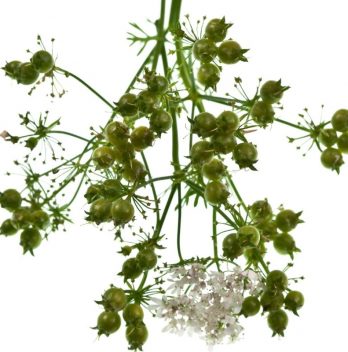
    Ideally, the natural end cycle of the cilantro plant is when it bolts. Bolting produces flowers. This results in coriander seeds that we wish to harvest. So, when your cilantro plant starts to produce clusters of flowers and starts to grow seeds, you can harvest your coriander seeds.

    Here are some tips for harvesting coriander seeds:

      • Let the cilantro plant flower and produce seeds.

      • Pinch off the stem near the bottom of the stalk with the seed heads when you’ve noticed the leaves and seeds has begun turning brown.

      • Then proceed to hang the stems upside down in a paper bag in a cool and dry place. When the coriander seeds become ripe, they will fall off from the head of the seed drop into the bag.

      • Then you can proceed to store your coriander seeds.

    How To Grow Cilantro To Aim For Coriander Seeds Harvest

    The cilantro plant loves is mostly grown in North America for its leaves, but the seeds are as well great to harvest and use in our different cuisines. Cilantro is a cool-weather crop meaning the plant thrives well in cool conditions or environments.

    The ideal temperature for cilantro to flourish is around 50 to 85 degrees Fahrenheit (mainly for cilantro leaves harvest). Hence, this plant will thrive well in cool conditions.

    Therefore, the ideal time to plant or grow cilantro is around spring or fall. Don’t try to force the cilantro plant to grow during summer even though the hot season encourages bolting and seeding. Temperatures higher or hotter than 85 degrees Fahrenheit will encourage bolting. Bolting will result in flowering and coriander seeding.

    Additionally, if you aim to obtain coriander seeds sooner, avoid picking cilantro leaves too often. Picking cilantro leaves too often will slow down bolting and in turn, slow down seed production.

    Keeping them intact for a while, will give the plant more energy to focus on flowering and going into seed production.

    However, if you still wish to aim for both cilantro leaves as well as coriander seeds, just differentiate or design some plants for cilantro leaves and others for coriander seeds.

    Storing Coriander Seed

    Once you’ve harvested the coriander seeds and it has dropped off into the paper bag, the dried seeds should be stored in an air-tight jar.

    What Does Coriander Seed Taste Like?

    The taste of coriander seed is simply unique. It has this citrusy and slightly nutty flavor. You can as well say it taste like citrus and curry, with a light and sweet flavor.

    The way this coriander seed is prepared also affects the final flavor as well as other flavors it tends to go well with.

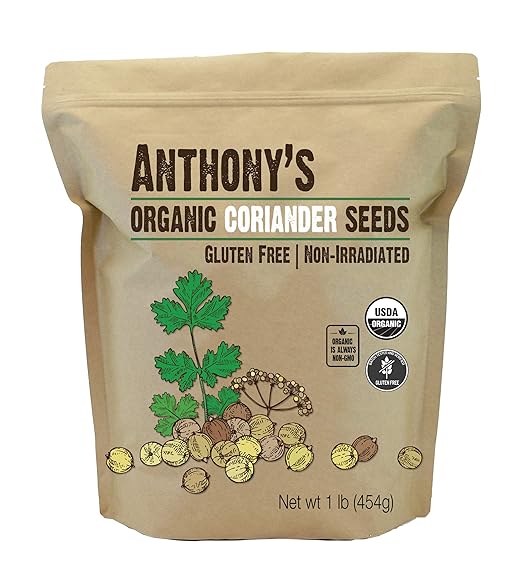
    Anthony’s Organic Coriander Seeds, 1 lb, Gluten Free, Non GMO

    8102vXGO8uL. SX522

    Basically, the flavor of coriander seeds gets intensified when you cook them for a longer time. However, their unique flavor tends to fall into the background.

    But if you probably incorporate raw coriander by briefly toasting it before you add it to your food as a finishing touch, then it can retain more of its lightness.

    Coriander Culinary Applications

    Coriander seeds can be incorporated or used in various types of cuisines. Used in various parts of the world including Latin American, Mexico, the United States, and so on.

    Coriander seed is great to use in different flavors in our kitchen. This awesome-tasting coriander seed goes or pairs well with grilled vegetables, roasted vegetables, lentils, beans, rice, and many more.

    The earthy and lemony lilt tends to go well with all types of legumes especially the lentils for daal. In addition, coriander can excellently improve different meat such as lamb, pork, chicken, duck, etc, especially in a gradual braise.

    Furthermore, coriander will offer great taste once you pair them with fruits, vegetables, and spices. If you also wish to add vigor or life to your various cruciferous vegetables, then the coriander seed is a great spice to make use of.

    Coriander Culinary Applications

    This coriander seed is a crucial part of homemade curry powder with some complex barbecue rubs. It can also pair well with parsley, garlic, and lemon zest. It is great to add in cookies, crumbles, and dessert sauces as it will liven up and intensify buttery flavors.

    FAQ’s

    How do you know when coriander seeds are ready for harvest?

    Coriander seeds can be harvested at any time between the time they are fully ripe and dried out (this usually occurs within two weeks).

    Once coriander seeds have been harvested, they can be stored in an airtight container for up to six months. If you plan on making your own coriander seed oil, you will need to wait until the seeds are completely dry before grinding them. This process takes about one week.

    What are the benefits of using coriander seeds?

    Coriander seeds are a very versatile spice that can be used in a variety of dishes. They are widely used as a spice in Indian, African, and Asian cuisines. Coriander seeds are also used as a flavoring agent in many beverages. They are often added to tomato-based dishes like ketchup, chili sauce, and salsa. They can also be used to flavor vegetable dishes. Some people use coriander seeds to make curry pastes and curry powder. When used in these applications, coriander seeds impart a subtle citrus aroma. Coriander seeds are also known to reduce flatulence. They are used as a digestive aid and to treat colic. They are also used to treat diarrhea and stomach cramps.

    How do you preserve coriander seeds?

    Coriander seeds can be stored for up to six months. They should be stored in an airtight container in a cool, dark, and dry place. The seeds can be stored in the refrigerator for up to one month.

    How do you prepare coriander seeds?

    Coriander seeds can be ground into a powder or a paste. The type of preparation you choose depends on how you plan to use the coriander seeds. You can use a mortar and pestle to grind coriander seeds into a fine powder. This is the most common way to prepare coriander seeds. You can also use a blender or food processor to make a paste. This is the second most popular way to prepare coriander seeds. You can also prepare coriander seed oil.
    Always use caution when handling coriander seeds. It is important to wear gloves when preparing coriander seeds to prevent skin irritation. People who have a severe allergy to garlic or onion should avoid eating coriander seeds.

    Can I eat raw coriander seeds?

    Coriander is a spice that has been used for centuries. It’s one of the spices in curry and can be found in many commercial dishes (e.g., Mexican food).

    Raw coriander seeds are not difficult to digest. However, they are known to irritate the stomach when eaten raw. The problem is that the oil from the seeds coats the stomach lining and causes inflammation, which can lead to gastritis. Eating raw coriander seeds is not recommended if you have a history of ulcers or stomach problems.

    Final Say

    Coriander seeds are derived or obtained from the cilantro plant. When the cilantro plant bolts and enters into its flowering stage, the coriander seeds are produced afterward.

    Harvesting coriander seeds is pretty easy and straightforward. We have outlined some tips you can follow to successfully aim to grow and harvest coriander seeds for your cooking pleasure. Coriander is an excellent spice you can incorporate in our various meals and will liven up so many dishes.

    Cilantro leaves aren’t the only useful part of the plant when it comes to culinary applications. The seed derived from cilantro is an awesome spice to add to your various dishes. Coriander seeds can pair well with grilled vegetables, roasted vegetables, lentils, beans, rice, and so on.

  • What Does Cilantro Look Like When It Sprouts?

    What Does Cilantro Look Like When It Sprouts?

    Have you ever wondered what cilantro plants look like when they sprout? Let’s find out. Germinating cilantro from the beginning with seeds may be frustrating, even for the most experienced gardener.

    With the proper knowledge and the appropriate growing settings, you can achieve successful cilantro germination.

    So, once you have achieved growing cilantro from seeds and it begins to germinate, we would like to know what exactly it looks like when it sprouts.

    This post will give you an idea of how cilantro looks when it sprouts, tips on how to grow or germinate cilantro successfully, and many more. So, continue reading to gain some insight on these.

    What Do Cilantro Sprouts Look Like?

    So, what exactly does the cilantro look like when it sprouts? Once you’ve perfected the growing requirements for the cilantro seed to grow, you should begin to see some sprouts.

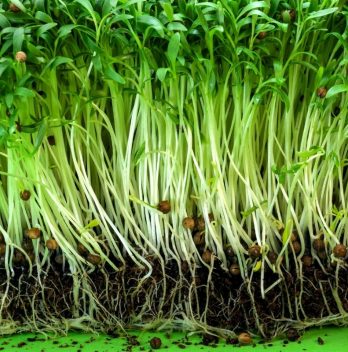
    After sowing cilantro seeds for about seven days or less, you should notice some white sprouts emerging from the seed planted. You can easily check this out by slowly exposing the soil with your fingers and uncovering the seeds.

    Cilantro sprouting will result in green sprouting that should begin to emerge through the soil out of the seeds after another 2 or 3 days.

    What Do Cilantro Sprouts Look Like

    How Long Does Cilantro Take To Grow?

    Once you’ve planted or sown the cilantro seeds, sprouting or germination should begin after 7 to 10 days.

    However, cilantro germinating from seeds can be pretty tricky. You need to create the ideal seed setting so your seed can germinate.

    Tricks To Growing Cilantro To Get A Successful Germination

    You can grow cilantro from seeds either in your garden or in containers. So, to achieve germinating cilantro successfully, follow these tips:

    1.    Prepare the cilantro seed by soaking

    Cilantro seeds are inside a hard husk containing two seeds. Remove the husk to remove the seeds. Before you plant these seeds, you need to prepare them to boost their chance of germinating.

    Soaking the cilantro seed is the trick to achieving better germination. Therefore, soak the seeds for 10 to 48 hours, remove the water, and allow the seeds to dry. Soaking these seeds will help them grow better and quicker.

    2.    Planting

    After seed preparation follows planting, you can sow your cilantro seeds indoors or outdoors. Insert the seeds into the soil and cover the seeds with about a quarter-inch soil layer.

    Sprouting Lids for Wide Mouth Mason Jars
    $9.99

    (Set of 2), Sprouting Jar Kit for Organic Sprouts, Alfalfa & Mung Bean Sprouts Grow Kit, 316 …

    We earn a commission if you make a purchase, at no additional cost to you.
    12/04/2025 01:03 am GMT

    3.    Watering

    Maintain moist soil to encourage germination, but don’t overclog the soil. Let the soil dry out before watering again to prevent mold and diseases from infesting the seedlings.

    4.    Thinning

    You should start noticing white sprouting after 7 to 10 days. Allow the cilantro to germinate until it is about 2 inches long. Then, thin the seedlings to about 3 to 4 inches apart.

    Grow cilantro in a crowded environment so the leaves can shade the plant roots. This will slow down the plant’s bolting during hot weather.

    5.    Sunlight

    Even though the cilantro plant doesn’t like too much sunlight, the seedlings still need a few hours of full sun. Cilantro can still tolerate light shade.

    If you’re growing in a container, provide the seedlings with some sunlight. However, ensure the sunlight exposure to the seedlings is not more than 4 to 5 hours of full sun; otherwise, it can cause wilting and even death of the plant.

    Then, two or three weeks later, you can slowly increase your cilantro plants’ outdoor exposure. This way, they can harden off and acclimate to the outdoor conditions.

    Sunlight - Cilantro

    Ideal Growing Conditions For Cilantro

    Here are some additional growing tips for you to enjoy a continuous harvest of cilantro leaves:

    • Cilantro should be grown in rich and properly draining soil.
    • Cilantro still requires some sunlight, but not too much, so it doesn’t enter the bolting stage. If you reside in a warmer region, it’s advisable to offer afternoon shade to your cilantro.
    • The ideal pH range for a cilantro plant to grow optimally is around 6.2 to 6.8. So, ensure you perform the appropriate soil test before planting to achieve this.
    • You can enhance the soil by incorporating and mixing inches of compost or other organic matter. If you’re growing cilantro in containers, consider a premium bagged potting mix.
    • To enjoy productive leaf production, supply your cilantro by constantly feeding it with water-soluble plant food.

    When To Plant Cilantro

    You should plant cilantro in early spring or fall, about a month before the last frost. For zone 8, 9, and 10, the best period to plant cilantro is around fall. This is mainly because the plant tends to last through the right until the weather warms or heats up during late spring.

    Harvesting And Storing Cilantro

    Cilantro’s foliage can be harvested continually, and you can enjoy the cut-and-come-again feel. Ensure you cut back all the leaves so they can grow back. It would be best to harvest the leafy stems near the ground level.

    However, don’t harvest more than 1/3 of the leaves at once to prevent weakening the stem. Simply harvest what you need at a time to promote vigorous growth.

    Once cilantro is grown under the appropriate conditions with constant harvest, it can be enjoyed for many weeks in continuous production.

    Storing

    Once you’ve harvested cilantro leaves, cover them loosely with an upside-down plastic bag and pop them in the fridge. Using this method, you can store cilantro for up to a month.

    FAQ’s

    What does cilantro look like when it starts to sprout?

    The seeds are blackish-green and look like black pepper. Once the seeds germinate, they grow upward, looking somewhat like a green bean. After a few weeks, the leaves begin to emerge.

    Cilantro is a perennial herb with leaves that look like miniature versions of the lettuce leaf. Cilantro is a very popular and versatile herb for cooking and seasoning. It is easy to grow and is great as an addition to your kitchen garden. A cilantro plant can be grown from seed in many different ways, but one of the easiest ways is to start them indoors in a seed starting mix.
    The seedlings will be ready to transplant out into their permanent home in approximately 7-10 weeks.

    How can you tell if a plant is cilantro?

    There are a few ways. The first is to look at the leaves. If they are large and round with a nice strong aroma, that’s probably cilantro. The second is to look at the stems. They should be green and fibrous. There’s not much to look at for basil. The third is to look at the seeds. If the seeds are small and hard, that’s probably cilantro.

    The herb cilantro (Coriandrum sativum) has become ubiquitous in the American kitchen. It is used as an ingredient in everything from salad dressings and marinades to soups, stir-fries, chili, sauces, and even desserts.
    If it’s not the fresh, familiar herb that adds so much flavor to soups and stews, it may be the dried spice known as coriander. It’s a member of the parsley family, and it’s often called “the other cilantro” because it’s hard to find fresh cilantro and easier to find dried coriander.

    Will cilantro grow back after cutting?

    You can get a second crop, but you might have to wait until next year.
    Your cilantro should recover and produce new leaves for another season.

    What is the best time of year to plant cilantro?

    Planting in late fall gives your cilantro a chance to grow through the winter. If you start early in the spring, the plants won’t have a chance to put down roots before they’re killed by cold temperatures.

    What is the difference between fresh and dried cilantro?

    Fresh cilantro has a much more potent aroma than dried cilantro. The taste is also more pungent. Dried cilantro is usually sold in small bags and can be added to soups, sauces, rice dishes, etc. Fresh cilantro is used in dishes with Mexican or Asian flavors. Dried cilantro is used in dishes with Indian or Thai flavors.

    How do you make fresh cilantro last longer?

    When your cilantro begins to wilt, don’t throw it away. Instead, place the wilted cilantro in a plastic bag and seal it. Store the cilantro in the refrigerator for up to a week.

    How do you grow cilantro?

    Cilantro can be grown from seed or transplanted. To germinate seeds, place them in a tray and cover them with a damp towel. You can also sow the seeds directly into the ground. The seeds are ready to transplant when they have sprouted and have developed two true leaves. If you plant the seeds indoors, you should put them in individual pots about four weeks before planting outside. To grow cilantro outdoors, you’ll need to provide it with at least six hours of direct sunlight every day.

    What Does Cilantro Look Like When It Sprouts: Conclusion

    When it comes to what cilantro looks like when it sprouts, some white sprouts are usually noticed once it begins to germinate. This is noticed 7 to 10 days after seed sowing. Then, a few days later, some green sprouts should be seen emerging from the seed sown.

  • List Of Non-Cruciferous Vegetables

    List Of Non-Cruciferous Vegetables

    Vegetables are an important part of people’s diets. There is a large variety of vegetables, including non-cruciferous and cruciferous. This post will share a list of non-cruciferous vegetables that will make a great addition to your garden.

    There are many great non-cruciferous vegetables that not only taste good but are also packed full of many important nutrients. They are great to incorporate into your diet daily. In addition, many of them are great for growing in your home garden.

    Cruciferous Vs Non-Cruciferous Vegetables

    If you are an avid gardener, you may have heard of the terms cruciferous vegetables and non-cruciferous vegetables. However, many people are unfamiliar with the two terms.

    Cruciferous vegetables belong to the Brassicaceae family of plants and are native to Europe and the Medderteranian, along with the temperate regions of Asia. These leafy green vegetables are low in calories and high in nutrients. Oftentimes they are particularly high in fiber, vitamin A, vitamin C, and also vitamin K.

    Many cruciferous vegetables contain glucosinolates, which exhibit cancer-fighting properties. In addition, they improve heart health, aid in weight loss, and reduce inflammation. Common cruciferous vegetables include brussels sprouts, broccoli, kale, cauliflower, radish, turnip, arugula, and bok choy.

    However, cruciferous vegetables can lead to thyroid problems in some people, particularly when eaten raw. For those with thyroid problems, it is best to stick with non-cruciferous vegetables.  There are a large variety of non-cruciferous vegetables that are full of important vitamins and also nutrients.

    Complete List Of Non-Cruciferous Vegetables

    Non-cruciferous vegetables can be grown all throughout the world. They are a popular choice among many people, whether they have thyroid problems are not. Many of them are great for snacking, salads, smoothies, sauteing, boiling, or however else you would like them prepared.

    Here is a list of non-cruciferous vegetables you should have in your kitchen. Many of them are also great to grow in your own garden as well.

    Spinach

    Spinach is a popular vegetable thanks to its versatility and health benefits. It is loaded with nutrients as well as antioxidants and is excellent for salads and also sauteing.

    Parsley

    Parsley has many benefits including helping with high blood pressure, allergies, and also inflammatory diseases. It is a wonderful vegetable to use as a garnish or topping in sandwiches, salads, pasta, and salad dressings.

    Non-Cruciferous Vegetables - Parsley

    Beets

    Beets are packed full of manganese, fiber, vitamin C potassium, folate, and also iron. They are a wonderful vegetable to roast or even pickle.

    Cilantro

    Cilantro is an herb that many use in salsas, guacamole, soups, and as a garnish for meats. It provides significant dietary fiber, calcium, iron, magnesium, and manganese.

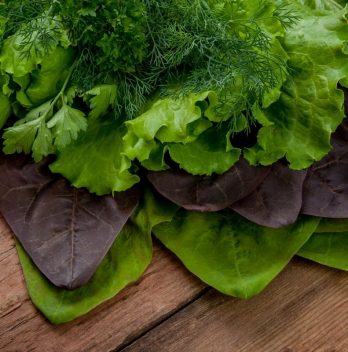
    Lettuce

    Lettuce is one of the most popular vegetables thanks to its health benefits and versatility. Many different varieties are great for salads, wraps, toppings, and more.

    Wheatgrass

    Wheatgrass is an excellent source of antioxidants, nutrients, minerals, and also vitamins, especially vitamins A, C, and E. Many people add wheatgrass to their smoothies as it blends well and has a mild taste.

    Moringa

    Moringa is popular for its numerous health benefits, including its high levels of vitamin C and potassium. It can come in a powder form that can be used to make tea and in addition, smoothies.

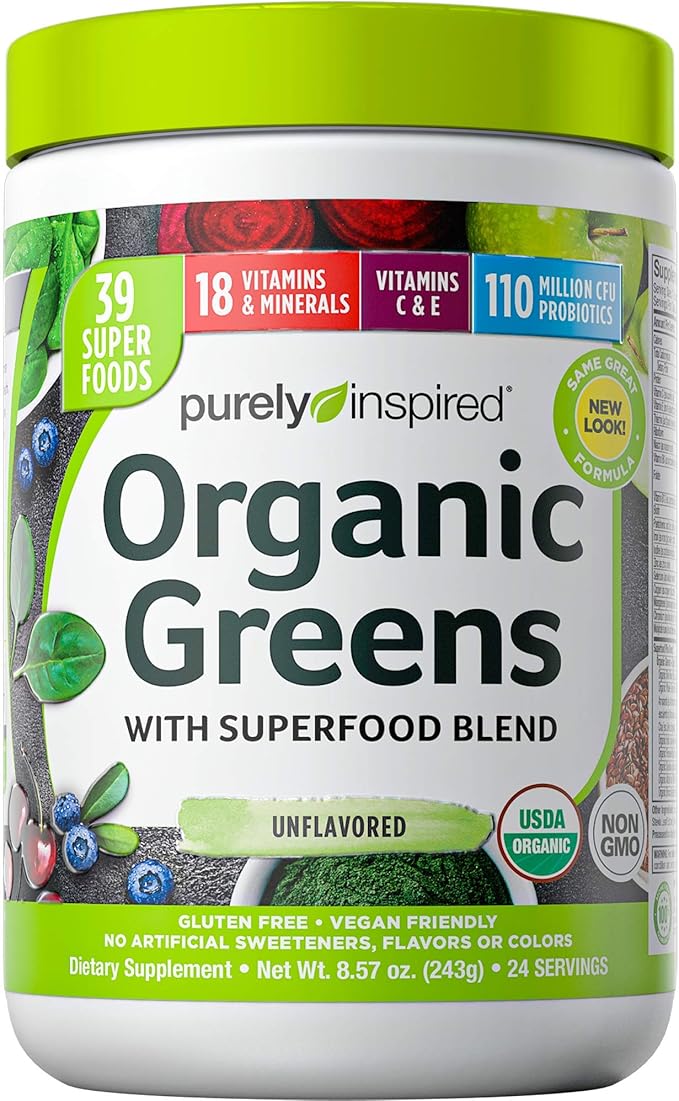
    Greens Powder Smoothie Mix | Purely Inspired Organic Greens Powder Superfood

    817HQb7MGuL. AC SX679

    Dandelion

    Though many people just think of dandelion as a weed, it comes with many health benefits. Sometimes used in herbal medicine, dandelions have antioxidants and can also fight inflammation, lower cholesterol, and regulate blood sugar.

    Chicory

    Chicory comes with many health benefits and is a common remedy for helping with liver and heart health, as also constipation. Many people use it as a spice and in some cases, people will also add it to coffee grounds.

    Carrots

    Carrots are one of the most popular vegetables to eat and many people also enjoy growing them in their gardens. They are rich in vitamin A, antioxidants, vitamins, minerals, and fiber.

    Green Beans

    Green beans come in many different varieties and are enjoyed in many different ways. These tasty greens are high in vitamin K and calcium.

    Sweet Potatoes

    Delicious and nutritious, sweet potatoes are rich in fiber and antioxidants. People enjoy them in many ways including baked, fries, casserole, mashed and roasted.

    Non-Cruciferous Vegetables - Sweet Potatoes

    Ginger

    Ginger is one of the healthiest and most popular spices in the world, as it contains antioxidants and can aid in nausea, weight loss, and heart health. It is popularly used as a spice in baking and also cooking.

    Garlic

    Many people love the strong taste of garlic, making it popular in many savory dishes. It is a good source of manganese, vitamin B6, vitamin C, fiber, and also selenium.

    Asparagus

    Asparagus is a good source of fiber that also helps with digestive health, as well as reducing the risk of heart disease and high blood pressure. Many people enjoy growing it in their own gardens and then grilling or roasting it.

    Peas

    Peas come in wide varieties and people often enjoy incorporating them into different savory dishes. They are a good source of vitamins C, vitamin E, zinc, and antioxidants.

    Cucumbers

    Many people enjoy growing cucumbers and then eating them in salads or as pickles. These crunchy veggies are high in antioxidants and promote hydration.

    Non-Cruciferous Vegetables - Cucumbers

    Celery

    Celery is a good source of vitamin A and vitamin C and makes a great low-calorie snack. It can be eaten raw or added to soups, stews, and chilis.

    Can Cruciferous Vegetables Cause Headaches?

    There is no evidence suggesting that cruciferous vegetables cause headaches. On the contrary, these veggies are really healthy! Broccoli, cabbage, and cauliflower are excellent sources of vitamins C and K and dietary fiber. 

    However, they can lower your estrogen levels. A fast decrease in estrogen can disrupt your hormones, leading to symptoms like headaches. Eating a lot of these vegetables can also cause bloating and gas. This pain might lead to a headache for some people. But it’s not common. 

    You should speak to your doctor if you experience headaches after eating cruciferous vegetables. There might be an underlying cause. 

    Are Cruciferous Vegetables Complex Carbohydrates?

    Cruciferous vegetables are complex carbohydrates. Carbs form when carbon dioxide and water combine during photosynthesis. Green cruciferous vegetables, like broccoli, cauliflower, and brussels sprouts, contain plenty of this. They are part of the Brassica family hosting veggies that are also rich in vitamins, minerals, and fiber. 

    You should include a variety of cruciferous vegetables in your diet. Complex carbs are more filling and nutrient-packed. They also aid in weight loss and keep blood sugar levels balanced. Your energy levels will be steadier, and you’ll have an easier time functioning throughout the day if you include cruciferous veggies in your diet. 

    Can Cruciferous Vegetables Cause Diarrhea?

    Cruciferous vegetables contain plenty of whole carbs. One such is raffinose, and many people have difficulty digesting it. If you aren’t used to eating a lot of carbs and fiber, your digestive tract can have trouble processing it. 

    Undigested fiber and carbs like raffinose can cause bloating, gas and diarrhea when it reaches the large intestine. 

    Are Cruciferous Vegetables High in Potassium?

    Cruciferous vegetables are a good source of potassium. It’s essential to include these in your diet. Eating cruciferous veggies daily will ensure your body gets all the nutrients it needs. Healthy adults should consume about 4,700 milligrams of potassium per day. Here’s a list of potassium-rich cruciferous vegetables:

    • Broccoli – contains approximately 316 milligrams of potassium per 100 grams
    • Bok Choy – has about 176 milligrams of potassium per 100 grams
    • Brussels Sprouts – contains roughly 389 milligrams of potassium per 100 grams
    • Cabbage – contains about 170 milligrams of potassium per 100 grams
    • Kale – has approximately 491 milligrams of potassium per 100 grams

    How Long Does it Take to Digest Cruciferous Vegetables?

    The time it takes for food to digest varies depending on multiple factors. The type of food, your digestive system, and how much you’ve eaten influence this. Whether you ate the food raw or cooked also makes a difference. 

    Cruciferous veggies are high in fiber. You might think this makes it easier to digest, but most people find it more difficult. It can take a little longer for these to pass through your digestive system compared to other types of food. 

    Leafy cruciferous vegetables like broccoli, brussels sprouts, cabbage, cauliflower, and kale can take up to 50 minutes to digest when you eat them cooked. If you chew down on them raw, they can take even longer!

    Delicious and Nutritious Non-Cruciferous Veggies

    Several delicious non-cruciferous vegetables are great for incorporating into your diet. They are a particularly good option if you struggle with thyroid problems. Many of them are great for growing in your very own home garden.

    Non-cruciferous vegetables come in a wide variety, from sweet potatoes to spinach. Many of them are also great to prepare in a variety of different ways.

    Do you have any questions regarding this list of non-cruciferous vegetables? If so, please ask any questions regarding non-cruciferous and cruciferous vegetables in the comment section down below.

    FAQs

    Is spinach considered a cruciferous vegetable?

    “Crucifer” refers to plants in the family Cruciferae, which is made up of broccoli, brussel sprouts, cauliflower, kale, collard greens, and cabbage. Spinach doesn’t fall into this category.

    Is lettuce considered cruciferous?

    It’s a member of the brassica family, which is also known as Cruciferae, along with cabbage and broccoli. Brassica is the name of the family, not the name of the individual plants. The family includes broccoli, cabbage, cauliflower, kale, mustard, radish, turnip, and horseradish, among others.

    Cruciferous vegetables contain indoles (flavonoids) and glucosinolates (plant chemicals), which help protect against cancer.

    What is the healthiest cruciferous vegetable?

    The healthiest cruciferous vegetable is cauliflower. The reason for this is that cauliflower contains more phytochemicals than broccoli, brussel sprouts, kale or cabbage, and the nutrients are better absorbed into the body. Cauliflower is rich in antioxidants called sulforaphanes. These help protect your cells against damage from free radicals (unstable molecules).

    Free radicals are produced as a byproduct of normal metabolic activity. The good news is that sulforaphanes can be converted into other antioxidants which may have even greater anti-cancer effects. They also help prevent cancer by supporting the body’s immune system. Cauliflower is rich in vitamin K, folate, and vitamin C, all of which support the immune system and promote cell growth. It also contains more fiber than any other cruciferous vegetable. Cauliflower is a good source of calcium, magnesium and potassium, which help build strong bones and muscles. It also contains vitamin B6, an important nutrient for the production of red blood cells. Vitamin B6 has been shown to reduce the risk of heart disease. Cauliflower also contains choline, a B vitamin that is important for normal nerve function. Choline is also a natural pain reliever.

    Is it safe to eat cruciferous vegetables every day?

    Yes, it is safe to eat cruciferous vegetables every day. This includes broccoli, cauliflower, cabbage, kale, brussel sprouts, and bok choy. You should continue eating these foods even if you are taking supplements or herbal remedies.
    There are two types of cruciferous vegetables: Brassicas (cabbages, broccoli, kale, cauliflower) and Cruciferae (mustard greens, arugula, chives, radishes).
    You can also find them at the store as part of a salad mix or in a Chinese stir fry. They are also very common in cooking, especially in Asian dishes. The major phytonutrients in cruciferous vegetables are glucosinolates and indole-3-carbinol (I3C). The main glucosinolate found in broccoli is sulforaphane. Sulforaphane is an antioxidant that protects cells from damage caused by free radicals. It also has anticancer properties. Sulforaphane is converted into I3C by the enzyme myrosinase which is present in both the Brassicas and Cruciferae vegetables.

  • How Big Should Tomato Seedlings Be Before Transplanting?

    How Big Should Tomato Seedlings Be Before Transplanting?

    Tomatoes are one of the most popular plants to grow among gardeners of all experience levels. However, you may wonder, how big should tomato seedlings be before transplanting? It is important to know this in order to help your tomato plants thrive.

    Under the right conditions, tomato plants will thrive and grow an abundance of fruit. Transplanting them at the right time is key to allowing them to successfully grow. If you do it too early, you risk your plant failing to grow properly.

    What Is Transplanting?

    In gardening, transplanting is the technique used for moving a plant from one location to another. The plant will be fully germinated or mature during the process of moving. The process can be done when moving a plant from a pot to a garden or moving it from one location in the garden to another.

    There are several reasons why a person may transplant a plant. When buying a plant from a garden store, it is common to move the plant from the pot it came into a larger pot or a garden. People may also transplant a plant if the surrounding plants are diseased or have pests in order to protect it.

    In addition, transplanting can help extend the growing season. Different plant species will react differently to transplanting, so it is important to do it with care and proper research.

    What Is Transplanting

    When To Transplant Tomato Seedlings

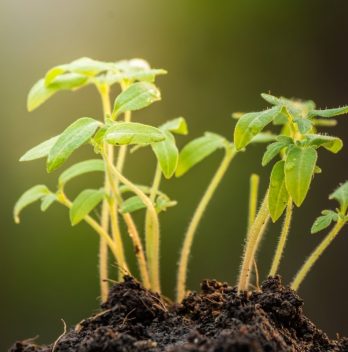
    When tomato seedlings are three to four inches tall and have their second set of leaves, they are ready to transplant. Anytime before this and they will likely be too fragile and not yet ready.

    In addition, you will want to make sure the nighttime temperatures are at least 50 degrees Fahrenheit. If it is much lower than that, it will be too cold for your tomato seedlings.

    Some gardeners will also choose to a second transplant of their tomato plants. This second transplant should be done when the tomatoes are six to ten inches tall. By doing a second transplant, you can help ensure your plant will have a good root system.

    How To Transplant Tomato Plants

    When transplanting tomato seedlings that are three to four inches tall to a new container, choose one that is deep. This will help the roots develop and create a strong plant. When planting, use the same soil you did when germinating them.

    Before transplanting, water the seedlings as moist soil will cling to the roots and help the plant from drying out. Then, carefully lever the seedlings out of the soil and try to lift the plants by their leaves rather than the stem.

    Once safely removed from their original pot, place them in the new, larger pot three inches apart from each other. Set the soil firmly around the plant, going all the way up to the first set of leaves if possible.

    Lightly water the soil and keep your seedlings out of bright sunlight for a day or two. Use liquid fertilizer once a week as they grow.

    They will generally need at least two weeks in their containers before you transfer them to your garden. Always plant tomato seedlings with care and never grab them by the stem.

    Second Transplant

    If you want to transplant your seedlings for a second time before planting them in the garden, wait until they are at least six to 10 inches tall. This will help ensure they have a healthy root system.

    You can transfer them individually to half-gallon milk jugs or four- to six-inch-diameter pots. Transplant them just as you did the first time.

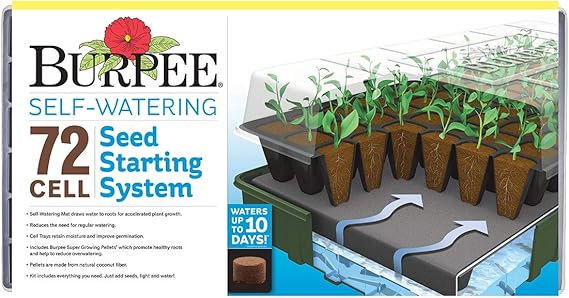
    Burpee Self-Watering Seed Starter Tray, 72 Cells

    Transplanting To The Garden

    When transplanting your tomatoes to your garden, dig a hole in your garden bed that is a few inches deeper than the current depth of the pot the seedlings are in. Dig the holes at least a few inches apart to give them plenty of room to grow.

    Carefully remove your plants from their container and transfer them to the garden bed. Cover the plant up with dirt, right till the first set of leaves if they are seedlings. Water your tomatoes right after moving them.

    Ideal Growing Conditions

    Tomatoes do best in well-drained soil in a location that receives full sun for the majority of daylight. They should receive at least six to eight hours of full sun a day in order for them to produce an abundance of fruit.

    They do best in climates with temperatures between 65 to 85 degrees Fahrenheit during the day. In addition, they should also receive one inch of water a week to allow them to grow healthy and strong.

    They do best in soil that is slightly acidic, between 6.2 to 6.8. Since they strive for warmth, they are generally planted in late spring to early summer. They will also benefit from compost and fertilizer.

    Ideal Growing Conditions

    Tomatoes are generally harvested mid to late summer. Once you pick them, store them indoors which allows them to ripen more. They do best in cool temperatures, however, you don’t need to store them in the fridge.

    FAQs

    When should I transplant tomato seedlings?

    Transplanting tomatoes is not something you should rush into. It is a delicate operation and one which requires experience to pull off successfully. The best time to plant tomatoes is when the soil has warmed up and the nights have become longer. Tomato seedlings should be planted into a potting mix or into the ground as soon as they sprout.

    How do you transplant tomato seedlings?

    You can transplant tomatoes either as a single plant or as a cluster of several plants. When you are transplanting your tomatoes, make sure they are well-established before you do so. Tomatoes grown from seed will take approximately three months to get into full production. It’s best to wait until after the first frost before you transplant. Transplanting tomatoes is a great way to extend their growing season.
    The following are guidelines for when you should transplant your tomatoes: In spring: Start transplants outside in containers at least 2 weeks before last frost. Do not transplant when soil is frozen. In summer: If you are planting in the ground, wait until temperatures are consistently above 50°F. In fall: If you have had a long dry spell, it’s a good idea to transplant tomato seedlings into the ground now rather than waiting for next spring. You can also plant your tomatoes in containers and bring them inside when the weather starts getting cooler. Make sure you get them in before the first frost.
    Transplanting your tomatoes is a relatively simple process. Here’s how to do it: Remove the seedling from its container and gently loosen the roots. Take care not to damage the root system. Place the seedling in a hole that is about twice as wide as the seedling. The bottom of the hole should be slightly below the level of the surrounding soil. Add soil until it is just above the top of the seedling’s stem. This will help the plant establish quickly.

    How do I start a new tomato plant?

    Tomatoes are easy to start from seed. You can either buy ready-made seeds or sow your own. For those who want to sow their own, it is best to buy a packet of tomato seeds which have been pre-germinated. These seeds will already be planted in a tray. You then take the tray and place it into a warm environment for about two weeks until the seeds start to germinate. After this period, you can plant them into a pot or directly into the ground.

    How big should seedlings be before transplanting?

    You should go with 4 inch-tall.
    Plant the seedlings in fertile soil. Fertile soil is rich in nutrients, so it’s best for young plants. You can improve the soil by adding some fertilizer, compost, peat moss or other organic material. The soil should be moist but not wet. Water your seedlings regularly.

    The best time to plant is when the soil is warm, dry and well-drained. Seedlings should be started in flats, pots or cell packs (a small flat container with individual cells that can be used for a single plant) and placed into larger containers as they grow. It’s important to avoid transplant shock by gradually exposing young plants to the outside world. You don’t have to expose them to full sunlight.

    Knowing How Big Should Tomato Seedlings Be Before Transplanting

    Transplanting tomato seedlings is an important process in their development. It helps with the growth of the stems to promote a strong, healthy plant.

    When transplanting your tomato seedlings, wait until they are at least three to four inches tall and have their second set of leaves. In addition, you can also transport them again when they are six to ten inches tall to help further develop their roots.

    Transplanting should always be done with care and you should never hold them by the stems. Instead, it is better to grab them by the leaves. Then, when planting them as seedlings, you can cover them with soil all the way up to the first set of leaves to help them grow.

    Do you have any questions on how big should tomato seedlings be before transplanting? If so, please ask any questions regarding transplanting your tomato seedlings and growing tomato plants in the comment section below.

  • The Lowest Temperature For Tomatoes And Peppers

    The Lowest Temperature For Tomatoes And Peppers

    Every gardener should be aware of the lowest temperature for tomatoes and peppers to save them before the frost season begins.

    Gardening is not for the faint-hearted; sometimes it’s hard, sometimes it’s smooth. This is true more so when you think about the right time to plant your crop, especially if it does not do well in frost.

    Suppose you have plenty of decent gardening and realize that the weather is threatening with an early frost you have to protect it. Tomatoes and peppers are some of the crops that do not do well in the winter season. You have to harvest them before the frost falls and try to ripen them indoors. You can save your plants right in the garden by building a shade over them to extend the gardening season.

    If you are trying to grow tomatoes, eggplant, or peppers, it is essential to learn what is the lowest temperature these plants can take.  In this article, we will look at both the lowest and the highest temperatures that these plants are able to survive under.

    Lowest Temperatures For Tomatoes And Peppers

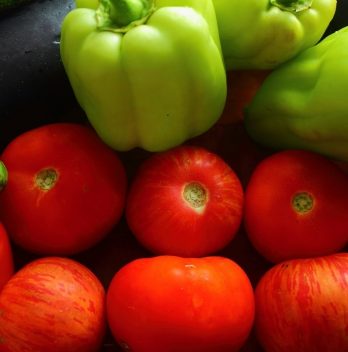
    According to the USDA Research Service, tomatoes show problems when temperatures drop below 50 degrees Fahrenheit. Cool nighttime temperatures interfere with the tomato’s ability to convert the sunlight into sugars via a process known as photosynthesis.

    Low temperatures also reduce pollen production in tomatoes and peppers, resulting in less fruit production or fruits deformation. You may also experience scars and cracks on the bottom end of your fruit that occur during the night when temperatures drop below 60 degrees Fahrenheit.

    Lowest Temperatures For Tomatoes And Peppers

    Protecting Your Tomatoes And Peppers From The Lowest Temperatures

    To protect your tomato and pepper plants from frost, you will need two things –  sturdy garden stakes or tomato cages and bubble wrap. The garden stakes or tomato cages will form the structure that will allow you to wrap the bubble wrap around, protecting your plants.

    Ensure that your bubble wrap is firm so that it doesn’t cause a mess of your tomato and pepper plants. Choose a study structure long enough to cover your tomato plant’s height. You can install the cage once you plant or over the existing plants towards the end of the season with ease.

    Once you have the tomato cage over the plant, wrap the bubble wrap around the cage and use duct tape to secure it in place. Wrap it around the cage, starting from the ground level all the way up to a few inches above the top of the plant. Ensure that you cover the top of the plant as well.

    The sturdy structure and bubble wrap are enough to protect your plants until their harvest time. But to avoid all the hassle, ensure that you plant your tomatoes and peppers at the right time. If you realize that you are late, it is essential to look for varieties that easily stand lower temperatures.

    Germination And Growing Temperatures For Tomatoes And Peppers

    Can pepper plants survive frost?  The minimum temperature to germinate and grow tomatoes and peppers is at least 15 degrees Centigrade.  However, germination will happen faster when the temperature is above 20 to 24 degrees centigrade.

    The pepper temperature tolerance for nighttime weather is around 13.5 degrees centigrade.  However, the daytime temperature should not fall below 15 degrees Centigrade for a week or more. If this happens, you will get stunted crops.

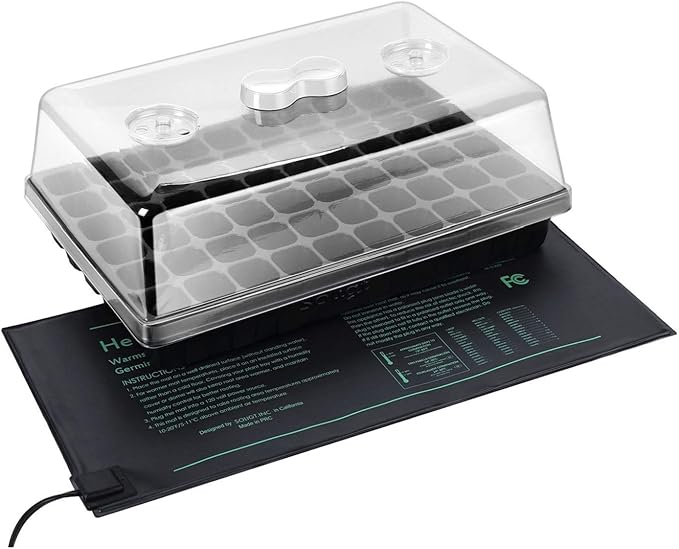
    2 Set 60-Cell Seed Starter Kit – Strong Seed Trays with Humidity Domes, Cell Trays, and Seedling Heat Mats

    61Lycd+AWJL. AC SX679

    If the nighttime temperatures drop below 13.5 degrees centigrade, a few things go wrong. Pollen fails to develop, and flowers that open the following morning do not set fruit.

    That said, the ideal temperature for growing tomatoes and peppers should range between 20 degrees and 24 degrees centigrade.

    We can now clearly answer the question ‘can peppers survive frost’ from the above information.

    Tomato Varieties For Cooler Climates

    Generally, tomatoes require a favorable temperature between 15 degrees to 32 degrees Centigrade to survive. However, there are specific tomato varieties purposely bred for cooler climates with the ability to tolerate temperatures below 55 degrees Fahrenheit.  The best choices for such weather are short to mid-season tomatoes.

    These tomatoes set fruit in cooler temperatures and reach maturity in the shortest number of days, around 52 to 70 days. Some hybrid examples include:

    • Celebrity
    • Golden nugget
    • Subarctic plenty tomato
    • Husky gold
    • Orange pixie
    • Oregon spring
    • Siletz
    • Some heirloom varieties include
    • Legend
    • Bush beefsteak
    • Manitoba
    • Kimberly
    • New Yorker
    • Glacier
    • Gregori’s Altai
    • Galina
    • Grushovka
    Tomato Varieties For Cooler Climates

    Tomato Varieties For Hot Regions

    When we talk about the lowest temperatures for tomatoes and peppers, it would be good to also talk about the right tomatoes for the hot regions.

    Temperatures that rise above 27 degrees centigrade, cause both tomatoes and peppers to suffer from too much heat. When they hit 32 degrees centigrade, the fruits will fail to set, and you will lose productivity on your plants. Countries or regions that enjoy a hot climate pushes tomato and pepper farmers to grow them under shade.

    The heat-tolerant varieties that you can grow in these regions include:

    • Sunbeam
    • Bella Rosa
    • Florida
    • Sunny Bell
    • Big beef
    • Mountain crest
    • Porter
    • Spitfire
    • Solar fire
    • Fourth of July
    • Heatwave
    • Homestead
    • Super fantastic
    • Sunchaser
    • Sweet 100
    • Arkansas traveler
    • Green zebra

    So How Do You Solve The Temperature Problem In Tomatoes And Peppers

    Although there is not much you can do about a change of temperatures, especially these days of climate change; you can try a few remedies

    First, don’t plant your peppers and  tomatoes in the wrong season

    Second, ensure the soil is at the proper temperatures when growing.

    Besides planting cold-hardy tomato varieties, you can also cover your peppers and tomatoes with a structure to keep the fruit warm until it matures and ripens.

    Dark plastic coverings raise the temperatures by 5 to 10 degrees, while clear plastic coverings warm the tomatoes by up to 20 degrees. Using either of the coverings is enough to save your tomatoes and pepper crop

    FAQs

    Can tomatoes handle 40 degree weather?

    Yes, tomatoes can tolerate temperatures as low as 30 degrees Fahrenheit.

    What are the effects of low temperature on tomatoes?

    The effect of low temperature on tomatoes is to increase the amount of water in the fruit and to slow down growth. This means that the tomato will be less firm and more juicy, but not necessarily smaller.

    What is the lowest temperature peppers can tolerate?

    In terms of their growing environment, I would say that they could tolerate at least -10°C. I live in a temperate climate. They are not as cold tolerant as some other fruits and vegetables though.
    But they are pretty sensitive to frost. Make sure you have adequate drainage and that your soil isn’t too wet.
    Peppers are extremely sensitive to low temperatures. In general, they cannot be stored in the refrigerator below 40°F. When peppers are stored at temperatures above 60°F, they lose their flavor, color, and texture and may not ripen properly.

    When can I put my pepper plants outside?

    If you live in an area where the temperature is not expected to drop below freezing for at least two weeks, then it’s okay to put your pepper plants out.
    Most peppers will be fine to plant outside after all danger of frost is over. You can start them in the greenhouse in late spring or early fall if you want them to flower indoors first. Some varieties may not like being transplanted and may bolt. If this happens, you can transplant them again later when they are larger and less likely to bolt.

    Can peppers survive a light frost?

    Yes, most likely. The hardiest of the common pepper varieties are the Bells, which can handle down to -7°C (-20°F). The sweet peppers should also be able to survive, but they will need to have been grown under cover or protected from the wind, and the temperature inside will need to be kept well above freezing, say 12-15°C (54-59°F).

    Can tomatoes grow in cold weather?

    The ideal temperature for growing tomatoes is around 60 degrees. Cold weather slows down growth, which can result in stunted fruit. In milder climates, tomatoes can survive in temperatures as low as 20 degrees, but they will not grow and may even die.

    How do tomatoes grow?

    This plant’s life cycle includes its vegetative (growing) and reproductive (fruiting) stages.
    Vegetative growth occurs in the spring and summer months. Reproductive growth occurs in the fall and winter months. The second is by looking at a plant’s growing season, which begins in spring and ends in fall. The growing season refers to the time that a plant is actively growing and producing fruit. This is the same as your growing season, which is determined by the length of the day. If your growing season is long, you can expect your tomato plants to produce fruit in the fall. If your growing season is short, your plants will not produce fruit until spring. Tomatoes have a long growing season. The growing season is determined by the length of the day. If the length of the day is shorter than 12 hours, the growing season is shorter. If the length of the day is 12 hours or longer, the growing season is longer.

    Conclusion

    Temperature change is one of the adverse effects on plants that affect their health and productivity.  It is critical to prevent your crop from both the hot and cold weather extremes that face all gardeners at different times of the year.

    All the best as you work to overcome climate change that could be detrimental to your crop.

  • How To Cook Pole Beans From The Garden

    How To Cook Pole Beans From The Garden

    Learning how to cook pole beans from the garden is an added advantage to help you enjoy more beans fresh from your garden.

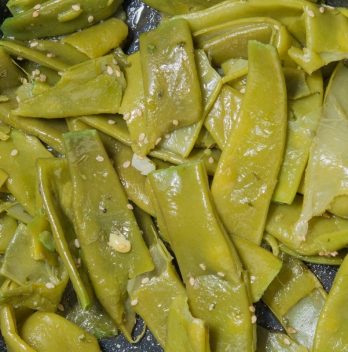
    Pole beans is another name used for the large green beans. You can serve them with anything you usually have with green beans. Bacon, chopped onions, chicken broth, and seasonings are some of the things that give these beans a great flavor.

    Pole beans are a vigorous climber that time around the support provided growing to a height of about 6 feet or more. Picked when Young pole beans make a nutritious snack straight from the Vine. They can be cooked and served as a side dish.

    How To Cook Pole Beans From The Garden

    To get the best results when you cook your pole beans, it is best to harvest them when the pods are plump. That should be before the skin begins to toughen or before tiny beans can be barely seen through the pod.

    Once you harvest, wash your beans in cold running water to remove any dirt or insects. Trim both ends with a knife or snap them by hand to remove the sharp edges. Fresh beans easily snap, making them easy to work with. Cut your beans into the desired size. Some people love to cook the small tender ones whole, while larger sizes can be cut into two sections.

    Cooking Pole Beans From The Garden

    How To Cook Different Pole Beans Recipes

    There are many ways you can cook pole beans, depending on where you are from. Here are recipes you can try at home

    Garlic Pole Beans

    • Preparation Time: 5 minutes
    • Cook Time: 15 minutes
    • Total Time: 20 minutes
    • Serves:  4 to 6 people

    Ingredients

    • 1 1/2 pounds of pole beans with their ends snapped off
    • 4 cloves of garlic thinly sliced
    • 1 tbsp of unsalted butter
    • Salt and pepper to taste

    Instructions

    1. Boil a large pot of salted water and Blanche the beans for 4 to 5 minutes until they are slightly tender but still bright green. Don’t overcook them, as you will want them to be a little crunchy.
    2. Prepare an ice bath in a large bowl where are you place the beans; once you drain the boiling water full stop, this stops them from cooking. When completely cooled, remove them from water and drain well. If you are preparing them ahead of time and sure that you cover and refrigerate them until ready to serve
    3. Melt the butter in a large skillet over medium heat. Add garlic to the skillet and cook for 30 to 45 seconds. Add your pole beans to the skillet and toast with tongues. Continue tossing till the beans are warm enough.  Season them with salt and pepper to taste. Serve immediately.

    Amazon Choice Pick
    Utopia Kitchen Nonstick Frying Pan Set – 3 Piece Induction Bottom – 8 Inches, 9.5 Inches and 11 Inches – (Grey-Black)
    $40.99

    It’s a great time to update your pans with the Utopia Kitchen pan set to help you cook your Pole Beans. The Utopia 3 Piece sets ensures your latest harvest tastes amazing.

    We earn a commission if you make a purchase, at no additional cost to you.
    12/04/2025 05:02 am GMT

    Southern-Style Pole Beans

    Fresh pole beans cooked slowly with a bit of smoky bacon bring back great memories for family dinners. These southern-style pole beans are a tradition in many homes.

    Ingredients

    • 3 slices of bacon cut into 1/2 inch pieces
    • 1 1/2 pounds of cool beans trimmed and snapped at the edges, and sliced into 2-inch lengths
    • 1/4 cup of garlic powder
    • 1 1/2 cups vegetable or chicken stock
    • 1/2 teaspoon of pepper
    • 1 teaspoon of salt

    Instructions

    1. Cook your bacon pieces in a heavy-bottomed pan until ready. Remove the bacon from the pan and place them on a paper towel to drain. Set them aside.
    2. Add the pole beans to the pan and cook on medium heat; keep cooking until the beans turn bright green.
    3. Carefully pour in the stock adding your garlic powder, salt, and pepper together all the ingredients to incorporate had your bacon pieces back to the pot with beans.
    4. Turn the fire to low heat, cover the beans with a lead and cook for about 1 hour until the beans are tender, stirring every 15 minutes. Taste and adjust the seasoning and serve immediately.

    Smokey Pole Beans And Tomatoes

    Ingredients

    • 3 and 3/4 tbsp of kosher salt
    • 1 1/2  pounds of fresh pole beans or Romania beans snapped in the edges and cut into 3 to 4 inches
    • 3 bacon slices cut into 1-inch pieces
    • 1 tbsp spoon of canola oil
    • 1/2 teaspoon ground cumin
    • 1/2 teaspoon black pepper
    • 1-pint cherry tomatoes
    • 1/4 teaspoon of smoked paprika
    • 2 garlic cloves thinly sliced

    Instructions

    1. Put 8 cups of water and 3 tablespoons of salt and bring it to a boil in a large pot on medium-high heat.
    2. Add your pole beans and cook them until almost tender for at least 5 to 7 minutes.
    3. Drain and rinse them with cold water
    4. Cook your bacon pieces in a large skillet over medium heat stirring occasionally until crisp for about 12 minutes. Remove the bacon from the skillet and drain it on a plate lined with a paper towel.
    5. Save the dripping in the skillet and add cumin and pepper to it.  Cook over medium heat stirring constantly for 30 seconds. Add your drained beans and 1/2 teaspoon of salt gently to coat. Increase the heat to high and keep cooking and stirring occasionally until the beans begin to char for about 5 minutes. Spill the beans into a bowl but do not wipe the skillet.
    6. Reduce the heat to medium-high and add oil swirling the skillet to coat it. Add garlic tomato sauce, smoked paprika, and the remaining quarter teaspoon of salt. Cook them for at least 3 to 4 minutes, often stirring until tomatoes begin to burst. Spoon the mixture over the beans and sprinkle with the reserved bacon ready to serve.
    Smokey Pole Beans And Tomatoes

    The many other recipes you can research online to learn how to cook pole beans from your garden

    How To Cook Pole Beans From The Garden In Different Methods

    How To Cook Pole Beans On The Stove

    One of the easiest cooking options is to cook pole beans on the stove. Boil the pole beans covered in an amount of boiling salted water until crisp-tender. For whole pole beans, it will take at least 10 to 15 minutes while sliced ones take 5 to 10 minutes. To be able to tell that you are pole beans are ready bite into one of the bins before your suggested timing and see if it is slightly crunchy.

    Cooking For Beans In The Microwave

    Microwaved whole beans are the easiest and quickest method of cooking these beans. To do so please your pole beans in a casserole dish with two tablespoons of water. Microwave them while covered on 100% power until they’re crisp-tender. When cooking them whole, cook them for at least 8 to 12 minutes and if you cut them into pieces, cook time for 7 to 10 minutes.

    Steaming Pole Beans

    You can try steaming your pole beans for a low-calorie vegetable side dish. Place a steamer basket in a large skillet adding water to just below the bottom of the steamer basket full stop bring water to boiling and add your pole beans. Cook them whole or cut for about 10 to 18 minutes until crisp-tender.

    Steaming Pole Beans

    How To Saute Pole Beans

    Another easy way to cook your pole beans is to saute them. Some sauteed pole bean recipes require that you blanch them first. To saute your beans heat olive oil in a large skillet over medium-high heat. Add your beans and cook them for 3 to 4 minutes stirring occasionally. Season them with 1/2 a teaspoon of salt and black pepper. Remove them from heat.

    FAQs

    How do you prepare fresh picked pole beans?

    I boil the beans for about 5 minutes and then drain them, spread them out on a baking sheet (lined with foil if they will be left overnight) and let them dry out completely. Then I put them in my dehydrator at 110 degrees F for about 12 hours.

    How do you cook pole beans?

    Pole beans are the same as green beans, but they have a longer stem. The seeds and some of the stem are removed before cooking, leaving a long slender bean with a string attached to one end. They are an excellent source of fiber and vitamin C. They are also called French beans because they were originally cultivated in France. You can find them year round, but they are in peak season during the summer months.

    Pole beans can be cooked in a variety of ways. Some recipes call for blanching the beans, which means dipping them in boiling water for a short time and then quickly plunging them into ice-cold water to stop the cooking process. Some recipes also call for steaming. Steaming is a method of cooking in which the beans are placed in a covered container and steamed in boiling water. Steaming results in a slightly firmer texture than blanching. If you are cooking green beans in a microwave, you should use the “cook” setting instead of the “steam” setting. The “cook” setting does not involve steam.

    How long do I boil my garden pole beans?

    If you’re boiling them just for eating, you can go with a short boil. They will be tender enough to eat after about 10 minutes.
    But if you’re boiling them for canning, then they should boil for at least 15 minutes. This will allow the sugar to dissolve in the water and make the beans sweet and tender. You want the beans to be a little firm, not mushy. You could also try soaking them overnight or for several hours before cooking. This would also help the beans to absorb the sugar from the water.

    How do you soften pole beans?

    You can soak the beans overnight. Put them in a large pot with some water and let them sit for a while. Drain and rinse them well. Next day, Iput them in a pressure cooker with some water, add some salt, and cook them at high pressure for about 15 minutes. Then let them cool off and drain them.

    Do you have to soak beans before cooking them?

    Beans need to be soaked to soften the outer skins. If you soak them for too long, they will start to ferment and lose their flavor. The goal is to cook them in about 5-10 minutes. Soak the beans overnight or for at least 8 hours.

    She people think that if you are soaking them to reduce gas in the stomach, they will be more digestible, but if you are using them as a filler for recipes, it won’t matter if they haven’t been soaked.

    What is the quick soak method for beans?

    In a pot of water, add beans and let soak overnight. The next day, drain off the soaking water and rinse the beans. Now add them to a pressure cooker or other large pot, add enough cold water to cover the beans by about 2 inches, bring to a boil, and then turn the heat down to low. Cook at low pressure for 1 hour 15 minutes (15 psi). Then turn the heat back up to high and cook for 10 minutes more.

    Conclusion

    You can not run out of ideas on how to cook pole beans from the garden. These beans are broader and flatter in appearance than regular green beans, and their texture and flavor stand out. This makes them a preference for many people who flock to the organic farmers’ market to buy them.

  • What Is Septoria Leaf Spot-Resistant Tomatoes

    What Is Septoria Leaf Spot-Resistant Tomatoes

    Septoria leaf spot-resistant tomatoes are a prevalent disease affecting tomato plants and other plants like eggplants and potatoes.

    This leaf spot is not necessarily fatal, but it spreads rapidly and quickly defoliate and weakens your plants making them unable to bear fruit.

    Signs Of Septoria Leaf Spot-Resistant Tomatoes

    Tomato septoria leaf spots start as a circular spot on the undersides of older leaves at the bottom of the plant. These spots have a  dark brown margin and lighter grey centers. A yellow color may surround the area, which is about 1.6 to 3.2 mm.

    As the septoria tomatoes leaf spots develop, the areas get larger by merging. When viewed under a magnifying glass, you will see the fungus that looks like dark brown pimples. This sign distinguishes the septoria-resistant tomatoes leaf spot from other leaf spotting diseases.

    Signs Of Septoria Leaf Spot-Resistant Tomatoes

    This disease can occur at any stage in tomato plants’ life, although it commonly happens in the older stages of a tomato plant. These spots may also appear on the stems or the blossoms. However, they do not affect the fruits.

    The septoria leaf spot-resistant disease spreads rapidly across your tomato garden. If left untreated, the septoria leaf spot causes the leaves to turn yellow, dry out, and fall off. This weakens the plant and sends it into decline. This plant will not continue producing or maturing the exposed tomato fruits.

    How Does Septoria Leaf Spot-Resistant Disease In Tomatoes Spread

    The fungus spores that cause this disease are very good at hiding and waiting for the best conditions to thrive. They thrive in temperatures ranging from 59 to 80 degrees Fahrenheit. They can travel great distances in the hope of finding the right conditions.

    The septoria fungus leaves on the fallen tomato plants the breeze or weeds that have carried the disease before. It also overwinters successfully on its own, meaning that change of weather does not kill this fungus.

    Splashing water while watering your tomato plants is a common way to spread this fungus. Insects like beetles or your hands and clothes can also spread it.

    If the conditions are moist and favorable, it only takes 2 weeks for your entire garden to be fully infected.

    The spores can quickly germinate within 48 hours in the leaf spots develop in as little as 5 days.  The pycnidia appear within 7 to 10 days, and the fungus can produce small spills within 10 to 13 days.

    Spores do not infect the plants unless there’s free moisture, so infections are low during the dry days but are more likely to escalate on rainy days.

    Several plants in the nightshade family are vulnerable to this infection and serve as potential hosts, including potatoes and eggplant.  Common weeds like horsenettle, nightshade, jimson weed, and smooth ground cherry.  They can produce even more spores and infect your tomato plants easily.

    How To Treat Septoria Leaf – Spot Resistance On Tomatoes

    There are a few options for treating this disease. They include:

      • Removing the Infected Leaves or Plants Immediately. Immediately you notice infected leaves remove them immediately, and be sure to wash your hands and pruners thoroughly before touching an infected plant.
      • Use Chemical Fungicides. Even though these options are not ideal, they could be the only option for controlling advanced septoria infections. Choose the least toxic and most effective fungicides in the market.
      • Consider Using Organic Fungicide Options. Organic fungicides containing potassium bicarbonate or copper will help prevent the spreading of this disease. As soon as you notice the first symptoms, begin sprain and follow the label instructions for continued management.

    Grower’s Ally Fungicide | 32 fl. oz. Concentrate, Makes 20 Gallons | Safe Fungicide and Bactericide for Plants

    412v DsoElL. AC

    Preventing Septoria Leaf Spot-Resistant On Tomatoes

    It is sometimes hard to avoid septoria leaf spot altogether because it is prevalent and requires the ideal conditions to thrive. However, there are some precautions you can take to lower the likelihood of septoria leaf spots from occurring

    Use Disease-free Seed

    This fungus can be passed on by seeds.  To be on the safe side, don’t save seeds from infected plants. If you’re keeping your tomato seeds, it is best to thoroughly process them to help get rid of any lingering strains of the disease.

    Start Your Crop In A Clean Garden

    After harvesting, dispose of all the affected plants. This fungus has been strong enough to overwinter on the remains of dead plants for many years. Therefore, it is essential to dispose of all the affected plants far away from the garden and not to add them to your compost pile. Be sure to dispose of it away from any eggplants or potatoes you could be growing.

    Provide Room For Air Circulation

    When growing your tomatoes, leave some space between your tomato plants so that there’s good airflow. Hang them for support, so they’re not touching the ground and are not all bunched up together. Good air circulation is critical during damp or rainy weather.

    Avoid Overhead Watering

    Water is one significant way that the septoria leaf spot spreads. Keeping water off the leaves when you irrigate is essential and only watering the base of the plant. Yes, it’s impossible to keep the rain off your plants, but every bit of caution helps.

    Avoid Overhead Watering

    Mulch Below The Plants

    A layer of mulch helps prevent spores that are on the ground from splashing up onto the lower leaves during watering.

    Plant Your Next Season Of Tomatoes In A Different Section Of Your Garden

    Practice crop rotation so that you avoid getting your new tomatoes infected with the septoria leaf spot.

    Final Thoughts

    The only way to defeat the septoria leaf spot resistance in tomatoes is to spot it immediately. If you are a constant tomato farmer, septoria leaf spot can be a severe problem for your tomatoes if not dealt with.

    The fungus does not infect the fruit, but the infection could result in poorly developed tomatoes and ruin your crop?  If this disease strikes your plants, you may use fungicides to keep it under control despite your efforts to prevent the infection.

    Be on the lookout for this leaf infection and deal with it as soon as you notice it!