Category: Composting

  • Guide and Tips on How to Compost in a Bucket

    Guide and Tips on How to Compost in a Bucket

    Compose can be considered a commodity for gardeners. After all, they can use it as a natural fertilizer to increase their soil’s nutrient value, thereby allowing them to grow healthier crops and enjoy a higher yield.

    As a gardener myself, I normally use compost during the planting season as it allows me to enjoy a bountiful harvest. The best part about this is that you can actually create your own, and it doesn’t have to be that expensive or complicated at all.

    In this guide, we’re going to talk about how to compost in a bucket along with a few other composting tips which can surely help you along the way.

    What You Will Need:

    To start, you need to procure the following:

    • A bucket (preferably a 5-gallon bucket with a lid)
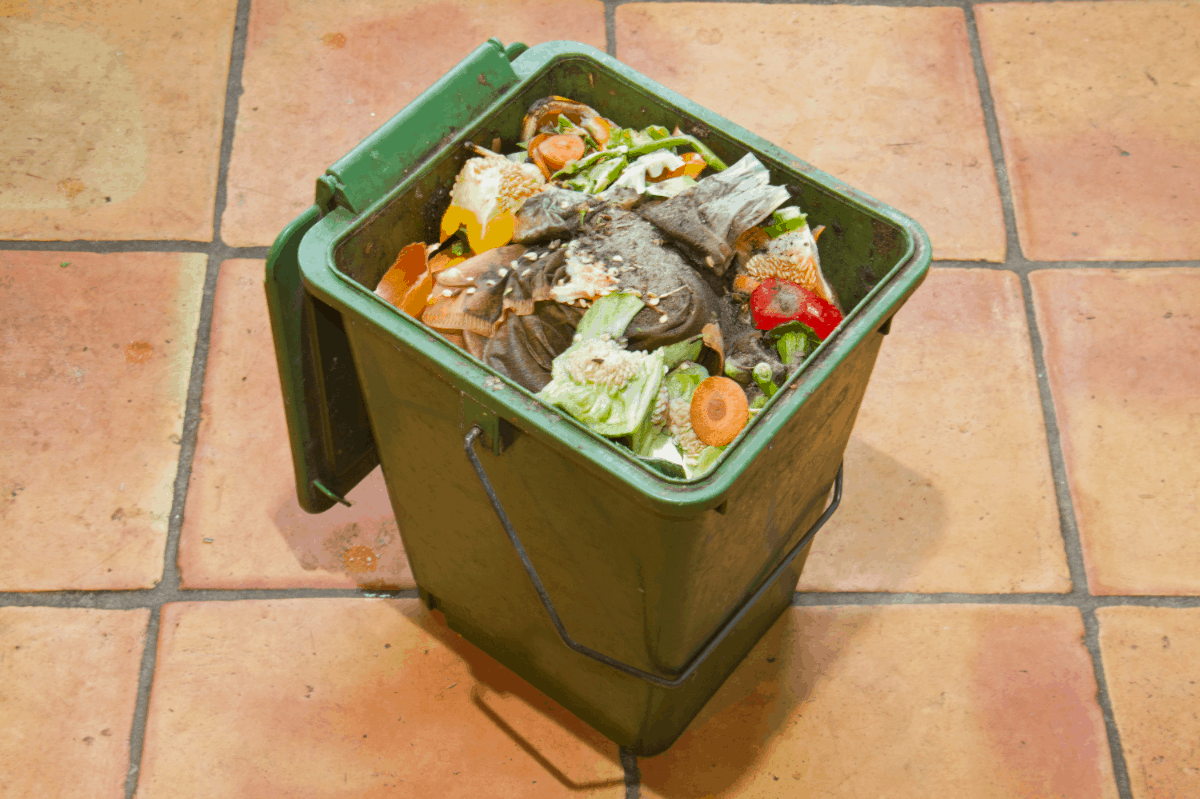
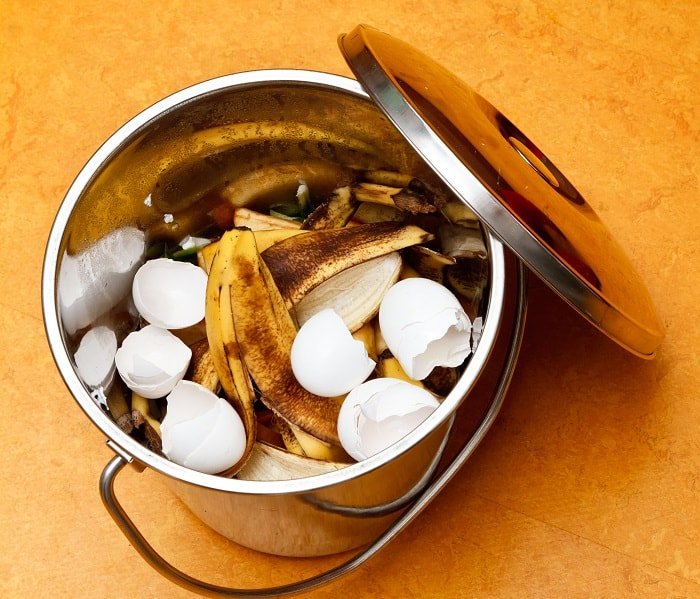
    • Kitchen waste (kitchen scraps, eggshells, coffee grounds, fruit peelings, etc.)
    • Compostable materials (paper, cardboard, straw, dead leaves, etc.)
    • Drill
    • Dirt
    • Small sticks

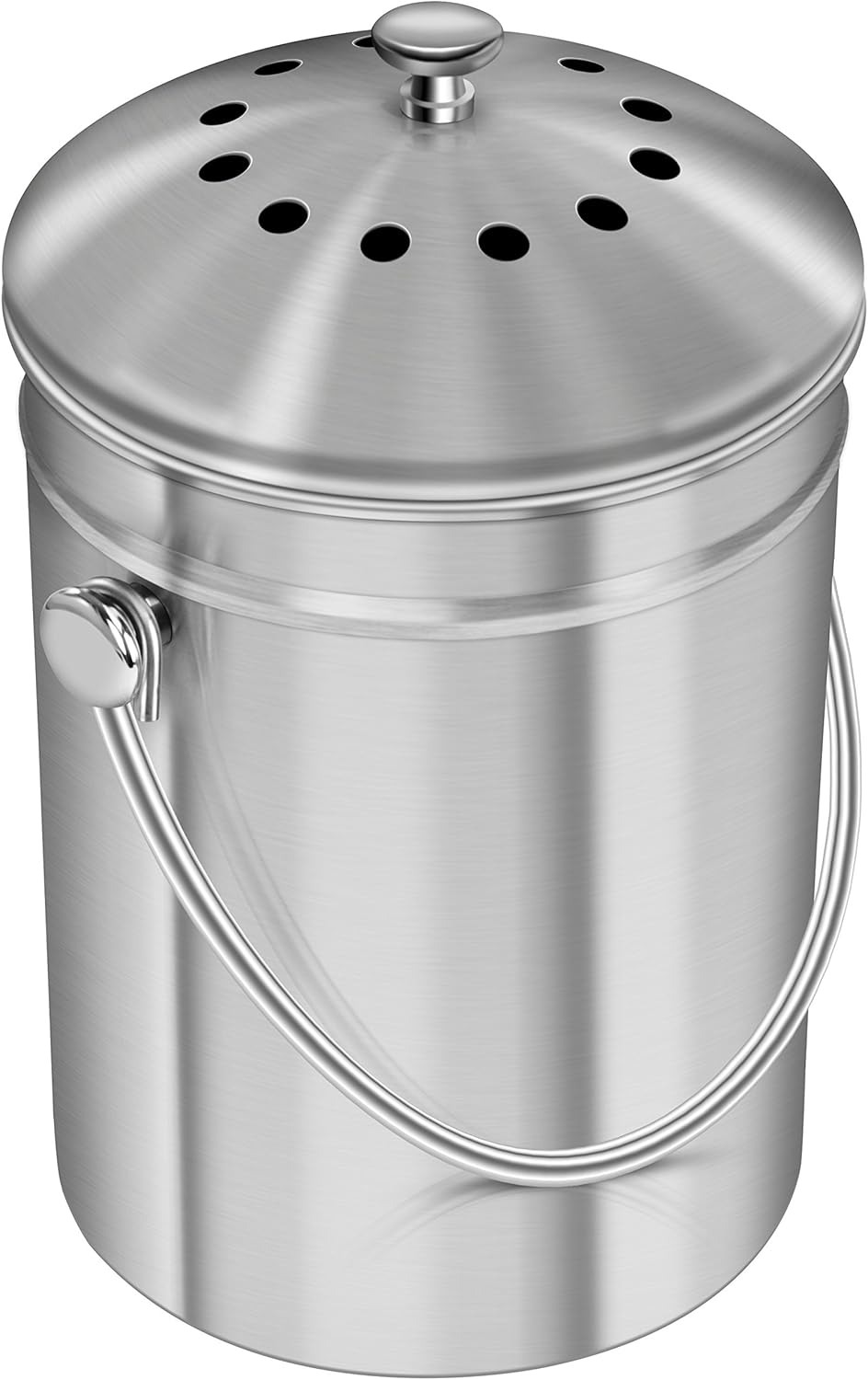
    EPICA Stainless Steel Compost Bin 1.3 Gallon with Charcoal Filter

    51KSF9lkUcL. AC SL1001

    Step-by-Step Instruction

    Once you have prepared all of the needed materials, it’s about time to start making your compost in a bucket. Here are the steps you want to follow:

    1. The very first thing you want to do is to drill holes in the bucket’s lower half and lid. This will allow the bucket to drain moisture that might be present. If there’s too much moisture in your compost, it will affect its overall quality, and you don’t want that in your garden.

    Using your drill, punch around five evenly spaced holes. If you don’t have a drill, you can use a hammer and a nail instead. 

    2. After that, you want to place small sticks at the bottom of the bucket to prevent clogging the holes with your compost materials.

    3. Once done, you can start adding your compost materials. These include all your prepared kitchen waste and compostable materials such as fruit scraps, papers, eggshells, etc. However, don’t fill up your bucket, just enough to allow air to circulate around the materials so they can decompose properly.

    You can add materials in this order:

    • First, add dirt at the bottom
    • Second, place paper materials on top of the dirt
    • Lastly, add kitchen waste like fruit peelings, eggshells, veggies, etc.
    1. After you’re done adding all the materials, simply place the lid tightly then roll your compost bucket on the ground. Each time you want to add a compost material into the bucket, make sure to roll or shake it. This will allow proper distribution of moisture, heat, and organic matter which, in turn, can help hasten the process.
    2. Every week, make sure you stir the compost at least once to aerate the mixture. Of course, don’t forget to put the lid back on to prevent unwanted pests from swarming the compost. 
    3. Once the compost is ready, you can then add it to your compost pile for use in your garden.

    Items You Want to Compost

    If you’re wondering what items you can add to your compost, we’ve classified them into green and brown materials so you can have a clearer idea:

    Green Materials

    These materials specifically refer to kitchen waste derived from organic items. These include:

    • Fruit peelings
    • Vegetable scraps
    • Eggshells
    • Coffee grounds
    • Grass clippings
    Easy-to-Follow Guide and Tips on How to Compost in a Bucket

    Brown Materials

    Brown materials, on the other hand, are still organic items that aren’t necessarily derived from food items. They include the following:

    • Paper
    • Cardboard
    • Brown leaves
    • Mulch
    • Straw

    Note: One thing you want to keep in mind is that green materials generally contain higher nitrogen content than their brown counterparts. Therefore, you want to maintain a 30:1 carbon-to-nitrogen ratio. Since each material can have different nitrogen and carbon levels, using a carbon-to-nitrogen ratio chart surely helps.

    Common Composting Issues and their Solutions

    As you start composting in a bucket, you’ll normally face a number of composting issues that commonly happen. Fortunately, we have a solution for each of them.

    • Pests and Rodents

    It’s quite inevitable for rodents and other pests to invade your compost bin, especially when it’s still fresh. Fortunately, you can easily ward them off by going for a solid-side bucket that comes with a lid. You also want to avoid adding dairy, meats, and fat into your compost.

    • Smell

    Another common issue with composting is the smell. However, you don’t have to worry too much as it can be easily solved. Once your compost bucket starts to stink, you can add dry leaves or newspapers to balance its wet-to-dry ratio.

    • Slow Decomposition

    Slow decomposition tends to occur if there’s not enough aeration inside your compost. To remedy this, you simply have to stir your pile at least once a week. You can also add small content into your pile to hasten the composting process.

    Read more about How to Make a Compost Catalyst

    Tips and Tricks

    • Don’t add fat, meats, and dairy products into your compost since they can attract unwanted pests.
    • You want to avoid adding citrus and onion peels as well since they can end up killing those beneficial microorganisms which can help break down your compost.
    • Don’t open the compost bucket so often as it will end up releasing heat. Once it happens, the decomposition process will take even longer.
    • Seaweed and algae make excellent composting materials. However, just make sure you rinse off any salts before adding them.
    Easy-to-Follow Guide and Tips on How to Compost in a Bucket

    Read more about Can You Compost Weeds? The Challenge Of Successfully Composting Them

    FAQ’s

    Can you just compost in a bucket?

    Yes, it’s possible. You don’t need a special compost bin. You can use a bucket or a bin that you put in the back of your garage or shed. If you use a plastic bucket, make sure to line it with a plastic liner. Plastic is heavier, and the weight helps keep everything in place so you don’t have to constantly stir it. The plastic also keeps the worms happy. You can either put paper down first, or not. You want to make sure that the bottom of the bucket is not exposed to moisture, because you don’t want to drown your worms! A bucket with holes in it is fine, but you can also get a plastic bin and cut the holes out. I’ve done this and it works just as well.

    Keep in mind that it’s to maintain and keep clean than a proper bin.

    Compost buckets are inexpensive and easy to use. Compost bins require more planning and effort to use effectively.

    How do you start using a bucket for composting?

    The first step in using a bucket as a compost bin is to decide on what kind of material you want to use as compost. Some people prefer to mix their own compost, others like to buy a compost that’s already made. You’ll also need to determine how much space you have available and the size of your bucket.

    The larger the bucket, the more room there will be for the compost to expand. Once you’ve decided on what type of material you’d like to use as compost, choose a bucket that has a tight-fitting lid or cap. Make sure the lid fits tightly enough to keep out animals and pests but not so tight that it becomes difficult to remove the compost when you’re ready to use it.

    When using a compost bucket, remember that the compost is an aerobic process, meaning oxygen is necessary to help break down organic matter. The air space in your compost should be kept open, so use the lid only to cover the contents completely when you’re not actively working with it. A small amount of air space will prevent the material from becoming too wet or too dry. Compost is a living material that needs to be turned regularly to keep it aerated and to make sure it’s properly mixed.

    Turn the compost by digging it up, mixing it, and then letting it sit for a few minutes before repeating the process. The compost will continue to decompose as long as it remains loose and moist, so check on it often to see how it’s doing.

    What should I do if my bucket starts to smell?

    If you notice the odor of rotting food or manure, immediately shut off the water supply to the hose. Drain the bucket and remove any food scraps or animal waste. Rinse out the bucket and add new, clean water to keep the compost from becoming too moist.

    Conclusion

    As you can see, composting in a bucket is a fairly easy and straightforward process. You simply need a bucket with a lid, your composting materials, and a few tools to get started. However, if you want a more organized and neater means of composting, you can opt for a ready-made composting instead. One such product we can recommend is the Keter Composter Bin. It has a 110-gallon capacity, easy assembly, and is made of recycled material.

    Hopefully, the guide we’ve provided above can help you create your own DIY composting bucket. Have you tried creating your own composting bin before? If so, were you able to create a successful compost?

    Let us know your thoughts by leaving them in the comments below. Thanks for reading!

  • Best Compost Products Suppliers on the Market Today

    Best Compost Products Suppliers on the Market Today

    If you are an eco-friendly gardener like me, you’ve probably tried composting household scraps and yard trash to create composts for your garden. While there are best compost suppliers out there, making your own compost is an affordable way to amend your soil and improve the health of your plants. There are numerous compost bins to choose from depending on your needs, space, and budget. 

    How Does a Compost Bin Work?

    Basically, a compost bin is designed to allow waste organic material to decompose so as to

    use it as fertilizer. Compost bins are built with the goal of transforming waste food into nutrient-rich soil that will enhance the growth of your garden and reduce the cost of purchasing chemical fertilizers

    In order to create compost material, you need a scrap of food waste like vegetable and fruit peels, eggshells, and coffee grounds. You also need other items like dead flowers, leaves, newspaper shreds, grass clippings, and straws. In order to form dark, rich, and earthy compost, you will need to add soil and water to the pile. 

    Again, the process of making compost may differ based on the type of compost bin being used. When done the right way, you will end up with rich, clumpy compost that will boost your soil’s fertility and improve the health of your plants.

    If you are planning to make your own compost, watch this video for guidelines. 

    What You Have to Consider When Choosing a Compost Bin

    • Type of Composter

    This is probably one of the most crucial factors to consider when shopping for a composter. Basically, there are three types of composters to choose from; batch composters, continuous composters, and indoor composters. Each type has its own pros and cons, which you must evaluate before making your decision.

    Batch composters have a tumbling action which makes it possible to turn organic matter into compost within a short period of time. Continuous composters are designed to hold numerous wastes and scraps which are added on a regular basis. The compost formed is removed several times in a year. The other type is indoor composters or worm bins which are designed for indoor use to turn kitchen waste into compost.

    • Size of the Composter

    The size of the compost bin is an important thing to keep in mind when making your buying decision. Large compost bins are a great choice if you have a vast amount of waste or when you want to make a large compost pile for your yard. However, a drawback of large composters is that they can be difficult to control and mix, owing to the heavy-weight on the axis point. 

    Best Compost Suppliers on the Market Today

     On the other hand, smaller composters can handle small amounts of refuse and don’t take much space like their large counterparts. The goal is to choose the right size depending on your needs.

    • Ease of Use

    While this factor is often overlooked, it is worth considering before you make any investment. Of course, you want a compost bin that is not only efficient but also very easy to use. This way, you can make the best compost for your garden needs without much struggle. 

    Product Reviews

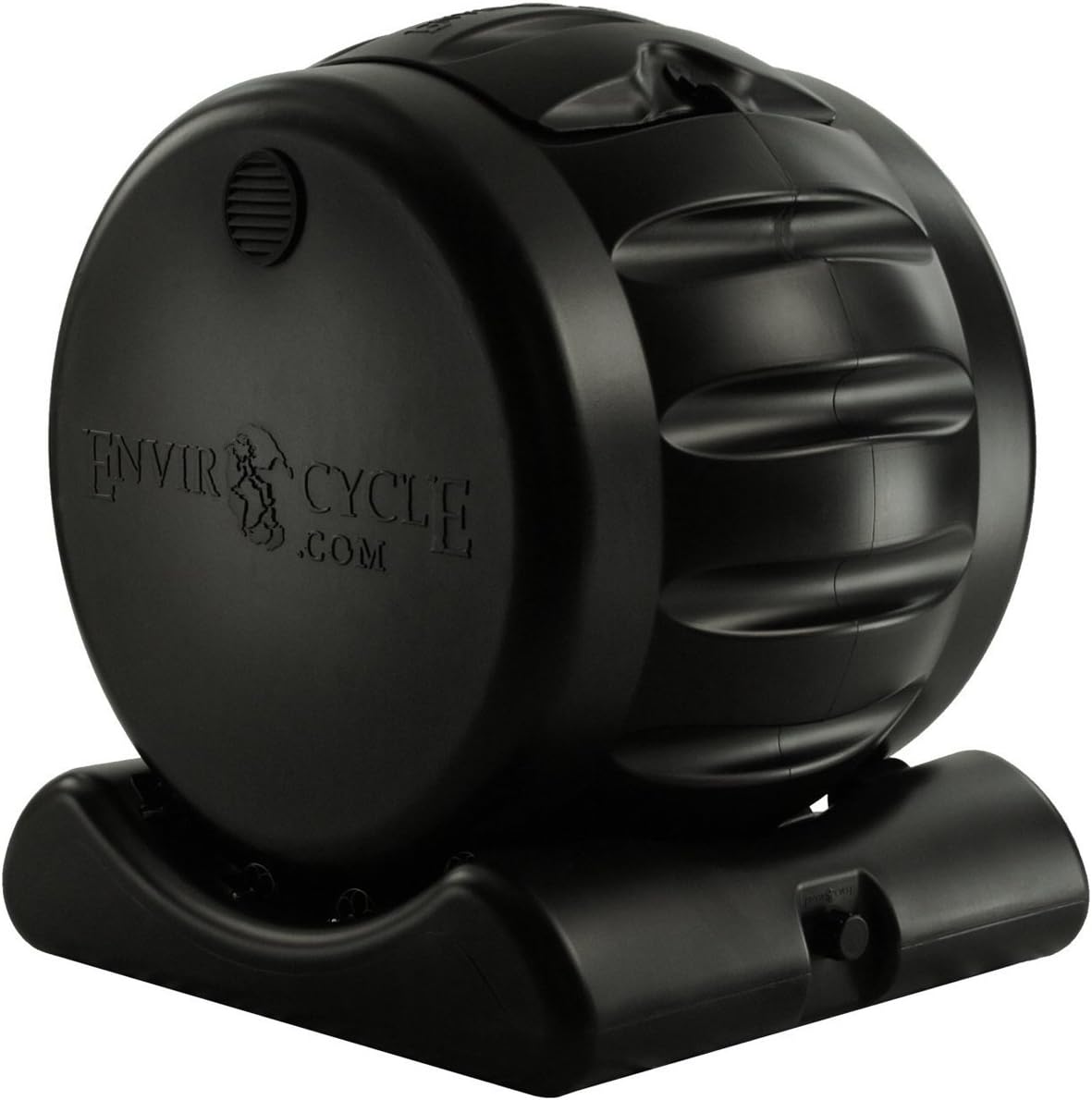
    Envirocycle Composting Tumbler Bin

    The Envirocycle composting bin is an innovative composting system that is constructed from BPA, food-safe, and rust-proof materials. This model from Envirocycle has an elegant and compact design that makes it perfect for almost any space. 

    Made in the USA, this composter weighs around 24.6 lbs and has a 35-gallon capacity, which is adequate for large applications. The drum’s door includes an interlocking design that allows you to seal the lid tightly. And thanks to the 3 air vents, there will be optimum airflow in the compost bin.

    61krtWVizqL. AC SL1280

    A unique spec of this model is that it combines both the compost tumbler drum with the compost tea maker base. As the drum rotates to produce solid compost, the base comes in handy in collecting the liquid compost to give liquid tea. This can be used as organic fertilizer in your garden.

    Things We Liked:

    • Ability to make solid and liquid compost
    • Sturdy design
    • Food safe, BPA, UV resistant, and rust-free material
    • Made in the USA

    Things We Didn’t Like:

    • On the expensive side

    Utopia Kitchen UK0051 Stainless Steel Compost Bin

    This indoor compost bin boasts a compact design that won’t take much space in your kitchen. With 1.3 gallon capacity, it makes a great choice for anyone looking for a smaller compost bin to recycle organic waste in the kitchen. 

    A great spec is the built-in replaceable charcoal filter that does a great job in trapping and controlling the odor. You can, therefore, collect the scraps in this compost without worrying about it producing a bad odor.

    81240JF07rL. AC SL1500

    What’s more, the bin comes in an impressive, stylish, and sleek design that matches any kitchen decor. Weighing just 2.45lbs, the bin can be placed anywhere you like. Impressively, the grade 201 stainless steel construction is very easy to clean, and it doesn’t harbor bacteria or produce dangerous chemicals like plastic materials. It is also very durable, and it does not crack or scratch.

    Things We Liked:

    • High-quality stainless steel construction
    • Built-in charcoal filter for odor management
    • Stylish and sleek design
    • Affordable
    • Lightweight
    • Easy to maintain

    Things We Didn’t Like:

    • The lid is too tight
    • Charcoal filter doesn’t eliminate odor and fruit flies

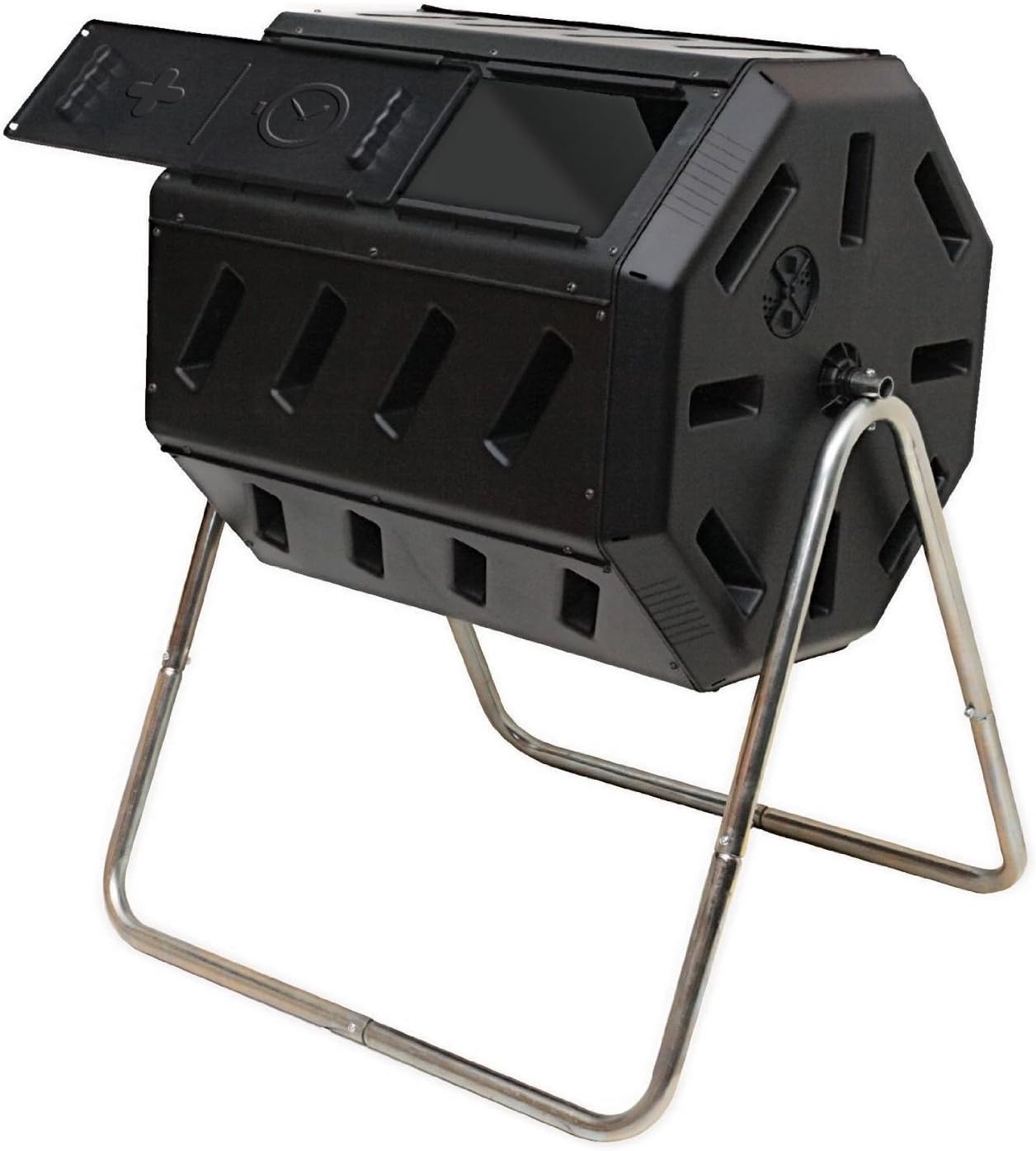
    FCMP Outdoor IM4000 Tumbling Composter, 37 gallons

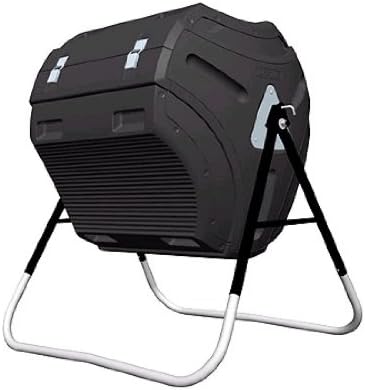
    Are you tired of mixing compost by hand? Well, what you need is this tumbling composter by FCMP Outdoor. As the name suggests, the composter comes in a tumbling design that allows you to mix your compost pile with ease. You simply need to turn the composter 5-6 times every two days or so, and you will have a fresh batch of compost in 2 weeks.

    One thing that makes this compost stand out is its two-chambered design that ensures a steady supply of compost. The model features two separate sides, allowing you to compost on one side while you leave the other side to add fresh scraps. You can also swap sides in order to create a healthy pile of compost.

    71z%2BDDF YSL. AC SL1429

    FCMP Outdoor IM4000 tumbler composer has a sturdy BPA free; UV protected polypropylene and galvanized steel construction. The tumbler has a capacity of 37 gallons, and it boasts a metal stand for suitable mixing. 

    The fact that this compost bin is easy to use makes it a great choice for beginners. You can add scraps and remove compost with ease thanks to the removable door and large openings. Plus, the body features deep fins that offer excellent ergonomic handholds and adjustable air vents for adequate air supply.

    Things We Liked:

    • 37-gallon capacity
    • Dual-chamber design
    • Adjustable air vents
    • Durable construction
    • Great value for money

    Things We Didn’t Like:

    • Sliding door freezes shut during winter
    • Side vents likely to close on their own

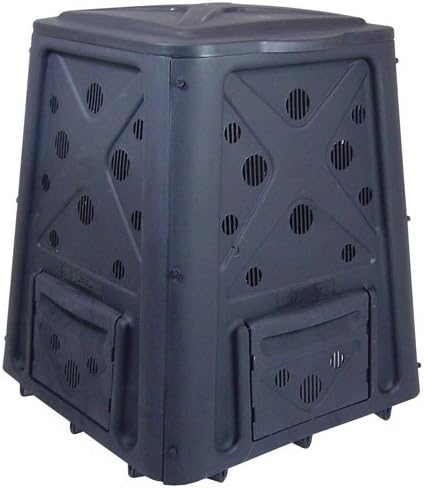
    Redmon Green Culture 65-Gallon Compost Bin

    With a 65-gallon capacity, this composter boasts a durable, rugged, and weather-proof resin construction that makes it great for outdoor use. Due to its large volume, the bin is the best option for anyone looking for the model for their garden or yard.

    This model is equipped with four doors in order to allow additional access points. There is also a handy lift-off lid that allows you to put more waste into the bin with a lot of ease. Best of all are the ventilation holes that are designed to allow adequate oxygen that will help the composting process finish faster. Plus, you can purchase an optional aerator, if you want to speed up the composting process. 

    41EOGHejdsL. AC

    Also, the Redmon Green Culture compost bin is an excellent model for anyone with a tight budget. The bin comes with useful composting instructions to help you assemble it without much difficulty. With these features, you will get the value for your money and improve the health of your yard with time. 

    Things We Liked:

    • Large holding capacity; 65 gallons
    • 4 doors for easy access
    • Convenient lift-off lid
    • Easy to assemble design
    • Affordable
    • Adequate ventilation holes

    Things We Didn’t Like:

    • No base
    • Prone to cracking in cold weather

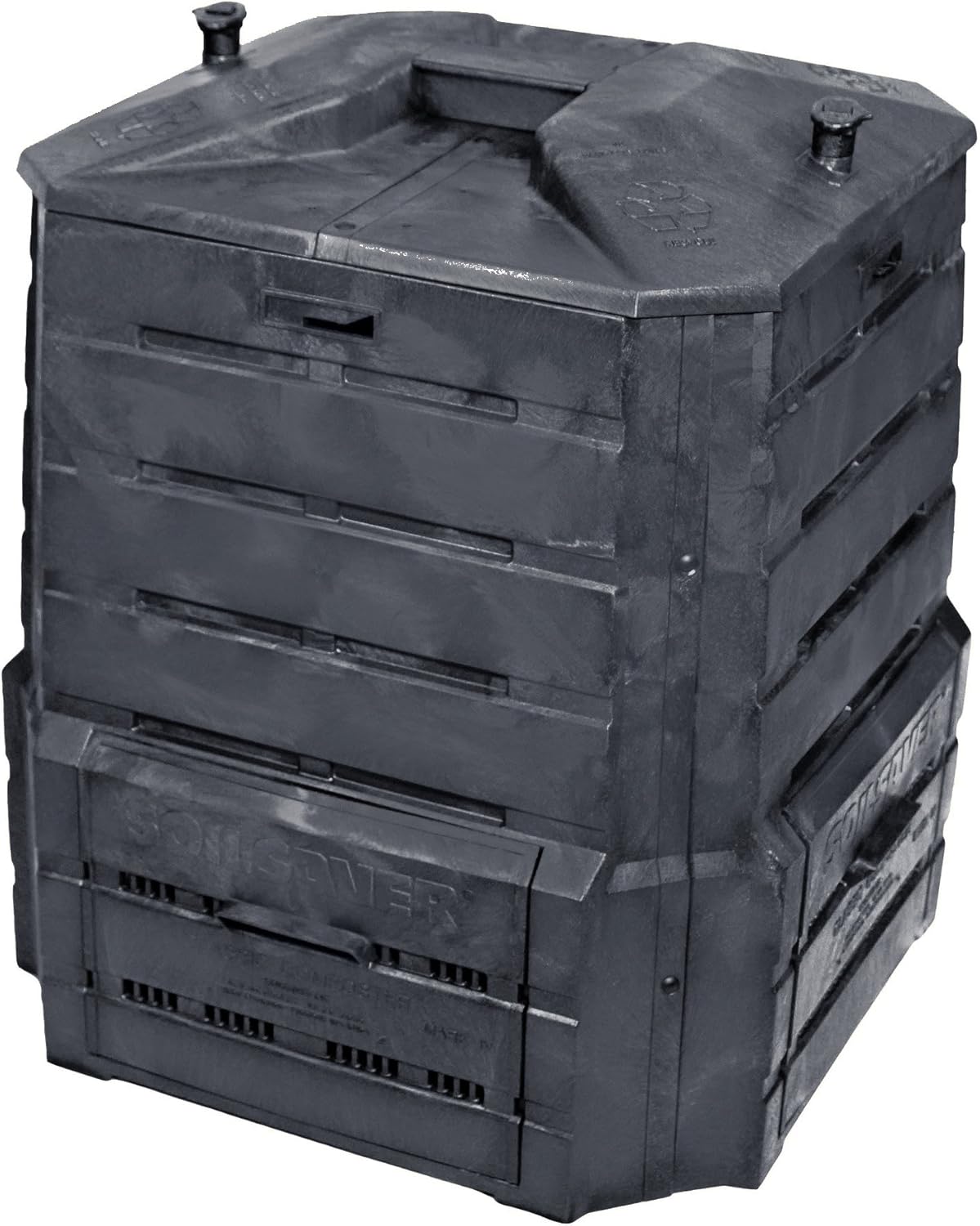
    Algreen Products Soil Saver Classic Compost Bin

    The classic soil saver compost bin by Algreen Products is a good option for large households, thanks to its large capacity. When fully assembled, the compost bin measures 28” L * 28” D * 32” Height and holds a capacity of over 90 gallons. 

    The bin is constructed from top-notch post-industrial recycled material that renders it extremely durable and long-lasting. The rugged construction makes it possible for the bin to hold massive amounts of organic waste continually.

    81nPb9PMycL. AC SL1500

    The classic compost bin features a self-watering locking lid that allows air to move in the bin while keeping animals out. It is equipped with two doors that easily slide, and a wide opening for easy access and removal of the finished compost. Additionally, the open base quickens the composting process by letting water and worms move through the soil.

    Things We Liked:

    • Large capacity
    • Self-watering locking lid
    • Thick resin walls for strength and durability
    • Rugged, BPA-free construction
    • Large opening for easy retrieval
    • Affordable option

     Things We Didn’t Like: 

    • Comes with plastic bolts that don’t hold very well

    Conclusion

    If you are planning to start composting at home, the above compost bins are the perfect place to start. Nonetheless, we were more impressed by the Envirocylce Composer, and we have reasons to believe that it tops all the other composters. Apart from the fact that it is dubbed the most beautiful composter in the world, this model is a great choice for anyone who wants to start composting hassle-free. It doesn’t require any assembling, and it can make compost faster thanks to its tumbling action. 

    We also find it very impressive that this model can produce both solid and liquid compost. The compost tea adds additional nutrients to the soil. With these and more features, you will without a doubt get the value for your money with the Envirocylce compost bin. 

  • How to Add Compost to Existing Plant

    How to Add Compost to Existing Plant

    Adding finished compost to your garden plant isn’t a difficult task, but you need to do it properly. There are ways to add fertilizer directly to your plant, and you need to be familiar with the process if you are going to get the best out of composting. 

    The main reason for starting a compost bin is to convert your household waste into useful nutrients for your plants. It will be of no use if your plants don’t get the most out of all the effort you put into the whole process. 

    It doesn’t matter if it is your lawn grass or garden bed, adding compost is easy and doesn’t require any specific training. Once you know when to add compost to your garden, and how to do it; you can now get the best out of all the many months and stress of composting. 

    How to Add Compost to Plants? 

    The soil characteristics and climate conditions of your area go a long way to determine how often to apply compost. If you live in regions with cold weather and a single growing season, it is best to add compost once during spring. 

    If you are in a region where it is possible to plant crops all year round, you can add compost twice or thrice a year, depending on how many times a year you plant on your garden. You should do this especially when you plant vegetables, herbs, and flowers; to replenish the lost nutrients after each season

    There are a lot of ways you can add compost to your existing garden plant, but we suggest that you should try any of the methods below for safe practice. 

    • Using Compost to Amend the Soil 

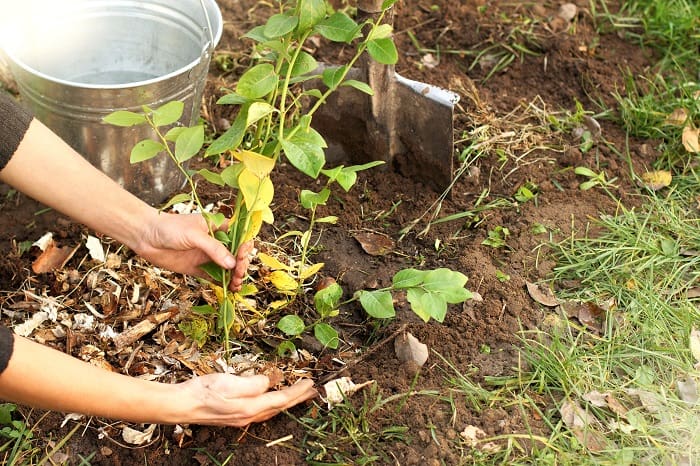
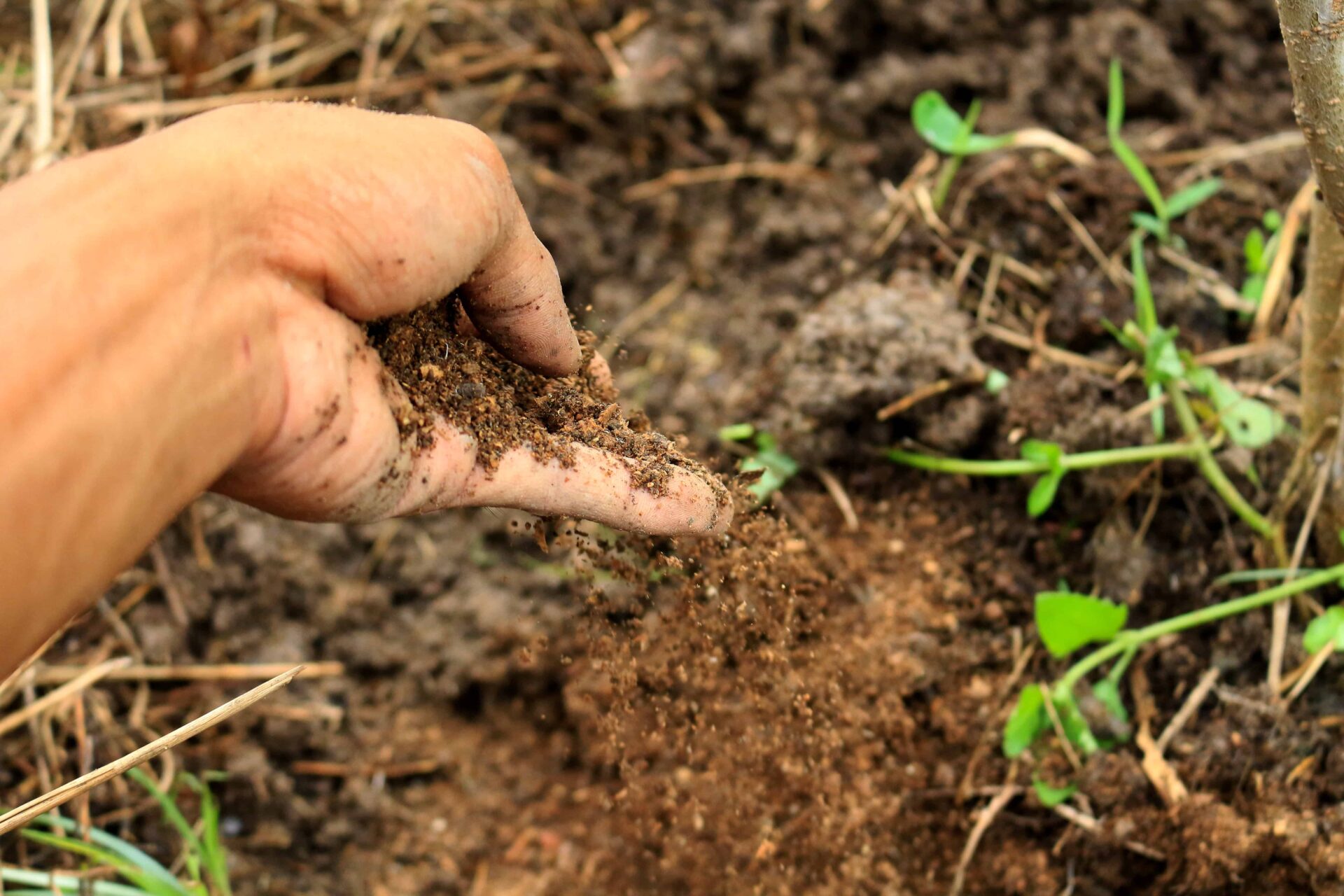
    You can add compost to your soil by slowly using the compost to amend the soil. Since you can’t make use of forks around the roots of your shrubs and vegetables, the safer alternative will be to use your hands. With your bare hands or pair of gloves on, you can spread your compost in layers of up to 4 inches around your plants. You should leave a foot space between the stem or trunk of your plant and the fertilizer, to prevent rotting of plant parts. You can finish off the process by using a rake to mix the compost on the top of the soil, and spread it uniformly for deeper penetration into the soil

    • In the Form of Compost Tea 

    Compost Tea is also a great way to feed your plants all the nutrients that are beneficial to their growth and development. You can do this by taking a pillowcase, and filling it will ready-made compost. Once it is full, dip it in a bucket of water, and allow it to settle for a few days. After two or three days, the compost should be ready for use. You can tell by looking at the compost tea; if the color is dark brown, it is ready for use. Fill the compost tea into a spray bottle for easy application to your plant leaves and roots. You want to make sure that you apply the compost tea evenly to all parts of your garden. 

    • As a Mulch 

    You can also apply compost to your garden plant as a mulch. Before you begin the process, you want to ensure that you remove all weed and grass from around your plants. You want to do this to avoid them competing for the nutrient with your garden plants. You will need to convert the compost into smaller pieces to be able to use them as a mulch. You can do this by using a mesh to sift the large sizes from the smaller ones. You also want to be careful not to waste too much of the compost during this procedure. So you should do the sifting inside a wheelbarrow, to avoid wastage. Spread the compost uniformly on the surface of the soil, you want to be careful to avoid contact with the stem of the plant. 

    How to Add Compost to Existing Plant

    • As a Top Dressing 

    Another method you can use to apply compost to your garden is as a top dressing. This method works best for lawn grass since you have to spread the compost and cover it with grass. You will have to make use of a rake to spread the compost into your lawn roots and water your garden afterward. 

    It is best to top-dress your lawn at the onset of spring and the end of fall. 

    Before Adding Compost to Your Garden 

    You want to ensure that you use only high-quality compost in your garden. You want to avoid using compost that contains ingredients that are toxic and can harm your plants. If you are going to be making your compost bin, you want to ensure that you make use of the right materials and follow the best composting practice

    You also want to ensure that your garden is free from weed and grasses to prevent competition for the available soil nutrients. 

    Compost is only safe to use on garden soil when it is fully decomposed, so you want to ensure that you check that there are no lumps or materials in the compost when adding it to your soil

    How to Add Compost to Existing Plant

    FAQ’s

    Can I just put compost on top of soil?

    There’s no doubt that compost is an important part of a garden, but there are some questions about how much compost to use and when.

    This is a great question! It depends on the type of soil. If the soil is very sandy or clay like, then you can probably put it on top. The reason for this is that the sand and clay particles will settle down in the bottom of the pot and your compost can mix into the top layer.

    How often should I add compost to my plants?

    There are two general rules of thumb for adding compost to your garden. The first is that you should use compost every month, or at least every three months. This will help the soil stay healthy and retain moisture.

    Can compost be added to garden after planting?

    It’s best to wait until the soil is warm enough for you to work with it. If you have a tiller, you can dig the compost in and mix it with the soil after planting. If you don’t have a tiller, you could do the same thing by using a spade or hoe to break up the composted material before mixing it into the soil.

    Should I water after adding compost?

    You don’t need to water. It is best to not water in summer because water evaporates, and if you are watering the garden, then it will be used by the plants as a source of nutrients.

    Is compost good for houseplants?

    I had my doubts at first, but after watching and reading about how compost works in the soil, I’m convinced that it can be just as beneficial to houseplants.

    How often should you add compost to potted plants?

    If you want your plants to get the nutrients they need, add compost regularly. The amount you use depends on how large your pots are and the size of the plant you are adding them to. For example, a small pot of soil will need more compost than a larger one. To determine the best time to add compost, refer to your garden centre’s or home improvement store’s recommendations.

    Why You Should Add Compost to your Garden 

    Using compost in your garden is as effective as adding organic fertilizers. Compost is household waste that has undergone biological breakdown and is safe to use on all garden plants. You should be aware that it is unsafe to use human waste in edible garden plants. It will be best to make use of kitchen waste instead and save the humanure for your lawn grass. 

    Now that you know the various methods on how to add compost to existing plants, you shouldn’t have a hard time making use of all that compost in your backyard pile. If you have any more questions or will like to contribute, feel free to make use of the comment section. We will love to hear from you. 

  • Is It Safe to Compost Human Waste?

    Is It Safe to Compost Human Waste?

    If you are a fanatic of green living, then you would be aware of the benefits of recycling waste. It doesn’t matter if it is your leftover food or urine from your toilet, there are methods to convert it into nutrients, for the plant.

     While there may not be many inquests into the safety of composting the kitchen waste, there are concerns about the safety of using human waste in the garden.

     With the right knowledge on how to safely recycle toilet waste, gardeners can channel all that poo to good use.

    Is It Safe to Compost Human Waste? 

    While it is safe to compost human waste, you should be careful not to use humanure on edible garden plants. What this means is that you can use it on ornamental plants and lawn grass, but not on your veggies and fruits. 

    You also should be aware that although human waste in rich in organic matter and nutrients, it is also laden with bacteria, viruses, and pathogens that are not removed by composting. 

    Compared to chemical fertilizers, human waste is a safer option to use on your flowers, potted plants, garden trees, and other plants that you don’t eat. 

    Another reason why most people shy away from composting human waste is that they can’t seem to find a neater way to do it. With the right composting devices, you can make the process easier and save yourself the hassles involved with composting. 

    How to Collect Human Waste? 

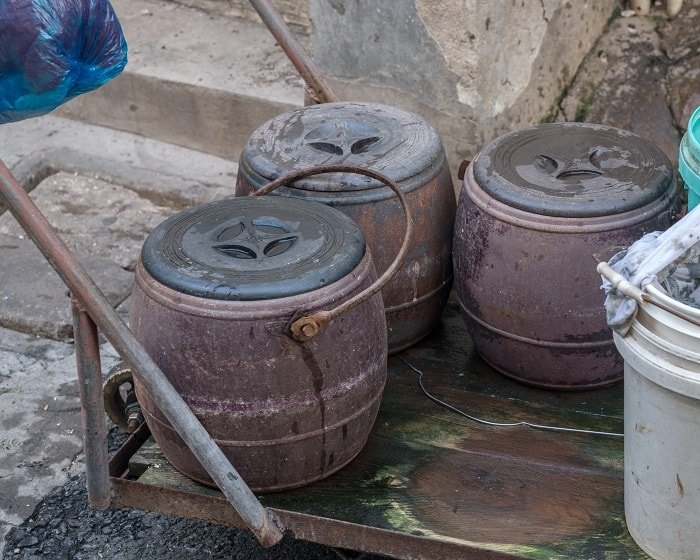
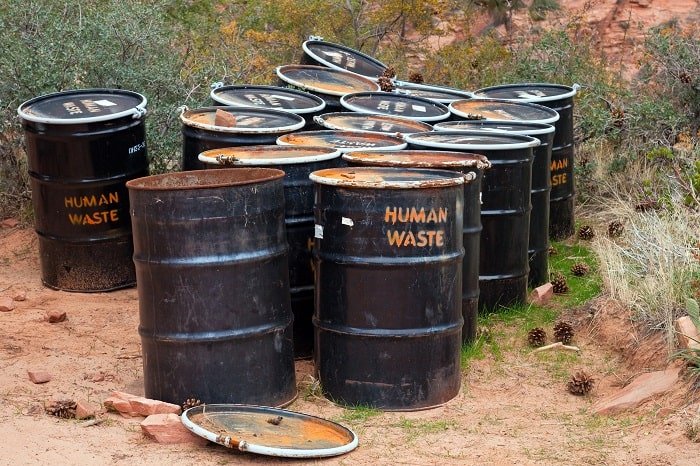
    Commercial composters are large scale facilities with the right equipment to process a high volume of waste. Night soil which is the term that is used to refer to waste collected from pit latrines, septic tanks, pail toilets, and cesspools, is used by these facilities. 

    They hire workers who collect the waste from the city and transport to their out of townsite. 

    On getting to the site, the waste is converted into fertilizer and the cycle continues. Most facilities that engage in the business have customers who are available to purchase the processed fertilizers. In most cases, large scale florists and farmers looking for organic manure for their plants. 

    How to Compost Human Waste: Is It Safe?

    Conversion of human waste into compost before adding to garden soil is necessary to reduce disease outbreak in the garden. These composting facilities follow procedures that manage the sludge in the faces and reduces the negative effects of the manure. 

     What is the Best Method of Composting Humanure?

     A lot of gardeners worry about the safety of using compost on their plants. Many of them, because they do not know how to go about the process.

    While you can make use of a compost bin to convert your kitchen waste to manure, it will be unhealthy to do the same with your toilet waste. So what is the best method to compost human waste? 

    • Use a Composting Toilet 

    A composting toilet is the easiest way to convert your toilet waste to manure without getting your hands dirty. All you need do is to install the system and do your business, then occasionally turn the composter to speed up the whole process. There are different models of composting toilets available to choose from, so you want to do your research properly to find the one that works best for you. You should be aware that some of them cost less than $100, while you can spend up to $10,000 on some systems. 

    |

    Most of the elaborate systems are built on-site and are equipped with everything you need. They are odor-free, self-contained and feature compartments where you can easily access readymade compost. Some other brands have separate paths for collecting urine and feces, while others have separate systems fitted on them. Once one of the systems is full, it is closed, and the other is opened; the process is repeated until there are no new piles available. 

    Tips on How to Successfully Compost Human Waste 

    • Use a Composter 

    If you can’t get access to a composting toilet, but still see the need to convert your toilet waste, then you should consider using a compost tumbler instead of a bin. The reason for this is that a compost tumbler turns the pile automatically; whereas you will have to do it manually with a compost bin, which can be messy.  

    • Keep it Dry 

    You want to ensure that human waste is kept dry. You have to ensure that it is covered at all times, to prevent water, snow, and moisture from getting into it. When this happens, it can make the compost smell bad, and reduce the degradation process. You shouldn’t have to worry about this with a compost tumbler since the units are completely sealed. 

    How to Compost Human Waste: Is It Safe?

    • Use Lime

    We always recommend that you add lime to your compost tumblers with human waste. Adding lime to the system helps to kill the pathogens and bacteria and speeds up the entire process. With the addition of lime, your humanure can be ready in less than 4 months, while it can take up to a year without adding lime. So if you are eager to get your result in the shortest possible time, you may want to think about using lime along with a compost tumbler. 

    • Avoid Using it on Edible-Plants 

    You should avoid using human waste on your edible-garden plants. If you eat it, you shouldn’t use toilet waste on it. You don’t want to risk contracting diseases from the plants when it is ingested. You can make a separate compost bin for your kitchen waste for use on your veggies and berries, and all other plants in your garden. There is also the option of purchasing already made organic compost for use in your garden. Whatever method you choose, it doesn’t matter; so long as you don’t make use of chemical fertilizers that are unsafe for your plant and the environment. 

    How to Compost Human Waste: Is It Safe?

    FAQ’s

    Can you use human poop for composting?

    You can use it if you know how to do it properly, but generally speaking, no, human poop is not suitable for composting. It contains high levels of nitrogen and potassium, which can kill plants. In addition, it contains some dangerous pathogens, such as salmonella and E.

    What are the easiest ways to compost human waste?

    there are many ways to compost human waste. For example, you can collect urine in a bucket, mix it with sawdust or newspaper, and add worms. This type of composting is called vermicomposting. Or, you can collect feces and mix it with some organic matter, such as kitchen scraps or manure, and then add worms.

    This process is called anaerobic composting. Another method for composting human waste is to pour the liquid portion of the waste into a pit lined with straw, and then pile the solid portion of the waste on top of the liquid. When the liquid drains into the pit, the solid waste will decay and eventually break down to form new soil. You can also compost human waste in a worm bin. A worm bin is a special container that holds worms that will eat the waste.

    The worms will turn the waste into rich, fertile soil.

    When shouldn’t I use human waste?

    If it smells bad, DON’T. It’s not healthy for the ecosystem and will probably attract unwanted critters like flies and beetles.

    Why is human waste so harmful?

    It’s because the pathogens in human waste can be transferred to our food and water supplies, as well as into the environment. Pathogens are germs that cause diseases. They come from animal or human feces, as well as from insects, plants, soil and water. The term “pathogen” is used when we are speaking about bacteria, viruses, protozoa or other microorganisms.

    Is human faeces alone good for plants?

    The answer is a resounding “no.” The waste products of the human body have many harmful effects on plants, including soil quality and plant health.

    There are two main reasons why we should be concerned about our waste:

    1. The soil is the source of life. Soil acts as a filter, separating out nutrients and pollutants from the water that flows through it.

    If the soil becomes polluted, it will eventually cause problems for plants.

    2. Humans need food to live. When we eat food, we take in many nutrients, including vitamins, minerals, fiber, and proteins. When those nutrients enter the human body, they are transformed into waste. When our waste is not properly disposed of, these nutrients can pollute our soil and waterways, which may then cause problems for other organisms, such as fish and wildlife.

    Conclusion 

    Composting is of great benefit, as it is a great way to convert waste into organic matter for use in agriculture. If you are a gardener, you can provide your plants with rich soil nutrients by starting a backyard compost bin. 

  • Lifetime Compost Bin Review 2021

    Lifetime Compost Bin Review 2021

    Having a lifetime compost bin is exactly what I have been wanting to get for the longest time. Kitchen scraps and wastes from the garden should not be put aside as using a compost bin will enable it to become fertilizer. Also, not having to replace it is much more economical than having to buy a new one every few years. 

    Having a composting bin not only reduces waste but also promotes the healthy growth of plants and trees. Also, it reduces pollution because the wastes are being recycled as a fertilizer. A person should consider buying this item if they acquire a lot of kitchen scraps and preferably those that have a garden in their home, so the compost bin will be of great use. 

    Who Should Not Buy This?

    It is definitely easy to purchase a compost bin but ask yourself first before buying one. Where will you use this, and why? If you decide to buy one, always consider the use of the product. If you plan to have one to have fertilizer, but you don’t have a garden yet, then there’s no point in buying this product anytime soon.

    Lifetime Compost Bin Review 2019

    Things You Need to Think About Before Buying This Product

    • Choosing the Size

    There are different sizes and styles to choose from, and you should make sure that you are getting the right one for your own home. Most people opt to purchase a low maintenance composting bin because of their busy lifestyles, so make sure to research about the different types and get the one that will work best for you.

    •  It Will Take Some Time to Do

    It will take a while before you get accustomed to using your compost bin, and if you have a very busy lifestyle, then buying this might not work for you. You should consider the fact that it could take up to two years (depending on the type of composting method) to achieve the proper compost. Using it simply to dispose of food scrap is not advisable because you will end up having a smelly and possibly, a mosquito-infested bin. 

    • You Should Know How it Works First

    This product is not meant to be a buy and use purchase, especially if you are a beginner. You need to research about the proper ways to use a compost bin before finally having one. Additionally, you also have to think about the pros and cons of your prospective items.

    • Consider the Space

    It is not ideal to have a compost bin if you have limited space in your house. Let’s say you have a small garden in your backyard; it can possibly work as long as it will not be close to your doors, windows, or any entry points in your house. The reason is that even the most maintained composting bins can emit a rather unappealing smell, and you do not want your guests to be turned off because of that. 

    • Get to Know Someone Who is Into Composting

    It will be easier for you, especially if you are just starting out, to get to know someone who already knows the right process and other things that involve composting the right way. To have a healthy compost, you need to have a mixture of green and brown waste. Besides, not all the waste that you see can be put inside the composter. As an owner, it is your responsibility to know all the dos and don’ts to get the right outcome. Failing to do the right way of composting will result in a slimy compost. 

    Lifetime Compost Bin Review 2019

    Lifetime Compost Bin Review

    It is much more durable than other compost bins that are available in the market because it is made from heavy-duty plastic. It is also UV-protected which means that the plastic will not break or peel even if you put it in a place that is directed to sunlight. Upon purchasing, it comes with a warranty of five years. 

    Pros

    • It is made with a polyethylene material which makes it last longer than other compost bins that are available in the market today. 
    • It comes with a five-year warranty, which is already a steal considering that most of the companies only offer their warranties for two years or less. 
    • The unique locking feature prevents the compost from spilling out and because of this, it keeps the rodents from going inside the bin.

    Cons

    • Customers complain about how difficult it was to assemble. It is time-consuming to put together, especially for newbies.
    • Some materials that are delivered to customers are incomplete. For example, the lack of screws and drill bits. 
    • Instructions on the manual aren’t clear enough and you have to follow it step-by-step to assemble it properly.


    41fCUS 8WqL. AC

    Features & Benefits

    • It has a built-in axis for smoother rotation and to balance the compost bin. 
    • It comes with a removable lid that is large enough to put in wastes properly. This feature also has latches that are strong enough to keep the rodents from opening the lid. 
    • It has an ample height, so you don’t need to slouch down to load scraps inside the bin.

    Alternatives

    Redmon is perfect for those young people that are starting out to compost. However, the compost bin cannot be rotated and is stationary, making it difficult for seniors to mix the scraps when you are about to add new ones inside. 

    Both Lifetime and Redmon have an ample opening to put in the scraps conveniently. 

    41EOGHejdsL. AC

    Envirocycle’s compost bin is not as tall as Lifetime’s but is easier to assemble and use. 

    Lifetime and Envirocycle are both durable and are made with materials that will make it last longer.

    61krtWVizqL. AC SL1280

    This compost bin is stainless steel and is small enough to be put in tight places. This is perfect for those people that have limited space in their houses.

    Both Lifetime and Epica are offering various sizes for people to choose from. 

    51KSF9lkUcL. AC SL1001

    FAQ’s

    What Are Lifetime Compost Bins?

    The idea behind the Lifetime Compost Bins is that you can use these bins to compost for free. If you have ever bought a bag of organic waste at the supermarket, you might have wondered why it’s so expensive. The reason is that it’s difficult to compost it yourself, and most people don’t have access to a large enough bin. Lifetime Compost Bins are designed to help solve this problem.

    They are made from recycled materials, and are designed to allow you to compost your food waste in a convenient way. If you are looking to save money on your weekly shop, then these are the perfect solution for you. You can compost for free, using your own organic waste.

    How Do Lifetime Compost Bins Work?

    There are two main ways that these bins work. Firstly, they are designed to be filled with your food waste. This is great, because it means that you won’t need to buy any more bags of organic waste. Secondly, they have been designed to be a convenient size. They are the right size for most households.

    Alternatively, if you want to get more out of these bins, then you can compost your food waste in these bins, and add it to your existing compost heap. This way you will be recycling your food waste, while still being able to compost it.

    What are they made out of?

    Lifetime Compost Bins are made from recycled plastic. They are made to be very durable and easy to use. They are made from durable, heavy-duty materials that will last you a long time. These bins come in different sizes so you can choose the one that best suits your needs.

    Is it a good option for those who are new too composting?

    A Lifetime Compost Bin is usually a small, plastic bin that allows you to safely and easily compost your kitchen scraps. The Lifetime Compost Bin is ideal for those who are new to composting or simply want a more convenient option than a large pile of compost in their backyard. The Lifetime Compost Bin also works great as an alternative to a garbage can. The Lifetime Compost Bin is an attractive, compact bin that is easy to use.

    What sizes does it come in?

    Lifetime Compost Bins come in several sizes: 5-Gallon, 15-Gallon, 20-Gallon, and 30-Gallon. The largest size is perfect for large families or for someone who has a large amount of food waste. The smallest size is ideal for a small home with little food waste. The Lifetime Compost Bins are manufactured from high quality, food grade plastic and will not leach any harmful chemicals into the soil or water.

    Conclusion

    If you are into gardening and would like to purchase a compost bin to make it more convenient for you to have a fertilizer at home rather than purchasing it outside, then Lifetime Compost Bin is a worthy product to choose. First of all, compost bins reduce pollution, help produce healthy plants and trees, and prevent pests from damaging your plants. If you are interested, please check out the product and its features here

  • Can You Compost Wax Paper? What You Need to Know

    Can You Compost Wax Paper? What You Need to Know

    I tend to use wax paper quite often when kneading bread or rolling out pie crusts before baking. After all, it’s really helpful in preventing food from sticking onto surfaces, not to mention it has various other uses as well.

    If you practice composting and use a wax paper on a regular basis like me, you might ask: can you compost wax paper? Let’s find out.

    Can You Compost Wax Paper?

    The answer can be either yes or no. If you’re planning to compost your wax paper after use, then you might want to reconsider. A wax paper can be made of either soybean wax or paraffin. 

    Soybean wax is an organic vegetable wax derived from soybean oil and is most often used in making candles. Upon harvest, the beans are then cleaned, cracked, and processed into flakes where the oil is extracted from. The oil then undergoes hydrogenation which converts unsaturated fats to saturated. This will raise the wax’s melting point, thereby causing it to become solid at room temperature. The finished product is then referred to as soybean wax or simply soy wax.

    "Can You Compost Wax Paper? What You Need to Know "

    On the other hand, paraffin wax is derived as a byproduct of oil purification via a dewaxing process which crude oil goes through. It’s commonly used in a variety of applications including candles, cosmetics, commercial items, wax papers, and more.

    Now let’s go back to the main topic. 

    Basically, it’s possible to compost wax paper based on the type of wax used to coat it. Soybean wax is organic; however, since it is a wax, microbes will have a hard time digesting it. On the other hand, petroleum-based is not, and it should be kept away from your compost or even your garden.  

    Another thing you have to consider is the process used by wax paper manufacturers. Some of them use bleach or chlorine during the papermaking process. While bleach is ideal for destroying pathogens as well as harmful microbes at home, they shouldn’t go into your garden.

    This is because it will end up killing all those beneficial microbes which are essential for the composting process. Aside from that, it will also affect your plant’s growth, even kill it altogether.

    That said, if you’re planning to place the wax paper into your compost bin, you want to make sure it’s coated with organic soybean wax and comes unbleached. However, you have to keep in mind that wax repels moisture. Therefore, your wax paper will remain in your compost for a little while before being completely decomposed.

    Why an Unbleached Paper Matters?

    Since paper is generally made from wood, it will appear brown in its natural state. However, to change a paper’s appearance to white (and make it look more appealing), it will have to undergo pulp bleaching – that’s where the problem begins.

    Although there are different ways of bleaching, most bleached papers will be treated with some type of chlorine-based bleach. The reason is because chlorine is capable of bleaching paper to give it that really white appearance. Apart from that, it also removes the lignin compound in wood which is the reason why paper gets yellow when exposed to the sun. This is a common case among newspapers (due to this, they are chlorine-free and will, therefore, go well in your compost bins).

    Can You Compost Wax Paper? What You Need to Know

    The problem with chlorine is that when it binds with compounds like lignin in wood pulp, it will produce dioxins and other byproducts which are highly toxic and can cause damage to living systems. It is for this reason why wax papers consisting of bleached paper are not advised for composting as they can only kill off those beneficial microbes that are vital for composting.

    What Are Your Options?

    From what we have gathered, we can confirm that wax paper is compostable as long as it’s unbleached and coated with soybean wax. However, if you don’t prefer putting it in your compost bin, you can reuse it instead.

    In fact, wax paper can be reused given that it’s not soiled with any food or grease. You can simply clean it and reuse it for another cooking batch. However, do keep in mind that it is not recyclable due to its wax coating. The paper recycling process involves mixing the paper with water then turning it to a slurry. 

    Unfortunately, wax and water don’t mix, so wax paper isn’t viable for recycling. Once soaked with grease, it can be considered contaminated as it won’t be possible to remove the grease out of it. It’s also impossible to remove the wax layer off the paper to make it recyclable. 

    That said, another option you can use is simply to dispose of your used wax paper properly and go green instead. As mentioned earlier, go for unbleached paper with a soybean wax coating instead of paraffin. You can also try to reduce your usage of wax paper or opt for cellulose bags which are recyclable paper products that can decompose within 30-90 days.

    You may also opt for Ziploc plastic bags which can be recycled at some recycling centers (though you’ll have to check your local recycling center first). Just make sure to check the recycling guidelines in your area if they’re accepting plastic #4. 

    Alternatively, you can instead cook recipes that don’t rely too much on the use of wax papers or even parchment papers. There’s actually a handful of them you can find out there.

    FAQ’s

    Can you compost waxed paper?

    You can use waxed paper, but there are a few things to keep in mind.

    First of all, the wax coating on the paper won’t melt down into the compost. This is good. The wax itself will melt down into the compost, but it won’t harm the bin. The problem comes when the paper melts. If you place a piece of waxed paper on top of the compost bin while it’s heating up, the heat from the heating element will melt the paper.

    This means that the paper will begin to emit gases and odors which will eventually have to be vented outside. The compost won’t smell. It just will have some odors emanating from it. The paper is not a barrier to composting. It doesn’t stop anything.

    How can you control the smell?

    The best way to prevent this is to use a composting bin without any waxed paper on top. The compost will heat up more slowly, which will cause less emissions. This isn’t always possible. Many people use waxed paper because they can put the compost in the bin after they take out the compost material. They don’t want to disturb the compost material. If you do use a composting bin with waxed paper, the best way to prevent this is to put a plastic bag over the top of the bin and then put a lid on the plastic bag. This will cause the paper to become much cooler than the air around it.

    You don’t have to wait until the bin is full to put the bag on top. Just leave the bag there until the compost is done. The next way to prevent the smell is to make sure that you keep the bin clean. If you don’t, then the smell will come from the rotting compost materials. It is very important to keep the bin clean so that the materials can break down properly.

    How long does wax paper take to decompose?

    It depends on the temperature and humidity. If it’s hot outside, your wax paper might be ready to go faster. If it’s cold outside, wax paper might not decompose as fast.

    Generally speaking it should take somewhere between 2 to 4 weeks to decompose.

    Is the wax on wax paper toxic?

    As long as it is food grade wax paper, it isn’t toxic and you can use it for compost with confidence. It may look like it may have harmful chemicals but for the most part you’re good to go.

    If you’re wondering about what the thin coating on wax paper is, it is called paraffin wax and can be composted without any problems.

    Conclusion

    If you just can’t seem to shake off your usage of wax papers, then make sure to go for these eco-friendly options:

    • Instead of buying paraffin-coated, bleached wax papers the next time you buy on the local grocery, make sure to go for those coated with soybean wax and are unbleached.
    • Or better yet, instead of composting them, throw them into your garbage bin and keep them away from your garden for better measures.

    Have you tried placing your used wax papers in your compost bin? What are the results so far? Please let us know in the comments below. Thanks for reading!

  • Compost Tea Feeding Schedule 

    Compost Tea Feeding Schedule 

    Compost tea constitutes a healthy sippy diet for your plants. As a gardener, you can convert your kitchen waste to a rich compost to improve both indoor and outdoor plants. 

    With the right compost tea feeding schedule, you can provide your plants with all the nutrition they need to grow. Imagine not having to worry about your yield at the end of the growing season. 

    While compost tea is useful in the garden, not all gardeners are familiar with how best to prepare or use compost tea in the garden. If you are one such gardener, you are in the right place. You can read up more about compost tea and the best feeding schedule for your plants below. 

    What is Compost Tea? 

    The simplest way to define compost tea is the result of soaking a bag of compost in water. You can imagine soaking your tea bag in a cup of boiling water; it is the same thing. 

    There are several ways to go about making compost tea, but all of them involve transferring the nutrient from the compost to the water. Just like with your morning tea, to get the nutrient in the bag, you have to soak it in water. So the two things you need to make compost tea is compost and water. 

    Compost Tea Feeding Schedule

    Most gardeners have their brewing methods depending on the plant. It is one of the benefits of compost tea; you can experiment with it to find what works best in your garden. 

    If you have an indoor garden, or you make compost tea frequently, you may consider getting some gears to help make things easier. 

    How to Make Compost Tea? 

    Making compost tea is as easy as diluting fresh compost mix in water. Introducing air in the mix improves the concentration of organic matter. Aerobic compost tea is rich in nutrition than with oxygen in the mix. With oxygen in the mix, the microbial solution in the soil increases, which further enhances the plant’s immune system. 

    The aeration process is the most important aspect of brewing compost tea. Most gardeners get the process wrong which can harm the plants, and make the compost tea to stink. Your best bet is to keep the compost tea aerated until you are ready to make use of it. 

    You can make use of an airline to aerate your compost tea. Removing the airline will cause the microbes in the mix to die. 

    A compost brewing unit is a suitable gear for making rich compost tea. You can liken it to a coffee machine. You can save yourself the stress of making compost tea by purchasing a small unit for your plants. Breaking down oxygen is a lot easier with a brewer. You can make use of airstones with the brewer to ensure oxygen is available for microbial activity. 

    Before Applying Compost Tea 

    Your compost tea should be ready for use from the third day after soaking it. For the best result, you should soak your compost for a week.  You will need to allow up to seven days for the compost to dissolve in water. 

    After you are satisfied that the compost tea is ready, you will have to remove the debris from the compost tea. You can do this by using a cloth to strain the tea. You will have to do this if you intend to make use of a foliar spray. 

    Applying Compost Tea 

    There are different methods you can adopt to apply compost tea to your plants. You have to try a few of the methods to find one that works well with you. The best way to apply compost tea is by:

    Foliar Application 

    The simplest way to apply compost tea is with the help of a foliar spray. Spraying your leaves with compost tea is a quick way to accelerate the nutrient supply to your plants. 

    Compost Tea Feeding Schedule

    You can also spray it directly to the roots of the plant. If you make use of a watering can, you can get the compost tea to reach both the leaves and root. It doesn’t matter what you use in spraying your plants, so long as you can get the compost tea to reach all parts of the plant. 

    Best Time to Apply Compost Tea 

    When is the best time to have a cup of coffee? In the mornings, right? So also it is with your plants. You should apply compost tea in the mornings before the sun is high in the sky. The compost tea needs to be absorbed by the plants and the soil. And the best time to feed your plants is in the morning before the sun is hot. Applying your compost tea in the afternoon when the sun is out will cause some of the tea to evaporate in the heat. 

    You can also apply compost in the evenings when the temperature is below 80 degrees. You also want to avoid applying compost tea when it is windy. High winds are capable of drying up moisture, thereby reducing the nutrients available for your plant. 

    You should apply compost tea weekly for the best result. You may need to make it twice a week on the newly transplanted bed to improve the nutrient condition of the growing medium. 

    Compost Tea Feeding Schedule

    In most cases, you can apply compost tea directly without having to dilute it further with water. If you make use of manure as compost material, you should avoid adding too much compost tea to your plants. Manure is high in nitrogen, and this can alter the nitrogen level of the compost tea. 

    FAQ’s

    How often do you feed compost tea?

    It has been made for thousands of years from various sources. It has been used as a fertilizer and as a means of pest control. Compost tea is safe to use on food crops.

    Compost tea is a concentrated liquid fertilizer that you can use as a foliar spray or an all-purpose garden or lawn fertilizer. Compost tea is made from organic materials that are broken down by microorganisms and left to ferment in a bucket or barrel for several weeks. This process creates a nutrient-rich, dark, milky liquid that has the potential to be even more potent than compost itself.

    If you’re a gardener, then you know that you need to give your plants the nutrition they need to grow. As gardeners, we have to be conscious of what we’re giving our plants and how often.

    Compost tea is a very popular fertilizer for gardens. Most gardeners apply one or more of these types of fertilizer each week. In the case of compost tea, this is called a liquid fertilizer.

    Can you over fertilize with compost tea?

    You can over-fertilize with compost tea, but if you do, be sure to read up on how much compost tea you should use, since you will need to add water and/or nutrients to the tea in order for it to work.

    How fast does compost tea work?

    Compost tea is a liquid that contains living organisms, such as bacteria and fungi, which break down the organic matter in compost and other yard waste to release nutrients.

    The first thing to know about compost tea is that it will work. It can take weeks, or even months, for compost tea to fully break down and start working on the target microbe or bacteria that’s causing your problem. However, you’ll notice a difference almost immediately after adding compost tea to your plants.

    How long does compost tea keep?

    In a closed container, I’d expect it to last a few months. My compost tea is almost four years old and still smells great.

    What is the ratio of compost tea to water?

    The ratio of tea to water varies with the amount of organic material added to the tea. For a standard recipe, you’d use 1 cup of tea to 2 cups of water. This would yield 1 quart of tea.

    How do I know when compost is ready?

    You can tell when your compost is ready by the smell. You will notice that the compost has reached its peak of activity, and it’s time to put it in the garden or pot. This means that the compost has become rich, dark and moist. The air should be warm but not too hot.

    Take Away

    The type of compost used determines how rich the compost tea will be, so you must make use of compost with rich organic matter. You should be careful with the mineral concentration of your compost tea. Remember, too much nitrogen in your compost tea, for example, can burn your plants. 

    You also want to avoid using chlorinated water for compost tea. You should also avoid adding slake lime to your water. 

    Now that you are familiar with the compost tea feeding schedule above, you shouldn’t have a hard time preparing a quick fix for your plants.