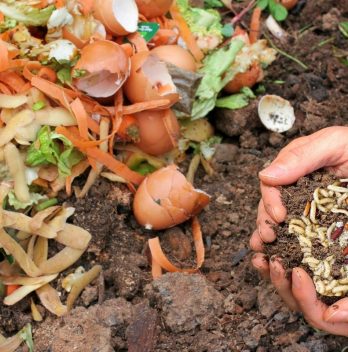
Living in an apartment doesn’t mean you have to give up on composting. With the right approach and tools, you can turn your kitchen scraps into nutrient-rich compost even in the smallest spaces. This guide shows you exactly how to get started with apartment composting—no yard required.
Why Compost in Small Spaces?
Composting reduces waste, saves money on fertilizers, and gives your plants the nutrients they need to thrive. Whether you have a balcony, patio, or just a kitchen corner, you can create quality compost without odors or mess. The average household throws away 200+ pounds of compostable material annually—that’s money and nutrients going straight to the landfill.
Before diving into methods, check out our Composting 101 guide to understand the basics of what makes good compost.
Best Composting Methods for Apartments
1. Countertop Compost Bins
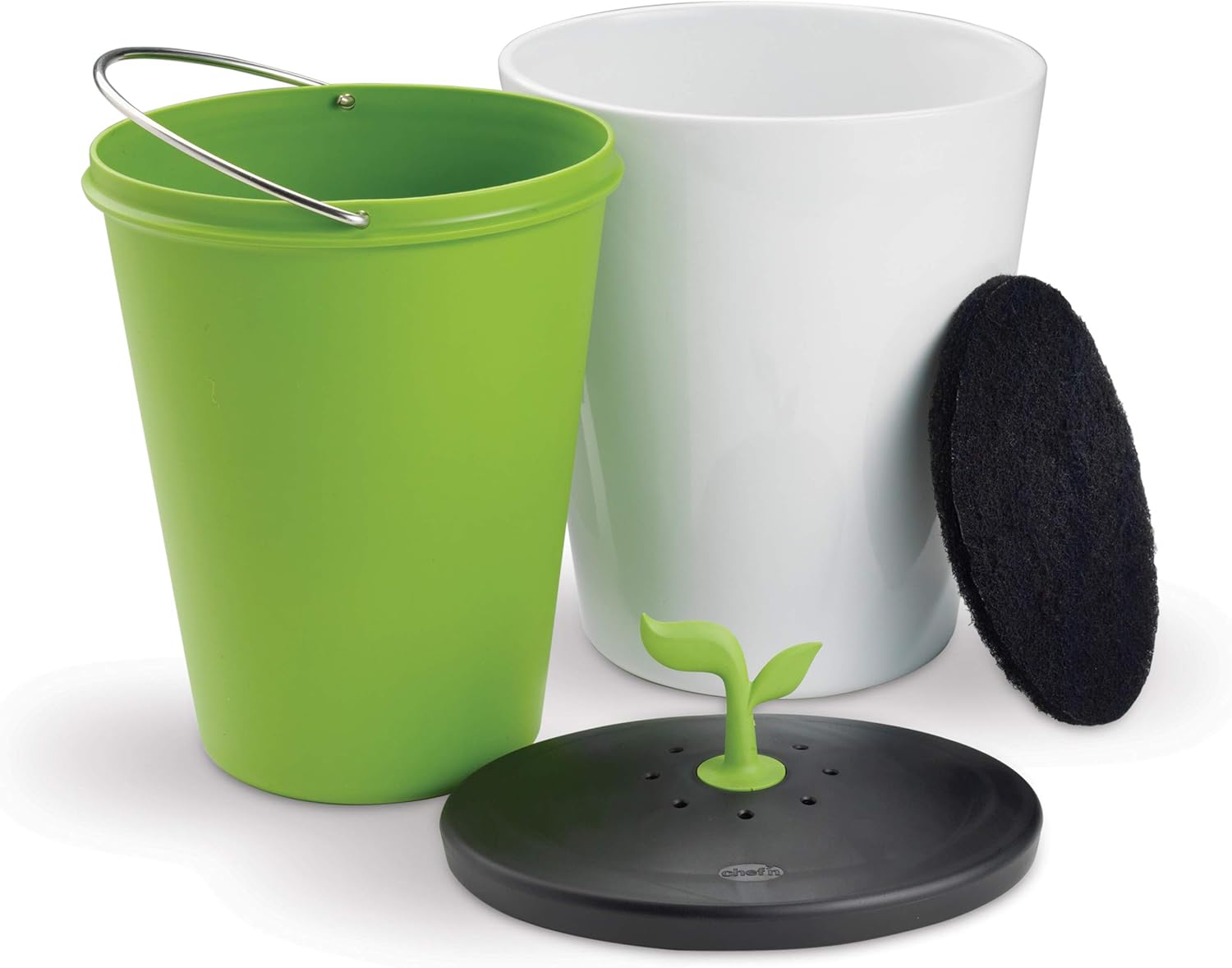
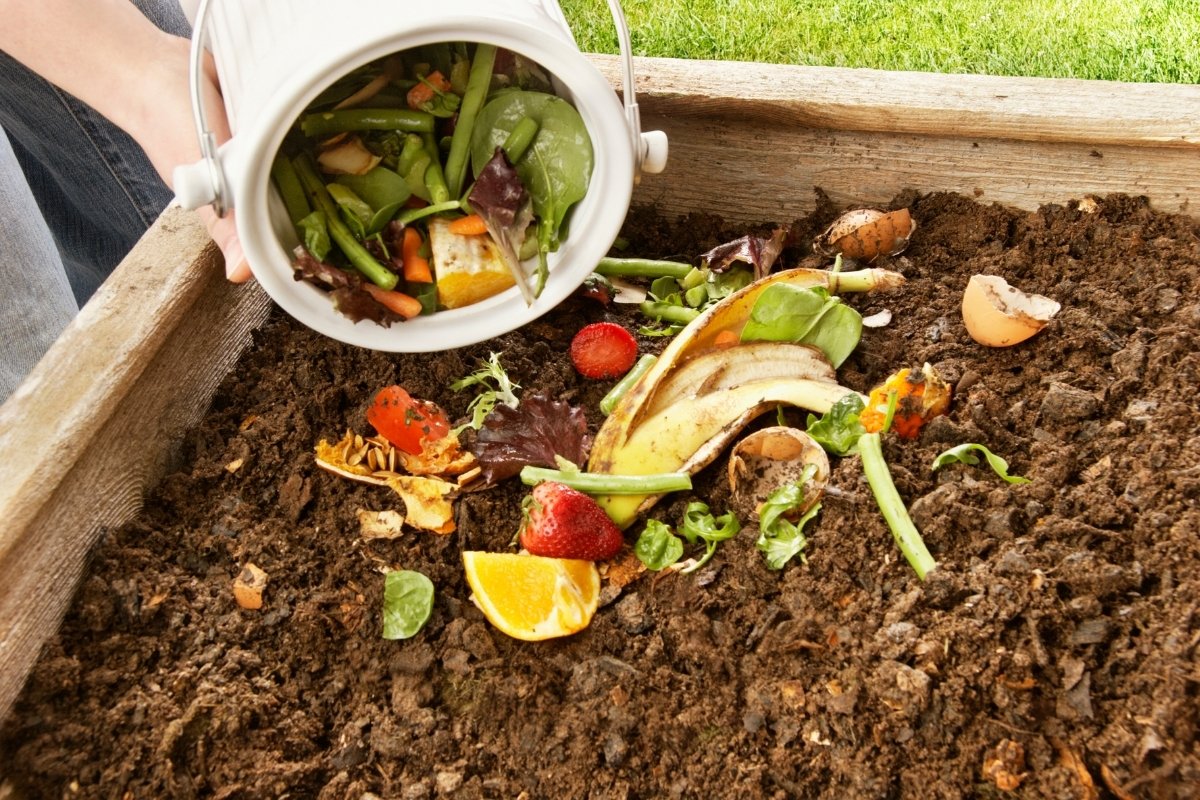
Small, odor-proof containers sit right on your kitchen counter. They hold 1-2 weeks of scraps before you need to empty them into a larger outdoor bin or community compost drop-off. Look for bins with carbon filters to eliminate odors and sealed lids to prevent fruit flies.
🛒 Recommended Composting Products
Chef’n 401-420-120 EcoCrock Counter Compost Bin Black and White 3.3 liter 1
We earn a commission if you make a purchase, at no additional cost to you.
03/20/2026 06:03 am GMT
2. Vermicomposting (Worm Bins)
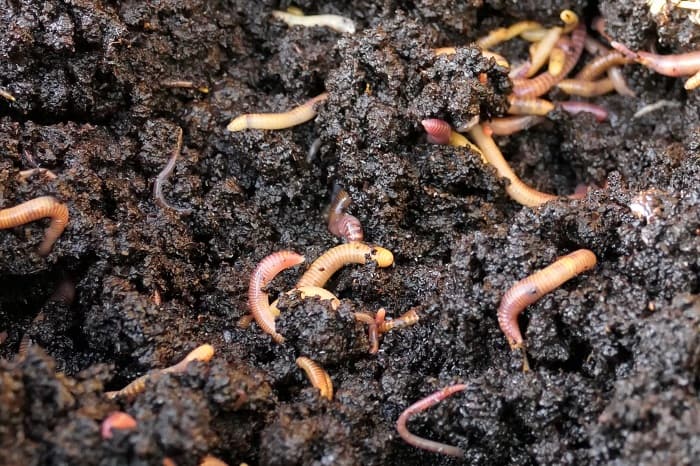
Red wiggler worms break down kitchen scraps faster than traditional composting. A worm bin fits under your sink or in a closet, produces no smell when maintained properly, and creates incredible fertilizer. The worms eat roughly half their body weight daily, processing your scraps into nutrient-rich castings. You can even use the rich worm castings in your vegetable garden.
3. Bokashi Composting
This Japanese fermentation method lets you compost meat, dairy, and citrus—things traditional compost can’t handle. The sealed bucket system means zero odors and faster breakdown (just 2-4 weeks). Special bokashi bran contains beneficial microbes that ferment your scraps rather than decomposing them.
What to Compost in Your Apartment
Green materials (nitrogen-rich):
Fruit and vegetable scraps
Coffee grounds and tea bags
Fresh grass clippings
Plant trimmings
Crushed eggshells
Brown materials (carbon-rich):
Shredded newspaper
Cardboard (torn into pieces)
Dry leaves
Paper towels
Sawdust or wood chips
Balance is key—aim for 3 parts brown to 1 part green. Too much green creates a slimy, smelly mess. Too much brown slows decomposition. If you’re wondering about specific items like chicken bones or shrimp shells, those guides explain what’s compostable.
Avoiding Common Apartment Composting Problems
Odor Control
Keep your bin sealed, bury fresh scraps under existing material, and maintain proper moisture (damp sponge consistency). Add more brown materials if it smells. A properly maintained compost system should smell earthy, not rotten. Carbon filters in your collection bin help tremendously—replace them every few months for best results.
Pest Prevention
Avoid meat, dairy, and oily foods in traditional compost (unless using bokashi). Keep your bin sealed and empty it regularly. For balcony composters, a tight-fitting lid is essential. Fruit flies hate the cold—store your collection bin in the fridge or freezer if needed.
Space Management
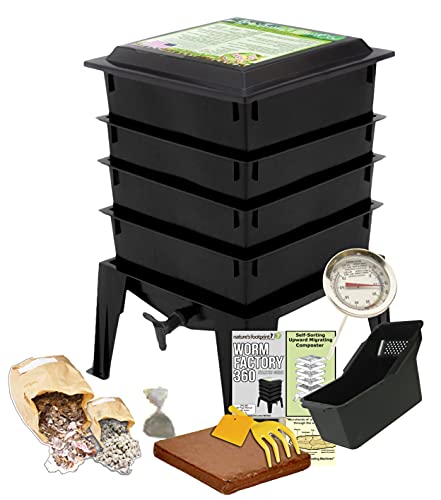
Choose vertical bins or stackable systems. Many apartment composters use a two-bin rotation—one actively composting, one curing. Stackable worm bins let you harvest finished castings from the bottom while worms migrate upward to fresh food.
Top-dressing houseplants for slow-release nutrients
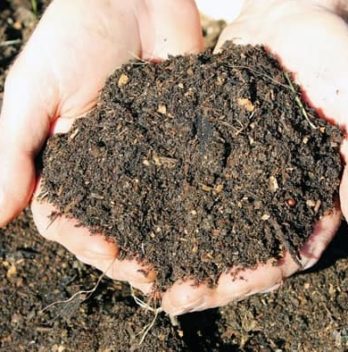
Finished compost looks dark and crumbly, smells like forest soil, and contains no recognizable food scraps. It typically takes 3-6 months in traditional bins, but worm bins produce usable castings in just 8-12 weeks.
Getting Started Today
Start simple: place a small countertop bin in your kitchen and begin collecting scraps. Once you see how much waste you’re diverting from landfills, you’ll be motivated to expand your system.
Apartment composting takes minimal space, costs less than $50 to start, and turns your kitchen waste into black gold for your plants. Give it two weeks and you’ll wonder why you didn’t start sooner. Even small-space composting makes a measurable environmental impact while giving you premium fertilizer for free.
Amazon Choice Selection
Costa Farms Aloe Vera Live Plant in Decorative Pot 12-18 Inches Tall
$33.35
Live Succulents Plants Live Plants (1G), Aloe Plant Live Succulent Plants Live Aloe Plants Live H…
Composting transforms kitchen scraps and yard waste into garden gold. This natural process creates nutrient-rich soil amendment that improves soil structure, feeds beneficial organisms, and helps plants thrive. Here’s your complete guide to starting and maintaining a compost pile.
Chef’n 401-420-120 EcoCrock Counter Compost Bin Black and White 3.3 liter 1
Air – Aerobic bacteria need oxygen to work efficiently
Moisture – Pile should be damp like a wrung-out sponge
What to Compost
Greens (Nitrogen)
Fruit and vegetable scraps
Coffee grounds and tea bags
Fresh grass clippings
Plant trimmings
Eggshells (technically neutral, but fine)
Browns (Carbon)
Dried leaves
Straw or hay
Cardboard (shredded)
Paper (not glossy)
Wood chips or sawdust
Dryer lint (from natural fibers)
What NOT to Compost
Meat, fish, and bones (attract pests)
Dairy products (attract pests, smell bad)
Oils and fats
Diseased plants
Weeds with seeds
Pet waste (contains pathogens)
Treated wood
Composting Methods
Basic Pile
Simply pile materials in a corner of your yard. Free but slow and can look messy. Works best with lots of brown materials.
Enclosed Bins
Contain the pile and look neater. Many styles from DIY pallets to commercial tumblers. Good for suburban yards.
Tumbling Composters
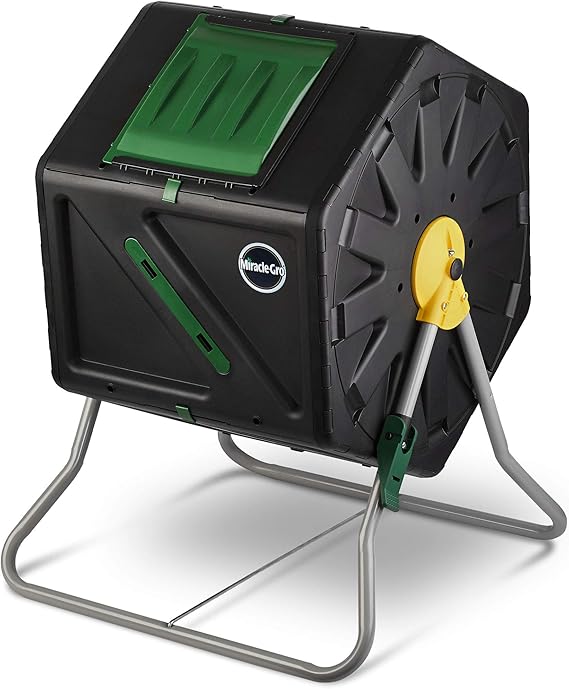
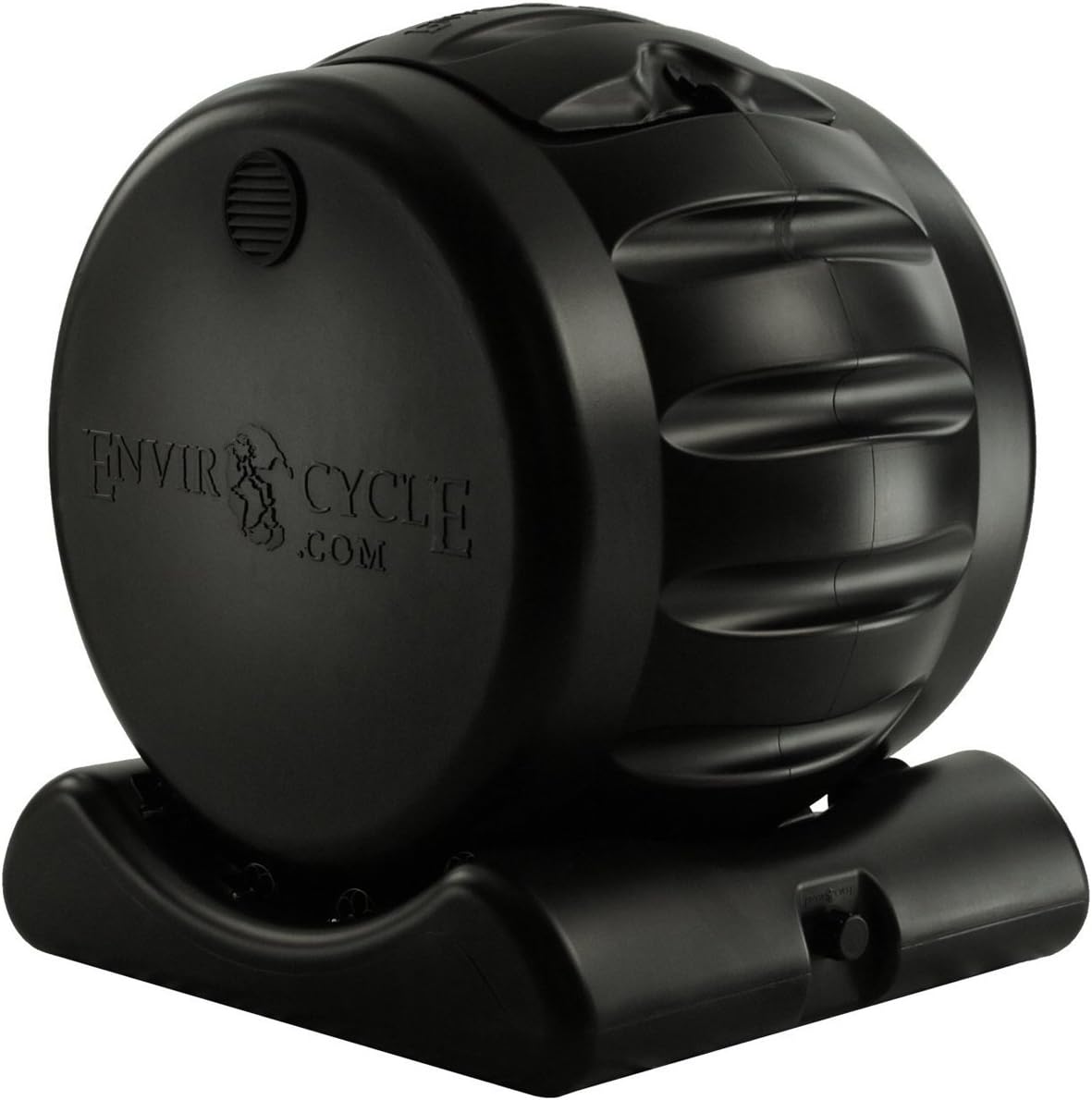
Enclosed drums that spin for easy turning. Produce finished compost faster than static piles. Good for small spaces.
Worm Composting (Vermicomposting)
Red wiggler worms process food scraps into ultra-rich castings. Perfect for apartments and indoor composting. Requires more management but produces premium compost.
Maintaining Your Compost
Turning
Mixing adds oxygen and speeds decomposition. Turn every 1-2 weeks for fastest results, or let it sit and compost slowly.
Moisture
Keep the pile moist but not soggy. Add water during dry spells; add browns if it gets too wet.
Balance
Aim for roughly 3:1 browns to greens by volume. Too many greens creates odor; too many browns slows decomposition.
Troubleshooting
Smells bad: Too wet or too many greens – add browns and turn
Not decomposing: Too dry or too many browns – add water and greens
Pests: Bury food scraps deep, avoid meat and dairy
As an Amazon Associate, we earn from qualifying purchases.
Conclusion
Composting is easier than most people think. Start simple with a basic pile or bin, learn as you go, and soon you’ll be producing black gold for your raised bed gardens and container gardens.
♻️ Composting Essentials
Chef’n 401-420-120 EcoCrock Counter Compost Bin Black and White 3.3 liter 1
‘Can you compost chicken bones’ is one of the frequently asked questions by organic farmers who do not want to waste any material.
Organic farming means using all the waste around the home to make compost manure. All waste is good but some cannot turn into compost manure.
Can You Compost Chicken Bones?
Yes, it is possible to compost chicken bones. Though it takes more work to compost them than the normal waste material, it is possible.
Chicken bones need more time to break down so do not compost them in haste. You may burn them first to quicken the process of breaking them down. So it can work together with the rest of the organic materials you decompose together.
How Do You Compost Chicken Bones?
Do not add chicken bones to the normal compost pile for your fruit and vegetable waste. The bones should go into food waste collection bins instead. This is because the bones get composted differently from the rest of the food matter.
Do not put the chicken bones in the green bin either. Dairy, meat, and bones should not go into the green bin.
The best compost to use for bones is hot compost. Hot composting means putting all the organic matter you need into a heap or a compost bin and then adding some heat to quicken the process. The heat acts as a catalyst which quickens the cooking process.
The best way to compost chicken bones is to chop them off into smaller pieces of about 4cm with secateurs. Carefully break the shells or bone joints into fragments with a hammer. Do not compost any large pieces of bones.
Chicken bones are generally good for plant growth. They supply the plants with organic phosphorous nitrogen nutrients.
Step-by-Step Process: Composting Chicken Bones Fast
Assemble all the chicken bones you have stored in your freezer and allow them to defrost. Lay them out under the sun to defrost properly.
Put them in a container that can be used to burn them, most probably an old cast iron grill.
Add a layer of wood shavings, papers, or cardboard to act as a fire starter. Add well-dried wood depending on the number of bones you are burning.
Place your chicken bones on top of the wood.
Start the fire and allow the bones to burn. The idea is to heat the bones until the fat within them melts and starts to drip out. Fat makes the bones burn and feed the fire.
Allow the bones to burn till they look charred. Let them cool for a while and crush them into smaller chunks with your hands or use a hammer to do so.
You can then dispose of the bones in the compost bin where they’ll decompose.
Can You Compost Meat and Bones?
While you now know that you can compost chicken bones, you may be wondering about other types of bones and meat. The truth is, most fish meat, bones, and seafood can work as compost. But it’s worth noting that some will compost much faster than others. You also should chop your bones and meat into manageable pieces; doing this will increase how quickly it decomposes. Let’s take a closer look at what meat and bones you can compost, and how to do so.
For bones such as chicken, birds, and fish, you should ensure they’re chopped into manageable pieces. It will decay slowly in hot bin compost; but unfortunately, we do not recommend adding it to cold compost.
For shells such as lobster, crab, and cockle, you should crush or break the shells into smaller pieces. It will decay slowly in hot bin compost; but unfortunately, we do not recommend adding it to cold compost.
For cooked meat, that must be it’s in small pieces and no big bones remain. It will decay fast in hot bin compost; but unfortunately, we do not recommend adding it to cold compost.
Can You Compost Cooked Meat?
As mentioned above, you absolutely can compost cooked meat! The truth it, if you can eat it, you can usually compost it! However, most people prefer not to use cooked meat as compost as the trouble with this is that it can cause unwanted attention from wildlife. If you do choose to do this, remove any big bones and chop them into manageable pieces.
How to Dispose of Chicken Bones
You may be wondering what the best way of composting chicken bones is and there are a few ways you can do this. Let’s take a closer look.
The best way is in green waste. Unfortunately, not every city has a green waste program, so this may not be possible for you to do. If it is, we would highly recommend this option as you won’t be contributing to the landfill. As well as this, your city will dispose of the waste accordingly.
Another option is to add to your compost. However, as mentioned above, this is a slow decay rate; even in a hot bin compost. Just be prepared to have your chicken bones composting for a very long time!
If you don’t have either of these options available to you, simply throw them in your usual trash or garbage. Just be sure it’s sealed properly in the bag as they can be dangerous for wildlife.
How Long Does it Take For Chicken Bones to Compost?
You may be wondering how long it takes for your chicken bones to compost. Well, the truth is, it all depends on a variety of factors. It could be months or years; it just comes down to which process you’re following. If you simply bury them as they are, you can expect them to take years to decompose. However, if you add them to hot compost, this will be significantly quicker.
Are Chicken Bones Good For the Soil?
You may be curious as to whether chicken bones are even a good choice for your soil – and the answer is, absolutely! While it can be a lengthy method, it’s certainly one that’s worth the effort. And always remember, smaller chunks are better, and will decompose faster.
Chicken Bones in Compost: Conclusion
By now your question ‘can you compost chicken bones’ are answered in-depth. Why not try the procedure and tell us how it worked for you? If you also try another method to decompose the bones, let us know so we can try it out too.
FAQs
Can you compost a chicken carcass?
Yes, you can compost a chicken carcass. The problem is that the chicken will be eaten before it decomposes and the carcass becomes food for the worms. To prevent this, you need to freeze the chicken carcass immediately after removing it from the bird. This will slow down the decomposition process and make the chicken more available for the worms to eat.
How long does it take to compost chicken bones?
Chicken bones take about 1 month to break down completely. To compost them, place the bones in a bucket with water and a handful of sand or other filler material. Let them sit for two weeks, then move them to a larger container (or a plastic tub).
Check them weekly and stir the compost regularly.
Are chicken bones good fertilizer?
Chicken manure is the most concentrated source of nitrogen and phosphorous in the compost pile.
Chicken manure is also a good source of potassium, magnesium and calcium. Chicken manure can be applied to your garden as an amendment at any time during the growing season. If you have a deep layer of manure on top of the soil, you can apply it as a top dressing or under mulch.
Chicken manure should be added at the rate of 1-2 inches per week. You can add chicken manure to your garden during the growing season. The chicken manure will make your soil better for vegetables.
Are chicken bones good for gardens?
Chicken bones are the best fertilizer for plants because they are rich in nitrogen, phosphorus, calcium and iron. You can use chicken bones as a fertilizer by adding them directly to the soil or using them in compost. If you add them to the soil they will decompose and release the nutrients into the soil. You can use chicken bones as a fertilizer by adding them directly to the soil or using them in compost. If you add them to the soil they will decompose and release the nutrients into the soil. If you use them in compost, they break down and give the compost more nutrients and make it easier to spread on the garden.
Are animal bones good for soil?
Animal manure is a great source of fertilizer. It’s produced by animals that eat plants.
Animals have special digestive systems that convert plant matter into nutrients that can be used by other living things. Soil that has been fertilized with animal manure is generally more fertile than soil that hasn’t been fertilized. The main difference between animal manure and other kinds of fertilizer is that animal manure has a higher nitrogen content. Nitrogen is one of the most important nutrients for plants. If you want to plant grass or flowers, you need to use a lot of nitrogen. So if you have a field that has been fertilized with animal manure, it will be more fertile than a field that hasn’t been fertilized. You can also add nitrogen to your soil by using synthetic nitrogen fertilizers. But it’s expensive, and you can only add a limited amount to your soil at a time.
You may be wondering: how long does it take cow manure to compost? For centuries, new farming techniques have been developed to improve the lives of farmers and food producers as well as to increase food production. These new farming methodologies have been developed through the years, studied, researched, and applied in the farmlands in various corners of the world.
It is not only in farmlands that certain methods are applicable but also in gardening. One of the basic techniques developed in agriculture and horticulture is utilizing animal manure as a fertilizer.
Animal manures have been used in agriculture as a fertilizer to enrich the soil. Dungs from different livestock animals and poultry such as chickens and pigs are utilized. Cow manures have also been popularly used as a fertilizer for soil enrichment for crops and other various seedlings to grow.
However, while cow manure is deemed to be an outstanding fertilizer, fresh cow excrement contains too much salt in it and a high amount of ammonia which can cause plants to burn. Not to mention that this also contains an unpleasant odor.
To get the best out of cow manure without those disagreeable characteristics, it is suggested to do composting on the excrement.
What is Composting?
Composting is the process of putting together biological and organic remnants. Examples of these biodegradable residues include food wastes and scraps, straws, leaf clippings, and of course, animal excrement. These leftovers are gathered; stacked or piled, and blended and slightly wetted to go through a thermophilic decomposition.
Composting products are generally used both in agriculture as a fertilizer and in horticulture; they are used as a viable alternative for peat. It is also noted that compost is put on to enhance the composition of soil and as a microbial supplement to elevate enzymatic activities.
Benefits of Compost
Composting is used to improve soil fertility; the soil‘s capability to store and hold water and moisture; the organic characteristics of the soil; and lastly, its volume and density. Aside from these, compositing has lessened the odor produced in the soil and the number of fly eggs because of the thermophilic reaction taking place during microbial putrefaction.
Unbeknown to many, composting has also helped in eliminating weed seeds and pathogens. Generally, weed seeds happen to pass inside livestock and can multiply in animal manure such as cows. During composting, some weed seeds are eliminated on the 21st day while others take about 42 days to be dispatched.
Thus, through composting, the volume of herbicides or tillage used for weed control has been reduced. Aside from getting rid of weed seeds, composting has also helped in destroying infectious agents such as Escherichia coli in only 3 days if the appropriate heat has been reached (about 131 degrees Fahrenheit).
Composting has also been shown to decrease the density and volume of animal excrement by 50 to 65 percent.
Longevity in Making Compost from Cow Manure
How long does it take cow manure to compost? Normally, the process takes 3 months or less for cow manure to compost. The process depends on several factors; namely, the dimension of the pile utilized for compost, the right combination of carbon and nitrogen content in the compost, and water management. Also, the amount of oxygen being incorporated matters– and of course, the temperature of the compost.
Making a Compost
Choosing the site
Before making compost, you need to look for the appropriate site. Essentially, the area for the compost must have good drainage into the containment pond, and leached water must not reach any water reservoir. Of course, the site must not be placed beside surficial waters. The composition of the soil must be concrete or loaded.
Pile dimension
After selecting a site, you need to gather the manure into a windrow. The dimension of the pile is normally between 10 and 12 feet wide and the height must be 4 to 6 feet. Because of these, in a day or two, the temperature of the pile will reach above 120 degrees Fahrenheit. It must be noted that going for something smaller than the dimension required will cause the pile to not get the exact required heat for a thermophilic reaction while a larger one will cause the pile to acquire less amount of air or oxygen.
Carbon to nitrogen ratio
As soon as the dimensions of the pile have been set, the combination of carbon to nitrogen ratio must be determined. The ratio of carbon to nitrogen must be set to 20:1; loosely, for 20 parts of carbon, there must be one part of nitrogen. This is because approximately half of the metabolized carbon is converted to carbon dioxide. One must also take note that too much nitrogen will cause it to loosen and may cause the pile to smell like vaporous ammonia whereas excess carbon can inactivate nitrogen and decelerate the process of composting.
Water management
Water is another important element in the process of making compost. About 40 to 65 percent of the pore space in the compost requires water, and the compost must have an ample amount of moisture.
Oxygen
A chemical reaction needs to occur; therefore, microorganisms need oxygen to create such a reaction to convert manure to compost. Suitable aerobic conditions must be met. There are different ways to introduce and replenish oxygen in the compost. One, it can be done by turning the compost every 3 days. Second, using a pitchfork, the compost must poke around. Third, it involves the use of Compose Aerator which makes the job easier since air will be established into the pile.
The last fundamental factor that needs to be monitored in the compost is the temperature. A probe-type thermometer can be utilized to observe the temperature of the compost and to detect when to turn the pile. Turning can help the pile if the temperature falls below 110 degrees Fahrenheit. It has been suggested that the temperature of the pile must not be greater than 131 degrees Fahrenheit for 15 days, and turning must be done at least five times.
On the other hand, temperatures must not reach above 160 degrees Fahrenheit which can cause important microorganisms to be eliminated, thus causing a drop in the activity of microbes and decelerating the process.
How Long Does it Take for Cow Manure to Compost?
There is no straight answer to this question, unfortunately. It all depends on a range of factors: such as the temperature, the size of the pile, and the materials you’re composting. However, typically it’ll take around six months. This is from making your cow manure compost and leaving it until it’s ready to stabilize, and then curing it for at least a few months. Doing it this way will ensure the best for your gardens and soil.
Is Cow Manure Good for Gardens?
When it comes to cow manure, you may be wondering if it’s a good fertilizer for your garden. And the answer is – absolutely! It’s an all-purpose fertilizer that’s great for anything you may need fertilizer for. The main draw of cow manure is that it’s bursting with nutrients, but is low in nitrogen. This is ideal if you’re worried about burning your plants. As well as this, it’s low in weed seeds and ideal for improving the structure of your soil.
If you’re wondering how to add compost to your garden, the easiest way is simply to add the cow manure to the area in your garden you need it for.
How to Compost Cow Manure
Composting cow manure doesn’t have to be difficult. You should first start by making two compost bins. You can do this by using pallets. The first is for composting and the second is for curing. Curing can take a few months, but it’s certainly worth the additional effort. The pallet bins should be at least 4 feet high and around 4 feet wide.
Once you have your bins prepared, fill one with cow manure, along with straw, hay, and leaves. The pile should be relatively moist, add a small amount of water so that when squeezed, a trickle of water comes out. But be sure not to add too much. If it’s too wet, add a small amount of organic matter. Using a shovel or pitchfork, turn the compost several times throughout the month; depending on the temperature.
Once cool, add to your curing bin and leave for anywhere between three and six months; the longer the better. Your manure is now ready to use. Just simply add the manure to wherever you need it; no deeper than half an inch deep. This will ensure your soil will get the most from your cow manure compost.
Can You Use Cow Manure for Grass?
As we mentioned, cow manure is an all-purpose fertilizer, so you can also use it for grass too if you’d like. In saying that, you will need large volumes of cow manure which you may not have available to you. If you do or have a smaller patch of grass, simply use cow manure as compost for your grass and watch the benefits unfold before your eyes!
Conclusion: How Long Does it Take Cow Manure to Compost
I hope this post has helped to answer the question: how long does it take cow manure to compost? Overall, composting has benefits that can help the soil and the environment as well. This method is practical in a way that it can help eliminate waste by solving it practically and environmentally. Though the process may take a few weeks to complete, a dark, crumbly, and earthy smell of compost as a final product is not bad after all.
Do you have any tips and tricks when it comes to composting cow manure? If so, please feel free to let us know in the comments below. And remember, sharing is caring!
FAQs
What are some ways to compost cow manure?
The most common method is to spread it on your garden. But this method has several drawbacks, not the least of which is that the manure is mixed with urine and excrement from your animals, and therefore it may carry diseases that can harm your plants. Another popular method is to mix it with a composting bin. This method is effective, but it requires constant vigilance, and if you are away for any length of time, your compost could go bad and attract pests.
You can try to find a friend who has a compost bin or a large quantity of manure and ask him or her if you can dump your scraps in there.
The composting process will turn your manure into a nutrient-rich fertilizer.
If you live in a community that has a composting program, you may be able to dump your scraps there.
What are good steps for composting cow manure?
Cow manure can be composted by adding it to a bin of other materials, including sawdust, shredded paper and straw. This is the preferred method for most composters, as it produces an excellent product with no odor. To compost cow manure, follow these steps:
1. Collect cow manure from the barn, or find a local farmer who has cows that have just given birth.
2. Add the manure to a bin of other materials, such as shredded paper, straw and wood shavings.
3. Turn the mixture once a week.
4. When the pile is at least 6 inches deep, add sand to help keep the pile aerated.
5. Cover the pile with a tarp or plastic to keep it from drying out.
6. Check the pile every few days to make sure it is not burning.
7. After about one month, the compost should be ready.
8. You can spread it on your garden in a fall application. For More Information There are many different methods for composting cow manure, but if you have access to a large quantity of manure, you can apply it to your garden in a fall application.
Can you apply as fertilizer?
If you have access to a cow or horse, you can try spreading it on your lawn as fertilizer. It’s not very effective, however, because cows and horses don’t actually eat grass; they eat green plants. You would need to spread the manure on the grass and then mow it into the soil.
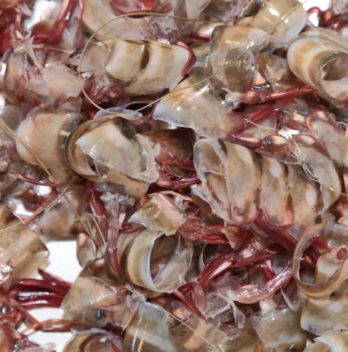
Today, we’re going to be answering the question: can you compost shrimp shells? There is a standard procedure for composting shrimp shells. Shrimp shells are fully compostable. This means that shrimp shells can be turned to compost whether they are raw or cooked.
The shells will ordinarily decompose when they are allowed to be broken down by microorganisms into organic compost.
Composting shrimp shells is important as the compounds got from this process are highly beneficial to the soil. This article gives you an idea of what to do when composting shrimp shells.
How to go about the composting process and the best temperature for this are also discussed herein. Before we go into the composting process for shrimp shells, let’s understand what composting means.
Thereafter, this question will be answered: can you compost shrimp shells?
Meaning of Composting
Composting is the process of collecting and storing plant material so it can decay. This decayed substance is known as compost. When added to the soil, it helps to greatly improve soil quality.
Composting is therefore a process of utilizing plant material that ordinarily would have been considered waste.
Items Required to Compost Shrimp Shells
For the composting process to be successfully carried out, the following items are required: shrimp shells, compost piles, compost bucket, shovel, green yard waste, brown yard waste, and kitchen scraps. All of these items can be turned into compost and added to the soil to improve the quality.
Shrimp shells are useful when making compost because they contain relevant compounds to the composting process. These compounds feed bacteria and fungi in the soil, which in turn, helps break down the soil.
If you are interested in making compost from shrimp shells, you must endeavor to follow the following steps:
Step 1. Collect shrimp shells
If you are interested in making compost from shrimp shells, then do the following. Shrimp shells can be collected from peeled shrimp in a compost bucket or bowl. You can include the tails and heads of the shells collected. This bucket should have an air-tight lid. Shrimp shells should be simmered in boiling water for 20 to 30 minutes and oven-dried to remove fat from the shells. Too much fat will result in a serious smell of the compost.
Step 2. Digging
The second step in the process involves digging a 12-inch hole in your existing compost pile. A shovel should be used when doing this to ensure that the hole is deep as possible to contain the shells.
Step 3. Put the shrimp shells in a hole
After digging the required hole, you should place the collected shrimp shells in the hole. After doing this, the hole should be covered with some of the compost you removed while making the hole.
Step 4. Continuous addition of green and brown waste
You should continue to add both green and brown waste alongside kitchen waste to the pile.
Step 5. Turning of compost
For the best possible result to be achieved, the shrimp compost should be turned every month with a shovel. This should be done to allow for sufficient oxygen to the microbes.
The decomposition usually produces heat and turning will help reduce this. You can use a compost thermometer to measure the internal temperature and regulate the same. It should be from 140 to 160 degrees.
Step 6. Add water to compost
Microbes usually need water to survive. Failure to add sufficient water to the pile may lead to the death of microbes. This will ultimately result in the compost pile heating up. Be careful however not to add too much water. This will likely turn your compost into a slimy mess and decomposition will halt. It shouldn’t thus be too wet or too dry.
Step 7. Allow the compost to season
You should allow the shrimp compost to remain in the hole for at least a year. After a year has elapsed, you may then use the compost in your garden or farm.
You already understand that composting is the method of adding organic material to a compost pile. Composting, therefore, is one way of saving organic waste from reaching landfills.
Asides from this, composting is a method of creating rich organic materials which are useful to your farm or garden.
One advantage of using shrimp shells for composting is that they break down fast. This is so because they are very thin, unlike other shell animals.
Material to Exclude From Your Compost
There are a few materials that should not be added to your compost pile. These items should be excluded as they can easily attract unwanted pests and animals to the pile. These items may also be very toxic. Some toxic materials that should not be included include wood chips coated with paint, ink, chemicals, and fecal matter.
Also, you should not include plants that were likely infected with pests or diseases in the pile. Furthermore, weeds pulled out from the ground should not be included in the compost pile. These infected plants and weeds may be very toxic to the composting process. It is, therefore, best for you to avoid including them.
Using Shrimp Shells Compost as Fertilizers
Because shrimp shells are good for preparing compost, you may wonder if they can be used as fertilizers. The answer is in the affirmative.
Shrimp shells can be used as fertilizers because they contain chitin compounds. This compound slowly adds nitrogen to your soil in a very non-toxic method.
So if you are interested in growing a plant that has a huge nitrogen requirement, shrimp shells may be used as fertilizers.
In addition, shrimp shells usually contain a sufficient amount of calcium carbonate. They can therefore be a good source of calcium for the soil. This means that plants like pear, citrus, lettuce, apple, etc. will benefit from this.
When shrimp shells are used as fertilizers, they get grounded or crushed before being applied to the soil. By doing so, the nutrients contained in the shell are easily absorbed by the soil.
How to Stop Your Shrimp Shells From Smelling?
One thing’s for sure – shrimp shells can smell. And it’s not the kind of smell that you want lingering in your garden, so it’s understanding why you’re worrying about the smell of decomposing shrimp in your garden! This is why you must manage the smell before you even start to compost it. Let’s take a closer look at some tips to stop that awful odor.
While it’s tempting to just add the shrimp shells as they are, we would highly recommend not doing this. When you’re ready to compost your shells, simply place them in boiling water. Boil for around 20 minutes. Then remove them from the water, strain them, and leave them to dry until ready to use.
Another method you can use is to bake your shrimp shells in the oven. After time in the oven, it’ll be easy to grind down your shrimp shells in a blender or food processor (or simply in a bag with a rolling pin!). Once your ground shrimp shells are ready, you can add them to your compost and they’ll definitely be no lingering odor from this method!
Shrimp Shell Nutrition
Shrimp shells are often overlooked and underrated. While they may not seem appealing, they can be full of protein and minerals. You may be wondering what the nutrition is of a shell on shrimp. One serving of shell-on shrimp contains the following:
calories: 80
protein: 16g
fat: 1.5g
cholesterol: 165mg
iron: 0.4mg
calcium: 100mg
sodium: 840mg
Shrimp Shell Waste Uses
There are many uses for your shrimp shell waste. In fact, in recent years, shrimp waste has been used for several reasons. This is because shrimp shell waste contains many compounds which are useful to many aspects of our lives. The compounds include chitin and pigments. Such compounds are used in a range of areas, such as medical, cosmetics, biotech, and even textiles!
While you’ll be unable to do any of those things from the comfort of your home, you can obviously also use your shrimp shell waste for compost, or one of my other favorite uses is making shrimp stock. They’re typically full of flavor and whatever seafood course you’re making, the shrimp shell waste will complement.
To make a shrimp shell stock, all you need to do is add the shells to a pan of cold water and add some seasoning of your choice, if preferred; such as herbs or peppercorns. Heat over medium heat and leave to boil uncovered for around 15 minutes. At this point, the stock should have changed color and you can simply strain the shells away and add the stock, as needed, to your seafood dishes.
There are many uses of shrimp shell waste in everyday life; even in your kitchen and garden!
Final Note: Can You Compost Shrimp Shells?
I hope this post has helped to answer the question: can you compost shrimp shells? Shrimp shells as we have seen above are great for preparing compost. The right procedure must however be followed by you in composting shrimp shells. Following the above will definitely help you attain your desired goal of preparing shrimp compost.
Do you have any tips or tricks when it comes to composting shrimp shells? If so, please feel free to let us know in the comments below. And remember, sharing is caring!
Shrimp shells are a valuable resource. They’re an excellent source of calcium and phosphorous, which are both needed for plant growth. You can use them to fertilize your garden or plant them in a flower bed. But if you’re adding them to your compost bin, you’ll need to do a little pre-composting first. The first step is to remove the hard outer shell. You can do this with a hammer and chisel, but a more convenient method is to use an electric grinder. This method will make sure you get every last bit of the shell out of the shrimp. Next, shred the soft parts of the shrimp by hand. You don’t have to be too careful here, but it’s better to be safe than sorry. Don’t forget to save the shells for the next step! You can now put the shrimp shells into a compost bin or pile, where they will decompose over time. Make sure to check on the progress regularly, as the process can take up to 6 months to complete. 1. Mix the Shrimp Shells with the Other Ingredients You’ll want to add the shrimp shells to your soil at a rate of about 25% of the total amount of other ingredients. If you don’t have any extra, you can also buy a bag of pre-mixed organic compost. 2. Add the Compost to Your Garden Once you have the shrimp shells mixed in with the other ingredients, you’ll want to start adding them to your garden. You can start by spreading them out on a flat surface, then adding more to the center of your garden. This is because the bacteria in the compost will quickly work to break down the shell particles, which will help it be easier for you to add it to your garden. 3. Monitor Your Garden When it comes to composting, it’s important to keep an eye on it to make sure the process continues to run smoothly. The best way to do this is to check on it regularly, as you’ll want to see if there’s any noticeable change in color or smell. If there is, you may want to take a closer look at the reason why. For example, if the compost has become very dark or wet, this could mean that the worms have died or that the process has stopped altogether. Either way, you’ll want to take steps to ensure that it doesn’t happen again.
How long does shrimp shell take to decompose?
The answer depends on the amount of calcium carbonate present in the shell, as well as the temperature. If there is little calcium carbonate in the shell, then it can be broken down within a few weeks. However, if there is more calcium carbonate in the shell, then it takes much longer.
Is it OK to put prawn shells in compost?
Yes, this is fine.
You can use them in your compost bin. They will not harm your plants, but will break down over time, adding nutrients to the soil. It will take longer than other materials such as straw or wood chips.
Worms, especially earthworms, have proven to be more useful to human lives when we started acknowledging their contributions through their environmental and commercial applications. Through time and research, many technologies have been developed involving our humble ally – worms – like vermi meal production, vermiculture, vermicomposting, and more. But one of the most interesting discoveries about worms is worm casting. To understand it better, we have put together below the definition, uses, and disadvantages of worm castings, along with other useful information related to this topic.
Worm Factory® 360 Black US Made Composting System for Recycling Food Waste at Home 4 Trays for Efficient Vermicomposting Durable, Space-Efficient Design, Easy to Assemble, No Odor
We earn a commission if you make a purchase, at no additional cost to you.
03/19/2026 09:03 pm GMT
What is Worm Casting?
Worm casting is the organic waste that went out the rear end of an earthworm – yes, it’s basically worm poop. But if you want the official scientific jargon, you can refer to it as a “fecal nugget”. It is mostly used as fertilizer because of its rich nutritional content. Some people call it the multivitamins for plants because worm castings are often described as the most potent manure there ever was. Here are some of the nutrients you can find in worm castings aside from the main nutrients your plants need: phosphorus, nitrogen, zinc, iron, potassium, and concentrated nitrates. Like in the human body, worm castings consist of good bacteria, and their microbial activity is 20 times greater than their digested soil which effectively supports plant growth. With its remarkable versatility in vitamins and minerals, you can substitute any nutritional gap you would have in growing any kind of plant you want. The best part is, all the nutrients your plant needs will be consumed immediately as it is water-soluble. If you have a business that would require a lot of worm castings, there is no need to fret as there are already worm castings out in the market because people actually thought they could grow a business using worms, and they’re absolutely right! Read more about Worms in Compost: Are they a Friend or a Foe?
Worm Casting vs. Vermicomposting
Worm casting and vermicomposting are often confused as one thing, but technically speaking, they are two related, but different things. Vermicomposting is how worms help in reducing waste along with other organic wastes (leftover food and composted bedding) and vermicompost is the product of this worm compost system. You know you’ve found high-quality vermicompost when it contains a high percentage of worm castings. This particular way of composting is very trendy in urban areas these days as it can easily be done even in the comfort of your own home. You can even find a composting bin just big enough to fit under your kitchen sink. To cut it short, worm castings are pure worm poop while vermicompost cannot exist without worm castings and contains other composted materials. They are both very rich in nutrients and are used to help your plants grow healthy. Best compost products suppliers on the market today
When you mix worm castings with your seed starter it provides the nutrients for new seedlings that boost growth. The new soil mix will hold moisture around the young seedlings providing added protection. When it’s time to transplant your plants, you may add a cup of worm casting into the soil which would protect them from different diseases for a long time.
Side dressing
You can choose to either dig deeper or sprinkle this natural fertilizer around your plant. You don’t have to worry about the exact amount because your plant won’t suffer even if you use too much. If you’re planning on using it for outdoor plants, we suggest putting a handful on all sides of the base and then watering it. This would greatly prevent pests from bringing trouble to your plants. Now for indoor plants, you can use 2-3 tablespoons, depending on size.
Lawn conditioning
When you use soil for so long, it tends to lose its potency and become barren and it’s your responsibility to rejuvenate it. Adding worm castings is the finest choice as it would greatly help bring back the previous health of your soil. Worm castings prevent soil from drying out as it makes your soil more absorbent, consistently making moisture available to your plants.
Liquid fertilizer
Commonly known as “worm-casting tea” but this is definitely not for human consumption. This tea can be diluted with water and you can use it as an alternative for watering your plants. Just steep some worm castings in water like you would when making your own tea to drink.
Strengths and Weaknesses of Worm Casting
As we all know, “there’s always two sides to a coin” so if there are advantages to using worm castings, there are also disadvantages and we have listed both below for you.
Advantages
Plant superfood – the most obvious advantage of worm casting is its nutrient-packed quality.
Neutral level of pH – this controls your soil’s acidic condition.
Protection – worm castings extract harmful toxins, bad bacteria, and fungi; at the same time containing good bacteria and beneficial microbes which help prevent diseases for your plant.
Natural pest repellent – some pests such as scale insects, aphids, spider mites, and the like do not like the fecal nugget of worms so they avoid it.
Additional worms for your soil – some worm eggs may be left in your castings, so when those eggs hatch, they will be a great addition to your garden. Worms help break down even heavy metal deposits in your soil making it metal-free and healthy!
You will need more fertilizers – worm casting is not enough fertilizer for other plants, especially for some that require macronutrients.
Not suitable for acid-loving plants – acidic plants would not do well in a neutral pH range.
It takes time – some casting may take months before it can be used because as we all know, worms are not that big so it takes them a while to produce enough casting.
How Long Does it Take For Worm Castings to Work?
Several factors influence how long it takes for worm castings to work. This includes the type of plants you grow, the soil condition, the application rate, and the method you follow. It can take a few weeks to months before worm castings begin to work.
How Often Should I Harvest Worm Castings?
If you have a worm bin or compost bin where you raise worms, you can harvest their castings on an ongoing basis as needed. To harvest worm castings, remove the top layer of bedding and compost material from the bin and set it aside. The castings will be in the lower layers. You can then mix the castings into your soil or use them as a top dressing on top of the soil around your plants. You should try to harvest worm castings every few weeks. As the worms consume the organic matter in the bin, they produce more castings. You’ll have castings available every month.
What is the Ph Level Of Worm Castings?
The pH. of worm castings varies. How acidic they depend on the type of organic materials the worms feed on and the conditions in the worm bin. Generally, worm castings have a neutral to slightly alkaline pH, typically in the range of 6.5-7.5. It is important to note that the pH of worm castings can be affected by the pH of the materials that the worms were fed, as well as the pH of the water used to moisten the bedding in the worm bin. The pH of worm castings can also be affected by the conditions in the worm bin, including the temperature, moisture level, and ventilation. If the conditions in the worm bin are not optimal, the pH of the castings may be lower or higher than the typical range. Worm casting is a good source of nutrients for plants. They can also help improve the structure and fertility of the soil. However, if the pH of the worm castings is significantly different from the optimal pH of your plants, you might have to adjust the pH of your soil before using the castings. You can add sulfur or lime to lower or raise the Ph.
Are There Nematodes in Worm Castings?
Nematodes are tiny, thread-like worms found in soil and can be beneficial or harmful to plants, depending on the species. Some nematodes are predatory and can help control pest populations, while others are plant-parasitic and can cause damage to plants. Worm castings may contain nematodes. These are common in soil and can be present in the organic materials fed to worms. If your worm castings include nematodes, it is unlikely that you have reason to worry.
What Vegetables Like Worm Castings?
Worm castings are a rich source of nutrients and beneficial microbes that can help improve soil health and plant growth. Many veggies will benefit if you add worm castings to their growing environment. These include:
Leafy greens like lettuce, spinach, and kale
Cruciferous vegetables, like broccoli, cabbage, and brussels sprouts
Root vegetables, like carrots, beets, and radishes
Solanaceous vegetables, like tomatoes, peppers, and eggplants
Legumes, like beans and peas
You should use worm castings in moderation. They can be high in nutrients and may cause damage when applied in excess. I recommend not using more than 10-20% worm castings by volume in your soil mix.
Worm Casting Benefits
When it comes to worm castings, there are many benefits to using them at any point during the growing season. In simple terms, it can help your plants to grow better, improve the retention of water to keep your plants moist, and also protect your plants from any unwanted diseases. Let’s take a more in-depth look at just a few benefits of worm castings.
Helps Water Retention. Think of worm castings like a sponge. If you’re looking for an easy way to keep your plants and soil moist, worm castings are the way.
Helps to Reduce Erosion. As worm castings are so great at holding water, this also significantly lowers the chances of soil erosion.
Improves the CEC. The higher this is, the higher the fertility of your soil.
Easy Way to Give Nutrients. It can be tricky to ensure your plants receive the correct amount of nutrients, in an accessible way; but worm castings provide just that.
Helps pH Levels. As their pH level is neutral, they can help to make your soil either more neutral or more acidic; depending on what you’re looking for.
Aids Structure. Helps to strengthen soils that can be tricky to work with, such as clay or sand.
This is only a small selection of ways worm castings can help your plants and soil, but the list is endless!
Worm Casting Sifter – Which Size is Best?
One of the handiest tools when working with worm castings is a worm-casting sifter. As well as worm castings, it can work with other things in your garden, such as compost. Just like a sieve, it helps to separate products. The size of your sifter depends on what size worms you’re working with. For example, adult worms will need a sifter that’s at least 1/4 inch. However, if you’re using baby worms, you’ll only need around 1/8 inch sifter.
What Color Should Castings Be: Black Worm Castings
You may be wondering what the optimal color of your worm castings should be. The truth is, they should be small, and resemble small footballs. The color should be a deep black. The darker the castings are, the richer the nutrients will be for your plants and soil.
Can You Use Worm Castings and Fertilizer Together?
Of course! It’s suggested that you use them together. They are two different products, that provide different benefits to your plants and soil. Worm castings are mainly used to benefit your soil, while the fertilizer is mainly used on your plants themselves to ensure they have the nutrients they need.
Are Worm Castings Good For Succulents?
Worm castings are perfect for many plants; one of which being succulents. They are very versatile and can be used for many plants. They’re filled with goodness that will aid your succulent plants to grow.
Can I Use Worm Castings During Flowering?
As mentioned, worm castings are extremely versatile. For this reason, they can be used at any point of growth. Whether you want to use them before flowering, or during; you can do so with ease. Whatever the season, whatever the time of year, you can add worm castings to your plants and soil.
How Do You Start a Worm Casting Farm?
Starting a worm-casting farm can be a fun way to produce a valuable soil amendment and reduce waste simultaneously. Here are the basic steps for creating a worm-casting farm:
Set up your worm bin in a cool location that’s out of direct sunlight.
Place a layer of bedding material in the bottom container and add your worms.
Add a layer of food on top of the bedding and cover it with another layer of bedding. Keep the bedding moist.
Ensure the temperature in your worm bin is between 55-77°F (13-25°C). This will keep the worms healthy.
Add food to the bin as needed. You should also turn the bedding and food once or twice a week to provide oxygen to the materials.
In a few weeks, there will be worm castings to harvest. You can harvest the castings by scooping them out of the bin.
You can use the worm castings in your garden or sell them to others.
Conclusion: Advantages and Disadvantages Worm Castings
To wrap this up, worm casting truly is one of the most amazing products of nature. It has very easy procedures that produce excellent results. Though there are a few drawbacks when it comes to worm casting, there are more than enough benefits to balance it out. With that, we hope you have a finer understanding regarding worm casting through this article, enough to help you start your next gardening project. Do you have any tips or tricks when it comes to working with worm castings? If so, please feel free to let me know in the comments below. And remember, sharing is caring!
FAQs
How often should I use worm castings?
You can use worm casting on the top of your soil every month and all through the growing season. Reapplying worm casting monthly to your topsoil will keep your plants looking healthy and exceptional.
Use 0.6ml per 6 inches of worm casting of the container diameter and mix the casting inside your potted plants’ soil. Or you can simply sprinkle 1, 2, or 3 tablespoons of worm casting all over the stem of your potted plants. Water them well after doing this. If you unknowingly applied a bit of extra worm casting, do not worry. It won’t burn or distress your plant.
Is worm casting better than compost?
There is not much difference between worm casting and composting. However, worm casting has more nutrients than compost coupled with a refined and enhanced profile that aids aeration and soil moisture.
Therefore, they are a great option for small-scale vegetable gardens because of their high-level nutrient contents. Also, worm compost is pretty expensive to buy in comparison to compost and several soil additives. In addition, it is not so easy making worm casting by oneself, unlike compost.
On the other hand, compost as well contains organic matter that has decomposed into rich humus. But its nutrients are not as rich as worm casting. Compost is affordable and easy to make by yourself therefore you can get compost for free.
Can you use too many worm castings?
You should not use too much worm casting, always use the right amount. This way, the nutrient levels provided by worm casting will not be too much. However, using a little extra worm casting will not harm or burn your plants, unlike chemical fertilizers. This is because worm casting is mainly organic.
How long do worm castings last?
Although most potting soil nutrient life is about 2 to 5 days. Worm casting can last 6 times longer than most potting soil.
Also, worm casting can be stored for up to 6 months or even longer and it depends on how you store them. Storing worm casting away from ultraviolet light and a constant temperature will make them last longer.
What is the NPK of worm castings?
A survey done on worm casting shows that they are abundant in over 60 micronutrients including calcium, nitrogen, phosphorus, potassium, potash, magnesium, sulfur, and iron. Also, the NPK ratio for worm casting is 5:5:3.
The worm-casting nutrient content is higher than compost. For this reason, the rate at which worm compost is applied is lower and a single application works wonders. The worm-casting nutrient contains microbes that aid in plant disease resistance and deter harmful insects.
Worm casting is water-soluble and makes vital nutrients and trace minerals readily accessible to plants. They are purely organic making them essentially safe than chemical fertilizers.
Another great thing apart from the rich nutrient they provide, worm casting also retains moisture which is vital for plants to successfully pass through drought periods. They will as well enhance your soil structure and aeration.
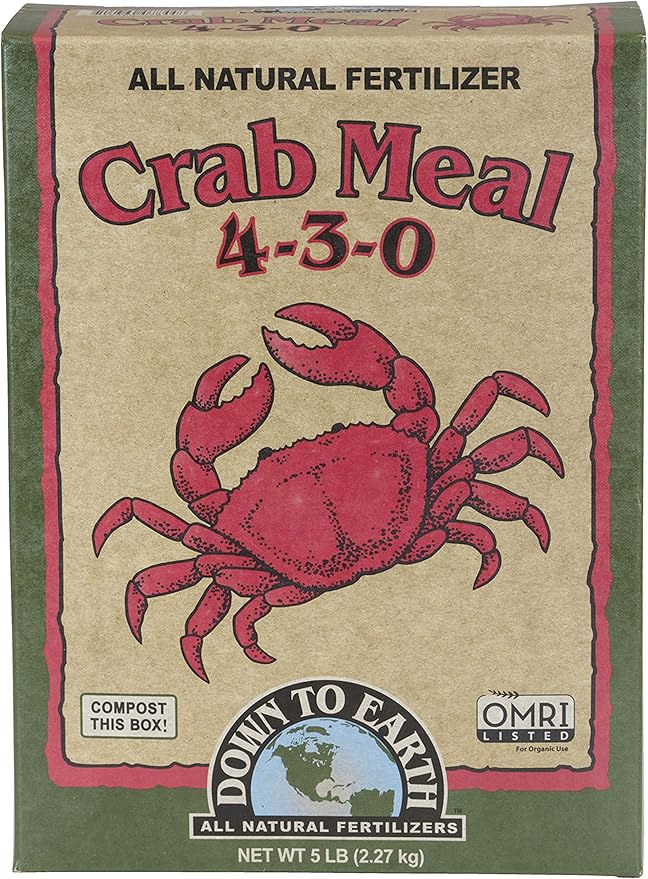
Are you aware that your crab shell doesn’t have to go to waste because you can make use of crab shells in your compost? Yes! Those leftover crab shells can be put to good use in your garden. Crab shells in compost can be pretty beneficial to your plants.
Crab shells will fine alongside other types of shellfish. So, you can easily add crab shells to your compost pile because they are quite biodegradable. Even though it may take some time for these shells to biodegrade, you can also crush them just to hasten up the process.
Crab shells in compost can enrich your compost because they are loaded with good nutrients to help your plant develop.
If you wish to learn how to compost crab shells, then we’ve got you covered here. Read on to find out about using crab shells in your garden and turn those leftover crabs into rich fertilizer for your plants.
Crab Shells In Compost
It is very possible to compost crab shells. Crab shells in compost are an easy thing to do so far you get the right knowledge.
Crab shells are made up of calcium carbonate and chitin (a type of carbohydrate).
How To Compost Crab Shells: A Detailed Guide
Follow the steps below to learn how to compost crab shells:
Step 1- Cleaning Of The Shell Crab
Clean the shell of your crab just to eliminate any salt or other foodstuffs you don’t want in your compost.
Generally, seafood such as crab contains a high level of salt. Although the presence of salt isn’t so toxic to the compost, however, it is not so beneficial to your compost. But the excess amount of salt can be harmful to beneficial worms or another vermiculture setups.
Again, the crab shells are safe to be composted. However, the fat and meat are not so safe. This is mainly because they may throw off the balance of your compost pile and this may give rise to an unpleasant odor or even invite pests to your plant when you use this compost.
Usually, crab shell tends to take a long time to decompose compared to other compostable materials. Hence, when you crush the crab shell into tiny bits, then it can hasten up the breakdown of the compost pile.
If you are however wondering how to grind or crush your crab shell, you can simply use a hammer to crush them into bits. But if you wish to skip this process, you can. Your compost will just be taking a while longer to decompose.
Step 3- Crab Shells Can Be Distributed Throughout Your Compost
After crushing the crab shell into tiny bits, it may not be enough. You may still need to mix the pieces into existing compost instead of allowing the crab shell to sit in large compost.
Step 4- A Balanced Compost Heap Should Be Maintained
A healthy compost can’t be simply created from just one material. If you want a good result, you can pair crab shells with other compostable kitchen scraps. A bonus tip is to add a carbon-rich material such as dead leaves, grasses, woodchips, or cardboard.
Step 5- Composting – Crab Shells In Compost
Turn the compost mixture using a pitchfork or spade. Ensure you change the layers of the compost pile so it can supply oxygen to the microbes that are responsible for decomposing the organic mixture. Doing this will give rise to heat and the compost temperature can go as high as 160 degrees Fahrenheit.
Make sure you also add water to the organic mixture of the compost pile. If moisture isn’t present, the microbes won’t be able to decompose the organic matter and you may not get the ideal compost result. However, ensure the water is minimal because adding too much water can make the compost turn out to be smelly and squishy.
Additionally, you can poke some holes in the compost pile just to allow air to go inside the compost and enhance decomposition.
Finally, continuous monitoring or checking your compost pile daily just to keep tabs on the moisture because adequate moisture is also crucial for easy and fast decomposition.
Crab shell compost is rich in nutrients that your plants can benefit from and a good number of plants can benefit from crab shell compost. Below is some awesome nutrient crab shells can offer your plant:
Calcium
The shells of crabs are particularly rich in calcium. Now plants depend on calcium to produce strong cell walls and combat many common plant diseases.
Magnesium
Regarding photosynthesis, it cannot take place if magnesium is absent. Crab shells naturally contain magnesium. So, they can be an alternative to the magnesium-containing fertilizer that you may find at your local garden store.
Phosphorous
Phosphorous helps and serves as a building block to a plant’s life. Genetic reproduction as well as photosynthesis needs phosphorous to aid their process. So, crab shell is a good source of phosphate that your plant can benefit from.
Chitin
Phosphorous, calcium, and magnesium are all important for the proper development and healthy growth of your plant, and crab shell contains these essential nutrients. But apart from these nutrients, the crab shell is also rich in chitin.
Chitin enhances the growth of certain beneficial bacteria and enzymes. Now, these bacteria and enzymes help to wade off organisms that are harmful such as nematodes, fungi, and soil-borne insects.
Conclusion On Crab Shells In Compost
Crab shells in compost can be an excellent addition to your compost pile because they are loaded with good nutrients that can help your plant grow. This crab shell is rich in essential nutrients such as phosphorous, magnesium, and calcium. It is also rich in chitin.
FAQ’s
Are crab shells good for garden?
Yes. Crab shells are good for garden. Even if you do not have a compost pile to mix the crab shell, you can simply put these shells directly into your garden.
Can you put seafood shells in compost?
Yes. You can put seafood shells in your compost and let your plant enjoy the benefits they offer. They are loaded with calcium as well as other crucial micronutrients needed by plants.
Are crab shells good for fertilizer?
Certainly, crab shells are good for fertilizer s because of the benefits of adding some essential nutrients to plants. Crab shells even offer extra benefits that cannot be found in other types of fertilizers such as chitin. This chitin present in crab enhances the growth of chitin-eating bacteria.
Does crab shell decompose?
Yes, crab shells can decompose. However, the rate at which they decompose can be slow or a bit fast depending on their state. If you crush or break crab shells into pieces before composting, then the decomposition can be hastened up. But if the crab is not crushed, the decomposition can be pretty slow.
Do you see freezing temperatures approaching in your region? Can compost worms survive winter? Well, the cold climate won’t stop composting worms from working for you in your compost bin.
Compost worms are meant to break down food scraps. In the northern area, there’s every possibility that the vermicomposting bins built there may become frozen. You may be wondering if all the worms in the bins will die or are there any ways you can save them.
There are things you may consider doing as a way forward. And the way forward will be for you to either do nothing, heat generation through insulation, prepare a warm spot and then move the worms there or keep the worms in a place with much heat, be it indoors or the basement.
Whichever way you choose to handle the situation, let’s find out if compost worms can survive winter.
Can Compost Worms Survive Winter?
Can compost worms survive winter? The answer is yes and no and we would explain why.
Worms are resilient creatures and they have been surviving long before humans even came along.
However, when compost worms are left in the worm bin to freeze, a lot of them will not survive the winter or they may all die. But the good thing is that if the bin was already established before the chilly weather sets in, the worms will likely lay eggs.
Now, these eggs laid can survive as long as a year in almost any weather including winter.
So, if all your compost worms get frozen by the winter, not to worry because baby worms can hatch once the weather warms up and they will continue the process of composting.
Things To Do To Your Compost When Chilly Weather Sets In
So, if the chilly weather sets in around your area and you’re worried about your compost, below are some things you can do and your compost should be fine.
1. Add Scrap To Your Bin To Increase The Temperature
When you leave the worms outside, they start to become inactive as the temperature drops down making them inactive. At or below 40 degrees Fahrenheit for example, the worms will become incapacitated due to the cold.
They will move to the part of the bin that is warmer which is at the middle and the bottom. Although heat is naturally generated during decomposition, it is definitely not sufficient to keep the worms thriving.
Hence, you can also add organic scraps to the bin, which will help increase the temperature a bit.
2. Do Nothing About The Situation – Can Compost Worms Survive Winter
Another thing is that the older composting worms will begin to lay eggs as they are simultaneous hermaphrodites.
This is to say that worms have male and female types of reproductive organs. But as for the contented composting worms, what they do is produce cocoons by exchanging DNA.
So, your composting quest won’t be altered if the vermicomposting bin is left outside in the winter. This is because the cocoons that are being produced can stand the freezing winter, thereby staying preserved, and then luckily, new worms begin to hatch during spring.
Another intriguing thing about these worms is that their eggs are that no matter the weather, they can survive up to a year. So, you can decide to leave your compost and let it do its thing.
3. Heat Generation Through Insulation – Can Compost Worms Survive Winter
Adding insulation to the vermicomposting bin on the outer part can help increase the warmth on the inside. This will help keep the worms warmer.
You can use blankets, bales of straw, Styrofoam, or bubble wrap. Remember to leave space in between the coverings in order to allow ventilation into the air holes of the bin. The drainage hole must not be covered.
Moving the bin to a sheltered location, like indoors, will be a good form of double protection. This is because insulation alone can’t give a hundred percent assurance that your compost worms can survive the winter.
The bin can be kept warmer when it is not exposed to cold winter wind. This can be done by moving the bin to a shelter with warmth like a shed or garage. Insulation can also be adopted. Heat sources like an incandescent light or seed tray warming mat can be used.
The bin can also be kept from freezing by using a 7-watt night light to generate enough heat for increased warmth. You will need to cover the worm bin with newspapers or a worm bin blanket if you’re using light. This is to be able to keep the worms held in the dark.
5. Find A Heated Location And Move The Worms There
On a realistic note, when you feel cold during the chilly weather, the worms are not exempted too.
This should make you wonder if your compost worms can survive the winter. Hence, another thing you can do to protect your composting worms is to bring your vermicomposting bin indoors when it’s freezing cold. A secluded spot will do, like the cabinet, closet, corner, or beneath a kitchen sink.
However, it’s better you build a smaller bin indoors if your outdoor bin is dirty or too big to move indoors. To be successful at it, take part in the beddings as well as the composting worms you want to keep by digging them out from the vermicomposting bin. Put them in the spot you’ve created for them indoors. Keeping them in the basement is also a great idea. So, this method will make you not worry so much about how you will get to the worms to get them fed. Worms are usually very active when they and their surrounding is warm.
Can Compost Worms Survive Winter? Conclusion
You need not to worry that your composting program will be altered after all now that you know your composting worms can survive in the winter. You can as well leave them outdoor and not worry about anything, so long as they lay their eggs or produce cocoons.
Their eggs can survive for a year, which gives guarantees of the continuity of your compost program. This is because, after the winter, the eggs will begin to hatch and the new worms will take it up from there.
However, if you are so worried about leaving your worm bin out in the cold, you can opt for insulation, moving it indoors, or preparing a secluded heated spot for your worms.
FAQ’s
How do you keep compost worms alive in the winter?
Compost worms can be kept alive during winter by leaving them outdoors in the bin for them to lay eggs that will hatch and continue the process of compositing. You can also relocate your compost bin to a warmer place to help them.
Will my compost worms die in the winter?
Many of your worms, if not all, may die in the winter. However, there is a huge chance for these worms to lay eggs and their eggs can survive up to a year under harsh weather conditions that includes freezing conditions.
How cold is too cold for worm bin?
When the temperature is reaching 40 degrees Fahrenheit or dips below 40 degrees, then it can become too cold for these worms that it can render them inactive.
What temperature can compost worms survive?
Ideally, compost worms can require around 59 to 77 degrees Fahrenheit for optimal performance. Once the temperature drops below 40 degrees, it can prove fatal for the worms.
🪱 Composting Supplies
Chef’n 401-420-120 EcoCrock Counter Compost Bin Black and White 3.3 liter 1
The difference between brown vs green compost is what most gardeners have been looking for and this article will inform you all about it.
Composting is a great way to recycle organic matter into the soil. The best type of compost is made from the leftover parts of plants, particularly from kitchen scraps and garden waste.
When composting is done properly, it will be rich in nutrients for your garden. Compost is usually either brown or green but can also be a mixture of the two. In this article, we are going to go through the differences between these types of compost.
What is Brown Vs Green Compost?
Brown compost is created from plant material that has been shredded or turned into smaller pieces. The material can be animal or vegetable matter such as leaves, grass, twigs, fruit, wood, and even manure.
Green compost is created from plant material that hasn’t been ground into smaller pieces but is still left intact. It is made from whole plants, grasses, straws, weeds, wood, or other plant materials. This type of composting produces a rich, dark green substance that is useful for plants that thrive in darker conditions.
Brown Compost is used for a number of different applications. It is often used for:
Soil building and improving soil health.
Strawberry, rosemary, peppermint, and lavender plantings.
As a mulch for beds and containers.
In the composting process, it will turn into a dark rich humus material that can be used in your garden. Green Compost is usually used as a top dressing for flower beds, lawns, and vegetable gardens.
The two types of compost are also used for different purposes. Brown compost is used in a larger quantity to improve soil health and increase fertility, while green compost is used in smaller quantities and is more for aesthetic purposes.
Brown vs green compost differences are caused by the materials used in both processes, and the differences are not significant enough to cause any adverse effects. It is important to know how composts are made so that you can decide whether a particular type of compost is right for your situation.
Brown Compost is made from kitchen wastes like meat scraps, bones, eggshells, and coffee grounds. These kitchen wastes have a high carbon to nitrogen ratio (C/N).
Green Compost is made from yard waste like leaves, grass clippings, and vegetable peels.
Brown Compost has high levels of nitrogen because it contains more carbon than nitrogen.
Green Compost is nitrogen-rich compared to brown compost because it does not contain as much carbon.
When you make compost at home, you can make two types of compost: brown and green. The difference between the two is that brown compost is more carbon-rich and green compost is more nitrogen-rich. Both can be used in your garden, but you should choose one based on what you are composting.
Making Homemade Brown Vs Green Compost
To make compost, you need to collect kitchen and yard wastes and mix them with water and anaerobic material such as sawdust or newspaper. These materials are then left out in the sun to break down for three to six months.
If you have a large amount of kitchen waste to compost, consider getting a compost tumbler. This is a small, sealed container that can be placed in your garage or shed to allow the process to take place more quickly. When it comes to food scraps, there are two basic types: wet and dry. Wet food scraps should be combined with water and placed in a pile; this can be done in a plastic bin or a shallow outdoor pit.
Dry food scraps should be placed on newspaper and covered with a plastic tarp. Making compost doesn’t require any specific equipment, but it does require time. In addition to finding the right materials to use, you also need to figure out what to do with the finished product.
Compost can be used as a soil amendment, which improves the health and fertility of the soil, or it can be sold to local farmers who will use it for their own gardens. For more information on how to make compost, visit the USDA website.
Green compost can be used in place of black soil for the following reasons: Black soil has a C/N ratio between 12 and 15. Black soil will quickly burn plants if they are not kept moist.
If you plan to grow vegetables, use only black soil in your garden beds. Green compost can be used when you want to add organic matter to your soil, but you don’t have access to black soil.
Brown compost is used for growing plants that require more nitrogen. For example, tomatoes will produce better with a higher nitrogen content than other vegetables. Brown compost is also useful for improving the soil structure and keeping it from compacting.
Final Thoughts About Brown Vs Green Compost
Brown vs green compost is the way to go if you are into gardening. The process of making your own compost is simple and effective, as it takes about two weeks from start to finish. You will have a great supply of organic material to use in your garden.
In addition, this method of composting has the added benefit of creating a nutrient-rich compost that is ready to be used immediately. This can be especially helpful if you are in a hurry to get your garden started, or if you simply do not want to wait for your compost bin to be full before using it.
FAQ’s
What is the difference between green and brown compost?
The difference between brown and green compost is mainly based on the type of materials used. Brown composts are made from a mixture of organic materials, such as vegetable and fruit peelings, paper, cardboard, sawdust, straw, etc. Green compost is made from yard waste like leaves, grass clippings, and vegetable peels.
Are coffee grounds considered green or brown compost?
Coffee grounds are considered a brown compost material because they contain large amounts of carbon and nitrogen. These nutrients help to improve soil health, but they also attract pests and disease organisms that can destroy your crops if not properly controlled.
What is the ratio of brown to green in compost?
The proper ratio of brown to green in compost is three parts brown to one part green.
What counts as a brown matter for compost?
Brown matter includes all materials with a higher carbon content than green matter, such as dead leaves, grass clippings, and wood chips. The more carbon-rich the material, the longer it will stay in your compost pile.
Having good soil is important for any garden, no matter what you are growing. Fortunately, there are many different soils and fertilizers you can use for improving the soil in your garden. Using mushroom soil for gardens can be a great option to provide the nutrients your plants need to thrive.
Though many people may not be familiar with mushroom soil, it can be a great option for many people. In fact, it is a suitable option for most gardens when it is properly used. Many people are even now beginning to make the switch to this practical and healthy option for their garden.
What Is Mushroom Soil?
Mushroom soil, also known as the spent mushroom substrate or mushroom compost, is a soil-like material that remains after a mushroom crop. It is the steam pasteurized, partially composted leftovers from mushroom growing media after the crop has been harvested.
Mushroom soil can be used directly in garden beds or can be composted for an additional six to 12 months until it becomes odorless. It contains a variety of different ingredients, such as wheat straw, horse manure, hay, corn cobs, cottonseed hulls, brewer’s grain, cocoa bean hulls, ground soybeans, seed meal, peat moss, and ground limestone. This helps give it plenty of beneficial nutrients to help mushrooms, and later other crops, grow successfully.
In addition, it may also contain pesticide residue, along with grubs and other insects. Mushroom soil will vary slightly, depending on the location and what the farmer added to it. It is generally readily available, as you can find it at many gardening stores and it is affordable.
Mushroom compost comes with many benefits including improving the water capacity, soil temperature, and microbial activity. In addition, it also improves the structure of soil while even amending clay-like soils over time.
Mushroom soil is great for providing essential nutrients and also important micro-organisms to vegetable gardens, along with perennials, trees, and shrubs. Oftentimes, the nutrients in it will contain 1-2% nitrogen, 0.2% phosphorus, and 1.3% potassium, though this will vary by each type.
So, you may wonder, is mushroom soil good for gardens? Since mushroom soil is a slow-release, organic plant fertilizer, it is great for use in many vegetable and fruit gardens. In addition, you can even use it for perennials, shrubs, and trees as well.
Mushroom soil should not be used to completely replace soil but should be mixed. A ratio of 75% soil and 25% mushroom compost is often a good mix for most gardens.
Mushroom soil is also particularly great for lawns. By adding it to newly seeded lawns, it will help the seeds germinate as they retain water. In addition, it can help prevent birds from eating your seeds.
Since it does have a high salt level, it is not a good option for blueberries, cranberries, rhododendrons, azaleas, and camellias. However, in most cases, its other nutritional benefits outweigh its high salt content.
Mushroom spent substrate that has been weathered for six months or more is particularly great for garden beds. Not only does it improve the structure of the soil, but it also provides important nutrients for growing plants.
When fresh, mushroom compost can even work to prevent weeds from popping up, as it is dense. In addition, over time it can help amend clay soil, making it more usable.
How To Use Mushroom Soil For Gardens
Mushroom compost is often available at gardening centers. It is generally available as SMC or SMS (stands for spent mushroom compost and spent mushroom substrate). It comes from mushroom farmers that have used the soil for growing their mushrooms and no longer have a use for it.
You can use it for lawns, gardens, and potted plants, as it will help improve the soil. For gardens, you can top-dress with the compost or till it into the soil, around three to six inches deep. For potted plants, you can use it to make up to one-quarter of the volume of the soil in the container.
In addition, it is great for adding to newly seeded lawns. You can add it on top of the seeded lawns to achieve the most benefits from it.
Mushroom compost also works great in a vermicomposter. After using it as worm bedding, it will create a rich fertilizer that is full of beneficial microorganisms, making it great to use for your soil.
Is Mushroom Soil Good For Raised Beds?
Yes, mushroom compost is a great addition to raised garden beds. You can top-dress the garden bed with the compost to help your plants receive the most benefits from it. As it breaks down, you can work it into the soil.
Is Mushroom Soil The Same As Compost?
Mushroom soil is commonly used as compost, as you don’t want to use only mushroom soil in your garden. You can continue to compost it over time, as it can benefit from composting for an additional six to 12 months.
To help boost mushroom soil, you can add compost tea or regular compost. This will help restore microorganisms in the soil and help further break it down. In addition, you can also add it to your tumbler compost as well.
FAQs
When should you not use mushroom compost?
Mushroom compost is good for any purpose. It is a great additive to a soil mix, as well as fertilizer for plants. The only time I would not use mushroom compost is when the compost is not hot enough (at least 160 degrees F) and/or contains large amounts of wet leaves or straw. If it’s not hot enough, the compost will not be able to kill bacteria and fungi that can make the compost unsafe.
How does mushroom compost work?
Mushroom compost is a mix of chopped or shredded plant matter, soil, and various nutrients. It can be used as an organic fertilizer to grow plants and garden vegetables.
Mushroom compost can be made using many different ingredients, including wheat straw, sawdust, paper mulch, and chicken manure. The materials are mixed together and then moistened with water. This mixture is then spread out in a large container and left to rot. In about two weeks, the compost will have turned into a dark brown or black mixture. The compost can then be used to grow mushrooms. A mushroom farm uses a lot of mushroom compost, but you can make your own at home. If you use a combination of wheat straw, sawdust, and paper mulch, you can make a compost that’s very similar to what mushroom farmers use.
I have had great success with mushroom compost. Use 2 parts soil to 1 part mushroom compost. Use it on both the surface and the bottom of the pot or container. Do not use the mushroom compost when it is wet.
Why is it so beneficial for a garden?
Mushroom compost is a natural and free way of fertilizing your garden. It contains beneficial microbes, fungi and bacteria that help in the breakdown of organic material into nutrients that are absorbed by plants. Benefits of Mushroom Compost: Mushrooms are very rich in vitamins and minerals. They contain vitamin B1, B2, B6, C, K, calcium, magnesium, potassium, phosphorus and iron.
Mushroom compost is a natural, low-cost alternative to commercial fertilizer. It’s a great way to nourish your plants without the hassles of fertilizers.
What do you use mushroom compost for?
It depends on what you want to grow. If you have a lot of weeds and need to get rid of them, then you can mix it in with your soil. It is used to make soil healthy. If you have a garden with flowers and vegetables, you can use the compost to make the soil healthy. It will increase the amount of nutrients in the soil and make the soil more moist.
Using Mushroom Soil for Gardens
Mushroom soil comes from the crops of growing mushrooms and contains things such as wheat straw, horse manure, hay, corn cobs, cottonseed hulls, brewer’s grain, cocoa bean hulls, ground soybeans, seed meal, peat moss, and ground limestone. However, it does vary by location, as different farmers may add different things to their mushrooms to help them grow.
Mushroom soil can be used right away once mushrooms have been harvested, or it can be composted for another six to 12 months. It is great for use on lawns, garden beds, and potted plants, and you can find it at most gardening centers. It provides nutrients, helps the soil retain moisture, and improves the structure of the soil.
Do you have any questions regarding how to use mushroom soil for gardens? If so, please ask any questions regarding mushroom soil and its uses in the comment section down below.
Fertilizer is essential when it comes to soil maintenance. The reason is that it helps make the important nutrients that are needed in the soil readily available. But you might be wondering if horse manure is good for vegetable gardens. Certainly, it is.
Maintaining healthy soil and nutritious soil is a good way of enhancing the growth and quality of your plants. Organic waste such as horse manure may sound stinky and unpleasant, but trust me; they can help you produce great yields.
Regardless of all these issues, horse manure is still one of the best but in its composted form. It’s certain that by now you’re already curious to know why horse manure is good for vegetable gardens. Let’s dive into more details about this information.
Is Horse Manure Good For Gardens?
Horse manure is often easily accessible in rural areas or you can obtain them from reputable suppliers. Hence, horse manure can indeed make a reasonable and inexpensive fertilizer. It’s even better if you’re not a fan of synthetic fertilizer as horse manure is purely natural.
Horse manure is one of the best options for your garden. It is rich in nitrogen, phosphorous, and potassium and these 3 nutrients are essential for the healthy growth of plants.
However, fresh horse manure shouldn’t be used right away but the composted form is better. Horses often have a hard time digesting what they eat.
Horse poop tends to have undigested organic components like grass, weed, and seeds in it. And this causes seaweeds to grow all over the garden when they use raw horse manure. This is why composting is recommended before use.
The process of making a compost pile is not an easy one but I promise you that your effort will be worth it in the end.
Horse Manure For Garden: Tips On Making Horse Manure Compost Pile
Composting is when naturally occurring microbes break down organic matter. Note that for horse manure to be finally called compost, it should look like a perfect soil-like material.
The idea is for it to have lots of roughage and a high level of nutrients. It will help make the soil in the best form with all the nutrients to aid plant growth and health.
Making Horse Manure Compost Pile
Firstly, note that what can make all this possible is heat. Heat is what can help make a pathogen, seed weed-free compost. A byproduct of composting is heated. Getting and maintaining the level of degree that can help achieve this is a major hassle here.
A temperature of 100 degrees should do the trick. This is definitely achievable with consistency and a lot of trial and error.
Heap Formation
The pile will be in form of a heap. The heap should have everything necessary in the right quantity To achieve a perfect result and also to arrive at an answer to if horse manure is good for vegetable gardens. Make sure the heap is big enough. Air should be made possible to get to the heart and then composting can circulate through the air. The high heat is usually in the heart. Some old netting can be used.
To get a well-shaped pile with a bigger heart, form two different rings of 2cm each. Make sure the floor is bare; don’t use any coverings on the floor. Microbes and worms will be able to make their way into the heap to do their continuous work of composting.
That being said, you can go ahead and fill one of the rings with horse manure and other needed materials. The height of the heap you’re making should be about a meter. Your horse manure should go in first.
Let this first layer be about 15cm and make the surface even. Use a hose to spray water on the pile if it is dry to make it moist but not wet. You don’t want the composting process to be slowed down and all your effort in vain. The main focus is for the big heat to accumulate in the heart of your pile. This can be achieved when everything goes well. Sprinkle a handful of the general-purpose fertilizer on your pile.
Nitrogen And Green Matter
Nitrogen is needed for effective composting but in moderation. Then the green matter is next to go in. The green matter must be about 50 percent of the heap.
Repeat the whole process but remember to check for moisture in the horse manure. You can increase microbes by sprinkling lime on your heap. It makes your compost less acidic.
Ventilation can be created by drilling about four holes in the middle with long sticks that can reach the base of the heap. Retain heat, and moisture and prevent rain from getting your heap soaked by using old clothing to cover your heap.
If this procedure outlined so far is being followed correctly, composting will begin and go on successfully.
Turn Your Compost
The compost needs to be turned in after 3 weeks. Transfer the heap into the second ring. Make sure the outer part is in the middle this time around. Water the heap if need be and repeat other procedures too. This way, composting will go around.
Is It Safe To Eat Vegetables Grown In Horse Manure
You might be wondering if it is safe to eat vegetables grown in horse manure. Remember the best way to use horse manure is to let it pass through the composting stage. By now, your question about knowing if horse manure is good for vegetable gardens should have been answered.
Using fresh horse manure straight away is very risky as it can burn your plants and it usually contains unwanted substances such as undigested grass, weed, seeds, and so on. Composting will also help the manure to undergo sterilization from unwanted microbes.
Therefore, the best thing is to let your horse manure go through the process of composting before use in your vegetable gardens.
Are you making use of manure tea from diluted horse poo as folia feed? If yes, avoid pouring them on plants that you’ll be harvesting to eat within a week. Ensure to wash consumable plants after harvest.
Can You Put Too Much Horse Manure In Your Garden?
Yes, it’s possible to apply too much horse manure in your garden. This may cause nitrate leaching. Therefore, always ensure you only match the application of horse manure to your crop’s demand.
What Is The Best Manure For A Vegetable Garden?
Horse manure remains one of the best for vegetable gardens but only in its composted form. Horse manure compost contains a high level of rich nutrients and roughage that looks like soil and blends well with soil.
It contributes to and improves the general well-being of the soil, vegetables, and garden generally.
How Do You Make Horse Dung Into Fertilizer Rust?
To successfully turn horse dung into fertilizer, build the optimum pile of dung that is three feet high. If the pile is too small, the heat you will need to apply will dissipate very quickly and will not reach the temperatures that you need to successfully compost.
Maintain constant airflow through your pile. This will help prevent odors, achieve high temperatures and complete the composting process in a short period.
Monitor the temperature and maintain it in the range of 50 – 100 °F. Increase the temperature gradually and then drop it to ambient over several weeks. Your temperatures should never exceed 160 °F as high temperatures may immobilize the microorganisms needed to carry out the decomposition process.
What Vegetables Do Not Like Horse Manure?
Vegetable root crops such as beets, carrots, radishes, and potatoes are particularly sensitive to adding horse manure. This is because it contains a high amount of nutrients that can burn plants if applied at high concentrations. Salad greens are another type of vegetable that can get burned or damaged by horse manure.
To avoid any negative impacts on your plants from using horse manure, make sure that it is well-composted or diluted with other materials that can tone down its potency.
How Long Does Fresh Horse Manure Take to Compost?
It takes about four to six weeks to turn raw stable waste into manure if you do it properly. It does however take some effort. To achieve this, you will need to maintain the right moisture content in your compost heap to provide the ideal environment for bacteria to carry out the composting. If you are not getting any rain and the pile is getting dry, spray it with a garden hose until the material is just damp and has the consistency of a wrung-out sponge. If you over-water by accident, simply add a heap of dried leaves to the pile.
Keep the heat up in the compost until it resembles dark brown garden soil. At this stage, it will be safe to use in your garden.
Be careful when compositing horse manure. Compost piles can easily catch on fire, so be careful to keep them away from buildings or any combustible materials.
How Much Nitrogen Does Horse Manure Have?
Undiluted horse manure contains low levels of nitrogen, about 1 to 2% dry weight. It supplies small amounts of nitrogen to the soil via a slow release. When the horse manure is mixed with woody bedding, for example, the resulting product will tie up nitrogen leading to a deficiency in the crop.
What is The pH of Composted Horse Manure?
Horse manure is not as acidic or alkaline as would be expected. The actual pH of the manure depends varies according to the diet of the horse but will be somewhere in the range between 6.6 and 7.5.
Manure from horses that are fed grain-based diets tends to be more acidic, while those fed a more hay-based diet will produce alkaline or neutral manure.
The manure can become more acidic or more basic depending on how it is composted. It will become more acidic if it is composted in an oxygen-rich environment. The opposite will be true for oxygen-poor environments.
Conclusion – Is Horse Manure Good For Vegetable Gardens
Is Horse Manure Good For Vegetable Gardens?
From the clear illustration in this article, your question about if horse manure is good for vegetable gardens must have been answered.
So, the knowledge about horse manure being good for planting when it’s in its composted form can be shared with other people for them to know.
FAQ’s
What is the best manure for a vegetable garden?
The best type of manure for vegetables is compost. This is a mixture of plant material, including both organic and inorganic matter. Compost is made by mixing your kitchen waste with a small amount of sawdust or straw, then adding a handful of leaves, grass clippings and other organic matter. The whole mix is then left to rot over time.
If you use too much, you’ll need to add more fertilizer later, but if you don’t use enough, the plant will need to work harder at absorbing nutrients from the soil. A few shovelfuls should be plenty to get started.
Is all horse manure good for vegetables?
It’s best to get your manure tested first. That way if you do have an issue you can treat it before using it. I wouldn’t put horse manure in the garden directly. You can buy a horse manure spreader to spread it on the lawn, but if you’re trying to grow food or flowers it’ll need to go into the compost pile. I would avoid putting anything organic into a compost pile or worm bin as they will contain pathogens and disease causing organisms. It’s best to get your manure tested first. That way if you do have an issue you can treat it before using it.
How long before you can use horse manure?
If you are using horse manure for your garden, you should wait at least six months before you can start sowing your seed. This is because horse manure has a high nitrogen content and will leach too much nitrogen from the soil if it is applied in the first few weeks of the growing season. This is true even if you don’t fertilise your garden with manure.
How should I apply horse manure for my garden?
If you are going to use manure as a fertilizer, then it’s not a problem. Just mix with your regular fertilizers and apply like you would any other fertilizer.
Manure can be applied as a natural fungicide. It is one of the best natural fungicides. You can make a compost tea with manure by mixing 1 part manure to 5 parts water. Apply this tea to plants and weeds. It will prevent most fungus problems.
What is the maximum amount of manure per square foot we should apply to the garden?
I would say 1 cubic yard of manure per 20 square feet (or one cubic yard per 100 square feet). This assumes the bed is 10 feet wide and the rows are 3 feet apart. You could also calculate it as 1 cubic yard per 25 square feet.
If you have an average of 10 square feet per row, that’s 10 times as much manure per row than per square foot. If you want to grow a lot of veggies, you’ll need more than 1 cubic yard of manure per 20 square feet or 25 square feet. I would guess that you’d need at least 3 cubic yards per 20 square feet or 4 cubic yards per 25 square feet, just to have enough nutrients in the soil for the veggies to grow well.
Adding nitrogen supplements for plants is a sure way to enhance the essential macronutrients that your plants need to thrive.
Nitrogen is one of the essential macronutrients that your plant needs to grow. Without it, your plans will stop growing and lose their beauty.
Without a vital nitrogen source, you have plants suffer from slow growth, lack of color, and low yields. Eventually, poor nitrogen levels make your plans weak enough to succumb to diseases or pest infestations.
Let’s figure out how to add nitrogen supplements for plants so you can get a bumper harvest from your favorite vegetables.
Why Do Plants Need Nitrogen?
Nitrogen is the primary fuel that plants need to grow. Its main purpose is to help plants grow big and maintain green foliage and stems. It is used in many processes in a plant, for example, to send the size proteins chlorophyll amino acids and enzymes.
An excellent nitrogen source helps your plants grow big and strong, allowing them to set fruit easily.
Signs That Show Deficiency Of Nitrogen
Stunted growth. This is the number one sign that your plants do not have enough nitrogen. Sometimes it can be hard to pick up this sign if you are a new gardener or you don’t have healthier plans to compare to.
Yellowing of the leaf color. The easiest way to spot nitrogen deficiency is by looking at the leaves and supporting any lightening or yellowing of the leaf color. This is called chlorosis. Nitrogen-deficient plants have leaves that take on a yellow-green or go full yellow if the levels are too low.
How To Add Nitrogen Supplements For Plants
Regular editions of nitrogen to your soil are essential for the health of your plants. Are some of the options you can try
Add composted manure
Animal waste is high in nitrogen. However, you cannot add it directly to your soil as it will burn your plants. The type of manure you vary in its hotness. You will need to compost it before adding it to your garden for at least 6 months. You can toss in food or garden waste when making your compost manure as long as they’re free from pests and diseases.
Chicken, goat, or rabbit manure can be used in composting. Chicken manure is considered the hottest, so you must compost it first. Cow, goat, and rabbit manure is not as hot, and it would add them to your soil with the reduced chance of burning your crops. However, it is safer to compost it before adding it directly to your garden.
It takes time for the manual to decompose and work its way well into the soil, so if you want the nutrients immediately, this is not your solution. However, it works best in the long term.
Use green manure crop
Using cover crops to fix your nitrogen deficiency is one of the ways to add nitrogen to your soil. The main difference between growing a green manure cover crop and planting legumes or beans is that a cover crop is not grown for harvest. You plant your green manure crop at the start of the season or in the off-season and leave it to grow.
The disadvantage of using green covers is that removing them from the garden takes a long time and effort.
Grow nitrogen-fixing plants
Nitrogen-fixing plants mean they will add nitrogen to your soil as they grow. The two common ones are beans and legumes. Instead of absorbing nitrogen from the soil, these plants fix the nutrients by adding them. Consider growing beans and legumes where your soil has shown signs of nitrogen deficiency. This is one reason that crop rotation helps in making your soil better.
It is vital to understand that you should not fertilize the soil where you want to grow beans. This protects your soil from too much nitrogen.
Mix coffee grounds with the soil
Ground coffee can help you make your soil better. They are an excellent nitrogen source, and you can either add them to your compost pile or mix it directly into your soil. It takes time to break down and release the nutrients into the soil, so it cannot offer short-term help. However, it provides your long-term soil benefits and keeps iterated, improving the drainage.
Use fish emulsion
Fish emulsion is a nitrogen-rich fertilizer with a ratio of 5-1-1. This means that it provides nitrogen to your plants in the right quantity, avoiding burning them. One of the benefits of using fish emulsion is that it contains other macronutrients that benefit your plants, like sulfur, calcium, magnesium, sodium, and chlorine.
You can buy fish emulsion as a concentrated form from most garden centers and mix it with water before application. The average ratio is 2 to 3 tablespoons of fish emulsion for every gallon of water. Pour it into the soil or spray the leaves of your plants.
If you have a fish tank, don’t dump out the water. This water is a free lite version of the fish emulsion as the fish poops in the water, and these droppings contain plenty of nitrogen. Use this water to water your plants, making the nutrients available immediately for the plants to use.
Mulching is an ideal way to add nitrogen into your soil is a long-term goal. Using grass clippings, lay them on your soil and leave them to decompose. Once they do, they will reach nitrogen back into the soil.
Buy an actual plant fertilizer
Chemical fertilizers contain a good amount of nitrogen as well as organic ones. You can choose to add a plant fertilizer that has an NPK ratio of 10-10-10 or 20-20-20. The first number in this ratio indicates the amount of nitrogen in that fertilizer, so using one with a larger first number gives you a significant boost to your soil.
However, chemical fertilizers fade away faster and can also burn your plans if you provide too much nitrogen at once. The organic ones are the best because they usually have lower numbers and take longer to be absorbed.
FAQs
Why is nitrogen important for plants?
Nitrogen is the most important element for healthy plant growth. Plants need it to grow and thrive. A general rule of thumb is that if your soil is nutrient deficient, adding 10-15% nitrogen will bring it back to a healthy level. Most plants do better with high levels of nitrogen, but too much can cause leaf burn.
How do I add nitrogen to my plants?
If you have a small space, you may be able to add nitrogen directly to your plants without having to go through soil.
Some commercial fertilizers contain nitrogen as well. If you have a large area or want to use soil, nitrogen can be added through the soil as well. You can buy nitrogen in liquid form at the garden center, but it is expensive and not very effective. It also takes a long time to break down in the soil. You can also add ammonium nitrate or urea, which are the two most common nitrogen sources. Urea is usually sold in powder form at the store, but you can also buy bags of liquid urea fertilizer. This is the quickest way to add nitrogen to the soil. Ammonium nitrate is more expensive than urea, but it breaks down faster and is safer to handle. There are many other types of nitrogen that you can use as well. You can even add a nitrogen source to your water.
What are the most popular nitrogen fertilizers?
There are many different types of nitrogen fertilizer available. The main two types are urea (N46. and ammonium nitrate (AN). They differ in how quickly they are released into the soil, and how fast the plant will use them. Ammonium Nitrate Ammonium nitrate is a slow-release fertilizer that increases the amount of N in the soil, making it available to the plants for a longer period of time. Ammonium nitrate is also called AN or ammonium nitrate fertilizer. It contains nitrogen, phosphorus, and potassium. The N content is usually from 10% to 50% and is sometimes called “nitrogen-rich” fertilizer. It is used for lawns and greenhouses. Ammonium nitrate can be applied at rates of 25 pounds per 1,000 square feet. Ammonium nitrate can be spread on the surface or incorporated into the soil by mixing with other fertilizers, compost, or soil amendments. Ammonium nitrate can be applied in liquid form, a dry granular form, or as an organic fertilizer. Fertilizing with ammonium nitrate will make more nitrogen available in the soil than if you just apply fertilizer without it. The amount of fertilizer you need depends on your climate, soil type, and crop type. It is also important to add phosphorus and potassium to the soil to balance the amount of nitrogen and phosphorus in the soil. Urea is a fast-release fertilizer that increases the amount of N in the soil for a short period of time. It has a higher N content than ammonium nitrate and is usually applied at rates of 12 to 20 pounds per 1,000 square feet. Urea is usually applied when the plants are actively growing.
Conclusion
Unlike other nutrients adding too many nitrogen supplements for plants at once can be problematic. You need to add a little at a time, ensuring that your soil has the right amount of nitrogen throughout. Using organic methods to add nitrogen levels to your ground is the best.
Is nitrogen organic or inorganic, and in what form is it available? Does compost or commercial inorganic fertilizers matter?
Nitrogen is one of the most difficult nutrients to manage in crop production. Compost is known to contribute substantial nitrogen for crops. However, it is challenging to synchronize its release from these materials as the plant demands.
Careful management of organic nitrogen fertilizer is required to meet most crop requirements and avoid undesirable losses to the environment. We will therefore look at these two types of compounds and their uses.
Is Nitrogen Organic Cause Inorganic – What Is Organic Nitrogen?
Organic nitrogen can be described as nitrogen atoms that occur in organic compounds. Organic nitrogen is common in soils in the form of organic matter. This includes residues of decomposing anemometer plants and humus.
These organic compounds contain nitrogen that incorporates into the organic matter during soil development. The organic matter in the soil depends on the temperature trends and long-term moisture contents.
For example, cultivation decreases organic matter content in the soil due to the oxidation of these organic compounds. This leads to reducing the organic nitrogen for crop intake.
Organic nitrogen plays an integral part in crop production and soil nitrogen cycling.
What Is Inorganic Nitrogen?
Inorganic nitrogen is the nitrogen atoms that occur in the inorganic compounds. Inorganic compounds do not contain hydrogen and carbon as essential components like organic compounds. Many other chemical elements make up the inorganic compounds.
For example, nitrates and ammonium dominate the inorganic fraction of the soil. These are the primary form that plants can take for their needs. The other forms of inorganic nitrogen in the soil are nitrites and nitrogen gas.
The Differences Between Organic And Inorganic Nitrogen
The significant difference between organic and inorganic nitrogen is that the inorganic forms of nitrogen occur in inorganic compounds, and organic nitrogen occurs in organic compounds.
Organic nitrogen includes proteins, amino acids, nucleotides, and nitrogen bonds to residues animal matter and decomposing plant material.
Waste from grass-eating animals is an excellent nitrogen source once it is well composted. Raw manure can burn your plants because the nitrogen is more volatile. Composting at a high temperature for an extended period could generate enough heat that kills weeds seeds available in the manure.
Compost
Compost manure contains all of the nutrients food for healthy plants. Although the exact required dosage depends on the material composted, this includes nitrogen. Compost manure is one of the best to improve and enrich the soil.
Green manure
Cover crops like peas, clovers, alfalfa, and other legumes are best in absorbing nitrogen from the air and releasing it into the soil. When you grow these cover crops in your garden, they improve your soil by the fact they are growing in it. Green cover crops at the end of the growing season provide you with a double dose of nutrients and natural compost. When the plant is in crop rotation in your vegetable garden, be sure to include the green manure over to the crop rotation.
Soybean meal
This is similar to cottonseed meal and is a slow-release source of nitrogen that comes from ground soybeans.
Blood meal
Blood meal comes from the waste of slaughterhouses. It is an essential source of nitrogen that burns your plant if over-applied. Do not apply blood meal to young seedlings, burning them to death. However, as it is water-soluble you can mix it with water or apply it through the irrigation system.
Cottonseed meal
The best organic nitrogen source is slightly acidic but provides nitrogen in a slow-release form.
Feather meal
Chicken feather meal is specifically dried and formed into pellets that make it easy to use as granular fertilizer. Feather meal has an average release rate that helps the small break down proteins to make nitrogen available for the plant’s roots.
Inorganic Sources
Ammonium sulfate
Ammonium sulfate is a soluble, readily available source of nitrogen and sulfur. It contains 21% nitrogen and 24% sulfur in its dry form. This fertilizer is suitable as a top dresser because it has a lower nitrogen volatilization risk than the surface-applied urea.
Ammonium nitrate
Ammonium nitrate is an odorless compound with 33 to 34% of nitrogen. This fertilizer can be applied on the surface or mixed into the soil. It contains ammonium that lowers the pH of the soil in case it’s too acidic. The ammonium and nitrate result in a reduced risk of volatilization compared to urea. The nitrate provides a direct source of nitrogen since it contains ammonium.
Urea is a highly soluble dry matter that you can use as a starter top-dress or broadcast. You can also use fertilizer mixes, either dry or liquid. This fertilizer has high levels of nitrogen to at least 45 to 46%. If you apply urea on the surface, you must mix it into the soil by tillage, watering, or rainfall.
Urea ammonium nitrate is a soluble readily available nitrogen source with about 20 to 32% of nitrogen. It can be applied as a starter or broadcasted into already growing plants. When used, the UNA should be incorporated into the soil to avoid the volatilization of the area available in this fertilizer.
Anhydrous ammonia
This compound has the highest percentage of nitrogen of all the fertilizers. It contains 82% nitrogen and tends to be the cheapest nitrogen source ever. The best fertilizer is a high-pressure liquid that you can apply before or after seeding as long as you will not allow direct seed contact. Store Anhydrous ammonia under high pressure in specifically well-maintained equipment or facility well protected for safety reasons.
Potassium nitrate
It is also known as nitric acid and is considered a specialty fertilizer. It is either a white powder or colorless transparent crystal containing 40% nitrogen and 46% potassium. This fertilizer does not lower the pH of your soil.
Diammonium phosphate
DAP is a dry fertilizer that contains at least 18% nitrogen and 46% phosphates. After mixing into the soil, it releases free ammonia that may cause seed injury. To prevent such damage to your seed, limit band applications.
Monoammonium phosphate
This fertilizer contains readily available nitrogen sources at 11%, phosphate at 52%, and sulfur at 1.5%. It is a dry, granular material applied alone or blended with other compounds such as potash. You can either broadcast, band use, or place it in the seed furrow. MAP is an excellent starter fertilizer that lowers the soil pH.
Chilean nitrate
Chilean nitrate is useful in organic and conventional farming estimated by the USDA/NOP in 2003. It has 16% nitrate and sodium.
FAQs
What is the difference between organic and inorganic nitrogen?
There is a big difference between organic and inorganic nitrogen. Inorganic nitrogen is found in soil. Organic nitrogen is found in living organisms and their waste products. Plants take inorganic nitrogen from soil, then use it to produce amino acids that make up proteins and nucleic acids. Organic nitrogen also comes from dead plant and animal matter that decomposes in the soil.
In some areas of the country, you will find a great deal of organic matter. The organic matter makes a great environment for the microorganisms that decompose the organic material into nitrates and other nutrients that can be taken up by plants. In other areas of the country, there is not much organic matter. This is why fertilizer companies add synthetic nitrogen fertilizers to the soil. They are inexpensive and easy to apply. A good rule of thumb is that if you want your plants to grow fast, you should use more synthetic nitrogen fertilizers than organic nitrogen fertilizers. However, if you want your plants to have more leaves, then you should use more organic nitrogen fertilizers.
Can you use either on a lawn?
If you have a lawn, you can fertilize it with both organic and inorganic fertilizer. You can fertilize your lawn with inorganic nitrogen by adding manure or commercial fertilizer to the soil. You can fertilize your lawn with organic nitrogen by adding composted manure, food scraps, or other organic material to the soil. How do you know if your lawn needs more nitrogen? There are several ways to check the health of your lawn. The first thing to look for is healthy green grass. If your lawn has a lot of brown grass, your lawn may be low on nitrogen. To test the pH of your lawn, use a pH meter.
What is nitrogen good for in plants?
Nitrogen is an essential component of proteins, DNA, and chlorophyll, and is therefore necessary for plant growth. Most soils contain varying amounts of nitrogen, but many areas of the country lack sufficient levels of nitrogen to support plant growth. Nitrogen is an important nutrient for crops like corn, soybeans, wheat, and alfalfa, as well as turf grasses, trees, and shrubs. Plants take up nitrogen from the air and from the soil in which they grow. Inorganic nitrogen is the chemical form of nitrogen that plants can use. Nitrogen applied to soil can be in the form of nitrate (NO3-) or ammonium (NH4+).
How is nitrogen prepared?
Nitrogen can be found in the atmosphere as nitrogen gas (N2. and nitrogen in aqueous solution as nitrate ions (NO3−) or nitrite ions (NO2−). Nitrogen that is present in the atmosphere is present in its elemental form. It is converted to an aqueous solution of nitrate or nitrite ions by bacteria, algae, fungi, and plants.
Conclusion
So is nitrogen organic or inorganic? Nitrogen is available in both organic and inorganic matter. Depending on your kind of gardening – organic or conventional, it is your choice to go for the nitrogen you want. It is also essential to know the amount of nitrogen your plants are getting from a particular fertilizer.
Is it true that adding sand to clay soil makes it better, or is this just a traditional myth passed on from one generation to another?
There’s no doubt working with heavy soil is a pain. Wrestling with this heavily compacted soil in your garden strains both your body and the plants.
This soil sticks to your shoes and your working tools and seems to be more challenging to garden with it than any other type of soil. But even with all its disadvantages, clay soil has its benefits.
If your garden is made up of clay soil, don’t despair; clay has many benefits that it offers. Let’s look at how you can fix your clay soil to make it easier to work with and allow you to reap a good harvest.
Identifying Clay Soil
How can you tell that your garden has clay soil? Clay soil can be easily identified by:
It feels rather sticky and dense to the touch
Clay is smooth to touch especially when rubbed between the finger and the thumb.
It has high moisture and can be rolled into a ball or other shapes without cracking.
Heavy clay is shiny when rolled into any shape and then rubbed softly with your hands.
Adding Sand To Clay Soil
A notion has been in circulation for many years that says that adding sand to clay soil helps lighten it up. This is an old traditional myth that has no scientific evidence of its efficiency.
If you add sand to clay soil, it turns your soil into something as hard as wet cement. Any clay soil treated this way becomes tough and eliminates every possibility of both good and harmful living organisms in it.
What To Do If You Have Clay Soil
So instead of using sand for clay soil, it is best to reach for an organic matter like leaf mold compost manure or well-aged manure and add it to your clay soil.
The organic matter never goes wrong in any of the soil types it’s added to. When added to clay soil:
It lightens the soil texture
Adds nutrients
Discourages compaction
Improves drainage and aeration
Provides more space
Moderates the soil temperature
All these features are essential for plant growth.
So to amend your clay soil add as much organic matter as you can; mixing it into your existing clay soil is the aim. And if you have sand-clay soil because you have started adding some, use the organic matter. However, before improving the clay, carry out a soil test to incorporate phosphorus, lime, and whatever other nutrients your soil requires.
Steps To Amend Your Clay Soil
Use a spade to loosen the existing soil if it is it’s a small part, or use a tiller to loosen the existing soil over a large area
Spread about 2 inches of compost on top of the things soil and mix it with the clay soil
Repeat the process two or three times, working in your clay soil until you’re satisfied that it is thoroughly mixed up. Ensure that your clay soil is relatively dry; walking on wet clay soil will damage the structure you’re trying to improve.
Spread a few inches of compost over the ground between the plants and the soil and use a narrow spade to turn the compost into the soil
Repeat this method at least once, and your soil is ready for planting. Ensure that you work in small patches until your entire garden has freshly turned soil
When To Do It
The fall season is a great time to mix your clay with compost because the weather is drier than in the spring. Another reason why it is good to do this in autumn is because of the cooler temperatures that are more pleasant to work under. It becomes an annual part of your soil maintenance to add compost to your clay just before winter.
In the long run, regular applications of compost manure and other organic matter will continually improve your cell structure and overall health. Therefore, it will become much easier for you to walk in this kind of soil and for your plants to grow in.
It is one of the few soils that provides an excellent foundation for healthy plant growth. Its potential lies in its unique properties, making it one of the best soil types for plant growth. The individual particles that make up the clay soil are small compared to other soil types such as sandy loam or silt.
Clay soil has a more significant water holding capacity due to these tiny particles. They can hold in water and nutrients for your garden and lawn needs very well. If you manage clay soil well it requires less irrigation, less fertilizer yet produces some of the healthiest plants around the world.
Even if you may feel like you want to differ with the statements above, maybe because you have heavy clay that clods on your boots and tools when working, it is best to test your soil before you make any changes. A soil test takes the guesswork away and provides clear statistics of the composition of your soil. The extension agent can advise what type of crops to grow in the particular soil.
Your test results could also include ways to improve your clay soil, along with helpful information about its organic matter nutrients and pH. It is advisable to carry out this soil test every 3 to 4 years.
Ways On How You Can Improve Your Clay Soil
To help your soil drain better and reduce trampling’s make raised beds before planting.
Consider adopting a new gardening hack of not digging, especially in your raised beds, so that you don’t mix the soil afresh; instead, you use the already well-drained topsoil.
Add some extra calcium to your clay soil to help the soil particles separate inside of the clump together.
Add lime and gypsum to your clay soil to active ingredients of commercial clay improvers; however, before you add the rest of your garden, test on a small area first to see the changes.
Add plenty of bulk organic matter like composted bark old manure to improve the soil and the plant’s nutrients.
To reduce summer cracking when the sun is too hot, apply organic mulches around trees and plants to help conserve moisture.
FAQs
What is the difference between sandy and clay soil?
Many soils are a mixture of sand, silt and clay. Sandy soil is a mixture of sand and clay. However, clay soil contains more sand than the other two soils. The most important factor in determining what type of soil you have is to determine if it is an acid or alkaline soil.
Soil acidity is determined by the amount of lime (calcium) present in the soil. Soils with high amounts of lime are called alkaline. Alkaline soil is good for growing a variety of crops because they like to grow in an alkaline environment. On the other hand, soil that has too much lime is acidic. Acidic soils have low pH levels. Low pH levels make plants grow poorly, and also can cause problems for humans who are sensitive to acidity. Soil pH levels range from 0 to 14. The lower the number, the more acidic the soil is. For example, soil with a pH level of 7 would be considered neutral. A pH level between 5 and 6 would be considered slightly acidic.
Most soils are classified as acid or alkaline. Clay soils are classified as acid or alkaline, but they are usually classified as alkaline. Clay soil tends to be more alkaline than other soils, because the clay particles are larger and hold onto more alkaline substances. The clay particles also tend to absorb the water in the soil, and prevent the water from reaching the root zone. Therefore, clay soil needs more water than other soils.
How can I make my clay soil more Sandy?
Soil compaction is what makes clay soil sandy. If you want to make your soil more sandy, then you need to compact it less. The best way to do this is to use a tiller.
What are the best soil amendments for clay soil?
Clay soils are usually high in organic matter and low in nutrients. Clay soils require compost or other organic matter. They should be worked in a way that allows the nutrients to leach into the soil. This can be done by tilling, sub-soiling, or using a rototiller.
Does lime break up clay soil?
It depends on how you want to use it. If you are going to add it to your lawn, you can mix it with your soil, but if you are adding it to the soil underneath your lawn, you will want to mix it with your topsoil. It will break up the clay, which is what you need. You will want to let it dry, then mix it into your topsoil.
Conclusion
One last word on gardening on your clay soil go for plants that naturally adapt well in clay soil. It is best to work with plants that do well in clay soil than try to force other plants to grow in it. An extension officer should advise you on plants that would do well in your kind of soil especially after soil test results.
That said, remember adding sand to clay soil is ultimately killing your clay soil and not adding any value to the sandy soil.
Good soil is one of the most important aspects of having a successful garden. Without good soil, your plants will struggle to grow and in some cases, they might not grow at all. Making soil more acidic can help certain plants not only grow but also strive.
Based on local geography, soils mineral content varies, which in return affects its acidity or alkalinity levels in the soil. This is measured on a pH scale, which allows people to conveniently determine the acidity on their soil. Based on the plants you are growing, you can then research the pH levels they need and test the levels in your soil, adjusting them as needed.
How To Test For Acidity
Before starting your garden, it is best to test the acidity levels in your soil. Different plants need more acidic levels, whereas others don’t need much acidity at all. Fortunately, you can use a pH test to determine how acidic your soil is.
The best time to test the acidity levels of your soil is in the fall. This will then give you plenty of time to adjust your soil if need be before you plant your garden.
When testing your soil, use a hand shovel to dig about four to six inches down to obtain a sample. Once you dig up a good chunk of soil, remove any rocks, sticks, and debris from the soil. In addition, you also want to break up any large clumps of soil.
In a large bowl, add around one cup of soil along with enough water to make it into the mud. Then, add 1/2 cup of vinegar and stir it into your mud. If your mud begins to foam, fizz, or make bubbles, your soil is alkaline.
If no bubbling occurs, repeat the process as you did above by making mud with one cup of soil. Then, add 1/2 cup of baking soda and stir it in your mud mixture. If the mud begins to fizz, bubble, or foam, your soil is acidic.
Using A pH Testing Kit
You can also test the soil using a soil pH testing kit. This will give you an exact number of acidic your soil is. The pH test works on a scale of 0-14.
To use a pH testing kit, dig up soil from four to six inches down and remove any rocks and debris. Then, place one to three teaspoons of soil in a clean glass. Pour distilled water into the glass to the same level of the soil.
Shake the mixture well into it becomes well combined and then let it sit for 30 minutes. Then pour your soil sample through a coffee filter, collecting the water into a new clean glass. Be certain to get as much liquid out of it as you can.
Then place the pH strip into the liquid you collected and leave it in their according to the package’s instructions. Once it has been in the water for as long as it needed to be, compare the color of the strip to the chart of the package.
It is a good idea to repeat the process with samples from different parts of your garden. This will help you get a good idea of the average pH levels of the soil in your garden.
Why Acidity Levels Matter
Many plants thrive in acidic soil because the pH provides them with the nutrients they need to grow. In addition, pH levels in the soil also play a vital role in fertility. By having an ideal acidity level in your soil, the microbiological activity of the soil increases, which leads to improved soil nutrient recycling and release.
The pH levels in soil also work to maximize the nutrients of N, P, and K that come from fertilizers. Many plants will do best with a pH level that is right in the middle of the scale, however, it does vary by species of plant.
How To Make Soil More Acidic
Fortunately, if your soil is not acidic enough for your plant’s needs, there are several ways you can increase the acidity levels. Before adjusting your soil‘s acidity, make sure to test multiple areas of your soil to find the average pH level of your garden.
One of the easiest and most effective ways for how to increase soil acidity is by composting. Since compost is rich in organic matter, it makes your soil more acidic gradually over time, which creates the most benefits for your plants. In addition, it not only improves the structure of the soil but also creates additional benefits for plant growth.
In addition, you can also use compost tea to increase acidity. Simply add one to two cups of your compost to one to two gallons of water. Allow it to sit for 48 hours, stirring regularly, then strain the compost and spray the liquid in your soil for fast-acting nutrients.
You can also use organic mulch, coffee grounds, and peat moss to help increase the acidity levels in your soil. In addition, you can also buy soil acidifier at gardening and department stores that is not only easy to use but also effective at improving the pH levels in your garden. However, it can be more expensive than the other options.
FAQs
What increases the acidity in the soil?
There are several factors that can affect soil acidity, for example:
The amount of nitrogen in the soil. The higher the nitrogen content, the more acidic the soil will be. The type of soil. Soil with clay in it tends to be more acidic than soil with sand in it. Soil with a high calcium carbonate content (found in chalk) tends to be less acidic than soil with a lower calcium carbonate content.
You will increase the acidity of soil if you use any type of chemical fertiliser. This has nothing to do with what kind of chemical it is or how much it contains, but rather whether you have used a nitrogen, phosphorus and potassium containing chemical or not.
How is acidity measured?
Soil pH is measured on a scale from 0 to 14, where 2.0 is neutral, and below 3.0 is acidic and above 4.0 is alkaline.
The most common way to test your soil for pH is with a soil testing kit, or with an inexpensive test kit that you can buy at the grocery store or hardware store. To determine if your soil is acidic or alkaline, you can do this with the following procedure:
1. Fill a bucket with water, and mix in 2 teaspoons of salt per gallon of water.
2. Stir the soil thoroughly with your hands, and then add it to the water.
3. Allow the mixture to sit for 5 minutes, and then test the pH with a pH meter.
4. Record the pH of your soil on a pH chart, and then calculate the percentage of acidity
If the soil is more acidic than 5 percent, add 1 tablespoon of lime per quart of soil to increase the pH.
If the soil is more acidic than 15 percent, add 1 teaspoon of sulfur per quart of soil to increase the pH.
What should I do when my soil has too much acidity?
You should add some neutralizing agent to the soil. One way to do this is to add lime. Lime is an alkaline compound, so it will neutralize the acidity of your soil.
How do I fertilize acidic soil?
The best way to fertilize acidic soils is to use a compost tea that has been produced from compost. The compost will have a high pH and therefore the compost tea will also be high in pH. This means that it will be good at neutralizing acidity.
What is the most widely used way of making soil more acidic?
There are a number of ways you can acidify your soil.
Two of the most common: Lime and Wood Ashes. These are often recommended as “natural” methods for acidifying soils, but they should be used as little as possible as they are highly toxic.
Lime is an inorganic source of calcium carbonate. The lime reacts with water and releases carbon dioxide gas (CO2).
The benefits of adding lime are that it increases soil pH, improves drainage, and improves soil structure. It also helps to increase organic matter and nutrient content. The disadvantages are that it can cause high levels of soil salinity, and can be detrimental to some plant species (especially those that like a slightly alkaline soil). It should be noted that lime is not a fertilizer, but rather an acidifying agent.
Improving Your Soil: Making Soil More Acidic
Knowing how to make soil acidic can help improve the growth of the plants in your garden. It can provide your plants with the important nutrients they need in order to thrive.
Before planting your garden, it is a good idea to test the pH levels of your soil in several places to determine if your soil needs more acidity. In addition, be sure to research the plants you are going to add to your garden to find out what pH levels those specific plants require.
Compost is a great way to improve the acidity of your soil. In addition, you can also use compost tea, mulch, peat moss, and coffee to improve acidity. You can even buy soil acidifier from stores to help enhance your soil.
Do you have any questions regarding making soil more acidic? If so, please ask any questions about acidic levels in soil in the comment section below.
There are lots of benefits to using compost tea in your garden. If you are wondering where to buy compost tea we have an answer for you here. We will let you know where you can buy compost tea and what your plants stand to benefit from it.
Compost tea is a blend of organic matter that will improve your soil with regard to appropriate soil wellness. Feeding your garden with compost tea is great. It will support plant growth and supply your plants with adequate nutrients.
What is Compost Tea
Compost tea is a mixture of liquid nutrients and beneficial, oxygen-loving microbes found in finished compost. These beneficial microorganisms include fungi, protozoa, nematodes, bacteria, and arthropods. The beneficial microbes are extracted from compost by the means of a brewing procedure. Accurate compost tea will consist of all the microorganisms present prior to brewing.
One place you can buy compost tea is in the stores. They are usually sold in powder form. They can be purchased in manufacturing industries and farms. You can also find them in big box stores such as Lowes, Home Depot, Walmart, etc.
You can also try some independent nurseries or garden centers. Compost tea can as well be bought online.
Another good option if you are willing to go through the stress is to make compost tea yourself. We have outlined below how you can prepare compost tea.
In any of these outlets listed above, they are usually sold in any of these three forms:
The powder which is soluble needs to be mixed with water.
Teabags (needs to be steeped in water).
Liquid concentrate (needs to be diluted in water).
Preparing compost tea can be a bit messy but it’s quite simple to make. It will even be easier if you already make your own composting or vermicomposting.
First is to get matured compost and put about 5 handfuls of compost in a 5-gallon bucket. Now fill it up with water. Important note before using your water is to allow the water to sit for about 24 hours. In case you use chlorinated water, it will evaporate out. You don’t want to kill all the helpful bacteria and microbes.
You can now use a stick to mix or stir if you don’t want to use a bubbler. As you mix up your compost tea, you unlock all the water-soluble nutrients. Then allow the mixture to sit for about 24 to 48 hours so they can get strong and nutritious for your plants.
You can stir again after a couple of hours like in the morning and evening. This way it can get some nice aeration.
Now your compost tea should be ready in a day or two and you can go ahead and apply them. You can use a watering can, spray bottle, or pump spray for application. You can also deliver it to the base of your plant as a soil drench for deeper penetration.
Applying Compost Tea Correctly
Compost tea should be applied on cool and clear days with temperatures above freezing and below 80 degrees Fahrenheit. So apply them early morning or late evening. Never apply during the day with too much heat so you don’t kill all the beneficial microbes. Plants that will mostly benefit from compost tea applications are flowers, fruits, and vegetables.
Compost tea applications during the transplanting period will boost your plant defense mechanism against pathogens and pest disease. It can as well be applied to seedlings or plants that are established at their growing seasons.
Benefits of Using Compost Tea
Your garden will enjoy lots of benefits from compost tea. Therefore, these benefits include:
Compost tea comprises of higher concentration of helpful microorganisms. They will improve the protection mechanism of your plants against any form of disease, pest as well as erosion.
It is natural organic plant food. On the contrary to synthetic fertilizers containing chemicals that can harm the plant ecosystem or cause fertilizer burns.
Compost tea will boost the capacity of your soil to retain water.
It can be used directly on plant leaves as well as soil, unlike solid compost that can only be applied to the soil.
FAQ’s
What makes good compost tea?
Compost tea is a liquid fertilizer made from the decomposition of organic matter in the form of compost. You can collect organic matter from your home, such as food scraps, leaves, coffee grounds, grass clippings, eggshells, and wood. It’s also a good idea to collect materials from outside, such as grass clippings, weeds, and leaves.
Compost tea is a natural, organic way to get rid of unwanted garden pests. It is made by adding a small amount of compost to water and letting it sit for about two weeks. Compost tea is an environmentally friendly way to get rid of garden pests. It does not contain any pesticides and is safe for people and animals to drink.
What kinds of nutrients should it contain?
It contains nutrients that are essential for plant growth, including nitrogen, phosphorous, potassium, and trace elements like calcium, magnesium, iron, zinc, copper, boron, molybdenum, manganese, and sulfur.
How do I use compost tea?
Compost tea is a simple and easy way to add nutrients back into your garden soil. Compost tea can be used for everything from fertilizing to keeping plants healthy. To make compost tea, mix one part compost with three parts water. This mixture should be stirred or shaken until it is well combined. You can also use a spray bottle to apply the compost tea directly to the soil in your garden.
When you use compost tea in your garden, make sure that it is diluted properly. This will prevent the tea from running off your plants and causing problems. You can dilute compost tea by adding five times as much water as compost to the mixture. For example, if you mix one cup of compost with five cups of water, the mixture will have a 5:1 ratio. If you have a spray bottle, this will be even easier.
You can also use compost tea for indoor plants. Make sure to dilute the compost tea enough so that the solution does not burn your plants. You can use one part compost to three parts water in the case of indoor plants. If you do this, you will need to spray the plants regularly, but it will still be a good alternative to using commercial fertilizers. Compost tea is a great way to improve the health of your garden soil.
It can be applied to your garden or lawn by mixing it with water at a ratio of 1 part tea to 5 parts water.
Additional Note
You can water your plants with compost tea about once a week. Therefore, apply and water your plant with compost tea as often as you want. They will never burn your plants and they will generate adequate nutrients for your plant growth.
You can water your established fruits or vegetables directly with compost tea. No need to be disturbed about introducing toxins to your diet because compost tea is completely organic and safe.
So let’s talk about maggot in your compost. You might be the one that freaks out when you see maggot in your compost. But they are not so bad and they can’t hurt you.
Actually, they are pretty useful in breaking down waste in your compost pile. They will even make decomposition faster and they will help in recycling nutrients back into the soil.
What is a Compost Maggot?
Compost maggots are actually the black soldier fly larvae. Black soldier fly (BSF) are simply normal housefly. When these flies settle on your compost, they lay their eggs and result in larvae (maggot). The maggot may be white, grayish, or brownish and segmented depending on what your compost consists of.
The segmented maggots are as long as one inch to one and a half inch. The maggots are born from black soldier fly eggs right into the food waste especially in conditions that are damp. They feed on the nitrogen-dominant decaying matter such as scraps from your kitchen and manures.
Black soldier flies do well in a warm environment with a temperature of about 80 to 90 degrees. However, when the temperature reaches above 100 degrees, they will lose their strength and die off.
The Usefulness of Maggot in Your Compost
Those tiny black soldier flies which are maggots are like devouring beasts. They can consume a huge amount of food scrapes faster than you can imagine. Thus, they will make the decomposition of your compost fast. And if you are concerned they might show up in your home, not too worry. That won’t happen only if you place your compost pile is close to your window.
In the southern part of the United States, these maggots are been used to decrease hog manure. This is because they are capable of consuming as much as 30 tons of hog manure in just two days.
So, you can even place your compost outdoor far away from your house, and not worry about getting rid of them for a long time. The mission is to reduce waste!
Matter of fact, some farmers go ahead and cultivate these black soldier larvae and sell them to pet stores. They are very high in protein and are excellent foods for birds, lizards, and even fish.
As we have mentioned earlier, maggot in your compost is beneficial. However, if you can’t stand them and you want to get rid of them. You can do the following:
Add Dry Material into your Compost: because these maggots thrive in damp environments, adding dry materials such as browns will prevent them from emerging. Add dry materials such as dry grass, dry leaves, shredded papers, and cardboards and cover them at least two to four inches. This will create a dryer environment and also cover the nitrogen food source. This is because it is this exposed nitrogen food materials the female soldier loves to lay their eggs on.
Bury Food Scraps: if it is a compost bin or a worm bin you have, bury the food scrap right at the bottom (at least 6 inches) of the pile. Also, ensure they are well covered.
Reduce Flies by Covering Holes with Window Screen: if you are able to prevent flies from entering your compost, they won’t lay eggs and you will have no maggots. Therefore, cover every hole with a window screen and hold it down with a waterproof filter or seal.
Apply Lime to your Compost: you can add lime to your compost to deter these black fly larvae. However, adding lime to your compost can interfere with the pH. It can make the pH too high when it’s done composting. Even though lime also helps in the breakdown of compost, it is usually not needed. But you can add lime if your compost is acidic so as to make your compost slightly alkaline. Also, the amount of lime added should not exceed one cup per 25 material feet.
In the end, these maggots in your compost will die and their bodies will decompose. They will in the due process leave behind thick and rich components for your soil use.
FAQ’s
Do maggots ruin compost?
Maggots are not bad for compost and you can use them if you would like. They eat dead plant matter and help break down the material. I have had my compost pile for a few months and the compost is still active. However, if you notice any maggots around your compost pile, then there is too much moisture or your pile is too big. I just found out that maggots can also be used to control pests in soil. They are most commonly used as a biological pest control agent (BPCA) for termite management. I did not know this until recently.
Are maggots good for compost?
Maggots are tiny fly larvae that feed on organic matter such as decaying animal flesh, plant material and manure. They are commonly used in agriculture as a natural means of pest control.
They can be used as a natural insecticide and they will eat most types of pests.
Benefits of using maggots in the garden
They help to break down organic matter: Maggots eat all kinds of waste, including plant material and manure. They are especially useful when breaking down manure, which may not be able to decompose on its own. If you use compost that has been left too long, you can add maggots to help break it down. This is especially useful if you have a lot of manure to deal with, as the larvae can eat large amounts of manure in just a few weeks. They are also useful for gardeners who have a lot of manure or waste to dispose of. You can use maggots to help break down manure and other organic matter.
They eat all kinds of waste: Maggots can eat anything from food scraps to leaves to fruit husks. This makes them useful for gardeners who have a wide variety of waste that they need to get rid of.
In fact, they’re so versatile that you may find yourself using them in more than one way. For example, you could use them to get rid of waste in your garden while also making fertilizer.
They’re also useful when it comes to breaking down manure and other organic waste: When they’re ready to pupate, maggots will leave the waste behind. The pupae will then hatch into adult flies. This is how they turn your organic waste into compost. It is very important to know when the larvae are ready to pupate. This is where you will have to pay close attention to their development.
You can help maggots to break down manure: If you have a lot of manure that you want to get rid of, you can use maggots to help break it down. You can either add them directly to the manure or place them in a bin with the manure.
You can also use them to help break down other organic matter: If you’re dealing with waste that is hard to break down on its own, you can use maggots to help. You can either place the waste directly into a bin with the maggots or you can place them in a container with the waste and then bury it. This helps to break down the waste and to make fertilizer out of it.
Maggots can be used in many ways: Maggots are versatile. They can be used in a variety of ways. One way that you can use maggots is to help you to get rid of waste. You can either place the waste directly into a bin with the maggots or you can place them in a container with the waste and then bury it.
You can also use them to help break down manure and other organic matter: When they’re ready to pupate, maggots will leave the waste behind. The pupae will then hatch into adult flies.
How do I get rid of maggots in my compost bin?
I have a big pile of compost that’s ready to be turned. It has been sitting for a month or so. I noticed maggots in the pile and now I’m seeing them in the garden too. The compost is not sitting on top of soil but it is sitting on the ground with a little dirt underneath it. I don’t know how to get rid of them. What can I do? A:
You should take a shovel and remove all the compost. Remove all the dirt and replace it with fresh dirt. This will help to kill the larvae.
If the larvae are still active, you can mix the compost with other dirt and replace the dirt with fresh dirt. This will help to kill the larvae.
You can use a light bulb to kill the larvae.
You can wait and see if they die on their own.
This should be done right away so that they do not contaminate the soil underneath. Maggots are not harmful to your plants but they are bad for your compost. They eat the compost and they cause the compost to become smelly.
Conclusion
Maggot might be disgusting and gross to behold. But you should consider the good they do to your compost. Think of it, you put a big pound of waste in your bin. A couple of hours later, the waste has reduced drastically.
After the black soldier larvae are done with your compost pile, they will crawl out and vanish. During this process, they can become food to birds and other little animals.
One prolific ingredient to add to your soil to boost garden growth is mushroom composts. We will be enlightening you on how to make mushroom compost so you can grow your plants the best way.
Applying compost to your garden soil enhances soil texture, drainage, and supplies adequate nutrients to your soil. As mulch covering, compost will regulate weed as well as retain soil water keeping the soil moist during dry conditions.
A combination of mushroom compost is an awesome soil builder that can help your plant flourish. Wouldn’t it be great to be able to make mushroom compost on your own? Of course! It is even easier to make if you grow mushrooms in your garden. The procedure is pretty easy and we will teach you how.
Mushroom Compost
Mushroom composts are made from the soil which was used to grow mushrooms. After you much have harvested your mushrooms, you can now proceed to make some mushroom composts for your gardensoil. It is an organic fertilizer that will be released gradually into the soil of your garden.
Mushroom composts comprise mixed peat, straw, gypsum, and other poultry manure. These are most of the common elements used; however, it may contain other elements.
Steps on How to Make Mushroom Compost
Mushroom composts are easy to make. Just follow these steps on how to make mushroom compost and have yourself some mushroom composts for your garden.
Compost Ingredients Used
The ingredients used for making mushroom composts include:
Wheat straw.
Gypsum.
Water.
Poultry manure (chicken, cow, or horse manure).
Mushroom garden soil.
Procedure
Step 1
The first thing you need to do is to sprinkle the wheat straw with some water. Make sure the wheat straw should not be too wet or too dry. Then mix the straw with poultry manure, gypsum, soil, and mushroom bacteria.
Step 2
Allow the mushroom compost mixture to sit for a period of weeks so it can heat up. This can take up to two months. During this period, some chemical reactions will take place. Naturally occurring fungi and bacteria will visit the scene and react with the poultry manure and straw. They will eventually break down all the ingredients.
Step 3
As composting continues for some weeks, you must monitor the compost pile frequently. This is because the temperature of the mixture continues to raise therefore, always water and mix frequently. The temperature can rise above 80 degrees Celsius which is too hot. Ensure the temperature remains at 140 degrees Fahrenheit.
While composting continues, pasteurization also takes place to sterilize and eliminates any harmful bacteria, pathogen, pests, and weeds. When pasteurization is completed, the compost will have to cool down before applying it to your garden soil.
You now have a clean pile of abundant brown chocolate compost. You can now apply the readymade mushroom compost. Ensure you mix mushroom compost well into your garden soil when applying to give you an awesome result.
The video below describes mushroom compost is commercially produced.
Benefits of Using Mushroom Compost to Your Garden Soil
Let’s take a look at a couple of benefits of using mushroom composts on your garden soil:
Mushroom composts are a very affordable fertilizer you can invest in or make.
You can add mushroom compost gardening soil to your fruits, vegetables, flowers, and herbs. It will enrich your crops to flourish well.
If you need a soil additive to improve the water retention in your soil, you can make use of mushroom compost. Mushroom composts will absorb enough water and retain it in your soil to be made available when needed. As such, your soil never dries out.
Applying mushroom compost will provide your plant with some great natural ingredients.
Used as garden mulch coverings.
It can also be used as soil amendments for your lawns.
Mushroom compost comprises of nitrogen needed for plants and foliage growth.
Mushroom compost will supply the right amount of nutrients without being nutrient-dense.
FAQ’s
Is mushroom compost any good?
Mushroom compost is a blend of nitrogen and carbon rich materials that are added to the soil to encourage fungal growth. This is done in order to create more food for soil microorganisms and plants, which will help increase plant growth and health. Mushroom compost can be purchased at most garden centres and nurseries, however, it is more cost effective to make your own.
How do you make mushroom compost?
Mushroom compost is different to other composts. It contains plenty of carbon (in the form of decaying plant material), which is why it’s good for growing mushrooms. However, it also contains small amounts of nitrogen, which is needed for the mushrooms to grow.
The best way to make compost is to mix it in a bucket. You don’t want to do this in a plastic bucket, as the plastic may leach into the compost. Instead, use a metal or wooden bucket that you can wash out and reuse. Start by mixing one part of dry compost with three parts of water. When you’re making mushroom compost, add one part of wood chips or sawdust to two parts of the dry compost. Mix everything together with a spade or fork. The wood chips or sawdust will help to give your compost structure, so you don’t want to add too much. Too much structure will prevent the compost from drying out. After adding the wood chips or sawdust, stir it all together with your hands. When mixing, keep the material moving, so that the compost is mixed evenly. The more you mix, the better your compost will be. Make sure you mix in as much air as possible. How should I store it? Ideally, you should store your compost in a shed or other dry location, where it will stay dry and warm. A shed will also help to keep the compost safe from mice and rats. It should also be kept well ventilated.
How do you apply it as fertilizer?
If you plan to use it as a fertilizer for your soil, then you should not add any wood chips. A: Mushroom compost will contain some nutrients (especially nitrogen) and a lot of organic material. It may also contain some weed seeds, so you’ll want to remove them before adding the compost to the soil. Wood chips are not an effective source of nitrogen, and they can harbor weed seeds. Instead of adding wood chips, you might consider adding a nitrogen-rich manure (such as rabbit, chicken, horse, or fish manure). You’ll also want to add a small amount of sand to improve drainage. The present invention relates to a method of fabricating a semiconductor device.
How should I store it?
Ideally, you should store your compost in a shed or other dry location, where it will stay dry and warm. A shed will also help to keep the compost safe from mice and rats. It should also be kept well ventilated.
More Information
Even though you can apply mushroom composts any period of the year, the most appropriate period to do so is during spring or fall.
Also, note that mushroom composts cannot be used as soil replacement. Therefore, it can’t be used on its own for planting.
For its water holding capacity, only apply the right amount of compost manure to your soil. This way, the water holding capacity does not water-log your soil. Soil waterlogging can cause root rotting and fungal infection.
A fantastic and very simple way to feed your garden soil and plants is Compost-Tea. Have you heard about this special brew? Compost-tea can be used as a mild liquid fertilizer or plant booster, it also helps the plants deal with small pest issues. And, guess what? Compost tea has been used by farmers for a long time ago. The early Egyptians, Romans, and Greeks brewed it to fertilize their crops. Keep reading to know more about how to make compost tea without a pump.
A Quick Guide to Make Compost Tea Recipe
Compost-tea is in a sort of a way, an infusion of a bag of compost in pure water. As simple as it sounds, it’s in practice very simple too. The procedure goes like this:
Put the compost mesh bag in a bucket of water for a few hours,
Stir a bit for a few times, and… there you go.
Compost-tea is good for the soil and your loved plants because it has a high content of organic matter and holds living colonies of healthy bacteria and fungi. These microbes are in constant dynamics with plant roots systems (rhizosphere), preparing the food for them to absorb it better. Healthy microbes in the soil are like the chefs of plants.
There are two simple procedures to apply the compost-tea, one is fast and requires very little materials or tools. The other way is a bit more complicated to set up and requires diverse tubing and an air pump (similar to the ones used in aquarium set-ups). Let me tell you more about the simple method to achieve a quick & homemade liquid fertilizer. To know everything you would possibly want to learn about compost-tea, visit Rob Avis’ article on Compost-teas and Extracts.
How To Apply The Compost-Tea
Compost-tea has proved to benefit the soil’s nutrition and therefore the plants that grow on it, but in comparison, it’s way simpler to apply it than solid compost itself. After you prepared your compost-tea, the steps to apply it are:
Strain the bigger particles with a sieve or strainer. You can also try with an old piece of cloth (T-shirts are great, so are socks or meshy tights).
Dilute the compost-tea in a 1:4 ratio: 1 part of the compost-tea and 4 parts of rainwater or chlorine-free water.
To apply the diluted compost-tea, you may carefully pour directly to the soil or spray your plants leaves early in the morning or late in the afternoon.
Repeat frequently, maybe once a week or once every fortnight for the first months. After that, space applications to once every three or four months.
Compost-tea is truly a great and easy liquid multipurpose fertilizer that can be prepared a moment before the application. It is rich in beneficial microorganisms that help nurture the soil and the plants that grow of it.
In case you are an experienced Compost-Tea brewer, I recommend you try the procedure with an active aerator (air pump). Deanna Cat has a great article about aerobic (with air) compost-tea brewing at her blog Homestead & Chill.
If you liked this small how-to post about compost-tea, please share it and comment, we love your feedback.
How long to compost chicken manure before use is still one of the commonly asked questions by farmers who rear chicken and use its manure as fertilizer.
Chickens are generous enough to give us eggs and manure. We concentrate on the eggs and forget the manure. We can’t allow the manure to continue accumulating in the coop without using it in our vegetable gardens.
Manure in the coop attracts rodents and flies. It also breeds a harmful environment for your chickens. That’s why you need to clean the coop, remove the manure, and compost it before using it in the garden.
How Long To Compost Chicken Manure?
Chicken manure takes time to mature well. This time depends on the conditions under which the manure is composted. It takes between 6 to 9 months on average for chicken compost manure to ready for use. Although after 9 months the manure is ready for use, some farmers opt to wait for up to 12 months before using it.
To speed the process, you can use a compost catalyst, check a homemade catalyst recipe here.
Composting Chicken Manure Like a Pro
There are steps to follow when composting chicken manure. These steps ensure that you get the best results within the right time frame. Follow us as we take you through the step by step process.
Step 1: Collect chicken manure and used bedding. Chicken farmers use sawdust, shavings, dry leaves, or straw as dry bedding for chicken. The used bedding should be collected together with the manure and put into the compost bin.
Step 2: Use the right proportions. Combine the right ratio of used bedding and manure each time to form a pile. Since farmers use different bedding, it important to follow the rule of 1 part brown and 2 parts green. Yet, because the chicken manure is so high in nitrogen, you can use 1:1 or 2:1 mixture.
Step 3: Use a hot compost recipe. When you combine the right ratio of used bedding and manure, you can now add moisture. Water is the best form of moisture that works as a catalyst. Heating is a very important step as it destroys pathogens.
The compost pile must heat up to 130-150 degrees F and maintain the same temperature for 3 days. Keep the temperature in check using a compost temperature gauge. Temperatures above 160 degrees F can kill the beneficial microorganisms and slow the process.
Step 4: Repeat the heating process. After three days of heating, allow your manure to start cooling. Turn the pile every few weeks to get air into the pile and repeat the heating process every time you turn the pile.
Step 5: Let it cure. Once you are satisfied with the heating and cooling of the entire compost, cover it. Let it cure for about 6 to 9 months on average. If you are uncertain how well your chicken manure has composted, you can give it about 3 more months to cure. It’s ready when most material is dark, sweet-smelling, and crumbly.
When it’s ready for use, spread the composted chicken manure on the garden. It produces excellent results for your vegetables to grow in.