Category: Aquaponics

  • Super Oxygenated Water For Plants

    Super Oxygenated Water For Plants

    Super oxygenated water in plants enhances nutrients absorption as well as root growth, especially in hydroponics. It will also assist the vegetative phase and flowering phase of your plant. This is why the importance of dissolved oxygen in plants cannot be overemphasized.

    In this guide, we will be discussing super oxygenated water for plants and more. So read on to gain some knowledge.

    Is Super Oxygenated Water Good for Plants?

    Oxygen is definitely good for plants. You might be wondering how plants need oxygen because they take in carbon dioxide in exchange for releasing oxygen. Even though this is true, plants do need oxygen just as you and I need oxygen to breathe.

    Super oxygenated water in plants equals dissolved oxygen. Dissolved oxygen is the driving force of all types of plant systems in general. Be it traditional plants or hydroponic plants, oxygen plays a significant role in your plant’s health.

    Is Super Oxygenated Water Good for Plants

    Importance of Super Oxygenated Water for Plants

    • Nutrients Absorption: super oxygenation of water in plants improves the absorption or uptake of nutrients from your plants’ roots. Let’s take organic phosphate as an example. The presence of oxygen in your plants’ roots will oxidize organic phosphate into absorbable inorganic phosphate which can be easily absorbed and use by plants.
    • Sufficient Growth: super oxygenated water in your plant will increase your plant’s growth and development of roots resulting in better yield.
    • Aerobic Respiration: oxygen is needed by the plant root system for aerobic respiration. This aerobic respiration is an essential activity that supplies the energy needed for plant root development.
    • Prevent Root Rot: you need to make sure the root of your plants have access to adequate oxygen so they don’t start to rot.

    How to Oxygenate Water for Plants

    Water is an important factor especially when it comes to hydroponics. Oxygenated water is also a significant element in your hydroponics or aquaponics system for healthy growth.

    How to Increase Dissolved Oxygen in Water for Hydroponics Plants

    Oxygenating water for plants in hydroponics is essential. The roots of your plants will need to have a nice environment so they can breathe easily.

    As we know the roots are embedded in the grow beds which are made up of growing media. This is why the media needs to have the ability to access adequate oxygenation for the plant roots.

    So, below are some ways you can oxygenate your hydroponics plants:

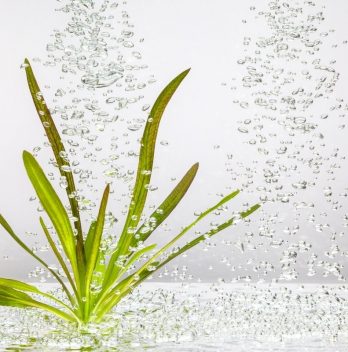
    Airstone: one common method of supplying super oxygenated water to your hydroponic plants is by making use of an air stone. The pump in the hydroponics is attached to the air stone and the air is pushed through the stone. There are various sizes and shapes of air stone which makes them easy to fit excellently well into your hydroponic system. Even though some air stone produces large bubbles, we recommend purchasing the ones that produce smaller bubbles for the efficiency of supplying adequate oxygen to your root system.

    Air Diffusers: another way is by using an air diffuser. Air diffusers distribute air into water by their bendable tubes. They are made up of bendable tubes having holes inside them which they use in distributing oxygen. Air diffusers release air or oxygen evenly into the tubes with their evenly distributed holes.

    Siphon: the common ebb and flow (or flood and drain) in the hydroponics system makes use of siphon. Siphon is a method that spontaneously drains water from a hydroponic grow bed. As water is siphoned from the grow bed, it unveils or opens the plant root hair system to air. This process supplies oxygen to the root of the plant.

    AQUANEAT Air Stone, 4 X 2 Inch Large

    81iYEL5PeDL. AC SL1500

    Oxygenated Water for Aquaponics Plants

    When it comes to aquaponics, it is essential for both your fish and plants to have adequate oxygen.

    This is because oxygen plays a crucial role to fish development. With adequate oxygen, your fish will be very efficient in providing your plants with good nutrients and it will also increase the production of more fish for your plants’ development. Deprived of oxygen both in your fish and plants may cause them to die.

    Factors that Affects Oxygen Concentration in Plants

    The main factors that affect the oxygen concentration in plants are temperatures. Temperatures are a critical determinant of oxygen in plants.

    During hot weather such as summer, the temperature increases and it causes a decrease in oxygen availability.

    At night when the temperature is cool, there is the presence of algae in your water tank. Even though we always try to minimize the presence of algae, a little bit is important to produce oxygen in your water tank.

    Factors that Affects Oxygen Concentration in Plants

    FAQ’s

    How do you make oxygenated water for plants?

    The process of making oxygenated water is known as hydroponics. It requires a special type of soil, called aeroponic media, and a special lamp that provides the light needed by the plants to grow. The oxygenated water is added to the soil in a small reservoir above the roots of the plants. In order to make this kind of system, you need some special equipment. such as an air stone.

    What does aerating water do for plants?

    Aerating your pond water is a great way to get the air in the water. It also helps keep the oxygen levels higher. You can use an aerator with or without electricity. You can buy them at almost any garden store. They will run on either electricity or battery power. It depends on what you like better.

    What is highly oxygenated water?

    Highly oxygenated water is water that has been exposed to pure oxygen. This process removes the carbon dioxide from the water and replaces it with oxygen. The amount of oxygen in the water is controlled by the concentration of dissolved oxygen (DO) in the water. The higher the concentration of DO in the water, the more oxygen the water will contain.

    How do you increase oxygen in soil?

    The most obvious way to increase oxygen is to add compost, but it may also be possible to improve your soil by adding extra organic matter, or by adding nitrogen fertiliser. So basically, adding compost would probably be the most effective way to increase oxygen.

    How do you give plants oxygen?

    Plants breathe by using the carbon dioxide we exhale and the water vapor we perspire. Plants take oxygen from the air and use it to make sugars and water. They can’t make oxygen out of nothing so they have to take it from the air. There are many different ways plants do this. For example, some plants use water to absorb the oxygen and then release it back into the air through their leaves, while others use the process known as diffusion. Diffusion is when a gas (oxygen) passes from a low concentration to a high concentration. Diffusion is a very slow process so it would not be practical to use it to remove all the oxygen from the air, but it is good at removing smaller amounts. This is what plants use to breathe.  
     

    Do all plants release oxygen?

    There are two ways to answer this question. The first is to describe the process of photosynthesis and how it works in a general way. The second is to look at specific plants and see what happens when they are exposed to different levels of light. The general description In photosynthesis, light energy is captured by chlorophyll molecules in green plants and algae. These chlorophyll molecules then bind with carbon dioxide, water, and other substances to form glucose.
    The process releases oxygen as a waste product. The waste oxygen is expelled into the air.
    Some plants will actually release more oxygen when exposed to light. 

    Conclusion

    Super oxygenated water is pretty important for the growth of your plants and the development of your plants’ roots.

    Therefore, always ensure you provide sufficient oxygen for your plants so you can enjoy bountiful yield.

  • Know How Many Tilapia Per Gallon For An Aquaponics System

    Know How Many Tilapia Per Gallon For An Aquaponics System

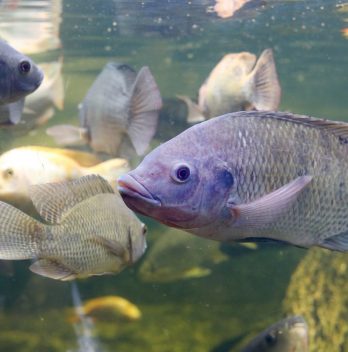
    Are you wondering how many tilapia can fit per gallon? We will let you know in this post. Tilapia is one of the best and most popular fish to raise in aquaponics in the United States, especially for beginners. It is a fast-growing fish, easy to grow, hardy, and highly adaptive to its environment.

    There have been many debates on how many gallons of water one can use for each tilapia. Well, this post is to enlighten you on how many tilapia per gallon of water you can stock in your aquaponics.

    How Many Tilapia Can Fit Per Gallon

    So the obvious question is: How many tilapia can fit per gallon of water? Well, you can fit one tilapia per gallon of water only if they are not grown fully.

    • By Inch – Ideally, the general consensus rule for any fish is that 1 inch of fish will fit 1 gallon of a water tank. Therefore, let’s say you have a 4 inches tilapia fish; each tilapia will then need around 4 gallons of water.
    • By Pounds – If you are measuring in pounds, then a pound of tilapia will fit 3 gallons of water. A tilapia that is fully grown will weigh around 1 pound. However, they can grow bigger and weigh more. Therefore, we can say 1 fully grown tilapia can fit 3 gallons of water or even 6 gallons of water.

    Recommended Tilapia Aquaponics Tank Size

    The tilapia aquaponics fish tank size recommended will solely depend on:

    • The number of tilapia fish you plan to stock in your aquaponics.
    • Also, the number of plants you wish to grow.

    What most people do is begin with a tank of no less than 500 liters. 500 liters will give you around 130 gallons of water. This should give you adequate room for about 20 to 40 grown tilapia, depending on the size of the fish.

    Another thing is to take into account the size of your plant beds. The more your plant beds are bigger, the more fish can fit in the very same 130 gallons of water tank.

    5 Major Tilapia Needs

    There are various species of tilapia and tilapia fish requirements are not so strenuous. Their basic needs include good water quality, food, light, oxygen, and adequate room to swim. Just provide your tilapia with these requirements and watch them grow healthy and faster.

    ECO-Cycle Aquaponics Indoor Garden System with LED Light Upgrade

    61woRPTogRL. AC SL1000

    The beauty of tilapia farming is to comprehend each of these 5 needs. We have explained these requirements below:

    1. Clean water or good water quality- If you plan to consume your tilapia, you should provide your tilapia fish tank with clean water which you would drink yourself. If you can’t drink the water you are supplying your fish then it’s not worth giving them such water. Supply them with safe private clean water. If possible, purchase a water softener, a reverse osmosis system, or a nitrate remover. This way, you keep the water in a condition that your body can consume safely when you consume these fish.

    2. Oxygen – Your tilapia fish will need adequate aeration and water circulation. Make use of air pumps and water which will allow the water to have adequate oxygen to suit your aquatic animals.

    3. Food – Supply your tilapia fish with good food and as well avoid overfeeding and remove uneaten or wasted food. Remove the foods that are not eaten after about 30 minutes and make some adjustments to the next portion of food. This way, the uneaten or wasted foods do not rot inside the system to cause harm to your tilapia fish. Rotten foods can cause disease so you want to avoid such.

    Note that during the early stage of tilapia, they eat more than their body weight per day. However, as they grow, their food consumption reduces.

    5 Major Tilapia Needs

    4. Light – Tilapia requires adequate light to thrive. The deficiency of light will not allow them to move or even eat, and as such, they can die. Thus, provide your tilapia fish with light.

    5. Adequate room to swim – Though tilapia can withstand a crowded environment better than other species of fish, however, there is a limit to this. Too crowded tilapia fish can drain the shared oxygen supply rapidly. Oxygen deprivation in tilapia fish can cause stress and harm the organs and other sensitive parts of the fish.

    Check out Where to Buy Fish for Aquaponics

    FAQ’s

    How many tilapia can go in a 100 gallon tank?

    Tilapia are actually pretty easy to start with, but you should get them as adults. They will be a bit bigger when you get them. They need to eat, and they eat a lot. You want at least one male and one female. Males will fight for a harem of females, so you want to make sure you have at least one male and one female in your tank. You will also want to add a few more plants than that, but I’d say about 6-8 is a good number. The most important thing is to get a really good water conditioner like a Marineland, AquaClear, or similar product.

    Will tilapia reproduce in aquaponics?

    Tilapia can reproduce in an Aquaponic system. 

    You need to be careful not to over-stress them. The Tilapia will have the best chance of survival if you provide a large enough area for them to live and grow in. The more surface area they have to swim around in the tank, the better. Aquaponics is a combination of aquaculture and hydroponics. It has been around since the late 1950’s but was only recently rediscovered in the USA.

    Aquaponics uses a recirculating water system with a closed loop where the fish waste and other nutrients from the fish tanks are used to feed plants in the hydroponic beds. The plant wastes are then returned to the fish tank to be filtered and reused. It works great for small fish like tilapia but I would not recommend it for larger fish.

    How do you start an aquaponic system?

    The first step is to choose your fish. If you’re new to aquaponics, it’s a good idea to start with a simple system with just one fish, such as the European seabass (Dicentrarchus labrax). The European seabass is easy to keep and will provide nutrients for your plants. They’re also small enough to fit into a 4 litre tank. If you already have a fish tank, you can use it as an aquaponic system. In this case, you’ll need to find a way of transferring the fish waste from the tank into the growing bed. You could use a pump and a pipe or siphon to transfer the water. Or you could set up a filter system. You’ll need to find a way to clean the tank every day or two and change the water.

    How Many Tilapia Can I Put in a 50-gallon Tank?

    Tilapia fish are highly tolerant of sibling density. This means that they can withstand a lot of other fish in the tank at the same time. However, you have to remember that they do need quite a bit of space to swim around without bumping into each other and potentially getting damaged by rubbing against each other.

    Depending on the size of the fish, you can fit anywhere between 10 and 12 pounds of tilapia. To make sure that your fish are comfortable and have enough space to maneuver around the tank, work out the appropriate stocking density based on the size of your fish. 

    How Many Tilapia Can Go in a 55-gallon Tank?

    The general rule of thumb with stocking tilapia is that for every pound of tilapia you need three gallons of water. So before stoking your 55-gallon tank, determine the total weight of the fish you want to go into. From this weight, work out 3 gallons per pound to see how many you can fit in your tank.

    Also, remember that your tilapia will grow so you will need to make space provisions to allow them to still have sufficient space to grow, do not completely saturate the tank.  

    How Many Tilapia Can Be Raised in a 250-gallon Tank?

    The number of tilapia that you can grow in a 250-gallon depends on other factors as well. A 250-gallon tank is quite a substantial size tank so you can have a bit of fun with the fish in it. If you can ensure that you have sufficient aeration and an efficient biofiltration system, you can stock more fish and be secure that the filtration system will be able to handle the volume of waste that is generated by the fish.

    The maximum number of tilapia that can be raised in a 250-gallon tank, working on the three gallons for every pound rule of thumb is about 83 pounds of fish. You will obviously need to consider the size of your fish before confirming this number.

    How Many Tilapia in a 1000-gallon Tank?

    Sticking with the three gallons of water for every pound of tilapia, you can safely and efficiently keep and grow about 333 pounds of tilapia in a 1000-gallon tank. Because you have ample space in this tank, it may be wise and even make your tank look better if you put larger or mature tilapia. You will be able to enjoy your fish more because they are more visible, you could even get tilapia of different colors for that extra pop of color and vibrancy in your tank.

    How Many Tilapia Can I Put in a 275-gallon Tank?

    The maximum number of tilapia that you can keep in a 275-gallon tank is 91 pounds. Stocked at this density, your tilapia will have the best chance of survival and will grow efficiently without having to compete for space and resources with the other fish in the tank because they will all be sufficiently provided for. 

    How Many Tilapia in a 20-gallon Tank?

    How many tilapia you can put in a 20-gallon tank depends on what you intend to do with them. The maximum number you can keep depends on how much your fish weigh, just make sure that you keep it to 6 or fewer pounds in the tank. If you want your tilapia to grow more efficiently in this 20-gallon tank, stock them at a lower density and feed them more.

    How Many Tilapia Can You Have in a 200-gallon Tank?

    A 200-gallon tank can accommodate a maximum of 67 pounds of tilapia. With efficient oxygenation and filtration in the tank, your tilapia will be very happy.

    Final Say on How Many Tilapia Per Gallon

    Now, we know 1 inch of tilapia fish can fit per gallon of water. Also, a fully grown pound of tilapia can fit 3 to 6 gallons of water.

    Ensure you always keep an eye on the water quality frequently. Also, always monitor and adjust the quantity of food you supply your tilapia fish.

  • Where To Buy Fish For Aquaponics System

    Where To Buy Fish For Aquaponics System

    Aquaponics has grown quite popular these past few years as more people are venturing into it. You enjoy so many benefits from using aquaponics. If you are thinking of where to buy fish for your aquaponics, we will let you know in this post.

    As a farmer, engaging in aquaponics will yield great rewards as you will enjoy – 8 times crop production, reduction in waste, reduction in chemical use, and a whole lot of benefits.

    Fish is an important component of the aquaponics system and below are the places you can buy fish for aquaponics.

    Where To Buy Fish For Aquaponics

    You can buy aquaponics fish from the following:

    1. Fish Farm

    You can buy fish for your aquaponics at a local fish farm near you.

    Options to Buy Fish For Aquaponics

    2. Reliable Stores Online

    You can as well buy fish for your aquaponics from a reliable online store. It is absolutely possible to have a live fish transported to your doorstep. Just make sure you choose a reliable online store that has a guarantee. Also, you should make sure you’re home when your packed live fish is delivered to you. Don’t allow it to linger on your front porch.

    If you won’t be home, you can at least make available someone that will receive your live fish. This is so the live fish can be immediately put in their appropriate conditions at once for the most appropriate health conditions.

    You should also have in mind that not all fish are legal to purchase in some regions. Ensure you make adequate findings from your local fish farming laws about the type of fish you wish to buy. Make sure they are legal to purchase.

    Where you can buy fish for aquaponics:

    Some Info About Aquaponics

    Let’s take a quick look at what an aquaponics system entails. Aquaponics is the combination of aquaculture and hydroponics cultivation. To set up an aquaponics system, you will need four main components which include – a tank, a grow bed, a fish, and plants.

    Back to the Roots Water Garden Mini Aquaponic

    81UrJsWk8KL. AC SL1500

    The fish in your aquaponics system contributes greatly because they will be the primary source of nutrient for your cultivated plants. The plants as well play a part in taking up waste produced by the fishes. Setting up a great and rewarding aquaponics system will require you to take into accounts some factors.

    Choosing The Best Fish For Aquaponics

    Selecting and paring the right type of fish with your vegetables is very crucial. This will ensure the success of your aquaponics setup and you will enjoy abundant yield. Below are some recommended fish you can buy for your aquaponics.

    Recommended Fish To Buy For Aquaponics

    Here are the fish we recommend you can buy for your aquaponics:

    • Tilapia: The edible tilapia is the most popular and common fish spices used especially for beginners in aquaponics. It is the most accessible fish to purchase in most parts of the world. Tilapia fish is hardy, very adaptable, and resistant to many parasites and pathogens.
    • Salmon: This is another great edible healthy fish for your aquaponics. Salmon is hardy and they can co-exist in a friendly manner with other fish. The downside is that tilapia is not so resistant to disease as other fish.
    • Koi: the attractive koi fish is an ornamental fish. Although it is not edible, it is a great fish for your aquaponics as they are resistant to parasite and disease, has a long life span, and can thrive in a wide range of temperatures.
    • Trout: trout is a very easy fish to raise in your aquaponics. They are delicious fish to eat and filled with healthy food benefits such as omega fatty acids and proteins.

    FAQ’s

    What is the best fish to use for aquaponics?

    Tilapia is the best fish recommended for this purpose. In aquaponics the primary concern is that the fish don’t eat each other. So, the more “aggressive” the fish, the better. But this isn’t always the case, because there are some fish that will attack a larger fish in order to defend their territory.
    The system will be used as a food source and also for keeping frogs. The water will be kept at 75 degrees. Aquaponic systems are really quite simple. They consist of two main parts:.the grower (fish) and the filter (composting). The grower is fed organic waste, and the waste from the fish is collected in a container and is then composted. Fish can eat the waste from the system and do not need to be cleaned.

    What are some advantages of aquaponics?

    Aquaponics is a system where a combination of fish and plants are grown together. The plants provide the nutrients that the fish need, and the fish clean the water for the plants. Aquaponic systems are very simple to build and maintain, and require little maintenance. They are also very low cost compared to other methods of growing fish and plants together.
    This means that you can have a system with fish, and use the same tank for the plants. Fish do not have to be separated from plants to grow them together. You can keep your plants and fish in the same container, and the fish will clean the water for your plants. You can feed your plants using the fish waste. The fish waste contains nitrogen, phosphorus, and potassium, which are needed by the plants. When the plants are finished, you can harvest the plants and use them as fertilizer for your garden. You can use the fish waste to fertilize your plants. If you have a pond, you can use it to grow your plants.

    How big of a tank do you need for aquaponics?

    I would recommend at least 50 gallons.
    If you are new to aquaponics, you will most likely start out with a smaller system. The first thing to think about is your available space and the amount of food you would like to grow in your system. There are several different sized tanks that will work for you depending on how much food you want to grow and what size of fish you have.

    Aquaponic systems are the combination of aquaculture and hydroponics (a type of indoor farming). The aquaculture part is harvesting fish, like tilapia, in a tank. The fish poop out nutrients that the plants can absorb. The hydroponics part is growing plants in water, without soil. They get their nutrients from the water.
    The system combines both systems, so you have the benefits of each. It’s a win-win. In an aquaponic system, the fish poop out the nutrients, which then gets absorbed by the plants. 

    Final Note

    Buying and selecting the appropriate fish for your aquaponics is crucial for the success of your aquaponics. With aquaponics, you get to farm smarter as your plants grow faster and in plenty!

    Another thing to note is that it’s important to maintain a clean and healthy environment for the aquaponics system. This way, your fish and plants get a chance to thrive and you reduce the risk of any diseases that can infect both your fish and plants.

    We recommend you select fish that can flourish in your location and climate. Supply and feed your fish with the appropriate foods for both the health of your fish and plants and also for your consumption.

  • 6 Best Flowers For Aquaponics

    6 Best Flowers For Aquaponics

    Who doesn’t love the auspicious therapeutic nature of growing flowers in their home or garden? Now imagine growing them in a controlled space such as aquaponics. It might not be so easy choosing the best flowers for aquaponics especially with so many good options that can fit your system.

    This is why we have put together the 6 best flowers you can consider growing in your aquaponics. So read on to know your best pick.

    Fruits and vegetables are not the only things you can grow in your aquaponics; flowers are also a good choice for aquaponics. Be it roses, tulips, dandelions, etc. growing these flowers with aquaponics are pretty easy and fun.

    6 Best Flowers For Aquaponics

    Aquaponics makes use of a closed ecosystem between fish and plants. The fish excrete that serves as a nutrient solution for the plants is purified by these plants and used again by the fish.

    Growing flowers with aquaponics will be great and exciting. So, here are the following promising flowers for aquaponics:

    1.    Roses

    Roses are one of the most popular flowers and they are well-loved plant and a delight to have around. They have this terrific scented vibe associated with romance and love.

    Best Flowers For Aquaponics - Roses

    When it comes to choosing the aquaponics technique for your roses, the most frequently used aquaponics procedure for roses is the Nutrient Film Technique (NFT). However, the grow bed and floating raft system is also a good choice for you. Roses need adequate lights or put them where they can get full sun.

    Be wary of black spot and powdery mildew when growing roses.

    2.    Sunflower

    Sunflower is a happy flower that will brighten up your day with its yellow blooms. It is another great option to grow in aquaponics. You can grow sunflower in your aquaponics without any need for fertilizers or pesticides.

    The most common aquaponics used for sunflowers is media beds or floating rafts. This is because support is needed as they are capable of growing tall.

    As the name implies, the sunflower will do well in adequate sunlight.

    3.    Marigold

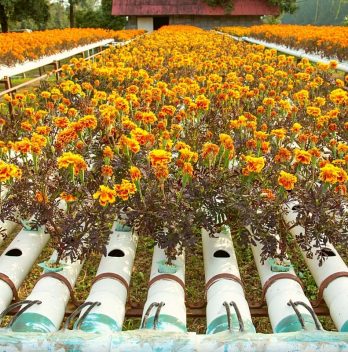
    The colorful marigold is a beneficial flower to grow in your aquaponics. They can serve as cover crops that help protects your plants from unwanted pests. They will also allure beneficial insects to your plants.

    You can grow marigold in a Nutrient Film Technique or media grow beds. Marigold also does well in full sun.

    Best Flowers For Aquaponics - Marigold

    4.    Pansies

    The large-flowered pansies are another great flower you can add to your aquaponics flower lists. They are edible flowers and great for beginners because they don’t require too much care.

    Pansies do well in cooler weather but you can subject them to partial sun. You can expose them to the early morning sun but protect them from the pressure of too hot sun.

    5.    Water Hyacinth

    Water hyacinth is a perfect addition to an aquaponics system. It is an aquatic plant that will be great for purifying your fish water. It is great at clearing algae as well as cleaning the water for your fish and plants.

    Although it is an invasive plant because it grows fast and aggressively, you can solve this issue by using the raft system to control its growth.

    6.    Nasturtium

    Nasturtium is another great flowering plant for your aquaponics system. They are also helpful in repelling garden pests such as cucumber beetles and squash bugs. For this reason, they are great for planting side by side with tomatoes and cucumbers.

    They also serve as trap crops by attracting pests such as aphids. They will entice these pests away from your main crops, thereby serving as a sacrificial plant.

    Their flowers and leaves are also edible and they can be added to your culinary list. Nasturtium grows very fast so you can expect its seeds to begin germination within 7 to 10 days. They will do well in an environment with minimal heat stress.

    Advantages Of Growing Aquaponics Flowers

    The addition of flowers to your home or garden mixed with their vibrant color will add a touch of scent to your environment. You can enjoy various benefits from growing flowers with hydroponics.

    • Pest Control: they can serve as companion plants for pest management.
    • Culinary Utilization: a lot of flowers are edible, therefore they serve as culinary applications.
    • Aesthetic Reasons: flowers are best known for their aesthetic nature. They will add their artistic beauty to your environment as well as boosting the look of your aquaponics garden.

    General Hydroponics pH Control Kit for a Balanced Nutrient Solution

    81Pm5DEtpTL. AC SL1500

    FAQ’s

    What are the best flowers to grow with aquaponics?

    Flowers are typically used for decoration, but there are several reasons that they can be grown in an aquaponics system. The first is that they have a low water demand and will generally do well in most systems. The second reason is that flowers can be harvested often to provide additional nutrition to the fish and/or plants. The third reason is that they can be used for ornamental purposes.

    The best flowers to grow in an aquaponic system are generally those that can be grown in soil or grow well in containers.

    You want to be sure you’re selecting the right plants for your system. I have been asked this question over and over by people who are just getting started with aquaponics. So, here is a list of the most popular flowers that are commonly grown in aquaponic systems. This is not meant to be an exhaustive list. If you have any questions about any of these, please leave a comment below.

    1. Roses

    2. Marigold (Tagetes patula)

    3. Nasturtium – (Tropaeolum majus)

    5. Pansies

    6. Water Hyacinth

    What are the best types pf flowers to grow with aquaponics?

    If you want to grow flowers with aquaponics, there are two main types of plants you should grow: flowers and vegetables.

    Growing flowers and vegetables together is possible with aquaponics, but it’s not as easy as growing plants in a regular garden. You need to consider many factors before you start, and you’ll also need to make sure you understand how to feed your plants.

    Before you get started with your own aquaponics system, it’s important to learn more about why people use this method of gardening. For instance, the first benefit of using an aquaponic system is that you don’t need any chemicals or pesticides to grow your vegetables and flowers.

    Make sure you have enough space for your plants. This is an important consideration that affects the decisions that people make over the types of flowers that they ultimately choose. If you want to grow the maximum amount of plants in your system, then you’ll need to make sure that you have enough space for them. You’ll also need to make sure that you have enough room for a greenhouse, since you’ll need a lot of space to heat the greenhouse.

    Can roses be grown in aquaponics?

    Roses will do fine in an aquarium.

    They are not very picky about water quality and pH levels. They also don’t need much fertilizer. You can feed them with fish food, but they are not very picky about that either. They prefer fresh water. If you are growing them in an aquarium, you will have to place the rose plants in a separate tank. You can use a small fish tank as the base of your aquarium.

    Final Say- Aquaponic Flowers

    Most flowers can flourish in an aquaponics system. However, we have made some best picks for you in case you are confused about which flower to pick from the many varieties to choose from.  So, you can decide which will be your best pick.

  • Best Plants For Small Aquaponics

    Best Plants For Small Aquaponics

    If you are looking for the best plants for small aquaponics, you need not worry. We will give you the information in this guide so read on to find out.

    Aquaponics is an agricultural culture system that makes use of a complex ecosystem between fish and plants. The system can be used to cultivate various plants, vegetables, herbs, fruits, and flowering plants.

    Before we dive into the best plants for small aquaponics, let’s look at some basic information about aquaponics.

    Basic Info on Aquaponics

    Aquaponics involves the combination of two categories of food cultivation which are hydroponics and aquaculture. This two combining process (hydroponics and aquaculture) works together to contribute to each other’s growth.

    Aquaponics is a balanced ecosystem between the fish and plants which also includes some beneficial bacteria. The waste from the fish is used as food for the plants, the plant, in turn, purifies the water for the fish.

    The interesting thing is that aquaponics is not a new technique. It is a farming method that has been in existence since ancient times. But now it has started gaining popularity these past few years.

    Back to the Roots Water Garden Mini Aquaponic

    81UrJsWk8KL. AC SL1500

    Best Plants for Small Aquaponics

    The best plants for small aquaponics should be plants that demand lesser nutrients. Thus, the best plants for small aquaponics are greens and herbs, and they include:

    1. Watercress: One of the best plants to grow in a small aquaponics stem is watercress. It requires a lesser concentration of nutrients and it is a hardy vegetable and it grows fast. Watercress will also blend and flourish with any type of fishes you may have.

    2. Kale: This is another low nutritious plant that can be grown in small aquaponics. It will flourish with various types of fish. Another added benefit is that kale will not attract pests to your system. Thus giving your aquaponics system extra safety.

    3. Lettuce: Is also a low demanding nutrient plant appropriate for small aquaponics. It will match and co-exists most especially with tilapia fish.

    4. Swiss Chard: Swiss chord requires minimal nutrients and is great for small aquaponics systems. It is a hardy plant that mainly utilizes nitrate for its leaf growth. This plant grows perfectly in the water of pH range between 6.6 to 7.0 which is an appropriate range for this plant and various fish.

    Best Plants For Small Aquaponics - greens and herbs

    Other low nutrient plants we recommend for small aquaponics are:

    1. Mint
    2. Arugula
    3. Radish sprout
    4. Pak choi
    5. Mint
    6. Wheatgrass
    7. Basil
    8. Spinach

    Best Plants for Small Aquaponics: What to Consider

    Aquaponics system is quite easy to set up and if you plan on obtaining one, the main question on your mind should be: what plants can I grow? The straight-up answer is the “size of your aquaponics” will determine the type of plants to grow.

    Small Aquaponics: a small aquaponics system will require lesser fish, lesser water, and a lesser concentration of nutrients.

    Bigger Aquaponics: on the other hand, a bigger aquaponics system will require more fish, more water, and more nutrient concentration.

    Therefore, the best plant for a small aquaponics system should be plants that require lesser nutrients and they include greens and herbs as listed above.

    Even though almost all plants can be grown in an aquaponics system, we need to consider the fact that various plants have various needs. So let’s look at more on the needs or what to consider when choosing plants for your small aquaponics.

    Other things to consider:

    • Space: some plants need more space while others need lesser space. The space we are talking about is your aquaponics system space. Therefore, you should take into account for example the height and width of the plant that can fit into your aquaponics system.
    • The Number of Fish: The presence of more fish will require more plants so they can absorb all the nutrients produced from fish waste and vice versa.
    • Type of System Used: you could use a nutrient film technique, media-based, or raft aquaponics depending on the structure of the plant that will fit in. Floating raft systems favors plant with no root structure while grow beds favors root vegetables.

    FAQ’s

    How does aquaponics work?

    Aquaponics is a system of growing fish and plants in a symbiotic relationship. The fish clean the water, which then feeds the plants. The plants remove nitrogen from the water and the fish waste is converted into fertilizer. There are some species of fish that can live in aquaponics. The most common are Tilapia, Catfish and Koi. In general, the fish should be fed with a specially formulated diet. It should contain high levels of protein, low levels of fat, and vitamins and minerals.

    The plants absorb nutrients from the fish waste, and the fish provide oxygen to the plants through their gills. The system can be used to grow food for humans and/or animals. It is also very effective at cleaning the water, providing both food and clean water. Aquaponic plants are not as delicate as traditional plants. They can be grown in containers or on land.

    What plants can be grown in an aquaponic system?

    I think that the most common are listed below.

    1. Broccoli

    2. Potatoes

    3. Cucumbers

    4. Tomatoes

    5. Carrots

    6. Peppers

    7. Beans

    8. Strawberries

    9. Beets

    10. Cabbage

    11. Watermelon

    12. Eggplant

    13. Squash

    14. Green beans

    15. Sweet potatoes

    16. Kale

    17. Broccoli

    What plants cannot be grown in an aquaponic system?

    Plants that are sensitive to salt (salt stress). This can be either the soil or the water. In general, a soil solution of about 2% is the most common level for a salt tolerant plant. Some plants like tomatoes will tolerate more salt than that. They need a salt concentration of about 5-6%.

    Do plants grow faster in aquaponics?

    The answer is yes, but only if the plants are small. If they’re big, then no. In fact, it’s not even an absolute, because there’s a difference between plants that have been raised in aquaponics and those that have been raised in a traditional greenhouse.

    Why is lettuce good for aquaponics?

    It’s easy to grow, takes up little space and is extremely forgiving. The reason why lettuce is such a great choice for an aquaponic garden is that it doesn’t require much light to thrive, making it a perfect plant for a system that needs a lot of light to grow.

    Lettuce is also very forgiving to the fish. It doesn’t take well to being eaten, and will survive on the scraps left behind by other plants.

    Can strawberries be grown in aquaponics?

    I have read that the strawberries grow very well in aquaponics. I would recommend starting with growing them in an aquarium with a filter, but the problem with that is that they will grow all over the place.

    Aquaponics Plants Final Words

    Aquaponics is an awesome technique that anyone would find interesting to learn and have.

    When it comes to choosing the best plant for your small aquaponics system, one thing we suggest is for you to decide to grow what you will eat or use. Having a thought of what you plan on accomplishing will assist you in making a better judgment on what to grow in your small aquaponics system.

    Also, note that growing low demanding nutrient plant is not only for small aquaponics. It is also advisable to start with growing minimal demanding nutrient plants for a new aquaponics system. They will serve as “starter plants” for your new aquaponics system.