Author: Dr. Nyiko C. Mabasa

  • Can You Eat Potato Leaves? [Potato Leaves Facts]

    Can You Eat Potato Leaves? [Potato Leaves Facts]

    Potatoes are some of the most versatile and commonly consumed foods around the world. There are so many ways in which this root vegetable can be prepared. But can you eat potato leaves in addition to the root?

    The harvested root of the potato plant is used for many culinary purposes such as making salads, chips, crisps, and many other dishes and snacks. It can even be ground into flour to make various baked goods. Keep reading to find out if the leaves of the potato plant are as versatile as the root.

    What Are Potatoes?

    Potatoes (Solanum tuberosum) are a perennial vegetable belonging to the Solanaceae or nightshade family. Native to the Americas, they were domesticated by Native Americans in multiple locations. Wild species of potatoes can be found in various areas of the United States and Chile.

    Potatoes have now been introduced and are cultivated in just about every continent in the world and are one of the world’s largest food crops.

    All the different types and species of potatoes make a delicious and nutritious addition to any diet. They are a great source of vitamins C and B6 and have twice as much potassium as those found in a banana.

    However, not all parts of the potato plants should be eaten. Just like other plants in the nightshade family such as tomatoes, eggplants, and peppers, some parts of the potato plant are poisonous if consumed.

    Vegetables in the nightshade family produce fruits that are healthy and safe for consumption, but other parts of the plants and their foliage may contain a high concentration of a compound called solanine that is toxic to humans and many animals.

    Are Potato Leaves Edible?

    The simple and straightforward answer is no! “Irish” potato leaves are not edible and should not be consumed at any cost. Generally, however, depending on the variety of potatoes you can and can not eat potato leaves.  Irish potato leaves produce steroidal alkaloids, solanine, and chaconine. These toxic compounds can be present in high concentrations in the leaves of potatoes, which could be harmful if consumed by both animals and humans. Sweet potato leaves however are perfectly safe to eat.

    Solanine and chaconine are produced by plants as natural pesticides to protect themselves from insects devouring them. These two compounds, therefore, make the plants bitter tasting. This also helps the nightshade plants avoid being eaten by herbivores and various pathogens.

    Solanine is present in all parts of the potato plant, but it is more concentrated in the leaves and stems, which are the parts of the plants that have to do with photosynthesis.

    Some people are more sensitive to solanine and even a small amount can cause them to get sick. Children and small pets are also at a higher risk of solanine poisoning due to their small size. A concentration of 20mg of solanine per 100g of plant consumed can be toxic. Potato leaves are not and should not be used in the kitchen. Keeping them out of your kitchen will help you avoid accidental ingestion.

    If you eat any part of a potato and it tastes bitter, you need to stop immediately. That bitter taste could be an indication that there is solanine present. If you ever accidentally consume it accidentally, however, there is no need to panic. Just drink plenty of fluids to try and flush it out. Monitor your symptoms over time. If you continue to feel worse, contact a doctor immediately. Potato leaves should never be eaten

    Can You Eat Potato Greens?

    Are potato leaves poisonous? Can you eat them? Absolutely not. The only part of the potato plant that you should eat is the root. Any part of the potato that is or has a green color should by no means be eaten. If eaten, it can lead to serious health issues and even death due to solanine poisoning.

    potato leaves edible

    Are Potato Plants Poisonous?

    The whole potato plant is not poisonous. There are only certain parts of the potato plant that are poisonous. Potato leaves and plant parts that are not the actual potato are not edible and can be poisonous.

    The leaves stem and any new shoots and buds of the potato plant contain high amounts of solanine. In addition to this, potato tubers (the actual potato) that have been exposed to sunlight for an extended period of time and turned green also contain high amounts of solanine and should not be eaten.

    The only part of the potato plant that is safe to eat is the underground tuber which has not been exposed to the sun and has no green color on it. If you have stored your potatoes and they start to sprout, you must remove the sprouts before eating them. As long as the potatoes have no green pigment, they should be perfectly fine to eat.

    If your stored potatoes have a small patch of green on the surface, you can simply trim it away and wash the potato and cook it. If you find that the flesh is also green, however, you should toss the whole potato.

    Another part of the potato plant that should not be eaten is the little fruit that the flowers produce. These fruits look like small tomatoes and may be confusing especially to small children. They should not be eaten because they are also poisonous.

    Animals should also be kept from eating any green parts of the potato plant. To keep your animals safe, fence off any areas where the plants are. Remove any leaves that fall onto the land where they may be accessed and consumed by livestock.

    If you suspect that an animal has eaten any poisonous part of the potato plant, immediately seek veterinary care, and with the proper treatment, the animal should be fine.

    Solanine poisoning rarely ever leads to death because you would have to eat extremely large quantities for it to have that effect. If you consume small quantities of solanine, here are some symptoms of poisoning that you may experience;

    • Gastrointestinal pain such as a burning sensation in the mouth and throat, pain in the abdomen, loose bowels, nausea, and vomiting.
    • Skin discomforts such as an itchy neck and overly sensitive skin
    • Headaches
    • Difficulty with breathing
    • Fatigue
    • Feeling weak
    • Weak or rapid pulse
    • Hallucinations
    • Delirium
    • Coma
    • and in rare cases, death

    Never make the mistake of thinking that cooking will destroy solanine from potato plants because it does not. It does not matter whether the potato is raw or cooked, they’re both toxic. Any part of the potato plant that is green is not fit for consumption, and uncooked potato tubers are inedible even if they do not have a green color.

    Solanine poisoning

    Solanine poisoning is mostly displayed via gastrointestinal and neurological complications. Symptoms usually occur between 8 and 12 hours after ingestion of high-solanine foods.

    Some scientific studies have shown that there is a correlation between the consumption of potatoes that have late blight, which increases the levels of solanine and other glycoalkaloids, and the occurrence of congenital spina bifida.  birth defect in humans.

    Although the mechanism of solanine poisoning is still to be well understood, it is best to avoid any vegetables that could potentially lead to poisoning.

    Are Sweet Potato Leaves Edible?

    Sweet potatoes (Ipomoea batatas) are often mistaken for nightshade because of the name similarity with potato, it might be tempting to think they are from the same family. Despite the name being similar, sweet potato does not belong to the nightshade or Solanaceae family and are not related to regular potatoes.

    Unlike potato leaves, sweet potato leaves are edible. They do not contain any solanine and are not toxic. The leaves can be eaten raw in salads or cooled and served as a side vegetable like spinach. They can also be added to stir-fries. Sweet potato leaves are a common ingredient in many Asian-style dishes.

    Sweet potato leaves are an excellent source of vitamins and minerals and therefore can be an excellent addition to your diet. They are rich in vitamins A, C, and B6, as well as manganese and potassium. The composition of these nutrients will depend on the variety of sweet potatoes.

    Potato vs Sweet Potato Leaves

    To avoid mistaking potato leaves for sweet potato leaves, it might be helpful to know how to clearly distinguish between the two by knowing their descriptions.

    Potato leaves have a smooth leaf edge compared to the serrated edge of regular leaves. The leaf has an oval shape and may have notches that separate large lobes. They have a dark green color and would be bitter if you tasted them.

    Sweet potato leaves on the other hand form a trailing vine. They are heart-shaped or have deep notches The leaves have a glossy green appearance that may also have a reddish tint. They have prominent veins that radiate from the base of the leaf. They can be medium to large in size and have a cordate or heart shape with pointed tips.

    Sweet potato leaves grow in an alternating pattern and may have multiple lobes, known as palmate, depending on the variety. The colors of sweet potato leaves can range from dark to yellow green, and purple, and they usually have a darker surface and be lighter on the underside of the leave. They glow on green, slender terms on creeping vines that can grow up to four meters in length. The top 10 cm of the leaves and stems are the most tender parts of the vine and are the most commonly consumed.

    What to Do With Potato Leaves?

    Since you cannot eat potato leaves, what can you do with them? One thing you can do with potato leaves is to compost them. Composted potato leaves can be an excellent source of nutrients to help enrich or improve the quality of your soil. If you decide to do this, be careful not to add too many of these leaves to your compost heap as they can cause the compost to become acidic. This would limit the number of plants you would be able to use your compost on.

    Another thing you can do with potato plant leaves is to simply throw them away. Throw them away in a place that your animals will not be able to reach, as this may lead to various health problems. If you can, dig a hole in the ground and bury the leaves in there. Just remember not to plant anything in that area that does not like acidic soil or it will not grow well and may even die.

    Can You Get Poisoned By Touching Potato Leaves?

    Since we have explained extensively the problems associated with potato leaf consumption and solanine poisoning, you may be wondering if it is possible to get poisoned by touching or handling them. There is no need to worry about this because handling potato foliage poses no risk to you or your pets.

    You would only get poisoned if you infested considerable amounts of the poisonous parts of the plant. You can safely handle or carry all the green parts of the potato plant without worrying about any possibility of poisoning.

    Conclusion – Can You Eat Potato Leaves?

    Potatoes are a popular and versatile vegetable that is consumed by all cultures throughout the world. This amazing vegetable however has certain parts of it that are not fit for consumption as they can lead to terrible health effects and even health if consumed in large enough quantities.

    The stems and leaves of potatoes, along with those of all the plants in the nightshade family should not be consumed by humans or animals. The solanine contained in them is toxic. This also goes for any potato tuber that may have a green pigment on its flesh. It should be gotten rid of or used for composting.

    You cannot destroy the solanine contained in potato greens by cooking. Under no circumstances should potato greens be consumed.

    Sweet potatoes are from a different family to “Irish potatoes”. Even though it might be easy to think they are related, sweet potato leaves can be safely consumed and actually have various health benefits.

    To avoid accidentally consuming poisonous potato leaves, learn how to distinguish between the two. You can read the guidelines provided in this article or use other resources to assist you in this regard.

    We hope this article has been of great help in improving your understanding of potato plants and their dangers. While the risk of death from solanine poisoning is quite low, it is better to be safe than sorry. In conclusion, avoid any green parts of the potato plant.

    Stay safe and happy gardening.

  • When to Pick Jalapenos: Know the Right Time to Harvest Ripe Jalapenos

    When to Pick Jalapenos: Know the Right Time to Harvest Ripe Jalapenos

    Do you like a bit of heat if your food? That zang when you bite into your meal. If this is you, you may want to know when to pick jalapenos so you can get the ideal flavor and heat level that you want.

    Jalapeno peppers are extremely easy to grow and if you enjoy them, you can grow them at home regardless of the amount of space that you have. Let’s keep reading to find out more.

    What Are Jalapeno Peppers?

    Jalapeno is a medium-sized chili pepper cultivar belonging to the species  Capsicum annuumThese peppers grow fairly slowly and because of this, it can be quite tough to tell when they are ready for harvest.

    The peppers are a summer favorite for gardeners everywhere. They add some spice to dishes without the overwhelming heat that some peppers have. Give them a good amount of heat and sunlight and they will grow happily and produce a pepper with a lovely mild taste that can be used in many dishes such as salsas, stir-fries, and nachos and to make the sauce.

    Jalapenos can easily be grown in containers and on the ground. So even if you don’t have a lot of garden space, you can still be able to grow and enjoy these peppers at home.

    Jalapeno plants produce a large yield of dozens of glossy green fruits that are easy to grow if provided with the right growing conditions.

    On the Scoville scale, which is the measure of the hotness or spiciness of peppers, they are in the range from 2500 to 8000 and are considered mildly hot. The compound capsaicin gives hot peppers their heat. When jalapenos are fully ripe and have a red color, the level of capsaicin is higher and results in the peppers being hotter than when they are still green.

    Harvesting Jalapenos

    Harvesting jalapenos is an easy process. If you follow the guidelines that will be provided in this article, you can confidently harvest them right.

    Continual harvest of peppers is good for them and will encourage the plant to keep producing more. Therefore, it is impossible to use up peppers by picking them often. As long as you harvest them, they will keep blossoming and producing more peppers.

    On the other hand, if you leave the peppers too long on the plant, your red jalapenos will start to rot or will not last very long after you pick them.

    No matter the color of your papers when you pick them, always pick them before the frost falls. Peppers are a summer crop and are therefore very sensitive to cold weather. They may suffer frost damage if the temperature falls below 40 degrees Fahrenheit.

    If you are not quite prepared to harvest your peppers or they are not quite ready as the cold weather approaches, you can cover the entire plant with fleece covers. This way you might be able to save the peppers from damage.

    How Do I Know When My Jalapenos Are Ready to Pick?

    When it comes to harvesting jalapenos, when do you know or decide when your peppers are ready to pick? You pick your jalapenos when they are the right color depending on the level of heat you want.

    Jalapenos turn red as they mature, and as they mature their level of heat increases. Most people prefer to harvest their jalapenos when the fruits are dark green and only have mild heat.

    If you are unsure that your green jalapenos are ready for harvest, check their appearance. They should be picked when they are about 3-5″ in size, and feel firm to the touch.

    How to Tell When Jalapenos Are Ripe

    Telling when jalapenos are ripe can be tricky because they are usually harvested off the same branch and start in. And if you grow them at home, you may have a different variety to the ones you find at the store so they may look different.

    When you plant your own jalapenos at home, start harvesting them when they are about 5 to 6 months old. After this period, the peppers should be at least 3-5 inches long. They are then ripe and ready to harvest. The exact length of the pepper will depend on the variety you are growing, as well as the growing conditions that you have provided for them.

    If your plants are grown in an area that does not receive a lot of sunlight, they may be smaller and take longer to mature. Regardless of size, mature peppers are deep green or red, as soon as they get these colors, they are ripe and ready to pick.

    How to Harvest Jalapenos – Simple Guide

    Once you have ascertained that your peppers are ready to harvest, you need to do it properly so that your plants keep producing fruit. Here are the steps you need to follow;

    1. Locate the peppers that have your desired heat level

    Green jalapenos will have a mild flavor. The lighter the shade of green, the milder the pepper is likely to be. As the peppers mature and get a red color, they get hotter. The redder they are, the more heat they will have.

    2. Hold the branch that has the jalapenos you want to harvest

    This is so that you can support the stem while plucking the peppers so that it does not break.

    3. Cut off the pepper

    With your free hand, use a pair of sharp running shears or garden scissors to cut off the pepper at the base where it attaches to the main stem. While doing this, do not give in to the urge to tug on twits the peppers of the plant even if they give you a hard time. This may end up leading to damage to your plant.

    jalapenos facts

    When to Harvest Jalapenos

    Knowing when to pick jalapenos off the plant is important to get a good harvest. Jalapenos take anywhere between 70 and 85 days to mature, from the day they are transplanted outside. At this stage, they should have a firm texture, have dark green pods, and be 3-4 inches long.

    If you are looking for mild heat from your peppers, pick the younger green ones off the plant. The younger ones will have a light green color and will not have any corking, which is the appearance of little stretch marks on the body of the jalapeno.

    When jalapeno peppers grow fast, the skin has to stretch quickly and this results in the pepper having little lines or striations on them. When you see these marks on the pepper, that is a clear indication that it is ready to pick and healthy.

    Different jalapenos have different levels of heat. If you prefer mild to no heat, the best varieties to go for are the Mammoth Jalapeno, TAM Jalapeno pepper, or the heatless Coolapeño pepper. You can get seeds for many of these varieties on the Etsy online marketplace.

    Can You Ripen Jalapenos Indoors?

    If you can not wait for your jalapeno peppers to mature while still on the plant, or if a branch with some peppers that have not ripened breaks off, you can harvest them indoors.

    Jalapenos can be ripened off the vine. This process can take period of a couple of days to a few weeks. The speed with which this happens will depend on various conditions such as the ambient temperature in which they are kept, as well as whether the peppers themselves have started changing color.

    Jalapenos, just like other peppers can ripen indoors, on a windowsill or countertop. The ideal temperature to get this to happen is at least 70 degrees Fahrenheit for quick results.

    If the peppers are at the end of the growing season, you can cut off branches with immature jalapeno peppers and hang them upside down indoors, or stick them in water to speed up the ripening process.

    Keep in mind however that after your peppers have been harvested, they will no longer grow in size. They will only ripen but remain the same in size.

    How to Preserve Jalapenos

    Depending on the size of your harvest, as well as how long you would like to store your jalapenos, there are various methods that you can use to preserve them. These are;

    1. Refrigeration: If you plan to consume your jalapenos in about two weeks, you can store your peppers in a ziploc bag and store them in the vegetable drawer of your fridge. Make sure that both the peppers and storage bag are completely dry before you store them
    2. Freezing: You can store jalapenos in the freezer for up to eight months. Before freezing, wash and dry them carefully and store them whole in freezer bags. You can use your frozen peppers in stews, soups, and other dishes. You will obviously have to thaw them out before doing so, and they may lose a bit of crunch from when they are fresh. Just keep them in mind. If, for whatever reason, your frozen peppers start to turn black before you consume them, toss them away as they may no longer be suitable to eat.
    3. Food dehydrator: dehydrated jalapeno peppers can be stored for up to a year. To prepare them, thoroughly wash and dry them with a dry towel or let them air dry. Cut your washed peppers into even pieces. Ly them on a flat tray and make sure that they do not overlap so that they can dry properly. Dehydrate your peppers at 125 degrees Fahrenheit for 6 to 12 hours. You will see that your peppers are completely dry when they become leathery (if you want to rehydrate later), or when they get brittle (if you want to grind them into powder). Store your dehydrated peppers in sealable containers and keep the, away from the sun.
    4. Pickling: Some gardeners prefer to pick their jalapeno peppers early. Green jalapenos are crispy and crunchy and are great for pickling. So if you want to pickle your peppers, pick them when they are still young and green, and you can keep them for as long as you like.

    When you harvest your peppers for storage in whichever method you prefer, yous should also consider saving some seeds for the next planting season. This will save you money and the trouble of having to look for new seeds or seedlings.

    Another advantage of growing jalapenos from your own seeds is that those peppers will be better adapted to your growing environment, and will have a higher chance of survival and production with each passing growth season.

    Conclusion – When to Pick Jalapenos

    Jalapenos are an extremely easy crop to grow. You can grow them both indoors and outdoors, as long as you can provide ideal growing conditions for them, they will grow beautifully and successfully.

    Harvesting jalapenos is an important factor in their growth and getting a successful harvest. Knowing when and how to harvest your peppers is absolutely crucial if you want your plant to keep producing. Knowing what indicators to look out for, that show that your peppers are ready for harvest will determine the quality of your crop, as well as how long your plant will keep growing.

    If you like a mild eat on your peppers, harvest them while they are still young and green in color. If you love hot peppers, wait for your peppers to turn red because at thing stage they will have a lot of heat.

    Pick your jalapenos often so that they can keep producing more fruit for you to enjoy. Do not worry about any possibility of having too much fruit, because you can always store your peppers for as long as you with with the different methods provided in this article.

    Never wait for all your peppers to ripen before harvesting them, as this will slow down the growth and productivity of the plant. Keep harvesting for it to keep growing. You cannot out-pick the plant.

    We hope you found all the information, tips and tricks pin this article useful, and you will not confidently grow and harvest your jalapenos knowing that you are doing it right.

    Happy growing!

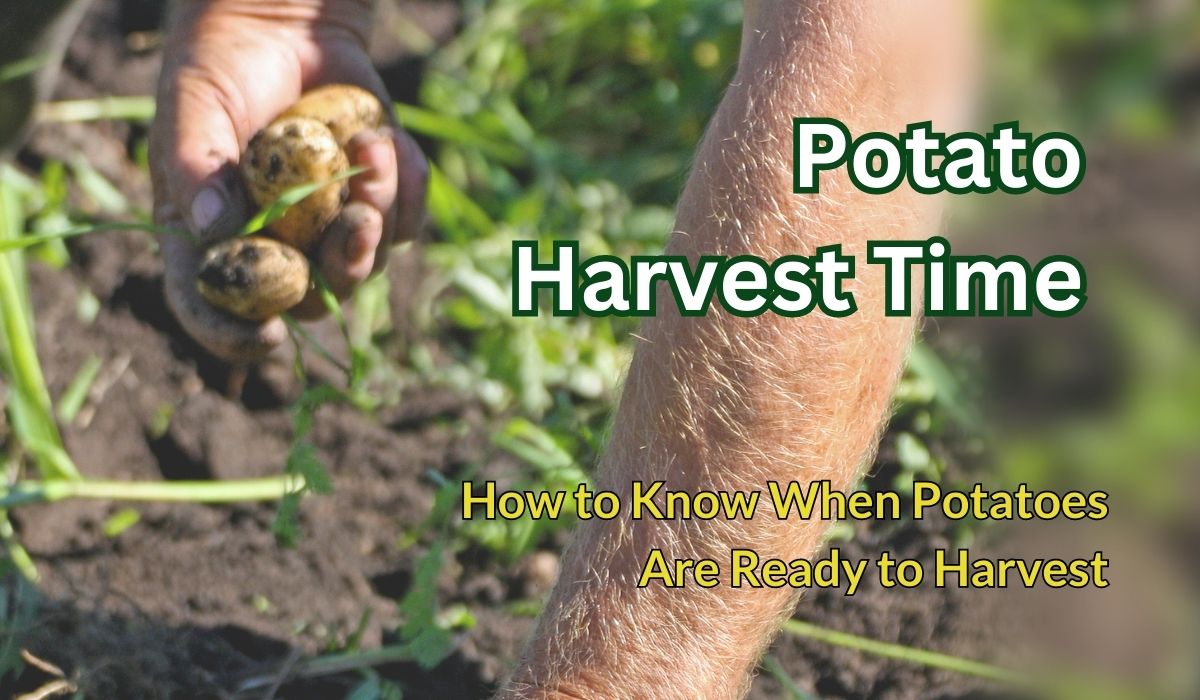
  • Know the Best Time to Pick Potatoes [Potato Harvest Time]

    Know the Best Time to Pick Potatoes [Potato Harvest Time]

    Homegrown potatoes are arguably better than anything you can buy at a supermarket. Growing them however can be a bit tricky if you are inexperienced. One of the key things with growing them at home is to know when to pick potatoes.

    Knowing how to harvest and handle homegrown potatoes after harvest will help you to end up with the maximum possible harvest your garden can produce. You will also be able to store them for a long, even through the winter months. To get to know when to pick potatoes, keep reading.

    The Potato Plant

    Solanum tuberosum, commonly known as potato is one of the most commonly grown and consumed vegetables worldwide. It is a staple for many traditional dishes and is used to make many fast food dishes and snacks.

    Potatoes are a cool-weather vegetable and can be grown as a winter crop in areas with a warm climate. They belong to the nightshade family of plants which also has peppers, tomatoes, and eggplants.

    The potato plant has green leaves that grow on top of the soil and help you to see where your potatoes are planted. It also has a tuber, which is the enlarged underground portion, which we refer to as “the potato”. The tuber develops underground once the plants get to about 6-8 inches in height. This usually happens around 5-7 weeks after planting.

    There are over 100 types of potatoes. They differ in skin and flesh colors, shapes, and sizes. Some of these are ideal for mashing, roasting, frying, and for making salads. Potatoes are also nutritious. The skin is especially nutrient-rich and provides u to 45% of an adult’s daily vitamin C and 18% potassium requirements.

    Growing Potatoes

    Potatoes will grow well as long as they are provided with the right growing conditions. They do well in most types of soils and will produce a lot of good potatoes for your harvest.

    Grow potatoes in an area where they will receive at least 6 hours of direct sunlight. The soil should be fertile, loose, and well-draining. Refrain from using any hard or compacted soil as it will lead to disfigured potatoes and will make harvesting difficult when the time comes. You can improve the quality of the soil by adding compost, and soil amendments, and preparing the soil before planting.

    The ideal soil pH for growing potatoes is acidic and should be between 5.8 and 6.5. The temperature should be 45 to 55 degrees Fahrenheit.

    The best time to plant potatoes is in the spring 2 to 4 weeks before the frost day in your area. The temperatures should still be ideal at this time. If planted at the right time, you should expect to harvest them late in the summer and can store them through the fall and winter months.

    Harvesting Potatoes

    Harvesting potatoes can seem tricky, but it is pretty simple if you know what you are doing. Knowing when to pick potatoes is also key. They are best harvested on dry days as harvesting in the mud when it is raining may cause issues. Since you cannot see the tubers underground while you harvest, you need to be extremely careful not to puncture the tubers. If the soil is loose, it should be pretty easy to maneuver with your fingers, this will help you to avoid cutting on causing bruising on the skin of the potatoes.

    Potatoes can tolerate light frost, but when the first hard frost is expected, it’s time to get out the shovels and start digging potatoes.

    Knowing the right time to harvest potatoes and doing so will keep the vegetables from sitting too long in the ground, and will reduce the chances of attack by pathogens that target potatoes.

    The size of your tubers should be about the size of a chicken egg or bigger when you harvest them. You can leave them to grow a bit more if you prefer. You should use a digging fork from around the edges and work your way into where your potatoes are planted. This should help loosen the soil without puncturing the potatoes. Once the soil has loosened, you can use your fingers to feel around and get the potatoes that you want out.

    Here are some considerations to keep in mind when harvesting potatoes:

    • Toughen up your potatoes for storage before harvesting them, by limiting how much you water them after the middle of August.
    • Before harvesting your entire crop, dig up a small test hill to see how big or mature your plants are. The skin of mature potatoes will be thick and firmly attached to the potato flesh. Those that are still young will have thin skin that comes off the potato when gently rubbed.
    • If the soil is wet when you harvest the potatoes, let them air dry completely before storing them.
    • Check for any green pots on your harvested potatoes, if it is just superficial and can be trimmed off, the potatoes should be fine to keep. If the green goes deep into the flesh, throw away the potatoes as they may be poisonous.
    • Cure your potatoes before long-term storage. Do this by letting them sit in temperatures of 45 to 60 degrees Fahrenheit for about two weeks. This time will give the potatoes time to heal or harden any small cuts that may be present. You do not need to cure them if you are going to eat them right off the ground.
    • Store potatoes in a cool, dry, and dark place after harvesting. Too much light will turn them green, rendering them unsuitable for eating.
    • Store the potatoes that are damaged, diseased, or bruise-free to avoid any storage problems.
    • Store your potatoes in baskets, cardboard boxes, or crates with holes on the sides so the vegetables get enough ventilation to prevent rot.
    • Regularly check on your stored potatoes and remove any ones that may get damaged or start to rot before they infect the others.

    harvesting potatoes

    When to Harvest Potatoes in Containers

    Whether you are harvesting potatoes from the ground, grow bags, containers, or grow beds, the method to follow is the same. When to pick potatoes, and how exactly to do it, will be the same.

    Once your potato plants start to flower, you know it is almost time to harvest. Wait for a bit, just until the flowers start to dry and drop off the plant. After this happens, the potatoes will remain tender for about 2-3 weeks.

    If you prefer to pick your potatoes at this stage, keep in mind that you will need to eat them soon after harvest as they do not store well. They are delicious but have really thin skins that affect their shelf life.

    To harvest larger, more mature potatoes, you should leave them for longer than this in the soil. Growing them in a potato grow bed will help you easily monitor the size of your potatoes.

    713IRZF ijL. AC SL1500

    The longer you intend to let your potatoes grow for, the more you will need to protect them from animals, children, and pets so they can grow and mature well.

    Because potatoes can be damaged by frost, you should always harvest them just before the frost hits, whether they are mature or still in their baby stage.

    How to Know When Potatoes Are Ready to Harvest

    So how do you know the best time to pick potatoes? Knowing when to harvest potatoes can be quite easy. Once the potato tubers have started to set, they are ready to harvest. You will know that they have reached this stage when you notice them flowering.

    To harvest baby potatoes, dig up potatoes just as the plants have started to flower. Wait until the tops of the vines have completely died to harvest full-size potatoes. This shows that the plant has now directed all of its energy into growing the tubers.

    As you figure out when to pick potatoes, watch out for other symptoms of disease with the die-off of your plants, as not all browning and die-off are part of the plant’s natural cycle.

    Potatoes can tolerate light frost, however, when the first hard frost is expected you should pull off the shovels and start digging potatoes. So you should harvest all your potatoes before the frost hits or you might lose your crop.

    If you do not harvest your potatoes, you will create a perennial patch of potatoes. Potatoes left in the ground and not harvested will either grow new plants, or sprout and produce new plants in the spring of the following growth season. Which of these happens will depend on the climate where you live.

    How to Store Potatoes

    How you store your harvested potatoes depends on the size of your harvest and how long you intend to store them for. If you are harvesting potatoes to consume within a few days, storage should not be a concern as you can store them anywhere.

    To store them for longer, however, you should find them some space in a cool place with temperatures of between 38 to 40 degrees Fahrenheit. If you store them in a warm place, they will be susceptible to diseases, decreasing their shelf life.

    The storage space for potatoes also needs to have a humidity of about 80%, or the tubers will wither and dry out.

    Make sure that the place is also not exposed to sunlight as this will cause the greening of the potatoes. Fresh air and ventilation are crucial for storing potatoes, airtight containers should not be used.

    Never store potatoes with apples. The ethylene gas from apples will cause the potatoes to spoil.

    Avoid storing potatoes in the fridge. This is because after potatoes are harvested, they convert starch to sugar depending on the temperature. They will do this if stored in the fridge, and the potatoes taste weird. Another reason is that storing potatoes in the fridge leads to an increase in the levels of acrylamide. This compound is produced when you cook potatoes at high temperatures. Acrylamide causes cancer in animals, so there is a good chance it might also be harmful to humans.

    Depending on the variety, potatoes can last 4-6 months if stored well.

    Conclusion – Know the Best Time to Pick Potatoes

    Growing and harvesting potatoes at home is one of the most satisfying things to do. Digging them up makes for a fun activity that can be done with kids. Knowing when to pick potatoes and the best method to harvest will ensure that you get the best harvest and can store your potatoes well if you wish.

    We hope you found this article on how to know the best time to pick potatoes informative and helpful.

    Happy growing.

  • Does Potting Soil Go Bad? (4 Important Signs to Look Out For)

    Does Potting Soil Go Bad? (4 Important Signs to Look Out For)

    Potting soil is important to provide a growth medium, moisture, and nutrition for any growing plants.  There are different types and qualities of potting soil, and if you find good ones you may be tempted to buy a lot. The answer to the question, ‘does potting soil go bad’ is important to know if you plan to store it for long periods. To find out the answer to this question, keep reading.

    Potting Soil Composition

    Potting soil is a vital component of any garden. Unfortunately, it can go bad over time, rendering it unusable and unsuitable for plant growth.

    Commercial potting soils usually contain peat moss as the primary ingredient. It can also contain other ingredients such as perlite, vermiculite, and pine bark. All these components have different functions;

    • Peat moss – a fibrous material that contains nitrogen and phosphorus which are nutrients required for plant growth
    • Perlite – helps with aeration, water retention, and drainage in the soil
    • Vermiculite – improves the nutrient content of the soil and water retention
    • Pine bark – improves moisture retention and aeration
    81ZEMl9FwCL. AC SL1500

    A good potting soil should be able to hold water and nutrients that will be used by plants for growth. In some instances, it can even be enhanced with fertilizer or water-holding crystals which will help your plants to perform well. The ratio of the different components of potting soil can be varied and adjusted depending on the plants that will be grown in it

    Potting soils are usually cheap, hence people can purchase large quantities at a time. They are also lightweight and easy to bag and sell.

    It is different from the soil in your garden which is natural. Garden soil is made up of sand, silt, and clay, and can also contain organic matter particles such as those from leaves and grass clippings.

    Old potting soil loses value over time as its ingredients, like peat moss, decompose faster than organic materials, hence potting soil loses its quality faster than regular garden soil.

    Do you know what is the difference between Perlite vs Pumice and Which is The Better Soil Amendment?

    How Long Does Potting Soil Last?

    Potting soil can go bad – but it doesn’t happen overnight. The rate at which this happens depends on a few factors.

    Open bags of new potting soil can stay for between 6 and 12 months without losing its quality. Unopened potting soil however stores even better and can last for up to a year or two before it goes bad.

    Potting soil that is used to grow plants will usually go bad after about a year, or a single growing season. After this period, the soil will no longer be able to support the growth and health of plants and will either need to be replenished or replaced.

    Read more about A Step By Step Guide On How To Sterilize Potting Soil

    Facts about potting soil

    How to Tell If Potting Soil Is Bad – The 4 Signs to Look Out For

    You should be able to tell when potting soil has gone bad, here are the 4 important signs you should look for;

    1. Off smell

    If you notice a rotten egg smell coming from your potting soil, it may be because it has gone bad. This bad smell is caused by anaerobic bacteria and sometimes fungi that grow in old, damp, and compacted soils.

    Putting your damp soil out in the hot sun may help to kill some of these bacteria and fungi that break down the soil. You have to be careful however because this can potentially destroy some of the nutrients that are in the potting soil. Some potting soils also have beneficial social microbes added to them, and the process of putting the soil in the sun can kill them. This would only be a concern for specialty potting soils, it is however something to keep in mind.

    2. Insects and pests

    Bugs and other types of insects are attracted to decaying organic matter. So if you see these infesting your potting soil, it is a sure sign that it is no longer in good condition.

    The most common insects that infest rotting potting soil are fungus gnats. These feed on decomposing or decaying organic matter. They deplete nutrients in the soil and damage plant roots, and as a result, the soil will not be suitable for plant growth.

    To deal with this issue, you can add diatomaceous earth to your potting soil and it will kill the bugs in there.

    3. Mold development and growth

    Mold grows on the top surface of the potting soil, especially when the soil has been exposed to damp or moist conditions for an extended period of time, without sufficient ventilation. The mold can be white, grey, yellow, or green in color, and can also have a fuzzy and slimy texture.

    If you see mold growing on top of your potting soil, let it dry out in a place that has adequate aeration. Check the soil after a couple of days to see if it is still moldy.

    Moldy potting soil can cause the roots of your plants to rot, and dampen off young seedlings if used.

    4. Soil compaction

    As potting soil breaks down in quality, it starts to form clumps. This is because of the decomposition of peat moss. The soil starts to compact and becomes dense. This then creates drainage and aeration problems and makes it difficult for roots to grow.

    If you would like to continue to use the potting soil that is obviously breaking down in quality, you can add some goodness back into it by mixing in some organic matter such as compost or some more peat moss.

    Does Potting Soil Expire?

    Potting soil can lose its quality over time if it is not used and kept in unfavorable conditions. To keep it in good quality for longer periods of time, keep it in an airtight bag that is free from moisture, and away from sunlight.

    Does Unused Potting Soil Go Bad?

    Unused potting soil can go bad but it doesn’t happen overnight. Old potting soil loses value over time as its ingredients, like peat moss, decompose.

    The range of time it takes potting soil to go bad is anywhere between 1-3 years. For unopened and unused potting soil, you can store it for about a year or two before it goes bad.

    If unused potting soil has been stored in a shed or a garage and has come into contact with water, it is probably best to throw it away. Potting soil can go bad if not stored properly.  If it is still dry, however, it may still be viable for growing plants.

    Problems With Using Decomposed Potting Soil

    Decomposed potting soil not only looks and smells bad, but if used in that state it will cause various problems that will disrupt or even impede the growth and productivity of plants. Here are the 4 problems associated with using decomposed potting soil:

    Reduced plant growth:

    Decomposed potting soil contains much fewer nutrients than fresh potting soil. If it is used to grow plants, they will have stunted growth, weak leaves, and delayed flower and fruit development.

    Compressed/compact potting soil:

    The potting soil will compress or compact as the peat moss breaks down. It will pack around the roots, resulting in the impediment of water and oxygen flow. This will lead to eventual ill health and even the death of plants.

    Reduces soil drainage:

    The compaction of potting soil will disturb drainage. This will lead to water-logged conditions and the plant roots will not be able to breathe. Plants require well-drained soils to be able to grow efficiently and healthily. If a plant is placed in permanently soggy or water-logged soil, it will die.

    Salts build-up:

    Fertilizers and salts build in the soil. This becomes even worse if the soil has poor drainage. This build-up will eventually kill the plants, especially if the plants cannot withstand high salt concentrations. The fertilizer build-up will result in fertilizer burn on the plant leaves.

    How to Revive Old Potting Soil for Plant Health

    While using old or decomposed potting soil will do more harm than good to your plants, not all hope is lost as it is possible to revive the soil. Here are some of the options you have;

    1. Repot plants every year:

    Because potting soil usually lasts for a year or a single growing season, to give your plants the best chance of good growth and health, repot them every year and give them new potting soil

    2. Improve the bagged potting soil:

    To potting soil that is still in a bag but has been sitting for a long time, you can add a few handfuls of perlite or vermiculite to revive it. This will not keep the peat moss from breaking down but will help keep the soil aerated. You can also add a handful of compost or worm castings to give it a boost of nutrients.

    3. Flush the soil monthly:

    Flush the potting soil monthly with fresh water to remove or slow down the accumulation of fertilizer and salts in the soil. This will also help to remove the mineral deposits from tap water if you use it to irrigate.

    4. Make your own potting soil:

    To save yourself the trouble of having to deal with decomposed potting soil from a bag, you can make your own mix with more organic ingredients from the garden. you can make your own mix with compost, coir (an organic alternative to peat), worm castings, vermiculite, and other soil additives that you can find. This may seem like a lot of effort, but it is completely worth it and will last longer than commercial potting soil mixes.

    How to Store Potting Soil

    Potting soil can go bad if not stored properly, to make it last longer, you will need to know how to store it well.

    Keep any unused potting soil completely dry. If it comes into contact with any moisture, it will start to develop mold and mildew which will damage the quality of the soil.

    You can also store it in a plastic container with a watertight lid or an unscented plastic bag. Place it in a cool, dark place in a water-safe room.

    For unopened and unused potting soil, you can store it for about a year or two before it goes bad, and opened bags will last 6-12 months.

    Conclusion – Does Potting Soil Go Bad?

    Potting soil is worn out because the peat moss has decomposed. If you want to continue to use the soil or want to give your plants the best chance at growth even after the first growing season, use the measures outlined above to replenish or replace the potting soil once every year.

    Providing your plants with good quality or fresh potting soil or maintaining the quality of the soil that is already in use will result in your plants being much healthier and growing better.

    If you notice or suspect that your potting soil is going bad, it is better to be safe than sorry for the sake of your plants. Do not use it, rather get fresh potting soil or make your own mix.

    We hope this article provided you will all that you needed to know about potting soil going bad.

    Happy growing!

  • How to Harvest Kale So the Leaves Keep Growing

    How to Harvest Kale So the Leaves Keep Growing

    Kale is one of the easiest and best leafy greens to grow currently. Also dubbed a superfood due to its many health benefits, if you’re a health enthusiast, you definitely want to know how to harvest kale so the leaves keep growing and give you a continuous harvest.

    To learn how to do this right, let’s keep reading.

    Summary: How to Harvest Mature Kale

    To harvest Kale, grasp the stem of the mature outer leaf at the base of the main stalk and pull down and out, away from the center, until it breaks. Ensure that you leave at least 5 central leaves on the plant so that it keeps growing.

    What is Kale?

    Brassica oleracea var. sabellica, commonly known as kale is a leafy green vegetable that belongs to the cabbage family and is grown for its edible leaves.

    Mostly eaten raw in salads, but can also be eaten cooked, kale has a variety of micronutrients such as vitamins A, C, and K, minerals, antioxidants, carotenoids, glucosinolates, and polyphenols, all of which are beneficial to human health.

    If you plant kale at the right time, you will have a long season of harvest which will give you ample time to enjoy your fresh greens. Kale is typically a cool-weather vegetable but you can get a longer harvest if you plant it late in the summer to harvest in the fall and winter. It is also surprisingly hardy and frost tolerant. Certain cold-tolerant varieties will keep growing as long as the weather stays above 20°F.

    This plant produces so many large leaves that when it is mature, it takes you only a few minutes to gather enough for a nutritious meal.

    Most varieties of kale are biennial, meaning they have a two-year life cycle but people mostly grow it as an annual with a one-year growth cycle. Some kale varieties are perennial and can live for 5-7 years.

    When to Harvest Kale

    Kale is as easy to harvest as it is to grow. However, you need to know exactly the method and the right time to harvest it. So when is the best time to harvest kale? Well, this will depend on the variety or cultivar of kale that you are growing as they have different rates of growth.

    There are also two distinct harvesting stages of kale, baby kale, and mature kale. The timing of the harvest will depend on what stage you want to harvest the leaves at.

    Kale typically matures approximately 60 days after the seeds have been planted in the soil. By the time healthy plants reach this point, they will have at least 10 leaves with the larger ones on the outside and the smaller ones on the inside.

    If you want to harvest your kale leaves while they are in the baby stage, this is best done 25 to 30 days after planting the seeds.

    Kale is usually harvested in the late spring months, early summer, and again in autumn.

    The time of harvest can also depend on the growing zone you are in and the time of the year. If you have a climate that greatly favors kale growth, you can harvest kale every one or two weeks.

    Some kale gardeners even like to plant kale in the fall so that it can go through a frost before harvesting. The cold weather causes the plants to convert their starches to sugar, which greatly improves their taste.

    How to Cut Kale From Garden

    Harvesting kale is an extremely simple process. You can easily cut off the individual leaves without damaging the entire plant. This is as long as you don’t cut the central bud.

    Here are the considerations to keep in mind when harvesting kale from the garden;

    • Cut off the leaves where the leaf stem meets the main stem of the plant – instead of cutting, you can also break the leaves from the stem by pushing it down with your thumb and pulling it away from the plant.
    • Do not cut the main stem of the plant – if you cut the team off, the plant will stop producing
    • Leave about 1/3 of the leaves on the plant so that it can regenerate over time – pick as many leaves as you want from the kale plant, but do not leave it bare if you wish to continue harvesting
    • Do not cut the root of the plant – this should go without saying, but if you cut the roots of your kale plant it will die
    • Pick the largest and oldest leaves first – this will give the younger plants time to grow before they can be harvested
    • Use the same method whether you are harvesting kale in the baby or the mature method – this way, your kale will keep growing
    • While harvesting, watch out for and remove yellow or spotted leaves – remove any yellow or spotted leaves as soon as you notice them. Leaving sick or dead leaves on the plants will take up energy that the plant should be channeling toward healthy growth to extend your harvest. If you consistently spot any yellow, spotted, or wilted leaves on your plants, it could be a sign of distress. Check for any possible causes such as common kale pests like cabbage worms and aphids, overwatering, or a nutrient deficiency. Once you have established what the cause is remedy it as soon as possible to give your plant the best chance of survival. If it is a watering issue, adjust your watering schedule, if the cause is pests, include pest control in your maintenance routine, I recommend you read the article Amazing Natural Insect Pest Control Methods that Works.
    harvesting kale

    How to Harvest Baby Kale

    If you’re growing baby kale for use in salads, the best time to harvest them is 25-30 days after planting. The best variety for baby kale is the Red Russian and it is commonly grown for this purpose

    Wait until the plants have multiple leaves that are about 2-3″ in length. Just keep in mind that when you harvest the leaves smaller, the yield per plant will also be smaller.

    To harvest small kale leaves, simply use your fingers to pinch each individual leaf at the base of the stem. You can also use a sharp pair of scissors or a knife to cut the leaves. Grab a handful of leaves and cut them off about two inches above the ground. This will enable your plant to keep growing as long as you keep the central point intact.

    To keep harvesting young kale leaves, watch them carefully for about 3-4 weeks because kale can quickly outgrow the baby stage.

    How to Harvest Mature Kale

    Full-size, grown, or mature kale leaves have a tougher texture and a stronger flavor than baby leaves. Older leaves can become discolored and eventually fall off the plant. If you notice this happening, remove these leaves and only harvest the ones that still look green and healthy. When you pick mature kale leaves, ensure that you leave at least 5 central leaves on the plant so that it can continue to make food via photosynthesis and keep growing.

    For mature kale leaves, it is best to cook before consuming them or use them to make kale chips. You can also massage them thoroughly before eating them if you don’t want to cook them

    When they’re mature, they should be about the size of an adult’s palm or bigger. To harvest them, grasp the stem of the mature outer leaf at the base of the main stalk and pull down and out, away from the center, until it breaks. Repeat the same process until you have harvested all the leaves that you want. If your plants are still new or you are worried about damaging them, you can also use a knife, scissors, or running shears instead of your hands to harvest. This will help to prevent snapping the stem.

    Kale Growth Period

    Kale days to harvest is about 55-60 days after planting, as that is the regular period it takes to mature. If the kale is planted from seed in the soil, however, it can take closer t 3 months before they are full-sized.

    How to Store Kale after Harvest

    Freshly picked kale leaves can be stored and last up to 2-3 weeks in the refrigerator if stored well. Do not store it without protection in the fridge because it will quickly wilt. Put the leaves in a ziplock plastic bag or a storage container.

    Kale can also be frozen, and last about 4-6 weeks before turning bitter. To do this properly, wash and chop the leaves before freezing them.

    If you want to keep kale in the freezer for more than 6 weeks, you can blanch it before freezing. This way it will store for about 8-12 months.

    Whichever way you decide to store your kale, follow these basic preparation steps:

    Step 1: Wash

    Wash all the harvested kale leaves thoroughly with cold water, because hot or warm water will make them wilt, and you want to maintain the crunch.

    Step 2: Cut

    Remove or cut off the stems, unless you want to eat them.

    Step 3: Dry

    Pat the leaves dry with a towel or let them air dry for about 10 minutes.

    Step 4: Put them in a bag

    Put the clean and dry leaves in a resealable storage bag or container, with a piece of paper towel to absorb moisture and prevent it from damaging the leaves.

    Step 5: Squeeze out the air

    If you’re storing them in a bag, squeeze out as much of the air as you can.

    Step 6: Store

    Store the leaves in your preferred place. If the leaves go yellow before you eat them, throw them away.

    You can grow many other green leafy vegetables like Spinach or Lettuce

    Conclusion – How to Harvest Kale So the Leaves Keep Growing

    Kale is a nutritious vegetable and can be used to prepare delicious dishes with a bit of information. Knowing when and how to harvest kale is also important, depending on what you plan to use them for. This article provided you with all the information you could ever need on how to harvest kale so the leaves keep going, kale days to maturity, and how to store your harvested kale. We hope that you found it very helpful and will now go and grow your kale and harvest it properly for long periods of time.

    Happy growing!

  • How to Harvest Dill Properly and Save It for Later- 4 Steps

    How to Harvest Dill Properly and Save It for Later- 4 Steps

    Dill seeds have a teardrop shape and have a characteristic brown stripy coat. To harvest them, wait for the flowers to open and turn brown before trimming them off and drying the seed. 

    Another way to harvest them is to cut off the fading flowers and place them in a paper bag, in an upside-down position. Tie this bag and hang it up somewhere where it will be exposed to sunlight, where it will dry. After the seeds ripen, they will fall into the bag and then they will be ready for storage.


    How to Prune Dill

    Pruning dill can extend its life span. Picking it often, like with most herbs and vegetables can encourage growth and will result in strong healthy plants.

    To prune dill, use a sharp pair of scissors or pruning shears to cut off the frond-like leaves at the top of the plant, above the leaf set. 

    The Best Way to Store Dill

    Freshly harvested dill can wilt quite quickly, and as it does so will start to lose its flavor and aroma. If stored properly, however, this should not be a concern. There are various ways that you can store your dill, these are;

    • Store it in the refrigerator’s crisp drawer – it will stay fresh for a few days
    • Put it in water – harvest dill with the stems and place them in a glass of water, and cover the top with a plastic bag. This way, dill leaves will stay fresh for about a week.
    • Freeze it – chop your dill into small pieces and freeze it with some water in ice cube trays. This way, you can store your dill for up to 4 months.
    • Dry it – drying will reduce the flavor of the dill but it can still be used and will store for a very long time. Chop the dill up and dry it until it is crumbly. You can then store it in an airtight container.
    • Stick to hang drying – instead of cutting the dill up before drying it, you can hang the dill leaves together. Tie them up with a string, and hang them upside down in a well-ventilated area. Allow them to air dry until they are crumbling and then store them in an airtight container or ziplock bag.

    Conclusion – How to Harvest Dill Properly and Save It for Later

    There you have it, the best way to harvest dill and save it properly. Dill is such an easy herb to grow and has so many versatile uses from culinary to health to fragrances. Once you start growing it, it can take over your growing environment if it is not properly controlled.

    Knowing how to harvest dill properly and save it for later will help you to enjoy the best out of your harvest. There are so many different ways that you can store dill, depending on how long you want to keep it. You can freeze, refrigerate and even dry this amazing herb for later use, ensuring that you can have a constant supply all year round without having to wait for its ideal growing season.

    Depending on where you live, you may even be able to grow dill all year round depending on the climate. If that is not an option for you, you can just select the dwarf variety of dill that can be grown indoors where you can manipulate temperatures.

    With so many options to choose from when it comes to varieties, growing conditions, and storage of dill, you can definitely find an option to suit you. There is absolutely no reason why you can’t enjoy this amazing and versatile herb.

    Happy gardening!

    Do you know how to harvest dill properly and save it for later? Do you grow and harvest a lot of dill and would like to know how to preserve it to get maximum use out of your harvest? Keep reading this article to learn more about how to enjoy the many different uses of this fast-growing plant.

    Dill pairs really well with many dishes and adds a great flavor and lovely fragrance. So you will want to learn how to save it. Keep reading.

    Dill, like most herbs, can be harvested continuously throughout the growing season, because it grows really fast. The best way to harvest dill is if you cut it off next to the stem and the plant will continue to grow.

    About Dill

    Dill, scientific name Anethum graveolens L., is also often referred to as dill weed because it can grow like a weed if the growing conditions are ideal.

    The dill plant grows in slender, hollow stems that have green feather-shaped leaves of fennel. The delicate leaves of dill have their own distinct aroma. The dill seeds are brown and flat and have a great mild citrus flavor, and smell a lot like caraway.

    Depending on where it is grown, the taste of dill can vary. There are also many different varieties of dill to choose from, which again can differ in taste.

    The different types of dill plants can be dwarf, or taller. The dwarf types of plants are the Fernleaf and Nano. Because these varieties only grow up to 12-18 inches, they are ideal for growing indoors in pots and window boxes. You can also use a smart pot to grow dill.

    The taller variety, appropriately named the Mammoth can reach heights of 5 ft 10 in when fully matured. This type of dill plant has large umbrella-style flowers.

    Dill is a seasonal herb and thrives in the cooler months of the year. Depending on the climate, it is possible to grow and harvest dill all year round. This means that you can enjoy fresh dill all year round. In cases where greenhouses are used, dill can also be grown all year round since the temperatures can be controlled to create an ideal growing environment.

    The dill plant has been used in Ayurvedic medicines since ancient times. Although it is most popularly used as a spice, it also yields good quantities of essential oils that are much loved for their aroma. Other uses of dill include the use as a digestive herb that provides a relaxing and calming effect on the gut. It can also be used to relieve nausea, colic, and wind while also assisting with appetite.

    You can read the following article if you want to grow other types of herbs: Popular Herbs With Shallow Roots

    Harvesting Dill

    Knowing how to harvest dill properly, and save it for later is very important. Dill, like most herbs, can be harvested continuously throughout the growing season, because it grows really fast. If you cut it next to the stem, the plant will keep growing. As long as you harvest it the right way, you can be sure to have a constant supply of dill throughout the year.

    Here are the steps to follow to ensure that you use the best way to harvest dill.

    1. Give your dill plant sufficient time to grow

    Dill takes anywhere between 4-8 weeks to grow and fully mature. So when they grow to about 6 inches in height, then you know they are ready to harvest.

    Harvesting the largest, older outer leaves of the plant is best. This will give the smaller leaves more time to mature and give you a continuous supply.

    2. Water your dill plant before harvesting

    Water the dill plant about one day before harvesting to ensure that the plant stays hydrated. Watering the plant before harvest will keep it hydrated so that it will recover faster after the older leaves are cut off.

    3. Trim the leaves

    To trim the leaves, use a sharp pair of garden scissors or pruning shears, and cut them next to the stem right where they meet the growth point on the main stem. If you don’t have cutting implements, you can simply use your hand to pinch the stems off. This will work even better if the stems are still young and tender.

    61RHSTpjyPL. AC SL1500

    4. Limit the leaves you cut off

    Pay careful attention to the number of leaves you harvest from one plant. Only take about a quarter to a third of the leaves to allow new growth to develop so that you can have a continuous harvest.

    how to harvest dill

    When to Harvest Dill

    As already mentioned, it takes about 4-8 weeks for dill to get mature. Dill can be harvested after this time period, After this amount of time has passed and your dill has at least 4-5 leaves, you can go ahead and harvest it. Remember to only pick the outer, older leaves so that the smaller leaves can have time to grow.

    Harvesting the outside leaves will prompt new shoots and foliage to develop. It will also delay flowering and the formation of seeds.  Removing the flower stalks can also help to prolong leaf production. Do not harvest the center of the plant as it may not grow back.

    You can harvest dill early in the growing season by either cutting it back to about 4 inches of growth or from all around the plant.

    The best time to pick dill leaves is just before the flowers open. They should be sprayed with water at least overnight before harvest and should be picked up early in the morning.

    How to harvest dill edible flowers

    In addition to the leaves, dill flowers are also edible and can be harvested. They are bright yellow and delicious. Dill flowers are great for garnishing both sweet and savory dishes and sales. They are best consumed fresh. To harvest the flowers, simply snip off what your need. They can even be stored in the freezer for later use.

    Read about Are Cilantro Flowers Edible?

    How to harvest dill seeds

    Dill seeds have a teardrop shape and have a characteristic brown stripy coat. To harvest them, wait for the flowers to open and turn brown before trimming them off and drying the seed. 

    Another way to harvest them is to cut off the fading flowers and place them in a paper bag, in an upside-down position. Tie this bag and hang it up somewhere where it will be exposed to sunlight, where it will dry. After the seeds ripen, they will fall into the bag and then they will be ready for storage.


    How to Prune Dill

    Pruning dill can extend its life span. Picking it often, like with most herbs and vegetables can encourage growth and will result in strong healthy plants.

    To prune dill, use a sharp pair of scissors or pruning shears to cut off the frond-like leaves at the top of the plant, above the leaf set. 

    The Best Way to Store Dill

    Freshly harvested dill can wilt quite quickly, and as it does so will start to lose its flavor and aroma. If stored properly, however, this should not be a concern. There are various ways that you can store your dill, these are;

    • Store it in the refrigerator’s crisp drawer – it will stay fresh for a few days
    • Put it in water – harvest dill with the stems and place them in a glass of water, and cover the top with a plastic bag. This way, dill leaves will stay fresh for about a week.
    • Freeze it – chop your dill into small pieces and freeze it with some water in ice cube trays. This way, you can store your dill for up to 4 months.
    • Dry it – drying will reduce the flavor of the dill but it can still be used and will store for a very long time. Chop the dill up and dry it until it is crumbly. You can then store it in an airtight container.
    • Stick to hang drying – instead of cutting the dill up before drying it, you can hang the dill leaves together. Tie them up with a string, and hang them upside down in a well-ventilated area. Allow them to air dry until they are crumbling and then store them in an airtight container or ziplock bag.

    Conclusion – How to Harvest Dill Properly and Save It for Later

    There you have it, the best way to harvest dill and save it properly. Dill is such an easy herb to grow and has so many versatile uses from culinary to health to fragrances. Once you start growing it, it can take over your growing environment if it is not properly controlled.

    Knowing how to harvest dill properly and save it for later will help you to enjoy the best out of your harvest. There are so many different ways that you can store dill, depending on how long you want to keep it. You can freeze, refrigerate and even dry this amazing herb for later use, ensuring that you can have a constant supply all year round without having to wait for its ideal growing season.

    Depending on where you live, you may even be able to grow dill all year round depending on the climate. If that is not an option for you, you can just select the dwarf variety of dill that can be grown indoors where you can manipulate temperatures.

    With so many options to choose from when it comes to varieties, growing conditions, and storage of dill, you can definitely find an option to suit you. There is absolutely no reason why you can’t enjoy this amazing and versatile herb.

    Happy gardening!

  • How Often to Run Exhaust Fan in Grow Tent: Best Guide

    How Often to Run Exhaust Fan in Grow Tent: Best Guide

    So how often do run an exhaust fan in grow tent? If you are growing plants in an indoor environment, you need to use an exhaust fan to make it ideal for your plant. It is therefore important that you know how often to run an exhaust fan in grow tent, to get the best efficiency from both your exhaust fan and grow tent.

    In a perfectly designed system, an extracted fan should replace the air in your grow tent at least every three to five minutes. To be able to achieve this efficiency, you have to choose the right size fan to get the job done.

    Grow tent ventilation can actually be very simple, as long as you understand the basics. So let us get right into it.

     Does a sealed grow room need fresh air?

    How Important is an Exhaust Fan in a Grow Tent?

    So why do you need a fan in your to-grow tent? Well, there are several reasons:

    • For removing excess heat

    In an indoor growing environment, there may not be a lot of natural light that enters. In this case, you will need to use grow lights. These grow lights however emit heat which may increase the temperature of the grow tent. This may not seem like much, but a change in a few degrees of temperature can mean the difference between the success and failure of a crop.

    Of course, certain grow lights will emit more light than others. This is often not a problem with LED lights, but all of them produce enough heat to necessitate ventilation. Exhaust fans are necessary to help remove all the excess heat and keep your plants happy.

    • Humidity control

    Plants in a grow tent emit vapor throughout the day which will increase the humidity of the tent. If the humidity is left uncontrolled, it will result in poor growing conditions in the room, which will often result in the development of pests and diseases. An extractor fan will help to suck out all the extra moisture, helping maintain humidity at a minimum.

     How do you set up an exhaust fan in a grow tent?

    • CO2 control

    Because a grow tent is sealed, the level of CO2 will gradually decrease, limiting the growth of your plants. Ventilation from an exhaust fan will bring fresh CO2 from outside and boost plant growth and productivity.

    If grow tent setup is sealed, this means that the level of CO2 in the room gradually decreases, limiting your plants’ growth. Ventilation brings in the fresh air and fresh CO2 from outside and removes the old air from your grow room, boosting growth and yields.

    • Photosynthesis

    Plants need CO2 for photosynthesis. In a grow tent without adequate ventilation, the CO2 will become stale. This will become destructive to your plants if it is not solved with the addition and use of an exhaust fan.

    91fpqkIrYzL. AC SX679

    How Often to Run Exhaust Fan in Grow Tent?

    Different grow tents require different amounts of ventilation. To know how often to run an exhaust fan in grow tent, you will need to first measure the volume of the grow tent in cubic feet.

    61qBBAYmZeL. AC SX425

    The running unit of an exhaust fan is measured in CFM, short for cubic feet per minute. This is an indication of the total volume of air that should be exchanged in the grow tent. If you are unsure how to do this yourself, certain calculators such as this one will help you work out these values.

    Ideally, your exhaust fan should replace the total volume of the air in your grow tent every 3 minutes. Let’s suppose, for example, you have a grow tent with a CFM  of 720. You would divide this number by 3;

    • 720/3 = 240

    If you had an exhaust fan with a capacity of 240 CFM, you would need to run it continually to replace the air in your 720 CFM grow tent. But if you have a full capacity one (i.e. 720 CFM), you would only run it once every three minutes.

    Should I Turn My Fan Off at Night?

    You should always keep your extractor fans running as long as the lights are on in your grow tent. Colder nights may not need ventilation but during summer, you may put them on a schedule. You can also use sensors to detect if any parameters are off so you can know when to turn the fan on.

    Does a Sealed Grow Room Need Fresh Air?

    A sealed grow room needs excellent ventilation to cycle out the cold air and bring fresh air in. Otherwise, your plants will die.

    The total volume of the air needs to be replaced every three to five minutes. Make sure you get the right size fan to get the job done.

    How Do You Set Up an Exhaust Fan in a Grow Tent?

    The best time to install an exhaust fan in a grow tent is during the setup stage. This is so that you will not have to work around existing plants in your system, which may potentially kill them.

    Calculate the total volume of your grow tent to ensure that you get the best fan that will be able to efficiently ventilate.

    Once you have the fan specifications, choose the model and make that you want, in the price range you can afford. You can also look at reviews to help you decide on the best model and make sure you get the best fan for your money. Also, check of the fan comes with a filter, or if you need to purchase one separately.

    If you are mechanically inclined, you can install the fan yourself; otherwise, get a professional to help you install it.

     How important is an exhaust fan in a grow tent

    How Often Should Air Be Exchanged in Grow Room?

    You may be wondering how often the air should be exchanged when in the grow room. The truth is, it depends on the size of the grow tent. However, the rule of thumb is that the air should be exchanged in your grow tent every 3-5 minutes or so, for best results.

    Grow Room Exhaust System Setup

    To set up an exhaust system in your grow room, you’ll need to follow a method to ensure you get the best results. Let’s take a closer look.

    • Choose your equipment. Depending on what you’re growing, you’ll need certain-sized equipment. The first thing you’ll need is your exhaust fan and intake fan, which you should choose accordingly to the size of your room. Ideally, you should get fans of the same size, or a slightly smaller intake fan. You’ll also need a controller, circulation fan, ducting, and carbon filter.
    • Begin installing. You’ll need to install the exhaust fan first, along with the carbon filter. Decide where you think is best, this can be anywhere inside or outside of the tent; assuming it’s within reached. Ideally, it should be inside. Attach with tape and ducting and place the ducting outside.
    • Install further. Now it’s time to install your intake fan. This should be opposite your exhaust fan. Having them opposite one another will ensure you get the best results from your to grow tent. Just like before, secure with ducting and tape.
    • Circulation fan. Now it’s time to add at least one circulation fan; however, I would recommend using two for slightly larger tents. This particular fan should be kept running at all times; irrespective of whether the lights are on or not.
    • Set up the controller. Check everything you’ve already set up is working adequately, then set up the controller to match the cycle you’re following in your grow tent.

    Do I Need to Vent My Grow Tent Outside?

    The truth is, you can vent wherever you want; inside or outside. However, most people like to vent their grow tent outside to ensure no damage is caused to their houses. However, it all depends on what you’re growing. For example, for something like cannabis, you should absolutely try to exhaust it outside. Try to make a decision based on what you’re growing and what you think is best for your plants.

    How Long to Leave Fan on Plants?

    You may be wondering how long to leave your fan on your plants. And in all honesty, it all depends on which fan you’re talking about. For example, your circulation fan should be kept on at all times; regardless of whether your grow lights are on. However, for your inline and exhaust, you can reduce the speed after around 30 minutes of your grow lights being off and then reduce gradually before turning off completely after around three hours,

    However, when your plants are still seedlings, you may decide to keep them on 24 hours a day for best results, as this will ensure they thrive once they’re older. It all depends on what you’re growing.

    Conclusion: How Often to Run Exhaust Fan in Grow Tent

    We hope this article has provided you with the information you needed to make the best decision with regards to getting the best exhaust fan for your grow tent and to know how often to run it so you get the best efficiency and benefits for your plants.

    If you enjoyed reading this article or found it useful, feel free to share it with your family and friends.