Composting transforms kitchen scraps and yard waste into garden gold. This natural process creates nutrient-rich

Why Compost?
- Free fertilizer – Create nutrient-rich amendment from waste (compare with commercial fertilizer options)
- Reduce waste – Divert 30% of household trash from landfills
- Improve
soil – Add organic matter that improves anysoil type - Support
soil life – Feed earthworms, beneficial bacteria, and fungi - Reduce emissions – Food in landfills produces methane; composting doesn’t
The Science of Composting
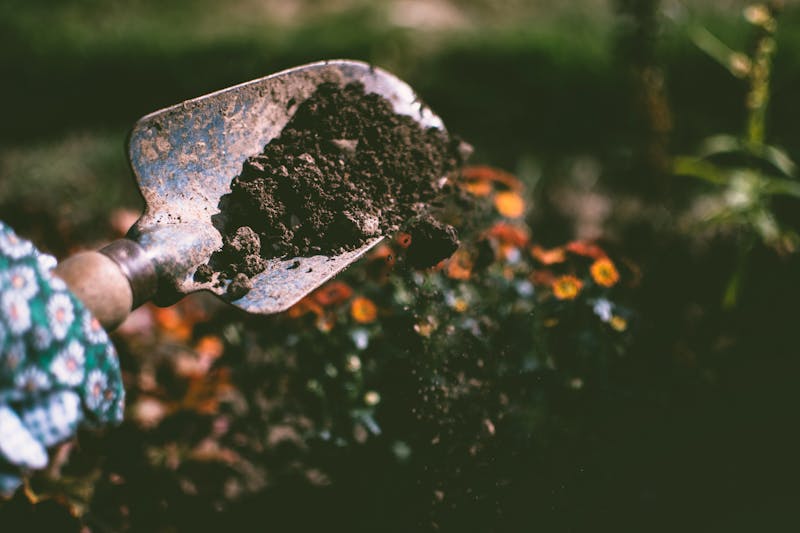
Composting is controlled decomposition. Microorganisms break down organic matter when given the right balance of:
- Carbon (browns) – Dried leaves, cardboard, straw, wood chips
- Nitrogen (greens) – Fresh grass, food scraps, coffee grounds
- Air – Aerobic bacteria need oxygen to work efficiently
- Moisture – Pile should be damp like a wrung-out sponge
What to Compost
Greens (Nitrogen)
- Fruit and vegetable scraps
- Coffee grounds and tea bags
- Fresh grass clippings
- Plant trimmings
- Eggshells (technically neutral, but fine)
Browns (Carbon)
- Dried leaves
- Straw or hay
- Cardboard (shredded)
- Paper (not glossy)
- Wood chips or sawdust
- Dryer lint (from natural fibers)
What NOT to Compost
- Meat, fish, and bones (attract pests)
- Dairy products (attract pests, smell bad)
- Oils and fats
- Diseased plants
- Weeds with seeds
- Pet waste (contains pathogens)
- Treated wood
Composting Methods
Basic Pile
Simply pile materials in a corner of your yard. Free but slow and can look messy. Works best with lots of brown materials.
Enclosed Bins
Contain the pile and look neater. Many styles from DIY pallets to commercial tumblers. Good for suburban yards.
Tumbling Composters
Enclosed drums that spin for easy turning. Produce finished compost faster than static piles. Good for small spaces.
Worm Composting (Vermicomposting)
Red wiggler worms process food scraps into ultra-rich castings. Perfect for apartments and indoor composting. Requires more management but produces premium compost.
Maintaining Your Compost
Turning
Mixing adds oxygen and speeds decomposition. Turn every 1-2 weeks for fastest results, or let it sit and compost slowly.
Moisture
Keep the pile moist but not soggy. Add water during dry spells; add browns if it gets too wet.
Balance
Aim for roughly 3:1 browns to greens by volume. Too many greens creates odor; too many browns slows decomposition.
Troubleshooting
- Smells bad: Too wet or too many greens – add browns and turn
- Not decomposing: Too dry or too many browns – add water and greens
- Pests: Bury food scraps deep, avoid meat and dairy
♻️ Composting Supplies
- Compost Tumbler – View on Amazon
- Kitchen Compost Bin – View on Amazon
- Worm Composting Bin – View on Amazon
As an Amazon Associate, we earn from qualifying purchases.
Conclusion
Composting is easier than most people think. Start simple with a basic pile or bin, learn as you go, and soon you’ll be producing black gold for your raised bed gardens and container gardens.
♻️ Composting Essentials
$59.51