Tag: Tomatoes

  • Heart Shaped Tomato Variety – A Lovely Tomato

    Heart Shaped Tomato Variety – A Lovely Tomato

    Have you had any experience with or consumed the heart-shaped tomato variety? Do you know about these tomatoes? In this article, we will discuss these beautiful tomatoes. Why they are great and why you should plant them.

    Oxheart Tomatoes

    If you are not familiar with the heart-shaped tomato variety, the oxheart, you may think that is some new kind of tomato but that could not be further from the truth. These tomatoes have been around for nearly a century.

    They can be mid-season to late-season tomatoes and are similar to the beefsteak varieties, and are also just as versatile.

    Oxheart tomatoes are known for their characteristic large size and pointed bottom that resembles a beef heart, hence the name oxheart. Because of their unusual and interesting shape and large size, they are becoming popular with home gardeners as an alternative to the regular beefsteak varieties.

     "What is bull heart tomato?

    Characteristics of Oxheart Tomatoes

    Characteristics of oxheart tomatoes that enable us to differentiate them or make them unique to other varieties include;

    • large size with tapered bottom, creating a shape that resembles a heart
    • when consumed, they are very meaty
    • they have relatively small seed cavities
    • they usually grow to sizes over 1 Ib, with some reaching over 2 lb and even 3 lb.
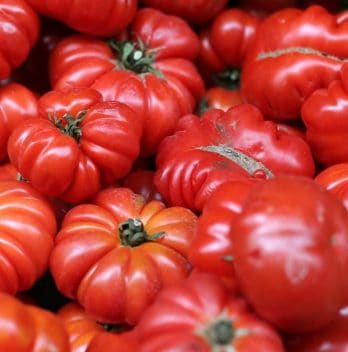
    • they can be red or pink, but can also be found in yellow, orange, green, and purple just like other tomatoes
    • they are an indeterminate variety of tomatoes, meaning that they produce all season and require constant pruning and support or they will get out of hand

    Varieties of Oxheart Tomatoes

    In addition to the regular size, oxheart tomatoes also have dwarf varieties. One variety, the dwarf purple oxheart tomato will produce all season round, like an indeterminate tomato but will not get as tall in a regular growing season.

    Because these dwarf versions do not get too tall or too large, they can be grown in containers of sizes from 5 – 15 gallons.

     Are ox heart tomatoes heirloom?

    Uses Of Oxheart Tomatoes

    Oxheart tomatoes can be used for anything that regular beefsteak tomatoes can be used to make. They make an excellent addition to salads and sandwiches, because they are great slicing tomatoes that maintain their structural integrity when sliced.

    Because they come in such a variety of colors, they are great for adding a splash of color to your summer salads.

    These tomatoes also store well and are suitable for canning.

    Are Oxheart Tomatoes Easy To Grow?

    Oxheart tomatoes are very easy to grow. They are extremely low maintenance and can produce enormous fruit. They can be grown and treated the same way you would grow any indeterminate, mid-season or late-season tomato.

    Most oxheart tomato varieties take between 70 to 90 days to harvest. To get the best crop, start your seeds indoors, about 4 to 8 weeks before your last average frost date. Transplant your seedlings outside after the night temperatures stay consistently above 50°F.

    Tomatoes are generally heavy feeders so you will need to provide them with sufficient nutrition during their growing season. Apply an all-purpose fertilizer to your garden beds before you transplant your seedlings, or a fertilizer formulated for blooming and fruiting. Carefully follow the directions on the fertilizer packaging to get the best results.

    You will also need to use a soil that is specifically designed for tomatoes. If you are unsure, ask your local gardening expert.

     Are oxheart tomatoes easy to grow?

    What Is Bull Heart Tomato?

    Bull heart tomatoes are an heirloom tomato variety. A very old Russian variety that bears large pink oxheart type tomatoes. This tomato produces fruit with an excellent taste, and sweet flavor. They produce abundantly and their sizes can reach up to 2 lbs.

    It is an indeterminate variety that is best grown in a greenhouse for optimum growth and production

    Are Ox Heart Tomatoes Heirloom?

    Sometimes referred to as beef heart tomatoes, ox heart tomatoes are heirloom varieties that can be found in a number of vibrant colors.

    Heirloom tomatoes are those that have not been hybridized to improve qualities such as shelf life, color, and a uniform appearance. They may sometimes be referred to as “ugly” due to their deep cracks and bumps. Whether you think these tomatoes are ugly or beautiful, their unique appearance and wide range of colors definitely make them interesting

     Heart shaped tomato variety

    How Do You Grow Hungarian Heart Tomatoes?

    If you enjoy growing quirky or unusual-looking tomatoes in your garden, the Hungarian heat tomato is just the tomato for you.

    These tomatoes grow quite large, like other heirloom tomatoes. A single tomato can weigh anything between 8 and 16 ounces since fully mature.

    The best growing conditions for them include full sun exposure, a minimum of six hours a day. This can be natural or artificial light. They prefer moist, well-draining, loamy and slightly acidic soil (with a pH of 6.2 – 6.8), ideally amended with organic compost. They require 1-2 of rain per week for maximum growth, you will therefore need to provide them with the appropriate amount of water. Be careful with the material because they are very sensitive to watering, therefore an efficient watering schedule is important.

    If you provide them with the best growing conditions, your tomatoes will be ready for harvest 85 days after planting.

    Conclusion – Heart-Shaped Tomato Variety

    We hope this article has inspired you to learn more and hopefully go and grow your own heart-shaped tomato variety. With so many varieties to choose from, it will be nothing but joyous to grow these plants in your garden.

    Growing them will be a great way to try a different tomato variety that the regular ones we find at the shops. So why not go ahead and try to grow them? They will brighten up our summer salads and add interesting colors to your everyday dishes.

    They are extremely easy to grow and will produce a good crop for you to enjoy.

    If you enjoyed reading this article or found it helpful, please share it with your family and friends.

  • In-depth Knowledge On What Ox Heart Tomatoes Is

    In-depth Knowledge On What Ox Heart Tomatoes Is

    Ox heart tomatoes are characterized by their huge and fleshy fruits. This type of tomato variety may sound new to you or not. But ox heart tomatoes have been around for a very long time (almost a century).

    Ox heart tomatoes are this type of versatile tomato variety that is similar to the beefsteak tomato variety. This tomato variety is quite easy to grow and it can take around 80 days for tomato fruits production. It is also a low-maintenance that can give rise to huge fruit.

    If you’ve ever wondered what an ox heart tomato is all about, here is where you can get some good info about them. We will be discussing some information about this amazing tomato variety and more so continue reading for some insight on them.

    Ox Heart Tomatoes: Some Info About Them  And Their Characteristics

    Ox heart tomatoes come in big sizes and they have this pointed bottom that looks like a beef heart which is where their name is derived from. This unusual shape of ox heart tomato is a result of a mutation that causes their blossom end to become elongated. However, you may find that some are deep ribbed ox heart tomatoes.

    Ox heart tomatoes are categorized to be under the group of beef tomato group and their fruit can weigh around 100 to over 1000 grams.

    This tomato variety is from mid-season to late season. They have a close resemblance to beefsteak tomato and because of this reason, some gardeners may be looking at them as an alternative to the regular beefsteak tomato variety.

    Ox Heart Tomatoes: Some Info About Them  And Their Characteristics

    It’s been suggested that the ox heart tomato originated from Russia as this was where it’s been first mentioned towards the end of the 19th century. Then this ox heart tomato got to the United States where it has been widely cultivated till date. This tomato variety is also popular in France and Italy where their fruits are usually sold at the markets of farmers.

    They are indeterminate and the majority of ox heart tomato comes in red or pink. However, you may still find some yellow, green, orange, or purple just like you can find in other types of tomatoes.

    Just like in most beef tomatoes, the seeds contained in ox heart tomato are usually small. The majority of ox heart tomatoes are heirloom and the newer varieties are hybrid and these tend to yield sterile seeds.

    The good thing is that if you’re able to find an heirloom ox heart tomato variety, then you can easily propagate your oxheart plant using their seeds.

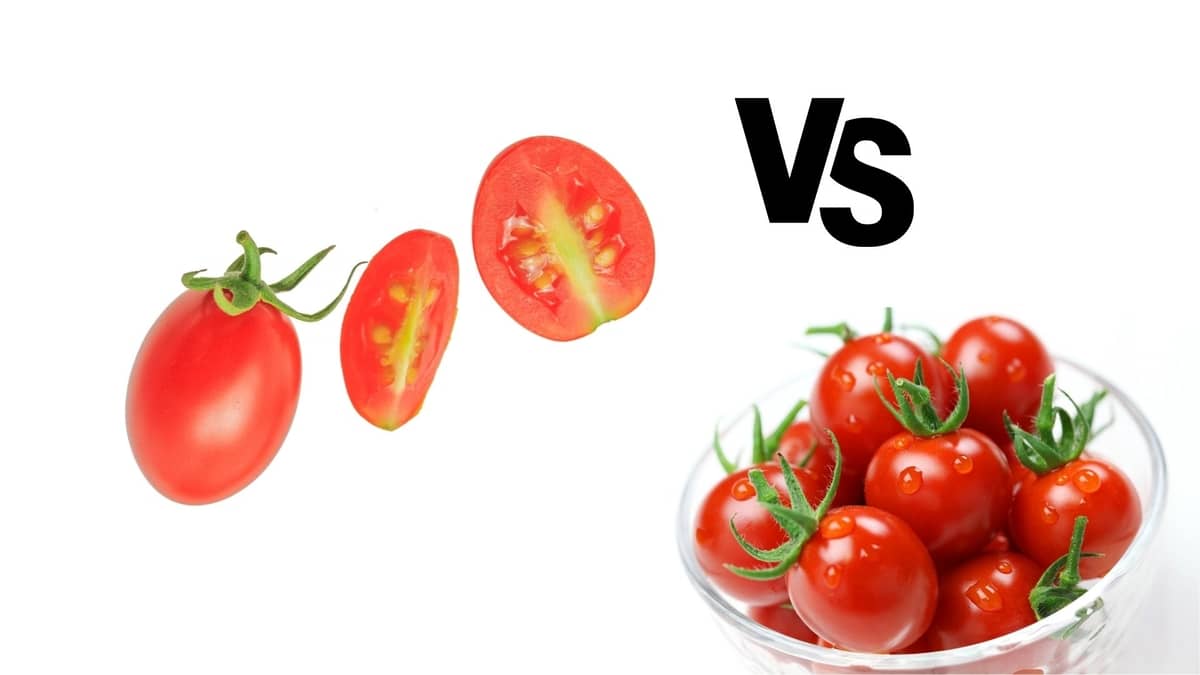
    Check Out General Information About Grape Tomatoes vs Cherry Tomatoes

    What Does Ox Heart Tomatoes Taste Like?

    Ox heart tomatoes have this delightful aromatic sweet taste with a bit of acidic taste.

    Once the fruit of the ox heart plant ripens, it usually turns soft quickly. Therefore, it is best you eat it as soon as possible or process the fruit soon once you’ve harvested them.

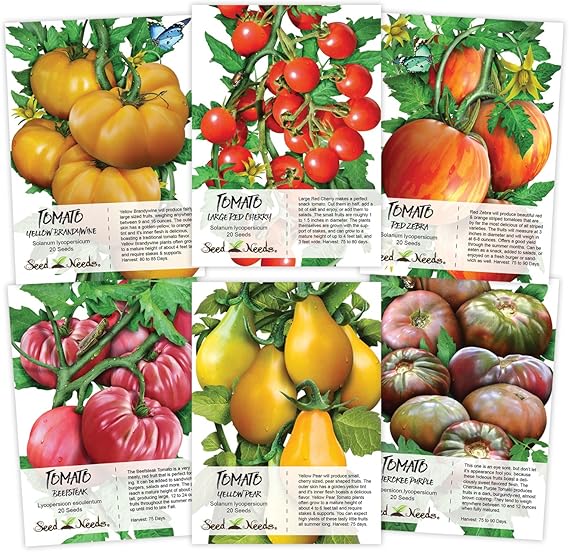
    Multicolor Tomato Seed Packet Collection (6 Individual Packets) Non-GMO Seeds by Seed Needs

    Ox Heart Tomatoes

    Some Of The Best Ox Heart Tomato Variety To Go For

    There are many varieties of ox heart tomato. But here are some of the best varieties of ox heart tomatoes you can go for:

    • Orange Russian: this is one lovely ox heart tomato variety that is heart-shaped and orange-marbled. Their fruit can weigh up to 300 grams and they have this amazing taste that is fruity, sweet, and spicy. Also, this variety is best grown in a greenhouse.
    • Coeur de Boeuf: this ox heart variety is well-loved among growers and may even be one of the best known varieties of ox heart tomato. Their fruits form light red fruit with strong ribs. This variety of ox heart is from France and they ripen from the middle of July. They can grow as high as 200 cm and they are ideal for outdoor cultivation with a bit of protection from rain.
    • White Oxheart: this ox heart variety gives rise to light-yellow fruits and the plant can grow as tall as 200 cm. They usually do well and produce great in a greenhouse.
    • Anna Russian: this ox heart tomato variety yields large heart-shaped tomato fruits that changes to deep pink once they are matured or ripe.
    • Bulgarian Oxheart: this variety grows numerous pink heart-shaped tomato fruits during summer. The plant of this variety can grow as tall as 180 cm.

    • Hungarian Heart Tomato: this ox heart tomato variety originated from outside of Budapest Hungary, around 1900. They are characterized by their radiant reddish-pink tomato fruit and they can be almost a pound heavy. Their fruit is quite heavy and meaty just like every other ox heart tomato.

    Click Here to Get Info About:

    Applications Of Ox Heart Tomatoes

    Ox heart tomatoes are great to be used for slicing tomatoes in salads and sandwiches. They also work well when you incorporate them into soups and sauces.

    If by any chance you end up harvesting more ox heart tomatoes than you can consume, these tomatoes are blessed with adequate flesh that makes them ideal for processing and canning.

    But ox heart tomatoes aren’t pasted tomatoes. Hence, it might take longer for them to thicken into sauce or paste.

    Again, thanks to their huge size, these tomatoes are great for stuffing and their scooped-out and meaty innards a nice to be used for sauce and or add to your dishes.

    All in all, these huge ox heart tomatoes are wonderful flavor and versatile in the kitchen.

    Applications Of Ox Heart Tomatoes

    Conclusion On Ox Heart Tomatoes

    We have seen that ox heart tomato is another type of tomato you can go for. Ox heart tomatoes are as huge as beefsteak tomatoes and we have given some in-depth knowledge on what this wonderful tomato variety is.

    FAQ’s

    What does oxheart mean?

    When we talk about oxheart, we are referring to a huge variety of sweet cherries. Then oxheart tomato is a type of tomato variety that is huge and fleshy.

    What can I do with oxheart tomatoes?

    Oxheart tomatoes are nice to be used in our different cooking such as soups and sauces. You can also use them in your sandwich and salads. So, you can enjoy the delightful flavor of oxheart tomato in your kitchen.

    Is ox heart tomato heirloom?

    Most varieties of ox heart tomatoes are heirloom then the newer varieties of ox heart tend to be hybrid that gives rise to sterile seeds.

    Are oxheart tomatoes easy to grow?

    Yes, oxheart tomatoes are pretty easy to grow and it is pretty easy to be successful at growing them. just ensure you provide them with full sun, proper watering, and fertile soil.

  • What You Need To Know About The Best PH For Tomatoes

    What You Need To Know About The Best PH For Tomatoes

    Best pH for tomatoes, do you know what this is? If you are interested in growing tomatoes, there are a few factors you must look out for such as soil nutritional content, soil pH level, the amount of sunlight to expose the plant to, and the best time to plant. All of these have a way of affecting the overall result that is achieved at the end of the day.

    Tomatoes are one of the very important vegetables that is used by many for cooking and preparing different delicacies. Its nutritional benefits are numerous ranging from reduction of the risk of heart disease and cancer to being a great source of vitamin C and K potassium and folate.

    This article considers the best pH for tomatoes to grow and attain the best possible result. Things that may be done in situations where the pH level is too high or too low to bring it to the desired levels are also discussed.

    What Is pH? – Best pH For Tomatoes

    When we talk about pH of a plant, we are referring to if your soil is acidic, alkaline, or in a few cases neutral. The scale of pH usually ranges from 0 to 14.

    It is crucial you know your soil pH before planting because it can determine how available nutrients will be supplied to your plant. This will therefore help your plant thrive well.

    Tomatoes pH Level Requirement

    The ideal soil pH to grow tomatoes is anywhere between levels 6.0 and 6.8 according to research. Although this is the ideal levels, tomatoes can also grow in soils with acidic levels as low as 5.5 on the pH scale.

    If you desire your tomatoes plant to be healthier and blossom as when due, then you must strive to maintain the soil pH level. The farther the tomatoes plant strays from this range, the lower your yields.

    Any soil that is too acidic will generally slow the growth of tomato plants and ultimately reduce harvest. Where the soil is too acidic, it also leads to nutrient deficiencies, resulting in a problem like an end rot on tomato fruit.

    A similar result is bound to be attained where the soil has a high alkaline content. As such, pH levels against 6.8 would greatly affect the growth and yield of the tomatoes plant.

    How To Test The pH Level Of Soil – Best pH For Tomatoes

    In a bid to prevent the problems associated with planting your tomatoes in soil that does not meet the pH requirements, ensure to test the soil. Testing a soil’s pH level can be done in various ways.

    One way of doing this is by sending a sample of your soil to a lab for testing and thereafter waiting for the result. Another way would be to buy the test kits and test on your own using an easy time-saving method.

    Luster Leaf 1601 Rapitest Test Kit for Soil pH, Nitrogen, Phosphorous, and Potash, 1 Pack

    Best pH For Tomatoes

    How To Lower The Soil pH Levels – Best pH For Tomatoes

    Where you discover after your testing that your soil pH level is above 6.8, you may need to lower this level. The following are a few ways to achieve this:

    • Use of Compost: If you add compost to your soil, it will not only feed your soil with very valuable nutrients, it will also help stabilize the pH level. Where the pH is too high, it helps lower it, and when it is too low, it helps increase it. So it’s both manure and pH balancer.
    • Sulfur: The use of sulfur is another way to balance the soil’s pH levels. The use of sulfur just like compost helps to balance the soil’s pH levels. You should however be careful not to add too much sulfur to the soil as this may be harmful to plants.
    • Sphagnum Peat Moss: This is a slow-acting agent for the amendment of the soil’s organic content and pH levels. It is also a good substance to help improve water retention and aeration in your soil.

    How To Increase The Soil pH Levels

    There are also instances where results will show that the soil has very low pH levels (highly acidic) and there is a need to increase the pH levels. The following can be done to get the pH levels increased:

    • Addition of Compost: If you add compost to your soil, it will not only feed your soil with very valuable nutrients, it will also help stabilize the pH level. Where the pH is too high, it helps lower it, and when it is too low, it helps increase it.
    • Limestone (calcium): This is one of the most common ways to lower the soil’s pH levels. By adding limestone to the soil, calcium bicarbonate is formed which helps to improve the soil’s pH levels.
    How To Increase The Soil pH Levels
    • Wood Ashes: This is one of the natural ways to amend the acidic nature of soil as they contain calcium carbonate. Where you have a fireplace, spreading some ashes from the fireplace on the soil may be of great assistance here.
    • Removal of Pine Needles: Recent research has shown that pine needles do not substantially affect soil pH levels. However, freshly dropped pine needles have been discovered to be a very good neutralizer of soil pH.

    Conclusion On Best pH For Tomatoes

    Growing tomatoes require consideration for a number of things. The soil pH level is one of those items that must be considered before growing tomatoes. It is very important to carry out a test to determine the soil’s pH level before growing for the purpose of getting the desired result.

    Where after your test it is discovered that the soil’s pH level is too low or too high, steps can be taken to amend these levels to an appropriate state. These are well discussed in this article.

    FAQ’s

    How do you acidify soil for tomatoes?

    Tomatoes require soil pH levels of 6.0 to 6.8, which is an acidic level. Where this is not the current level of your soil, you may acidify the soil by doing any of the following: addition of compost, sulfur, peat moss, and chelated fertilizer. All of these will help in making sure that the soil is acidified to the right levels.

    What is the best pH levels for tomatoes?

    If you require your tomatoes to blossom and give out fruit bountifully, then the soil’s pH level should be between 6.0 and 6.8. Any level below or above this is not the ideal pH condition for planting tomatoes.

    Do tomatoes prefer acidic or alkaline soil?

    Acidic soil is a soil with pH level below 7, while alkaline soil is one with a pH level above 7. Considering the fact that tomatoes thrive in soil with pH level 6.0 to 6.8, it is correct to say it does well in acidic soils.

    What is the best pH for hydroponic tomatoes?

    Hydroponic tomatoes are those tomatoes grown in a nutrient solution instead of soil. They can as such be grown indoors without natural light and the desired result actualized. Hydroponic tomatoes will usually give the best possible result when grown in a pH condition of 6.0 to 6.5.

  • Do Tomatoes Like Acidic Soil?

    Do Tomatoes Like Acidic Soil?

    Various plants have different pH levels they favor. Some plants thrive well in acidic soil while others thrive in alkaline soil. When it comes to tomatoes, let’s find out if tomatoes do like acidic or soil.

    If you are a gardener and you wish to be successful in your planting endeavors, you need to be enlightened on the necessary soil growing needs for your plant to flourish.

    Soil pH is one essential growing requirement and the growing requirement for different plants varies. So, in this article, we will be focusing on the tomato plant.

    The pH level of the tomato plant is one important factor to consider when aiming for successful tomato growth. So, let’s get to know if tomatoes do like acidic or alkaline soil.

    Are Tomatoes Acid Loving Plants?

    Now let’s find out if tomatoes plants do like acidic soil. Ideally, tomato plants will flourish in slightly acidic soil. Hence, it’s safe to say tomatoes are slightly acid-loving plants.

    Therefore, when considering growing tomatoes in your garden, ensure you check the pH soil range of your soil so it suits the tomato plant you intend to grow.

    So, let’s dive in further and look into the ideal pH range of the tomato plant.

    Are Tomatoes Acid Loving Plants

    PH Level For Tomatoes: What Is The Appropriate Range?

    Now we know tomatoes do like acidic soil. PH levels or range that falls below 7 on the pH scale is known to be acidic.

    Therefore, the appropriate soil pH range for the tomato plant to thrive well is around 6.0 to 6.5. However, tomato plants can still grow outside this range but they just won’t thrive so vigorously as they would in their appropriate pH range.

    So, supplying your tomato plants with the appropriate pH levels will offer you a healthy tomato plant as well as a great harvest.

    How Do You Acidify Soil For Tomatoes: Useful Tips To Adjust Soil PH

    The right soil is needed for you to grow the best tomato plant. Just like the soil texture and nutrient content also matter, the pH of the tomato plant is also important.

    This is why you need to create ideal growing environments or conditions for your tomatoes. Amending your soil to suit the plant is the right thing to do. A soil additive is generally a great way to raise or even lower the pH range of your soil.

      • The first thing you should do before amending your soil to suit the tomato growing need is to test the soil. Know the current pH range or status of your garden soil and adjust accordingly.

    Once you know the status of your, then you can proceed to either raise the soil pH or lower the soil pH. Remember, the appropriate tomato soil pH ranges from 6.0 to 6.5. So work with this range.

    So, if you have decided to grow tomatoes in your garden and you wish to know to adjust (lower or raise soil pH) the soil in your garden, here are some useful tips to put you through:

    1.    Soil Amendments For Raising Soil pH

    Raising your garden soil pH is required once you’ve tested and confirmed your soil pH is too low for the tomato plant to thrive. Here are some common soil amendments for raising the soil pH to suit your plants:

      • Limestone: Limestone is also known as calcium carbonate and it can be found in antacids tablets and chalks. The addition of limestone raises the soil pH. Additionally, limestone will also supply calcium to your plants.

      • Wood ash: The addition of wood ash will help increase the soil pH in the garden. Just like limestone, wood ash will also provide calcium as an added bonus to your plant.

      • Dolomitic Lime: Dolomitic lime is also similar to limestone and it will help raise the soil pH level. This amendment is rich in magnesium and calcium. Therefore, it will provide both calcium and magnesium to your tomato plants.

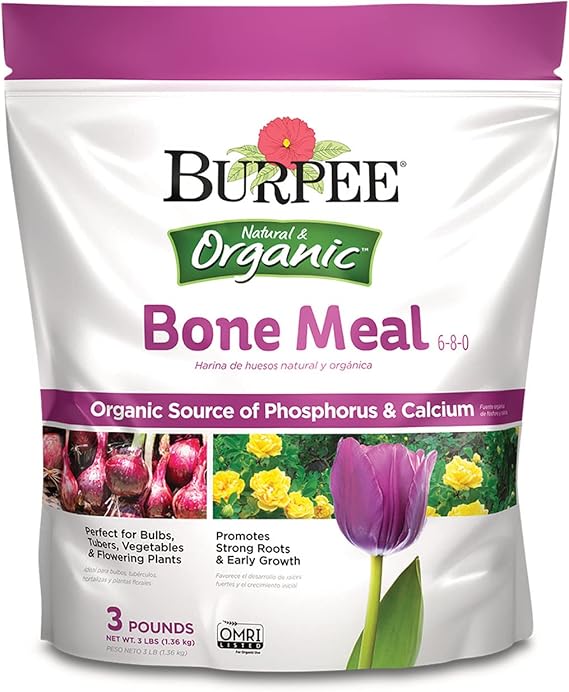
      • Calcium Sources: Sources of calcium will also help increase the soil pH level. Calcium sources include eggshells, bone meal, and clamshells. These amendments tend to work better and faster if they are ground into fine powder.

    Organics 09365 Additive De-Acidifier, 6 lb, Lime Soil

    61tKRRUvKkL. AC SL1000

    2.    Soil Amendments For Lowering Soil pH

    So, for soil pH that is too high, lowering them to suit your tomato plant is the ideal way. Here are some common soil amendments that can help lower the soil pH in your garden:

      • Sulfur: Sulfur is an element that helps decrease soil pH range. But this amendment works gradually and it can take months for it to take full effect. Sulfur is also an essential nutrient required by your plant. Therefore, sulfur addition will help prevent the deficiency of sulfur.

      • Sulfates: Amendments such as iron sulfate or aluminum sulfate both assist in decreasing the soil pH. Sulfates work faster compared to elemental sulfur. But take note and be careful not to use too much so you don’t have excessive aluminum or iron in your garden soil.

      • Ammonium-based fertilizer: Ammonium-based fertilizer that includes ammonium sulfate and ammonium nitrate is great to lower soil pH faster. However, these fertilizers have fast action that they may burn your plant if used inappropriately. Therefore, ensure you use the right dose.

    Why It Pays For Your Tomato Soil To Be Acidic

    Here are some benefits of supplying acidic pH to your tomato plants:

      • The tomato plant thrives well in an acidic environment.

      • You enjoy a healthier tomato plant and a better yield.

      • Nutrients can be well assimilated or absorbed from the soil with the right pH range. Therefore, the necessary nutrients required by your tomato plant become available for proper growth.

    Why It Pays For Your Tomato Soil To Be Acidic

    FAQ’s

    Do tomatoes prefer acidic or alkaline soils?

    The pH of soil has a lot to do with the amount of fruit produced, but so does how much water is available to the plant.

    Tomatoes like acidic soil. They also like lots of water. Soil that has lots of clay tends to be dry.

    Too much acidity and your plants will develop blossom-end rot (BEN), which is a fungal infection that can cause your tomato plants to rot at the blossom end.

    If you live in a cool area with a high humidity and you grow your tomatoes in a raised bed, you should add lime to the soil. The acidity of the soil will be too low, which will lead to blossom end rot. You should also add more organic matter and compost if the soil is already very acidic. 

    What’s the best pH for tomatoes?

    When it comes to growing tomatoes, there are a number of things that you need to consider. One of these is the soil pH. The pH of your soil will have a great impact on the growth and development of your tomatoes.The best pH for tomatoes is between 5.5 and 7.5.

    If you are growing your tomato plants in a pot, then you can easily adjust the pH of your soil by adding some lime or sulfur. But if you are growing them in the ground, then it’s a little bit more difficult.

    What does lime do to soil?

    Lime is a naturally occurring chemical that is found in the soil. Lime is one of the few soil amendments that can increase the pH of soil. It does this by making calcium ions and hydrogen ions more available in the soil, which makes them easier for plants to absorb.

    What is the fastest way to lower pH in soil?

    The fastest way to lower soil pH is by using lime. The amount of lime you need will depend on the existing pH and soil conditions, but typically I would suggest a 1/2 or 3/4 ratio of lime to soil.

    How do I make sure that the soil is ready for my tomatoes?

    You could do a test with a soil test kit. If you are using fertilizer, then you’ll want to test for nutrients such as Nitrogen, Phosphorus, Potassium, Calcium, Magnesium, Sulphur, and Iron. The kit will tell you what needs to be added. If you have no soil amendments, then you can try adding compost and see how it affects the soil. If it doesn’t improve the soil, then maybe you’ll need to get a soil amendment. I’d go with some sort of soil amendment. You don’t want to make the soil too acidic or too alkaline. If the soil is too acidic, then you can add lime or dolomite to raise the pH.

    Do Tomatoes Like Acidic Soil: Final Say

    We have seen that tomatoes plants do like acidic soil. Therefore, if you wish to have a healthy and bountiful tomato harvest, it is important you supply your tomato with an acidic growing medium.

    Some soil amendments are great for improving the soil in your garden. Remember, the first thing to do to adjust your soil pH is to test your soil to know the status of your soil. We have listed out some useful tips to help with soil amendments for increasing and lowering the pH levels of your soil to suit your tomato plant.