Tag: Hydroponics

  • Can You Transplant Hydroponic Plants To Soil

    Can You Transplant Hydroponic Plants To Soil

    Are you wondering if you can transplant your hydroponic plants to the soil? The straight-up answer is yes! You can definitely transplant your hydroponic plants into the dirt and we will teach you how to go about it successfully. So, read on to learn.

    Transplanting hydroponics into the dirt is not a straightforward process to venture into. You have to consider and follow some fundamental processes for a smooth transition so your plant does not go into shock. Following the right procedure, will allow you to achieve a better performing and healthy plant.

    Transplanting Hydroponic Plants To Soil

    Transplanting your hydroponic plants into the soil can be done from cuttings or seedlings. Small Rockwool starter plugs or rapid rooter plugs can as well be used in cuttings and seedlings and transplanting them into the soil.

    Steps On Transplanting Hydroponic Plants To Soil

    To transplant your hydroponic into the soil, you first transplant it into a potting container. When they have grown and mastered the changes between indoors and outdoors, you can now transplant them into your outdoor garden.

    Before you begin handling your hydroponic plants you wish to transplant, ensure you have all your materials available and set especially for fragile seedlings. This way, you don’t leave your fragile plants to linger and you can start right away. Also, the tender plant root can venture and transit seamlessly into the dirt.

    Steps on Transplanting Hydroponic Plants to Soil

    Another thing before you transplant is to allow the water level in your hydroponic garden to drop and stay low for a few days. Also, don’t put or feed your hydroponic plant with direct LED light but put it close to the light and allow it to search for light.

    Do this for a week or two. This way, the plant starts to adjust and harden off preparing for the outdoor experience.

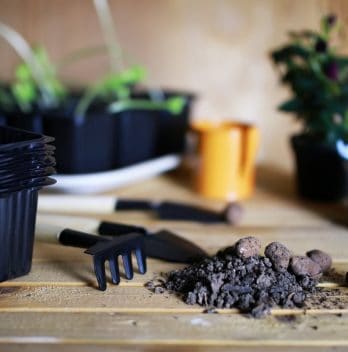
    Materials required for transplanting your hydroponic plants into soil include:

    Step 1

    Get the growing pot you want to use to transplant. Obtain a pot size that fits the size of your plant. If you are planting a big plant, you should obtain a big pot and the pot should be wide and deep. This way, there is adequate room for growth and there’s space for the root which is important for your plant transition. Give your transplanted plant about 4 to 6 inches of space deep to allow them to grow. If your plants are grown and sticks together, carefully separate by breaking them up. Be careful because the plant can be prone to shock.

    Step 2

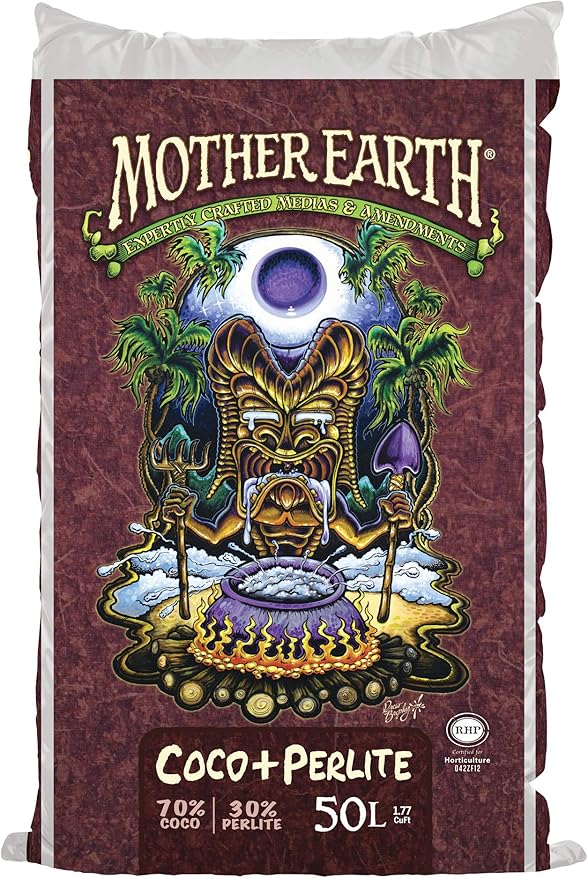
    Add your growing medium into the pot. Use a growing medium that has a buffer. You can make use of a potting soil mix that contains compost manure and some perlite. Spread or dig up a hole in your soil and put the hydroponic plant into the growing container and fit it through. Surround it with additional soil and adjust the plant until it’s fixed and sturdy.

    Mother Earth Coco Plus Perlite Mix – For Indoor and Outdoor 
    81lHl YK lL. AC SY879

    Step 3

    The next important step is to water immediately. Always keep the soil moist because hydroponic plants are used to regular water.

    Step 4

    The next step is the feed them with sunlight. Take note to give them only some duration of sunlight. Do not keep them outdoors for long. They need to adjust to sunlight intensity and go through the stage of hardening. This way, they can get accustomed to sunlight and last in outdoor temperatures.

    Plant Shock

    If you followed the right procedure, your plant should come out well. However, your transplanted plant may suffer from shock and it’s not a rare thing to occur. Not too worry. It’s most likely the hydroponic plant transplanted is going through some recovery process as it enters shock.

    You may start to notice the leaves getting soft or falling off. All you need to do is to give it some time. As the plant drops most of its leaves, new leaves will emerge as the plant recovers from shock in a couple of weeks. Always maintain a moist soil and allow the root to adjust and let it look for nutrients from the soil. This way, your plant will start to come back.

    When your plants have fully recovered and are now resilient, they can now be placed outdoors.

    FAQ’s

    Can you repot hydroponic plants to soil?

    You can, but it’s not easy. You’d have to be able to find the roots and then remove them from the pot, then replant them into a new pot of soil, preferably with some compost mixed in as well.

    It’s a good idea to start with a small plant, and then build up the amount of potting mix. You should use as much potting mix as you need for the size of the plant you are growing. It’s a good idea to make a couple of small pots to test out your plants first. You can put the plants in the soil, but it will take them some time to adjust.

    How do you transplant hydroponic seedlings?

    Before you start transplanting your hydroponic plants into soil you need to decide whether you want to transplant the whole plant or just the roots. If you are just starting out in hydroponics I recommend that you just transplant the roots.
    You can do this by using a large pot and filling it with a mixture of peat moss, perlite, and vermiculite. Once the pot is full of the mixture you can take the hydroponic plant and place it in the center of the pot. Then take your knife and cut a hole in the bottom of the pot about two inches in diameter.
    Next take your roots and place them into the hole. Now fill the rest of the pot with more of the peat moss mixture. After you have put in all of the roots fill the rest of the pot with soil and water the plant.
    The most important rule to remember is that you must keep the roots wet. If the roots are dry they will die and you will lose your whole hydroponic garden.

    The best way to transplant seedlings is to use a flat. I have a 5 gallon container with a lid that has a hole in the bottom, and I put my seedlings in there and then cover them with plastic wrap. The plastic will keep the soil moist while they are growing. Then when they are big enough, I take out the plastic and put them in bigger pots.

    Can you use any seeds for hydroponics?

    Yes, you can.
    For seeds, I’d suggest starting out with the best quality seeds. You could buy them from a reputable grow shop, or you can try to get them for free. The main thing to look for is good germination rates.

    What vegetables can be planted using a hydroponic system?

    You can grow any vegetable in a hydroponic system, as long as you provide the correct nutrients and lighting for the specific plant.

    What is the most profitable hydroponic crop to grow?

    Lettuce is the crops that do best in hydroponics.

    Transplanting Hydroponic Plants

    Transplanting hydroponic plants into the soil is really a practical process carried out by most growers. It might be somewhat tough to achieve especially for beginners, however, it’s worth the try.

    But if in the end, it does not work out, you have the choice of carrying on with your hydroponic system.
  • 6 Best Flowers For Aquaponics

    6 Best Flowers For Aquaponics

    Who doesn’t love the auspicious therapeutic nature of growing flowers in their home or garden? Now imagine growing them in a controlled space such as aquaponics. It might not be so easy choosing the best flowers for aquaponics especially with so many good options that can fit your system.

    This is why we have put together the 6 best flowers you can consider growing in your aquaponics. So read on to know your best pick.

    Fruits and vegetables are not the only things you can grow in your aquaponics; flowers are also a good choice for aquaponics. Be it roses, tulips, dandelions, etc. growing these flowers with aquaponics are pretty easy and fun.

    6 Best Flowers For Aquaponics

    Aquaponics makes use of a closed ecosystem between fish and plants. The fish excrete that serves as a nutrient solution for the plants is purified by these plants and used again by the fish.

    Growing flowers with aquaponics will be great and exciting. So, here are the following promising flowers for aquaponics:

    1.    Roses

    Roses are one of the most popular flowers and they are well-loved plant and a delight to have around. They have this terrific scented vibe associated with romance and love.

    Best Flowers For Aquaponics - Roses

    When it comes to choosing the aquaponics technique for your roses, the most frequently used aquaponics procedure for roses is the Nutrient Film Technique (NFT). However, the grow bed and floating raft system is also a good choice for you. Roses need adequate lights or put them where they can get full sun.

    Be wary of black spot and powdery mildew when growing roses.

    2.    Sunflower

    Sunflower is a happy flower that will brighten up your day with its yellow blooms. It is another great option to grow in aquaponics. You can grow sunflower in your aquaponics without any need for fertilizers or pesticides.

    The most common aquaponics used for sunflowers is media beds or floating rafts. This is because support is needed as they are capable of growing tall.

    As the name implies, the sunflower will do well in adequate sunlight.

    3.    Marigold

    The colorful marigold is a beneficial flower to grow in your aquaponics. They can serve as cover crops that help protects your plants from unwanted pests. They will also allure beneficial insects to your plants.

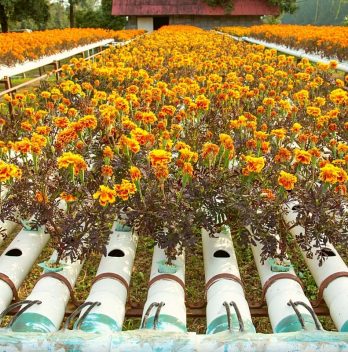
    You can grow marigold in a Nutrient Film Technique or media grow beds. Marigold also does well in full sun.

    Best Flowers For Aquaponics - Marigold

    4.    Pansies

    The large-flowered pansies are another great flower you can add to your aquaponics flower lists. They are edible flowers and great for beginners because they don’t require too much care.

    Pansies do well in cooler weather but you can subject them to partial sun. You can expose them to the early morning sun but protect them from the pressure of too hot sun.

    5.    Water Hyacinth

    Water hyacinth is a perfect addition to an aquaponics system. It is an aquatic plant that will be great for purifying your fish water. It is great at clearing algae as well as cleaning the water for your fish and plants.

    Although it is an invasive plant because it grows fast and aggressively, you can solve this issue by using the raft system to control its growth.

    6.    Nasturtium

    Nasturtium is another great flowering plant for your aquaponics system. They are also helpful in repelling garden pests such as cucumber beetles and squash bugs. For this reason, they are great for planting side by side with tomatoes and cucumbers.

    They also serve as trap crops by attracting pests such as aphids. They will entice these pests away from your main crops, thereby serving as a sacrificial plant.

    Their flowers and leaves are also edible and they can be added to your culinary list. Nasturtium grows very fast so you can expect its seeds to begin germination within 7 to 10 days. They will do well in an environment with minimal heat stress.

    Advantages Of Growing Aquaponics Flowers

    The addition of flowers to your home or garden mixed with their vibrant color will add a touch of scent to your environment. You can enjoy various benefits from growing flowers with hydroponics.

    • Pest Control: they can serve as companion plants for pest management.
    • Culinary Utilization: a lot of flowers are edible, therefore they serve as culinary applications.
    • Aesthetic Reasons: flowers are best known for their aesthetic nature. They will add their artistic beauty to your environment as well as boosting the look of your aquaponics garden.

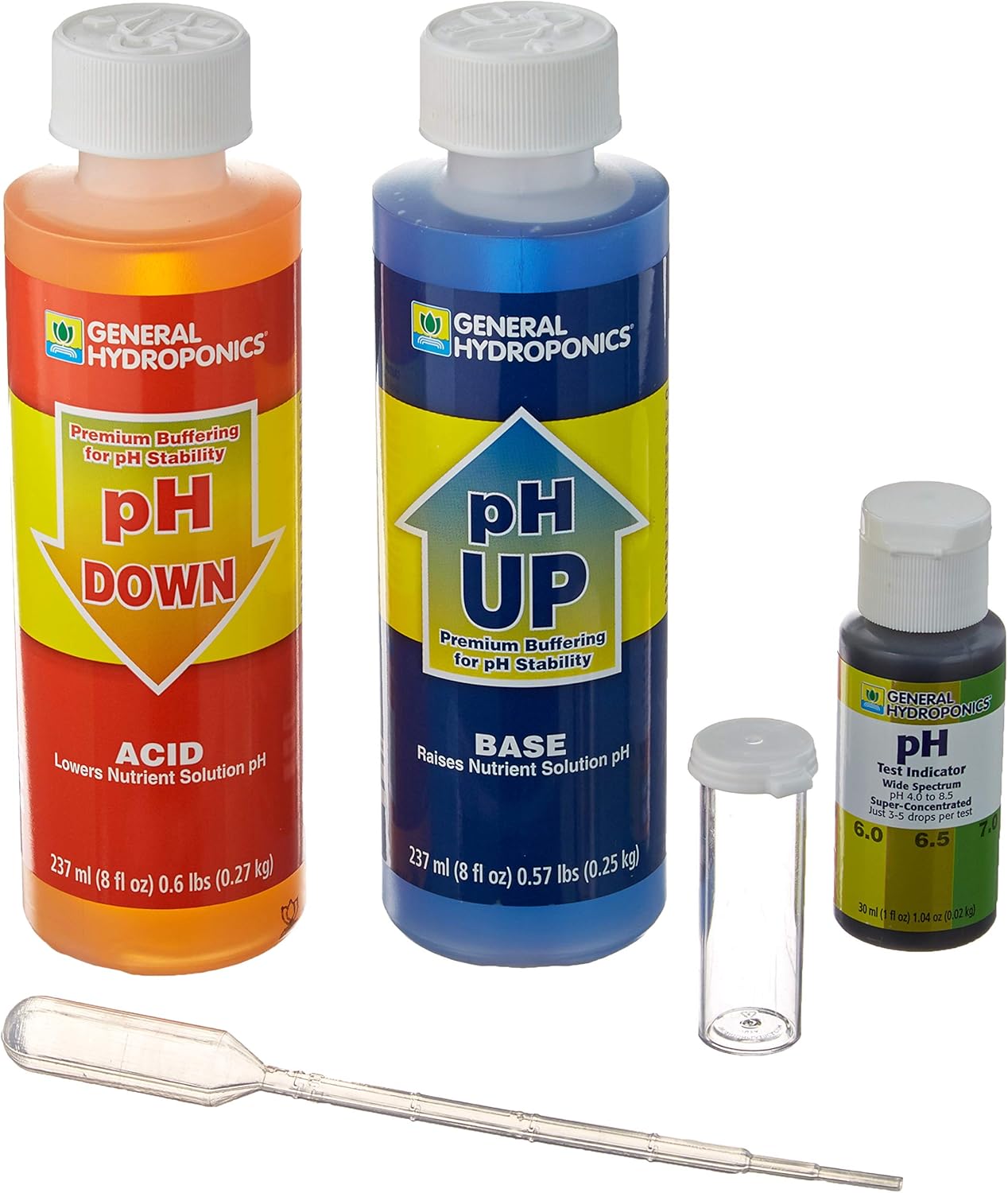
    General Hydroponics pH Control Kit for a Balanced Nutrient Solution

    81Pm5DEtpTL. AC SL1500

    FAQ’s

    What are the best flowers to grow with aquaponics?

    Flowers are typically used for decoration, but there are several reasons that they can be grown in an aquaponics system. The first is that they have a low water demand and will generally do well in most systems. The second reason is that flowers can be harvested often to provide additional nutrition to the fish and/or plants. The third reason is that they can be used for ornamental purposes.

    The best flowers to grow in an aquaponic system are generally those that can be grown in soil or grow well in containers.

    You want to be sure you’re selecting the right plants for your system. I have been asked this question over and over by people who are just getting started with aquaponics. So, here is a list of the most popular flowers that are commonly grown in aquaponic systems. This is not meant to be an exhaustive list. If you have any questions about any of these, please leave a comment below.

    1. Roses

    2. Marigold (Tagetes patula)

    3. Nasturtium – (Tropaeolum majus)

    5. Pansies

    6. Water Hyacinth

    What are the best types pf flowers to grow with aquaponics?

    If you want to grow flowers with aquaponics, there are two main types of plants you should grow: flowers and vegetables.

    Growing flowers and vegetables together is possible with aquaponics, but it’s not as easy as growing plants in a regular garden. You need to consider many factors before you start, and you’ll also need to make sure you understand how to feed your plants.

    Before you get started with your own aquaponics system, it’s important to learn more about why people use this method of gardening. For instance, the first benefit of using an aquaponic system is that you don’t need any chemicals or pesticides to grow your vegetables and flowers.

    Make sure you have enough space for your plants. This is an important consideration that affects the decisions that people make over the types of flowers that they ultimately choose. If you want to grow the maximum amount of plants in your system, then you’ll need to make sure that you have enough space for them. You’ll also need to make sure that you have enough room for a greenhouse, since you’ll need a lot of space to heat the greenhouse.

    Can roses be grown in aquaponics?

    Roses will do fine in an aquarium.

    They are not very picky about water quality and pH levels. They also don’t need much fertilizer. You can feed them with fish food, but they are not very picky about that either. They prefer fresh water. If you are growing them in an aquarium, you will have to place the rose plants in a separate tank. You can use a small fish tank as the base of your aquarium.

    Final Say- Aquaponic Flowers

    Most flowers can flourish in an aquaponics system. However, we have made some best picks for you in case you are confused about which flower to pick from the many varieties to choose from.  So, you can decide which will be your best pick.

  • Best Plants For Small Aquaponics

    Best Plants For Small Aquaponics

    If you are looking for the best plants for small aquaponics, you need not worry. We will give you the information in this guide so read on to find out.

    Aquaponics is an agricultural culture system that makes use of a complex ecosystem between fish and plants. The system can be used to cultivate various plants, vegetables, herbs, fruits, and flowering plants.

    Before we dive into the best plants for small aquaponics, let’s look at some basic information about aquaponics.

    Basic Info on Aquaponics

    Aquaponics involves the combination of two categories of food cultivation which are hydroponics and aquaculture. This two combining process (hydroponics and aquaculture) works together to contribute to each other’s growth.

    Aquaponics is a balanced ecosystem between the fish and plants which also includes some beneficial bacteria. The waste from the fish is used as food for the plants, the plant, in turn, purifies the water for the fish.

    The interesting thing is that aquaponics is not a new technique. It is a farming method that has been in existence since ancient times. But now it has started gaining popularity these past few years.

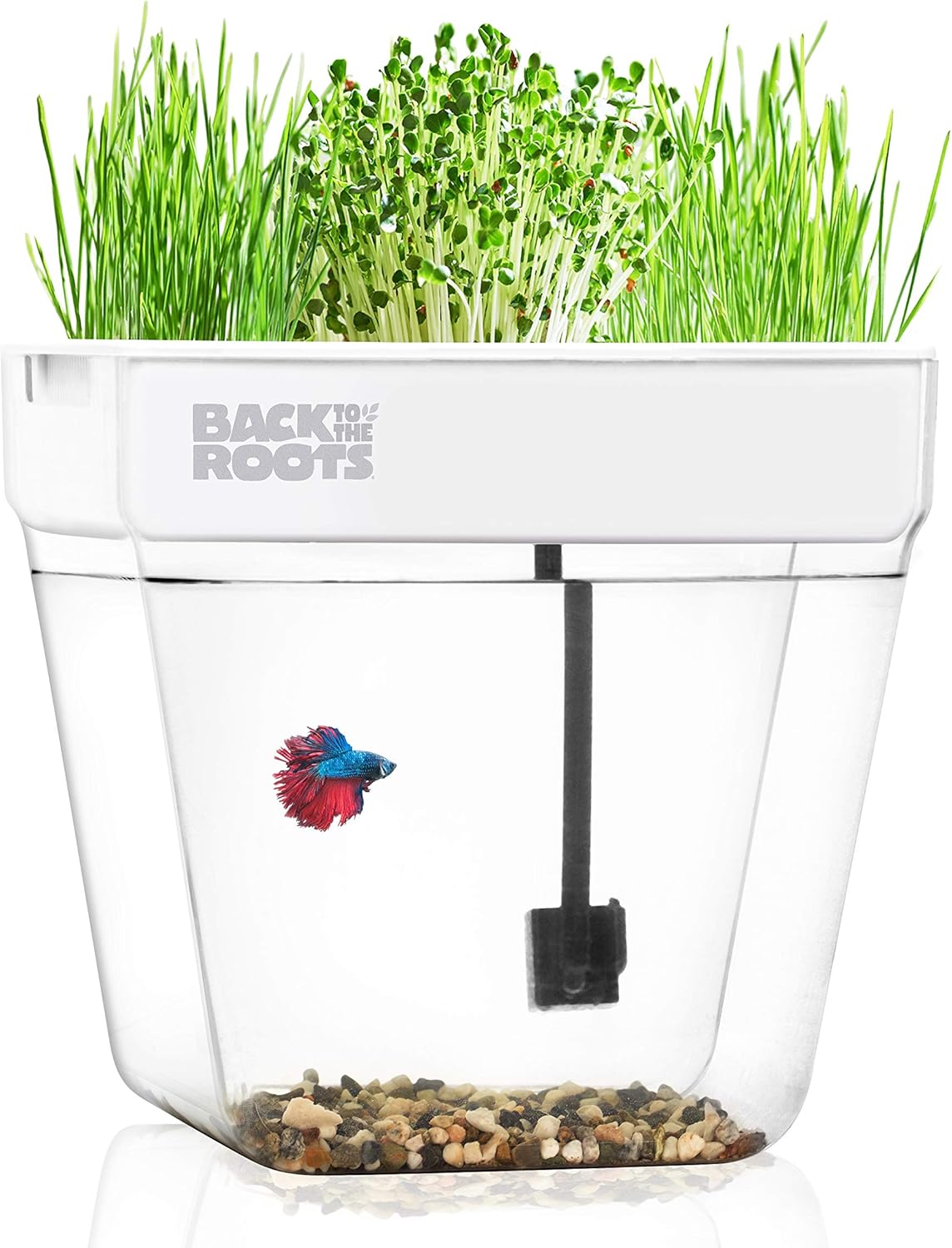
    Back to the Roots Water Garden Mini Aquaponic

    81UrJsWk8KL. AC SL1500

    Best Plants for Small Aquaponics

    The best plants for small aquaponics should be plants that demand lesser nutrients. Thus, the best plants for small aquaponics are greens and herbs, and they include:

    1. Watercress: One of the best plants to grow in a small aquaponics stem is watercress. It requires a lesser concentration of nutrients and it is a hardy vegetable and it grows fast. Watercress will also blend and flourish with any type of fishes you may have.

    2. Kale: This is another low nutritious plant that can be grown in small aquaponics. It will flourish with various types of fish. Another added benefit is that kale will not attract pests to your system. Thus giving your aquaponics system extra safety.

    3. Lettuce: Is also a low demanding nutrient plant appropriate for small aquaponics. It will match and co-exists most especially with tilapia fish.

    4. Swiss Chard: Swiss chord requires minimal nutrients and is great for small aquaponics systems. It is a hardy plant that mainly utilizes nitrate for its leaf growth. This plant grows perfectly in the water of pH range between 6.6 to 7.0 which is an appropriate range for this plant and various fish.

    Best Plants For Small Aquaponics - greens and herbs

    Other low nutrient plants we recommend for small aquaponics are:

    1. Mint
    2. Arugula
    3. Radish sprout
    4. Pak choi
    5. Mint
    6. Wheatgrass
    7. Basil
    8. Spinach

    Best Plants for Small Aquaponics: What to Consider

    Aquaponics system is quite easy to set up and if you plan on obtaining one, the main question on your mind should be: what plants can I grow? The straight-up answer is the “size of your aquaponics” will determine the type of plants to grow.

    Small Aquaponics: a small aquaponics system will require lesser fish, lesser water, and a lesser concentration of nutrients.

    Bigger Aquaponics: on the other hand, a bigger aquaponics system will require more fish, more water, and more nutrient concentration.

    Therefore, the best plant for a small aquaponics system should be plants that require lesser nutrients and they include greens and herbs as listed above.

    Even though almost all plants can be grown in an aquaponics system, we need to consider the fact that various plants have various needs. So let’s look at more on the needs or what to consider when choosing plants for your small aquaponics.

    Other things to consider:

    • Space: some plants need more space while others need lesser space. The space we are talking about is your aquaponics system space. Therefore, you should take into account for example the height and width of the plant that can fit into your aquaponics system.
    • The Number of Fish: The presence of more fish will require more plants so they can absorb all the nutrients produced from fish waste and vice versa.
    • Type of System Used: you could use a nutrient film technique, media-based, or raft aquaponics depending on the structure of the plant that will fit in. Floating raft systems favors plant with no root structure while grow beds favors root vegetables.

    FAQ’s

    How does aquaponics work?

    Aquaponics is a system of growing fish and plants in a symbiotic relationship. The fish clean the water, which then feeds the plants. The plants remove nitrogen from the water and the fish waste is converted into fertilizer. There are some species of fish that can live in aquaponics. The most common are Tilapia, Catfish and Koi. In general, the fish should be fed with a specially formulated diet. It should contain high levels of protein, low levels of fat, and vitamins and minerals.

    The plants absorb nutrients from the fish waste, and the fish provide oxygen to the plants through their gills. The system can be used to grow food for humans and/or animals. It is also very effective at cleaning the water, providing both food and clean water. Aquaponic plants are not as delicate as traditional plants. They can be grown in containers or on land.

    What plants can be grown in an aquaponic system?

    I think that the most common are listed below.

    1. Broccoli

    2. Potatoes

    3. Cucumbers

    4. Tomatoes

    5. Carrots

    6. Peppers

    7. Beans

    8. Strawberries

    9. Beets

    10. Cabbage

    11. Watermelon

    12. Eggplant

    13. Squash

    14. Green beans

    15. Sweet potatoes

    16. Kale

    17. Broccoli

    What plants cannot be grown in an aquaponic system?

    Plants that are sensitive to salt (salt stress). This can be either the soil or the water. In general, a soil solution of about 2% is the most common level for a salt tolerant plant. Some plants like tomatoes will tolerate more salt than that. They need a salt concentration of about 5-6%.

    Do plants grow faster in aquaponics?

    The answer is yes, but only if the plants are small. If they’re big, then no. In fact, it’s not even an absolute, because there’s a difference between plants that have been raised in aquaponics and those that have been raised in a traditional greenhouse.

    Why is lettuce good for aquaponics?

    It’s easy to grow, takes up little space and is extremely forgiving. The reason why lettuce is such a great choice for an aquaponic garden is that it doesn’t require much light to thrive, making it a perfect plant for a system that needs a lot of light to grow.

    Lettuce is also very forgiving to the fish. It doesn’t take well to being eaten, and will survive on the scraps left behind by other plants.

    Can strawberries be grown in aquaponics?

    I have read that the strawberries grow very well in aquaponics. I would recommend starting with growing them in an aquarium with a filter, but the problem with that is that they will grow all over the place.

    Aquaponics Plants Final Words

    Aquaponics is an awesome technique that anyone would find interesting to learn and have.

    When it comes to choosing the best plant for your small aquaponics system, one thing we suggest is for you to decide to grow what you will eat or use. Having a thought of what you plan on accomplishing will assist you in making a better judgment on what to grow in your small aquaponics system.

    Also, note that growing low demanding nutrient plant is not only for small aquaponics. It is also advisable to start with growing minimal demanding nutrient plants for a new aquaponics system. They will serve as “starter plants” for your new aquaponics system.

  • Is It Time to Switch to Hydroponics?

    Is It Time to Switch to Hydroponics?

    Whether you’re a green thumb looking for a Do-It-Yourself gardening method, or an entrepreneur looking to start your own agricultural business, hydroponics is the solution to a simpler, more cost-effective, and hassle-free plant growth. In this article, we will discuss how Hydroponics can do wonders and why you should take advantage of it.

    What Is It?

    Simply put, hydroponics refers to an agricultural method where plants are grown in soil-free beds nourished by a continuous supply of nutrients and minerals in water – liquid fertilizer.

    |

    What Do You Need?

    This is an instructional intended for beginners. Here, we will make use of the simplest, affordable, yet quality, materials in order to make a basic hydroponics set-up. 

    • Grow Tray / Hydroponic Tray – This is a vessel used for holding plants when applying the hydroponic system. Hydroponic trays are usually shallow and wide to provide room for plant growth. Ideally, prepare one with a lid.
    • Heater Mat – This mat is responsible for providing warmth and heat to the grow tray as it nourishes the seeds inside it. Heater mats are necessary if you plan on growing seeds in a cool place.
    • Starter Cubes / Starter Plant Plugs – These are usually pots of organic mass or stone wool (inert insulators out of rocks and stones) that hold the seeds in place as they grow inside the hydroponic trays.
    • Ziploc Bag (Optional) – Other people use this to allow seeds to germinate faster, subsequently putting the sprouts inside the trays.
    • Light – This can be natural light or artificially-generated light called grow lights.

    How Is It Done?

    • Preparing the Starter Plant Plugs
    1. Submerge your plant plugs under clean water for an estimate of one hour.
    2. After the soaking is done, place some seeds inside the plug holes. For other seeds that do not germinate, you may add more.
    3. As soon as they grow, you may take out unhealthy ones to give space for the healthier ones to sprout.
    • Preparing the Hydroponic Tray
    1. Place approximately one inch of liquid fertilizer (half potent) or clean water.
    2. Position the light source.
    3. Arrange the heater mat, if necessary.
    4. You may close the lid to let the humidity and warmth stay inside the tray.
    • Setting Plant Plugs Inside Hydroponic Tray
    1. Place the starter cubes or starter plugs inside the hydroponic tray.
    2. Put additional water or half-potent liquid fertilizer as soon as the supply in the tray decreases.

    Is It Time to Switch to Hydroponics

    When Can we Transplant?

    As to when the transplant can take place, maintain the half-potent liquid fertilizer until your seedlings grow bigger. As soon as they do, you can now use the pure (fully-potent) solution to sustain their growing process. Their rate of growth depends on the kind of plants you are trying to grow. In around two weeks to four, the roots of the seedlings will start to branch out from the cube or plug’s bottom. After this, sprouts will begin to emerge. Once they reach a height of approximately three inches and numerous leaves are already visible, your plants are now ready for transplant.

    After-Transplant Maintenance

    • Watering the Plants – It is suggested that you water your plants from up top with the liquid nutrient fertilizer. Doing so keeps them from being dried out. This also provides the roots ample time to grow in a downward manner.
    • Artificial Lights – Do not put your lights too near your plants. This may cause them to burn.

    What Are the Benefits of Using Hydroponics?

    Hydroponics is known for its approach to a more fruitful and advantageous agricultural undertaking. It isn’t shocking why plant-growers in this era are preferring to explore this method. Just take a look at all its benefits! 

    • Year-Round Planting – Because of this method’s need for accessible and convenient resources and materials, growing plants can be done at any time of the day and on any day of the year.
    • Soil-Free Methodology – With the current-world scene’s limited land area, this alternative is preferred by more and more people because of its hassle-free and soil-free process.
    • Space-Saving – Since the materials needed to plant using this system are so minimal and manageable, you won’t require much space – allowing you to use the area more efficiently. You can ideally plant anywhere.
    • Conservation of Resources – Hydroponics gives you the freedom of controlling the variables present in the entire process, thus, resources are conserved and preserved for further future planting. And because you can do so, you can grow more regardless of the planting environment.

    |

    • Quicker Plant Growth – Due to the fact that hydroponics makes use of a more focused tactic, evident in the use of a more potent approach in providing for the plant’s nutrients and essential needs, the rate of plant growth is increased.
    • Weed-Free Growth – Because weeds are mostly associated and caused by the soil, your plants will grow healthy and weed-free.
    • Less Pests and Insects –  Fewer Pesticides and Insecticides – Also because of the soil-free approach, your plants now are less prone to soil-originating pests and insects, thus requiring less use of the chemicals to eliminate the said problem.
    • Time-Saving – Basically, because of the control you have over all the plant essentials as well as its quick hassle-free growth, the hydroponics approach saves you a lot of precious time – thanks to less work and maintenance.

    What Are the Risks of Using Hydroponics?

    As with every other thing in life, hydroponics has some disadvantages to it. They are somehow rather trivial since most are fixable and preventable. Nonetheless, it’s still better to keep yourself informed.

    Is It Time to Switch to Hydroponics?

    • Expertise Requirement – While anyone can start their own small hydroponic system, creating a rather larger one can be quite complicated. With all kinds of tools and equipment necessary for optimal planting and growth, knowledge on this approach and preferably experience as well are needed to sustain larger undertakings.
    • Organic or Not?  To this day, debates are still going on with regard to whether or not plants grown in the hydroponic setting are organic or not due to the fact that they may not be getting microbiomes since they’re not cultivated in soil. However, some planters have tried exploring the use of organic growers and introducing them to the existing hydroponic system. Nevertheless, continued research and studies are still being done for this said issue.
    • Electricity and Water – In this approach, you will use mostly electricity and water. As we all know, accidentally putting both in contact leads to electrocution, which is why safety and care should always be observed at all times.
    • Power Source – Because the process makes use of electricity, power shortages or outages can hinder and result in problems with your plant’s growing environment. This, however, can be avoided if you have back-up generators at bay.

    FAQ’s

    What are the benefits of hydroponics?

    When it comes to growing your own food, nothing is more important than having an efficient and effective garden. And one of the most efficient methods for growing plants is hydroponics, which uses water instead of soil. Hydroponics can be used for a variety of crops, including herbs, vegetables, fruits, and flowers, and it can also be used indoors.

    Hydroponic gardening isn’t as difficult or time consuming as traditional gardening, and it doesn’t require much space. But if you don’t know how to grow plants hydroponically, you may be wasting money. Why Grow Plants Hydroponically? When it comes to hydroponic gardening, there are many reasons why it’s beneficial for anyone interested in growing plants.

    Let’s take a look at some of the most important reasons why you should consider growing your own vegetables hydroponically.

    Healthy Plants: A hydroponic garden allows you to grow healthy plants that aren’t affected by pesticides, herbicides, fungicides, and other chemicals that can be harmful to your health. You can grow your own organic herbs and spices too, which is always healthier than the store-bought versions.

    Cheaper: Growing your own food is cheaper than buying it. You don’t have to pay for the cost of shipping or even storing the produce. You also won’t have to spend money on any packaging materials or containers.

    Healthier: Your plants are going to be healthier because they won’t be exposed to pesticides, herbicides, fungicides, and other chemicals that can be harmful to your health. You can even add beneficial bacteria and beneficial fungi to your soil to make sure your plants are as healthy as possible.

    Easy to Grow: Hydroponic gardening is super easy.

    All you need is a little water, nutrients, and a hydroponics system. Most hydroponic systems are low-cost, easy to setup, and can be used indoors or out. Better for the Environment: The amount of water required to grow your plants in soil is massive. It takes up a lot of space, energy, and resources. Plus, it requires a lot of land that could be better used for other purposes.

    Are hydroponics the future?

    Hydroponic growing is the most environmentally friendly way to grow your plants. It’s a common practice in horticulture and gardening. It’s becoming more popular with home growers because it’s cheaper, easier to maintain, and doesn’t require as much space. Hydroponic grow lights are used to grow plants using nutrient-rich water and light. They’re perfect for indoor gardening!

    Some people are turning their backyards into a mini-farm, by growing vegetables, herbs, and flowers in their gardens. So things are changing in many areas of society, not just at the industrial scale..

    “I think they will be the future, but I don’t think they’ll replace farming. Farming is still necessary. We have a food crisis, and you have to feed the world. So, I think we’re going to keep farming as well. I don’t see how we can go on without it.” –Dr. Robert Young 

    Dr. Robert Young is a professor at the University of Florida, where he teaches agricultural systems and policy. He is also the Director of the Institute for Food and Agricultural Sciences, and serves as the Associate Vice Chancellor for Agriculture.

    What are the disadvantages of a hydroponic system?

    The main disadvantage is that you need to monitor your plants and nutrients. If you’re not monitoring them, then you’re likely to run into problems. A secondary disadvantage is that you have to water the plants, but it’s possible to automate that process. Finally, the biggest disadvantage is that you can’t grow many plants in one container. With this method, you can only grow one plant at a time.

    Are You Convinced?

    Now that you know all the basics of hydroponics – what it is, how it works, its advantages and disadvantages. It is time to decide whether or not this approach is beneficial enough to try. Personally, after examining its risks and benefits, I would definitely say this is worth a shot. Not to mention, it’s starter-friendly! So what’s it going to be?