Category: Uncategorized

  • Alfalfa Meal Fertilizer Benefits

    Alfalfa Meal Fertilizer Benefits

    Ever wondered if you can make use of an alfalfa meal in your garden? Alfalfa meal fertilizer can be used for other things but gardeners know there can be benefits from using it in their garden.

    Alfalfa meal is a natural fertilizer that can be incorporated into your garden soil and drive great benefits for your plants’ growth.

    If you are the one that likes to stick with organic fertilizer rather than synthetic fertilizer, then alfalfa meal is one natural fertilizer you can go for.

    This natural fertilizer works great with different types of crops especially cole crops that include broccoli, cabbage, kale, Brussels sprouts, cauliflower, and so on.

    The place of fertilizers cannot be underplayed in the growth of plants. With so many benefits this natural fertilizer offers; let’s look into what benefits our garden plants stand to gain using alfalfa meal fertilizer.

    About Alfalfa Plant

    Before we discuss the huge benefits of using the fertilizer, let’s mention a few things you should know about the Alfalfa meal:

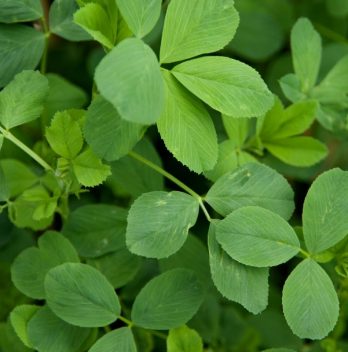
      • Alfalfa is a richly leguminous perennial plant.

      • Derived by fermenting the adult seeds and plants of the plants.

      • The plant contains enormous nutritional benefits for other plants and soil-dwelling organisms.

      • Some of the major minerals which the plant may provide include Nitrogen, Phosphorus, Calcium, Potassium, Magnesium, Sulphur, Iron, Manganese, Boron Copper, Zinc, and other minerals In small proportions.

      • The alfalfa meal NPK analysis is 2.8-0.29-2.4, and it is an excellent addition to the compost pile for nitrogen. The fertilizer is entirely organic and non-GMO.

      • Used a great deal as a soil supplement. This is because it has the potential to re-energize the soil potential and increase the organic composition of the soil.

    About Alfalfa Plant

    Can I Use Alfalfa Pellets As Fertilizer?

    This alfalfa natural fertilizer can come in a meal or pellet for your garden use. The common type seen at the feed store is mostly the pellets. Use these pellets in your garden. All you need is to input a little extra work.

    You can simply soak this pellet just to break them up. Then you get your resulting alfalfa meal.

    Alfalfa For Garden: Alfalfa Meal Fertilizer Benefits

    Using alfalfa meal in your garden as soil amendments and compost activator is a great idea. It will supply the soil in your garden with the required soil amendments especially after the soil has depleted its nutrients from the plants’ previous growing season.

    Major Benefits Of Using Alfalfa Meal Fertilizer

    Here are some of the major benefits of using alfalfa meal fertilizer in your garden.

    1.    Nutrients Provided To The Soil

    Known for the great array of nutrients it offers to the soil and plants on it. Some of the nutrients provided include:

    • NPK Nutrient: Provides good NPK which is balanced. Can also help improve the soil quality. The NPK is usually placed somewhere around 3-1-2.

    • Vitamins: In addition to other nutrients, vitamins such as A, B, and E are also present in a reasonable proportion in the meal.

    • Minerals: So, minerals such as magnesium and iron are also present in substantial quantities in the meal.

    Down to Earth Organic Alfalfa Meal Fertilizer Mix 2.5-0.5-2.5, 5 lb

    51+3dIYF2mL. AC

    So, the presence of this wide variety of nutrients makes for the potent nature of the fertilizer.

    2.    Multiple Purpose Use

    The Alfalfa Meal fertilizer can serve multiple functions. Used as a mulch material, weed blocker, fertilizer for plants, and even as feed for livestock. The preparation of the Alfalfa plant may vary depending on the final purpose it is intended to serve.

    3.    Excellent Crop Cover

    Another major benefit of Alfalfa is that it serves as crop cover. When planted, it usually grows very fast and covers the soil. This makes it difficult for weeds to survive. It also has deep, strong roots which in most situations help to break down strong clay soil.

    4.    Presence Of Triacontanol

    One major benefit of this fertilizer is the presence of triacontanol. This is a naturally-occurring component that helps to promote healthy root development in plants. This component also helps in substantially improving the yield in crops. It also fixes the nitrogen content of the soil.

    5.    Hold Moisture In The Soil

    This fertilizer while absorbing much of its weight in water, it also holds moisture conveniently. Therefore, this aids the soil’s moisture retention.

    Hold Moisture In The Soil

    6.    Nematodes Suppression

    The use of this fertilizer can also help in suppressing to a great proportion the amount of nematodes in the soil.

    How To Use Alfalfa Meal Fertilizer

    Now we understand the huge advantage that comes with using alfalfa meal fertilizers. Let’s get into how to properly use the fertilizer:

      • So, in heavy applications, use about 50 pounds for 1,000 square feet.

      • For a medium application, about 25 pounds should be used for 1,000 square feet.

      • In light application, about 12 pounds of fertilizer should be used for 1,000 square feet.

    For the best possible result to be attained, the following should be noted when using the fertilizers:

      • Alfalfa meal fertilizer is an alkaline substance. As such, it should not be used for plants that do well with acid soil.

      • After the alfalfa meal has been spread on the desired potion of land, rake it into the soil and water the soil.

      • The fertilizer is usually powdery and dusty. As such, a protective cover should be worn when it is being used to protect the face of users.

      • So, ensure to put leftover alfalfa meal in a good container to prevent mice from having access to it. Mice love the meal and putting it in soft bags would easily attract them.

    FAQ’s

    How long has alfalfa meal been used by farmers?

    Alfalfa is a perennial legume that is very nutritious. The plant grows in the wild and has been cultivated for thousands of years. It was first domesticated by the Ancient Romans and its seeds were used as a food source and a fertilizer for crops. Alfalfa has been used by farmers for centuries because of its ability to improve soil quality and produce a high yield of nutritious, high-quality hay.

    What are different ways that alfalfa meal is used?

    Alfalfa meal is a byproduct of the processing of alfalfa and contains a high protein content. The protein content ranges between 25% to 45% of the dry matter. Alfalfa meal is used as a source of protein for livestock and poultry feed and as an ingredient in pet food. It is also used in the manufacture of plastics, detergents, and other products.

    What plants benefit from alfalfa meal?

    It can also be used to help keep weeds down and as a soil conditioner.

    It is a great soil conditioner because of its nitrogen and phosphorous content. It is not as expensive as other feed supplements and is often used to help keep weeds down.

    Plants like alfalfa meal. The roots of plants are made of mostly protein, carbohydrates, and minerals.

    Alfalfa meal is used as a fertilizer for gardens, lawns, and farm land. It is commonly fed to livestock such as chickens, cows, pigs, and horses.

    How do I use alfalfa meal as fertilizer?

    Alfalfa meal is an excellent nitrogen source that can be used in many different ways. One of the easiest uses for alfalfa meal is to spread it on a lawn or garden to provide a slow release nitrogen source for your plants. You can also mix it with other fertilizers like liquid fish emulsion and add it to the soil around seedlings or young plants to help stimulate growth. Alfalfa meal is available at many feed stores or you can buy it online.

    When you are using alfalfa meal as a fertilizer, you will want to spread it on top of the soil and not directly on the plants themselves. This is because alfalfa meal is not a plant food. It is more like a slow release nitrogen source than a true fertilizer. It is also not good for your lawns or gardens if you use it this way. You should only use alfalfa meal as a fertilizer when you want to encourage growth in your plants. If you do decide to use alfalfa meal as a fertilizer, make sure you spread it correctly. There are a few different ways to do this depending on the type of fertilizer you are using. If you are using a granular fertilizer, mix it with water and then spray the mixture onto the soil surface.

    Conclusion On Alfalfa Meal Fertilizer Benefits

    There is a need to use a supplement to improve plant growth and soil performance. So, the Alfalfa meal for plants has a great advantage over other soil supplements.

    There is a wide array of benefits that the use of this fertilizer can give to the soil and plants. This fertilizer is very potent both for outdoor use and indoor plant use.

    So, make sure to observe some of the key guides on how to use and apply this fertilizer.
  • Tomato Plant Spacing Raised Bed – Spacing Requirement

    Tomato Plant Spacing Raised Bed – Spacing Requirement

    Growing tomato plant, particularly in a raised bed garden is a great idea and it is a very easy and straightforward process. Just ensure you give the tomato in your raised bed based on the proper spacing and offer the tomato plant with other essential growing conditions.

    Planting tomatoes in a raised bed comes with lots of benefits. You enjoy benefits such as less digging, less problem of weeds, almost no soil issues, and many more. You also get to have some control over your plants when you grow them in a raised bed.

    However, growing tomatoes in a raised bed you need to consider the appropriate spacing so your plan can grow optimally. This is why we will be looking into tomato plant spacing requirements in a raised bed garden.

    Tomato Spacing In Raised Bed

    So when it comes to growing the tomato in a raised bed garden, spacing is one important factor to put in mind.

    Generally, planting tomatoes in a normal or traditional garden requires a spacing of 2 feet apart. So, the tomato plant usually requires more spacing in the traditional garden.

    A raised garden bed on the other hand tends to be more compact. But the tomatoes plants can be grown more closely. But for the fact that raised bed is a little limited does not mean you should pack it together with your tomatoes plant.

    Tomato Spacing In Raised Bed

    So, when it comes to the tomato plant spacing in a raised bed, each tomato requires a minimum of 1 square foot per tomato plant for the plant to flourish.

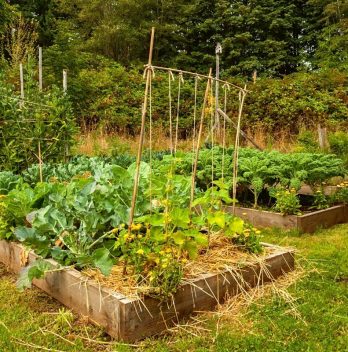
    We recommend you support your raised bed tomato plant with a trellis or tomato cage. This will encourage the tomato plant to grow in a vertical manner.

    Supplying your raised tomato bed with excellent and rich soil can also allow or accommodate for closer planting.

    Additionally, when you are going for a raised bed garden for your plant, the number of plants you will be growing should be taken into consideration. Then from here, you can go ahead to prepare the raised bed dimension.

    Find more information about Spacing For Vegetables In Raised Beds

    How Far Apart To Plant Tomatoes In A Raised Bed?

    So how far apart should your tomato plant be spaced in a raised bed? The required distance to plant your tomato in a raised garden bed is at least 1 square foot apart. This is the required distance between each tomato plant and this will encourage optimal growth of your plant.

    However, you there is still some room, you can add a bit more space so you can work in some support such as a trellis. When you do this, it will train your tomato plant to continue growing as the vine gets bulky or heavier.

    When setting up your raised bed garden, remember to plan your garden according to how many tomato plants you wish to grow. However, if you already have a raised bed garden, you can just calculate how much space will be needed for each tomato plant.

    The whole bed can be just tomato plants if you wish. You can as well simply divide the raised bed into smaller parts or sections. Then include your tomato in one section and other vegetables and plants should be assigned to other sections.

    Just measure out a square foot each for each plant to calculate the number of plants you can grow in your raised bed.

    Raised Bed Spacing Based On The Type Of Tomato Plant

    The spacing requirement on your raised bed garden will also depend on the type of tomato variety you will be growing.

    • For the bushy tomato which is also known as determinate tomato variety, the distance between each tomato plant should be about two feet apart. Bush variety requires a bit more spacing as the plant tends to spread out in a busy manner.
    • For the vining tomato variety which is also known as indeterminate tomato, the distance between each tomato plant should be about 18 to 24 inches. The vining tomato variety may be grown a bit closer as they tend to grow in a vining manner.

    Also, the distance between rows should be at least 3 feet.

    Best Choice Products 48x24x30in Raised Garden Bed for Backyard, Patio, w/Bed Liner, 200lb Capacity

    81h5 uDw2vL. AC SX569

    Other Growing Requirement For Tomato Plant

    Spacing shouldn’t be the only growth requirement for your raised bed tomato plant. You should also consider other growing requirements for your tomato plant by providing them with the best soil conditions.

    First, ensure you are using only the right type of soil. Give your tomato plant the best soil conditions to grow optimally and remain healthy.

    Tomato plants flourish well in soil conditions that are slightly acidic. Ensure you test your soil to get the right range of pH. The appropriate pH range should be around 6 to 7 for your tomato to do well.

    The addition of some organic matter is also a great idea to assist your tomato plant is doing well. Tomatoes are relatively heavy feeders that are capable of consuming a lot of nutrients from the ground. This is so they can grow strong and robust.

    Furthermore, tomatoes should also be grown in warm soil temperatures as they are considered to be warm-loving plants. Once you’ve followed all the required growing conditions to grow your tomato in a raised bed, you can enjoy a successful outcome.

    Your tomato plant should be ready in about 50 days. However, it can also take as much as 90 days to be ready for harvest.

    Other Growing Requirement For Tomato Plant

    FAQ’s

    How much space should be between tomato plants in raised beds?

    If you don’t want them to grow into each other, space them at least 2 inches apart. If they are going to grow into each other, space them 1/2″ apart. You can always move them if you want to. I think that’s a good idea to space them at least two inches apart. This way you can have a little extra room for the plants to grow, but you’ll still be able to easily harvest them.

     I usually space plants at least 4″ apart, and then I make sure to give them plenty of room to grow. If there are no weeds in the garden, they will be just fine with a little extra room. There are some other posts that discuss how to plant tomatoes. I would suggest reading through those posts, as well as reading the post about how to water tomatoes. 

    Does the type of tomato matter when it comes to spacing them?

    When starting a tomato plant from seed, the spacing between the plants will depend on the type of tomato plant you are growing. There are two types of tomatoes; determinate and indeterminate. In this article we will discuss what the spacing between determinate and indeterminate tomato plants should be. The type of tomato plant you grow will also affect the spacing between the raised beds in your garden.

    What is the difference between determinate and indeterminate tomato plants? There are two types of tomatoes that can be grown. Determinate tomatoes produce a single flower at a time. Indeterminate tomatoes will produce flowers all at once. These are the two main types of tomato plants and they will need different spacing. Determinate tomato plants have a short life span and require more space than an indeterminate tomato plant. This means that you need to space them further apart. Indeterminate tomato plants grow longer than determinate tomatoes. This means that you can get away with less space between the plants. In most cases, you will only want to grow one type of tomato plant in your garden. How to grow determinate tomato plants When starting a determinate tomato plant from seed, it is important to space them further apart. You will want to space them at least 2 feet apart. You can use tomato cages to support them.

    What’s the right type of soil for tomatoes in raised beds?

    There are different types of soils for different purposes. Raised beds are not made of soil; they are made of soil-like materials.

    The most common ones are gravel, brick, concrete blocks, wood planks or railroad ties. But they can also be made from other materials such as wood, plastic, stone, etc. Whatever you use, you will need to amend your bed with compost and/or manure.

    How do you make the best soil for tomatoes in raised beds?

    Whatever you use, you will need to amend your bed with compost and/or manure.

    The most common are composted manures (manure-based). A typical recipe would be 2 parts composted manure to 1 part composted manures. You can make your own compost or buy it pre-made. I prefer to make my own compost, but if you do not have time to do so, you can purchase compost that has already been made by your local garden center.

    Final Say

    The seedlings, young plants, as well as grown plants of tomato, love warm soil temperatures. So, because tomato plants love heat and will thrive beautifully in warm weather, raised bed tends to be more useful in this aspect.

    The soil that is raised is more inclined to get warm quicker. Therefore, this will give the tomato plant a better head start.

    But when it comes to growing tomatoes in a raised bed, spacing is very important for the plant to flourish. Spacing your tomatoes plants appropriately will encourage good growth and prevent the intertwining of plants.

    Spacing also gives adequate space for root growth and proper airflow between the tomato plants. This also helps prevent the spread of diseases.