Category: Composting

  • How Can You Compost Egg Shells?

    How Can You Compost Egg Shells?

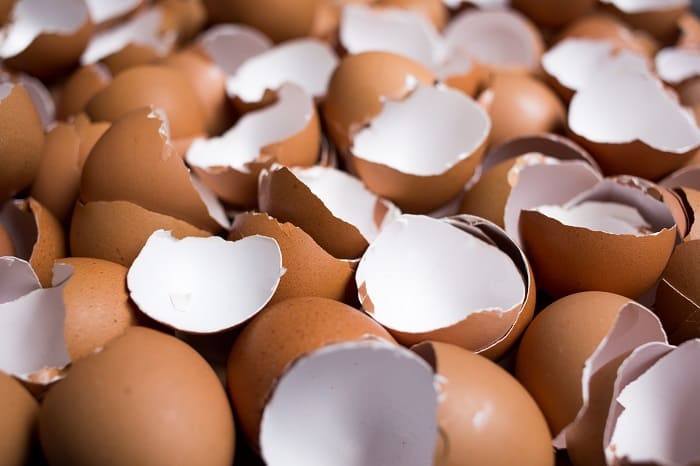
    Eggshells have a lot of benefits in the garden. What most people don’t know is that instead of tossing broken eggshells into the trash can, it can be collected for use in keeping pests away from the garden and in making compost.

    How can you compost eggshells? A lot of readers have asked this question in the past which is why we decided to come up with this detailed, yet concise guide to help you out.

    Although they may be brittle and crack easily, eggshells take a long while to decompose without the right conditions.

    Adding eggshells to your soil is a good way to improve the soil‘s calcium content. They are also a rich source of potassium, magnesium, and sodium. This makes them a good addition to any soil, which is the reason why many gardeners go through the stress of composting it.

    With the right methods, you can compost eggshells with ease. All you need to do is to ensure that they are dried and mixed with the right amount of green and brown materials to speed up the process.

    How to Compost Eggshells

    There isn’t any science behind the breakdown of eggshells. Let’s not forget that they are tough and would certainly remain in the same state if not properly processed.

    The best way to add eggshells to a compost pile is to first wash them and then dry them out in the sun. once dried, you can then grind it into a fine powder. This makes it easy for it to be broken down by the micro-organisms in the soil or compost pile.

    Washing the eggshell is important to kill the salmonella bacteria that might be left behind from the chicken. Drying the eggshell before grinding is also important to ensure they compost quickly.

    You can also choose to wet the powdered eggshell before adding it to a compost pile. This speeds up the activity of the bacteria needed to begin the decomposition process.

    It is impossible to determine how quickly the eggshells will decompose. But if you ensure that other factors are in place, you should be able to see results in a few months.

    Adding Eggshells to Soil

    You can add eggshells directly to the soil to improve the nutrient content. Yes! Eggshells can be used as fertilizer to improve your garden soil. However, you must process it into the powder form before adding it.

    When the soil is deficient in calcium, it causes the ends of the plant to rot. This can be easily avoided by working powdered eggshells directly into the soil.

    Acidic soils breakdown eggshells faster compared to other soil types. This is not to say that it cannot be added to soil with a different pH.

    It is best to work the powdered eggshell into the soil. This you can do with a trowel, or garden fork. This makes it possible for the soil to easily absorb the nutrients.

    |

    Apart from use as fertilizer, eggshells are also helpful in aerating the soil. When the soil lack oxygen, it can also affect the ability of the soil to retain water. This can lead to plant death and reduced yield.

    Eggshells also help to improve the structure of your soil. This is something you should be particular about especially if you want to improve on your plant yield.

    They provide you with a natural way to improve your soil nutrient and texture without the use of toxic chemicals. This is another reason why it is commonly used in the garden by organic farmers.

    Other Uses of Eggshell

    Apart from composting, there are other ways you can use eggshells in the garden. And they include:

    Mulch

    Eggshells can be used in mulching roses, vegetables, and other tree plants to provide extra nutrients. You would have to grind them into powder first before adding them as a side dressing to your plants.

    The best time to use eggshells in mulching plants is immediately the growing season commences. This is the period when the soil needs calcium the most to support the growing plants.

    |

    Snail Repellant

    Eggshells are also useful in repelling snails and cutworms from your garden. To use eggshells as snail repellants, you don’t need to grind them into a fine powder.

    All you need is to crush them into small pieces and spread them around the plants that are been destroyed by pests.

    You can use eggshells as a pest deterrent on plants that attract snails the most such as tomatoes, peppers, broccoli, and cabbage.

    Reduce Disease Infection

    Since a deficiency in calcium can result in the rotten of leaves and stunted growth, including eggshells in your soil can be a great way to prevent disease to your plants.

    Infections are some of the common problems that reduce your garden yield. Ensuring that your soil doesn’t suffer from any nutrient deficiency is a good way to improve your garden yield.

    Food for Birds

    If you raise poultry in your farm or backyard, then you can also collect your eggshell to add to their diet.

    They are particularly a rich source of calcium to female birds after they lay their eggs. This is why most wild birds consume the shells after they hatch.

    Before using eggshells as bird food, you will have to crush them into small pieces and include other seeds to spice things up.

    How Can You Compost Egg Shells


    FAQs

    How do you prepare egg shells for compost?

    I would soak them in a solution of water and vinegar for an hour or two. This will remove any ammonia from the shells and make the shells easier to break up into smaller pieces when they start to decompose. The vinegar will also help to speed up the decomposition process. You can use white vinegar or cider vinegar, which is a little more acidic than other types of vinegar, so it will break down faster.

    If you have access to a source of heat such as an outdoor stove or fire pit, you can also heat the shells for a few minutes, but this isn’t necessary. The main thing to remember is that eggs are very porous, so if they aren’t broken up before adding them to the compost pile, they can hold moisture inside of them and make the compost pile too wet.
    Also you can compost your eggshells by adding a little bit of chicken manure to the mix.You can also try to add some old hay or straw to help the compost break down. It’s best to not use too much at once or it can get smelly.

    Should eggshells be washed before composting?

    The shell of an egg is like a hard, porous, mineralized cell wall. In order to make a good compost, you need to break down that cell wall. When you wash the shells, you remove the cell walls, which is what makes them bad for composting.

    Eggshells are an excellent source of calcium, which is vital for building strong bones and teeth. They also contain trace amounts of phosphorus, magnesium, and potassium. If you have access to a compost pile or a worm bin, eggshells can make a great addition. The high calcium content makes them ideal for building healthy soil.

    How long do eggshells take to compost?

    Eggshells are a good compost ingredient, but they don’t take very long to break down. You can compost eggshells in a regular compost bin, provided that you don’t have an active worm farm. Worm farms require special composting bins, which can be difficult to find. You can also use a regular compost pile with no worms. Worms eat the eggshells and the eggshells eventually break down. Worms are attracted to eggshells because they contain nitrogen and phosphorous, which are nutrients that the worms need.

    Eggshells may take a few months to break down, but they’ll break down if you add them to your compost. When you add eggshells to your compost bin, be sure to add them in a thick layer. This will help keep them separate from other materials. If you add eggshells to a worm farm, make sure you remove the eggshells after a few days. Worms can eat through eggshells, so it’s best not to leave them in for too long.

    When you compost your eggshells, make sure you use them right away. Eggshells should not be left on the kitchen counter or in a cupboard for too long. They have a high moisture content and will attract pests. If you want to keep your eggshells for a while, put them in an airtight container.


    Take Away

    Now that you know how to compost eggshells, you shouldn’t have a problem improving the yield of your garden by using leftover eggshells.

    Remember that before adding them to your compost or soil, you need to first ensure they are washed and dried properly. Afterward, you can then grind them into a fine powder before working it into your garden soil.

    It takes a while for eggshells to fully breakdown. But you can easily speed things up by ensuring that you balance the ratio of green and brown materials in the compost pile.

    You should also ensure that you turn the pile regularly to ensure all parts of the bin gets enough light and moisture.

    Have you tried adding eggshells to your compost or garden? We will like to hear from you.

  • 5 of the Best Urban Compost Tumblers

    5 of the Best Urban Compost Tumblers

    Adding an excellent quality compost in your garden can actually provide you with a slew of benefits. After all, composting is relatively easy, and it’s for this reason why a lot of gardeners do it in several ways.

    In this article, we’ll talk about the best urban compost tumblers on the market. Whether you are a newbie gardener or a veteran, you can surely appreciate the convenience and efficiency given by such composters. Having this handy tool saves you a lot of time and effort. Say goodbye to the manual work and say hello to ease and convenience.

    How to Choose the Right Compost Tumbler

    Before we talk about the various compost tumblers on the market, let us first consider the things you should watch out for when shopping one. They’re as follows:

    Your Method of Composting

    The first thing you should consider is how you compost. This is really important as it can help you determine the design of your composter. For example, if you plan on adding materials on a regular basis, you would want to go for a dual-chamber version.

    However, if you only choose a single chamber compost tumbler, you’ll have to open it to add new material every now and then.

    |

    Where You’ll Be Placing Your Composter

    Another thing to consider is the location you plan to place your composter. If you plan to place yours in an area with a steep slope, then you should go for a compost tumbler that comes with a broad base.

    Also, composters can easily attract pests such as rats and foxes. Therefore, you should make sure that it’s placed in an area where it can be kept shut. You’d also want to consider the weather condition in your area. If you leave in a hot climate, the composting process will be complete a lot faster. 

    On the other hand, if you live in a cold climate, you’re better off going for a composter with a black finish to help it absorb the sun’s rays and hasten the composting process.

    Ease of Assembly

    Compost tumblers will vary when it comes to their ease of assembly. Some composters on the market come in ready-made setups without any assembly required. However, some would require two persons to set up.

    For this, you’d want to check customer reviews to find out if a composter’s instructions are easy to follow and how long it took them to assemble theirs.

    Why Use a Compost Tumbler

    Most people opt for compost tumblers because they’ve seen them from commercials promising quick and easy composting. Though it’s true as long as the optimal conditions are met, such conditions can be hard to come by. Therefore, why should you consider getting a compost tumbler instead of using other composters? 

    They Allow Easier Heat Management

    The lack of heat can be a major problem for composting, especially during the winter season. Though a typical composter can provide some sort of insulation, compost tumblers can be transferred inside a shed during cold weathers, allowing it to function normally as it would during hot weathers.

    Also, since they’re enclosed, they can heat up readily during hotter weather and even maintain such heat for a long time, effectively killing off any pathogens or weeds that might be present.

    They Provide Protection from Animals

    When composting, you’ll regularly see raccoons, deers, or any animals invade the compost pile in search for food. However, since compost tumblers are designed to be fully enclosed, you can keep your compost protected from such animals.

    They Look Organized

    Lastly, compost tumblers have the benefit of appearing well-organized. As opposed to the traditional compost pile, tumblers can be secured in a specific spot hidden out of plain sight. This can help keep your area clean without all those messy decomposing materials.

    5 of the Best Urban Compost Tumblers

    5 of the Best Urban Compost Tumblers

    Envirocycle Mini Composting Tumbler Bin

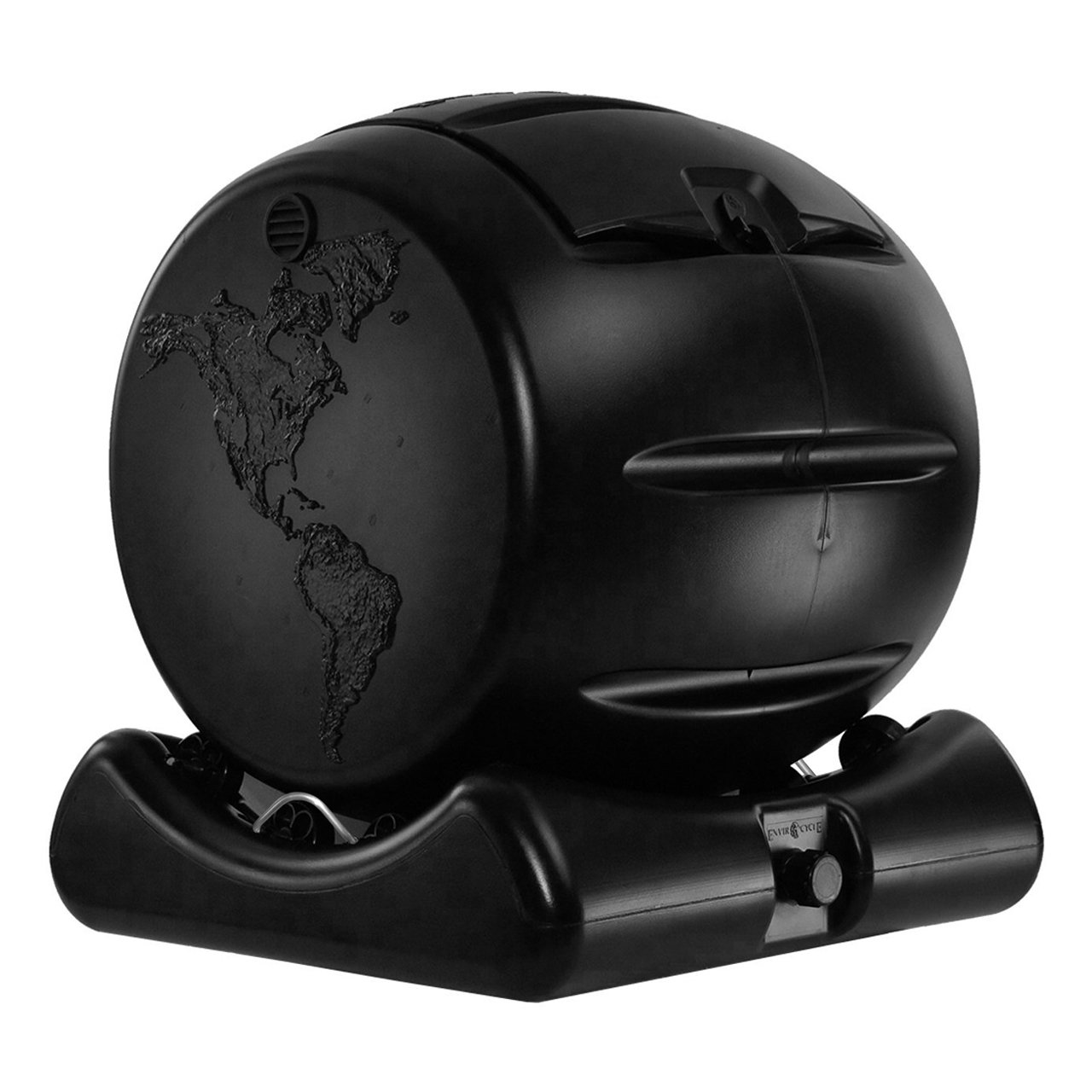
    This composting tumbler bin from Envirocycle is perhaps the most appealing compost tumbler on the market as of now. It comes in either black or pink and is capable of holding a maximum capacity of 17 or 35 US gallons. It generates both liquid and solid compost. It’s highly durable and highly innovative.

    It’s made of durable, BPA, and rust-free materials, making it an excellent option if you’re looking for a compost tumbler to last for years. It’s compact enough to fit both rural and urban settings. Its design is also classic which makes it look good whatever your home design is.

    Pros:

    • Attractive design in black and pink colors
    • Rust-free and UV-resistant material
    • No assembly required

    Cons:

    • A bit too expensive compared to other products on this list

    717JN9DeWbL. SL1280

    EJWOX Dual Rotating Compost Bin

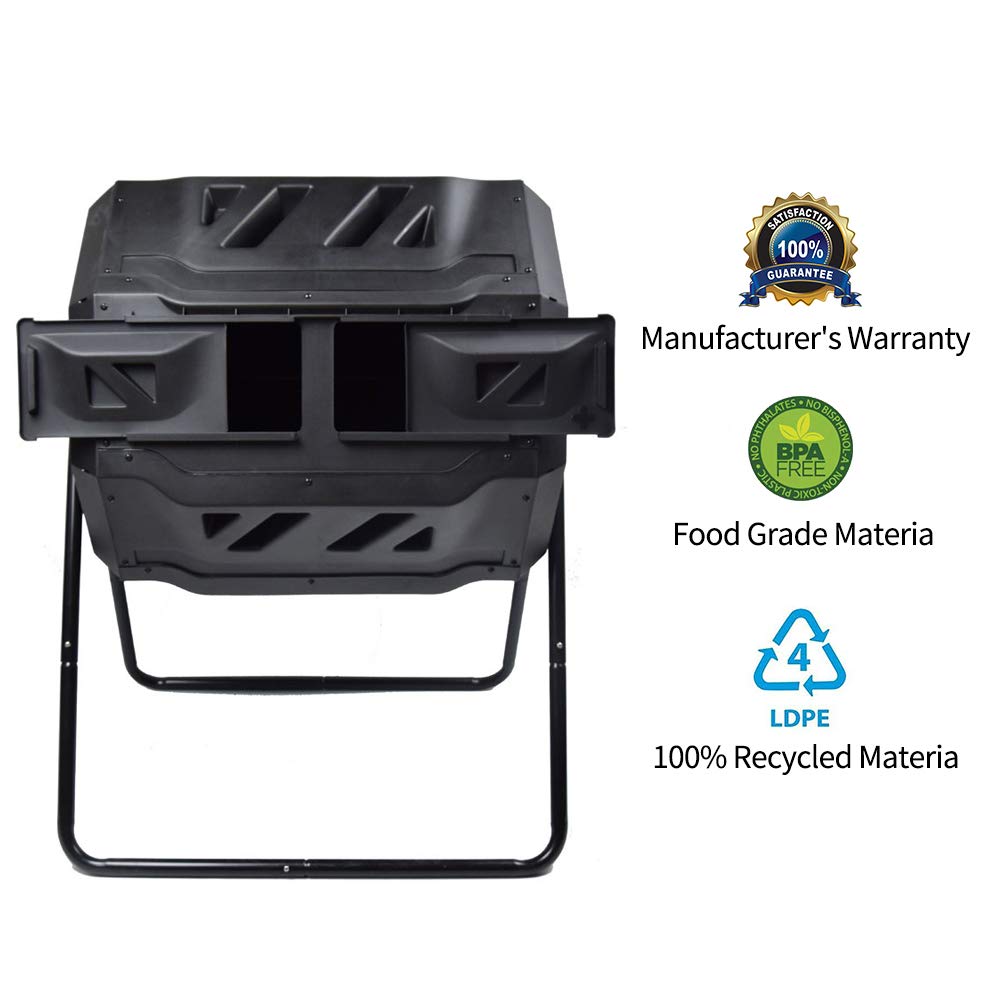
    Owing to its larger size, the EJWOX composter is capable of holding up to 43 gallons of composting material. It has a black chamber which makes it useful for absorbing heat from the sun. Thus dual chamber compost bin is ideal for continuous composting. Its aeration system mixes the compost and allows the required airflow. It also has great tumbler design that turns axis on for balanced and smooth rotation. Its easy slide doors are also a huge plus. 

    Moreover, the doors can close up tightly to prevent animals from accessing the contents. It’s also watertight, so you shouldn’t have to worry about water entering the composter and sogging up the contents.

    Pros:

    • Comes in a dual-chamber design
    • Made of powder-coated steel frame
    • Features an aeration system for a more efficient composting

    Cons:

    • Due to its extra capacity, it will be a lot heavier to transfer when full

    51t7aKiDZ0L. SL1000

    HOTFROG Tumbling Composter

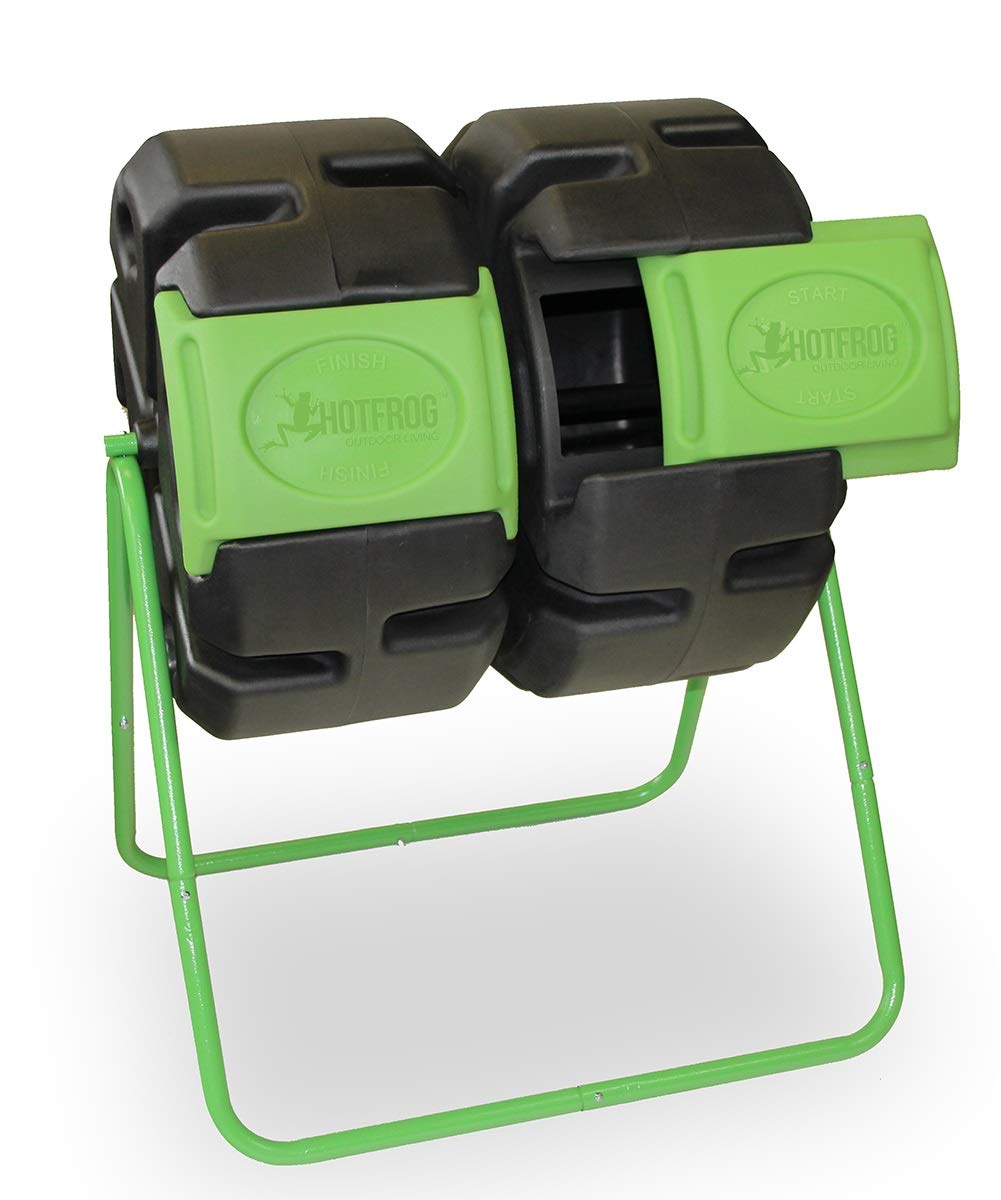
    The Hot Frog composter by FCMP Outdoor is a dual body tumbling composter which comes in a round shape and tumbling design to make the entire process of adding scraps or removing compost a lot quicker and easier. It’s very easy to use which makes it perfect for beginners. It has 2 composter bodies which promote consistent flow of healthy and rich compost. Its aeration system is also excellent. Since this is a tumbling composter, the aeration level is far greater than the standard models.

    It comes with a total capacity of 37 gallons for the two compartments. Also, since it’s made of BPA-free materials, there is no need to worry about chemicals leaching into your compost. Finally, it’s highly durable, so you can trust that it stands the test of time.

    Pros:

    • Easy to use thanks to its large openings and removable doors
    • Made of BPA-free and UV-inhibited materials
    • Comes in a tumbling design for easy mixing 

    Cons:

    • Takes a while to fully assemble

    61nv%2BcV3apL. SL1200

    Algreen Terra Tumbling Composter

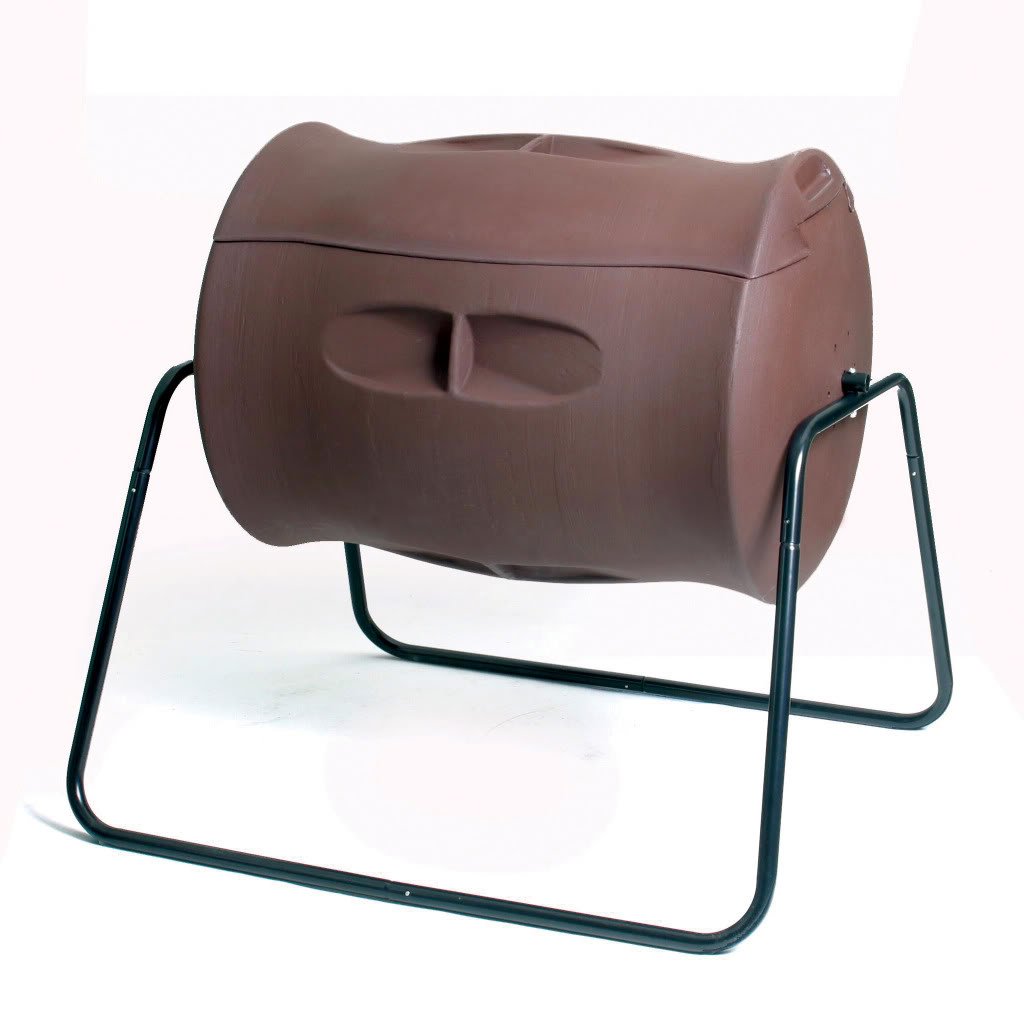
    The Algreen is one of the few compost tumblers that have an excellent capacity, a dual-chamber design, and durable construction at a moderate price tag. It comes with a sliding access door which allows you to add items and remove compost with ease. It has convenient grip handles, durable center axle, rodent-proof design, and more. It’s easy to assemble and can tackle 2 batches at once.  

    It can hold a maximum load of up to 56 gallons and comes with a center axle which allows you to tumble the compost in a quick and efficient manner.

    Pros:

    • Pretty large capacity of 56 gallons
    • Comes with a sliding access door

    Cons:

    • Not as durable as the other compost tumblers on this list

    51LDSGB84hL. SL1024

    YIMBY Tumbling Composter

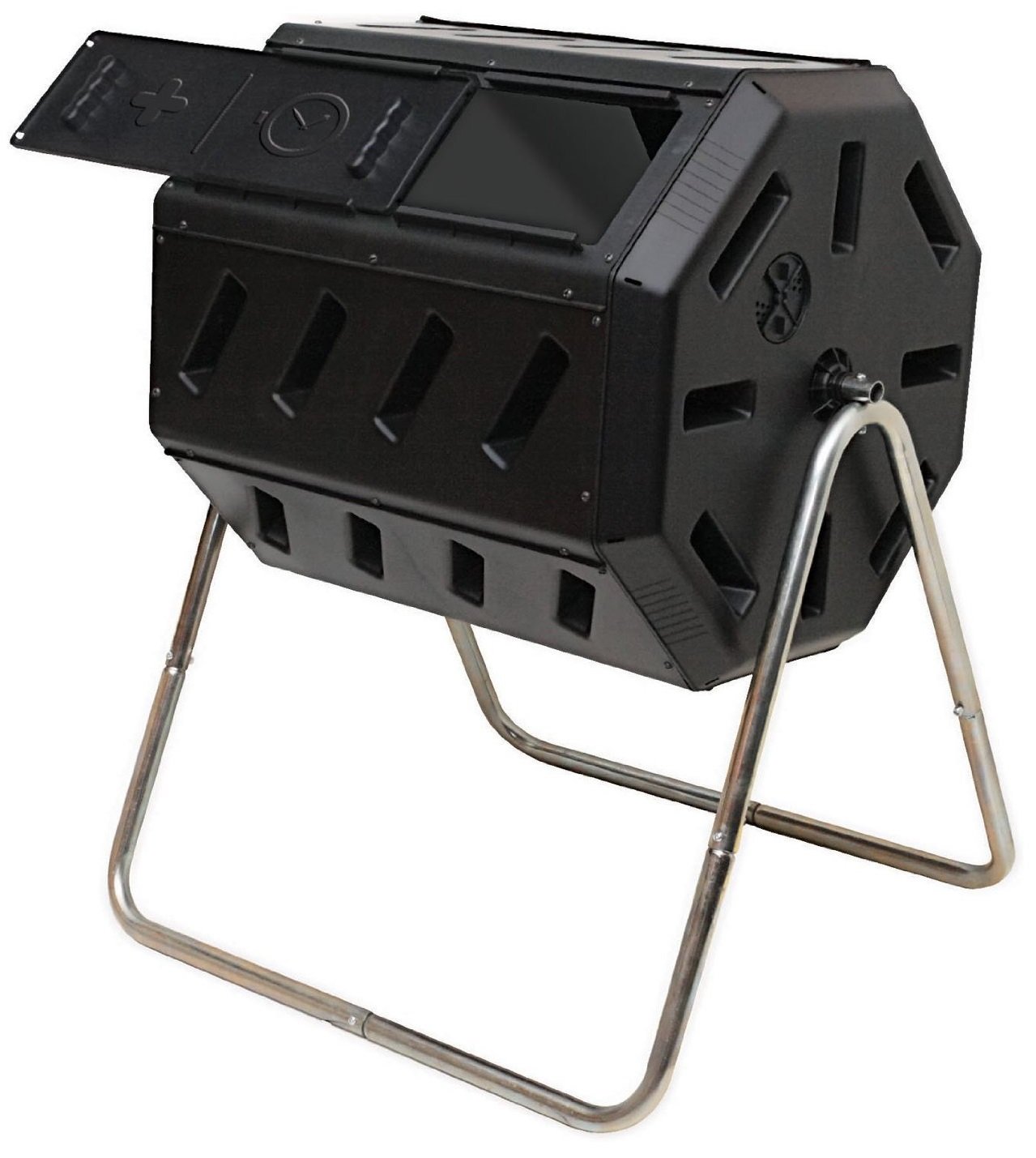
    Another excellent product from FCMP Outdoor, the YIMBY composter is a dual-chamber compost tumbler which comes with 8 sides. It features a huge removable door to allow quick access to the compost and adding materials with ease. No more manual digging and mixing of compost. This model gets the job done fast and easy. It has an excellent aeration system as well. 

    It can hold up to 37 gallons of materials and is very easy to use and assemble. Even beginners can figure it out outright. Also, its deep fins on the side make it easy to turn during the composting process. Its contact safe and won’t degrade when exposed to direct sunlight. Finally, its construction is durable, so it really is a worthwhile investment that lasts.

    Pros:

    • Easy to use even for beginners
    • Quick access to the compost with its removable door
    • Features excellent aeration with its aeration holes

    Cons:

    • Emptying its contents can be a bit complicated

    71z%2BDDF YSL. SL1429

    FAQs

    Which compost tumbler is the best?

    If you’re looking for the best compost tumbler, you’ll want to consider the following factors: Size There’s no such thing as a bad size for a compost tumbler. Smaller ones are more portable and easier to use . Larger ones have larger openings that let air get into the composting process.

    You should be able to fill it with some compost material and have plenty of space left over. Material The material you choose will depend on how much compost you want to make. Wood has a natural ability to absorb moisture and rot, so it won’t last long if you’re using it to store compost. Plastic and metal are both durable, but plastic can easily break or crack when exposed to heat or moisture. Metal is also very heavy, which makes it difficult to move around. Cost Most compost tumblers are priced between $20 and $30, though there are some that cost as much as $300. You can usually find a good deal on one at your local hardware store.

    Are compost tumblers worth it?

    A compost tumbler is a good way to turn garden waste into compost. You place the material inside, cover it with a lid, and let it decompose for weeks or even months. Then, you scoop out the finished compost and use it. Tumblers work best if you’re looking for a way to create compost that has a rich, earthy smell and a dark, brown color. Some people also like to add worms to their compost pile, but this isn’t necessary

    The basic principle behind a compost tumbler is that it has a series of compartments that allow for a slow, aerobic breakdown of the compost material. You place the compost in the container, cover it with a lid, and let the material decompose for weeks or even months. Then, you scoop the compost out and use it. How do they work? Compost tumblers don’t actually rot the compost; instead, they let oxygen into the pile and encourage microbial activity. This process creates heat that speeds up the decomposition of organic matter. If you’re looking for something to help you turn your garden waste into compost, then a compost tumbler is the best way to go. How do I know if my compost is ready? You should be able to smell the finished compost. It may not smell like roses, but it should have a pleasant earthy scent. You can also check the color of the compost by mixing it with some water. The water should run clear, and the compost should be a light brown color. You can also test the compost’s pH level. If it’s high enough (6.5 or lower), then the compost is ready to use. If it’s too acidic, you can add some lime to neutralize it. 

    What is a good size compost tumbler?

    There are lots of different sizes available, but if you’re doing a lot of composting, I’d recommend getting a bigger one. The larger the container, the more air it will hold and the better your compost will turn out. For a large pile (100+ lbs), a larger container is ideal. If you’re doing only small amounts at a time, smaller containers work just fine.

    However,, you need a minimum of 4 cubic feet to be effective. Anything smaller will not have enough oxygen in the system to produce a good compost.

    Conclusion

    Of the products reviewed above, the best among the best would be the mini composting tumbler from Envirocycle. Its design makes it very easy to load and unload the contents. Aside from that, you can easily transport it with ease – you don’t even need a wheelbarrow or bucket to do that! When it comes to choosing compost tumblers, choose one that suits your needs and budget. It’s now easy to spot the best deals online. Just do your homework in looking for the right product for you.

    Do you know of any other compost tumblers on the market? If so, please leave a comment below so we can check it out.

  • How Long does it Take to Make Compost?

    How Long does it Take to Make Compost?

    Well, the answer to that question depends on a lot of factors.

    On average, it can take up to six months for your compost pile to fully decompose. Like I mentioned earlier, it depends on a lot of factors. For your compost pile to decompose quickly, you will need to ensure that the right conditions are in place.

    When you decide to make a compost pile, you should have it at the back of your mind that it doesn’t happen overnight. Your compost pile can take anywhere between a few months or years to be ready for use. If you want to harvest your compost faster, you will have to put in the necessary work.

    Factors that Affect Composting Time 

    It doesn’t matter the type of materials you toss into your compost pile; the duration it takes for compost to be ready for use depends on the following factors

    1.    Temperature 

    The temperature needed for composting to take place ranges from 32 degrees Fahrenheit to 158 degrees Fahrenheit. 

    2.    Shape and Size 

    The shape and size of your compost materials also determine how long it will take for it to be ready. This is because a large material takes longer to decompose compared to when you break them down into smaller pieces.

    How Long does it take to Make Compost?

    3.    Density 

    Density is another factor that determines how long it takes for compost to be ready. Heavy materials like wood fibers will take a longer time to decompose compared to straws. Reducing the density of the materials you add to your compost bin will help to speed up the decay process. Hence, making sure that your compost is ready sooner.

    4.    Size of Compost Pile 

    The size of the compost pile also determines the composting time. If you pile up too many materials, you should expect it to take longer to decompose compared to when you are composting in a small bin. You can speed up the composting rate by making use of small piles or composting in batches.

    5.    Water and Air 

    Moisture and air are other important elements that need to be right for composting to take place. Your compost materials need to get enough air and moisture for the decomposition to take place. You can speed things up by ensuring you water the bin regularly and turn the pile. We will talk more about this later in the post.

    Best Season to Compost 

    Many of our readers ask us what the best time is to make a compost bin. In practice, composting takes place faster in a warm environment with the right amount of moisture. This is why compost tumblers and hot bins compost materials faster than when left in a pile.

    Summertime or any other season will be okay to start a compost pile. But we do not advise you to start one in winter. This is because the pile wouldn’t get the required heat to start the decomposition process. This means that the pile will only begin to decompose once spring sets in.

    How Long does it Take to Make Compost? 

    Like we mentioned earlier, it can take between three to six months to get your compost pile to fully decay with the right factors in place. There are certain things you can do to speed up the time it takes for your compost pile to be ready. We have broken them down for you below.

    How to Make Compost Faster? 

    You can speed up the compost time by ensuring that:

    • Use the Right Materials 

    if you add the right materials in your compost, there will not be any issues with the decomposition process. Include the green and brown materials in the right ratio and there wouldn’t be any issues with your compost. If you want to harvest your compost faster, you need to use waste that can decompose quickly. Some examples of nitrogen-rich green materials you can use include grass clippings, vegetables, fruits, while carbon-rich brown materials include paper, wood chips, sawdust, and straw.

    |

    • Use a Large Bin 

    If you are composing in a bin, you should endeavor to make use of a large bin. This is because the materials decompose quickly when they have enough space to retain the heat produced in the container. A small size bin will not be able to produce enough heat like a large one. Also, you should opt for plastic bins instead of wooden ones. Compost bins made out of wood do not retain much heat compared to plastic ones.

    • Shred the Materials 

    Before adding any material into the compost bin, you should ensure that it has been shredded into tiny pieces. Adding large-sized materials inside your compost bin only further delays the decomposition process. Shred the papers, trim the grasses, and breakdown the wood into pieces. This makes it easier for the worms and nature to work on the materials quicker than when they are not broken down.

    • Add Moisture 

    You can also speed up the compost time by making sure that the pile is wet. You don’t need to flood the bin with water, a little sprinkle every two or three days will be enough to kick start the decay of the materials in the bin.

    How Long does it take to Make Compost?

    • Turn the Pile 

    This is important if you want to harvest your compost quickly. Turning the pile makes it possible for heat and air to get to all parts of the bin. It also ensures that all the materials get enough heat and moisture. You can make use of a rake to turn the pile once or twice a week. I suggest you do this often if you have the time. This will help the materials to settle in the bin and also encourage the activities of the microorganism needed to speed up the decay.

    • Use a Compost Tumbler 

    A compost tumbler or rotating barrel as it is often called is a quick way to compost in an apartment. These compost tumblers are designed to save the stress and time associated with maintaining a compost pile. They also reduce the smell and make the whole process neat. Let’s not forget also that there are brands that can process compost in less than two weeks. So investing in a rotating barrel might be a good investment if you are looking to harvest your compost quickly.

    FAQ’s

    How quickly can you make compost?

    Many composting facilities are open for you to drop off your kitchen waste. The fastest way to compost is to use a home-composter, which you can set up at home. Home-composters are usually made from plastic or metal.

    You probably already know that the best way to make compost is to use green, brown, and black materials. But how much time do you have to spend on this process? The answer depends on several factors, including:

    What size container do you have? How much time do you want to spend on composting? Do you have a compost pile or an outdoor bin? What kind of soil do you have? If your garden soil is clay, then you may need to add more than a pound of peat moss per cubic foot. If it’s sandy, you might only need to add a half pound per cubic foot.

    In just a few weeks, you can create rich, black soil that holds moisture well and is loaded with nutrients. 

    You may have heard that it takes three to six months to make a good compost. But the reality is, it depends on how much compost material you have available and how often you feed it. Composting is not just a matter of throwing your kitchen scraps into a bin and waiting for the worms to come. It’s an active process that requires constant feeding to keep the compost going.

    The best way to get started with composting is to purchase a container, such as a trash can, or a large plastic bucket, and start your compost pile in your yard. It’s important to get a large enough bin to hold everything you have to add to it, and it should be located out of direct sunlight. If you don’t have a yard, you can use a small plastic trash can.

    Can you make compost in 2 weeks?

    Yes. The first pile you make should be started with one part leaves and one part manure. The leaves should be placed in the center of your pile with the manure on the outside. If your compost is left out in the weather, it will decompose more quickly.

    How do I tell when my compost is ready to use?

    If you’ve made a good pile that looks like brown earth, it’s probably ready for use. Remember, it’s not done until it’s dark enough for your chickens to lay their eggs in it!

    How can I speed up my compost decomposition?

    Compost is basically a pile of organic matter, and you want it to be damp so that the microbes can do their work.

    The more air space, the less likely they are to break down your food. This means that you need to cover the pile with some kind of lid or sheeting to keep out the air. You can add water to help the process along, but if you have a lot of it, you can drown the microbes.

    Conclusion 

    There is no straight answer to the question of how long does it take to make compost. It depends on the factors we have mentioned earlier. You can also speed up the decomposition process by adopting the methods mentioned above.

  • Can you Compost Coffee Filters?

    Can you Compost Coffee Filters?

    Composting is one of the methods you can use to reduce the amount of waste that ends up in landfills. It can also be a good way to provide your plants with additional nutrients that will be of benefit to them. 

    One of the problems most gardeners face when it comes to composting is what to include in the compost pile. If you are wondering if you can compost coffee filters, you have come to the right place. In this article, we will be talking about some of the few things you can compost with and those you shouldn’t add to your compost pile. 

    Can you Compost Coffee Filters?

    You obviously must have read online or somewhere else that you can include coffee grounds in your compost mix. It is true; you can include coffee grounds with their filters into your compost pile. This is because they are wet and can decompose in the shortest possible time. 

    The filters may dry out if you leave them like that on top of the pile in dry weather. This is why you should initiate the decomposition process by ensuring that the filters are moist. This is the same thing you would do with newspapers, cartons, and other paper materials you include in your compost. 

    Can you Compost Coffee Filters?

    You could also include coffee filters into worm compost. The worms compost the filter very quickly depending on the number of worms you have in your factory. As a rule, you should shred coffee filters before including it in a compost tumbler. 

    If you notice that the coffee filters do not compost completely, you can simply transfer the materials that don’t breakdown into a new compost pile. I noticed that the brown coffee filters are quick to decompose while the white chlorinated coffee filters take longer to decompose. So you might want to switch to the brown filters if you are experiencing delays with the other kinds. 

    How to Add Coffee Filters to Compost

    The way you add your coffee filters to your compost pile determines if it will decompose or not. I have noticed that if the filters are left out in the open, it is difficult for them to decompose. You can speed things up by covering it with soil or better still using it in a compost tumbler. 

    |

    Papers such as coffee filters are a good carbon source in compost. But before you toss them into the pile, it is important that you shred them to tiny pieces and ensure they are moist. Also, coffee filters that are made from synthetic materials such as plastic, vinyl, and metal do not decompose easily (that’s if they ever do). This is why you should only use coffee filters that are biodegradable. 

    Check that your coffee filter isn’t bleached or mixed with any synthetic chemicals. This is important if you are looking to maintain an organic garden. 

    Using Coffee Grounds in your Compost

    There have been some concerns as to the safety of coffee grounds in the compost pile. The fact still remains that coffee is a rich source of nitrogen in your compost. This makes it one of the best green materials you can include in composting. But since coffee is acidic in nature, there are speculations that it could change the pH of your pile. The fact is that most of the acid is used up in making your coffee drink and any residue left would be perfect for including in your compost. 

    Other Ways to Use Coffee Grounds in Your Garden

    Coffee grounds are beneficial to your plants and shouldn’t be tossed away in the trash after use. You can collect them for use in your garden to 

    • Use in Mulching

    Adding coffee grounds to your soil helps to improve the nitrogen content. It also helps to improve the soil structure and texture of the soil due to the activity of earthworms. When the coffee grounds are placed on top of the soil, they help the soil to retain moisture and suppress the growth of weed. This is one of the problems you would encounter in your garden and coffee grounds might just be the solution you need. 

    As the coffee ground decomposes into the soil, they help to improve the fertility of the soil. This ensures that your plants are provided with nutrients to support healthy growth and development. 

    Can you Compost Coffee Filters?

    • Add to a Worm Bin

    You could also include your coffee grounds in a worm bin. This is because the worms like to feed on a little coffee. You should, however, be careful not to include too much in your worm bin. This is due to the acidic nature of the coffee grounds. Too much of it in your worm bin can cause the worms to die. A cup of coffee ground a week is good enough to include in a worm bin. 

    • Use as a Liquid Fertilizer

    FAQ’s

    Are coffee filters compostable?

    Yes, if they are clean. The best way to be sure is to remove the filter from the grounds and put them in a plastic bag. Place the bag in your garbage or recycling bin. Coffee filters are made of cellulose, so they will decompose quite quickly.

    The paper used for coffee filter material is usually not completely biodegradable, so it might take longer than you think for the filter paper to break down. If you have a home composter, this might be an easier way to dispose of your coffee filters than throwing them in the garbage.

    Coffee filters can come in different sizes and shapes, but there are basically only two types: paper filters and disposable paper filters. Paper filters are the most common because they are cheap and easy to use. You can buy them at any grocery store, but if you want a reusable filter, then you will need to purchase the disposable paper filters.

    Regular coffee filters are biodegradable, but you should not use them as they are designed for a particular purpose. They are made of polypropylene and cellulose fibers.They are not designed for use in a compost bin or similar.

    Are compostable coffee filters worth it?

    Yes! Compostable coffee filters are a great alternative to paper coffee filters that end up in the trash.

    They break down completely into compost, making them perfect for gardeners, farmers and composters.

    Can I use coffee filters as fertilizer?

    If you are looking for a way to recycle coffee filters without actually having to use a composter or compost, then here is a great idea: Take the coffee filters and cut them into small pieces. Then place them in a glass jar with a lid. You can use the coffee filters as a fertilizer for your garden, which will help your plants grow.

    How much do we throw away in coffee filters?

    Compostable coffee filters are a great alternative to paper coffee filters, but there’s a lot of debate about whether they are worth the extra effort.

    Coffee filters are a huge source of waste. Every year, Americans use between 10 billion and 30 billion paper coffee filters. That’s about 0.2 percent of all the paper that Americans use, and it’s more than many of us realize. The filters are often made of paper or some type of non-woven fabric.

    The researchers analyzed data from the city of Vancouver and found that one-third of households didn’t recycle their coffee filters.

    Are coffee filters green or brown compost?

    They are considered to be a green element compost due to the fact that they have a high nitrogen content.

    Conclusion

    You can also use coffee grounds as a liquid fertilizer to your garden. You don’t have to make use of leftover coffee as a liquid fertilizer for your plants. This is because like we earlier mentioned, it is acidic and can be toxic to plants when added in excess. Instead, pour 2 cups of coffee grounds in five gallons of water. Then allow the coffee grounds to steep for about 12 hours. After which you can then use the resulting liquid as a foliar feed for your plants. 

    Can you Compost Coffee Filters?

    Now that we have answered the question can you compost coffee filters, we are certain that you will be including it in your compost bin. You should remember that it is important that the filters should be of the biodegradable type. The ones made from brown papers are a better option. 

    You should also endeavor to moisten the coffee filters and tear them into tiny pieces before tossing them into your pile. In the case of compost tumblers, you should also do the same thing if you want to harvest your nutrients in a week or two. 

    What are the materials you include in your compost bin? We will like you to share your secret with us.

  • Key Components in Making the Best Compost for Tomatoes

    Key Components in Making the Best Compost for Tomatoes

    Tomatoes are one of the staples in most plant-based cuisine. However, just knowing where to get them isn’t enough. If you want to have a steady supply of fresh and naturally produced tomatoes, you must also know how to grow them yourself.

    When it comes to planting, composting is one of the key factors. If you’re struggling to make compost on your own, then don’t worry. We have prepared some of the key components you can take into account to help you make the best compost for tomatoes.

    Farm-to-Table Initiative

    The rise to vegan and organic dining had people thinking where their food is coming from – a questioned answered by the Farm-to-Table movement. With that, it’ll be less of a worry for you if you planted your own fruits and vegetables. 

    At the very least, you get to be sure that your food won’t contain any harmful chemicals and insecticides.

    Key Components in Making the Best Compost for Tomatoes

    Growing Area

    Tomatoes thrive under the sunlight. In fact, they require 8 hours of direct sunlight, that is why you must place them in a strategically sunny area. They also need lots of water and aerated soil. The area must also be full of nutrients and fit for planting.

    Soil Preparation

    When working on the soil, include composting materials like peat moss, well-rotted manure, or leaf mold. Tomatoes grow well in soil with a pH level of 6.5 to 7.0 which is nearly neutral. You may add lime to achieve the desired acidity level.

    Nutrient Requirement

    Every plant requires a different combination of elements that will work best for them in terms of fruit yield or blossom. Fertilizers are composed mainly of three key elements: nitrogen (N), phosphorus (P), and potassium (K). 

    Each of these elements contributes to the fruit yield, size, plant height, and the number of branches.

    One of the things you should not include is urea and ammonium nitrate in your fertilizer as they can be toxic to the seedlings. Aside from that, they may also cause plant injury when placed in close proximity to the plant.

    |

    Compost Chemistry

    Various key elements serve a purpose in your compost, and the elements that make up your compost will determine its composition. They’re as follows:

    Nitrogen (N)

    • Vital for plant cell growth and function
    • Part of the chlorophyll component that creates the green pigment in leaves
    • Speeds up the growth of shoots and buds
    • Results in higher fruit yield and bigger fruit size

    Phosphorus (P)

    • Regulates protein synthesis for the plants
    • Allows the plant to produce strong roots, rich foliage, and plenty of flowers

    Potassium (K)

    • Aids in photosynthesis and the plant’s intake of carbon dioxide
    • Increases your plant’s resistance to drought and temperature changes
    • Increases resistance to insects and pests
    • Produces fruits that ripen evenly

    Carbon (C)

    • Serves as the energy source for the entire process of decomposition
    • Can be taken from wood and paper inclusions
    • Must work hand-in-hand with nitrogen in order to be processed properly

    Oxygen (O)

    • Can be included through soil aeration
    • Used for producing carbon dioxide
    • Insufficiency of oxygen will make the process anaerobic, thereby limiting microbial activity and causing odors

    Trace Minerals (Calcium, Iron, Boron, Copper, etc.) 

    • Aid greatly in microbial processes involved in decomposition
    • Act as supplements for the main components to ensure good results

    |

    pH Balance

    • When beginning the compost, a pH rating between 5.5 and 8.5 works best
    • A controlled pH encourages the growth of mold and fungi
    • Assists in the breaking down of cellulose linings

    Why Compost?

    You can do your composts indoors and in your backyard depending on your space availability. However, you might wonder: why is there a need to compost?

    The answer is pretty simple. Composting offers a handful of benefits aside from reducing your garbage and lowering your carbon footprint. It does the following as well:

    • Reduces your use of synthetic and chemical fertilizer
    • Gives you a specific disposal area for your biodegradable garbage
    • Allows you to customize the nutrient composition for each plant you grow
    • Produces a healthier yield due to the reduced artificial/ synthetic content
    • Encourages the natural growth and production of fungi and bacteria that aid in the production of humus, a nutrient-rich material you can use for all your plants

    Compost Basics

    Given the ratio of nitrogen: phosphorus: potassium, we have this to consider in the attempt to make the most effective and best compost for tomatoes. Generally included in a compost are as follows:

    General Compost Inclusions 

    • Avian waste (poultry droppings)
    • Animal waste (horse, pig, cattle droppings)
    • Browns and Greens/ agricultural waste (dead leaves, grass cuttings, twigs, selected vegetables, and fruits)
    • Water

    Inclusions to Avoid

    • Synthetic fertilizers or additives
    • Dog and cat poop
    • Fish and meat scraps
    • Non-biodegradable material

    Note: Refrain from including onions and citrus peels to your compost! Yes, they are biodegradable, but they contain chemicals that can kill microorganisms. As a result, they end up delaying the entire decomposition process.

    |

    Chemical Composition 

    In conclusion to a study conducted in 2013, this information contains the nutrient composition of avian waste, animal waste, and agricultural waste. The following data was published by the European Center for Research Training and Development.

    Avian waste has considerably higher nitrogen (N) content, lowest phosphorus (P) content, and highest potassium (K) content out of the three.

    Animal waste has the lowest nitrogen (N) content, highest phosphorus (P) content, and the lowest potassium (K) content.

    Meanwhile, browns and greens have the median content for all three elements.

    With this in mind, the study concludes that a higher nitrogen content should be considered in order to create the best compost for tomatoes. The compost may still include the general inclusions, but you can add a little bit more of poultry droppings for that nitrogen boost. 

    Key Components in Making the Best Compost for Tomatoes

    FAQ’s

    What are the types of composts that are used for tomatoes?

    There are two types of compost used for growing tomatoes: “compost” and “composted manure.” Compost has been composted, or “cooked,” by microbes to break down organic matter into humus. This compost is usually sold in 5-gallon containers. Composted manure is compost that has been “decomposed” by microbes from livestock manure.

    It is often sold in bulk or as a liquid in bags. The liquid manure is diluted with water and sold as fertilizer. If you want to use “compost,” you’ll need to decide how long you want your compost to be effective for. If you want it to be effective for several years, keep adding new material to the pile every year. If you want it to last only until next spring, then add new material every other year. 

    “Compost” refers to the finished product, not the raw ingredients. “Composted manure” is manure that has been “decomposed” by microbes. Both types of compost can be used to fertilize tomatoes. The best time to add compost is after the last frost. 

    What is the best soil mixture for tomatoes?

    It depends on the climate where you live and the type of soil you have. A general rule of thumb is to add compost to your soil (organic matter), but a great mix would be a combination of compost, blood meal and bone meal. If you’re in a dry climate and you don’t have much soil, you can just plant in peat moss, sand or perlite.

    How do you make compost for tomatoes?

    If you want to make your own compost, first pick a location that is not too hot or cold. Next, find a source of organic material, such as grass clippings, leaves, or other yard waste. Spread this material on top of a layer of newspaper (or cardboard).

    Then add a layer of soil. Finally, cover with more organic material. This is the simplest method of composting and will work fine for small amounts of materials.

    It is not a great idea to use kitchen waste on your garden. It’s better to use it as mulch around the plants in your garden, and to add it to your compost pile. Kitchen waste can contain things that could be harmful to plants, like pesticides and chemicals from cleaning products.

    What is the best compost to grow tomatoes in?

    The question of what is the best compost for growing tomatoes has been asked by thousands of gardeners. The short answer is that no one compost will produce the best results for all varieties of tomatoes. What works well for one type of tomato, may not work for another variety of tomato.

    It is also important to remember that a compost heap should not be used as an organic fertilizer in place of regular fertilization. Compost is a natural fertilizer, but it is not a substitute for good organic fertilizer. Composting is the act of breaking down organic material into smaller pieces that are easier to handle. These smaller pieces are then added back into the soil or placed in the yard.

    Things to Remember

    Now you know what is basically needed in making the best compost for tomatoes, here are a few more tips and tricks to keep in mind:

    • Keep the compost moist
    • Avoid non-biodegradables
    • Avoid leftovers and foul-smelling waste that may attract pests
    • Situate the compost pit in a shady area
    • Cover the pit
    • You’ll know it is ready to be used once the material becomes a rich and dark-colored mush
    • It takes time and may take anywhere from months to years, but it’ll be worth it

    Hopefully, the information above will help you know what you need in order to make an effective compost for your tomato plants. If you have any questions, don’t hesitate to leave a comment below.

    As always, thanks for reading, and don’t forget to share this information with your gardener friends!

  • How Does a Compost Toilet Work?

    How Does a Compost Toilet Work?

    How does a compost toilet work? Are you interested to know how this is made and what this is for? If you are, then this informative guide will provide you with everything that you need to know about compost toilets. 

    Knowing what compost toilets are, whether you’re going to make one now or not, is beneficial as you’re given another option when it comes to managing waste. This allows you to consider your options. So, read below to know more about them:

    What is a Compost Toilet?

    For those who are not familiar with what compost toilets are, they are basically just like your typical toilet. However, there are some differences as to how these toilets are made. 

    To put it simply, a composting toilet or a biological or dry toilet is a sewage-treatment system that’s used to decompose human wastes, then making them into a nitrogen-rich material. As water is not needed here unlike your traditional toilet, costs are significantly reduced. 

    These composting toilets decompose the waste and take the phosphorus and nitrogen content in them, which can be used locally and for a variety of uses. As these don’t use water, these compost toilets are often seen in rural areas where water is scarce. However, they’re now being used in suburban and institutional areas as well. 

    For urbanized places, compost toilets are still rarely seen because of stringent health regulations. Also, the lack of space is a concern here. Despite this, more and more environmentally conscious people are becoming more interested in these toilets.

    How Does a Compost Toilet Work?

    Now that you’re aware of what these toilets are, it’s now time that you know how they work. In this way, you’ll be more informed and appreciative of this type of toilet.

    Basically, a compost toilet simply acts as a storage and is a very straightforward type of toilet. This type of waste management mostly does the work through the process of human waste decomposition in this kind of setting. 

    To put it simply, composting toilets just take advantage of the natural decomposition and evaporation process. As the waste excreted from humans are mostly made out of the water, while it’s evaporating, the air derived from this is sent to the compost toilet’s vent system, leaving you with a small amount of solid that’s left inside the compost toilet. The solid material that’s left is then processed to be used as fertilizer or other useful resources.

    So, principally, a compost toilet is just like how a garden composter works, which manipulates the environment inside the chamber to transform human waste into something that’s useful. What makes this unique is that the environment inside the compost toilet is just enough to create the perfect setting – with the right mix of heat, oxygen, moisture, and organic material – to make fertilizer. 

    How to Make a DIY Compost Toilet at Home?

    If you want to make one at home as you’re now convinced of its benefits, it’s pretty easy to make, so you can surely make one right now as long as you prepare all of the materials needed. Here are what you need and the steps to make a compost toilet:

    Materials Needed

    • Medical toilet seat
    • 2 5-gallon buckets
    • A plant pot that would fit inside the 5-gallon bucket
    • Subsoil
    • Red worms
    • Compost

    Steps to Make a Compost Toilet

    The steps are pretty straightforward. This is just a simple compost toilet, so you can surely make other DIYs too. However, this one is a basic and simple one that you can do:

    Step 1: Place the medical toilet set in a secluded area with enough ventilation.

    Step 2: Nearby, prepare the buckets. One bucket will be used for pee, and the other one will be used for poop.

    Step 3: Also, place the sawdust near the area as well. After using the compost toilet, sprinkle sawdust in the buckets. 

    Step 4: When the bucket is full, you can transfer the wastes, after they’re being dried out, in the compost pit that you have at home.

    Benefits of a Compost Toilet

    Compost toilets are easy to make, and you can even make your own DIY that’s unique as long as you’re using the basic materials needed. They’re very flexible as it’s just a very simple contraption that you can make at home. 

    That’s why you’re encouraged to experiment and make of your own. With a compost toilet at home, you’ll surely get a lot of benefits, and here are some of them:

    • Affordable – These are surely an affordable alternative than the traditional toilets as they don’t use water.  
    • Positive Impact – When added at home, they give a positive impact as they help you in a lot of ways, from gardening to saving you money.
    • Space-Saver – As they don’t need a water connection, you can install them basically anywhere. 
    • Minimal Maintenance – Because you don’t have to keep the compost toilet wet, you don’t have to really keep on maintaining it, making it hassle-free.
    • Environmentally-Friendly – Compost toilets are excellent when you want to use organic fertilizer. So, because you’re not using any pesticides, you are actually saving the environment. 

    How Does a Compost Toilet Work

    These are some of the benefits when you’re going to install a compost toilet at home. What’s great about this is that as it’s already quite popular, if you’re not too confident making a DIY compost pit, you can always ask for professional help. They’re accessible and some are affordable too. 

    FAQ’s

    What is a compost toilet?

    Composting toilets are a modern innovation that allows you to use your waste as fertilizer without having to pay for an expensive septic system.

    A composting toilet is a type of low-tech toilet that uses waste from the human body to create fertilizer. The process works by breaking down organic matter, such as food waste, paper, and other materials, using bacteria and other microorganisms.

    They are also known as “composting toilets”, “composting toilet” or “composting toilets”. The composting toilets work by using the biological process to decompose organic materials and turn them into useful soil-like material. The first composting toilets were invented in the year 1787 by Thomas Potter, an American businessman.

    He invented the first composting toilet in America. In this way, it is the earliest form of an ecological sanitation system. This method of converting human waste into fertilizer is commonly used in many developing countries.

    Are composting toilets popular?

    Composting toilets are becoming more popular, and are being used by a growing number of people. They are a simple, eco-friendly way to keep your septic tank from overflowing. These toilets collect human waste and use it as fertilizer for plants in the garden or yard. Remember that you do need a permit from the county to install a composting toilet.

    Where does the poop go in a composting toilet?

    It goes to a hole in the ground. If you look at any “poop” video, they’ll show the end of the toilet pipe dropping into the ground. Then there’s a hole in the ground and dirt or sand around it. When the toilet is full, it’s just a matter of shoveling the contents into the hole.

    How often do composting toilets have to be emptied?

    When you first set up your composting toilet, it will take a few days for the contents of the toilet to reach their full potential. During this time, there will be lots of organic matter and some solid waste that needs to be separated out. If you are composting in the winter months, then you should empty your toilet at least once a week or whenever there is a chance of snowfall.

    If you are not planning on using your composting toilet for more than a couple of weeks, then you can skip this step and continue with the rest of the instructions. However, if you are planning on composting for a long period of time, then you should empty the toilet at least once every two weeks. This will help you to break down any old material that has not been processed yet.

    Conclusion

    Now that you’re aware of what a compost toilet is and how it works, you can now install one at home. While they do have their own disadvantages, their benefits are several, making them worth it. However, it would still depend on your preferences, so do your research first before installing one at home.

    However, for those who are living in an area where water is scarce and where space is minimal, this surely is a great option to take. After all, it’s an eco-friendly alternative, so you’re sure that you’re doing the right thing when you add one into your home. 

  • How to Compost in Rotating Barrels 

    How to Compost in Rotating Barrels 

    Have you tried composting in a rotating barrel before? 

    A compost tumbler often referred to as a rotating barrel is one of the ways you can compost your kitchen waste. You can purchase a rotating barrel or a compost tumbler for use in your apartment building. Before you go looking for a good compost tumbler to buy, it is only right that you know how to compost in a rotating barrel. 

    In this article, we will be talking about the safest methods on how to engage in odorless composting; either indoors or outdoors with the help of a compost tumbler. 

    What is a Rotating Barrel?

    Rotating barrels are also called compost tumblers and are designed as an odorless and easy method of composting. They can be purchased at retail stores that deal on gardening tools and equipment both online and offline. They are available in different shapes and sizes which make it possible for you to find one that can fit into small spaces. 

    |

    They are a safe option if you are looking to compost indoors and can produce fresh compost from kitchen waste in a short period. The only downside to using a compost tumbler is that they limit the amount of waste you can compost at a time. When you make use of compost bins, you can add as much materials and can compost a lot which is the only advantage it has over rotating barrels. 

    Benefits of rotating Barrels 

    There are a lot of benefits if using a rotating barrel compared to compost bins and they include 

    • Makes Composting Easy

    A compost tumbler is designed to make composting easy. They save you the stress associated with composting since they require little labor. With backyard composting or compost bins, you have to keep cleaning and maintaining the compost bins which can be a lot of work. 

    • Clean Form of Composting 

    One of the problems associated with backyard composting is that it can be untidy. The materials smell when not properly arranged and can breed flies and vermin around your garden. With a rotating barrel, you get to avoid the sight of filthy looking compost since the entire unit is sealed. 

    • Produce rich compost in a short time

    If you want nutrient-rich compost in the shortest possible time, then you should consider getting a rotating barrel. They can break down kitchen waste to rich compost nutrients in 2 weeks. 

    How to Use a Rotating Barrel

    One of the problems of compost tumblers apart from the fact that a lot of them are expensive is that they can be difficult to turn. When the materials in the barrel are not properly turned, it becomes difficult for them to decompose which means you don’t get to harvest any nutrient for your plants. 

    A closed compost tumbler requires the right kind of conditions for it to perform its duties. With regular composting, you pile the materials on the ground and leave them for months for nature to act on it. They get direct sunlight and enough moisture to ensure that decomposition takes place. For you to get the best from your rotating tumblers, they have to be able to perform their duty which is to ensure that the materials are rotated to speed up the decomposition process. 

    Some quick tips to using a rotating barrel include 

    • You need to start the process by adding compost soil to the materials. If you can’t get compost soil, you can get compost activator of horse manure as they are also effective in speeding the decomposition process. 
    • Ensure that the materials you add to your rotating barrels are in the right ratio. A carbon to nitrogen ratio of 25 is a good fit for most compost tumblers. 
    • It is recommended that all materials are shredded to small pieces. This helps to speed up the decomposition process. 
    • The best way to use a rotating barrel is for batch production. Adding materials without following a batching system only makes it difficult for decomposition to take place. 
    • You want to also ensure that your materials are moist enough. This is a requirement if you want to get the best out of your compost. 
    • You can purchase a composter with dual compartments if you have too many materials that need to be composted. This makes it possible for you to produce compost in batches and never run out of nutrients. This is a good investment if you are in the business of turning kitchen waste to manure. 

    Before you Buy a Rotating Barrel

    It is important that you decide on the amount of compost you want to manufacture before buying a rotating barrel. This makes it possible for you to decide on the right size of tumbler that will meet your needs. If you will be using your compost tumblers in an apartment building, it is only right that you find a befitting space to keep it. They can be kept at the balcony or on an accessible rooftop. 

    You also need to have access to the right composting materials. This includes green organic materials such as fruits, vegetables, grass clipping, and leaves. You also need to have enough brown materials to add to your rotating barrel such as straw, newspaper, sawdust, pellets, eggshells, and peat moss. 

    How to Compost in Rotating Bins

    We advise that you purchase a large rotating barrel if you have the resources and space to keep it. If you are finding it difficult to get access to materials to use in your compost tumblers, you can also meet with your neighbors and agree to collect their kitchen waste. Discuss with them and provide bins for them to keep their scraps in until you are ready to collect them. 

    You can save yourself a great deal of stress with a rotating barrel. Also, they help to reduce the smell and dirt associated with composting. While the large compost tumblers are expensive, you can also find small sized barrels that are well priced. 

    Which brand of rotating barrel do you use? We will like to hear from you.