Category: Composting

  • Maggots In Compost Good Or Bad?

    Maggots In Compost Good Or Bad?

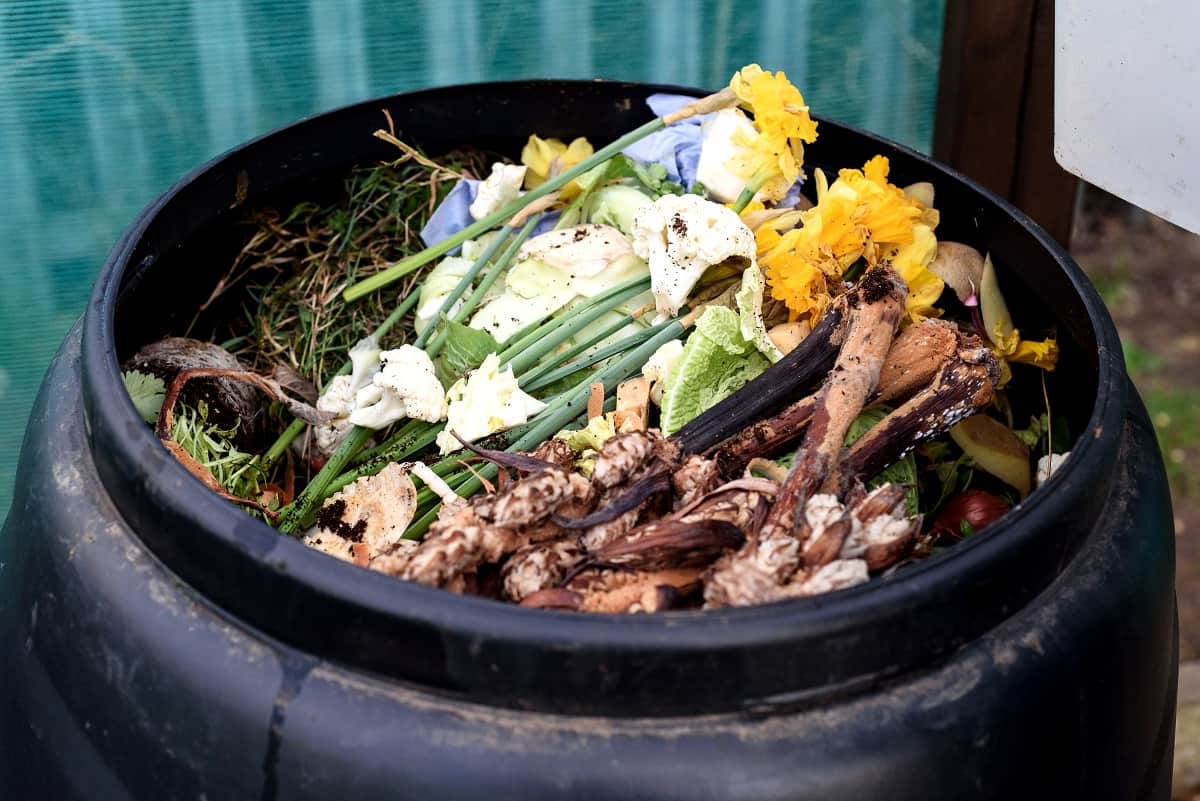
    So let’s talk about maggot in your compost. You might be the one that freaks out when you see maggot in your compost. But they are not so bad and they can’t hurt you.

    Actually, they are pretty useful in breaking down waste in your compost pile. They will even make decomposition faster and they will help in recycling nutrients back into the soil.

    What is a Compost Maggot?

    Compost maggots are actually the black soldier fly larvae. Black soldier fly (BSF) are simply normal housefly. When these flies settle on your compost, they lay their eggs and result in larvae (maggot). The maggot may be white, grayish, or brownish and segmented depending on what your compost consists of.

    What Is A Compost Maggot

    The segmented maggots are as long as one inch to one and a half inch. The maggots are born from black soldier fly eggs right into the food waste especially in conditions that are damp. They feed on the nitrogen-dominant decaying matter such as scraps from your kitchen and manures.

    Black soldier flies do well in a warm environment with a temperature of about 80 to 90 degrees. However, when the temperature reaches above 100 degrees, they will lose their strength and die off.

    The Usefulness of Maggot in Your Compost

    Those tiny black soldier flies which are maggots are like devouring beasts. They can consume a huge amount of food scrapes faster than you can imagine. Thus, they will make the decomposition of your compost fast. And if you are concerned they might show up in your home, not too worry. That won’t happen only if you place your compost pile is close to your window.

    In the southern part of the United States, these maggots are been used to decrease hog manure. This is because they are capable of consuming as much as 30 tons of hog manure in just two days.

    So, you can even place your compost outdoor far away from your house, and not worry about getting rid of them for a long time. The mission is to reduce waste!

    Matter of fact, some farmers go ahead and cultivate these black soldier larvae and sell them to pet stores. They are very high in protein and are excellent foods for birds, lizards, and even fish.

    Read about Best Compost Products Suppliers on the Market Today

    Eliminating Maggot in Your Compost Bin

    As we have mentioned earlier, maggot in your compost is beneficial. However, if you can’t stand them and you want to get rid of them. You can do the following:

    • Add Dry Material into your Compost: because these maggots thrive in damp environments, adding dry materials such as browns will prevent them from emerging. Add dry materials such as dry grass, dry leaves, shredded papers, and cardboards and cover them at least two to four inches. This will create a dryer environment and also cover the nitrogen food source. This is because it is this exposed nitrogen food materials the female soldier loves to lay their eggs on.
    • Bury Food Scraps: if it is a compost bin or a worm bin you have, bury the food scrap right at the bottom (at least 6 inches) of the pile. Also, ensure they are well covered.

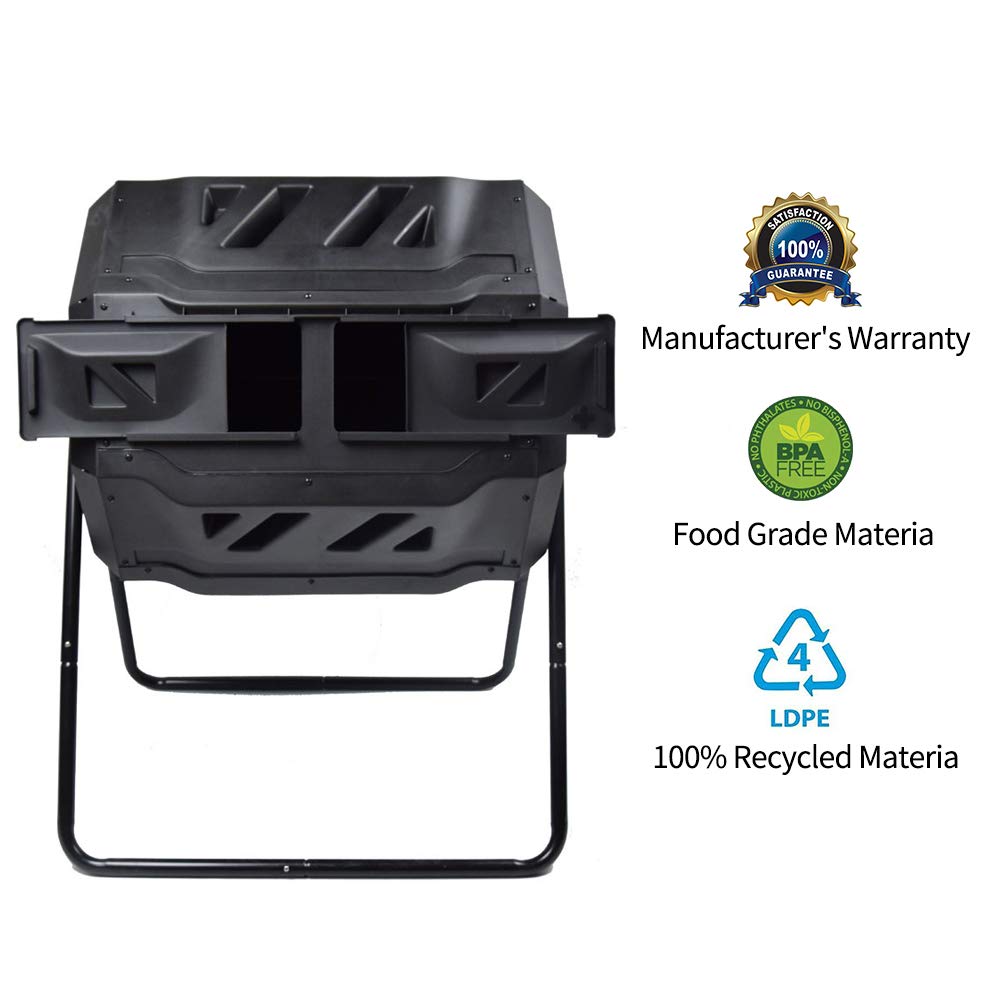
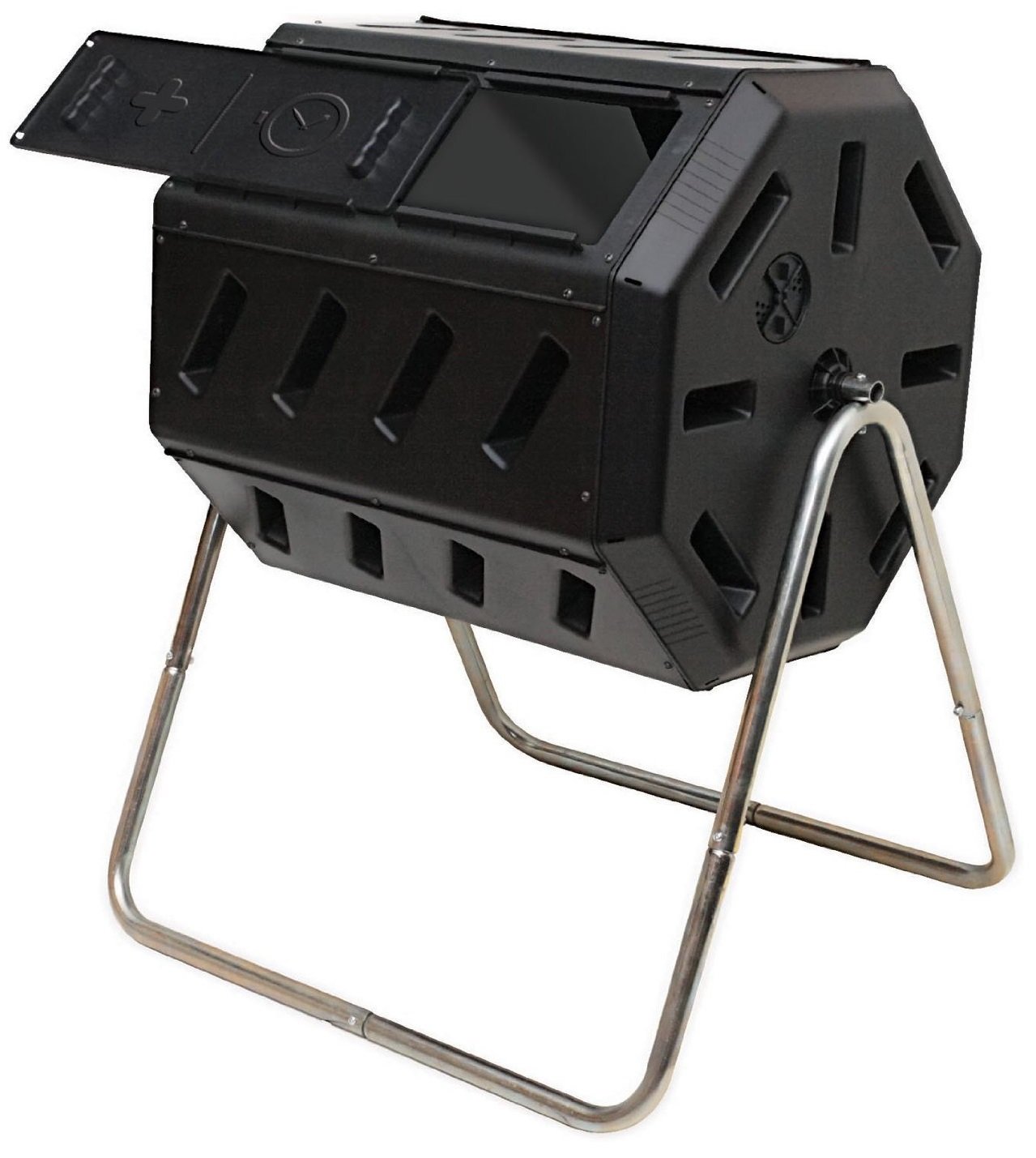
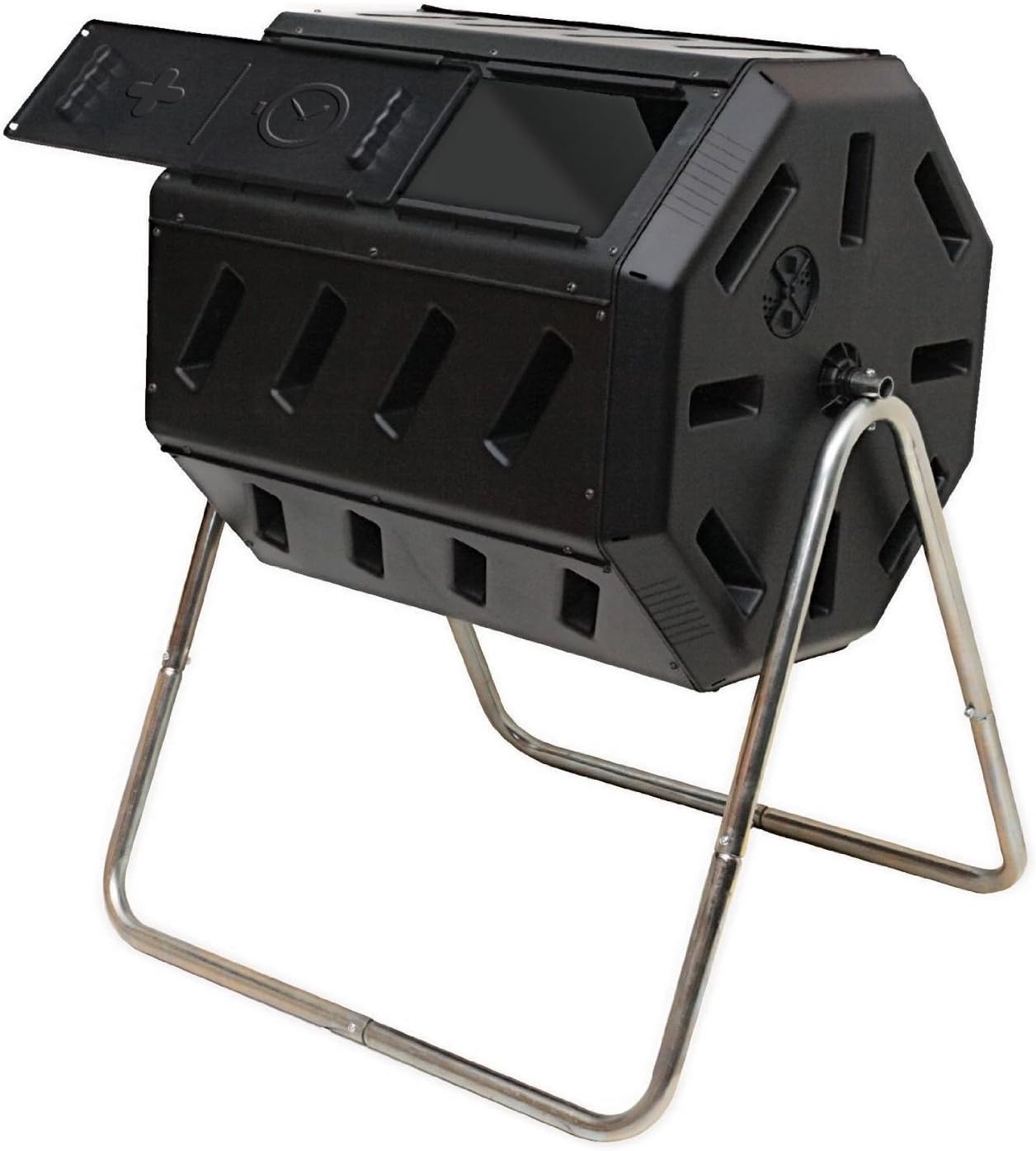
    lEnvirocycle Composting Tumbler Bin

    61krtWVizqL. AC SL1280
    • Reduce Flies by Covering Holes with Window Screen: if you are able to prevent flies from entering your compost, they won’t lay eggs and you will have no maggots. Therefore, cover every hole with a window screen and hold it down with a waterproof filter or seal.
    • Apply Lime to your Compost: you can add lime to your compost to deter these black fly larvae. However, adding lime to your compost can interfere with the pH. It can make the pH too high when it’s done composting. Even though lime also helps in the breakdown of compost, it is usually not needed. But you can add lime if your compost is acidic so as to make your compost slightly alkaline. Also, the amount of lime added should not exceed one cup per 25 material feet.

    In the end, these maggots in your compost will die and their bodies will decompose. They will in the due process leave behind thick and rich components for your soil use.

    FAQ’s

    Do maggots ruin compost?

    Maggots are not bad for compost and you can use them if you would like. They eat dead plant matter and help break down the material. I have had my compost pile for a few months and the compost is still active. However, if you notice any maggots around your compost pile, then there is too much moisture or your pile is too big. I just found out that maggots can also be used to control pests in soil. They are most commonly used as a biological pest control agent (BPCA) for termite management. I did not know this until recently.

    Are maggots good for compost?

    Maggots are tiny fly larvae that feed on organic matter such as decaying animal flesh, plant material and manure. They are commonly used in agriculture as a natural means of pest control.

    They can be used as a natural insecticide and they will eat most types of pests.

    Benefits of using maggots in the garden

    They help to break down organic matter: Maggots eat all kinds of waste, including plant material and manure. They are especially useful when breaking down manure, which may not be able to decompose on its own. If you use compost that has been left too long, you can add maggots to help break it down. This is especially useful if you have a lot of manure to deal with, as the larvae can eat large amounts of manure in just a few weeks. They are also useful for gardeners who have a lot of manure or waste to dispose of. You can use maggots to help break down manure and other organic matter.

    They eat all kinds of waste: Maggots can eat anything from food scraps to leaves to fruit husks. This makes them useful for gardeners who have a wide variety of waste that they need to get rid of.

    In fact, they’re so versatile that you may find yourself using them in more than one way. For example, you could use them to get rid of waste in your garden while also making fertilizer.

    They’re also useful when it comes to breaking down manure and other organic waste: When they’re ready to pupate, maggots will leave the waste behind. The pupae will then hatch into adult flies. This is how they turn your organic waste into compost. It is very important to know when the larvae are ready to pupate. This is where you will have to pay close attention to their development.

    You can help maggots to break down manure: If you have a lot of manure that you want to get rid of, you can use maggots to help break it down. You can either add them directly to the manure or place them in a bin with the manure.

    You can also use them to help break down other organic matter: If you’re dealing with waste that is hard to break down on its own, you can use maggots to help. You can either place the waste directly into a bin with the maggots or you can place them in a container with the waste and then bury it. This helps to break down the waste and to make fertilizer out of it.

    Maggots can be used in many ways: Maggots are versatile. They can be used in a variety of ways. One way that you can use maggots is to help you to get rid of waste. You can either place the waste directly into a bin with the maggots or you can place them in a container with the waste and then bury it.

    You can also use them to help break down manure and other organic matter: When they’re ready to pupate, maggots will leave the waste behind. The pupae will then hatch into adult flies.

    How do I get rid of maggots in my compost bin?

    I have a big pile of compost that’s ready to be turned. It has been sitting for a month or so. I noticed maggots in the pile and now I’m seeing them in the garden too. The compost is not sitting on top of soil but it is sitting on the ground with a little dirt underneath it. I don’t know how to get rid of them. What can I do? A:

    You should take a shovel and remove all the compost. Remove all the dirt and replace it with fresh dirt. This will help to kill the larvae.

    If the larvae are still active, you can mix the compost with other dirt and replace the dirt with fresh dirt. This will help to kill the larvae.

    You can use a light bulb to kill the larvae.

    You can wait and see if they die on their own.

    This should be done right away so that they do not contaminate the soil underneath. Maggots are not harmful to your plants but they are bad for your compost. They eat the compost and they cause the compost to become smelly.

    Conclusion

    Maggot might be disgusting and gross to behold. But you should consider the good they do to your compost. Think of it, you put a big pound of waste in your bin. A couple of hours later, the waste has reduced drastically.

    After the black soldier larvae are done with your compost pile, they will crawl out and vanish. During this process, they can become food to birds and other little animals.

  • How To Make Mushroom Compost

    How To Make Mushroom Compost

    One prolific ingredient to add to your soil to boost garden growth is mushroom composts. We will be enlightening you on how to make mushroom compost so you can grow your plants the best way.

    Applying compost to your garden soil enhances soil texture, drainage, and supplies adequate nutrients to your soil. As mulch covering, compost will regulate weed as well as retain soil water keeping the soil moist during dry conditions.

    A combination of mushroom compost is an awesome soil builder that can help your plant flourish. Wouldn’t it be great to be able to make mushroom compost on your own? Of course! It is even easier to make if you grow mushrooms in your garden. The procedure is pretty easy and we will teach you how.

    Mushroom Compost

    Mushroom composts are made from the soil which was used to grow mushrooms. After you much have harvested your mushrooms, you can now proceed to make some mushroom composts for your garden soil. It is an organic fertilizer that will be released gradually into the soil of your garden.

    Mushroom composts comprise mixed peat, straw, gypsum, and other poultry manure. These are most of the common elements used; however, it may contain other elements.

    Steps on How to Make Mushroom Compost

    Mushroom composts are easy to make. Just follow these steps on how to make mushroom compost and have yourself some mushroom composts for your garden.

    Compost Ingredients Used

    The ingredients used for making mushroom composts include:

    • Wheat straw.
    • Gypsum.
    • Water.
    • Poultry manure (chicken, cow, or horse manure).
    • Mushroom garden soil.

    Procedure

    Step 1

    The first thing you need to do is to sprinkle the wheat straw with some water. Make sure the wheat straw should not be too wet or too dry. Then mix the straw with poultry manure, gypsum, soil, and mushroom bacteria.

    Step 2

    Allow the mushroom compost mixture to sit for a period of weeks so it can heat up. This can take up to two months. During this period, some chemical reactions will take place. Naturally occurring fungi and bacteria will visit the scene and react with the poultry manure and straw. They will eventually break down all the ingredients.

    Step 3

    As composting continues for some weeks, you must monitor the compost pile frequently. This is because the temperature of the mixture continues to raise therefore, always water and mix frequently. The temperature can rise above 80 degrees Celsius which is too hot. Ensure the temperature remains at 140 degrees Fahrenheit.

    Mushroom Compost Organic Brands 8 Pound Bag

    How to Make Mushroom Compost - Orchid

    Step 4

    While composting continues, pasteurization also takes place to sterilize and eliminates any harmful bacteria, pathogen, pests, and weeds.  When pasteurization is completed, the compost will have to cool down before applying it to your garden soil.

    You now have a clean pile of abundant brown chocolate compost. You can now apply the readymade mushroom compost. Ensure you mix mushroom compost well into your garden soil when applying to give you an awesome result.

    The video below describes mushroom compost is commercially produced.

    Benefits of Using Mushroom Compost to Your Garden Soil

    Let’s take a look at a couple of benefits of using mushroom composts on your garden soil:

    • Mushroom composts are a very affordable fertilizer you can invest in or make.
    • You can add mushroom compost gardening soil to your fruits, vegetables, flowers, and herbs. It will enrich your crops to flourish well.
    • If you need a soil additive to improve the water retention in your soil, you can make use of mushroom compost. Mushroom composts will absorb enough water and retain it in your soil to be made available when needed. As such, your soil never dries out.
    • Applying mushroom compost will provide your plant with some great natural ingredients.
    • Used as garden mulch coverings.
    • It can also be used as soil amendments for your lawns.
    • Mushroom compost comprises of nitrogen needed for plants and foliage growth.
    • Mushroom compost will supply the right amount of nutrients without being nutrient-dense.
    Benefits of Using Mushroom Compost to Your Garden Soil

    FAQ’s

    Is mushroom compost any good?

    Mushroom compost is a blend of nitrogen and carbon rich materials that are added to the soil to encourage fungal growth. This is done in order to create more food for soil microorganisms and plants, which will help increase plant growth and health. Mushroom compost can be purchased at most garden centres and nurseries, however, it is more cost effective to make your own.

    How do you make mushroom compost?

     Mushroom compost is different to other composts. It contains plenty of carbon (in the form of decaying plant material), which is why it’s good for growing mushrooms. However, it also contains small amounts of nitrogen, which is needed for the mushrooms to grow.

    The best way to make compost is to mix it in a bucket. You don’t want to do this in a plastic bucket, as the plastic may leach into the compost. Instead, use a metal or wooden bucket that you can wash out and reuse. Start by mixing one part of dry compost with three parts of water. When you’re making mushroom compost, add one part of wood chips or sawdust to two parts of the dry compost. Mix everything together with a spade or fork. The wood chips or sawdust will help to give your compost structure, so you don’t want to add too much. Too much structure will prevent the compost from drying out. After adding the wood chips or sawdust, stir it all together with your hands. When mixing, keep the material moving, so that the compost is mixed evenly. The more you mix, the better your compost will be. Make sure you mix in as much air as possible. How should I store it? Ideally, you should store your compost in a shed or other dry location, where it will stay dry and warm. A shed will also help to keep the compost safe from mice and rats. It should also be kept well ventilated.

    How do you apply it as fertilizer?

    If you plan to use it as a fertilizer for your soil, then you should not add any wood chips. A: Mushroom compost will contain some nutrients (especially nitrogen) and a lot of organic material. It may also contain some weed seeds, so you’ll want to remove them before adding the compost to the soil. Wood chips are not an effective source of nitrogen, and they can harbor weed seeds. Instead of adding wood chips, you might consider adding a nitrogen-rich manure (such as rabbit, chicken, horse, or fish manure). You’ll also want to add a small amount of sand to improve drainage. The present invention relates to a method of fabricating a semiconductor device.

    How should I store it?

    Ideally, you should store your compost in a shed or other dry location, where it will stay dry and warm. A shed will also help to keep the compost safe from mice and rats. It should also be kept well ventilated.

    More Information

    Even though you can apply mushroom composts any period of the year, the most appropriate period to do so is during spring or fall.

    Also, note that mushroom composts cannot be used as soil replacement. Therefore, it can’t be used on its own for planting.

    For its water holding capacity, only apply the right amount of compost manure to your soil. This way, the water holding capacity does not water-log your soil. Soil waterlogging can cause root rotting and fungal infection.
  • How To Make Compost-Tea Without A Pump

    How To Make Compost-Tea Without A Pump

    A fantastic and very simple way to feed your garden soil and plants is Compost-Tea. Have you heard about this special brew? Compost-tea can be used as a mild liquid fertilizer or plant booster, it also helps the plants deal with small pest issues. And, guess what? Compost tea has been used by farmers for a long time ago. The early Egyptians, Romans, and Greeks brewed it to fertilize their crops. Keep reading to know more about how to make compost tea without a pump.

    A Quick Guide to Make Compost Tea Recipe

    Compost-tea is in a sort of a way, an infusion of a bag of compost in pure water. As simple as it sounds, it’s in practice very simple too. The procedure goes like this:

    1. Get (or recycle and sew up) a cloth or mesh bag, 
    2. Fill it with mature compost
    3. Put the compost mesh bag in a bucket of water for a few hours, 
    4. Stir a bit for a few times, and… there you go. 

    Compost-tea is good for the soil and your loved plants because it has a high content of organic matter and holds living colonies of healthy bacteria and fungi. These microbes are in constant dynamics with plant roots systems (rhizosphere), preparing the food for them to absorb it better. Healthy microbes in the soil are like the chefs of plants. 

    There are two simple procedures to apply the compost-tea, one is fast and requires very little materials or tools. The other way is a bit more complicated to set up and requires diverse tubing and an air pump (similar to the ones used in aquarium set-ups). Let me tell you more about the simple method to achieve a quick & homemade liquid fertilizer. To know everything you would possibly want to learn about compost-tea, visit Rob Avis’ article on Compost-teas and Extracts.

    How To Apply The Compost-Tea

    Compost-tea has proved to benefit the soil’s nutrition and therefore the plants that grow on it, but in comparison, it’s way simpler to apply it than solid compost itself. After you prepared your compost-tea, the steps to apply it are: 

    1. Strain the bigger particles with a sieve or strainer. You can also try with an old piece of cloth (T-shirts are great, so are socks or meshy tights). 
    2. Dilute the compost-tea in a 1:4 ratio: 1 part of the compost-tea and 4 parts of rainwater or chlorine-free water. 
    3. To apply the diluted compost-tea, you may carefully pour directly to the soil or spray your plants leaves early in the morning or late in the afternoon. 
    4. Repeat frequently, maybe once a week or once every fortnight for the first months. After that, space applications to once every three or four months.

    How To Apply The Compost-Tea

    Read more about Is Mushroom Compost Good for a Vegetable Garden?

    Conclusions 

    Compost-tea is truly a great and easy liquid multipurpose fertilizer that can be prepared a moment before the application. It is rich in beneficial microorganisms that help nurture the soil and the plants that grow of it. 

    In case you are an experienced Compost-Tea brewer, I recommend you try the procedure with an active aerator (air pump). Deanna Cat has a great article about aerobic (with air) compost-tea brewing at her blog Homestead & Chill. 

    If you liked this small how-to post about compost-tea, please share it and comment, we love your feedback. 

  • How Long To Compost Chicken Manure And Make It Garden – Ready

    How Long To Compost Chicken Manure And Make It Garden – Ready

    How long to compost chicken manure before use is still one of the commonly asked questions by farmers who rear chicken and use its manure as fertilizer.

    Chickens are generous enough to give us eggs and manure. We concentrate on the eggs and forget the manure. We can’t allow the manure to continue accumulating in the coop without using it in our vegetable gardens.

    Manure in the coop attracts rodents and flies. It also breeds a harmful environment for your chickens. That’s why you need to clean the coop, remove the manure, and compost it before using it in the garden.

    How Long To Compost Chicken Manure?

    Chicken manure takes time to mature well. This time depends on the conditions under which the manure is composted. It takes between 6 to 9 months on average for chicken compost manure to ready for use. Although after 9 months the manure is ready for use, some farmers opt to wait for up to 12 months before using it.

    How Long To Compost Chicken Manure

    To speed the process, you can use a compost catalyst, check a homemade catalyst recipe here.

    Composting Chicken Manure Like a Pro

    There are steps to follow when composting chicken manure. These steps ensure that you get the best results within the right time frame. Follow us as we take you through the step by step process.

    Step 1: Collect chicken manure and used bedding. Chicken farmers use sawdust, shavings, dry leaves, or straw as dry bedding for chicken. The used bedding should be collected together with the manure and put into the compost bin.

    Step 2: Use the right proportions. Combine the right ratio of used bedding and manure each time to form a pile. Since farmers use different bedding, it important to follow the rule of 1 part brown and 2 parts green. Yet, because the chicken manure is so high in nitrogen, you can use 1:1 or 2:1 mixture.

    Step 3: Use a hot compost recipe. When you combine the right ratio of used bedding and manure, you can now add moisture. Water is the best form of moisture that works as a catalyst. Heating is a very important step as it destroys pathogens.

    The compost pile must heat up to 130-150 degrees F and maintain the same temperature for 3 days. Keep the temperature in check using a compost temperature gauge. Temperatures above 160 degrees F can kill the beneficial microorganisms and slow the process.

    Step 4: Repeat the heating process. After three days of heating, allow your manure to start cooling. Turn the pile every few weeks to get air into the pile and repeat the heating process every time you turn the pile.

    Step 5: Let it cure. Once you are satisfied with the heating and cooling of the entire compost, cover it. Let it cure for about 6 to 9 months on average. If you are uncertain how well your chicken manure has composted, you can give it about 3 more months to cure. It’s ready when most material is dark, sweet-smelling, and crumbly.

    When it’s ready for use, spread the composted chicken manure on the garden. It produces excellent results for your vegetables to grow in.

    Read more about the key components in making the best compost for tomatoes

    Conclusion

    Although it takes too much time and work to compost the chicken manure; its benefits outweigh the work. To get this black gold, keep digging!

  • Top Soil Vs Compost- What’s The Difference & What’s Best To Use?

    Top Soil Vs Compost- What’s The Difference & What’s Best To Use?

    Almost all gardening advice gives great tips on both compost and topsoil use but not everybody understands the difference between topsoil vs compost.

    Are you struggling to grow plants in poor soil? Is your garden full of clay or sandy soil that you want to replace? If so, you must be looking for ways to improve your garden by either using compost or buying topsoil.

    We all know that getting the right soil is by ensuring it has the right nutrients to make the plants thrive. So what happens when the soil is poor?

    We have put together information that you need to know what to use when your soil is not in its best state.

    The Differences between Top Soil vs. Compost

    What is topsoil? Topsoil is a layer of soil out of which your plants grow. It is relatively shallow. Depending on where it’s found, it contains organic matter and nutrients for your plants.

    What is compost? Compost is a soil-enriching nutrient that comes from food scraps, dried leaves peelings, eggshells, cardboard, paper, etc. These materials are mixed together in a heap outside or a compost bin and left to decompose. Once well rotten, the mixture is good for the soil and used as manure.

    Differences to Help you Choose between the Two

    Compost Topsoil
    Full of nutrients to enrich your garden Great for creating new gardens
    Doubles up as mulch Great for leveling out a lawn
    Saves landfills Helps eliminate weed
    Needs space to prepare it Have to buy if you can’t access it from other farmers
    Takes time to prepare and get ready Certain soils may come with contaminants

    What is Best to Use Top Soil vs Compost?

    Compost and topsoil are very similar to each other. It is very hard for farmers to distinguish between these two mediums. Adding a layer of topsoil or compost to your garden soil helps add important nutrients to depleted soils. Both equally help improve the overall quality of your current soil. There are many benefits to adding them to your soil because they bring in the nutrients required.

    What is Best to Use Top Soil vs Compost?

    Each of these two has special benefits to the soil and it’s hard to choose one over the other.  The best advice is to keep them both as they serve the soil differently. No one can replace the other!

    • The topsoil retains the soil structure and holds moisture far longer than the compost. It is also relatively affordable to buy.
    • The compost has more organic matter that the soil requires. The best part of the compost is how it releases its nutrients slowly. Therefore it’s used for an extended period of time.

    Where to Buy Compost?

    If you don’t have the time to make your own compost, the easiest way to buy compost is online, I have put together a list of products you may try:

    • Charlie’s Compost– it is made of chicken manure, corn stalks, straw, forest products, hay, clay, and beneficial microbe inoculants.
    • Wiggle Worm Worm Castings– is an all-purpose natural fertilizer and contains rich proportions of water-soluble nutrients.
    • Wakefield Biochar– biochar made of wood and compost blended with Mycorrhizal Fungi.
    • Fishnure– fish manure compost, it is an organic fertilizer and soil conditioning. The carbon source used to create the proper carbon to nitrogen ratio for this compost is oat straw.

    Where to Buy Compost?

    Conclusion

    Ever had 2 pieces of valuable items that you want to choose one over the other. How easy was that decision? Which one did you choose and which one did you not? Do you think you made a wise choice to let one go? Was it wise to keep them both? Now you know, 2 valuables do not compete in the same category! They only go hand in hand!

  • How To Make Homemade Compost Catalyst

    How To Make Homemade Compost Catalyst

    Learning how to make a homemade compost catalyst enables you to make your pile efficiently available saving you valuable time.

    Compost comes from decomposing leaves, papers, eggshells, coffee grounds, and soil. It is rich in nitrogen and carbon which are beneficial to the soil. A new compost usually takes between 1 to 2 months to fully mature.

    New compost can benefit from a homemade compost catalyst to help speed up the process. By combining a few basic ingredients found at home your compost pile will be cooking up the nutrients within no time.

    How To Make Homemade Compost Catalyst

    By learning how to speed up composting and the key factors involved, you can make your own compost within a shorter period of time. A compost pile must be at least 4’x4’x4′ to generate and keep sufficient heat. Too large piles will be too big to compress which limits the oxygen flow.

    Things You Will Need

    • 6 ounces of beer
    • 12 ounces of soda
    • ½ cup of ammonia
    • 2 gallons of warm water
    • 5-gallon bucket
    • Shovel for mixing
    • Garden sprayer

    The Step by Step Method

    • Place the 5-gallon bucket on sturdy ground. Choose a bucket that has not had any chemicals or any harmful contents. Clean it well before use.
    • Pour 6 ounce of beer into the bucket – don’t drink any. Beer contains yeast that helps speed up the decomposition process in the compost. You can replace the beer by adding active dry yeast.
    • Add ½ cup of ammonia to the beer and watch the reaction. Ammonia provides a critical shot of nitrogen. It also helps speed up the breakdown of the compost material.
    • Pour 2 gallons of warm water into the mixture and mix together.
    • Add the 12 ounces of regular soda to the mixture. Soda contains extra sugars that help microbes to feed during the decomposition process.
    • Pour the mixture into a garden sprayer.
    • Spray this mixture into the compost pile. Using your shovel, mix the pile well to make sure the homemade compost catalyst gets to all corners.
    • When the heat reaches the first peak temperature, it will kill the yeast, so apply the mix once again to your compost.

    Homemade Compost Catalyst - Step by Step Method

    Pros and Cons of Using Homemade Compost Catalyst

    Not everyone finds the need to make compost in 14 days. To some, it may seem too much work but to others, it’s interesting to make their compost process work faster by using a compost accelerator. Let’s look at the advantages and disadvantages of accelerated decomposing.

    Advantages

    • You get ready compost in a few weeks – unlike the long process of allowing the pile to compose naturally.
    • You get higher nutrient content due to less leaching in nutrients. The shorter the decomposing period, the more nutrients you preserve.
    • You get fewer potential weeds and weed seeds – the quickened process that does not allow weeds to form.

    Disadvantages

    • You will use more effort. Unlike allowing nature to take its course, you will need to put in the effort to mix the compost.
    • You will need more materials. You will need to invest in a little more than just the compost pile.

    Pros and Cons of Using Homemade Compost Catalyst

    Conclusion

    Life is a journey! And sometimes it takes twists and turns that we never expected. Sometimes it may end up taking us where we did not want to go. If you had the key to drive your own life the way you want, would you take it? Same here, you have the chance to cook up your compost pile within the shortest time possible and still get amazing results. Why not use it?

    FAQ

    What Is A Compost Accelerator?

    A compost accelerator is a booster added to the compost pile to get speedy results for complete composting. It is also known as compost activators or compost starters. 

    Compost accelerators comprise bacteria and fungi which will help kick start nature’s operation for the decomposition process.

    How Long Does It Take For Compost To Break Down?

    How long compost takes to break down is about 4 weeks to 12 months to break down. However, if you make use of a tumbler, your compost can break down quicker in a period of 3 weeks to 3 months. 

    You should also take note that the rate at which compost will break down will depend on some factors. They are:

    • Size: the size of your materials will determine if decomposition will be fast or slow. The smaller size breaks down more speedily than the bigger size. Thus, to enhance your compost to break down rapidly, chop and shred the materials into smaller sizes. Also, if you want to add things like food scraps, grass, dry leaves, etc to your compost, do so by cutting them into smaller bits. 
    • Turning pile compost: when you turn your pile compost often encourages aeration. It will also enhance the movement of bigger bits towards the center where they are able to decompose faster. The use of a compost tumbler enhances this procedure. 
    • Heat: heat will help speed up the decomposition process in the compost pile. 

    Does A Compost Pile Need Sun?

    If you want to speed up the decomposing process of your compost pile, placing them in the sun will do the job. The compost pile will need the sun to increase the temperature making the fungi and bacteria work faster. However, watering your compost pile once in a while under the full sun might be needed so it does not dry out. 

    How Do You Know When Your Compost Is Ready?

    If you are wondering how do you know when your compost is ready, these characteristics should help you out:

    • Color: the color of your ready compost pile should be a dark rich color. 
    • Texture: when your compost is ready, the texture should be smooth and friable. Most of the things you added to your compost should not be seen, they should all be smooth. There should also not be too much moisture in it.
    • Scent: the smell of your readymade compost should be sweet like earth. There shouldn’t be any indication of sourness. If your compost smells sour, it’s a sign of an incomplete decomposition process meaning it needs more time to decompose. 

    What Will Happen If You Left The Compost Too Long?

    You might be wondering what will happen if you left the compost too long? Well, it’s still safe to make use of after years only if the moisture levels are well managed and covered in a dry place. 

    However, little by little, the compost can begin to break down. The nutrients will start to leach away and the compost pile might begin to show signs of rotting. The fungus can also begin to pollute or contaminate the compost pile. 

  • Can You Compost Weeds? The Challenge Of Successfully Composting Them

    Can You Compost Weeds? The Challenge Of Successfully Composting Them

    Have you been warned of the risks of composting weeds and you don’t know if you can compost them? Weeding is a dreaded garden activity because it might be hard to get rid of these longlasting and resistant plants. Weeds are plants hard to pull, they give plenty of seeds and multiply everywhere. Sometimes weeds climb on other plants, and in some cases, they can even smother others to death by weight or in a parasitic relation. 
    We find ourselves weeding through the garden every other day, but weeds keep popping up. We then find ourselves facing a new problem: what to do with the weeds we just pulled? Can you compost weeds?  

    Can You Compost Weeds?

    Weeds never die is a common saying, but what are weeds and why do they “never die”? 

    Can You Compost Weeds

    Many say weeds shouldn’t be thrown into the compost bin. Weeds have very resistant seeds, that can remain alive even above 65°C (or 149°F). Most composts get to only 45-50°C (°F), because of many factors, such as:

    • Small size, warm composts need to be at least 1m3 (27 ft³). 
    • Not enough green organic matter was mixed in, in relation to the brown organic matter added. You can fix this lack of Nitrogen in the mix by adding more of the greens or even add some urine (with a concentrated and readily available nitrogen). 
    • Not turning it over often enough. How often do you turn it over? Once a week or once a month?
    • The climate where you keep the compost is too dry, too wet, or too cold. This can set back the decomposing process in your compost 

    Composting of Weeds, how to succeed?

    In order to succeed in composting weeds, the best thing to do is to observe the most common weeds in the location and learn how they look like in different life stages. Weed out as soon as you spot a weed in your garden, the sooner the better. 

    Once it flowers, the plant will start producing seeds very quickly, and decomposing the weeds in the compost may not be enough to inactivate the seeds. When you fertilize your soil with the uncomposted weed’s seeds, they will eventually find the conditions to germinate, making it a never-ending process of weeding. 

    Compost usually warms up, but in order to break the weeds seeds cycle, we must guarantee the heat to persist (above 65°C/ 149°F) during at least fifteen days in a row. 

    The Quick Guide To Composting Weeds Successfully

    • Make sure you build a big compost pile to ensure its proper warming process. The size of the compost container should be double the volume of the final compost you want to obtain. You may find very detailed instructions on how to build six different types of compost bins or containers and their optimum sizes in this article
    • Cut organic matter into small pieces when possible.
    • Add enough brown organic matter to balance recently trimmed weeds (green matter). One bucket of green organic matter and one bucket of brown organic matter -or a bit more- is a good volume relation (1:1).
    • Keep the moisture content between 40 to 60%. The compost mix should feel moist to the touch.
    • Add chopped up weeds that have not yet flowered.
    • Turn the compost over frequently (at least twice a month).
    • Most importantly: compost weeds before they get to flower


    FAQs

    Can weeds go in a compost bin?

    Weeds are an organic material that will break down over time. There are several ways you can use weeds in your composting process.

    One thing you can do is make a mulch from them, which will add nitrogen and organic matter to your soil. This will help keep weeds down while improving your soil.

    You can also add the weeds to your compost bin. This will keep them out of your yard, where they can cause problems. If you are going to add them to your compost bin, be sure to let the weeds sit there for at least two weeks before adding them to the compost pile. This will give them time to decompose. You may not be able to use your compost bin as often if you have a lot of weeds in it. A lot of weeds can be very hard on a compost bin, causing it to become hot and smelly.

    If you have a lot of weeds, you may want to try using a worm bin instead. Worms are much better at breaking down the weed seeds than a compost bin is.

    Why do people not compost weeds?

    The most common reason people avoid composting weeds is that they’re afraid of creating a toxic stew. They worry about mixing plant material and having to filter out the weed seeds. The truth is, you don’t have to worry about this. There are two ways to compost weeds: first, you can let the weeds decompose in place, and second, you can remove them and compost them separately.

    If you choose the first option, simply leave the weeds where they are, because they’ll naturally break down into humus in time. If you choose the second option, you can remove weeds from your compost pile, then separate them from the rest of the compost with a screen or a metal strainer. If you do this, you’ll need to add a little extra water and oxygen to the pile, but it’s not that difficult. In either case, you don’t have to worry about weed seeds.

    They’re sterile when they germinate, so you can just put the compost directly into the soil. In fact, many gardeners use a single-composting system for all their organic matter. If you’re looking for a simple solution, then this is a great way to go. You’ll save time by doing it all at once, and you won’t have to worry about keeping separate piles of food waste, yard trimmings, and manure.

    Why is it a good idea to compost weeds?

    Composting weeds is a great way to help our environment. It will help to keep your garden free from nasty weeds, it will also help the environment by helping to remove excess nitrogen from your garden and helping to reduce the amount of water needed for the garden. Composting weeds can help with the process of recycling, weeding, pest control and fertilizing. Composting weeds will help you to save money by not having to buy weed killers.

    Composting weeds will help you to grow more plants, it will also help you to grow healthier plants and you will notice that your garden will be healthier than ever before. Composting weeds will help to increase the amount of nutrients in the soil and it will help to make sure that your soil is rich and healthy for your plants. You can find the best place to compost weeds at your local gardening store. They have different methods for composting weeds and they also have all the right tools to help you get started.

    Why should you not compost weeds?

    – Do not compost your weeds if you have a dog or cat in your house because the weed seeds could get into their food and they could get sick.

    – Do not compost your weeds if you have a pet because the weed seeds could get into their food and they could get sick.

    – Do not compost your weeds if you have any allergies to weeds or other plant material because the weed seeds could get into their food and they could get sick.

    – Do not compost your weeds if you live in an area that gets a lot of rain because the weed seeds could get into their food and they could get sick.

    Why Are Weeds Good For The Garden? 

    The weeds of your garden have functions in the ecosystems.

    1. Weeds are plants designed by Nature to regenerate soils. They like to grow especially in borders, eroded or poor soils, and besides trails and roads. 

    2. Weeds are very resilient plants that prepare the soils for other more nutrient demanding plants in ecological succession. 
    3. When soil is left bare or is turned around during tilling, seeds of weeds germinate easily and start their life mission: to hold the soil and nurture it. 

    4. Weeds tend to be highly medicinal, nutritious, or can be extremely toxic. 

    5. Many weeds have superpowers to absorb high quantities of certain minerals from the soil. Some of them are even used to regenerate heavily polluted soils (from contaminants such as oil, gasoline, and heavy metals).

    6. Many animals develop a special relation to these kinds of plants and seek them for specific therapeutic results, including us humans.

    7. They have accompanied humans during the ages and have a history of being related to witches, wizards, healers, and shamans all around the world. 

    Why Are Weeds Good For The Garden

    If you have more tips, leave in the comments what has worked for you when you compost weeds from your garden.

    Go often to the house of thy friend,  for weeds soon choke up the unused path.
    – Scandinavian proverb