Category: Plants

  • Tomato Plant Diseases Curled Leaves And Possible Remedies

    Tomato Plant Diseases Curled Leaves And Possible Remedies

    Tomato leaves curling is one garden problem that may present itself to your garden. Experiencing tomato plant diseases curled leaves in your garden can be pretty frustrating and worrisome. But don’t stress! There are some possible remedies you can go for to help your tomato plant leaves curling and we will discuss that here.

    You should however know that not all tomato plant diseases infected leaves curling are solvable. But it’s good to know that some of the tomatoes plants can be helped but others are unsolvable. You can however take some measures to avoid future occurrences of this type of situation.

    This is why we would be looking at the causes of tomato plant diseases curled leaves and more.

    Reasons Tomato Leaf May Curl

    Tomato leaves curling is one common issue gardeners encounter. There are several reasons you may be experiencing tomato plant leaves curling in your garden. The first thing to know is that not all tomatoes curling are due to infectious diseases.

    Your tomato leaves curing may be due to physiological reasons, herbicide drift or damage, as well as infestation.

    • Physiological reasons are the most common and they are mostly caused by environmental stress.
    • Herbicide drift or damage is caused by herbicides spreads on your plants.
    • Then we have an infestation from a virus which is majorly caused by 3 viruses. They are curly top virus (spread by leaf-hoppers), tomato yellow leaf curl virus (spread by whiteflies), and mosaic virus.

    For the purpose of this article, we will be looking into more details on tomato plant disease curled leaves.

    Tomato Plant Diseases Curled Leaves And Possible Remedies

    One culprit to your tomato leaves curling is a virus. There are 3 main viruses that can cause your tomato plant to curl. They include:

    1.    Curly Top Virus: Tomato Plant Diseases Curled Leaves

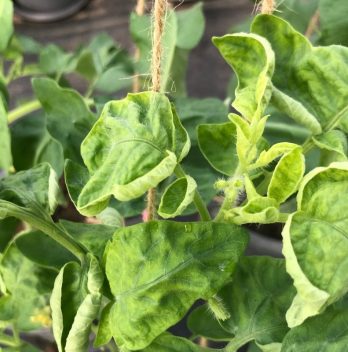
    Symptoms: Once you notice the top portion of the plant curling upward or the whole leaves pointing upwards, it may be a sign of the curly top virus.

    Curly top virus in tomato plant is caused by leaf-hoppers pests chewing your tomato plant. The pest mostly chooses one plant to chew. The good thing is that the virus won’t spread to other plants even if the infected and uninfected tomato plants are touching each other.

    But when these leaf-hoppers bugs chew on an infected plant and fly to chew on another uninfected plant, chances are the leaf-hopper bugs will give the uninfected plant that virus.

    You can still allow the plant to attain maturity and harvest your crop. This is if the plant is already growing fruit, the plant can still produce ripened fruit. However, if they were infected in their early stage, their growth may be stunted and ripen prematurely.

    But the best thing to do is to get rid of the plant to avoid leaf-hoppers spreading the virus to uninfected plants when they chew on them.

    Organic Neem Bliss 100% Pure Cold Pressed Neem Seed Oil
    4176HQtT+WL

    2.    Tomato Yellow Leaf Curl

    Symptoms: Leaves can curl upward or downward and the leaf can roll in a cup-like fashion. More symptoms are marginal yellowing of leaves, leaf size reduction, dropping of flowers or fruit, and stunted plant growth.

    Tomato yellow leaf curl is spread by whiteflies. The best thing to do is to keep the population of whiteflies in your garden under control. You can do this by spraying neem oil once or twice every week so whiteflies won’t come close to your plant. But once the disease infected the plant and manifested, it’s hard to get rid of it.

    However, you can also do this to help your plant: get a big trash bag and wrap it by covering the whole tomato plant. Then tie the open end of the bag around the tomato trunk at soil level.

    Cut the plant off at the soil level and allow it to sit in the hot sun for a day or two. This will kill all the whiteflies that contain most of the virus. Then begin a neem spraying scheme after this.

    3.    Tomato Mosaic Virus

    Symptoms: Leaves rolling upwards and coloring of leaves such as internal browning. The plant may also have stunted growth.

    Tomato Mosaic Virus

    The best thing is to remove infected plants and get rid of them. This mosaic virus can live in the soil for up to 2 years. Therefore, when you’re watering your tomato plant, water the base and never allow water to splash over the leaves.

    When you do this, it will reduce the chances of the mosaic virus getting into your plant leaves. This is just in case the mosaic virus still lives in the soil.

    The best way to overcome the tomato mosaic virus is to grow resistant varieties.

    Other Reasons For Tomatoes Leaves Curling

    Apart from disease-related issues, tomato plant leaves can be all curled up for other reasons. We have physiological reasons which are often resolvable. Then we have the herbicide drift.

    • Physiological Reasons: Physiological reasons are caused by environmental stress. This environmental stress can include heat, under watering, overwatering, dry weather, excess nitrogen application, etc. Usually, the leaves won’t change their green color but they will curl upward and most of these causes are remediable.
    • Herbicide Drift: This is when you spray herbicide in your garden or you live close to where one has been sprayed, some of the residues can drift over your tomato plants. This can cause your tomato leaves to curl. Your plant may recover from this. But if they don’t it’s best you pull out the whole plant and dispose of it.
    Other Reasons For Tomatoes Leaves Curling

    Preventive Measures For Tomato Plant Leaf Curl

    Tomatoes may be easy to grow but they can as well be tricky to grow. You need to keep a close eye on your tomatoes as they grow so you don’t miss even the slightest changes that may occur. So, always watch your tomatoes plant and act as soon as you notice any problem.

    Another great tip is to go for virus infestation is to plant resistant tomato varieties of these diseases.

    FAQ’s

    How do you treat curled tomato leaves?

    Curling is a disease that affects only tomatoes. It is caused by viruses, bacteria or fungi. It appears when there is high humidity. When a plant is affected by the disease it can look like a leaf that has been rolled up. The disease can also affect the fruits.If you are treating your tomatoes for this problem, you should look for the symptoms of the disease and follow these steps:
    – Check the leaves for signs of wilting or yellowing
    – Look for any other problems with the leaves – they may be unevenly coloured, or they may have spots or crinkles on them
    – If you can see signs of a fungal infection, there may be some mould on the leaves – if so, remove the leaves and disinfect the area where they were growing
    – If you have found that the cause of your curled tomato leaves is a virus, you should first make sure that the virus is not spreading to other plants in your garden. You can do this by spraying a product called ‘Bordeaux mix’. This is a spray that contains a pesticide that kills viruses.
    You can use an anti-fungal spray. You can also remove the affected leaves.

    Tomato leaves can be also damaged by insects. I would recommend using Bt for them. There are many types available, some that are used against leaf feeding caterpillars and some that are used against slugs. It’s best to use a combination of the two. The Bt products that are used against leaf feeding caterpillars work very well. Bt for slugs is effective at controlling them in the garden, but it will not kill the slugs in your greenhouse .

    Can you cure tomato leaf curl virus?

    Tomato leaf curl virus (TLCV) is one of the most devastating viruses in the world and has been present for years. It causes serious damage to tomato crops worldwide. There is no known cure for TLCV, and it is difficult to grow tomatoes without being infected by it. However, there are some ways to control TLCV, including using chemical sprays, breeding, and grafting. These methods are expensive and time-consuming. 
    The most common method of controlling TLCV is through the use of resistant varieties. Tomato plants that have a resistance gene against TLCV can be grown without being affected by the virus. Although the resistant varieties are available, they are not always effective in preventing the spread of the virus, and they do not always produce good yield. Insecticides are the most common way to control TLCV, but they may not be as effective as expected. The virus is carried by aphids and thrips, and they can transmit the virus to other tomato plants in the same field, or to other plants in the same garden. Insecticides that kill these pests are not 100 percent effective against TLCV, because it can be transferred to another plant through the insecticide’s residual effect. In some countries, farmers use an organic method to prevent the virus from spreading. They plant two tomato crops, one with the resistant varieties and one without. This allows the virus to remain in the soil and prevent it from spreading.
     

    Closing Remark On Tomato Plant Diseases Curled Leaves

    Tomato plants having all curled up leaves may be solvable or not. The key to solving tomato plant leave curl is to correctly identify the problem before you administer any solution.
  • Where Did Green Beans Originate?

    Where Did Green Beans Originate?

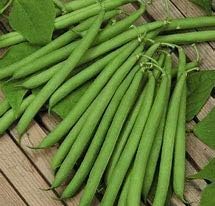
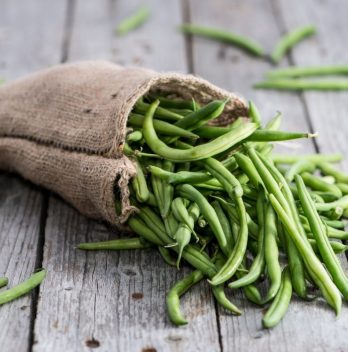
    Green bean is a type of common bean and they are the unripe young fruit of different varieties. Green beans are harvested while the bean is still in their pod and even before they have the chance to mature. But did you know where green beans originate from? Let’s find out.

    Green beans are one of the most-loved vegetables and they are common staples in many kitchens across different countries including the United States. This bean is a very nutritious food and it is loaded with vitamins A, C, and K. They are as well rich in fiber and folic acid.

    With their popularity and how people love to integrate these beans into their various meals, you may begin to wonder where green beans come from. Not too worry. We will be discussing where these green beans originate from and talk more about this great-tasting vegetable. So, let’s begin.

    Origin Of Green Beans

    So, the question is where do green beans come from? Green beans originate from Central America and South America. There is also evidence that this bean variety has been cultivated in Mexico and Peru for thousands of years.

    This bean variety was introduced to the Mediterranean region in 1492 by Christopher Columbus. Green bean was cultivated all around Italy, Turkey, and Greece around the 17th century.

    Origin Of Green Beans

    As of today, this tasteful and nutritious crop is virtually everywhere. Green beans are grown in many different states in the US. Some of the top states that produce green beans in the United States are Florida, New York, and Wisconsin. Green beans tend to grow in almost any soil.

    More About Green Beans

    Green bean botanical name is Phaseolus vulgaris and they are referred to by different names such as snap beans, string beans, snaps, French beans, and haricot vert. There are over 150 varieties of green beans that are widely grown throughout North America, South America, and Europe.

    This bean variety is a very versatile vegetable that is widely available in the fresh, canned, or even frozen state. Green beans are usually green. But there are some cultivars that may come in different colors such as purple, yellow, red, or even striated. But most times, the beans inside them are usually green.

    Before now, the green beans that were cultivated weigh back were often tough and stringy. This type of green beans was the old cultivars. However, things were changed and farmers began cross-breeding and experimenting aiming for a palatable green bean.

    This resulted in the newer recent cultivar and this type of green beans has been bred to reduce their strings. Therefore, they are known as stringless beans and the term string beans is virtually an outdated term.

    Green Bean Seeds – Kentucky Dreamer – Bush Type Stingless

    Green Beans Applications

    These great-tasting green beans are widely eaten around the world and they are available as fresh, canned, as well as frozen.

    Fresh beans tend to feel crispy and bright green. Green beans can be boiled, steamed, stir-fries, baked or even eaten raw. However, the canned green beans should be rinsed and drained and this will help reduce the sodium content by about 41 percent.

    Read more about How Far Apart To Plant Pole Beans

    Nutritional Value Of Green Bean

    Green bean offers so many nutritional and health benefits. Here are some of the nutritional benefits of green beans:

    Green beans are a great source of vitamins C, A, E, K, amongst others.

    • Vitamin A is very essential for a healthy vision, the health of your immune, as well as reproduction.
    • Vitamin C is an antioxidant that aids in boosting the immune system and it helps produce collagen that protects the skin from oxidative stress. One cup of green beans contains about 12.2 mg and this is around 25% of the recommended daily intake.

    Green beans are also rich in vital minerals such as manganese, potassium, zinc, calcium, phosphorus, and iron. A single cup of the green bean contains 25 mg of manganese, 211 mg of potassium, 0.24 mg of zinc, 37 mg of calcium, 38 mg of phosphorous, and 1.03 mg of iron.

    Nutritional Value Of Green Bean

    These minerals help support healthy bones, improve metabolism, and it also enhances wound healing.

    More Health Benefits Of Green Beans

    1. Healthy Weight: you can maintain a healthy weight as they are low in calories. A cup of green beans contains about 31 calories. They almost do not have any fat and their sugar content is about 3.6 grams.

    2. Healthy Heart: because green bean has very low cholesterol and low fat, they are safe for the heart. High cholesterol foods can deposit and build up fat in your arteries, thereby decreasing blood flow to the heart and brain. This can predispose you to heart attack or even stroke. But green beans being a friendly heart food makes them very safe and healthy for your heart.

    3. Gut Health: green bean is loaded with fiber and it will help your digestive system run smoothly and healthily.

    4. Pregnancy Health: green bean is awesome for the pregnancy journey. It is rich in folate and vitamin B which are two important nutrients necessary for the growth and development of the growing fetus. Consuming a single cup of green bean contains approximately 1/3 of the daily recommended amount of folate and vitamin B.

    5. Strong Bones: green bean is rich in Vitamin K which provides strong bones and also helps in blood clotting. Deficiency of this essential vitamin K may predispose one to osteoporosis. A cup of green beans can help you meet 20 percent of your daily vitamin K intake.

    FAQ’s

    Where and when did beans originate?

    Green beans are a vegetable that has been cultivated for thousands of years. They are native to the Americas, where they were first found growing wild.

    The earliest evidence of green beans was discovered in Peru. The beans were found in the tombs of an ancient civilization known as the Moche. They were discovered in tombs dating back to about 1,000 A.D.

    The beans were identified as being the same as the beans we know today. The beans were found in the tombs with other food items, such as corn and potatoes. The beans were also found in the homes of the Moche people.

    How much are they incorporated in people’s diets?

    Today, green beans are one of the most popular vegetables in the world. They have become one of the most widely eaten vegetables in the world. They are available year round, and they can be enjoyed cooked or raw. Green beans can be used in many different ways. They can be cooked as a side dish, used in salads, or they can be added to soups and stews. They can even be eaten raw, like in a salad. Green beans are also a healthy vegetable.

    What are the nutritional benefits of green beans?

    They are loaded with nutrients that help keep you healthy. Some of the nutrients found in green beans include: Fiber – Green beans have 5 grams of fiber per cup of cooked beans. This is more than any other vegetable. It helps keep your digestive tract healthy, helps to reduce blood cholesterol levels, and it may even help to prevent cancer. Vitamin C – Green beans are packed with vitamin C.

    What is the best kind of green bean to cook?

    The Sugar Snap green bean is the best for eating. The seeds are small and they are sweet. Sugar snap beans have a crisp texture when cooked. They are best when used in salads. They are very popular with kids because they look like little peas.

    What are green beans classified as?

    Although they are referred to as beans, they actually aren’t beans, but are rather classified as legumes.

    Recap On Where Are Green Beans From

    There are so many things to love about the green bean. You can enjoy their great taste, their numerous nutritional benefits, the ease with which they can be incorporated into our various meals, and so on.

    So here’s a quick recap on what we’ve discussed on where did green beans originate:

    • Green beans originate from Central America and South America.
    • They have been cultivated in Mexico and Peru for thousands of years.
    • Even though they go by the name green bean, they are not always green. They can come in other colors such as purple, red, yellow, and striated.
    • They are loaded with many health benefits.
  • Differences Between Pickling Cucumbers VS Regular Cucumbers

    Differences Between Pickling Cucumbers VS Regular Cucumbers

    Cucumbers are one of the most popular plants people will grow in their garden. However, if you grow these green veggies, you will want to know the difference between pickling cucumbers vs regular cucumbers. Though similar, the two types vary and they each have their own purposes.

    Since there are several types of cucumbers, each variety serves its own purpose. Though most are great for eating on their own or adding to salads, not every kind works well for making pickles.

    Difference Between Pickling Cucumber Vs Regular Cucumber

    Many people don’t know the difference between pickling cucumbers and regular cucumbers. Pickling cucumbers are ideal for making pickles and slicing cucumbers are ideal for salads and cooking. In fact, there are many types of cucumbers that will be either ideal for pickling or slicing.

    Gardners of all experience levels enjoy growing cucumbers. Though culinarily cucumbers are often referred to as a vegetable, they are in fact actually a fruit. They are high in nutrients but low in calories, making them a healthy snack.

    Difference Between Pickling Cucumber Vs Regular Cucumber

    Cucumbers are also full of antioxidants and may even help lower blood sugar. In addition, since they are mainly water, they are also good for keeping you hydrated. Their crispy texture and mild taste make them highly palatable.

    Pickling Cucumbers

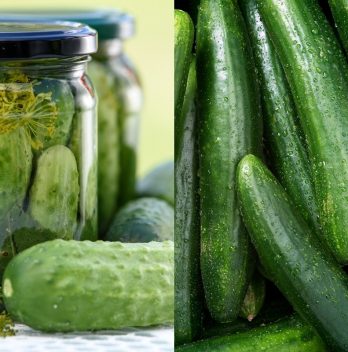
    Pickling cucumbers are shorter and bigger compared to slicing cucumbers. They have a thin skin and a black spine that makes them ideal for pickling. They can also be eaten fresh or used for cooking, as they will still provide a wonderful flavor and texture.

    There are several varieties that are ideal for making pickles. They provide an excellent crunch and a lovely flavor. Here are some of the best varieties for making pickles.

    Boston Pickling

    The Boston Pickling cucumber is one of the most popular varieties for making pickles. They are a seedless variety and offer incredible crispiness and wonderful flavor. They were first developed in the late 1800s in Boston, Massachusetts.

    The Boston Pickling grows to be three to four inches long. They mature very quickly, which pickle makers love.

    Bush Pickle

    The Bush Pickle is a great variety to plant when you are tight on space and can even be grown in pots or containers. They have a lovely sweet flavor and smooth skin, growing to be about three to four inches long. In addition, they also mature relatively fast as well.

    National Pickling Cucumber

    The National Pickling cucumber is an excellent choice for making different types of pickles. They grow to be about four to five inches long and have thicker skin, giving them an excellent crunch. This variety does take slightly longer to mature and does need more space than other types.

    Parisian Pickling

    The Parisian Pickling variety is popular for its thick flesh and few seeds. They mature relatively quickly and are a great choice for your home garden. They have a delicious flavor and a great texture, with a nice crunch.

    Read more about Hydroponic Cucumber Nutrient Solution

    Slicing Cucumbers

    Slicing cucumbers come in a variety of sizes and colors and are ideal for snacking, cooking, or salads. They generally have thicker skins and are longer than pickling varieties. Since they tend to have softer flesh, they are not an ideal option for making pickles as they can turn mushy.

    There are many different types of slicing cucumbers that have many uses. Here are some of the most popular varieties of slicing.

    Burpee Sweet Success Slicing Cucumber Seeds 30 seeds

    81ZQ677iUaL. AC SL1500

    English

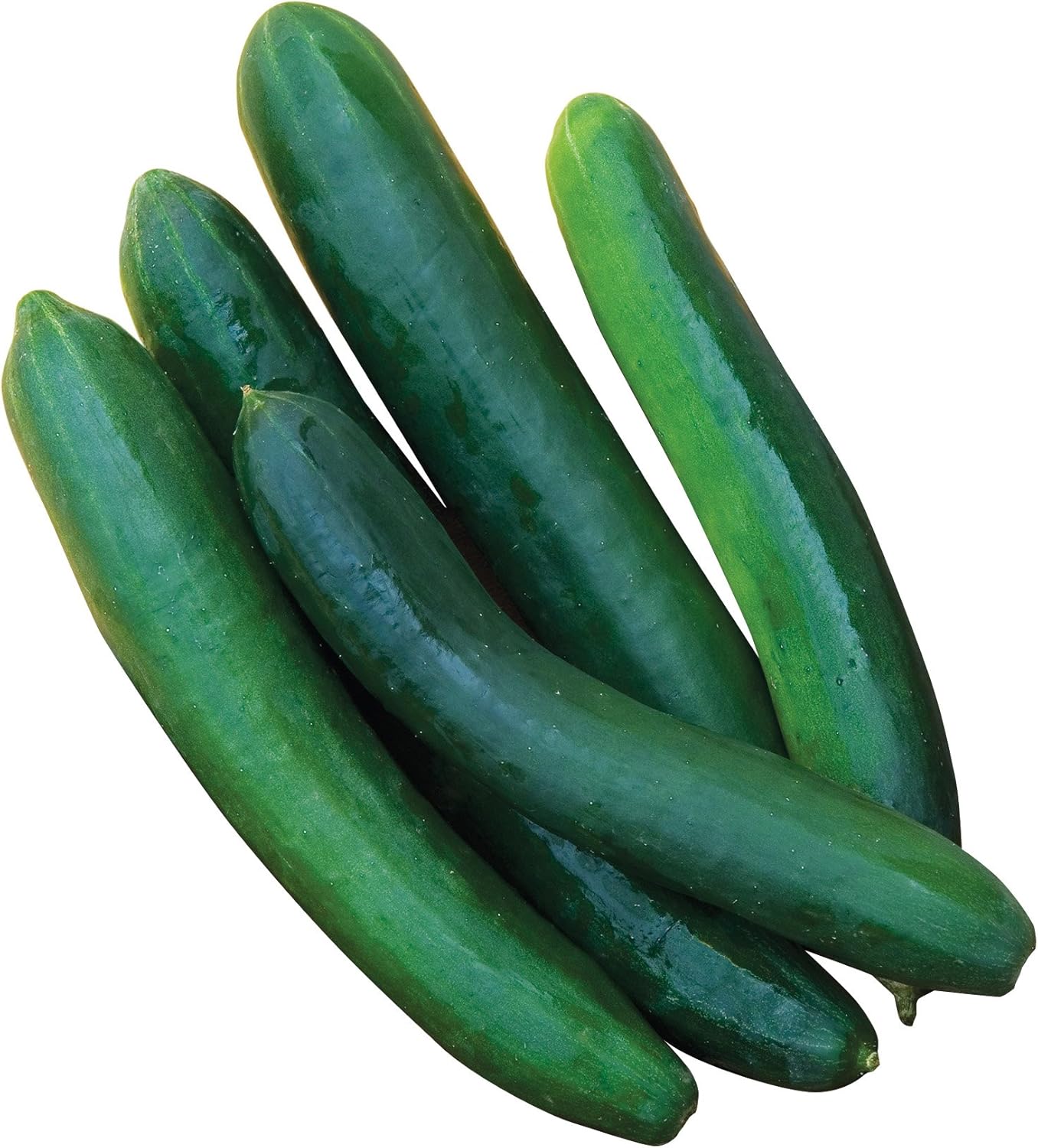
    English is one of the most popular types of cucumbers. They are a seedless variety that is long, about 10 t0 15 inches, and thin with dark green skin. Also called seedless or hot-house, they are the most common type at grocery stores and are one of the most popular varieties to grow.

    The English variety has a mild, slightly sweet taste. They are most popular for salads, sandwiches, and martinis.

    Armenian

    Armenian cucumbers are long and thin, with lighter skin that is a light yellowish-green. They can grow to be an incredible 36 inches long, however, they are best when harvested at 14 inches or less. They have a delicious crunch and flavor with soft seeds, which makes them great to eat raw.

    Sweet Success

    Sweet Success grows to be around 14 inches long and has a dark, smooth skin. They are one of the most popular varieties for salads and savory dishes thanks to their flavor and texture. This variety has a sweet, bitter-free flavor that is resistant to many different diseases.

    Muncher

    Muncher cucumbers are a popular slicing option when they grow to be eight to 10 inches long. However, when they are two to three inches long, they can be used for making pickles. They have a thin skin and crunchy texture while being sweet with no bitterness.

    Slicing Cucumbers - Muncher

    Ashley

    Ashley cucumbers were first grown in Charleston, South Carolina in 1956. They are ideal for growing in hot, humid climates as they are resistant to mildew and many other issues caused by climate. They tend to grow to be six to eight inches long and tend to be quite abundant.

    The Ashley variety has a rough texture with some bumps on them as well. They are dark green in color and are a popular choice in the southern states of America.

    FAQs

    What makes a pickling cucumber?

    In the United States, pickles are usually associated with cucumbers and vinegar.
    Cucumbers are from the gourd family, and have a long history of being preserved in salt. They are easy to grow, and will tolerate cooler temperatures than most other vegetables.
    There are two main varieties of cucumber. The first is the straight-necked type. They’re grown as a vegetable, but you can also find them at farmers markets, or in produce stores. The second variety is called a pickling cucumber. It’s grown specifically for its ability to withstand the salt brine, and its flavor.

    Cucumbers were grown in India as early as 5000 BCE, and they were probably first pickedle-pickled in the Indus Valley. Cucumbers were brought to Europe by the Romans in 200 BCE, and they were pickled in vinegar. The pickles were called kalkandji or kalakandi. It wasn’t until the 17th century that the English developed their own version of pickles.

    Can you pickle all types of cucumbers?

    Yes, you can! The trick is to make sure that they are not too ripe. Pickling cucumbers should be firm and dry to the touch. They should have no soft spots or blemishes. If they are too ripe, they will soften when exposed to air and will spoil. Store your pickles in a cool, dark place.

    You can use a glass container with a tight-fitting lid. Keep them away from light and heat. Do not refrigerate your pickles. Wash your jars and lids in hot soapy water. Rinse well. Let the jars dry completely. Place the jars in a canning pot and cover with boiling water. Let stand for 5 minutes. Remove the jars from the water and let them cool completely. Wipe the rims of the jars with a damp cloth. Fill each jar about Ÿ full. Using a clean, damp paper towel, wipe down the inside of the jar. You may need to fill the jars Œ full if they are wide-mouthed. Place a piece of parchment or waxed paper over the top of the jar. This will keep the pickles from floating.

    Can you eat pickling cucumbers in salads?

    Yes, you can! They’re crunchy and refreshing and a great addition to any salad. The vinegar is the secret ingredient that gives them their distinctive flavor. I always make my own pickling cucumbers. They’re a lot tastier than store bought pickles, and they keep in the refrigerator for weeks!

    What is the best tasting cucumber?

    The most flavorful cucumber is a pickling cucumber. They’re available year round and have a slightly sour taste. Pickling cucumbers are ideal for salad mixes, pickles and other pickled dishes. If you can find them fresh, great! If you must buy them from the grocery store, look for smaller cucumbers with a firm texture. You’ll also want to look for those that are picked at the right stage of ripeness. The riper they are, the more watery they’ll be, so you’ll want to choose ones that are still firm. These are best for salads and raw vegetable mixes. Best tasting cucumber: The most flavorful cucumber is a pickling cucumber. They’re available year round and have a slightly sour taste. Pickling cucumbers are ideal for salad mixes, pickles and other pickled dishes. If you can find them fresh, great!
    I’ve been a fan of the “Honeycrisp” variety of cucumbers for many years. I know that other people prefer the “Crispin” or the “Sugar Snap” varieties, but they have never tasted as good to me as Honeycrisp. I have also been a fan of the “Tahitian” variety because of its beautiful color and its unique flavor.

    The Difference Between Pickling Cucumbers vs Regular Cucumbers

    Many people have a preference between pickles vs. cucumbers. However, many people don’t know that there are specific types just for making pickles and specific types for salads and cooking.

    Many people grow cucumbers in their gardens. They are healthy and are great for many savory dishes thanks to their mild taste and crunchy, crisp texture.

    Pickling cucumbers tend to have thinner skins and black spines. Slicing cucumbers tend to be thinner and longer, with thicker skins and softer flesh. Though they can sometimes be used interchangeably, it is best to stick to the variety that meets your needs.

    Do you have any questions about pickling cucumbers vs regular cucumbers? If so, please ask any questions about pickling varieties and slicing varieties in the comment section down below.

  • Is Italian Squash The Same As Zucchini?

    Is Italian Squash The Same As Zucchini?

    If you enjoy gardening, you likely have grown some variety of squash. You may have wondered, is Italian squash the same as zucchini? With so many different varieties, it can be confusing to know which squash is which.

    Due to its abundance and versatility, many people choose to grow zucchini in their gardens. This beloved veggie goes great with both savory and sweet dishes. It is a popular squash that has a great flavor and texture.

    Is Italian Squash The Same As Zucchini?

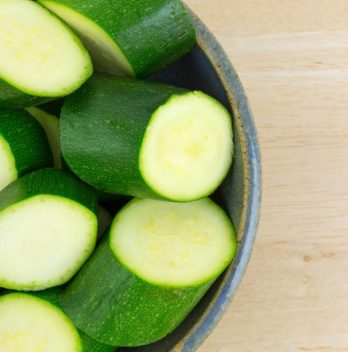
    Zucchini is a variety of summer squash that is popular in Italian cooking due to its heritage. It is notable for a slightly sweet, mild flavor that makes it ideal for sweet and savory dishes. In sweet dishes, it provides moisture to the dish without affecting the flavor.

    So is Italian squash the same as zucchini? Well, since zucchini is so popular in Italian cooking, it is sometimes referred to as Italian squash. However, there are also other varieties of summer squash that are referred to as Italian squash. The term is used frequently in culinary terms.

    Italian Squash Is The Same as Zucchini

    Some recipes will use the terms zucchini and Italian squash interchangeably. If it is an Italian recipe, there is a good chance that it will say Italian squash when referring to zucchini.

    Summer Vs Winter Squash

    There are many different types of squash that can be broken into two different categories: summer and winter. The biggest difference between summer and winter squashes is their skin. Winter squashes have a hard skin, whereas summer squashes have soft skin.

    The tougher skin on winter squash allows them to survive cold temperatures. Unlike winter squashes, the skin of summer squashes can be eaten.

    Summer squash has a moist interior and is great for eating raw, frying, grilling, sauteing, and baking. Winter squash does not taste good raw and is a better option for baking and cooking. Both types are ideal for both sweet and savory dishes.

    The most popular summer squashes include zucchini, yellow squash, and Patty Pan. The most common winter squashes include acorn, butternut, and spaghetti. Both winter and summer varieties are full of beneficial nutrients and make a wonderful addition to your diet.

    Though it is often referred to as a vegetable, squash is technically a fruit.  However, culinarily wise it is generally prepared as a vegetable.

    History Of Zucchini

    Summer squash dates back thousands of years to 5500 BC to Central and South America. It was an important part of their diets, as it provided an excellent source of nutrition.

    It is believed that Italians are responsible for breeding modern zucchini, hence why it is sometimes called Italian squash. The zucchini they grew comes from squash that came from colonial America. In fact, the word squash actually translates to “Zucca” in the Italian language.

    The zucchini we know and love today came from Milan, Italy during the 19th century. Different early varieties come from areas near Milan in Italy. During the 1920s, Italian immigrants brought it over to America and it soon became a staple in many gardens and kitchens.

    In some places, such as the United Kingdom, it is called courgette. It is a popular plant as it is easy to grow in many summer climates and is great for gardeners of all experience levels.

    Zucchini is low in calories and is heart-healthy. Though it is typically green, it can also be yellow as well in color. However, yellow zucchini and yellow squash are two different things, though they are both a variety of summer squash.

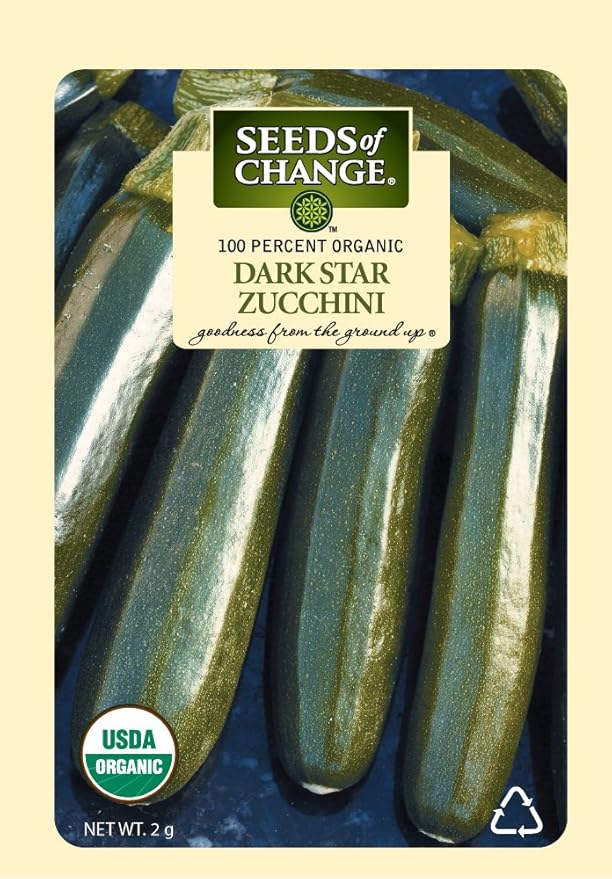
    Seeds of Change 5800 Dark Star Zucchinie, Green

    71yqayIAs L. AC SY879

    How To Grow Zucchini

    Zucchini grows best in rich, organic soil with a pH level between 6.0 and 7.5. They strive in full sun, though they can often grow in partial sun as well. They are a hardy plant and will produce an abundance of fruit when healthy.

    It is best to plant your zucchini three to four inches apart when the temperature of the soil is between 65 to 70 degrees Fahrenheit. They need regular watering, around one to two inches a week. The ideal time to harvest them is when they are five to eight inches long.

    Once you harvest it, zucchini will last for around one week, maybe two depending on the conditions. You should store it in a cool, dry location such as the crisper drawer of your fridge.

    Common Recipes That Use The Italian Squash, Zucchini

    There are many recipes that call for zucchini thanks to its high moisture level and mild flavor. It is a common addition to many summer dishes, as that is when it is most plentiful.

    There are many popular savory dishes that use this common summer squash. In Italian cuisine, it is popular to stew it with tomatoes, olive oil, and fresh herbs. In addition, it is often sauteed and served with pasta, herbs, and cheese.

    Common Recipes That Use The Italian Squash, Zucchini

    One of the most popular zucchini dishes is ratatouille, which also includes other summer vegetables and olive oil. In addition, is also common in soups, casseroles, or even by itself.

    In baking, it is a popular choice for bread, as it provides an incredibly moist texture. It is also used for cakes, cookies, and muffins.

    FAQs

    What type of squash is zucchini?

    Zucchini, also known as courgette or cucumber melon, is an excellent summer vegetable. It is in the same family as squash and pumpkins, but is a summer vegetable rather than a winter one. It has green leaves with a bump on the end of each leaf which are edible and can be used in salads or stir-fries.
    Zucchini is also a popular ingredient in soups, pasta dishes, and casseroles.

    Is zucchini the same as pumpkin?

    No, zucchini is not the same as pumpkin. Pumpkin is a large fruit that grows from a vine like cucumbers and squash. Zucchini is a vegetable that looks like a long, thick cucumber. Pumpkin seeds are found inside the fruit. How do you cook zucchini? Zucchini is best cooked by grilling, baking, or roasting. It is a good vegetable to grill because it can be cut into slices or chunks, and can be marinated with different seasonings before being grilled. Grilling also gives it a more crunchy texture. Baking and roasting gives it a softer texture.

    What is the secret to growing zucchini?

    Zucchinis are not picky about soil type. They can grow in full sun or partial shade. Zucchinis are easy to grow and most gardeners enjoy them. You can also grow them indoors in a pot. Step 1 Choose a location in your garden for the zucchini. A good location is in a sunny spot with good drainage.

    Step 2 Prepare the soil. Add organic matter to the soil. The best type of organic matter for growing zucchinis is composted manure or leaf mold. Another option is to add fertilizer to the soil. A general rule of thumb is 1 teaspoon of fertilizer per 4 square feet of soil. Step 3 Plant the seed. You can plant the seed directly into the soil or in a small pot. You can also plant the seed into the ground and then transplant it after it grows into a zucchini plant. Step 4 Water the plants. Zucchinis need water every day during hot weather and only every other day in cold weather. Step 5 Harvest the zucchini. The zucchini fruits should be harvested when they are about 3 inches in diameter. You can cut them off the plant or you can wait for them to fall off on their own.

    Do zucchini need full sun?

    As a general rule, plants need full sun.

    How do you eat Italian squash?

    Zucchini is a vegetable that can be used in many different ways, including as a side dish, as a main course, or as part of a meal. There are many ways to cook zucchini, and it can be served in a variety of dishes. 

    You can serve it raw, as a pasta substitute, as a side dish, or as a pizza base. Zucchini is delicious in a baked lasagna or stuffed with chicken. Zucchini is one of the most versatile vegetables, and it can be prepared in many different ways. It can be grilled, fried, sautéed, or roasted.  It can be used as a substitute for other vegetables, such as potato, eggplant, and pumpkin.

    Italian Squash And Zucchini: The Same Thing

    If you see a recipe that calls for Italian squash, it is safe to assume that it is referring to zucchini. Though summer squashes go back thousands of years to Central and South America, zucchini actually comes from Italy. It wasn’t until the 19th century that people began to grow it in Italy before it quickly spread all over the world.

    Squash Italian, as some might say, can be used in both sweet and savory dishes. It is quite simple to grow, as it just needs rich, organic soil, full sun, and one to two inches of water a week. It is also extremely healthy and versatile due to its mild flavor and moist texture.

    Do you have any questions regarding is Italian squash the same as zucchini? If so, please ask any questions regarding squash, for both the summer and winter kinds, in the comment section below.

  • Green Bean Trellis – How To Build One

    Green Bean Trellis – How To Build One

    Green bean variety that tends to climb requires stable support. Trellis is one common framework used for a plant that requires support such as green beans.

    Green bean is a type of common bean and they are the unripe variety of beans. They are a popular staple that makes up part of our diet. This bean is also referred to by different names such as string bean, snap bean, French bean, and snaps.

    Green beans come in two varieties namely pole bean and bush bean. The bush bean does not require support. But the pole beans will usually require support.

    It is only ideal for growers to support their green bean that tends to grow in a climbing manner. This is why we will be looking at green bean trellis.

    About Green Beans

    Green bean is a type of common bean. It originated from Central America and South America. It has been researched that these green beans have been cultivated in Mexico and Peru for thousands of years.

    Green beans were grown by North Americans and these beans were planted with corn to allow it to grow up a stalk with the corn. As of today, the green bean is an essential crop known almost everywhere.

    About Green Beans

    Why Green Bean Require Supports

    As we mentioned, green beans come in two varieties which are bush beans and pole beans. The major difference between these two beans varieties is their growing styles.

    • Bush beans tend to grow in a bushy manner or compactly and can attain up to two feet height. Therefore this green beans variety doesn’t require support.
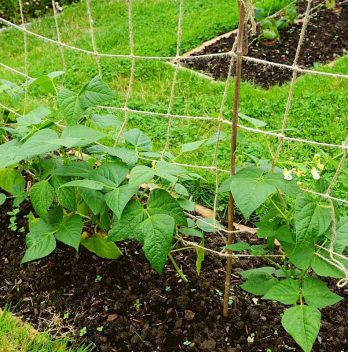
    • On the other hand, pole beans growing style is vining and can attain 10 to 15 feet height. Therefore this bean variety requires support such as trellis or staking.

    So, for the purpose of this article, let’s look into how to support your green bean plant using a trellis.

    Choosing The Right Trellis For Green Beans

    There are different types of trellis you can use to support your vining green bean and help maximize growth and production.

    Choosing the ideal type of bean trellis will depend on your personal preference, availability of garden space, durability, and budget. So, put these in mind when selecting the type of trellis to use in your garden.

    The common trellis you can go for include:

    • Teepee Trellis
    • String trellises
    • Livestock panels

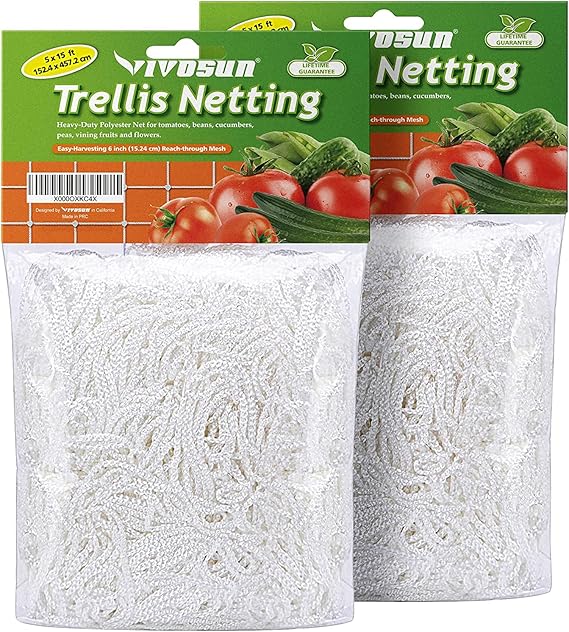
    VIVOSUN 2 Pack Heavy Duty Polyester Plant Trellis Netting 5 x 15ft

    81c+y7Z3TCL. AC SX569

    Let’s dive in further by looking at their details and how to build them.

    Types Of Trellis To Use And How To Build Them

    So, here are the details of the types of green bean fence or trellis you can use for your pole bean variety and how to build them:

    1.    Teepee Trellis

    Teepee trellis is easy and inexpensive to make. Also, if you’re short of garden space, teepee trellis may just be what you need.

    To build teepee trellis, you will need

    • 5 to 7 bamboo poles or sturdy branches (should be 8 to 10 feet tall)
    • Twines, ropes, or wire
    • Scissors

    To begin, dig up the soil in your garden and push the end of each pole about 6 inches into the ground. Then the spacing for each pole should be about 6 to 10 inches apart. Cover up the hole by packing the soil around the poles firmly.

    Then carefully bend the tops of the poles inwards aiming towards the center of the circle. Ensure this is done slowly and carefully to avoid snapping the poles. Once this is done, use the rope, twine, or wire to bind the gathered top poles together. Secure them well and tie the knot.

    How To Build Teepee Trellis

    You now plant your pole bean seeds or seedlings around the base leg of each pole. Green beans tend to grow rapidly. As they grow, they will climb to the top of the pole.

    You can also train the plant by carefully wrapping the seedlings on the twine. But most times, they tend to climb on their own. But you can do this just to help any stray plant that goes in the wrong direction.

    2.    String Or Twine Trellises

    String trellises tend to be time-consuming to construct. But they are also less expensive to construct. Here’s what you’ll require to build a string trellis:

    • Posthole digger
    • 3-inch deck screw
    • String or twine
    • Drill
    • Garden staples
    • 2 by 4-inch lumber or timber
    • 8 to 10-foot post

    Using a post hole digger, dig a hole of about 8 to 10 inches at each end of the bean row. The holes should be spaced 6 feet apart. Dig in a 6 to 8-foot wooden post into each hole. Secure them firmly.

    Create a top crossbar by laying a 2 by 4 on the top of the posts. With the help of a drill and 3-inch deck screw, attach the board to the post. Then push garden staples into the ground between the two posts and the staples should be spaced 6 inches apart. Do this process again for the row on the other side.

    The end of the garden length string or twine should be tied to one end of the crossbar. The string or twine should be looped into the round and under the first staple. Keep on looping the string through the staples and over the crossbar until you get to the end. Tie it off and cut off the excess string.

    Then plant your beans beneath the structure and watch it grow and climb up the string.

    3.    Livestock Panels

    The livestock panel can be used multiple times. This type of trellis often measures about 16 feet long and 5 feet wide.

    For an easy-to-construct trellis, allow the livestock panels to lean horizontally or vertically against your garden wall. Then sow your seeds beneath and the vines will grow up and over it.


    FAQ’s

    How do you make a home made green bean trellis?

    A garden without a trellis can be a problem, especially if you have a long row of peas or beans to grow. As the plants grow taller and taller, it can become increasingly difficult to keep them supported without causing damage. If you want to grow peas or beans, you’re going to need a trellis. Not only does a trellis help you grow taller vegetables, but it also helps keep your plants safe from pests and provides support for them as they grow. Trellises can be made out of wood, metal, plastic or fabric.
    A trellis is essentially a vertical support that can be attached to the ground or to a pole.

    The simple trellis is made out of string and can be tied to stakes in the ground or tied to a pole. This is a great option for gardeners who want a basic trellis and don’t want to spend a lot of time assembling it.

    The vertical trellis is one of the most common types of trellis used in gardening. A vertical trellis is usually made of wood and has multiple supports on each side of the trellis. This allows you to grow taller plants without bending over. You can find vertical trellises made out of wood, metal or plastic. A vertical trellis is ideal for growing taller vegetables such as cucumbers, tomatoes, beans and peas. The horizontal trellis A horizontal trellis is similar to a simple trellis, but it is attached to stakes on both sides of the garden. The horizontal trellis is great for growing a wide variety of crops, including peppers, eggplants, melons and cucumbers. It’s also useful for growing shorter vegetables such as lettuce, spinach and broccoli.

    What are the different types of trellis?

    There are two main types of trellises: wire and wood. Wire is much easier to use than wood and can be used for a variety of structures, including arbors, pergolas, fences and privacy screens. However, it can be expensive. If you have enough space, wood is by far the best choice for most projects. It’s more expensive, but it lasts forever and will look good for years.

    Also, trellises come in many different shapes and sizes. One of the most popular shapes is a “zig-zag” trellis. It consists of a series of parallel slats attached to a single vertical post. These are great for supporting climbing vines like grapes, cucumbers or melons. The horizontal slats provide plenty of support while allowing the vines to grow between them. Another common type of trellis is the arbor trellis. This is a square or rectangular frame made from metal or wood. It has two sets of horizontal slats on either side of the structure. The slats are usually spaced evenly apart. Arbors are popular for growing small fruits and vegetables, including strawberries, apples, pears, plums, cherries and more. If you have space, you can also build a latticework trellis.

    Additional Say: Green Bean Trellis

    Building green bean trellis is needed to support your vining pole bean. This way, they can grow to flourish as well as maximize production at the end of their growing season.

    So, follow our guidelines on how to build trellis for your pole beans variety.

  • How To Cross Breed Pepper Plants: Helpful Guidelines

    How To Cross Breed Pepper Plants: Helpful Guidelines

    Many known pepper varieties are grown worldwide by farmers. Crossbreeding pepper plants of different varieties is a fairly easy task. If you wish to know more about this, then read on to find out how to crossbreed pepper plants.

    With the appropriate knowledge, you can cross-breed two pepper varieties and generate a brand new desirable pepper offspring. Basically, people cross breed plants like pepper to generate a tasty, hot, or more aesthetically pleasing pepper hybrid.

    In this post, we will be sharing amazing details on how to successfully cross-breed pepper plants to yield a more desirable pepper plant. So, let’s begin.

    Cross Breeding Peppers

    It is the desire of every gardener to have a bountiful and worthy harvest at the end of the growing season. One way to achieve this is by selecting some of the best parent plants and cross-breeding them to achieve more desirable offspring.

    Crossbreeding pepper can become an easy and straightforward thing for you if you get the right knowledge. But also have in mind that crossbreeding takes time, dedication, and patience to get successful results.

    Cross Breeding Peppers

    When it comes to crossbreeding, the plants that are used in crossbreeding are referred to as the parent plants. Then the resulting pepper plant is regarded as the hybrid. Crossbreeding pepper plants implies that we interceding with the natural reproductive process of pepper plants.

    Pepper plants are cross-bred thanks to the anatomy of their flowers. The flowers are responsible for the production of seed-bearing fruits. On a single pepper plant, you will find both male and female reproductive parts. Hence, this allows for self-pollination.

    Important Note On How To Cross Breed Peppers

    Firstly, you need to understand that peppers are capable of self-pollination. Under normal conditions, pepper plants will self-pollinate once the flower has been fertilized by compactable pollen. A bee buzzing around plants, a rush of wind, or even an ant can initiate the process of self-pollination.

    It is important to prevent self-pollination from peppers since our goal is to crossbreed our desired traits. Therefore, we need to manipulate the pepper plant.

    • This brings us to the process of emasculation. Since we don’t want the parent plants to self-pollinate, we need to carefully remove some reproductive parts. The male reproductive part is removed from the maternal (mother) pepper flower plant. The maternal parts are left alone because they are chosen to bear fruit.
    Important Note On How To Cross Breed Peppers

    So, let’s further look into guidelines on how to crossbreed pepper plants.

    Guidelines On How To Cross Breed Pepper Plants

    Here are the guidelines on how to breed peppers the right way:

    1.    Grow The Parent’s Plants

    The main purpose of cross-breeding pepper is to combine two pepper varieties to produce the desired offspring. Therefore, obtain the seeds of the parent variety you wish to combine and grow them. Make sure the seeds are quality seeds to boost your chance of getting great results.

    2.    Locate The Flowers Before They Bloom To Emasculate Them

    As we’ve mentioned, this process is very important. So, finding the parent flowers before they bloom and when they’re about to bloom means they are mature enough. They can be identified easily by their green outer petals or unfurled sepals.

    3.    Cut Or Remove All Bloomed Flowers

    Cut down the bloom flowers to at least a quarter-inch down the stem and leave the unbloomed flowers. Ensure you use sharp scissors or tools and rub some alcohol on them and wear some new pair of latex gloves before you begin.

    Once you’re done, clean the scissors with methylated spirit and throw away the gloves. Wear new gloves and move to the next plant and do the same.

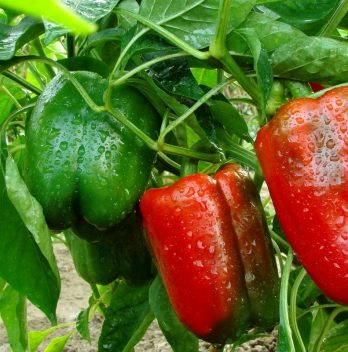
    Pepper Seeds 8 Varieties for Planting in Your Garden, Heirloom Seeds Starter Kit, Non-GMO

    816arUp7IKS. AC SX569

    4.    Reveal The Pistil Of The Unbloomed Flowers On One Of The Parent Pepper

    This is done by peeling away the unbloomed petals carefully with sterilized tweezers. Wear a pair of gloves when doing this. Once you’ve done this correctly, you will see several stamens.

    Once the stamen (male reproductive part) has been exposed, emasculate them with the help of small, sharp, and sterile scissors. The pistil (female reproductive part) is then exposed. Do not damage or touch this pistil as it will be responsible for bearing the resulting fruit.

    Discard the stamen you got from the first parent flower and tie small strings around the stem of the flower.

    5.    Second Flower Stamen Harvesting

    Move to the second pepper flower and wear a new pair of gloves. Just like you did to the first pepper plant, carefully harvest the stamen of the second flower.

    6.    Fertilize The First Pepper Plant Manually

    From the harvested stem of the second plant, cut the stamen open carefully with the help of a dissecting needle. Then with the help of the needle’s tip, go ahead and scoop out the pollen inside.

    Then apply the scooped pollen on the exposed pistil on the first pepper plant. Make sure the pollen is applied on the top part which is known as the stigma. Therefore, you have achieved manual pollination.

    7.    Observe The Manually Pollinated Flower

    Once you’ve accomplished the manual pollination, watch the plant closely. If the manual pollination was successful, in about 3 or 4 days, the ovary which is located below the pistil will start to swell. This is a good sign of successful pollination. However, if the ovary refuses to swell, it means it was unsuccessful. This is usually caused by damage of pistil during emasculation. This is why you should be extra careful when clipping the stamens.

    So, the successfully fertilized ovary will grow to become fruit. The resulting fruit and the seeds are referred to as a hybrid. So, if the fruits are exactly what you desired, their seeds can now be used to propagate your new crossbreed pepper plant species.

    How To Cross Breed Pepper Plants: Final Say

    Once you’ve successfully flowed our guiltiness on how to crossbreed pepper plants, cross-breeding your pepper variety should be easy. You can now make tastier or hotter pepper species than what is readily available in your region.

    Find more information about Jalapeno Plant Spacing

  • Types Of Worms That Eat Tomato Plants

    Types Of Worms That Eat Tomato Plants

    If you are a gardener, you will want to know the types of worms that eat tomato plants. They are one of the most popular plants to grow as they are typically easy to maintain and often produce an abundance of tomatoes. However, they are not only popular among people but also worms as well.

    Worms will commonly eat the leaves, stems, flowers, and fruit of your tomato plant. This can be problematic for your plant, as they can destroy it. Fortunately, by identifying these types of worms you can then know how to keep them away.

    Species Of Worms That Eat Tomato Plants

    No gardener ever wants to see worms eating their tomatoes. It can be frustrating to see all the hard work that went into maintaining your garden ruined by a bunch of hungry insects. By identifying these species, you can help put a stop to their havoc.

    The most common types of tomato-eating worms include tomato hornworms, loopers, armyworms, and cutworms. These worm species can eat all parts of your tomato plant, which can completely destroy the plant. They can be a common problem that many gardeners have to deal with.

    Species Of Worms That Eat Tomato Plants

    These worms that you see on your tomato plants are actually either the larval stage of moths or caterpillars. They are generally brown or green in color, which lets them easily blend into your tomato plant. They can consume the leaves and other parts of tomatoes at a fast rate, so it is best to get rid of them as soon as you notice them.

    Tomato Hornworms

    There are two main types of hornworms, tomato hornworm, and tobacco hornworm. Both types like to eat tomatoes, tobacco, potatoes, eggplants, peppers, and other types of nightshade plants.

    Tomato hornworms are recognizable by their chevron stripes and black horn on the backside of their green bodies. They are the larvae form of the five-spotted hawkmoth. They are one of the most common types of worms you will see on your tomato plants.

    Though tobacco hornworms also have a green body, they have diagonal stripes and a red horn on their backside. They are the larvae form of the Carolina sphinx moth aka the Tobacco Hawk Moth.

    Tomato and tobacco worms both enjoy eating the leaves of tomato plants. They will eat the flesh of the leaf and leave behind the veins.

    Loopers

    The cabbage looper, or simply just the looper, eats a variety of fruits and vegetables including cabbage, tomatoes, beans, celery, lettuce, broccoli, and spinach. They are the caterpillar form of the Owlet moth.

    Monterey LG6150 Garden Insect Spray, Insecticide & Pesticide with Spinosad Concentrate

    81puQQBR1LL. AC SL1500

    These green caterpillars arch their back into a loop as they crawl, hence the name loopers. Oftentimes, the moth will lay their eggs on the underside of the tomato leaves or other vegetable leaves. Then, they will eat parts of the plant as they grow.

    Armyworms

    Armyworms come in many different types and are the larvae form of armyworm moths. They are very destructive and will eat a variety of different plants.

    Most of the time, armyworms will cause the most problems in the summertime. The most common type of armyworm is brown or gray, with the males having white spots whites.

    Female armyworm moths will lay their eggs on the underside of leaves. The larvae will then consume various parts of the plant.

    Cutworms

    Cutworms are one of the most problematic types of worms you can find in your garden. They are the larvae of Turnip moths or Large Yellow Underwing moths. They are generally green, yellow, gray, or brown in color, making it easy for them to camouflage in your garden.

    Cutworms will eat a variety of different plants, mostly eating the leaves, stems, and buds. They are called cutworms because they cut down young plants as they feed on their stems. They can cause lots of damage to gardens, so it is best to get rid of them as soon as you spot them.

    Cutworms

    While some cutworms will continue to eat the plant they cut down, others will move unto other plants to eat their stems. They can easily take out a whole row of young tomato plants in just a couple days’ time.

    How To Get Rid Of Worms On Your Tomato Plants

    Worms on tomato plants can wreak havoc in no time. They will not only target your tomatoes but likely other plants in your garden.

    If you notice worms on your tomato plants, you can carefully pick them off your plants while wearing gloves. Though it can be time-consuming, it is an easy and free way to get rid of your worm problem. Neem oil is also an easy solution to keep worms and other bugs off of your plants.

    Diatomaceous earth is another safe and effective way to rid your garden of unwanted bugs. Diatomaceous earth is made from the fossilized remains of small aquatic creatures known as diatoms. It works by dehydrating and drying out insects.

    Making your garden bird-friendly is another great way to keep bugs at bay. By putting out bird feeders and birdbaths, you will attract different species of birds. These birds will also eat the worms in your garden, helping out your plants.

    FAQs

    What are the worms that eat tomato plants?

    There is a huge number of insects that eats tomato plants. This includes lady beetles, mites, caterpillars, whiteflies, and more. Lady Beetles Lady beetles are probably the most common pest on tomato plants. They eat the leaves, which can cause the plant to wilt and die. If you notice the plant has wilted or has yellow leaves, it is best to pick it up and move it into a different location so it can recover.

    The worms that eats tomato plants are generally small, white and round. The worms may also be found in other parts of your garden such as the flower bed, vegetable garden or even on the lawn.

    There are worms that are actually called “tomato leaf miners”. These are small, soft bodied, white, worm like creatures. They are very tiny and are usually less than 1mm in length. The worms live in the soil surrounding your tomato plants. They come out of the ground and lay their eggs on the leaves of the tomato plant. When they hatch, the larvae begin to eat the leaves. This will eventually kill the plant.

    You should watch out for the caterpillars of the tomato hornworm moth, Manduca sexta. They’re a pest of all kinds of fruit and vegetable crops, including tomatoes, melons, peppers, eggplant, cucumbers, beans, squash, and more. The pest’s larvae are also known as “hornworms” because they have two horns on their head. 

    When should I start to be concerned?

    You should start to worry when they start to multiply and eat a lot- Then you will need to find out what is causing this. Insects and pests are common in the garden. A large variety of insects and pests exist that can cause harm to plants. There are many types of pest and insect problems in the garden. They include insects, such as caterpillars, aphids, mites, beetles and slugs; and diseases, such as mildew, rust, and viruses.

    What’s the biggest with dealing with a hornworm infestation?

    If they’re in your yard, they will eat plants and trees that you have planted or trees that were planted in your yard. They can also destroy your lawn.

    The main problem is that they can cause damage that is difficult to detect. If you are not aware of their presence, they could be causing serious damage to your yard before you know it. They may leave behind eggs that hatch into larvae.

    What plants repel hornworms?

    It is important to plant some plants that will help prevent hornworm damage.

    These include:

    Echinacea – Echinacea is known for its anti-bacterial properties and can help deter hornworms. It is also known to attract beneficial insects. Echinacea should be planted in full sun.

    In areas where there is lots of snow, echinacea should be planted in a warmer area in order to bloom earlier.

    Marigolds – Marigolds are effective at repelling hornworms. They can also deter other insects. Marigolds can be planted in the fall and in the spring as well. They do best when planted in full sun.

    Dill – Dills can be planted in the fall and in the spring. It has been shown to deter hornworms. It also helps attract bees and butterflies. You can plant dill in full sun. Dill will grow best if planted in a well-drained soil.

    Nasturtium – This plant has been known to repel hornworms.

    Keeping Worms Away From Your Garden

    There are various types of tomato worms that can damage and destroy your plants. The most common type of worms you will see on your tomatoes include loopers, armyworms, cutworms, and hornworms.

    Though these types of worms will mainly eat the leaves of your tomato plants, they will also eat the stems, flowers, and fruit as well. Fortunately, there are some simple solutions to keep these pesky bugs away.

    Diatomaceous earth and neem oil are simple and safe products you can add to your plants to keep bugs away. In addition, you can also make your garden more bird-friendly, as they will eat your bugs. You can even pick them off with your hands while wearing gloves.

    Do you have any questions regarding worms that eat tomato plants? If so, please ask any questions regarding the types of worms that eat tomatoes and how to keep them away.