
Amazon Choice
Category: Plants
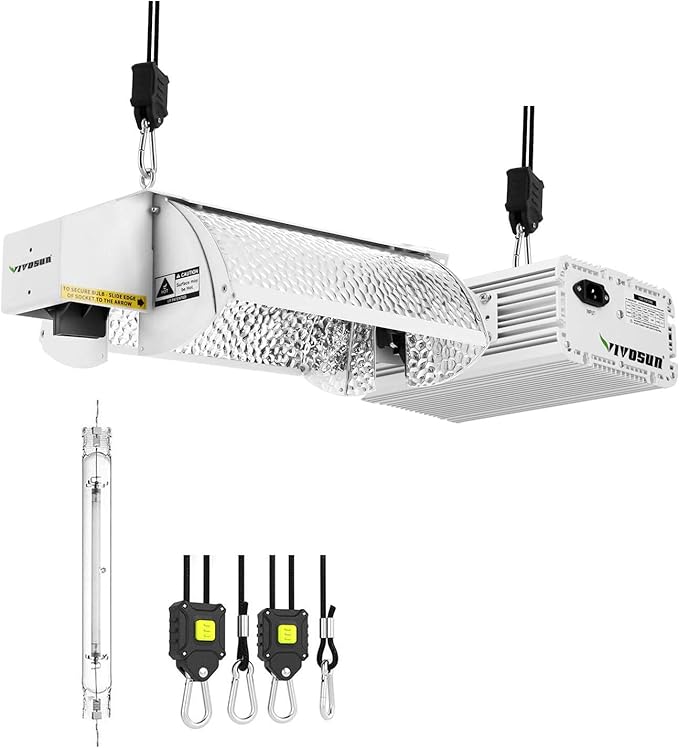
1000w HPS Distance From Plants
Also, note that when it comes to using fluorescent grow lights, anything higher than 12 inches from your plants’ canopy may mean your plants aren’t getting good light energy. This is because fluorescent light strength decreases when the height is too far from the plants’ canopy. So, ensure they are close enough to your plant as they are safe to be positioned close to plants.
How Far Should LED Grow Light Be From Plants?
LED grow lights are one of the most popular lights to use for indoor gardening. They are also safe to use at an appropriate close range on plants and they don’t emit much heat. LED grow lights are as well strong and efficient and can be used for different plant growth stages. They are majorly used in the flowering and fruiting stages.
When it comes to using LED grow lights, there is no particular rule to their positioning. But as a recommended tip, they can be placed around 12 to 18 inches above the plants’ canopy.
However, there are many types and brands of LED grow light that offers different output so deciding the appropriate distance may be tricky. The good thing is most times when you purchase LED grow lights, the manufacturer usually puts a recommended hanging height to follow. You can start with the manufacturer’s recommended hanging distance.

After trying the manufacturer’s recommended hanging distance, you can go ahead and move it a bit closer to get the perfect distance. Do these until you get to a point where your plants start to bleach. Also, you need to always monitor your plants when trying new grow lights. Move them back immediately when you notice any signs of discomfort in the plants.
By doing this, you will have mastered the right hanging distance for your plants for them to receive optimal light for their growing needs. Also, you may need to adjust the grow light upwards as your plants grow taller and develop.
Read more about the 5 Best Hydroponic Kits You Can Find
How Many Watts Per Plant HPS?
When choosing an HPS light, it should not be about wattage. Instead of paying attention to the wattage of the grow light, it is more important to understand how the light spectrum works. This is so you can know which grow light and light spectrum to get for the stage of growth that your plants are at.
The grow light spectrum is measured in micromoles (µmol). Generally, you will need a light spectrum in the range of 180 to 1300 µmol. This is quite a wide range, therefore you would need to determine the light requirements of your plants. The more light-hungry your plants are, the higher the light spectrum you should get.
Certain plant families such as those of the Cannabaceae are on the upper end of the spectrum. They need a minimum of 800 µmol to reach 85% of their growth potential and up to 1300 µmol to reach their full potential. Other plants such as herbs, salad greens, and other leafy plants only require between 180-380 µmol to grow efficiently.
To determine the light intensity of your plants if you don’t know it, you can use a PAR meter for the spectral range that is suitable for growing plants.
What Size Room For 1000-Watt HPS?
In general, a 1000-watt grow light is used to cover an area that is 5 x 5 total foot area. HPS grow lights are however more powerful. A 1000-watt HPS grow light can cover a much wider area of about 49 square feet in size.
The actual area of coverage of a 1000-watt grow light, or any grow light for that matter depends on several factors such as the type of the light, the specific light requirements of the plants being grown, and the design and type of the grow space.
How Hot Does a 1000w HPS Light Get?
HPS lights operate at very high temperatures of up to 54000F. The majority of this light gets turned to infrared (IR) radiation. This is the type of radiation that causes molecules to vibrate and heat up when it comes into contact with them. This IR radiation is directed toward plants the same way visible light radiation does.
Regular users of HPS grow lights are well aware of this fact, and for this reason, they do not put the grow lights too close to their plants as it would kill the plants in a very short space of time.
How Many Lumens Does a 1000w HPS Produce?
Normally, when we go to the shop to buy light bulbs, we buy them based on how much energy (usually in watts) they use. Lately, however, there has been more knowledge that has led to people buying light based on the amount of light they can provide.
Lumens are a measure of how much light you will get from a light bulb. The higher the lumens, the brighter the light you will get. The opposite is true for fewer lumens.
The best way to shop for bulbs is to look for lumens instead of watts, that way you will be able to tell which bulb will give you more light.
A 1000-watt high-output HPS bulb produces 150 000 lumens. This is more than the standard HPS bulb which produces only 140 000 lumens.
Conclusion – 1000w HPS Distance From Plants
Different hanging distances are recommended for various grow lights. We have concluded that the ideal distance from plants for 1000w HPS should be around 20 to 36 inches.
Whenever you purchase a new grow light, you can start with the recommended hanging distance and monitor your plants closely. You should back off the lights if you notice any bleaching of leaves. If you however notice your plants are fine with the distance, you can bring them a little closer so they can get optimal lights for their growth.
In all this, always keep a close eye on your plants’ response anytime you are using a new grow light on your plants. You should be able to obtain the appropriate hanging heights for your grow lights.
Read more about How Many Plants Will A 1000 Watt HPS Light Produce?
FAQ’s
1000w HPS Distance From Plants: Additional SayHow far should my 1000 HPS lights be from my plants?
If you look at a picture of a HPS (high pressure sodium) light fixture, you’ll notice that there are two metal reflectors, one on top of the other. This design keeps the heat from dissipating and helps to direct the light toward the plants. The light fixture itself is mounted on a stand with a ballast. You’ll find that the ballast is usually mounted between 8-10 feet from the fixture itself. The distance will vary depending on the type of ballast you purchase. Most people recommend a minimum of 15 feet of separation between plants and HPS lights. If you’ve got enough room, I’d say go for it.
What does the ballast do?
A ballast regulates the flow of power to the lamp, which provides a constant voltage and frequency to the lamp. The ballast usually includes circuitry for sensing lamp current and voltage and for turning the lamp on and off to minimize energy waste. The ballast may also include circuitry for dimming the lamp by varying the frequency or phase of the alternating current.
How do you know if a light is too close to a plant?
It’s important to remember that we are not looking at the plant itself, we are looking at the light. If it is shining directly onto the leaves, or even the top of the plant, then the light is too close and you should move the light away.
If the plant looks a little wilted and the leaves are turning yellow, then you may need to adjust your light to make sure that the light is not shining directly on the leaves.
When is the right distance the most important for a 1000w HPS?
You want to pay the most attention to this during the flowering stage. This type of light is highly recommended for this stage in the growing process. As a matter of fact, many people only use this light for this stage in the growing process. Sometimes after applying a MH grow light beforehand.
Can you have too much light in a cannabis grow tent?
Yes you can, and the plants will show signs of this. This is why it is very important to keep not only the right amount of lights, but the right distance between them and the plants.

Also, note that when it comes to using fluorescent grow lights, anything higher than 12 inches from your plants’ canopy may mean your plants aren’t getting good light energy. This is because fluorescent light strength decreases when the height is too far from the plants’ canopy. So, ensure they are close enough to your plant as they are safe to be positioned close to plants.
How Far Should LED Grow Light Be From Plants?
LED grow lights are one of the most popular lights to use for indoor gardening. They are also safe to use at an appropriate close range on plants and they don’t emit much heat. LED grow lights are as well strong and efficient and can be used for different plant growth stages. They are majorly used in the flowering and fruiting stages.
When it comes to using LED grow lights, there is no particular rule to their positioning. But as a recommended tip, they can be placed around 12 to 18 inches above the plants’ canopy.
However, there are many types and brands of LED grow light that offers different output so deciding the appropriate distance may be tricky. The good thing is most times when you purchase LED grow lights, the manufacturer usually puts a recommended hanging height to follow. You can start with the manufacturer’s recommended hanging distance.
After trying the manufacturer’s recommended hanging distance, you can go ahead and move it a bit closer to get the perfect distance. Do these until you get to a point where your plants start to bleach. Also, you need to always monitor your plants when trying new grow lights. Move them back immediately when you notice any signs of discomfort in the plants.
By doing this, you will have mastered the right hanging distance for your plants for them to receive optimal light for their growing needs. Also, you may need to adjust the grow light upwards as your plants grow taller and develop.
Read more about the 5 Best Hydroponic Kits You Can Find
How Many Watts Per Plant HPS?
When choosing an HPS light, it should not be about wattage. Instead of paying attention to the wattage of the grow light, it is more important to understand how the light spectrum works. This is so you can know which grow light and light spectrum to get for the stage of growth that your plants are at.
The grow light spectrum is measured in micromoles (µmol). Generally, you will need a light spectrum in the range of 180 to 1300 µmol. This is quite a wide range, therefore you would need to determine the light requirements of your plants. The more light-hungry your plants are, the higher the light spectrum you should get.
Certain plant families such as those of the Cannabaceae are on the upper end of the spectrum. They need a minimum of 800 µmol to reach 85% of their growth potential and up to 1300 µmol to reach their full potential. Other plants such as herbs, salad greens, and other leafy plants only require between 180-380 µmol to grow efficiently.
To determine the light intensity of your plants if you don’t know it, you can use a PAR meter for the spectral range that is suitable for growing plants.
What Size Room For 1000-Watt HPS?
In general, a 1000-watt grow light is used to cover an area that is 5 x 5 total foot area. HPS grow lights are however more powerful. A 1000-watt HPS grow light can cover a much wider area of about 49 square feet in size.
The actual area of coverage of a 1000-watt grow light, or any grow light for that matter depends on several factors such as the type of the light, the specific light requirements of the plants being grown, and the design and type of the grow space.
How Hot Does a 1000w HPS Light Get?
HPS lights operate at very high temperatures of up to 54000F. The majority of this light gets turned to infrared (IR) radiation. This is the type of radiation that causes molecules to vibrate and heat up when it comes into contact with them. This IR radiation is directed toward plants the same way visible light radiation does.
Regular users of HPS grow lights are well aware of this fact, and for this reason, they do not put the grow lights too close to their plants as it would kill the plants in a very short space of time.
How Many Lumens Does a 1000w HPS Produce?
Normally, when we go to the shop to buy light bulbs, we buy them based on how much energy (usually in watts) they use. Lately, however, there has been more knowledge that has led to people buying light based on the amount of light they can provide.
Lumens are a measure of how much light you will get from a light bulb. The higher the lumens, the brighter the light you will get. The opposite is true for fewer lumens.
The best way to shop for bulbs is to look for lumens instead of watts, that way you will be able to tell which bulb will give you more light.
A 1000-watt high-output HPS bulb produces 150 000 lumens. This is more than the standard HPS bulb which produces only 140 000 lumens.
Conclusion – 1000w HPS Distance From Plants
Different hanging distances are recommended for various grow lights. We have concluded that the ideal distance from plants for 1000w HPS should be around 20 to 36 inches.
Whenever you purchase a new grow light, you can start with the recommended hanging distance and monitor your plants closely. You should back off the lights if you notice any bleaching of leaves. If you however notice your plants are fine with the distance, you can bring them a little closer so they can get optimal lights for their growth.
In all this, always keep a close eye on your plants’ response anytime you are using a new grow light on your plants. You should be able to obtain the appropriate hanging heights for your grow lights.
Read more about How Many Plants Will A 1000 Watt HPS Light Produce?
FAQ’s
1000w HPS Distance From Plants: Additional SayHow far should my 1000 HPS lights be from my plants?
If you look at a picture of a HPS (high pressure sodium) light fixture, you’ll notice that there are two metal reflectors, one on top of the other. This design keeps the heat from dissipating and helps to direct the light toward the plants. The light fixture itself is mounted on a stand with a ballast. You’ll find that the ballast is usually mounted between 8-10 feet from the fixture itself. The distance will vary depending on the type of ballast you purchase. Most people recommend a minimum of 15 feet of separation between plants and HPS lights. If you’ve got enough room, I’d say go for it.
What does the ballast do?
A ballast regulates the flow of power to the lamp, which provides a constant voltage and frequency to the lamp. The ballast usually includes circuitry for sensing lamp current and voltage and for turning the lamp on and off to minimize energy waste. The ballast may also include circuitry for dimming the lamp by varying the frequency or phase of the alternating current.
How do you know if a light is too close to a plant?
It’s important to remember that we are not looking at the plant itself, we are looking at the light. If it is shining directly onto the leaves, or even the top of the plant, then the light is too close and you should move the light away.
If the plant looks a little wilted and the leaves are turning yellow, then you may need to adjust your light to make sure that the light is not shining directly on the leaves.
When is the right distance the most important for a 1000w HPS?
You want to pay the most attention to this during the flowering stage. This type of light is highly recommended for this stage in the growing process. As a matter of fact, many people only use this light for this stage in the growing process. Sometimes after applying a MH grow light beforehand.
Can you have too much light in a cannabis grow tent?
Yes you can, and the plants will show signs of this. This is why it is very important to keep not only the right amount of lights, but the right distance between them and the plants.
Also, note that when it comes to using fluorescent grow lights, anything higher than 12 inches from your plants’ canopy may mean your plants aren’t getting good light energy. This is because fluorescent light strength decreases when the height is too far from the plants’ canopy. So, ensure they are close enough to your plant as they are safe to be positioned close to plants.
How Far Should LED Grow Light Be From Plants?
LED grow lights are one of the most popular lights to use for indoor gardening. They are also safe to use at an appropriate close range on plants and they don’t emit much heat. LED grow lights are as well strong and efficient and can be used for different plant growth stages. They are majorly used in the flowering and fruiting stages.
When it comes to using LED grow lights, there is no particular rule to their positioning. But as a recommended tip, they can be placed around 12 to 18 inches above the plants’ canopy.
However, there are many types and brands of LED grow light that offers different output so deciding the appropriate distance may be tricky. The good thing is most times when you purchase LED grow lights, the manufacturer usually puts a recommended hanging height to follow. You can start with the manufacturer’s recommended hanging distance.
After trying the manufacturer’s recommended hanging distance, you can go ahead and move it a bit closer to get the perfect distance. Do these until you get to a point where your plants start to bleach. Also, you need to always monitor your plants when trying new grow lights. Move them back immediately when you notice any signs of discomfort in the plants.
By doing this, you will have mastered the right hanging distance for your plants for them to receive optimal light for their growing needs. Also, you may need to adjust the grow light upwards as your plants grow taller and develop.
Read more about the 5 Best Hydroponic Kits You Can Find
How Many Watts Per Plant HPS?
When choosing an HPS light, it should not be about wattage. Instead of paying attention to the wattage of the grow light, it is more important to understand how the light spectrum works. This is so you can know which grow light and light spectrum to get for the stage of growth that your plants are at.
The grow light spectrum is measured in micromoles (µmol). Generally, you will need a light spectrum in the range of 180 to 1300 µmol. This is quite a wide range, therefore you would need to determine the light requirements of your plants. The more light-hungry your plants are, the higher the light spectrum you should get.
Certain plant families such as those of the Cannabaceae are on the upper end of the spectrum. They need a minimum of 800 µmol to reach 85% of their growth potential and up to 1300 µmol to reach their full potential. Other plants such as herbs, salad greens, and other leafy plants only require between 180-380 µmol to grow efficiently.
To determine the light intensity of your plants if you don’t know it, you can use a PAR meter for the spectral range that is suitable for growing plants.
What Size Room For 1000-Watt HPS?
In general, a 1000-watt grow light is used to cover an area that is 5 x 5 total foot area. HPS grow lights are however more powerful. A 1000-watt HPS grow light can cover a much wider area of about 49 square feet in size.
The actual area of coverage of a 1000-watt grow light, or any grow light for that matter depends on several factors such as the type of the light, the specific light requirements of the plants being grown, and the design and type of the grow space.
How Hot Does a 1000w HPS Light Get?
HPS lights operate at very high temperatures of up to 54000F. The majority of this light gets turned to infrared (IR) radiation. This is the type of radiation that causes molecules to vibrate and heat up when it comes into contact with them. This IR radiation is directed toward plants the same way visible light radiation does.
Regular users of HPS grow lights are well aware of this fact, and for this reason, they do not put the grow lights too close to their plants as it would kill the plants in a very short space of time.
How Many Lumens Does a 1000w HPS Produce?
Normally, when we go to the shop to buy light bulbs, we buy them based on how much energy (usually in watts) they use. Lately, however, there has been more knowledge that has led to people buying light based on the amount of light they can provide.
Lumens are a measure of how much light you will get from a light bulb. The higher the lumens, the brighter the light you will get. The opposite is true for fewer lumens.
The best way to shop for bulbs is to look for lumens instead of watts, that way you will be able to tell which bulb will give you more light.
A 1000-watt high-output HPS bulb produces 150 000 lumens. This is more than the standard HPS bulb which produces only 140 000 lumens.
Conclusion – 1000w HPS Distance From Plants
Different hanging distances are recommended for various grow lights. We have concluded that the ideal distance from plants for 1000w HPS should be around 20 to 36 inches.
Whenever you purchase a new grow light, you can start with the recommended hanging distance and monitor your plants closely. You should back off the lights if you notice any bleaching of leaves. If you however notice your plants are fine with the distance, you can bring them a little closer so they can get optimal lights for their growth.
In all this, always keep a close eye on your plants’ response anytime you are using a new grow light on your plants. You should be able to obtain the appropriate hanging heights for your grow lights.
Read more about How Many Plants Will A 1000 Watt HPS Light Produce?
FAQ’s
1000w HPS Distance From Plants: Additional SayHow far should my 1000 HPS lights be from my plants?
If you look at a picture of a HPS (high pressure sodium) light fixture, you’ll notice that there are two metal reflectors, one on top of the other. This design keeps the heat from dissipating and helps to direct the light toward the plants. The light fixture itself is mounted on a stand with a ballast. You’ll find that the ballast is usually mounted between 8-10 feet from the fixture itself. The distance will vary depending on the type of ballast you purchase. Most people recommend a minimum of 15 feet of separation between plants and HPS lights. If you’ve got enough room, I’d say go for it.
What does the ballast do?
A ballast regulates the flow of power to the lamp, which provides a constant voltage and frequency to the lamp. The ballast usually includes circuitry for sensing lamp current and voltage and for turning the lamp on and off to minimize energy waste. The ballast may also include circuitry for dimming the lamp by varying the frequency or phase of the alternating current.
How do you know if a light is too close to a plant?
It’s important to remember that we are not looking at the plant itself, we are looking at the light. If it is shining directly onto the leaves, or even the top of the plant, then the light is too close and you should move the light away.
If the plant looks a little wilted and the leaves are turning yellow, then you may need to adjust your light to make sure that the light is not shining directly on the leaves.
When is the right distance the most important for a 1000w HPS?
You want to pay the most attention to this during the flowering stage. This type of light is highly recommended for this stage in the growing process. As a matter of fact, many people only use this light for this stage in the growing process. Sometimes after applying a MH grow light beforehand.
Can you have too much light in a cannabis grow tent?
Yes you can, and the plants will show signs of this. This is why it is very important to keep not only the right amount of lights, but the right distance between them and the plants.
It is important to give your grow light and indoor plants the appropriate distance so they can flourish. Now, if you’re wondering what distance from your plants you should give 1000w HPS grow light, we will let you know in this post.
Various grow lights have different placements that need to be followed. High-pressure sodium (HPS) lights are great for providing light for your indoor plants. Following the right positioning for this type of grow light is essential so you don’t end up causing harm to your indoor plants.
In this article, we will be looking at how far should 1000w HPS distance be from plants. We will also be looking at the appropriate hanging distance for other grow lights. So, continue reading to learn more about this.
How Far Should 1000W HPS Distance Be From Plants?
Hanging HPS grow light too low can burn your plants. Also, placing them too high can cause your plants not to receive an adequate light supply making them grow leggy and stretchy.
Another criterion to look at when considering the distance to hang your HPS grow light is the power of the grow light. The stronger the grow light, the farther it should be from your plants.
So, for 1000w HPS light, the appropriate hanging distance from plants should be about 20 to 36 inches above your plant canopy. Then you can gradually move the light closer while monitoring them as your plant strengthens and develops. However, you should ensure the heat emitted is bearable for your plants so they don’t burn them.
You can do a simple backhand test by putting your hand between your HPS grow light and plant to feel the heat. If they don’t burn the back of your hand, then your plants are safe. Nevertheless, always do the proper adjustments if you notice any changes as your plants develop.
For seedlings, the 1000w HPS distance from plants should be around 5 feet. However, you should be very careful when using HPS for your fragile seedlings especially high power such as a 1000w.
For other HPS grow lights lower than 1000w, the hanging distance will continue to decrease as the bulb wattage value decreases. However, various grow lights have their distance range to be followed.
Other Grow Light Hanging Distance
As we said earlier, various grow lights have a specific hanging distance that must be followed so your plants can grow optimally. Let’s take a look at how far fluorescent and LED distances should be from their plants’ canopy.
Fluorescent Light Distance From Plants
Fluorescent lights are one of the safest lights to use because they don’t emit too much heat compared to other grow lights. Therefore, they can be positioned close to your plant canopy.
It would be best if you hung your fluorescent grow light about 4 to 6 inches above the plant canopy for the vegetative and flowering phases. For seedlings, position your fluorescent to grow light a little farther. You can do 6 to 10 inches for seedlings and gradually move them closer as they mature.
Also, note that when it comes to using fluorescent grow lights, anything higher than 12 inches from your plants’ canopy may mean your plants aren’t getting good light energy. This is because fluorescent light strength decreases when the height is too far from the plants’ canopy. So, ensure they are close enough to your plant as they are safe to be positioned close to plants.
How Far Should LED Grow Light Be From Plants?
LED grow lights are one of the most popular lights to use for indoor gardening. They are also safe to use at an appropriate close range on plants and they don’t emit much heat. LED grow lights are as well strong and efficient and can be used for different plant growth stages. They are majorly used in the flowering and fruiting stages.
When it comes to using LED grow lights, there is no particular rule to their positioning. But as a recommended tip, they can be placed around 12 to 18 inches above the plants’ canopy.
However, there are many types and brands of LED grow light that offers different output so deciding the appropriate distance may be tricky. The good thing is most times when you purchase LED grow lights, the manufacturer usually puts a recommended hanging height to follow. You can start with the manufacturer’s recommended hanging distance.
After trying the manufacturer’s recommended hanging distance, you can go ahead and move it a bit closer to get the perfect distance. Do these until you get to a point where your plants start to bleach. Also, you need to always monitor your plants when trying new grow lights. Move them back immediately when you notice any signs of discomfort in the plants.
By doing this, you will have mastered the right hanging distance for your plants for them to receive optimal light for their growing needs. Also, you may need to adjust the grow light upwards as your plants grow taller and develop.
Read more about the 5 Best Hydroponic Kits You Can Find
How Many Watts Per Plant HPS?
When choosing an HPS light, it should not be about wattage. Instead of paying attention to the wattage of the grow light, it is more important to understand how the light spectrum works. This is so you can know which grow light and light spectrum to get for the stage of growth that your plants are at.
The grow light spectrum is measured in micromoles (µmol). Generally, you will need a light spectrum in the range of 180 to 1300 µmol. This is quite a wide range, therefore you would need to determine the light requirements of your plants. The more light-hungry your plants are, the higher the light spectrum you should get.
Certain plant families such as those of the Cannabaceae are on the upper end of the spectrum. They need a minimum of 800 µmol to reach 85% of their growth potential and up to 1300 µmol to reach their full potential. Other plants such as herbs, salad greens, and other leafy plants only require between 180-380 µmol to grow efficiently.
To determine the light intensity of your plants if you don’t know it, you can use a PAR meter for the spectral range that is suitable for growing plants.
What Size Room For 1000-Watt HPS?
In general, a 1000-watt grow light is used to cover an area that is 5 x 5 total foot area. HPS grow lights are however more powerful. A 1000-watt HPS grow light can cover a much wider area of about 49 square feet in size.
The actual area of coverage of a 1000-watt grow light, or any grow light for that matter depends on several factors such as the type of the light, the specific light requirements of the plants being grown, and the design and type of the grow space.
How Hot Does a 1000w HPS Light Get?
HPS lights operate at very high temperatures of up to 54000F. The majority of this light gets turned to infrared (IR) radiation. This is the type of radiation that causes molecules to vibrate and heat up when it comes into contact with them. This IR radiation is directed toward plants the same way visible light radiation does.
Regular users of HPS grow lights are well aware of this fact, and for this reason, they do not put the grow lights too close to their plants as it would kill the plants in a very short space of time.
How Many Lumens Does a 1000w HPS Produce?
Normally, when we go to the shop to buy light bulbs, we buy them based on how much energy (usually in watts) they use. Lately, however, there has been more knowledge that has led to people buying light based on the amount of light they can provide.
Lumens are a measure of how much light you will get from a light bulb. The higher the lumens, the brighter the light you will get. The opposite is true for fewer lumens.
The best way to shop for bulbs is to look for lumens instead of watts, that way you will be able to tell which bulb will give you more light.
A 1000-watt high-output HPS bulb produces 150 000 lumens. This is more than the standard HPS bulb which produces only 140 000 lumens.
Conclusion – 1000w HPS Distance From Plants
Different hanging distances are recommended for various grow lights. We have concluded that the ideal distance from plants for 1000w HPS should be around 20 to 36 inches.
Whenever you purchase a new grow light, you can start with the recommended hanging distance and monitor your plants closely. You should back off the lights if you notice any bleaching of leaves. If you however notice your plants are fine with the distance, you can bring them a little closer so they can get optimal lights for their growth.
In all this, always keep a close eye on your plants’ response anytime you are using a new grow light on your plants. You should be able to obtain the appropriate hanging heights for your grow lights.
Read more about How Many Plants Will A 1000 Watt HPS Light Produce?
FAQ’s
1000w HPS Distance From Plants: Additional SayHow far should my 1000 HPS lights be from my plants?
If you look at a picture of a HPS (high pressure sodium) light fixture, you’ll notice that there are two metal reflectors, one on top of the other. This design keeps the heat from dissipating and helps to direct the light toward the plants. The light fixture itself is mounted on a stand with a ballast. You’ll find that the ballast is usually mounted between 8-10 feet from the fixture itself. The distance will vary depending on the type of ballast you purchase. Most people recommend a minimum of 15 feet of separation between plants and HPS lights. If you’ve got enough room, I’d say go for it.
What does the ballast do?
A ballast regulates the flow of power to the lamp, which provides a constant voltage and frequency to the lamp. The ballast usually includes circuitry for sensing lamp current and voltage and for turning the lamp on and off to minimize energy waste. The ballast may also include circuitry for dimming the lamp by varying the frequency or phase of the alternating current.
How do you know if a light is too close to a plant?
It’s important to remember that we are not looking at the plant itself, we are looking at the light. If it is shining directly onto the leaves, or even the top of the plant, then the light is too close and you should move the light away.
If the plant looks a little wilted and the leaves are turning yellow, then you may need to adjust your light to make sure that the light is not shining directly on the leaves.
When is the right distance the most important for a 1000w HPS?
You want to pay the most attention to this during the flowering stage. This type of light is highly recommended for this stage in the growing process. As a matter of fact, many people only use this light for this stage in the growing process. Sometimes after applying a MH grow light beforehand.
Can you have too much light in a cannabis grow tent?
Yes you can, and the plants will show signs of this. This is why it is very important to keep not only the right amount of lights, but the right distance between them and the plants.
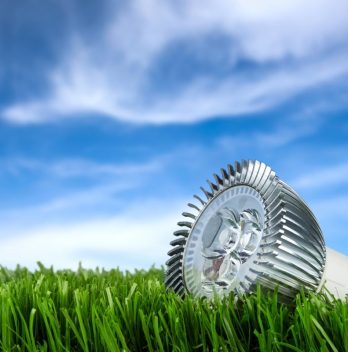
Growing With Household LED Bulbs
Are you wondering if growing with household LED bulbs will be great for your indoor growing needs? Well, let’s look into this.
There is definitely a difference between regular household LED lights and LED grow lights. Regular household LED lights are the ones used in our homes while LED grows lights are designed especially for growing plants.
The standard grow lights you find around you may be expensive and regular household lights are less expensive. For this reason, you may want to know if growing with household LED bulbs is ideal. Read on to find out the answer.
Growing With Household LED Bulbs
The straight-up answer is yes, growing with household LED bulbs is fine. In a few cases, you can grow your plants using household LED bulbs. However, you should note that these household bulbs are not designed for plant growing needs compared to the standard grow light bulbs designed for growing plants.
Therefore, your plants may not grow efficiently as they should because they may not contain the appropriate full spectrum. Your plants require a complete spectrum of light containing all the colors of spectrum which are blue, red, violet, green, yellow, and orange.
Also, some of these light spectrums are required by your plants to enter into their various stages such as vegetative stage, flowering stage, or fruiting stage.

Growing with regular household LED bulbs may even cause you to always replace your bulbs because they don’t have a good lifespan compared to standard grow lights. Therefore, this might even cost you more. At the end of it all, regular household LED bulbs may end up prolonging your growing period. Also, the yield at the end of harvest may be small and of low quality.
If you want to give growing with household LED bulbs a try, you can go ahead. Just make sure you keep a close watch on your plants’ response to these lights. Your plants’ response will tell you if they are fine with the light or not.
Your plants may begin to exhibit some signs that they aren’t receiving good lights so this will help you determine their response. Some signs they will show when they are not getting optimal lights are as follows:
Signs Caused By Inadequate Light
- Leaves start to show lighter color and some parts of the leaves may begin to turn yellow,
- Plants grow tall with weak stems,
- Plants’ growth may be stunted.
Once you notice these signs, it’s an indication you need to obtain some additional light bulbs. The best type of bulb usually contains both blue and red light wavelengths. The blue light is required for the vegetative stage and the red light for the flowering and fruiting stage.

Types Of Plant Light Bulbs
There are various types of daylight bulbs for plants you can use to grow your plants. However, if you require lights for just regular houseplants, you can go for light fixtures or lamps depending on your needs.
Here are some plant light bulbs you can use for your indoor plants:
1. Incandescent Bulbs
Incandescent bulbs are the light bulbs seen in most homes and they are one of the first options most people consider. They are one of the most common light bulbs to use and it is very affordable.
Although incandescent bulbs emit much heat, which is why they should be set up at least two feet away from your plants. This will help avoid damage to plants caused by heat. Incandescent bulbs should be used for a small indoor garden. They will also consume a lot of power which can cost you extra.
2. Fluorescent Light Bulbs
Fluorescent light bulbs are another popular type of light to use for your plants. They are ideal for small-scale gardens. With this light, you get a broader light spectrum that can be used for different purposes.
Thus, you can use fluorescent lights for seed germination, vegetative stage, flowering stage, and fruiting stage. They are safer to be used on plants because they emit lesser heat and they are also budget-friendly. Fluorescent light bulbs will consume lesser power saving, thus, you get to save cost, and they last longer.
3. High-intensity Discharge
High-intensity discharge lights include high-pressure sodium (HPS), and metal halide (MH). These lights may be a bit expensive to obtain and use, however, they are still a great choice for your plant growing needs.
The metal halide light contains blue light that will enhance vegetative growth. The high-pressure sodium light contains redder which promotes flowering. So, you can be sure of getting efficient lights for your plants with high-intensity discharge lights.
However, with their efficiency, they are so powerful that they consume more power at the same time producing more heat. Also, they need an extra component called a ballast to complete them.
4. Light-emitting Diode (LED): Daylight & Soft White LED Bulbs For Plants
LED lights are the most popular grow light used among growers. They are highly efficient and will release minimal heat while consuming less power. LED lights can produce both red and blue lights required for the vegetative and flowering stages of your plants.
LED lights can be represented as daylight, bright white, and soft white. Talking about daylight, this is a very bright white-blue light that has a high value of color temperature range of 5000 to 6500K. On the other hand, soft white lights give rise to yellow tones with a lesser value of color temperature that ranges from 2700 to 3000.
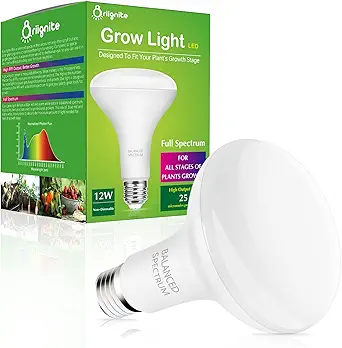
LED Grow Light Bulb, Briignite BR30 Grow Light Bulbs
FAQ’s
Can I use regular LED lights to grow plants?
If you are wondering whether you can use regular LED lights to grow your plants, the answer is yes. However, these lights are different from regular ones in a way that they emit far less heat.
Regular LED lights usually have a wavelength of around 620 nm and emit high amounts of blue light. If you are interested in growing plants indoors, you should look for LED lights that emit light in the range of 400-700 nm. You should also check if your LED light has a cooling fan. A fan will keep the lights cooler. In addition, you can also use fluorescent bulbs or CFL bulbs in your garden. These bulbs emit more light than regular LED bulbs.
What color LED is best for plants?
LEDs are the best light source for plants, and any LED that fits in the space you have available will work. The most important consideration is to make sure the LED is close enough to your plant that it is receiving the correct amount of light.
The best color LEDs are the ones that most closely match the spectrum of sunlight, and this is the same for all plants.
If you want to grow any plant in full sunlight, then you should use white LED lights. What is the difference between red and yellow LEDs? The difference between red and yellow LEDs is that yellow ones have a slightly warmer color temperature than red ones. This means that they will emit slightly more blue light than red LEDs, but they also will emit more red light than red LEDs. They will not produce as much heat as red LEDs, and they will last longer.
How far away should LED grow lights be from seedlings?
The closer to the plant the better, and also the higher the light output is the better. As you said, the light should be at least 20 inches from the seedlings.
This is pretty much the standard recommendation for starting seeds, unless your seedlings are large. You don’t want to be putting them under direct lighting for very long, but if you put them in the dark and keep them in there for too long they can actually die.
Growing With Household LED Bulbs: Final Say
Growing with household LED bulbs may be okay, but your plants won’t just grow healthily and efficiently as they should with a standard grow light. It’s best you go for grow lights that will provide your plants with the correct light spectrum for their growth.
In all this, ensure the light you’re using for your indoor plants contains the correct color temperatures. so, invest in quality lights so your indoor plants can flourish.
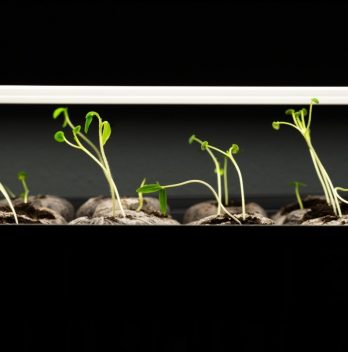
How Many CFLs Per Plant
CFLs are one of the most common grow lights used among indoor growers. It is the wish of every grower to satisfy the lighting needs of their plants. So, if you want to know how many CFLs are required per plant, we will let you know in this post.
Now, we can’t just answer this question without obtaining more about your garden information. We will require some information such as the wattage of the bulb, the size of each of your plants, and grow room size.
So, keep reading to learn how many CFLs are required per plant.
Growing With CFLs Light
Indoor gardening with compact fluorescent light (CFL) bulbs is a nice source of light supplements you can provide your plants. They will offer your plants awesome growing benefits such as affordability, easy to use, minimal heat, consumes lesser power, and so on. With CFL lights, you can be sure your plants receive the appropriate light wavelengths for them to flourish.
The compact fluorescent light bulb does not emit too much heat, unlike the conventional incandescent bulbs or fluorescents. However, they only supply moderate light intensity in contrast to sunlight. Therefore, your plants may need multiple bulbs for your plants’ growing needs.

How Many CFLs Is Required Per Plant
Like we said earlier, we need to know the plant size and bulb wattage to determine how many CFLs are required per plant.
The general standard we use in determining the plant’s lighting requirements is the plant size and it is measured in square feet. If we know the square foot of the plant size, we can deduce how many CFLs are required per plant. Also, it’s better to answer this question using square feet of space rather than how many plants.
How Many CFL Watts Per Plant?
How many CFL watts per plant are around 60 to 100 watts per square foot. This is ideal especially for high light demanding plants. You can however go a bit higher even as high as 150 watts. We recommend these values for the flowering phase.
When considering the vegetative phase, seedlings phase, or cloning, you can use half of this value for your plant’s growing needs. This value can as well be used for low light-demanding plants.
In a similar fashion, when we’re looking at about 2 to 3 plants which usually contain 1 square foot, then 150 wattages or less will be required.
Actual Wattage vs. Listed Wattage
Most grow lights usually have two different wattages: the actual wattage it draws from light and the wattage listed by the manufacturer.
For instance, if you see your CFL grow light labeled 500 watts, that’s not the actual wattage consumed. If you dig through and search your package, you will find the actual wattage used. Usually, if it’s stated that a grow light is 500 wattages, it may actually consume just about 150 or 200 wattages.
The labeled 500 watts is the amount the grow light offers while consuming lesser power. This implies you get more output with lesser power consumption.
Therefore, when you are considering how many CFLs per plant are required, focus on the actual wattage, not the labeled wattage.
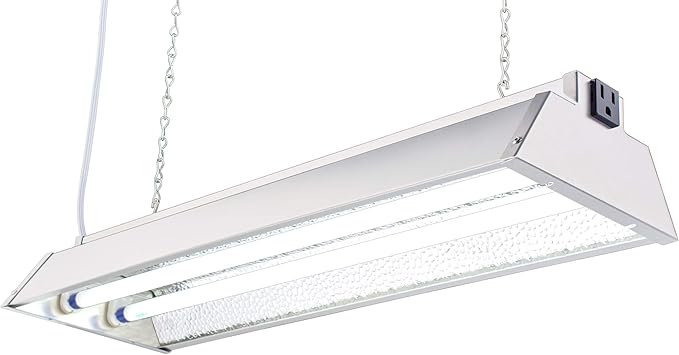
Durolux DL822N T5 HO 2Ft 2 Fluorescent Lamps Grow Lighting System
Extra Tips
As we mentioned earlier, CFL grows light only supplies moderate light intensity. Thus, if you want to get more light intensity, you may need to use multiple bulbs.
This is why CFL grow lights are ideal for only small plants. When you start using 10 or even 5 bulbs to attain that better lumen, you may have to put in extra work by readjusting the lights as your plants develop.
So, when you decide to plant more than one or two plants, we recommend you obtain an affordable LED grow light or a T5 fixture to ease the stress.
CFL Grow Setup
There is an ideal way to set up your CFL grow light so your plants can get adequate light intensity for their growing needs. Your CFL bulbs should be positioned on every side so your plants can receive good lightning. You can place the CFL grow light close to your plants because they are safe and will not emit too much heat.
For seedlings, you can position your CFL grow light at least an inch away from your plants. Once they begin to grow, you should move them a little farther from the plants. Ideally, for bushier and short plans you can place your CFL grow light close to the plants. On the other hand, for taller plants, the CFL grow light will need to be positioned farther away as the plants grow.

However, you can do a test using the back of your hand to feel the heat emitted from your CFL grow light. Place your hands between your plants and grow light for about 20 seconds. When you notice it feels hot, push the grow light a little further from your plants to avoid burns. On the other hand, if the heat is minimal on your hand, then it’s safe at that distance.
Generally, the recommended distance around 2 inches to 4 inches. Also, you want to always keep a close watch on your plants and how they receive the grow lights. As they grow taller, it is ideal you continue to move the grow light away from them.
FAQ’s
What CFL light is best for growing?
There are many options for CFL light bulbs. CFL stands for compact fluorescent lamp, a bulb that emits a similar amount of energy as an incandescent bulb but uses less power and produces a brighter light. There are several types of CFL bulbs available, including standard CFL bulbs, daylight CFL bulbs, energy-saving CFL bulbs and LED bulbs. All CFL bulbs produce the same amount of light, but some have a longer lifespan than others.
The most powerful CFLs are the ones with the most lumens, so a 100W light bulb would be better than a 25W bulb. A lot of the higher wattage bulbs do not have as much lumen output as lower wattage bulbs, but some of the higher wattage bulbs have more color spectrum than lower wattage bulbs. For example, the 100W bulb may have a little more red light, while the 35W bulb may have a little more blue light.
I prefer warm white CFL bulbs (2700K) but I’ve also seen people say they work well with cooler CFLs. I’ve also heard of people using CFLs for other things like making tea or cooking. I would assume that CFLs would be best for those uses, but they don’t seem to be much different from the incandescent bulbs that are usually recommended for growing plants.
How many CFLs are needed for seedlings?
It’s easy to calculate the number of CFLs needed. Let’s say the number of square feet of your seedling room is 10′ x 12′.
The number of CFLs needed is:
10′ x 12′ x 1/4″ = 120 square feet 1 cubic foot of seedlings = 240 seeds, so the number of CFLs needed is: 240 x 1/4″ = 60 square feet So you’ll need at least 60 square feet of CFLs to cover the seedlings.
If you’re talking about seedlings (like lettuce) and not plants, the answer is two per plant. For example, I have 2-4 seedlings per plant in a 1 gallon pot. In the case of seedlings, they’re usually grown in flats with two per flat. They can also be grown in individual pots, but that’s more of an exception than a rule.
What kinds of works well with CFL’s?
For seeds I would recommend using a CFL with an output of 150 watts or less (150W, 75W, 35W, 15W, etc.). This is the minimum for a CFL bulb to provide enough light for plant growth.
How far away should CFLs be from plant?
You want to keep them anywhere between 4 to 6 inches away from your plants. If you put them any farther away they won’t receive enough to grow properly.
We have concluded that how many CFLs watts per plant required is about 150 watts or less per square foot. CFL lights will produce less heat making it safe to be placed close to your plants. Therefore, they are especially great for tight space.
They are affordable and easily accessible. However, their light intensity does not do so great. Additional bulbs may be required to achieve the required light intensity. They are also not ideal for a large setup but great for a small setup.
Having said all this, we believe you will have excellent plants result growing with CFL grow lights.
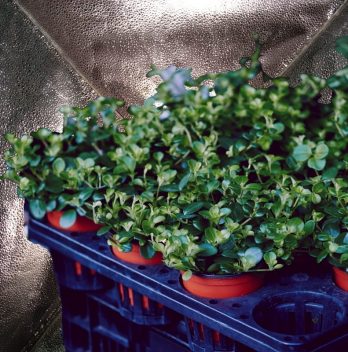
How Many Plants In A 3×3 Grow Tent
If you’ve decided to grow your plants indoors and you’re wondering how many plants can fit in a 3×3 grow tent is, then this post is for you.
One of the first important points to put into account before commencing an indoor garden is space. If you’re using a room, figure out how much space you have and if you’re using a grow tent, figure out how many plants can be grown successfully in your grow space.
We will go through how many plants will fit a 3×3 grow tent size so you can plan your indoor garden set up appropriately. So continue reading to learn more on this.
How Many Plants To Fit In A 3×3 Grow Tent?
You can grow about 2 to 4 plants in a 3×3 grow tent size. However, the number of plants to be grown in a 3×3 grow tent will depend on how you train your plants.
How you train your plant will be one major determinant of how many plants can fit in a 3×3 grow tent. Training is done to control the height and shape of your plants so they can accommodate your grow tent. Training your plants will not only control your plant size but will also maximize the yield of your crops.

When & How To Train Your Plant To Fit In 3×3 Grow Tent
Let’s take a look at how and when you can train your plant so they can fit in your preferred grow tent size.
Low-Stress Training Method
One common way of training your plant is by the low-stress training method. It involves controlling and manipulating the shape of your plants for them to produce optimal yield. Low-stress training allows growers to make use of the available space and light adequately.
Mostly, low-stress training allows your plant to grow horizontally and wide rather than vertically. It involves lowering a plant’s height at the same time producing multiple stems to maximize yield.
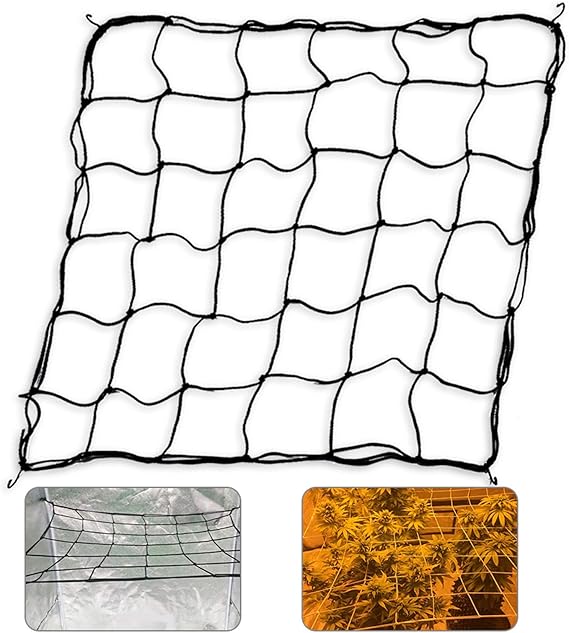
A horizontal trellis net is usually used to control and guide the plant through the direction of the plant to follow as they grow. The trellis net is tied to each grow tent pole which allows the plants to grow horizontal and wide. You can also gently bend or tie down the ranch of your plant stem and branch with a soft rope so they grow outwards.
GROWNEER Flexible Net Trellis for Grow Tents
Training should be done in your plants’ vegetative stage. This is because at this stage your plant is still growing and producing more leaves. When your plants get to the flowering stage or they become established, it will be difficult to manipulate their growth direction. If you plan on making use of this method in your 3×3 grow tent, then you can grow up to 4 plants in a 3×3 grow tent.
Check out How to Increase Humidity in Grow Tent
Training By Pruning Method
Another method of training your plant is by pruning or pinching. This method actually puts some stress on your plant because you have to make some cuttings.
Pruning involves cutting some parts of the plants as they grow. This is done to change the growth pattern. This process also gives rise to optimal yield. You can grow about 2 plants in a 3×3 grow tent using the pruning training method.
Sea Of Green Method
The next method of training your plants to fit in your grow tent is the sea of green method. This method involves pushing the plants to enter into their flowering stage ahead of their scheduled time. So, this is done by altering the lightning duration to 12 hours of light and 12 hours of darkness.
This is done so you can get early flowering, thus yielding to early harvesting. Therefore, this allows you to grow more plants or flowers per year. With the sea of green training method, you can grow about 5 to 7 plants in a 3×3 grow tent size.

Screen Of Green Method
The fourth and last training method we will be discussing is the screen of the green method. This method takes the steps of low-stress plant training. This also makes use of the net trellis by pushing the plants’ direction horizontally rather than vertically. With the screen of the green training method, you can plant about 2 plants in a 3×3 grow tent.
How Many Plants in a 3×3 Tent Final Thoughts
We have shown that how many plants you can fit in a 3×3 grow tent size will majorly depend on how you train your plants as they grow.
So, we hope this information has helped you know how to plan and manage space.
5000k vs 6500k For Plants- Know The Difference
You may have come across some color temperature values especially these two options: 5000k and 6500k. Now, the question is which better option when it comes to 5000k vs 6500k for your plants growth?
Different people or even experts may recommend you go for either one because they are better and you end up getting confused. But in the actual sense, which one is really better in 5000k vs 6500k for your plants?
To answer your troubling questions, we have put together this article for you to know the difference between 5000k and 6500k. So, continue reading to find out the answer.
Kelvin Color Temperature
Before we look into 5000k vs 6500k for plants, let’s have an idea of what Kelvin’s color temperature is. Kelvin’s color temperature illustrates the look of light supplied by a given light bulb. The measurement of color temperature is in Kelvin (K) and the Kelvin scale ranges from 1,000 to 10,000.
Kelvin scale is used to measure or determine the source of light and the direction the light spectrum follows. Now if you want to describe or have an idea of how the light appears, color temperature is used. On a Kelvin scale, the lesser numbers 1000k to 3000k fall under orange and yellow while the higher numbers around 4000k to 7000k fall under blue.

The Importance Of Color Temperature For Plants
Color temperature is very crucial for the growth of plants as it will tell you the spectrum of light required. Growing various plants indoors will require you to recreate the light supplied by the sun.
Light serves as the energy in plants used in their developments. Photosynthesis makes use of light to make food and certain chemicals or pigments on the leaves make this possible.
The pigment chlorophyll present in plants allows light to be absorbed for their use. Chlorophyll will take in the different light spectrum at different rates. So, getting the right color temperature values for your plants’ growth is important.
Also, note that the distance you place your light source will determine the light intensity supplied to your plant. If the light source is moved closer to your plants they will receive more light intensity and vice versa. However, ensure the heat emitted from your grow light is minimal to prevent your plants from burning.
6500k vs 5000k For Plants: Which Is Better?
Generally, plants will grow optimally between the 2700k and 7000k range. This range is very similar to natural sunlight which helps plants grow better. So, when it comes to 500k vs 6500k, we can say they fall into the perfect Kelvin scale range ideal for plant growth.
If you’re already making use of either 5000k or 6500k and it is working for you perfectly, then there’s no reason to change. They will both offer your plants pretty similar results. If you keep asking different people what the best color temperature between 5000k and 6500k, you will keep getting up to 10 different answers.
Ideally, your plants will benefit from anything daylight ranging from 5000k to 6500k. So, you can stick with whichever one.
Both 5000k and 6500k are great for the vegetative phase, flowering phase, and fruiting phase. So, they are ideal for the general growth of your plants.
The only difference between 5000k and 6500k is that 5000k is considered morning light. On the other hand, 6500k may be regarded as noon light.
Which Is Brighter In 5000K vs 6500K?
The Kelvin color temperature does not depend on brightness. For instance, a LED light with 6500k could be dim and have a lamp of 5000k that is extremely bright and vice versa.
The color temperature of Kelvin will not tell you how anything about the brightness of a light source. It will only determine or measure the source of light and the direction of the light spectrum.
There are various ways to determine brightness but one common way you can determine the brightness is through the lumen. Higher lumen results in brighter light and it measures the intensity of light that we humans can see.
Therefore, the combination of Kelvin and lumen will give you a hint of how good the light intensity of a certain grow light is.
Final Say 5000k for veg vs 6500k for veg Plants
So, we have concluded that there’s isn’t much difference when it comes to 5000k vs 6500k for plants. Your plants will do well with either one of these color temperature values.
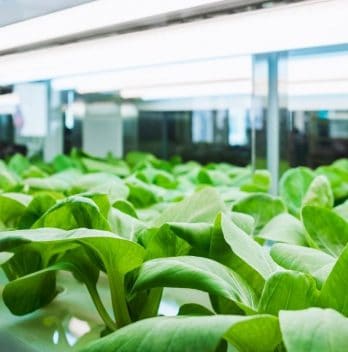
Growing With T8 Fluorescent Lights
Commencing hydroponic indoor gardening will require some good planning. Choosing the appropriate grow light is an important factor to consider in indoor gardening. Using T8 fluorescent lights when it comes to growing with hydroponics is a great option as it will provide optimal lighting for your plants’ growth.
Choosing the right lighting source for your indoor garden will determine how well your plant flourishes and yield a good harvest. Be it flowers, vegetables, etc, you should know the right type of grow light for your various plants.
We will be discussing growing with T8 fluorescent lights and see how they affect the growth of your plants. So, read on to find out.
Grow Light For Indoor Plants
Grow lights are bulbs used to replicate and provide the light from sunlight to your plant. They are used in indoor gardens and are essential at every stage of your plant’s life cycle.
There are various grow lights that can be purchased. Some are costly while some are of moderate price. Choosing the right type of grow light that will offer your plant optimal support and result in greater yield is important. You wouldn’t want to end up choosing the wrong type of grow light.
Therefore, let’s take a look at how growing with T8 fluorescent grow lights will be and how they affect the growth of your plants.
Growing With T8 Fluorescent Grow Lights
T8 fluorescent lights have been in existence for a long and they have been used in an indoor hydroponics garden.
Generally, fluorescent lights are more affordable unlike some other grow lights such as LED. The heat they emit is minimal thus will not burn your plants. They will also supply your plants with good light intensity for their development.
T8 grow light is made of tubular style with a 1-inch diameter. They are energy efficient and they are mainly used for seedlings, veggies, cuttings or cloning, and flowering. T8 grow light can also be easily interchanged with older types of fluorescent light.
They are also one of the best lights used in the vertical farming system. T8 grow lights are known to be pretty durable with a longer lifespan.
Growing Vegetables With T8 Fluorescent Lights
Growing vegetables indoors with T8 fluorescent lights will offer your veggies lots of benefits.
Simply ensure you position your fixtures at the appropriate distance to your plants so they can receive optimal light intensity. Also, make sure you leave the T8 to grow light long enough for your plants to receive adequate light for growth.

Seedlings
T8 light can as well be used on germinating seeds or growing seedlings. Just ensure you place your grow light in the right position as young seedlings will require less light intensity. It is when they begin to grow well and strong the light fixtures can be increased.
However, for seedlings that love sun or light, you should have their grow light at least 1 foot above the plants. T8 bulb of 48 inches should be left on for around 22 to 28 hours daily.
Some Recommended T8 Grow Lights Bulbs
Below are some recommended T8 fluorescent lights you can go for:
1. Monios-L T8 LED Grow Light 2FT, 144W(6×24W) High Output Plant Grow Light Strip
The Monions-L T8 LED grow light features two rows with a high-quality full-spectrum LED. The heat emitted is not too much and it’s safe for plants. It’s also very bright and easy to install.
Also, this T8 grow light is great for all plant stages. It is capable of connecting up to 6 grow lights at once. Ensure you keep the 4 to 39 inches between your plants and grow light.
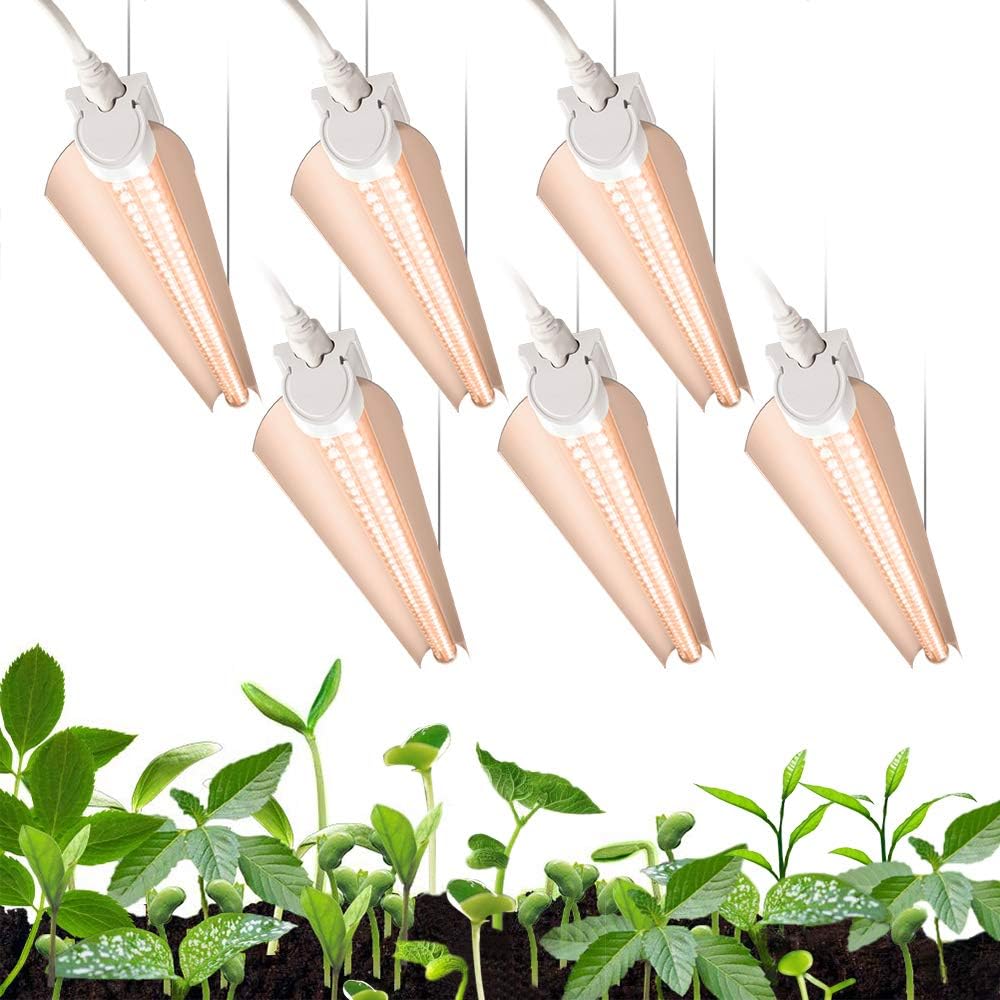
2. LED Grow Light Strip, 4ft T8 Grow Light Fixture
This T8 LED grow light will offer your plants a full light spectrum. It features removable reflectors and the light angles can be conveniently adjusted.
It is very durable, easy to install, and has a low maintenance cost. They are very flexible and can be easily fixed or hanged in most places in your house.
Also, you can link them with 6 other grow lights and they are a great choice for home gardening and commercial gardening.
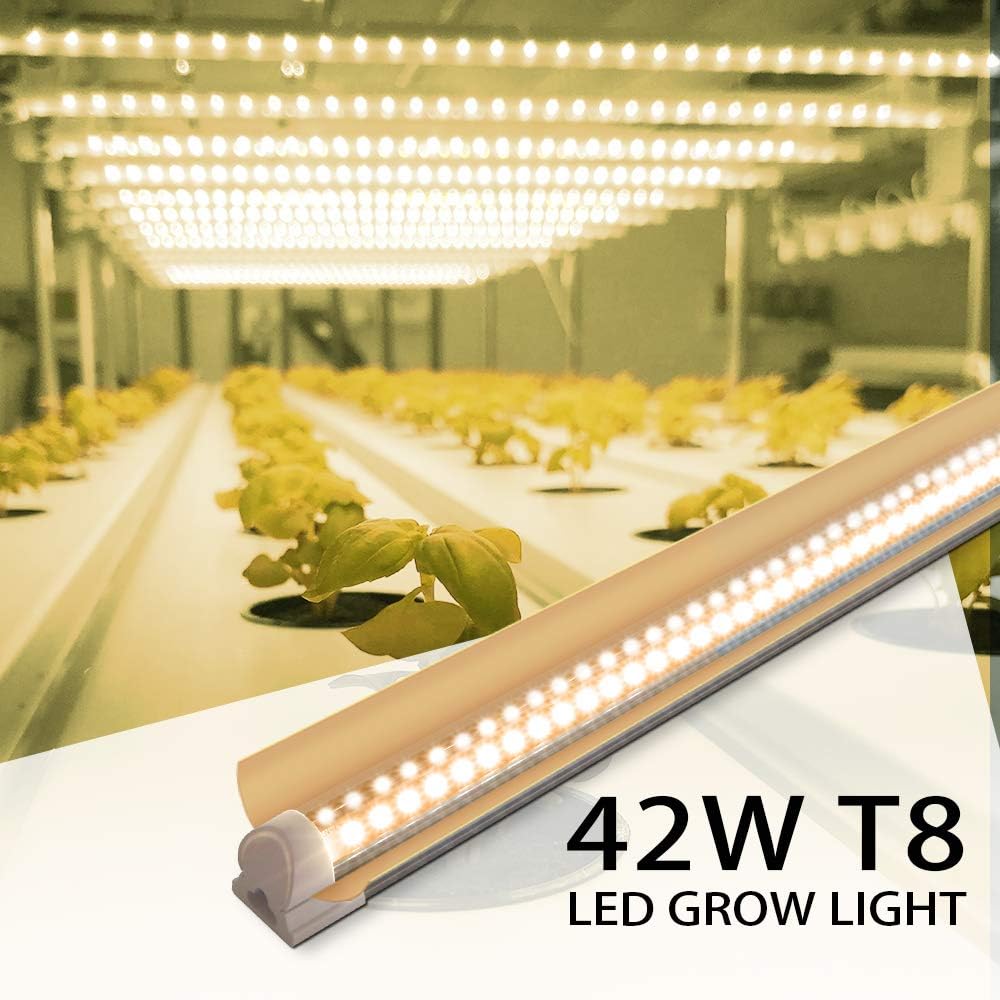
3. Barrina Grow Light, 96W(4 x 24W, 600W Equivalent), 2ft T8, Super Bright, Full Spectrum Sunlight Plant Light
The Barrina T8 grow light is another full-spectrum light ideal for your indoor plants. They are easy to set up and are made of reflectors which helps enhance the light output.
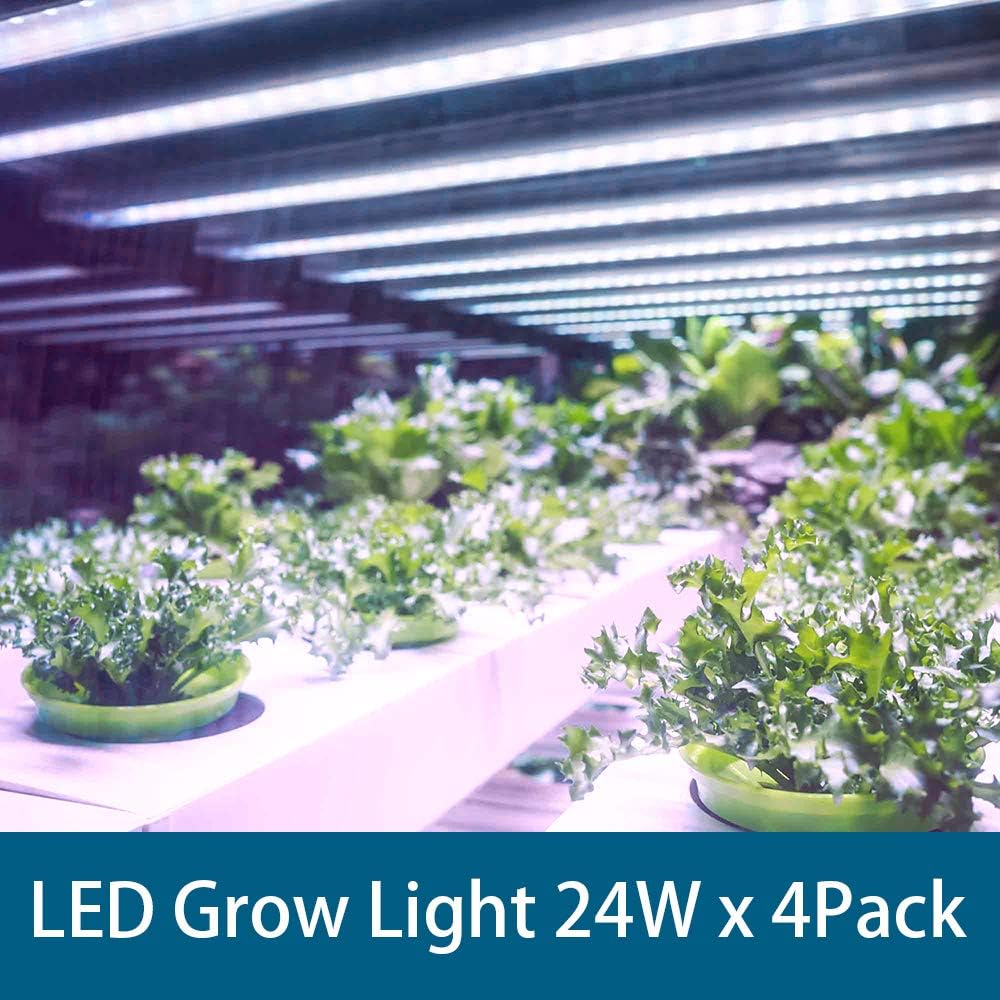
Can I use T8 bulbs to grow plants?
The short answer is yes. The T8 bulb produces a brighter light than the HPS bulbs used in your current setup, and it’s usually about half as much power (so less heat) as an HPS. It does not produce quite as much UV as an HPS bulb, so you may want to consider whether that’s enough for your plants.
T8 bulbs are good for replacing fluorescent lamps or CFLs in existing lighting systems, but not for replacing the HPS bulbs.
Can fluorescent lights be used as grow lights?
The answer is that it should be ok, but you have to use high quality bulbs.
I would also advise to make sure that his light fixture has enough space for the plant to grow and has adequate ventilation. There is no doubt that the fluorescent lights will give off some heat, so he should keep the lights a good distance from the plants and not have the plants too close to the fixture. There is always the danger of the bulb burning out in the fixtures if the plant is too close.
here are many types of fluorescent lamps available. Some are designed specifically for growing plants and some are general purpose. There are three main types of fluorescent lights that you can use to grow plants: High-pressure sodium (HPS), medium-pressure sodium (MPS) and low-pressure sodium (LPS). There are also fluorescent tubes that you can purchase for the same purpose.
How far should fluorescent lights be from plants?
The distance between the plant and the light should be as short as possible, but not longer than 3-4 feet. If the lights are too far away, they can appear to “grow” upwards instead of downwards. This is called “vertical growth.” The reason for this is that as a plant grows, it pushes out new cells in the top of the stem.
These cells then send their own roots towards the light source. When the cell’s roots reach the light source, the cell stops growing. Because the light source is so close to the plant, the new roots grow upwards rather than downwards. This is a normal part of a plant’s growth cycle.
Will tomatoes grow under fluorescent lights?
Yes, they will. But it is important to keep the lights low and in a position where the plant can’t get shade from any overhead source. Here’s what I would recommend. Place the lights directly over the plants. Make sure you have adequate ventilation if you are using them indoors. The heat that they produce will be enough to warm the air around the plants, but you need to make sure the temperature doesn’t rise too high.
If the air gets too hot, you may want to move the plants to a cooler area, such as a basement or garage.
Conclusion
Can I use T8 bulbs to grow plants?
The short answer is yes. The T8 bulb produces a brighter light than the HPS bulbs used in your current setup, and it’s usually about half as much power (so less heat) as an HPS. It does not produce quite as much UV as an HPS bulb, so you may want to consider whether that’s enough for your plants.
T8 bulbs are good for replacing fluorescent lamps or CFLs in existing lighting systems, but not for replacing the HPS bulbs.
Can fluorescent lights be used as grow lights?
The answer is that it should be ok, but you have to use high quality bulbs.
I would also advise to make sure that his light fixture has enough space for the plant to grow and has adequate ventilation. There is no doubt that the fluorescent lights will give off some heat, so he should keep the lights a good distance from the plants and not have the plants too close to the fixture. There is always the danger of the bulb burning out in the fixtures if the plant is too close.
here are many types of fluorescent lamps available. Some are designed specifically for growing plants and some are general purpose. There are three main types of fluorescent lights that you can use to grow plants: High-pressure sodium (HPS), medium-pressure sodium (MPS) and low-pressure sodium (LPS). There are also fluorescent tubes that you can purchase for the same purpose.
How far should fluorescent lights be from plants?
The distance between the plant and the light should be as short as possible, but not longer than 3-4 feet. If the lights are too far away, they can appear to “grow” upwards instead of downwards. This is called “vertical growth.” The reason for this is that as a plant grows, it pushes out new cells in the top of the stem.
These cells then send their own roots towards the light source. When the cell’s roots reach the light source, the cell stops growing. Because the light source is so close to the plant, the new roots grow upwards rather than downwards. This is a normal part of a plant’s growth cycle.
Will tomatoes grow under fluorescent lights?
Yes, they will. But it is important to keep the lights low and in a position where the plant can’t get shade from any overhead source. Here’s what I would recommend. Place the lights directly over the plants. Make sure you have adequate ventilation if you are using them indoors. The heat that they produce will be enough to warm the air around the plants, but you need to make sure the temperature doesn’t rise too high.
If the air gets too hot, you may want to move the plants to a cooler area, such as a basement or garage.
These grow lights t8 can be linked with 12 other lights with connecting cords. Their light is very bright and great for indoor gardens.

Best Light Spectrum For Clones
It is the wish of all growers to maximize the growth potential of their clones. Providing the correct light spectrum is paramount to the development of your clones. So, if you’re wondering what the best light spectrum for your clones is, we will let you know in this post.
Plant cloning has been in existence for decades and it’s been used to produce desirable plant characteristics on a large scale. One of the major sources of energy comes from the light which is why it’s crucial for the development of your clones.
Continue reading to find out the best light spectrum required for the growth of your plant clones.
Cloning Light
Cloning involves producing or making an exact match or copy of a plant from a mother plant. The plant to be cloned must have excellent features such as no plant stress, plant disease resistance, healthy plant growth, etc.
Cloning is another way of starting and growing a plant instead of seed germination. If you maintain and follow all the right tips for cloning, you will have a successful plant in the end.
Best Light Spectrum For Clones
Starting off your cloned plants the right way is the key to a successful plant outcome. So, talking about providing the best light spectrum for your clones, we recommend the blue light color. Also, if you wish to provide a full light spectrum to your clones, it won’t hurt.
Generally, plants require two main types of the light spectrum to flourish which are blue and red. Blue and red are as well great for plant cloning.
The blue light spectrum is required by clones for root development. On the other hand, the red light spectrum assists in the growth of plants and flowering of the plant. The red light spectrum is also required for photosynthesis which helps in the production of plant food to boost their growth.
However, for the first period, ensure you make use of blue light first to enhance the growth of the root.
Read more about: How Long it For Clones To Root
Grow Light That Produces The Best Light Spectrum For Clones
Note that the grow light that produces one of the best light spectrums is the cool white fluorescents. You can as well go for a combination of cool white fluorescents and warm white fluorescents. These lights are especially great for young clones as they require minimal light power for their early growth stage.

Other types of grow lights such as HID, LED, and so on can as well be used for your clones. However, these grow lights may be too strong for young clones. They won’t be as effective as fluorescent grow lights.
The household CFL is another good option to use on your clones. Household CFLs such as spiraled light have also shown good outcomes on young clones. Be sure to take care when using CFL lights on your clones as they emit plenty of heat. Give them a good distance between your clones to avoid burning them.
How Much Light For Clones Is Required?
Supplying your clones with the correct light spectrum will enhance their growth to give you abundant yield. Although for the first two days, your clone does not require any light because they need to be in the dark.
Ideally, you should supply your clones with about 18 hours of light. This will encourage the growth of stems and healthy leaves. The remaining of your clone 6 hours is to be in the dark to also encourage the growth of roots.
Other Lighting Tips For Clones
Here are some cloning tips to ensure you give your clones the best lighting for optimal growth:
- Take note of the heat of any to-grow light you’re making use of. You can do a simple test by placing your hand between the distance of the light and your clones to feel the heat. If you feel too much heat on your hand try to move the distance a little farther from your clones.
- As your clones develop, ensure you monitor their appearance. If you notice the yellowing of leaves or drying of leaves, it may imply your grow light is too close to your plants that it gives off too much heat. Quickly do the proper adjustments.
- Use only low light levels for your clones as they flourish and grow well in them.
- As your clones develop and grow stronger and hardened, they will need more light. Thus, you can increase the light intensity gradually.
- Allow your clones to develop strong root systems before exposing them to powerful or bright lights.
Which Wavelength of Light is The Least Useful to Your Plants’ Growth?
Greenlight is the least useful for plant growth. Plants poorly absorb this light wavelength since their chlorophyll pigment is already green. It might not make much sense, but this rejection is a form of protection. However, scientists don’t have the exact reason pinned down yet.
What Wavelength of Light Do Plants Absorb?
The pigments in plant cells that are responsible for collecting energy can only absorb specific wavelengths of light. Plants absorb blue and red light the best. Blue light has a wavelength range of 425 – 450 nm, and red light ranges from 600 – 700 nm.
The wavelength range plants use to photosynthesize is between 400 nm and 700nm. This is known as Photosynthetically Active Radiation (PAR), and this changes seasonally and even differs depending on the time of the day.
What is The Best Light Spectrum for Vegetative Growth?
Vegetative growth refers to the growth period between germination and flowering. During this stage, plants photosynthesize and collect the energy they need to flower and reproduce. If you’re growing plants under a grow light, you need to ensure they have the right light during this developmental stage.
Blue and red light waves are best for the vegetative stage. If you use a mixture of both, you’ll get great results! Blue light improves plant structure. Red light is responsible for increasing leaf growth and stem elongation. This wavelength also promotes flowering and fruit development.
If you need to encourage structure strength, increase the ratio of blue light. Use more red light if your plants are leafy or near flowering.
Do Full-Spectrum Grow Lights Emit UV Rays?
If you’re keeping your plants under grow lights, you need to mimic natural sunlight as closely as possible. A full-spectrum light will do this task best.
Full-spectrum grow lights emit UV rays. The wavelength of your light should be between 100 and 400nm for effectiveness. You’ll have to keep your plants under this light for at least 12 hours daily.
Compared to standard blue and red fluorescent light bulbs, a full-spectrum light can almost double the quality of light. It’s the closest to the natural sunlight you can give your plants.
How to Make a Full-Spectrum LED Grow Light?
It’s relatively easy to set up your own full-spectrum grow light. I suggest buying a kit that contains all the elements you need. This will work out cheaper, especially if you have nothing on hand.
Your kit should include blue, red, green, and white light. The lights your choice will determine the quality of your setup. Ultimately, the outcome of your plants!
Full-spectrum LED growth lights should range from ultraviolet to infrared. This will ensure it mimics natural daylight as closely as possible. The wavelength range of your setup should be between 400 nm and 700 nm.
Remember to evaluate the CRI (color rendering index) of your setup. The higher this is, the closer your lights are to sunlight.
Clone Light Conclusion
We have concluded that the best light spectrum for clones is blue and red colors. They are required for the development of roots for your clones and optimal growth.
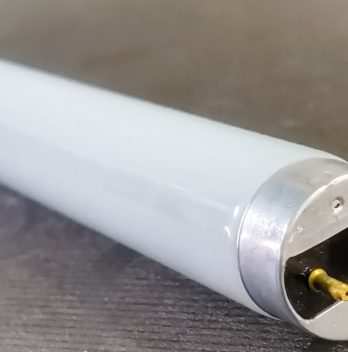
Best T8 Bulbs For Growing Plants
As a hydroponic indoor grower, one of the major things to put in place to get optimal growth is good lighting. Among various types of grow light, we have in the market, T8 grow light is the type that can supply your plants with good lighting. This is why you need to know the best T8 bulbs for growing plants.
Your indoor hydroponic plants will require excellent grow light that can duplicate the effect or work of sunlight. We will be reviewing the best T8 bulbs you can choose for growing plants in your indoor hydroponic garden so you can enjoy optimal yield. So, read on to decide your best pick.
What Are T8 Grow Light?
T8 grows are fluorescent grow lights that are one inch in diameter. It is approximately 40% smaller than a T5 fluorescent light and also longer than T5 grow light.
List Of The Best T8 Bulbs For Growing Plants
With so many options of T8 bulbs in the market, deciding which to go for might be confusing. This is why we are taking the stress off and listing some amazing T8 bulb grow lights you can go for. So, let’s explore our options:
1. SHOPLED LED Grow Light 2FT, Full Spectrum, 20W Plant Lights for Seed Starting, Seedlings, Sunlight Replacement, Grow Lights for Indoor Plants, 4-Pack
This grows light is one great T8 grow light bulb you can choose. It features full spectrum red and blue light spectrum in a V-shape which is specially required for the optimal growth of plants. This T8 grow light will usher your plants all through their growing phase (germination, vegetative, and flowering or fruiting phase).
It comes with a three speed timing regulator allowing you to adjust the light output depending on the growing stage. The grow light is very flexible and you can set them up in various positions in your indoor garden such as a growing rack, vertical farm, or plant factory.
Another added advantage is that the bulbs emit low heat. Thus, you can position them a little close to your plant so they can receive optimal light and not worry about it burning your plants.
In addition, this grows light will not take too much power thereby you get to save a good amount on your lightning utility bill. They will also serve you a long time till you ever think of making any change.
The drawback we notice is that the light may be too bright for your eyes. So when handling or going near it, you can make use of some protective eye wears.
Pros
- Supplies both red and blue spectrum which is great for plant growth.
- Easy to use and set up.
- The heat emitted is minimal.
- Energy-saving grows light.
- Long-lasting.
Cons
- The light produced may be too bright for your eyes.
SHOPLED LED Grow Light 2FT, Full Spectrum, 20W Plant Lights for Seed Starting, Seedlings, Sunlight Replacement, Grow Lights for Indoor Plants, 4-Pack
$58.99
Full spectrum red and blue T8 Grow light containing 3-speed light output to align with the growing stages of your plants.

We earn a commission if you make a purchase, at no additional cost to you.
03/22/2026 09:02 am GMT
2. GE Grow Lights for Indoor Plants, T8 LED Light Bulbs
The GE T8 LED Grow Light Bulbs offer a full-spectrum light tailored for indoor plants, especially those flowering and fruiting. With a lifespan of 25,000 hours, these 48-inch bulbs are designed to fit standard T8 fixtures, providing an energy-efficient solution for plant enthusiasts.
Pros:
- Advanced Red Light Spectrum: Enhances flowering and fruiting stages, promoting healthier plant development.
- Energy Efficiency: Consumes less power compared to traditional grow lights, reducing electricity costs.
- Long Lifespan: With 25,000 hours of use, these bulbs require less frequent replacements.
Cons:
- Fixture Compatibility: Designed for T8 fixtures; may not fit other types without modification.
- Initial Investment: Higher upfront cost compared to standard fluorescent bulbs.
Overall, the GE T8 LED Grow Light Bulbs are a solid choice for indoor gardeners seeking efficient and effective lighting solutions for their flowering and fruiting plants.
GE Grow Lights for Indoor Plants, T8 LED Light Bulbs
$99.77
GE T8 LED Lights bulbs for Flowers and Fruit with Advanced Red Light Spectrum, 25,000 Hours Lifespan, 34 PPF, 48 Inches, 6 Pack (Packaging May Vary)

We earn a commission if you make a purchase, at no additional cost to you.
03/22/2026 05:03 am GMT
3. Barrina LED Grow Light, 252W(6 x 42W) 4ft T8, Full Spectrum
The T8 Barrina LED grow light is another excellent grow light that will supply a full light spectrum to your plants. This grow light is easy to install and it comes with different wires for connections.
It is built with an aluminum reflector that improves the efficiency of light supplied to plants. This T8 bulb light can last as long as 50,000 hours non-stop. The aluminum reflector also assists in spreading the heat emitted evenly.
This T8 grow light will usher your plants into their various stages such as germinating, vegetative, and flowering or fruiting. The full spectrum Barrina grow light offers consist of red, blue, and green wavelengths which are great for boosting the growth of plants.
Additionally, this growth light can as well extend the flowering time of any plant you wish to extend. Thus, it will also help enhance the quality of the budding of your plants. You enjoy higher efficiency of light at a reduced cost as well as low consumption.
Another added benefit is the ability to connect up to 6 bulbs at once without requiring connecting chords. Thus, installation costs and timing are reduced.
The downside is that the light emitted may be too bright for your eyes. Wear protective eye wears if they’re bothering your eyes.
Pros
- Highly efficientT8 grow light.
- Long-lasting with a life span of 50,000 hours of non-stop light.
- Great for all plant life cycle.
- Easy to assemble and use.
- Features aluminum right reflectors for better functionality.
Cons
- Light may be too bright for the eyes.
Top Pick
Barrina Grow Lights for Indoor Plants, Full Spectrum Sunlight, 2ft 40W (4 x 10W, 250W Equivalent), LED Grow Light Bulbs, T5 Grow Lights, Plug and Play, Pinkish White, 4-Pack
$29.06
The T8 Barrina LED grow light is another excellent grow light that will supply a full light spectrum to your plants. This grow light is easy to install and it comes with different wires for connections.

We earn a commission if you make a purchase, at no additional cost to you.
03/21/2026 11:02 pm GMT
4. SpeePlant T8 LED Grow Light Strips, 1FT Plant Grow Lights for Indoor Plants Full Spectrum
Another option for the best T8 bulbs for growing plants is the SpeePlant T8 integrated fixtures. It is perfect for greenhouse cultivation, house gardens, etc.
They are super easy to assemble and use, and the bulbs are bright enough for your plants to do well under them. They are pretty versatile and lightweight, so they can be installed on your walls, shelves, and so on.
The SpeePlant T8 integrated light fixtures offer your plant a full light spectrum. Thus, they will assist your plant transition from germination to flowering to vegetative, and flowering or fruiting stages. They will also help your plant take in adequate nutrients even trace elements for optimal yield.
The grow light is highly efficient and long-lasting and its power consumption is also minimal. You can also link up to 6 fixtures at once.
The disadvantage we notice is that the light produced may be too bright for your eyes. Thus, ensure you wear protective eyewear when close to the plant if the light affects your eyes.
Pros
- A lightweight and versatile grow-light
- Perfect for all plant stages.
- Easy to install and use.
- Long-lasting T8 grow light.
Cons
- Light may be too bright for the eyes.
5. White Light Full Spectrum LED Grow Light, 2FT 2-Row V-Shape T8 Integrated Growing Lamp Fixture
One of the best options for T8 bulbs for growing plants is this white light full spectrum. They supply bright white lights and they’re great for an indoor hydroponic garden. The wavelength ranges from 420nm to 780nm.
The white light they produce will not cause harm to your eyes as they are healthier for both you and your plants. They are also full-spectrum light that will support your plant throughout the stages of its growth cycle.
The installation is pretty easy and it requires no wiring or reconstruction. All you need do is plug and on your grow light. They are highly efficient that give high output even with low power consumption. Thus, you get to save up to 70% energy on your electricity bill.
Additionally, they can also link up to 6 bulbs at once. Thus, you can extend your grow tent to a bigger size as you wish.
However, the drawback we notice is that it produces too much heat. So, ensure you place them at least 4 to 12 inches away from your plants.
All in all, the white light full spectrum T8 bulb is a great option you can choose when it comes to the best T8 bulb for growing plants.
Pros
- Energy-saving T8 grow light.
- Great efficiency with high output.
- Ability to link up to 6 bulbs at once.
- Supports all plant growth stages.
Cons
- The heat producded mab burn your plants. Thus the lights should be position a proper distance away from the lgiths
White Light Full Spectrum LED Grow Light, 2FT 2-Row V-Shape T8 Integrated Growing Lamp Fixture for Indoor Plants, Greenhouse Light with ON/Off Switch Plug and Play, Pack of 4 (24W x 4)

We earn a commission if you make a purchase, at no additional cost to you.
FAQ’s
Are T8 LED lights good for growing?
Yes, they are.
T8 bulbs have a higher color rendering index (CRI) and a better output spectrum. They also emit more visible light. The bulbs produce roughly the same amount of light. The higher CRI is helpful in plants that have a photosynthetic response to blue wavelengths. It is also helpful when trying to see details in plants. There are two main types of T8s. There are T8s with a filament and T8s without a filament. A T8 bulb with a filament produces more light than a T8 bulb without a filament. T5 bulbs do not require a filament.
Is T5 better than T8?
T8 is one of the most popular bulb types for growing plants. A t8 bulb is an artificial light bulb designed for growing plants. Most of the bulbs are used in hydroponics, or with a nutrient solution. Hydroponic systems have been around for a long time and are the most common way to grow plants indoors. A t8 bulb is similar to a T5 bulb but with one big difference:
it has a much higher wattage than a regular T5 bulb. The higher wattage means that the plant will require less energy, which in turn means that you will be saving money on your electricity bill.
Best Fluorescent Light For Plants Conclusion
There’s no denying that nothing beats natural sunlight. T8 bulbs will still support your indoor plant growth by mimicking the work done by sunlight. But even if they do not give you 100% natural sunlight supply, they will still deliver great results for your plants’ needs.
So, we have listed some of the best T8 bulbs you can go for when growing your plants indoors.
| Product Image | Product Name / Price | Primary Button |
|---|---|---|
| ||
Top Pick |
| |
Top Pick |
| |
| ||
|
Amazon Choice

T8 LED Grow Light Strips, 1FT Plant Grow Lights for Indoor Plants Full Spectrum, Grow Lights for Seed Starting, Succulent, 20W(2 10W), Sunlight White, 2-Pack
$19.99
Top Pick
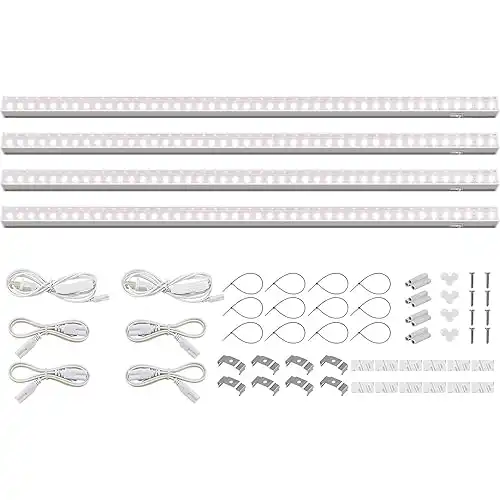
Barrina Grow Lights for Indoor Plants, Full Spectrum Sunlight, 2ft 40W (4 x 10W, 250W Equivalent), LED Grow Light Bulbs, T5 Grow Lights, Plug and Play, Pinkish White, 4-Pack
$29.06
Top Pick
T8 LED Grow Light Strips, 1FT Plant Grow Lights for Indoor Plants Full Spectrum, Grow Lights for Seed Starting, Succulent, 20W(2 10W), Sunlight White, 2-Pack
$19.99
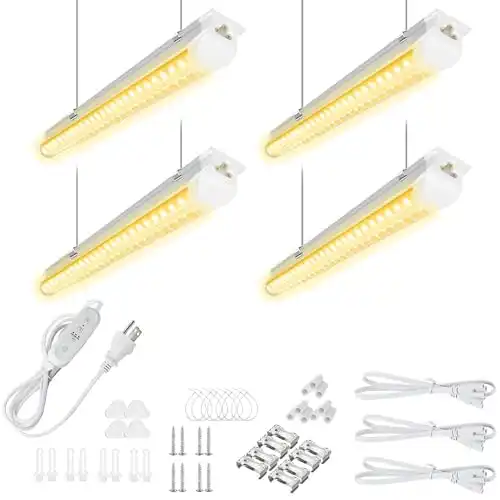
SHOPLED LED Grow Light 2FT, Full Spectrum, 20W Plant Lights for Seed Starting, Seedlings, Sunlight Replacement, Grow Lights for Indoor Plants, 4-Pack
$58.99
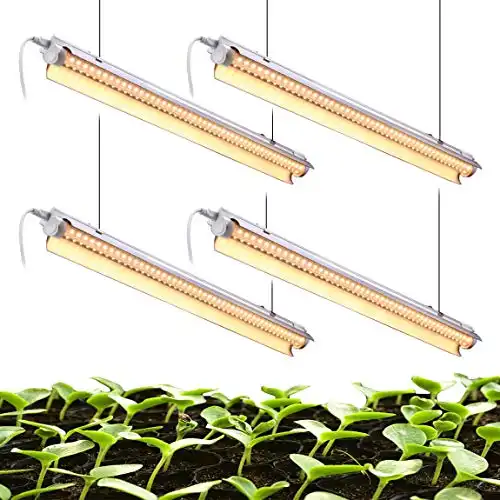
White Light Full Spectrum LED Grow Light, 2FT 2-Row V-Shape T8 Integrated Growing Lamp Fixture for Indoor Plants, Greenhouse Light with ON/Off Switch Plug and Play, Pack of 4 (24W x 4)
N/A
Best Flowers To Grow Hydroponically
When we’re talking about the best flowers to grow hydroponically, there are various options to choose from and we will list them for you.
Growing hydroponic flowers is one of the best methods to farm as you get faster growth, healthier plants with less disease, and a whole other benefit. Read on to know the best flowers to grow hydroponically.
Best Hydroponics Flowers To Grow
There are so many types of flowers that can be grown hydroponically. However, some are better than others. So, here are the best flowers to grow hydroponically and guidelines to growing these flowers:
Orchids
Orchids are one of the most loving flowers known and growing them in hydroponics is a perfect choice for any grower. With their irresistible gorgeous look, the orchid flower will mesmerize anyone in any ambiance you place them be it home, office, garden, etc. Now, these flowers come in thousands of species that you can choose from.

Here are some tips for growing orchid with hydroponics successfully:
- Orchid requires accurate lightening but not direct light. It is their roots that require good lightening as photosynthesis occurs in the root as well as their leaves.
- It requires optimal air circulation to the root system so ensure you use grow media such as pebbles and the likes.
- The recommended pH should be between 5.5 to 6.5. Also, temperature requirements are around 60 to 80 degrees Fahrenheit.
Freesia
The sweet-smelling and amazing-looking freesia flower is one of the best flowers to grow hydroponically. Freesia will bloom gracefully and can give rise to different colors such as purple, orange, yellow, white, and red.
Here are some tips for growing freesia with hydroponics successfully:
- The corm which is the bulb-like part of the freesia plant prefers to always stay dry. Thus, only the root touches the water nutrient solution.
Carnations
The carnation flowers are pretty and the most popular flowers grown in a hydroponics garden. They bloom so well and give a sweet-smelling fragrance that will give some bubbling spirit to your environment.

Here are some tips to growing carnations with hydroponics successfully:
- Drip systems such as the Dutch bucket system, ebb and flow, and deep water culture are the recommended type of hydroponics systems to grow carnations.
- The hours of light requirements are not demanding. It is between 5 to 9 hours.
- PH for nutrient solution should be 6.0. Also, the temperature required is moderate which is around 55 to 65 degrees Fahrenheit during the day and 40 to 45 degrees Fahrenheit during the night.
Peace lilies
Peace lilies are one of the easiest flowers to grow and care for in hydroponics. They are great for decorative houseplants.
Here are some tips to growing peace lilies with hydroponics successfully:
- Peace lilies do not like overwatering. Ensure only the root portion enters the water. Avoid the aerial body from touching the water.
- Take note that peace lilies don’t like chlorine. Thus, ensure chlorinated water isn’t used in your hydroponic nutrient solution.
- They can as well be grown successfully with the Kratky method.
Amaryllis
Amaryllis flowers are simply gorgeous. They come in varieties and cultivars for you to choose from. Amaryllis is usually grown as houseplants so they will be great options for your indoor hydroponic garden.
AeroGarden Black Harvest Indoor Hydroponic Garden
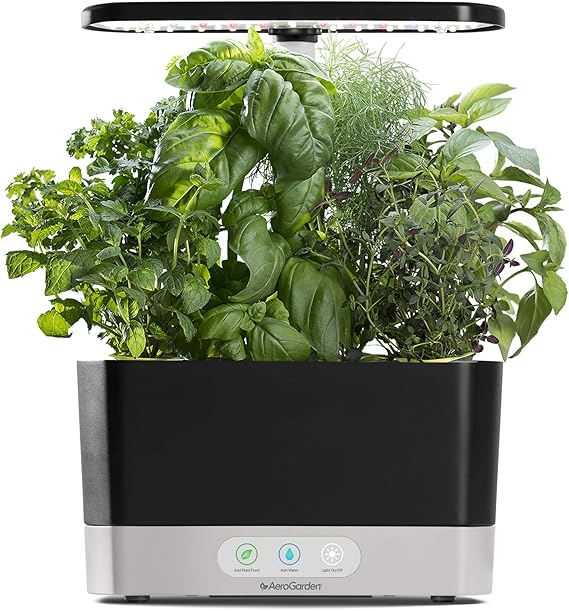
Here are some tips to growing amaryllis with hydroponics successfully:
- Amaryllis bulbs are to remain dry always. Only their roots should enter into the hydroponic nutrient solution.
- Amaryllis life stages should be comprehended well. Their dormant phase gives rise to the bulb. This is followed by the reproductive stage which has flowering and leaves. Then it is followed by the vegetative stage.
- The ideal temperature for their reproductive stage is between 70 to 75 degrees Fahrenheit. While the ideal temperature for their vegetative stage should be between 50 to 55 degrees Fahrenheit.
Dahlias
Dahlias are beautiful flowers to grow hydroponically. They are similar to sunflowers, zinnia, and daisies. They bloom so vividly and elegantly giving your environment a feeling of love and perfection.
FAQ’s
Is growing flowers a popular route as far as hydroponics go?
Yes it is- It is actually one of the healthiest way to grow flowers and ensure that you end up with the best results.
Hydroponic gardening is a great way to grow flowers indoors and avoid all the hassles of potting soil. It’s also an ideal way to grow flowers in a small space. And if you have a greenhouse, it can be a great way to grow vegetables, herbs and flowers all year round.
For example, if you live in an apartment, it may be difficult or even impossible to grow flowers outdoors. Or perhaps you’re just looking for a new hobby.
Whatever the reason, growing flowers indoors can be a lot of fun. If you want to grow flowers indoors, you need to make sure that you have the right equipment. You’ll also need to make sure you have enough light for your plants. There are many different types of hydroponic systems available for growing plants indoors.
What flowers are great for hydroponics?
When it comes to growing hydroponic flowers, there are a variety of different options. If you want to grow the most amazing looking flowers in your garden, there are certain types that you can grow which will have a beautiful look and also yield a lot of delicious buds.
If you’re just starting out with flowers in hydroponics, you can start with the following types of flowers:
Tulips are one of the most popular types of flowering plants because they have beautiful flowers and can grow in almost any location. These are particularly great as they are a very adaptable flower.
Orchids grow very well as long as they get enough light. And they are particularly popular as they come in many different species that you can change up in every growing season.
Freesia is a wonderful option and beloved by those who love a wonderful blooming stage. If you want flowers that will keep you admiring them every step of the way, this is a great way to go.
Other popular ones include Snapdragons, Sunflowers, Dill and Chamomile.
Can roses grow hydroponically?
It is a common misconception that roses do not do well in water. In fact, most rose varieties do very well in this environment and, with the right care, will flower abundantly.
Don’t be dissuaded by the idea that roses are very hard to grow. They’re like a lot of other flowers, and as long as you attend to their various needs you’re sure to see wonders when their time comes to bloom.
If you really want to make them as healthy as possible, you’re strongly encouraged to grow them inside a greenhouse. This way you can really control everything so that they don’t receive any damaging effects-
Here are some tips to growing dahlias with hydroponics successfully:
- Dahlias require you to space them appropriately in your hydroponics. You can plant them at least 12 inches apart.
- Dahlias require optimal light for growth and blooming. Supply them with at least 8 hours of light per day.
- They are warm-loving plants with temperatures between 60 to 72 degrees Fahrenheit. Their pH range from 6.5 to 7.5.
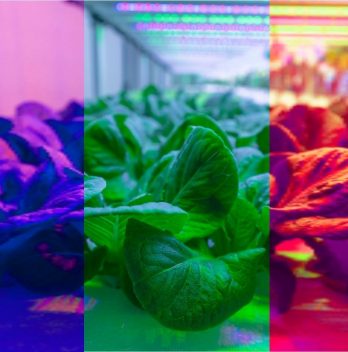
Plant Growth Under Different Colors Of Light
The effect of plant growth under different colors of the light spectrum plays a key role in how they flourish. As a grower, it is normal for you to want your plant to thrive beautifully, and supplying them with the appropriate colors of light is the way to go.
This is why you need to know the impact different colors of light have on the growth of your plant. In this article, we will enlighten you on how the various colors of light affect the growth of plants. So, read on to find out.
Plant Growth Under Different Colors Of Light
The varying colors of light have a tangible implication on how rapidly or slow your plants will develop. All green plants require either natural sunlight or artificial light that will switch on the chlorophyll that prompts nutrient production. This is done through the process of photosynthesis.
Light also plays a crucial part in the different growth stages of your plant’s life cycle. The energy from light is captured by the green pigment chlorophyll and this light is used to manufacture food for the use of plants.
The production of this food enhances the growth of plants thereby generating more plant produce. Now, what we want to know is do all the different colors of light generate the same amount of yield for the growth of plants.
Effect Of Plant Growth Under Different Colors Of Light
The color of light has a different spectrum and plants will assimilate each color but in different amounts. The absorption rate will determine how plants will flourish under each color.
Different colors of light come in different wavelengths and it is this wavelength that will determine how plants will take in colors of light. But have in mind that the more plants absorb light the more it boosts plants’ growth.
Blue Light
Blue light has a short wavelength and its energy potential is great. This light is known to enhance the growth of plants and it makes plants attain maturity more rapidly. It is particularly required during the early stage of the plant.

Blue light also assists in the manufacture of chlorophyll and it helps assimilates energy for the use of photosynthesis. They are great for germinating seeds or seedlings and young plants because plants will absorb a huge amount of blue light to grow. The blue light will also boost the growth of leaves, stems, and roots.
How Does Red Light Affect Plant Growth?
Red light has the longest wavelength when it comes to the color spectrum. It is great for plants’ growth but they are not so effective on their own.
So, they need to be combined with other colors especially blue light to yield excellent results. Red light is required for flowering and the combination with blue is great for the vegetative phase. Red light also assists in the breakdown of chlorophyll thereby encouraging more light and energy assimilation for plant development.
Far-Red Light
We also have far-red light and it has a very low wavelength which is closer to the infrared wavelength. If you want abundant yield, far-red should be used. Far-red will help accelerate the growth process of the plant every time they go into the nighttime state.
Roleadro Grow Light for Indoor Plants, T5 LED Grow Lights 3500K & Red Blue Full Spectrum
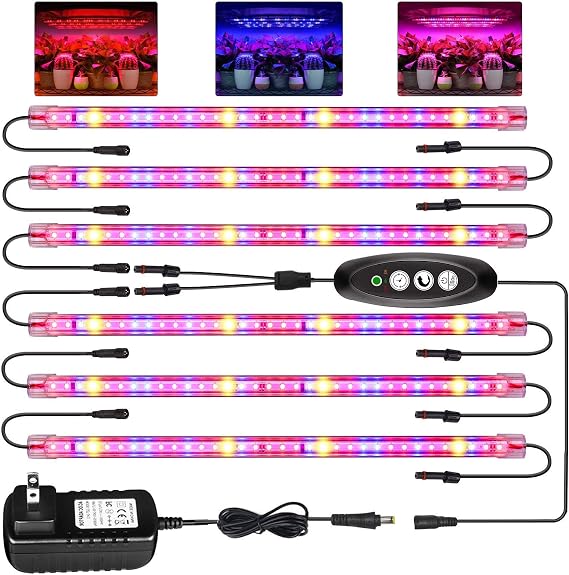
Violet Or Purple Light
Violet with its short wavelength and higher amount of energy boosts the flavor and color of vegetables and fruits. This color will also boost the number of antioxidants present in plants.
How Does Yellow Light Affect Plant Growth?
Yellow light does not have much effect on plant growth and no significant plant benefits have been seen with yellow light.
Greenlight
Because plants are already green, green light is usually reflected by plants and thus does not have much effect on them. However, plants can assimilate just a little portion of green light for their photosynthesis process.
Ultraviolet Light
Ultraviolet light has been known to be detrimental to life forms, especially in too much dose. Therefore, the high intensity of UV light is as well detrimental to plant growth.

What Hormone Causes Plants to Grow Towards Light?
The hormone that ensures plant cells elongate and grows toward the sun is auxin. When light conditions are normal, auxins spread throughout the plant. When there’s more shade, auxins break down and move to the sunnier side.
Which Plants Can Grow in Artificial Light?
All plants can grow under artificial light. Sunlight has the perfect balance of wavelengths plants need to thrive, but this can be closely created with grow lights. Low-light plants do well under artificial light. If you have the right light, your plants will stay healthy!
Which Color of Light Bulb Would Be Least Useful for Growing Plants Indoors?
The least effective artificial light bulb is green. Plants are already green thanks to the chlorophyll pigment in their leaves. They need the light of different colors to help them achieve their growth goals.
You should use violet-blue grow lights for the best results. This color encourages chlorophyll absorption, helping plants photosynthesis and grow. Flowers are more likely to bud and bloom if you use red light.
How Do You Grow Plants With UV Light?
Growing plants with UV lights can be beneficial. UV lights can speed up germination and strengthen plants. You can use UV lights by hanging them over your plants and placing them at the sides of your grow room or tent.
How Long Should I Leave My Plants Under Grow Lights?
Plants typically need 14 – 18 hours of artificial light daily, depending on what you grow. A good rule of thumb is to keep plants under this amount of UV light if they need 6 – 8 hours of sunlight daily.
How Far Should LED Grow Light Be From Plants?
How far a LED grow light should be from a plant depends on its wattage. It’s best to keep 200-watt lights at least 12 inches from the top of your plants. Lights with an even higher wattage should be a minimum of 35 inches from the top of your plants.
Exposing your plants to too much UV light can harm them. Your plant cells will damage, resulting in bleached leaves. If overexposure continues, your plant could die.
It’s important not to misuse grow lights. Do enough research to ensure you know how it’ll affect your plants and how to properly use it.
How Much Are Grow Lights for Plants?
You should use at least 20 watts of grow lights per square foot of plants. To determine how much you need, divide your bulb wattage between 20. How much this amount of light will cost you depends on several factors. The brand, size, and type of light are a few.
You can expect to pay about $15 for white 100-watt grow bulbs. A 100-watt lamp can cost up to $40. Colored lights typically cost more. The price range for a 200-watt white, blue, and red panel light starts at $50.
I suggest shopping around and talking to a sales consultant at local stores selling grow lights. This will give you a better idea of what you need.
Conclusion On Does The Color Of Light Affect Plants Growth
We can now conclude that red and blue light has the most significant effect on plant growth.
With that said, we hope you now have an understanding of plant growth under different colors of light. Ensure you are enlightened on how light intensity affects plants’ growth and yield.
FAQs
How does different colored light affect plant growth?
Different colored lights can be used to control the growth of plants. Different types of lights are used to stimulate plant growth. They can be used indoors or outdoors. The lights can be used to control the growth of plants in a greenhouse, indoor garden, or outdoor garden. Colored lights are used to improve the growth of plants. The lights may be used to control the growth of plants indoors or outdoors.
The lights may be used to control the growth of plants indoors or outdoors. A white light is used to stimulate growth. The light stimulates photosynthesis. A white light is also used for colorizing the plants. Red light stimulates growth and promotes root development. It also improves the production of chlorophyll. It also reduces the growth of harmful bacteria. Blue light is used to promote flowering. It also helps to regulate circadian rhythms. Yellow light increases the production of sugar in the plants. It also improves the production of chlorophyll. It also stimulates the growth of root hairs. Green light is used to promote plant growth. It also controls the growth of weeds and pests. It also stimulates the formation of chlorophyll. Green light is used to control the growth of weeds and pests. Orange light is used to promote root growth. Orange light is also used to stimulate the production of chlorophyll.
What color light produces the most flowers?
Plants grown under red light grow and bloom more quickly than plants grown under blue or green light, which means that they produce more flowers. In addition, plants grown under red light have a greater number of leaves. Plants grown under blue light grow and bloom slower than those grown under red light, but they produce fewer flowers.
What should I consider when choosing a color light for my plants?
Here is a list of things to consider when deciding on a plant light:
What color of light do you want? What kind of plants do you have? Do you have a limited budget? How much time do you have to spend on your plants? Are you able to access the sun at any time during the day? (Many indoor plants like to have some direct sunlight, and some indirect light.) If you can’t get direct sunlight, what kind of artificial lighting is available to you? Do you have a window that can be opened to allow in light? Do you have plants that require high levels of light? (This can mean that you will need to use high-intensity lamps). If you have a large number of plants, how much space do you have for lights? Is it easy to move your plants around, and would you like to be able to move the lights with the plants?
Can A Regular Light Bulb Help Plants Grow
Lights are essential requirements for successful indoor hydroponics farming. If you’re wondering if a regular light bulb can help plants grow, we will let you know in this article.
Compared to standard grow lights, regular grow lights are affordable and easily accessible. But do they have the same effect as the standard grow lights? Let’s find out.
Can A Regular Light Bulb Help Plants Grow?
The answer is yes, a regular light bulb can help plants grow, but in some cases, we would say no.
Although regular light bulbs for plants do not produce a full light spectrum, they can still help supply light for indoor plant growth.
A regular light bulb can help plants grown in small-scale gardens or houseplants. They are especially ideal for starting just a couple of plants.
The most important thing when using a regular light bulb is ensuring your plants get enough light for growth. There are some signs that your plants will show if they are not receiving adequate light.
Signs your plants will show include tall plants with weak stems, the green coloration of leaves may become lighter, and growth may be slow. If you notice these signs, it’s an indication that you need to provide your plants additional light or more substantial light.
However, if you’re growing regular houseplants, any regular light bulb is fine.
1. Regular Incandescent Light
Incandescent bulbs have been around for ages and were the first designs to be invented. They work by the passage of light through their small strand of metal that lights up as electricity passes through them.
Incandescent bulbs are regular light seen in most homes. Their power consumption is high, and the heat they emit is usually a large quantity of heat. This makes them inappropriate for fragile seedlings and, generally, most plants.
Can You Use Daylight LED Bulbs For Plants?
The sun is the primary source of light for plants. They need this light for photosynthesis. Sometimes, there may not be sufficient light, especially for indoor-grown plants in places such as greenhouses. Anywhere between 35 and 55% of light can get lost and not utilized by the plants. So the best growers of plants know that even the sun could use some help.
If insufficient light gets to the plants, they will get stunted and not grow optimally. Daylight LED bulbs for plants are the best way to supplement this light loss. Here are some of the added advantages of using daylight LED bulbs for plants:

- Producing bigger plants
The added light intensity from the LED light will do a lot to boost photosynthesis, which will lead to bigger plants.
- Healthier plants
You can shape or direct the growth of your plants using LED lights. This means that you will not have to worry about hormones or chemical alterations. You will also not need to worry about using pesticides as the LED lights will naturally make your plants healthier.
- Environmental benefits
Because LED lights produce less heat, indoor plants grown under LED lights use less water than those grown under conventional lights. This is good for water saving. The reduced need for pesticides due to the production of healthy plants will also positively impact the environment.
Which Color Light Bulb Should Be Used to Support The Best Growth in Most Plants?
Plants primarily use light from the red and blue spectra, readily available from the sun. They use the red light spectrum for budding and the blue for growing foliage. Full-spectrum growth lights are designed to provide this entire light spectrum, but you can purchase light bulbs with more specific light spectra.
Regular fluorescent light bulbs provide light in the blue spectrum, and incandescent lights mainly provide the red light spectrum. Depending on your plants’ growth stage, you can select the appropriate color light bulb to best support your plants.
2. Regular Halogen Bulb
The regular halogen bulbs are a close match with the incandescent bulb. However, they differ in the passage of their electrical current which is passed through a tungsten filament.
They work by emitting more heat for less energy. However, they can’t produce efficient light for plants’ growth. They would have required about 29 watts (less than 11 of an incandescent bulb) to be more efficient for plants growing needs.
R7S Long Lasting R7S Halogen Bulb
$9.76
The Rnyloas R7S 78MM Dimmable LED Bulb is a versatile and energy-efficient lighting solution for indoor and outdoor spaces. Designed to replace traditional halogen bulbs, it offers bright, flicker-free illumination with adjustable brightness to suit various needs, all while reducing energy consumption and lasting longer for increased cost savings.

We earn a commission if you make a purchase, at no additional cost to you.
09/10/2025 02:04 pm GMT
3. Regular Fluorescence Light Bulb For Plants
Fluorescent light works with the passage of electricity along with mercury particles and is filtered by an outer bulb coating.
The fluorescent light is one of the most appropriate regular lights that can be used to grow plants. They are affordable and more efficient. Unlike incandescent lamps, they do not consume too much power. Thus, they will reduce your cost. The heat they produce is also moderate for your plant’s growth.
The regular fluorescent light bulb is found in most home,s and they will offer your plants the required light. All you need do is ensure the bulb’s color temperature is ideal for your plant’s growth. This is because plants require various color temperatures (measured in Kelvin) for various plant stages.
However, to save yourself the stress of determining color temperatures, you can simply use a specialized fluorescent bulb for plant growing needs. This type of fluorescent bulb contains the required color temperatures your plants will need for their growth life cycle.
Also, your regular fluorescent light bulbs are great for germinating seedlings. With fluorescent light bulbs, there’s no need to invest in extra growing light fixtures for your growing seedlings. Your growing seedlings require about 16 to 18 hours of light daily.
Can You Use Daylight LED Bulbs For Plants?
The sun is the primary source of light for plants. They need this light for photosynthesis. Sometimes, especially for indoor-grown plants in places such as greenhouses, there may not be sufficient light. Anywhere between 35 and 55% of light can get lost and not get utilized by the plants. So the best growers of plants know that even the sun could use some help.
If there is insufficient light getting to the plants, they will get stunted and not grow optimally. Daylight LED bulbs for plants are the best way to supplement this loss of light. Here are some of the added advantages of using daylight LED bulbs for plants:
- Producing bigger plants
The added light intensity from the LED light will do a lot to boost photosynthesis, which will lead to bigger plants.
- Healthier plants
You can shape or direct the growth of your plants using LED lights. This means that you will not have to worry about hormones or chemical alterations. You will also not need to worry about using pesticides as the LED lights will naturally make your plants healthier.
- Environmental benefits
Because LED lights produce less heat, indoor plants grown under LED lights use less water than those grown under conventional lights. This is good for water saving. The reduced need for pesticides due to healthy plants being produced will also have positive impacts on the environment.
LED Grow Light
$15.99
Zyzykeji grow lights is Designed with 3 light tubes and 3 flexible goosenecks, auto timer function, 3 modes & 10 dimmable Levels, red, blue & white full spectrum grow light is the best choice for your plant growth.

We earn a commission if you make a purchase, at no additional cost to you.
03/22/2026 10:01 am GMT
How Do You Make a Heat Lamp For Plants?
Heat lamps are one of the best inventions for gardeners out there. A heat lamp allows gardeners to grow and produce their plants indoors without starving them of the needed light.
Heat lamps typically give plants the right light spectra to support growth and stimulate photosynthesis.
Using heat lamps allows gardeners to produce fruits and vegetables year-round without having to worry about the season. It also has the advantage of helping gardens produce plants for seeds to plant in the following seasons.
There are two different ways of making a heat lamp for your plants if you are interested. The cheap and easy way to do it is with a grow bulb and some kind of a light fixture to install it.
The other way is to get a fixture. This will work better than the bulb method, providing a broader spectrum of light over a large space.
Which Color Light Bulb Should Be Used to Support The Best Growth in Most Plants?
Plants primarily use light from the red and blue spectra, readily available from the sun. They use the red light spectrum for budding and the blue for growing foliage. Full-spectrum growth lights are designed to provide this entire light spectrum, but you can purchase light bulbs with more specific light spectra.
Regular fluorescent light bulbs provide light in the blue spectrum, and incandescent lights mainly give the red light spectrum. Depending on your plant’s growth stage, you can select the color light bulb to best support your plants.
Final words – Will A Regular Light Bulb Grow Plants?
We can now see that a regular light bulb may help plants grow depending on the type used. Can a regular light bulb help plants grow? Sure but you should ensure you take note of your plants’ progress whenever you use these regular lights. The signs they indicate will tell you if you need to replace them or add a stronger grow light.
FAQ’s
Can plants photosynthesize with regular light bulbs?
The answer is yes. Many examples of photosynthetic organisms, including plants, can use regular incandescent light bulbs and grow just fine. The main reason why these organisms can do so is because they have evolved to be able to use the spectrum of light that the bulb emits.
Some microorganisms can even absorb some light from the bulbs. However, most organisms cannot use the light from the bulb and must instead absorb the energy from sunlight.
Is it important to choose the right light?
Yes! There are many different types of grow lights available. They are designed for specific purposes, such as growing flowering plants or producing vegetables, and can come in various shapes and sizes. Some grow lights are designed to be mounted directly onto the sides of a house or greenhouse and can be installed inside or outside. Some are designed to fit inside the ceiling of a building and are often known as “under-ceiling” lights.
You can also find grow lights that you hang from the ceiling or that you hang on the side of your house. Some grow lights have a single light bulb, while others have multiple bulbs. The size of the grow light will determine how much light is needed to grow a plant.
What is the difference between a grow light and a regular light bulb?
Light bulbs illuminate areas of the home, office, or garden. Grow lights are used to light up plants. Grow lights are available in both incandescent and LED varieties. These lights are generally available in either grow light kits or grow lights. A grow light kit contains all the equipment needed to start a plant, while a grow light is an additional piece of equipment that helps with your plant’s growth.
The use of grow lights has grown tremendously over the past decade. They are often used as supplemental lighting for indoor gardening. While grow lights can be used for any plant, they benefit plants that grow in
The shape of the grow light also affects how it will perform. Some grow lights have multiple lights, while others have just one or two. The number of lights also varies. Some grow lights have a built-in reflector, while others are without one. The reflector is needed to direct the light where it is required. The purpose of a grow light is to provide light for your plant. When choosing a grow light, it is essential to consider the type of plant you will be growing. You can choose between LED or incandescent.
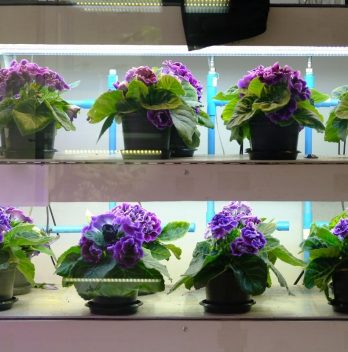
Does Artificial Light Help Plants?
If you’re finding it difficult to get sunlight especially during winter or there’s not enough sunlight entering your home, then you can go for artificial light. But the question is does artificial light really help plants grow?
Light is essential for plants especially in the process of photosynthesis. Be it houseplants, indoor hydroponic garden, etc, various plants have various light intensity requirements as they all need light to grow.
So, let’s get to know if artificial light does help plants grow as lightening is an important criterion in the growth process of a plant.
Does Artificial Light Help Plants?
It is pretty possible to make use of artificial plants to help plants grow even throughout their growth stages. Even though sunlight is the best type of light because it supplies all the perfect balance of wavelength required for the development of your plants, artificial light can also be helpful.
Artificial lights are mainly helpful if most of the light directions in your home are low in natural lights. Except your plant is a low light requiring plants, you may need to make use of artificial light.
However, one needs to understand the concept behind color temperature. This is because plants will make use of various colors of light in various ways. Learn more on color temperature here.
Generally, plants will make use of blue light for the growth of leaves i.e. the vegetative phase. While for the flowering phase, plants will make use of a combination of blue and red light.
Advantages Of Using Artificial Light For Indoor Plants
The advantage your plants get to enjoy using artificial lights includes:
- All Year Round: light will be supplied to your plants all year round. You don’t have to worry about changes in the season because artificial light will always be available for your plants’ growing needs.
- Total Control: artificial lights offers you total control as to how much light you supply your plants. Depending on the type of plant and the amount of light intensity they require, you can modify or adjust the lighting to suit your plants’ needs. Thus, you have complete control over the growing process of your plants.
- Position Your Plant Anywhere: unlike when you’re searching for natural lights in your home to position your plants, with artificial lights, you can position them anywhere. So, there’s no limitation of where to put your plants.
Mosthink LED Plant Grow Light Strips Full Spectrum for Indoor Plants
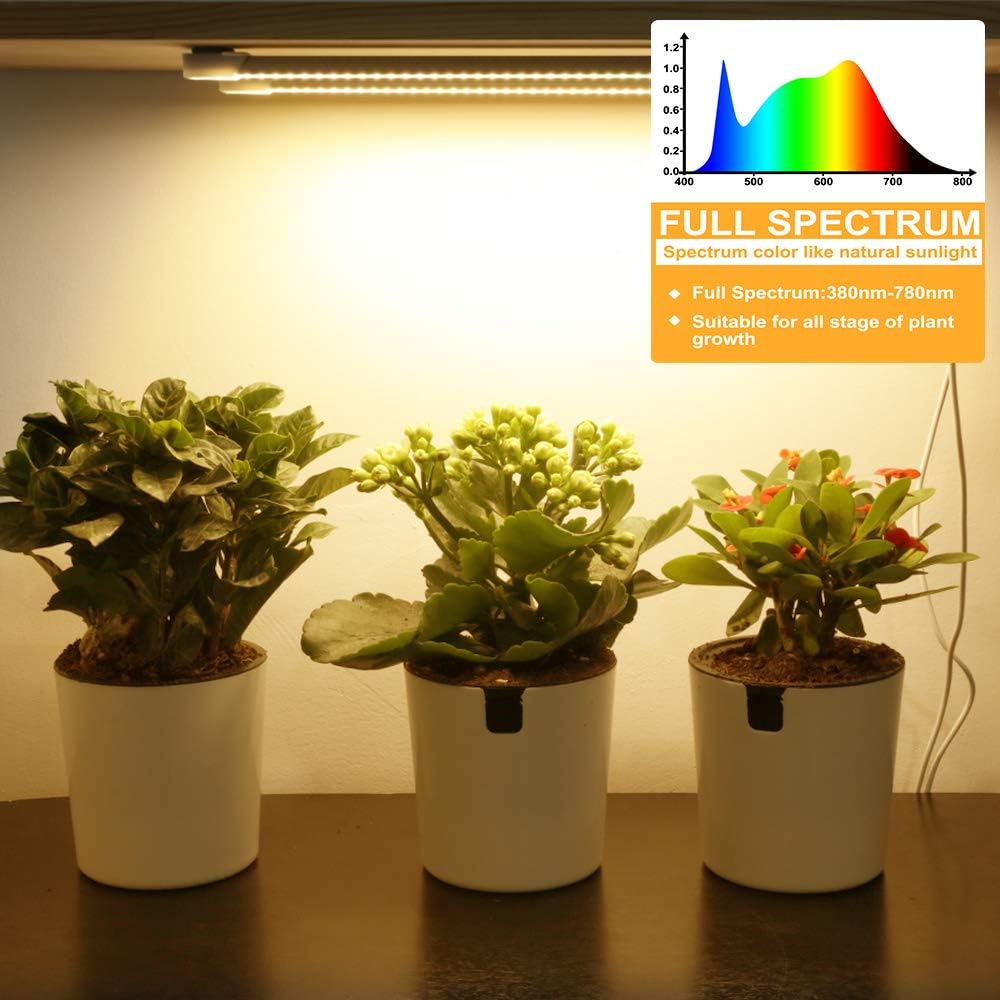
Types Of Artificial Lighting For Plants
Now, let’s take a look at some artificial lights that can help in the growing process of your plants.
If you’re fully into indoor gardening such s hydroponics, you will need to obtain hanging tube fixtures that can be positioned on top of your plants. To make things much easier, simply go for grow light kits designed for this function that will include fixtures and reflectors.
However, if you’re growing regular houseplants, simply make use of any type of light fixtures or lamps. Just ensure you select good bulbs and position these lights in a way that will help your plant grow.
Artificial Lights
So, here are some artificial lights you can find:
- Incandescent Light: this type of artificial light is affordable and easily accessible. However, it usually generates lots of heat thus it’s should be positioned far from your plants.
- Fluorescent Light: fluorescent light is one great artificial light you can find. It is affordable and appropriate for supplying light to various plants. Fluorescent light is especially great for houseplants and other plants. They emit moderate heat unlike incandescent light, thus they can be placed close to your plants without worrying about too much heat affecting them. Go for the cool white type as white light consists of a full wavelength spectrum.

- LED Lights: LED lights are one of the best artificial lights you can find. The lights they produce are energy efficient that will enhance the growth of your plants. Simply ensure your LED lights supply the red and blue lights required for the growth of plants.
- Horticulture Grows Lights: These types of artificial light are packed with a full wavelength spectrum. They are especially great for enhancing plants that need to bloom. They usually come in tubes of fluorescent fixtures.
FAQ’s
Do artificial lights help plants grow?
Plants use light for photosynthesis. Plants also use light for circadian rhythms and photoperiodism, which control their growth. There are two ways that artificial lighting can impact the growth of your plants. First, the light produced by a plant-growth lamp will cause them to grow more rapidly than they would if exposed to natural sunlight.
Second, the light produced by a plant-growth lamp will cause them to flower and set seed earlier than if they were exposed to natural sunlight.
Do plants grow better with artificial light or sunlight?
Natural lighting is better for plants than artificial.
Plants grow best when they have direct sunlight and indirect sunlight. They can also use fluorescent light,
The light spectrum is important as well. Indirect sunlight is a mixture of all types of light. It’s the only type of light that can be used for growing plants indoors. Sunlight is composed of two major parts: visible light and ultraviolet light.
It’s not harmful for plants to use fluorescent light, because plants absorb only the ultraviolet light and visible light components of the light spectrum. The infrared component of fluorescent light doesn’t affect plants.
What artificial lights are good for plants?
For indoor plants, artificial light is essential to a successful growing environment. Artificial lighting can provide the necessary light for photosynthesis, even when sunlight is too weak or absent to do so.
The types of artificial lights that you can use depend on the species of plant you’re growing. Artificial light is the type of lighting used in commercial greenhouses and indoor gardens, and in some cases in hydroponics. It differs from natural sunlight in many ways.
For example, it does not contain the ultraviolet radiation found in sunlight. This is important because plants require ultraviolet light in order to produce vitamin D, which helps them absorb calcium. It works by using an electric bulb to emit visible light that mimics the spectrum of sunlight. This light is then diffused by a white or yellow sheeting called a “grow dome.” This light is similar to the light that comes through your home windows. The grow dome also serves as a barrier to protect the plants from insects, birds, and other animals. The grow dome should be at least 3 feet tall and 6 feet across. The grow dome will also help you control the temperature. If you’re growing indoors, the temperature should be maintained between 65 degrees F and 75 degrees F.
Fluorescent lighting has become a popular option for growing indoor plants because it is low in cost, long lasting, and produces less heat than incandescent lighting. Incandescent bulbs emit a large amount of heat. This heat is detrimental to plants, especially if they are placed too close to the bulb. The heat causes the temperature of the bulb to rise, which can be harmful to the plant’s roots. In addition to the heat, incandescent bulbs do not produce any light that is beneficial to plants. In contrast to incandescent lighting, fluorescent bulbs emit light in a narrow range of the spectrum. Plants only need a narrow spectrum of light in order to grow normally. Fluorescent bulbs are also a good option for growing plants that require lower light intensity.
Plants And Artificial Light Conclusion
So we can see that artificial light does help plants with their growing needs. If you’re having issues with getting access o natural light in your home, artificial light can always save your plants.
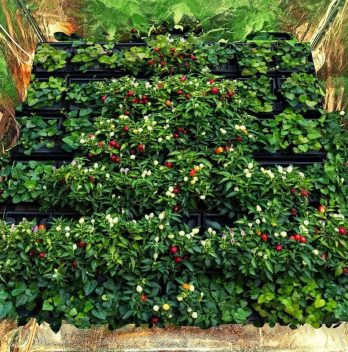
Grow Room Equipment Checklist
Cultivation in an indoor space is becoming most growers’ favorite as it offers lots of advantages. To commence grow room indoor garden, there are some supplies required to set up each grows room stage. This is why we have created a grow room equipment checklist for the success of your indoor farming.
It is pretty easy to set up your indoor grow room with the right knowledge. The demand for indoor grow rooms continue to rise and so is the demand for grow room supplies. So, read on to discover which grow room supplies you need when it comes to choosing a complete grow room equipment checklist.
Indoor Grow Room Supplies Checklist
So, let’s look at the equipment you will require to starting your indoor farm.
1. Grow Space Or Room
The first thing on your checklist is growing space. Ensure you have an area where you can conveniently cultivate your crops and allow them to spread as they grow. You can make use of a grow tent or simply build a grow room or convert any space in your house into a grow room.
Also, make sure you put things in place for other equipment to fit in. Things such as drilling holes to hang your grow lights and also integrate ventilation in your grow room. Reflective materials should also be integrated into the walls unless you’re making use of a grow tent.

2. Grow Lights
Whichever type of grow light you wish to use (such as LED, HID, CMH, T5, etc), grow light is one important supply for the success of your garden. Ensure you use quality grow lights that will the most efficient work on your plants.
3. Air Circulation
Air circulation needs to be incorporated in your grow room. Normally, grow tents should have two holes: one for fresh air inlet and the other for air out for stale air.
There should be continuous replenishment of air i.e. fresh air must circulate from time to time. Avoid stale air as this can diminish the growth of your plants. Air circulation will also help in temperature controls. You can as well mount an oscillating fan for adequate airflow.
4. Seed Starter For Seed Sowing
I’m sure you are aware that a successful way of starting cultivation is by germinating seeds and transplanting them into a bigger growing medium when it has sprouted. You can start from the
5. Grow Media & Container
Choose the appropriate grow media for your cultivation and accompany it with a growing container. Generally, there are two types of growing containers designed for two purposes: seedlings and bigger plants. The growing container has permeable walls for water passage and also to allow the
JERIA 12-Pack 3 Gallon, Vegetable/Flower/Plant Grow Bags, Aeration Fabric Pots with Handles
6. Nutrients Solution
You can obtain nutrients solutions designed for indoor growing needs and ensure they are in the right proportion. We recommend you start with using half or 70% portion of the suggested portion of use.
7. PH Meter & PPM (Measuring Supplies)
It is crucial you monitor the pH of your nutrient solution. Nutrients are taken up by plants at different pH range. Generally, the ideal pH for the soilless system is 5.5 to 6.5. Ensure you also have some pH up and pH down handy in case there’s a fluctuation in the recommended pH range.
PPM will measure the concentration of minerals in your nutrient solution so you don’t overfeed or underfeed your plants. Nutrient overfeeding can cause nutrient burn and we want to avoid such.
8. Timer
All your system does not have to run at all times as some will need rest. For example, grow light should not be on 24 hours because plants require light and dark phases. When grow lights are off, your plants get to rest.
This is why you need a timer to always keep them in check because it’s not every time you will be available to always turn off or on the switch.
9. Pruners & Harvesting
Trim your plants with clean and sharp tools at the right time. You can also harvest and prune at the same time.

10. Cost Of Electricity
The cost of electricity is another thing you should consider putting your checklist. The electricity cost mainly depends on the wattage of your grow lights and how long you leave your equipment running. High output fans and other running equipment also add to the cost of electricity.
Generally, take note of the entire plugged-in device to determine the total cost of electricity.
FAQ’s
What equipment is needed for indoor grow?
There are a few things you need to take into consideration.
1. Air quality This is the biggest thing for your indoor grow. You want to make sure that you have good air circulation and don’t have any stagnant areas.
2. Lighting You should have at least two lighting setups, one for vegetative growth and one for flowering.
3. Temperature You need to make sure that you keep your temperature around 70 degrees Fahrenheit. If you don’t, then you will have a lot of issues with mold.
4. Humidity You want to make sure that your humidity is around 50% and that it’s not too high or too low.
5. Watering You should be able to water your plants every other day, but you don’t want to overwater because then you will end up having issues with algae.
6. Hydroponics If you are growing hydroponically, you need to make sure that you have a good nutrient solution and also a good ventilation system.
7. Fertilizers You need to make sure that you use the correct fertilizer. There are some that can be used for indoor grows as well as others that are better for outdoor grows.
8. CO2 If you are growing indoors, you will need to make sure that you have good air circulation.
What do I all need for a grow tent?
The following equipment will be required for a successful grow:
1. A greenhouse or other enclosure.
2. A ventilation system.
3. A power supply and inverter (to charge batteries).
4. A water source.
5. An air circulation system.
6. A light source.
7. Some type of soil.
8. Seeds.
9. Watering equipment.
10. A grow room.
How do you put a ventilation in a grow room?
I would suggest you consider a larger exhaust fan. That will keep the room from becoming too hot and humid. You may want to consider installing a fan that can be turned off and on.
Do you need fresh air in a sealed grow room?
The answer is YES! I use an aquarium pump to bring air into my grow room, and I have two window fans that pull fresh air in through the windows. The window fans work great.
What’s the best temperature for a grow room?
There are some things to consider before you set your ideal temperature though. If you choose to go with a traditional air conditioner for your grow room, you should know that most air conditioners are designed to cool a space down to 78 degrees Fahrenheit.
That may seem like a great temperature for a house, but it is not ideal for plants. You want your grow space to be around 80 degrees to 90 degrees, depending on how much light the grow space receives. If you do have the option of choosing a more efficient HVAC system, you should definitely choose one that is designed to run at a lower temperature. For instance, if you can get a heat pump that will run at 70 degrees F and a fan that can cool the room to 60 degrees, that will work great.
Growroom Supplies Final Say
So, that’s it on grow room equipment checklist. By now you should know what to look for and how to start your indoor growing farm. Happy growing!
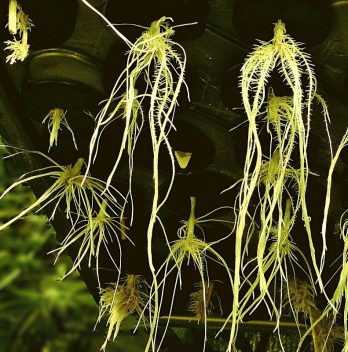
How Long For Clones To Root
How long does it take for clones to root is the question we’re answering today. Cloned plants successfully taking root is every grower’s wish and anticipating your clones taking root can be quite tense.
Plant cloning is the fastest method of propagating plants effectively. Cloning permits growers to reproduce desirable features of various plants even on a large or extensive growing scale rapidly. However, getting to know how long your clones to root is important for a successful growing outcome.
If your clone refuses to root at the appropriate time, it is crucial to correct them on time and do the necessary things for a smooth cloning process. So, if you would like to know how long clones will take to root, read on to know the answer.
Know-How To Take Clones To Root
It can take anywhere from 8 to 12 days for your clone to begin rooting. However, there are some plant varieties that may take time to root while some may not take that long.
When you notice your clones have taken root and have adapted to temperature and humidity, they are now ready to enter the next phase which is a vegetative phase. You can now transplant your clones into any medium you wish and give them a low concentration of vegetative fertilizer.

How To Check If Clones Have Rooted
The following ways are how you can check if your cloned plants have taken root:
- Tugging: this is the most easiest and straightforward method of getting to know if your clones have taken root. Tugging involves carefully pulling the plants with little force in an upward movement. Always make sure this is done gently especially in the early period because we don’t want the root to be injured.
- New growth: another way to check if your clones are taking root is to notice new growth. Therefore, you have to wait for your plants to root and develop fresh growth. This method is much safer than the tugging method which is tricky and risky. Note however that rooting can take anywhere from 7 to 14 days depending on the plant variety. Thus, it can take this duration to notice fresh or new growth.
Why Roots May Not Be Rooting: How To Maximize Rooting Of Clones
The goal for all growers is for their clones to rot successfully. However, a clone may not root if some things are not properly done in the process of cloning.
Let’s take a look at what can affect clones not to take root and what you can do to maximize or make your cloned plants root faster:
Length Of Plant Cuts Chosen: If you don’t take plant cuttings of good length, your clones may end up getting blocked and unable to take root. Ensure you chose plant cuttings that are long for burying.
Cuttings Preparations: Another factor that may prevent your clones from rooting properly is preparations. Ensure you take out some leaves at the bottom of the stem and insert them in a good rooting hormone.
Maintenance: Maintenance such as watering or misting, temperatures, environment placed, etc can have an effect on how well your clone takes root. An important factor in the cloning process is moisture. Make sure you mist your clones adequately as inappropriate watering can reduce the chances of your clone taking root. Another factor is temperature; ensure you don’t pace them in extreme temperatures as too much heat or cold environment can damage their roots. The environment also needs to be kept humid always to enhance rooting. Also, when making use of a heating pad or mat, ensure you monitor the range or put a damp towel in between so the heat can be evenly distributed.
Grow Medium: The growing medium is another essential factor that will contribute to your clone taking root. Make use of grow medium that can retain moisture as such enhance the development of roots. Rockwool is one that loved to grow medium among growers. This is because of its moisture-holding capacity. Thus the stress of frequently watering your clones will be minimal and there’s no worry of your plants dying off from drought.
Organic Expanded Clay Pebbles Grow Media for Orchids, Hydroponics, Aquaponics, Aquaculture Garden
FAQ’s
How long does it take to root clones in water?
It depends on a lot of factors. the size of the clone (smaller will take less time) the thickness of the root A good rule of thumb is to leave them in the water for at least 1-2 weeks, but as much as a month is not uncommon.
How long does it take in soil?
It takes about 7 to 10 days for clones to establish roots in soil.
The answer to this question depends on a lot of factors. For instance, the soil medium used, the seedling’s age, and the environment in which it grows will all affect when the plant will root and how long.
Do not plant them too deep. You don’t want them to be too deep because then the roots won’t get enough air and they won’t grow well. I suggest planting them about 1/2 inch below the surface.
How do I know when clones are ready for transplanting?
If you are not sure, wait until the next day and then give them a good shake. The roots should be slightly moist and if you are lucky they will have a few leaves that are not too dry.
Can I use root tabs or other rooting products to root my clones?
Yes you can! We recommend using a root tab. Root tabs are very effective and are designed to be used on fresh clones.
Are the roots healthy after being rooted in water?
Yes!
How many roots should a clone have before planting?
I think there are many opinions on this. I am not a botanist or horticulturist but my experience is that it depends on the cultivar. Most of the rootstocks I have used have had from 2 to 5 roots when planted. If you do decide to plant your tree, I would say get at least 3-5 roots.
How much water do clones need?
There is no exact answer to this question, but there are some factors that play into it. The amount of water given to a clone at once will depend on how often it is fed, what its feeding schedule is, the type of food it is fed, and how much water it takes in naturally. The amount of water a clone requires varies greatly depending on its age. A 2 week old clone should be given between 50 and 150 ml of water per day. After 3 weeks of age, the amount of water needed increases to 100-250 ml per day. After 4 weeks of age, the amount of water needed increases to 200-350 ml per day. At 5 weeks of age, the amount of water needed is 300-500 ml per day. This amount of water should be given at least three times daily. The amount of water a clone needs is also affected by how well it is fed. A clone that is given a large quantity of food will require more water than one that is given a smaller quantity of food. If a clone is fed 1-2% of its body weight in food every day, then it will need more water than one that is fed 1% of its body weight.
How Long Do Clones Take To Root Final Say
How long your clone can take to root is about 8 to 142days or more depending on the type of plant chosen.
Also, there are some things that can enhance your clone to take root and there are some things that can delay or prevent them from taking root. Thus, make sure you take all the necessary precautions to ensure a successful cloning process.
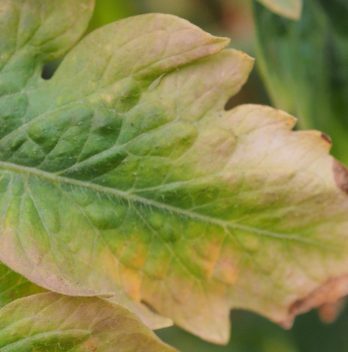
How To Fix Nutrient Burn
A couple of growers may face nutrient burn sometimes during the course of their growing period. The thing is do you know how to fix nutrient burn?
Drying out leaves, curling of leaves, browning of leaves, etc are common issues seen among indoor growers and the most probable cause are nutrient burns. It is crucial you recognize the signs and act fast to save your plant from severe or irreversible damage.
If you’re experiencing nutrient burn on your farm and you’re looking for how to fix or solution we will put you through this.
Nutrient Burn During Flowering Info
Nutrient burn is the over-fertilization or overfeeding of nutrients to your plants. When you supply your plants with their required nutrient in excess, they tend to absorb all of them thus resulting in nutrient burn. Plants are not equipped to handle over-fertilization therefore, they will simply absorb the entire nutrient you supply them.
Causes Of Nutrient Burn
Mostly, nutrient burn is caused when you feed your plant with too much nitrogen. Nitrogen is one of the components in plants’ nutrients and it’s mostly used during plants’ vegetative phase. Nitrogen needs to be in the right proportion with other nutrients to avoid the presence of excess nitrogen.
However, it’s not only excess nitrogen that can cause nutrient burns. Overfeeding of other nutrients can as well cause this.
Nutrient Burn Leaves Signs
The first step to fixing nutrient burn is identification. Be sure your plant is suffering from a nutrient burn by looking at the signs. Some early signs can point out if your plant is suffering from nutrient burns. They are:
- Leaves will give a very deep green coloration.
- You may notice the tip of your leaves bending at 90 degrees.
- Yellowish or brownish coloration of the tips of the leaves.
- The branch or stalk may start to turn purple or red.
Advanced signs to look out for when it comes to nutrient burns:
- The signs of the tip of leaves turning yellow will spread back and inwards throughout the leave until it dies off or withers away.
- You may also notice leave twisting.
- The edge of the leaves starts to curl. This curling of leaves usually indicates the presence of too much nitrogen.
- Yellowish patches that separate themselves from the green-colored leaves.

Learn How To Fix Nutrient Burn
Once you’ve identified that your plant is suffering from nutrient burns, it’s time to take action. The good thing is if you can detect nutrient burn early, it can be resolved before it gets any worse.
Follow these guidelines to successfully fix your plant:
- Remove Damaged Parts: The first step and fastest way to fixing nutrient burn is to do away with the damaged plant leaves, buds, flowers, etc. When your plant leaves have become yellow there’s nothing you can do to make them green. The only solution is to carefully remove the yellowed leaves or the entire affected part and allow them to regrow.
- System Flushing: Next step is to flush the entire system so the excess built-up nutrient can be washed away. With a hydroponics system, wash your growing medium with clean and balanced pH water. To your hydroponic nutrient reservoir, pour out all the content and replace it with pH-balanced water. Use this balanced pH for about 24 hours in your hydroponic system. Then gradually introduce a small concentrated nutrient for about a week and balance it later when the plant is able to welcome the appropriate nutrient amount. In a
soil -based system, simply water in thesoil using pH-balanced water to flush out excess nutrients. Water yoursoil slowly and wait a bit to allow the water to assimilate between each watering plan.
General Hydroponics pH Control Kit for a Balanced Nutrient Solution
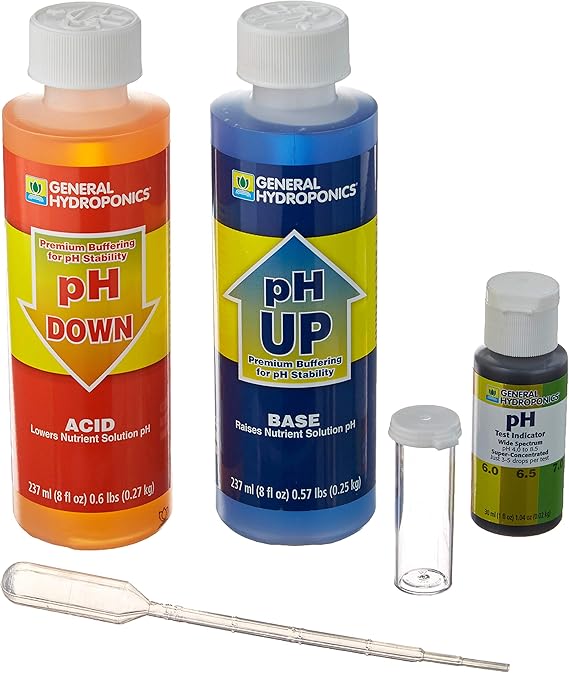
A nutrient burn may be minimal, gradual progress, or severe. In the case of very severe burns especially during the vegetative stage, it’s usually best to start over-planting. This is because recuperation may be unachievable or may take a longer time to recover and it will be better to just start over.
FAQ’s
Can plants recover from nutrient burn?
The short answer is no. Plants can’t recover from nutrient burn, because nutrients are not lost, they are just changed in their form. The longer answer is that it depends on the plant species and the amount of nutrients in the soil. There is some evidence that plants can recover from nutrient burn, but this is not always the case. In general, plants will not grow in nutrient-deficient soils, but if the soil is rich enough, the plants will grow fine.
What are the signs of nutrient burn?
Plants are more sensitive to nutrient deficiencies than we are. Plants respond to low nutrient levels by making a number of adjustments. These may include:
• Decreased growth rate
• Diminished photosynthetic capacity
• Decreased yield
• Less or no flowering
• Poor quality fruit
• Loss of vigor and death
How do you reverse plant nutrient burn?
Plant nutrients are essential for your plants to grow. However, when the nutrient level is too low, the plant will have a hard time growing. Too much of a good thing is not healthy either. You may see this as a condition that can be corrected by increasing the plant nutrient levels.
If you notice that your plants appear to be suffering from nutrient burn, the following actions should be taken:
• Evaluate the soil for nutrients and pH.
• Monitor the amount of fertilizer used. • Evaluate the irrigation schedule.
• Correct the deficiencies.
If you want to get your garden growing again, I recommend adding more organic matter (such as compost or manure) to the soil.
Does nutrient burn affect new growth?
Nutrient burn isn’t really good for anything. The only reason it is often mentioned is because the term nutrient burn is so often used by gardeners who are not very knowledgeable on the subject, and they don’t know any better. Nutrients are needed in the plant in order to grow, and when they are missing or are present at too high a concentration, they can cause serious damage to the plant. Plants that have been deprived of nutrients for a long period of time will often experience stunted growth and lower yields.
How do you fix fertilizer burn on plants?
There are a lot of ways to fix fertilizer burn. It depends on what the cause of the burn was and the severity of the burn. If it is a very deep burn, there are some treatments that will actually get rid of the burn. If it is just a slight discoloration, you can cover the plant with a plastic bag and keep it in place for a day or two. The light will help it heal.
If you use a bag, make sure it is the clear type so you can see what’s going on. If you want to get rid of the burn, you can do one of two things. You can either put the fertilizer on top of the soil (which will keep it in place until you want to remove it), or you can mix specialized burn fertilizer with water and apply it directly to the burned area. It will penetrate the burned area and help it heal. If you don’t have a lot of money to spend on this, you can always add some liquid kelp to your fertilizer solution. That will help heal the burn. Liquid kelp is available at most garden centers.
Nutrient Burn Recovery Prevention
The best thing to save your plant is to prevent nutrient burns from happening in the first place. Do all you can to reduce the chances of nutrient burn from occurring. The excess nutrient can be catastrophic to your plants if not detected on time.
Ensure you use the appropriate amount of nutrients in their correct proportion for each growth stage. You should also monitor the pH of your solution or
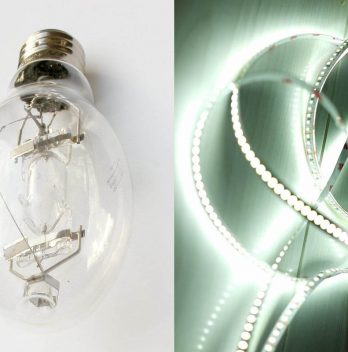
Ceramic Metal Halide vs LED
Let’s discuss Ceramic Metal Halide vs LED. Is anyone better than the other? We will find out. In the world of hydroponics, grow light continues to advance. Various types of grow light such as ceramic metal halide and light-emitting diode (LED) are made available for the use of your hydroponic plants.
With the developments of grow lights in hydroponics, we are going to be comparing ceramic metal halide to LED. So let’s get into it.
About Ceramic Metal Halide
Ceramic metal halide is a type of grow light that that is a very close match to mimicking the work sunlight does on plants. It is one of the most efficient grow lights capable of producing high-standard light that can cover a large location or area of the hydroponic farm.
Ceramic metal halide supplies the biggest gram per watt. They are also capable of converting ultraviolet light to good ultraviolet wavelength which helps enhance plants’ growth. This type of UV spectrum is useful in repelling pathogens such as mildew and mold as well as some pests.
About LED Light
Light-emitting diode (LED) is another great type of grow light used in indoor hydroponics. They consist of hundreds of lights known as diodes. LED will supply their light in a specific and narrow wavelength.
The light-emitting diode will supply light that will usher them into their vegetative phase of the blue spectrum and flowering phase of the red spectrum.
CMH vs LED
We have taken a brief look into both ceramic metal halide and LED. Now let’s compare which is better between ceramic metal halide vs. LED.
- Healthy Plants: You get more healthy plants when you grow under ceramic metal halide rather than LED light. You also get better quality and higher yield when making use of ceramic metal halide grow light.
- Duration Of Cultivation: The duration length you wish to cultivate will determine which type to go for. If you wish to use your grow light for up to 5 years or more, it’s best you go for LED. This is so you can save cost over the long period of time you make use of this grow light. Also, a light-emitting diode bulb will last you up to 50,000 hours, unlike a ceramic metal halide which will only last about 30,000 hours.

- Grow Space: If your grow space is of the bigger and taller side, then it is ideal you go for ceramic metal halide. This is because your ceiling distance from plants will be increased thus encouraging better heat management. It will also encourage optimal light coverage for bigger and fuller plants as well as better aeration. On the other hand, LED grow little emits light heat and this heat supply must fit the appropriate grow room size of your plants. Take for instance during winter periods, ceramic metal halide will supply your plants adequate heat. Whereas when using LED grow light, you may need to obtain an extra heater to your grow room to help with cold periods.
- Beneficial Ultraviolet Spectrum: Ceramic metal halide will offer your plant a beneficial ultraviolet spectrum. This beneficial UV spectrum will help in stimulating considerable resin and terpene production. UV spectrum will also help wade off mildew and mold as well as any other pest.
- Vertical Growing Space: Ceramic metal halide is known to be very efficient in vertical growing plants. This is because of their high canopy penetration.
- Additional Cost: The major additional cost for metal halide is bulb replacements. The bulb needs to be replaced every 12 to 18 months of use. LED however doesn’t require replacing the bulb but LED may also require additional cost. For instance, if your grow space requires extra heat, you may have to invest in a heater to suit your growing needs. Ceramic on the other hand will generate adequate heat for your plants’ growing needs.
- Commercial Purposes: Ceramic metal halides are a great choice for commercial purposes. They are also great for hydroponic hobbyists with large space thereby providing a bigger yield. LED on the other hand is ideal for hydroponic growers with moderate grow space especially for growing space with lower ceilings. LED will also offer you bigger quality production.
VIVOSUN 315W Ceramic Metal Halide CMH/CDM Grow Light Kit
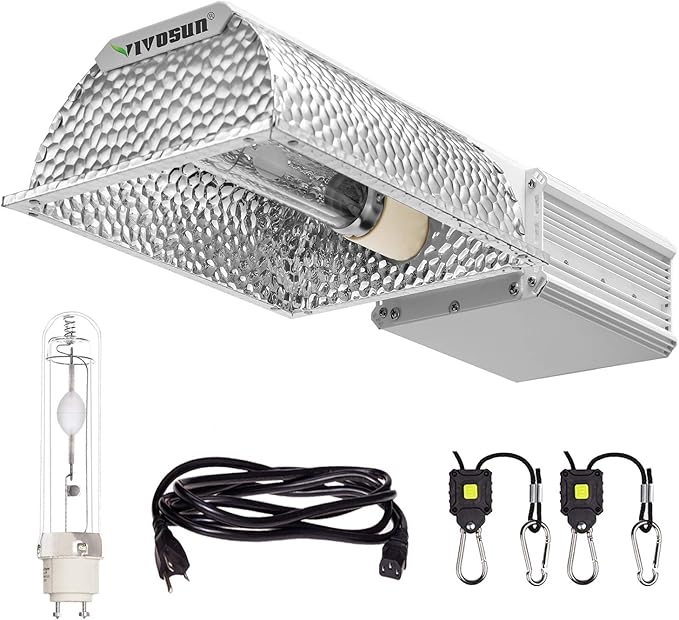
Ceramic Metal Halide vs. LED Final Say
In final thoughts, choosing the best option when it comes to ceramic metal halide vs LED will solely depend on your preference. Both LED and ceramic metal halide is great to grow lights that will offer you great results. Our comparison above should guide you in choosing which suits your growing needs.
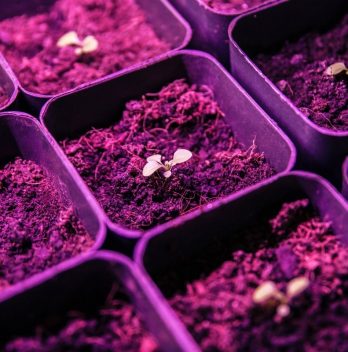
How Far Should Seedlings Be From Grow Light
Light is one of the most crucial requirements for growing plants indoors. Positioning your grow light in the perfect area is important to ensure your plants get the appropriate grow light quantity. Now, when it comes to seedlings, we would like to know how far seedlings should be from grow light.
Seedlings are fragile and require proper care as they develop. We will be discussing how far should your seedlings be from grow light so they can grow appropriately.
Get To Know How Far Grow Light Should Be From Seedlings
Although a couple of seed varieties require darkness to grow, some plant seedlings do require light for seedlings’ development. The seedling phase is a very fragile phase and they usually require less light intensity. Thus, the distance from your grow light to seedlings should be far enough to reduce light intensity.
Some may think that supplying optimal light to your plants will increase plant growth and yields. This is true, but have in mind that this applies to only matured plants. Your seedlings will be too delicate during this stage, so they will require tender care. When your plants are established, you can go ahead and feed them with optimal light intensity.
Let’s take a look at various types of grow light and how far you should place them from your plants.
LED Grow Seedling Light & Wattage
Generally, you should position your LED to grow light around 24 to 36 inches above the canopy seedlings.
Also, how far you should position your grow lights towards your seedlings will solely depend on the power or wattage of the light bulb. A bulb that is bright and far away from the plant could supply a similar light intensity with a dimmer or low light bulb closer to the plant.
Grow light with lower wattage of around 200 should be positioned between 12 to 20 inches above the plants’ canopy. On the other hand, grow light with higher wattage should be placed 34 to 46 inches from the plants’ canopy.
LED lights release mostly red and blue wavelength, thus there are appropriate for plants early stage such as seedlings. They are also great for the flowering phase and fruiting phase as these stages require more intensive light for optimal yield.
LED Grow Light, Roleadro 75W Grow Light for Indoor Plants Full Spectrum Plant Light for Seedling
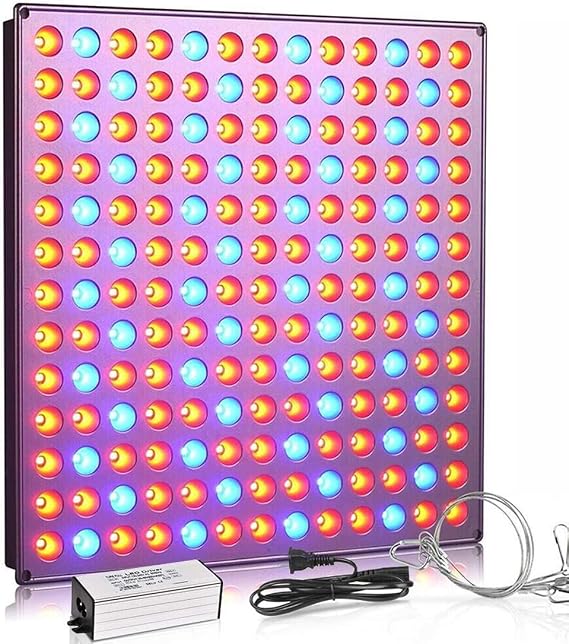
Fluorescent Grow Light
Fluorescent growth light comes in 3 types namely T5, T12, and compact fluorescent lamps. The added advantage of using fluorescent grow light is that it rarely causes light burn. This is because it does not produce too much heat. Notwithstanding, ensure you keep a close eye on the light heat and intensity.
Fluorescent growth light should be positioned between 6 to 12 inches for seedlings. For the vegetative and flowering phase, position your grow light between 12 to 16 inches for maximum production.
Other Plant Stages Grow Light Distance
Let’s take a look at other plant stages to grow light distance requirements:
- Vegetative Phase: the LED grow light distance for the vegetative phase of a plant is between 12 to 24 inches above the plants’ canopy. The light position is closer to the plant because optimal light is required during photosynthesis for rapid plant growth. The light intensity will also help in the development of stronger and healthier stems and roots.

- Flowering Phase: when the vegetative stage is complete and the plant advances into the flowering phase, the light intensity requirements diminish. The distance from the top of the plant to the grow light should be between 18 to 24 inches. In the flowering phase, plants start to grow in height and develop fruits. As your plants grow taller, you can decide to change or not change the distance of the grow light. Usually, if you don’t want your plant to grow too tall, you should leave the grow light distance the same.
Disadvantages Of Too Much Light
As we have pointed out earlier that light is one of the key factors to seedling development, we would also point out what too much light can cause your plants.
If your seedlings receive too much light, it can cause stress to your plant. To know if your plant is taking in too much light, look for any sign of light burns, leave discoloration. Abnormal or stunted growth is another sign to look for.
Once you see these signs, it’s a call for action. Adjust the distance of your grows light accordingly to fix the problem quickly.

FAQ’s
How close should I keep my seedlings to their grow lights?
If you are in a spot with good sunlight, then you may be able to get away with having them closer. I would say that if they are on a tray, then you should be able to get away with putting them as close as the tray allows. As far as lighting goes, you will probably need a full spectrum LED grow light. I am not sure what kind you have, but I know that the HID bulbs are really only effective when there is no direct sunlight, otherwise it will not light up.
I’d say at least 18″ apart for optimal growth. If you’re doing it right, you shouldn’t need much more than a 2-3 foot gap, depending on the height of the lights. If they’re too close together, you’ll be wasting energy and possibly burning your plants.
Does the type of light matter in terms of the distance?
Yes. You’ll need to figure out what the light spectrum is that you are growing for. If you’re trying to grow plants that are grown for eating then you will need to know how much of the spectrum they are best at consuming.
Then you will need to calculate the amount of light that is needed to provide that amount of light to your plant. For example, if you are growing tomatoes, you would use a combination of red, blue and yellow lights to simulate sunlight. The more red light, the more heat, and the more yellow light, the more light but also more energy. You can get away with less red light if you have enough blue and yellow light. For example, if you had two 5500K fluorescent tubes, one blue and one yellow, it would be able to produce about 1.2 times as much light as a single fluorescent tube of similar wattage. If you had two of the same tubes but they were only 5500K then you could get around twice the amount of light. It’s best to figure out what the light spectrum for your plant is going to be before setting up the grow room. You don’t want to grow plants in the wrong light spectrum.
Can they be too far apart?
My understanding is that it’s not a problem to put the grow lights too far away from the seedlings. However, you may want to get closer so that the light is more diffused and even. It’s easier to keep a grow light in a plant than a human. You could also try to use LED grow lights. These are much more energy efficient, and will last a lot longer.
Conclusion: How Much Light Should Seedlings Get?
How your grow light should be far from seedlings will depend on the type of grow light you’re using and the wattage or light intensity. With the information we have given above, we hope you have learned the right distance to place your grow light from your seedlings.
How To Harvest Leaf Lettuce
Are you ready to enjoy all-year-round fresh green salad lettuce? Let’s dive in. Lettuce leaves should be harvested the appropriate way so it keeps growing nonstop. If you’re wondering how to harvest lettuce leaf the right way, we will teach you how to go about it.
Nothing is more pleasing when a gardener is able to grow and harvest fresh lettuce and get that non-stop or continuous harvest. Read on to discover how to harvest a cut and come again lettuce leaf.
Planting Lettuce Leaf Right
Some gardeners, especially newbies may think when you harvest lettuce leaf once you can’t come back for it again. But that’s mostly not true. If you cut your lettuce leaf the right way, you can always come again for another cut.
The best lettuce variety that will allow you to cut and keep growing is the mesclun variety. This mesclun variety is loose-leaf lettuce rather than head lettuce and it offers great textures, flavor, and colors.

This type of lettuce variety can be spaced a bit closer to each other. Every week or every other week, ensure you plant new crops so you can enjoy nonstop harvest leaf lettuce. If you wish to choose other lettuce varieties, they are also fine.
Learn How to Harvest Green Leaf Lettuce
You can start harvesting your lettuce leaf or baby lettuce when they attain about 4 inches long. The outer leaves are the best to pick so always aim to cut the outward leaves. These ones always taste amazing and you can prepare some lovely salad green with them. Be sure they always taste superior compared to the matured ones.
Use a sharp tool like scissors or shears to cut them in singles or a bunch above the crown. Avoid cutting inwards or below the crown so your lettuce plant does not die off.
A lettuce farm where you can continuously harvest will have several rows of growing lettuce. The lettuce leaves will continue to grow at various stages of maturity with some being a week or two older. As you continue this cycle, you are also slowing down the bolting process which is what we want.
Every time you pick, ensure you pick from different rows so other rows that have been harvested before can have time to grow again. Each time you harvest, ensure you plant progressively so you can come for more crops after a week or two of harvesting. This is another way of ensuring the cut and come again experience.
Always have in mind that after cutting a row, the new lettuce leaf will be ready to be harvested again in about two weeks.
When To Harvest Leaf Lettuce
You can check your seed pack for days of maturity to know when to harvest your lettuce leaves. Depending on the kind of variety your choose, lettuce can take up to 60 to 100 days to mature.
From the size and shape of the lettuce head, you should be able to tell when it’s ready.
However, you can harvest anytime, just ensure you always harvest your lettuce leaf before they go into bolting. They enter bolting at the end of their growing season and this is when you should discontinue harvest.
Bolting is when they start to enter the flowering stage and this occurs during the hot season. Bolted lettuce leaf will result in a bitter taste which is what we do not want.
WYF Pruning Scissors, Professional Garden Shears
During the hot season, you can try and shield the lettuce leaf by covering each row. Use shade cloth or row covers to shield your lettuce. This will help in delaying the bolting process.
However, you should avoid planting lettuce during hot climates. Hold on till the climate is cool around fall or spring and continue planting your lettuce.
FAQ’s
How do you harvest leaf lettuce so it keeps growing?
Leaf lettuce is a popular salad green because of its crisp texture, but harvesting the leaves for salad can be laborious. The leaves are not very hardy, and when they are harvested they start to wilt and fall over. You could harvest the leaves as soon as they are ready.
You don’t have to do anything special to keep the lettuce growing. If you’re harvesting for salad, just leave the whole plant in place and pick the leaves as needed. When you cut off the head, you’re only removing the top of the plant, and the lettuce will continue to grow.
Will lettuce regrow after cutting?
The stems of lettuce regrow when cut, and you can harvest the leaves again. In some cases, it takes a couple of days for the new growth to develop. If your lettuce is cut too close to the base of the plant, the roots will be damaged and the plants won’t regrow.
How do I know when my leaf lettuce is ready to pick?
Leaf lettuce comes in a wide range of varieties, each with its own growing season. Lettuce is a cool-season crop and requires at least 5 hours of daylight, and preferably 8 to 10 hours of sunlight per day. Most varieties will be harvested when the heads are full and have formed tight, compact heads. You can harvest lettuce when it is still slightly tender, but before the heads begin to develop cracks. As a general rule, you can tell when lettuce is ready to be picked by looking at the leaves. If they are large and dark green, then it’s probably ready. However, you should still pick them while they are still small, bright green and tender.
How many times can you regrow lettuce?
Lettuce is an annual plant. It will grow from seed, but it will not grow again until the next year. Lettuce is a cool-weather crop, and it can be difficult to grow in the hot weather of summer. But if you live in an area that gets a lot of rain, you can keep growing lettuce all summer long.
The first time you grow it will be more difficult because you don’t have an established root system, and you won’t know exactly where to place your seedlings. But once you have several plants growing at the same time, it gets easier.
If you are growing it from seed, expect to start with a few seedlings and eventually get down to one plant per square foot (or two or three).
How do you keep lettuce growing in the summer?
You can grow lettuce year round, but it does take some extra attention and planning. The main thing is to start from seed in the spring and plant every two weeks until late fall, when temperatures are cooler. You don’t want to plant the seeds too early and then have them die over the winter. A good way to space your plants is to sow seeds a couple of inches apart and thin to one plant per hill.
There are several types of lettuce that grow well in hotter climates. The ones with a red leaf are romaine lettuce. They will tolerate hot weather and do well if watered daily. You may also want to water it once a week at least. Romaine lettuce is a good choice for salads, sandwiches, and wraps. Other lettuces that will tolerate hot weather are butterhead, iceberg, and leaf lettuce. They will also do well if you water them daily.
How To Pick Lettuce
Always harvest the outer part of the lettuce leaf throughout their growing season and harvest at the right size. Ensure you plant more lettuce progressively as you harvest. If you do this always, you will enjoy continuous growth for many more seasons. Remember, lettuces will only grow well in cool weather conditions.
Once you have harvested your lettuce leaf, you can store them by refrigerating them for a week or two.
If you follow our tips on how to successfully plant and harvest leaf lettuce, you should be able to enjoy fresh and green salad all year round.
We do hope this information has been helpful to your garden. Happy growing.
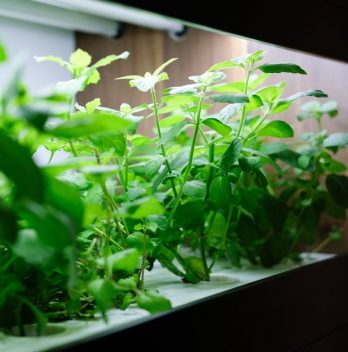
Grow Room Size Per Plant
One of the first points to put in mind when commencing indoor hydroponic farming is the size of your grow room. This is important so you can determine the right grow room size per plant and carefully plan and work on your grow space to maximize yield.
Let’s take a look at how to choose the right grow room size that will suit your plants’ size.
Requirements To Consider
Before we dive into grow room size per plant, let’s get to know the requirements. Some factors will determine how to choose the grow room size per plant. Let’s take a look at some of these factors:
- Plant Size: Now, when it comes to plants, knowing the plant size is another factor to consider when growing in a particular room space. We have small plants, medium-sized plants, bigger plants, and bushier plants. You can get the plant size information on the packet of your seed pack. You may also find the plant’s growing height and perhaps seed spacing requirements in the seed pack.

- Spacing: Another factor is spacing requirements. While there are plants that require give planting space and failure to do so can cause poor growth and health of the plant. However, there are a few plants that can allow planting them close to each other. For example, plants that need to be pollinated by other plants will need their pollinating plants to be close to them.
Grow Space Room Size Per Plant
Talking about the recommended grow room size per plant, let’s take a look at this using a grow room of size 10 x 10 (i.e 10 feet by 10). A 10 x 10 room size equals 100 square foot room.
The number of plants that will fit a 100 square foot room will be less than 2000 small-sized plants. For medium-sized plants, it can fit about 200 to 450 plants. While for bigger or bushier plants, you can fit 25 to 100 plants for a 100 square foot grow size room.
Always have in mind that the space and size of plants will determine the number of plants you can fit in a grow room.
Read more about Leaving Grow Lights On 24 Hours
Using Grow Tent To Determine The Grow Room Size For Plants
Many hydroponic growers especially newbies usually wish to plan the number of plants they want to grow and select the appropriate grow tent size for it. This is a very good plan. Just ensure you have the required space where you can set up your grow tent in your home.
So, here are some various grow size tents and how many plants you can fit in them:
- 2 x 2 Grow Tent: let’s see how many plants we can fit in a 2 x 2 grow tent. Usually, a single plant is ideal for a 2 x 2 grow tent together with a 3 or 5-gallon container. However, you can still fit in 4 smaller plants in this grow tent size.
- 2 x 4 Grow Tent: 7 to 8 small sized-plants can fit in this grow tent size.
- 3 x 3 Grow Tent: this size can allow you to grow 9 small plants or more.
- 4 x 4 Grow Tent: you can comfortably plant about 4 regular-sized plants with this size.
- 4 x 8 Grow Tent: two large plants can fit into this size. About 8 medium-sized and 32 or more small plant sized can fit in this grow room space.
- 5 x 5 Grow Tent: you can easily grow up to 25 plants with this grow room size.
Importance Of Determining The Appropriate Grow Room Size
Determining the appropriate grow room size per plant is very crucial when it comes to indoor hydroponics. Doing this will accurately guide you to calculating the capacity in which you can plant. This way, you can enhance the quality and results of the harvest.
However, if you choose an undersized or wrong grow room, there are serious consequences to this. It can result in overheating of your plants and your garden will be overcrowded. Now overcrowding will result in low-quality yield which is totally the opposite of what any gardener wants.
TopoLite 24″x24″x48″ Hydroponic Grow Tent Garden
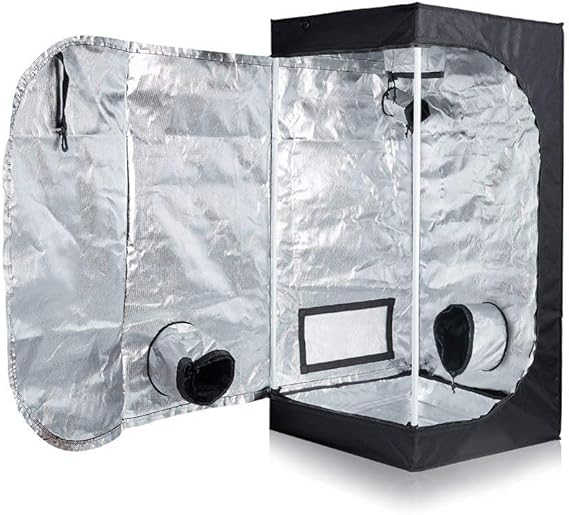
Also, oversized grow room has its own issue. Oversized grow room will cost you a lot because there will be an increase in total operating cost. It will require extra costs such as more electricity consumption, constant temperature regulation to an accommodating level for plants, etc.
Find out the Cheapest Hydroponic Growing Medium
FAQ’s
How many plants should be in a grow room?
The table below shows how many plants you would need to grow for different wattage requirements.
How many plants can you grow in a 10×10 tent?
There are a lot of different things to consider when you’re looking to start your own garden. From what to plant, to how much space you have to work with, and what kind of space you have to work with.
A 10’x10′ tent could handle about 32 plants, if they were medium size. You would have to be careful with your watering though, you wouldn’t want it getting too wet.
How big is a 4×4 grow tent?
A 4×4 grow tent can hold as many as four plants, but it’s usually just two or three.
Most growers purchase a 4×4 tent. They are able to grow a wide variety of plants in these tents. A 4×4 tent has four walls, which means that there are four sides to the tent. These walls are usually made out of either metal or plastic. The tent comes with a door at one end, which leads to the inside of the grow tent. A 4×4 tent is an excellent choice if you want to grow as many different types of plants as possible. There are a few advantages of having a 4×4 tent. For one, it gives you the room that you need to grow a lot of plants. It also provides you with more space for lights and for growing.
Do you need a carbon filter for a grow tent?
arbon filters are used in conjunction with air purifiers to filter out particles, dust and odors from the air. Carbon has a high surface area which allows it to attract airborne particles.
This is why they are used in conjunction with air purifiers. The most common carbon filters that I have come across in my research are the carbon block filters. There are a couple of problems with using a carbon filter in a grow tent. The first is that the carbon needs to be maintained to keep its effectiveness. This means you need to clean it regularly. It’s not as hard as it sounds.
There are a few ways you can do this. You can use a vacuum cleaner and run it over the carbon or if you want to be more hands on you can wash it in water and soap. Either way, you need to get rid of the sooty build up that is inevitable when using a carbon filter. The second problem with using a carbon filter is that there is a limit to how much air can pass through them. You only need to look at the dimensions of the carbon to see how big of an issue this could be. If you have a 10 ft x 10 ft grow tent, then you need to use a carbon filter that is about 4 inches thick. This will allow for the air to flow through the carbon. If you are growing in a larger tent, then you will need a bigger carbon filter. A final issue with using a carbon filter is that it does not absorb odors. If you are growing in a tent and you are using an air purifier, then you won’t need to worry about this as the purifier will take care of it.
Final Say
With that said, we hope you have picked one or two things on how to choose the right grow room size for your hydroponic indoor garden. Happy growing!
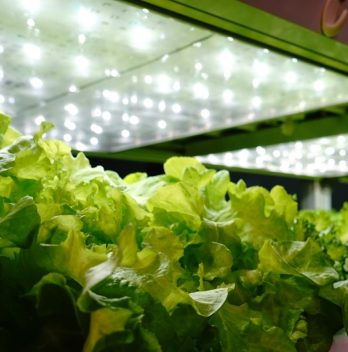
Leaving Grow Lights On 24 Hours
The impact of grow lights in hydroponics gardening is very essential as it mimics the work done by natural sunlight. There’s is no disputing that leaving grow light on for long will result in faster growth. However, the question is: is leaving your grow lights on for 24 hours ideal? Let’s look into this.
Leaving your grow lights on for 24 hours will sure supply your plants more light and if you notice they aren’t getting adequate light, increasing the number of light supply is fine. However, this is usually not the ideal way out and we will let you know why.
Can You Leave Grow Lights On 24 Hours A Day: Ideal Or Not?
It is not the best idea to leave your grow light on for 24 hours even if your plants are not getting enough light supply. The best solution is to obtain more light installations or switch to a stronger grow light. Thus, it’s not ideal to leave your grow light on all day and we will give you more reasons.
Reasons Why Leaving Grow Lights On For 24 Hours Isn’t Ideal
Let’s take a look at some reasons why leaving your grow lights on 24 hours is not recommended:
- No Resting Time For Plants: when you run your grow light all day, your plants will have no time to rest. Just like a human being needs rest, plants also require a resting stage. Have in mind that the natural sun does not go up all day. We have the night time which is the dark cycle of the plants. Allow your indoor hydroponics plants to also have this dark cycle. During the dark cycle which is the resting stage, it is believed plants use this period to convey nutrients into the most distant part of the plants.
- Not Ideal For The Flowering Phase: 24 hours lighting duration is not ideal for plants that need to enter the flowering phase. Your plants won’t transition into the flowering phase unless you decrease the hours of lightening. Now if your plants are already in their flowering phase and you up the light duration to 24 hours, doing that can be quite catastrophic. This can cause your plant to go back to the vegetative phase and it might even take a long time to return to its flowering phase.
- Additional Cost: An additional cost is another reason. More electricity will be used and it might require you to change the bulb frequently.
- Additional Heat: more heat is will be emitted when you leave the grow lights all day. It will require you to also run more fans as well as other cooling instruments to control the excess heat.
- Puts Stress On Equipment: additional stress is put on your equipment as they are working all day without rest. This can reduce the lifespan of your equipment.
Giixer 1000W LED Grow Light, Dual Switch & Dual Chips Full Spectrum for Hydroponic Indoor Plants
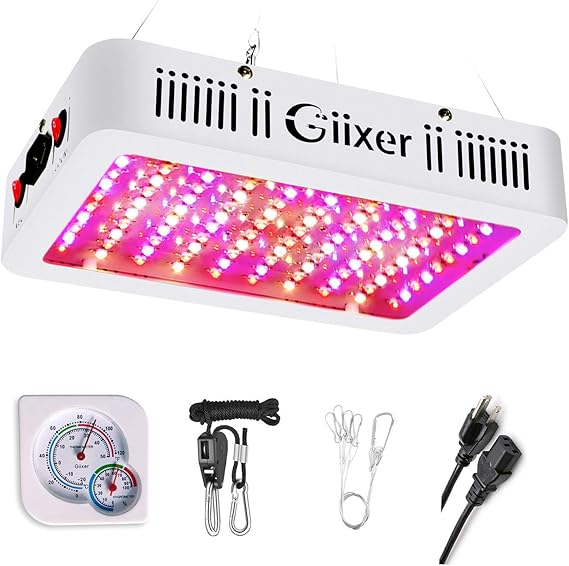
Leaving your grow lights on for 24 hours long has just one advantage. Your plant receives more light and it will result in rapid growth. This is usually ideal for plants that require only the vegetative phase. So, plants like veggies may benefit from this. Nevertheless, the disadvantages of leaving your grow lights on for 24 hours outweigh the advantages.
How To Determine Light Duration: Factors To Consider For 24 Hours Of Light
Put these factors into consideration when deciding the duration to leave grow lights on:
- Type Of Plants: there are different types of plants namely low-light, medium-light, and high-light plants. Always determine the type you are growing.
- Type Of Grow Light: the types of grow light we have are LED, compact fluorescents, regular bulbs, metal halide, and high-intensity discharge lights. All these grow light supply different capacities of light so you can choose one whichever that suits your growing needs.
- Growing Phase: vegetative type of plants may benefit from 24 hours light duration. But flowering and fruiting plants will require a dark phase. The cloning or seedling germination phase is critical so they require both light and dark phases. You can supply them with 12 to 16 hours of light and 8 hours of the dark phase.

What Are The Ideal Hours For Running Grow Light?
It is required to supply your hydroponics plants with at least 12 hours of light and at most 18 hours of light daily. However, if you notice your plants aren’t receiving optimal light you can replace the fixtures or switch to a more powerful light.
Light Output Plants Require
All flowering plants and fruit-bearing plants require 20 to 40 moles of light daily. 18 hours grow light duration can supply 20 moles of light if you make use of LED grow light that has 308 micro-moles of light.
For a 12 hours light duration to produce 20 moles of light, your grow light must be able to supply about 462 micro-moles of light.
FAQs
What happens if you leave grow lights on all the time?
You’re probably wondering what happens when you leave grow lights on all the time. After all, you’re growing plants and there’s no doubt that they will need to use a lot of energy to do so. If you have ever looked at grow lights before, you may be surprised to find out how much power they actually use.
This is a very interesting question. I’ve had a lot of experience with grow lights and what I do know is that I don’t leave my lights on all the time. I only turn them on when I need them. The first thing that comes to mind is the light spectrum. If you leave your lights on all the time, the spectrum will be different than it would be if you were to turn them on at a specific time. This will affect the quality of the plants, and it could also cause other problems.
Another thing that I’ve noticed is that my lights tend to stay warmer. When I first started using them, they were so bright that I thought they were burning the plants. But as time went on, I discovered that they actually helped the plants by increasing the temperature, which allowed them to grow faster. Now I know this might sound weird to some people, but for me, turning the lights off for a few hours has worked out well. It doesn’t seem to affect the plants much at all.
Why shouldn’t I leave my grow lights on all the time?
You risk burning your plants. This is probably the biggest reason why you shouldn’t leave your grow lights on for 24 hours.
The fact is that when you leave grow lights on for 24 hours, it creates an environment where your plants can use up all of their energy reserves and grow to a point where they can no longer recover. This can result in stunted growth, and even death.
You also risk wasting electricity. It’s true, if you’re using LED grow lights, then you’re going to be using a lot of electricity over the course of 24 hours. If you’re using a 10-watt grow light for 24 hours, then you’re going to be using up 1,000 watts of electricity.
Can seedlings get 24 hours of light?
You may think that this is a time when it would make the most sense to keep them showered in light non-stop, b ut the truth of the matter is that just like mature plants, seeds need to rest after a certain period of time.
What should I consider when it comes to light duration?
Light duration is one of the most important factors to determine the quality of a light. This is because it affects the plants growth, flowering and fruiting cycles. It also affects the light spectrum. You can have a very bright but short light duration. Or you can have a very weak but long light duration.
1.To determine the light duration, you need to know the following factors:
The intensity of the light source
The spectrum of the light
The amount of light emitted at any time
The color temperature of the light source
The size of the plant container
The light source