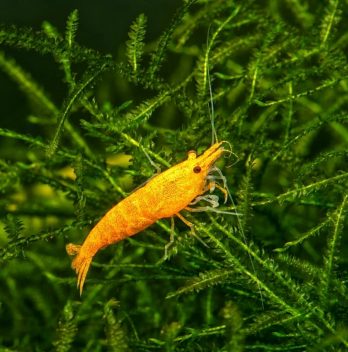
If you love prawns and you wish to raise some for yourself in your aquaponics, then waste no time in getting started. Raising prawns in your aquaponics can be an excellent way of adding a different touch of diversity to your system.
It’s possible to raise prawns together with your tilapia fish or any other fish you may have in your system. We will enlighten you on how to introduce freshwater prawns into your aquaponics system. So let’s begin.
Guidelines On Raising Prawns In Aquaponics
Raising prawns along with fish is pretty dynamic. Prawns are bottom feeders and they will feed on anything they find. This includes the fish waste that is not absorbed by your plants making them a reliable filtering animal. They can as well feed on snails and other organic matter so if you’re having issues with snails in your aquaponics, adding prawns might be a way out.
The best type of aquaponics to use for raising prawns is a floating raft. To introduce prawns into your aquaponics, integrate them into your fish tank or under the floating raft. You can as well integrate them in both floating raft and fish tank. Let’s discuss this in detail.
Floating Raft: under your floating raft, it’s usually a habit to have a handful of organic waste such as dead roots, leaves, etc. Prawns like to feed on organic waste so they can be helpful in this aspect. You might also be wondering if prawns will feed on your plants’ roots, the answer depends. In a standard situation, prawns won’t eat your root. However, when they become hungry or when you have too much prawn population, it’s possible they bite on your plant roots. For this reason, ensure you control their population. Take out some if they become too many in your system.
Fish Tank: another possible way to incorporate prawns into your aquaponics is to put them in your fish tank. Prawns are bottom dwellers, so you don’t have to worry about them crawling up to your fish. They will as well feed on excess fish waste thereby maintaining a clean bottom tank.
Both Fish Tank & Floating Raft: it is also possible to incorporate prawns in both your fish tank and floating raft. This is usually the best option as you get to maintain clean both a fish tank and floating raft.
Precautions To Take When Raising Prawns In Aquaponics
Remember they both prawns and fish can be territorial so you need to keep both from each other. There are some precautions you need to put in place so your prawns and fish do not attack each other or even meet each other.
When prawns are in their juvenile stage, it’s possible for your fish to want to feed on them. So, it’s necessary you create a barrier to keep them away from each other. You can make use of a bird mesh with corner PVC trays by laying them in the bottom of your fish tank. This mesh will separate your prawns from your fish. The mesh is also permeable enough for the fish waste to move through the layers of the mesh to meet the prawns so they can feed on the fish waste.
Stocking Density
The recommended stocking density for a single prawn should be about two square feet of tank space.
Tank Size
You should have at least 135 gallons or 500 liters of a tank for both fish and prawns. There should however be a barrier like the bird mesh we discussed earlier.
Temperature Requirements
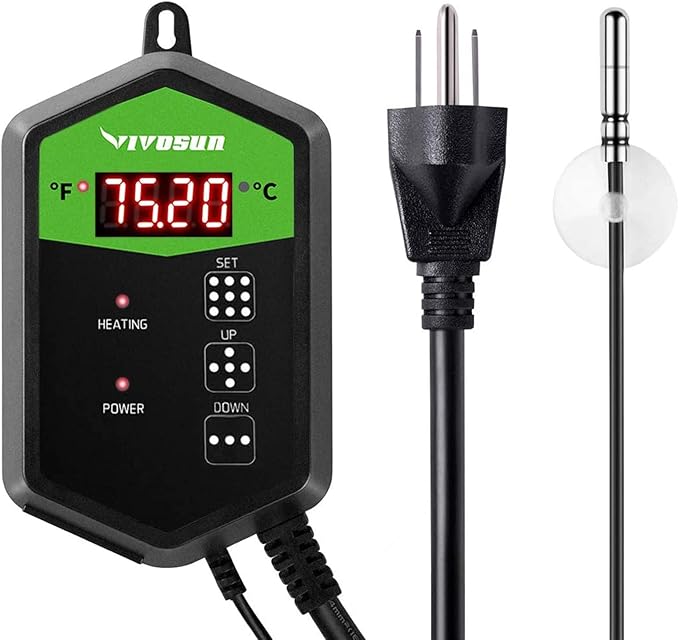
Theideal temperature for prawns should fall between 57 degrees to 105 degrees Fahrenheit. However, the standard temperature is around 78 degrees to 88 degrees Fahrenheit.
Feeding
Prawns will feed on just about anything. You can however feed them with prawn pellets and planktons.
PH Range
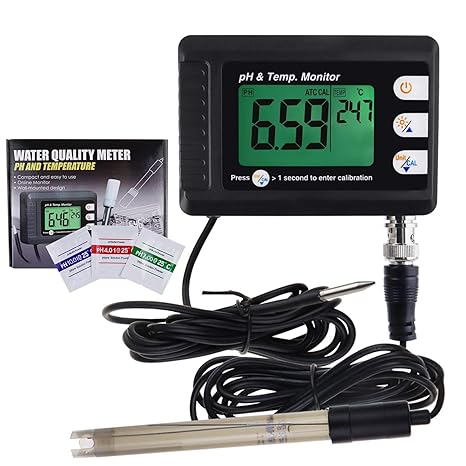
Another requirement is pH range, therefore, you should ensure you monitor the pH with a quality pH matter. Prawns will do well with a recommended pH range between 7.8 to 8.5.
We can see there are great benefits to raising prawns in your aquaponics. You can agree there’s nothing more amazing than having freshly harvested prawns together with fish from your aquaponics system. You get that fresh exclusive meaty taste compared to the regular frozen prawn sold in stores.
This is what you get raising both prawns and fish and if you plan to sell them it will also be a great investment. Prawns attain market size in about 4 to 6 months, so you can always have a steady sale once they are matured.
Let’s explore how to grow the flavorful basil hydroponically. Growing various plants hydroponically is becoming an interest to many growers as it offers great benefits such as healthy plants, greater yields, dirt-free process, and many more.
Basil is one common herb you can grow hydroponically. It is one of people’s favorite and it’s pretty easy to grow. So, read on to discover how to grow basil hydroponically.
Varieties Of Basil Plant
Basil plant comes in different varieties and all varieties are suitable to grow hydroponically. These varieties differ in features such as flavor, resistance to disease, yield, and growth. Here are the various types of basil plants you can choose:
Cinnamon basil
Dark opal basil
Lemon basil
Holy basil
Sweet basil
Sweet Thai basil
Purple ruffles basil
Spicy bush basil
Lime basil
Christmas basil
Before choosing the variety to grow, the first thing you should do is to pin down the most appropriate basil plant preferable for your hydroponics. Also, make some inquiries about the productive cultivation necessities.
However, if we want us to recommend the type to go for, our favorite type is the bush and sweet basil variety. They are both great for growing in hydroponics.
Get To Know How To Grow Basil Hydroponically
The first step to commencing how to grow basil hydroponically is to decide how you wish to start. You can commence by seed germination, cloning basil plants, or simply obtaining plants from garden stores near you and transplanting them.
Starting With Seed Germination: seed germination is pretty easy to commence basil plants. Just keep them at the appropriate temperature of about 75 degrees. You can make use of a rapid rooter plug for seed germination. You should start to notice germination around 3 to 10 days.
Germination From Cuttings: cloning is another way of starting basil germination. Simply get the right plants with healthy growth and great traits.
Buying And Transplanting Basil: you can as well buy basil plants from a garden store and transplant them into your hydroponics system.
Planting Basil Hydroponically
Most types of hydroponics systems will work with growing basil plants. However, there are a couple of hydroponics systems that will suit and work better compared to others.
Remember to give your basil plants space of at least 6 to 12 inches to encourage aeration and avoid the growth of fungal.
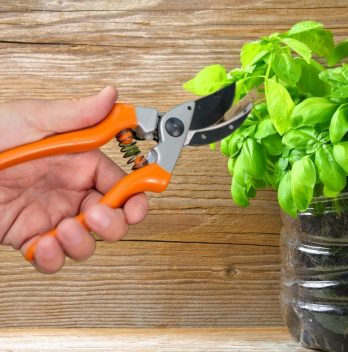
Also, trimming your basil plants whenever they are full is recommended. Aim to trim above the lateral buds to stimulate growth. Trimming will increase the yield of your basil plant as there will be more room to grow. Ensure you make use of sharp tools for trimming and avoid pinching.
You can make use of the trimmed portions for your tasty meal.
Basil Temperature Requirements
The required temperature for hydroponics basil is around 65 to 80 degrees. They also require mild humidity for optimal growth.
The hydroponic basil plant will thrive under moderate light. For optimal growth, supply your basil plants 13 to 16 hours to light daily.
PH Requirements
Basil plant requires a pH range of 5.5 to 6.5.
Nutrient Requirements
The nutrient requirements for your hydroponics basil are pretty simple as the aim is for just its vegetative stage. Thus, what you need is a vegetative nutrient solution.
You want to supply your basil plants with a nutrient scheme rich in nitrogen. Adding a bit of calcium and magnesium to your nutrient scheme is also fine.
Harvesting
The best part of planting is obviously the harvesting time. To harvest, you can harvest the entire basil plant or just take off some leaves.
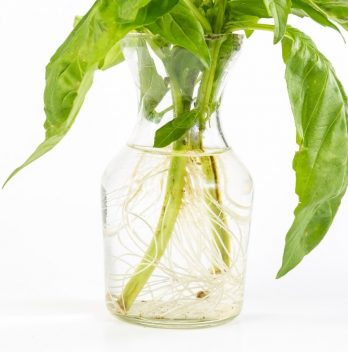
To store your harvested basil plants, keep them in a vented bag of about 55 to 60 degrees. This way, you can have a stable shelf life with 10 to 12 days duration. It is not recommended to store basil plants in a cooler. A better place is to store them in a jar of water in a cool room.
FAQ’s
Is it hard to grow basil hydroponically?
Growing basil in a hydroponic system is easy. Basil is a very easy plant to grow. If you have the space and time, it is easy to grow from seed. The biggest problem you will have is finding the right type of nutrients and the right equipment to use.
There are many different types of hydroponic systems available on the market. All you have to do is look for a hydroponic system that has the features that you want. The type of nutrient solution you use is also important. Some nutrients are better than others. You can use a commercial nutrient solution or you can make your own. Making your own is easier than buying one. There are different types of nutrient solutions available on the market. The most popular one is the water-soluble solution. This solution is made from a powder that dissolves in water.
This method is used by farmers, food producers, and even by some home gardeners. It’s also the best way to grow herbs that have been bred to be hardy in areas where the soil is not suitable for traditional gardening. You can grow basil from seed, or buy transplants from your local garden center.
How do I grow basil hydroponically?
First, you will need a system to grow your plants. This could be as simple as a shallow plastic tray or it could be a more elaborate system using a reservoir. If you plan on growing large quantities of plants, you’ll want to buy a system that’s made for commercial use, since these systems have been engineered for high production.
You’ll need to do is measure the area where you’ll be growing your herbs. The next step is to decide if you want to grow them indoors or outdoors.
If you’re growing them indoors, you’ll want to figure out how much space you have available. You’ll need to purchase an inexpensive light fixture and set it up. You can purchase a small greenhouse that is made specifically for growing hydroponically, but it can cost as much as $
If you’re growing your herbs in an outdoor garden, you will need to determine what size garden you need. Most garden centers will have information on how much square footage you need to grow your herbs, and you can use this to figure out how big your garden should be. Once you know how much space you have available, you can begin planning your hydroponic system.
You can purchase a tray system or you can build your own. In either case, you’ll need to decide if you want to go with a shallow plastic tray or a reservoir. The most common type of system is the shallow tray system, which consists of a tray and a pump. The tray is filled with a solution and placed in the location where the plants will be growing.
The nutrients are added directly to the tray as needed. With a shallow tray system, you’ll need to refill the tray periodically so that you don’t run out of nutrients. Some growers recommend adding a small amount of fertilizer every day. Others use the same nutrient solution for a week or more, and then change it out every two weeks. You’ll also need to monitor the pH of the solution, since it should be between 3.5 and 4. If the pH becomes too low, your plants won’t be able to utilize the nutrients properly. You’ll need to add an acidifier to keep the pH balanced.
Once you’ve determined how you’ll grow your herbs, you’ll need to figure out what type of nutrients you want to use. You have several options, including organic fertilizers, compost, and manure. The most common nutrient solution is a 1:1 mixture of fish emulsion and water. You can add other ingredients, such as seaweed and kelp, to the solution to boost the nutritional value. The amount of fertilizer you add will depend on how much light the plants receive. Some growers recommend adding as little as one teaspoon of fertilizer per gallon of solution. Other growers add as much as 2 teaspoons per gallon. If you’re growing your herbs in an outdoor garden, you may want to use compost instead of fish emulsion. Compost is made up of plant materials that have decomposed naturally, so it contains nutrients that your plants can use.
What are some other concerns?
If you live in a very humid area, you will need to make sure your nutrients don’t dry out. You’ll also want to provide a place for the excess water to drain off, so that the solution won’t get too saturated.
Conclusion On How To Grow Basil Hydroponically
Growing basil plants hydroponically is easy, fun, and you will enjoy great benefits. No matter the variety you choose, you can be sure of a successful and productive basil growth in your hydroponic system.
Follow the right steps and supply your basil plants with all the requirements we stated above and you can watch your plant grow bountifully.
We hope this article has enlightened you on how to successfully grow basil plants hydroponically. Happy growing folks!
Watercress is one of the easiest and healthiest plants to grow in your aquaponics garden. So, if you’re wondering how to grow watercress in aquaponics, you’ve come to the right place.
Watercress is a water-loving plant and it is popular for its tasty flavor when added to meals. They are great for adding spice to your soup, fresh salad mix, as well as a sandwich.
This article attempts to give you the details on how to grow watercress for your aquaponics garden. So let’s begin.
Why Grow Watercress In Your Aquaponics Farm
Being a water-loving plant, you can agree it is one of the best leafy green plants to grow in your aquaponics garden. Watercress is a highly nutritious and fast-growing plant. For this reason, watercress is one of the most loving plants to grow especially among commercial hydroponic and aquaponics growers.
Also, growing watercress for your aquaponics garden will be an amazing way of introducing newbies to the world of aquaponics.
2 Ways To Grow Watercress In Aquaponics
You can grow watercress easily by planting from their seeds or you can simply grow them from cuttings.
1. Propagation From Seeds
Watercress propagation from seed should begin to show germination between a couple of days or two weeks.
Plant about 10 to 15 seeds in the net pots growing medium. The seeds will begin to sprout from 3 days and continue to grow for 4 to 5 weeks. Then ready for harvest.
2. Propagation From Cuttings
Watercress can be grown or cultivated from its aerial roots where the nodes of the matured plants are.
Cut the stem of the watercress and take away the lower parts of the leaves. Lay the cuttings on your aquaponics bed and watch them give rise to new roots in a couple of days.
You can also obtain bunches of watercress stem from grocery stores.
Guidelines On How To Grow Watercress In Aquaponics Successfully
Having decided the method of propagation (either seeds or cuttings), we can now look into the specifications and guidelines to follow. Below are the guidelines on how to successfully grow watercress in an aquaponics garden:
Fish Choice: first things first, choose the appropriate fish you wish. Tilapia, trout, and catfish are the best options if you want a smooth and easy aquaponics process. Also, you should accurately calculate the number and proportion of fish to the water tank. For example, the standard rule is one matured fish per 5 gallons of water.
Grow Media: choose an appropriate growing medium for your plant. You can use grow media such as hydroton, rock wool, etc. Remember watercress plants are water-loving so ensure the growing medium used can absorb water.
Spacing: ensure you give your plants adequate spacing. This is so they don’t compete with nutrients from overcrowding. Space them around 9 to 12 inches apart.
Temperature: watercress will do well in a temperate environmental climate. Temperature range from 50 degrees to 60 degrees Fahrenheit will be ideal.
Sunlight or Grow Light: watercress herbs thrive in full sun. However, if you’re growing them indoors, they will do well under high output grow lights.
pH Range: the appropriate pH range for the watercress plant is a slightly acidic and slightly alkaline environment. Therefore, the pH range will be between 6.0 to 7.5. Always test your solution so you can keep track of the nutrient levels.
Fish Feed: you can start with fish pellets as these pellets comprise the complete nutrient balance for your plants’ growth. They contain vitamins, proteins, carbohydrates, and minerals.
Bacteria: another important thing is you should encourage bacteria. It is this bacteria that will convert the fish waste in ammonia into nitrates for plant use.
Add Watercress Plant: lastly, plant your watercress either by seed germination or by cuttings and watch them grow.
Watercress is a popular, easy to grow green vegetable. It has been cultivated for centuries and is an excellent source of vitamins A, C, E and K. You can grow it in your garden or even in a pot on the patio. This perennial plant grows well in moist soil. It is very adaptable to a variety of growing conditions. Watercress grows best in water or soil with a high humidity content.
You can grow watercress in a pond, but it will have to be kept in a container if you don’t want it to escape the pond.
Why is watercress good for aquaponics?
Here are a few reasons why watercress is such a great plant for aquaponic systems: It’s easy to grow – Watercress can be grown in any garden or window box and can be planted directly into the aquarium.
Watercress also does well in containers, but the roots tend to spread out more than they do in the soil. It’s low maintenance – Watercress can be harvested regularly without much effort. If you don’t like the taste of the leaves, you can just harvest the roots. Watercress is a fast growing plant that can be harvested within 6-8 weeks. It’s drought tolerant – The roots are able to withstand dry conditions and will continue to grow even if there is not enough water available.
Watercress is very easy to grow – It doesn’t require much attention and it is quite forgiving when it comes to temperature fluctuations.
How long does watercress take to grow in aquaponic?
It takes approximately one month to grow in soil and two weeks in aquaponics.
Watercress has small, thin leaves that are rich in vitamins and minerals.Watercress is native to the Mediterranean region and grows best in fertile soil with good drainage. The plant can grow up to 4 feet tall.
What’s the main concern when growing watercress in aquaponic?
It’s possible to grow watercress in aquaponics but you have to be careful to maintain a healthy balance of bacteria and plants. If you don’t, the bacteria can cause the plants to die. The bacteria are what converts nitrate into nitrite which is what you need for the plant to be able to uptake the nitrates from the water. The plants also require nitrate so the bacteria are essential.
Final Note
Having said all these on how to grow watercress in aquaponics: you should know there are other little precautions to be taken for a smooth aquaponics watercress garden. Things like:
Monitoring the activities of your fish daily.
Observe their feeding pattern.
Avoid overfeeding so you don’t clog your aquaponics system and create excess waste that your plant can absorb. Watercress does not do well in clogged or stagnant water. The water needs to be flowing, well circulated, and aerated always for optimal production.
With that said. We do hope you’ve learned some things on how to grow watercress for your aquaponics garden.
Who doesn’t love the basil plant especially for its amazing taste and pleasant aroma when it comes to cooking? Now, if you’re wondering how to trim basil to promote healthy growth, just follow our tips and your basil will enjoy optimal growth.
Basil plants are popularly grown for their flavored attribute. They add a blend of that sweet basil taste and aroma to your meal and they will offer great benefits to your health. Therefore, growing basil plant in your garden is pretty rewarding and trimming is one essential procedure for you to enjoy maximum yield.
Keep reading to learn more on how to trim basil to promote growth.
How to Trim Basil to Promote Growth
As we know, pruning basil plants promotes growth. All types of basil plants (be it lemon basil, Thai basil, Genovese basil, etc) benefits from efficient pruning. Trimming your basil plants is important even if you’re growing them in containers or garden beds.
Tips to Pruning Basil Plants
Trimming basil leaves is crucial for the health of your plant growth. Follow the tips below to learn how to trim basil plants to promote abundant growth.
1. Get a pair of scissors to trim your basil plant. We recommend you always use a blunt tool like scissors. Never use your hands to pinch them so you don’t tear the stem and risk harming your basil plant.
2. Aim to trim the main stem so it will result in the redistribution of growth hormone close to the plants and yield fuller or thicker basil.
3. Around the main stem, you should see some tiny leaves developing. When the main stem is trimmed, optimal growth is directed towards the tiny basil leaves developing. Ensure you don’t disturb those little buddies as you trim the basil around them.
4. After a couple of weeks, these tiny leaves will develop into a new branch. This will then allow you to trim the new branches again around or above the new set of basil leaves. Thus, new branches will develop giving you endless yield as you trim over and over.
5. Ensure you remain some set of large leaves towards the end of the basil plant as this is essential. This way, these plants will be in charge of converting sunlight into energy for continuous growth.
6. Trim from the top crown and move a little to the bottom. Depending on how many branches you have, trim the basil plants on each branch to achieve a fuller plant.
Basil plants are easy to grow in both growing beds and hydroponics gardens and they are fast growers. This is why trimming should be done as early as their seedling stage.
The appropriate period to trim your basil plant to promote growth is early in the season. Trim when your basil plant is about 6 to 8 inches and with about 6 to 8 leaves.
When necessary, you should always trim your basil plant every two to three weeks all through the season to promote growth.
When you want to purchase basil plants, we recommend you preferably go for the trimmed ones. You should preferably opt for the short and bushy basil plant.
FAQ’s
Does pruning basil help it grow?
If you’re growing your own basil, then you’ve probably already heard about how beneficial pruning can be to the plants. But did you know that you could also help basil grow better by pruning it? If you’ve got some basil plants in pots on your patio or in your garden, then you can keep them healthy and attractive with a few pruning techniques.
You might be thinking that you don’t have to prune basil at all, but that’s not true. When you prune your basil, you’ll help it grow stronger and healthier.
Here are just a few of the benefits of pruning basil:
1. It Grows Better
By removing dead or damaged parts of the plant, you can encourage new growth.
2. It Keeps the Plant Strong and Healthy
When you prune your basil, you can help prevent pest problems.
3. It Lengthens the Growing Season
If you want to enjoy fresh basil all summer long, you should prune your plants once a week.
4. It Makes Your Leaves Perfectly Curled T
he perfect way to present your leaves is when you prune them. If you leave too much leaf, it will look messy.
5. It Allows for More Flowers to Grow
When you prune your plants, you’ll make room for more flowers.
Does trimming help basil grow flowers?
Yes, if you cut back the stems of your basil plants in the late winter or early spring, they will have more energy to produce leaves and flowers. You should wait until after the last frost date for your area. If you do not want to wait that long, you can prune in the summer, but you must wait until all of the leaves on the plant are brown.
You can prune basil to make it grow better, but you don’t have to.
It is best to let your basil grow as big as possible. The more you use, the more it will produce. However, if you want to make it grow larger, you can prune the main stem of your basil back in early summer. This will help the plant grow more bushy and produce more leaves.
How do you trim basil to make it bushy?
Cut off the bottom leaves The bottom leaves on your basil plants are called “crowns.” They can grow up to 4-6 inches in length, but they don’t get as big or bushy as the leaves that grow at the top of the plant.
You can use the knife, scissors or a pair of clippers to cut the stems. A pair of clippers is probably the easiest and most effective. The clippers have an adjustable blade that can be used for different thicknesses of stems.
You can cut back the top as well. The reason for this is that if the plant gets too large, the top can’t support itself anymore and it will fall over. If you cut the top back to where it can support itself, it will stay upright.
Pruning Basil
By the end of the season, you should have that wide, full, and tall basil plants with many branches. Therefore, trimming your basil plants offers you an endless harvest.
The goal of trimming the basil plant is to prevent it from entering the flowering phase. Therefore, it will always continue to produce some good leaves which is what we want.
Although most growers would like to have basil leaves forever: it may come to a point where we might not be able to control such forever. They might later start to grow flowers thereby, halting or reducing vegetative production. But such comes at a much later period and we would have already enjoyed plenty of basil leaves for a long time.
Let’s talk about the hydroponic cucumber nutrient formula. One common vine crop that is popular among farmers and gardeners is the cucumber plant. It is loved for the juicy and delicious fruits that it produces.
Hydroponic cucumbers can be grown successfully in a greenhouse setting. They are pretty easy to cultivate and they will yield fast and great results. Getting the hydroponic nutrient formula right for hydroponic cucumbers is crucial as this will provide sufficient nutrients for the plants to support all stages of their growth cycle.
Read on to learn about how to start cucumber hydroponics and the hydroponic cucumber nutrient formula requirements.
Select The Variety Of Your Choice
There are over 100 varieties of cucumbers to choose from. Some of these varieties can be easily found in supermarkets, while others are more uncommon and can only be found in specialty shops. These cucumbers can be used in various ways in the kitchen, such as pickling, slicing for salads, sandwiches, or just snacking.
Eight of the most common cucumbers are;
English cucumbers
Persian cucumbers
White cucumbers
Garden cucumbers
Kirby cucumbers
Lemon cucumbers
Armenian cucumbers
Gherkins
Some varieties are better suited for certain functions, so we that recommend you select the variety based on your preference or purpose. Choose if you want to cultivate cucumber for pickling or slicing. You should also select the variety based on your hydroponic setup. There are also resistant cucumber varieties which are an excellent choice. Note that these varieties can come in various shapes, sizes, and maturation lengths of time.
Other characteristics differentiate them. These may be useful to know if you plan to grow them:
Burpless: this type of cucumber variety tastes more delicious. It is also thin-skinned.
Spineless: this type does not have a spine or any prickly stubs. It also has smooth skin.
Bitter-free: most cucumbers are known to taste bitter when ignored and left for a long time on the vine. However, this type of cucumber variety is made to be bitter-free.
Gynoecious Cucumber: this type gives rise to female flowers. Some gynoecious cucumber varieties do not require pollination, while some do. Both however produce large numbers of flowers and will produce a lot of cucumber fruit over a relatively short period.
Hydroponic Cucumber Nutrient Formula
A balanced hydroponic cucumber nutrient formula has the right formula to support the growth of the plants at whatever stage it is at. To make a nutrient solution for cucumbers in a hydroponic medium, this is how you should do it;
Materials Needed
Plastic container, expanded clay, net pots, and hydroponic cucumber nutrient formula.
Starting Hydroponic Cucumber Seedlings
Started hydroponic cucumber in 3 ways, and they are:
Seed Germination: start with cucumber seed germination. The seeds will germinate quickly and you start to notice seedlings within 3 to 10 days.
Soil Transplant: you can as well transplant cucumber plants from soil to a hydroponics medium. You can purchase some cucumber plants from a garden store near you and transplant them into your hydroponics.
Cloning: start hydroponic cucumber with cloning as this is another great method. You can be assured of getting results of the same features or traits from the plants you used for cloning.
Type Of Hydroponic System To Choose
You need to decide which type of hydroponic will suit your cucumber. Variety is also important when choosing the type of hydroponic for your cucumber plant.
Indoor hydroponics will require space. But if you don’t have much space you can go for the bushy cucumber variety. You can go for the deepwater culture or ebb and flow system for indoor hydroponics.
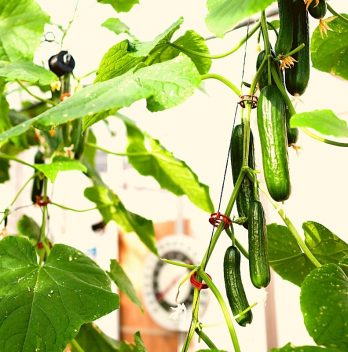
We would however recommend you grow cucumber outdoors in the warmer months. This way, they can have adequate space and there will be space to produce more yield. You can make use of vertical hydroponics by training them to grow vertically. You can also opt for the drip, Dutch bucket, and bug ebb and flow systems. Use a trellis for support when your cucumber plants start to grow big.
Hydroponic Cucumber Nutrient Formula Requirements
Hydroponic cucumber nutrients have a specific formula. This is especially meant for their vegetative development. You can easily purchase these nutrient solutions online as they are readily available.
There are some nutrient solutions readily available to usher your cucumber plant into its flowering stage. Other nutrient solutions are also available to gear your cucumber plant throughout its flowering stage. Note for the flowering stage, you are required to change your nutrient scheme to lesser nitrogen. Also, add more potassium and phosphorous.
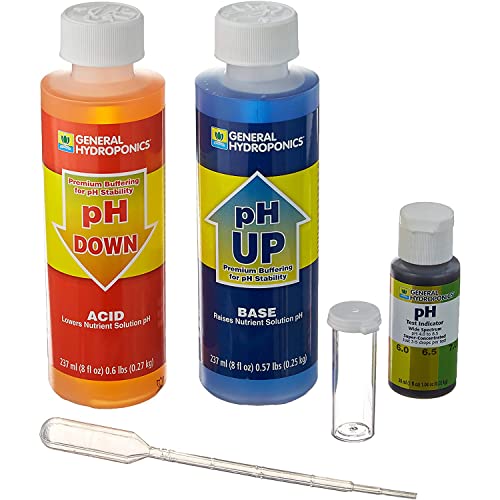
General Hydroponics pH Control Kit For A Balanced Nutrient Solution
We earn a commission if you make a purchase, at no additional cost to you.
02/02/2026 06:03 am GMT
The one type of general nutrient scheme may be simple to use. But know that they may not provide your cucumber plants with the required nutrients tailored for the specific growth phase. Along with the right nutrient formula for your hydroponic cucumbers, other crucial environmental conditions should be maintained at an optimal range for efficient growth and production. These are;
pH – water pH for hydroponic cucumbers is key to efficient growth. The ideal pH range that the system should be kept at is between 5.5 – 6.0
Temperature – cucumber plants will thrive well in temperatures ranging from 70 to 80 degrees Fahrenheit. This temperature range will encourage and boost the growth of your cucumber plant.
So, your cucumber should be ready after 5 to 6 weeks after seed sowing.
Common Hydroponic Cucumber Problems
While growing cucumbers in hydroponics systems can be quite a breeze compared to growing them in the soil, it is however not without its share of troubles. But because these problems can be quite common and predictable, you can prepare yourself to fight them in case they do occur. Here are the 4 most common problems associated with growing cucumbers in hydroponics.
1. Powdery Mildew
Powdery mildew is a white fungus that can grow on the leaves, flowers, and fruits of the cucumber. This fungus thrives in areas that have a warm climate and provide high humidity. Environments like greenhouses are breeding grounds for powdery mildew, so if your hydroponics system is in a greenhouse your cucumbers are at high risk of getting infected. The risk will be higher in the summer and spring months.
Powdery mildew will not directly kill your cucumbers but it will steal some of the nutrients and water that the cucumber was supposed to use for growth and productivity. This will result in your cucumber plants growing slowly, becoming weak, or not even producing fruit.
The best way to treat powdery mildew is with the use of an organic fungicide that has sulfur as the main active ingredient.
Homemade remedies are another option to try. Mixtures that include potassium carbonate, soap, milk, and water work well. You could also add Neem oil to these mixtures for additional fungus-killing power.
2.Gummy Stem Blight
Gummy stem blight is another fungus that infects the stem and leaves of the cucumber plant and causes wet black lesions on the leaves and causes the stems to split and ooze a reddish brown sticky substance. If it is left untreated, the blight can travel up to the fruit and cause it to develop into black rot, resulting in the loss of a potentially good crop.
Commercial fungicides with great strength are used to treat gummy stem bight. They are applied during the prime gummy stem blight season, or when the leaves of the cucumber plant are starting to reach their full size.
3. Two Spotted Spider Mites
Two-spotted spider mites thrive in hot and dry environments. They can negatively affect the growth and productivity of cucumbers by interfering with photosynthesis.
The spider mites paper has tiny spots on the bottom of the leaves that cause them to swell, turn yellow, develop signs of necrosis, and reduced the growth of plant leaves.
If your cucumber plant is affected by these mites, the outer skin of the fruit will become rough and have a texture like that of sandpaper.
The spread of two-spotted spider mites is best controlled as soon as possible because they have very fast growth and multiplication rates, especially if the conditions are optimal for their breeding and growth.
Apply miticides or scrub the cucumber plant leaves with insecticide soap to get rid of them. You could also introduce predatory mite species that will kill the spider mites but not harm the cucumber plants.
4. Broad Mites
Broad mites feed and lay their eggs on the bottom of cucumber leaves. When infected, the shoots of the plant become distorted, the leaves begin to curl downward, and the fruits crack.
Broad mites thrive and reproduce in hot, humid conditions. They can however still reproduce and spread in cooler conditions, although at a slower rate. These mites can also spread via plant-to-plant contact, tools, and the gardener’s hands if they have come into contact with infected plants.
The application of miticides may help to a certain extent, but broad mites are resistant to most of these chemicals. The best way to deal with them is to remove all the infected plants in the garden. Also, make sure that you always clean and sanitize all the tools that you use in the garden after each use so that the spider mites do not spread.
How Long Does It Take To Grow Cucumbers Hydroponically?
After germination, cucumber plants grow very fast if the right environmental conditions are provided for them. It takes between four and six weeks from when the seed is sown to when the first cucumber is ready to pick. Cucumbers will continue to produce for three to four months after they start. To always have a cucumber crop, you can practice sequential planting
Can You Grow Cucumbers In Hydroponics?
Cucumbers are one of the most commonly grown plants in hydroponics due to the ease with which they can be grown. They can be grown as a hobby and they are also grown in hydroponics commercially.
They are best grown in greenhouses where conditions can be manipulated to suit the growth stage of the plant. Cucumbers grow best in warm temperatures of between 75 and 85 degrees F, and high light. Cooler temperatures and low light can limit the growth of cucumbers in hydroponics.
Final Note -Hydroponic Cucumber Nutrient Formula
With that said, we hope you’ve learned some things about growing cucumber hydroponically. Ensure you follow all our tips on hydroponic cucumber nutrient formula to get the best and most productive cucumber crop. Happy growing!
FAQ’s
What nutrients do hydroponic cucumbers need?
The term hydroponic cucumber refers to the fact that you do not have to provide any soil or manure for the plants to grow in. Instead, you supply the plant with a nutrient solution that they will absorb through their roots. Hydroponic cucumbers are grown in small plastic trays that are placed on top of a water source.
This is done because the water is recirculated, which prevents the growth of algae and other bacteria that could grow in soil-based cucumbers. The nutrient solution provides all the minerals and nutrients that the cucumber needs to grow. The nutrients that are used in hydroponic cucumber growing are called macro and micro nutrients. Macro nutrients are nutrients that are needed by the plant to grow. They include nitrogen, phosphorous, potassium, calcium, magnesium, boron, zinc, copper, manganese and iron. These nutrients are not as available in the soil as they are in the water. Micro nutrients are nutrients that are needed by the plant to grow but are not part of the macro nutrients. They include chlorine, copper, iron, manganese, molybdenum and zinc.
What is the best nutrient solution for hydroponics?
There are many nutrient solutions available to growers for hydroponics. However, most of these are not as efficient as they should be. There are many factors to consider when choosing a hydroponic nutrient solution, such as: Sugar content – The sugar content of the nutrient solution is very important, especially for those with high-intensity light. If the sugar content is too high, it can have an effect on photosynthesis and transpiration rates in plants. It can also have a negative effect on plant growth and development. Too low of a sugar content can result in low photosynthetic rates, plant stress, and even death. The best solution would have about 5-10% sugar. Mg/L – Magnesium is necessary for healthy cell division and chlorophyll production in plants. It is also beneficial for root hair growth. It is also essential to reduce the amount of calcium in the soil. Ca/L – Calcium is an essential mineral that is needed by plants for optimal health. Ca is the main component of cell walls, which helps with the strength and integrity of the plant. Calcium also helps promote strong cell walls, which will help the plant grow faster and thicker. K/L – Potassium is a vital element for plant growth and development. It is required for the formation of carbohydrates and proteins, as well as maintaining the cellular membrane. K is also essential to prevent plants from becoming salt-sensitive. Sulfate/L – Sulfate is an important nutrient for plants that is necessary for healthy cell division, chlorophyll production, and root hair growth. It is also essential for healthy plant growth and development. A good sulfate/L ratio is around The pH level of the nutrient solution is extremely important. A proper pH level is required for plants to properly absorb nutrients. Osmolarity – Osmolarity is a measure of the amount of dissolved solids in a solution. This number is used as a measure of the osmotic pressure of the solution. Osmolarity can be measured with an osmometer. It is important to keep the osmolarity of the nutrient solution at around 300-400 mOsm. This will help prevent the accumulation of excess salts and minerals in the soil or nutrient solution, which can be detrimental to plant growth. Dissolved Oxygen – Dissolved oxygen is one of the most important elements to consider when creating a nutrient solution for hydroponics. Too much oxygen can cause plant stress, and too little oxygen can cause plant death. A good dissolved oxygen level is around 7-10 mg/L.
One prolific ingredient to add to your soil to boost garden growth is mushroom composts. We will be enlightening you on how to make mushroom compost so you can grow your plants the best way.
Applying compost to your garden soil enhances soil texture, drainage, and supplies adequate nutrients to your soil. As mulch covering, compost will regulate weed as well as retain soil water keeping the soil moist during dry conditions.
A combination of mushroom compost is an awesome soil builder that can help your plant flourish. Wouldn’t it be great to be able to make mushroom compost on your own? Of course! It is even easier to make if you grow mushrooms in your garden. The procedure is pretty easy and we will teach you how.
Mushroom Compost
Mushroom composts are made from the soil which was used to grow mushrooms. After you much have harvested your mushrooms, you can now proceed to make some mushroom composts for your gardensoil. It is an organic fertilizer that will be released gradually into the soil of your garden.
Mushroom composts comprise mixed peat, straw, gypsum, and other poultry manure. These are most of the common elements used; however, it may contain other elements.
Steps on How to Make Mushroom Compost
Mushroom composts are easy to make. Just follow these steps on how to make mushroom compost and have yourself some mushroom composts for your garden.
Compost Ingredients Used
The ingredients used for making mushroom composts include:
Wheat straw.
Gypsum.
Water.
Poultry manure (chicken, cow, or horse manure).
Mushroom garden soil.
Procedure
Step 1
The first thing you need to do is to sprinkle the wheat straw with some water. Make sure the wheat straw should not be too wet or too dry. Then mix the straw with poultry manure, gypsum, soil, and mushroom bacteria.
Step 2
Allow the mushroom compost mixture to sit for a period of weeks so it can heat up. This can take up to two months. During this period, some chemical reactions will take place. Naturally occurring fungi and bacteria will visit the scene and react with the poultry manure and straw. They will eventually break down all the ingredients.
Step 3
As composting continues for some weeks, you must monitor the compost pile frequently. This is because the temperature of the mixture continues to raise therefore, always water and mix frequently. The temperature can rise above 80 degrees Celsius which is too hot. Ensure the temperature remains at 140 degrees Fahrenheit.
While composting continues, pasteurization also takes place to sterilize and eliminates any harmful bacteria, pathogen, pests, and weeds. When pasteurization is completed, the compost will have to cool down before applying it to your garden soil.
You now have a clean pile of abundant brown chocolate compost. You can now apply the readymade mushroom compost. Ensure you mix mushroom compost well into your garden soil when applying to give you an awesome result.
The video below describes mushroom compost is commercially produced.
Benefits of Using Mushroom Compost to Your Garden Soil
Let’s take a look at a couple of benefits of using mushroom composts on your garden soil:
Mushroom composts are a very affordable fertilizer you can invest in or make.
You can add mushroom compost gardening soil to your fruits, vegetables, flowers, and herbs. It will enrich your crops to flourish well.
If you need a soil additive to improve the water retention in your soil, you can make use of mushroom compost. Mushroom composts will absorb enough water and retain it in your soil to be made available when needed. As such, your soil never dries out.
Applying mushroom compost will provide your plant with some great natural ingredients.
Used as garden mulch coverings.
It can also be used as soil amendments for your lawns.
Mushroom compost comprises of nitrogen needed for plants and foliage growth.
Mushroom compost will supply the right amount of nutrients without being nutrient-dense.
FAQ’s
Is mushroom compost any good?
Mushroom compost is a blend of nitrogen and carbon rich materials that are added to the soil to encourage fungal growth. This is done in order to create more food for soil microorganisms and plants, which will help increase plant growth and health. Mushroom compost can be purchased at most garden centres and nurseries, however, it is more cost effective to make your own.
How do you make mushroom compost?
Mushroom compost is different to other composts. It contains plenty of carbon (in the form of decaying plant material), which is why it’s good for growing mushrooms. However, it also contains small amounts of nitrogen, which is needed for the mushrooms to grow.
The best way to make compost is to mix it in a bucket. You don’t want to do this in a plastic bucket, as the plastic may leach into the compost. Instead, use a metal or wooden bucket that you can wash out and reuse. Start by mixing one part of dry compost with three parts of water. When you’re making mushroom compost, add one part of wood chips or sawdust to two parts of the dry compost. Mix everything together with a spade or fork. The wood chips or sawdust will help to give your compost structure, so you don’t want to add too much. Too much structure will prevent the compost from drying out. After adding the wood chips or sawdust, stir it all together with your hands. When mixing, keep the material moving, so that the compost is mixed evenly. The more you mix, the better your compost will be. Make sure you mix in as much air as possible. How should I store it? Ideally, you should store your compost in a shed or other dry location, where it will stay dry and warm. A shed will also help to keep the compost safe from mice and rats. It should also be kept well ventilated.
How do you apply it as fertilizer?
If you plan to use it as a fertilizer for your soil, then you should not add any wood chips. A: Mushroom compost will contain some nutrients (especially nitrogen) and a lot of organic material. It may also contain some weed seeds, so you’ll want to remove them before adding the compost to the soil. Wood chips are not an effective source of nitrogen, and they can harbor weed seeds. Instead of adding wood chips, you might consider adding a nitrogen-rich manure (such as rabbit, chicken, horse, or fish manure). You’ll also want to add a small amount of sand to improve drainage. The present invention relates to a method of fabricating a semiconductor device.
How should I store it?
Ideally, you should store your compost in a shed or other dry location, where it will stay dry and warm. A shed will also help to keep the compost safe from mice and rats. It should also be kept well ventilated.
More Information
Even though you can apply mushroom composts any period of the year, the most appropriate period to do so is during spring or fall.
Also, note that mushroom composts cannot be used as soil replacement. Therefore, it can’t be used on its own for planting.
For its water holding capacity, only apply the right amount of compost manure to your soil. This way, the water holding capacity does not water-log your soil. Soil waterlogging can cause root rotting and fungal infection.
Growing plants that produce fruits may not be quite easy with hydroponics, especially for beginners. This is so because of the required intensive work inputs and necessary maintenance. However, that is not the case when it comes to growing strawberries with hydroponic.
Strawberries cultivated in hydroponics do well and can yield abundant fruits all through the year. It is one of the easiest fruits one can grow with hydroponics. Let’s dive in and discuss some facts about growing strawberries with hydroponic.
Hydroponic Strawberries
Strawberry is a healthy food people love and the demand for it keeps increasing day by day. This is why farmers are designing various ways to meet market demands.
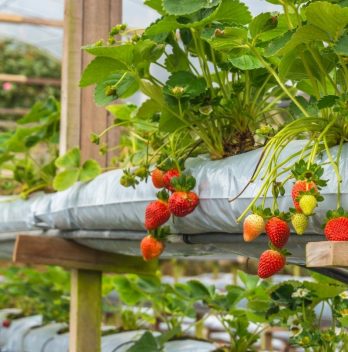
A hydroponic farming system is one method you can use to cultivate strawberries fast and easy. For this reason, farmers prefer to cultivate their strawberry plants using hydroponics from runners.
Growing Strawberries with Hydroponic
One popular fruit to grow is the strawberries. Growing strawberries from their seeds with soil can take 2 to 3 years to mature. But when it comes to growing strawberries in hydroponics, it is fast and easy.
The hydroponic system makes use of water solutions in which nutrients have been dissolved to grow plants. The method is fast, healthy, and will result in an abundant production of fruits.
Getting Started: Growing Strawberries with Hydroponic
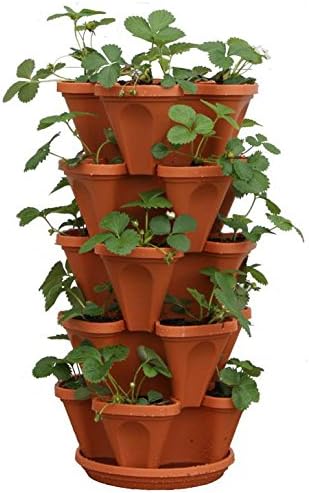
Of course, the very first thing you need to do is to purchase a hydroponic system. You can either make use of a vertical hydroponic system or a hydroponic kit. However, a vertical hydroponic system will give you more space for growing and maximum yield.
Procedures
Next thing is to choose if you want to grow your strawberry from a seed or a young strawberry plant.
The best way is to use a young strawberry plant and plant them in the net holes of your hydroponics system. You will need to rinse off the soil from the young strawberry plants and insert them into the net holes of the hydroponic system. Fill them with nutrient-rich water for hydroponics afterward.
Next, you want to feed your strawberry with some proper light and adequate temperature. It is essential you provide adequate light to your strawberry plants so they can flourish and grow well. The temperature strawberry plants like is around 65 to 80 degrees Fahrenheit. Feed your strawberry plant with 8 to 10 hours of light daily. If you decide to grow your plants in a greenhouse, then your strawberry plants can obtain their light naturally. However, if they will be grown indoors, grow light will be needed to feed your strawberry plant with the needed light.
Quality of Water
Another important thing is water quality. Since the main ingredient providing nutrients is in the water, ensure you make use of a water filter instead of tap water. This way, you reduce the risk of introducing impurities to your plant water.
pH Range
The pH levels of your nutrient-filled water should range between 5.8 to 6.2. Use a pH meter to know the status of your pH level.
Growing Medium
Now to the medium used. Although there are various mediums available to be used, we suggest you use a simple, affordable, and available medium like coco coir. Coco coir is inactive and won’t interfere with the pH or nutrient level of your strawberry plant.
Pollination Requirements
When it comes to pollination, it is a key concern and must be planned. Strawberry plants possess both male and female flowers. Pollination is different in the outdoor and indoor hydroponic systems of strawberries. Outdoor hydroponic strawberry pollination is done by wind and bees. On the other hand, indoor pollination is done artificially by using a fan or gently brushing your hands along the flowers of the strawberry plants.
Benefits of Growing Strawberries with Hydroponics
There are lots of benefits of growing strawberries with hydroponics. Here are a couple of these benefits:
The Soil-based Disease Reduced: since there is no soil used, there is no room for soil-based pests, microorganisms, or pathogens to thrive.
Reduction in Use of pesticides: the need for pesticides and insecticides spraying on your strawberries fruits are reduced. This way, you enjoy fresh and healthy fruit production.
Fast Growth and Plenty Yield: using a hydroponic system for strawberries gives a quick yield and abundant production all year round.
FAQ’s
Do strawberries do well in hydroponics?
Yes, strawberries do well in hydroponics. The trick is to choose the right nutrients for your system. They have shallow roots and are very sensitive to nutrient deficiencies. When I grew them in a hydroponic system, I had to fertilize the plants every two weeks.
For example, you need a good source of phosphorus for healthy roots. You also need calcium and potassium, which are more available in nutrient solutions than in soil. Also, you want a good source of nitrogen. Strawberries have shallow roots that grow into the medium in which they’re planted. If you put them in a hydroponic system, you need to provide some type of medium in which to grow the roots. For example, you could use sand, perlite, or peat moss.
When can you give strawberries their nutrients in a hydroponic system?
With a hydroponic system, you can provide all the nutrients that your plants need right from the start. For strawberries, you want a medium that will hold moisture and nutrients without getting soggy. Strawberries are shallow rooted, and they like a loose medium.
This means that you can just sprinkle the medium over the strawberries. You don’t have to worry about keeping it evenly moist. If you’re using sand or perlite, you can make the medium by mixing the sand or perlite with enough water to get it to the consistency you want.
How do you make sure they get enough nitrogen?
There are three ways you can get nitrogen into the plant:
1. Use a foliar spray,
2. Feed your plants with a liquid fertilizer, or
3. Grow the plant on a medium that contains nitrogen.
A foliar spray is simply water with a small amount of fertilizer mixed in. The fertilizer will be absorbed by the leaves and then carried to the roots. Liquid fertilizers are similar to foliar sprays in that they provide nitrogen, phosphorus, and potassium. They also usually contain a little bit of iron and calcium as well.
What are the most important nutrients?
First, let’s talk about why you might want to grow strawberries in a hydroponic system. You need a good source of phosphorus for healthy roots.
With a hydroponic system, you can get phosphorus right into the plant from the start. Second, you want a good source of potassium. Potassium is used to build strong cell walls in plants. If you don’t provide a good source of potassium, the plant will have weak cell walls. You can get potassium from the soil, but it’s not always available. You also need nitrogen. Nitrogen helps the plant make amino acids. These amino acids are needed to build proteins, which help the plant grow.
Final Say
Strawberry fruit is one of people’s favorite and it might not be so easy to cultivate. It can take a lot of time to produce results from seed. But with a hydroponic strawberry system, it has becomes so simple for farmers to cultivate and meet people’s demands.