Category: Organic Food

  • Are Cherry Tomatoes The Same As Grape Tomatoes?

    Are Cherry Tomatoes The Same As Grape Tomatoes?

    Tomatoes are a versatile fruit and are popular among gardeners of all experience levels. However, you may wonder are cherry tomatoes the same as grape tomatoes? Though the two varieties of tomatoes are similar, they do have their differences.

    From sauces to sandwiches and everything in-between, tomatoes are a popular ingredient in many dishes. Though culinary wise they are referred to as a vegetable, they are actually botanically a fruit. They come in many different varieties and are all delicious and full of health benefits.

    Brief History Of Tomatoes

    The origins of tomatoes trace back to the Aztecas in around 700 AD, which leads many to believe that they are native to South America. Around the 16th century, the tomato was introduced to Europe after explorers brought them back from the New World. They quickly grew in popularity across Southern Europe.

    The Spanish and Italians were the first to adapt tomatoes into their cuisine. The tomato was then introduced to North America by the Europeans. It wasn’t until around the early 20th century that they became popular all across the country.

    Brief History Of Tomatoes

    Now, tomatoes are one of the most popular vegetables in the culinary world. They are grown commercially all across the world and many people also grow them in their home gardens. You can find them in all sorts of different varieties, shapes, sizes, and colors.

    What’s The Difference Between Cherry And Grape Tomatoes?

    So, are grape tomatoes the same as cherry tomatoes? Though they are similar, cherry and grape tomatoes are different.

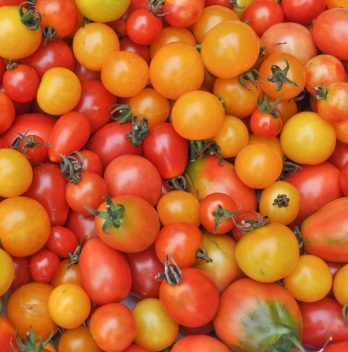
    Cherry tomatoes get their names since they are shaped like cherries. They are round with thin skins and a high water content. They are generally softer than grape tomatoes and tend to be squisher as well.

    Cherry tomatoes will often pop and squirt juices in your mouth as you bite down. They can grow to be almost twice as big as grape tomatoes.

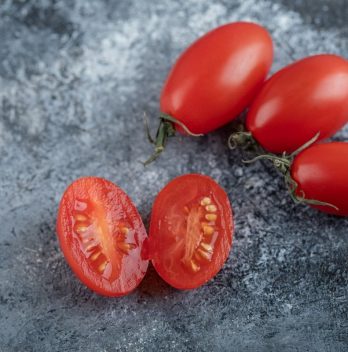
    Grape tomatoes have an oblong, oval shape that is similar to that of a grape. They have a thicker, meatier, and chewier consistency than cherry tomatoes do. Their flesh has less water, making them not as juicy as cherry tomatoes are.

    They often grow in clusters, just like grapes do. In addition, they also tend to have a longer shelf life as well. Both varieties are great for growing in your own garden and will typically grow in an abundance.

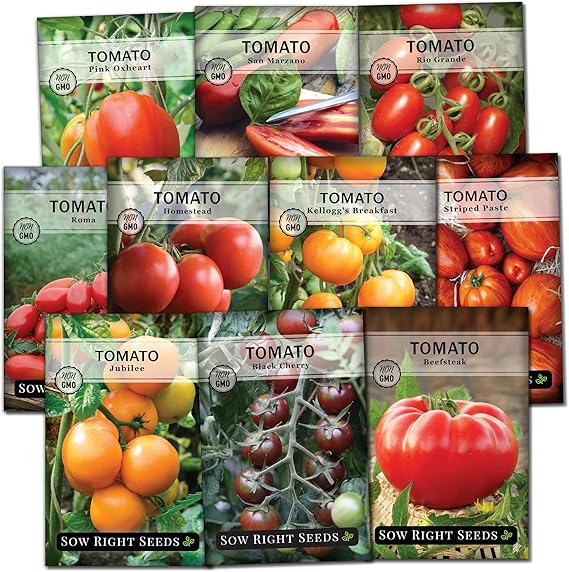
    Sow Right Seeds – Tomato Seed Collection for Planting – Variety of Sizes, Shapes, and Colors

    81 qFZ2hAKL. AC SX569

    Flavor Profile And Colors

    Cherry tomatoes tend to be sweet in flavor, though some can be a bit tart. Though they are often red in color, they can also be orange or yellow. They are popular for having a crisp bite and fresh flavor.

    Grape tomatoes have a rich taste and they aren’t too sweet or too acidic, though they can be a bit tart. They have a crunchy bite and meaty consistency. In addition, they are also often red, though they can be yellow or orange as well.

    Common Uses

    Cherry tomatoes are great for sauces, salads, kebabs, and roasting. In addition, they are also great for stuffing. Grape tomatoes are ideal for salads, sauces, roasting, and grilling. You can eat both types raw or cooked.

    Like all fruits and vegetables, you should wash your tomatoes before you eat them. For best results, wait to wash them until right before you use them.

    Can You Use Them Interchangeably?

    For the most part, you can use cherry and grape tomatoes interchangeably in your recipes. Some people prefer one variety over the other, but they will often both work well in recipes that call for one or the other. If you are wanting to stuff your tomatoes, cherry is the better option.

    Proper Storage

    Tomatoes do best when you store them at room temperature, in a cool, dry area away from direct sunlight. Since they are fragile, it is best to store them in a paper bag or a Tupperware container. They will last for about one week at room temperature with proper storage.

    You can also store fully ripe tomatoes in the fridge for up to two weeks. Keep them at a warmer spot in the fridge such as the top shelf or door. Remove any stems before placing them in the fridge and store them stem side down.

    Any leftover tomatoes that are already cut should be stored in the fridge in an airtight container. They will last for around 3-4 days after you cut them in the fridge.

    You can also freeze tomatoes as well if you have an abundance from your garden. To freeze, wash them and thoroughly dry them off and then add them to a Ziploc bag. Remove as much air as possible from the bag or use a vacuum sealer if you have one of those.

    Place your tomatoes in a single layer in your freezer to prevent them from getting squished. They will keep for around nine months to a year in your freezer.

    Cherry Tomatoes - Proper Storage

    You can also freeze them in slices as well. Simply slice them into pieces and place them on a baking tray. Then, place the tray with the slices on it in the freezer for one hour. After the hour, wrap them in plastic wrap and then place them in a Ziploc bag before returning them to the freezer.

    When ready to serve or cook, allow them to thaw at room temperature for 30 minutes. You can also thaw them whole or slice them in the fridge overnight as well.

    FAQ’s

    Whats the difference between cherry and grape tomatoes?

    Tomatoes are a very diverse group of plants, with many different types, colors, shapes, sizes, flavors, and uses. The most common varieties are beefsteak, plum, cherry, and grape tomatoes.

    “Grape” tomatoes are similar flavor and texture to regular cherry tomatoes. Cherry tomatoes are larger, with thicker skins and smaller seeds. “Cherry” tomatoes are a type of plum tomato. The skin is thick and shiny, and they have a bright red color. They have a higher sugar content than other tomatoes, but less acidity. They are typically picked at the green stage, then ripened at home in a paper bag on a countertop or in the refrigerator.

    Cherry tomatoes are small, sweet, juicy tomatoes that are perfect for snacking and salads. They have a thin skin that is easy to peel off, making them great for eating raw in salads or as part of sandwiches. Grape tomatoes are larger than cherry tomatoes.

    As a general rule, if you can fit your thumb in the hole of the tomato, it is cherry.

    Are grape tomatoes better than cherry tomatoes?

    If you’re looking for the most flavorful and juicy tomato, then you’ll want to go with the grape variety. Grape tomatoes are a small round tomato with sweet flesh that is often sold in a cluster of several together. They have a mild flavor and are ideal for salads. In addition, they can be eaten raw or cooked. Cherry tomatoes are larger than grape tomatoes, but they also have sweet flesh.

    In addition to being delicious, these varieties of tomatoes are also very good for you. They contain lots of lycopene, which has been proven to help reduce the risk of certain cancers. Lycopene is also believed to protect against heart disease and other ailments.

    They are cheap, easy to find, and easy to eat. I can eat them raw or in salads. They are good for cooking too, because they stay nice and firm. I like their texture and flavor. Grape tomatoes are more expensive.

    You can only get them out of season. The ones that grow in the winter are small and bland.

    Can you substitute cherry tomatoes for grape tomatoes?

    Yes, you can use any kind of cherry tomatoes in place of grape tomatoes. They are very similar in flavor and size, but if you prefer a different tomato flavor you can certainly use them.

    Why are cherry tomatoes so expensive?

    One reason is that they’re a speciality crop, requiring lots of effort to grow. Another reason is that the plants have been bred to be especially sweet and juicy.

    Can you freeze grape tomatoes?

    Grape tomatoes can be frozen, but they should be placed in an airtight container or bag and frozen individually. If they are frozen together, the flavor is likely to be ruined.

    How many types of cherry tomatoes are there?

    There are many types of cherry tomatoes, but only a few types are widely available. For example, the small cherry tomatoes sold in plastic bags at supermarkets are typically Roma (or “Romano”) tomatoes; these have thick skins that are tough enough to withstand shipping and storage without spoiling. Most cherry tomatoes sold fresh at farmers’ markets or grocery stores are called “summer” cherry tomatoes because they are picked before they have started to turn red.

    Understanding The Differences Between Grape Vs Cherry Tomatoes

    Grape and cherry tomatoes are very similar, however, cherry tomatoes are round and grape tomatoes are oblong and oval. The cherry variety tends to be juicer and sweeter, whereas the grape variety tends to be meatier and chewier. The cherry variety tends to be larger than the grape variety.

    Both varieties are great for salads, sauces, roasting, snacking, and grilling. Oftentimes, these two varieties can be used interchangeably with each other as both have a wonderful flavor. They are typically red, orange, or yellow in color, with red being the most common.

    Do you have any questions regarding to are cherry tomatoes the same as grape tomatoes? If so, please ask any questions regarding tomatoes in the comment section down below.

  • Is There A Flower That Looks Like An Artichoke?

    Is There A Flower That Looks Like An Artichoke?

    Did you know there’s a flower that looks like an artichoke, and it is mainly confused by gardeners who think it is the same plant?

    The cardoon or Cynara cardunculus is a close relative to the artichoke or Cynara scolymus. Both of these plants are members of the Asteraceae family, also called the daisy family. This includes sunflowers, echinaceas, and chrysanthemums.

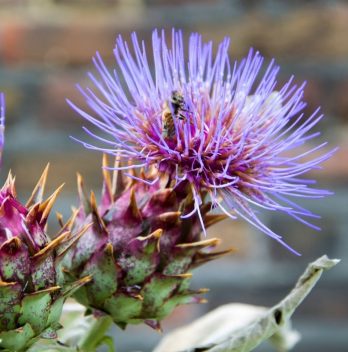
    The cardoon looks a lot like a cross between an artichoke and a thistle. It produces beautiful thistle-like flowers but does not produce fruit like artichoke. Instead, it has celery-like stalks that are considered a tasty delicacy, either cooked or eaten fresh.

    The cardoon is a beautiful ornamental tropical-looking plant often grown as an architectural plant among the dahlias and verbenas. Its large silver leaves and sculpture-like shape fits nicely as a seasonal accent feature in mixed borders.

    A Flower That Looks Like An Artichoke – The Physical Differences

    Both cardoons and artichokes are widely cultivated in the USDA plant hardiness zones 7 to 9. They are grown both for their ornamental features and edible parts. They both possess violet thistle-like flowers and silver foliage.

    Artichokes produce large flower buds with a more globular shape tighter and less pronounced spines. In contrast, small sharp spines cover the cardoon stalks and could cause severe pain if they prick your skin. It is therefore essential to wear gloves when handling stems or flowers of the cardoons.

    Cardoons have less tidy growth habits than artichokes, although both plants grow to roughly 3 to 5 feet in height.

    A Flower That Looks Like An Artichoke - The Physical Differences

    Cardoon’s History

    Cardoon is native to the Mediterranean region and was treasured in Greek-Roman and Persian cuisines. This plant remained popular and most common in American colonial gardens during the mediaeval and early modern European times.

    Although it lost its popularity in the 19th century, its reputation as original favourite in Spain, France, and Italy continues to grow. These countries produce about 100 metric tons of cardoons annually. The acclaimed iron chef Mario Batali uses the cardoon as one of his favourite vegetables.

    The reputation of this leafy vegetable is beginning to grow in America.

    Cardoon’s Modern Growth And Uses

    The cardoon is a tender perennial plant that looks like a cross between celery and burdock and carries a flavour close to the artichoke.

    Use the leaves and stems steamed or braised in soups or fried. This plant is loaded with vitamins B and C and iron, calcium, phosphorus, magnesium, potassium, and zinc.

    David’s Garden Seeds Cardoon Porto Spineless 8374 (Green) 50 Non-GMO

    The cardoon adapts well to the Redlands dry Mediterranean like climate. It prefers at least 6 hours of sun each day but tolerates partial shade. When growing yet treated the same way you would treat an artichoke.

    Plant your cardoon in rich, well-drained soil and use fertilizer for better yields. Provide adequate water allowing it to dry in between waterings. The plant will grow to about 4 feet tall and 2 feet wide; therefore, it is not suitable to grow it in containers. The cardoon has no serious disease problems except aphids that love to feast on it.

    Edible Parts Of The Flower That Looks Like Artichokes

    Cardoons and artichokes have a similar nutty flavour due to the close relationship even though you eat different parts of their plants.

    For artichokes, consume the large overdeveloped flower buds both the fleshy heart and the petals. Cardoons have soft young leaves, immature flower stalks that you can enjoy raw or cooked.

    Like celery or rhubarb, cardoon stalks taste best when blanched in the garden before harvesting. Wrap the bottom part of the plant to keep the sunlight out. The stems are popularly battered or fried.

    You can boil the main root eat it cold. This plant is also used to flavour liquor and incorporated into cheese production. It is also used for cooking oils as a source of biodiesel fuel and feedstock.

    You can use this plant as a medicinal plant; some say it has mild laxative qualities. It also contains cynarin that has cholesterol-lowering effects, although it cannot exceed the artichokes cynarin component.

    Edible Parts Of The Flower That Looks Like Artichokes

    Cardoon Planting

    Start the seeds indoors in the late winter or early spring. After the danger of frost passes, transplant the seedlings outside. You can also plant from the divided cardoon plants in early spring, leaving plenty of space for growth.

    Cartoons can grow nutritional processes, but they prefer deep rich soils and full sun. Cardoon seeds are available for around 7 years after ripening, starting from September to October.

    Harvesting The Artichoke Looking Flower

    Cardoons are much larger and harder than artichokes. Some people eat the tender flower buds while others at the fleshy, thick leaf stalks that require plentiful irrigation for healthy growth.

    Before harvesting cardoon leaf stalks, you will need to blanch them first. Do this by tying the plant into a bundle, wrapping it with straw, mounding the soil and leaving them for one month.

    Cardoon plants harvested for culinary purposes are treated as annuals and harvested during the winter months in areas where there are mild winters from November to February. They are then sowed afresh in early spring.

    You can eat the tender leaves and stocks fresh in salads and the branched portions used like celery in stews and soups.

    When harvesting, use gardening gloves as the cardoon stem has small, almost invisible spines that can be dangerous. However, there are spineless varieties available for the home gardener.

    Other Flowers That Look Like Artichokes

    Artichoke flowers are flowers that look like artichokes. Specifically, the flowers of an actual artichoke plant (Cynara scolymus). These flowers came up during spring/summer in dry weather conditions and could be considered very pretty flowers. It’s said there were many varieties of these flowers, each with varying flowers and colours.

    List of flowers that look like artichoke flowers:

    • Rabbit Ears (Camelina sativa)
    • Wild Chamomile (Matricaria discoidea)
    • Field Mustard (Brassica rapa)
    • Wild Fennel (Nigella arvensis)
    • Annual Wormwood (Artemisia annua)

    This list isn’t exhaustive and more flowers could look like artichoke flowers.

    Conclusion

    Though the cardoon is a flower that looks like an artichoke, it does not continuously bloom in colder climates.  this is because the growing season is not long enough for blooming to happen.

    Its violet-purple flowers, set in a heavily spined head, are about 2 inches in diameter. Bees and other pollinators love these flowers. Left alone under the right conditions, this plant can succeed and become invasive in mild climates.

    Why not try and grow your cardoons -the flower that looks like artichoke and see how it does.  Please share your cardoon growing journey with us.  It will inspire all of us gardeners in our gardening journey.

    Or have you already started out on some cardoon plants, let us know your experience.

  • A Guide On Planting Carrots In The Fall

    A Guide On Planting Carrots In The Fall

    Is planting carrots in the fall possible? Yes, it is, but it depends on where you grow your carrots or where you live.

    Gardeners in the south have the advantage of sowing carrots in the fall for winter harvest. Northern gardeners always start their carrots planting in midsummer to harvest them in the fall and early winter.

    The beauty of growing carrots is that many planting and harvesting windows keep these nutritious roots on our plates throughout the year.

    Orange carrots are the most common carrots, but you can try planting yellow, white, crimson, or even purple ones. Besides the carrot color, choosing the right size and shape that suits your soil is critical. Carrots’ size and shape vary by type – ball type Danvers and chantey carrots have a blocky shape that handles heavy or shallow soil. In comparison, slender types like imperator and Nantes carrots require deep loose soil.

    Let’s Look At Planting Carrots In The Fall

    With the calendar turning to September most gardeners, begin to think of wrapping up the gardening season. However, there is still time to plant several vegetables that can withstand the cold season for the southern gardeners.

    Northern gardeners are limited to planting radishes, spinach, lettuce, and arugula in September, while southern and Western gardeners have the luxury of growing a wider variety of vegetables.

    Carrots and peas are the two common crops that are planted in warmer areas for fall harvest.   Both crops mature in a few months after planting and tolerate a light frost thriving during the cold. Both crops can be harvested while still immature to yield some tasty vegetables in case the temperatures dip earlier than expected.

    Let's Look At Planting Carrots In The Fall

    If you live in a mild winter climate, you can also try overwintering some carrots or peas planted in the fall for harvest in the following spring.

    Carrot Varieties For Planting In The Fall

    Choose a variety that grows quickly to ensure they are mature before the days grow too short and the temperatures become too cold. Here are some excellent carrot varieties to try:

    • Merida – This type produces a 7-inch long Nantes-type carrot. It can be planted in the fall for spring harvest, as it is slow to get bitter in spring.
    • Primo – This is a Nantes type of carrot that matures within 60 days from seeding. It colors up early, providing a good harvest is baby carrots.
    • Red Cored Chantenay – This type matures in 68 days after seeding, producing 6-inch long blocky carrots. This type is adaptable to many soil types.
    • Little Finger – This type produces 3 to 4-inch long carrots that color up quickly and mature only after 65 days.

    When To Plant Fall Carrots

    The best time to plant carrots in the fall is September in raised beds if you live in the South and West areas. Prepare the bed by removing previous crops and weeds, loosening the soil, and adding at least half an inch thick layer of compost. Work the compost into the ground.

    Once the soil is ready, sprinkle the carrot seed on top of the smooth seedbed and cover it with a quarter-inch layer of soil. Because the weather is still warm in September, shade the planting bed using a shade cloth during the 90-degree days and keep the soil evenly moist. If the soil dries out or the weather becomes too hot, the seeds won’t germinate. Water them well and leave them to grow.

    Once the carrots have germinated and the tops have grown a few inches tall, the carrots are at least 2 inches apart.  3 weeks later, then again to 3 or 4 inches apart. Fertilize after the first thinning with a quick-acting fertilizer like the 5-10-10. Avoid using high-level nitrogen fertilizers or fresh manure.

    You can start harvesting your carrots as soon as they show color. To overwinter them, bulge with a 6 to 8-inch thick layer of hay or straw before the ground freezes. When ready to harvest, pull the straw back to clear the way for harvesting.

    When Should Southern Gardeners Sow Their Carrots?

    After the hot summer has passed and the fall begins, it is time for Southern gardeners to prepare their gardens and plant carrot seeds. Southern gardeners with a warm or mild winter can sow carrot seed in the early fall, that is, September. If they sow in September, they can harvest throughout the winter and into

    Carrots can reliably be sown outside in the fall without protection from the weather patterns. Gardeners across South Carolina, Florida, and Sacramento can grow fall carrots with ease.

    If you’re not sure about the region you are leaving and growing carrots in the fall, you can check your weather forecast for advice for gardening.

    10 Carrot Seeds Variety Pack for Planting Indoor & Outdoors 3600+ Non-GMO

    A10BWqfMBNL. AC SX569

    Carrot Planting Tips For Southern Gardeners

    It is possible to sow your carrot seed throughout the fall and winter if you live in the Deep South. You can aim to harvest carrots in the most excellent parts of the winter as they will have the sweetest flavor at this time.

    Gardeners in the upper South cancel carrots from late August into September. They are planting window is a bit shorter compared to the deep South. However, they have cooler winter temperatures that make their carrots super sweet.

    The best way to store mature carrots is to leave them in the ground and harvest them only when needed. This is great for cold and mild weather.   However, if your climate is seriously warming up and you’re expecting hotter days ahead, it is best to pull your mature carrots and store them in the root cellar or any other cool, dark and dry place in your house. Scorching weather makes your roots beta and causes the plants to bolt.

    Consider putting a shade cloth on the carrot bed until the plants become established; this will help to conserve moisture and cool the soil temperature until the winter weather sets in.

    Find more information about Carrots Planting Spacing – What You Should Know

    When Should Northern Gardeners Grow Their Carrots?

    Northern gardeners should plant carrot seeds in mid-to-late summer to get a fall or winter harvest.

    Over the past many years, the northern governors have perfected extending their current season resulting in a bountiful harvest in early winter.

    When Should Northern Gardeners Grow Their Carrots

    How Many Carrot Seeds Should You Plant?

    There are different methods of sowing carrot seeds that can be used. When planting carrot seeds in the soil in neat rows with carefully made holes, it is okay to put one seed per hole if you trust that your seeds are viable or are fairly new seeds. If your seeds are a bit old and/or you are unsure of their viability, you may put multiple seeds in a single hole to give yourself some guarantee. If multiple seedlings come up, you can always separate them so you have nothing to lose by doing this.

    Another way of sowing carrot seeds is to scatter them lightly across a wide surface area of soil. Just make sure that they have sufficient space to grow well, and if they grow in clumps thin them out and event space them otherwise they will not grow to maturity.

    Both these sowing methods have been used with success over the years. Choose the one that you think will be best for you, or try both methods in two different areas and see which one works better.

    How Deep Should The Soil Be to Grow Carrots?

    Generally, carrots require deep, loose soil to grow well. If the soil is a bit hard, the root will not grow well and may get stunted or twisted which is not ideal.

    The depth in that you should dig the soil for growing carrots depends on the variety of carrots that you are going to plant. Different carrot varieties have different maximum lengths that they will grow to. 

    Dig or till the soil deeply to give your carrots the best growth chance. For varieties that have long roots, you will have to dig the soil to depths of between 12 and 16 inches. Otherwise select varieties with shorter roots that will not need much depth.

    When to Plant Carrots in Zone 11?

    Zone 11 is one of the warmest hardiness zones, and gets no frost throughout the year. Carrot seeds should be planted in the soil at least two to three weeks before the last spring day. The earlier you can plant carrots seedlings in Zone 11 is January, but if you don’t want to take any chances it is best to wait until February.

    When Can I Plant Carrots in Zone 7?

    In the USDA zone 7, plants such as carrots which prefer cooler temperatures are best planted outdoors in early February. This will give them enough time for the last spring frost days to pass before they germinate, otherwise, they would get frost damage and eventually die.

    When Do You Plant Carrots in Pots?

    Because pots are easy to move around and position in any area where you want them, you can plant carrots in pots at any time of the year. This is if you can provide them with the right growing conditions such as the right temperature, sufficient light (whether natural or artificial), have a good irrigation schedule, and provide them enough nutrients for growth.

    Growing plants in pots work best if you have controlled indoor environments such as greenhouses.

    How Much Sun Does a Carrot Plant Need?

    Carrots prefer full sun but can also tolerate partial shade. For the best growth and production of your carrot plants, you need to make sure they get between 8-10 hours of direct sunlight per day.

    Conclusion

    As we have seen, planting carrots in the fall as possible will require some techniques for you to show at the right time and harvest an excellent crop.

    Find more information about A Guide On What Do Carrot Plants Look Like?

  • Does Lettuce Grow Back After Harvesting?

    Does Lettuce Grow Back After Harvesting?

    Does lettuce grow back after you harvest the first leaves or the entire head of this fresh vegetable from your garden, or does it die back?

    Nothing beats a salad made from a large handful of fresh lettuce harvested straight from the garden. The crunchiness and the fresh juices are to die for!

    Most gardeners know that both loose leaf and head style lettuce plants reach full size then are pulled or cut at the roots to harvest the whole lettuce.

    However, did you know growing lettuce lets you prolong the season by harvesting it leaf by leaf or using a technique called cut-and-come-again.

    So, Does Lettuce Grow Back After Harvesting?

    Yes, lettuce leaves will grow back after harvesting. However, this will happen only if proper care and technique are used when harvesting all the lettuce.

    If you use the standard method of pulling or cutting a lettuce plant at the roots, you will not have it grow back. But, if you harvest leaf by leaf, you will leave the root to keep developing and producing more leaves.

    So, Does Lettuce Grow Back After Harvesting

    Harvesting Lettuce For Regrowth

    The cutting method works best while picking lettuce so that it keeps growing. This method may take a little practice depending on the variety of lettuce that you are growing. Trimming also works as long as it’s done correctly.

    Trimming lettuce involves cutting the entire plant back to a height of about 1 to 2 inches using a sharp knife or scissors. However, it is recommended that you cut your lettuce early enough, so you attain a sweet harvest.

    Early morning cutting helps the plant heal its wound before it is exposed to the sun. If the wounds are exposed to the sun, they run into the threat of scorching the open tissues preventing them from growing back.

    The time of day for picking your lettuce can significantly affect the quality of lettuce leaves that you get. That’s why it’s wise to harvest your lettuce early in the morning.

    How To Know When Lettuce Is Ready To Pick

    Knowing when and how to harvest lettuce leaves goes a long way to ensure you make the most of your plants and garden space.

    There are different types of lettuce leaves – red, green, heading, romaine, and stalk and over 100 varieties of lettuce that you can grow in your garden.

    How To Know When Lettuce Is Ready To Pick

    To determine the ripeness or readiness of lettuce, you mainly use your eyes and hands and check your calendar when you planted.

    Lettuce is one of the few crops that thrive in partial shade but still need some sun. Iceberg lettuce does not form a head but instead includes loose leaves. This means that while the entire head of iceberg lettuce is to be harvested, picking loose-leaf lettuce means picking the leaves.

    The leaf lettuce harvest can begin any time after the leaves have formed but before the seeds have formed.

    What Is The Cut-And-Come-Again Method?

    The cut-and-come-again method is the process where you cut the entire lettuce plant parallel to the ground approximately 1 inch from the soil and leave it to grow again. This method is more drastic but allows the latest plants to continue growing.

    Once cut, the center of the lettuce will regenerate fast, and the plant will begin to form new leaves that grow to a big edible size. Ensure that you use clean tools to harvest this lettuce to avoid infecting or interfering with the plant.

    How many times can you regrow lettuce?  For the cut-and-come-again lettuce, you can harvest 2 or 3 times before the quality of the leaves gets poor. Romaine and butterhead lettuce varieties are cut 21 inches.  The remaining stubs generate less vigorous but edible second growth.

    AeroGarden Salad Greens Mix Seed Pod Kit (6-pod)

    8127S60jt6L. AC SX569

    Lettuce Types For Leaf By Leaf Harvesting

    Loose leaf or loosehead varieties are the best types of lettuce for leaf by leaf cutting.  Other varieties like black seeded Simpson and red sails have broad ruffled leaves.

    Lobed leaf varieties, commonly known as oak leaves, also have large loose clusters of leaves that make leaf harvesting easy.

    Planting a loose-head variety in large pots helps you protect the pot, gathering leaves from your lettuce around the plant. You will notice that your lettuce plant may resemble a palm tree, but the leaves will remain sweet as long as the temperatures are below 75 to 80 degrees Fahrenheit.

    Cutting And Timing Of Lettuce Leaves

    Cutting methods work best when carefully timed. It takes a little practice from one variety to another to learn how to cut the leaves properly that won’t kill the plant.

    When lettuce leaves are mature, they are crispy and start to look ready for cutting. Old leaves have a poor look and a bitter flavor, no matter how they are harvested.

    The time of the day when you harvest your lettuce leaf will have a significant effect on them. If you harvest your leaves early in the morning, around 7 a.m., they contain twice the plant sugars of leaves harvested at 2 p.m., so to get a sweet harvest cut your lettuce leaves early in the morning.

    Growing Back Lettuce From Mature Heads

    Growing veggies in water from kitchen scraps have been a subject that has hit the internet with a bang. There are many articles and comments on this subject on the internet, and sure enough, many things can be regrown from kitchen scraps.

    Lettuce is one of the vegetables that you can grow in water. Let’s find out how to do this.

    This method works with any type of mature head or leaf lettuce. Most people say it works best with Roman hearts, but you can also try with red leaf, Boston leaf, and radicchio.

    You can use this method with other members of the Brassicaceae family, including bok choy and cabbage.

    To get started, slice the leaves from the stem leaving about 2 inches of the base intact. Remove all the leafy portions that you can without cutting into a stem of a plant. Leaving many leaves attached to the lettuce head may make it rot quickly.

    Does Lettuce Regrow From Store-Bought Lettuce Head?

    Yes, store-bought lettuce heads can regrow.

    Re-growing lettuce in water is a super simple experiment. We call it an experiment because it is fun to do mainly with the young ones.  Nevertheless, it will not get enough lettuce to make your daily salads.

    Does Lettuce Regrow From Store-Bought Lettuce Head

    This method will not give you enough lettuce because the lettuce plant is growing in water; therefore, it lacks enough nutrients to make a whole head of lettuce again since the water has no nutrients.

    That said, it is still fun to try to regrow mature harvested heads using water and get some new leaves.


    FAQs

    Does lettuce grow back every year?

    With head lettuce it will die back, but when you’re talking about leaf lettuce, you can trim it and it will grow back.

    Lettuce is a biennial plant. The seed germinates in the spring, and then it grows vegetatively for a year before producing flowers and seeds the following year. The plants will not produce flowers until they are about a year old.

    Leaves on perennials die down and then regrow. The seeds of annuals and perennials are dormant until the next year. In some cases, such as lettuce, the plant has a hard-to-see root system that grows out in the soil and re-grows.

    How long does it take for lettuce to regrow?

    ettuce regrows quickly after being harvested. Most lettuce will regrow within a couple of days, but some varieties need more time. 

    I don’t have a problem with regrowing lettuce, but I do have a problem with the time it takes to grow it. 

    How many times can you harvest lettuce?

    The answer is two or three times if you do it right.

    Lettuce is a cool-weather crop and will die back to the ground after being cut. The leaves will remain on the plant for several weeks, until the top of the plant dies back, and then the entire plant will dry out and die. Once it’s dead, you can pull the plant up by its roots and replant it in a new spot or leave it where it is.

    How do you harvest lettuce so it keeps growing?

    Harvesting lettuce is easy, but it takes practice to keep it fresh. When harvesting lettuce, be sure to cut the plant at the right time for the best flavor and texture. I just cut the whole head off, and it keeps coming back. That’s the whole point of growing lettuce.

    Lettuce is a hardy vegetable that is available throughout the year, making it a versatile food. It’s easy to grow in a container or garden, and you can even grow it indoors. 

    If you want your lettuce to grow for weeks at a time, you need to plan ahead and prepare your soil properly.

    How do you cut back lettuce?

    To cut back lettuce, simply use a sharp knife and a firm hand to chop the leaves into smaller pieces. In addition to cutting the leaves, you can also remove the outer leaves of the head and use only the heart of the head, which is often the most tender part of the lettuce.


    Final Thoughts

    Lettuce can be harvested anytime when the leaves mature but ensure you do it before they overgrow and become bitter.  Then you can enjoy watching your lettuce grow back and feed on it several times.

  • Do You Know How Much Sun Does Cilantro Needs?

    Do You Know How Much Sun Does Cilantro Needs?

    It is essential to know how much sun does cilantro needs before planting, so you choose the right spot where it will thrive.

    Cilantro is easy to grow and requires its own space in the garden where you can allow it to increase for as long as it needs.

    It thrives in the cool weather of spring and fall, creating a result of lacy leaves.  When the weather warms up, the plants end up being long skinny flower stalks.  These bear flower clusters of pink or white blossoms later produce coriander seeds.

    You can also plant cilantro in a bed devoted to herbs where it can be reseeded without disturbance.  Cilantro makes a good winter companion to pansies in mild climates because these leaves can withstand a light frost.

    Cilantro Vs. Coriander

    Cilantro has been used for many centuries in India, Mexico, Africa, Russia, Spain, China, and many countries of Asia, especially Thailand and the Middle East.  It is thought to be native to the Middle East and North Africa. In addition, cilantro has many culinary uses; cilantro seeds are used medically, especially as a sleep and digestion aid.

    Almost in the whole of North America, the stalks and leaves of the Coriandrum Sativum plant are known as cilantro, while the dried seeds are known as coriander. However, different parts of the world refer to this plant as coriander and its seeds.

    Cilantro Vs. Coriander

    How Much Sunlight Does Cilantro Need?

    Cilantro prefers well-drained, slightly acidic soil that contains more organic material than synthetic fertilizers. Working several inches deep of aged organic compost into the garden before planting is a good idea.

    Is cilantro sun or shade tolerant?  Cilantro thrives under full sun. It also accepts light shade but not more than 2 hours of shade. When sowing your seeds, choose a spot that receives full sun for about 6 hours or more.

    In scorching climates, light shade works better than direct sun. One way to judge the amount of shade allowed for the growing cilantro in your zone is by measuring the air temperature.  The ideal growing temperature for cilantro crops is 64 degrees Fahrenheit.

    Cilantro seeds should not be sown until the last date of spring frost.

    Cilantro Growing Care Under The Sun

    Cilantro, also known as coriander, can be grown from nursery transplants or seeds sown directly in the garden. Plant your seeds about 2 inches apart in rows based about 12 inches apart. If you are planting in pots, use a good amount of organic potting mix.  Ensure that your soil is rich enough and remains moist throughout germination and growth.  When the seedlings germinate, thin them to about 6 inches apart and provide consistent moisture as they grow.

    Cilantro always saves seeds, and you are likely to find a patch of cilantro producing new plants as long as you want. You can either leave the seeds to continue receding every season or harvest them and save them for planting in another season. That said, here are some essential tips on how to care for cilantro.

    Cilantro Seed, Sprouting Seeds, Microgreen, Sprouting, 16 OZ, Non GMO

    81PSGub0WEL. AC SX569

    Provide Enough Light

    Does cilantro need full sun?  Cilantro loves bright indirect light, but it does not thrive under intense direct sunlight.  That said, ensure that you provide your plants with a good amount of sun and shade if you live in a scorching area. However, if your location receives a minimum amount of sunlight, ensure that your cilantro receives about 6 hours of direct sunlight.

    If you are growing your cilantro in container gardens, allow them to enjoy the morning sun in an east-facing window or a through a bright seal that does not get too much direct sunlight. If you plan to sow directly into the garden, plant them at a spot that receives the morning sun with afternoon shade.

    Provide Rich, Well-drained Soil

    Cilantro prefers a very light and fast-draining soil with plenty of sand or perlite mixed with increasing drainage.  If growing in the garden, add mulch around the plants as soon as they have grown tall enough to be visible. In a container, use premium potting mix rather than the garden soil, which tends to be too heavy. Ensure that your soil is rich by adding organic, compost manure, or old animal manure.

    Keep A Constant Watering Routine

    Keep the soil regular moist but not soaked. Good drainage in your soil is essential as cilantro has deep roots. Ensure that you water at least an inch of water each week without fail. If your area receives too much sunlight, you can change your watering schedule to 2 to 3 inches per week.

    Provide The Right Growing Temperature And Humidity

    Cilantro bolts in warm weather. Once bolting happens, it changes its flavor from being sweet to bitter.  Flowering will occur quickly once the temperatures are above 75 degrees Fahrenheit.  For potted plants, you can extend the harvest season by keeping the plants in a controlled environment. Keep them around 70 degrees F, bringing them indoors to an air-conditioned environment when outdoor temperatures get too warm.

    Fertilize Your Plants

    It would help not to fertilize cilantro, but you can use organic compost manure when planting. Use liquid fertilizer or supplement the soil with controlled-release pellets if you don’t have organic manure.  Feed these herbs with fertilizer at least once a month.

    Pruning

    Most gardeners do not know that cilantro requires pruning. To extend your cilantro harvest, snip of its soft stems regularly rotating the plant to encompass the whole plant. As the young plants grow, pinch back at least an inch to encourage fuller plants.

    Potting And Re-potting

    Cilantro is an annual plant that grows with a deep taproot. This means it does not like re-potting and will likely be damaged at the slightest provocation. Therefore, it is best to re-pot your garden center-bought cilantro only once after bringing it home. After that, keep your plant in that container for the rest of its life. Seed-grown cilantro can transition from your seed starting pot to its permanent home in another container or the garden. Because cilantro is an annual plant, mature plants should never be re-potted. A fully mature cilantro plant can grow up to a height of 24 inches, including its flower stalks.

    Potting And Re-potting Cilantro

    Harvesting Cilantro

    Cilantro leaves will be ready for harvest in about 3 to 4 weeks from the time you sow the seeds. Cilantro or coriander seeds can be harvested in about 45 days or when the plant is about 324 inches tall.

    When harvesting, cut the leaves at the bottom of the plant to avoid harvesting more than 1/3 of the plant at the time.  Cutting off too much can weaken the plant.

    If you want to harvest, the seeds clip the seed heads and put them upside down in a paper bag. Give them a couple of days and the husks will dry, split and drop out the seeds inside the paper bag.

    Cilantro Varieties You Can Grow Under The Sun

    There are a few varieties that you can choose from they include

    Santa – this variety has bushy leaves, and it is slow to become bitter

    Calypso – this cultivar produces full plants that are among the slowest to get bitter or bolt.

    Cruiser – best cultivar has full stems and large leaves and grows upright

    Confetti – it is a highly ornamental variety with fern-like leaves

    Leisure – it is a very standard type of cilantro that attracts beneficial insects like bees and butterflies.

    Cilantro Varieties You Can Grow Under The Sun

    FAQs

    Where does cilantro grow best?

    Cilantro is a hardy annual herb. In areas with mild winters it will come back year after year. In most areas it will not survive the winter unless you mulch or protect it from frost. It does not need much water and can be planted as early as late fall. It prefers to be in full sun, but will tolerate light shade. It does not tolerate wet soils and will not tolerate salty soil.

    It can be planted in spring or fall.

    What is the trick to growing cilantro?

    You can either buy a ready-to-plant cilantro mix or start seeds indoors. Planting seeds is the easiest method. You can grow them in a pot in your kitchen window or under a grow light. Be sure to use a pot that drains well. When the seedlings are big enough to handle, plant them out in a sunny area and let them grow for a few weeks. Remove any weeds and then cut back to about 3 inches above the ground. Water frequently until they start to get bushy. After they have established themselves, you can plant them out in a sunny spot.

    Does cilantro like a lot of light?

    Yes, it does. If you are growing it in full sun, you will need to water it often. Cilantro likes light shade but doesn’t do well in deep shade. It is one of the few herbs that like a lot of heat. Cilantro does best in well-drained soil. A soil with some organic matter and compost is ideal. Do not let it dry out. In fact, water it more than your other herbs.

    How do you care for an outdoor cilantro plant?

    It’s very easy to grow and will thrive in partial shade or full sun. It grows quickly and will produce seedheads in the fall. You can cut the plants back to ground level and they will regrow. Cilantro is used fresh in Mexican cooking and is also used as a garnish for Mexican dishes, especially seafood. It’s an herb that should be planted in a container with good drainage and kept in a well-drained spot that receives full sun. The easiest way to fertilize is to add fish emulsion to your drip irrigation system. A good fertilizer for cilantro is fish emulsion (available at most nurseries). Apply this fertilizer once a month in the summer.
    You need to water it every day in the summer, and keep it shaded if you live in a hot climate. It will produce a lot of leaves all summer, so when it starts to go to seed, cut the stems off and dry them. You can use them fresh in salads or stir-fries or even freeze them to make pesto.

    Conclusion

    How much sun does cilantro need?  Let’s say enough sun. Because regions receive a varying amount of sun, it is best to ensure that your cilantro is not receiving too much or too little Sun.

    Before planting your cilantro, check your area’s weather patterns to know how much sun you will receive. With this information, you will be able to decide how much sun and shade to provide.

  • Low Acid Tomato Varieties You Can Grow

    Low Acid Tomato Varieties You Can Grow

    Low acid tomato varieties are an excellent alternative for people who cannot handle high acidity levels due to certain medical conditions.

    Some of these medical conditions include cold sores, ulcers, acid reflux, and stomach problems.

    Tomatoes generally contain citric acid, and your body uses this acid to produce energy.  Unfortunately, some people cannot use this acid due to some dietary problems, thus requiring low acid ones. Low-acid tomatoes are the best option to grow.

    The Low Acid Tomato Varieties

    Tomato varieties that fall into the low-acid range have smaller seeds and more flesh than other varieties.  Low acid tomatoes make the best option for sauces and pastes; hence, they are paste tomatoes.

    We have compiled a list of the most delicious, least acidic tomatoes for you who prefer low acid tomatoes.

    The Low Acid Tomato Varieties

    Low Acid Tomato Varieties To Choose From

    Amish Paste

    It is a red variety known since 1885 and a good producer. This variety performs well under most growing conditions growing to approximately 1.5m in height with fruits weighing around 225g.

    Artisan Blush

    This organic cherry variety was introduced in 2017. It is a very prolific producer, growing up to 2m tall. It has elongated small-sized fruits the size of 2 small cherry tomatoes.

    Check Out How To Add Calcium To Soil For Tomatoes

    Cream Sausage

    This bush tomato produces about 7 cm long fruit best for making sweet yellow tomato paste.

    Roma

    This is the most famous Italian tomato, best known for the best sources made from the bright red flesh.  This vigorous plant produces about 50g of fruit, so tasty even when used in salads or dried.

    Roma Italian tomato

    San Marzano

    This is another bright red Roma-style tomato with 7cm long tasty fruit suitable for paste, puree, or eating fresh.

    Oxheart

    This pink tomato has the shape of a heart and is a standard Italian home gardener variety. It is very fleshy, therefore, great for making tomato paste.  It also provides nice big slices for salads and sandwiches. The fruit grows up to 600g.

    Black Oxheart

    This is a medium to large oxheart tomato with dark, blushed skin with great rich flavor. You will need to stake these plants as they grow 2 m high.

    Albenga Oxheart

    This tomato variety is from the northern regions of Italy and matures later than other varieties.  It has a sizeable pear-shaped fruit weighing about 230g with excellent taste.  The vines grow up to 1.5 m and have good disease resistance.

    Andiamo F1

    It is a hybrid variety, very prolific and disease resistant. As with all Roma-style tomatoes, this superb variety is best eaten fresh, make tasty sauces and pastes or use it in salsa.

    Tomato Seed Collection for Planting – Variety of Sizes, Shapes, and Colors – Non-GMO

    81 qFZ2hAKL. AC SX569

    Sun Gold, (F1)

    The Sun Gold is a sweet, tangerine-orange cherry tomato. It produces beautiful tomato fruits throughout its growing season.  It is the best tasting cherry tomato and great for home gardeners.

    Supersweet 100, (F1)

    The Supersweet 100 Tomato is a small 1-inch tomato with bright red flesh and skin.  This variety has an extra sweet flavor and an outstanding high yield.  It tastes like candy and has a high disease-fighting ability than most other classics. Supersweet 100 F1 is a delicious treat and one of the most nutritious tomatoes you can find anywhere! This variety has higher vitamin C content than any other tomato.

    Big Rainbow

    The Big Rainbow variety is one of the most beautiful tomatoes to grow. It has a gold and red sunset color when mature.  This variety is a lovely and large tomato with an excellent flavor that you can’t get enough of.

    Jet Star, (F1)

    The Jet Star Tomato is a gardener’s all-time favorite and the industry’s standard hybrid tomato.  It has a high sugar content that masks acidity. The fruits are meaty, globe-shaped, and can grow to weigh 6 to 8 ounces.  It produces fruits in abundance in mid-to-late summer.

    Jet Star, (F1)

    Ponderosa Pink

    This tomato is extra large and tasty with a bright pink hue, perfect for fresh and cooked sauces.  It weighs about 16 ounces and is almost seedless.

    Pink Girl, (F1)

    The Pink Girl variety produces lovely, smooth, juicy, and high-quality pink tomatoes.  They are enjoyed all summer long and have low acidity.  It yields about 3.5 inches round fruits that weigh about 6 to 8 ounces.

    Moneymaker

    The Moneymaker Tomato is a terrific popular variety that has a high yield.  It produces delicious, bright red, and smooth fruits perfect for fresh eating. Its vine can grow up to 5 to 6 inches making an excellent 4 to 6 ounces. This variety does well in hot and humid areas and greenhouse environments. It originates from England and produces vigorous vines staked to achieve the best results.

    Great White

    The Great White Tomato is an award-winning white tomato! It is a unique variety with a creamy inside and grows up to 12 ounces. The Great White tomato is an exceptional big multi-purpose tomato with a unique color and great taste.

    Amana Orange

    The Amana Orange Tomato is a giant 1 pound tomato with a unique bright orange skin.  It is very juicy with intensely flavored flesh! Best for eating fresh as one bite into it and you won’t forget its taste! Due to its attractive color, it looks great with any meal.

    Sweet Million, (F1)

    This variety has a delicious flavor with outstanding yields that keeps producing.  Sweet Million F1 produces large clusters of smooth, bright red fruits that come early, producing all summer long. This variety is most popular among home gardeners because it is disease-resistant.  The tomatoes are 1-1.5″ long, producing high yields until the first frost.

    Conclusion

    Low acid tomato varieties are many in the market.  You only need to know the one that grows favorably in your area.

    Generally, you can read about the acidity of a tomato variety before buying. Most seed packets provide this information, and you can also call your local extension office for additional details.

    If you want to grow specialty or heirloom varieties, you may also get the pH information from the company through which you order.

    Note that there are no acid-free tomatoes, as most people tend to believe.  They are either high or low acid tomato varieties. Have a happy low acid tomato gardening, won’t you?

  • Raising Fishing Worms: Best Way to Build a Worm Box

    Raising Fishing Worms: Best Way to Build a Worm Box

    If you love fishing, you will want to know how to build a worm box for raising fishing worms, to have the best bait for that large catch.

    Worms make the best bait for fishing; you should read them more if you are an avid fisherman. Constantly buying worms can hurt your wallet deeply, and you don’t want always to have to stop at the bait shop either. For this reason, most people are serious about growing worms if they are serious about fishing.

    Worm farms are pretty common and useful not just for creating an endless supply of fishing bait but for having fun as you do it. In this article, you have everything you need to know to make a worm bed for fishing.

    What is a Worm Box or a Worm Farm?

    A worm farm is a collective group of worms growing together. Worms are established as means of composting or recycling food and other organic wastes, with the aim of creating nutrient-rich fertilizer and compost manure fit for gardening.

    However, did you know worm farms can be used for fishing? Yes, they not only make good composting manure, but they also make excellent fishing bait. It is a 2 in 1 cycle, which recycles old food while also creating an endless supply of live fishing bait.

    What Is A Worm Box Or A Worm Farm

    Materials: Worm Box for Raising Fishing Worms

    Did you know you can make your worm farm? Here are all of the materials you will need to make your very own.

    • 2 Plastic bins + lids. You will need a couple of plastic bins to make a home for the worms. Get plastic containers that are between 18 and 24 inches wide and at least 12 inches deep. The larger the bins, the bigger the worm farm will be. Ensure that your plastic bins come with snap-on lids.
    • Worms. You will need the worms for your farm. You might need to dig them up from your garden or buy some at a local bait store. Start with a dozen worms to get the ball rolling.
    • A drill. The drill helps you make the required modifications to the plastic bins in readiness for use.
    • Newspaper. The newspaper will be used as bedding for the worms, as well as a way to hold a lot of moisture in your worm farm.
    • A flowerpot or brick, or something similar. These will help in separating one bin from the other.
    • Food waste. Food waste is what will feed the worms. Try using fruit and vegetable scraps and avoid overly greasy foods, bones, and meat.

    INTRUDER CrawlerCrib Nightcrawler Worm Bait Box, Keeps Bait Fresh

    81GayN5o7NL. AC SX569

    How to Build a Worm Box: Raising Fishing Worms

    Having gathered all the materials needed, you are now ready to build a DIY worm box for raising fishing worms. Here is a step-by-step guide on how to set it up.

    Prepare the first bin

    First, prepare the bin for use. Remember, one container will do inside of the other. Mark at least 24 holes spots using a pencil or a pen – small and evenly spaced holes. You will then use a drill to make each of these holes. These holes allow water to drain out of the first bin so that the worms don’t drown. You will need to drill roughly 40 spots on the sides of this bin. 10 holes on each side of the bin and another 20 on the lid. These holes allow optimum airflow to circulate the bin. Be sure to do this only to the first bin. The second bin remains untouched.

    Stack up the bins

    Put the first bin that you drilled holes in and place it on top of the second one. Take the second bin, the untouched one, and brick or the flowerpot, or anything else similar, and place it inside, in the middle of this bin. The brick or flowerpot separates the unaltered bin and the bin with holes to allow water to drain out with holes into the new bin.

    Prepare the bedding from the newspaper

    Take a bunch of newspapers and prepare the bedding by shredding it into long and thin pieces enough to fill up about 1/3 or ½ of the bin. Don’t compact the shredded newspaper together or squeeze it down; instead, keep it relatively loose. Soak the shredded newspapers in water to make them wet and spongy.  This is now ready bedding for the worms and a good source of moisture. The newspaper does not compose, so they are the best to use.

    Add the worm food

    With the bedding laid, you can now add the food scraps. Add all sorts of bread, fruits, and vegetables. Remember that grease, meat, and bones are not ideal for this kind of worm, so keep them away. Worms will grow and reproduce best when given veggies and fruits. This also helps them make the best compost for your garden because nothing is rotting away in meat form. Try to provide them with nonacidic things like citrus, coffee grounds, etc.

    Add the worms

    The next step is to add the worms into the ready bin after adding all the food scraps. We recommend starting with at least 1 dozen worms, but you can add more. If you have time to grow worms from a small number, you don’t have to add many. They reproduce rather quickly, and soon enough, you will have more worms.

    Read more about Do Tomato Worms Bite?

    Cover it all up

    With the worms and the food scraps in, it’s time to cover up your warm box. Take some flat sheets of newspaper, wrap them around the bedding from the top, and put a lid on it. This keeps your worm farm dark enough and moist, just like the worms like it. It also helps to keep predators out, and it will keep the worms from escaping.

    Cover It All Up

    How to Make a Worm Farm for Fishing

    There are plenty of ways to make your worm farm. Let’s take a closer look at another one of our favorites. The supplies you’ll need for this worm farm are as follows:

    • electric drill
    • 2 8-10 gallon plastic bins
    • two bricks
    • newspaper shredding
    • cardboard
    • 1lb of worms

    Now all you need to do is:

    1. Drill 30 holes evenly apart in the bottom of each bin; around 1/4 inch each in size. Then around the tops of both totes, drill holes to allow air to circulate; around 1/16 inch in size. Do the same for one of the lids, but not the second.
    2. Once you’ve shredded your newspaper, place it in water and squeeze.
    3. With the hole-less lid, place it on the ground with two bricks on, and then place a tote onto the two bricks. Add a few inches of damp shredded newspaper, along with some soil. Once arranged, add your worms.
    4. Spray your piece of cardboard with water and place it over the shredding. Your worm farm is ready to go!
    5. You should ensure their bedding is kept damp at all times and that they’re being fed well. They should also be kept in a cool, shady area, for best results. This amount of worms will usually eat around 3lb of food a week. You can feed them almost anything, but it’s best to avoid fatty and oily foods.

    Breeding Worms for Fishing: Best Species

    There are many types of worms you can use to breed for fishing, but some are better than others. For example, I’ve found that both Red Wrigglers and Red Worms are the best. They’re easy to grow yourself in your worm bin, as well as being the ideal fishing bait.

    How to Store Worms

    You can store worms in a range of environments, as they’re quite hardy creatures. However, the most important thing is that they have good ventilation and air source at all times. Options you may like to consider are buckets or hessian sacks.

    How to Raise Earthworms for Fishing

    You may choose that you’d like to grow earthworms to use as bait instead, and this is another great choice. Earthworms are good because they can grow almost anywhere, as long as they have good drainage and organic matter. It’s important that the bedding (usually shredded newspaper) is kept moist and cool. Other than that, earthworms are easy to raise!

    Raise Earthworms

    How to Raise Nightcrawlers for Fishing

    Another choice you may like to consider using as bait is nightcrawlers. The best way to do this is by using a bin. Start with a small number of worms, around 1-10lb. Add to the bin with bedding and feed once a day. It’s also important to keep the bedding cool and moist, so check regularly. You should also only feed when the previous feed is gone. Overfeeding your nightcrawlers can cause problems. And it’s as easy as that – you’ll have nightcrawlers ready for bait in no time at all!

    Wrap-Up: Raising Fishing Worms

    It is pretty simple to learn how to make a worm farm for fishing, and you can DIY your own. You don’t have to buy bait every time you go fishing, but you can keep your own and even sell it to others who love to go fishing. Now go catch that trout, and don’t forget to share it with us!

    Do you have any tips or tricks when it comes to raising fishing worms? If so, please feel free to let us know in the comments below. And remember, sharing is caring!

    FAQs

    How do you make a worm box for fishing?

    There are many different ways to make a worm box. The simplest is just to use the bottom of a plastic bucket. Put some dirt or sand in it and put a piece of cardboard on top. Make sure you put something over the hole where the worms come out. If you want, you can make a lid for it that just fits on the bucket and has holes in it so the worms can get out.

    Also, you can use a cardboard box, but it has to be really sturdy. The first thing I would do is cover the bottom with newspaper. Then I would put a layer of sand on top of the newspaper.
    Then I would put a layer of peat moss. That should give you a good start. I know there are other things you can put in there, but I don’t want to overwhelm you too much. Then you just need to fill it with water. Make sure the worms are in there and then put the lid on. And that’s it. A: If you have a worm box, you can keep it in your garage or anywhere else that isn’t too cold. But I wouldn’t leave it outside for long periods of time. Worms will die if they aren’t kept moist.

    How fast do worms reproduce?

    The reproduction of a worm depends on the species. But most often it is very fast and can be in the range of weeks. The lifespan of an earthworm varies from several weeks to several years. They can survive in dry conditions for a long time and some species can even survive outside. There are also species that reproduce very slowly.

    For example, if you look at the biology of the nematode Caenorhabditis elegans, it takes about 7 days for an adult worm to produce eggs. During that time, the adult worm spends most of its life eating. The nematode Caenorhabditis elegans takes about 7 days to produce eggs.

    What to feed fishing worms?

    There are many different kinds of worms and what they eat varies from species to species. One thing to keep in mind is that if you do have a worm bin, you can use any food you like. Just be sure that the food you choose is not too fatty or high in protein, as you will get fewer worms when they are feeding. If you are using an aquarium, you may want to consider using a mixture of dried bloodworms and ground-up earthworms. You can find these at the pet store and they are cheap.

    How often should I water my worm farm?

    Water it once a week.

    You can check the water level in a tank by opening the top. If the water level is low, you can add more. If it is high, you can add less. You can use a small plastic cup to measure the water level.