Category: Organic Food

  • Runner Beans Vs Green Beans

    Runner Beans Vs Green Beans

    Ever wondered if there is any difference between runner beans vs green beans? The answer to this is pretty easy and this post will inform you what you need to know about this.

    Beans are staples in our various homes and they are generally nutritious. There are many types of beans and some of the popular ones are runner beans and string beans which are also known as green beans.

    Beans are fairly easy to grow which is why it is loved by most growers. They tend to grow so fast and you can expect your harvest in about a week.

    In this article, we will be looking at two types of beans which are runner beans and green beans. So let’s dive in and discuss the differences between runner beans vs green beans.

    What Are Runner Beans?

    So, what is a runner bean? Runner beans are plants from the legume family and they are scientifically known as Phaseolus coccineus. Runner beans are also regarded or known as scarlet beans, Oregon lima beans, or multiflora beans.

    Now runner beans are edible beans and are great-tasting vegetables. These beans were popularly consumed in the early American colonies and in Britain. And they are still here to stay.

    Runner beans are even considered an alternative to the long-season lima bean. They are perennial plants but they are mostly grown as annuals. The shape of runner beans seeds is similar to lima beans and they are often black with speckles of purple and red.

    What Are Runner Beans

    Although runner beams are native to South America and Central America, they can still grow adequately in any climate. These beans tend to germinate better in cool spring soil than the traditional green bean.

    Surprisingly, runner beans may even overwinter in regions that are mild freezing and the ground does not freeze.

    Furthermore, runner beans are great for edible landscaping. They tend to produce lots of charming flowers and you get more lovely flowers from this plant so far you keep picking the beans. The red variety of runner beans is particularly popular with hummingbirds.

    Read more about:

    Difference Between Green Beans And String Beans

    So what exactly is the difference between runner beans vs green beans? Runner beans and green beans are totally two different plants. Here are some of their differences:

    ·         Shape

    The shape of runner beans tends to be flat and big. Green bean on the other hand feels smooth, plump, and with the shape of a kidney.

    ·         Productivity

    When it comes to productivity, runner beans are also more productive than green beans.

    Difference Between Green Beans And String Beans - Productivity

    ·         Strings

    Runner beans have their green pods to be rough and flat. Their pods have strings that need to be removed. Then they need to be cut diagonally into smaller pieces before they can be eaten.

    Therefore, runner beans will require you to properly prepare them so you don’t end up having a stringy and gritty meal after cooking them. Hence, if time isn’t on your side, runner beans may not be ideal if you want a quick meal fix.

    But green beans on the other hand used to have strings running down the length of their pods. This is why they are sometimes referred to as string beans. However, they have now been bred to become stringless.

    So, there is no need or stress for green beans to be destrung when preparing. Hence, it’s a good choice for a quick meal fix.

    Check Out Purple Basil vs Green Basil

    ·         Seed Growth

    Once the green bean seed has been planted and it begins to grow, the first thing to sprout from the ground is the two halves of the seed.

    When it comes to planting the seeds of runner beans, on the other hand, the first thing to germinate from the ground is the stem and the first set of leaves.

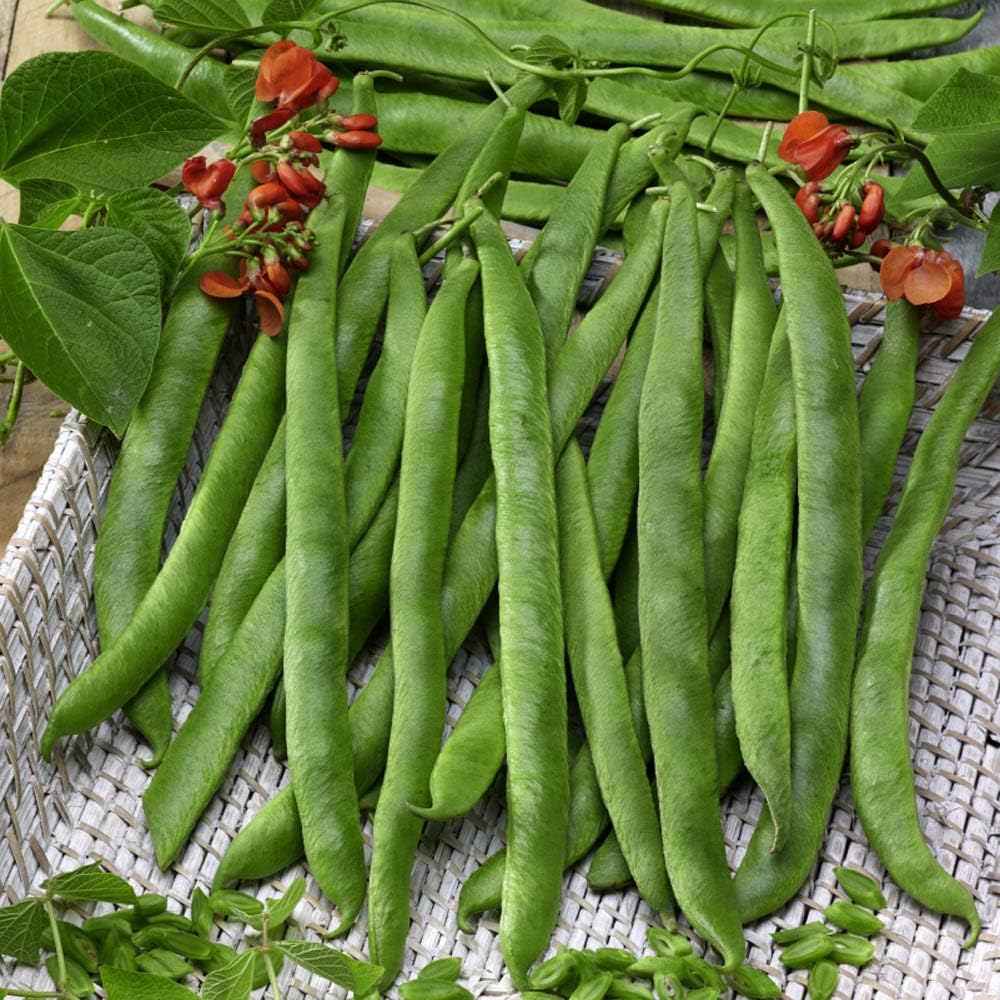
    Outsidepride Scarlet Runner Beans Vine Plant Seed – 25 Seeds

    71QkOk7z05L. AC SL1000

    ·         Flowers

    Runner beans produce this beautiful and showy flower that can serve as an ornamental plant. The flowers of runner beans vine can produce can be up to 2.5 cm. The flowers are usually eye-catching red or orange colors and it can be around 20 flowers to a stalk. The iridescent hummingbirds as well as bees are usually attracted to their flowers.

    The flowers green bean tends to produce are small and not so eye-catching compared to runner beans.

    ·         Perennial Or Annual

    Green beans are annual plants. Runner beans on the other hand are perennial but they can be sometimes grown as annuals.

    Click here to Learn: Get To Know What Size Pot For Cucumbers

    ·         Vines Twisting

    The vines of runner beans are inclined to twist clockwise. On the other hand, the vine of green beans is inclined to twist counterclockwise.

    ·         Affordability

    Runner beans are quite cheaper compared to green beans.

    ·         Species

    Runner beans may be in the same genus as snap beans, but they are in different species.

    Similarities Between Runner Beans Vs Green Beans

    Here are some similarities between green beans and runner beans:

    • The same type of care you will offer green bean plants is the same as runner beans.
    • They both need to be planted in moderately rich soil that has been amended with lots of organic matter. Full sun is also required for both runner and green beans.
    • They will both require support like a trellis for the vining variety.
    • Both runner beans and green beans seeds can be commenced indoors or you can sow the seeds directly. Although beans grow rapidly, they, however, do not transplant well. But you can have the upper hand if you have a short season. Just ensure you wait until the ground has warmed before you commence planting outside.

    FAQ’s

    What is the difference between green beans and runner beans?

    From a culinary perspective, there’s no real difference. The difference is in the name. Green beans are those that have been picked before they’ve reached full size, while runner beans are harvested when they’re still small.

    Green beans are beans that have not yet been harvested. They grow up to a foot long and are generally available in the summertime, while runner beans are the result of crossbreeding two different types of beans. 

    Runner beans are a large, upright bean that grows in a pod. They’re a great source of fibre, iron and potassium. They’re also known as broad beans or garden peas. Runner beans grow well in the UK and most other countries, but you can also grow them from seed. Runner beans are commonly eaten in salads, soups and stews. You can also use the fresh pods to make a delicious and healthy snack.

    Runner beans are available from early summer until late autumn. They like full sun, fertile soil, and regular watering. However, they do grow quite tall and can get rather unruly. If your runner beans are growing too high for your liking, try pruning them back in late summer. Runner beans are a good source of fibre, iron and potassium.

    What are runner beans good for?

    Runner beans have been around for a long time. They were cultivated by the Mayans, Aztecs, and Romans. Runner beans are very nutritious and a great addition to your veg box. They are also incredibly versatile as they can be cooked in so many ways. They have a mild, earthy flavour and are a great source of vitamins, minerals, fibre, protein and iron. Runner beans grow quickly and can be harvested when the pods are young and tender.

    How do you grow runner beans?

    Runner beans can be grown from seed, but you will need to start them indoors at least 4 weeks before your last frost date. You can sow them direct in the garden after your last frost date or if sown early indoors you can transplant them once your soil has warmed up. Runner beans are a fast growing plant and should be planted about 12cm deep and 20cm apart. They are a heavy feeder so it is best to add plenty of compost into the planting hole before adding the seed. Runner beans require a lot of sun, so choose a sunny spot in your veg patch. Sow the seed on a warm windowsill or under a heat mat and keep moist until they germinate.

    What are green beans good for?

    If you’re a lover of green beans, you may be wondering what exactly they’re good for. Green beans are an easy vegetable to grow, but they have many health benefits, especially when cooked or prepared in other ways. They contain vitamins A and C, as well as folic acid and potassium, all of which are essential for the body.

    Conclusion On Runner Beans Vs Green Beans

    Bens are staples in most of our homes. Runner beans and green beans are great-tasting beans with good nutrition. It is fairly easy to grow beans and both runner beans and green beans can be grown in similar ways.

    When it comes to runner beans vs green beans, these are completely two different plants and we have discussed some of their major differences. So, do well to go through our information so you can be enlightened about the differences between these two amazing beans.

  • A Guide On What Do Carrot Plants Look Like?

    A Guide On What Do Carrot Plants Look Like?

    Are you wondering what do carrot plants look like? We have all the details that you need to know about growing carrots.

    Growing carrots is a wonderful experience for any gardener.  But it could be challenging if you cannot identify their leaves immediately after sprouting.

    Most gardeners fail to know what do carrot plants look like immediately after sprouting and may confuse them with grass.

    So how do you know how to identify these plants from the time they sprout till they bloom?  If you stick here, we have all the details you ought to know.

    What Does A Carrot Plant Look Like When It Starts Growing?

    Most gardeners do not have a problem identifying a grown carrot plant, but they don’t know what carrot plants look like when they sprout. So what do carrot sprouts look like?

    Once sown, a carrot seed takes about 2-3 weeks to germinate. Once it germinates, you will see tiny grass-like sprouts.  These are also known as carrots seedlings.  They have a fine texture, but after a few days, the leaves thicken up, and they become easy to identify.

    What Do Carrot Plants Look Like? Differentiate Carrots Sprouts From Grass

    If you sow your carrot seeds where grass or weeds grow, it may be slightly tough to spot them.  The carrot leaves usually germinate from a single spot and look smoother and silkier with a delicate texture.

    When looking for carrot sprouts, a simple trick is to smell the baby leaves. Pinch a tiny part of the leaf and smell – they will smell similar to carrots.

    Sowing tip:  Mark the area where you sow your carrot seeds.  This way, you will be able to identify your sprouts easily.  You can also make a raised bed specifically for your carrot seeds or grow them in containers.

    What Color Is A Carrot?

    In addition to the popular orange color, carrots can also be red, purple, white, or yellow. Before the 16th Century, all carrots were a deep, black purple.  The Dutch growers later developed the sweet, plump orange carrot that became so famous you would think it was the first to be cultivated.

    Today carrots are available in a rainbow of colors – white, purple, red, yellow, and orange. Multi-colored carrots are still rare in most grocery stores but check out your gardening neighbors or the next farmer’s market this summer, and you will see a variety of these colors.

    So that you know, rainbow-colored carrots taste different from ordinary orange carrots. Yellow carrots have an earthy-sweet flavor like parsley or celery.  White carrots are quite mild. Purple carrots can have a peppery flavor that can also be very sweet.

    What do carrots look like when they are ready to harvest

    What Do Carrot Flowers Look Like?

    Carrot flowers are usually white and lacy, although purple carrot varieties have purple flowers. Being an umbel-type flower, it begins as a single stalk and grows into a bowl-shaped bloom with smaller stalks on top. The smaller stalks will then produce little white flowers at their ends.

    Should You Allow Your Carrots To Flower?

    A flowering carrot signifies that your plant has bolted and is not good to eat.  That’s why you will not see gardeners leaving their carrots to flower.  They harvest them young and fresh when they are full of flavor.

    Flowering carrots will soon produce a batch of seeds meaning its overgrown.  Flowering may also occur prematurely if the plant is growing under warm weather.  Warm weather tricks the plant into putting energy into the flower rather than the root, causing white flowers to bloom and your carrot to bolt too early.

    To keep your carrots from flowering, regularly sow carrots every couple of weeks during the season.  Some of them will do well regardless of the weather changes.

    How Do You Know When Carrots Are Growing?

    Carrot seeds, once sown, are slow to germinate.  They require lots of patience as it may take 2 to 3 weeks for them to show any signs of germination.

    In a few more weeks, you will have many seedlings already germinated.  At about 2 inches tall, thin to one plant every 4-6 inches. Instead of pulling them out and risking damaging the rest of the plants, snip them off at the soil level.

    Provide your carrots with consistent water as they grow, about 1 inch per week. Mulch around the plants to keep the soil moist and weeds away. As the carrot roots grow and begin to push up from the soil, cover them with mulch to avoid discoloration from sunlight.

    In warmer climates, you may be able to grow carrots through the winter by mulching them.  However, in climates where the ground freezes and temperatures consistently remain under 32 degrees Fahrenheit, it’s best to harvest your carrots in late autumn.

    Jobe’s Organics 09524 Purpose Granular Fertilizer

    715QRgmv fL. AC SL1000

    What Do Carrots Look Like When They Are Ready To Harvest?

    What do carrot plants look like when they are ready for harvesting?  The plants begin to turn yellow or brown slightly on the edges as a sign of maturity.  When you decide to harvest your carrots, you will need to know if they are ready.  It depends on the desired size of maturity of each person; some love them young and flavorful while others love them a bit large.

    Carrots are ready for harvest 60-80 days after sowing seeds, depending on the variety. The tops are about 3/4 to 1 inch in diameter and are likely to start popping out of the soil.  They also have a vibrant color.  If you can see your carrots peeking at you from the ground, it’s time to harvest them. The smallest you want the carrots to be before harvesting is the size of your thumb, but you can grow them larger by letting them grow some more.

    Carrots generally mature around the same time if you plant them together.  However, you don’t have to harvest them all at once.  You can leave some in the soil to preserve them if the weather is still pleasant.  During winter, dig them up and store them in the refrigerator for future use.

    FAQs

    What should I consider when shopping for a Ph meter?

    The most accurate way to measure pH is with a pH meter. The only problem with pH meters is that they are not cheap and they require some maintenance, but if you are doing research or have a large area to sample, then a pH meter is the way to go. The pH scale can vary by about 0.2 units from lab to lab and even more than that depending on the pH of the water used.

    If you are using a meter that isn’t calibrated, it will have an error. You can buy meters that are calibrated for your soil type and the amount of acidity in your area, but even these meters will not be perfect. A good calibration can help you determine the amount of acidity in your soil and also help you understand how to adjust the readings when you dig new holes.

    What is the most accurate soil pH meter?

    There are a variety of soil pH meters available on the market. Soil pH is one of the most common chemical analyses performed by a home or professional gardener. The most accurate soil pH meter will give you a more accurate reading, which in turn will provide you with an idea of what type of fertilizer to use.

    Many of the soil pH meters available on the market are designed to be used by a professional who has access to a lab and is trained in the use of such equipment. However, there are many soil pH meters that can be used in the home, so it is important to know how to select one that will provide the best reading. There are many factors that go into choosing a soil pH meter for your home garden. First of all, you want to make sure that the meter can be used in the field. Some soil pH meters are designed to be used in the laboratory, while others are designed for the home gardener. Also, you want to make sure that you get a soil pH meter that will provide you with an accurate reading. A soil pH meter should give you a reading that is within one pH unit of the true pH value of the soil.

    What makes the most accurate soil pH meters so accurate?

    Soil pH is a measurement of how acidic or alkaline a soil is. The best soil pH meters measure the actual soil pH and then convert it into a pH number that you can see on your meter. Most people use a soil pH meter to find out what is causing their plants to be sick, and if they need to add some lime or sulfur to make the soil more acidic or alkaline.

    The most accurate soil pH meter should be able to measure soil acidity or alkalinity in a wide range of soil types, and be able to measure the acidity of the soil at the depth where the test sample is taken. Soil pH testing requires knowledge of both soil chemistry and soil physics, as well as knowledge of how the pH meter is calibrated. It is also important to understand the limitations of using a soil pH meter.

    Soil pH meters can be found in a wide range of prices and accuracy. 

    Take-Home

    Besides learning what do carrot plants look like, we have also learned how to tell the sprouts apart from grass or weeds and how to grow carrots from seed to harvesting time.

    Did you know you can grow your carrots in your small garden or pots on your patio?  Yes, these rich vegetables can become a part of your gardening lifestyle due to their easy care and maintenance.

    Remember to harvest your carrots when they are still fresh to avoid bolting.  Once bolted, they get a bitter taste that is unpleasant to eat.

  • Can You Eat Kabocha Squash Skin?

    Can You Eat Kabocha Squash Skin?

    If you are a fan of winter squash, you may have wondered, can you eat kabocha squash skin? Kabocha squash is flavorful and healthy, making it great for eating. It has become an increasingly popular food, as there are many different ways you can cook it.

    Sweet and great for roasting, it is a wonderful squash to grow in your garden. This versatile squash makes a great go-to ingredient for fall cooking. There are several different ways you can prepare, whether you are baking or cooking, that are all delicious.

    What Is Kabocha Squash?

    Kabocha squash, which is also called Japanese Pumpkin, is a variety of winter squash. It is a variety of Cucurbita Maxima and it grows to be 9-12 inches in diameter, weighing three to four pounds when mature.

    Kabocha squash has dark green skin with white speckles or lines on the outside. It has a smooth, round shape with a few ridges, similar to the shape of orange pumpkins.

    The flesh of the squash is bright orange and firm, similar to that of a sweet potato. It has a sweet flavor, even sweeter than butternut squash. It has a flavor that is sweet, nutty flavor that is slightly earthy in taste.

    Kabocha is used in a variety of different dishes, including soups, stews, casserole, croquettes, curries, nimono, and vegetable tempura. In addition to savory dishes, it is also popular in a variety of sweet dishes including pies, cookies, quick bread, muffins, ice cream, and pudding.

    Kabocha can be prepared by itself in many different ways. It is most commonly roasted, but it can also be sauteed, grilled, steamed, boiled, stir-fried, and deep-fried. In addition, the cream-colored seeds can be roasted and eaten as a snack.

    Kabocha squash is primarily grown in Japan, where it is widely used in a variety of different dishes. It is also grown in Asia, America, South America, New Zealand, and South America. Though it can be grown throughout the world, oftentimes Kabocha squash is exported from Japan.

    Where Can You Buy It?

    Most of the time, you can find Kamocha squash at grocery stores or farmer’s markets throughout fall, winter, and the beginning of spring. It can be harder to find than other varieties of winter squash.

    Since it is a winter squash, it has a much longer shelf life than summer squash varieties. Store it in a cool space away from sunlight, with an ideal temperature of 50 degrees Fahrenheit. Once you cut it open, it will last up to four days in an airtight container in the fridge.

    How To Grow?

    Kabocha squash is not commonly grown outside of Japan. However, you can grow it in certain areas as long as you have the space and live in the right environment.

    Kabocha squash needs plenty of space in your garden and needs soil that is fertile and well-draining, with a pH of 6.0-6.8. The seeds should be grown inside, at least four weeks prior to your last frost inside. Once soil temperatures reach 70 degrees Fahrenheit, you can plant them outside.

    When planting the seedlings, create a mound that is at least three inches tall. Plant them in an area where they will receive partial to full sun and provide them with a form of support since they are a vining plant.

    The squash will be ready to harvest after about 50-55 days. When you tap it, it should have a slightly hollow sound, as that is a sign that it is ripe.

    cutting kabocha squash

    How To Cook Kabocha Squash?

    There are many different ways to cook kabocha, as it is a versatile squash. It is a great source of beta carotene, while also being high in fiber and is full of iron, vitamin C, and some B vitamins.

    Some of the most common ways to cook it include roasting, sauteeing, grilling, boiling, and frying. You can enjoy it in many different ways in both sweet and savory dishes. When cutting kabocha squash, be sure to use a sharp, durable knife as the skin is tough.

    To roast your squash, start off by thoroughly washing off the skin. Then, cut the Kabocha in half and scoop out all of the stringy pulp and seeds from the middle. Slice the squash into slices and then drizzle olive oil on top and season with salt and pepper.

    On a roasting sheet, bake the squash for 25-30 minutes at 400 degrees Fahrenheit. You will know when it is done when you can easily pierce the shell.

    Can You Eat Kabocha Squash Skin?

    Yes, you can eat the skin of the Kabocha squash. Though the skin is hard, kabocha squash skin is edible and there are many recipes that keep the skin on. Certain Japanese recipes, particularly kabocha tempura and nimono, leave the skin on as part of the recipe.

    Leaving the skin on can give it a nice texture and it becomes tender after cooking. In addition, it also provides a pleasant flavor as well. Kabocha skin is a particularly good source of beta-carotene.

    Though many people enjoy eating Kabocha with the skin on, you can also take it off while cooking it. It will taste great whether you prepare it with the skin on or off. Some people prefer to keep the skin on as the tender texture is pleasant and tastes good as well, compared to other winter squash.

    Read more about Kabocha Vs Buttercup Squash

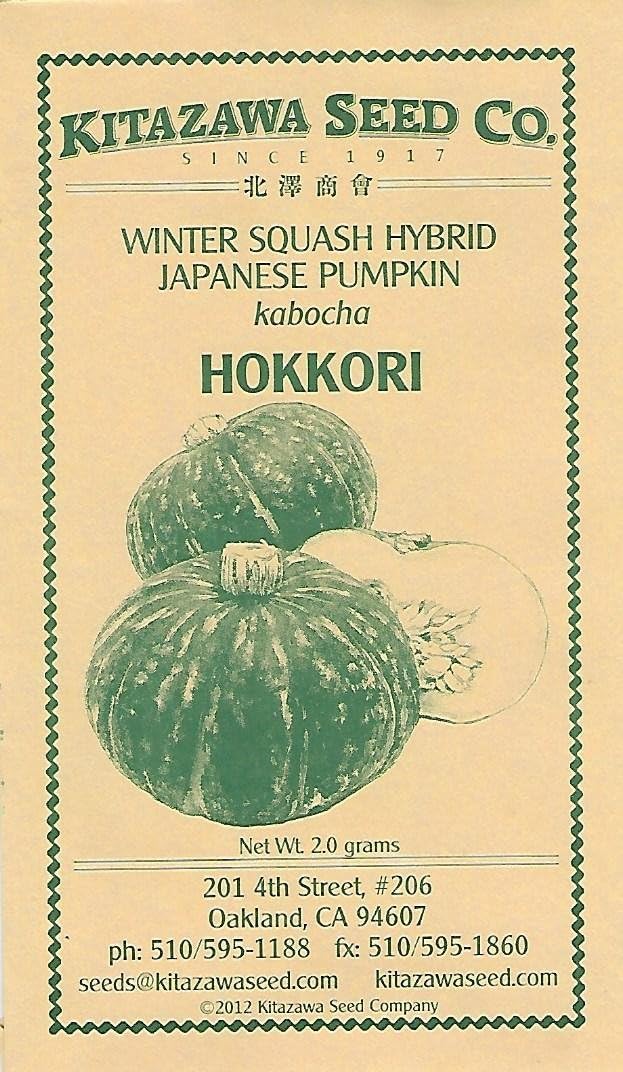
    Winter Squash Hokkori Hybrid

    71eDAPZ keL. AC SL1072

    FAQs

    Can You Eat Kabocha Squash Skin?

    Yes, you can eat the skin of the Kabocha squash. Though the skin is hard it is edible and there are many recipes that keep the skin on. Certain Japanese recipes, particularly kabocha tempura and nimono, leave the skin on as part of the recipe.

    How do you know if a kabocha squash is ripe?

    You can tell they’re ripe by the color of the skin. They should be golden brown and have some wrinkles on the skin. If you can see green inside the skin, it’s probably not ripe. Squash that aren’t ripe will have an astringent taste. Squash that are ripe will be sweeter and less tart. The flesh of a squash should be tender when it’s cut with a knife. When you cut into the squash, you should be able to see the seeds easily. If you put the squash in water, the squash should float. The stem of a squash should be soft and flexible.

    How long does it take to grow kabocha squash?

    Kabocha squash can be grown for 2-3 months, depending on variety and growing conditions. This plant has a long growth cycle and can be hard to grow in colder climates because of the long dormancy period. You can grow kabocha squash in containers or in the ground.

    How do you grow Kabocha Squash from seeds?

    Seed your squash seeds in soil and water them regularly. The seedlings will emerge after 2-3 weeks. When the plants reach about 1 foot tall, they should be transplanted into a larger container or into the ground. If you are planting in the ground, make sure that the container is deep enough to allow for root development. After transplanting, keep the soil moist and fertilize the squash plants as needed. Water and feed the plants once a week. To prevent aphids from harming your squash plants, you can apply a pesticide to the leaves. Alternatively, you can purchase an organic insecticide such as pyrethrin.

    What month do you plant squash?

    Kabocha squash is one of the first summer squashes to mature and is best grown in hot climates as it does not tolerate cold weather. Kabocha squash can be grown as a biennial plant and should be planted in mid-to-late spring in a protected area such as a greenhouse. It is an easy squash to grow and can be planted from seed or started from seedlings. It is a good summer squash with delicious flavour.

    What is kabocha squash good for?

    Kabocha squash is a Japanese winter squash with a bright orange skin and yellow flesh. The squash has been cultivated in Japan since the late 1800s, but has gained popularity in the United States and Europe in recent years. It is easy to grow and requires minimal maintenance. Kabocha squash is also a very versatile vegetable that can be used as a side dish or main course in soups, stir-fries, stews and curries.

    Kabocha squash is an excellent source of vitamin A and iron. It contains more fiber than most other squashes. Kabocha squash also contains potassium, which is important for muscle contraction and fluid balance.

    A Delicious And Healthy Winter Squash

    Kabocha squash is a delicious, sweet variety of winter squash that is grown mainly in Japan. It is versatile, as you can enjoy it in a variety of different sweet and savory dishes. If you have ever wondered ‘can you eat kabocha squash skin?’, the answer is yes.

    Many recipes, including traditional Japanese dishes kabocha tempura and nimono, keep the skins on Kabocha. Though the skin is tough, once cooked, it becomes tender and edible, making it good to eat. However, you can also remove the skin if desired and the squash will still taste delicious.

    Do you have any questions regarding can you eat Kabocha squash skin? If so, please ask any questions about Kabocha squash and how to cook it in the comment section below.

  • How Many Tomato Plants Per 5-gallon Bucket?

    How Many Tomato Plants Per 5-gallon Bucket?

    How many tomato plants per 5-gallon bucket is a question most gardeners ask in order to plan their container gardening?

    Are you planning on growing tomatoes in a container? You may be wondering how many tomatoes to grow in a container.

    It is important to know that growing tomatoes in containers is highly beneficial to the gardener who does not have plenty of garden space to do so.

    However, you must provide the plant with the right growing conditions, even on the container. So let’s learn about the tomato plants you can grow per 5 gallons bucket.

    How Many Tomato Plants Per 5-Gallon Bucket?

    Besides the convenience associated with container planting, tomatoes also perform well because they have plenty of room and adequate nutrients. Container-grown tomatoes do not share nutrients with other plants as they are grown on their own.

    So to answer the question of how many tomatoes per 5-gallon container, you will need to plant only 1 plant.

    Whether you are growing determinate or indeterminate cultivars, it’s best to plant one tomato per 5-gallon bucket to get the best results.

    Tomato plants do well in warm soil! Black buckets are ideal for growing tomatoes as they absorb up heat providing warm soil even at night.

    Just 1 Tomato Plant Per 5-Gallon Bucket

    Will Tomato Plants Grow In A 5-Gallon Bucket?

    One of the most important things in growing tomatoes in containers is to ensure you use a large container – the bigger, the better.

    Generally, for each plant, you need a container that is at least 1 square foot; however, 2 square feet is better.

    A five-gallon bucket is ideal for one tomato plant, whatever the type. Fill this container with a high-quality potting mix and ensure it has proper drainage.

    Some gardeners add small herbs or other plants in the same container you are growing the tomato; however, we advise you not to do it as a new gardener. Even if you have a bigger container, you do not want to plant other plants that may compete with the tomato plants for nutrients and water.

    How Do You Grow Tomatoes In A 5-Gallon Bucket?

    The practical part of growing tomatoes in a 5-gallon bucket is what we will look at

    What You Need

    • 5-gallon bucket per seedling
    • Drill
    • Peat Moss
    • Potting soil
    • Perlite
    • Tomato Seedlings
    • Tomato cages
    • Water-soluble fertilizer

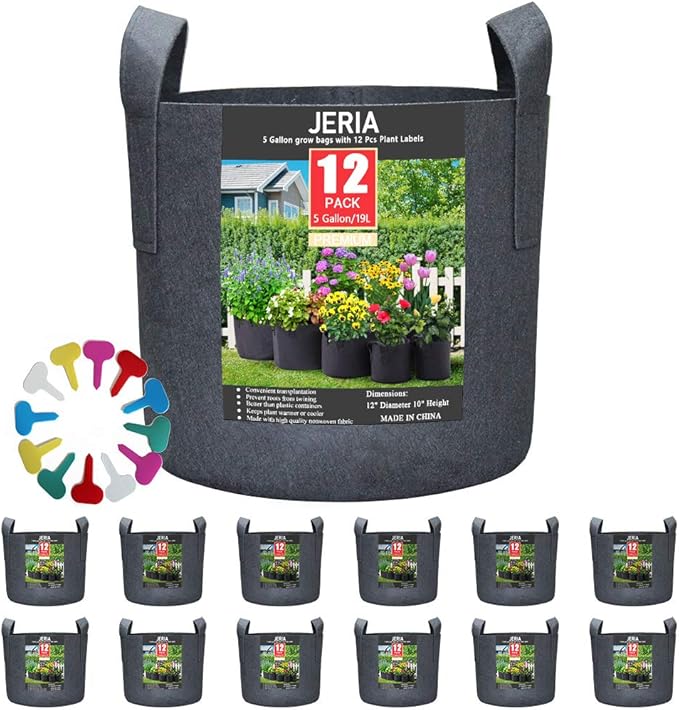
    JERIA 12-Pack 5 Gallon, Vegetable/Flower/Plant Grow Bags, Aeration Fabric Pots with Handles

    71dT1Keu13L. AC SX679

    Please Note: Indeterminate tomatoes grow tall and require caging or staking to support both the plant and fruit. Determinate tomatoes grow to a specific height of about 1 1/2 to 2 feet and stop growing.

    The Determinate variety might need some support, especially if the fruit is heavy. However, some types are entirely self-supporting, including, Tumbler and  Window Box Roma.

    Steps to follow when planting tomatoes in a 5 –gallon bucket

    Drill Drainage Holes

    Turn your bucket over and drill at least 4 to 6 half-inch drainage holes, spacing them evenly over the bottom of the bucket.

    Look For An Ideal Place To Grow Your Tomatoes

    Place the ready bucket in an area receiving full sun for at least 6 to 8 hours a day.

    Add The Potting Mix

    Once you have set your bucket in an ideal growing location, fill it ½ to ¾ with a mixture of equal parts perlite, peat moss, or sand, plus organically rich potting soil.

    Plant The Seedling

    Transplant your tomato seedling from its nursery to the ready container. Position the seedling in the center of the bucket, leave the top 2 to 4 leaves above the surface. Fill in the soil around the roots and stem and firm it down using your hands to secure the seedling. Be very careful not to damage the roots.

    Add A Trellis

    If growing indeterminate tomatoes or if your determinate one requires support, add a stake, trellis, or tomato cage immediately after planting to avoid disturbing the roots later.

    Water Deeply

    Water your planted tomatoes deeply until it overflows through the bottom of the bucket.

    Add Fertilizer

    Apply a water-soluble fertilizer to the moist soil. The fertilizer must be designed for tomato plants. Put more fertilizer every 10 to 14 days.

    Add Fertilizer

    Maintain Soil Moisture

    All through the growing season, water your plant thoroughly, whenever the soil feels dry at least 1 inch below the surface. During the hot and dry spells, adjust watering to daily. The soil in containers is prone to drying more quickly than garden soil. Lack of water makes your tomato plants stressed, preventing the absorption of calcium from the soil. Excessive dryness causes blossom end rot in your tomatoes.

    How Much Soil Do I Need For A 5-Gallon Bucket?

    Before we even think of how much soil a 5-gallon bucket needs, let’s look at the condition of the potting soil.

    Fill your containers with rich well-draining soil. Ordinary potting soil is available but you can add a bit of compost, perlite, and sand to lighten it up even more and provide plenty of nutrients.

    Compost manure really adds serious power to the soil. It is also incomparable with all its natural benefits. Perlite is white, a popcorn-like substance that you can also add to your potting soil. Perlite keeps soil loose allowing good drainage while lightening the weight of the soil.

    Filling The Buckets

    A 5-gallon bucket is about 14 inches high and 12 inches in diameter. You will need about .75 cubic feet of potting soil to fill it. The amount of soil you put can vary with the drainage material you put at the bottom of the bucket.

    Learn how to display your buckets maybe in a  planter box to make them more attractive. Place your trellis and other support you choose along with the pots as soon as you plant.

    How Much Soil Do I Need For A 5-Gallon Bucket


    FAQs

    How many tomato plants can you put in a 5 gallon bucket?

    There is a limit to the number of tomato plants you can grow in a bucket. However, it is not a fixed number; the more water you use, the fewer plants you can fit in the bucket. That said, it is not a good idea to have a bucket full of water when you are trying to grow plants. If you do this, you’ll be wasting water and the plants will probably not grow well. I like to grow tomato plants in pots because I like to look at them. I don’t want to have to bend down to look at a bucket. And I like to keep my plants out of the way of other plants.

    It depends on how large your bucket is. I have a 5 gallon bucket that I use for growing tomatoes. When I first started, I planted a single tomato plant in it. Then after a few days, the plant grew so much that I was able to place another tomato plant in the same bucket. In this way, I was able to keep two plants in the bucket, with room to grow.

    How many tomato plants should I plant?

    The most important thing to remember is that it’s not just the number of plants that matters, but also their age, spacing, and environment. If you have a greenhouse or heated garage, you’ll likely be able to grow several more plants than if you’re trying to grow tomatoes in the middle of winter. You’ll need to consider the amount of light you have available, as well as any issues with temperature, humidity, and soil.If you have a large garden, you can count on using 3/4 of a cup per plant. If you’re growing a few plants in a small area, you can use 1/2 of a cup per plant. If you’re growing lots of plants in a small space, you’ll want to use more like a cup per plant.If you’re growing in pots, you’ll want to use about twice as much compost as you would if you were growing directly in the ground.

    How do you know when you are ready to transplant your tomatoes?

    When you can see the tomato leaves start to bend over and touch the ground.

    Where do you drill a 5 gallon bucket for tomatoes?

    I have found that drilling only one side gives me enough ventilation for the fruit to breathe. I don’t know if it’s necessary or not, but I’ve never had a problem. If you drill both sides you may end up with a weak bucket because the holes will weaken the plastic.

    What should you do if your tomato plant starts to look weak or sickly?

    If your tomato plant looks weak, do not let it go to waste! If you find that your tomato plant is beginning to wilt or turn brown, try to remove it from its pot. Then take a bucket and fill it with water.

    Make sure to add some bleach or chlorine to the water. This will help keep the bacteria and fungus at bay. Place your tomato plant in the bucket and let it soak for at least 2 hours. Be sure to change the water every so often. After 2 hours, remove the plant from the bucket and pat dry. If you want to repot your tomato plant, use a pot that is larger than the one you used before.

    Final Thoughts

    Who says you cannot enjoy some homegrown tomatoes just because you don’t have a garden? A 5-gallon bucket can be your garden providing you with plenty of tomatoes all through the season. More so, you can have beautiful tomato plants on your patio, balcony, porch, deck, or driveway.

    It’s now your turn to get practical! By learning how many tomato plants per 5-gallon bucket, you can avoid the mess of overcrowding your plants. And don’t forget to share the results.

  • Get To Know What Size Pot For Cucumbers

    Get To Know What Size Pot For Cucumbers

    Growing cucumbers in pots are one of the best ways to grow cucumbers. What should be put into consideration is what size pot will be suitable for growing your lush green crispy cucumbers.

    Cucumbers can be grown in a container or in your outdoor garden. Cucumbers are inclined to grow in two ways which are vining or climbing and this depends on the variety. Hence, you can either have a climbing or a spreading cucumber variety.

    In this article, you will find out how to grow cucumbers in containers effectively in containers. You will also get to know what size of the pot is suitable for growing cucumbers.

    Pot Size For Cucumbers: What Size Of Pot For Cucumbers?

    The cucumber plant can be a bushy plant that spreads out. It can also be a vining plant that needs to climb in order to fan out well and grow to its full potential.

    Cucumbers that climb usually yield more fruit. However, vining cucumbers are bigger and can grow up to 8 feet tall and you can grow them in pots. But they will need bigger pots that can contain a large amount of soil.

    Also, some cucumber varieties tend to grow well than others in pots. So, put this needs to be put into consideration before starting the process of growing cucumbers in containers.

    Pot Size For Cucumbers - What Size Of Pot For Cucumbers

    However, the best variety is the bush variety. They have short vines of about two to three feet long. The “Bush champion” which is the smaller variety should be planted in a 10 inches container. The container should also be at least 12 inches deep.

    This should be for a plant in each container. If you’re planting the “Spacemaster” bush variety, use a 5-gallon bucket for each of your plants.

    Cucumber Plant In Pot

    Choose a variety that favors growing in containers. Start planting two months before the last frost date in your area.

    But let’s go through the step-by-step procedure of planting cucumbers in pots.

    1.    Choose A Suitable Cucumber Pot Size

    It is important to know what size of the pot will be suitable for growing your cucumbers. Select a pot that is at least 12 inches wide in diameter and 8 to 12 inches deep.

    2.    Drill Holes For Drainage In Your Container If It Doesn’t Have

    Remember cucumber plants are water-loving plants but soggy water shouldn’t be the case. They need watering as well as draining at the same time.

    It’s a great advantage if you check the bottom of your pot and it has holes. If it doesn’t, create holes at the bottom of your pot with a drill. Use a drill bit for soft surfaces.

    Drill Holes For Drainage In Your Container If It Doesn’t Have

    3.    Make A Stake

    Although the bush variety cucumbers don’t require a stake as much as the vine variety does. It is still a good idea to create one if necessary. It will be of great advantage to the cucumber plants.

    Create one by taking three long stakes and tying them together at the top with a cord. Form a teepee shape at the bottom by spreading out the stakes at the bottom. Then place and spread the stakes inside the pot.

    Make sure the three stakes are standing comfortably and touching the bottom of the pot. The idea is for the plant to climb along with the stakes from when they start growing.

    4.    Pot Filling With Soil Mix

    Use plenty of soil. Cucumber plant needs big pots in combination with plenty of soil so their roots can develop extensively.

    Get a pre-mixed potting soil for growing vegetables to plant your cucumber seeds in. Don’t forget to also ask “what the pot size for planting cucumbers is before buying” at the store. Or better still you can create your own soil mix.

    5.    Fertilize The Soil

    Mix a good fertilizer to boost nutrition in the soil. A fertilizer with a slow-release formula of 10-6-6, where nitrogen is of high proportion, can be used.

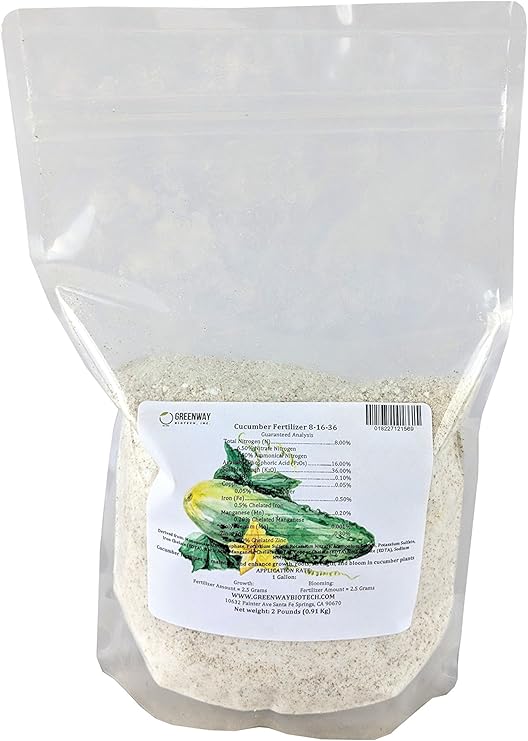
    Cucumber Fertilizer Powder 100% Water Soluble Plus Micro Nutrients and Trace Minerals

    What Size Pot For Cucumbers

    6.    Plant Your Seeds

    Before you start sowing your seeds, ensure the timing is right. Start two weeks after the last frost date in your zone. You can start planting if it’s indoors. Cucumber plants need warmer soil.

    Thus, let your soil be up to 70 degrees warmer in temperature before planting. Make a hole that is ½ inches in the soil.

    You should plant more seeds than you ought to plant. This is for you to be sure to have at least one or two seeds germinate. Plant three to five seeds. If eventually, more than one or two seeds sprout, then you will have to thin. Go ahead and sprinkle more soil mix into the hole.

    Pat it down but don’t compact the soil. To maintain moisture in the soil and around it, use a humidity dome or plastic covering to cover your plant. Use a soft bottle sprayer to spray water on the soil.

    To prevent the soil from becoming dry, sprinkle peat moss over the seed and soil. Cucumbers grow well in a warmer environment. Put the plants where they can get enough 8 hours of sunlight every day.

    If not, get a grow light, especially if you’re plants are indoors. Continue maintaining the right growing conditions for your cucumber plants.

    Do Cucumbers Need Deep Pots?

    The answer is yes, they need deep pots.  The Cucumber plant needs enough space in order to contain plenty of soil. This helps the root system to grow and fan out extensively.

    The foundation of the plant and the root determines how healthy the plant will be and how well the plant will grow. This in turn will bring about a great harvest.

    How Many Cucumbers Can You Put In A 5 Gallon Bucket?

    That been said, ever wondered how many cucumbers you can plant in a five-gallon bucket?

    Because of how large and deep a 5-gallon bucket is, which has enough room for the roots to grow well, it can hold two cucumbers. The two plants will be able to grow well to their full potential. It will also help to conserve space for other plants.

    FAQ’s

    How can I grow cucumbers in a small pot?

    I believe that you’re asking about growing cucumbers in a small container with soil. If so, here’s what you need to do: Select a small, deep pot (if you’re growing in a larger pot, make sure you don’t fill it up with soil). Fill the pot with compost or a combination of compost and topsoil.

    Put some water in the pot. Add seeds. Cover the pot with a plastic bag (or cover it with plastic wrap if you have one). The bag will help keep out pests, but you still need to water. Keep the pot out of direct sunlight. You want the pot to be around 65 degrees F. (This temperature is also called “indoor” temperature).

    Do you need a special container for cucumbers?

    You don’t have to have a special container. You can use just about any container you want. However, there are several things you should consider. The first thing is the size of your container. In other words, how big is your container? There are two sizes of containers: small and large. The small containers are only 1 gallon in size, and they hold about 10 cucumbers. The large containers are 2 gallons in size, and they hold about 20 cucumbers. Small containers are good for growing only one or two cucumbers at a time. You would plant seeds directly into the soil in a small container.

    There are many types of containers for cucumbers. You may have to use a large container that you can keep filled with water. You can also grow them in a hanging basket.

    How many cucumbers do you get per plant?

    I’d say 10-15 for a decent sized plant. If it’s not growing well, you can pull some out and see if that helps. You don’t want to leave it too long though because cucumbers don’t like being too cold. Also, if you have too many cucumbers, you can take the tops off and use them in other ways, such as making salsa or pickles.

    How deep do you plant cucumbers in a pot?

    I’d say it depends on how big the pot is. I planted mine in a 6″ pot with good drainage and watered them from the bottom. If I had a bigger pot, I’d probably plant them in the center of the pot, 2-3″ deep.

    Is it easy to grow cucumbers in pots?

    Not really. Cucumber seeds are not a good choice for growing in pots. The cucumber vine has a lot of suckers and grows very fast. In addition, the vine is susceptible to powdery mildew and squash bugs. If you want to grow cucumbers in pots, grow melons or other container-friendly plants instead.

    How do you trellis potted cucumbers?

    I have trellised cucumbers in pots for a few years. The only thing I would recommend is to put the trellis under the pot, as it will help keep the soil level and avoid slumping. You could also use a regular trellis if you don’t have one lying around.

    Conclusion On What Size Pot For Cucumbers

    Growing cucumbers in containers have just made life easy. Having a big garden is no longer necessary when it comes to growing cucumbers. The only major concern should be what pot size should be used for growing cucumbers.

  • Purple Basil vs Green Basil

    Purple Basil vs Green Basil

    We have the green basil and there is also the purple basil. But what’s the difference between purple basil vs green basil? Let’s look into this.

    Basil plant comes in different varieties and it is an herb that is loved by many growers. It is easy to grow this herb and you will enjoy different benefits from growing this herb.

    The nutritious basil herb serves as vitamin seasoning for different dishes. Basil also offers healing properties in many ways.

    This article will be focusing on the differences between purple basil vs green basil. So, continue reading to gain some knowledge on these two basil varieties.

    What Is Purple Basil?

    Most basil we know of is green. But we also have purple basil type. Purple basil is an unusual and attractive type of basil and they are a cultivar of sweet basil. It has this lovely coppery glow. Hence, purple basil can serve as an excellent ornament.

    The leaves of the purple basil variety are dark purple. This purple basil is quite attractive and it has won many awards because of its beauty, flavor, and ease of cultivating.

    What Is Purple Basil

    They can make a wonderful and delightful statement in your garden and they will offer great nutritional advantages. Its lovely color can also be used to decorate various dishes. The highly aromatic purple basil is a delightful and essential spice in Asian and Caucasian cuisine.

    Purple basil can be grown successfully in both indoor and outdoor gardens.

    Green Basil’s Plant

    Almost all basil plant tends to be green. Some of the green basil we have include holy basil, Thai basil, lemon basil, Genovese basil, cinnamon basil, and many more.

    They are all flavorful leafy green herb that is in the mint family and originates from Asia and Africa.

    The various types of green basil are popularly used in food seasoning. They are highly aromatic and can as well be used in teas or drinks.

    They can be used in many ways such as toppings as a whole leave on pizza, blended into the sauce, add to the salad by chopping, puree into soups, and so on.

    Purple Basil vs Green Basil

    These two basil are great basil varieties. Both varieties are amazing on their own. But what we would like to know is the difference between them. So here they are:

    • Color: The most obvious difference between purple basil vs green basil is their color. Purple basil has this dark purple color. Then green basil on the other hand looks green.

    • Taste: Green basil offers a mild flavor and it can be found in European dishes. This green basil plant has been used to make many desserts. The purple basil on the other hand has this rich spicy taste. Purple basil is suitable for Asian cuisines and Caucasians where the sharpness of the basil flavor is preferred.

    Purple Basil vs Green
    • Aroma: the aroma of the green basil is quite delicate. Particularly the lemon variety is known for its pleasing aroma and because of this; it is used in different refreshing drinks. On the other hand, purple is characterized by its pungent aroma. Hence, finding it in the market is an easy thing based on the fragrance it offers.

    Is Purple Basil Edible?

    Just like every other basil plant, purple basil is also an edible plant. You can make use of the purple basil for pesto or as a garnish. Purple basil also pairs well with many dishes such as pasta, fruits, vegetables, tomatoes, eggplant, and so on.

    Purple basil is both an ornamental and edible plant.

    What Does The Purple Basil Taste Like?

    The taste of purple basil is clove-like with a bit of spicy flavor. However, the taste of purple basil isn’t as great tasting compared to some basil varieties.

    Does Purple Basil Taste The Same As Green?

    Purple basil is not like the regular green basil. Therefore, it doesn’t taste the same way green basil does. Purple basil is not as sweet compared to other basil varieties. The taste of purple basil is like a strong clove flavor.

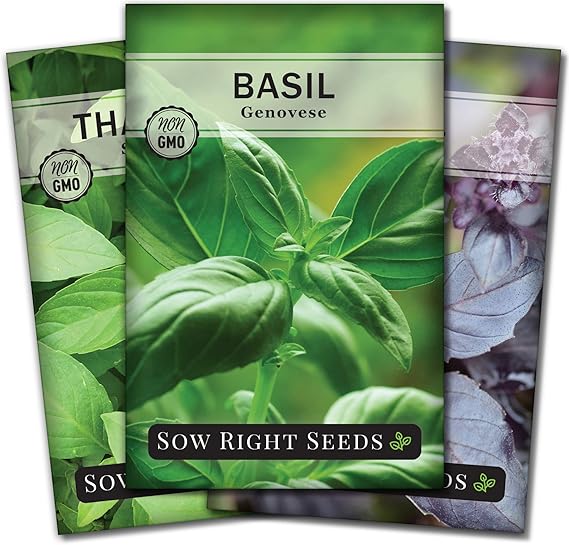
    Sow Right Seeds – Basil Seed Collection to Plant – Genovese Sweet Basil, Thai Basil, Opal Basil

    Why Is Purple Basil Not Purple: Purple Basil Turning Green

    You may experience the intense and beautiful color of purple basil fading. So when you experience your purple basil turning green and you begin to wonder why this happens. There are 3 possible reasons for this occurrence and they include:

    • Fading Of Purple Pigment

    Your purple basil may change to green due to the absence of the pigment responsible (anthocyanin) for that intense purple color.

    The level of the anthocyanin pigment can change due to the absence of light. You can help your purple basil by moving it to a spot that can receive more sunlight. Or you can up the hours your plant spends on growing light. Or you can simply add another light source.

    You may notice during seasonal change that your basil herb is losing its purple color during fall or winter.

    • Basil Variety Selected

    The basil variety you selected may probably be a green and purple variety. So, when you wish to grow purple basil specifically, ensure you select only the purple basil variety.

    • Genetic Problems

    Then lastly, your purple basil may turn green simply because of genetic problems. Purdue University did their study and found out that the gene responsible for the purple coloration is unstable.

    Why Is Purple Basil Not Purple: Purple Basil Turning Green

    Can Purple Basil’s Color Tone Be Maintained?

    You can actually maintain the purple color of basil with adequate care. However, this is possible only when it comes to light situation control. When it comes to pigment inheritance or color hybrid, there is really not much that can be done.

    Simple things such as changing the spot of your plant to a more sunny location can do the trick. Also, you can change the intensity of your grow light or increase the light hours.

    FAQ’s

    Does purple basil taste the same as green?

    Yes, it is similar to green basil. Purple basil is actually a hybrid of two other types of basil, and it is very easy to grow.

    The flowers are pink-purple, but the leaves turn bright purple when they’re mature. Purple basil is delicious in any dish that calls for green or regular basil, but it adds a unique depth of flavor.

    Purple basil has a stronger flavor and a different appearance than regular basil. You can usually tell when you open the package by looking at the leaves. Purple basil will look like they have been dyed purple and the stems will be dark green.

    Is purple a different species?

    Purple basil is simply a variety of basil, with the name referring to its color. It is not an entirely different species. It has been cultivated and bred for its specific qualities, but it’s still just basil.

    Can I substitute purple basil for green basil?

    Purple basil is a variety of basil, but it has a much more intense flavor and aroma than green basil. It is the same species as Thai basil, so you can use it interchangeably with green basil.

    Why is my basil purple?

    It could be that the basil was planted in some sort of potting soil which has been amended with fertilizer, which is known to make plants grow fast and large.

    It could be that the basil was planted in a greenhouse with other plants, which might be causing a competition for water.

    It could also be that the basil was growing in a greenhouse which had been recently cleaned with bleach.

    It could also be that the basil was growing in a greenhouse where the light was too intense (the leaves may have turned purple because they were getting too much light).

    Which basil is best for cooking?

    Thai basil. It’s a large plant, and so much prettier than the little regular basil. The leaves are smaller and have a sweeter flavor, and they stay fresher longer. If you’re going to grow it in a pot, make sure you don’t overwater it. Basil likes to dry out.

    Can you buy purple basil at the store?

    Yes, they can be found at grocery stores, as well as specialty markets. They are also commonly sold in plastic bags in the produce section of grocery stores. Purple basil has a distinct flavor that is more similar to oregano than regular basil. It is best to wash and dry them thoroughly before using them, so that they don’t get moldy.

    Final Say

    So, we have seen how purple basil vs green basil differs from each other. These two purple varieties are wonderful herbs on their own, but there are some slight differences between them and we have discussed them in this post.

  • Genovese Basil Vs Sweet Basil

    Genovese Basil Vs Sweet Basil

    Ever wondered what differences there are in Genovese basil vs sweet basil? Basil is a wonderful herb that can be a great addition to your garden and they are pretty easy to grow. They are used for medicinal purposes as well as in culinary uses.

    You can treat liver issues, digestive problems, and basil can be used as a detoxifying agent. Anti-inflammatory and anti-depressant is also another beneficial property to gain from basil. Alternatively, you can use fresh or dried basil leaves as to your cooking.

    In this article, we will be looking at how Genovese basil differs from sweet basil. So, let’s dive into Genovese basil vs sweet basil.

    Basil Plant

    Basil plant is a type of herb that is grown for different purposes. The part of the basil plant that is grown above the ground is used for medicine.

    It is used for different treatments such as abdominal pain, worm infection, kidney conditions, fluid retention, warts, intestinal gas, and so on. Basil herb can also be used to treat insect bites as well as snake bites.

    Basil Plant

    At times, some women make use of basil before and after childbirth to enhance the circulation of blood. They also use it to promote the commencement of the flow of breast milk.

    Then as culinary use, basil serves as a wonderful flavor in different cooking.

    Basil Genovese Vs Sweet

    When it comes to differentiating Genovese basil vs sweet basil, the difference isn’t so noticeable. So here are the differences between them:

    • Scientific names

    Sweet basil which is scientifically known as Ocimum basilicum is a term for the common basil. Then Genovese basil (Ocimum basilicum Genovese) on the other hand is a particular cultivar.

    • Appearance

    The appearance of these two basil varieties differs slightly. Sweet basil which is the most common basil variety has its leaves to be medium green with a bit of bow which is similar to a cup. The leaves can also be described as slightly crinkled and can grow up to 3 inches long.

    Genovese basil on the other hand has its leaves to be a bit bigger compared to sweet basil. The leaves tend to be flatter and come at a point. It also has this dark green, shiny leaves. Genovese tends to be more aromatic compared to sweet basil.

    Basil Genovese Vs Sweet
    • Taste

    The taste of sweet basil has this mellow hint of mint and pepper. It also features a strong flavor of anise. If you rub this basil between your fingers, then you should be able to perceive the spicy and heady aroma.

    Genovese taste has a hint of mint and clove at the same time it has this peppery and spicy flavor. Their leaves are commonly known for their intense flavor in cooking.

    Click Here to Learn About:

    Some Similarities Between Genovese And Sweet Basil

    Both Genovese basil and sweet basil can be used interchangeably with only a bit of difference in their taste.

    Genovese and sweet basil can both be grown in the U.S Department of Agriculture hardiness zone 10 and above when grown as perennials. Then when it comes to growing them as annuals, they can last up to the first frost before they die off quickly. Or you can simply plant them after the last sign of spring frost.

    Both Genovese basil and sweet basil can be regarded as Italian basil.

    Is Italian Basil A Genovese Basil?

    Genovese basil is one basil variety that originates from Italy. Therefore, it is Italian basil that is used in Italian cooking. So, this basil variety can be regarded as Italian Genovese basil.

    Sow Right Seeds – Basil Seed Collection for Planting

    81ZzACkbN2L. AC SX569

    What Is Genovese Basil Used For?

    Genovese basil and sweet basil are a great addition to pesto or Italian sauces. Or you can simply splash them with olive oil and aged balsamic vinegar then serve with mozzarella cheese and top it with thick sliced tomatoes.

    Genovese basil is as well great for dishes that need large, fresh basil leaves. Again, you can use the leaves on the top of your pizza. You can blend it into a sauce, add it to salads by chopping it up, puree it into soups, put it onto your ice cream toppings, and so on.

    But generally, Genovese basil uses are pretty much the same as you would use them for any other sweet basil plant.

    What Kind Of Basil Is Sweet Basil?

    The sweet basil variety is a subordinate or sub-type of the common basil that has a milder or licoricey taste. Sweet basil is one of the best options for Italian sauces and soups. It is also great for making pesto.

    This basil variety can tolerate high temperatures when it comes to cooking compared to the common basil. Hence, sweet basil is widely used in South Asian cuisine.

    What Kind Of Basil Is Sweet Basil

    Read more about:

    More On The Health Benefits Of Basil

    We’ve mentioned some great health benefits you stand to gain from using basil. Here are more details on more of these health benefits:

    • Basil contains two essential water-soluble flavonoid antioxidants and are orientin and viceninare. So, basil is a natural antioxidant that can shield the tissues in our bodies against free radicals. Hence, these antioxidants reinforce the immune system, protect the cellular structure and DNA. Then it can help slow down the process of aging.
    • The essential oil of basil may be of help when it comes to managing anxiety and depression. It’s been suggested that the basil herb stimulates neurotransmitters that are responsible for hormone stimulation. And this is responsible for stimulating or inducing happiness and energy. Also, basil is regarded as an antistress agent as the aid of the immune-boosting features in stress management.
    • Basil has an effective detoxifying property that may work wonders for your liver. This herb may aid in preventing the buildup of fat in the liver and help you maintain a healthy liver.
    • People with diabetes can gain from the benefits basil offers. It is believed that basil consumption may slow down the release of sugar in the blood.


    FAQ’s

    What is the difference between Genovese basil and Italian basil?

    In general, Italian basil is a darker green than Genovese basil. This is because Italian basil has a higher concentration of chlorophyll, so it will stay green even when it’s dried.

    Also, Genovese basil is more commonly used in pesto, whereas Italian basil is most often used in salad.

    What is Genovese basil used for?

    Genovese basil is one of the most popular types of basil.

    It also has a more delicate appearance, with its slender leaves and smaller flowers. Genovese basil, a.k.a. sweet basil, is a popular and versatile herb that is used to season soups, sauces, pasta dishes, and other dishes. It is also one of the most popular herbs for pesto recipes.

    Which basil is best for cooking?

    The common basil used in Italian cooking is the Genovese, which is a large and flat leafy herb that grows in abundance. It has a mild flavor and is easy to chop and use. Basil can also be grown indoors or out. For this reason, it is available in most supermarkets year-round. You will find it fresh or dried in your local grocery store.

    Is Genovese basil healthy?

    The leaves and flowers of Genovese basil are used to make tea, and it’s believed to be an effective treatment for stomach ulcers and liver problems. It is also used to treat colds and flu. Although it’s considered a culinary herb, Genovese basil contains nutrients and compounds that have been shown to have potential health benefits. For example, studies have shown that Genovese basil has antioxidant, anti-inflammatory, and antibacterial properties.

    Can you grow Genovese basil indoors?

    If you’ve ever wondered if you can grow Genovese basil in a greenhouse or in a window box, the answer is yes! In fact, many people have grown it successfully indoors, and I think it’s one of the easiest herbs to grow. Basil has a short growing season, which means you need to start it indoors 6-8 weeks before your last frost date.

    What’s the best way to propagate basil?

    The best way is to plant seedlings and transplant them when they are about six inches tall. For larger plants, you can also divide them in spring or fall. It’s best to buy transplants rather than starting with seed. Transplants have already been started and tested for your specific growing conditions. They also don’t need to be treated with any chemicals, which means you don’t have to worry about the potential side effects of those on your plants. Basil is a perennial herb, which means it will live year after year.

    What is the lifespan of an indoor basil plant?

    A basil plant is a perennial herb that will live for up to 10 years if it has been cared for properly. Basil can be grown indoors in a sunny window, but you should still water and fertilize it once or twice a month to keep it healthy. A good rule of thumb is to give your basil plant enough water to cover its root ball.

    Final Note

    We have talked about the difference between Genovese basil vs sweet basil. Both basil varieties offer wonderful properties that you will enjoy.

    So, by now you should have been enlightened about the differences between Genovese basil vs sweet basil.