Category: Organic Food

  • When To Plant Peppers

    When To Plant Peppers

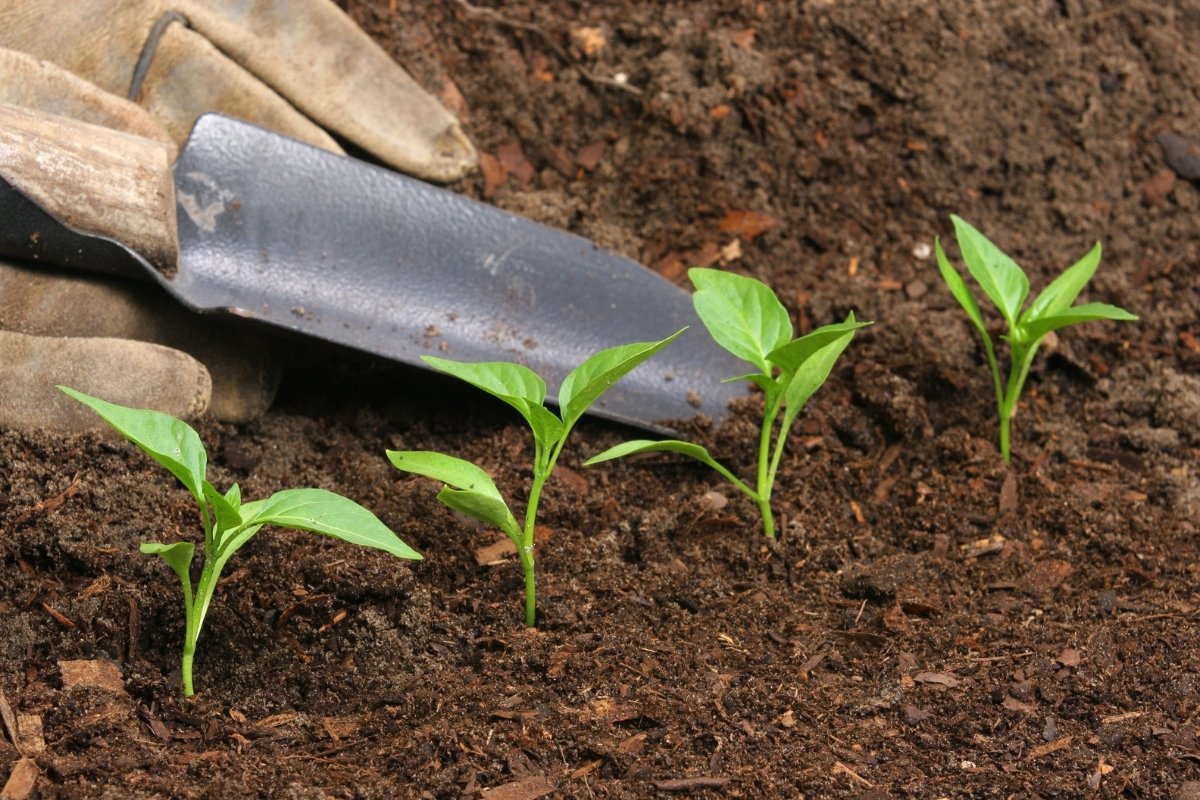
    Peppers are one of the most popular plants people grow in their gardens. Knowing when to plant peppers is important to ensure you get the best possible crop. There are many different great varieties of peppers you can grow, each that are delicious.

    No matter your experience as a gardener, you can grow peppers with the right knowledge. They are one of the easier plants to grow and they often produce a good-sized harvest. From red bell to jalapeno, there are some tasty options you can grow at home.

    When To Plant Peppers

    Whether you grow them in your garden or a container, peppers make great plants to grow. Though they can grow in many different areas, they do best in warm weather.

    There are many great varieties of sweet and hot peppers that you can grow. You can eat peppers raw or cooked, as they taste great both ways. They are great for stuffing, casseroles, grilling, salads, and much more.

    Since peppers need warmth to grow, most people start growing them indoors before planting them outdoors. In most cases, growers will sow their pepper seeds in late winter or early spring indoors. Peppers will need about 8-10 weeks before the last frost date from sowing to transplanting until you can move them outside.

    When To Plant Peppers Outside

    Sow the seeds into pots or trays, at least one inch apart. It is best to begin growing them with a temperature around 70 degrees Farenheit.

    Once nighttime temperatures are consistently above 55 degrees Farenheit at night, you can transplant your pepper plants outside. Peppers will thrive in daytime temperatures of 70 to 85 degrees Farenheit.

    Plant your peppers around 16 to 24 inches apart. Be sure to plant them in areas where they get at least six to eight hours of sun as peppers do best in full sun. You can plant them in garden beds or containers that are at least are at least 1.5 gallons in size.

    Pepper Care – When To Plant Peppers

    Pepper plants need around one inch of water a week. You should allow the soil to almost dry up between waterings. On average, you will need to water them one to three times a week.

    Pepper plants do best in slightly acidic to neutral soil. The soil should be sandy loam soil that has plenty of organic matter and drains well.

    When the plants begin to produce flower buds, you can use a liquid feed high in potassium on a regular basis. Tomato fertilizer can be a great option for your pepper plants. After the first peppers grow, you can switch to using a low-nitrogen fertilizer.

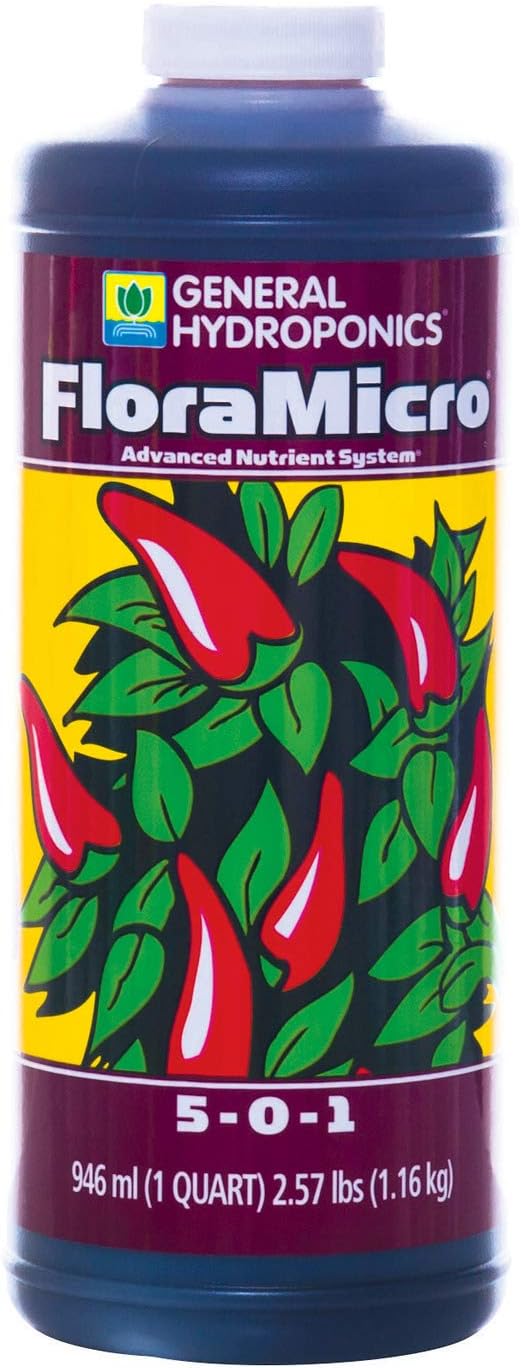
    General Hydroponics FloraMicro 5-0-1, Use with FloraBloom & FloraGro

    61DRZxzL mL. AC SX569

    Be sure to weed carefully around your peppers, being sure not to disturb their roots. If necessary, you can use cages or stakes to support your plants.

    Though pepper plants strive in warm weather, they can struggle if the temperatures get too hot. If you are experiencing a heatwave, it may be a good idea to move your peppers back inside for a bit.

    Best Peppers To Grow

    There are many tasty varieties of peppers you can grow. You can go with the mild taste of sweet peppers or spice it up with hot peppers.

    Bell

    Bell peppers are one of the most popular types of peppers to grow. They are versatile, as you can prepare them in many different ways. These large sweet peppers can be red, yellow, orange, or green.

    Bell peppers are great as you can stuff, grill, saute or eat them raw. Their delicious flavor goes well in a variety of dishes.

    Poblano – When To Plant Peppers

    Poblanos are mild chili peppers that are green in color. They are large in size and make a great pepper for stuffing. In addition, they are also great for roasting and sauteing.

    Thai – When To Plant Peppers

    Thai peppers are a type of hot pepper, making them great for adding some spice to your meal. They are particularly popular in Asian cuisine. They are smaller in size and can be green or red when ripe.

    Jalapeno

    Jalapenos are one of the most popular types of hot peppers. They taste great on tacos, burgers, wraps and sandwiches. They tend to mature faster than most hot peppers, making them particularly great for gardeners up north.

    Habanero – When To Plant Peppers

    Habaneros are a spicy hot pepper with just a slightly sweet kick to them. They are orange at maturity and are relatively small in size. They are great in salsas, salads, and spicy dishes.

    Banana

    Banana peppers are medium-sized mild chili peppers with a mild tangy taste. They are typically bright yellow in color and are great on sandwiches, salads, and pizzas. They also taste great when they are pickled.

    Banana peppers

    Growing Your Own Peppers

    Peppers make great plants to grow, no matter your experience level in gardening. You can opt for sweet peppers or hot peppers, depending on your preference.

    Plant your pepper seeds 8-10 weeks before the last frost inside and once temperatures reach 55-60 degrees overnight, you can plant them outside. Be sure to water them one to three times a week and plant them in full sun. The soil should be sandy loam soil that is well-drained and use should use liquid feed high in potassium regularly when the flowers bloom.

    Do you have any questions regarding when to plant peppers? If so, please ask any questions regarding growing peppers in the comment section.

    FAQ’s

    When to Plant Peppers Outside?

    You should plant peppers outside when the overnight temperature has consistently been 55-60 degrees Fahrenheit or warmer. You will want to plant them after the last frost as they strive in warm temperatures.

    When to Plant Green Peppers?

    Plant green pepper seeds indoors 8-10 weeks before the last frost. Then, when overnight temperatures reach at least 55-60 degrees Farenheit, you can plant them outside. Plant green peppers 18-24 inches apart.

    When to Plant Banana Peppers?

    Plant your banana pepper seeds around eight weeks before that last frost. Plant them two weeks after your last frost or when overnight temperatures are around 55-60 degrees Fahrenheit or warmer.

    When to Plant Hot Peppers?

    Plant hot peppers 8-12 weeks indoors before the last frost. Once the overnight temperatures have risen to 60 degrees or warmer, you can plant them outside.

  • How Much Water Does Basil Need? – Gardening Secret Revealed!

    How Much Water Does Basil Need? – Gardening Secret Revealed!

    How much water does basil need is a question asked by most gardeners who want to grow this herb for their personal use.

    Basil is a perennial herb that grows from the root system. It needs full sunlight, lots of moisture, and a warm temperature to grow. It has a long life span, which means you can grow it all year round.

    You can start the seed indoors or outdoors. Basil is easy to grow and is one of the best herbs to grow in a pot. You can grow it in pots and grow it in the ground. The most important thing to know about basil is that it needs a lot of water, more than any other herb.

    So How Much Water Does Basil Need?

    Before you get planting, you will want to know how much water does basil need. In order to have a healthy basil plant, you need to provide adequate amounts of water. 

    The soil should be kept moist but not saturated. You should use a timer to make sure your basil gets enough water. You can also keep the soil dry by watering once or twice a week.

    Watering frequency for basil: Watering every 3-4 days to once a week is the best way to ensure your basil stays healthy. On hot, sunny summer days, you will generally want to water your basil plant daily.

    How much water does basil need? The amount of water your basil needs depends on the weather, the season, and your basil variety. In most cases, basil will need an inch of water a week.

    So How Much Water Does Basil Need

    The best time to water your basil is when it’s just starting to grow. In summer and autumn, basil grows in the shade, which means it gets less sunlight and therefore needs less water. If you live in a hot climate, you may want to water your basil in the morning or evening to prevent wilting and heat stress.

    If you are worried about over-watering your basil, check the soil’s moisture content. The soil should be slightly moist, but it should not be soggy by any means.

    Water your basil when it’s actively growing, but not when it’s dormant. It’s best to water your basil when it’s just started to grow, but it can be watered any time of the day.

    Dangers Of Over-watering Basil – How Much Water Does Basil Need?

    Over-watering is dangerous to basil as it kills it. When a basil plant is over-watered, it can develop yellow, droopy leaves.

    When watering your basil, make sure to water only the base of the plant. If you have a large pot, you can fill it up to the rim and then continue to water until it runs out.

    It is generally best not to water from the top, as it can be too much for this plant. It is best to water from the base and not above the leaves. Too much moisture on the leaves can potentially cause disease and fungus growth and not allow enough water to get to the roots.

    The water has to travel through the leaves and get into the stem before it reaches the roots. If the leaves are dry, then the plant doesn’t need water.

    Blumat Automatic Watering System for 5 Plants (Starter Kit)| Fully Automatic Drip Irrigation Kit

    61r+42ztj3L. AC SX569

    If you have a large pot, you can water it until water runs out of the drainage holes. You should only water your basil when the soil is dry to the touch.

    So if you have a big pot, fill it up to the rim. If it is not full, then you need to keep watering until it is. Then let it dry out and leave it for a few days.

    Over-watering will cause the leaves to turn yellow and drop off.  If you don’t water your basil often enough, it will wilt. Wilting might lead to death if you don’t save your plant early.

    Check Out A Guide To Growing Cucumbers In Containers

    The Best Schedule For Watering Basil

    In a small amount of time, you can grow herbs that will provide your family with delicious fresh food, medicine, and even beauty. You can grow herbs indoors or out, in containers, raised beds, or on a patio.

    To grow these herbs it’s important to have a watering schedule. If you water regularly your plants will grow well. When your plants are young they need more frequent watering than when they’re older.

    The best time to water is just after sunrise. Watering in the evening or night can cause the leaves to get too wet and the plant will stop growing. You should water your plants every day.

    If you wait until the soil gets dry, you can water the plant with a spray bottle. Herbs are very easy to grow and can be grown indoors in pots on a sunny windowsill or outside in the garden.

    Summary Of How Much Water Does Basil Need

    So how much water does basil need?  Basil is one of those plants that will actually grow better with a good amount of water. The reason is that basil is a tropical plant and it needs lots of water. However, when it does not get enough water, it will start to wilt.

    FAQ’s

    How much water and sun does basil need?

    Basil will grow anywhere from a minimum of 10 to 20 inches tall. It does best in full sun, but it can tolerate some shade. It is drought-tolerant and thrives in most soils.

    How much water does basil need per day?

    The amount of water basil needs will depend on a variety of factors, including the weather and growing conditions. However, a general rule of thumb is that basil requires about one-half to one-third the amount of water that tomatoes do. To grow healthy basil plants, keep an eye out for signs of stress such as wilting, yellowing leaves and brown tips on the leaves.

    How much water and sun does an indoor basil plant need?

    Indoor Basil plants are very easy to grow, but they do require a lot of light. You can get a good plant by placing it in a bright window with a south-facing aspect. In cooler northern climates, you can also provide heat by using a warm room or heated mat (in summer). The ideal temperature for your indoor basil plant is around 75°F.

    How much water does basil need in liters to survive?

    Basil will tolerate low water conditions and will grow even better in poor drainage. It prefers slightly moist soil but will tolerate dry conditions for a limited time. What are the ideal temperatures for growing basil? Basil prefers warm weather with lots of sun, and will not tolerate cool weather. It can be grown indoors in a greenhouse or in a heated bed outdoors.

  • A Guide To Growing Cucumbers In Containers

    A Guide To Growing Cucumbers In Containers

    Any cucumber lovers in the house?  Growing cucumbers in containers is possible and easy and provides you with fresh cucumbers.

    Cucumbers are very popular in Australia as a summer fruit, and there is a huge range of different types, shapes, and sizes of cucumbers. Most people grow them for eating fresh or as part of salads and sandwiches, but there are many other ways of using them.

    So what if you want to grow your own cucumbers? There are several reasons why this is a good idea.

    • Firstly, the price of cucumbers is increasing, so it makes sense to grow your own.
    • Secondly, cucumbers are one of the easiest vegetables to grow from seed in a greenhouse.
    • Thirdly, cucumbers are very easy to grow in containers. Cucumbers are also very easy to grow in pots or baskets and can be used as decorative plants or to provide shade for other plants.

    Growing Cucumbers In Containers Successfully  – A Step By Step Guide

    There is no doubt that growing cucumber plants in containers is the most popular way to grow these vegetables. But, when it comes to growing cucumbers in containers you will need to take into account a number of things before deciding whether to go ahead with this process.

    There are two ways to grow cucumbers indoors: in raised beds and in containers. Raised beds are great if you have a lot of space, but they can also be expensive and difficult to keep clean. Containers are easy to use, inexpensive, and require less space.

    If you decide to grow cucumbers in containers, you’ll need a few things. You’ll need a container, a potting mix, and fertilizer.

    Find A Good Container That Suit Your Needs

    There are many different types of containers that can be used for growing cucumbers. The size of the container you choose depends on how much space you have available. A large container will hold more plants than a smaller one. You can choose between plastic or glass. Glass containers are easier to keep clean, but plastic is more durable and won’t break if the container is dropped. When choosing a potting mix, it’s important to pick one that has enough nutrients for your plants. You’ll also need a fertilizer that is specifically designed for your plants.

    Get Your Potting Mix Ready – Growing Cucumbers In Containers

    You’ll need to buy a potting mix that contains nutrients. This type of soil is specially made to grow vegetables. It’s easy to make at home using ordinary garden soil. You can also buy a commercial potting mix, which is similar to garden soil, but with added nutrients and other additives. It will cost more money than homemade potting mix. When you’re choosing a potting mix, you’ll want to look for one that is free of chemicals. If you live in an area where there is heavy rainfall, it’s best to avoid using a potting mix that contains fertilizer. This can cause your plants to rot.

    Plant Your Cucumber Seeds Or Seedlings

    Cucumbers are easy to grow from seed. To get started, the first plant the seeds on a sunny windowsill. You should start the seeds indoors about three weeks before you plan to transplant them into the pots or garden. Cucumbers need full sun, so keep this in mind when you decide where you want to plant your seeds. If you live in an area with a hot, humid climate, protect your cucumber plants from direct sunlight.

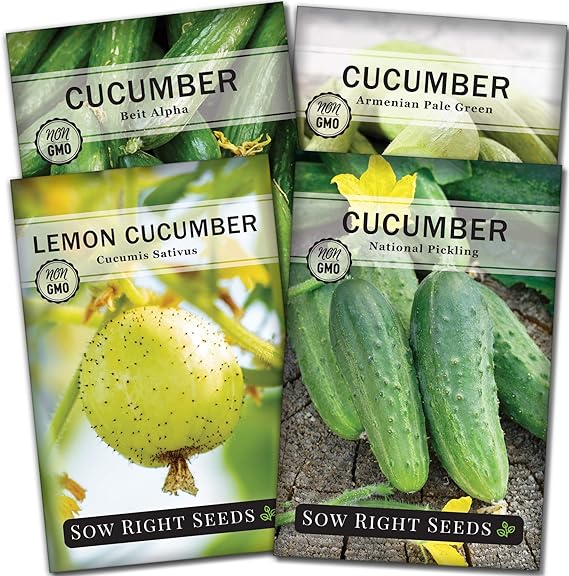
    Sow Right Seeds – Cucumber Seed Collection for Planting – Non-GMO Heirloom Seeds

    81KFjIGOj1L. AC SX569

    Plant your seeds or seedlings. As soon as your plants have two sets of true leaves, you can begin to plant them into the ground. You can plant your cucumbers as soon as the weather is warm enough and the soil is moist. If you’re planting seeds, sow them directly into the ground. If you’re planting seedlings, be sure to choose a site that has plenty of room for them to grow. Space your plants about 2 inches (5 cm) apart.

    Watering Your Plants Or Seeds

    Water your seeds or seedlings daily. Water your seeds or seedlings daily. This will encourage them to grow roots. Watering daily also helps prevent the growth of fungus. When you water, don’t let your seeds or seedlings sit in water for too long. Remove any excess water with a paper towel before letting the plants dry out. Keep your cucumber plants watered. You’ll need to keep your cucumber plants watered. Don’t let the soil become dry around your cucumber plants.

    When growing cucumbers in containers, you should mist your plants every other day. This will encourage them to grow strong roots. Cucumbers like moist soil, so make sure that your container is never completely dry.

    To help your plants grow, apply a layer of mulch around them. Cucumbers like moist soil, so make sure that your container is never completely dry.

    Fertilize Your Plants – Growing Cucumbers In Containers

    Fertilize your cucumber plants when they start to flower. Cucumbers are heavy feeders. To help them grow, feed your plants with a general-purpose fertilizer that has a high nitrogen content.

    Growing cucumbers in containers - Fertilize Your Plants

    Use A Trellis To Support Your Cucumber Plants

    Trellis are great for growing cucumbers in containers vertically. Trellis allows you to train the vines to grow straight up. The trellis also helps the vines stay strong. To help prevent weeds, cover the bottom of the trellis with a piece of plastic.

    Summary Of Growing Cucumbers In Containers

    Growing cucumbers in containers as we have seen takes some work but the rewards are great.  For cucumber lovers, you know how it feels to have that fresh crunchy cucumber for your salad. Cucumbers are a type of summer vegetable and they are a very easy crop to grow in containers.

    FAQ’s

    Do cucumbers grow well in pots?

    Yes, they can. Cucumbers are easy to grow and the fruit should not need a lot of water as they grow in the soil.

    How deep should a container be for cucumbers?

    The ideal depth is 1.5 times the width of the cucumber, or about 2 cm (1 inch). This will allow the cucumber to breathe and not sit too deep in the water and cause it to rot. If you are growing your own cucumbers in soil or sand, you can place them at a depth that is deeper than this.

    Do container cucumbers need a trellis?

    Container cucumbers are usually grown in the open, but if you have room for a small trellis, it is possible to grow them in cages on this. The trellis is used to keep the plants upright and to provide additional support for the plant.

  • A Guide On Growing Bell Peppers in Pots

    A Guide On Growing Bell Peppers in Pots

    Growing bell peppers in pots is easy and produce an attractive harvest of a good crop. in addition, it will encourage you as a gardener to grow more peppers.

    Bell peppers are the most common and most popular of all the different types of peppers, especially among adults.  The reason for this popularity is because they are versatile.  You can use them in many different ways in salads, soups, appetizers, as a side dish, and even as a topping for meat.

    A well-kept secret about growing bell peppers in pots is that they can be grown in the same way as other vegetables such as tomatoes.  So if you are looking for a good harvest of this fruit, but don’t have a garden, then you might want to consider growing bell peppers in pots. This guide will help you grow bell peppers in pots successfully.

    How To Grow Bell Peppers in Pots Successfully

    The first step to growing bell peppers in pots is to select the right variety. There are many different kinds of bell peppers, each with its own unique flavor and color.  If you are growing your bell peppers from seed, you should select a variety that produces small, round, and smooth fruit.

    You can also choose a variety that is mild in taste, like the “Sweet Banana”, or you can choose one that is spicy, like the “Crimson Cayenne”.  You can even choose a variety that is both sweet and spicy, like the “Thai Hot”.

    If you are new to growing peppers in pots, then you will want to start with some general information first. The first thing you will need to do is decide whether you want to grow hot or sweet peppers.

    Hot peppers are more pungent, while sweet peppers are milder and sweeter.  Both types can be used for a variety of different purposes. For example, you can use hot peppers to make salsa, as a topping for meat, or even as a salad dressing.

    Sweet peppers are best when they are used for making sauces, jams, and jellies. You can use the seeds of the pepper you are growing to make your own salsa, or you can also save the seeds and plant them next year.  

    The same method applies to growing bell peppers in pots. You can grow them in either a hot or sweet pepper variety.

    Once you have selected the right variety, you should start planting your seeds at least two weeks before your last frost date.  In fact, if you have a greenhouse, then you should start your seeds indoors a month before your last frost date.  This will give your plants a head start on growing.

    Check Out A Guide On Pepper Plant Spacing

    Choose a Good-sized Pot and Potting Soil

    The pot size should be at least six inches high, and preferably taller than the tallest plant you plan on growing in it. The best way to do it is to choose a pot that has a wide bottom and is shallow enough so that the water can drain easily.

    Another important consideration when choosing a pot is what soil you will be using.  If you are using a potting mix, then you should only use one type of soil

    If you are using organic soil, then you can mix a couple of different types of soils together.  You may even want to use a fertilizer that is specifically designed for growing peppers.

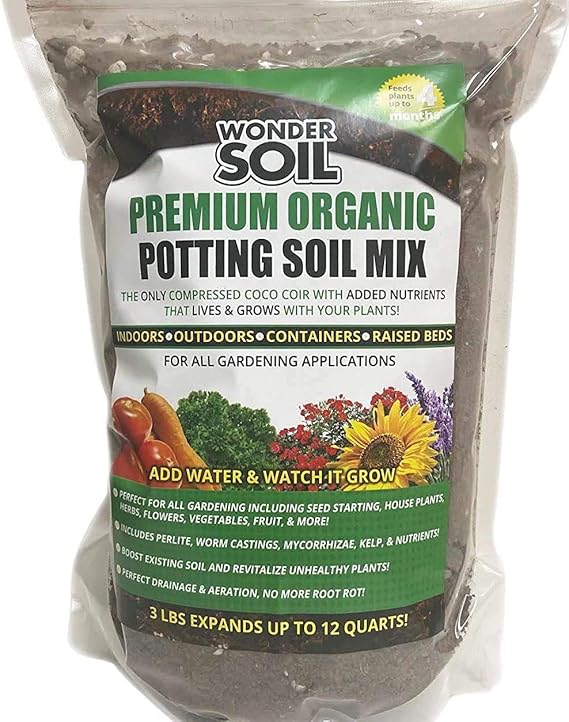
    WONDER SOIL Organic Potting Soil | Ready to Plant Coco Coir Fully Loaded with Nutrients

    Growing bell peppers in pots

    Once you have chosen the right sized pot and soil, then you need to decide how big your plants will get.  Once your bell pepper plant is mature, you want to make sure to use a pot that is 10 to 12 inches wide and 10 to 12 inches tall.

    You should also make sure that the soil in the pot is loose and rich.  If the soil is too dense, it will be difficult for the roots to grow. 

    In order to grow bell peppers in pots successfully, you need to keep the soil moist at all times.  This is especially important during the first few weeks of the plant growing.

    Set a Watering Schedule

    Once the plant has grown a little bit, you can gradually reduce the watering schedule. The most common mistake that beginners tend to make when growing bell peppers is to give them too much water.  By doing so, they often end up with weak, spindly stems. 

    When this happens, the pepper cannot get enough nutrition from the soil and the plant will eventually die. When the soil dries out, it will be difficult for the pepper to grow.

    To prevent this, keep your pepper plant in a spot where it receives ample sunlight. Water it every two or three days. After about three months, you should notice the stem of the pepper starting to get stronger.

    At this point, you can start reducing the frequency of watering. You should water your plant with about one to two inches of water every week.  This will prevent the stem from getting too dry and allow the plant to continue growing properly.

    Set A Watering Schedule

    Growing Bell Peppers in Pots – Harvesting

    When the pepper is ripe, it will start to look a little bit like a small tomato. You may notice a few black spots on the pepper’s skin.

    The pepper should be firm and have good color. If the pepper is too young, it will still be green and the pepper will be hard. It is best to harvest when the pepper is mature and the pepper has a good color.

    Final Thoughts On Growing Peppers in Pots

    Growing bell peppers in pots indoors or growing bell peppers in pots outside can be a great way to grow peppers for your use. The plants will grow fast and you won’t have to worry about watering them. You can also plant different varieties of peppers in your pots and give each one its own space.

    Growing peppers in pots will help you save space in your garden. Go on and start your bell pepper potted garden.  And while at it have some mad fun!

    FAQ’s

    Do bell peppers grow well in pots?

    Yes, bell peppers will grow in almost any pot. They are a very forgiving plant and will even grow in a pot if the bottom is slightly wet. You can also put bell pepper on a window sill or on the ground.

    Do bell peppers need sun or shade?

    Bell peppers like most vegetables will do better in a bright, well-lit position. They also do best if they get a good amount of sunlight. If you have a shady area, place the pepper plants in the shadier part of that area to help them grow and avoid sunburn.

  • A Guide On Pepper Plant Spacing 

    A Guide On Pepper Plant Spacing 

    Pepper plant spacing is highly important as it directly affects the yield of your pepper plants causing them to either produce much or little.

    Pepper plant spacing in greenhouse or pepper plant spacing in pots is very important.  There are many methods of plant spacing. But we have narrowed down my research to 3 methods and will show you how to space your plants.

    Pepper Plant Spacing By Row- 1st Method

    Spacing your plants by row is done by simply planting your plants in a row and then using spacers to space them apart. The spacers can be purchased from the garden center or you can make your own. You can use anything that fits between your rows, from bricks to small rocks, as long as they are between the plants. This is also the method used in organic gardens.

    Plant your seeds and cover them with a thin layer of soil (or compost) and water well. Once the seeds sprout, remove the spacers. When the plants are about 2-3 inches tall, remove the spacer and water well again. Spacing your plants by the square foot is done by simply planting your plants in a square or rectangle and then using spacers to space them apart. The spacers can be purchased from the garden center or you can make your own.

    Pepper Plant Spacing By Row

    Pepper Plant Spacing In Blocks – 2nd Method

    Planting your pepper plants in blocks. This is the most popular method of spacing peppers. It also gives you the opportunity to get a close look at how much space each plant will occupy in the garden. The spacing between the rows should be based on the size of the plant, not the distance from the previous row. For example, if your plant is 2 feet tall and you want it to grow 3 feet wide, then space each plant 4 feet apart.

    You can plant peppers anywhere you like, but we recommend planting them in blocks. A block is simply a rectangular area of ground. You can make the block any size you want. Make it big enough for your pepper plants to grow to maturity. Planting them in blocks allows you to make sure they don’t overlap or touch. If you plant them individually, you will have to figure out a way to keep them apart.

    Check Out The Mega 5000-Watt Inverter

    Pepper Plant Spacing – 3rd method

    Planting your pepper plants in rows and then using spacers.  The first method is easiest to do, but not the best as it limits your plants to one row. If you want more than one row of peppers, then this method is the way to go.  There are two ways you can do this:

    • Method 1:  Planting in Rows.  Soak the seed in water for 3 hours before planting. After that, plant in rows. The rows should be spaced 2 inches apart. Plant each seed 2 inches deep. Water the seeds when they sprout, but make sure the soil is dry between plants. You may also use a spacer between the plants to keep them apart.

    Square Foot Gardening Template by Seeding Square

    81s Y+9k1gL. AC SX569
    • Method 2: Planting in Rows Soak the seed in water for 3 hours before planting. When you plant your seeds, space them 6 inches apart in rows. If you are planting in a small garden, make sure to space the rows at least 12 inches apart. If you are planting in a large garden, make sure to space the rows at least 24 inches apart.

    Why Is Pepper Plant Spacing Important

    Spacing pepper plants is important because pepper plants grow very fast. If the plants are too close together, they will compete for sunlight and space. This can cause pepper plants to be stunted or have other problems. Some varieties of pepper plants like ‘Big Jim’ and ‘Big Bertha’ grow extremely large. They can reach heights of 50 feet or more. When you grow these types of peppers, you may need to leave about 25-35 inches between plants.

    Spacing peppers is also important because if peppers are planted too close together, the plants can block each other’s airflow. This can cause them to grow weak stems and leaves. Pepper plants need a lot of air circulation to keep their leaves healthy and strong.

    If you plant peppers too close together, they may not get enough airflow and could become stunted. If you grow peppers on a trellis, you should space them about 1/4 of an inch apart.  When you plant peppers, you want to space them at least a few inches apart so that they will have room to grow.

    If you grow peppers too close together, they may compete for sunlight, and this can cause problems such as stunted growth or even death. They may also block each other’s airflow, which can cause them to become weak and spindly.

    Pepper plants also need a lot of air circulation to keep their leaves healthy and strong. If you plant them too close together, they may not receive enough air and could become stunted.

    Final Words On Pepper Plant Spacing

    Pepper plant spacing is important as we have seen above if you would like to get a good harvest. How far apart should the pepper plant spacing be? We suggest planting at least two pepper plants about 2-3 feet apart.

    This is enough distance to make sure the pepper plants are spaced out enough. If you plant more than two pepper plants, you might want to space them further apart. We recommend planting at least two pepper plants about two feet apart. This is enough distance to make sure the pepper plants are spaced out enough.

    FAQ’s

    How close together can I plant peppers?

    Plant your peppers as soon as you buy them, and leave them in a warm place until they sprout. They should be ready to transplant about 3 weeks after planting. You can plant the seedlings at any time, but wait until the weather is warmer than 60° F. before you start the process.

    How many peppers can you put in a 5-gallon bucket?

    We have found that the best way to pack peppers is to first place them in a large mixing bowl, and then place a second mixing bowl on top of the first bowl. The top bowl should be approximately 1/4 inch lower than the bottom bowl so that the pepper juices don’t spill out when they are packed into the bucket.

  • Comparison Between Thai Basil Vs Basil

    Comparison Between Thai Basil Vs Basil

    Is there a major difference between Thai basil vs basil or are they the same in taste, flavor, and look?

    Thai basil is just one of many varieties of basil. It is one of the most widely used and consumed varieties of basil.

    Thai basil is a member of the Lamiaceae family, which includes mints and other culinary herbs. The leaves are used in cooking and garnishing. It has a sweet flavor and fragrance.

    Basil is one of the commonly used herbs for cooking. Its unique flavor is appreciated in a variety of dishes. Thai basil is available at grocery stores, supermarkets, and farmers’ markets throughout the year.

    It can be found fresh or dried. Thai basil can be used as a substitute for Italian basil, as the flavor will not change much.

    Comparison Between Thai Basil Vs Basil

    Thai Basil

    Thai basil is a type of basil plant which grows to about 12 to 18 inches in height and has pink and purple flowers that grow in the late summer. Its fragrant, sweet-scented leaves are used as an ingredient in Thai cuisine. 

    Thai basil is a variety of sweet basil (Ocimum basilicum) and can be considered an annual herb. It is widely used in Thai cuisine and has many culinary uses. Thai basil is a member of the Lamiaceae family and has dark green, glossy leaves with fragrant purple flowers.

    Thai Basil

    Thai basil has many uses and benefits. Its health-promoting properties are similar to those of basil, but with a more intense aroma.

    It is used in cooking, aromatherapy, medicine, and perfume. Thai basil can be found in kitchens throughout Southeast Asia and has a slight hint of licorice in the taste. 

    Holy Basil

    Holy basil (Ocimum sanctum) is a type of basil in the family of Lamiaceae. The plant is native to the Indian subcontinent and grows throughout Southeast Asia. It is cultivated in many other places around the world as an ornamental garden plant.

    Holy basil has small purplish flowers with green leaves with a hint of purple.  It is also known as hot basil or Tulsi. It can be used for its culinary and medicinal properties.

    People in Ayurveda use the Holy basil for medical purposes. It is used for anxiety, stress, diabetes, high cholesterol, and other conditions. It is one of the most important herbs used in Ayurveda for curing various ailments. 

    Holy basil is a small perennial herb that has a peppery taste to it. It has an aromatic smell and grows about three feet tall. 

    Differences Between Thai basil Vs Basil

    Thai basil is a very different plant from other basils. This article discusses the differences between Thai basil vs basil, which are:

    • It has much more delicate leaves than most basils, and they are thin and tender.
    • Thai basil is slightly savory with a spicy, licorice-like flavor. Holy basil has a peppery-sweet flavor.
    • Thai basil has purple flowers while other varieties have white flowers.
    • Thai basil can be grown indoors or outdoors.
    • Thai basil has purple stems while sweet basil has green stems.

    8 Basil Herb Seed Pack- Heirloom & Non-GMO

    717zoYlNz3L. AC SX569
    • Thai basil is used in Thai dishes and Thai people often put it on their food. Basil is used in Italian dishes, and most of the time, people use basil in the United States.
    • The most noticeable difference is the color. Thai basil is green with purple, while basil is light green with no hint of purple. Thai basil has an anise smell, while basil has a sweeter smell.
    • Thai basil is used as a garnish and in cooking while basil is used to make pesto. Thai basil is often used in soups, salads, curries, and other dishes. Basil is widely used as a flavoring for both sweet and savory dishes. It is one of the most common herbs used in pesto.

    Similarities Between Thai Basil Vs Basil

    • Thai basil vs regular basil, both have similar tastes, but with slight differences.  Both of them are used in cooking as herbs. They both have similar medicinal properties.
    • Both Thai basil and basil are used for culinary purposes and can often be used interchangeably. 
    • Both are herbs that grow best with six or more hours of sun and regular watering. 
    Similarities Between Thai Basil Vs Basil

    Final Thoughts Thai Basil Or Basil

    Thai basil vs basil do not have many differences and only those who know their herbs well can tell the differences.

    If you enjoy using Thai basil to spice up your foods, keep going and if you enjoy the holy basil, don’t stop!  Both are herbs that bring in plenty of flavor to different dishes.

    FAQs

    What is Thai basil vs basil taste?

    Thai basil is slightly savory with a spicy, licorice-like flavor. Sweet basil has a peppery-sweet flavor.

    Differences between Thai basil vs normal basil

    Thai basil is a variety of regular basil that has been grown in Thailand.  It’s sweet, fragrant and delicious!

  • Growing Acorn Squash – Tips And Tricks 

    Growing Acorn Squash – Tips And Tricks 

    Growing acorn squash is rewarding as you get to harvest a large crop of about five fruits per plant from some varieties.

    Acorn squash is a type of winter squash that is similar to pumpkins. Keep reading to learn the differences between both fruits and to know how to grow acorn squash.

    Differences Between Acorn Squash And Pumpkin

    The major differences between these two fruits are:

    • Acorn squash and pumpkins vary by the shape of the fruit, the size of the fruit, and the seeds.  Acorn squash is round in shape and has about 4-6 seeds in each fruit. Pumpkins have a different shape and have a hard shell with one seed inside.
    • When you pick acorn squash, the skin is should be tough and green, with the flesh being tender and delicious. When harvesting pumpkins, they will also have tough skin and should be fully colored with firm flesh.
    • As for the nutrition values, the acorn squash has about 115 calories per cup while the pumpkin has about 137 calories per cup.  Acorn squash also has more fiber and less fat than pumpkin. However, if you want to make the best-tasting pumpkin pie, then it’s better to buy canned pumpkin instead of acorn squash.
    • After cooking, pumpkins will have a crunchy texture while acorn squash will have a softer texture.
    • Pumpkins are larger than acorn squash. Pumpkins are large, orange-fleshed gourds that are grown as a fruit. Acorn squash is a small, yellow-fleshed gourd that is grown as a fruit.
    • Acorn squash and pumpkin can be eaten raw, though pumpkins taste better when cooked.
    Differences Between Acorn Squash And Pumpking

    Growing Acorn Squash – Step By Step Guide

    Growing acorn squash from seed is easy and fun. It’s the best way to start your own garden. Growing acorn squash from seed takes about 80-100 days and is a great learning experience.

    The seeds are inexpensive and can be planted directly into the ground without first having to be soaked. Acorn squash seeds take about six weeks to germinate, so you will have a baby acorn squash in about two months. It’s a wonderful winter squash that grows large and tastes delicious.

    Let’s see how we can grow acorn squash from seeds:

    • Step 1: Preparing seeds

    First of all, you need to get good quality seeds. The best way is to buy it from a specialized shop. If you don’t have one near you, you can try to find it online. When buying the seeds, make sure they are healthy and fresh. It’s better to get them in a shop where they keep them in cool, dry conditions.

    • Step 2: Germinate

    Place the seeds on a damp paper towel to help them germinate. However, this is not necessary if the growing medium is moist and warm. The germination period will last around 6 to 12 days.

    • Step 3: Plant

    Once germinated, plant them in a pot with a little soilPlant the seeds in a sunny spot, but not in direct sunlight. When the seeds sprout, keep an eye on them. Make sure that they don’t dry out.

    • Step 4: Harvest

    When the squash is ready to be harvested, it should have a nice shape and size. You can start picking them when they are small, but it’s better to wait until they are big enough to eat. It will take between 10 to 12 weeks to grow the acorn squash.

    • Step 6: Ready to eat!

    Once the acorn squash is ready to eat, you can cut off the stem and peel off the skin. If you want, you can wash the squash, but it’s not necessary. It’s also possible to eat it raw. The acorn squash is an easy and healthy food to add to your diet.

    Squash Seeds- Table Queen Acorn- Heirloom- 40+ Seeds

    Growing Acorn Squash

    Requirements For Growing Acorn Squash

    The following are some of the things you should know about growing acorn squash.

    • Acorn squash is winter squash. It can be grown during the summer if it is protected from freezing temperatures.
    • The ideal soil temperature for growing acorn squash is 70°F to 75°F. If you live in a colder area, you may want to grow it indoors.
    • You should plant your squash seeds no more than one inch deep and at least two inches apart in full sun.  The direct sun makes them sweeter.
    • Water your squash plants thoroughly when they are small. Don’t let your squash sit in water; allow it to dry out before watering again.
    • Fertilize your squash plants with a slow-release fertilizer every two weeks until the plants start producing fruit.

    Take-Home – Growing Acorn Squash

    Growing acorn squash is easy and fast and you can expect a big harvest from a few plants. As long as you provide them with the right growing conditions, acorn squash will be good to go.

    You can grow them in a container on a deck or patio. You can also plant them in the garden. However, be sure to provide a trellis so that they don’t fall over. When growing squash in a container, add a few small stones to help the roots establish themselves.

    FAQ’s

    What does acorn squash look like when growing?

    Acorn squash is a round, oblong, or pear-shaped fruit with green skin and tan flesh. It grows in a bunch of 5 to 8 fruits on a long stem called a “pistil.” The stem is about 2 feet long.

    What is the growing season for acorn squash?

    The growing season for acorn squash is between March and November.

    How long is the growing cycle of acorn squash?

    According to the USDA’s National Agricultural Statistics Service (NASS) publication, “Agricultural Statistics,” from the USDA’s Crop Production and Agronomy Statistics, Acorn Squash (Cucurbita maxima) has a “days to harvest” of 155. This is the number of days from seeding to harvesting.

    Do acorn squash need a trellis?

    Yes. It is best to grow these on a trellis because the vine can become very long and difficult to manage. It is possible to grow them on a wall but they are prone to slugs and snails which can cause damage.