Author: Eunice

  • Tilapia Water Temperature Requirements in Aquaponics

    Tilapia Water Temperature Requirements in Aquaponics

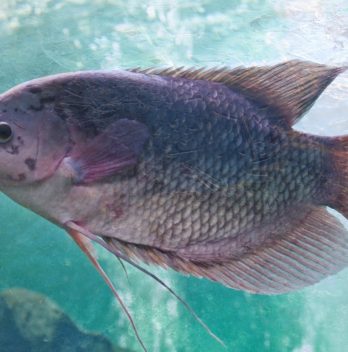
    Tilapia water temperature requirements in aquaponics are an essential aspect of rearing healthy and vibrant fish.  Tilapia is one of the most famous and much-loved fish among aquaponics farmers. They are pretty forgiving when it comes to adaptation generally. However, the temperature requirements of the fish are pretty demanding because they are temperature sensitive.

    Tilapia is a warm water fish. When it comes to using tilapia for your aquaponics setup, you need to be aware of tilapia temperature requirements in your aquaponics system. This way, you will enjoy a fantastic growth of tilapia, a reasonable production rate, and a smooth maintenance aquaponics system.

    In this post, we will explore tilapia water temperature requirements so read on to learn.

    What Are Tilapia Temperature Requirements?

    Firstly, you should know tilapia fish is very tolerant of environmental conditions. They can adapt to a poor or substandard water quality environment. They are not food selective and they can feed on nearly anything edible.  But they are very sensitive when it comes to temperature.

    The ideal temperature for tilapia is in the range of 75 degrees Fahrenheit to 86 degrees Fahrenheit.

    Most tilapia fish are temperature sensitive and if the water temperature in your aquaponics drops to 68 degrees Fahrenheit, they will be stressed and the growth of your tilapia fish will depreciate. Now, if the temperature drops below 50 degrees Fahrenheit, your tilapia fish metabolism will be super slow and the survival rate may be pretty low if the issue is not fixed quickly.

    What are Tilapia Temperature Requirements

    If the temperature then falls below 40 or even 30 degrees Fahrenheit that will be a terrible time for your tilapia fish and they will most likely die.

    The stress caused by temperatures below 50 degrees Fahrenheit leads to a loss of disease resistance thus exposing or leading to tilapia infection caused by fungi, bacteria, and other pathogens that may be present in the water.

    Therefore, ensure you always keep the temperature of the water in your aquaponics system in the right range for your tilapia fish.

    Tilapia fish originated from Africa or tropical regions, and as such have warm temperature requirements. Therefore, in other cooler regions, especially in the winter months, you must adjust the tilapia fish’ environment temperature to suit their requirements.

    Dealing With Tilapia in Colder Regions

    For all-year-round tilapia fish aquaponics systems, recirculating indoor systems are ideal. This is because, in recirculating aquaculture systems, the water or environmental temperatures can be manipulated to suit the needs of the fish that is being grown. It is unlike in natural systems where the fish has to adapt to the environment.

    The advantage of adjusting water temperature in recirculating aquaculture systems had additional benefits that may not be immediately apparent. The ideal water temperature in the system will help promote fish growth and feed utilization. In this way, you will get well-growing fish and not waste money on fish feed that is not being well utilized.
    Top Rated
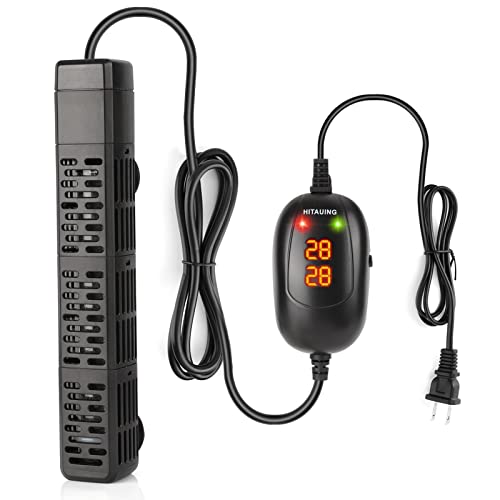
    HiTauing Aquarium Heater, 50W/100W/200W/300W/500W Submersible Fish Tank Heater with Over-Temperature Protection and Automatic Power-Off When Leaving Water for Saltwater and Freshwater
    $34.99
    Buy Now
    We earn a commission if you make a purchase, at no additional cost to you.
    12/12/2025 09:01 am GMT

    You can also introduce an emergency heating just in case the climate snaps and gets you by surprise and you are unavailable or not close by. I’m sure you wouldn’t want to let the amazing aquaculture setup that you have nurtured for a good period go down the lane by just a snap of climatic change, would you?

    However, if you do not wish to spend too much money on heat, you can simply opt for the breed of tilapia fish that can tolerate cold or simply go for trout fish, although trout is a bit more sensitive to poor water quality.

    Learn How Many Tilapia Per Gallon For An Aquaponics System

    Tilapia Water Temperature Adaptation With Cold Water

    It is not uncommon to see tilapia fish adapt to their environment being that they are quite forgiving. There are various species of tilapia fish. From generation to generation, they might adapt and withstand temperature changes over time.

    Some tilapia breeds have shown good tolerance to temperature changes. An example of cold-hardy tilapia species is the blue tilapia (Oreochromis aureus). The blue tilapia can do well from 45 degrees Fahrenheit. Therefore, we recommend you opt for this type of species if you wish to raise tilapia in a cooler region.

    Nonetheless, when kicking off with raising your tilapia fish, especially the ones that were mailed or given to you by anyone – ensure you maintain a warm temperature of at least 60 degrees Fahrenheit.

    Find out Where To Buy Fish For Aquaponics Systems

    What is The Ideal Blue Tilapia Temperature Range?

    Blue tilapia is a benthopelagic and potamodromous fish. It ideally prefers tropical climates but it is a fairly cold-tolerant fish. This fish has a wide temperature tolerance range of 46-86 degrees F. It is also tolerant to both freshwater and brackish waters.

    How Cold Can Tilapia Survive?

    Most tilapia species will survive temperatures below 68 degrees F. You can grow tilapia in these temperatures if you do not mind the reduced growth rates and poor feed utilization. You should however never keep tilapia in temperatures below 55 degrees F.

    At much colder temperatures, tilapia as with other fish will become more susceptible to diseases and infections from opportunistic pathogens that may be present in the water. If the temperatures drop even lower, the fish will die.

    Here are some of the low-temperature tolerance ranges of tilapia species:

    • Tilapia Sparrminii (banded tilapia) – 42-44 degrees F
    • Oreochromis Mozambique (Mozambique tilapia) – 45 degrees F
    • Tilapia rendalli (Redbreast tilapia) – 53-55 degrees F
    • Oreochromis niloticus (Nile tilapia) – 53-55 degrees F

    The most cold-tolerant tilapia that is known is the vlei kurper, Tilapia sparrmanii, a dwarf tilapia that naturally occurs in the Orange River north and eastward of the Kwazulu Natal Province of South Africa. This tilapia can tolerate temperatures as low as 42 degrees F.

    The resilience of tilapia allows them to be cultivated in a wide variety of climates, including those with cooler temperatures. Fish farmers and breeders need to consider the cold temperature tolerance of the tilapia species that they are growing. It is also best to keep all other environmental conditions to minimize the stress that fish are exposed to.  Although growing tilapia in colder climates is challenging, it is possible. 

    How Hot is Too Hot For Tilapia?

    Tilapia are warm water fish, but just like all other fish,  have an upper tolerance limit or a maximum temperature that they cannot withstand. If they are exposed to these temperatures, especially for long periods the fish will be negatively affected and may eventually even die.

    To get good production from tilapia, you must keep your temperatures between 70 and 85 degrees F. These temperatures will give you the best production. 

    Temperatures higher than these will lead to slow growth, reduced feeding efficiency, and increased mortalities.

    Conclusion – Tilapia Water Temperature Requirements In Aquaponics

    Tilapia water temperature suitability has a wide range, making these fish easy to cultivate in a variety of climates. As we have pointed out, tilapia species are warm fish. The conclusion is that the ideal temperature requirements of tilapia range from 75 degrees Fahrenheit to 86 degrees Fahrenheit. Temperatures below 50 degrees are fatal for your tilapia fish. Temperatures matter a lot when it comes to raising tilapia fish. So if you wish to enjoy optimal growth and a smooth aquaponics system, get the temperature right.

    So, we can see that raising tilapia fish in a colder region is not impossible, although tricky.  You just have to go for the appropriate tolerant species like the blue tilapia. This is because they can withstand temperatures around 40 degrees Fahrenheit. Also, you can simply create a comfortable environment for your warm loving tilapia by making use of the indoor recirculating aquaponics system. This can save heat for your tilapia fish during the cold season.

    We also recommend you have a backup or emergency heater so climatic change doesn’t meet you or your tilapia by surprise.

    FAQ’s

    What temperature does tilapia need to grow?

    Depends on how old they are. If they’re a year old or more, you should be fine with a slightly warmer tank. However, if they’re only a few months old, you’ll want to be careful and keep the water at around 80-85F (27-29C).
    An adult tilapia will eat food every 2-3 hours. Tilapia are a long-living fish, but not as long-lived as other species. Their lifespan is estimated at up to 15 years in captivity. ATilapia are very easy to breed. They are extremely fertile and can easily produce hundreds of offspring.

    Are tilapia good in aquaponics?

    Yes, they are fine. They have a lot of benefits when compared to other fish. One benefit is that they don’t require much space. You can buy them from any pet store or online. They are also relatively cheap. 

    Tilapia doesn’t require any special care and it’s not too picky about its water. It will survive in almost any condition. Tilapia is an ideal fish for an aquaponics system as it will grow well on a plant-based diet.

    What temperature kills tilapia?

    It is safe for tilapia to be raised at temperatures up to 55°F above the water temperature.
    Tilapia is an excellent fish for an aquaponic system. In a proper system, it will do very well. I would suggest that you have the tank filled with water and then add your fish.Tilapia are excellent for aquaculture because they’re hardy, fast growing and easy to raise. They’re also cheap to buy. Tilapia can be farmed by anyone and are popular in many different cultures. Tilapia farming can be carried out indoors or outdoors. You can also rear tilapia in tanks or ponds.

    Can tilapia fish survive in cold water?

    Tilapia can tolerate cold water and even live in water temperatures down to 0 degrees Celsius (32 degrees Fahrenheit).
    They are also very resilient, with the ability to withstand a wide range of salinity levels.

    What is the desirable water quality for tilapia?

    The ideal water quality for tilapia is free of bacteria and nitrate. Bacteria are naturally present in water. They are normally harmless to fish, but if the water contains high levels of bacteria (such as when a reservoir or pond is over-fertilized), they can cause disease in fish.

    Nitrate is a naturally occurring compound found in water that causes blue-green algae to grow in water containing too much nitrate. Blue-green algae are very toxic to fish and may even kill them. Nitrates can also be an issue in lakes, ponds and streams. Most water testing services will do this for you. If you don’t want to go through the hassle of sending your water to a lab, there are kits available that you can use at home. You can also get kits at your local sporting goods store or bait shop.
  • Perlite vs Pumice – Which is The Better Soil Amendment?

    Perlite vs Pumice – Which is The Better Soil Amendment?

    Let’s talk about perlite vs pumice. Both perlite and pumice are great soil amendments, especially for succulents and cacti. However, the question on most gardeners’ minds even the experienced ones is, which is the better soil amendment between the two?

    There are some factors to consider that will help determine if perlite is better than pumice and vice versa. So, read on to find out more about these two materials.

    Perlite & Pumice

    Perlite and pumice are both used to enhance soil aeration and help to reduce waterlogging. They don’t retain water, thereby making them an excellent draining soil material. Potted plants such as succulents and cacti cannot do well with just soil. Their soil needs to be amended with coarse pebble materials to better suit their requirements. Thus, soil amendments like perlite and pumice are used.

    First things first, let’s take a look at the characteristics and features of both so we can better understand them. It’s good you understand what they are made of and where they came from so you can decide which is better.

    Perlite & Pumice

    Perlite Features & Uses

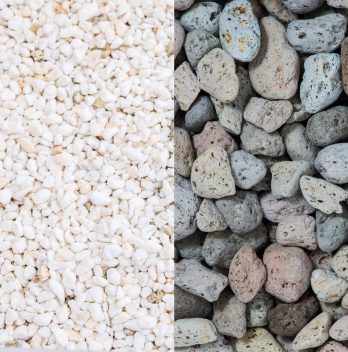
    Perlite is derived from a mined silicon rock that has been crushed, heated, and expanded. It also contains other minerals like iron oxide, potassium oxide, and sodium oxide.

    Perlite is light in weight and color. Before the process of heating, perlite can be brown, red, gray, green, or blue. However, after it has been heated, it becomes light gray or white.

    Perlite is commonly used in ceiling tiles, roof insulation, and for plastering. In addition to these household and industrial uses, they are also used in gardening and hydroponics. It is also a great choice for seedling starters as well as root cuttings.

    Pumice Features & Uses

    Pumice is derived from volcanic eruptions or explosions. It comes from the same type of molten rock that would form granite. Pumice requires much less processing than perlite, so its production is more environmentally friendly.

    Pumice is quite soft but not as lightweight as perlite. It is usually referred to as solidified rock foam. Pumice rocks are capable of floating in the water as they contain some air that makes them light enough to float.

    Pumice is mostly used for construction and horticulture. Unlike regular concrete blocks, the concrete block that has pumice has a lighter weight and enhanced insulating features. They are used in the garden as soil amendments and they can also be used as a growing medium in hydroponic gardening.

    Pumice is especially great for plants that are heavy and predisposed to turning over in the water, as it will keep them rooted in one place.

    Perlite Vs Pumice

    Let’s compare some features between perlite vs pumice to know our best pick:

    • The pumice stone comes in various sizes to suit various requirements and they are lightweight but not as lightweight as perlite.
    • Pumice is capable of floating but it is still a little heavier than perlite so it can’t be blown away by wind or storm, unlike perlite.
    • Heavy potted plants that are prone to tipping over are better off planted in pumice rather than perlite to keep them steady. Thus, your plants are safe from wind, heavy rain, as well as routine watering.
    • Unlike perlite, pumice does not decompose easily. This implies it can last you for a long time without the need for replacement thus, reducing running costs.
    • Perlite is not as pricey as pumice. It’s easier to purchase them at your local garden center or nursery.
    • Perlite is also easy to access, however, pumice might be expensive in your zone and it might be difficult to get the appropriate sizes that you need. Mostly, bigger sizes of pumice are common. However, smaller sizes may not be always available. The good news is that there are various retailers online where you can obtain the appropriate type and size that you want. All you need to do is to pay a bit for the shipping fee and have your pumice delivered comfortably to your doorstep.

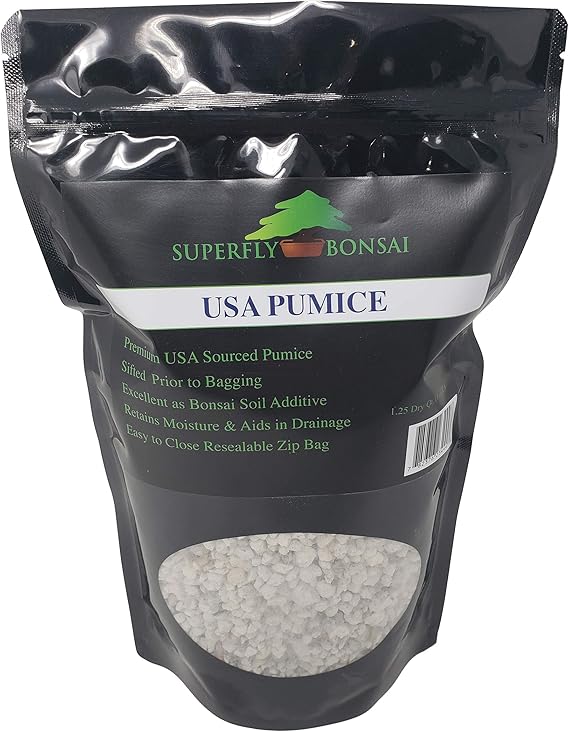
    USA Pumice – 1.25 Dry Quarts

    81yKFT4HWHL. AC SX569

    Pumice vs Perlite For Indoor Plants

    Both pumice and perlite are excellent for improving soil properties such as drainage and water retention. However, pumice has better porosity and therefore offers better drainage potential. But perlite is better at retaining moisture compared to pumice.

    Both products are used for different purposes in indoor gardens. Pumice is better suited for tropical plants that need to retain water, while perlite works better for plants like orchids as a soil supplement.

    Pumice and perlite will improve the following soil properties when used properly for the appropriate plants;

    • soil drainage
    • soil aeration

    In terms of having particle size options to fit the size of your indoor plant pots or planters, perlite offers more options. Other advantages of perlite include that it is more readily available for purchase, as well as that it is stable and will not disintegrate over time or release any chemicals into the soil

    Unless you absolutely have to use pumice, we would recommend perlite as our amendment of choice due to the many advantages and choices that it offers.

    What is Perlite Made Of?

    Perlite is a naturally occurring mineral. It exists as a type of glass in nature, that is formed when volcanic obsidian glass is saturated with water, a process that happens over a long period.

    Like all other volcanic rock, it is pretty dense and heavy in its natural form. Typical perlite is made up of the following ingredients; 

    • 70-75% silicon dioxide
    • Aluminum oxide
    • Sodium oxide
    • Potassium oxide
    • Iron oxide
    • Magnesium oxide
    • Calcium oxide
    • 3-5% Water

    Before the use of pumice in plants, it has to be processed into the light stuff that we see, which looks like styrofoam.

    What is Pumice Made Of?

    Pumice is also a type of volcanic glass. It is very porous and is formed when there are explosive volcanic eruptions. The high porous nature of the pumice is caused by depressurization and rapid cooling after the lava gets ejected from the volcano.

    Pumice in its natural form has colors that range from white to dark grey, depending on the place where it is mined. Some gardeners use pumice as a top dress for their soil to give it a more attractive look than just the soil or dirt.

    Pumice Or Perlite For Succulents?

    Both pumice and perlite can be used for succulents. However succulents like pumice more. This is because pumice absorbs and releases water slowly while helping aerate the roots through the soil at the same time. 

    If you are using organic soil to grow your succulents, we would highly recommend that you add some pumice to it, this will greatly help your plants. You can also grow succulents using only pumice, you will however need to be very careful with your watering frequency, as too much may damage your plants.

    Pumice is also a bit heavier than perlite. It will work better for top-heavy plants like some succulents by helping to stabilize them. Because it is heavier, it also means that there will be less waste as you will not use much product through wind, rain, and routine watering.

    Perlite Vs Pumice: The Option Chosen

    Even though the two are great, we still have one clear winner. So, our pick is pumice! Pumice is an excellent option especially in enhancing the soil in your succulent.

    Conclusion – Perlite Vs Pumice

    Both perlite and pumice are great for soil amendments in your garden. They will both enhance soil aeration and drainage for your succulents, cacti, and other plants.

    However, pumice is of greater option because it is long-lasting, doesn’t decompose easily, will hold your heavy plant steady, and so on.  The main downside to pumice is that it’s a bit more pricy than perlite, and not as easily accessible.

    All in all, you should go for the one that will suit your needs and plants best.

    FAQ’s

    What’s the difference between pumice stone and perlite?

    Pumice is a volcanic rock that contains many small air pockets. It can be used as a light weight, inexpensive, effective insulation material. Perlite is a lightweight, expanded, non-combustible glassy volcanic rock with excellent insulating properties. Both are used for insulation in building construction. Pumice is often used as a form of insulation because it is soft and easy to work with.

    The most common use of pumice is in the production of lightweight building materials. These include lightweight concrete blocks and panels. Pumice is also used as an aggregate in asphalt. It is also used for decorative purposes in garden and outdoor applications. When pumice is combined with water, it becomes a hydraulic cement.

    Pumice is pretty good but if you get it from the hardware store it’s often dusty and has grit in it. It’s not as fine as perlite.The grit can be dangerous in certain applications so I’d avoid  using it unless you have to.

    Perlite is much finer than pumice. It is also naturally non-toxic. You’ll need to test it with a magnet and a metal detector. If you find any iron or other metals, then don’t use it. It could give off harmful fumes when burned.

    Can I use pumice instead of perlite?

    Yes, it is possible. Pumice has a higher water content than perlite, so you may need to increase the amount of fertilizer you use. Pumice has a low level of nutrients, so you will need to fertilize your plants. It also doesn’t contain any harmful chemicals. You can use pumice as a soil conditioner, too. Pumice is one of the best soils for growing plants.

    Pumice is used to create a rich, fertile soil by adding it to topsoil. It is said to improve drainage and to prevent the collapse of the soil structure.

    It is also used as a mulch for plants that prefer cooler temperatures, such as strawberries, tomatoes, and peppers.

    Pumice is a great material for weed prevention. It keeps the soil loose and aerated, which helps to keep weeds from growing. If you are having problems with weed growth, try using pumice.

    Is pumice better than perlite?

    I have used both, and they work about the same. They both will absorb water, and they both are fine.

    The only difference is that perlite absorbs water more quickly than pumice, so if you’re starting a seedling from seed, use pumice instead of perlite. You can also buy hydroponic soil mix. It comes in a bag with nutrients already added. You’ll probably want to add some fertilizer as well, but that’s up to you.

  • Grow Light Color Temperature – What is The Best For Plants?

    Grow Light Color Temperature – What is The Best For Plants?

    Are you ready to learn about growing light color temperatures for plants? Let’s get started. When it comes to indoor hydroponic gardening, one crucial aspect is the growth light color temperature. A grow light provides plants with light that mimics natural sunlight so that the plants can still be able to carry out all the processes required for photosynthesis to facilitate growth and development.

    For plants in hydroponics to grow well, you need to get the right to grow light color temperature for the specific growth stage they are at.

    It can be quite confusing to understand these different light requirements. However, all hydroponic growers need to understand all your plant’s light needs. This is why we will be enlightening you on color temperature, light spectrum pigments, their requirement for various plant growth stages, and more. So, read on to learn.

    The Light Color Spectrum

    Let’s talk about the color spectrum of sunlight. Normally, plants make use of natural sunlight to photosynthesize, when planted where they can access it. The colors we see sunlight produce are usually white light or yellowish-white light.

    These white colors the sunlight produces are a mix of several colors of a rainbow and the mixture gives the white or yellowish-white colors. Therefore, the graphical display of all these colors is known as the light color spectrum.

    Sunlight Color Spectrum

    Grow Light Color Temperature

    Plants develop and progress throughout their life cycle from the seedling stage to the vegetative phase, flowering, and then to the fruiting phase. Therefore, different colors of light are required for all these stages of a plant’s life cycle.

    The grow light color temperature comes in different hues of spectrum required for your various plant growth stages.

    The color temperature of any light source is the tones or colors of light seen by the human eye. We measure the light from the bulb of these grow lights by color temp and color temperature is measured in degrees Kelvin.

    Kelvin Scale Of Temperatures

    Let’s take a look at the Kelvin scale which is expressed in color temperature. From the Kelvin scale, we can see the soft tones of the red light spectrum at the lower end. These red light tones are required for the flowering and fruiting phases of the plant’s growth cycle.

    Kelvin Scale Of Temperatures

    There is the tone of the blue light spectrum on the other end of the Kelvin scale. The vegetative phase of a plant requires this light. Grow light such as HID and fluorescence makes use of this scale.

    Grow Light Color Temperature: HID & Fluorescence Grow Light

    HID (high-pressure sodium and metal halide) lights are the traditional grow lights we know of. They are pretty different from LED grow lights in that they don’t give out single colors the way LED lights do.

    For these HID and fluorescence grow lights, the light they emit usually has yellowish soft hues. The grow light fluorescence bulb has its color temp as either cool white (which has more blue hues) or warm white (which has more red hues).

    Grow Light Color Temperature: LED

    LED grow lights are one of the most precise types of lighting. This is because they will supply you with the exact or accurate grow light color temp your plants need. The LED grow light will offer your plants a full spectrum. This implies there’s no stress of changing the lights as your plants progress through their flowering and fruiting stages.

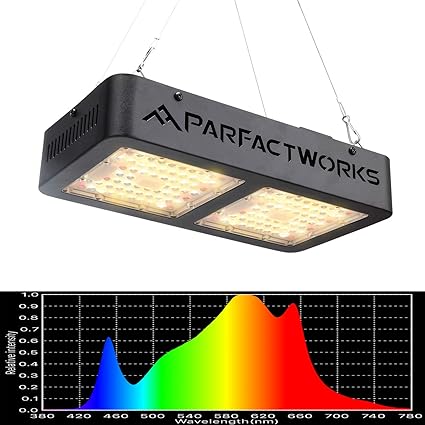
    PARFACTWORKS RA1000w LED Grow Light Hydroponic Full Spectrum

    71Cod8597VL. AC SX425

    An appropriate LED should possess these colors for all your plant life cycle in the right measurements: Red LEDs (600 to 700 nm), Blue LEDs (400 to 500 nm), white LEDs, and infrared LEDs (700 to 800 nm).

    Light Color Spectra Pigment That Plants Use

    Plants make use of light for the photosynthesis process and this is made possible by some chemicals or pigments present in the plant leaves. Examples of these pigments include Chlorophyll A and B, carotenoids, etc.

    So, let’s take a look at what some of these pigments do with light:

    • Chlorophyll: plants are quite rich in chlorophyll. Chlorophyll is one crucial pigment that plants use for photosynthesis. They use chlorophyll and light energy to produce plant energy for use in growth and production.
    • Carotenoid: another abundant chemical or pigment found in plants is the carotenoid. It works hand in hand with chlorophyll. They help plants absorb light at the same time sending the energy back to chlorophyll. Carotenoid also serves as protection for chlorophyll from photodamage especially when the plant is predisposed to too much light.

    3000K vs 4000K grow light, Which One is Better For Plants?

    Two of the most popular color temperatures for grow lights are the 3000K and the 4000K. The 3000K is slightly warmer than the 4000K. The colors of the 4000K are also slightly warmer but still yellow. If we put the two lights side by side, the 3000K has a slightly darker tone of yellow-white light, while the 4000K appears to have a lighter shade. 

    So when is the time to use 3000K and when to use 4000K lighting? Both lights produce relatively warm light, but if your plants are in the vegetative and flowering phases, the 3000K light is better suited. If you only need the light for the vegetative stage of growth, then the 4000K lighting is the best of the two options. Both lights will work well, but the 3000K is better for encouraging flowering.

    Lights in the 3000K and 4000K are great for plants as they are slightly cooler. Anything beyond 4000K and the blue color starts dominating, which is not ideal for the vegetative and fruiting stages of plants. Lights with 5000K and 6000K are closer to white, daylight color light.

    Best Color Temperature For Grow Lights

    Light is electromagnetic energy that is measured in wavelengths. Interpreting it this way just makes it easier to make distinctions between the different regions of the wavelengths, by assigning color temperatures to them to understand their different roles or functions in plants. To better understand the relationship between color temperature and wavelength, you can read more here.

    So why is light important to plants and why do they have different preferences for the color of the light? Well, color affects plant growth in different ways. As we have already mentioned, blue light is important for vegetative growth while red light helps to promote flowering and fruit production. The color temperature of a grow light helps you to understand whether the output of the grow light leans more toward blue or red.

    While plants primarily use the blue and red light spectra, there is research that suggests that some species of plants perform best with the full spectrum of light. This may suggest that it can be helpful to choose a grow light that has the full spectrum for your plants. 

    Choose a full spectrum to grow light that has a color temperature in the blue (in the range of 5000 – 7000K) for the vegetative phase of growth and a color temperature in the red range (5000 – 7000K) to help promote the fruiting and flowering phases of growth.

    When you purchase your grow lights, remember that different plants have different Kelvin preferences for growth, so if you are unsure, it might be best to consult a grow light specialist who will be able to provide more insight and help make you more comfortable with your purchase.

    Conclusion – Grow Light Color Temperature

    The plant life cycle will require the various color of light for different stages of the life cycle. All hydroponic gardeners need to know about growing light colors and their suitability for the different stages of growth, so they can get the best production out of their plants. 

    So, we do hope you have learned some things on grow light color temperatures.

    Happy growing!

    FAQ’s

    What is the best color temperature for grow lights?

    The best color temperature for growing plants is between 4,000K and 5,500K. The range of light that a plant needs to survive is 4,000K to 8,000K. This range is called the “thermal optimum” range. Plants are much more sensitive to light than you might think. For example, if you move a plant from a low light setting to a bright, high light setting, it will usually not die, but it may have to adapt.

    If you are unsure of what color temperature to use, just use the color temperature on a light that is as bright as you can get it. You do not need to worry about the color temperature. As long as the light you are using is in the thermal optimum range, your plants should be fine.

    If you move a plant from a high light setting to a dimmer light setting, it can die. This is why we often see plants in florescent lights, which provide very little light, and grow more vigorously than they would if they were in regular fluorescent lights. If your plant is getting too much light, or is receiving no light at all, it will stop growing.

    What kind of light source should I use?

    LEDs are an excellent option for growing plants because they last longer than HID and CFLs. You can purchase LED bulbs in both high intensity and low intensity. Low intensity bulbs provide lower light output, but are more efficient.

    High intensity bulbs provide higher light output, but are more expensive. The most important thing to consider is the number of watts you need. LEDs have a lifespan of 25,000 hours. This means that you can use them for 20 years or more if you use them sparingly. LED bulbs also have better heat dissipation. CFLs and HIDs have a lifespan of 1,000-2,000 hours. If you have a room with no ventilation, you may want to use HIDs or CFLs.

    What does color temperature mean?

    The color temperature (K) of a light bulb is the perceived color of the light as compared to the other colors in the spectrum.

    For example, a 3000K light is orange/yellowish and will warm up the color of your plants. A 5500K light is more blue/purple and will cool the plant down. The difference between the two would be like going from a 4000K light bulb to a 2000K light bulb. The same goes for the grow tent, which is probably similar to having a 4000K grow light but without the ability to adjust it. You could also get a grow light with an adjustable color temperature and use it in conjunction with a grow tent that has an even higher color temperature.

  • U Siphon For Aquaponics – Is It Better Than The Bell Siphon?

    U Siphon For Aquaponics – Is It Better Than The Bell Siphon?

    A U siphon for aquaponics can be an excellent mechanism for efficiently draining your grow beds and ensuring that your system remains healthy. The bell siphon has traditionally been used in aquaponics, so you are probably wondering whether the U siphon could be better than the bell siphon. You will find out the answer to that question in this article, keep reading.

    What is The Purpose Of a Siphon?

    The basic use of a siphon is to drain water from a grow bed conveniently without having to disconnect the pump. The added advantage of this is that during the siphoning process, nutrients remain available to the plants and the rapid movement of the water ensures that there is a high supply of oxygen in the water and the roots can uptake it.

    The process of siphoning may look mystical, but it actually uses the natural law of gravity to suck up the water and expel air from the pipe until all of it is out, and then the water flows out.

    Different types of siphons can be used. Because of the choices that are available and the different opinions around them, it can be pretty confusing. Two common types of siphons are used in aquaponics, the U siphon and the bell siphon. Let us get a good understanding of both mechanisms and make a decision.

    U Siphon vs. Bell Siphon

    The U siphon is convenient, very easy to install, flexible, and can be adjusted as needed. You can install a U siphon internally or externally, making it versatile. The one problem with a U siphon is that it can be quite difficult to fix. So you need to understand the mechanisms of how it works if you are going to do so.

    The bell siphon is commonly used by many growers. It however requires some effort. The bell siphon functions as a single unit, limiting the number of moving parts required. The mechanism of this siphon uses gravity and pressure to drain water and will maintain a minimum volume of water in the tank it drains.

    The main difference between the two siphons is the installation. The U siphon is quite easy to install and flexible. The bell siphon can be faster and has great draining abilities but it can be difficult to install and prime. It may cause trouble even for experienced users.

    A better understanding of these two siphon methods will allow us to decide which to go for. Therefore, let’s dive into the mechanism of the U siphon and the bell siphon.Mechanism of U Siphon for Aquaponics

    Mechanism of Bell Siphon for Aquaponics

    The bell siphon lets water fill up inside a grow bed. After the water has filled up, the bell siphon drains out water from the grow bed. Bell siphon always sustains a moderate water range and drains excess water back into the reservoir.

    The bell siphon operates automatically. It saves you the hassle of manually turning on and off the pump of the flood and drain process. Here is how it works:

    • Stage 1 (Filling): through the water inlet, water floods continuously into the grow bed filling it up from the water pump.
    • Stage 1 (Water lock): when the water fills up the stand siphon pipe to the point of overflow, water begins flowing down through the drain tube and forms a water lock. By this time, the air left in the cup has been sucked out.
    • Stage 3 (Drain): water now drains or flows out of the grow beds. Water from the cup is now sucked out after draining water to a particular level.
    • Stage 4 (Breaking siphon): now as the water drains out and drops down to the level of the bottom siphon pipe, air enters inside. This relieves or breaks up the siphon pipe pressure and stops the drain of water.

    Aquaponics Auto Bell Siphon Kit 6″ Media or Smaller Grow Bed Mini Garden

    51GjfvnBu4L

    This process keeps on going by filling water into your grow bed and siphoning it out. The flood and drain process continues for an unlimited time except when the pump is stopped.

    Mechanism of the U Siphon for Aquaponics

    As we mentioned earlier, the U siphon is very easy to install unlike the bell siphon making it a great option for beginners.

    The main component of the U siphon is the PVC pipe that drains your growing bed. U siphon pipe has an angle of 45, 90, 90, and 45 degrees elbow and a straight pipe. The adjustable U siphon PVC pipe brings in water and the water level does not exceed the loop height.

    The U siphon supplies water in and out of your grow bed. When the water level in your grow bed rises, the water level in your U siphon also rises. The curvature end of the pipe contains air. With the motion of water, this air is drawn out and it activates a suction effect.

    Once the level of water gets to the loop or curvature of the U-shaped pipe, water flows out and siphons out by the suction effect. Now your entire grow bed drains out rapidly from the elbow through the siphoning process.

    Read more about Best Plants for Small Aquaponics

    How to Make a U Siphon F0r Aquaponics

    The primary material you need is PVC piping. To install the piping, you will need to:

    1. Drill a hole right at the bottom of the grow bed. You will then need to use either a threaded PVC or hose adapter to make sure that this hoke is tightly sealed. The pointed end of this implement needs to stick outside the grow bed.
    2. After this is done, you will use the PVC pipe to create a loop. The height of this loop will determine the maximum height of the water level, so remember to consider this when making it. make sure that the loop leaves some space between the loop and the top of the grow bed. For a more detailed step-by-step process on how to make a U siphon, you can watch this video.


    The use of a U siphon in aquaponics is also referred to as loop siphon aquaponics. This is because of the shape of the siphon. The loop works in a simplistic and automatic, and is used for drain ebb and flow hydroponic systems. As the water rises in the grow bed, the water in the loop also rises.

    The aquaponics siphon drain is brought up to where you want the water level in the grow bed to be and then brought back down to the water reservoir. The shape resembles an inverted U shape, hence the name “U siphon”. The U can be squared or rounded at the top, it is up to you to decide on the shape you want.

    Conclusion – U Siphon For Aquaponics 

    There you have it, the comparison between the U siphon and the bell siphon for use in aquaponics systems. The bell siphon is commonly used and easy to understand how it works, however, it can present challenges with installation and priming which can cause significant problems such as flooding if you need to drain your grow beds.

    The U siphon on the other hand is quite simple to install and use, once it is installed properly it will automatically prime itself and will drain your grow tanks to where you want the water level to be.

    When it comes to aquaponics, for your fish and plants to receive sufficient nutrient quantity, it is important to achieve and sustain the right continuous flow of water. A siphon (be it U or bell siphon) is responsible for this. It is used to drain grow beds and it controls and balances the flow of water throughout the system.

    The draining process of siphoning allows the availability of nutrients for your plants. It as well facilitates root absorption of oxygen which will help your plants grow excellently well. A U siphon may b the better option of the two.

    FAQ’s

    How do you make a bell siphon for aquaponics?

    The bell siphon is the device that takes water from the bottom of the fish tank and transfers it into the grow bed.

    The first thing that comes to mind is a simple water trap (e.g. see this). You can use a similar design, but with a bigger hole and a larger diameter pipe to get the water out of the tank. Then, you’d have a small chamber where the bell siphons.

    Making a bell siphon for aquaponics is not as easy as you might think. The first problem is that the shape of your tubing determines how much water will flow through it. You need to choose a shape that allows for more water flow than you need to run your system. If you are designing your own, you will have to calculate how much flow you need to run your system, and then design your tubing so that it can handle that flow.

    The second problem is that the diameter of your tubing has to be chosen based on the amount of flow you want. If you have a garden hose with a 5/8″ diameter, you can’t run a garden hose with a 1/2″ diameter through it without clogging it up. There is a point where your tubing will have to get smaller than the size of the hole in which it is installed, and this will make it impossible to run a continuous stream of water.

    How do I install a bell siphon for aquaponics?

    If you have a bell siphon already, and want to add a bell siphon, you should be able to just follow these steps:

    1. Take off the old siphon. (You can do this with a pair of pliers.)

    2. Take off the top half of the old siphon. (This is the part that will go into your new bell siphon)

    3. Make sure there is no water in the old siphon.

    4. Make sure that the bell siphon has no holes or cracks in it.

    5. Make sure that the bell siphon has a hole that fits perfectly into the bottom half of the old siphon.

    6. Put the top half of the old siphon back on.

    1. Place the new bell siphon over the hole in the bottom half of the old siphon.

    2. Fill the bell siphon with water.

    3. Put the top half of the old siphon back on.

    4. Put the lid on the bell siphon.

    5. Make sure there is no air inside the bell siphon. (Air will make the bell siphon not work.)

    6. If you put a little dish soap in the water, it will help to clean out any water or sediment from the bell siphon.

    7. If you use a lot of dish soap, it can get into the siphon. Then, it will stop the bell siphon from working.

    8. If you do not want to use dish soap, just turn off the water in the kitchen sink and let the water sit in there overnight. The water will clear itself out.

    9. Turn on the faucet and slowly turn on the water. (You may need to turn on the cold water first.) This will make sure that the bell siphon does not get clogged up.

    10. When the water is at the right temperature, slowly start turning on the water to fill the bell siphon.

    11. Wait until the water is full.

    Which is better U siphon or bell siphon for aquaponics?

    I have a 10 gallon tank with about 6 plants in it. I’m new to aquaponics and am wondering if I should get a bell siphon (which will be used for the water flow) or a u siphon (which will be used for my fish). I’ve looked at other aquaponics forums and most people are using a bell siphon but some are saying that a u siphon is better. What’s the difference between the two?

    The bell siphon has a long neck that connects to the tank while the u siphon has a short neck that connects to the tank. The bell siphon is for the water flow, and the U siphon is for the fish. If you only have one of those, you will have to find some way to do both. 

    The answer depends on how you are going to use your system. If it’s just a hobby, then probably the U siphon will be fine. However, if you are looking at commercializing your system, I would go with the bell siphon as it allows you to add more fish.

  • Crawfish Aquaponics – How to Do it Right

    Crawfish Aquaponics – How to Do it Right

    Crawfish aquaponics is possible with the proper knowledge. Although we are more familiar with raising fish in aquaponics, other aquatic animals, such as crawfish, can also be included. You can easily raise crawfish alongside your aquaponics fish.

    Although there can be some limitations to raising crawfish in aquaponics, you can work your way around it.

    What Are Crawfish?

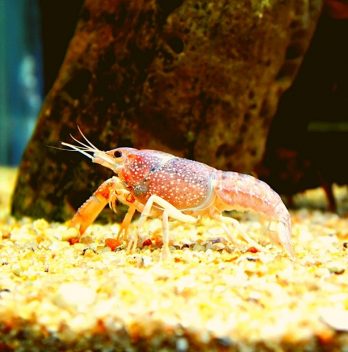
    Crawfish are freshwater crustaceans. They belong to the group of organisms called Astacidea, which also contains lobsters. Crawfish are usually referred to as crayfish. Depending on the location, they can also be referred to as craydids, craybobs, crawdaddies, crawdads, freshwater lobsters, mountain lobsters, rock lobsters, mudbugs, bay bugs, or yabbies.

    The word crayfish is more common in the northern parts of the Eastern United States, while crawdad is used in the central and southwestern regions. Crawfish is a term used farther south, although overlaps exist between the different regions.

    Crawfish are commonly found in the USA, particularly in Mississippi through Louisiana as well as in different parts of the world.

    How To Raise Crawfish In Aquaponics

    Raising crawfish in your aquaponics will add a whole lot of diversity to your system. It is possible to raise crawfish alongside aquatic fish as they can live as good tank mates in your aquaponics system. However, there are things you need to put in place to prevent your fish from eating your crawfish.

    Although not all types of fish will eat your crawfish, the fishes that might end up eating your crawfish are the omnivorous or carnivorous ones and the ones that are two to three times bigger than your crawfish. Also, note that almost all fish may try to eat baby crawfish. However, there are some things you can do to prevent this.

    The good thing about crawfish is that they are bottom dwellers, unlike fishes that love swimming at the water’s top. Crawfish also love hiding places so that is an added advantage. This is why you have to create hiding spots for them in the fish tanks so they can avoid the fish. You can make use of big stones as hiding spots.

    There is always a chance of fish-eating your crawfish. But don’t sweat it. Just try to follow the tips mentioned above to keep your crawfish safe.

    Crawfish & Filtration

    Although crawfish may help in terms of filtration, you will still need to get a filtering system as the plants in your system may not be able to take up nutrients, resulting in inefficient filtration sufficiently. The filtrating crawfish technique is not so superb. This is because as they are cleaning up your system by consuming this excess organic waste from fish, they are also producing their waste materials. Therefore, you will need to add a filtration system to clean your aquaponics system so the waste does not clog it up or cause your water quality to deteriorate.

    Stocking Density Of Crawfish

    Crawfish require a lot of space in aquaponics. As such, you can only raise a few of them in the system simultaneously. This is why it is not advised to raise only crawfish as the fish in an aquaponics system, as the few crawfish will not provide your plant with adequate nutrients. They should be raised with other fish so they both can produce enough nutrients for the plants.

    Stocking Density Of Crawfish

    As we mentioned earlier that crawfish are bottom dwellers. They are capable of taking over your fish tank which is why you need to raise a few of them. When a female crawfish can lay up to as many as 650 eggs at a time, this can cause a rapid increase in the population in your fish tank.

    However, if you wish to sell them, you should help their survival by providing them with more hiding spots. This way, your fish will be limited from attacking the little crawfish and you can guarantee that you will have some for sale.

    Crawfish Growing Requirements

    Follow these crawfish growing requirements and enjoy a smooth crawfish aquaponics system:

    • Temperature:

    Crawfish grow best in temperatures of around 70 to 75 degrees Fahrenheit.

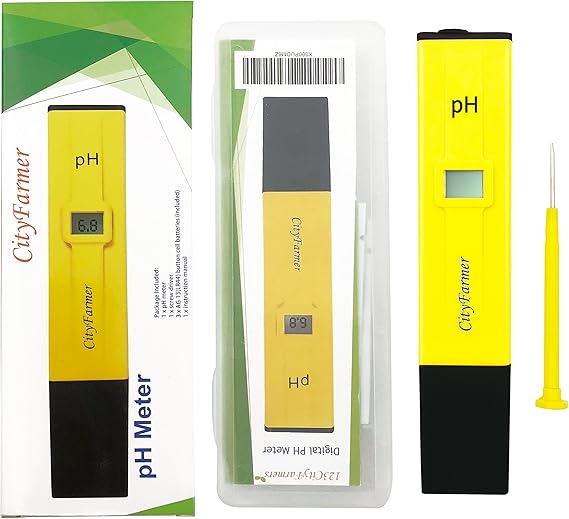
    • pH:

    They also prefer their water pH to be around 7.1 to 8.1. Other species of crawfish will do well with a pH of approximately 6.4 to 8.1. Therefore, make sure you are enlightened on the type of crawfish species you will be raising.

    CityFarmer Hydroponic Nutrient Digital pH Meter with 2 Pack of Calibration Solution Mixture Included

    811BBVA9x L. AC SX569
    • Bio-filtration & Water Quality:

    Ensure your filtering system cleans up excess ammonia and nitrite to a level your crawfish can handle. Ammonia and nitrite toxicity can reduce the survival chance of your crawfish. Therefore, always test the nitrite and ammonia concentration levels to make sure that they remain within the correct limits.

    • Maintain Low Stocking Densities of Crawfish:

    Because crawfish require large spaces in the tank, try to maintain a reduced population. When they start producing offspring and their population gets high in the tank, try to take some out and divide them between tanks. You can sell the little offspring to a bait shop or fish store.

    Crayfish need space to move around, so the ideal stocking density for them in a tank is 5 gallons of water per small crawfish. For larger ones, 15-20 gallons would be perfect.

    Crawfish Feeding Habits

    Knowing what to feed crawfish is very important if you are keeping them, mainly if you are farming them for commercial purposes. You need to provide them right so that they can grow optimally.

    Crawfish are omnivores. They feed on snails, insect larvae, worms, and amphibian tadpoles; some eat vegetation. So they will help you hunt worms, snails, leeches, etc you might have in your system.

    Crawfish don’t usually go out to search for food. They make do with what they have around them. Therefore, there’s no worry about them eating your little fish.

    Crawfish Feeding Habit

    How to Raise Crawfish in a Pond

    If crawfish are raised in a pond, they need to be located in areas that are flat and open. The soils in these areas should be full of clay. An adequate supply of water is also essential for raising crawfish in a pond. You might need to perform regular water changes to maintain excellent water quality for your crawfish growth.

    With regards to soil types, clay loam, and silty clay loams are suitable types for crawfish ponds. The clay is necessary to maintain the structure and integrity of the burrows that crawfish make, as well as important to hold water.

    How to Raise Crayfish in Aquaponics

    Raising crayfish in tanks may not be common, but it is absolutely possible. Here are the crucial factors to consider if you want to run a successful crayfish aquaponics system.

    • Maintain the correct stocking density of 5 gallons of water per small crayfish and at least 15 gallons per large crayfish.
    • Keep the temperature of the water in which they are kept between 70 and 75 degrees Fahrenheit.
    • Do not expose them to direct sunlight. Crayfish do not require light in their environment. So make provide them with either shade or suitable hiding spaces in their tanks.
    • The ideal pH for crayfish in aquaponics is between 7.2 and 8.2. Maintain it at this range for your fish to thrive.
    • Make sure that the dissolved oxygen levels in the water never drop below two parts per million.
    • Feed crayfish a varied diet that includes mussels, worms, snails, and some vegetation. Feed them only one to two times a day. This should be enough for them. It will also help keep your water quality good.
    • Clean crayfish tanks at least once a week to limit the buildup of waste from uneaten feed and feces. This will further help to maintain good water quality in your system.
    • Suitable plants for crayfish include peas, celery, and herbs such as dill and marjoram. Pair your crayfish with these plants and you will have a tremendous and well-functioning aquaponics system.

    Closing Remarks On Raising Crawfish

    Raising crawfish in aquaponics may not be common but it is an exciting venture that a lot of people are currently trying their hand at. It will become more popular shortly as aquaponics farmers learn more about them and how to optimize their growth and production. 

    If you would like to try your hand at this exciting farming method, you can use this article as a guide, and be well on your way to success. Happy farming!

    FAQ’s

    Can you do aquaponics with crayfish?

    The answer is yes. The crayfish will eat the algae, which in turn will give off oxygen and the bacteria that help break down the waste. And then the crayfish will eat the fish food, which will give off more oxygen and the bacteria that break down the waste. There are a few things to consider before you jump right in and start your own crayfish aquaponics system, though. Crayfish do not like to live in the same tank as other animals, so if you have a small aquarium, you should only put one or two crayfish in it.

    If you have a larger tank, however, you can house more crayfish. The crayfish also need to be fed regularly, as they are omnivores. You will want to feed them a mixture of algae, fruit flies, and fish food. It is best to keep the crayfish in a separate tank from your fish, as crayfish are known to eat fish and even each other. This means that you will need to get two tanks – one for the crayfish, and one for your fish. If you are new to aquaponics, you may also want to invest in a water conditioner.

    A water conditioner will help to remove excess nutrients from the water so that you do not need to add as much fertilizer. They are also helpful for keeping your water clean and clear. Aquaponics is becoming increasingly popular as people look for ways to improve their lives without relying on traditional methods. While there is still plenty of room for improvement, aquaponics is a system that has many benefits.I am a photographer. I’m working on an album right now with some very important people, and they have been giving me great advice.

    How big should the tank be?

    The tank can be either bigger or smaller than the grow bed. If you want a small aquarium, it can be as small as a 5 gallon or as large as a 55 gallon. You will want to consider the size of your fish. A very small tank won’t hold much water and won’t allow your crayfish to swim around.

    If you are going to keep crayfish, you will need a tank that is at least 10 gallons, but larger would be better. As for the lights, a plant light is usually not strong enough for plants and fish. I use a couple of 10 watt aquarium bulbs for my aquariums. If you are going to use a submersible pump, make sure it has a good enough power supply to run it. I have used aquarium submersibles that cost about $40. You don’t need a lot of lighting though, as long as it’s bright enough for the plants and the crayfish. I use 3 aquarium bulbs for my lighting.

    Can you feed crayfish to your fish in aquaponics?

    In aquaponics, crayfish are used as a food source for fish and other aquatic animals. Crayfish can be used as fertilizer by adding them to the tank or pond.

  • The Best Kelvin For Growing Plants – How Many Should a Bulb Have?

    The Best Kelvin For Growing Plants – How Many Should a Bulb Have?

    You’ve probably heard of spectrum light and how it plays a key role in the stages of your plant growth. If you are a newbie or have little experience with grow light, and you are wondering what the best Kelvin for growing plants is that a bulb should have, you have come to the right place.

    This article will enlighten you on how to go about selecting the accurate light spectrum, color temperature, and many more key points to consider when purchasing grow lights for your plants. So, read on to gain some knowledge.

    Plants are generally required to grow under sunlight and for indoor gardens, we make use of grow light to accomplish the purpose of sunlight. Some grow lights such as fluorescent bulbs have various colors of light required for various stages of the plant life cycle.

    Before we dive into what the best Kelvin for growing plants is in a light bulb, let’s have a brief introduction to various colors of light.

    A Brief Introduction to Light Colors And Kelvins

    One of a plant’s basic needs is light. This can be in the form of natural sunlight, artificial light provided by grow lights, or any other type of light that can mimic sunlight. It is essential to supply your indoor plants with the correct light spectrum at their various stages (such as the vegetative period) for optimal growth.

    It may seem reasonable to think because the sun supplies white light in full-spectrum, and therefore our grow lights should do the same. This is not true. Sunlight produces different colors of light and the plant receives all these colors.

    Therefore, grow light should have these various colors of light. Plants, however, perform well with red and blue light with a little bit of green and yellow. Because sunlight and other forms of light generally consist of various colors. A simple illustration of the light appearance is through growing light color temperature and it can be delivered or provided by light bulbs.

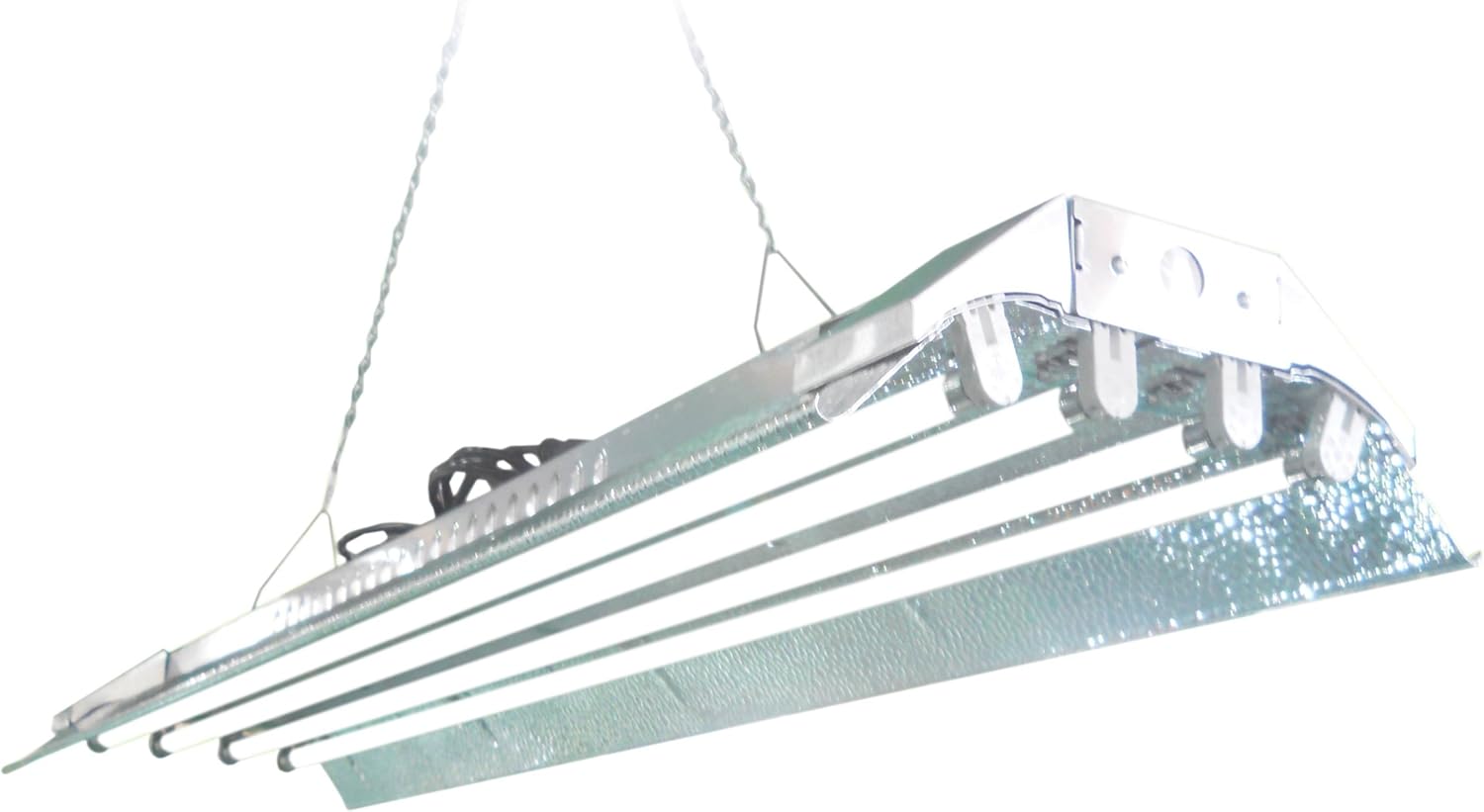
    Durolux t5 Ho Grow Light

    71QdoUzI%2BLL. AC SL1500

    The measurement of bulb color temperature in a source of light is measured in Kelvin, usually abbreviated K, and has a scale of 1,000 to 10,000, with certain specialized lights having even higher values.

    As an indoor gardener, you need to familiarize yourself with the various color temperatures of bulbs for your plant growth. From the Kelvin scale, the lower-end scale has the soft hues of the red spectrum or cool white. On the other hand of the Kelvin end scale, we have the blue light spectrum otherwise known as warm white.

    The red spectrum of light is required for the flowering and fruiting period in a plant cycle. It is the blue spectrum of the opposite end Kelvin scale, which is the daylight hue that is required for the vegetative period.

    What Kelvin Do Plants Generally Need to Thrive?

    What light  Kelvin do plants need for optimal growth? The most important thing to remember is that plants typically absorb red and blue light for photosynthesis and that natural sunlight is in the range of 2,700 to 7,000 Kelvin.

    Plants need different Kelvins to thrive, depending on the stage of growth that they are at. To promote fruiting and flowering, go for lights that are in the range of 3,500 – 4,500 Kelvin.

    Keep in mind however that what is provided here is a wide range. Different plants have different specific Kelvin needs to thrive. So before you purchase indoor lights, it might be best to check with a grow light expert to help you gain more confidence in the grow light that you choose to purchase. 

    There are LED lights that are available in the range of 4,100 and 10,000 Kelvin. There is a very low chance you would ever need these types of bulbs but it is good to know that they are available, if there is ever a small chance that you require them. Lights that provide light that is about 4,100 Kelvin are neutral looking and will promote the growth of the leaf and stem. This light would not beneficial for the vegetative or flowering stages of growth.

    What Kelvin Should a Light Be For The Vegetative Period Of Plants?

    Now let’s get to know how many Kelvin a bulb should have in the vegetative period. The vegetative stage of a plant is between seed germination and the flowering stage of plant development. During this period, the plant is busy carrying out photosynthesis and accumulating the resources that will be required for the flowering stage.

    How much light in Vegetative Period

    Plants undergo vegetative growth during daylight hours, so it is beneficial to give indoor plants light that mimics daylight so that they can successfully vegetate.

    The best kelvin for vegetative growth is in the range of 5,000 to 7,500 Kelvin. They use blue light at the extreme end of the Kelvin scale, the daylight hue. It is the daylight hours plants go through during their vegetative period.

    Grow Light Bulb

    We can refer to grow light bulbs as multitasking light bulbs. They mimic the effect of sunlight function on the various stages of your plants’ cycle.

    T5 and T8 LED tubes are the most conventional grow light bulbs used in most indoor gardens. The Kelvin range of these bulbs usually comes in about 6,500 Kelvin more or less. So this is the color daylight temperature required by plants, especially during their vegetative period.

    There are other types of excellent grow lights also. Another light bulb-like LED light is obtainable in 4,100 and 10,000 Kelvin. Note that a bulb that supplies light of 4,100 Kelvin is known as neutral-looking light. They really don’t do much work with plants that are undergoing vegetative stages.

    How Long Should Your Grow Lights Be On For?

    All plants have different requirements for light color and light intensity. When it comes to the duration of exposure, most vegetables and flowering plants need between 12 to 16 hours of light per day, with flowering plants requiring more time. Indoor plants should be given a minimum of 8 hours a day. This is to try and simulate the natural daylight cycle that they would typically experience per day if they were planted outdoors.

    Putting automated timers on your grow lights would help make this process easier, so you wouldn’t have to worry about turning the lights on or off.

    Where to Put Grow Lights

    What is the best place or spot to place your grow lights? Ideally, the closer the grow light is to the plant, the better because it will receive more light. A grow light or bulb should be placed within a couple of feet of the plants so that they receive enough light, but not too much that they can get burned. Directly above the plants is usually best. If a light is placed more to the side rather than directly on top, it can cause the plant/s to lean over to try and “reach” for the light,

    For other types of plants, however, such as those grown on a trellis, the placement of the lights will be different depending on the direction you want them to grow.

    Conclusion – The Best Kelvin For Growing Plants

    You must get the color of light for every stage of your plants right to that they can reach their maximum growth potential. The journey of plant growth and maturity from their seedling to adult, flowering, and fruiting phases require different colors of the light spectrum.

    We conclude that the Kelvin range that a grow light or bulb should have for plants in their vegetative period is from 5,000 to 7,500 Kelvin. This is the blue spectrum on the Kelvin scale and the daylight hue. Also, for the flowering and fruiting stage in a plant cycle, the red spectrum is required.

    The different light spectra may be needed to fulfill different functions, but both provide essential support for healthy and strong growing plants. Provide your plants with light that mimics the sun’s natural light and you will have happy healthy plants.

    FAQ’s

    Is 4000K good for veg?

    4000K bulb is that better for plants. It’s the most common type of light used in greenhouses.

    How many Kelvin does a plant need?

    I believe it’s the same as in your home, or at least in mine. There are different theories of how much heat is needed to grow a plant. 

    The “Kelvin” theory says that each individual plant needs a different amount of heat. It’s been estimated that a plant needs between 4 and 20°C above its ideal growth temperature to grow normally. But this is only an estimate. That’s because the plant will adjust its rate of growth to match the temperature. The “Thermal Time” theory says that plants need to absorb enough heat to bring them up to the right temperature, then stay there for the time it takes to complete one cycle of growth and then go back down again. So they need more than one degree of heat to do that. The “Time and Temperature” theory says that you don’t need to give your plant any more than the time it takes to complete one cycle of growth and then go back down again. This means that the amount of heat is less than the time and temperature theory

    What color temperature is best for vegetative growth?

    The best color temperature range from 5000K to 7000K.

    What is vegetative growth?

    Plants grow in two ways: by means of a shoot and by means of a root. A plant’s shoot, or stem, is the part of the plant that grows above ground. The shoot is used to produce leaves, flowers, fruits, and roots. A plant’s root is the part of the plant that grows underground. The root is used to take up water, nutrients, and minerals from the soil. All plants grow by means of photosynthesis. Photosynthesis is the process by which plants use sunlight to make food. The process takes place in leaves, and it is carried out by chlorophyll molecules. During photosynthesis, carbon dioxide (CO2. from the air and water from the soil combine to form glucose, which is stored in the cells of the plant.

    Plants use sunlight to make food out of carbon dioxide and water. Plants grow vegetatively to increase their size and to provide more food for themselves. Vegetative growth also allows plants to grow taller.

    What stimulates vegetative growth?

    As with other organisms, plants grow in response to a combination of internal and external factors. Internal factors include: temperature, moisture, light, nutrients, hormones, and growth regulators (e.g., phytohormones). External factors include: nutrients, light, water, soil pH, and microbes. The plant hormone auxin is responsible for initiating the vegetative phase of growth in many plants. Auxin also regulates other hormones involved in growth. Nutrients Plants need both carbon (C) and nitrogen (N) to grow. When soil is depleted of these nutrients, the plant will stop growing until more C and N are available. The root system absorbs C and N from the soil, so as long as the roots are healthy, the plant should be able to grow. Some plants have special mechanisms for extracting nutrients from the soil. For example, peas and lentils store nutrients in their seeds, which are then released to the soil when the seed germinates. The amount of C and N needed by a plant depends on the species and variety. In general, most plants require 1-2% N and 1-2% C. However, some plants such as tomatoes, peppers, and eggplants require more N than C. Light Light is necessary for photosynthesis. Plants use light energy to convert water and carbon dioxide into sugars.

  • Catfish Aquaponics – How Many Catfish Per Gallon Of Water?

    Catfish Aquaponics – How Many Catfish Per Gallon Of Water?

    Catfish aquaponics has been on the rise in recent years. If you are struggling to know how many catfish per gallon of water to stock in your system, do not worry. This article will answer this question for you, and address many more.

    The delicious catfish is one of the most rewarding fish you can raise in your aquaponics system. They are pretty forgiving and tolerant and they can survive in a wide variety of water conditions.

    Knowing the stocking density of catfish will increase your chances of a better and more rewarding relationship between your plants and fish. So let’s dive into how many catfish can fit per gallon of water.

    How Many Catfish Can Fit per Gallon of Water in Aquaponics?

    Getting the correct stocking density for your catfish will help to go a long way in your aquaponics.

    If the fish stocking density in your aquaponics system is low, there may not be enough nutrients to support the plant biomass. Conversely, if you have too many catfish, the filtration system (bacteria, plants, etc.) will not be able to adequately clean the impurities in the system and it may crash. This may in turn cause your catfish due to excess ammonia, and other critical water quality parameters to be out of the ideal range for catfish growth and health.

    How Many Catfish Can Fit per Gallon

    The appropriate number of catfish you can fit per gallon of water is one pound of fish per eight gallons of water. This way, stress is reduced and there’s adequate space for oxygen. However, note that when it comes to a fully grown catfish, you will require more than 8 gallons of water per fish.

    Catfish are fast-growing fish and they usually grow quickly during their younger years. You can increase the quantity of water as your aquaponics system duration increases and the nitrifying bacteria get established.

    Check out the Best Plants for Small Aquaponics and Where to Buy Fish for Aquaponics Systems

    When it comes to catfish aquaponics recommended tank size, depends on the size of your fish. Catfish are fast growers and can grow up to 2 or 3 pounds in 12 months.

    The fact that a whole 8 gallons of water are required for just one small-size catfish shows a large tank is required. Although, if you wish to raise one or two catfish and a small grow bed, you can make use of a small tank.

    Go for a bigger tank so you can give your catfish a good quantity of filtration, aeration, and water flow and your catfish will flourish excellently.

    Let’s take an illustration and see the ratio of a large tank to the number of catfish:

    • Let’s take 6 fully grown catfish weighing 2 to 3 pounds each. The total weight of all 6 grown catfish will be approximately 18 pounds. Therefore, a total of 18 pounds of catfish will require at least 144 gallons of water. (Using one pound of catfish should have 8 gallons of water).

    Other Catfish Requirements

    The tolerance and hardiness of catfish vary with species. Therefore, select the variety of fish that will suit and adapt to your aquaponics system.

    Among the different species of catfish, channel catfish is one of the best varieties, the reason being that they are very forgiving and tolerant to cold water. They are perfect for beginners and they can as well live with other fish such as koi, tilapia, and crappie.

    Other water quality requirements for your catfish to flourish in hydroponics include:

    • Dissolved oxygen: good air circulation and aeration is needed for your catfish. Ensure you use good air stones and air pumps so there is adequate availability of oxygen to suit your catfish. One amazing quality of catfish is that they can breathe air! This means that even if your air pump stops working, your catfish will not die because they will swim to the surface and breathe atmospheric oxygen. They will survive until you can come and fix the air pump and peace will be restored.
    • Food: feed your catfish with good high-quality protein fish food. You can also feed them with worms, black soldier flies, and insects. Ideally, we recommend you supply your catfish with about 2.5% of their body weight. Even though you can’t weigh your catfish weigh all your catfish, you can estimate their body weight from their sizes. A full-grown catfish weighs around 2 to 3 pounds. If there’s uneaten or excess food in your aquaponics system, you will need to readjust the amount of food the next time you feed your catfish. This will help to avoid waste and contaminating the system.
    Catfish Pellet Food 65G
    $16.99
    Check Amazon Price
    We earn a commission if you make a purchase, at no additional cost to you.
    12/12/2025 08:02 am GMT
    • Temperature and pH: catfish can withstand a variety of water temperatures. However, the ideal water temperature ranges from 65 to 90 degrees Fahrenheit. If the temperature goes above or below these standards, your fish will not grow optimally. You will need to stop feeding your fish (to minimize stress on the fish) until you can find a way to get the temperatures just right. They also have good tolerance to pH levels. Their pH can range from 7 to 8.

    How Many Catfish in a Tank?

    Generally, the rule for the calculation of how many fish can go into a tank is 1 inch of fish per gallon of fish. 10 percent of the water should be replaced with gravel where the fish can find a good hiding spot.

    For example, a channel catfish tank size needs 8 gallons of water per fish. This means that you will need a large tank for bigger or more fish that you want to keep. 

    How Many Gallons Does a Catfish Need?

    15 pounds of catfish require about 120 gallons of water.

    What Are The Best Catfish For Aquaponics?

    Several different species of catfish can be used in aquaponics, with each having its advantages and disadvantages. This allows you to select the one that best suits your needs and your system setup. 

    According to the Food and Agriculture Organization, the three best catfish that are grown commercially and grow best in aquaponics are Channel catfish (Ictalurus punctatus), African catfish (Clarias gariepinus) and the Brown bullhead catfish (Ameiurus nebulosus). Let us go into a bit more detail about these three aquaponics catfish.

    1. Channel Catfish

    Channel catfish can be stocked in high densities because they have a high tolerance for sibling densities. They are tolerant of cold water but grow faster at higher temperatures. Another advantage of using catfish in aquaponics is that they can live with other fish such as crappie, tilapia, and koi. So if you want to do a polyculture, it is the best candidate.

    Channel catfish is one of the fastest-growing catfish and will grow very fast in your aquaponics system. They can attain growth rates of 3 pounds in just 12 months. This will ensure that you have a constant supply of plenty of fish to keep your system operating optimally.

    2. African Catfish

    The African catfish is another catfish species that is highly tolerant of sibling density. These fish can be stocked at high density and their growth will not be compromised. These fish can also tolerate a wide range of temperatures but grows best at higher temperatures.

    African catfish are air-breathing. They are a great candidate for aquaponics systems because they can tolerate low dissolved oxygen levels in the water, so in the case where there is a power outage or something that results in a drop in the oxygen levels, your fish will survive for hours in those conditions. Even if a fish happens to jump out of a tank, the fish can survive until you can put it back in the water.

    African catfish are very hardy fish and can withstand a wide variety of environmental conditions such as high ammonia. Growing this fish in your system will have low rates of mortalities.

    A full-grown African catfish will reach a weight of 20 kg. This is provided that the ideal conditions are provided. It can grow up to 2 pounds in a space of 10 months. If the temperature of the water drops below 68 degrees F, the fish will stop growing so you will need to ensure that the temperature never drops below this.

    3. Brown Bullhead Catfish

    The Brown bullhead catfish can also be grown in aquaponics, although it does not grow as fast as the others. It also can survive some periods with no aeration in the water as long as the stocking density is kept low and the water in the tank is shallow.

    These fish are benthic omnivores. They feed on insects, plants, worms, crayfish, and food pellets. Temperatures of 78 – 82 degrees Fahrenheit are ideal for these fish, and at this range, they will grow up to 1.10 pounds in two years.

    Final Say – Catfish Aquaponics

    Catfish are great fish to keep in an aquaponics system. These fish are heavy feeders, meaning they will provide sufficient waste that will be used as nutrients for your plants. They are also highly tolerant of sibling density, meaning that you can stock a lot of them in a single tank and they will continue to grow well. This limits the number of tanks that you will need for your system.

    Tilapia used to be the most common fish grown in aquaponics, but catfish is also a good candidate. Whether you are a novice or an experienced fish culturist, the catfish is a good fish to try.