Author: Eunice

  • Leaving Grow Lights On 24 Hours

    Leaving Grow Lights On 24 Hours

    The impact of grow lights in hydroponics gardening is very essential as it mimics the work done by natural sunlight. There’s is no disputing that leaving grow light on for long will result in faster growth. However, the question is: is leaving your grow lights on for 24 hours ideal? Let’s look into this.

    Leaving your grow lights on for 24 hours will sure supply your plants more light and if you notice they aren’t getting adequate light, increasing the number of light supply is fine. However, this is usually not the ideal way out and we will let you know why.

    Can You Leave Grow Lights On 24 Hours A Day: Ideal Or Not?

    It is not the best idea to leave your grow light on for 24 hours even if your plants are not getting enough light supply. The best solution is to obtain more light installations or switch to a stronger grow light. Thus, it’s not ideal to leave your grow light on all day and we will give you more reasons.

    Reasons Why Leaving Grow Lights On For 24 Hours Isn’t Ideal

    Let’s take a look at some reasons why leaving your grow lights on 24 hours is not recommended:

    1. No Resting Time For Plants: when you run your grow light all day, your plants will have no time to rest. Just like a human being needs rest, plants also require a resting stage. Have in mind that the natural sun does not go up all day. We have the night time which is the dark cycle of the plants. Allow your indoor hydroponics plants to also have this dark cycle. During the dark cycle which is the resting stage, it is believed plants use this period to convey nutrients into the most distant part of the plants.
    2. Not Ideal For The Flowering Phase: 24 hours lighting duration is not ideal for plants that need to enter the flowering phase. Your plants won’t transition into the flowering phase unless you decrease the hours of lightening. Now if your plants are already in their flowering phase and you up the light duration to 24 hours, doing that can be quite catastrophic. This can cause your plant to go back to the vegetative phase and it might even take a long time to return to its flowering phase.
    3. Additional Cost: An additional cost is another reason. More electricity will be used and it might require you to change the bulb frequently.
    4. Additional Heat: more heat is will be emitted when you leave the grow lights all day. It will require you to also run more fans as well as other cooling instruments to control the excess heat.
    5. Puts Stress On Equipment: additional stress is put on your equipment as they are working all day without rest. This can reduce the lifespan of your equipment.

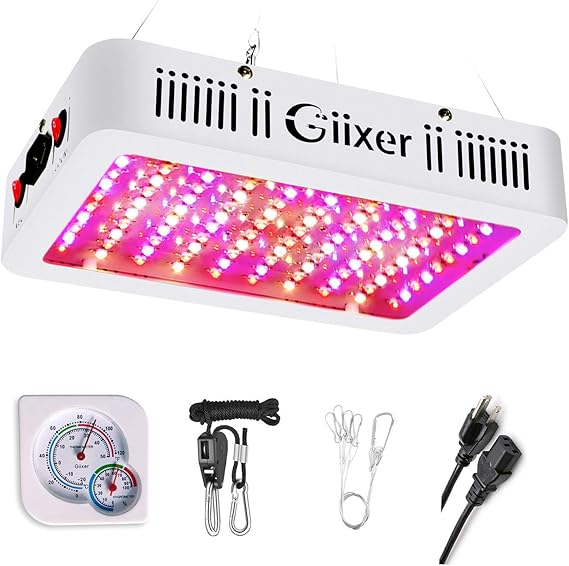
    Giixer 1000W LED Grow Light, Dual Switch & Dual Chips Full Spectrum for Hydroponic Indoor Plants
    71GAL%2BeUBUL. AC SX569

    Leaving your grow lights on for 24 hours long has just one advantage. Your plant receives more light and it will result in rapid growth. This is usually ideal for plants that require only the vegetative phase. So, plants like veggies may benefit from this. Nevertheless, the disadvantages of leaving your grow lights on for 24 hours outweigh the advantages.

    How To Determine Light Duration: Factors To Consider For 24 Hours Of Light

    Put these factors into consideration when deciding the duration to leave grow lights on:

    1. Type Of Plants: there are different types of plants namely low-light, medium-light, and high-light plants. Always determine the type you are growing.
    2. Type Of Grow Light: the types of grow light we have are LED, compact fluorescents, regular bulbs, metal halide, and high-intensity discharge lights. All these grow light supply different capacities of light so you can choose one whichever that suits your growing needs.
    3. Growing Phase: vegetative type of plants may benefit from 24 hours light duration. But flowering and fruiting plants will require a dark phase. The cloning or seedling germination phase is critical so they require both light and dark phases. You can supply them with 12 to 16 hours of light and 8 hours of the dark phase.
    How To Determine Light Duration: Factors To Consider For 24 Hours Of Light

    What Are The Ideal Hours For Running Grow Light?

    It is required to supply your hydroponics plants with at least 12 hours of light and at most 18 hours of light daily. However, if you notice your plants aren’t receiving optimal light you can replace the fixtures or switch to a more powerful light.

    Light Output Plants Require

    All flowering plants and fruit-bearing plants require 20 to 40 moles of light daily. 18 hours grow light duration can supply 20 moles of light if you make use of LED grow light that has 308 micro-moles of light.

    For a 12 hours light duration to produce 20 moles of light, your grow light must be able to supply about 462 micro-moles of light.

    FAQs

    What happens if you leave grow lights on all the time?

    You’re probably wondering what happens when you leave grow lights on all the time. After all, you’re growing plants and there’s no doubt that they will need to use a lot of energy to do so. If you have ever looked at grow lights before, you may be surprised to find out how much power they actually use.

    This is a very interesting question. I’ve had a lot of experience with grow lights and what I do know is that I don’t leave my lights on all the time. I only turn them on when I need them. The first thing that comes to mind is the light spectrum. If you leave your lights on all the time, the spectrum will be different than it would be if you were to turn them on at a specific time. This will affect the quality of the plants, and it could also cause other problems.

    Another thing that I’ve noticed is that my lights tend to stay warmer. When I first started using them, they were so bright that I thought they were burning the plants. But as time went on, I discovered that they actually helped the plants by increasing the temperature, which allowed them to grow faster. Now I know this might sound weird to some people, but for me, turning the lights off for a few hours has worked out well. It doesn’t seem to affect the plants much at all.

    Why shouldn’t I leave my grow lights on all the time?

    You risk burning your plants. This is probably the biggest reason why you shouldn’t leave your grow lights on for 24 hours.

    The fact is that when you leave grow lights on for 24 hours, it creates an environment where your plants can use up all of their energy reserves and grow to a point where they can no longer recover. This can result in stunted growth, and even death.

    You also risk wasting electricity. It’s true, if you’re using LED grow lights, then you’re going to be using a lot of electricity over the course of 24 hours. If you’re using a 10-watt grow light for 24 hours, then you’re going to be using up 1,000 watts of electricity.

    Can seedlings get 24 hours of light?

    You may think that this is a time when it would make the most sense to keep them showered in light non-stop, b ut the truth of the matter is that just like mature plants, seeds need to rest after a certain period of time.

    What should I consider when it comes to light duration?

    Light duration is one of the most important factors to determine the quality of a light. This is because it affects the plants growth, flowering and fruiting cycles. It also affects the light spectrum. You can have a very bright but short light duration. Or you can have a very weak but long light duration.

    1.To determine the light duration, you need to know the following factors:

    The intensity of the light source

    The spectrum of the light

    The amount of light emitted at any time

    The color temperature of the light source

    The size of the plant container

    The light source

  • Growing With Compact Fluorescents

    Growing With Compact Fluorescents

    Growing your indoor hydroponics plants with compact fluorescents is by far the easiest and low-cost grow lights to use. Compact fluorescents are the most common type of light you can find in most houses and it’s been available for over 2 decades.

    Amongst the various types of grow lights we know, compact fluorescent is the easiest to find and they’re great options for newbies. They’re also cheap, and they will do a fine job when it comes to growing various types of plants.

    Let’s dive in and discuss growing with compact fluorescents for the best results in your hydroponics garden.

    What Are Compact Fluorescents Lights (CFL)?

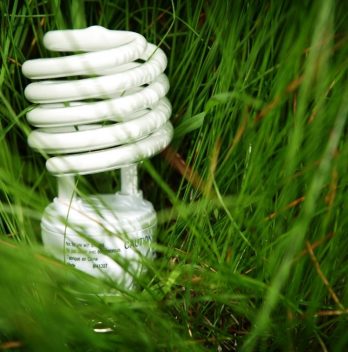
    Compact fluorescents light is an excellent light source to supply to your plants. They are great in giving a great spectrum of light for your growing plant needs.

    Compact fluorescent light CFL came about as a replacement for the classic incandescent lamp. Although incandescent lamps were great, they just burn hotter and waste too much electricity.

    Contrarily, compact fluorescent light gives out less heat and consumes less energy. At the same time, they supply an efficient and similar amount of light as the incandescent lamp, thus making them a better choice.

    What Are Compact Fluorescents Lights (CFL)

    Why Use Compact Fluorescents For Growing?

    Compared to the more expensive grow lights such as metal halide, LED grow light, and high-pressure sodium, compact fluorescents will offer almost the same function as others with lesser cost. They will also make use of lesser electricity, thus making them cost-effective.

    Another added advantage is that they can be customized as they come in various shapes and sizes. They also come in various ranges of wattage. They are easy to install and you can fix them close to your plants for optimal results.

    Types Of Compact Fluorescents For Growing

    Most compact fluorescents don’t come in full-spectrum, they usually come in two colors namely warm and daylight colors. Kelvin scale is used to measure or determine the colors of light the bulb emits.

    Here are the types of compact fluorescents you may find in the market:

    • Warm Colors: measured 2000k/2700k on the Kelvin scale. The warm colors emit red and yellowish spectrum. This type is ideal for the flowering phase and blooming.
    • Daylight: measured 5500k/6500k on the Kelvin scale. The daylight emits cool and blueish colors. It is ideal for all growing phases and great for the vegetative phase.

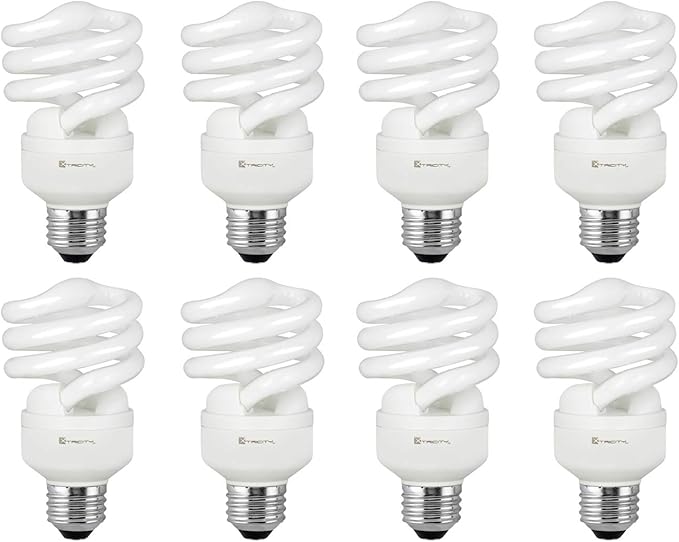
    Compact Fluorescent Light Bulb T2 Spiral CFL, 4100k Cool White, 13W (60 Watt Equivalent)

    61NuMs7vWFL. AC SX679

    Other types you may find are the dual spectrum which has been customized to emit yellow colors and a mix of blue colors.

    How Much Bulbs Or Watts Is Needed For Growing

    The amount of light required for growing will vary solely on the type of plants because some plants require more or fewer watts.

    For a general guideline, you can supply your plants with about 80 to 100 watts per square foot of growing area. Some vegetables require about 50 to 70 watts. For example, indoor lettuce plants don’t require much light because they are fast growers. However, other plants such as tomatoes, peppers, cucumbers, etc, require more lights or watts.

    How Many CFLs Per Plant

    You should be able to deduce if any of your plants require more light by accessing the growth rate of all the areas of your garden. If some parts are booming well and some parts are struggling to pick up, then that’s a situation of not covering all the plants’ angles with light. Adjust accordingly and continue to monitor the growth rate of all plant areas.

    How Many CFLs Per Plant

    How To Use Compact Fluorescents For Growing Plants

    We admire the fact that one can plug compact fluorescent into regular light sockets. You can arrange them as you please because they come in different sizes and shapes and they are highly customizable.

    Where To Put Compact Fluorescents

    Place the light at least 4 to 6 inches away from your plants. Every angle of the bulb emits light so do your best for this light to point towards your plants’ directions.

    Usually, some light will point away from your plants. But to utilize most of the reflected light, make use of reflectors so most of the light emitted can point towards your plants.

    Apart from using reflectors, you can also make use of white paint, aluminum foil, or panda paper as substitutes.

    FAQ’s

    Can plants grow under compact fluorescent?

    It’s a question that has been hotly debated for years, and there are a lot of conflicting reports. The latest one comes from the journal Nature Plants, which reports on a study led by the University of Edinburgh’s School of Biosciences, in which researchers grew tomatoes, lettuce and other plants under compact fluorescent light.

    The results were mixed. For some plants, it had a significant effect; for others, not at all. Some were better able to convert CO2 to sugars, while others were less efficient. In all cases, however, the plants grew better than they did under traditional light. CFL bulbs are getting more and more popular as energy costs rise.

    The use of compact fluorescent bulbs is a boon for the environment, but some people are concerned about their effect on plant growth. Some plants will not tolerate the higher temperatures produced by compact fluorescents.

    What are the disadvantages of using compact fluorescent light bulbs?

    The first disadvantage is that they do not last as long as regular incandescent bulbs. Most compact fluorescent bulbs only last about 10 to 12 years and they start to dim after 4 to 5 years. The second disadvantage is that they consume more energy than regular incandescent bulbs. Compact fluorescent light bulbs require approximately 60% more energy than regular incandescent bulbs, so if you have a lot of them, you will be paying more for electricity. They are not as bright as standard incandescent bulbs. They don’t last as long as incandescent bulbs. They have a tendency to dim too quickly after turning on. They also have a shorter lifespan than standard bulbs. Another disadvantage of CFL’s is that they can be difficult to get working. If you need to replace an existing fixture, there may be a problem getting it to work properly with a CFL. 

    Can plants live with only fluorescent light?

    In general, when the light intensity is the same, plants grown under fluorescent light do not grow as well as those grown under natural light. Fluorescent light is a type of artificial light that uses ultraviolet light to stimulate plant growth. It is made up of different wavelengths of visible and invisible light.

    In general, plants can tolerate fluorescent light at an intensity of around 25 foot candles (2.5 watts per square meter). At this level, plants grown in artificial light will have some yellowing of leaves. If you have plants in a small space, you may find it beneficial to increase the light intensity of your plant lights. If you are growing plants in the home, you should look for a combination of incandescent and fluorescent light bulbs. These will produce the best balance of natural light and artificial light. The fluorescent light is used to stimulate plant growth.

    Closing Remark about CFL Grow Light

    It is pretty convenient growing with compact fluorescent light in your hydroponic garden. You enjoy a cost-effective technique to supply light to your plants while still enjoying great results.

    We have highlighted above some useful points to assist you in the use of compact fluorescent light, CFL. With that, we hope you are able to utilize some of these tips and come out with amazing results.

  • PH For Hydroponic Lettuce

    PH For Hydroponic Lettuce

    You might be interested in growing lettuce hydroponically. If you’re wondering what’s the best pH for hydroponic lettuce, we will let you know in this post.

    Leafy greens such as lettuce are some of the most common crops to grow in hydroponics. They are especially great for hydroponic newbies. Lettuce is pretty easy to grow and you will derive lots of healthy benefits from incorporating it into your diet.

    Now growing hydroponic lettuce has some requirements such as a balanced pH, nutrient solutions, accurate temperature range, etc. We will cover the best pH for hydroponic lettuce and other requirements you need to know. So, read on to learn.

    Lettuce Hydroponic System

    The lettuce hydroponic system is a method of growing lettuce without the use of soil. Water solutions dissolved in nutrients are used to grow lettuce plants.

    With a lettuce hydroponic system, you enjoy faster growth, higher yield, healthier crops, and many more benefits. You can commence lettuce hydroponic by purchasing a complete hydroponic system or go for a DIY unit.

    Required pH For Hydroponic Lettuce

    Constant monitoring of your lettuce nutrient solutions is paramount in maintaining a smooth and running system.

    The required pH for hydroponic lettuce ranges from 5.6 to 6.2. This pH range is acidic enough to reduce the activities of algae and at this pH range, plants can absorb nutrients adequately for their growth.

    The pH range for seedlings should be adjusted to 6.4 and as your plant matures, the pH should be adjusted to 6.0.

    However, if the pH goes high on the pH scale, it falls into the alkaline range which is not good for your plant. The alkaline range that’s too much or too high can cause a nutrient lockout. Nutrient lockout causes the inability of your hydroponic lettuce plants to absorb nutrients.

    When nutrient lockout occurs, your lettuce plants will start to show signs of nutrient deficiencies. Symptoms such as yellowing of leaves, wilting of plants, stunted growth, and so on will be seen.

    Required pH For Hydroponic Lettuce

    You may end up losing your lettuce plants if action is not taken fast. Hence, ensure you always monitor your pH levels at least once a day.

    You should also note that plants absorb nutrients at various pH ranges. Hence, the pH level is borne to change constantly. The only thing you can do is to make sure they fall in between the lettuce plant’s recommended pH range which is 5.6 to 6.2.

    Making use of pH up and pH down products are great to maintain a steady and balanced pH range.

    Hydroponics Nutrient Solution For Lettuce

    The recommended hydroponic nutrient solutions to successfully grow lettuce are those that contain majorly calcium, magnesium, and potassium, and they are needed in high quantities.

    Calcium is especially crucial for the growth of lettuce because a calcium deficiency can cause lettuce leaf tip burns. This issue is very common so ensure the levels of your calcium are accurate.

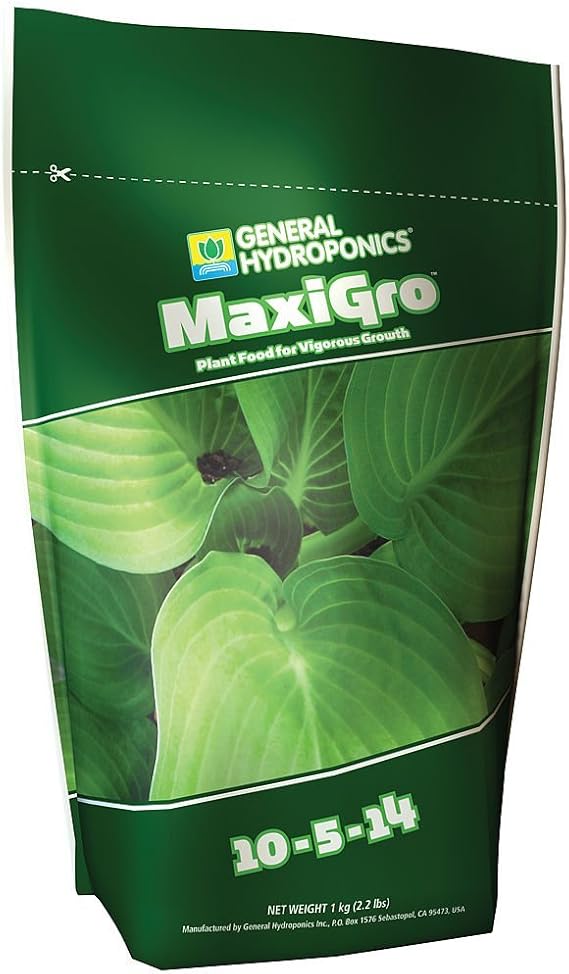
    General Hydroponics MaxiGro Plant Food For Vigorous Growth, 2.2 lb

    The nutrient solutions must provide all necessary key elements for maximum production at their vegetative stage. At the same time, these nutrient solutions must not push the lettuce into its flowering or bolting stage. Flowering only causes bitter lettuce and we want to avoid that.

    Although lettuce has different varieties and some are more or less sensitive to nitrogen: always ensure the nutrient solution that you are buying suits the type of lettuce variety you will be growing. Read the nutrient pack instructions for better directions and use.

    Other Requirements For Hydroponics Lettuce

    • Temperatures: The recommended temperatures should range from 68 to 75 degrees Fahrenheit. Note that all varieties of lettuce love cool temperatures. If the temperature is high, bolting or flowering will take place. We however want to prevent bolting from occurring because it always gives rise to bitter lettuce leaves. Temperatures that exceed 77 degrees Fahrenheit will cause bolting.

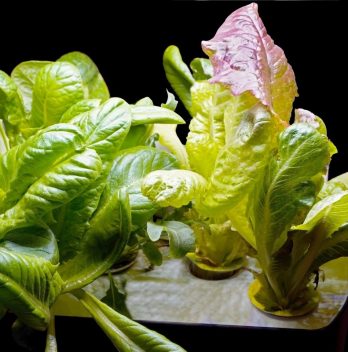
    • Light Requirements: Lettuce plants do not require much light. Light duration from 10 to 15 hours daily is enough. They can be supplied with moderate or low light.

    Other Requirements For Hydroponics Lettuce - Light

    • Aeration: Some lettuce varieties can tolerate low oxygen levels. However, we recommend you always maintain a well-aerated system as this will boost the healthy growth of roots. We recommend dissolved oxygen concentration (DO) to be around 8 ppm.

    • Growing media: Lettuce will do well in most growing media such as rock wool, coco coir, etc. However, the main growing medium is the nutrient solution. It is the nutrient solution that provides most of the support for lettuce growth.

    Can Vinegar Be Used to Lower pH in Hydroponics?

    Vinegar, also known as acetic acid is a weak acid that can be used to lower pH in hydroponics systems. It can however be used only as a temporary solution as it does not remain stable for long.

    The pH in hydroponics changes constantly so it would be better to use an acid with more stability, such as phosphoric acid.

    How Do You Use a Hydroponic pH Meter?

    A pH meter is a very important tool to have and use if you are running a hydroponics system. It is more important than it would be if you were growing plants in the soil. The reason for this is that pH fluctuates more in aquaponics than in a soil-based plant-growing medium. 

    Soil has what is referred to as a buffering capacity. What this means is that it can correct for pH changes to be the in the right pH range for the plants that you are growing. Soilless growth media such as those used in hydroponics systems lack this ability and advantage.

    To be able to manage the pH in your hydroponics system, a pH meter like this one is an absolute necessity. You will need to monitor the pH of our system daily to avoid any adverse consequences. The thing with unfavorable pH changes is that you want to catch them as early as possible before they cause any problems which may damage or even kill your fish. Here is how you use a hydroponic pH meter:

    • Using test strips

    Using test strips is by far the cheapest way to test your hydroponic pH. Test strips are covered with a pH-sensitive dye that will change color when dipped into the water. You will then compare this color to the color chart to determine the pH of your hydroponics solution

    • Liquid test kits

    This is another popular method used to test for pH. It is also more accurate than the test strip method, so if you are looking for more accuracy this may be the choice for you. These test kits are commercially available and can be purchased from various distributors. The way this work is that you put a few drops of pH-sensitive dye into a vial containing your water or nutrient solution. The color of the solution will change, and you will compare this color to a color chart to determine the pH, just as you would do with the test strips.

    • pH meter

    The best and most efficient way to test pH in your hydroponics system is with the use of a digital pH meter. They come in different types and price ranges. You can find one to suit your needs as well as your pocket. Digital pH meters are very easy to use, simply insert the electrode into the water and it will give you a pH reading. Remember to calibrate your meter regularly so that it will give you accurate readings. 

    Can You Use Hydrochloric Acid to Lower pH in Hydroponics?

    Hydrochloric acid can be used to lower pH in hydroponics. It can however be dangerous in high concentrations, as it can damage your plants. So you need to be careful if you use it, or use safer acids such as phosphoric acid which can even be beneficial to your plants by adding phosphates which are plant nutrients.

    Conclusion

    We hope that you have learned all you needed to know about the required pH for hydroponic lettuce. Remember to always monitor your hydroponic nutrient pH constantly and adjust when you notice any slight change.

    Happy growing!

    FAQ’s

    What is the best hydroponic fertilizer for lettuce?

    When grown in soil, lettuce does not need to be fertilized. As long as the plants are getting enough water, they can get their nutrients from the soil. If you are growing in a greenhouse, you should add fish emulsion or compost tea to the soil, which will provide the nutrients needed for your plants.
    Lettuce needs a lot of water to grow well. Keep the soil moist, but do not let it get soggy. Water thoroughly when the weather is warm and the soil is dry. A small amount of fertilizer can be applied at this time. Once temperatures cool down in fall, water less often. In order to grow the best-tasting lettuce, plant seeds about 3 weeks before the last frost date. The lettuce seeds will germinate once the temperature warms up in spring. After they have germinated, thin the seedlings so that there is only one or two plants per square foot. This will allow them to grow large and have plenty of room to spread out.

    Lettuce needs a slow-release fertilizer to grow, and it also needs high levels of nitrogen. The best time to fertilize lettuce is in the fall. The leaves should be dark green, shiny and crisp. If the lettuce leaves are yellow, they need more nitrogen.

    What pH should water be for hydroponics?

    The pH of the water is one of the most important factors in growing plants.

    There are many different ways to measure the pH of a solution, and there are many different theories as to how much the pH affects plant growth.  However, it is safe to say that a pH of around 5.0 is ideal for growing healthy plants. If you use distilled water, you can adjust the pH of the solution easily by adding more or less H2O. However, if you use tap water, you will need to buy some chemicals to make the pH of the water exactly what you want. pH is measured on a scale of 0-14, with 0 being the most acidic, and 14 being the most alkaline.

    What happens if pH is too low in hydroponics?

    There are a few things that can happen when pH is too low in a hydroponic system. Most of the time, you won’t even notice anything. Your plants will be fine, and you will have a healthy crop. If you’re growing in a soil based hydroponic system, you will need to change your water to ensure that it’s not too acidic. This is important because soil contains many beneficial microbes that are essential for plant growth.
    These microbes work with the roots of your plants to absorb nutrients, and they also help break down organic waste in the soil. If your pH is too low, these beneficial microbes will not be able to do their job. Instead, your plants will suffer from nutrient deficiencies and may even die. You can lower the pH of your hydroponic solution using a simple pH test kit. You’ll find that most of the time, the pH of your solution is fine.

  • Types Of Rooting Hormones

    Types Of Rooting Hormones

    Let’s discuss types of rooting hormones. Plants cuttings are easy to propagate. However, for successful propagation, they require a key element known as rooting hormones. Rooting hormones are great to kick start your propagation and they will assist in accelerated root growth.

    If you’ve never tried rooting hormone for your cuttings then you’re missing a great deal. Rooting hormone will never have a negative impact on your propagation so there’s no harm in trying it.

    We will be looking at the various types of rooting hormones you can use for your cloning. So, let’s dive in and find out the various types of rooting hormones.

    What Is Rooting Hormone?

    Rooting hormones are gel stimulants which contain natural chemicals for plans and it’s used to signal root growth especially for cuttings. These rooting hormones are produced by plants naturally for root growth. Now scientists have generated a way of synthesizing this hormone in the lab for the use of plant cuttings.

    Plants naturally produce hormones for the development of roots and shoots. We have different types of these hormones such as cytokinins, auxins, and gibberellins. The hormone used for rooting is auxins. It is these auxins that stimulate and enhance rooting in plant cuttings.

    What Is Rooting Hormone

    Although auxins are produced by plants for root development, auxins are also synthesized in the lab. The synthesized auxins are the ones commercially available as rooting hormones and they are generated from plants.

    Apart from enhancing root growth, the rooting hormone also maintains a sterile surface for your cuttings. Thus, you also enjoy healthy overall growth.

    Plants cuttings rely on rooting hormones or they might not root properly. Hence, it is an essential key for cloning plants.

    Types Of Rooting Hormones

    There are 3 major types of rooting hormones namely: liquid rooting hormone, gel rooting hormone, and powder rooting hormone.

    1. Liquid

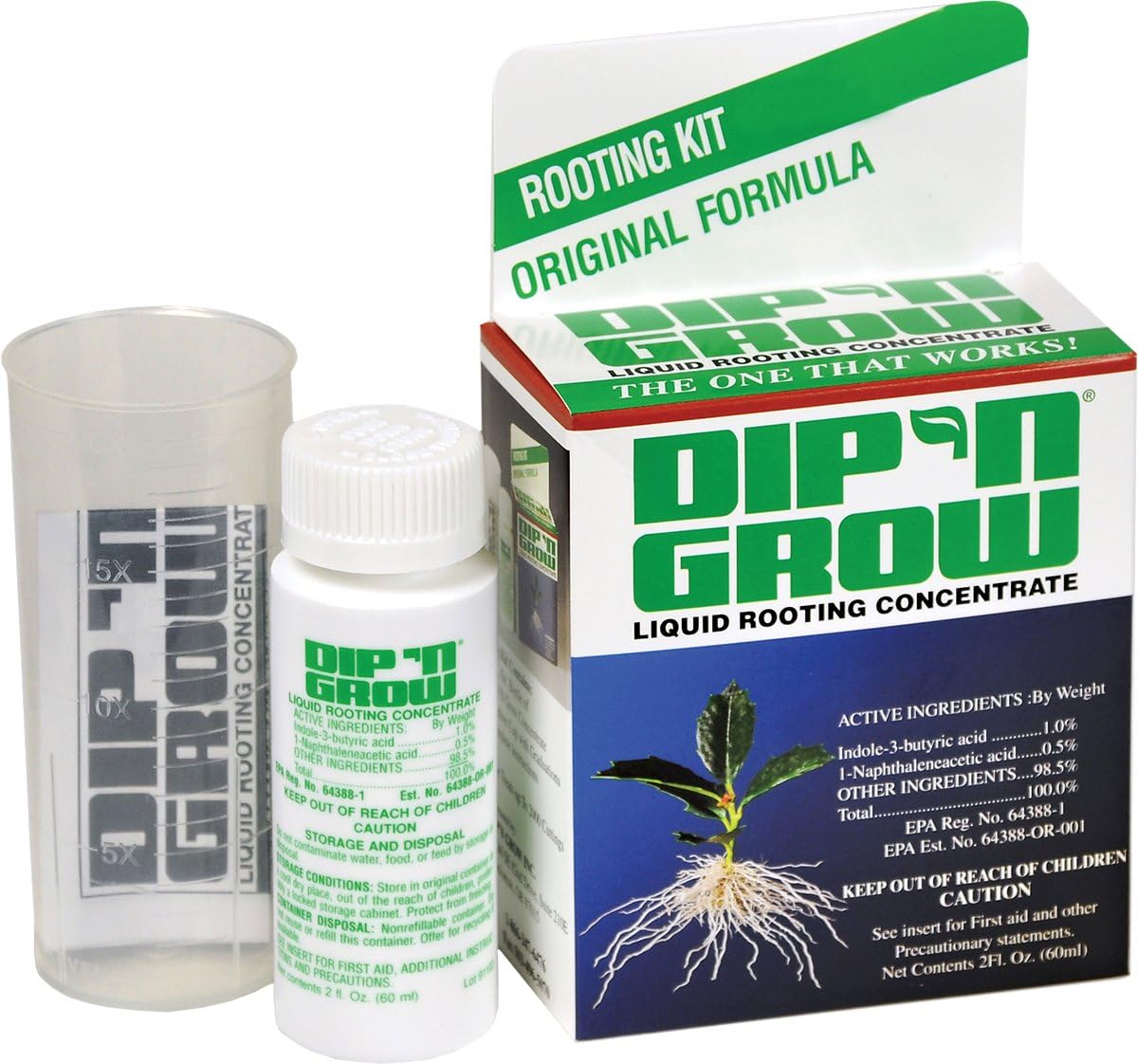
    The liquid rooting hormone is one of the most common types of rooting hormone. The liquid comes in two types: the concentrated and the standard strength (ready to use). The concentration requires diluting before application. The standard strength can be used right away. Note when making use of the ready-to-use liquid rooting hormone, pour the one to be used in a separate container. Do not insert your cuttings directly into the bottle. This is to prevent contamination. Once it’s in a separate container, dip the stem of your cuttings in the liquid rooting hormone. You can now put your cuttings in your growing medium.

    DIP N Grow DG00201 Liquid Hormone Concentrate Rooting Solution, 2-Ounce

    71wWDnceIgL. AC SL1200

    2. Gel

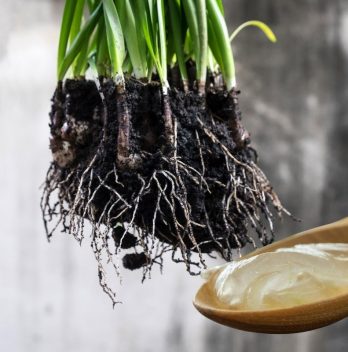
    Out of the various types of rooting hormone, the gel is the most loved among growers. It is pre-mixed and convenient to use. Simply put the portion you wish to use in a container and insert your cuttings into the gel. The gel will comfortably stick to the cuttings giving the stem a thick coat that serves as protection and they won’t wash away easily. With that, your cuttings are ready to go into your growing medium.

    3. Powder

    Powder rooting hormone lasts longer as it offers more shelf life. You can make use of the powder for several growing seasons if stored in the right conditions. To use, pour the powder rooting hormone in a separate container to prevent contamination. You can insert the cuttings into the water to encourage the powder to stick to your cuttings. Now insert the wet cuttings into the powder rooting hormone and give it a little shake to take off excess powder. Then it’s ready to go into your growing medium.

    Homemade Rooting Hormones

    You may be surprised you may have a rooting hormone in your house. Honey is one perfect example of homemade rooting hormone. Although it may not produce quick results as a commercial rooting hormone. You just need to give it a little time to work.

    Honey has some naturally occurring rooting hormone. In addition, it offers anti fungi and antiseptic features to protect your cuttings from infection. The gel nature encourages a consistent steam coating that sticks.

    FAQ’s

    Which is the best rooting hormone?

    We are all aware that rooting is necessary in order to achieve a successful plant. But we often wonder what is the best rooting hormone to use. Rooting hormone is a compound that is added to the soil mix and helps the roots to grow and penetrate through the soil.

    It is important to understand that there are different types of rooting hormones and they are used in different ways. Rooting hormone is also known as root growth stimulator or root growth promoter. The most common type of rooting hormone is Ipomoea. This is a fast growing plant that can be easily grown indoors. It is not recommended to use Ipomoea when the plants are growing outdoors. You should use it when the plant is in the soil or pot. It is available in different types such as powder, gel and liquid. The powder and gel is available in different concentrations. You can easily dissolve them in water and apply on the root area. The liquid is available in different concentrations and it can be diluted with water and applied on the roots. The powder and gel are easy to use and can be used in both hydroponic and soil based growing systems.

    Are there different types of rooting hormone?

    There are many types of rooting hormones available on the market, and they all do a job for which they were designed. Rooting hormone has two basic functions. First, it promotes the uptake of nutrients into the root by loosening the soil around the roots. Second, it helps the roots to absorb water.

    In the past, the main type of rooting hormone was the so-called “growth hormone,” which was sold as a liquid, or in capsules. Today, most companies sell a combination of growth hormone and a form of calcium that has been shown to be just as effective. When purchasing rooting hormone, always look for one that contains both types of hormone. You can also buy a pre-made combination of growth hormone and calcium in a concentrated form that will dissolve when watered. If you are growing vegetables and flowers indoors, the best thing you can do is to use a product that contains calcium and growth hormone. These products are available from many garden centers and mail-order outlets.

    What is a natural rooting hormone?

    Rooting hormones, also known as root stimulants or growth stimulants, are chemicals used to promote root development in plants. Rooting hormones are often added to the soil around seedlings and plants to encourage root growth. These chemicals can be organic or synthetic.  Organic rooting hormones are made from natural materials, such as plant extracts, and are less toxic than their synthetic counterparts.

    Is banana a rooting hormone?

    Bananas aren’t really a rooting hormone. They are actually quite high in gibberellic acid (GA), a plant hormone that promotes growth. This is why bananas are often used as houseplants and why you see them in nurseries.

    Additional Note On Types Of Rooting Hormones

    Growers depend on rooting hormone for propagation cuttings and it has been showing great results ever since. Rooting hormone is a key element that will stimulate the growth of roots to give you a successful propagation and there are various types of rooting hormone to choose from.

    Apart from making use of rooting hormone for successful propagation, you should as well take some other important factors into consideration for great results. Things like selecting only cuttings from plants with good traits. Avoid infected plants or plants that have no good quality growth features. This will ensure your cloned plant gives excellent propagation at the end.

  • Raising Crappie In Tanks

    Raising Crappie In Tanks

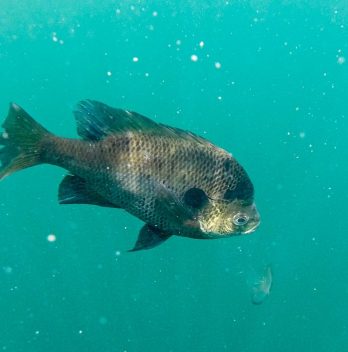
    Raising crappie fish in tanks is possible so far you supply them with the right growing conditions. Even though crappie fish are mostly raised in an outdoor pond, raising crappie in tanks or aquariums is still achievable.

    Crappie is a freshwater fish and can be mostly found in North America. They are one of the most common loving fish in the United States because of their tasteful bite and it’s easy raising crappie fish in tanks.

    Guidelines To Raising Crappie In Tank

    You can achieve a smooth and easy-going fish tank if you follow our guidelines for raising crappie in your fish tanks. First, let’s take a look at the required stocking density for crappie fish.

    Guidelines To Raising Crappie In Tanks

    Recommended Crappie Stocking Density

    Crappie fish requires stocking them in a well-spaced environment, so you should always go for a larger tank. The recommended stocking density for 2 to 3 crappie fish is 80 gallons. Thus, your fish tank should be able to fill at least 80 gallons of water. However, if you wish to raise 4 or more crappie fish, you should go for larger tanks.

    Imitate Their Natural Habitat

    The next step is to imitate their natural habitat. This is crucial because they don’t like a bright environment so you need to set up an environment to suit their needs.

    • Substrate: so, for you to imitate the natural habitat, you can make use of neutral substrate such as sand or dark gravel for the base of the fish tank. Also, crappie fish have this common habit of hiding. The use of dark gravel or sand allows them to hide whichever way they want.
    • Driftwood: you can as well put in some obstacles such as large driftwood for them to hide. Put the driftwood on top of the substrate of your fish tank.
    Imitate Their Natural Habitat - Driftwood
    • Artificial Plants: putting some artificial plants is also a bright idea. Touch up your fish tank with 4 to 6 plants and mix them into small and big plants.
    • Rocks: you can also decorate your fish tank with some aquarium rocks that are neutral in color.

    Set up all these artificial obstacles in your fish tanks along with the substrates. Doing this encourages them to have enough room to hide as this is a regular behavior they love to do.

    Temperature & Water Requirements

    • Temperature Requirements: crappie fish are hardy and very tolerant; therefore they can do well in most temperatures. They usually prefer a temperature of around 55 to 86 degrees Fahrenheit. Thus, they are fine with room temperature water.
    • Water Requirements: make use of clean tap water. When you transfer the water into the fish tank, treat it with a dechlorinator.
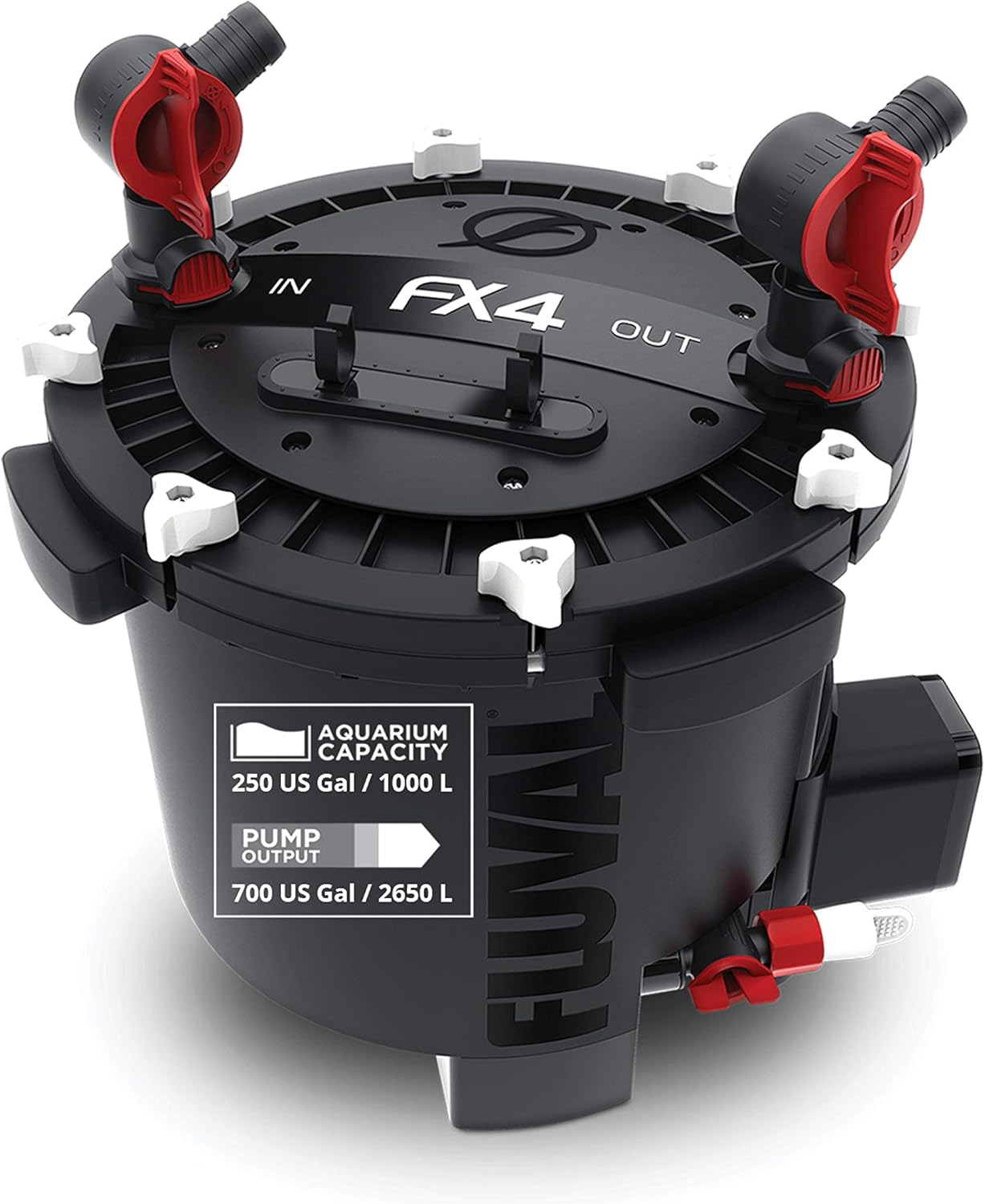
    • Canister Filter: crappie should be raised in a clean environment. You can fix a canister filter to assist in cleaning your fish tank.

    Fluval FX High Performance Canister Filter, External Aquarium Filter

    71qMEL2Ep6L. AC SL1500

    Launch Your Crappie Into Fish Tank

    Before launching your crappie fish into the tank, ensure they have been kept in a tightly packed plastic bag. This plastic bag should be filled with actual lake or river water. The tightly packed plastic bag should now be allowed to float in the fish tank. This way, the crappie fish will have time to blend with the new temperature environment.

    After setting up everything listed above, your crappie is ready to be launched into your fish tank. You can now release your crappie fish into the fish tank.

    Read more about How to Raise Catfish in A Tank

    Crappie Fish Caring Requirements

    After you must have successfully set up your fish tank, you need to take care of your crappie fish so they can thrive and you can enjoy great results. Below are the ways for caring for crappie fish:

    • Feeding: crappie fish requires to be fed every 12 hours. You can feed them with smaller fish, crustaceans, insects, and minnows. You can as well feed them with fish pellets, commercially prepared striped bass, and the likes.

    • Cleaning Your Fish Tank: it will be a good idea if you can clean your fish tank every 2 weeks. Remove all the artificial plants and rocks and wash them with lukewarm water. If you notice any algae, clean and scrub off the tank walls. Ensure your water is clean and clear because crappie fish likes clear water and not muddy water. Note when cleaning the tank, take out the crappie fish with a net and put them in a big bucket of original tank water. You can also let the crappie fish remain in the fish tank while cleaning if you wish to.
    • pH Range: the required pH for crappie fish is 6.6 to 7.8. Sustain this pH range always and test regularly with pH testing equipment.

    FAQ’s

    How much space do they need?

    Crappie like a lot of other fish will do best if they have plenty of space to swim around. I have read that crappies need a lot of space. They can go into a 10-20 gallon tank as long as it has plenty of hiding places.

    If you plan on keeping them in a 20 gallon, then you will want to use a saltwater tank. Crappie are not well suited for freshwater tanks due to their sensitivity to low levels of dissolved oxygen. They require very clean water and good aeration.

    I have never kept any in a small tank but I would think it would be fine. 

    How clean do I need to keep the tank?

    They don’t seem to mind the water quality unless the water is really bad.

    At any rate the tank needs to be cleaned every few months. It’s important to clean the tank before adding new fish, because that way they don’t introduce any diseases from the tank into their system.

    Keep the aquarium with the fish out of direct sunlight, and keep it warm. This will prevent the fish from getting sunburned and/or dehydrated.

    Can you have multiple crappie in the same tank?

    It’s easy. If you have a large enough tank, you can have multiple fish in the same tank. You can do this by transferring the fish into a separate aquarium, and then put the aquarium with the fish in the tank.

    Do they need a lot of food?

    They don’t need as much food as other fish, so they can survive on a high quality diet such as frozen bloodworms or brine shrimp. Crappie are also pretty hardy.


  • Aquaponic Fish To Plant Ratio

    Aquaponic Fish To Plant Ratio

    Now, you might be wondering what the standard aquaponic fish to plant ratio is, we will let you know in this post.

    Aquaponics is an awesome approach to combining fish with plants to yield great results. Aquaponics fish to plant ratio is important to consider if you wish to maximize the end product in your aquaponics system. So let’s discuss what it is.

    Brief Into Aquaponics

    The fish in your aquaponics excretes their waste product as ammonia which is the fertilizer generator. This ammonia is transformed into nitrate by the beneficial bacteria for the use of your plants. The plant in turn purifies these wastes from the fish tank by absorbing them.

    So, the number of fish you are raising should produce adequate fish waste for your plants’ use. Also, the fish food used in feeding the fish should be enough to produce optimal nutrients for plant use.

    If this fish waste is not enough, your plants might be deficient in nutrients and might not grow well. This is why we need to get the aquaponics fish to plant ratio for a better yield.

    Brief Into Aquaponics

    Talking About The Fish To Plant Ratio In Aquaponic

    When we talk about fish to plant ratio in aquaponic, we will need to know the size of grow bed to know the plant ratio. That is, if you’re making use of a grow bed, the size of the grow bed will determine the capacity of the plant.

    It is recommended that the volume of the fish tank should be approximately equal to the grow bed volume. This implies that the ratio of the aquaponics fish tank to plant should be approximately 1:1. However, if we’re looking at it from a commercial structure, we can raise the ratio to 1:3 or 1:4 based on the density of fish and the rate of water flow.

    Let’s talk about the rate at which you feed your fish because it’s a direct factor to consider in the aquaponics ratio.

    Feeding Rate Factor

    You should note that the ratio of fish to plants also depends on how you feed your fish. This is because of the nutrient waste they will provide your plant. Normally, fish can make use of about 80% of food and expel 20% of nutrient waste materials.

    In a standard situation, the recommended grow bed size should be at least 12 inches deep and let’s assume you have 5 feet by 5 feet grow bed. Then the appropriate food to feed your fish will be around 20 to 40 grams per day square meters.

    Other Factors

    Other factors to consider that can influence the capacity of fish to plant are the volume of the grow bed and the density of the growing media used. Note that the growing media encourages good bacteria colony. So, in a standard condition, we can recommend 1 kilo of fish per 50 liters of grow bed.

    Another point to note is the ammonia and bacteria population. A good bacteria population quantity will enhance the conversion of ammonia to nitrate for the use of your plant. This implies if there’s a limit in the bacteria population, you will be limited to the number of fish you can have in your aquaponics system. This will limit you from getting enough fish production and reduce the nutrient that your plant is supposed to receive.

    Quality of Water

    Now, when it comes to the quality of water in aquaponics, you should understand why the fish to plant ratio is important as well as the bacteria population. For example, if the waste materials that serve as nutrients for the fish are not able to be absorbed by your plants, it can pollute the water quality.

    If there’s too many fish in the water and there are not enough bacteria to convert ammonia to nitrates, the bio-filtering plants will not able to absorb and purify all these wastes. This turns into toxic ammonia in the fish water tank and ammonia can be pretty harmful to your fish.

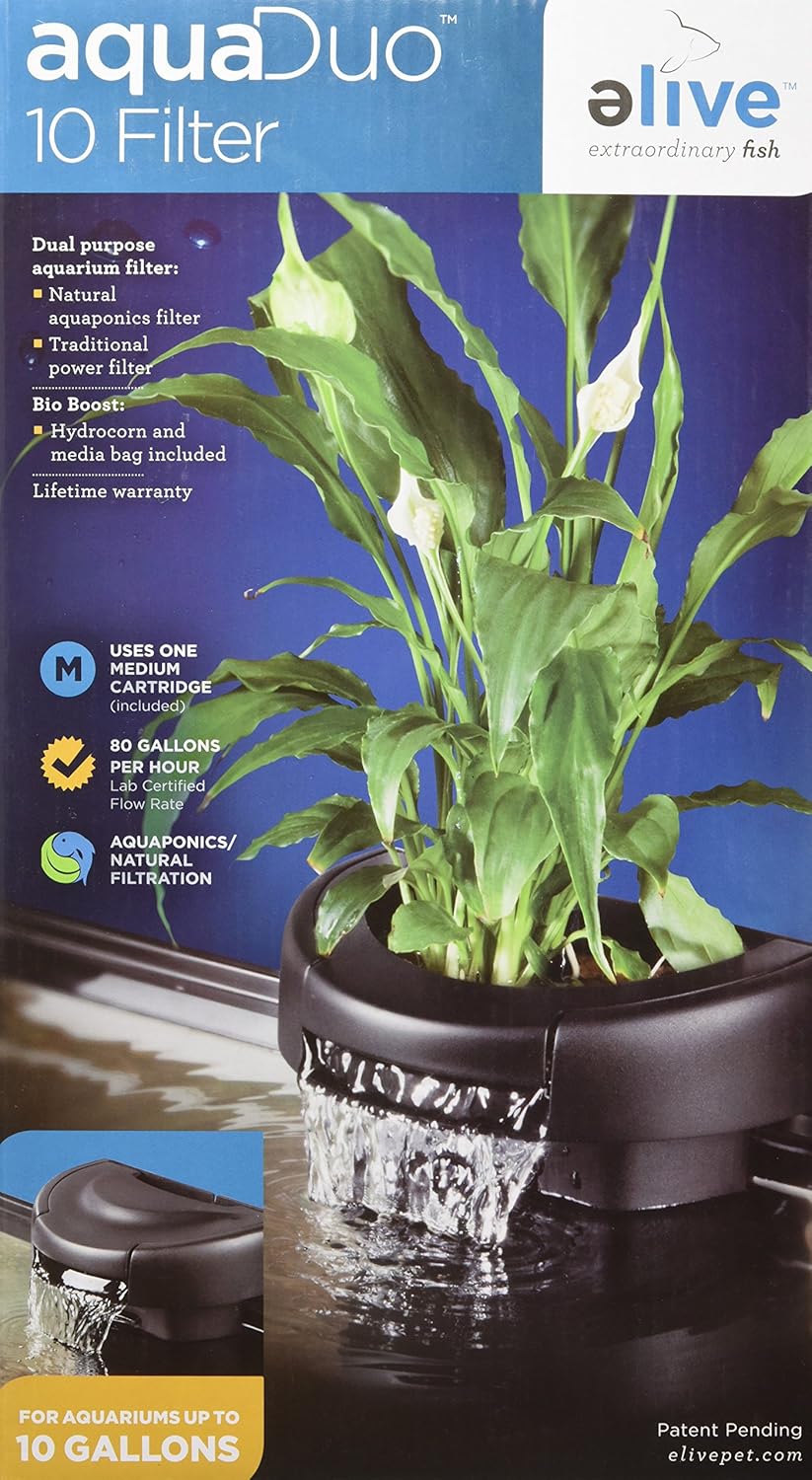
    Elive AquaDuo 10 Aquarium Fish Tank Water Filter, Natural Aquaponics or Power Filter for Tanks Up to 10 Gallons

    91T8wsj8DXL. AC SL1500

    Although a couple of plants may grow, however, the issue of polluted fish water is not solved. This can reduce the growth and activities of the fish. A possible approach to this situation is to introduce enough helpful; bacteria that can convert ammonia to absorbable nitrate for plant use.

    It also helps if you can decrease the fish feed to reduce the fish waste products that are slowing the growth of your fish or simply reduce the biomass of your fish.

    Final Say On Aquaponic Fish To Plant Ratio

    An efficient and productive aquaponics system is the goal of every farmer. Thus, sustaining the nutrient balance from the supply of your fish to your plants is crucial. This is why getting the right aquaponic plant fish to plant ratio in aquaponics is important.

  • Raising Prawns In Aquaponics

    Raising Prawns In Aquaponics

    If you love prawns and you wish to raise some for yourself in your aquaponics, then waste no time in getting started. Raising prawns in your aquaponics can be an excellent way of adding a different touch of diversity to your system.

    It’s possible to raise prawns together with your tilapia fish or any other fish you may have in your system. We will enlighten you on how to introduce freshwater prawns into your aquaponics system. So let’s begin.

    Guidelines On Raising Prawns In Aquaponics

    Raising prawns along with fish is pretty dynamic. Prawns are bottom feeders and they will feed on anything they find. This includes the fish waste that is not absorbed by your plants making them a reliable filtering animal. They can as well feed on snails and other organic matter so if you’re having issues with snails in your aquaponics, adding prawns might be a way out.

    The best type of aquaponics to use for raising prawns is a floating raft. To introduce prawns into your aquaponics, integrate them into your fish tank or under the floating raft. You can as well integrate them in both floating raft and fish tank. Let’s discuss this in detail.

    1. Floating Raft: under your floating raft, it’s usually a habit to have a handful of organic waste such as dead roots, leaves, etc. Prawns like to feed on organic waste so they can be helpful in this aspect. You might also be wondering if prawns will feed on your plants’ roots, the answer depends. In a standard situation, prawns won’t eat your root. However, when they become hungry or when you have too much prawn population, it’s possible they bite on your plant roots. For this reason, ensure you control their population. Take out some if they become too many in your system.
    2. Fish Tank: another possible way to incorporate prawns into your aquaponics is to put them in your fish tank. Prawns are bottom dwellers, so you don’t have to worry about them crawling up to your fish. They will as well feed on excess fish waste thereby maintaining a clean bottom tank.
    3. Both Fish Tank & Floating Raft: it is also possible to incorporate prawns in both your fish tank and floating raft. This is usually the best option as you get to maintain clean both a fish tank and floating raft.

    Precautions To Take When Raising Prawns In Aquaponics

    Remember they both prawns and fish can be territorial so you need to keep both from each other.  There are some precautions you need to put in place so your prawns and fish do not attack each other or even meet each other.

    When prawns are in their juvenile stage, it’s possible for your fish to want to feed on them. So, it’s necessary you create a barrier to keep them away from each other. You can make use of a bird mesh with corner PVC trays by laying them in the bottom of your fish tank. This mesh will separate your prawns from your fish. The mesh is also permeable enough for the fish waste to move through the layers of the mesh to meet the prawns so they can feed on the fish waste.

    Precautions To Take When Raising Prawns In Aquaponics

    Stocking Density

    The recommended stocking density for a single prawn should be about two square feet of tank space.

    Tank Size

    You should have at least 135 gallons or 500 liters of a tank for both fish and prawns. There should however be a barrier like the bird mesh we discussed earlier.

    Temperature Requirements

    Theideal temperature for prawns should fall between 57 degrees to 105 degrees Fahrenheit. However, the standard temperature is around 78 degrees to 88 degrees Fahrenheit.

    Feeding

    Prawns will feed on just about anything. You can however feed them with prawn pellets and planktons.

    PH Range

    Another requirement is pH range, therefore, you should ensure you monitor the pH with a quality pH matter. Prawns will do well with a recommended pH range between 7.8 to 8.5.

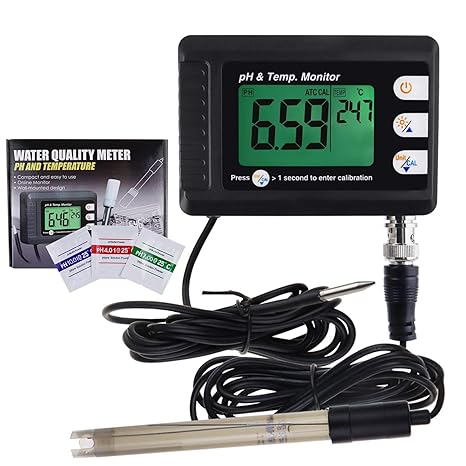
    Temperature pH Meter Monitor Tester Sensor test Kit 0~14.0pH for Hydroponics Aquarium

    7180qNLFHIL. SX466

    Final Say On Raising Prawns In Aquaponics

    We can see there are great benefits to raising prawns in your aquaponics. You can agree there’s nothing more amazing than having freshly harvested prawns together with fish from your aquaponics system. You get that fresh exclusive meaty taste compared to the regular frozen prawn sold in stores.

    This is what you get raising both prawns and fish and if you plan to sell them it will also be a great investment. Prawns attain market size in about 4 to 6 months, so you can always have a steady sale once they are matured.