Author: Eunice

  • How Often Should I Give My Plants Nutrients

    How Often Should I Give My Plants Nutrients

    Nutrients are essential for the development of plants. If you’re wondering how often you should give your plants nutrients, we will let you know in this article.

    Nutrients are supplied to plants to enhance growth and maximize yield. You need to be aware of how often to give your plants nutrients the right way.  This way, you don’t predispose your plant to underfeeding or overfeeding which can both be detrimental to your plants’ health.

    So, read on to discover how often to feed your plants.

    Get To Know How Often To Add Nutes During Flowering

    How often you should give your plants nutrients will depend on many factors. Be it manure, worm casting, plant food, etc. fertilization of your plant does not have to be too complex.

    In a soil-based plant, if you begin your planting with soil that is already abundant in nutrients, there’s not much to be done in giving your plants more nutrients. This implies mainly for growing foliage such as lettuce and parsley.

    Get To Know How Often To Add Nutes During Flowering

    However, if you are planting for comprehensive stages such as flowering, maturing of fruits, etc. they will require some nutrient boost.

    How To Supply Plant With Nutrients

    Always apply fertilizer moderately from the start. The nutrient scheme that follows your nutrients can be followed from the start. Then monitor your plant closely and adjust or apply nutrients as required.

    We recommend you don’t totally go by the nutrient scheme given to you by the manufacturers. Some manufacturers may clearly want you to run out of nutrients so you can buy more. As such, their direction may usually be on the high side.

    You can begin with half portion or 70% portion that was recommended then continue adjusting or adding more portion as needed.

    Also, take note not to apply too much nutrient or fertilizers that are rich in nitrogen. Too much fertilizer which is rich in nitrogen can supply your plants plenty of foliage but minimal fruits or flowers.

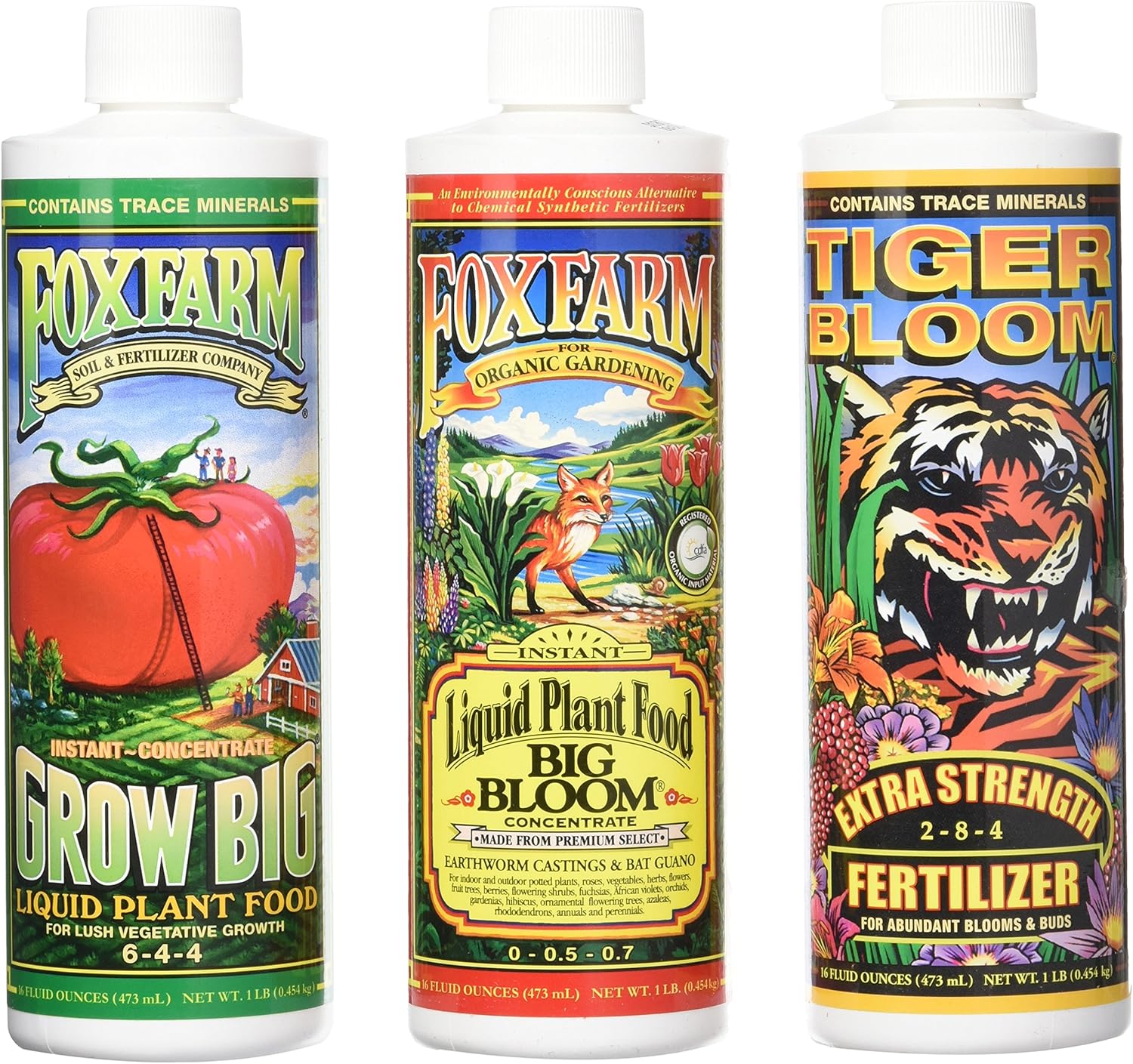
    Fox Farm Liquid Nutrient Trio Soil Formula – Big Bloom, Grow Big, Tiger Bloom Pint Size
    A1CDZgsVkXL. AC SL1500

    Other Factors When Water Nutes

    Other factors to consider on how often you should give your plants nutrients are to consider the stages of their growth and grow medium used.

    • For the stages of growth, the younger will demand few nutrients. But as they mature into vegetative, flowering, etc, they will require more nutrients.
    • Most grow medium used are usually inert and does not contain nutrients. Thus, it is required to provide them with optimal nutrients.

    Can I Water & Apply Nutrient To My Plants?

    Watering your plant and applying nutrients to your plant will depend on some factors.

    For instance, the size of the container will tell how often you give your plants nutrients whenever you water. The watering requirement for a bigger container is not much. Watering can be done once weekly or once every other week. Therefore, nutrient feeding is required anytime you water.

    In a smaller container, watering several times weekly may be required. So, do you apply nutrients every time you water?

    It’s okay if you apply nutrients every time you water. All you need to do is to calculate how often you water every week. Then go ahead and portion the nutrients that will last every week you water. This way, each time you water, you supply your plants’ nutrients in the right amounts without overfeeding or underfeeding.

    Another alternative is to portion the nutrients into two watering. You have to water and apply nutrients the first two weeks and water only the subsequent week. This way, you give your plant a chance to rest from nutrient applications.

    FAQ’s

    Should I use nutrients when I water?

    Yes, the nutrients are only added when you water your plants. You should not water a plant with nutrients, then add them to the soil afterwards. They will just sit on top of the soil and do nothing. The nutrients are for your plants when they are actively growing. Soak your fertilizers in water before adding to the soil. Your plants will need nutrients at different times during the growing season.

    Your plants may need them every week, or once every two weeks. For example, if you plant tomatoes, you’ll want to fertilize with a tomato fertilizer. This will give your plants the nutrients they need when they are actively growing. If you have a lot of young plants, fertilizing every two weeks will be fine. If you have mature plants, you may want to fertilize once a month. The best time to fertilize is when your plants are actively growing. In the fall, it’s important to start thinking about fall cleanup. It is tempting to wait until the end of the season to deal with garden debris. That’s a mistake, as there are often a few weeks left in the season when fall cleanup can be done successfully. You can do it now, and avoid doing it later when it may be too late to save the season’s harvest. Soil moisture is also essential for healthy plants. If soil is dry, plants have to work harder to get water and nutrients.

    How often should I feed my plants?

    I’m here to tell you that it depends on what you want to achieve. To answer this question, we need to understand the difference between a plant and a tree. A plant needs to grow up into a tree, so it needs to be fed and watered regularly throughout its life.

    I’ve been told that it’s not necessary to feed every week, but it is recommended to feed at least once a week.

    I don’t fertilize the soil, but I do fertilize my plants. I fertilize my plants once a month, usually with fish emulsion. It’s not a bad idea to fertilize once a month, though. A good way to find out if you need to fertilize more frequently is to look at your plants’ growth. If you see any wilting or yellowing, then you should fertilize more frequently. You can also look at the color of your leaves, and see if they are becoming duller. If they’re turning brown, then you should fertilize more frequently. I just use a small bucket with about an inch of fish emulsion in it, and add that to the soil.

    How long does it take for fertilizer to work on plants?

    Fertilizer should be applied as soon as the soil is ready to receive it. This is usually within a few days of planting but there are some crops that can tolerate waiting longer. There is no specific length of time that will work for all types of plants, it just depends on the type and age of the plant, its growth stage, the amount of fertilizer you’re using and how much water the soil is getting.

    Should I Use Nutrients Every Time I Water My Indoor & Outdoor Plants

    Indoor and outdoor plants’ nutrient requirements differ. Outdoor plants have the opportunity to dive in and search for nutrients in the soil even if the nutrient supply is limited. There is also the additional benefit of rainwater which contains some nutrients and also allows plants to take in nutrients optimally.

    However, for indoor plants, there’s no privilege of nutrient-filled rainwater and soil content is also restricted. The good thing about indoor plants is that they are less exposed to outdoor pests. There is also the advantage of not being disturbed by the forces of nature such as wind, scorching sun, etc.

    Now when it comes to how often you should give your indoor or outdoor plants nutrients, it will solely depend on how your plants are kept, i.e. their condition. But generally, you should always monitor your plant and decipher if they look like they require addition or boost of nutrients.

  • How To Fix Nutrient Burn

    How To Fix Nutrient Burn

    A couple of growers may face nutrient burn sometimes during the course of their growing period. The thing is do you know how to fix nutrient burn?

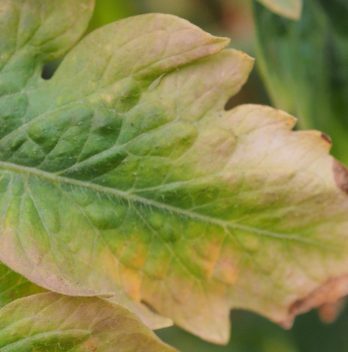
    Drying out leaves, curling of leaves, browning of leaves, etc are common issues seen among indoor growers and the most probable cause are nutrient burns. It is crucial you recognize the signs and act fast to save your plant from severe or irreversible damage.

    If you’re experiencing nutrient burn on your farm and you’re looking for how to fix or solution we will put you through this.

    Nutrient Burn During Flowering Info

    Nutrient burn is the over-fertilization or overfeeding of nutrients to your plants. When you supply your plants with their required nutrient in excess, they tend to absorb all of them thus resulting in nutrient burn. Plants are not equipped to handle over-fertilization therefore, they will simply absorb the entire nutrient you supply them.

    Causes Of Nutrient Burn

    Mostly, nutrient burn is caused when you feed your plant with too much nitrogen. Nitrogen is one of the components in plants’ nutrients and it’s mostly used during plants’ vegetative phase. Nitrogen needs to be in the right proportion with other nutrients to avoid the presence of excess nitrogen.

    However, it’s not only excess nitrogen that can cause nutrient burns. Overfeeding of other nutrients can as well cause this.

    Nutrient Burn Leaves Signs

    The first step to fixing nutrient burn is identification. Be sure your plant is suffering from a nutrient burn by looking at the signs. Some early signs can point out if your plant is suffering from nutrient burns. They are:

    • Leaves will give a very deep green coloration.
    • You may notice the tip of your leaves bending at 90 degrees.
    • Yellowish or brownish coloration of the tips of the leaves.
    • The branch or stalk may start to turn purple or red.

    Advanced signs to look out for when it comes to nutrient burns:

    • The signs of the tip of leaves turning yellow will spread back and inwards throughout the leave until it dies off or withers away.
    • You may also notice leave twisting.
    • The edge of the leaves starts to curl. This curling of leaves usually indicates the presence of too much nitrogen.
    • Yellowish patches that separate themselves from the green-colored leaves.
    Nutrient Burn Leaves Signs

    Learn How To Fix Nutrient Burn

    Once you’ve identified that your plant is suffering from nutrient burns, it’s time to take action. The good thing is if you can detect nutrient burn early, it can be resolved before it gets any worse.

    Follow these guidelines to successfully fix your plant:

    1. Remove Damaged Parts: The first step and fastest way to fixing nutrient burn is to do away with the damaged plant leaves, buds, flowers, etc. When your plant leaves have become yellow there’s nothing you can do to make them green. The only solution is to carefully remove the yellowed leaves or the entire affected part and allow them to regrow.
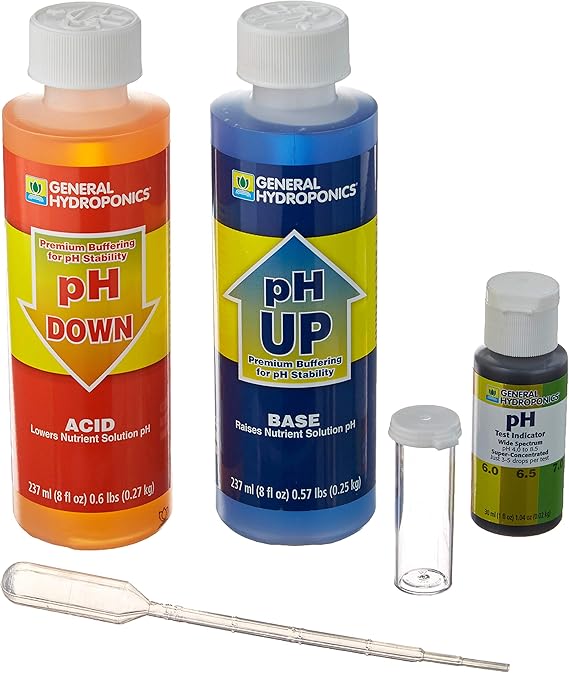
    2. System Flushing: Next step is to flush the entire system so the excess built-up nutrient can be washed away. With a hydroponics system, wash your growing medium with clean and balanced pH water. To your hydroponic nutrient reservoir, pour out all the content and replace it with pH-balanced water. Use this balanced pH for about 24 hours in your hydroponic system. Then gradually introduce a small concentrated nutrient for about a week and balance it later when the plant is able to welcome the appropriate nutrient amount. In a soil-based system, simply water in the soil using pH-balanced water to flush out excess nutrients. Water your soil slowly and wait a bit to allow the water to assimilate between each watering plan.

    General Hydroponics pH Control Kit for a Balanced Nutrient Solution

    81Pm5DEtpTL. AC SX569

    A nutrient burn may be minimal, gradual progress, or severe. In the case of very severe burns especially during the vegetative stage, it’s usually best to start over-planting. This is because recuperation may be unachievable or may take a longer time to recover and it will be better to just start over.

    FAQ’s

    Can plants recover from nutrient burn?

    The short answer is no. Plants can’t recover from nutrient burn, because nutrients are not lost, they are just changed in their form. The longer answer is that it depends on the plant species and the amount of nutrients in the soil. There is some evidence that plants can recover from nutrient burn, but this is not always the case. In general, plants will not grow in nutrient-deficient soils, but if the soil is rich enough, the plants will grow fine.

    What are the signs of nutrient burn?

    Plants are more sensitive to nutrient deficiencies than we are. Plants respond to low nutrient levels by making a number of adjustments. These may include:

    • Decreased growth rate

    • Diminished photosynthetic capacity

    • Decreased yield

    • Less or no flowering

    • Poor quality fruit

    • Loss of vigor and death

    How do you reverse plant nutrient burn?

    Plant nutrients are essential for your plants to grow. However, when the nutrient level is too low, the plant will have a hard time growing. Too much of a good thing is not healthy either. You may see this as a condition that can be corrected by increasing the plant nutrient levels.

    If you notice that your plants appear to be suffering from nutrient burn, the following actions should be taken:

    • Evaluate the soil for nutrients and pH.

    • Monitor the amount of fertilizer used. • Evaluate the irrigation schedule.

    • Correct the deficiencies.

    If you want to get your garden growing again, I recommend adding more organic matter (such as compost or manure) to the soil.

    Does nutrient burn affect new growth?

    Nutrient burn isn’t really good for anything. The only reason it is often mentioned is because the term nutrient burn is so often used by gardeners who are not very knowledgeable on the subject, and they don’t know any better. Nutrients are needed in the plant in order to grow, and when they are missing or are present at too high a concentration, they can cause serious damage to the plant. Plants that have been deprived of nutrients for a long period of time will often experience stunted growth and lower yields.

    How do you fix fertilizer burn on plants?

    There are a lot of ways to fix fertilizer burn. It depends on what the cause of the burn was and the severity of the burn. If it is a very deep burn, there are some treatments that will actually get rid of the burn. If it is just a slight discoloration, you can cover the plant with a plastic bag and keep it in place for a day or two. The light will help it heal.

    If you use a bag, make sure it is the clear type so you can see what’s going on. If you want to get rid of the burn, you can do one of two things. You can either put the fertilizer on top of the soil (which will keep it in place until you want to remove it), or you can mix specialized burn fertilizer with water and apply it directly to the burned area. It will penetrate the burned area and help it heal. If you don’t have a lot of money to spend on this, you can always add some liquid kelp to your fertilizer solution. That will help heal the burn. Liquid kelp is available at most garden centers.

    Nutrient Burn Recovery Prevention

    The best thing to save your plant is to prevent nutrient burns from happening in the first place. Do all you can to reduce the chances of nutrient burn from occurring. The excess nutrient can be catastrophic to your plants if not detected on time.

    Ensure you use the appropriate amount of nutrients in their correct proportion for each growth stage. You should also monitor the pH of your solution or soil with a good pH reader.

  • Ceramic Metal Halide vs LED

    Ceramic Metal Halide vs LED

    Let’s discuss Ceramic Metal Halide vs LED. Is anyone better than the other? We will find out. In the world of hydroponics, grow light continues to advance. Various types of grow light such as ceramic metal halide and light-emitting diode (LED) are made available for the use of your hydroponic plants.

    With the developments of grow lights in hydroponics, we are going to be comparing ceramic metal halide to LED. So let’s get into it.

    About Ceramic Metal Halide

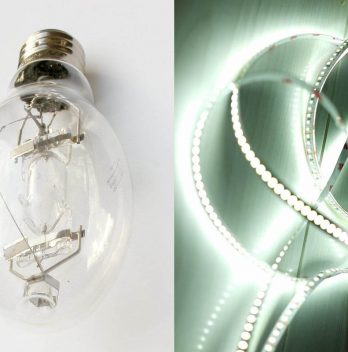
    Ceramic metal halide is a type of grow light that that is a very close match to mimicking the work sunlight does on plants. It is one of the most efficient grow lights capable of producing high-standard light that can cover a large location or area of the hydroponic farm.

    Ceramic metal halide supplies the biggest gram per watt. They are also capable of converting ultraviolet light to good ultraviolet wavelength which helps enhance plants’ growth. This type of UV spectrum is useful in repelling pathogens such as mildew and mold as well as some pests.

    About LED Light

    Light-emitting diode (LED) is another great type of grow light used in indoor hydroponics. They consist of hundreds of lights known as diodes. LED will supply their light in a specific and narrow wavelength.

    The light-emitting diode will supply light that will usher them into their vegetative phase of the blue spectrum and flowering phase of the red spectrum.

    CMH vs LED

    We have taken a brief look into both ceramic metal halide and LED. Now let’s compare which is better between ceramic metal halide vs. LED.

    • Healthy Plants: You get more healthy plants when you grow under ceramic metal halide rather than LED light. You also get better quality and higher yield when making use of ceramic metal halide grow light.
    • Duration Of Cultivation: The duration length you wish to cultivate will determine which type to go for. If you wish to use your grow light for up to 5 years or more, it’s best you go for LED. This is so you can save cost over the long period of time you make use of this grow light. Also, a light-emitting diode bulb will last you up to 50,000 hours, unlike a ceramic metal halide which will only last about 30,000 hours.
    CMH vs LED - Duration of Cultivation
    • Grow Space: If your grow space is of the bigger and taller side, then it is ideal you go for ceramic metal halide. This is because your ceiling distance from plants will be increased thus encouraging better heat management. It will also encourage optimal light coverage for bigger and fuller plants as well as better aeration. On the other hand, LED grow little emits light heat and this heat supply must fit the appropriate grow room size of your plants. Take for instance during winter periods, ceramic metal halide will supply your plants adequate heat. Whereas when using LED grow light, you may need to obtain an extra heater to your grow room to help with cold periods.
    • Beneficial Ultraviolet Spectrum: Ceramic metal halide will offer your plant a beneficial ultraviolet spectrum. This beneficial UV spectrum will help in stimulating considerable resin and terpene production. UV spectrum will also help wade off mildew and mold as well as any other pest.
    • Vertical Growing Space: Ceramic metal halide is known to be very efficient in vertical growing plants. This is because of their high canopy penetration.
    • Additional Cost: The major additional cost for metal halide is bulb replacements. The bulb needs to be replaced every 12 to 18 months of use. LED however doesn’t require replacing the bulb but LED may also require additional cost. For instance, if your grow space requires extra heat, you may have to invest in a heater to suit your growing needs. Ceramic on the other hand will generate adequate heat for your plants’ growing needs.
    • Commercial Purposes: Ceramic metal halides are a great choice for commercial purposes. They are also great for hydroponic hobbyists with large space thereby providing a bigger yield. LED on the other hand is ideal for hydroponic growers with moderate grow space especially for growing space with lower ceilings. LED will also offer you bigger quality production.

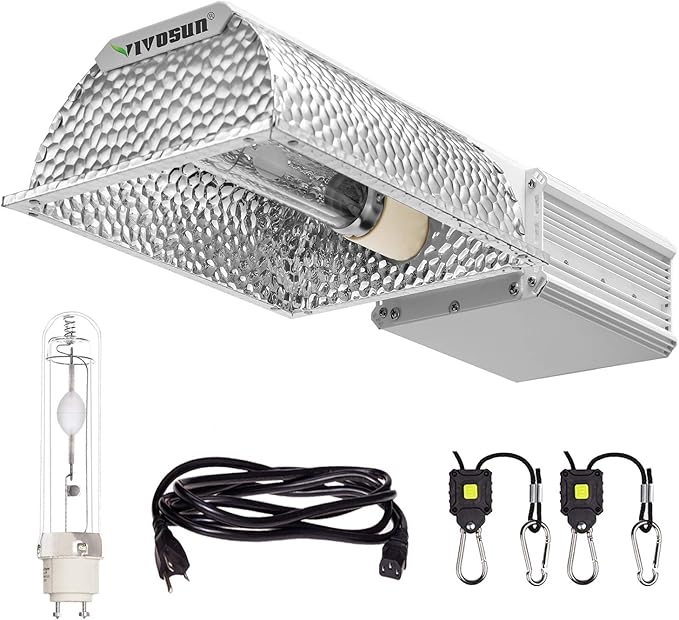
    VIVOSUN 315W Ceramic Metal Halide CMH/CDM Grow Light Kit

    Ceramic Metal Halide vs. LED

    Ceramic Metal Halide vs. LED Final Say

    In final thoughts, choosing the best option when it comes to ceramic metal halide vs LED will solely depend on your preference. Both LED and ceramic metal halide is great to grow lights that will offer you great results. Our comparison above should guide you in choosing which suits your growing needs.

  • How Far Should Seedlings Be From Grow Light

    How Far Should Seedlings Be From Grow Light

    Light is one of the most crucial requirements for growing plants indoors. Positioning your grow light in the perfect area is important to ensure your plants get the appropriate grow light quantity. Now, when it comes to seedlings, we would like to know how far seedlings should be from grow light.

    Seedlings are fragile and require proper care as they develop. We will be discussing how far should your seedlings be from grow light so they can grow appropriately.

    Get To Know How Far Grow Light Should Be From Seedlings

    Although a couple of seed varieties require darkness to grow, some plant seedlings do require light for seedlings’ development. The seedling phase is a very fragile phase and they usually require less light intensity. Thus, the distance from your grow light to seedlings should be far enough to reduce light intensity.

    Some may think that supplying optimal light to your plants will increase plant growth and yields. This is true, but have in mind that this applies to only matured plants. Your seedlings will be too delicate during this stage, so they will require tender care. When your plants are established, you can go ahead and feed them with optimal light intensity.

    Let’s take a look at various types of grow light and how far you should place them from your plants.

    LED Grow Seedling Light & Wattage

    Generally, you should position your LED to grow light around 24 to 36 inches above the canopy seedlings.

    Also, how far you should position your grow lights towards your seedlings will solely depend on the power or wattage of the light bulb. A bulb that is bright and far away from the plant could supply a similar light intensity with a dimmer or low light bulb closer to the plant.

    Grow light with lower wattage of around 200 should be positioned between 12 to 20 inches above the plants’ canopy. On the other hand, grow light with higher wattage should be placed 34 to 46 inches from the plants’ canopy.

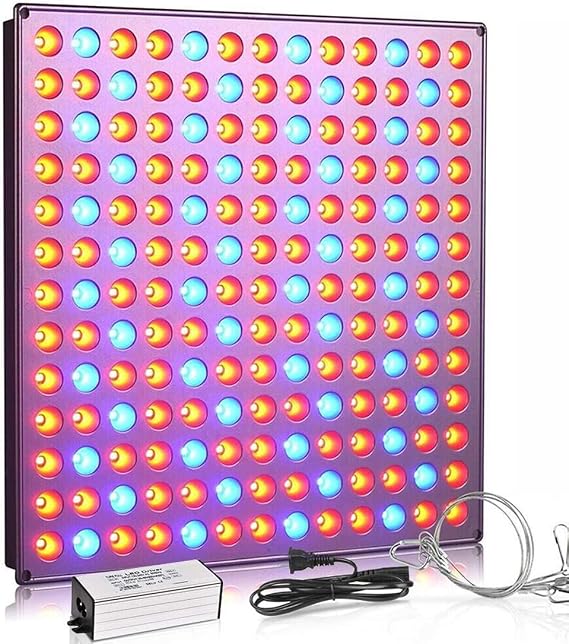
    LED lights release mostly red and blue wavelength, thus there are appropriate for plants early stage such as seedlings. They are also great for the flowering phase and fruiting phase as these stages require more intensive light for optimal yield.

    LED Grow Light, Roleadro 75W Grow Light for Indoor Plants Full Spectrum Plant Light for Seedling

    71Q382ioL7L. AC SX569

    Fluorescent Grow Light

    Fluorescent growth light comes in 3 types namely T5, T12, and compact fluorescent lamps. The added advantage of using fluorescent grow light is that it rarely causes light burn. This is because it does not produce too much heat. Notwithstanding, ensure you keep a close eye on the light heat and intensity.

    Fluorescent growth light should be positioned between 6 to 12 inches for seedlings. For the vegetative and flowering phase, position your grow light between 12 to 16 inches for maximum production.

    Other Plant Stages Grow Light Distance

    Let’s take a look at other plant stages to grow light distance requirements:

    • Vegetative Phase: the LED grow light distance for the vegetative phase of a plant is between 12 to 24 inches above the plants’ canopy. The light position is closer to the plant because optimal light is required during photosynthesis for rapid plant growth. The light intensity will also help in the development of stronger and healthier stems and roots.
    Other Plant Stages Grow Light Distance - Vegetative Phase
    • Flowering Phase: when the vegetative stage is complete and the plant advances into the flowering phase, the light intensity requirements diminish. The distance from the top of the plant to the grow light should be between 18 to 24 inches. In the flowering phase, plants start to grow in height and develop fruits. As your plants grow taller, you can decide to change or not change the distance of the grow light. Usually, if you don’t want your plant to grow too tall, you should leave the grow light distance the same.

    Disadvantages Of Too Much Light

    As we have pointed out earlier that light is one of the key factors to seedling development, we would also point out what too much light can cause your plants.

    If your seedlings receive too much light, it can cause stress to your plant. To know if your plant is taking in too much light, look for any sign of light burns, leave discoloration. Abnormal or stunted growth is another sign to look for.

    Once you see these signs, it’s a call for action. Adjust the distance of your grows light accordingly to fix the problem quickly.

    Disadvantages Of Too Much Light

    FAQ’s

    How close should I keep my seedlings to their grow lights?

     If you are in a spot with good sunlight, then you may be able to get away with having them closer. I would say that if they are on a tray, then you should be able to get away with putting them as close as the tray allows. As far as lighting goes, you will probably need a full spectrum LED grow light. I am not sure what kind you have, but I know that the HID bulbs are really only effective when there is no direct sunlight, otherwise it will not light up.

    I’d say at least 18″ apart for optimal growth. If you’re doing it right, you shouldn’t need much more than a 2-3 foot gap, depending on the height of the lights. If they’re too close together, you’ll be wasting energy and possibly burning your plants.

    Does the type of light matter in terms of the distance?

    Yes. You’ll need to figure out what the light spectrum is that you are growing for. If you’re trying to grow plants that are grown for eating then you will need to know how much of the spectrum they are best at consuming.

    Then you will need to calculate the amount of light that is needed to provide that amount of light to your plant. For example, if you are growing tomatoes, you would use a combination of red, blue and yellow lights to simulate sunlight. The more red light, the more heat, and the more yellow light, the more light but also more energy. You can get away with less red light if you have enough blue and yellow light. For example, if you had two 5500K fluorescent tubes, one blue and one yellow, it would be able to produce about 1.2 times as much light as a single fluorescent tube of similar wattage. If you had two of the same tubes but they were only 5500K then you could get around twice the amount of light. It’s best to figure out what the light spectrum for your plant is going to be before setting up the grow room. You don’t want to grow plants in the wrong light spectrum.

    Can they be too far apart?

    My understanding is that it’s not a problem to put the grow lights too far away from the seedlings. However, you may want to get closer so that the light is more diffused and even. It’s easier to keep a grow light in a plant than a human. You could also try to use LED grow lights. These are much more energy efficient, and will last a lot longer. 

    Conclusion: How Much Light Should Seedlings Get?

    How your grow light should be far from seedlings will depend on the type of grow light you’re using and the wattage or light intensity. With the information we have given above, we hope you have learned the right distance to place your grow light from your seedlings.

  • How To Harvest Leaf Lettuce

    How To Harvest Leaf Lettuce

    Are you ready to enjoy all-year-round fresh green salad lettuce? Let’s dive in. Lettuce leaves should be harvested the appropriate way so it keeps growing nonstop. If you’re wondering how to harvest lettuce leaf the right way, we will teach you how to go about it.

    Nothing is more pleasing when a gardener is able to grow and harvest fresh lettuce and get that non-stop or continuous harvest. Read on to discover how to harvest a cut and come again lettuce leaf.

    Planting Lettuce Leaf Right

    Some gardeners, especially newbies may think when you harvest lettuce leaf once you can’t come back for it again. But that’s mostly not true. If you cut your lettuce leaf the right way, you can always come again for another cut.

    The best lettuce variety that will allow you to cut and keep growing is the mesclun variety. This mesclun variety is loose-leaf lettuce rather than head lettuce and it offers great textures, flavor, and colors.

    Planting Lettuce Leaf Right

    This type of lettuce variety can be spaced a bit closer to each other. Every week or every other week, ensure you plant new crops so you can enjoy nonstop harvest leaf lettuce. If you wish to choose other lettuce varieties, they are also fine.

    Learn How to Harvest Green Leaf Lettuce

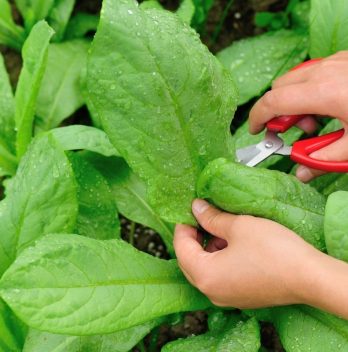
    You can start harvesting your lettuce leaf or baby lettuce when they attain about 4 inches long. The outer leaves are the best to pick so always aim to cut the outward leaves. These ones always taste amazing and you can prepare some lovely salad green with them. Be sure they always taste superior compared to the matured ones.

    Use a sharp tool like scissors or shears to cut them in singles or a bunch above the crown. Avoid cutting inwards or below the crown so your lettuce plant does not die off.

    A lettuce farm where you can continuously harvest will have several rows of growing lettuce. The lettuce leaves will continue to grow at various stages of maturity with some being a week or two older. As you continue this cycle, you are also slowing down the bolting process which is what we want.

    Every time you pick, ensure you pick from different rows so other rows that have been harvested before can have time to grow again. Each time you harvest, ensure you plant progressively so you can come for more crops after a week or two of harvesting. This is another way of ensuring the cut and come again experience.

    Always have in mind that after cutting a row, the new lettuce leaf will be ready to be harvested again in about two weeks.

    When To Harvest Leaf Lettuce

    You can check your seed pack for days of maturity to know when to harvest your lettuce leaves. Depending on the kind of variety your choose, lettuce can take up to 60 to 100 days to mature.

    From the size and shape of the lettuce head, you should be able to tell when it’s ready.

    However, you can harvest anytime, just ensure you always harvest your lettuce leaf before they go into bolting. They enter bolting at the end of their growing season and this is when you should discontinue harvest.

    Bolting is when they start to enter the flowering stage and this occurs during the hot season. Bolted lettuce leaf will result in a bitter taste which is what we do not want.

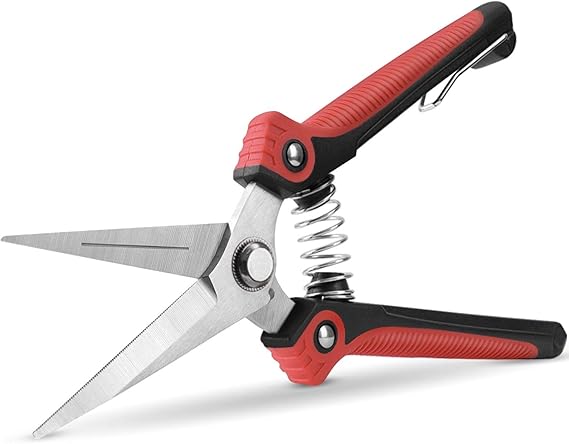
    WYF Pruning Scissors, Professional Garden Shears

    61BW%2BeKVmWL. AC SX569

    During the hot season, you can try and shield the lettuce leaf by covering each row. Use shade cloth or row covers to shield your lettuce. This will help in delaying the bolting process.

    However, you should avoid planting lettuce during hot climates. Hold on till the climate is cool around fall or spring and continue planting your lettuce.

    FAQ’s

    How do you harvest leaf lettuce so it keeps growing?

    Leaf lettuce is a popular salad green because of its crisp texture, but harvesting the leaves for salad can be laborious. The leaves are not very hardy, and when they are harvested they start to wilt and fall over. You could harvest the leaves as soon as they are ready.
    You don’t have to do anything special to keep the lettuce growing. If you’re harvesting for salad, just leave the whole plant in place and pick the leaves as needed. When you cut off the head, you’re only removing the top of the plant, and the lettuce will continue to grow.

    Will lettuce regrow after cutting?

    The stems of lettuce regrow when cut, and you can harvest the leaves again. In some cases, it takes a couple of days for the new growth to develop. If your lettuce is cut too close to the base of the plant, the roots will be damaged and the plants won’t regrow.

    How do I know when my leaf lettuce is ready to pick?

    Leaf lettuce comes in a wide range of varieties, each with its own growing season. Lettuce is a cool-season crop and requires at least 5 hours of daylight, and preferably 8 to 10 hours of sunlight per day. Most varieties will be harvested when the heads are full and have formed tight, compact heads. You can harvest lettuce when it is still slightly tender, but before the heads begin to develop cracks. As a general rule, you can tell when lettuce is ready to be picked by looking at the leaves. If they are large and dark green, then it’s probably ready. However, you should still pick them while they are still small, bright green and tender.

    How many times can you regrow lettuce?

    Lettuce is an annual plant. It will grow from seed, but it will not grow again until the next year. Lettuce is a cool-weather crop, and it can be difficult to grow in the hot weather of summer. But if you live in an area that gets a lot of rain, you can keep growing lettuce all summer long.
    The first time you grow it will be more difficult because you don’t have an established root system, and you won’t know exactly where to place your seedlings. But once you have several plants growing at the same time, it gets easier.
    If you are growing it from seed, expect to start with a few seedlings and eventually get down to one plant per square foot (or two or three).

    How do you keep lettuce growing in the summer?

    You can grow lettuce year round, but it does take some extra attention and planning. The main thing is to start from seed in the spring and plant every two weeks until late fall, when temperatures are cooler. You don’t want to plant the seeds too early and then have them die over the winter. A good way to space your plants is to sow seeds a couple of inches apart and thin to one plant per hill.
    There are several types of lettuce that grow well in hotter climates. The ones with a red leaf are romaine lettuce. They will tolerate hot weather and do well if watered daily. You may also want to water it once a week at least. Romaine lettuce is a good choice for salads, sandwiches, and wraps. Other lettuces that will tolerate hot weather are butterhead, iceberg, and leaf lettuce. They will also do well if you water them daily.

    How To Pick Lettuce

    Always harvest the outer part of the lettuce leaf throughout their growing season and harvest at the right size. Ensure you plant more lettuce progressively as you harvest. If you do this always, you will enjoy continuous growth for many more seasons. Remember, lettuces will only grow well in cool weather conditions.

    Once you have harvested your lettuce leaf, you can store them by refrigerating them for a week or two.

    If you follow our tips on how to successfully plant and harvest leaf lettuce, you should be able to enjoy fresh and green salad all year round.

    We do hope this information has been helpful to your garden. Happy growing.

  • Are White LED Lights Good For Growing

    Are White LED Lights Good For Growing

    There have always been consistent debates about the effectiveness of various types of grow lights for indoor hydroponics. Among these various debates, let’s get to know if white LED lights are good options for growing.

    Grow lights such as LED mimics the work sunlight does on plants. They are an artificial source of light for enhancing the growth of indoor hydroponic plants. So, if it interests you to find out if grow lights such as white LED lights are good for growing, we will let you know in this post.

    White LED Lights Are Made Of

    Firstly, let’s get to know what a white light really is. In a clear sense, white LED lights are not actually white. They are combinations or packed diodes of different colors to give white color to human eyes.

    The combinations of colors that appear white to human eyes are many. One of them is an equal amount of red, blue, and green color combinations. Another combination is blue and yellow color combinations and many more. However, these lights are not a complete spectrum. Changing the amount or level of each color will result in color temperatures of light.

    White LED Lights Are Made Of

    Let’s Find Out If White Led Grow Lights Are Good For Burgeoning

    The short answer is yes, white LED lights are definitely good for growing. Even though most growers are used to purple grow lights and may think white LED lights don’t offer much value to plants’ growth: well, that’s not the case. Your indoor plants can also benefit from using white LED grow lights.

    • Regular White Light Led Grow Light (Full-conversion)

    Note that there we have regular white LED used in most homes, offices, etc. These types of white LED are standard fluorescent lights. They are actually made of ultraviolet light that is made of blue, green, and red.

    There is a powdered phosphor coating in the tube of this light that converts the ultraviolet light into green, red, and blue. However, they are seen as white to the human eyes. The ultraviolet light discharged by the LED is usually transformed into white light by the phosphor coating.

    This transformation or conversion is known as full-conversion white LED. Although this type of white LED will work for growing plants, the efficiency won’t be that great.

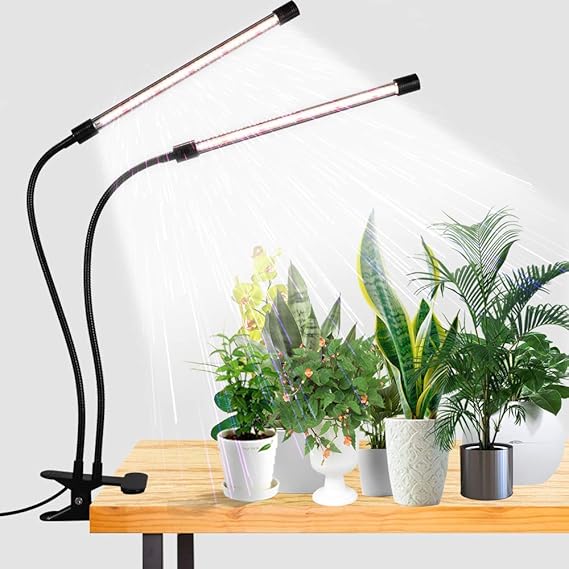
    LED Grow Light,6000K Full Spectrum Clip Plant Growing Lamp with White Red LEDs for Indoor Plants

    61pUrl7WK L. AC SX569
    • White LED Lights (Partial-conversion)

    In today’s market, there is the introduction of a better type of white light which is a partial conversion LED used in an indoor garden. It makes use of blue light instead of ultraviolet light. The phosphor coating here changes part of the blue light into yellow light. This yellow light consists of red and green.

    This yellow light now merges with the rest of the blue light to form white light. Now, this type of white LED is very efficient for growing plants compared to the regular one.

    Today’s white LED spectrum light will supply a full light spectrum of various wavelengths.

    Wavelength Of White LED Light

    Various plants in their different growth phases require a certain type of light. This is where color temperature comes into play where specific wavelengths are required for different phases in a plant’s life cycle.

    The changes in the amount proportion of each color contained in the white LED will determine the color temperature. For instance, warm white light of color temperature 3000k has more red wavelengths. On the other hand, cool white light of color temperature 6500K has more blue wavelengths.

    Now when it comes to changing the color temperature for the white diode, all you need do is make use of a thicker phosphor layer. Then you can change the blue LED’s wavelength.

    Below are some color temperatures for various stages of a plant’s growth:

    • Vegetative Phase: Red light is ideal for the vegetative phase of a plant and this falls in the 5000K range.
    • Flowering Phase: Cooler temperatures are ideal for the flowering phase. Thus, you should go for the 2700K to 3000K scale. 2700K is specifically for the flowering stage; however, if you wish to make use of your light for all growth stages, then 3000K is the ideal number.
    • Generally For Plants: for growing plants generally both 5000K and 6500K are perfect. However, if you plan on indulging in just veggies 6500K will work fine.

    FAQ’s

    Can you use a white LED light to grow plants?

    Yes, you can use a white LED light to grow plants. There are many different ways to use an LED light for growing plants. You can use a cool white or warm white LED light. You can also use the red and blue LED lights. It’s not a good idea to use a white LED light for any other purpose. However, the best way to do this is to use an LED grow light that has been specifically designed for growing plants. The reason being that LEDs produce a specific wavelength of light, and these are what plants need to grow. Using any other type of lighting would not be the best option for growing plants.

    When should you use white LED as opposed to flourescent?

    You can use an LED light to grow plants, but it’s not the same as a fluorescent bulb. While fluorescent lights are made of tubes that contain mercury vapor, LEDs don’t have any mercury. They also emit a different wavelength of light than conventional fluorescent lights, and their spectrum is more like sunlight.

    The LED light is much more efficient than a conventional fluorescent bulb, so it will last longer and cost less to run. It won’t heat up the room as much as a fluorescent bulb, so your house won’t be hotter in the summer. And since LEDs don’t contain mercury or have any other hazardous chemicals inside them, you can put them in an area where children and pets play.

    LED lights are great for growing herbs, veggies, fruits, and flowers. But if you’re looking to grow houseplants or succulents, you should use a fluorescent light instead. Fluorescent bulbs emit the same spectrum of light as sunlight, which is great for plants that like bright sunlight.

    Can any LED light be used as a grow light?

    Yes. The only restriction is that the spectrum of the light must be within the tolerance range of the plants’ requirements, which is typically a range of 400 to 700nm for most plants. The higher the wavelength, the more blue light, and the lower the wavelength, the more red light. The light is typically measured in lumens. A typical fluorescent bulb emits about 100 lumens, so one lumen is equal to one lumen per watt.

    How do I change the color of my LED grow light?

    You can adjust the color of your LED lights by using the colored filters that are available from most LED lighting manufacturers. The colored filters come in a variety of colors such as red, yellow, blue, and green. The colored filters are usually designed to match the spectrum of light emitted by the bulbs. Some colored filters have their own special name and are labeled accordingly. For example, “G-Red” is a red filter, “G-Green” is a green filter, etc. The filters can be purchased individually, or they can be bought as a set.

    Conclusion About White Led Spectrum

    So, we have concluded that white LED lights are indeed is good for growing indoor plants. It will offer your plant efficient growth and stronger results.

  • Grow Room Size Per Plant

    Grow Room Size Per Plant

    One of the first points to put in mind when commencing indoor hydroponic farming is the size of your grow room. This is important so you can determine the right grow room size per plant and carefully plan and work on your grow space to maximize yield.

    Let’s take a look at how to choose the right grow room size that will suit your plants’ size.

    Requirements To Consider

    Before we dive into grow room size per plant, let’s get to know the requirements. Some factors will determine how to choose the grow room size per plant. Let’s take a look at some of these factors:

    • Plant Size: Now, when it comes to plants, knowing the plant size is another factor to consider when growing in a particular room space. We have small plants, medium-sized plants, bigger plants, and bushier plants. You can get the plant size information on the packet of your seed pack. You may also find the plant’s growing height and perhaps seed spacing requirements in the seed pack.
    Requirements To Consider - Plant Size
    • Spacing: Another factor is spacing requirements. While there are plants that require give planting space and failure to do so can cause poor growth and health of the plant. However, there are a few plants that can allow planting them close to each other. For example, plants that need to be pollinated by other plants will need their pollinating plants to be close to them.

    Grow Space Room Size Per Plant

    Talking about the recommended grow room size per plant, let’s take a look at this using a grow room of size 10 x 10 (i.e 10 feet by 10). A 10 x 10 room size equals 100 square foot room.

    The number of plants that will fit a 100 square foot room will be less than 2000 small-sized plants. For medium-sized plants, it can fit about 200 to 450 plants. While for bigger or bushier plants, you can fit 25 to 100 plants for a 100 square foot grow size room.

    Always have in mind that the space and size of plants will determine the number of plants you can fit in a grow room.

    Read more about Leaving Grow Lights On 24 Hours

    Using Grow Tent To Determine The Grow Room Size For Plants

    Many hydroponic growers especially newbies usually wish to plan the number of plants they want to grow and select the appropriate grow tent size for it. This is a very good plan. Just ensure you have the required space where you can set up your grow tent in your home.

    So, here are some various grow size tents and how many plants you can fit in them:

    • 2 x 2 Grow Tent: let’s see how many plants we can fit in a 2 x 2 grow tent. Usually, a single plant is ideal for a 2 x 2 grow tent together with a 3 or 5-gallon container. However, you can still fit in 4 smaller plants in this grow tent size.
    • 2 x 4 Grow Tent: 7 to 8 small sized-plants can fit in this grow tent size.
    • 3 x 3 Grow Tent:  this size can allow you to grow 9 small plants or more.
    • 4 x 4 Grow Tent:  you can comfortably plant about 4 regular-sized plants with this size.
    • 4 x 8 Grow Tent:  two large plants can fit into this size. About 8 medium-sized and 32 or more small plant sized can fit in this grow room space.
    • 5 x 5 Grow Tent:  you can easily grow up to 25 plants with this grow room size.

    Importance Of Determining The Appropriate Grow Room Size

    Determining the appropriate grow room size per plant is very crucial when it comes to indoor hydroponics. Doing this will accurately guide you to calculating the capacity in which you can plant. This way, you can enhance the quality and results of the harvest.

    However, if you choose an undersized or wrong grow room, there are serious consequences to this. It can result in overheating of your plants and your garden will be overcrowded. Now overcrowding will result in low-quality yield which is totally the opposite of what any gardener wants.

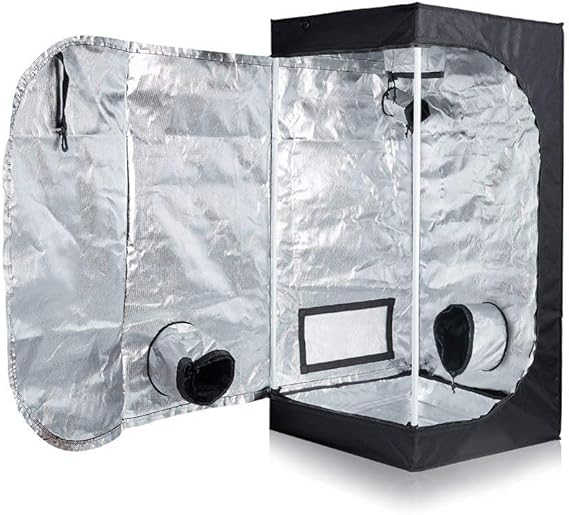
    TopoLite 24″x24″x48″ Hydroponic Grow Tent Garden

    61haKVrAFJL. AC SX569

    Also, oversized grow room has its own issue. Oversized grow room will cost you a lot because there will be an increase in total operating cost. It will require extra costs such as more electricity consumption, constant temperature regulation to an accommodating level for plants, etc.

    Find out the Cheapest Hydroponic Growing Medium

    FAQ’s

    How many plants should be in a grow room?

    The table below shows how many plants you would need to grow for different wattage requirements.

    How many plants can you grow in a 10×10 tent?

    There are a lot of different things to consider when you’re looking to start your own garden. From what to plant, to how much space you have to work with, and what kind of space you have to work with.
    A 10’x10′ tent could handle about 32 plants, if they were medium size. You would have to be careful with your watering though, you wouldn’t want it getting too wet.

    How big is a 4×4 grow tent?

    A 4×4 grow tent can hold as many as four plants, but it’s usually just two or three.

    Most growers purchase a 4×4 tent. They are able to grow a wide variety of plants in these tents. A 4×4 tent has four walls, which means that there are four sides to the tent. These walls are usually made out of either metal or plastic. The tent comes with a door at one end, which leads to the inside of the grow tent. A 4×4 tent is an excellent choice if you want to grow as many different types of plants as possible. There are a few advantages of having a 4×4 tent. For one, it gives you the room that you need to grow a lot of plants. It also provides you with more space for lights and for growing.

    Do you need a carbon filter for a grow tent?

    arbon filters are used in conjunction with air purifiers to filter out particles, dust and odors from the air. Carbon has a high surface area which allows it to attract airborne particles.

    This is why they are used in conjunction with air purifiers. The most common carbon filters that I have come across in my research are the carbon block filters. There are a couple of problems with using a carbon filter in a grow tent. The first is that the carbon needs to be maintained to keep its effectiveness. This means you need to clean it regularly. It’s not as hard as it sounds.

    There are a few ways you can do this. You can use a vacuum cleaner and run it over the carbon or if you want to be more hands on you can wash it in water and soap. Either way, you need to get rid of the sooty build up that is inevitable when using a carbon filter. The second problem with using a carbon filter is that there is a limit to how much air can pass through them. You only need to look at the dimensions of the carbon to see how big of an issue this could be. If you have a 10 ft x 10 ft grow tent, then you need to use a carbon filter that is about 4 inches thick. This will allow for the air to flow through the carbon. If you are growing in a larger tent, then you will need a bigger carbon filter. A final issue with using a carbon filter is that it does not absorb odors. If you are growing in a tent and you are using an air purifier, then you won’t need to worry about this as the purifier will take care of it.

    Final Say

    With that said, we hope you have picked one or two things on how to choose the right grow room size for your hydroponic indoor garden. Happy growing!