Author: Eunice

  • Grow Lights Ballasts

    Grow Lights Ballasts

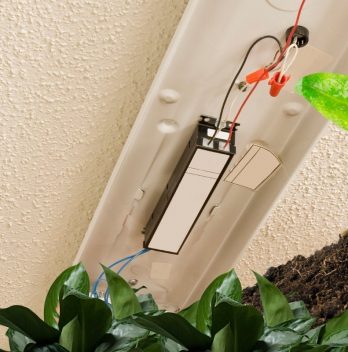
    Grow lights ballasts are required in traditional tube fluorescent bulbs as well as all high-intensity bulbs. Ballasts are needed for starting your bulbs and they will control the operations of your light.

    Now, when it comes to establishing your grow space and you plan on using high-intensity lamp discharge, then grow light ballast may be required in your setup. The absence of ballast in your indoor grow space will not make your grow light come on if you’re using high-intensity discharge (HID).

    So, we will enlighten you on what you need to know about grow light ballasts so you know their importance for your plants’ growing needs.

    What Is Grow Light Ballasts: What Do Grow Ballast Do?

    Grow lights ballasts control the current that flows into a grow lamp. They are required to power up or start certain bulbs.

    Generally, all gas discharge lamps such as compact fluorescent, HID, and linear fluorescent need ballast. Also, ceramic metal halide (CMH), high-pressure sodium (HPS), as well as the combination of HPS and MH all requires ballast. However, LED grow light does not require a ballast.

    Grow light ballast allows you to prolong your grow bulbs’ lifespan and enhance your grow light performance.

    What Is Grow Light Ballasts - What Do Grow Ballast Do

    How A Grow Lights Ballasts Operates

    In a standard situation, grow light needs high voltage to power up or start, and the ballast supplies this. Now, when power is pulled from a high voltage source by your grow light, this process can result in a current surge.

    This is why grow light ballast is required to control the current flow so the grow light can be prevented from such electrical spikes.

    Grow lights are low resistance and they make use of two mechanisms to light up which are electrical arc and gas. As you turn on a lamp, the bulb receives high voltage from the ballast which gets the electrical arch started.  When the arch receives power, the sodium is in a solid-state. However, it later changes by melting to vapor or gas.

    Now, when it’s in the gaseous state, the lamp resistance lessens. Thus, the grow light will need only less power to run. If the lamp lacks ballast that controls the current flow, there will be a perpetual increase in current and the bulb will eventually blow.

    Also, there will be a period when the HID bulb age and this will cause an increase in the demand for power for the light to keep running. So, when this happens, the ballast will increase the quantity of power to the bulb automatically.

    As the bulb attains a point of requiring too much power, the ballast will shut down automatically to prevent any hazard or accident. This implies you have to get a new bulb for power continuation.

    Types Of Fluorescent Grow Lights Ballasts: Electronic Vs. Magnetic Ballast

    We have two types of fluorescent ballasts namely electronic ballast and magnetic ballast. You can choose either type for your plants’ growing needs. Both electronic and magnetic ballasts have their pros and cons.

    Some growers prefer magnetic ballasts because of their affordable price. However, they emit too much heat and consume more power. On the other hand, other growers prefer electronic ballasts as they are more efficient and they emit lesser heat. They will offer you better output while using less power.

    How Electronic & Magnetic Ballast Works

    1. Magnetic Ballast

    Magnetic ballast makes use of a magnetic coil in form of a big spool of wire wound about sheets of steel. This setup supplies a huge quantity of voltage required to start up the bulb. The magnetic ballast is known to be old-fashioned. They are bulky built and emit too much heat.

    However, they are pretty durable and will last you a long time compared to electronic ballast. Thus, if you want long-term use, you can go for magnetic ballast.

    Another great importance is that magnetic ballasts are built to meet a satisfactory standard of the American National Standard Institute (ANSI). They make sure both lamp and ballast operate together accurately.

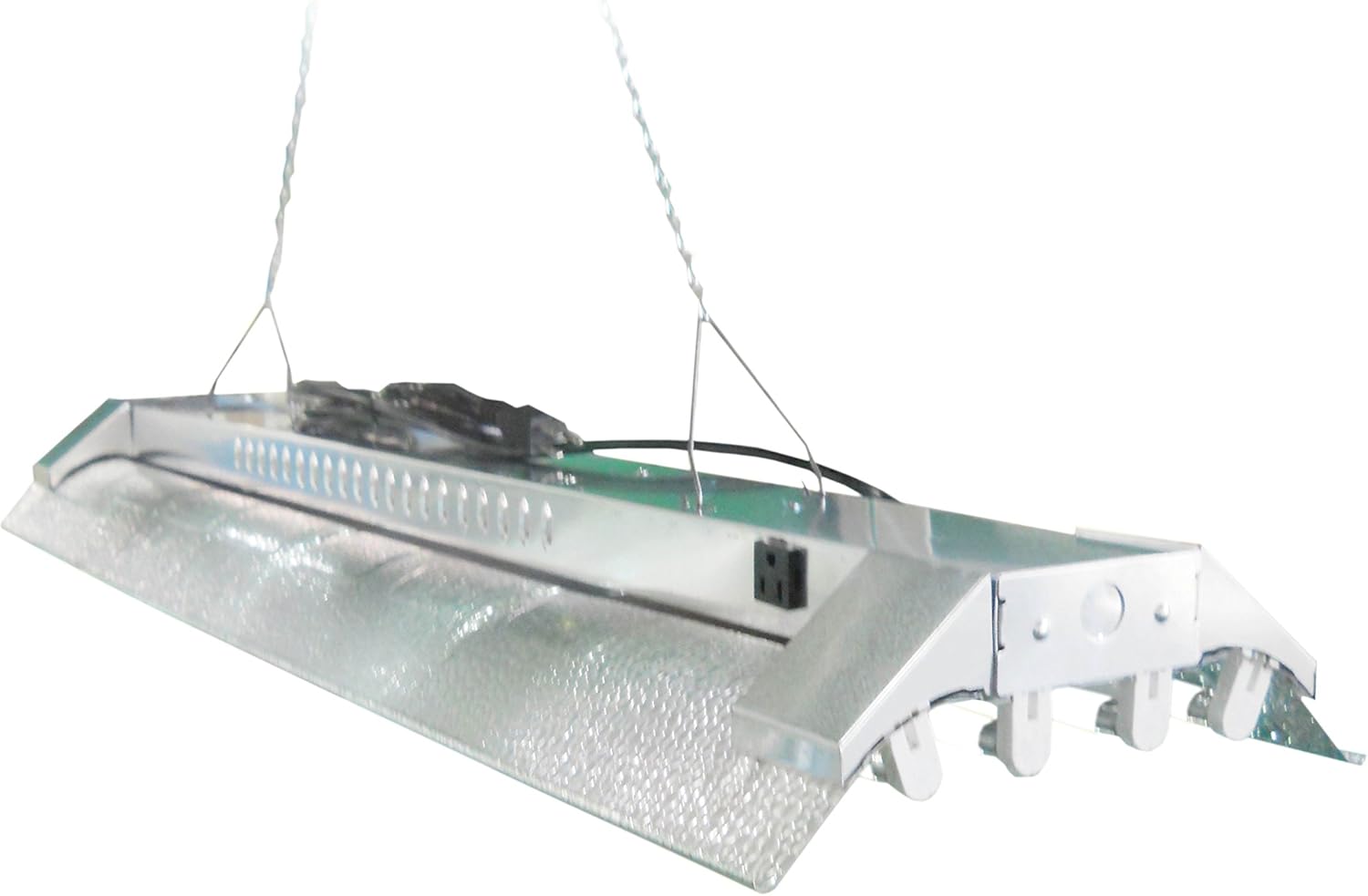
    Durolux T5 Ho Grow Light – 4 Foot 4 Lamps – DL844 Fluorescent Hydroponic Indoor Fixture UL Listed
    71c4Q9B LpL. AC SL1500
    1. Electronic Ballast

    Electronic ballast makes use of semiconductors and microchips to supply the required high voltage. It does not make use of a magnetic coil which makes magnetic ballast heavy. Thus, electronic ballast weighs lesser, looks smaller, and produces lesser heat.

    Another added advantage is that electronic ballast offers more light which can be up to 30% of what magnetic ballast offers. They also consume lesser power while supplying more light.

    However, the disadvantage we noticed is that they aren’t ANSI compactable with a metal halide (MH) and high-pressure sodium (HPS) lamps model that has 250+ watts. Thus, they are built in different ways resulting in bulb performance that is not consistent.

    For this reason, we recommend you purchase a complete lighting package. This way, you are sure the bulbs included are the right match for the ballast.

    Another plus is that electronic ballast can be switched which allows you to operate both HPS and MH without any problem. Also, the majority of electronic ballasts are dimmable therefore, you are allowed to run multiple bulb wattage.

    Growing Light Digital Ballast

    You may come across some ballast been labeled digital ballast. Have in mind that just a few of them are actually digital and they usually contain a microprocessor.

    These digital ballasts are very efficient and will do more of what electronic ballast will do. However, these types of ballasts are more expensive.

    Growing Light Digital Ballast

    Do LED Grow Lights Require Ballasts?

    LED grow lights do not require ballasts. This is because they can be easily plugged into a direct standard electrical outlet. They work in a totally different technique and they just require direct current.

    When you obtain LED light for your indoor growing needs, all which is required is right inside your package. So, no need for extra things like grow light ballast.

    FAQ’s

    What exactly is a ballast?

    A ballast is a device that is used to power a fluorescent light fixture.

    It can be thought of as an extension of the light fixture itself. The ballast is responsible for regulating the amount of electricity that goes into the light fixture. It also has the ability to limit the number of times the light fixture can be turned on and off.

    How do ballasts work?

    In order for a ballast to work, it must have two things: an input and an output. The input is the wire coming from the power supply. The output is the wire that goes to the fixture. For most ballasts, there are two wires going to the fixture: one for power and one for control.

    The ballast receives the power coming in from the power supply. It then regulates the amount of power that goes to the fixture. This regulation is based on how much light you want your fixture to produce. Some ballasts allow you to regulate the amount of light produced by the fixture.

    They do this by using a variable transformer, which adjusts the voltage to the fixture. Others are fixed at a certain level and can only be adjusted by changing the number of bulbs in the fixture.

    How are they powered?

    Ballasts are usually powered by AC mains power and operate on 240 VAC (United States) or 277 VAC (Canada).

    The ballast contains two main parts: the electronic circuitry and the transformer. The ballast’s electronic circuitry is designed to convert the AC power from the power source into DC power. This power is sent to the transformer, which transforms the DC power into a high-frequency AC power. This high-frequency AC power then gets to the fixture. A ballast can be either direct or alternating current (AC). A direct-current ballast converts the 120/240 volts of AC power from the electrical grid into 12- or 24-volt DC power, which is used to light the bulb. An alternating-current (AC) ballast converts the same power into a higher-frequency AC signal, which is sent to the lighting fixture.

    What are the different types of ballasts?

    There are three main types of ballasts: magnetic, electronic and ceramic. The magnetic ballast is the oldest type of ballast. It consists of a single transformer and has no electronic circuitry. The transformer receives the power from the power supply and sends it to the bulbs. The ballast regulates the amount of power going into the fixture. The electronic ballast is the most common type of ballast. It contains electronic circuitry that regulates the power going to the fixture.

    Conclusion for Growing Light Ballast

    All high-intensity bulbs and traditional tube fluorescents need a ballast to operate efficiently. But LED grow light does not require a ballast. So, you may decide to opt for LED grow lights to make things simpler.

    The good news is that ballasts are mostly included in your grow light package. Therefore, there’s no stress in searching for compactable ballast for your bulbs.

  • MarsHydro Led Grow Light

    MarsHydro Led Grow Light

    When setting up your indoor hydroponics garden, part of the process is choosing an effective grow light. LED light is one option to choose and there are different brands from various companies to purchase. If you decide to go for LED lights you can choose the MarsHydro LED grow light for your indoor growing needs.

    Even though many LED light options are available in the market to choose from with different awesome attributes such as technical specifications, pricing, etc, deciding the right pick may be confusing. But if you end up choosing the MarsHydro LED to grow lights, you can be sure of an effective result for your indoor garden.

    Some Info On Mars Hydro LED Grow Lights

    MarsHydro LED grow light is a type of LED light for indoor gardening which is made by a Chinese manufacturer. This company has been gradually embraced among indoor gardeners as they offer quality LED lights to indoor plants.

    These grow lights are affordable and easily accessible and this light is an excellent option for beginners. Also, the MarsHydro LED grow light is pretty adequate for both hobbyist growers and low-cost growers.

    712STTzYpUL. AC SX480 SY360

    These lights are of good quality especially the MarsHydro 300W which performs distinctively from its older version. The older version has issues with burnt diodes and this has been solved with the newer version.

    You can easily purchase them from the hydroponic store section, Amazon, and other reliable websites.

    Benefits Of Using Mars-Hydro LED Grow Light

    The MarsHydro LED grow light offers an impressive benefit which includes:

    • MarsHydro LED Offers a Full Spectrum: if you want to supply your plant with a full spectrum, then you should get your hands on the marsHydro LED grow lights. It offers full spectrum options for the vegetative stage, flowering stage, and fruiting stage. Thus, leafy greens or herbs, vegetables, fruits, and so on can be grow using this grow light.
    • It is Affordable and Accessible: another impressive benefit is its price offer as it is reasonably affordable and it’s easily accessible.
    • The Heat is in Moderation: the MarsHydro LED light does not produce too much heat. It has fans to disperse the heat emitted adequately to every part of the plants.
    • Durability: the grow light is pretty durable with a lifespan of around 50,000 hours. This means this grow light can last over 2,700 days if used 18 hours per day.
    • Warranty: there is also the benefit of a 3-year warranty. So, if there’s an issue of initial grow light failure you can be sure of warranty protection against that.

    Any Downsides From Using MarsHydro LED Grow Light?

    With the different benefits MarsHydro LED offers, we still notice a few downsides. Let’s take a look at them:

    • No Dimmer Switch: some of the brands that grow light lacks the switch options of light dimming. However, we believe it’s something you can work your way around. If the light is too bright, you can make use of protective wear for your eyes.
    • Absent of On/Off Switch: another downside of the MarsHydro grow light is that it lacks an on and off switch. You will always have to plug and unplug the grow light when making use of it.
    • Communication Gap: while this might not be much big of a deal, you may still have the communication gap of America-China a few times. However, they are getting better and one can’t resist the accessible, affordable, and nice quality of grow light they offer.

    Even with all these downsides, the overall importance is the good light quality this grow light offers to your indoor plants. So, it is definitely worth the purchase.

    Plants To Grow With Mars LED

    The great thing about MarsHydro LED grow light is that it offers a full light spectrum. Thus, most varieties of plants can be grown easily with this grow light and you get a tasty and bountiful yield.

    Plants To Grow With Mars LED

    Here are some examples of plants you can grow with the MarsHydro LED grow lights:

    • Peppers
    • Cucumbers
    • Tomatoes
    • Lettuce
    • Strawberries
    • Spinach
    • Melons and so on

    Some Recommended MarsHydro LED Grow Light

    Let’s take a look at MarsHydro to grow light you can go for:

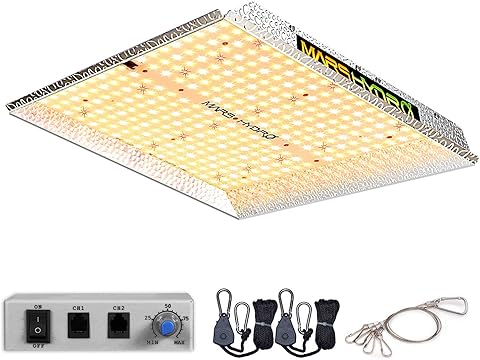
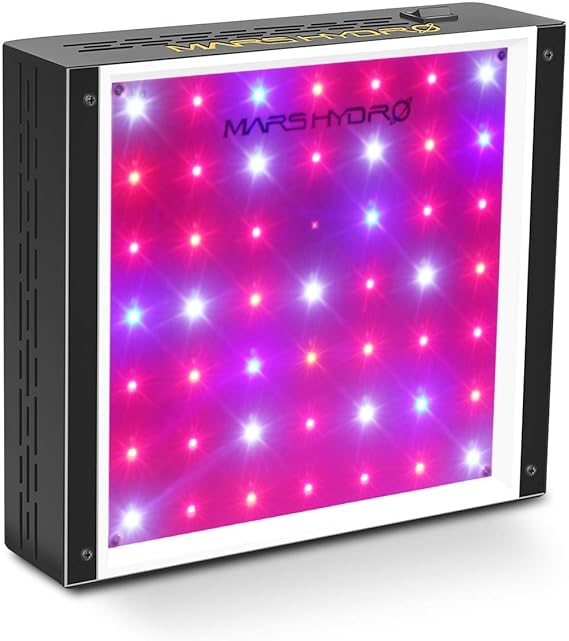
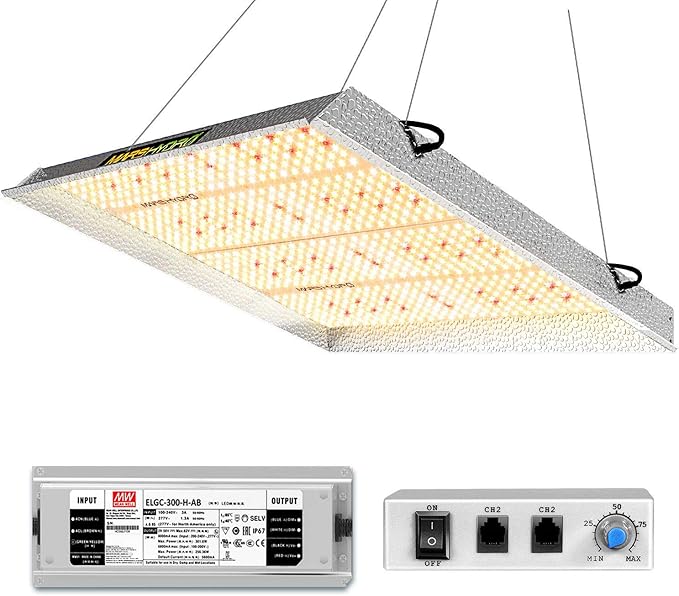
    1.    MarsHydro LED Grow Light 300W Full Spectrum for Hydroponic Indoor Plants

    The MarsHydro LED 300W full spectrum is one of the MarsHydro brands you can go for to supply your indoor plants with lights. It is energy-saving as it only pulls in about 120W and it’s ideal for a coverage area of 2ft by 2ft or 4 square feet.

    It offers full-spectrum, thus, it’s ideal for vegetative and flowering phases. This grow light is safe to use on plants and we recommend positioning the grow light about 18 inches from your plants.

    61DCFbitI9L. AC SX569

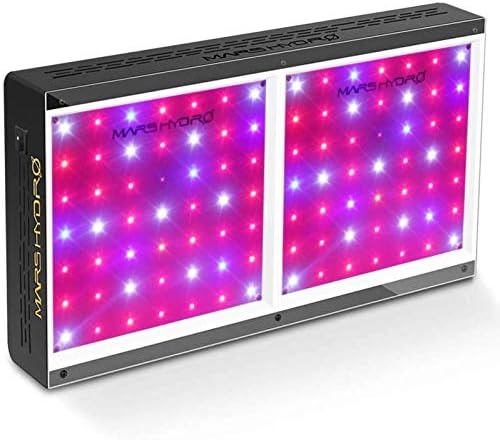
    2.    MarsHydro Led Growing Lamps 600W Updated Led Grow Lights Full Spectrum

    This grows light is a 600W full spectrum ideal for the vegetative and flowering phase of your plants. It is energy-saving and will only pull 132W of electricity. It is perfect for a 3ft X 3.5ft coverage area.

    51vqrM4v8%2BL. AC

    3.    MARS HYDRO TS 3000W LED Grow Light for Indoor Plants 4×4 5×5 ft Commercial Grow Lighting

    This is one of the most recent MarsHydro grows lights for indoor plants. It’s been improved to have a dimmable full light spectrum for all your plant stages. It is ideal for commercial purposes. This grows light can cover a growing area of 5ft X 5ft vegetative stage and 4ft X 4ft bloom stage.

    It mimics the work done by sunlight and your plants will transition quickly from seed to flowering stage. Your grow life will be made comfortable as it is noise-free and easy to operate.

    71AKWIvsEBL. AC SX679

    FAQ’s

    How many plants can a Mars Hydro TS 600 grow light?

    Many people are interested in growing hydroponics, but aren’t sure how many plants the Mars Hydro TS 600 grow light can support. This is important to know before you start growing hydroponically. If you are using a soil-based system, your plant count will be determined by the size of the container you use and how much soil is inside it. If you are growing in a tray, you have a different set of considerations.

    The Mars Hydro TS 600 is a medium output LED grow light that uses LED strips to create a high-quality, high-efficiency light source. It has a 4” x 24” footprint and can produce up to 7500 lumens. The unit is designed for indoor use only. While there are a number of factors that will affect the amount of light you get from a grow light, the most important is the power setting. A higher power setting will mean more lumens and therefore more light in your growing area.

    The Mars Hydro TS 600 has a default power setting of 35 watts.

    When you are ready to start adding more plants, you can increase the power setting by increments of 5 watts until you reach your desired output. For example, if you want to grow 6 plants with the Mars Hydro TS 600, you would start by setting the power setting to 40 watts and then increase it by 5 watts every time you add a new plant. Once you have all six plants, you can lower the power setting back down to 35 watts for the last plant and enjoy the rest of your growing season.

    The Mars Hydro TS 600 also has a maximum power setting of 60 watts. At this setting, you will get a lot of light, but you may be able to burn out your plants. You should always start by using the lowest power setting that you are comfortable with and then increase it as your plants grow. If you are having issues with light burnout, try increasing the power setting by 5 watts at a time until you find the right balance for you. The Mars Hydro TS 600 is an excellent grow light for indoor cannabis growers. It is designed for indoor use only and can produce up to 7500 lumens. It can be used in any orientation and can even be mounted on a ceiling.

    How far should Mars Hydro light be from plants?

    It really varies on the type of environment that we’re talking about, but as a general rule of thumb two feet should be fine.

    Is the HydroLED+ brighter than the HydroFLOWER?

    It is a much better investment. I have used the HydroLED+ for a couple of weeks, and it is an amazing light. It is more than 50% brighter than the HydroFLOWER. It is also cheaper. However, after using it for a week, the HydroLED+ was no longer available. The reason that it is not available anymore, is because they are too popular. The HydroLED+ sells out every day! So if you want to buy one, get one as soon as possible.

    How many watts is a Mars Hydro TS 1000?

    If the hydro is in an air conditioned environment, and the fan is set to blow at about 12 CFM, then you can expect a few hundred watts. I would check the power consumption on the unit itself, not on the inverter.

    Final Say

    We can see the MarsHydro LED grow light is one of the best budgets friendly lights you can go for. MarsHydro has been dedicated to supplying your plants’ professional LED grow light with minimal heat and little noise. It can also be used on all types of plants.

    Depending on the size of your indoor garden, you can use this quality grow light if you’re a newbie, have small gardens, or you just experimenting.  There are also brands available for large rooms or commercial setup.

  • How Many Plants In A 3×3 Grow Tent

    How Many Plants In A 3×3 Grow Tent

    If you’ve decided to grow your plants indoors and you’re wondering how many plants can fit in a 3×3 grow tent is, then this post is for you.

    One of the first important points to put into account before commencing an indoor garden is space. If you’re using a room, figure out how much space you have and if you’re using a grow tent, figure out how many plants can be grown successfully in your grow space.

    We will go through how many plants will fit a 3×3 grow tent size so you can plan your indoor garden set up appropriately. So continue reading to learn more on this.

    How Many Plants To Fit In A 3×3 Grow Tent?

    You can grow about 2 to 4 plants in a 3×3 grow tent size. However, the number of plants to be grown in a 3×3 grow tent will depend on how you train your plants.

    How you train your plant will be one major determinant of how many plants can fit in a 3×3 grow tent. Training is done to control the height and shape of your plants so they can accommodate your grow tent. Training your plants will not only control your plant size but will also maximize the yield of your crops.

    How Many Plants To Fit In A 3x3 Grow Tent

    When & How To Train Your Plant To Fit In 3×3 Grow Tent

    Let’s take a look at how and when you can train your plant so they can fit in your preferred grow tent size.

    Low-Stress Training Method

    One common way of training your plant is by the low-stress training method. It involves controlling and manipulating the shape of your plants for them to produce optimal yield. Low-stress training allows growers to make use of the available space and light adequately.

    Mostly, low-stress training allows your plant to grow horizontally and wide rather than vertically. It involves lowering a plant’s height at the same time producing multiple stems to maximize yield.

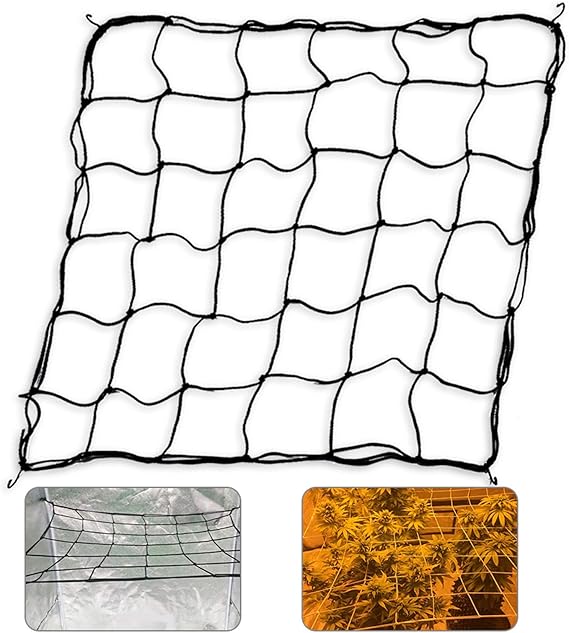
    A horizontal trellis net is usually used to control and guide the plant through the direction of the plant to follow as they grow. The trellis net is tied to each grow tent pole which allows the plants to grow horizontal and wide. You can also gently bend or tie down the ranch of your plant stem and branch with a soft rope so they grow outwards.

    GROWNEER Flexible Net Trellis for Grow Tents

    71phQchYVwL. AC SX569

    Training should be done in your plants’ vegetative stage. This is because at this stage your plant is still growing and producing more leaves. When your plants get to the flowering stage or they become established, it will be difficult to manipulate their growth direction. If you plan on making use of this method in your 3×3 grow tent, then you can grow up to 4 plants in a 3×3 grow tent.

    Check out How to Increase Humidity in Grow Tent

    Training By Pruning Method

    Another method of training your plant is by pruning or pinching. This method actually puts some stress on your plant because you have to make some cuttings.

    Pruning involves cutting some parts of the plants as they grow. This is done to change the growth pattern. This process also gives rise to optimal yield. You can grow about 2 plants in a 3×3 grow tent using the pruning training method.

    Sea Of Green Method

    The next method of training your plants to fit in your grow tent is the sea of green method.  This method involves pushing the plants to enter into their flowering stage ahead of their scheduled time. So, this is done by altering the lightning duration to 12 hours of light and 12 hours of darkness.

    This is done so you can get early flowering, thus yielding to early harvesting. Therefore, this allows you to grow more plants or flowers per year. With the sea of green training method, you can grow about 5 to 7 plants in a 3×3 grow tent size.

    Sea Of Green Method

    Screen Of Green Method

    The fourth and last training method we will be discussing is the screen of the green method. This method takes the steps of low-stress plant training. This also makes use of the net trellis by pushing the plants’ direction horizontally rather than vertically. With the screen of the green training method, you can plant about 2 plants in a 3×3 grow tent.

    How Many Plants in a 3×3 Tent Final Thoughts

    We have shown that how many plants you can fit in a 3×3 grow tent size will majorly depend on how you train your plants as they grow.

    So, we hope this information has helped you know how to plan and manage space.

  • UVA/UVB Lights For Plants

    UVA/UVB Lights For Plants

    Even though most of our knowledge on ultraviolet light seems to be undesirable, a bit of ultraviolet light is still safe. UV light is divided into 3 groups according to their wavelengths and are UVA, UVB, and UVC. In this post, we will be discussing if UVA/UVB lights are good for plants.

    As a grower, you should have an idea of the exposure of ultraviolet light on your plants and how the growth of your plants. So, let’s dive in and explore how UVA/UVB lights affect the growth of your plants.

    Ultra Violet Lights & Their Types

    Ultraviolet light is electromagnetic radiation which has radiation shorter than visible light and is present in the sun.

    There are 3 different types of ultraviolet lights and they include:

    1. UVA: the ultraviolet A wavelength ranges from 320 to 400nm. The natural light that passes through the earth is made up of 3% UVA light. UVA light makes up most of the entire amount of UV light on the earth. You should however know that UVA lights for plants do not cause DNA impairment.
    2. UVB: the wavelength of the ultraviolet B ranges from 290 to 320nm. It makes up about 0.15% of natural the entire sunlight. The UVB light rays are capable of causing damage to the DNA of cells and they can as well cause cancer in living cells. The good news is that nearly all of the sun’s UVB rays are obstructed by the Earth’s ozone layer.
    3. UVC: the wavelength of ultraviolet C ranges from 100 to 290nm. The UVC light is extremely energetic and it’s capable of killing living cells. It is even used for sterilization uses to kill harmful microorganisms. Fortunately, UVC light rays are filtered out entirely from the Earth’s surroundings.

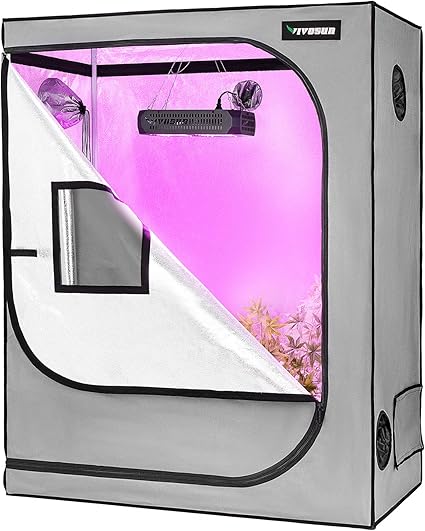
    VIVOSUN 48″x24″x60″ Grow Tent with Observation Window and Floor Tray

    817jXb hJzL. AC SX425

    Among these 3 ultraviolet lights, only UVA and UVB are used in little doses by plants. So, let’s take a look at how UVA and UVB play their roles in plants.

    Benefits Of UVA/UVB Lights For Plants

    Various plants respond in different ways when they are exposed to UVA/UVB lights. Below are some benefits UVA/UVB lights offer plants:

    • Antioxidant Production: Generally, it’s been shown that plants enjoy an increase in antioxidants or flavonoids production.
    • Enhance TCH & CBD: Also, both UVA and UVB in safe doses offer your plants that awesome flavor and smell from the oil they produce. The effect of UVA and UVB has been shown to enhance the production of THC and CBD in certain plants.
    • Trichomes Production: The same way humans make use of sunglasses or sunblock to protect from the rays of UV, plants as well produce their natural sunblock or sunscreen. The sunblock plants produce is known as trichomes and the more the trichome production, the more the THC and CBD range.

    • Enhance Germination: The germination process of indoor seeds that are just starting can be promoted by ultraviolet lights.
    • Reduces Plant Shock: When your plants are still indoors germinating, they are still fragile to high light intensity. If you transplant them from indoors to outdoor, they might go into shock. This is because the light intensity outdoor may be too high for them to adjust. But when you expose them to a few UV lights when they are indoors germinating in their early stage, shock from outdoor transplanting can be reduced drastically.

    UV Lights In Grow Lights

    Most of the grow light available contains the entire visible spectrum and a few ultraviolet lights. This way, this uva uvb grow lights duplicate the natural sunlight in a very close range. However, you should know not all grow light contains ultraviolet light.

    Too Much UVA/UVB Light For Plants

    As we have said in a low dose, ultraviolet lights are safe for plants. However, when they become too much, they will cause harm to your plants.

    Ensure your indoor plants are kept safe from the rays of outdoor lights. Ultraviolet lights can penetrate through your glass windows and cause harm to your plants if they are not positioned properly. So, ensure you keep your fragile plants far from the reach of the light rays. You can as well obtain some dark thick curtains to block out the ultraviolet rays.

    Too Much UVA-UVB Light For Plants

    FAQ’s

    Do plants need UVA and UVB light?

    The answer to this question is yes. The ultraviolet (UV) spectrum is divided into two parts: ultraviolet-A (UVA) and ultraviolet-B (UVB). Plants use both of these parts of the spectrum for different purposes. UVA is a part of the visible light spectrum that we see as white or yellowish light. It is a component of sunlight and is not filtered by clouds or the atmosphere.

    UVA is used by plants for photosynthesis and other cellular functions. UVB is the part of the spectrum that is filtered out by the atmosphere and clouds. Plants cannot use this portion of the spectrum for photosynthesis or other biological functions. UVB is important to plants because it causes plant tissue to darken. This causes damage to plant cells and can result in sunburns, which can be painful and cause skin damage if the exposure is too long. UVA radiation (wavelengths 400 nm to 320 nm) penetrates the atmosphere and can reach the surface of the earth. This penetration is dependent upon the amount of ozone and the wavelength of the UVA light. The UVB radiation (wavelengths 320 nm to 280 nm) penetrates the atmosphere and does not penetrate the stratosphere. This penetration is dependent upon the amount of ozone in the stratosphere.

    The UVB part of the spectrum is filtered out of sunlight by the atmosphere. As a result, the UVB radiation we receive at ground level is relatively small.

    What plant needs both of these?

    The only plants that I know that require both UVA and UVB are the blueberry. The blueberry needs a lot of UVA and UVB to flower and fruit. It can’t flower or fruit if it doesn’t get enough UVA and UVB.

    Do grow lights have UVA and UVB?

    Yes, grow lights have both ultraviolet (UV) A and ultraviolet (UV) B wavelengths. UV-B is the most harmful of these wavelengths, and can cause a sunburn on your plants, but UV-A is actually beneficial to plants. It causes plants to open their stomata, or pores, which allows air and carbon dioxide in and water out. Without this, the plant would be suffocating.

    Do LED grow lights produce UVB?

    There is a myth in the cannabis community that LED grow lights do not produce ultraviolet B (UVB) light. This is false. It is one of the most common questions we get asked by people who are new to growing cannabis indoors. UVB is known as the “sunlight” of the plant world, and it’s essential for flowering. UVB light is produced by plants in sunlight.

    Conclusion On UVA/UVB Lights For Plants

    So, we have concluded that ultraviolet lights are safe in minimal doses for plant growth. Both UVA and UVB in safe doses can offer your plants good benefits.

  • 1000w Grow Light Cost Per Month

    1000w Grow Light Cost Per Month

    Having an idea of the wattage used by your grow lights will tell you the grow light power consumption. This is important for you to determine the cost of operations. For example, you may be wondering how much 1000w grow light will cost per month. We will let you know in this post.

    Almost every grower’s wish is to minimize cost and optimize yield. One of the deciding profit decisions when it comes to indoor gardening centers around the appropriate method of sun substitution. This is why it’s essential you know the wattage consumption so you can plan your running cost.

    So, in this article, we will be looking at how much 1000w grow light will cost per month.

    Wattage

    Before we go into the power consumption of grow light, let’s look at what wattage (w) is. Wattage will determine the amount of power your grow light consumes. When the light wattage goes higher, it consumes more energy for electricity. Thus, you can have an idea of the running cost per month with wattage.

    The amount of wattage consumption on your grow light will majorly depend on the type of grow light used. There are some grow lights made of high-pressure sodium (HPS) while some are made of light-emitting diode (LED). Note that HPS grow light will consume more power than LED grow lights.

    Most grow light these days are made to replace the HPS consuming power light. So, a grow light labeled 1000w may not actually be consuming 1000w. It is only replacing a 1000w HPS bulb and thus will consume less wattage.

    1000w Grow Light Cost Per Month

    To determine the cost per month of 1000w LED grow light, you need to put some things into considerations. So, let’s take a look at them.

    Things To Consider When Calculating How Much Do Grow Lights Cost

    • How many hours per day will you be running your grow lights?
    • What stage in the plant cycle does your plant fall? Is it in the seedlings stage, vegetative stage, flowering stage, or fruiting stage? Seedlings will require about 14 to 16 hours of grow light. For the Vegetative, flowering, and fruiting stage, we can say roughly 12 to 18 hours per day.
    • What is the actual number of wattage your grow light draws from the wall? For example, if you have a 3000w grow light, the light may only draw about 700w from the wall. Also, the wattage the grow light emits is totally different from the wattage it will pull from the wall or consume.

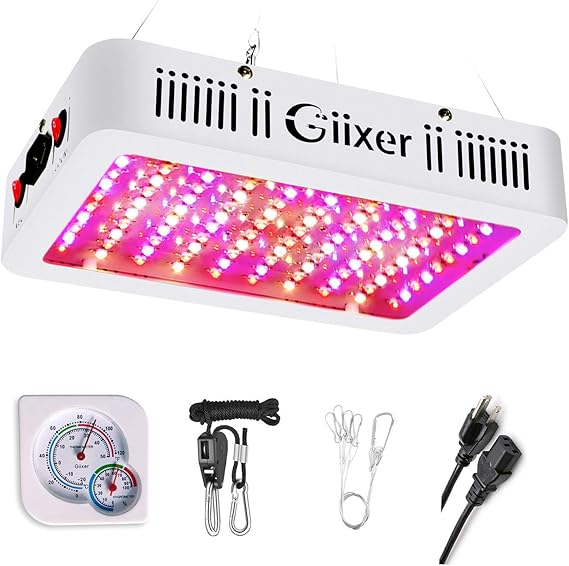
    Giixer 1000W LED Grow Light, Dual Switch & Dual Chips Full Spectrum

    71GAL%2BeUBUL. AC SX569
    • The number of weeks each growth stage will take. For example, seedlings can take 1 to 2 weeks. The vegetative and flowering stages can take weeks. But in this article, we will be doing 4 weeks, which is one month.
    • Electricity cost per kWh (kilowatt-hour). In the United States, the average cost of kWh is around 13 cents. However, this energy rate can differ widely depending on the states you live in. It could be cheaper or more expensive.

    Here You Can Find Out A List of Quality but Cheapest LED Grow Lights Online

    Calculating 1000w Grow Light Price Per Month

    So for example, you run your 1000w LED grow light for 15 hours per day. Remember we said you need to find out the actual number of wattage consumed. Dig and read through your grow light label to find out the actual wattage specs.

    For example, let’s say a grow light labeled 1000w actual wattage consumption number is 200w; we will have our total grow light cost per month to be $1170. This is calculated using 1kWh for 13 cents. This implies that the number of wattages consumed per day is 3kWh. While the number of wattage used per month equals 27kWh from running 15 hours grow light per day.

    Calculating 1000w Grow Light Price Per Month

    This is just an estimate of running 15 hours grow light daily with an actual wattage consumption of 200w. This may vary depending on some things such as the actual wattage values or the number of hours you run your grow light.

    However, if your light is actually consuming a 1000w and you’re running your grow light for 15 hours, the cost per month will be $5850. This is calculated using 1kWh for 13 cents. This shows that the number of wattages consumed per day is 15kWh. While the wattage number used per month is 105kWh from running 15 hours grow light per day.

    You can use this grow light calculator by inputting your values here to get your monthly cost estimation.

    FAQ’s

    How many watts does a 1000 watt LED grow light use?

    LED grow lights do not use any wattage. They are a type of light emitting diode, but they don’t have any filament or other heating element. They use an electric current to produce light, and they are designed to be used in conjunction with a fan to move air through them. The amount of light output is determined by the color temperature. Cooler light will provide more red/blue spectrum light and more plants will grow.

    A 1000 watt Led grow light equals 900 watts of HPS light.

    How many plants can a 1000 watt LED grow?

    In general, 4 plants.

    In general, 4 plants.

    LED lights are the future of lighting. They’re incredibly energy-efficient and can last for years, even decades. If you’re considering purchasing some, you might be wondering how much they cost to run each month. You can find this information by simply dividing the cost of the light bulb by its expected lifetime, which is typically 20 years or more.

    Do LED lights take a lot of electricity?

    LEDs are very efficient, so it is unlikely that they use much more energy than incandescent bulbs. They do use a lot less power.

    What are the disadvantages of LED lights?

    LED lights are not only energy efficient, but they also last much longer than traditional bulbs. However, there are some disadvantages to using LED lights that you should be aware of before you buy. LEDs are extremely durable. They can last anywhere from 15-20 years, depending on the type and quality of bulb you purchase.

    LEDs are more expensive than other lighting options, such as incandescent bulbs. For example, an average LED light bulb can cost around $40-$50, whereas a typical incandescent light bulb can cost under $1. Another disadvantage of LEDs is that they can be difficult to install. They require a very specific installation and cannot be used in many existing fixtures. If you have an existing fixture, you will have to remove it before installing the LED lights. What types of LEDs are there? There are three main types of LEDs: white, amber, and blue. White and amber lights are more common and are great for lighting up a space. They also tend to have more energy efficient bulbs, so they are perfect for home use.

    Do LED lights get hot?

    How many watts does a 1000 watt LED grow light use?

    LED grow lights do not use any wattage. They are a type of light emitting diode, but they don’t have any filament or other heating element. They use an electric current to produce light, and they are designed to be used in conjunction with a fan to move air through them. The amount of light output is determined by the color temperature. Cooler light will provide more red/blue spectrum light and more plants will grow.

    A 1000 watt Led grow light equals 900 of HPS light.

    How many plants can a 1000 watt LED grow?

    In general, 4 plants.

    How much do LED lights cost per month?
    LED lights are the future of lighting. They’re incredibly energy-efficient and can last for years, even decades. If you’re considering purchasing some, you might be wondering how much they cost to run each month. You can find this information by simply dividing the cost of the light bulb by its expected lifetime, which is typically 20 years or more.

    Do LED lights take a lot of electricity?
    LEDs are very efficient, so it is unlikely that they use much more energy than incandescent bulbs. They do use a lot less power.

    What are the disadvantages of LED lights?
    LED lights are not only energy efficient, but they also last much longer than traditional bulbs. However, there are some disadvantages to using LED lights that you should be aware of before you buy. LEDs are extremely durable. They can last anywhere from 15-20 years, depending on the type and quality of bulb you purchase.
    LEDs are more expensive than other lighting options, such as incandescent bulbs. For example, an average LED light bulb can cost around $40-$50, whereas a typical incandescent light bulb can cost under $1. Another disadvantage of LEDs is that they can be difficult to install. They require a very specific installation and cannot be used in many existing fixtures. If you have an existing fixture, you will have to remove it before installing the LED lights. What types of LEDs are there? There are three main types of LEDs: white, amber, and blue. White and amber lights are more common and are great for lighting up a space. They also tend to have more energy efficient bulbs, so they are perfect for home use.
    Do LED lights get hot?
    They get hot, but not as much as the regular incandescent bulb probably because they’re more efficient.

    Are LED brighter than halogen?

    When it comes to comparing a LED bulb with a traditional incandescent, halogen or fluorescent, the answer is yes. The average LED bulb can produce up to 90 percent of the light as a comparably sized traditional bulb. However, they’re also much smaller and have longer life spans. 

    An LED (light emitting diode) is a semiconductor-based light source that converts electricity into light, whereas a CFL (compact fluorescent lamp) is a type of compact fluorescent light that produces light using the same principle as an incandescent bulb. LED bulbs are generally much smaller and have longer life spans than CFL bulbs. They also produce more light per watt of energy used. In other words, a LED bulb is brighter than a CFL bulb.

    Led Grow Light Cost Per Month Final Word

    How much wattage your grow light consumes matters when it comes to the planning cost of electricity. But the wish of most growers is to use a grow light that consumes less power and offers maximum output for optimal yield. So, you can achieve this by choosing the appropriate grow light.

  • Platinum LED Grow Light Review (Our Top 4)

    Platinum LED Grow Light Review (Our Top 4)

    Indoor hydroponic grow lights are gaining popularity as more and more people are indulging in indoor gardening. In this article, we will be taking a look at the advanced Platinum LED grow light reviews.

    You’ve probably heard of great things about the platinum LED grow lights and you may be wondering if it is just hype or if they are truly great. Well, we’ve got the answer for you here. Platinum LED grow lights are some of America’s finest grow lights you can use for your indoor plants.

    We will also be discussing some great features that your plant stands to enjoy using the advanced platinum LED grow lights and many more points. So, continue reading for more info.

    Quick Info on Platinum LED Grow Lights

    Some of the best types of grow lights to use in your indoor garden are the advanced platinum LED grow lights.  The brand platinum LED is one of America’s leading grow light companies and we highly recommend them for your indoor garden.

    Also, they offer a combination of 3-watt diodes and they all come in 12 or 14 LED bands. So, these types of grow lights are very impressive even with their price.

    You will encounter some downsides with these lights but you can rest assured they are some of the finest types of LED grow lights on the market.

    The platinum LED light comes in different series and some of the best options are the advanced series which includes P150, P300, and P450.

    In this article, we will be looking at the advanced platinum LED P300 series to grow lights reviews so, let’s begin.

    Advanced Platinum Series P300

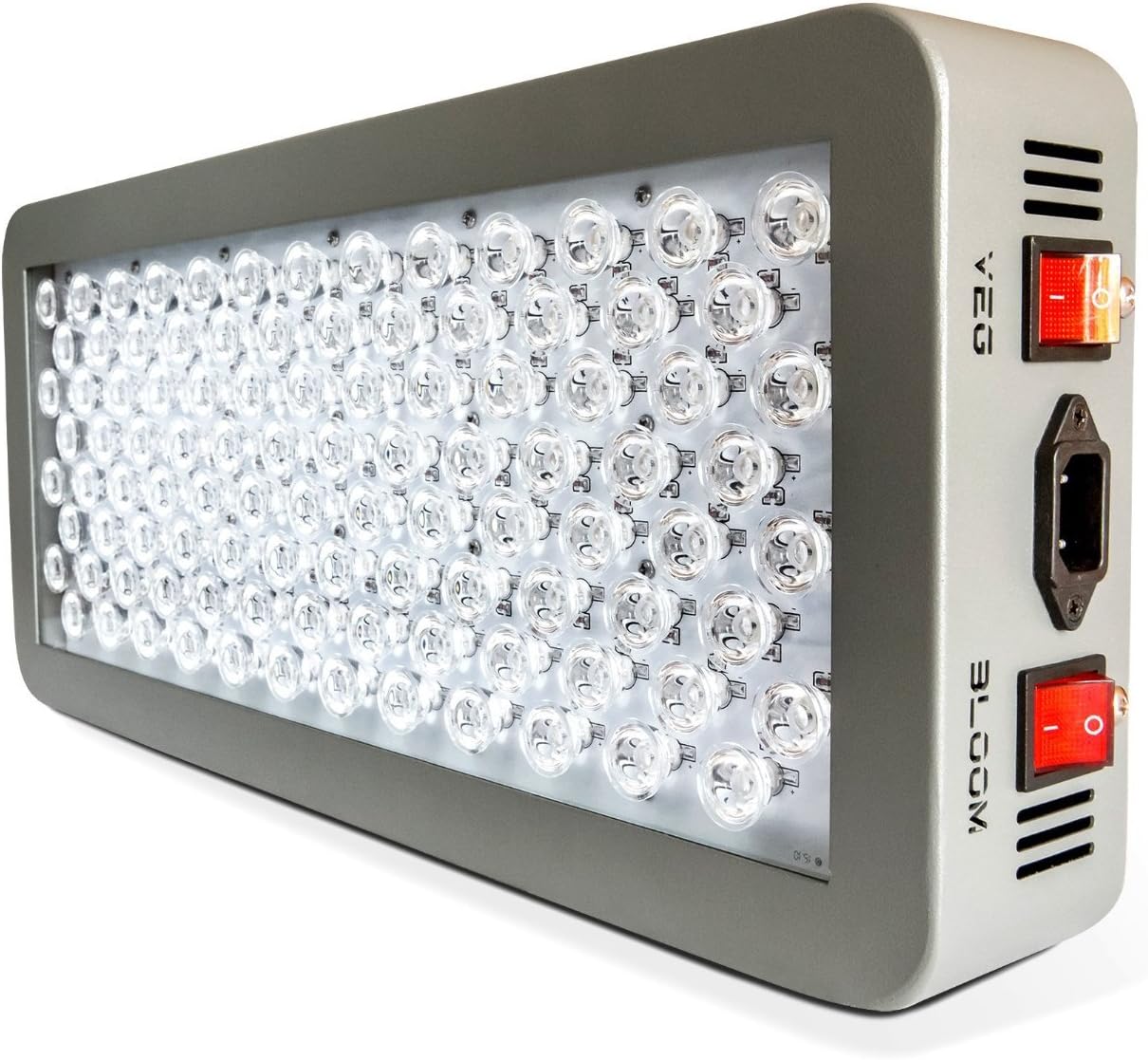
    The advanced platinum P300 series offers excellent features such as a superior 12-band full light spectrum. The combination of these 12 different bands gives us a more complete light spectrum all through the depths of ultraviolet (UV) to the upper infrared (IR).

    Amongst other LED grow lights, the brand platinum LED lights offer the highest lumen output per watt. Thus, your plants will enjoy 2 times or even 3 times light intensity for optimal yield!

    This advanced platinum grow light has heat moderation as systems have been put in place to moderate the heat emitted. Thus, they are safe to be placed at a reasonably close range to your plant so they can get adequate light intensity for optimal yield. It has also been upgraded with aluminum cooling heat sinks and it comes with 2 times high-speed whisper-quiet fans.

    711sFkvp3BL. AC SL1500

    We appreciate the dual light spectrum that can be switched to suit the vegetative or flowering growth phase. This advanced platinum grow light is also made of waterproof materials so you don’t have to worry about damage from water splashing over your lights.

    Another great benefit we admire is the ability to mimic the conventional 400-watt HPS grow light while it actually consumes only 180 watts of power.

    Additionally, you get a 90 days refund policy and 5-year warranties which will give you ease and satisfaction in purchasing these great lights.

    However, the downside we notice is the heat. Plants must not be too close to the light.

    All in all, they are great for indoor gardening use. It’s one of our favorite versions of the advanced platinum series.

    Pros

    • Offers 100% light usability for plant growth.
    • 12 bands full light spectrum.
    • Packed with heat moderation supplies and cooling racks.
    • Made of waterproof materials.
    • Great for vegetative and flowering stages.
    • Offers high lumen output.
    • 90 days money-back guarantee and 5 years warranty.

    Cons

    • It’s a little pricey.
    • You should not place it too close to plants because of heat.

    Platinum Led Grow Lights Pros and Cons

    Advanced Platinum P600

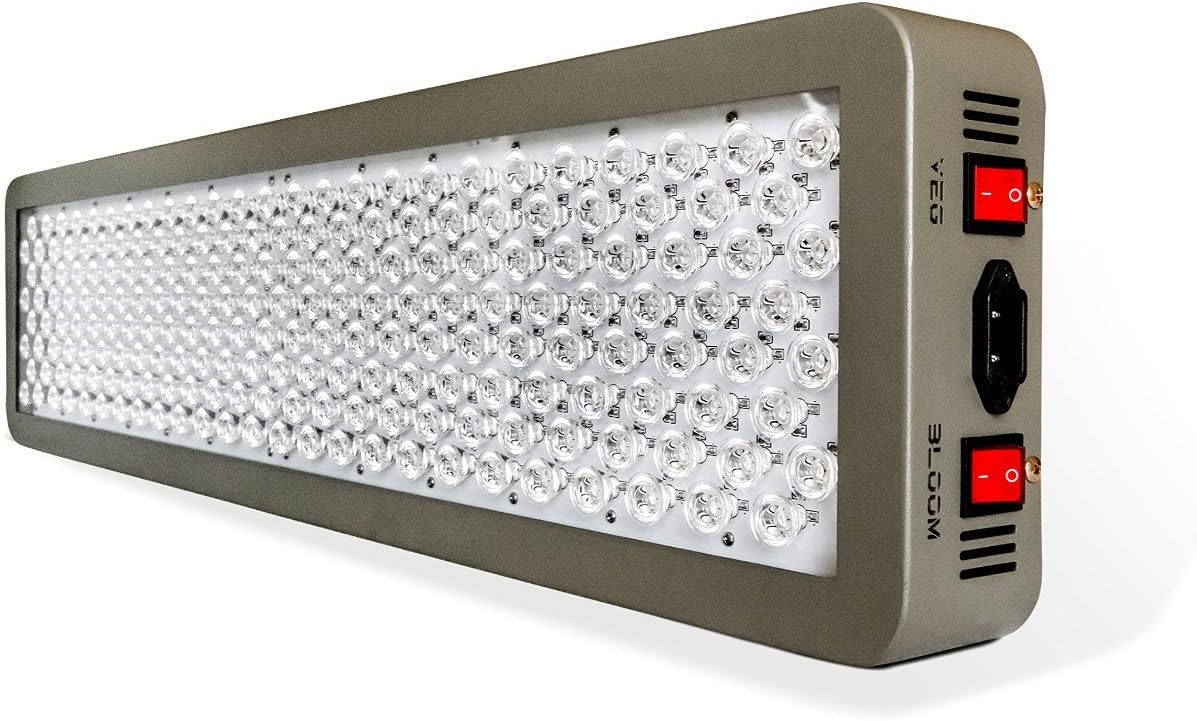
    The Advanced Platinum p600 offers great features such as a 12-band full light spectrum from the depths of UV to the heights of IR. It has 2x-3x the intensity of any other grow lights. It also has a dual vegetative and flower functionality that makes it easy to switch between the two without having to swap out lights. It is fitted with high-speed whisper quiet fans plus ALL NEW upgraded aluminum cooling heat sinks.

    The p600 replaces the conventional 800W HPS grow light, and only consumes 350 watts of power while giving plants 100% usable light for maximum photosynthesis.

    This grow light is one of the most popular lights due to its ability to reach depths of up to 4 feet, which allows for maximum coverage of plants. It is also a flexible light and is easily scalable to fit any grow area size due to its long and narrow panel dimensions. With these, you can perfectly cover any grown area and still provide maximum light intensity for maximum plant yield.

    The p600 is equipped with 200 pcs 3w epistar LED, 4 pcs big quiet fans, and 5 pcs Aluminum heat sink, perfect cooling the light system, and keeping the light a long time output.

    The further focus by the 90-degree glass lens which expands the lighting area and focuses the light on the plant makes the light 100% absorbed.

    This grow light has all these advantages plus a complete 5-year warranty and a 90-day satisfaction or return guarantee.

    The Advanced Platinum p600 is great value for money and has great applications for greenhouse plants.

    71M8QE+zCNL. AC SL1500

    Check Price on Amazon

    Advanced Platinum P1200

    The Advanced Platinum p1200 is an effective replacement for the conventional 1400W HPS grow light, while only consuming 758 watts of power and giving your plants 100% usable light.

    This is Advanced Platinum’s most powerful commercial-grade light, and the most powerful LED grow light available at the moment! 

    Suitable for everything from small-scale to full-scale commercial operations, this light produces amazing results like you wouldn’t believe. 

    The selectable “veg” and “bloom” light spectrums are sure to deliver maximum performance for your plants for seeding through to the final flower and harvest. You would therefore not need supplemental lighting as your plants are covered for their entire growth cycle.

    The Advanced Platinum p1200 has the highest PAR/lumen output per watt of any LED grow light. It provides a superior 12-band full spectrum with UV and IR. It also has whisper-quiet fans and aluminum cooling heat sinks.

    This light is perfect for large commercial operations and multiple units for even light coverage. It also comes with a 5-year warranty and an exclusive 90-day satisfaction or return guarantee

    Other advantages of this light include that it has no ballasts, it is easy to manage, clean, and relatively compact, making it easy to store.

    There are however some downsides to this product is very heavy. It also lacks manual guidelines which result in ambiguity. It has a smaller coverage area than other high-end competitors. 

    Advanced Platinum P900

    The light provides some of the highest PAR per watt of any LED grow lights on the market. It has a complete 12-band spectrum and ensures maximum yield with minimum power usage and heat

    The Platinum p900 replaces the conventional 1000w HPS grow light and only consumes 557 watts of power. It is still able to provide 100% usable light which creates the perfect conditions for maximum photosynthetic activity.

    The P900 is one of the most professional strength lights suitable for everything from a single light grow to full-scale commercial operations and especially excels in multi-panel setups such as 5×5 grow tents or large hydroponic flood trays.

    As with other Platinum LED lights, it has a selectable veg and bloom spectrum, as well as whisper-quiet fans and an upgraded cooling heat sink. All this and a 5-year warranty and 90-day money-back guarantee.

    Advanced Platinum Grow Lights Positioning

    While using advanced platinum lights, it’s important to get the right positioning to avoid plant burns. Follow these tips to get the right placements:

    • Seedlings: When using advanced platinum lights for your seedlings, you have to be very careful. We suggest you use the vegetative switch only and position your grow light about 36 to 40 inches apart. As your seedlings begin to germinate after a week or two weeks, you can then adjust the length between your grow light and plants to 24 inches. Ensure you use only the vegetative switch even through the rest of the vegetative period.
    • Vegetative: For the vegetative phase, the distance between your grow light and plants should be around 22 to 25 inches. You can then move your grow light closer as your plants mature and adapt to increased light intensity.
    • Flowering: For the flowering phase, you can maintain a distance of 15 to 18 inches between your grow lights and plants. Use both vegetative and flowering switches for this phase.

    The most important thing in all these is to always keep an eye on how your plants are reacting to light intensity. Your plants will always give you a hint of the perceptions of these lights.

    Advanced Platinum Grow Lights Positioning

    If you notice your plants’ leaves are pointing or moving in the direction of light, then that’s a good sign. It means you can move the light a bit closer. However, if you notice your plants are looking dry, with uneven color, or wilting, and you are sure every other environmental condition is perfected, you might want to move the lights away a little.

    You can also do a simple test by putting your palm in between the grow lights. This is to feel the heat emitted, so if it is hot, you should adjust accordingly and vice versa.

    Conclusion – Platinum LED Grow Light Review

    So, that’s it on platinum LED grow lights reviews. These lights are some of the top-rated LED grow lights on the market. They offer a lot of benefits, ease of use, and versatility that other brands of grow lights do not offer. With a wide selection of lights to choose from, you can be sure to find one that will suit you and your growing area or scale of operation.

    If you decide to purchase any of the advanced platinum lights, you can rest assured your plants will get optimal light for successful and optimal growth.

    FAQs

    Are Platinum led grow lights good?

    Yes, they are. Platinum led grow light system are more energy efficient than other lighting systems.

    Platinum lights are more expensive but if you do your research and decide on a system that you feel will work best for you, you should be good.

    What are the top rated LED grow lights?

    It can be a bit confusing with all of these different types of grow lights and different ways to grow your plants.

    LUXE LED Grow Lights Luxe is an industry leader in the field of LED grow lights, with products ranging from high-powered grow lights to low-wattage grow lights. Luxe LED grow lights are known for their ability to provide up to 4 times more plant growth than other types of lights. A single Luxe LED grow light can produce more than 10,000 lumens, which makes them a great option for growing plants indoors or outdoors. This means that you will have the ability to grow large plants quickly, which can make your indoor grow space more efficient. You can also use Luxe LED grow lights to grow herbs and flowers, and this is one of the main uses of these lights.

    Other LED light worth mentioning include Best LED grow light and Gixier Grow light, each featuring 1000 watts.

    What color of LED grow lights are best?

    LEDs (light emitting diodes) produce a lot less heat than HID lights, and they also produce less light energy waste. They have a longer life span and they use less electricity than HID lights, which makes them the most efficient way to grow plants indoors.

    LEDs produce light with a spectral distribution of specific colors. These colors are measured in nanometers or nanometers. Nanometers are the distance between two colors on a rainbow. For example, the yellow spectrum produces light with a wavelength of 560nm, which is closer to the red spectrum than the blue spectrum.

    The most efficient wavelengths are in the blue and red range. Plants need light in different wavelengths for different purposes. Blue light is known to promote flowering in some plants. The higher the blue content of the LED grow lights, the more blue light will be emitted. Red light is used to promote flowering in plants like tomatoes. You can also mix blue and red light to get different colors.

    What wattage is best for grow lights?

    In general, you need to consider grow lights of 20 to 40 watts per square foot.
    If you are going to be doing this for a while, you may want to consider 50 watts per square foot, which would be closer to what you get from a 60 watt CFL or a 75 watt T8. You can always go bigger later on if you see that the plants need it.

  • Growing With T12 Fluorescent Lights

    Growing With T12 Fluorescent Lights

    Growing with fluorescent grow lights is great for your plants. However, there are different types of fluorescent grow lights that perform different operations. In this article, we will be discussing growing with T12 fluorescent lights.

    It is crucial you choose the right type of fluorescent light for your plants’ needs. This is so your plants can receive the appropriate light to develop. So, let’s look into growing with T12 fluorescent lights and how they affect your plants’ growth.

    What Are Fluorescent Lights?

    Fluorescent growing bulbs produce low intensity and will not emit too much heat. Thus, they are perfect for growing various plants such including seedlings and clones.

    Fluorescent lights are also ideal for growing plants that do not demand too much light intensity. It will supply the appropriate type of light needed by your plants without causing any harm. They are especially ideal for growing vegetables, herbs, spinach, lettuce, and the likes. They are also great for vegetative growth and flowering growth.

    There are various types of fluorescent tube lights you can choose for your indoor garden but not all fluorescent lights are the same.  You can distinguish them by their diameters and they are represented by the “T” letter. The T letter indicates the bulb has a tube shape.

    We have from T4 to T12 fluorescent light tubes and we will be discussing the T12 fluorescent lights. The 12 in this T12 bulb indicates that the bulb is 12/8 in diameter or 1.5 inches.

    Growing With T12 Fluorescent Lights

    Although T12 is not so great amongst the other T fluorescent lights we have, nevertheless, T12 can supply your plants with lights for their growing needs.

    T12 fluorescent light has been in existence for a long and they are regarded as older technology. It may be a little scarce to find them in the market as they are been discontinued by some manufactures. However, you can find the ones used for residential purposes still available.

    The T12 fluorescent lights usually absorb more wattage and they will only supply you with fewer lumens or brightness. They are not so long-lasting as other fluorescents. Thus, using T12 fluorescent lights might cost you to always replace them very often and they are not so efficient unlike other types of T fluorescent lights.

    T12 Fluorescent Lights - Growing Plants

    We will not recommend you depend on T12 lights only for growing. You can have other types of fluorescent lights such as T5 and T8 to get optimal plant production.

    You can however rely on T12 fluorescent grow light if you’re using them for only small seedlings germination. Small seedlings germination does not require too much light intensity.

    Some Recommended T12 Fluorescent Lights

    Below are some recommended T12 fluorescent lights you can use I growing your plants:

    1.    GE Plant and Aquarium Fluorescent Light Bulb, F20T12 Grow Light

    GE plant and aquarium fluorescent F20T12 grow light is ideal for some plants and aquariums. It features 750 lumens, 20 watts, warm white, bi-pin base, and it measures 1.5-inch diameter.

    This is a T12 type of fluorescent grow light that can supply your indoor plants with light. They are especially great for indoor vegetable garden seedlings.

    GE Lighting (Pack of 4) Fluorescent F20T12 Daylight, 24 inch, 20 watt T12, Fluorescent Light Bulb
    $26.77
    We earn a commission if you make a purchase, at no additional cost to you.
    10/19/2025 02:04 am GMT

    It can also provide light to your aquatic vegetation. The fluorescent bulb comprises a combination of phosphorous and this will supply plenty of red and blue lights. The bulb can last you up to 4 years if you follow the 6 hours daily usage.

    Although they may not provide a wide range of the light spectrum, they can still be utilized on plants that require lesser light intensity.

    2.    Active Grow T8/T12 High Output 4FT LED Grow Light Tube for Germination & Microgreens

    The active grow light is a type of T8/T12 tube your indoor plants can utilize. It features 22 watts and sun white full spectrum. The bulbs are great as they offer bright light for your plants’ growth. The brightness is twice as bright compared to older fluorescent lamps.

    This grow light is especially ideal for seed germination and microgreens. It is also ideal for vertical farming and can be used on houseplants.

    Active Grow T8/T12 High Output 4FT LED Grow Light Bulb T8 Grow Lights for Indoor Plants, Germination & Microgreens 22W Sun White Full Spectrum High CRI 95 Ballast …
    $119.00
    We earn a commission if you make a purchase, at no additional cost to you.
    12/02/2025 10:03 pm GMT

    This grow light is energy-saving and the lamp features are durable. The heat emitted is also moderate thus, safe for your plants.

    FAQ’s

    Can I use T12 as grow lights?

    T12’s are not really meant to be used as grow lights. They are not designed for that purpose, and are not as efficient as other lighting technologies.

    They are intended to be used as a general lighting fixture in the home, similar to an incandescent bulb. The average T12 has a rated output of about 700-1000 lumens (lm). For comparison, a 600W incandescent bulb has an output of about 30 lm. If you were to use a T12 as a grow light, you would have to replace it every year or two because the light output will decrease over time due to a chemical reaction.

    Can I use a regular fluorescent light as a grow light?

    Yes, you can.
    Fluorescent bulbs are the most common type of lighting used in homes and offices today. They are compact, low energy consuming, durable, and easy to operate. They can be found at any hardware store or home improvement store. You can choose between incandescent and fluorescent bulbs for your grow room.
    The only issue you will have with using a regular fluorescents is that the light will not be as bright as it could be. You can still use a regular fluorescent bulb for plants if you are growing indoors. The amount of light that your plants get depends on how close they are to the bulb.

    Which is better for plants LED or fluorescent?

    LEDs are superior for plant lighting, but they’re not perfect. They don’t have the same color temperature (which you may want in your garden) as florescent tubes, and they aren’t quite as efficient. The problem is that LEDs are based on semiconductors, which can be easily damaged by moisture, so you’ll need to keep them well-ventilated.

    LEDs can also be pricey, so it may be worth considering a florescent tube instead of an LED if your budget allows.

    Can I leave my grow light on 24 hours?

    Yes, you can leave your grow light on 24/7 and it will not damage your plants. But, there are a few things you should be aware of if you do so. The first thing is that you need to make sure you have a good ventilation system in place to avoid a buildup of carbon dioxide. If the carbon dioxide levels get too high, you could end up with a greenhouse effect. This could cause your plants to look like they are under stress and could even kill them. Also, make sure you have adequate humidity levels in your closet, as well as a temperature monitor. These will help you keep track of how much heat your grow light is giving off and how much humidity you’re creating.

    What light bulb is closest to natural sunlight?

    I think the closest you’re going to get is a “daylight” bulb. There are bulbs that are closer, but they are still far from perfect. This one is rated at 2700K and has a color rendering index (CRI) of 92, which is very good for a bulb in this range.

    Fluorescent Grow Lights Bulbs Conclusion

    Growing with T12 fluorescent lights may not be the best of the best but they can be used on certain plants that require low light intensity. They can also be used on small germinating seedlings.