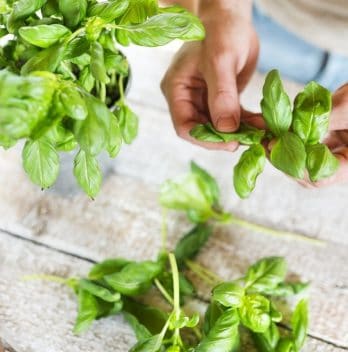
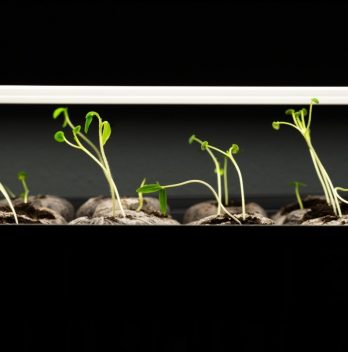
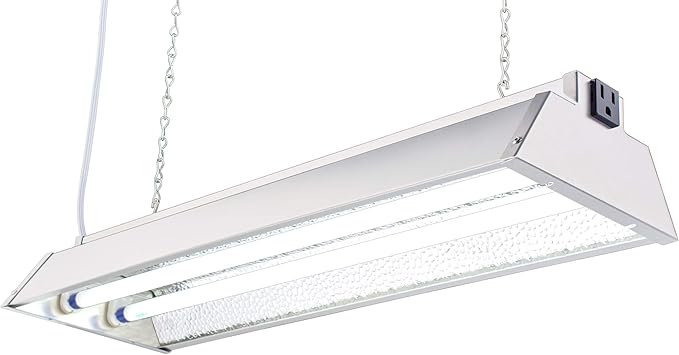
Did you know there’s a right way to harvest basil to ensure they flourish and you get to enjoy continuous yield? That’s right! So, learning how to pick basil the right way is important and we will teach you how.
The sweet aromatic and tasteful basil is one popular herb loved by many. It is a culinary herb that any kitchen lover can use for various dishes. The tasteful basil herb is even more distinguishable when grown and used fresh from the garden. Therefore, you would agree that it’s a must-have in every garden.
When growing basil plants, how you pick them matters and we will enlighten you on this. So continue reading to find out.
Growing Basil Plants
There are different varieties of basil to grow, but sweet basil is the most common type of basil grown. Other types of basil include Thai basil, cinnamon basil, purple basil, lemon basil, etc.
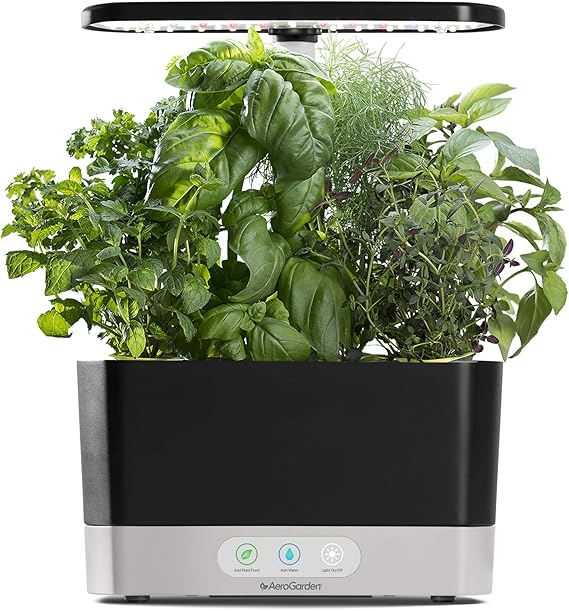
Basil plants can be grown both hydroponically and in an outdoor garden. However, it will only grow outdoors during summer when the soil is warm. But with hydroponics, you can grow them all year round.
Planting Basil
To commence basil planting, get your seeds and plant them. You can plant them indoors if you wish. Preferably, you should plant them 6 weeks before the last spring frost. They are pretty frost sensitive so ensure you insulate them during freezing temperatures or bring them indoors if you’re growing with a container.
Once the seedlings have begun yielding their first 6 leaves, trim them to the top of their second set of leaves. This will stimulate your basil plant to start branching. Thus, this will encourage the multiplication of leaves for an abundant harvest.
Pinch off the middle shoot once it’s 6 weeks as this will prevent early flowering. And if you notice any flowers growing, simply cut them off so that the vegetative process will keep ongoing.
Basil can be grown in flower beds or containers. For outdoors planting, ensure the soil has warmed up to about 50 to 70 degrees Fahrenheit. This is crucial because heat is necessary for the growth of your basil. Choose a sunny location to plant your basil and target 6 to 8 hours full or partial sun daily.
Moisture is another important factor in planting basil. Basil plant loves moisture so ensure the soil is well moist but not soggy and ensure the soil should be well-draining.
Avoid using pesticides on your basil if they’re meant for cooking as this can produce unhealthy basil leaves to be consumed. Also, avoid planting them close to a driveway or busy streets to prevent exhaust from settling on your plants.
Once, the freezing temperature approaches, harvest your basil plants because your plants will be destroyed during this period.
Best Way To Harvest Basil
The following guidelines will teach you how to pick basil correctly so read on to learn.
Best Time For Picking Basil
It’s fine to pick basil any time of the day. However, morning is the best time to harvest basil but that does not stop you from harvesting them at period.
Learning How To Pick Basil
When you harvest your basil plants the appropriate way, you’re encouraging a fuller and bountiful subsequent harvest.
Once your basil plant attains the length of 6 inches, that’s the right time to harvest: ensure your basil plant does not exceed 8 inches.
Pick your basil from stem to stem and avoid cutting off the stem. Be gentle as you pinch off the leaves from the stem they are attached to. Avoid using sharp tools to cut the leaves only if you will be careful enough from injuring the stem.
Ensure you always pick the leaves from time to time to enhance more growth. However, you should avoid picking the basil leaves from the bottom stem to prevent your plant from being thin and tall as this will not encourage a healthy production.
Don’t stop harvesting even if you don’t need the basil leaves so as to encourage continuous growth. You can pick and store the basil leaves for later use. Pinch off or remove any flower bud or flower so your basil plant can grow more leaves rather than flowers.
When their growing season has ended, (this is before the first frost) you can cut the stem off the ground. Harvest all your basil and bring them indoors for cooking. The excess basil leaves should be preserved for later use.
It is important you also learn how to store basil correctly. This is because it’s likely you pick the leaves regularly and excess basil might remain and you won’t want to just throw the excess basil away. So here are the two ways you can store your basil leaves:
Freezing: To store your basil leaves appropriately, you will need to freeze them. When you freeze them, they remain fresh and most of their tasty flavor is kept intact. You will need to pack them in a resalable airtight plastic bag to store them. Then you proceed to place them in the freezer.
Drying: Drying is another method of storing your excess basil leaves. However, some flavor will be lost in this process. You can dry your basil by spreading them in a shady area for 3 or 4 days. If you have done this after 3 or 4 days and they aren’t dried completely, you can finish drying them in the oven. Simply turn your oven to the lowest heat and leave the door slightly open. Turn them regularly for an even drying till you achieve all your basil leaves all dried. When they are done drying, put them in a dry paper bag and keep them in a warm place like your kitchen cupboard.
Storing Fresh Basil In Water: If you wish to cut the stem of your basil, you can place them inside a glass jar. Keep them out of direct sunlight and they will last you up to two weeks.
FAQ’s
How do you pick basil so it keeps growing?
The secret to success is to pick basil when it’s at its best, and then leave it alone. But you don’t have to wait until you see a whole bunch of leaves to pick your basil. You can harvest a few leaves off the stems every few days to keep the plant healthy. And if you have a big pot, you can harvest as many leaves as you want from the center of the plant.
How do you keep basil from getting too big?
There are several ways to keep basil plants from getting too big. You can pinch off the side shoots as they appear. Or you can cut off the top of the plant when it reaches 6 inches tall. Or you can wait until the plant gets bigger and then use pruning shears to remove the center stems.
Do you pick fresh basil from the top or bottom?
The best and freshest basil is picked from the top of the plant. In other words, it is picked at the stem end.
How do you pick basil without killing it?
The most common way to select a bunch of basil for your cooking is to look for the greenest leaves. If they are not quite as dark green as the leaves of a leek, or if the leaves have started to yellow, they are probably ready to be picked. The other method is to smell the leaves. If the scent is sweet, like that of oregano, they are ready to use.
When can I pick basil leaves?
The plant itself doesn’t have an ‘exact’ time when it will be ready to harvest. In general, as long as the leaves are still green (unripe), you can harvest them.
You can start harvesting basil as soon as the weather is warm enough to grow it outside. As long as it’s not too hot or cold, you should be able to get some good leaves from your plants.
How do I know if my basil plant needs to be watered?
Basil doesn’t like hot and dry weather.
When the air is hot and dry, your basil may wilt and look sickly. You can help your plant by giving it a drink of water. If you see that your plant looks pale or droopy, give it another drink of water.
How do I keep basil from getting moldy?
Basil plants can get moldy in the summer months when the weather is very hot and humid. You can prevent this problem by keeping your basil in a place where the temperature stays cool, like a basement or a garage. You should also make sure your basil has plenty of moisture by watering it regularly.
How To Pick Basil: Conclusion
As we can see there are great benefits to picking your basil the appropriate way. Follow our guidelines on how to pick basil and enjoy a continuous harvest of the tasteful basil herb.
Eunice is an enthusiastic gardener with a passion for growing beautiful flowers. She loves nothing more than spending time in her garden, tending to her plants and enjoying the outdoors. Eunice has been gardening for over 15 years and has developed a unique style of landscaping that is both practical and aesthetically pleasing. She is especially fond of growing roses and enjoys experimenting with different varieties and colors. Eunice takes great pride in her garden and often shares the fruits of her labor with friends and family. In her spare time, she enjoys reading gardening magazines and attending local horticulture events. Eunice is passionate about her hobby and is always eager to share her knowledge and experience with others.
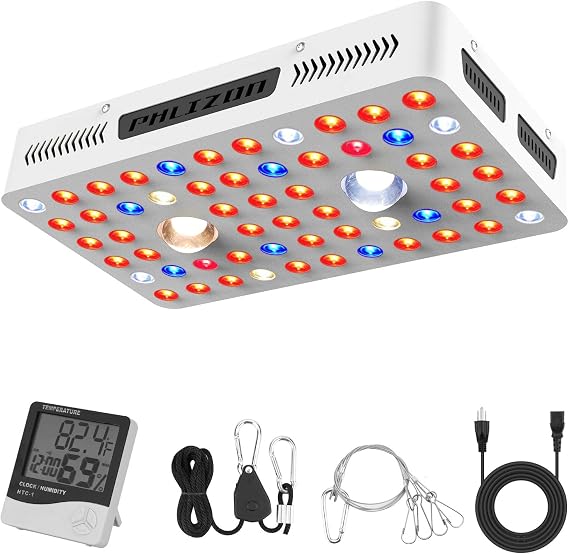
Are you wondering if COB (Chip On Board) LEDs are better for growing plants than other types of LED? You’ve probably heard of different talks on how COB LED grow lights are one of the best in the market. But is this really true?
Well, it is true that COB LED lights offer some great advantages to growing plants. COB LED lights are definitely better than normal LED and some other types of LED because they offer more diodes and better lumen.
Let’s take a look at some information on COB LED light, their features, and many more. So keep reading to learn more info.
What Is A COB LED?
The manner in which LED diodes are packed together is generally known as a chip on board (COB). They are the new LED technology and are packed together to form a single and powerful light source.
A lot of tiny LEDs are arranged side by side of each other on a substrate to form one single module. Thus, they are packed together to give a single and highly powerful light source.
Generally, there are two types of LED lights and they are chip on board, COB, and the surface mount diode, SMD. Just like COB LED lights are great for growing, SMD LED lights are also fine. Both devices have their benefits. But let’s find out if COB LEDs are better than other types of LED.
What Is SMD Light?
Before we look into if COB LEDs are better, let’s take a look at the surface mount device. Surface mount device SMD is the most common type of LED light sold in the market. The LED chips are merged to form a print circuit board (PCB) which is established on a flat object that is rectangular in shape.
SMD has the ability to accommodate 3 diodes on the same chip and it can work with up to 6 contacts. It can also work with different colors and can create any color by adjusting the output level from each diode on the chip.
Are COB LEDs Better? Advantages Of LED COB
Here are some benefits you stand to gain growing with COB LED lights:
Highly Efficient: Using COB LED lights to grow for your indoor growing plants are better because they offer more input power. Thus, you get better efficient input with lesser power consumption.
Excellent Light Spectrum For Plants: They are available in different colors. Thus, they will offer your plants the right spectrum for your plants‘ growing needs.
Deep Plant Canopy Penetration: COB penetration goes very deep and will even penetrate far beneath your plants’ canopy. This is thanks to their large LED chip that is more powerful compared to a single diode.
Better Light Density: Their tightly packed small diodes allow them to offer much better and higher light density.
Higher Light Speed: Unlike other smaller light fixtures that need to spreads out from a central point, COB will cover the plants more evenly. This is because COB lights are arranged apart on a large fixture thereby encouraging better light speed that will cover your plants evenly.
Minimal Heat: COB lights are known to emit lower heat making them safe to be placed close to plants.
Disadvantages Of COB LED Light
The disadvantages of using COB LED light are not so much. So let’s look at their disadvantages:
One major disadvantage of using COB LED lights is that if one of the lights fails or spoils, you would have lost that particular or entire fixture. Now, if you were making use of the only COB LED lights for your entire to grow space, one failed COB light means a large portion of light has been lost. This is because it will affect a large part of your light.
Are COB LEDs Better: COD Vs. SMD LED Light
Both COB and SMD LED lights are great. However, let’s look at how both advantages over the other:
More Diode: Both COB and SMD LED lights have multiple diodes. However, COB chips have up to 9 or more diodes while SMD has 3 diodes on a single chip. Thus COB lights will offer more light intensity, thereby making them more effective.
Efficiency: The efficiency of these two LEDs works at various rates and that’s because they are built with different features. Talking about SMD, the efficiency is not so great but it will still get the job done. COB on the other hand will offer your garden optimal productivity. Thus, making them an excellent option for plant growing requirements.
Color Temperature: The color temperature in SMD is more flexible as there is a possibility of changing colors. It offers varieties of colors because of the primary color used in SMD. COB on the other hand does not offer color change flexibility. They are built to adhere to a single color temperature.
Affordability: Generally, LED lights are cost-effective and are more durable. LED lights also consume minimal energy, thus saving you on the energy bill. Thus, both SMD and COB are affordable. However, if we want to look at it from the manufacturing cost, SMD will be more costly than COB. The material cost for SMD is around 15%, while COB material cost about 10% of the manufacturing cost.
Brightness: The lumen generated by the chips will greatly depend on the brightness. SMD LED makes use of about 50 to 100 lumen per watt. COB works with a higher lumen and the least value is 80 lumen per watt. Thus COB LED lights give more brightness.
FAQ’s
What are the problems with COB LED’s?
Some people feel that COB LED lights are one of the worst types of light for growing plants.
The problem with COB LED lights is that they only emit light in one direction. This means that all of the light that is emitted is right at your plants.
In fact, it is possible that every single ray of light that comes out of your COB LED light will be hitting your plant. This means that all of the light energy that comes out of the COB LED light is wasted. One way to look at this is that it is like trying to grow plants in an aquarium. It is impossible to get enough light into the aquarium because all of the light that is coming in is hitting the glass. If you were to move the plants out of the aquarium then you could see the full effect of the light. You would see that the plants were getting more light than they ever did in the aquarium. There are many other disadvantages to COB LED lights. They do not emit enough light to grow plants. They are expensive and they use a lot of energy. COB LED lights are also very loud.
How do you choose between COB LED lighting and traditional incandescent or halogen lights?
Well, that’s where it gets tricky. So if you’re looking for an LED light to replace your old light, here are some things to consider: Does it need to be bright? You don’t want a super bright light, because the cost is just going to be astronomical. If you can get away with a 50W or 75W light, that will usually be the best bet.
How long do COB LEDs last?
The lifespan of a COB LED is typically measured in years, not months. For example, the Cree XP-E2 is rated for 5,000 hours. It is also designed to have a very high lumen output (2700 lumens) with an average CRI of over 90. However, the lifespan is more than likely going to be shorter than what is stated on the product label.
Are COB LEDs Better: Final Thoughts
On our final thoughts on if COB LEDs are better; we would say both COB and SMD LED lights are great for growing. This is because LED lights are generally superior compared to other types of light.
However, we have seen that COB stands out in terms of its brightness and other great features they offer.
Eunice is an enthusiastic gardener with a passion for growing beautiful flowers. She loves nothing more than spending time in her garden, tending to her plants and enjoying the outdoors. Eunice has been gardening for over 15 years and has developed a unique style of landscaping that is both practical and aesthetically pleasing. She is especially fond of growing roses and enjoys experimenting with different varieties and colors. Eunice takes great pride in her garden and often shares the fruits of her labor with friends and family. In her spare time, she enjoys reading gardening magazines and attending local horticulture events. Eunice is passionate about her hobby and is always eager to share her knowledge and experience with others.
Do you know if aerating water for your plants is necessary? Well, definitely yes! Have you ever wondered how plants can sit a long time in a hydroponic system without drowning? The trick is the air supplied. If you don’t provide your hydroponic plants with adequate oxygen, they will drown or suffocate.
The root of plants must be supplied with air for optimal growth so aerating water for plants is important. So, plants require oxygen to breathe or respire.
In this post, we will be talking about how to aerate your plants, the importance of aerating your plants, and more. So, read on to learn about this.
How To Aerate Water For Plants
When you aerate your water for hydroponic plants, you’re introducing dissolved oxygen (DO) to the system. The dissolved oxygen is usually ready to be assimilated by the plant roots. So, we can aerate our hydroponic system in the following ways:
1. Airstone With Air Pump
One of the easiest ways of aerating water for plants is by using air stone connected to an air pump. They are very affordable and easily accessible. Air stones also come in different sizes and shapes, thus you will always find one that is suitable for your hydroponic system.
So, air stone provides oxygenation by pushing the air pump through the stones. Because the air stone is quite porous, the air is split into a large bunch of bubbles. However, this large bubble may not be so efficient. This is because large bubbles tend to rise rapidly and they may end up not reaching plant roots.
The good news is that the air stones we find in the market now generate smaller bubbles. Thus, this makes their job done more efficiently.
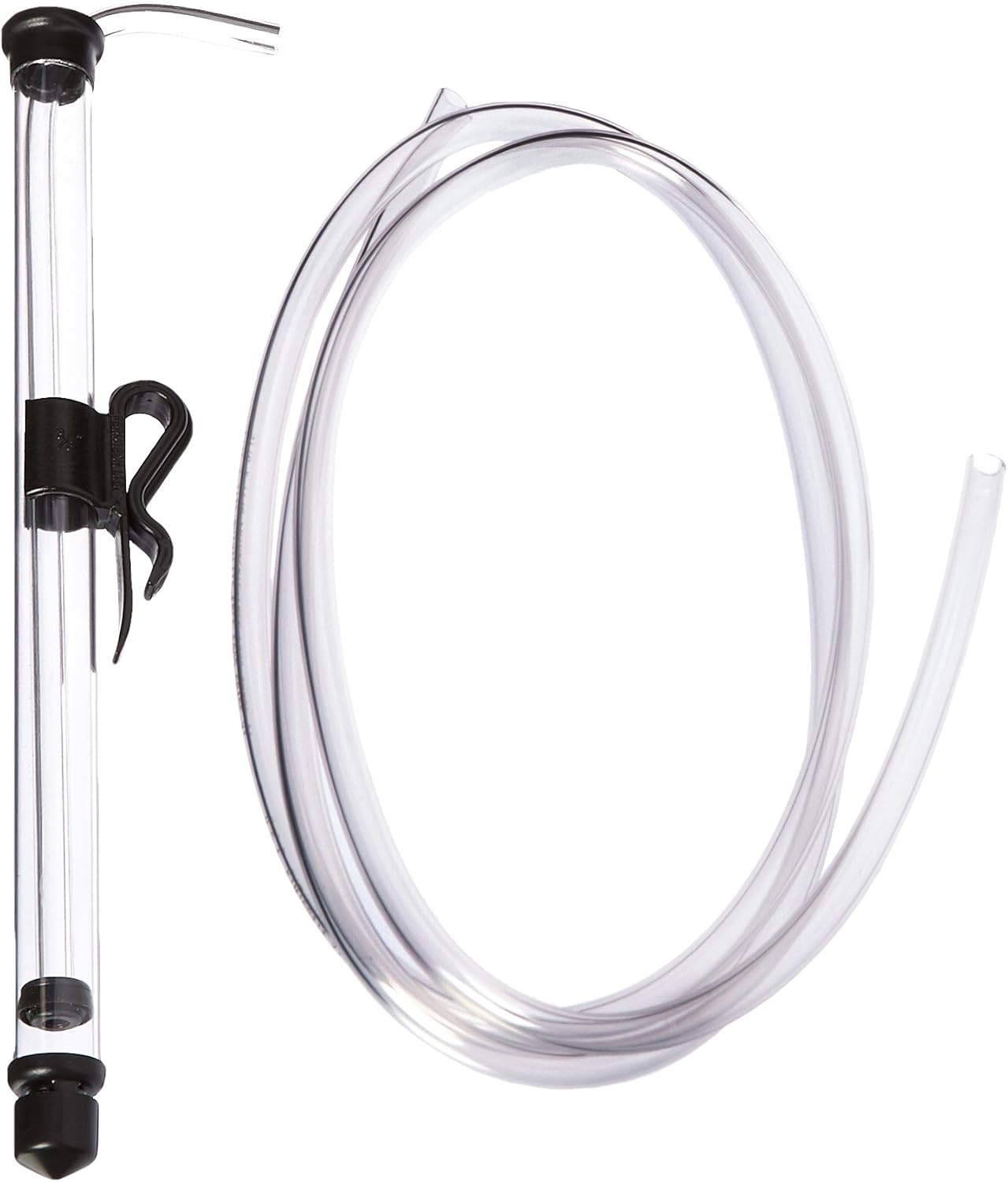
2. Automatic Siphon System
The automatic siphon mechanism provides air to the plants by exposing the plant root system. This process is common in the ebb and flow system whereby the grow bed is drained and the plant root system is exposed to air.
The automatic siphon system comes in various forms. They include loop, bell, and U shape and all of these mechanisms work on the same principle.
The mechanism of action works this way: when the water level in the grow bed moves up and rises, it gets to a point it begins to go down. The water levels go down a tube called the standpipe. As the standpipe fills up, there is a suction created with a vacuum that pulls the water away from the grow bed.
So the plant root is exposed to air for a while and the water goes up again and the process repeats on and on.
Using an air diffuser is another method of supplying aerated water to your plant root. Air diffusers comprise bendable tubes with holes in them that help emit air into water. Even though air stones are capable of distributing air evenly, air diffusers will supply smaller bubbles. Thus, most of these smaller bubbles usually get to the plant roots.
This is the biggest advantage of air diffusers over air stones (bubbles size). However, various brands are now manufacturing sir stones with smaller bubbles because of the growing interest in hydroponics.
4. Oxygen Gap
Some hydroponics system like Kratky method and NFT offers oxygen through an air gap. The nutrient solution should be placed in the grow bed. Allow the plant root to touch the nutrient solution and leave a gap for the rest of the plant body. There will always be enough air between the air gap created and the nutrient solution that will ensure the plant receives oxygen.
5. Root Hanging
The last method we will be looking at for aerating water for plants is root hanging. Vertical and Aeroponic system often makes use of root hanging. Rather than allowing the root to sit in a nutrient solution, the nutrient solution can simply be splashed or pumped across the system and comes back to the reservoir. Vertical hydroponics makes use of pumping nutrients. On the other hand, the Aeroponic system makes use of spraying their nutrient solution.
Importance Of Aerating Water For Plants
Aerating your water for plants is very crucial when it comes to hydroponic gardening. So, let’s look at the importance of aerating the water in your plants for their optimal growth:
Nutrient Uptake: aerating your water for plants is important so that nutrients can be adequately absorbed by the plants’ roots. Thus, when your plants can absorb adequate nutrients, they will grow healthier and result in abundant yield.
Bacteria Build-up Is Reduced: with optimal dissolved oxygen, the roots are able to respire and there will be a drastic decrease in bacteria build-up. However, if the dissolved oxygen drops, it will cause anaerobic bacteria and fungi to build up. These bacteria build-up affects the plant root and restricts the roots from absorbing important nutrients. So, we definitely want to avoid such.
Respiration: just as animals and human beings respire, plants also respire. Oxygen is assimilated through the roots of the plants. This same oxygen is also absorbed through the plants’ stomata as well as their stem pores.
Aerating Plants In The Soil
Plants in the soil aren’t left out from dissolved oxygen (DO). They also assimilate important nutrients in the soil through oxygenation. Of course, the air present in the atmosphere provides these soil plants oxygen. Plants can also receive oxygen through air pockets in the soil.
They can also obtain dissolved oxygen from nature through rainwater. Rainwater assimilates dissolved oxygen from the atmosphere before reaching the earth or soil.
However, over-watering your plants can prevent the soil plant from accessing these air pockets thereby reducing dissolved oxygen. This will in turn cause your plant to drown or suffocate. So, ensure you don’t overwater your soil plants.
FAQ’s
What is aeration?
Aeration is the process of adding oxygen to your aquarium or pond water. This is done by placing a sponge, air pump, or other air diffuser in the water and allowing the water to circulate. It is also possible to place an air stone directly into the water and allow it to bubble. Aeration is especially useful for aquariums or ponds that have very little movement in the water.
The increased oxygen levels will encourage more fish, plants, and invertebrates to inhabit the tank or pond.
What is a sponge?
Sponges are made up of tiny pockets, called spicules, which are packed tightly together to form a strong and resilient structure. They are usually soft and absorbent, and can be found in both marine and freshwater environments. A marine sponge is often used as an underwater filter. Sponges are also used as filters on land, since they can absorb pollutants from the air as well as water.
What is an air pump?
Air pumps are small, portable devices that use compressed air to create bubbles that are dispersed through a diffuser. Air pumps are available in many different sizes and types. Most people use air pumps to aerate their aquariums, ponds, and water gardens.
The air pump is one of the most essential tools for any aquarist. It is used to create bubbles, which helps oxygenate the water and remove ammonia and nitrates.
What is an air stone?
An air stone is a small device that creates bubbles. There are several different types of air stones available. Some of these air stones can be attached to a tank or pond for continuous bubbling. Others require manual operation, and are often used to aerate water when it is not being filtered or pumped.
What is a bubble wort?
A bubble wort is a piece of equipment that uses bubbles to aerate water. Bubble worts are typically used on a regular basis, so the bubbles will continue to disperse throughout the tank or pond. The bubbler must be used with the air pump to produce the bubbles.
How important is considering the water for plant growth?
Water is a very important part of your garden. It’s what keeps the plants alive and allows them to grow. If you water your plants too often, it will cause the soil to become dry and compacted. This will lead to slower plant growth and can even kill them! If you don’t aerate your soil every few months, it can actually cause your plants to be more susceptible to diseases.
Aerating Water For Plants Final Thoughts
There are lots of benefits to aerating water for your plants growing needs. Ensure you provide optimal air to your plants’ roots so they can flourish and give you abundant yields.
Eunice is an enthusiastic gardener with a passion for growing beautiful flowers. She loves nothing more than spending time in her garden, tending to her plants and enjoying the outdoors. Eunice has been gardening for over 15 years and has developed a unique style of landscaping that is both practical and aesthetically pleasing. She is especially fond of growing roses and enjoys experimenting with different varieties and colors. Eunice takes great pride in her garden and often shares the fruits of her labor with friends and family. In her spare time, she enjoys reading gardening magazines and attending local horticulture events. Eunice is passionate about her hobby and is always eager to share her knowledge and experience with others.
You may be wondering what smart size pot you should grow for your indoor garden. We’ve got the answer for you here.
Pots come in various shapes and sizes but the important thing is do you know which to go for? Too small a pot may limit your plants’ growth. While too big pot may occupy all the space which will make you require lots of soil.
We’ve got some information for you when it comes to what size smart pot to grow for your indoor garden. So, let’s get right into it.
What Size Smart Pot Is Required For Indoor Grow
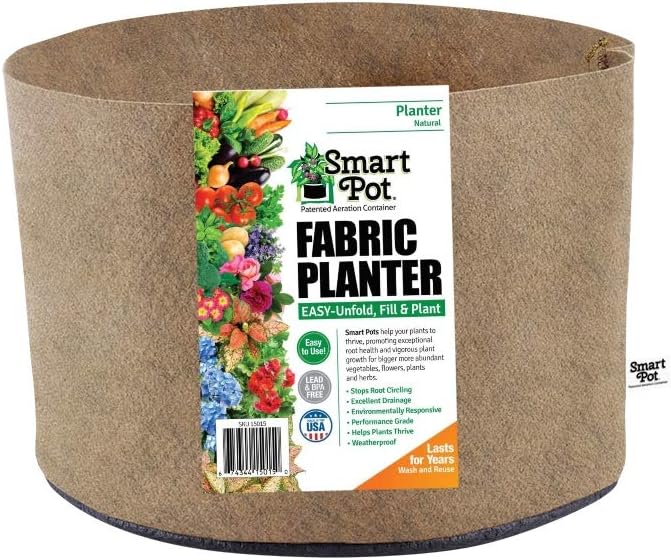
There are lots of benefits when you start growing with smart pots that you may end up not going back to regular pots after your experience.
When it comes to what size smart pot for indoor grow, finding the appropriate size is crucial to your plant’s growth. The good news is that there is a general rule as to which size to choose. So, this general rule tells us to pick a smart pot that is double the size of our regular pot.
Take, for instance, if you would normally make use of a 2-gallon regular pot size then you should go with a smart pot size of about 5 gallons.
This is because smart pots have a great draining system that allows for optimal airflow. So, smart size pot tends to dry out faster. For this reason, there’s no issue of over-watering. The only thing is it will require you to water more frequently. The pot may dry out completely within a day or two using a 5-gallon size.
Smart Pot Sizes To Use For Indoor Grow
What size smart pot you should use for indoor grow will depend on the type of plants you’re growing. Ideally, most plants will require a 5-gallon size smart pot.
But if you’re looking at allowing your plant to grow bigger (vertically or horizontally) you will need a bigger pot. You can go as high as 7 to 10 smart size gallon pot or even 15-gallon depending on how big you want your plant to grow.
Another thing you might want to know is if you can grow more than one plant in a single smart pot. Well, this is quite possible. You can have 2 or 3 plants in a 15-gallon smart pot. However, we would not encourage you to do this.
This is because there will be competition for resources between plants. If you want to grow more than one plant, it is better or advisable to just obtain a smaller size smart pot for each plant.
The smart size encourages easy root networks and there’s no issue of root-bound. Unlike the regular pot or container, roots may run into edges thereby causing a spaghetti-like, tangled-up root mess. Now, this may cause plant choking at the end causing root-bound.
But with a size smart pot, there is an easy series of root networks that allows for optimal air circulation. It also gives the wall of the root an air prune root.
No Over-watering Issue
Over-watering is one thing you can never worry about when using a size smart pot for growing. The smart pot enables easy flow of excess water which helps the soil dry out thereby no water logging issue. However, this implies you watering your plant from time to time as your soil dries out.
Encourages Rapid Growth
Because of the good root network formation and excellent oxygen flow, this encourages rapid growth. The oxygen encourages faster growth, especially in the vegetative phase.
Encourages Short Or Wider Growth Space
Unlike regular pots, smart-sized pots are broader and shorter in size. Thus, it encourages your plant to grow wide rather than tall. Therefore, this will save you vertical space.
No Tipping Over Of Plants
You can grow large plants and train them to grow wider with smart pot size. So, because they grow wider, it’s rare for them to tip over no matter how big your plant grows.
Portable
Another advantage we admire is smart pot portability. You can purchase a smart size pot you can carry if you plan to move your container around. Using a 10-gallon smart size pot will weigh about 50 pounds when filled with soil and water. You should ask yourself if you can move this much around.
Smart pots dimensions:
20 gal size- 20 x 20 x 15.5 inches; 10.24 Ounces
10 gal size- 16 x 16 x 11.5 inches; 5.28 Ounces
5 gal size- 12 x 0.5 x 12.5 inches; 5.29 Ounces
Draw Backs Of Growing With Smart Pots Sizes
Even though growing with smart size pots offers lots of benefits, there are still some disadvantages to it. So, let’s take a look at some of them:
Excess Water Runoff & Requires More Watering
Smart size pots are not capable of holding water for long as there is an excess flow of water. You will also require a bigger growing tray to collect excess water and also empty them accordingly. Also, as the water dries out faster, you will need to catch up on watering your plants more frequently.
Space Requirement
There is also the need for more horizontal space. Therefore, you may find it a bit hard to fit them in a portable grow tent unlike fitting a regular container. Now, the big tray which collects excess water will even take more space.
But on the good side, training your plants to grow wide or horizontally will allow you to manage the situation well.
FAQ’s
What should determine the size of smart pot that I use?
The best thing about smart pots is that they are easy to use. You don’t need any special skills to grow plants in one. All you need is a small amount of money and a smart pot. The best way to learn how to grow plants in a smart pot is to buy one and get growing!
There are a few things that will determine how big your smart pot should be for your plants. The size of the plant itself, the space it takes up in your room and whether you plan to use it outside or not. You just need to know which plants you want to grow and what size smart pot you want to use. The size of the pot is also determined by the number of plants you will be growing. If you are planning on growing one plant per pot then you can expect to need a smaller pot than if you want to grow more than one plant per pot.
If you are growing your plants outside then the size of the pot will depend on how much sun and wind you will be getting. If you have a shady patio then you will probably want a larger pot than if you have a sunny garden. The space in your room will also determine the size of the pot you need. If you have a small room then you will need a smaller pot than if you have a large room. You also need to consider whether you plan to use your smart pot as an indoor or outdoor container. If you plan to use it outside then you will need a larger pot than if you are going to keep it indoors. There is no reason why you can’t grow plants in smart pots if you live in a place that has good weather and enough sun.
What’s the best smart pot for indoor use?
There are so many options and they are all different sizes. You want something that is going to give you the most light for your money. You want to be able to use it with different types of lights. You want to be able to move it around to change the angle of the light, and be able to get the best light from any direction.
The best smart pot for indoor growers is the smallest size. A small grow light can fit into a space that may have been used for other things. A small smart pot can provide just the right amount of light and nutrients. It is also easy to clean.
Are their sizes good options for indoor cannabis cultivation?
The smart pots grower system is a great solution for small to medium sized cannabis growers who want to grow indoors in an eco-friendly way. They have many advantages and benefits over traditional growing systems.
The smart pots grower system also allows you to monitor and control your plant growth remotely. If you notice any problems with your plants, you can do something about it right away and keep track of individual plants.
And if you use a smart pot, you don’t need to use soil or soil blocks. This means that you can save money and not have to buy expensive soil for your plants. You can also use a variety of different soils if you like. All you need to do is put the potting soil into the smart pot, water it well, and then place your plant inside. You don’t need to worry about any soil particles getting into your plants. All of this in a smaller pot for your pot plants!
What Size Smart Pot For Indoor Grow Final Say
When it comes to what size smart pot for indoor grow, the least size should be 5-gallon as this is ideal for most growers. You can as well move to 7 gallons if you want a bit bigger plant. Now, if you desire to grow a larger plant, you should go for a 10 or 15-gallon size.
So, we hope this post has helped you in choosing the right size smart pot for your plant growing needs.
Eunice is an enthusiastic gardener with a passion for growing beautiful flowers. She loves nothing more than spending time in her garden, tending to her plants and enjoying the outdoors. Eunice has been gardening for over 15 years and has developed a unique style of landscaping that is both practical and aesthetically pleasing. She is especially fond of growing roses and enjoys experimenting with different varieties and colors. Eunice takes great pride in her garden and often shares the fruits of her labor with friends and family. In her spare time, she enjoys reading gardening magazines and attending local horticulture events. Eunice is passionate about her hobby and is always eager to share her knowledge and experience with others.
Also, note that when it comes to using fluorescent grow lights, anything higher than 12 inches from your plants’ canopy may mean your plants aren’t getting good light energy. This is because fluorescent light strength decreases when the height is too far from the plants’ canopy. So, ensure they are close enough to your plant as they are safe to be positioned close to plants.
How Far Should LED Grow Light Be From Plants?
LED grow lights are one of the most popular lights to use for indoor gardening. They are also safe to use at an appropriate close range on plants and they don’t emit much heat. LED grow lights are as well strong and efficient and can be used for different plant growth stages. They are majorly used in the flowering and fruiting stages.
When it comes to using LED grow lights, there is no particular rule to their positioning. But as a recommended tip, they can be placed around 12 to 18 inches above the plants’ canopy.
However, there are many types and brands of LED grow light that offers different output so deciding the appropriate distance may be tricky. The good thing is most times when you purchase LED grow lights, the manufacturer usually puts a recommended hanging height to follow. You can start with the manufacturer’s recommended hanging distance.
After trying the manufacturer’s recommended hanging distance, you can go ahead and move it a bit closer to get the perfect distance. Do these until you get to a point where your plants start to bleach. Also, you need to always monitor your plants when trying new grow lights. Move them back immediately when you notice any signs of discomfort in the plants.
By doing this, you will have mastered the right hanging distance for your plants for them to receive optimal light for their growing needs. Also, you may need to adjust the grow light upwards as your plants grow taller and develop.
When choosing an HPS light, it should not be about wattage. Instead of paying attention to the wattage of the grow light, it is more important to understand how the light spectrum works. This is so you can know which grow light and light spectrum to get for the stage of growth that your plants are at.
The grow light spectrum is measured in micromoles (µmol). Generally, you will need a light spectrum in the range of 180 to 1300 µmol. This is quite a wide range, therefore you would need to determine the light requirements of your plants. The more light-hungry your plants are, the higher the light spectrum you should get.
Certain plant families such as those of the Cannabaceae are on the upper end of the spectrum. They need a minimum of 800 µmol to reach 85% of their growth potential and up to 1300 µmol to reach their full potential. Other plants such as herbs, salad greens, and other leafy plants only require between 180-380 µmol to grow efficiently.
To determine the light intensity of your plants if you don’t know it, you can use a PAR meter for the spectral range that is suitable for growing plants.
What Size Room For 1000-Watt HPS?
In general, a 1000-watt grow light is used to cover an area that is 5 x 5 total foot area. HPS grow lights are however more powerful. A 1000-watt HPS grow light can cover a much wider area of about 49 square feet in size.
The actual area of coverage of a 1000-watt grow light, or any grow light for that matter depends on several factors such as the type of the light, the specific light requirements of the plants being grown, and the design and type of the grow space.
How Hot Does a 1000w HPS Light Get?
HPS lights operate at very high temperatures of up to 54000F. The majority of this light gets turned to infrared (IR) radiation. This is the type of radiation that causes molecules to vibrate and heat up when it comes into contact with them. This IR radiation is directed toward plants the same way visible light radiation does.
Regular users of HPS grow lights are well aware of this fact, and for this reason, they do not put the grow lights too close to their plants as it would kill the plants in a very short space of time.
How Many Lumens Does a 1000w HPS Produce?
Normally, when we go to the shop to buy light bulbs, we buy them based on how much energy (usually in watts) they use. Lately, however, there has been more knowledge that has led to people buying light based on the amount of light they can provide.
Lumens are a measure of how much light you will get from a light bulb. The higher the lumens, the brighter the light you will get. The opposite is true for fewer lumens.
The best way to shop for bulbs is to look for lumens instead of watts, that way you will be able to tell which bulb will give you more light.
A 1000-watt high-output HPS bulb produces 150 000 lumens. This is more than the standard HPS bulb which produces only 140 000 lumens.
Conclusion – 1000w HPS Distance From Plants
Different hanging distances are recommended for various grow lights. We have concluded that the ideal distance from plants for 1000w HPS should be around 20 to 36 inches.
Whenever you purchase a new grow light, you can start with the recommended hanging distance and monitor your plants closely. You should back off the lights if you notice any bleaching of leaves. If you however notice your plants are fine with the distance, you can bring them a little closer so they can get optimal lights for their growth.
In all this, always keep a close eye on your plants’ response anytime you are using a new grow light on your plants. You should be able to obtain the appropriate hanging heights for your grow lights.
How far should my 1000 HPS lights be from my plants?
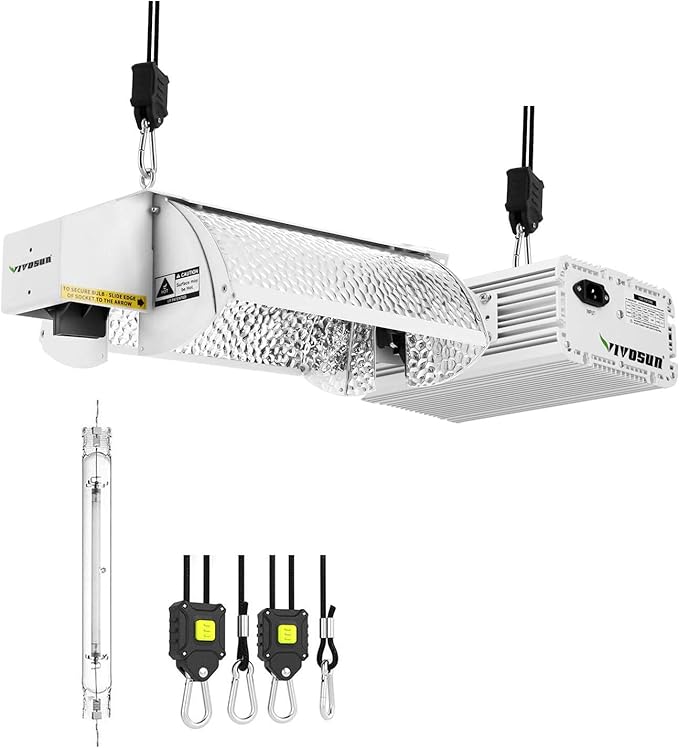
If you look at a picture of a HPS (high pressure sodium) light fixture, you’ll notice that there are two metal reflectors, one on top of the other. This design keeps the heat from dissipating and helps to direct the light toward the plants. The light fixture itself is mounted on a stand with a ballast. You’ll find that the ballast is usually mounted between 8-10 feet from the fixture itself. The distance will vary depending on the type of ballast you purchase. Most people recommend a minimum of 15 feet of separation between plants and HPS lights. If you’ve got enough room, I’d say go for it.
What does the ballast do?
A ballast regulates the flow of power to the lamp, which provides a constant voltage and frequency to the lamp. The ballast usually includes circuitry for sensing lamp current and voltage and for turning the lamp on and off to minimize energy waste. The ballast may also include circuitry for dimming the lamp by varying the frequency or phase of the alternating current.
How do you know if a light is too close to a plant?
It’s important to remember that we are not looking at the plant itself, we are looking at the light. If it is shining directly onto the leaves, or even the top of the plant, then the light is too close and you should move the light away.
If the plant looks a little wilted and the leaves are turning yellow, then you may need to adjust your light to make sure that the light is not shining directly on the leaves.
When is the right distance the most important for a 1000w HPS?
You want to pay the most attention to this during the flowering stage. This type of light is highly recommended for this stage in the growing process. As a matter of fact, many people only use this light for this stage in the growing process. Sometimes after applying a MH grow light beforehand.
Can you have too much light in a cannabis grow tent?
Yes you can, and the plants will show signs of this. This is why it is very important to keep not only the right amount of lights, but the right distance between them and the plants.
Also, note that when it comes to using fluorescent grow lights, anything higher than 12 inches from your plants’ canopy may mean your plants aren’t getting good light energy. This is because fluorescent light strength decreases when the height is too far from the plants’ canopy. So, ensure they are close enough to your plant as they are safe to be positioned close to plants.
How Far Should LED Grow Light Be From Plants?
LED grow lights are one of the most popular lights to use for indoor gardening. They are also safe to use at an appropriate close range on plants and they don’t emit much heat. LED grow lights are as well strong and efficient and can be used for different plant growth stages. They are majorly used in the flowering and fruiting stages.
When it comes to using LED grow lights, there is no particular rule to their positioning. But as a recommended tip, they can be placed around 12 to 18 inches above the plants’ canopy.
However, there are many types and brands of LED grow light that offers different output so deciding the appropriate distance may be tricky. The good thing is most times when you purchase LED grow lights, the manufacturer usually puts a recommended hanging height to follow. You can start with the manufacturer’s recommended hanging distance.
After trying the manufacturer’s recommended hanging distance, you can go ahead and move it a bit closer to get the perfect distance. Do these until you get to a point where your plants start to bleach. Also, you need to always monitor your plants when trying new grow lights. Move them back immediately when you notice any signs of discomfort in the plants.
By doing this, you will have mastered the right hanging distance for your plants for them to receive optimal light for their growing needs. Also, you may need to adjust the grow light upwards as your plants grow taller and develop.
When choosing an HPS light, it should not be about wattage. Instead of paying attention to the wattage of the grow light, it is more important to understand how the light spectrum works. This is so you can know which grow light and light spectrum to get for the stage of growth that your plants are at.
The grow light spectrum is measured in micromoles (µmol). Generally, you will need a light spectrum in the range of 180 to 1300 µmol. This is quite a wide range, therefore you would need to determine the light requirements of your plants. The more light-hungry your plants are, the higher the light spectrum you should get.
Certain plant families such as those of the Cannabaceae are on the upper end of the spectrum. They need a minimum of 800 µmol to reach 85% of their growth potential and up to 1300 µmol to reach their full potential. Other plants such as herbs, salad greens, and other leafy plants only require between 180-380 µmol to grow efficiently.
To determine the light intensity of your plants if you don’t know it, you can use a PAR meter for the spectral range that is suitable for growing plants.
What Size Room For 1000-Watt HPS?
In general, a 1000-watt grow light is used to cover an area that is 5 x 5 total foot area. HPS grow lights are however more powerful. A 1000-watt HPS grow light can cover a much wider area of about 49 square feet in size.
The actual area of coverage of a 1000-watt grow light, or any grow light for that matter depends on several factors such as the type of the light, the specific light requirements of the plants being grown, and the design and type of the grow space.
How Hot Does a 1000w HPS Light Get?
HPS lights operate at very high temperatures of up to 54000F. The majority of this light gets turned to infrared (IR) radiation. This is the type of radiation that causes molecules to vibrate and heat up when it comes into contact with them. This IR radiation is directed toward plants the same way visible light radiation does.
Regular users of HPS grow lights are well aware of this fact, and for this reason, they do not put the grow lights too close to their plants as it would kill the plants in a very short space of time.
How Many Lumens Does a 1000w HPS Produce?
Normally, when we go to the shop to buy light bulbs, we buy them based on how much energy (usually in watts) they use. Lately, however, there has been more knowledge that has led to people buying light based on the amount of light they can provide.
Lumens are a measure of how much light you will get from a light bulb. The higher the lumens, the brighter the light you will get. The opposite is true for fewer lumens.
The best way to shop for bulbs is to look for lumens instead of watts, that way you will be able to tell which bulb will give you more light.
A 1000-watt high-output HPS bulb produces 150 000 lumens. This is more than the standard HPS bulb which produces only 140 000 lumens.
Conclusion – 1000w HPS Distance From Plants
Different hanging distances are recommended for various grow lights. We have concluded that the ideal distance from plants for 1000w HPS should be around 20 to 36 inches.
Whenever you purchase a new grow light, you can start with the recommended hanging distance and monitor your plants closely. You should back off the lights if you notice any bleaching of leaves. If you however notice your plants are fine with the distance, you can bring them a little closer so they can get optimal lights for their growth.
In all this, always keep a close eye on your plants’ response anytime you are using a new grow light on your plants. You should be able to obtain the appropriate hanging heights for your grow lights.
How far should my 1000 HPS lights be from my plants?
If you look at a picture of a HPS (high pressure sodium) light fixture, you’ll notice that there are two metal reflectors, one on top of the other. This design keeps the heat from dissipating and helps to direct the light toward the plants. The light fixture itself is mounted on a stand with a ballast. You’ll find that the ballast is usually mounted between 8-10 feet from the fixture itself. The distance will vary depending on the type of ballast you purchase. Most people recommend a minimum of 15 feet of separation between plants and HPS lights. If you’ve got enough room, I’d say go for it.
What does the ballast do?
A ballast regulates the flow of power to the lamp, which provides a constant voltage and frequency to the lamp. The ballast usually includes circuitry for sensing lamp current and voltage and for turning the lamp on and off to minimize energy waste. The ballast may also include circuitry for dimming the lamp by varying the frequency or phase of the alternating current.
How do you know if a light is too close to a plant?
It’s important to remember that we are not looking at the plant itself, we are looking at the light. If it is shining directly onto the leaves, or even the top of the plant, then the light is too close and you should move the light away.
If the plant looks a little wilted and the leaves are turning yellow, then you may need to adjust your light to make sure that the light is not shining directly on the leaves.
When is the right distance the most important for a 1000w HPS?
You want to pay the most attention to this during the flowering stage. This type of light is highly recommended for this stage in the growing process. As a matter of fact, many people only use this light for this stage in the growing process. Sometimes after applying a MH grow light beforehand.
Can you have too much light in a cannabis grow tent?
Yes you can, and the plants will show signs of this. This is why it is very important to keep not only the right amount of lights, but the right distance between them and the plants.
Also, note that when it comes to using fluorescent grow lights, anything higher than 12 inches from your plants’ canopy may mean your plants aren’t getting good light energy. This is because fluorescent light strength decreases when the height is too far from the plants’ canopy. So, ensure they are close enough to your plant as they are safe to be positioned close to plants.
How Far Should LED Grow Light Be From Plants?
LED grow lights are one of the most popular lights to use for indoor gardening. They are also safe to use at an appropriate close range on plants and they don’t emit much heat. LED grow lights are as well strong and efficient and can be used for different plant growth stages. They are majorly used in the flowering and fruiting stages.
When it comes to using LED grow lights, there is no particular rule to their positioning. But as a recommended tip, they can be placed around 12 to 18 inches above the plants’ canopy.
However, there are many types and brands of LED grow light that offers different output so deciding the appropriate distance may be tricky. The good thing is most times when you purchase LED grow lights, the manufacturer usually puts a recommended hanging height to follow. You can start with the manufacturer’s recommended hanging distance.
After trying the manufacturer’s recommended hanging distance, you can go ahead and move it a bit closer to get the perfect distance. Do these until you get to a point where your plants start to bleach. Also, you need to always monitor your plants when trying new grow lights. Move them back immediately when you notice any signs of discomfort in the plants.
By doing this, you will have mastered the right hanging distance for your plants for them to receive optimal light for their growing needs. Also, you may need to adjust the grow light upwards as your plants grow taller and develop.
When choosing an HPS light, it should not be about wattage. Instead of paying attention to the wattage of the grow light, it is more important to understand how the light spectrum works. This is so you can know which grow light and light spectrum to get for the stage of growth that your plants are at.
The grow light spectrum is measured in micromoles (µmol). Generally, you will need a light spectrum in the range of 180 to 1300 µmol. This is quite a wide range, therefore you would need to determine the light requirements of your plants. The more light-hungry your plants are, the higher the light spectrum you should get.
Certain plant families such as those of the Cannabaceae are on the upper end of the spectrum. They need a minimum of 800 µmol to reach 85% of their growth potential and up to 1300 µmol to reach their full potential. Other plants such as herbs, salad greens, and other leafy plants only require between 180-380 µmol to grow efficiently.
To determine the light intensity of your plants if you don’t know it, you can use a PAR meter for the spectral range that is suitable for growing plants.
What Size Room For 1000-Watt HPS?
In general, a 1000-watt grow light is used to cover an area that is 5 x 5 total foot area. HPS grow lights are however more powerful. A 1000-watt HPS grow light can cover a much wider area of about 49 square feet in size.
The actual area of coverage of a 1000-watt grow light, or any grow light for that matter depends on several factors such as the type of the light, the specific light requirements of the plants being grown, and the design and type of the grow space.
How Hot Does a 1000w HPS Light Get?
HPS lights operate at very high temperatures of up to 54000F. The majority of this light gets turned to infrared (IR) radiation. This is the type of radiation that causes molecules to vibrate and heat up when it comes into contact with them. This IR radiation is directed toward plants the same way visible light radiation does.
Regular users of HPS grow lights are well aware of this fact, and for this reason, they do not put the grow lights too close to their plants as it would kill the plants in a very short space of time.
How Many Lumens Does a 1000w HPS Produce?
Normally, when we go to the shop to buy light bulbs, we buy them based on how much energy (usually in watts) they use. Lately, however, there has been more knowledge that has led to people buying light based on the amount of light they can provide.
Lumens are a measure of how much light you will get from a light bulb. The higher the lumens, the brighter the light you will get. The opposite is true for fewer lumens.
The best way to shop for bulbs is to look for lumens instead of watts, that way you will be able to tell which bulb will give you more light.
A 1000-watt high-output HPS bulb produces 150 000 lumens. This is more than the standard HPS bulb which produces only 140 000 lumens.
Conclusion – 1000w HPS Distance From Plants
Different hanging distances are recommended for various grow lights. We have concluded that the ideal distance from plants for 1000w HPS should be around 20 to 36 inches.
Whenever you purchase a new grow light, you can start with the recommended hanging distance and monitor your plants closely. You should back off the lights if you notice any bleaching of leaves. If you however notice your plants are fine with the distance, you can bring them a little closer so they can get optimal lights for their growth.
In all this, always keep a close eye on your plants’ response anytime you are using a new grow light on your plants. You should be able to obtain the appropriate hanging heights for your grow lights.
How far should my 1000 HPS lights be from my plants?
If you look at a picture of a HPS (high pressure sodium) light fixture, you’ll notice that there are two metal reflectors, one on top of the other. This design keeps the heat from dissipating and helps to direct the light toward the plants. The light fixture itself is mounted on a stand with a ballast. You’ll find that the ballast is usually mounted between 8-10 feet from the fixture itself. The distance will vary depending on the type of ballast you purchase. Most people recommend a minimum of 15 feet of separation between plants and HPS lights. If you’ve got enough room, I’d say go for it.
What does the ballast do?
A ballast regulates the flow of power to the lamp, which provides a constant voltage and frequency to the lamp. The ballast usually includes circuitry for sensing lamp current and voltage and for turning the lamp on and off to minimize energy waste. The ballast may also include circuitry for dimming the lamp by varying the frequency or phase of the alternating current.
How do you know if a light is too close to a plant?
It’s important to remember that we are not looking at the plant itself, we are looking at the light. If it is shining directly onto the leaves, or even the top of the plant, then the light is too close and you should move the light away.
If the plant looks a little wilted and the leaves are turning yellow, then you may need to adjust your light to make sure that the light is not shining directly on the leaves.
When is the right distance the most important for a 1000w HPS?
You want to pay the most attention to this during the flowering stage. This type of light is highly recommended for this stage in the growing process. As a matter of fact, many people only use this light for this stage in the growing process. Sometimes after applying a MH grow light beforehand.
Can you have too much light in a cannabis grow tent?
Yes you can, and the plants will show signs of this. This is why it is very important to keep not only the right amount of lights, but the right distance between them and the plants.
1000w HPS Distance From Plants: Additional Say
It is important to give your grow light and indoor plants the appropriate distance so they can flourish. Now, if you’re wondering what distance from your plants you should give 1000w HPS grow light, we will let you know in this post.
Various grow lights have different placements that need to be followed. High-pressure sodium (HPS) lights are great for providing light for your indoor plants. Following the right positioning for this type of grow light is essential so you don’t end up causing harm to your indoor plants.
In this article, we will be looking at how far should 1000w HPS distance be from plants. We will also be looking at the appropriate hanging distance for other grow lights. So, continue reading to learn more about this.
How Far Should 1000W HPS Distance Be From Plants?
Hanging HPS grow light too low can burn your plants. Also, placing them too high can cause your plants not to receive an adequate light supply making them grow leggy and stretchy.
Another criterion to look at when considering the distance to hang your HPS grow light is the power of the grow light. The stronger the grow light, the farther it should be from your plants.
So, for 1000w HPS light, the appropriate hanging distance from plants should be about 20 to 36 inches above your plant canopy. Then you can gradually move the light closer while monitoring them as your plant strengthens and develops. However, you should ensure the heat emitted is bearable for your plants so they don’t burn them.
You can do a simple backhand test by putting your hand between your HPS grow light and plant to feel the heat. If they don’t burn the back of your hand, then your plants are safe. Nevertheless, always do the proper adjustments if you notice any changes as your plants develop.
For seedlings, the 1000w HPS distance from plants should be around 5 feet. However, you should be very careful when using HPS for your fragile seedlings especially high power such as a 1000w.
For other HPS grow lights lower than 1000w, the hanging distance will continue to decrease as the bulb wattage value decreases. However, various grow lights have their distance range to be followed.
Other Grow Light Hanging Distance
As we said earlier, various grow lights have a specific hanging distance that must be followed so your plants can grow optimally. Let’s take a look at how far fluorescent and LED distances should be from their plants’ canopy.
Fluorescent Light Distance From Plants
Fluorescent lights are one of the safest lights to use because they don’t emit too much heat compared to other grow lights. Therefore, they can be positioned close to your plant canopy.
It would be best if you hung your fluorescent grow light about 4 to 6 inches above the plant canopy for the vegetative and flowering phases. For seedlings, position your fluorescent to grow light a little farther. You can do 6 to 10 inches for seedlings and gradually move them closer as they mature.
Also, note that when it comes to using fluorescent grow lights, anything higher than 12 inches from your plants’ canopy may mean your plants aren’t getting good light energy. This is because fluorescent light strength decreases when the height is too far from the plants’ canopy. So, ensure they are close enough to your plant as they are safe to be positioned close to plants.
How Far Should LED Grow Light Be From Plants?
LED grow lights are one of the most popular lights to use for indoor gardening. They are also safe to use at an appropriate close range on plants and they don’t emit much heat. LED grow lights are as well strong and efficient and can be used for different plant growth stages. They are majorly used in the flowering and fruiting stages.
When it comes to using LED grow lights, there is no particular rule to their positioning. But as a recommended tip, they can be placed around 12 to 18 inches above the plants’ canopy.
However, there are many types and brands of LED grow light that offers different output so deciding the appropriate distance may be tricky. The good thing is most times when you purchase LED grow lights, the manufacturer usually puts a recommended hanging height to follow. You can start with the manufacturer’s recommended hanging distance.
After trying the manufacturer’s recommended hanging distance, you can go ahead and move it a bit closer to get the perfect distance. Do these until you get to a point where your plants start to bleach. Also, you need to always monitor your plants when trying new grow lights. Move them back immediately when you notice any signs of discomfort in the plants.
By doing this, you will have mastered the right hanging distance for your plants for them to receive optimal light for their growing needs. Also, you may need to adjust the grow light upwards as your plants grow taller and develop.
When choosing an HPS light, it should not be about wattage. Instead of paying attention to the wattage of the grow light, it is more important to understand how the light spectrum works. This is so you can know which grow light and light spectrum to get for the stage of growth that your plants are at.
The grow light spectrum is measured in micromoles (µmol). Generally, you will need a light spectrum in the range of 180 to 1300 µmol. This is quite a wide range, therefore you would need to determine the light requirements of your plants. The more light-hungry your plants are, the higher the light spectrum you should get.
Certain plant families such as those of the Cannabaceae are on the upper end of the spectrum. They need a minimum of 800 µmol to reach 85% of their growth potential and up to 1300 µmol to reach their full potential. Other plants such as herbs, salad greens, and other leafy plants only require between 180-380 µmol to grow efficiently.
To determine the light intensity of your plants if you don’t know it, you can use a PAR meter for the spectral range that is suitable for growing plants.
What Size Room For 1000-Watt HPS?
In general, a 1000-watt grow light is used to cover an area that is 5 x 5 total foot area. HPS grow lights are however more powerful. A 1000-watt HPS grow light can cover a much wider area of about 49 square feet in size.
The actual area of coverage of a 1000-watt grow light, or any grow light for that matter depends on several factors such as the type of the light, the specific light requirements of the plants being grown, and the design and type of the grow space.
How Hot Does a 1000w HPS Light Get?
HPS lights operate at very high temperatures of up to 54000F. The majority of this light gets turned to infrared (IR) radiation. This is the type of radiation that causes molecules to vibrate and heat up when it comes into contact with them. This IR radiation is directed toward plants the same way visible light radiation does.
Regular users of HPS grow lights are well aware of this fact, and for this reason, they do not put the grow lights too close to their plants as it would kill the plants in a very short space of time.
How Many Lumens Does a 1000w HPS Produce?
Normally, when we go to the shop to buy light bulbs, we buy them based on how much energy (usually in watts) they use. Lately, however, there has been more knowledge that has led to people buying light based on the amount of light they can provide.
Lumens are a measure of how much light you will get from a light bulb. The higher the lumens, the brighter the light you will get. The opposite is true for fewer lumens.
The best way to shop for bulbs is to look for lumens instead of watts, that way you will be able to tell which bulb will give you more light.
A 1000-watt high-output HPS bulb produces 150 000 lumens. This is more than the standard HPS bulb which produces only 140 000 lumens.
Conclusion – 1000w HPS Distance From Plants
Different hanging distances are recommended for various grow lights. We have concluded that the ideal distance from plants for 1000w HPS should be around 20 to 36 inches.
Whenever you purchase a new grow light, you can start with the recommended hanging distance and monitor your plants closely. You should back off the lights if you notice any bleaching of leaves. If you however notice your plants are fine with the distance, you can bring them a little closer so they can get optimal lights for their growth.
In all this, always keep a close eye on your plants’ response anytime you are using a new grow light on your plants. You should be able to obtain the appropriate hanging heights for your grow lights.
How far should my 1000 HPS lights be from my plants?
If you look at a picture of a HPS (high pressure sodium) light fixture, you’ll notice that there are two metal reflectors, one on top of the other. This design keeps the heat from dissipating and helps to direct the light toward the plants. The light fixture itself is mounted on a stand with a ballast. You’ll find that the ballast is usually mounted between 8-10 feet from the fixture itself. The distance will vary depending on the type of ballast you purchase. Most people recommend a minimum of 15 feet of separation between plants and HPS lights. If you’ve got enough room, I’d say go for it.
What does the ballast do?
A ballast regulates the flow of power to the lamp, which provides a constant voltage and frequency to the lamp. The ballast usually includes circuitry for sensing lamp current and voltage and for turning the lamp on and off to minimize energy waste. The ballast may also include circuitry for dimming the lamp by varying the frequency or phase of the alternating current.
How do you know if a light is too close to a plant?
It’s important to remember that we are not looking at the plant itself, we are looking at the light. If it is shining directly onto the leaves, or even the top of the plant, then the light is too close and you should move the light away.
If the plant looks a little wilted and the leaves are turning yellow, then you may need to adjust your light to make sure that the light is not shining directly on the leaves.
When is the right distance the most important for a 1000w HPS?
You want to pay the most attention to this during the flowering stage. This type of light is highly recommended for this stage in the growing process. As a matter of fact, many people only use this light for this stage in the growing process. Sometimes after applying a MH grow light beforehand.
Can you have too much light in a cannabis grow tent?
Yes you can, and the plants will show signs of this. This is why it is very important to keep not only the right amount of lights, but the right distance between them and the plants.
Eunice is an enthusiastic gardener with a passion for growing beautiful flowers. She loves nothing more than spending time in her garden, tending to her plants and enjoying the outdoors. Eunice has been gardening for over 15 years and has developed a unique style of landscaping that is both practical and aesthetically pleasing. She is especially fond of growing roses and enjoys experimenting with different varieties and colors. Eunice takes great pride in her garden and often shares the fruits of her labor with friends and family. In her spare time, she enjoys reading gardening magazines and attending local horticulture events. Eunice is passionate about her hobby and is always eager to share her knowledge and experience with others.
Are you wondering if growing with household LED bulbs will be great for your indoor growing needs? Well, let’s look into this.
There is definitely a difference between regular household LED lights and LED grow lights. Regular household LED lights are the ones used in our homes while LED grows lights are designed especially for growing plants.
The standard grow lights you find around you may be expensive and regular household lights are less expensive. For this reason, you may want to know if growing with household LED bulbs is ideal. Read on to find out the answer.
Growing With Household LED Bulbs
The straight-up answer is yes, growing with household LED bulbs is fine. In a few cases, you can grow your plants using household LED bulbs. However, you should note that these household bulbs are not designed for plant growing needs compared to the standard grow light bulbs designed for growing plants.
Therefore, your plants may not grow efficiently as they should because they may not contain the appropriate full spectrum. Your plants require a complete spectrum of light containing all the colors of spectrum which are blue, red, violet, green, yellow, and orange.
Also, some of these light spectrums are required by your plants to enter into their various stages such as vegetative stage, flowering stage, or fruiting stage.
Growing with regular household LED bulbs may even cause you to always replace your bulbs because they don’t have a good lifespan compared to standard grow lights. Therefore, this might even cost you more. At the end of it all, regular household LED bulbs may end up prolonging your growing period. Also, the yield at the end of harvest may be small and of low quality.
If you want to give growing with household LED bulbs a try, you can go ahead. Just make sure you keep a close watch on your plants’ response to these lights. Your plants’ response will tell you if they are fine with the light or not.
Your plants may begin to exhibit some signs that they aren’t receiving good lights so this will help you determine their response. Some signs they will show when they are not getting optimal lights are as follows:
Signs Caused By Inadequate Light
Leaves start to show lighter color and some parts of the leaves may begin to turn yellow,
Plants grow tall with weak stems,
Plants’ growth may be stunted.
Once you notice these signs, it’s an indication you need to obtain some additional light bulbs. The best type of bulb usually contains both blue and red light wavelengths. The blue light is required for the vegetative stage and the red light for the flowering and fruiting stage.
Types Of Plant Light Bulbs
There are various types of daylight bulbs for plants you can use to grow your plants. However, if you require lights for just regular houseplants, you can go for light fixtures or lamps depending on your needs.
Here are some plant light bulbs you can use for your indoor plants:
1. Incandescent Bulbs
Incandescent bulbs are the light bulbs seen in most homes and they are one of the first options most people consider. They are one of the most common light bulbs to use and it is very affordable.
Although incandescent bulbs emit much heat, which is why they should be set up at least two feet away from your plants. This will help avoid damage to plants caused by heat. Incandescent bulbs should be used for a small indoor garden. They will also consume a lot of power which can cost you extra.
2. Fluorescent Light Bulbs
Fluorescent light bulbs are another popular type of light to use for your plants. They are ideal for small-scale gardens. With this light, you get a broader light spectrum that can be used for different purposes.
Thus, you can use fluorescent lights for seed germination, vegetative stage, flowering stage, and fruiting stage. They are safer to be used on plants because they emit lesser heat and they are also budget-friendly. Fluorescent light bulbs will consume lesser power saving, thus, you get to save cost, and they last longer.
3. High-intensity Discharge
High-intensity discharge lights include high-pressure sodium (HPS), and metal halide (MH). These lights may be a bit expensive to obtain and use, however, they are still a great choice for your plant growing needs.
The metal halide light contains blue light that will enhance vegetative growth. The high-pressure sodium light contains redder which promotes flowering. So, you can be sure of getting efficient lights for your plants with high-intensity discharge lights.
However, with their efficiency, they are so powerful that they consume more power at the same time producing more heat. Also, they need an extra component called a ballast to complete them.
4. Light-emitting Diode (LED): Daylight & Soft White LED Bulbs For Plants
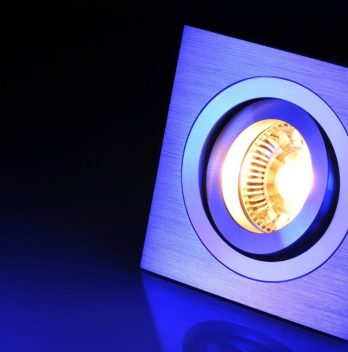
LED lights are the most popular grow light used among growers. They are highly efficient and will release minimal heat while consuming less power. LED lights can produce both red and blue lights required for the vegetative and flowering stages of your plants.
LED lights can be represented as daylight, bright white, and soft white. Talking about daylight, this is a very bright white-blue light that has a high value of color temperature range of 5000 to 6500K. On the other hand, soft white lights give rise to yellow tones with a lesser value of color temperature that ranges from 2700 to 3000.
If you are wondering whether you can use regular LED lights to grow your plants, the answer is yes. However, these lights are different from regular ones in a way that they emit far less heat.
Regular LED lights usually have a wavelength of around 620 nm and emit high amounts of blue light. If you are interested in growing plants indoors, you should look for LED lights that emit light in the range of 400-700 nm. You should also check if your LED light has a cooling fan. A fan will keep the lights cooler. In addition, you can also use fluorescent bulbs or CFL bulbs in your garden. These bulbs emit more light than regular LED bulbs.
What color LED is best for plants?
LEDs are the best light source for plants, and any LED that fits in the space you have available will work. The most important consideration is to make sure the LED is close enough to your plant that it is receiving the correct amount of light.
The best color LEDs are the ones that most closely match the spectrum of sunlight, and this is the same for all plants.
If you want to grow any plant in full sunlight, then you should use white LED lights. What is the difference between red and yellow LEDs? The difference between red and yellow LEDs is that yellow ones have a slightly warmer color temperature than red ones. This means that they will emit slightly more blue light than red LEDs, but they also will emit more red light than red LEDs. They will not produce as much heat as red LEDs, and they will last longer.
How far away should LED grow lights be from seedlings?
The closer to the plant the better, and also the higher the light output is the better. As you said, the light should be at least 20 inches from the seedlings.
This is pretty much the standard recommendation for starting seeds, unless your seedlings are large. You don’t want to be putting them under direct lighting for very long, but if you put them in the dark and keep them in there for too long they can actually die.
Growing With Household LED Bulbs: Final Say
Growing with household LED bulbs may be okay, but your plants won’t just grow healthily and efficiently as they should with a standard grow light. It’s best you go for grow lights that will provide your plants with the correct light spectrum for their growth.
In all this, ensure the light you’re using for your indoor plants contains the correct color temperatures. so, invest in quality lights so your indoor plants can flourish.
Eunice is an enthusiastic gardener with a passion for growing beautiful flowers. She loves nothing more than spending time in her garden, tending to her plants and enjoying the outdoors. Eunice has been gardening for over 15 years and has developed a unique style of landscaping that is both practical and aesthetically pleasing. She is especially fond of growing roses and enjoys experimenting with different varieties and colors. Eunice takes great pride in her garden and often shares the fruits of her labor with friends and family. In her spare time, she enjoys reading gardening magazines and attending local horticulture events. Eunice is passionate about her hobby and is always eager to share her knowledge and experience with others.
CFLs are one of the most common grow lights used among indoor growers. It is the wish of every grower to satisfy the lighting needs of their plants. So, if you want to know how many CFLs are required per plant, we will let you know in this post.
Now, we can’t just answer this question without obtaining more about your garden information. We will require some information such as the wattage of the bulb, the size of each of your plants, and grow room size.
So, keep reading to learn how many CFLs are required per plant.
Growing With CFLs Light
Indoor gardening with compact fluorescent light (CFL) bulbs is a nice source of light supplements you can provide your plants. They will offer your plants awesome growing benefits such as affordability, easy to use, minimal heat, consumes lesser power, and so on. With CFL lights, you can be sure your plants receive the appropriate light wavelengths for them to flourish.
The compact fluorescent light bulb does not emit too much heat, unlike the conventional incandescent bulbs or fluorescents. However, they only supply moderate light intensity in contrast to sunlight. Therefore, your plants may need multiple bulbs for your plants’ growing needs.
How Many CFLs Is Required Per Plant
Like we said earlier, we need to know the plant size and bulb wattage to determine how many CFLs are required per plant.
The general standard we use in determining the plant’s lighting requirements is the plant size and it is measured in square feet. If we know the square foot of the plant size, we can deduce how many CFLs are required per plant. Also, it’s better to answer this question using square feet of space rather than how many plants.
How Many CFL Watts Per Plant?
How many CFL watts per plant are around 60 to 100 watts per square foot. This is ideal especially for high light demanding plants. You can however go a bit higher even as high as 150 watts. We recommend these values for the flowering phase.
When considering the vegetative phase, seedlings phase, or cloning, you can use half of this value for your plant’s growing needs. This value can as well be used for low light-demanding plants.
In a similar fashion, when we’re looking at about 2 to 3 plants which usually contain 1 square foot, then 150 wattages or less will be required.
Actual Wattage vs. Listed Wattage
Most grow lights usually have two different wattages: the actual wattage it draws from light and the wattage listed by the manufacturer.
For instance, if you see your CFL grow light labeled 500 watts, that’s not the actual wattage consumed. If you dig through and search your package, you will find the actual wattage used. Usually, if it’s stated that a grow light is 500 wattages, it may actually consume just about 150 or 200 wattages.
The labeled 500 watts is the amount the grow light offers while consuming lesser power. This implies you get more output with lesser power consumption.
Therefore, when you are considering how many CFLs per plant are required, focus on the actual wattage, not the labeled wattage.
As we mentioned earlier, CFL grows light only supplies moderate light intensity. Thus, if you want to get more light intensity, you may need to use multiple bulbs.
This is why CFL grow lights are ideal for only small plants. When you start using 10 or even 5 bulbs to attain that better lumen, you may have to put in extra work by readjusting the lights as your plants develop.
So, when you decide to plant more than one or two plants, we recommend you obtain an affordable LED grow light or a T5 fixture to ease the stress.
CFL Grow Setup
There is an ideal way to set up your CFL grow light so your plants can get adequate light intensity for their growing needs. Your CFL bulbs should be positioned on every side so your plants can receive good lightning. You can place the CFL grow light close to your plants because they are safe and will not emit too much heat.
For seedlings, you can position your CFL grow light at least an inch away from your plants. Once they begin to grow, you should move them a little farther from the plants. Ideally, for bushier and short plans you can place your CFL grow light close to the plants. On the other hand, for taller plants, the CFL grow light will need to be positioned farther away as the plants grow.
However, you can do a test using the back of your hand to feel the heat emitted from your CFL grow light. Place your hands between your plants and grow light for about 20 seconds. When you notice it feels hot, push the grow light a little further from your plants to avoid burns. On the other hand, if the heat is minimal on your hand, then it’s safe at that distance.
Generally, the recommended distance around 2 inches to 4 inches. Also, you want to always keep a close watch on your plants and how they receive the grow lights. As they grow taller, it is ideal you continue to move the grow light away from them.
FAQ’s
What CFL light is best for growing?
There are many options for CFL light bulbs. CFL stands for compact fluorescent lamp, a bulb that emits a similar amount of energy as an incandescent bulb but uses less power and produces a brighter light. There are several types of CFL bulbs available, including standard CFL bulbs, daylight CFL bulbs, energy-saving CFL bulbs and LED bulbs. All CFL bulbs produce the same amount of light, but some have a longer lifespan than others.
The most powerful CFLs are the ones with the most lumens, so a 100W light bulb would be better than a 25W bulb. A lot of the higher wattage bulbs do not have as much lumen output as lower wattage bulbs, but some of the higher wattage bulbs have more color spectrum than lower wattage bulbs. For example, the 100W bulb may have a little more red light, while the 35W bulb may have a little more blue light.
I prefer warm white CFL bulbs (2700K) but I’ve also seen people say they work well with cooler CFLs. I’ve also heard of people using CFLs for other things like making tea or cooking. I would assume that CFLs would be best for those uses, but they don’t seem to be much different from the incandescent bulbs that are usually recommended for growing plants.
How many CFLs are needed for seedlings?
It’s easy to calculate the number of CFLs needed. Let’s say the number of square feet of your seedling room is 10′ x 12′.
The number of CFLs needed is:
10′ x 12′ x 1/4″ = 120 square feet 1 cubic foot of seedlings = 240 seeds, so the number of CFLs needed is: 240 x 1/4″ = 60 square feet So you’ll need at least 60 square feet of CFLs to cover the seedlings.
If you’re talking about seedlings (like lettuce) and not plants, the answer is two per plant. For example, I have 2-4 seedlings per plant in a 1 gallon pot. In the case of seedlings, they’re usually grown in flats with two per flat. They can also be grown in individual pots, but that’s more of an exception than a rule.
What kinds of works well with CFL’s?
For seeds I would recommend using a CFL with an output of 150 watts or less (150W, 75W, 35W, 15W, etc.). This is the minimum for a CFL bulb to provide enough light for plant growth.
How far away should CFLs be from plant?
You want to keep them anywhere between 4 to 6 inches away from your plants. If you put them any farther away they won’t receive enough to grow properly.
How Many CFLs Per Plant: Final Say
We have concluded that how many CFLs watts per plant required is about 150 watts or less per square foot. CFL lights will produce less heat making it safe to be placed close to your plants. Therefore, they are especially great for tight space.
They are affordable and easily accessible. However, their light intensity does not do so great. Additional bulbs may be required to achieve the required light intensity. They are also not ideal for a large setup but great for a small setup.
Eunice is an enthusiastic gardener with a passion for growing beautiful flowers. She loves nothing more than spending time in her garden, tending to her plants and enjoying the outdoors. Eunice has been gardening for over 15 years and has developed a unique style of landscaping that is both practical and aesthetically pleasing. She is especially fond of growing roses and enjoys experimenting with different varieties and colors. Eunice takes great pride in her garden and often shares the fruits of her labor with friends and family. In her spare time, she enjoys reading gardening magazines and attending local horticulture events. Eunice is passionate about her hobby and is always eager to share her knowledge and experience with others.