Author: Eunice

  • When Are Butternut Squash Ready To Pick?

    When Are Butternut Squash Ready To Pick?

    Storing Butternut Squash

    So we already learned how to detect when butternut squash is matured. The next thing is to know how to store them appropriately for later use.

    • Table or Shelf: you can store butternut squash for about 10 to 14 days at room temperature by placing them on a table or shelf.
    • Store in a Dry Place or Room: For best storage for up to 5 to 6 months, avoid storing them in the refrigerator. Refrigerating will make them absorb moisture thereby losing their toughness. Hence result in rotting. For good storage results, store or place them in a dry place. The temperature should range from about 50 to 60 degrees Fahrenheit. Also, the humidity for storing them should be about 60 to 70%. Hence, a dry room or basement is a perfect place to store them.
    • Cut and Store: it’s possible to store butternut squash in the refrigerator by simply cutting them into small or medium sizes. When you do this, ensure you peel off the outer skin. Also, take away the inner seeds with a spoon.

    When storing the butternut squash, you shouldn’t pile them up but store them in single layers. This way, there will be less touching of each squash and less damage. Always observe or monitor your butternut squash every week for any sign of rot.

    Storing Butternut Squash

    How Long Will Butternut Squash Last Once Picked?

    Fresh, uncut, or whole butternut squash can be stored in a cool and dry place such as a basement or a closet where the sun will not penetrate, speeding up the ripening process of the squash. If you store it in these right conditions, it should last about two to three months. 

    Because butternut squashes tend to get pretty big, you may not be able to store the whole squash. If this is the case, you will need to cut it up into smaller pieces such as cubes. You will then need to store them in a fridge or a freezer so that they can last.

    If you store them in the fridge, you can store them for at least four days before they spoil. Store them in an air-tight container or a Ziploc bag to get the best results.

    Cut-up, frozen butternut squash can be stored in cubes or pureed, which can be used for cooking soups or stews, or re-heated for use as baby food. This frozen squash can be stored indefinitely in the freezer, however, it is best to use it within six months to a year.

    Is Butternut Squash Genetically Modified?

    Butternut squash has not yet been genetically modified, unlike other squashes.

    Modified squashes include summer squash like yellow squash and zucchini are grown at low levels in the United States. These modified varieties are bred to be resistant to viruses such as the zucchini mosaic virus, a virus that has disastrous impacts on the cucurbits – squash, pumpkins, and melons.

    How Big Does a Butternut Squash Get?

    A mature butternut squash usually gets to about 9-18 inches tall and will attain a width of 10-15 feet in vine length. Different varieties of this squash require different amounts of space to grow and fully mature, with the bush varieties taking up the least.

    Butternut squash will only get to this mature size if they are provided with the right growing conditions. These conditions include;

    • Full sun exposure for 6 hours a day
    • Rich, well-draining soil with a pH of 5.5-7
    • Never let the soil in which the seedlings are grown to dry out
    • Providing the plants with sufficient nutrition, since butternut squash is a heavy feeder. This can be done by starting with soil that has been mulched heavily or putting manure around the beds where the squash is planted.
    • Adding liquid fertilizer at 2-3 week intervals

    Is Butternut Squash a Good Source of Iron?

    Butternut squash is a good source of many important vitamins and minerals. It is also a great source of calcium, iron, phosphorus, and copper. It has a high iron content of 0.7mg/100g of butternut. Eating butternut will help reduce the risk of anemia.

    How Many Grams is an Average Butternut Squash?

    The average weight in grams of mature butternut squash can be anywhere between 907-1360 g. This usually yields about 3 cups of diced squash after the peels and seeds have been removed.

    Final Words

    You can as well calculate the date you planted your butternut seeds or plants. It will take approximately 110 to 120 days to attain maturity. So you can simply note down the date you planted your butternut squash so you can have an idea of the expected harvest time.

    However, some factors such as climate, soil conditions, nutrients, etc can delay or hasten their growth rate.

    Getting to know the appropriate period to pick your butternut squash is important so storing them for long does not cause an issue.

    Once you’ve confirmed the signs listed in our articles, you can now pick your butternut squash and enjoy some tasty squash delicacy. You can as well store them appropriately even for up to 6 months.

    FAQ’s

    How do you know when a butternut squash is ripe?

    When a squash is at its peak of freshness, it will be firm, with no soft spots. The skin should be smooth and glossy, not wrinkled or browned. It should have a sweet aroma. The flesh should be slightly mealy and very tender.
    The best way to tell if a squash is ripe is to cut it open, scoop out the seeds and strings, then look inside. If you can see any seeds or string, it’s probably not ready yet. Once you’ve cut the squash in half, remove the stem and scoop out the seeds and strings.

    What color should butternut squash be when you pick it?

    Green, yellow, orange? In fact, butternut squash has a wide range of colors that can range from creamy white to dark green. Butternut squash comes in a wide range of colors.
    You’ll find a bright orange butternut squash or a creamy yellow one. Squash grown in hot, dry climates may turn dark green. Butternut squash grown in a cooler climate will be more likely to have a lighter green flesh.
    Butternut squash is available year-round. You can find fresh butternut squash in the fall, winter, spring, and even summer.

    How many butternut squash do you get from one plant?

    About 8 to 10, depending on size. They’re a good source of fiber and low-calorie carbohydrates. I like to roast them to use as a substitute for sweet potatoes. You can also make soup out of them, or even puree them into a sauce or soup base.

    How long will butternut squash keep?

    You can keep it for about a week if you want to cook with it or use it for something else. It does not have to be cut open, it can be left in the shell. Keep them in the refrigerator for up to 5 days or freeze them for longer storage.

    How do you peel a butternut squash?

    When peeling a butternut squash, make sure that your knife is sharp and clean. Then, cut off the ends of the squash where it meets the neck. Next, remove the skin by cutting the squash into quarters. Once this is done, use your knife to pry the skin away from the squash. You can also try using a vegetable peeler to remove the skin.

    How often do you water butternut squash?

    Butternut squash needs 1 to 2 inches of water per week.
    Butternut squash are easy to grow. They don’t require a greenhouse or any special care during cold weather. In fact, they are extremely hardy. They can withstand temperatures down to minus 40 degrees Fahrenheit. They can also survive long periods of drought.

    Butternut Squash, When To Pick

    When Do You Pick Butternut Squash?

    Harvesting butternut squash at the appropriate time requires you to follow the prescribed harvesting time so you can store them appropriately.

    Butternut squash is grown in spring or summer because it flourishes in warm weather. It will take this plant about 3 to 4 months to reach full maturity. So if you planted your butter squash during spring or summer, the best period to harvest them would be around October or November. You can as well pick them up in early winter.

    Apart from knowing the duration till these plants mature, you need to be aware of some signs that will let you know the butternut squash is mature for picking. Below are some of these signs.

    Read more about How to Pick Basil

    Signs To Know When Butternut Squash Is Ready To Pick

    Here are 4 signs to tell you your butternut squash is ready to be picked:

    1. Appearance

    One way to know when butternut squash is ready to pick is to notice its appearance. Notice the color of the squash. When it’s ripe, it will give a solid tan peanut color. The outer shell will also become hard.

    As butternut squash grows on the vine, it will give rise to green vertical lines which will fade out as they mature. So, if you notice your squash is still green with lines, you should wait for about a week or two until you can see its mature form.

    1. Toughness

    Butternut squash is ripe and ready to be picked when the fruit becomes firm or tough enough to resist being punctured with a fingernail. So when the rind or outer part becomes tough, that’s a sign they are ready to be picked.

    1. Length

    The length will also give you a sign it’s ready to be picked. Ideally, the squash ripens or matures when it attains 8 to 10 inches. Observe the length of the squash every day as they grow, and when you notice they’ve stopped growing, then it’s time to pick them.

    1. Observe The Stem

    The stem can as well let you know this squash is ready to be picked. Once the stem becomes brown and cracky, it’s a sign of maturity. This is because as the butternut squash attains maturity, nutrients cease being transported to the squash and stem. Then the stem colors will change from green to brown.

    How To Harvest Butternut Squash

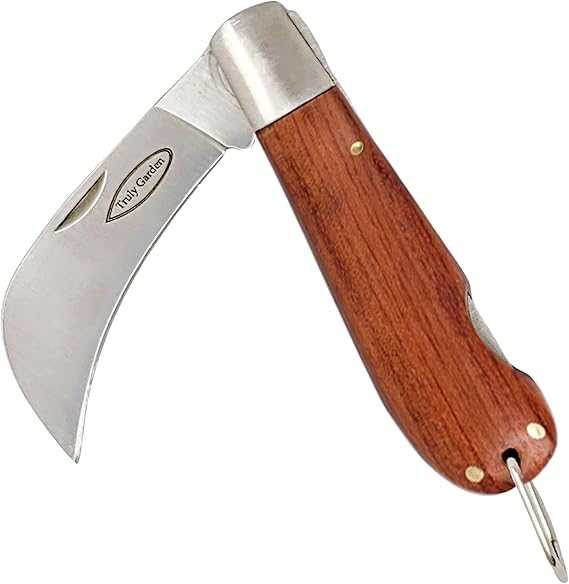
    Harvest your butternut squash the right way by making use of a sharp knife to carefully cut the fruit from the vine. At the same time, ensure you still have about 2 inches of stem still attached to the squash. Not cutting the stem appropriately can introduce bacteria.

    If you mistakenly bruise or cut the squash, know that it can’t be stored for long. So you have to make use of it as soon as possible. You can as well make use of any severely damaged butternut squash as a compost heap.

    Folding Garden Knife. This Hawkbill Blade is Curved Making it Great for Hundreds of Uses
     

    61halzc44RS. AC SX569


    Storing Butternut Squash

    So we already learned how to detect when butternut squash is matured. The next thing is to know how to store them appropriately for later use.

    • Table or Shelf: you can store butternut squash for about 10 to 14 days at room temperature by placing them on a table or shelf.
    • Store in a Dry Place or Room: For best storage for up to 5 to 6 months, avoid storing them in the refrigerator. Refrigerating will make them absorb moisture thereby losing their toughness. Hence result in rotting. For good storage results, store or place them in a dry place. The temperature should range from about 50 to 60 degrees Fahrenheit. Also, the humidity for storing them should be about 60 to 70%. Hence, a dry room or basement is a perfect place to store them.
    • Cut and Store: it’s possible to store butternut squash in the refrigerator by simply cutting them into small or medium sizes. When you do this, ensure you peel off the outer skin. Also, take away the inner seeds with a spoon.

    When storing the butternut squash, you shouldn’t pile them up but store them in single layers. This way, there will be less touching of each squash and less damage. Always observe or monitor your butternut squash every week for any sign of rot.

    Storing Butternut Squash

    How Long Will Butternut Squash Last Once Picked?

    Fresh, uncut, or whole butternut squash can be stored in a cool and dry place such as a basement or a closet where the sun will not penetrate, speeding up the ripening process of the squash. If you store it in these right conditions, it should last about two to three months. 

    Because butternut squashes tend to get pretty big, you may not be able to store the whole squash. If this is the case, you will need to cut it up into smaller pieces such as cubes. You will then need to store them in a fridge or a freezer so that they can last.

    If you store them in the fridge, you can store them for at least four days before they spoil. Store them in an air-tight container or a Ziploc bag to get the best results.

    Cut-up, frozen butternut squash can be stored in cubes or pureed, which can be used for cooking soups or stews, or re-heated for use as baby food. This frozen squash can be stored indefinitely in the freezer, however, it is best to use it within six months to a year.

    Is Butternut Squash Genetically Modified?

    Butternut squash has not yet been genetically modified, unlike other squashes.

    Modified squashes include summer squash like yellow squash and zucchini are grown at low levels in the United States. These modified varieties are bred to be resistant to viruses such as the zucchini mosaic virus, a virus that has disastrous impacts on the cucurbits – squash, pumpkins, and melons.

    How Big Does a Butternut Squash Get?

    A mature butternut squash usually gets to about 9-18 inches tall and will attain a width of 10-15 feet in vine length. Different varieties of this squash require different amounts of space to grow and fully mature, with the bush varieties taking up the least.

    Butternut squash will only get to this mature size if they are provided with the right growing conditions. These conditions include;

    • Full sun exposure for 6 hours a day
    • Rich, well-draining soil with a pH of 5.5-7
    • Never let the soil in which the seedlings are grown to dry out
    • Providing the plants with sufficient nutrition, since butternut squash is a heavy feeder. This can be done by starting with soil that has been mulched heavily or putting manure around the beds where the squash is planted.
    • Adding liquid fertilizer at 2-3 week intervals

    Is Butternut Squash a Good Source of Iron?

    Butternut squash is a good source of many important vitamins and minerals. It is also a great source of calcium, iron, phosphorus, and copper. It has a high iron content of 0.7mg/100g of butternut. Eating butternut will help reduce the risk of anemia.

    How Many Grams is an Average Butternut Squash?

    The average weight in grams of mature butternut squash can be anywhere between 907-1360 g. This usually yields about 3 cups of diced squash after the peels and seeds have been removed.

    Final Words

    You can as well calculate the date you planted your butternut seeds or plants. It will take approximately 110 to 120 days to attain maturity. So you can simply note down the date you planted your butternut squash so you can have an idea of the expected harvest time.

    However, some factors such as climate, soil conditions, nutrients, etc can delay or hasten their growth rate.

    Getting to know the appropriate period to pick your butternut squash is important so storing them for long does not cause an issue.

    Once you’ve confirmed the signs listed in our articles, you can now pick your butternut squash and enjoy some tasty squash delicacy. You can as well store them appropriately even for up to 6 months.

    FAQ’s

    How do you know when a butternut squash is ripe?

    When a squash is at its peak of freshness, it will be firm, with no soft spots. The skin should be smooth and glossy, not wrinkled or browned. It should have a sweet aroma. The flesh should be slightly mealy and very tender.
    The best way to tell if a squash is ripe is to cut it open, scoop out the seeds and strings, then look inside. If you can see any seeds or string, it’s probably not ready yet. Once you’ve cut the squash in half, remove the stem and scoop out the seeds and strings.

    What color should butternut squash be when you pick it?

    Green, yellow, orange? In fact, butternut squash has a wide range of colors that can range from creamy white to dark green. Butternut squash comes in a wide range of colors.
    You’ll find a bright orange butternut squash or a creamy yellow one. Squash grown in hot, dry climates may turn dark green. Butternut squash grown in a cooler climate will be more likely to have a lighter green flesh.
    Butternut squash is available year-round. You can find fresh butternut squash in the fall, winter, spring, and even summer.

    How many butternut squash do you get from one plant?

    About 8 to 10, depending on size. They’re a good source of fiber and low-calorie carbohydrates. I like to roast them to use as a substitute for sweet potatoes. You can also make soup out of them, or even puree them into a sauce or soup base.

    How long will butternut squash keep?

    You can keep it for about a week if you want to cook with it or use it for something else. It does not have to be cut open, it can be left in the shell. Keep them in the refrigerator for up to 5 days or freeze them for longer storage.

    How do you peel a butternut squash?

    When peeling a butternut squash, make sure that your knife is sharp and clean. Then, cut off the ends of the squash where it meets the neck. Next, remove the skin by cutting the squash into quarters. Once this is done, use your knife to pry the skin away from the squash. You can also try using a vegetable peeler to remove the skin.

    How often do you water butternut squash?

    Butternut squash needs 1 to 2 inches of water per week.
    Butternut squash are easy to grow. They don’t require a greenhouse or any special care during cold weather. In fact, they are extremely hardy. They can withstand temperatures down to minus 40 degrees Fahrenheit. They can also survive long periods of drought.

    Harvesting butternut too early may not be ideal because the texture will be too firm and the sugars aren’t well developed yet. While if you harvest them too late, you may get a mushy squash that’s not appropriate. So when is butternut squash ready to pick?

    When the fall period begins, most growers wonder when they can harvest their butternut squash so it can be stored and not get damaged. Inappropriate harvest time can result in conditions that will make your butternut squash inadequate for prolonged storage thereby facing issues.

    There are different signs to show you when butternut squash is ready to be picked and that is what we will be discussing today. So continue reading to gain some knowledge on this and more.

    Butternut Squash, When To Pick

    This may be your first time growing butternut squash and you’re wondering when they are ready to pick. Well, the answer is pretty easy but you have to consider a couple of things when it comes to picking and storing this nutritious vegetable. So, let’s look into this.

    Butternut Squash, When To Pick

    When Do You Pick Butternut Squash?

    Harvesting butternut squash at the appropriate time requires you to follow the prescribed harvesting time so you can store them appropriately.

    Butternut squash is grown in spring or summer because it flourishes in warm weather. It will take this plant about 3 to 4 months to reach full maturity. So if you planted your butter squash during spring or summer, the best period to harvest them would be around October or November. You can as well pick them up in early winter.

    Apart from knowing the duration till these plants mature, you need to be aware of some signs that will let you know the butternut squash is mature for picking. Below are some of these signs.

    Read more about How to Pick Basil

    Signs To Know When Butternut Squash Is Ready To Pick

    Here are 4 signs to tell you your butternut squash is ready to be picked:

    1. Appearance

    One way to know when butternut squash is ready to pick is to notice its appearance. Notice the color of the squash. When it’s ripe, it will give a solid tan peanut color. The outer shell will also become hard.

    As butternut squash grows on the vine, it will give rise to green vertical lines which will fade out as they mature. So, if you notice your squash is still green with lines, you should wait for about a week or two until you can see its mature form.

    1. Toughness

    Butternut squash is ripe and ready to be picked when the fruit becomes firm or tough enough to resist being punctured with a fingernail. So when the rind or outer part becomes tough, that’s a sign they are ready to be picked.

    1. Length

    The length will also give you a sign it’s ready to be picked. Ideally, the squash ripens or matures when it attains 8 to 10 inches. Observe the length of the squash every day as they grow, and when you notice they’ve stopped growing, then it’s time to pick them.

    1. Observe The Stem

    The stem can as well let you know this squash is ready to be picked. Once the stem becomes brown and cracky, it’s a sign of maturity. This is because as the butternut squash attains maturity, nutrients cease being transported to the squash and stem. Then the stem colors will change from green to brown.

    How To Harvest Butternut Squash

    Harvest your butternut squash the right way by making use of a sharp knife to carefully cut the fruit from the vine. At the same time, ensure you still have about 2 inches of stem still attached to the squash. Not cutting the stem appropriately can introduce bacteria.

    If you mistakenly bruise or cut the squash, know that it can’t be stored for long. So you have to make use of it as soon as possible. You can as well make use of any severely damaged butternut squash as a compost heap.

    Folding Garden Knife. This Hawkbill Blade is Curved Making it Great for Hundreds of Uses


    61halzc44RS. AC SX569


    Storing Butternut Squash

    So we already learned how to detect when butternut squash is matured. The next thing is to know how to store them appropriately for later use.

    • Table or Shelf: you can store butternut squash for about 10 to 14 days at room temperature by placing them on a table or shelf.
    • Store in a Dry Place or Room: For best storage for up to 5 to 6 months, avoid storing them in the refrigerator. Refrigerating will make them absorb moisture thereby losing their toughness. Hence result in rotting. For good storage results, store or place them in a dry place. The temperature should range from about 50 to 60 degrees Fahrenheit. Also, the humidity for storing them should be about 60 to 70%. Hence, a dry room or basement is a perfect place to store them.
    • Cut and Store: it’s possible to store butternut squash in the refrigerator by simply cutting them into small or medium sizes. When you do this, ensure you peel off the outer skin. Also, take away the inner seeds with a spoon.

    When storing the butternut squash, you shouldn’t pile them up but store them in single layers. This way, there will be less touching of each squash and less damage. Always observe or monitor your butternut squash every week for any sign of rot.

    Storing Butternut Squash

    How Long Will Butternut Squash Last Once Picked?

    Fresh, uncut, or whole butternut squash can be stored in a cool and dry place such as a basement or a closet where the sun will not penetrate, speeding up the ripening process of the squash. If you store it in these right conditions, it should last about two to three months. 

    Because butternut squashes tend to get pretty big, you may not be able to store the whole squash. If this is the case, you will need to cut it up into smaller pieces such as cubes. You will then need to store them in a fridge or a freezer so that they can last.

    If you store them in the fridge, you can store them for at least four days before they spoil. Store them in an air-tight container or a Ziploc bag to get the best results.

    Cut-up, frozen butternut squash can be stored in cubes or pureed, which can be used for cooking soups or stews, or re-heated for use as baby food. This frozen squash can be stored indefinitely in the freezer, however, it is best to use it within six months to a year.

    Is Butternut Squash Genetically Modified?

    Butternut squash has not yet been genetically modified, unlike other squashes.

    Modified squashes include summer squash like yellow squash and zucchini are grown at low levels in the United States. These modified varieties are bred to be resistant to viruses such as the zucchini mosaic virus, a virus that has disastrous impacts on the cucurbits – squash, pumpkins, and melons.

    How Big Does a Butternut Squash Get?

    A mature butternut squash usually gets to about 9-18 inches tall and will attain a width of 10-15 feet in vine length. Different varieties of this squash require different amounts of space to grow and fully mature, with the bush varieties taking up the least.

    Butternut squash will only get to this mature size if they are provided with the right growing conditions. These conditions include;

    • Full sun exposure for 6 hours a day
    • Rich, well-draining soil with a pH of 5.5-7
    • Never let the soil in which the seedlings are grown to dry out
    • Providing the plants with sufficient nutrition, since butternut squash is a heavy feeder. This can be done by starting with soil that has been mulched heavily or putting manure around the beds where the squash is planted.
    • Adding liquid fertilizer at 2-3 week intervals

    Is Butternut Squash a Good Source of Iron?

    Butternut squash is a good source of many important vitamins and minerals. It is also a great source of calcium, iron, phosphorus, and copper. It has a high iron content of 0.7mg/100g of butternut. Eating butternut will help reduce the risk of anemia.

    How Many Grams is an Average Butternut Squash?

    The average weight in grams of mature butternut squash can be anywhere between 907-1360 g. This usually yields about 3 cups of diced squash after the peels and seeds have been removed.

    Final Words

    You can as well calculate the date you planted your butternut seeds or plants. It will take approximately 110 to 120 days to attain maturity. So you can simply note down the date you planted your butternut squash so you can have an idea of the expected harvest time.

    However, some factors such as climate, soil conditions, nutrients, etc can delay or hasten their growth rate.

    Getting to know the appropriate period to pick your butternut squash is important so storing them for long does not cause an issue.

    Once you’ve confirmed the signs listed in our articles, you can now pick your butternut squash and enjoy some tasty squash delicacy. You can as well store them appropriately even for up to 6 months.

    FAQ’s

    How do you know when a butternut squash is ripe?

    When a squash is at its peak of freshness, it will be firm, with no soft spots. The skin should be smooth and glossy, not wrinkled or browned. It should have a sweet aroma. The flesh should be slightly mealy and very tender.
    The best way to tell if a squash is ripe is to cut it open, scoop out the seeds and strings, then look inside. If you can see any seeds or string, it’s probably not ready yet. Once you’ve cut the squash in half, remove the stem and scoop out the seeds and strings.

    What color should butternut squash be when you pick it?

    Green, yellow, orange? In fact, butternut squash has a wide range of colors that can range from creamy white to dark green. Butternut squash comes in a wide range of colors.
    You’ll find a bright orange butternut squash or a creamy yellow one. Squash grown in hot, dry climates may turn dark green. Butternut squash grown in a cooler climate will be more likely to have a lighter green flesh.
    Butternut squash is available year-round. You can find fresh butternut squash in the fall, winter, spring, and even summer.

    How many butternut squash do you get from one plant?

    About 8 to 10, depending on size. They’re a good source of fiber and low-calorie carbohydrates. I like to roast them to use as a substitute for sweet potatoes. You can also make soup out of them, or even puree them into a sauce or soup base.

    How long will butternut squash keep?

    You can keep it for about a week if you want to cook with it or use it for something else. It does not have to be cut open, it can be left in the shell. Keep them in the refrigerator for up to 5 days or freeze them for longer storage.

    How do you peel a butternut squash?

    When peeling a butternut squash, make sure that your knife is sharp and clean. Then, cut off the ends of the squash where it meets the neck. Next, remove the skin by cutting the squash into quarters. Once this is done, use your knife to pry the skin away from the squash. You can also try using a vegetable peeler to remove the skin.

    How often do you water butternut squash?

    Butternut squash needs 1 to 2 inches of water per week.
    Butternut squash are easy to grow. They don’t require a greenhouse or any special care during cold weather. In fact, they are extremely hardy. They can withstand temperatures down to minus 40 degrees Fahrenheit. They can also survive long periods of drought.

  • How To Grow Butternut Squash From Fresh Seeds

    How To Grow Butternut Squash From Fresh Seeds

    One of the most loved and popular squashes grown among farmers is the butternut squash. Are you wondering how to grow butternut squash from fresh seeds? We’ve got you covered here. Butternut squash is pretty easy to grow especially from seeds and we will be directing you on how to go about this.

    This type of squash is very special as it contains a high amount of minerals, vitamins, and other important nutrients. The distinctive pale yellow pear-shaped fruit is also great to be used in dishes and also for roasting. Butternut squash is as well ideal for vegetables as it offers amazing health benefits and is low in carbohydrates.

    Adding this amazing squash will be a great plus to your garden. So, let’s dive in to learn how to grow butternut squash from seeds.

    Some Info About Butternut Squash Plant

    Butternut squash plant is a type of pumpkin or winter squash and the plant is a type of viny or climbing variety. It is related to pumpkins and acorn squash.

    This plant will spread its vines and broad leaves out during summer. Then it will store its sunny energy and antioxidants in its deep orange late-summer fruit.

    This amazing squash can give rise to endless food recipes so you can always get creative with it.

    Some Info About Butternut Squash Plant

    The seeds, flowers, as well as leaves, are pretty edible. But most people make use of only the squash especially in a creamy soup, risotto, or butternut ravioli, or gnocchi. You can as well use them as a boiled and mashed side dish.

    So let’s take a look at how to grow this pleasant butternut squash from fresh seeds.

    Learn How To Grow Butternut Squash From Fresh Seeds

    Sowing butternut squash seeds is super easy and you can simply grow them from their raw or fresh seeds. So let’s look into this.

    When To Plant Butternut Squash

    The question most growers want to know is when do you plant butternut squash.

    The best period to grow butternut squash is when the danger of frost has elapsed. The soil needs to be warm to about 60 to 65 degrees Fahrenheit at a 4 inch deep. So the best period is to plant butternut squash through summer.

    The growing season of this plant is approximately 110 to 120 days for fruits to mature. Therefore, if you have a short season in your region, we encourage you to begin your seeds indoors and send them outdoors once the weather begins to warm up.

    Survival Garden Seeds – Butternut Squash Seed for Planting

    71jAXCz2KcL. AC SX522

    Procedures To Planting Butternut Squash Indoors

    Like we said, if your region has a high risk of the last frost, it’s best you plant your seeds indoors. So follow these procedures to plant butternut squash indoors.

    Step 1

    First, you obtain or prepare a well-draining rich soil and it should be rich in compost and other nutrients as butternut squash are heavy and hungry feeders. Then fill the soil into 3-inch pots or containers.

    Step 2

    Obtain your seed and you can make use of raw or fresh seeds from butternut squash or obtain some seeds from your garden center. Then to each pot, put two seeds about half-inch deep and cover the seeds with soil.

    Step 3

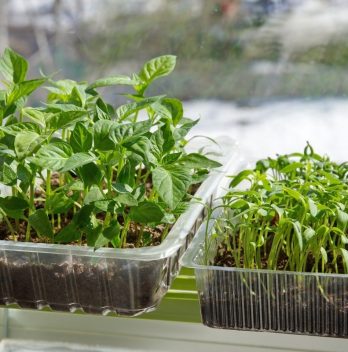
    Water appropriately to maintain slightly moist soil. Then position the setup on a sunny windowsill. The seeds should begin germinating in a couple of days.  When you notice two seedlings germinating at once, leave the healthiest one and pinch off the other one.

    Step 4

    Next, you harden off your seedlings by adjusting them gradually to environmental conditions. Do this by putting them outdoors when it’s warm during the day then bringing them back in at night. Continue this every day and gradually increase the number of hours your plant will spend outdoors as they harden off.

    As you do this, ensure you maintain moist soil. Remember to always bring them inside at any prediction of frost.

    Step 5

    Then once the outdoor soil temperature reaches 65 degrees (usually around May), you can plant your seedlings in prepared beds and space them 6 inches apart.

    Your seedlings can be thinned out once they reach about 6 inches long. This will give or encourage the strongest plant room to grow.

    Procedures To Planting Butternut Squash Outdoors

    Growing butternut squash from seed outdoors is ideal for areas with mild spring temperatures.

    Step 1

    Prepare your beds and ensure you make use of plenty of compost and organic matter to make the soil rich in nutrients. With this method, you can make your hills 18 inches high.

    Step 2

    Then to seed sowing, create holes of about 6 inches apart then plant two seeds in each hole. The seeds should be planted about half inch deep into the soil and slightly cover the soil. Water appropriately to maintain moist soil.

    Step 3

    Once your seedling reaches 6 inches long, you can thin them out. This will give the strongest plant more space to grow well.

    Procedures To Planting Butternut Squash Outdoors

    Right Conditions To Grow Butter Squash Plants From Seeds

    To grow butter squash plants more successfully, follow these extra growing tips:

    • PH: the ideal pH for the butter squash plant to grow adequately is 5.5 to 7.0.
    • Sunshine: this plant will thrive well in full sun exposure and can withstand heat.
    • Water: because butter squash plants flourish in hot weather, they will require lots of watering. Underwatering can cause their soil to dry out and may lead to low flower yield and stunted growth. We encourage you to water the soil or ground directly and avoid wetting the leaves. Wet leaves can predispose the plant to fungus disease.
    • Fertilizer: butternut squash are hungry and heavy feeders. Therefore, they will require frequent nutrient feeding all through the season. You should begin with a very nutrient-rich soil base that contains a good amount of compost and organic matter. Then when it’s mid-summer, supply your plant soil with more compost. Every 2 to 3 weeks, make use of granular or liquid fertilizer. Butternut squash will thrive well if you supply them with fertilizer high in phosphorus and potassium (e.g. use NPK of 5:10:10).

    FAQ’s

    Can you grow butternut squash from the seeds inside?

    You can certainly start seeds in containers and then transplant them to your garden. Butternut squash seeds are typically sown indoors in early spring, then transplanted to a sunny spot in the garden when the soil has warmed up (if it’s too cold or wet you may have trouble germinating).

    Do you have to dry butternut squash seeds before planting?

    Squash bugs are attracted to moist conditions, so drying the seeds will reduce the amount of moisture around the seeds and reduce the possibility of getting bugs. If you are worried about squash bugs, you can also spray the seeds with insecticidal soap but that will kill off all the good bacteria that is good for your plant.

    Can you grow butternut squash in pots?

    Yes, you can plant squash in pots or trays of soil and grow them indoors. In the winter months, you can keep the pots on a sunny windowsill and water as needed. In the spring, you can move the pots outside and plant them in the garden. It takes about 3-4 weeks to get a squash to flower. Once they have bloomed, you can remove the blossoms and leave the fruits to mature.
    If you are looking for a quick harvest, and don’t want the squash to get very big. Butternut squash is easy to grow and requires little maintenance.

    Do squash need full sun?

    Yes, they do. Squash are a tropical plant, and they like to be in full sun. If you live somewhere with mild winters and a shorter growing season, then you may have to wait until the winter months before you get your first squash. It is important to remember that, just because you can grow squash in the winter, doesn’t mean you should. There’s nothing wrong with a winter squash. However, it will taste different than a summer squash.
    I would recommend planting squash between July and September for a fall harvest.

    What month do you plant squash?

    The best time to plant is from late June to mid-July.
    You’ll need to wait for your soil to warm up before planting. It will take six weeks to grow.

    What is the best way to plant squash?

    Squash plants are heavy feeders and they prefer to be planted in a moist, loose, well-drained soil. Squash seeds should be placed on top of the soil with the stem pointing down, about 4 inches deep and 8 inches apart. For best results, cover them with soil or potting mix. After planting, water regularly until the soil is saturated. This helps the roots get started.
    Squash plants grow best in temperatures between 50 and 80 degrees F. They can also tolerate temperatures up to 90 degrees F. If you have a cold winter, you can start your squash indoors several weeks before planting time.
    Squash plants are easy to grow and they are not fussy about soil type or fertility. They prefer a sunny spot with good air circulation. These plants can grow as much as 2 feet tall. The main stem is usually 8 inches tall. You will need to prune the vines when they get too large. What is the best way to harvest zucchini? Harvesting zucchini is easy. Simply cut the squash off the vine, using a sharp knife. It’s best to cut it while it’s still warm from the sun. Leave about a 1-inch stem at the bottom of the squash so that the plant has something to live on.

    How To Grow Butternut Squash From Fresh Seeds: Final Say

    How to grow butternut squash from fresh seeds is pretty easy and you can follow our procedure for successful planting.

  • Can I Plant Tomatoes And Peppers Together?

    Can I Plant Tomatoes And Peppers Together?

    Pepper and tomatoes are both plant members of the Nightshade or Solanaceae. So if you’re looking for a companion plant and wondering if you can plant tomatoes and peppers together, the answer is yes you can.  But you have to follow the ideal procedure for a successful tomato and pepper planting.

    Growing companion plants will allow you to have the privilege of enjoying different food varieties for your dishes. Now tomatoes and peppers are easy plants for both expert and novice to grow so why not just plant them together?

    In this article, we will be discussing the right way to plant tomatoes and pepper together and how to cultivate each plant fruit variety successfully. So, continue reading to gain some knowledge.

    Know If You Can Plant Tomatoes And Pepper Together?

    You can certainly plant tomatoes and peppers together successfully if you follow the right steps.

    Planting tomato and pepper is a form of companion planting whereby different plants are grown next to each other. It is believed that these companion plants form a symbiotic relationship whereby they contribute to each other growth and development.

    However, when it comes to planting tomatoes and peppers together, you should have in mind that because they are from the same family, there may be an increase in the risk of spreading of disease. Now if they are grown in the same bed, the risk may go higher. But you can put in some extra measures to reduce this risk.

    Know If You Can Plant Tomatoes And Pepper Together

    The diseases which are common to both related plants include bacterial spots and Verticillium wilt. The good news is that you can input some extra measures to limit the likelihood of you encountering these diseases and it spreading.

    Let’s talk about some tips on how to achieve flourishing pepper and tomato cultivation in the same garden.

    Planting Tomatoes And Peppers: Garden Tips

    Simply follow these garden tips or practice below for successful tomato and pepper planting.

    • Avoid Plant Overcrowding

    Overcrowding these two related plants can predispose them to spread diseases if an infestation does happen. Ideally, you should grow these plants 20 feet away from each other especially in hot and humid weather conditions where fungal diseases are more rampant. Adequate spacing will give these plants adequate air circulations thereby reducing disease.

    However, most gardeners may not have adequate garden space for this. So, the best thing is to go for disease-resistant peppers and tomatoes. Then you space them at least 2 to 3 feet apart depending on the varieties.

    • Avoid Overwatering Or Underwatering

    Overwatering or underwatering can predispose your tomato and pepper plants to diseases so you should avoid this.

    • Never Work On The Garden When The Plant Is Wet

    Avoid working in a wet garden as this can transmit bacteria and fungi between plants while moving.

    • Avoid Leaves Watering

    Wet leaves or foliage makes these plants more susceptible to fungi and bacteria infestation. Therefore, always water the base of the plant rather than the leaves. You can go for a soaker hose to water your plants rather than an overhead sprinkler.

    In all this, spacing is important when it comes to planting tomatoes and peppers together. However, if you are short of garden space, you can try planting in containers.

    Planting Tomatoes

    The first step is to grow your seeds either indoors and allow them to harden off or grow them outdoors.

    One best way to plant tomato plants is to allow the soil to warm up. Never plant in cool soil as this can stunt their growth. Ensure all dangers of frost have passed. Ideally, you should allow the soil to warm up above 60 degrees. Use a soil thermometer to be more accurate.

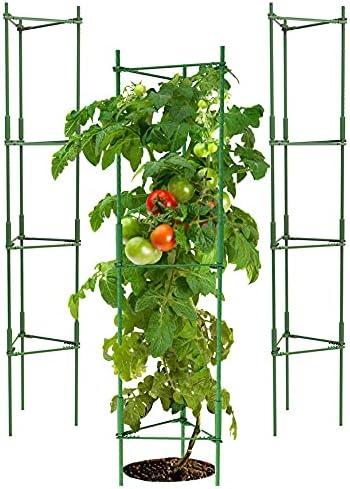
    K-Brands Tomato Cage – Plant Stakes and Support with Clips

    51DpPZ+iP2S. AC

    Next, support your plants with stakes, and don’t wait until your plants are fully grown before supporting them. This is because staking plants when they are grown can disrupt or injure the root system as you drive the stake into the soil near them.

    You should plant your tomatoes deeper as they require deeper planting holes. The transplanted plants should be 1/3 or half deep into the ground. This way, the plants can grow root balls from the root and from some part of the stem buried.

    While you have created a deep planting hole, you should go ahead and fill them with compost and garden soil. You can add some extra organic ingredients. Also, add a few eggshell and worm casting.

    Then finally, deep mulch your soil mixture. Mulching will not only keep weeds at bay, it will also ensure the plant root zone maintains some warmth. Therefore, during both cold evenings and hot days, the moisture levels and temperature is always regulated.

    Planting Peppers

    To begin the planting process for pepper, choose a planting site and ensure it’s a sunny and well-draining spot. Then grow your seeds indoors and harden them off then plant in a warm soil of at least 60 degrees. Support your plant with a stake and don’t wait till they grow big before staking.

    Water and mulch the soil appropriately. Water the plant more during very hot seasons to help retain moisture and soil temperature.

    Planting Peppers

    Pinch off the first flower to encourage larger fruit production. Pinching the first fruit won’t harm the plant but rather direct the energy to grow bigger.

    Then harvest your pepper fruits appropriately. You can harvest the immature green pepper, yellow, orange or simply wait till they are red ripe to harvest.

    FAQ’s

    Should tomatoes and peppers be planted together?

    Yes, you can plant tomatoes and peppers in the same bed. If you do this, you will want to make sure you have enough space between the plants. If you don’t, the plants will shade out one another and you will end up with two smaller plants.If you have the space, try to move the pepper bed to the edge of the garden so that it doesn’t interfere with the tomatoes.

    What should I plant next to tomatoes?

    You have several options. I suggest something that will provide some shade and keep the weeds down. Tomatoes need sun, but can tolerate some shade. They also like fertile soil.
    Tomatoes are a good companion for beans, peppers, squash, cucumbers and other vegetables. They need the same amount of water, but not as much nitrogen as peas or lettuce. They also like plenty of sunshine, so make sure they get some direct sunlight during the summer months. If you want to grow your own tomato plants, use a potting mix with added compost.

    What can you plant with peppers?

    Peppers are a versatile crop that can be used for many different purposes. They grow in both warm and cold climates, and can be grown in soil or containers. They are easy to grow from seed and easy to grow from seedlings. They don’t need much fertilizer or water. They do well in almost any soil condition. They like full sun and like some shade.
    You can plant peppers in the spring, and harvest them in the summer.

    You can grow spinach, lettuce, cucumbers. carrots and radishes among others.

    What month should you plant tomatoes?

    Tomatoes are a very temperamental crop. The best time to plant tomatoes is in March, May, or June.

    They require a lot of attention and care to get them to produce well. If you grow them in the wrong time of year, they will not be able to produce fruit. To grow high-quality tomatoes, you need to know when to plant them. The first step to growing tomatoes is to choose the right variety. Tomatoes are available in many different shapes and sizes.

    How do I get my tomato plants to produce more fruit?

    Tomatoes are the most popular vegetable in the world. They’re easy to grow, inexpensive, and delicious. But if you’ve been gardening for a while, you probably know that tomatoes aren’t known for their prolific fruiting. The average home gardener will see only one or two fruit-bearing tomatoes from a single plant. But not all tomatoes are created equal.
    There are a few tricks that can increase the number of fruits on your plants.
    1. Keep it Clean Tomatoes are very sensitive to disease and pests. You need to make sure that you clean your plants regularly. You’ll want to remove any dead leaves, as well as diseased or damaged leaves. A healthy plant will have a nice green color.
    2. Water Well A lot of people water their tomatoes too much. The problem is that this can cause the roots to rot. The best way to water your plants is to use a soaker hose. When you water with a soaker hose, you place it directly on the soil and then let it soak up the moisture. This way, the water goes directly into the soil, not into the roots. You should water your plants once per week in the morning.
    3. Provide Good Air Tomatoes love air. They like lots of oxygen. To ensure that your plants have plenty of air, you need to make sure they have enough space. You also need to make sure that they’re not too crowded. This will make it hard for them to receive the air they need. If you don’t provide good air, the plants will wilt and the fruits won’t ripen.
    4. Support Your Plants Properly If you don’t support your plants properly, they can suffer from stress. That’s why you need to find a way to support your plants. You can either put them on a trellis or a tomato cage. There are many options available for you to choose from. Some people prefer a tomato cage while others like to use a trellis.

    Conclusion On Can I Plant Tomatoes And Peppers Together

    We have concluded that it’s possible you plant tomatoes and peppers together. However, you must follow some garden tips or practice for that successful plant growth.

    You also need to reduce any chance of disease spreading between these plants because they are closely related thus; they are more susceptible to diseases. This is why the optimal spacing is necessary between pepper and tomato plants. Also, follow more of our other tips to achieve that successful tomato and pepper cultivation.

  • How To Roast Green Chiles On The Stove

    How To Roast Green Chiles On The Stove

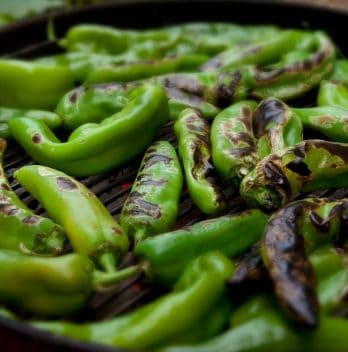
    The green chili pepper is a variety of chilies that are harvested while the fruits are still young, tender, and green-colored. Roasting these green chilies is one of the most perfect ways of enjoying them in your meal. So, let’s learn how to roast green chiles on the stove.

    Generally, chili peppers are used as an added spice in various cuisines and it gives that sharp heat to dishes.  Regardless of your kitchen setup, learning how to roast this pepper won’t be a bad idea.

    We have put together a list of various ways on how to roast green chiles on the stove for you to enjoy their great flavor. So read on to learn more on this.

    What Are Green Chiles?

    Green chiles are any varieties of pepper harvested when they are still young and green colored. Usually, their color will change from green to red or brownish-red as they ripen and mature. So will the intensity of their flavor matures and become spicier.

    Normally, when the chile peppers are still small, their flavor will be hotter. Also, when the chile peppers remain young and green, their flavor will be milder.

    What Are Green Chiles

    These green chilies can be gotten fresh, canned, or pickled. The canned chiles can be processed into a sliced, whole, and diced. The common types of chilies are packed as green chilies are Poblano, Anaheim (New Mexico chile), or Pasilla and these are the milder types of chilies. They are great additions to different recipes such as soups, sauces, appetizers, stews, snacks, main dishes, and egg dishes.

    Roasting Green Chiles: Why Roast Them?

    Green chiles are so much better to roast because of the flavor derived from roasting them is so amazing. Roasting them is even better than eating them raw.

    When you roast your chiles, it allows you easily take away the outer skin of the pepper. Doing this alters the flavor of the pepper. And these roasted chiles are soft and tasty and they will make an ideal stuffed pepper recipe.

    How To Roast Green Chiles On The Stove & Others

    Chili peppers can be roasted in various ways. You can roast chiles on the gas stove, on a griddle, in the oven, and so on. So let’s take a look at various ways on how to roast chiles.

    1.    Roasting On The Gas Stove

    Here is how to go about fire-roasted green chilies. Roasting chiles directly on the stove flame will require a gas stove with a burner. Switch on your burner and turn it to medium heat. Then the peppers should be arranged directly on the flames using tongs.

    Let the skin of the pepper blacken and bubble up. You will notice this in about 2 to 3 minutes. Grill for about 5 minutes and when the skin starts to blisters, turn the chili pepper using your tongs. Do this until the pepper is evenly roasted on all sides and don’t allow the pepper to catch fire.

    Go ahead and put the chili inside a plastic baggie and seal it. After about 6 minutes, the stem in the baggie will loosen the skin. You can now remove the chili from the baggie and peel off the skin with a fork or towel. Then throw away the skin. Your chili pepper is ready to be used as you wish.

    2.    Roasting Using Griddle Or Comal

    Another way to roast your chili is with a griddle. A griddle is also known as comal and it’s a non-stick flat metal pan often made of cast iron. It is mostly used to warm tortillas, toast spices, as well as roast peppers.

    Put the griddle on the stove and turn the heat to medium and allow the griddle pan to be hot. Then place your chiles on the griddle pan.

    Allow the pepper roast on the pan. With the help of tongs, turn the pepper from time to time as the skin blisters. Make sure both sides are entirely charred. If the pepper doesn’t flat on the griddle, you can always press them down with the help of a fork. This will help the pepper roast all around and you can get an even roast.

    Victoria Cast Iron Round Pan Comal Griddle Seasoned with 100% Kosher Certified Non-GMO Flaxseed Oil

    91 oRYl9ifL. AC SL1500

    When they have become soft and entirely charred, you can take them from the heat and put them in a plastic bag. Seal the plastic bag so the heat in the pepper will allow it to sweat. This way, the skin can come off easily when peeling. So the roasted pepper is ready to be used in any recipe of your choice.

    Read more about Growing Spinach Indoors Hydroponics

    3.    Oven Roasting

    To roast in an oven, set it to 400 degrees Fahrenheit and oil the baking sheet in the middle of the oven. Put your chili peppers and bake for 20 to 30 minutes until the skin are charred. Remember to always flip periodically in the process of roasting to get an evenly charred chile.

    Once again, put your charred chili inside a plastic sealed bag. Then let the steam loosen the skin and peel off the skin with the help of a fork or towel. Then discard the skin. The roasted pepper is ready to be used in any recipe of your choice.

    Safety Tips When Handling Roasted Green Chile

    Follow these safety tips when roasting your chiles:

    • Protect Your Hands and Eyes: The capsaicin produce by the chiles can burn your skin or hands. Work with gloves if possible or simply rub some olive oil on your hands before handling these peppers. Also, your eyes should be protected when handling these peppers. So, refrain from touching your eyes or any other sensitive part of your body.
    Safety Tips When Handling Roasted Green Chile
    • Ventilation: Fumes are usually emitted when roasting chiles and this can irritate your lungs. Therefore, ensure the area you will be roasting this pepper is well ventilated. The ventilation can come from either the stove hood fan or an open window.

    FAQ’s

    Can I roast chiles on the stove?

    Yes, you can do that. You need to put them on a baking sheet or on a piece of foil, though.
    Roasting is always better than cooking. Roasting will give you a more even heat distribution and the skin will be easier to remove.
    It’s also great for making chili, where roasting the peppers gives them a smoky flavor that helps them stand up to the heat of the chili powder.

    How do you roast a chile?

    It’s simple, if you know how to do it. First, start with a fresh, dry chile (or two, or three, or even four). Next, put the chiles in a heavy-bottomed pan or cast-iron skillet. If you’re roasting one or two chiles, put them in a single layer. If you’re roasting a lot of chiles, put them in a single layer.
    And then, turn the heat up to medium high and let the chiles cook for a while. But don’t expect to just turn the heat up to medium high and get instant gratification. It takes some time to roast a chile. The longer you let them roast, the better the flavor will be. That said, you can always remove the chiles from the oven when they start to smell nice and the skin is getting brown. You can also stop roasting when the chiles have darkened a bit on the outside, but still have a nice, bright red color inside.

    How do you peel roasted Hatch green chiles?

    You can peel them by hand or in a food processor. I usually just put the peeled and cut chiles into a large bowl, add about a half cup of water and mix with your hands. The water helps to loosen the skins.

    To remove the stem and seeds, cut each chile in half lengthwise. Then, cut each half crosswise into three or four pieces. Remove the stem and seeds from each piece with a paring knife, then crush the pieces with a potato masher. Hatch green chiles are milder than Jalapeños, so they’re usually eaten raw (in salsas, salsa verde, etc.), but we also like them roasted with cheese, in enchiladas, etc. I would peel them before roasting them, just to make sure they don’t have any skins that will burn off. If you want a smoother surface on the chiles, I’d suggest trying a food mill or food processor instead of a potato masher. You can even do this in two batches if you’d prefer.

    What’s the difference between jalapenos and green chile peppers?

    Jalapenos are milder. They also have a thicker skin. The capsaicin is contained mostly in the membrane around the seeds and inner flesh. Green chiles have thinner skin, and the capsaicin is contained mostly in the flesh. They have a milder flavor than jalapeno peppers. It’s not quite as hot, but they still pack a punch.

    Final Say How To Roast Green Chiles On The Stove

    It is pretty easy to roast your chiles at home and incorporate them into your various recipes. So, you can always toss them in different foods and enjoy that delicious taste of a special meal.

    So we hope you have been enlightened on simple ways on how to roast green chiles on the stove and other ways.

  • Can You Plant Zucchini In A Pot?

    Can You Plant Zucchini In A Pot?

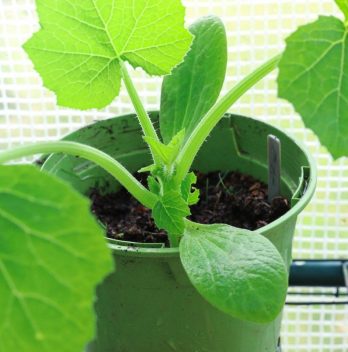
    Ideally, the zucchini plant will grow huge and spread wide. Therefore, a substantial amount of garden space is needed for this plant. But the question is can you plant zucchini in a confined space such as a pot or container?

    Zucchini, also called summer squash is used or paired with so many dishes such as summer salads, zucchini pasta, stuffed zucchini, etc. They are loaded with many nutrient benefits such as various vitamins, minerals, and antioxidants. So, growing this lovely plant will be a great addition to your garden.

    We’ve got here all you need to know about the growing zucchini plants the right way. We will also let you know if you can plant zucchini in a pot or container. So, continue reading for some insight into this.

    What Are Zucchini?

    The zucchini plant is known as a summer squash vining herbaceous plant. The fruits this plant produce are usually picked when their immature seeds and epicarp are still tender or soft and also edible.

    Zucchini is packed with high nutrient content and is low in calories. They also contain other important minerals including iron, potassium, calcium, magnesium, and phosphorous.

    What Are Zucchini

    Know If You Can Plant Zucchini In A Pot

    Certainly, you can plant zucchini in a pot or container. Therefore, if you’re probably short of gardening space, you can opt for growing zucchini in a pot. So let’s find out how you can successfully grow zucchini in containers.

    Growing Zucchini In Pots

    You can grow zucchini plants in containers or pots and enjoy the same benefits as you would if you grow them in your garden. To grow this plant in containers, you will need to select the appropriate variety specially meant for containers.

    Zucchini plant comes in two varieties namely bush and vining.

    • Vine: the vining variety grows big and in a sprawling manner. They will grow in a long, snaking stalk and the fruits produced can grow anywhere along the vine. The vine variety grows very long and will require a lot of space. Basically, they are grown on mounds and they have their vines growing downwards. However, you can train them to grow upwards using a trellis. You can as well grow them in a tomato cage to reduce the area they occupy.
    • Bush Varieties: the bush varieties on the other hand grow from a central point. They are usually more compact and their fruits will grow from the bottom of the plant. Their fruits and leaves grow from a central point. Thus, they don’t require too much space and it will be quite easier to harvest them.

    Therefore, we can see that the bush variety will be ideal for growing in containers. Now let’s take you through how to grow this plant in a container.

    However, Viney variety can as well be grown in a container if you have a very large pot or container. You will also need to dedicate time to training the vines to grow upright.

    How To Grow Zucchini In A Pot

    Follow these tips to help you with growing zucchini in containers or pots:

    1.    Select The Right Container Or Pot

    We recommend you choose a big pot or container regardless of the variety you will be growing. Your containers or pots can choose plastics, terracotta, ceramics, and so on.

    Ideally, your container should be around 14 to 18 inches deep and 16 to 18 inches across. You can use a large plastic storage bins. You can also go for something a bit smaller such as a 5-gallon bucket or container. Ensure your containers or pots have drainage holes.

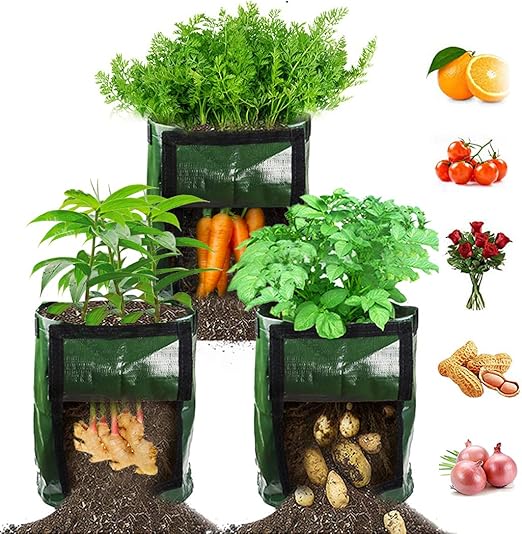
    3 Pack – Growing Bags Planting Pots Container Garden Vegetable Planter

    71P38n FybL. AC SX522

    2.    Potting Soil Mix And pH

    After choosing the appropriate container that has drainage holes, go ahead and fill the container with the appropriate potting soil mix.

    The Zucchini plant will flourish in a well-draining organic potting mix. So, ensure you use a good and quality commercial potting mix that comprises ingredients such as peat moss, soil, perlite, and compost. The soil mix should also be aerated and be able to retain moisture.

    Just like all squash plants, the ideal pH for the zucchini plant ranges from 6 to 7.5 which is slightly acidic.

    3.    Planting Site

    The Zucchini plant loves the sun. Therefore, place your zucchini in a sunny site. Supply them with about 6 to 8 hours of daily sun exposure.

    4.    Temperatures

    For optimal growth, the ideal temperature for daytime should be around 70 degrees Fahrenheit. The nighttime temperature should be around 40 degrees Fahrenheit.

    The appropriate soil temperature for starting zucchini plant seeds should be around 60 degrees Fahrenheit.

    Temperatures for Zucchini

    5.    Seed Sowing

    Because this plant is a warm loving plant, seed sowing should be done after the last frost in spring. Put about 5 to 6 seeds in the middle of the container and about an inch and half below the soil.

    Once the seedlings begin to germinate to a few inches, you should thin the seedlings back. The smaller seedlings should be cut off while leaving the two largest seedlings. Again, when the seedlings attain 8 to 10 inches, you should cut off the weakest ones and leave the healthiest ones intact.

    Avoid pulling the seedlings when thinning them to prevent damaging their fragile roots. Instead, make use of scissors.

    Another option you can go for instead of seed sowing is to simply plant the small zucchini plants. They are known as starter plants and you can purchase them at your local garden center. Pay attention to the plant variety you purchase and ensure they are suitable for your garden.

    6.    Watering

    Water your soil after sowing seeds. Afterward, water your soil and refrain from overwatering. During summer, water your plant three times a week and reduce watering times during rainy days.

    Monitor the soil moisture and water more often during the hottest days. Make sure the soil is never totally dry.

    7.    Harvesting

    Harvesting is done when your fruits attain around half of their matured size. Your zucchini fruits are ready to be picked when they are about 6 inches long. Depending on the cultivar, you can begin harvesting from 45 to 60 days after seeds begin to germinate.

    Harvesting Zucchini

    FAQ’s

    How big of a pot do you need for zucchini?

    If you are growing them for the first time, it’s a good idea to start small. If you’re not sure about what kind of space you have, then get a couple seeds and see how they do. The more you grow, the bigger the plants will get, but if you only have a small space, you can still grow a lot of zucchini.

    You will have to figure out the spacing between the plants. If you want 2 inches between plants, then you will need 10 rows of 5 inch plants in a 3 foot by 4 foot bed. You could also grow 8 rows of 6 inch plants if you wanted. You can always transplant the plants later on if you decide you don’t want them in your beds. The size of your pots will depend on how big your plants grow. If they grow large and tall, you may want to consider buying bigger pots than what you currently have.

    How do you grow zucchini in a pot?

    If you are asking about growing zucchini in pots, then yes, that is possible. However, you will need to keep the soil moist.
    The first step in growing zucchini in a pot is to prepare the container. You can buy a plastic container at any garden center or home improvement store for around $20. Make sure that the container has a drainage hole and a place for your plants to sit. You will also need to add some fertilizer to your container. I would suggest using the kind of fertilizer that is labeled as plant food and contains a slow release formula. You will need to put a good amount of fertilizer into the container. You will need to water the container until the water comes out of the drainage hole. You can also water with a spray bottle.

    Can you grow zucchini indoors?

    If you have a sunny, south-facing spot in your garden or even in a small patio, you can grow zucchini. It’s one of the easiest vegetables to grow and it will reward you with abundant, sweet, zucchini that is ready for harvest in just 45 days. You can grow zucchini indoors in pots or even in large containers.
    Zucchini is easy to grow, as long as you start them off in a warm, sunny spot. In the summer months, plant them about 12 inches apart. During the winter months, you can plant them at the same time as tomatoes or peppers. They should be planted in the same kind of soil that you would use for tomatoes. You can choose to grow plants from seed or buy plants from a nursery. If you want to grow your own, you’ll need to give your plants plenty of room to grow. Don’t let them get too crowded. If they get too crowded, they will not grow well. It’s important to keep the plants watered and fertilized.

    Conclusion On Can You Plant Zucchini In A Pot

    We can see that it’s quite possible for you to plant zucchini in a pot. Just choose the right variety and the cultivar that suits your garden. Then follow our tips on how to plant your zucchini.

  • How Far Apart To Plant Green Peppers

    How Far Apart To Plant Green Peppers

    Peppers can serve as a great addition to your garden. Be it green, red, yellow, etc, pepper are all awesome source of vitamin C, vitamin A, and other minerals. But do you know how far apart to plant your green peppers?

    It is crucial you get the spacing for your peppers right as this is one determining factor to their final yield. Optimal air circulation is required by peppers for their fruit development hence, the need for proper spacing. Any space limitation could negatively affect the growth of your pepper because this can cause oxygen competition.

    Therefore, let’s look into how far apart to plant green peppers for maximum yield.

    Pepper Plant

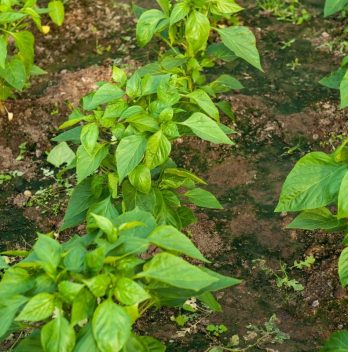
    Pepper is a warm-season crop that comes in various colors, shapes, and flavors. The pepper plants have so much versatility that you can simply select which variety to grow such as small bell pepper, hot peppers, bell peppers, etc.

    Even with the versatility of the plant peppers, there is not really much difference in their seedling and planting requirements. The growing requirements for all pepper varieties are pretty similar and this makes them an easy plant to grow.

    Pepper Plant

    Growing Peppers

    The growing requirements for green pepper are not so complicated, the most important thing is to get their plant spacing correctly. Therefore, all pepper growers should always know how far apart to plant any pepper, be it green, red, and yellow peppers.

    Pepper loves warm weather which is why they are growing beautifully in most Texas areas. However, peppers can be grown in both indoor hydroponics and outdoor traditional garden successfully.

    Guidelines On How Far Apart To Plant Green Peppers

    How far apart to plant your green peppers will solely depend on these factors: distance between rows, the distance between plants, and distance from other peppers variety.

    1.    Distance Between Rows

    First, you should know that planting peppers in rows are not compulsory. You can decide to plant your peppers in other manners. In fact, some gardeners may prefer planting peppers in grid patterns, checkerboards, square feet, and so on. What matters is the result.

    Row planting just enables you to move around your plants easily. Thus, you can conveniently move around to check your crops, and weeding and harvesting will be made easy.

    But if you decide to plant your peppers in rows, the row spacing should be around 24 to 36 inches. This distance will conveniently allow your pepper to germinate to its full potential and grow maximum branches and fruits.

    In a square foot garden, each pepper is planted 12 inches apart. The distance apart does not affect their pollinating process because pepper plants are self-pollinating.  Therefore, they don’t require close spacing for pollination to occur.

    2.    Distance Between Plants

    The distance between pepper plants in the same rows should be about 18 to 24 inches. This plant spacing will allow maximum air circulation as well as reduce nutrient competition between plants.

    3.    Spacing Between Other Pepper Varieties

    If you will be planting different types of pepper varieties, you should consider the distance between one type of pepper to another type. This way, you can avoid hybrid creation due to cross-pollination.

    Bees or any insects can convey pollen grains from one pepper species to another thereby resulting in hybrid pepper. This can affect and alter the resulting fruits of the plant pepper and their offspring.

    For instance, planting bell pepper close to hot pepper may result in the hybrid of both peppers. Therefore, you may end up having a hot-tasting bell pepper.

    So, to avoid this, it’s advisable not to plant different pepper species in the same garden. Plant your various peppers species in different raised beds. Another way to grow your various peppers species is to plant separate vegetables between them.

    Heirloom Pepper Seed Variety Pack | 8 Hot & Sweet Peppers For Planting

    71Z7hXpYH3S. AC SX522

    How To Grow Peppers

    Follow these guidelines to learn how to grow your green pepper the right way:

    1.    Seed Planting

    The first thing you should know when it comes to planting peppers is that they love warm surroundings. Therefore, you should allow the soil to warm up to at least 65 degrees Fahrenheit before planting. Grow your plant where they can receive full sun.

    You can start your seed germination indoors or simply sow seeds directly into the soil. Seedlings should be planted about 3 weeks after the last frost has elapsed.

    2.    Stake Your Pepper

    Peppers will grow very huge so they will benefit from stake or cage for support. Therefore, we recommend you tie your growing plant to stakes so they can remain upright. Don’t wait until your plants are big before staking them or they might end up damaged. Stake each plant while they are still young.

    3.    Fertilizer Application

    Your green pepper will need fertilization. If you’re making use of manure, we recommend using chicken manure. Once your pepper begins to flower, supply them with a balanced organic fertilizer in ratio 3:1:5 every 4 weeks. Pepper doesn’t require too much nitrogen because excess nitrogen will promote leaf growth rather than fruiting.

    fertilizing Pepper Plant

    4.    Watering

    Too much watering is not required in pepper plants because overwatering can cause root rot. Avoid watering the pepper plant but water their roots.

    5.    Weeding And Pest Control

    Always weed your pepper garden regularly. Also, the pest can be controlled with organic solutions or chemicals.

    Green peppers are fairly pest-free. However, you may have issues with fruit flies. You can use water mixed with soap and spray any aphids you see on your green pepper plants.

    6.    Fruit Production

    You should begin to see fruit production after 11 weeks of transplanting. You will enjoy fruits production for many months up until winter begins. Make sure you don’t leave your pepper fruits on the plant for too long as this can slow down flower production.

    How Far Apart To Plant Green Peppers

    FAQ’s

    How close together can you plant peppers?

    Peppers are one of the most important crops grown in the United States, and they’re also one of the most variable. Some grow fast and big, but others grow slowly and small. The peppers we eat come from a wide variety of different types that have been bred for specific characteristics, but we don’t know exactly how much genetic variation exists among all these varieties.

    There’s no hard and fast rule. If you’re planning on growing them for fruit, the distance between rows should be about 3 times the width of a pepper seedling. That means in your case you want to plant at least 30 cm between each row.

    Can I plant bell peppers next to tomatoes?

    Yes. Bell peppers are a cool-weather crop and like other warm-season vegetables such as beans, lettuce and onions, they will do better if planted close to tomatoes. The two plants should be no more than 6 inches apart, but you can plant them closer if you like. Bell peppers can also be grown in containers or on a trellis, where they will be a little more forgiving of poor soil conditions.

    Can I plant peppers in the same spot every year?

    You could plant two varieties of pepper at a time. When you have one that is done flowering, pull it out and plant another. There’s nothing wrong with planting peppers in the same spot every year. It’s just that they are not going to be as big or as productive as if you planted them in different locations.

    Can peppers and cucumbers be planted together?

    Peppers and cucumbers are not compatible plants, but if you really want to plant them together you can do so. If you have a large garden, you can have both growing at the same time in different areas of the garden. Both plants can grow up to 10 feet tall, so you need to be sure that they do not come into contact with each other. You can also try planting them in a greenhouse.

    Do peppers need a trellis?

    Peppers (Capsicum annuum) are very happy growing on the ground, as long as you give them some room to spread out. They will need a trellis for support, if they’re growing too close together, or if they’re growing too tall. If your plants are not too far apart, they might be fine on the ground. You might be able to let them grow as is, or you could use a trellis to keep them upright, and still let them grow where they like.

    How tall do pepper plants get?

    Peppers are pretty easy to grow, and will grow up to 5 feet if you keep them fed and watered. The key is that they need good soil and plenty of light.

    You can easily grow your own peppers on a sunny patio or balcony. They’re one of the easiest vegetables to grow from seed. You can grow peppers in a pot or in the ground. You’ll want a warm, sunny spot for peppers, and you’ll need to water them regularly. If you choose to plant them in the ground, you’ll want to plant them in a protected area away from frost.

    Conclusion On How Far Apart To Plant Green Peppers

    Pepper needs to be spaced appropriately so they can receive adequate air circulation. Appropriate spacing will also reduce nutrient competition among plants.

    Generally, how far apart to plant green peppers will depend on the distance between the plant rows and the distance between each plant. Follow our guidelines on how to space your pepper plant the right way for maximum yield.

  • Italian Long Hot Pepper Plants

    Italian Long Hot Pepper Plants

    One popular pepper that is fried and eaten in Italian cuisine is the Italian long hot pepper plants. These peppers have now become so popular in the United States dishes because of their versatility. They are also common used as essential staples in most cooking even all around the world.

    These Italian long hot peppers are loved by many because of their added spicy flavor and the rich and complex look it gives any dish.

    If you’re looking to grow hot peppers, then the Italian long pepper plant will be an amazing addition to your pepper and vegetable garden.

    What Are Italian Long Hot Pepper Plants?

    Italian long hot pepper (Capsicum annuum) is also known as Italian long hot chili peppers, Italian frying peppers, cubanelle peppers, Italian roster peppers, and long hot peppers.

    Italian long hot pepper plants have their fruit as elongated, curved, slender, and straight pods. They will grow typically around 6 to 8 inches long and are slightly wrinkled and mostly curvy. The shape of this Italian pepper fruit may look awkward but hey, that’s what makes them so special.

    What Are Italian Roaster Pepper Used For?

    Even though they are known as hot long peppers, their spice is mild. They have that distinctive flavor that will leave your dish tasting great. Now when you roast them, they will give you that smoky sweetness that you will never forget.

    They will ripe from green to red and green is their young phase, while bright red is their matured phase. They can be used either as green or red for cooking. These Italian peppers are ideal for stuffed long hot peppers, sandwiches, grilling, hoagies, pizza, and so on. So they are perfect for both frying and slicing.

    The Italian roaster peppers can as well be added to pasta, sauces, marinades, and salsa in chopped and puree forms.

    If you’re adding them to meals when cooking, they will be entirely incorporated including their skin and seeds. Because of their mild spicy and sweet tasting flavor, they can be used in large amounts for salads and appetizers.

    However, because of their slender body and inner walls, they don’t have adequate space or capacity to withstand fillings.

    Tips On How To Grow Italian Long Hot Pepper Seeds

    Seed Sowing

    Plant when the soil and weather is warm. About 3 seeds of the Italian long hot pepper should be sown a quarter-inch deep into the soil. Ensure you use a well-draining soil mix. You can use a soil mix of equal part of sphagnum peat moss, perlite, and compost. Then work the soil properly.

    If you wish, you can divide your garden in rows of shallow planting furrows with a garden hoe. Space your plant about 24 inches between plant rows. The furrow dept should be around 4 inches into the soil. Each plant’s distance should be about 18 inches.

    Tips On How To Grow Italian Long Hot Pepper Seeds - Seed Sowing

    The seeds can be germinated indoors and transplanted outdoors. If you’re sowing seeds outdoors, the seeds should be spaced evenly and appropriately to allow air circulation.

    Watering

    As your plant grows, water the plant root directly. You need to retain an evenly moist soil. more watering is required during hot seasons, and less watering around spring months or raining periods. However, avoid overwatering to prevent root rot.

    Supply With Full Sun

    You should plant in an area where there is the full sun because this pepper loves warm conditions. Supply your long pepper with at least 6 hours of direct sunlight. The ideal temperatures should be around 70 to 75 degrees Fahrenheit. The best germinating temperatures for peppers are around 80 to 85 degrees Fahrenheit. But this may be hard to achieve except you’re growing with a germinating heating pad.

    Once the seeds have sprouted, move and transplant them outdoors. Do this when the average temperature around the night period is around 55 degrees warm. Also, ensure your planting site receives with full sun.

    Soil Mulching

    Mulch your soil to prevent weeds and maintain moisture. You should apply about 2 to 4-inch layer of mulch around your plant soil. if you notice any weed, ensure you take them out.

    MOTHER EARTH Coco Plus Perlite Mix – Provides Strong Aeration & Drainage

    81lHl YK lL. AC SY741

    Support

    Your pepper will require supports as they grow. So drive a stake into the ground a couple of inches from your plant stem. Begin staking when your pepper has grown a bit and reached its young stage.

    Fertilization

    Once they begin to flower, they will need fertilization to produce optimally. Use a complete fertilizer containing NPK (nitrogen, phosphorous, and potassium) of ratio 5:10:10. The nitrogen value should be low because too much nitrogen can cause excess leaf growth rather than flowering or fruiting.

    Growth And Harvesting

    The long hot pepper seeds will yield pepper fruits of 6 to 8 inches long. At this stage, they are already ripe.

    The Italian long hot pepper plants will take about 60 to 70 days to attain maturity. The plant will begin producing its hot pepper fruits by first turning yellow-green then orange, and finally, bright red when it’s fully ripe. You can either harvest them they are plump green or matured bright red. When harvesting, cut the stem and don’t pull the plant to prevent injuring the plant.

    Growth And Harvesting Italian Long Hot Pepper

    We also recommend you wear a pair of gloves to protect your hands from this hot pepper. You can as well put on some goggles to protect your eyes if need be. Wash your hands appropriately after picking your peppers.

    Harvesting should be done every 2 to 3 days to promote continuous or more flower and pepper production.

    FAQ’s

    Is it worthwhile growing Italian Long Hot Peppers?

    Growing the Italian long hot peppers is a great way to get your hands dirty and learn a lot of things. They are easy to grow in your home garden and they will provide you with some delicious food and wonderful aromas.

    The first thing you need to know when you start growing these plants is that there are different types of peppers, and they are classified according to their size, shape and color. Some are grown for their fruit, while others have a more ornamental value.

    How do you grow Italian long hot peppers?

    If you want to grow hot peppers, then you should keep in mind that they need a certain amount of light and heat, as well as water. Soil The first thing you should think about when it comes to growing your own hot peppers is the type of soil that you will use. Hot peppers like the soil to be rich in minerals and nutrients. It is important to use good quality soil because some soils can cause the roots of the plants to rot. You should also try to avoid using heavy, clay soils, as they can cause the peppers to not grow properly. Water Hot peppers need a lot of water to grow, and they do not like to dry out. It is important that you water the plants regularly. They usually need around four inches of water per week. If the soil is not moist enough, then you can also add a little bit of fertilizer to the soil. Light Most hot peppers like a light source that has high temperatures and low humidity. The plants will produce better fruit when the temperature stays around 80 degrees Fahrenheit and the humidity level is around 50%. You should also make sure that the area where the pepper plants are growing does not get too much direct sunlight.

    What should I do if I don’t have experience growing peppers?

    When growing your own peppers, you may want to start with a pepper that is easy to grow, such as the sweet peppers, which have a long shelf life and do not need any special care. However, you may want to try some of the hotter peppers if you like spicy foods. A good way to start your garden is to plant seeds. Plant them in a pot and keep them in a warm, sunny location. This will help the seeds germinate faster. You can also buy a few plants at a nursery. These plants are already started and will not need to be planted in a pot. When you are ready to plant, make sure you select a place that has good drainage. If you live in an area where there is a lot of water, then you will have to make sure that the soil drains well.

    Conclusion On Italian Long Hot Pepper Plants

    The Italian long hot pepper plants will produce thin hot pepper for your culinary needs. They are so easy to grow indoors hydroponically or in your traditional outdoor garden and they won’t give you much stress. All you need do is to supply them with good sunlight.