Author: Eunice

  • How To Cross Breed Pepper Plants: Helpful Guidelines

    How To Cross Breed Pepper Plants: Helpful Guidelines

    Many known pepper varieties are grown worldwide by farmers. Crossbreeding pepper plants of different varieties is a fairly easy task. If you wish to know more about this, then read on to find out how to crossbreed pepper plants.

    With the appropriate knowledge, you can cross-breed two pepper varieties and generate a brand new desirable pepper offspring. Basically, people cross breed plants like pepper to generate a tasty, hot, or more aesthetically pleasing pepper hybrid.

    In this post, we will be sharing amazing details on how to successfully cross-breed pepper plants to yield a more desirable pepper plant. So, let’s begin.

    Cross Breeding Peppers

    It is the desire of every gardener to have a bountiful and worthy harvest at the end of the growing season. One way to achieve this is by selecting some of the best parent plants and cross-breeding them to achieve more desirable offspring.

    Crossbreeding pepper can become an easy and straightforward thing for you if you get the right knowledge. But also have in mind that crossbreeding takes time, dedication, and patience to get successful results.

    Cross Breeding Peppers

    When it comes to crossbreeding, the plants that are used in crossbreeding are referred to as the parent plants. Then the resulting pepper plant is regarded as the hybrid. Crossbreeding pepper plants implies that we interceding with the natural reproductive process of pepper plants.

    Pepper plants are cross-bred thanks to the anatomy of their flowers. The flowers are responsible for the production of seed-bearing fruits. On a single pepper plant, you will find both male and female reproductive parts. Hence, this allows for self-pollination.

    Important Note On How To Cross Breed Peppers

    Firstly, you need to understand that peppers are capable of self-pollination. Under normal conditions, pepper plants will self-pollinate once the flower has been fertilized by compactable pollen. A bee buzzing around plants, a rush of wind, or even an ant can initiate the process of self-pollination.

    It is important to prevent self-pollination from peppers since our goal is to crossbreed our desired traits. Therefore, we need to manipulate the pepper plant.

    • This brings us to the process of emasculation. Since we don’t want the parent plants to self-pollinate, we need to carefully remove some reproductive parts. The male reproductive part is removed from the maternal (mother) pepper flower plant. The maternal parts are left alone because they are chosen to bear fruit.
    Important Note On How To Cross Breed Peppers

    So, let’s further look into guidelines on how to crossbreed pepper plants.

    Guidelines On How To Cross Breed Pepper Plants

    Here are the guidelines on how to breed peppers the right way:

    1.    Grow The Parent’s Plants

    The main purpose of cross-breeding pepper is to combine two pepper varieties to produce the desired offspring. Therefore, obtain the seeds of the parent variety you wish to combine and grow them. Make sure the seeds are quality seeds to boost your chance of getting great results.

    2.    Locate The Flowers Before They Bloom To Emasculate Them

    As we’ve mentioned, this process is very important. So, finding the parent flowers before they bloom and when they’re about to bloom means they are mature enough. They can be identified easily by their green outer petals or unfurled sepals.

    3.    Cut Or Remove All Bloomed Flowers

    Cut down the bloom flowers to at least a quarter-inch down the stem and leave the unbloomed flowers. Ensure you use sharp scissors or tools and rub some alcohol on them and wear some new pair of latex gloves before you begin.

    Once you’re done, clean the scissors with methylated spirit and throw away the gloves. Wear new gloves and move to the next plant and do the same.

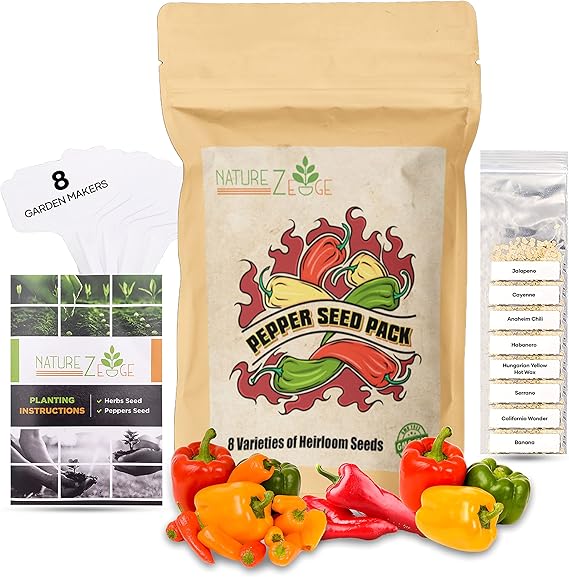
    Pepper Seeds 8 Varieties for Planting in Your Garden, Heirloom Seeds Starter Kit, Non-GMO
    816arUp7IKS. AC SX569

    4.    Reveal The Pistil Of The Unbloomed Flowers On One Of The Parent Pepper

    This is done by peeling away the unbloomed petals carefully with sterilized tweezers. Wear a pair of gloves when doing this. Once you’ve done this correctly, you will see several stamens.

    Once the stamen (male reproductive part) has been exposed, emasculate them with the help of small, sharp, and sterile scissors. The pistil (female reproductive part) is then exposed. Do not damage or touch this pistil as it will be responsible for bearing the resulting fruit.

    Discard the stamen you got from the first parent flower and tie small strings around the stem of the flower.

    5.    Second Flower Stamen Harvesting

    Move to the second pepper flower and wear a new pair of gloves. Just like you did to the first pepper plant, carefully harvest the stamen of the second flower.

    6.    Fertilize The First Pepper Plant Manually

    From the harvested stem of the second plant, cut the stamen open carefully with the help of a dissecting needle. Then with the help of the needle’s tip, go ahead and scoop out the pollen inside.

    Then apply the scooped pollen on the exposed pistil on the first pepper plant. Make sure the pollen is applied on the top part which is known as the stigma. Therefore, you have achieved manual pollination.

    7.    Observe The Manually Pollinated Flower

    Once you’ve accomplished the manual pollination, watch the plant closely. If the manual pollination was successful, in about 3 or 4 days, the ovary which is located below the pistil will start to swell. This is a good sign of successful pollination. However, if the ovary refuses to swell, it means it was unsuccessful. This is usually caused by damage of pistil during emasculation. This is why you should be extra careful when clipping the stamens.

    So, the successfully fertilized ovary will grow to become fruit. The resulting fruit and the seeds are referred to as a hybrid. So, if the fruits are exactly what you desired, their seeds can now be used to propagate your new crossbreed pepper plant species.

    How To Cross Breed Pepper Plants: Final Say

    Once you’ve successfully flowed our guiltiness on how to crossbreed pepper plants, cross-breeding your pepper variety should be easy. You can now make tastier or hotter pepper species than what is readily available in your region.

    Find more information about Jalapeno Plant Spacing

  • How To Know When A Pumpkin Is Ripe

    How To Know When A Pumpkin Is Ripe

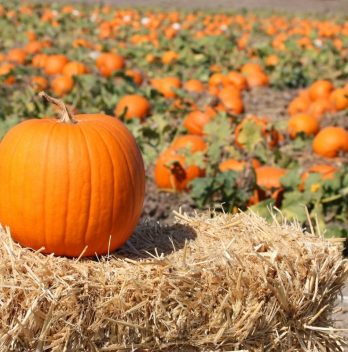
    The big question on most farmers’ minds is how to know when a pumpkin is ripe or ready for harvest. Usually, the color is a good indicator of pumpkin ripeness and the color of most ripe pumpkins is usually orange. But they can as well come in other shades such as blue, white, grey, and even stripe colors.

    Pumpkin is from the family of Cucurbitaceae and they fall under winter squash. We have over 50 varieties of pumpkin. The round orange pumpkin is one of the most common or recognizable pumpkins.

    In this article, we will be sharing great tips on how to know when a pumpkin is ripe or ready for harvest. So, let’s get right into this.

    Some Info On Pumpkin

    Pumpkin is from the gourd family. Pumpkin is a smooth, round, and partially cultivar of winter squash. It has ribbed-like skin and the most common colors tend to be deep yellow to orange.

    It is a nutritious plump nutritious vegetable and it is loaded with great nutrients. Pumpkin has a low-calorie composition. It is as well loaded with vitamins and minerals and these nutrients are included in its seeds, leaves, and juice.

    Some Info On Pumpkin

    There are many ways to use pumpkins in our dishes. Pumpkin can be integrated into soups, salads, desserts, preserves, as well as a substitute for butter.

    Pumpkins are as well used in decorations such as Halloween decorations. They can also be pureed and baked in a pie or you can slow cook them to perfection in your favorite fall soup.

    How Do You Know When A Pumpkin Is Ripe: Helpful Tips

    Pumpkin offers many signs once they are ready for harvest. As long as you know what to watch out for, it’s pretty easy to know how to tell if pumpkin is ripe.

    So here are 5 signs on how to tell when pumpkins are ripe:

    1.    Right Time Of The Year

    Generally, most squash from different varieties takes about 3 to 4 months or even 5 months to attain maturity. This also depends on your climate, the growing conditions, and the variety planted.

    Therefore, the easy way to know when a pumpkin is ripe is by simply keeping a good watch and knowing how long it has been growing. You should compare the growing period to the days to maturity that are on your seed packet.

    Right Time Of The Year

    An important thing to note is that pumpkins can only tolerate light frost and will not get ripe after you’ve harvested them after they’ve been exposed to heavy frost. Therefore, before the frost in your area gets heavy, ensure you harvest all your pumpkin on time.

    Also, they shouldn’t be exposed to temperatures below 32 degrees Fahrenheit. You can simply pick your pumpkin early and allow them to get ripe indoors if your first killing frost is approaching.

    2.    Desired Color Change

    As a general rule, a change in the desired color is a good indicator your gourd is ripe and ready for harvest. Golden-orange is a sign of the fruit attaining maturity.

    Generally, an immature gourd tends to remain green. Therefore, it’s safe to say the pumpkin isn’t matured yet when it’s still green.

    However, there are times when a squash refuses to turn orange even after the stem has died off. If this is the case, the fruit can be ripened off the vine.

    3.    Hard To Puncture Rind With Fingernails

    To know when a pumpkin is ripe, the rind of your pumpkin should be hard and difficult to puncture with your fingernail. This is one of the most popular signs of squash attaining maturity.

    When you puncture the rind of the pumpkin and your fingernails create a small dent and the skin doesn’t puncture, that’s a good indicator your pumpkin is ready for harvest.

    Professional Pumpkin Carving Kit – Heavy Duty Stainless Steel Tools and Knives with Carrying Case (8 Pieces)

    917RLVFFdiL. AC SX679

    If you’re however growing pumpkin pie, harvesting should be done when the fruit rind is firm but not hard as a rock. This is important especially if you wish to make pies within the next week or you wish to roast and puree the flesh to store in the freezer.

    4.    Stem Turns Brown

    Once you notice the stem of your gourd becomes hard to touch instead of being slightly spongy, check the color of the stem. If the stem is beginning to dry out and turn brown, then the stem is dying. This means the supply to the plant is diminishing.

    However, you can still leave the gourd and allow the entire vine to die around your squash before harvesting them. but ensure this is before the first sign of frost.

    5.    A Hollow Sound Is Generated When You Knock The Rind

    Another method on how to know when a pumpkin is ripe is to gently knock the rind. When you hear a hollow thunk sound, then that’s an indication that it’s ready for harvest.

    How To Harvest Pumpkin

    We now know when a pumpkin is ripe and ready to be picked. Let’s now briefly look into how to harvest them.

    Use a clean sharp tool or knife to harvest pumpkin. Measure the stem at least 3 to 5 inches from the top of the fruit then cut the stem away from the vine.

    The part of the stem you’ve left on your fruit will actually keep o supplying the last residue of nutrients for your fruit. This means it will last long after you must have harvested them.

    It’s important you don’t carry the fruit by the stem as this isn’t a handle. If by any chance the stem breaks off, your fruit will immediately begin to rot. So, ensure you give some support to the sides and base while you carry your squash.

    FAQ’s

    How can you tell if a pumpkin is ripe?

    When it comes to growing pumpkins, you can choose from a wide variety of varieties. However, once you have selected your pumpkin, it is time to get ready for harvest. Once you begin the process of harvesting your pumpkin, you will want to know when it is time to cut it open. There are several methods that you can use to determine if your pumpkin is ripe.

    1. Check The Flesh Color

    One of the best ways to tell if your pumpkin is ripe is by checking its flesh color. Pumpkins with darker orange flesh tend to be sweeter than those with lighter flesh. If you are unsure about the color of your pumpkin, you can take a look at our article on how to choose the perfect pumpkin.

    2. Look For A Pumpkin’s Shape

    If you are going to be eating your pumpkin straight out of the ground, you may want to look for a pumpkin that has a round shape.

    3. Listen For Pumpkin Seeds

    If you have ever picked and eaten a fresh pumpkin, then you know how loud they can be when you crack them open. Pumpkin seeds, however, are much quieter. They are usually only audible if you are right next to the pumpkin when it is being picked.

    4. Check The Pumpkins’ Stem

    It is easy to tell if a pumpkin’s stem is hard or soft. If it is soft, it means that it is still growing and will not be ready for carving until the next fall. If it is hard, it means that the pumpkin is ready to be harvested. If you plan to carve your pumpkin, you should look for pumpkins with stems that are hard and have no cracks.

    What should you consider when picking a pumpkin at the store?

    If it had been picked too early it will be small and not ready to eat. If you wait too late, the pumpkin will have started to dry out and become tough. You can’t use a pumpkin that is too ripe or soft because it will just fall apart.

    Here are some tips to help you choose the perfect pumpkin for your recipe.

    The first thing you should do is look at the size of the pumpkin.

    It is always best to buy a pumpkin that is the same size as your dish. This way you will get the most use out of your ingredients and it will cook evenly. It is also important to note that pumpkins get bigger as they mature so make sure to check the size before you buy.

    If you want to cook the pumpkin in its skin, you may want to look for a smallish pumpkin. If you remove the skin, you can use any size pumpkin. It all depends on what you are cooking. The color If you like the color of the pumpkin, then that is great. However, if you don’t like the color, it doesn’t mean you shouldn’t buy it.

    What happens if you pick a pumpkin too early?

    They quite simply won’t last very long.

    Conclusion On How To Know When A Pumpkin Is Ripe

    It’s pretty fun growing and harvesting pumpkin. How to know when a pumpkin is ripe is also not difficult to determine. Kindly look through the helpful tips we’ve outlined for you and you can easily learn when the right time is to harvest your pumpkin.

  • How To Pick A Good Artichoke

    How To Pick A Good Artichoke

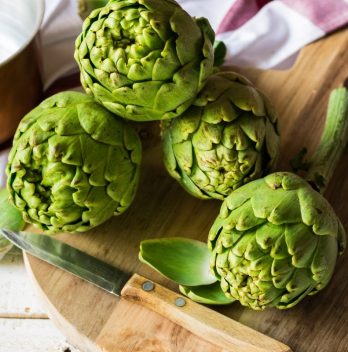
    Do you know how to pick a good artichoke? Artichokes are great-tasting vegetables but so many people have little knowledge on how to select a good artichoke. This veg may look a bit intimidating and odd, but they are actually quite easy to prepare.

    Artichoke can be pretty difficult to make. This is usually because of its poky and tightly packed leaves that may seem difficult to dive into. But once you’ve learned to properly cut or trim them and even prepare them, you get to enjoy the tender leaves and their great-tasting flavor.

    In this article, we will be looking at how to pick a good artichoke. We will also be looking at how to trim them properly and prepare them. So continue reading to gain some knowledge on how to choose artichokes and more.

    About Artichoke Plants

    Artichoke is an herbaceous perennial plant. They come from members of Asteraceae family and this family also includes thistles, sunflowers, and dandelions. Most people often think of thistles as prickly weeds, but artichoke has shown that not all weeds are insignificant.

    The majority of the commercial artichoke plant in the United States are grown in California and this is where the main artichoke harvest takes place. This is usually from March through June.

    About Artichoke Plants

    Artichokes may look intimidating and digging into those prickly packed leaves may even cause poked fingers. This may be really frustrating. However, if you don’t mind digging into those tightly packed leaves, you will be rewarded with a slightly tannic, extra nutty, and absolutely delicious outcome.

    Tips On How To Choose An Artichoke

    Here are some tips that will help you pick a good artichoke:

      • One obvious sign of a good artichoke is when they feel heavy in your hand. If you however don’t feel that heaviness or it feels very light, it may be that the artichoke has lost a lot of moisture. It may have also lost some water-soluble nutrients and even some flavor.

      • Another way to know how to pick a good artichoke is to scrutinize the shape. The thorny-packed leaves should be tight and hugging towards the center of the vegetable. Basically, the appearance should not be like a blooming succulent or flower.

      • Another point to note is that once the leaves are opening up from the center, then the artichoke has very likely been sitting out far too long or has become old.

      • Furthermore, the stem will look brown if was cut for just a few hours. However, the stem shouldn’t feel slimy or dry.

    Check out 4 Useful Tips to Help You Choose the Best Organic Seed Starting Mix

    Types Of Artichoke Plants

    Normally, there are two major types of artichoke and they are:

      • Globe artichoke: This type of artichoke is round, large, and globe-like. It is known as the originally improved artichoke and is sometimes referred to as French artichoke. They are about the size of a softball and pretty green. This artichoke variety tends to bud in the first year. They usually reach harvest early (as early; as 75 days).

      • Baby artichoke: the baby artichoke is about 2 to 3 inches long when they are fully matured.

    Types Of Artichoke Plants

    Other Types Of Artichoke:

      • Violetta artichoke: this artichoke variety is a heavy producer of side buds. It is an heirloom variety from Italy. It is characterized by its fascinating purple bud known for its tenderness. This artichoke variety produces elongated (about 3 inches) and 5 inches wide artichoke. Violetta artichoke needs only about 3 foot spacing between plants because it is a smaller plant.

      • Bog heart artichoke: this artichoke variety is a painless one with no prickly leaves. These are basically new varieties and they can handle warm weather. They can even be grown as an annual from seed. They can attain a length of 5 and a half inches.

      • Jerusalem artichoke: this is also known as sunchoke, sunroot, or wild sunflower. They tend to grow about 5 feet to over 9 feet. The part which is edible is a tuber part that looks like ginger root and they are around 3 to 4 inches long.

    Read more about the Difference Between Thai Basil And Regular Basil

    How To Properly Trim Artichoke

    To properly trim an artichoke isn’t so complicated. You just have to understand the process. It requires putting in some extra work after you must have harvested it so it becomes edible.

    Do the following to trim artichoke properly:

      • With a serrated knife, the top third layer of artichoke bud should be trimmed off.

      • Then take away the two outer layers of the leaves around the stem.

      • Next, make use of kitchen shears to trim the sharp tips off the remaining outer leaves.

      • Also, cut off the stem if you want the artichoke to sit flat. If not, just peel it off with a paring knife.

      • The peeled artichoke should be put in a bowl of lemon water. This is to maintain a fresh artichoke until you’re ready to stem.

    3 Pack Garden Pruning Shears Stainless Steel Blades Handheld Pruners Set with Gardening Gloves

    71rnsJKQ oL. AC SL1500

    Preparing Artichoke

    Some parts of the artichoke aren’t ideal or pleasant to eat. These unpleasant sides include the stem, the hard outer leaves, and the choke itself. The main focus for preparing artichoke is centered around removing the bits.

    The stem is quite wood. Therefore, cutting them off is the ideal thing to do. You can use your hands, paring knife, or a small-sized knife to remove the first or two outer layers of the leaves. But take note, this may be pretty daunting to peel as you dive into the layers.

    Then cut off the upper inch of the artichoke. This way, any remaining pointy heads will be removed and you have an opening to remove the artichoke. Then with the help of a melon baller or a spoon, take away any fuzzy filaments around the artichoke.

    Find out How To Trim Basil To Promote Growth

    Storing Artichoke

    To store artichoke, put them in a loosely wrapped plastic in the fridge. If the artichoke is fresh, it can last up to a week. But it’s best you use them as soon as possible to enjoy their freshness.

    FAQ’s

    What part of the artichoke do you eat?

    The artichoke is actually the edible flower bud of the globe artichoke (Cynara scolymus). The plant grows in a large head with many small greenish-yellow flowers. Each flower has five petals and a long stalk. The buds are the part of the plant used for cooking.

    Artichokes are members of the thistle family, which also includes sunflowers and chamomile.

    How do you know if an artichoke is ripe?

    It’s a question we’ve all asked ourselves, and there are two simple ways to tell. The first is that it should be firm and feel heavy for its size, with a nice, bright green color. A fresh one can be picked at any time of year. The second way to tell if an artichoke is ripe is to cut it in half and look at the bottom.

    If the leaves on the bottom are dry and papery, then it’s probably ready.

    It’s often hard to say. There is no single sign of ripeness. You can use your senses and look for the following signs: The leaves should be slightly brown (not green) The stems should be slightly brittle The center leaves should be closed, not open. The heart of the flower should be dark purple, not white or yellow. If you have access to a fresh market, then you can ask them.

    I always buy artichokes at the farmers market when they are in season. I usually try to buy them when they are the most colorful. But they also seem to have a different level of ripeness, depending on where they are from.

    They are not really easy to find fresh at a local market. Most of the artichokes that I buy are already cooked and they don’t last long in the fridge.

    Basically, what does a healthy artichoke look like?

    Well, it should have a bright green color, the leaves should be tightly closed, and the bottom of the stem should be firm and dark green. If you cut an artichoke in half, you’ll see the pale yellow inner part of the artichoke that is not edible.

    How do you store raw artichokes?

    I store raw artichokes in a bag of ice (or in the fridge) in the crisper drawer for up to two days.

    When you’re ready to use them, just trim off the stem and pull off the tough outer leaves. I’ve also found that they keep much longer if you cook them first and then store them as you would any other vegetable.

    How To Pick A Good Artichoke: Conclusion

    It’s really easy to know how to pick a good artichoke if you have the right knowledge. Simply look into the tips we gave on how to properly choose a good artichoke.

  • When Do You Harvest Romaine Lettuce?

    When Do You Harvest Romaine Lettuce?

    Romaine lettuce is one versatile and refreshingly crispy type of lettuce. But do you know when to harvest romaine lettuce?

    It is pretty easy to grow romaine lettuce so far you grow them in the right season. But when it comes to harvesting romaine lettuce, you need to know the basics. If you pick romaine lettuce too early or at the wrong time, you may get a woody and bitter-tasting lettuce rather than the tender ones.

    So here’s an easy guide on getting to know when to harvest your romaine lettuce.

    Some Info On Romaine Lettuce

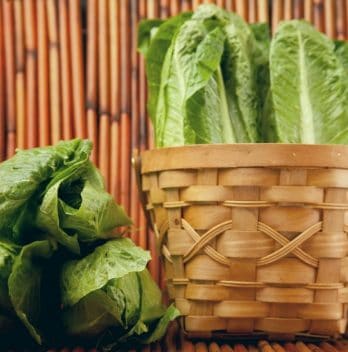
    Romaine lettuce is a crunchy, sturdy, and elongated deep green leaves with great nutritional value. It also forms a closely packed head. This lettuce variety is refreshingly crispy and is popularly used as a base in salads.

    They are so sturdy that they can be held up to heat for grilling. Therefore, they are more tolerant to heat than any other lettuce variety. They will also remain crunchy and won’t wilt quickly especially in salads. Nowadays, romaine lettuce has become a grilling staple along with other vegetables.

    In North America, you can find romaine lettuce usually sold as hearts that the outer leaves have been conveniently taken out. Most of the romaine lettuce grown in the United States is grown in California.

    Some Info On Romaine Lettuce

    Although you may notice only one variety of romaine lettuce in the store, there are actually many cultivars of romaine. Some romaine lettuce tends to have a looser structure compared to the commonly closely packed head. While some have red or speckled leaves.

    Romaine lettuce tends to mature a little longer compared to other lettuce varieties. However, it isn’t necessary you wait until they attain their full size before you harvest them.

    When To Plant & Harvest Romaine Lettuce

    A lot of lettuce varieties can be picked in similar ways. But it helps to always know the right way of harvesting the particular type of lettuce variety you’re growing.

    Romaine lettuce thrives well in cool weather conditions. Therefore, they aren’t so great in hot weather because they can fade quickly.

    Just like any other lettuce variety, it’s ideal to plant romaine lettuce around early spring so you can get a late spring or early summer harvest. You can as well plant romaine lettuce at the end of summer to harvest them in fall.

    As we mentioned, romaine lettuce can take a long time to mature and this usually takes about 3 months. Again, you don’t have to wait till they attain full size to harvest them. However, if you wish to harvest full heads of romaine lettuce, you should keep in mind their long growing season.

    A lot of romaine lettuce variety can take about 65 to 75 days to form a full or matured head. Some cultivars however can take lesser (about 55 days) to attain maturity. Then a couple of other cultivars can take longer.

    Lettuce & Salad Greens Seed Vault – Non-GMO Vegetable Seeds for Outdoors or Indoors

    81NyrqPYhsL. AC SX569

    Plan your harvest time based on the particular variety if you want a whole head of romaine lettuce.  A fully or properly matured whole head romaine lettuce should have a fully formed head, be densely packed, and feel very firm.

    But if you don’t mind harvesting individual leaves or harvesting them before they attain maturity, you can begin picking them once they attain a few inches long. This is usually about a month after planting.

    So you can keep on harvesting romaine leaves until the plant fades. Or simply harvest moderately if you want your romaine lettuce to form head later in the season.

    Guidelines On How To Harvest Romaine Lettuce

    So how do you harvest romaine lettuce? Let’s look into this.

    1.    Harvesting Individual Leaves

    Harvesting individual romaine lettuce can offer you that cut and come again feeling. Just ensure you the outer leaves and leave the central leaves to continue growing. Also, avoid breaking the central stems. You can break the leaves at their base by snapping them or make use of a sharp tool to cut them off.

    Also, ensure you water them regularly especially when the weather is hot to promote new growth. Make sure you remain about 2 or 3 leaves so your lettuce plant has the energy to keep producing.

    However, when you notice your lettuce is preparing to enter seed, it’s best to harvest the whole head to prevent the romaine lettuce from turning bitter.

    One sign to know your lettuce is about to enter the bolting stage is an extra white lettuce sap.

    2.    Harvesting Whole Head Romaine Lettuce

    If you wish to harvest the whole head of romaine lettuce, you will need some patience. But it’s all worth it because you will be rewarded with a lot of crisp, fresh lettuce.

    Once the head has attained full size and they are firm, use a sharp tool to cut the base. We recommend you leave about 2 or 3 inches of the stem to encourage your plant to regrow and generate baby lettuce.

    To avoid bolting, harvest your romaine lettuce head promptly once they feel firm. Another way is to pull the plants out of the ground and trim off the roots. But it’s better to just cut off the heads to avoid disturbing the structure of your soil.

    Additionally, if you notice the lettuce has begun sending up a tall central stalk, that’s a sign of bolting preparation. Hence, it’s important you harvest your romaine lettuce at once to prevent bitter-tasting lettuce.

    Storing Romaine Lettuce

    First, wash your romaine lettuce under running water to remove dirt. Lettuce can be soaked in a salad spinner if you have one. The spinner basket should be inside the bowl then put the lettuce into the basket and fill with water. Once you’re ready to drain it, just lift the basket out and discard the dirty water.

    Storing Romaine Lettuce

    If you however don’t have a salad spinner, you should put your romaine lettuce leaves dry with paper towels. Then put your lettuce inside a container with a lid. Dampen some paper towels and put them on top of your romaine lettuce. Then close the container and put it in the fridge.

    FAQ’s

    When is Romaine lettuce ready to harvest?

    The harvesting of romaine lettuce is dependent on the varieties and growing conditions. The leaves are generally ready to be harvested when they reach a size of 6 to 8 inches in length, which is usually 10 to 14 days after planting. In some cases, depending on the variety, it may take up to two weeks longer.

    Can I eat romaine lettuce when it’s still growing?

    No. Romaine lettuce should be harvested before it reaches its full size. It’s best to harvest lettuce when it’s 6 to 8 inches in length, depending on the variety. Lettuce grows fastest when it is picked before it reaches its full size.

    It’s important to wait so that you get all the nutrients that it has to provide. It contains vitamin C, folate, potassium, iron, fiber, calcium, protein, vitamins A, B1, B2, B3, B5, B6, B9 and B12, omega-3 fatty acids, copper, magnesium and phosphorus.

    What should it look like when it’s ready?

    Romaine lettuce is a member of the butterhead family, which means that it has a thick, fibrous outer leaf called a rind. When you eat romaine lettuce, you are eating the core of the head and the leaves themselves. You don’t want to remove any of the leaves because they are where most of the nutrients are found.

    How do I store romaine lettuce?

    Romaine lettuce should be stored in the refrigerator for no longer than 5 days. The longer you store it, the more the lettuce will start to rot. After 3 days, wrap the leaves in plastic wrap and store them in a plastic bag. Romaine lettuce is very perishable and should not be kept out of the refrigerator longer than 3 days. It is best to use romaine lettuce immediately after purchasing it.

    Can you harvest them in the cold?

    No, this is why many people grow them indoors so that they can have them year-round-

    If you are looking to plant romaine lettuce seeds outdoors, you will want to start them around 10 weeks before your last frost date.

    Will romaine lettuce regrow after cutting?

    Romaine lettuce, which is also known as cos or iceberg lettuce, regrows quite well if it has been cut and stored properly.

    It will lose a little of its crispness and color over time, but it will still taste just fine. If you want to avoid this, simply store your romaine in the refrigerator instead.

    If you can stand to wait a little longer, though, it’s worth it! To make the most of this lettuce, keep it refrigerated until you need it.

    How do you cut it?

    To remove the leaves, first cut off the bottom of the lettuce. Then cut each leaf in half. Holding one half in your hand, cut along the outside edge of the leaf. Continue cutting off each leaf and placing it in your salad bowl. This will keep the leaves from rolling around and mixing together.

    Final Words

    When you can harvest your romaine lettuce mainly depends on if you want whole head lettuce or individual leaves. So, follow our guidelines on how to properly harvest your romaine lettuce.

  • Difference Between Thai Basil And Regular Basil

    Difference Between Thai Basil And Regular Basil

    We have many varieties of basil. There is the common or regular basil, Thai basil, lime basil, Cinnamon basil, Lemon basil, and others. In this article, we will be discussing the difference between Thai basil and regular basil.

    Generally, it has been estimated that there are over 100 varieties of basil and all types of basil are members of the mint family. Both are from the same family. However, we have some slight differences between these two basil varieties.

    We have listed here what makes them unique. We’ve also listed what and how you can use these two basil varieties as well as how they can be substituted. So continue reading to learn more about the difference between Thai basil and regular basil.

    What Is Thai Basil?

    Thai basil is a type of basil variety native to Southeast Asia and it’s also known as chi neang vorng. It is a popular ingredient for cooking and it’s commonly used amongst Southern Asians and Chinese.  The chi neang vorng leaves are so versatile, therefore, used in many recipes.

    Chi neang vorng is a variety of basil that has a touch or feel of anise or black licorice flavor. It offers that pleasant taste or savory, spicy, anise-like note to so many Southeast Asia and Chinese cooking.

    What Is Thai Basil

    This variety is very common in Southeast Asian cuisines, Cambodia, Lao, Vietnamese dishes including Thai recipes. Chi neang vorng has this definite or distinct flavor with that strong black note and a bit of spice on the finishing touch.

    The Regular Sweet Italian Basils

    The most common or regular basil is referred to as sweet basil, Genovese basil, or Italian sweet basil. It is scientifically known as Ocimum basilicum. The tasty green leaves of Italian sweet basil works well with so many dishes. Sweet Italian basil is very common in American and European cooking.

    The regular Italian sweet basil is widely used in American and European cuisines. The leaves are bright green with a green stem.

    Compared to chi neang vorng leaves, the Italian sweet basil leaves are larger. Then sweet variety has a milder flavor than Thai basil and it has a hint of black pepper and subtle anise.

    Difference Between Thai Basil And Regular Basil: Basil vs Thai Basil

    So what is the difference between Thai basil and regular basil? Let’s find out.

    1.    Taste

    The Italian sweet basil has a distinct and more robust taste. The taste has a mix of anise, peppery, and sweet flavor. There are chances you must have tasted the sweet basil in a large variety of dishes.

    Chi neang vorng on the other hand has a milder flavor. It also has an extra aroma of licorice together with a spicy feeling.

    8 Basil Herb Seed Pack – Cinnamon, Dark Opal, Genovese, Holy, Italian, Lemon, Sweet, Thai Basil

    717zoYlNz3L. AC SX569

    2.    Physical Appearance

    It’s pretty easy differentiating Thai basil and the regular sweet basil from their appearance. Let’s take a look at the leaves, stems, and flowers for their physical appearance.

    • Leaves

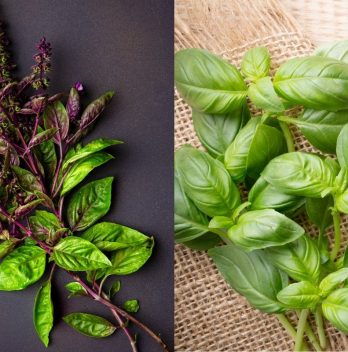
    The leaves of the Italian sweet basil are bigger and have an oval curly down leaf.

    Contrastingly, chi neang vorng leaves are thinner, narrower, more prolonged, and often straight.

    Also, when you rub the sweet Italian basil leaves with your palm, it becomes less and will generate an intense aroma. Thai basil on the other hand does not have this feature.

    • Stem

    The stem of sweet Italian basil is green while the stem of Thai basil is purple. Also, it has a hairy stem and sweet basil has a smooth stem.

    These two basil varieties tend to grow rigid and can become woody at the end of their life.

    • Flowers

    The flower sweet basil generates at the end of their life is a small white flower. Chi neang vorng flower generates more colorful purple or pink color.

    They both present a small flower and the same shape.

    3.    Culinary Use

    These two basil varieties differ significantly when it comes to culinary use.

    As we mentioned, chi neang vorng is commonly used in East Asia. This basil variety can be used in so many dishes. Some popular Asian dishes are Thai basil chicken, Thai larb or meat salad, pho, and Thai style-curry.

    Additionally, chi neang vorng seeds are often used to make tasty cold drinks. They can also be used as dessert ice cream. They are often added to ice cream because of their ability to reduce water crystals in the mixture.

    The regular sweet Italian basil is widely used in American cooking and European cooking. It is a staple of Mediterranean cuisine especially Italian.

    There are countless dishes that this regular sweet basil can make. You can add them to beans, eggs, chickens, fish, soups, pasta, cheeses, and salad. They can even be used as toppings for pizza.

    • Temperature Effect During Cooking

    When it comes to their temperature behavior during cooking, there is a major difference between these two varieties of basil.

    The regular sweet basil must always be added as a finishing touch while cooking. This is because sweet basil leaves are not as sturdy as the other basil. Hence, it can’t tolerate so much heat.

    Thai basil on the other hand can withstand heat. Hence, you can add it at the very beginning of your cooking together with other ingredients so their flavor can be released gradually.

    Temperature Effect During Cooking

    Can They Be Substituted With Each Other?

    The answer is yes and no and it depends on the recipe.

      • When it comes to some recipes, you can substitute sweet basil if that’s all you have. However, if you’re making a special recipe like the traditional Southeast Asian dish like curry, pho, or spring roll, it’s necessary you choose the original flavor.

      • Substituting Thai basil for sweet basil may not really go well. This is because of the pungent anise flavor of Thai basil that is incomparable to the regular sweet one when it comes to the flavor.

    FAQ’s

    Are Thai basil and Italian basil the same thing?

    Thai basil is not really the same as Italian basil. In fact, it’s a different species altogether, although it has similar characteristics.

    Can you substitute regular basil for Thai basil?

    Yes, you can substitute regular basil for Thai basil. They have the same properties, but the leaves are a bit thinner. You’ll need to cut your Thai basil into smaller pieces and dry it out before using it.

    The two can be used interchangeably in most recipes, but it’s best to buy both when you can. 

    How do I identify Thai basil?

    Thai basil (Ocimum basilicum) is one of the most popular herbs in the world. It’s a fragrant, pungent herb that looks like a cross between sweet basil and tarragon. Thai basil is often used in Thai cooking and can be found in many supermarkets, Asian grocery stores, and online. You’ll know you’ve got it when you see the leaves arranged in a tight cluster, with their stems attached to the bottom.

    It’s also a great addition to Thai dishes, as it complements the sourness of Thai ingredients, such as lime or tamarind.

    How do they look different?

    Thai basil leaves are much smaller, and they grow in a bush rather than a tall stalk.

    Can you substitute regular basil for Thai basil?

    Yes, you can substitute regular basil for Thai basil. They have the same properties, but the leaves are a bit thinner. You’ll need to cut your Thai basil into smaller pieces and dry it out before using it.

    The main thing that you have to keep in mind in terms of using Thai basil as a substitute is that it is spicier in flavor. Thai basil is less delicate than sweet basil and has a sharper, spicier flavor. So you do have token this in mind as you go about using it in your recipes.

    What do you use Thai basil for?

    Thai basil is one of the most popular herbs in Thai cooking, and it’s widely used in Thai dishes. It’s also one of the most versatile herbs you can use in your kitchen. Here are some of the ways to use Thai basil in your kitchen:

    1. Thai basil is a must-have herb for Thai cuisine. You can add it to stir-fries, soups, curries, salads, and desserts. It’s used in most Thai recipes, including green papaya salad, pad Thai, tom yum goong (Thai curry soup), and kung pao chicken.

    2. Thai basil has a strong, fresh flavor and is an excellent addition to Thai dishes. Add Thai basil to chicken soup, Thai tom yum, and Thai noodle soup.

    3. Thai basil is one of the most fragrant herbs. Use it in marinades, sauces, and salad dressings.

    It does make a good pesto. It has a little bit more depth to it. I also think it’s easier to find fresh than regular basil.

    Difference Between Thai Basil And Regular Basil: Final Say

    The two basil are popular and amazing ingredients used in many dishes.

    Both basil varieties may come from the same family; there is still a significant difference between them.

  • Are Cilantro Flowers Edible?

    Are Cilantro Flowers Edible?

    Ever wondered if cilantro flowers are edible? Certainly, they are! The flowers of cilantro possess a pungent herbal flavor and can be integrated into various dishes.

    Not every part of most plants is edible. But it helps to know which part of the plant is suitable for consumption. So, if your cilantro plant has probably bolted or it has entered into its flowering stage: not to worry. You can as well enjoy adding cilantro flowers to your various dishes.

    Generally, cilantro is a tasty herb used in various cooking and they are an excellent source of great vitamins and nutrients.

    So, let’s further look into how cilantro flowers are edible and many more.

    Can You Eat Cilantro Flowers?

    You can certainly eat cilantro flowers because they are edible. It may please you to also know that all of the parts of cilantro plants are edible including the flower. Even cilantro seeds which are known as coriander seeds are edible.

    The plant cilantro is one of the most widely eaten herbs in the world. Cilantro flowers are commonly used in Asian, Indian, and Latin cuisines. It is even becoming more popular in other cuisines.

    Can You Eat Cilantro Flowers

    Are Cilantro Flowers Poisonous?

    As we have mentioned, cilantro flowers are safe to eat. Therefore, there aren’t any toxins found in any part of the plant. Hence, they aren’t poisonous and cilantro flowers are edible. You can even incorporate cilantro flowers into various tasty dishes.

    Are All Parts Of Cilantro Plants Edible?

    We all know cilantro leaves are edible and very flavorful. But most people don’t really know how many parts of cilantro plants are consumable. Well, all parts of cilantro plants are edible! But this does not mean all parts of cilantro plants taste great or are good to be eaten.

    The stem and roots of cilantro are consumable. However, they aren’t so great-tasting enough to use for cooking. But when it comes to the leaves, flowers, as well as seeds of cilantro, they are commonly used in different cuisines.

    How To Get Cilantro To Flowering Stage

    Ideally, if you want to enjoy cilantro flowers, it’s only logical to allow them to enter into the flowering or bolting stage. The cilantro plant thrives well in a cool and moist environment. Usually, if you want to lengthen the period in which cilantro produces leaves, planting them in a cool and moist condition is the way.

    But if you want cilantro to flower, you should allow them to enter the bolting stage that will produce seeds and then flower. You can encourage bolting by planting cilantro during hot weather. When the weather is hot, cilantro will produce seeds and eventually bolt.

    However, you should know that once the cilantro plant has bolted, the leaves will lose their flavor. So, you can’t make good use of their leaves at this stage.

    But cilantro will eventually bolt and produce seeds and flowers because that’s what plants do generally. They are meant to reproduce and ensure they produce the next generation of cilantro plants.

    How Does Cilantro Flower Taste?

    To determine the taste of cilantro flowers is quite tricky. You may think cilantro flowers taste sweet and mild. But in the actual sense, cilantro flowers have a similar taste to cilantro leaves. They tend to have a milder taste slightly tangy.

    The petals of cilantro have a hint of citrus together with a bit of sweetness. Hence, this balances the flower’s mild spiciness.

    A lot of people that have tasted cilantro flowers have agreed the taste is delicious. But this doesn’t mean everyone will like the taste of cilantro flowers. In fact, a group of people may taste cilantro flowers as tangy and delicious. Another group on the other hand may have a gene that makes the taste of cilantro flowers soapy.

    This is mainly because cilantro has a fat molecule that can be gotten from many soaps. Therefore, some sets of people tend to be sensitive enough to feel the soapy taste. This soapy taste overthrows every other subtle flavor the flower has. Hence, it becomes noticeable to some.

    Indoor Herb Garden Starter Kit – Heirloom, Non-GMO Herb Seeds

    81Pr5Td76YL. AC SL1500

    So, if you have never tried tasting cilantro flowers, ensure you try to taste it before you plan on making use of it in any of your dishes. This is to make sure your taste flows well with the flower.

    Cilantro Flowers Cooking Applications

    Cilantro flowers have a more subtle flavor. Hence, they are the perfect substitute for cilantro leaves. So, cilantro flowers can be used as an alternative if you don’t want the flavor of cilantro leaves to overthrow any dish you’re trying to make.

    Cilantro flowers can also go well or pair well with the following: tomato, carrots, zucchini, lamb, chicken, avocado, citrus, lemongrass, and whitefish.

    You can as well use cilantro flowers to make a spicy dish subtle. Cilantro flowers can as well be used to bring out flavors in rich dishes.

    How To Properly Harvest Cilantro Flowers

    If you wish to make use of cilantro flowers for your cooking experience, it’s important to harvest the right way. So, to harvest any herbs generally, the time of the day and temperature matter.

    So, to properly harvest cilantro flowers, do so early in the morning once the dew has evaporated. But ensure the heat of the day has not surfaced.

    We recommend you avoid harvesting cilantro flowers during the middle of the day. This is because the flowers tend to have lower moisture content which makes them wilt and bruise easily. Therefore, if you want fresh flowers, ensure you harvest them when they are still cool.

    How To Properly Harvest Cilantro Flowers

    Additionally, cilantro flowers should be picked when they have fully bloomed. Avoid using buds or partially opened flowers. Also, when the flowers are dying, you shouldn’t make use of them.

    Even though some flowers can be dried before using them, cilantro doesn’t work this way. Cilantro should only be used when it’s fresh or you won’t get that great flavor.

    FAQ’s

    Can you use cilantro once it starts to flower?

    The leaves, stems and flowers of the cilantro plant are all edible, but the seeds should be discarded, as they have a strong, bitter taste. The roots and seed pods are not edible.

    The flowers are a little tricky because they’re so strong-smelling and not as flavorful as the leaves, but you can still use them if you don’t mind the smell.

    Cilantro, like other herbs, has its season. If you start to see flowers or seedpods on the plants, it is time to harvest and enjoy.

    Are they good for you?

    Not only are they edible, they actually have a ton of beneficial properties for people.

    This herb has many health benefits and it can be used for various purposes. It is known to have antibacterial properties. It is an excellent source of vitamin A. It is also a rich source of vitamin C. It is also a good source of iron. It is also known to be helpful for treating anemia. It can be used for treating constipation. It also helps in preventing and treating ulcers. Cilantro flower has a soothing effect on the stomach and intestines. It also helps in regulating blood sugar levels. Cilantro flower can be used for treating diabetes and high blood pressure.

    It also has anti-inflammatory properties. The anti-inflammatory properties of this herb are helpful for treating rheumatoid arthritis, osteoarthritis, and other joint diseases. Cilantro flower is very useful for treating swelling and inflammation in the body. It is also known to have pain-relieving properties. It is also very effective for treating gout 

    Cilantro flower can be used for curing headaches and stomach disorders. You can also use it to treat flatulence, bloating, and indigestion. It is also a good source of calcium. It is a natural diuretic. It is also used for treating indigestion. It can be used for treating respiratory disorders like coughs and colds. It also helps in relieving sinusitis and can be used as a gargle.

    How can you prepare dishes with cilantro flower?

    Cilantro flowers are a great addition to salads. They add an amazing flavor and fragrance to any dish that they are added to. They can be added to salads, stir fry dishes, soups and other dishes.

    They are also a great garnish. If you like cilantro but have a hard time using it in the food that you are making, try adding cilantro flowers to your dishes instead.

    Final Note

    We have seen that the cilantro flowers are definitely edible They can offer you great tasting flavor when added to different dishes and they are a great source of vitamins and minerals.

  • Acorn Squash Turning Orange

    Acorn Squash Turning Orange

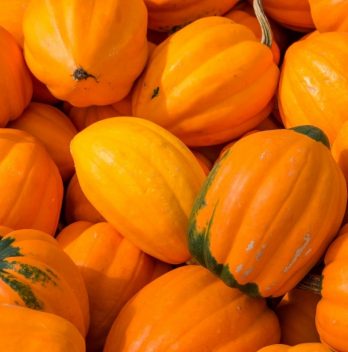
    Acorn squash turning orange may have you wondering if it’s still in good shape. Depending on the variety of seeds you are growing, acorn squash can vary in color. We can have yellow, dark green, tan, or orange colors of acorn squash.

    However, you may have purchased or harvested a dark green acorn squash and the skin turned orange and you wonder if it’s gone bad. We will discuss this here.

    The skin of your acorn squash turning orange is not so uncommon. We will be explaining why this is so and we will be discussing more information related to this. So, continue reading to gain some knowledge.

    Acorn Squash

    Acorn squash is a winter squash with a mild butter flavor. It can be eaten raw and it’s perfect to be cooked with different dishes.

    They can be botanically classified as fruit. But they are as well considered starchy vegetables which can be used just like other high-carb vegetables like butternut squash, potatoes, and sweet potatoes. Also, the starch level of potatoes is similar to acorn squash.

    Acorn Squash

    Acorn squash is packed with great nutrients for man’s health. They are rich in antioxidants that help in getting rid of toxic elements known as free radicals. Antioxidants protect against adverse health risks such as heart diseases, arthritis, high blood pressure, and even certain cancer.

    Click Here to Get More Info About Squashes:

    Orange Acorn Squash

    Usually, most acorn squash tends to go dark green when ripe. Unless you intentionally planted an orange variety of acorn squash, an orange acorn squash often means they are overripe.

    So whenever you find that your acorn squash has turned orange you can do or notice the following to see if it is still fine to use:

    • Cut the acorn squash open and observe the inner part.
    • The acorn squash should not be moldy or slimy. If it is moldy or slimy. But if it has mold or slimy seeds, it means the acorn squash has gone bad and should be discarded.
    • There shouldn’t be any soft spots in the outer part or inner flesh.
    • You can as well tell the condition from the stem of the acorn squash. When you take a closer look at the stem and you notice the stem limps, that’s a bad sign.

    Squash Seeds- Table Queen Acorn- Heirloom- 40+ Seeds

    51Lyetpnd3L. AC

    Usually, the orange color you may notice means the acorn squash has become a little overripe. Acorn squash turning orange does not mean the squash has gone bad all the time.

    Expert farmers even suggest you go for acorn squash that has dark green and a couple of orange spots on the bottom. This type of appearance usually assures a perfect level of ripeness.

    Check out When Are Butternut Squash Ready To Pick?

    How To Select The Perfect Acorn Squash

    To harvest perfectly ripe acorn squash, ensure they are dark green. Their weight should also be around one to three pounds. If the acorn squash becomes too big, they tend to be stringy and dry.

    Some acorn squash may have a patch of orange color. Usually, the portion that has been in contact with the ground tends to turn from yellow to orange. However, have in mind that we have some orange varieties of acorn squash like the Golden acorn (naturally orange when ripe or ready).

    Additionally, you can know a ripe acorn squash from its rind and skin that will become hard. You can also do a fingernail test by trying to push your fingernail into the squash. If it is difficult to pierce, your acorn squash is ready for harvest.

    Also, to select or buy an ideal acorn squash, choose the ones with shiny, smooth skin that also have a heavy feel to them. This means it has been harvested at the right time.

    Bad Acorn Squash

    To know if your acorn squash has gone bad, just slice it into two. If you notice there are any moldy, slimy, grey seeds, then it’s a sign the squash has gone bad. Also, when the stem of acorn squash limps, that’s a sign it is overly ripe and may have gone bad.

    When the acorn squash has totally turned from green to orange and it doesn’t have any mold or slimy grey seeds, it may be safe to use. But this type of squash will probably be stringy with less flavor.

    How Long Can Acorn Squash Be Stored?

    How you store your acorn squash can contribute to it turning green to orange. This is why you should know the right way to store them so they remain fine and edible for two or even three months.

    So here are some tips for storing acorn squash so they remain edible for a good period:

    • Store acorn squash in a cool, dark, dry place while the stalk is still intact. With the stalk intact, it helps prevent fungi and bacteria from invading the squash. This helps the squash maintains moisture and prevents it from spoiling. But once the acorn squash has turned orange, check if it’s still in good shape and use it right away.
    How Long Can Acorn Squash Be Stored
    • You can as well store acorn squash in the fridge. To store in the fridge, peel the squash and slice it into pieces. Then keep the sliced acorn squash in a sealed container in the fridge. Acorn squash can remain edible for about 3 to 4 days if kept in the fridge this way.
    • You can also cook acorn squash first and then freeze them.
    • Ensure you store them above a temperature of 50 degrees Fahrenheit. Also, hot air can predispose acorn squash to have a shorter shelf life.

    How Long Does it Take Acorn Squash to Mature?

    Most varieties of acorn squash ripen about 80-100 days after they have been planted. To get a more exact date of ripening of the variety you are planting, you must look at the “days to full maturity” or “days to harvest” stated on the packet of your seeds.

    If you are still unsure even after the stated time has arrived, the best way to tell if your acorn squash is ready for harvest is by examining the look and feel of the skin. Ripened acorn squash turns to a dark green color. The part of the squash that is touching the ground will turn from yellow to orange. On top of these factors, the rind or skin of the squash will also become hard.

    Another way to check if an acorn squash is ready is to check the plant’s stem. The stem will become withered and turn to a brown color when the squash has ripened

    The best time to harvest acorn squash if you can time your planting well is when temperatures start to dip down towards freezing night temperatures and both the leaves and vines start to die off. Simply cut the squash off the vine. Leave a piece of the stem on the squash for as long as possible. This will help protect the squash from rotting.

    If you harvest an acorn squash at the right time, when you cook it it will have a slightly firm yet buttery texture. It will also be slightly sweet but not over-ripe and mushy.

    Why is My Acorn Squash White Inside?

    White acorn squash is a variety of acorn squash. It is botanically classified as Cucurbita pepo. It grows on a compact bush and belongs to the family Cucurbitaceae which is the same family that pumpkins and zucchini belong to.

    The white acorn squash is also known as pepper squash because of its color. It is a winter variety and is well known for its amazing storage as well as tender texture

    Acorn squash is quite popular in the United States because of the small space that it requires to grow. It can be used in the preparation of both sweet and savory dishes.

    The white acorn squash is typically ready for harvest between 90-115 days after planting. It is best to harvest it in the fall before the frost. You will know that it is ready for harvest when the rind or skin has a consistent deep color and a very firm texture. If you are still in doubt, open one and use it to check if it is ready before harvesting the rest.

    The white acorn squash is of a small to medium size and can get to lengths of between 12-20 cm and a diameter of 10-12 cm.

    When cooked, the white acorn squash has a smooth and tender texture. It also has a mild and sweet flavor.

    A bit of history about the acorn squash; The regular green squash was domesticated by the Native Americans, and the white is a fairly new variety that was only developed in 1980 by Glenn Drowns, a squash collector and expert. The white acorn squash is quite rare and only found in specialty supermarkets and distributors in the US. 

    Acorn Squash Turning Orange: Conclusion

    Acorn squash turning yellow isn’t always a bad sign. All you have to do is simply examine the squash if it’s in good condition to use. When your acorn squash has orange spots or is slightly orange, it may still be safe to use.

    However, once it has become soft and when you slice your acorn squash open, you notice moldy, slimy, grey seeds, that’s a sign it has gone bad. It should be discarded right away.

    FAQ’s

    Why is my squash turning orange?

    Squash (Cucurbita pepo) is a fruit that can be stored for months. It’s also one of the most commonly grown vegetables in the world. Squash is the main source of vitamin A in our diets, and is an excellent source of fibre, vitamins C, K and B6. In the UK, most squash are grown as part of the winter harvest.
    Squash can turn orange for a number of reasons, including heat stress, or some sort of physical damage to the plant. You may need to keep the soil moist but avoid flooding the plants, and give them a bit of fertilizer. If your squash are getting orange and turning mushy, it could be heat stress. Squash are pretty hardy and will survive in temperatures up to about 115°F for a short period of time, but prolonged exposure to high temperatures can cause leaves to wilt, stems to turn brown, and fruit to turn mushy. To avoid this, keep your plants in a shaded area or under a shade cloth, and give them extra water when the weather gets hot.

    What color should acorn squash be?

    Acorn squash is the perfect winter squash. It has a lovely flavor and is very versatile. It can be used as a substitute for pumpkin in recipes, baked, or simply eaten plain.

    Most of the winter squashes are orange or yellow in color. This is because they have a natural coating on them called “parchment.” Parchment protects the squash from moisture and insects.

    Is orange acorn squash ripe?

    The best way to judge the ripeness of an acorn squash is to look at its color. When you pick up the squash, it should feel heavy for its size and have a nice rich, deep color.
    Another thing to check is that the skin is beginning to split. If it doesn’t, it’s probably not ready. Then you can see if there’s a little give when you gently press down on the bottom of the squash. If it doesn’t give, it’s probably not ready. When you’re ready, the squash should be fairly heavy for its size.
    The squash can be cooked immediately or kept in a cool place for up to three days. If you decide to keep the squash in your refrigerator, wrap it loosely in plastic and store it in a plastic bag or container in the vegetable crisper section of the refrigerator.

    Why is my acorn squash pale?

    If your acorn squash has a pale color, it’s not rotten or rotting. It’s just that the skin on the bottom side of the acorn squash is dry and brown. This means the moisture level in the flesh is low.

    Will acorn squash ripen off the vine?

    corn squash is a summer squash, so it will ripen right on the vine. But you can’t really tell when it’s ripe until you cut into it and see how soft it is. You don’t have to worry about storing it if it’s still green, but it will turn yellow faster if it stays on the vine longer.