Author: Eunice

  • How Tall Does Cilantro Grow?

    How Tall Does Cilantro Grow?

    Have you ever wondered how tall the Cilantro plants grow?  The plant is used for a variety of purposes, as virtually every part of it is useful. The seeds and leaves are however the most utilized parts of the plant.

    A good number of persons enjoy the flavor cilantro gives to food when the Cilantro is added to various dishes.

    This is a guide on the general things to note when growing a cilantro plant and also details about how tall cilantro plants can grow.

    Knowledge of these details will help a great deal in growing the plant and caring for it the right way. Now let’s get on with the answer to the question: How tall does Cilantro grow?

    Cilantro Plant

    The cilantro plant is a member of the Apiaceae family, with bright green leaves very similar to that of carrots. When the cilantro plant blooms, it usually produces pinkish-white flowers in clusters. These flowers develop seeds after some time which can be dried and used for dishes or as herbs.

    The cilantro leaves are greatly sourced as a result of their bright flavor in many dishes. These leaves are heavily relied upon by Mexicans and East Asians in their delicacies and health. The cilantro leaves are referred to as cilantro in the United States of America. However, in some areas, it is referred to as Chinese parsley, Mexican parsley, coriander leaves, or simply fresh coriander. These designations refer to the same plant and these names should not cause any confusion on what is being referred to.

    Cilantro Plant

    The cilantro plant can do well in an area where it gets good sunlight. However, the too-hot sun can cause the plant to bolt faster.  It is also sure to do well in light shades and warmer climates.

    Unfortunately, when cilantro plant bolts, the leaves are usually unpalatable and will taste bitter. It’s best to allow the plant to flower and produce seeds once it has bolted. This will ensure encourage the continuation of the next cilantro generation.

    How Big Does the Cilantro Plant Grow?

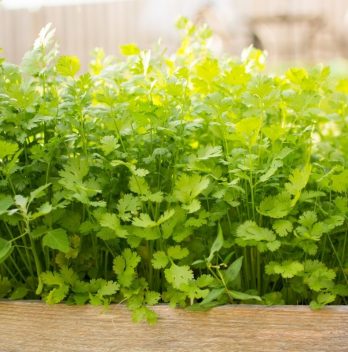
    So, how big do cilantro plants get? The average mature cilantro plant usually grows to about 12 to18 inches. But if left for quite some time, the cilantro plant can continue growing tall and as high as 20 to 25 inches. The height also depends on the varieties.

    You can however begin to pick the cilantro leaves as soon as it is about six inches tall. Harvesting the seeds, however, takes a longer period of time- about three weeks after flowering.

    To ensure that the plant attains its maximum height within the shortest period of time, it should be grown in good soil with proper nutrients and access to water. Where these are available the plant grows more rapidly.

    AeroGarden Harvest – Indoor Garden with LED Grow Light

    81DPs6WZXjL. AC SX569

    How To Grow Cilantro Plant: Guidelines

    The following should be noted when growing the cilantro plant:

    • Where To Plant: The cilantro plant can be planted directly in the garden or indoors with the use of small plant containers. When they are planted directly in the garden, they must be sufficiently spaced.

    • The Spacing Required For The Plant: The cilantro plant ought to be sufficiently spaced for the desired goal to be attained. For a person interested in harvesting the cilantro leaves, they should be planted 2 inches apart in rows 12 to 15 inches spaced. But where the seeds are to be harvested, 8 inches apart in rows of 15 inches is preferable.

    • Water Requirement: The plant requires a lot of water to survive at the very early stage. Arrangements must therefore be made to provide the required water to this plant during the first 6 weeks of germination. After this time frame, the water provided by this plant may be reduced.

    • Fertilizer Requirement: The plant requires some fertilizers at its early stages of growth. nitrogen-heavy fertilizers are most suitable for this plant. The fertilizer should be applied moderately and not too close to the stem of the plant.

    • Best Soil & Light: The plant usually prefers to grow on sandy loam soil with enough organic material and access to sunlight. The plant is more likely to blossom when the soil is not too hard, with good access to water.

    • Time of Harvest: The leaves are usually best harvested before they bolt. For the seeds, you will have to allow the plant bolt.

    How To Store Cilantro Leaves After Harvest

    After the cilantro leaves have been harvested, the following should be considered to ensure proper storage:

    • The leaves usually deteriorate quickly unless they are preserved. The leaves can be stored in airtight jars or a freezer.

    Varieties Of The Cilantro Plant

    Depending on what you intend to get from the plant, there are different varieties that you can pick from. The following are the major types:

    • Cruiser Cilantro: This variety of plants usually grows upright and it hardly spreads. It is made up of broad leaves and hard stems.

    • Calypso Cilantro: This variety produces very full plants with leaves that spread. It takes this variety a lot of time to bolt and produces seeds. Therefore, you can enjoy cilantro leaves for a long time with this variety before it bolts.

    • Santo Cilantro: This variety also takes a lot of time to bolt. So you can enjoy cilantro leaves for a good period.

    • Confetti Cilantro: This cilantro variety has a sweeter and milder flavor and may sometimes be overpowering. It grows in an even manner with very fine fern-like leaves.

    • Longstanding cilantro: this variety is another cultivar that is slow to bolt and will grow tall.

    Varieties Of The Cilantro Plant

    FAQ’s

    How tall does cilantro grow?

    Cilantro grows pretty tall, usually toa height that’s somewhere between 1 to two feet. It is this ability that it has to grow that it is great for keeping in a herb garden as you can get a pretty good amount whilst using pretty minimal space.

    This is why it also makes a great gift for someone who not only likes to grow plants in their garden, but likes to cook using the freshest of ingredients that they can find.

    Will cilantro grow back after cutting?

    Cilantro has an amazing ability to regrow after you cut it down. You should be able to put it back in the ground in late spring or early summer.

    Why is my cilantro growing so tall?

    Cilantro has long been a favorite herb in the kitchen, especially with Latin-inspired dishes. It’s one of those herbs that you can just throw into any dish and it adds so much flavor. But if you’ve noticed your cilantro is growing tall, then you may be experiencing what gardeners call “coriander syndrome.” This is when your cilantro goes to seed prematurely and grows tall and strong.

    What do I do if my cilantro is too tall?

    You should be able to just cut it off and let it regrow.

    Cilantro is a bushy annual herb, but it can also grow as a perennial. It prefers well-drained soil and full sun.

    It grows best in heat. Cilantro seeds germinate best in temperatures of 75°F to 85°F. The cilantro plant may be harvested for fresh leaves throughout the summer. Cilantro (coriander) is a hardy annual herb, but it does best when grown in warm climates and full sun.

    How Tall Does Cilantro Grow:  Conclusion

    This write-up provides an elaborate guide on how to grow the cilantro plant. We have pointed out that the cilantro plant can grow as tall as 24 inches.

    If you are interested in growing the cilantro plant, be sure to put our guidelines into consideration.

    You can also enjoy numerous benefits from the cilantro plant. Some include great vitamins, herbal and medicinal benefits, amongst others.

    So, if this sounds like a plant you will want to have in your garden or home, be sure to observe our guide.

  • Is Green Squash And Zucchini The Same?

    Is Green Squash And Zucchini The Same?

    The question we will be answering today is: is green squash and zucchini the same? Has this question ever crossed your mind? Do you know for sure if they are actually related or not? Let’s find out.

    A lot of people may get confused when they hear these two names (green squash and zucchini), especially for the first time. Squash and zucchini are usually used interchangeably which makes them difficult to tell if they are actually the same or different.

    To make things clear and easier, let’s look into these two terms green squash and zucchini. Then we will see if green squash and zucchini are the same things. So, let’s begin.

    Green Squash vs Zucchini: Are They The Same?

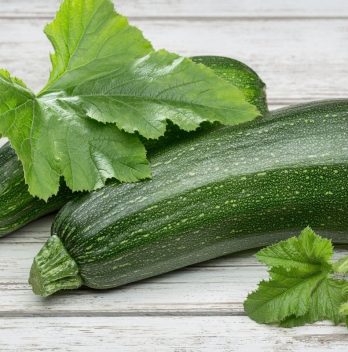
    So, answering the question is green squash and zucchini the same is actually yes. In the actual sense, zucchini is a type of green squash and it belongs to the family of summer squash.

    However, when it comes to green squash generally, we have different types and they can belong to either winter squash or summer squash category.

    Also, squash is a kind of plant species under the family of the gourd. This is further divided or categorized into summer squash and winter squash.

    Green Squash vs Zucchini - Are They The Same

    The types of winter squash include acorn squash, butternut squash, buttercup squash, kabocha squash, pumpkins, banana squash, and so on.

    On the other hand, the types of summer squash include yellow crookneck squash, pattypan squash, yellow zucchini, as well as the classic green zucchini.

      • Zucchini Squash: All zucchini are actually considered squash; however, not all squash are zucchini. Therefore, zucchini is a type of green squash. Apart from the green zucchini, it can as well come in a yellow variety. But the green zucchini is the most common type.

      • Green squash: Green squash is a general term used to refer to different squash vegetables. Both winter squash and summer squash fall under green squash. Therefore, zucchini is a type of summer squash that also falls under the green squash category.

    Therefore, we can say zucchini and green squash are more or less the same thing.

    More On Zucchini Squash

    So now that we know zucchini squash is the same as green squash, let’s look more into what zucchini squash is.

    As we said, zucchini is a type of green squash and it is a member of the cucumber and melon family. This squash is usually harvested when they are in their immature stage. Therefore, the rind tends to be hard, tender, and edible just like all other summer squash.

    In relation to botanic, zucchini is considered a type of fruit. This fruit is a type of berry known as pepo and it germinates from the zucchini flower.  But with the way it’s been used in culinary applications, zucchini is often treated as vegetables because it is cooked and served as a savory dish.

    Survival Garden Seeds Zucchini & Squash Collection Seed Vault

    815t78D9v6S. AC SX569

    Green squashes which are also known as zucchini is grown locally all through the summer. Just like every other green squash, zucchini originated from the Americas.

    However, the zucchini squash variety was developed or cultivated in Northern Italy around the mid 19th century. It was later introduced back into the United States by the Italian immigrants and we have always referred to them as zucchini.

    However, some can refer to them as green summer squash just to differentiate them from yellow summer squash. Now this yellow summer squash is almost the same size as the green summer squash which are usually used interchangeably.

    Is Green Squash And Zucchini The Same: Are There Any Differences?

    Even though green squashes and zucchini are typically the same, we still have some slight terms we can use to differentiate these two terms.

      • Zucchini: so, when it comes to zucchini, they are only known as summer squash. They can come in different colors such as light green, dark green, deep yellow, or orange. Zucchini mostly comes in cylindrical shapes. However, it can also come in a round shape.

      • Green Squash: green squash on the other hand can be either summer squash or winter squash. They come in cylindrical shapes. Green squash can as well come in round or round flattened shapes.

    Is Green Squash And Zucchini The Same - Are There Any Differences

    Applications Of Green Squash

    This great-tasting green squash can be incorporated in many ways. Zucchini squash is also loaded with great nutritional value such as vitamin C and manganese. It is a perfect addition that can be integrated into your various dishes.

    This summer squash can be served either cooked or raw. It can as well be boiled, steamed, baked, grilled, fried, and barbecued. You can also use them in baked bread or sliced thin which can be used in place of noodles.

    Zucchini can as well be grated and it works well in sweet and savory dishes. It can even be combined with fresh herbs and feta cheese in fritters. It can also be combined with cinnamon, sugar, or cocoa powder for bread and cakes.

    Zucchini is so versatile which makes it one of the most loved culinary vegetables. This green squash has a mild vegetal flavor with a hint of sweetness and nuttiness. It also tends to be watery making it an ideal ingredient for adding moisture to bread and cakes.

    Storing Zucchini

    You can find zucchini in grocery stores readily available to you all year round. The garden-fresh zucchini can be stored well in the refrigerator while it’s fresh, whole, and not washed. You can store them this way for about one or two weeks.

    Simply store them in an open plastic bag or paper bag in the crisper drawer of the fridge. You can as well store zucchini at room temperature in your kitchen for about a week so far your kitchen isn’t too warm.

    FAQ’s

    Yes, it’s also called zucchini. Zucchini is just another name for summer squash.

    Yes, it’s also called zucchini. Zucchini is just another name for summer squash.Yes, it’s also called zucchini. Zucchini is just another name for summer squash. Zucchini is the common name for the vegetable. The term “green squash” is a catch-all term used to describe any type of squash that is green when young and mature, regardless of its specific variety. It can be yellow, orange, or any other color as long as it has the characteristic of being green when immature.

    Can green squash replace zucchini?

    Green squash is similar to zucchini in flavor, but smaller. It’s also easier to grow because it doesn’t require a trellis. You can grow up to two plants per pot or container.
    You can plant them in the spring when the soil is warm enough. They will produce fruit throughout the summer and into the fall. You can plant several types of squash in your garden.

    Are yellow and green zucchini the same?

    Both are zucchini, but they have different uses. It’s small and doesn’t have much of a flavor. Green zucchini has a stronger flavor and is larger.

    Is zucchini a summer squash?

    Zucchini is a summer squash that is available in many varieties. There are several kinds of zucchinis, with some being more common than others. The type of zucchini you buy will depend on your preferences and what you intend to do with it. Some people prefer the round, or “courgette” type. Others prefer the long, straight, or “cucurbit” variety.

    What is a good vegetable substitute for zucchini?

    It’s a common question and the answer is it depends on what type of squash you are using. Zucchini is a summer squash, but if you use a winter squash, it will look like a larger version of that squash. The same thing goes for all squash. 

    You can grow zucchini, summer squash, crookneck, yellow crookneck, hubbard, pattypan, etc. There are many varieties of squash and each one looks different.

    Can squash and zucchini be planted together?

    Squash and zucchini are both summer squash and they can be interplanted, though there is a slight difference in the time of planting. Zucchini will need to be seeded 6 weeks before the last frost, and squash 2-3 weeks before the last frost. Zucchini is a bush plant, and you can expect about 5 plants per square foot.

    How many zucchini does a plant produce?

    Zucchini are not easy to grow. If you’re new to gardening, they can be a bit of a pain. They do take a long time to mature,. But they also have a lot of fruit, so there’s a good chance that your plant will produce something! Zucchini is an annual vegetable that belongs to the cucurbit family.

    There are a few main varieties of zucchini available for home gardeners, and they all have their pros and cons. The zucchini you see in the store is usually a heirloom variety from Italy. It’s been around for centuries, and it tastes wonderful when cooked. However, it can take several months to grow to maturity. The average yield is about 10 to 15 pounds per plant.

    Conclusion

    So, we can conclude that zucchini is a type of green squash that belongs to the family of summer squashes. However, green squash also has other varieties that come from both summer squash and winter squash. Therefore, green squash and zucchini are typically the same things.

  • How Much Sun Do Artichokes Need: Helpful Guidelines

    How Much Sun Do Artichokes Need: Helpful Guidelines

    How much sun do you think artichokes really need to flourish? Sunlight is of paramount importance for most living things to survive, be it plant or animals. The sunlight required may however vary from one plant to another.

    Have you ever wondered how much sun do artichokes need for survival and flourishing? Have you ever been confused on how best to take care of artichokes plants?

    This article gives a brief analysis of the amount of sunlight required by artichokes for survival and sustenance. The best environment to grow these plants to achieve the best result is also discussed.

    Sunlight, whether too much or too little can adversely affect the growth of artichokes. These tips stated here should give you the guidance needed to cultivate and groom a great artichoke plant.

    About Artichoke Plant

    The artichoke plant is a food-giving plant. The plant is loaded with amazing nutrient benefits and it’s a great way to obtain vitamins. The artichokes thrive especially in places with plenty of moisture, cool summer, and great sunlight.

    Apart from being a very great vegetable, the plant also serves as a nice plant to grow in a garden for aesthetic pleasures. The plant is also considered to have serious medicinal effects.

    About Artichoke Plant

    Types of Artichoke Plants

    There are many varieties of the artichoke plant. This allows you to choose from a wide variety for your garden. The very common varieties include:

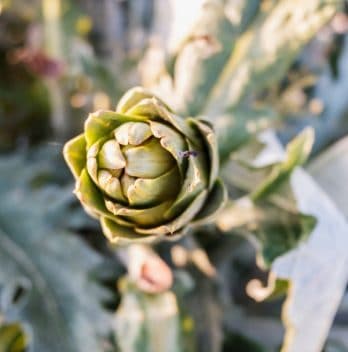
    • Green Globe Artichoke: this artichoke variety is one of the most common types. It is characterized by its wide, deep green buds with a light purple tinge.
    • Big Heart Artichoke; this variety has no thorns on the stem. It is therefore pretty easy to handle. This variety can withstand both tough and easy weather conditions. The ability to reach almost 6 inches in size is another distinct attribute of this variety.

    Other types include Baby Anzio Artichoke, Castel Artichoke, Fiesole Artichoke, Jerusalem Artichoke, Chianti Artichoke, and so on.

    Read more about How To Do Vertical Farming At Home

    Guidelines To Growing Artichoke Plant And Sunlight Requirements 

    Let’s look into guidelines for properly growing artichoke plants.  We will also look into how much sun artichokes do need and artichoke plant care.

    For a person interested in growing the artichoke plant, it is imperative to put the following into consideration:

    • Soil: The best type of soil to plant artichokes is one that is highly protected by permeable soil. Where the plant is grown on soil that does not hold enough water, there is a high probability of the plant failing to blossom.

    FoxFarm Ocean Forest FX14000 -1.5 Cubic Foot Organic Potting Soil

    71k8kWuiGNL. AC SX569
    • Sunlight Requirements: While the plant requires sufficient sunlight to survive, care must be taken to ensure that the sunlight provided is not too much or too meager. At the end of this guide, the right proportion of sunlight required will be understood.
    • Time For Planting: Between April – June seems to be the best time to plant artichoke. Where the plant is cultivated within this time frame,
    • Sufficient Spacing: The plant requires enough space to survive and grow freely. 1m spacing is recommended when planting artichokes. It is best to plant first in a bed before bringing the plant to the garden.
    • Trim The Plant From Time To Time: Trimming your artichoke is a good way of caring for the plant. Trimming is usually very easy to do with the right knowledge. When trimming, care should be taken to trim off the top third of the bud. Where you want the plant to sit flat, then ensure to trim off the stem. Also after trimming, ensure to keep the trimmed artichoke in a bowl of water mixed with lemon to keep it fresh.

    More Things To Note On How Much Sun To Grow Artichokes

    Sunlight is a key ingredient for life, both in plants and animals. The question on how much sun artichokes need to survive is one that must be considered before getting into the cultivation of the plant.

    The following should be noted on how much sun artichokes plant need:

    • The plant requires full sun to blossom. As such, it must not be planted underneath or close to a tree that will have shade over it.
    • Artichokes require a lot of space to grow and spread. This means that they should be planted in a way that they can spread out and the sun can touch all of them at a go. If they are too close, some will not grow well, while the others will die.
    More Things To Note On How Much Sun Artichokes Need
    • While the plant requires a lot of sunlight, it also requires a good amount of water. As such, sufficient water should be provided to it during the summer. If this is not done, the roots may dry off and suffer from too much heat.
    • Artichokes should be planted on soil that can retain water. Since the plant requires a good amount of sunlight to thrive, it should be cultivated on soil that can hold enough water.
    • Apply sufficient fertilizer to the plant. Especially when the plant is within its first two months after sprouting. Vegetable plant manure should be applied from time to time on the plant to improve its growth.

    Check Out The Step By Step Process Of Growing Broccoli From Seed

    Health Benefit of Growing Artichokes

    The health benefit that accrues to a person who cultivates and eat this plant are numerous. Below are some of the benefits of the plant:

    • The plant is a very good source of Vitamin C and dietary fiber.
    • It contains a silymarin compound which is very good for the liver.
    • The plant also contains cynarin compound in its leaves which is great for boosting overall health.
    • Consuming the plant helps a great deal in lowering the blood fat levels and also helps increase bile production in the liver.

    FAQ’s

    What is the best climate for growing artichokes?

    Artichokes are a member of the sunflower family, and like all members of the family, they love heat. They thrive in temperatures from 60 to 85 degrees Fahrenheit, with average temperatures of 70-80 degrees being ideal. The key to growing artichokes is to keep them at a high temperature for a long period of time. The heat causes the leaves to grow upward, causing them to blossom and then produce more leaves.

    This means that if you let them sit outside during this process, you will have to remove the old leaves.

    How much sun do they need?

    Artichokes like to be in full sun, but not too much. They don’t like to get too hot. I recommend planting in spring or fall because it takes a long time for them to mature. If you plant them in the summer, they won’t have enough time to mature.

    What’s the best soil for them?

    Artichokes require fertile soil, which means they’ll do better in well-drained, rich, humus-rich soil.

    How many artichokes do you get per plant?

    We get about 15-20 baby artichokes per plant.

    Are artichokes cold hardy?

    Artichokes are a hardy plant and they can live pretty far up north.

    They can be grown successfully in the garden and then brought inside for winter. I’ve heard of people bringing them into their basement for a few months, but they need to be kept below 32 degrees F. I’d recommend you grow some from seed in your garden next year, if you have room, and bring them into your house when you get them.

    Are they closely related to other well known plants?

    Artichokes are a member of the sunflower family (Asteraceae). They are grown for their delicious edible buds, which are harvested when they are immature.

    When should I start my artichoke seeds?

    If you grow them in your garden, you will get an early crop in the spring.

    If you plant them indoors you can start them 10 weeks before the first frost date.

    You can also plant them in containers. In that case, you need to buy the seeds at the beginning of the year. You can use the same ones every year.

    How long do they take to grow?

    I know there is a general rule of thumb that says you should let them grow for at least 4 months before harvesting

    How many stalks can I expect?

    When this plant reaches maturity it can produce more than 10 stalks in a single season.

    Final Note On How Much Sun Artichokes Need

    The artichoke plant is a plant that requires the full sun to blossom. It must be planted on good soil with the ability to hold water. Clay soils are not the best for this plant.

    Also, sufficient space must be given between the plants as it is likely to spread when it grows out. When next you are considering a plant for your garden, give artichokes some serious consideration.

    The benefits of planting this plant are too numerous not to be considered. And when you plant the artichokes, do makes sure to consider this guide on how much sun artichokes need.

  • Growing Pole Beans In Pots – Tips For Successful Growth

    Growing Pole Beans In Pots – Tips For Successful Growth

    Pole bean is a type of green beans variety. Growing pole beans in pots or containers is very possible. Either you choose to grow pole bean or bush bean variety in containers; they tend to grow well in a confined space. All you have to do is to get the right knowledge on how to grow green beans in a pot.

    Beans are a popular crop grown among farmers and they are one of the easiest vegetables to grow. Because pole bean variety tends to grow in a vining manner, they are inclined to grow up rather than growing in an outward manner. This makes them a great choice for container gardening.

    So, we will be discussing growing pole beans in pots or containers. We will as well look at tips to make sure you enjoy a bountiful and successful harvest. So, let’s begin.

    Planting Green Beans In Pots

    Planting beans in pots is an easy and interesting thing to do. Both pole bean and bush bean are varieties of green beans. Green beans generally make a great container plant. Therefore, both bush beans and pole beans are great for planting in containers.

    • Bush bean grows in a bushy manner and can attain a height of about two feet. They have a short stature as well as a short growing season. The bush bean variety will grow perfectly in a shallow pot and they are also great for growing in northern climates.
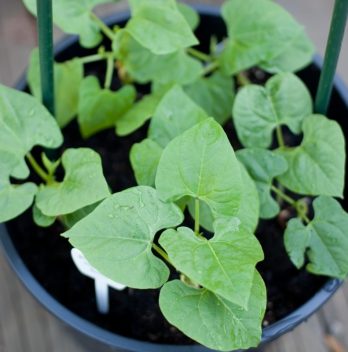
    • Pole bean on the other hand grows in a climbing way. They need support as they grow and climb. They can take about 2 to 3 months before producing but they will continue producing all through their growing season. Pole beans have a deeper root system that needs at least 9 inches of soil. Therefore, when it comes to growing pole beans in pots, they require a heavier and more substantial pot to shield them from the wind.

    For the purpose of this article, we will be looking more into growing pole beans in pots. So let’s dive into some great tips to successfully grow pole beans in containers.

    Tips For Growing Pole Beans In Pots

    Whichever variety of green beans you decide to grow in containers; you can achieve great success with them if you have the right knowledge.

    So, let’s look into these 7 great tips when it comes to growing pole beans in pots or containers:

    1.    Location

    The first thing to consider when growing pole beans in pots is to look at the location. Select the appropriate location for your pole beans. Beans generally require substantial sunlight to flourish and make a good production. The ideal thing is to choose a spot that will receive at least 8 hours of sunlight daily.

    However, if you’re unable to get a spot that has good sunlight, you can simply opt for a pole bean variety that doesn’t require too much sunlight. You can find a pole bean variety that requires about 6 hours of sunlight per day.

    Also, consider wind when choosing the spot to put your container pole beans. Pole beans tend to grow tall and can be easily blown away by a strong wind.

    2.    Select The Right Pot

    Pole beans are inclined to grow tall. Hence, you should go for a heavy and wide pot that is less prone to being blown away by the wind. Ideally, pole beans require about a 9-inch deep pot.

    You can as well grow more than one pole bean in a single pot. This is possible for only wider and larger pots and the spacing for each plant should be about 4 inches.

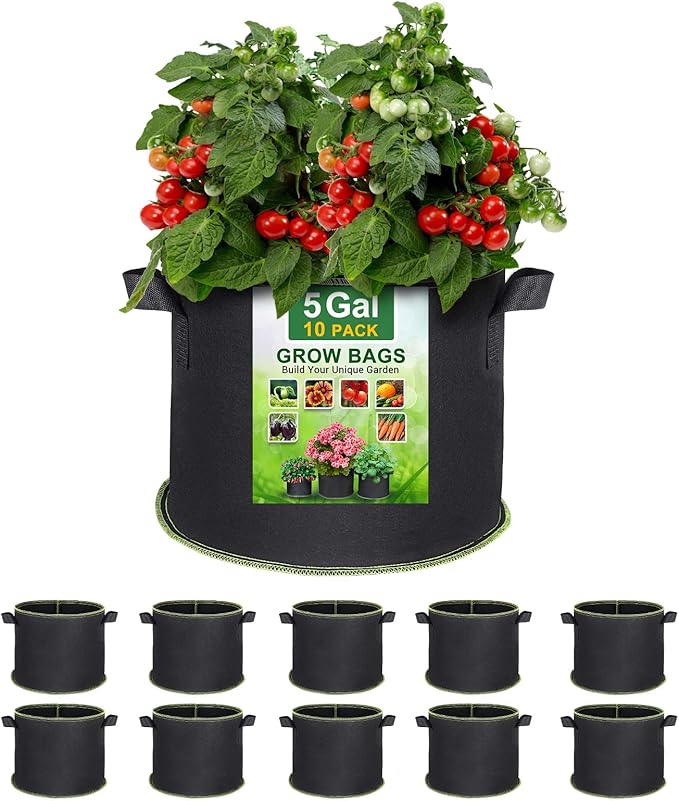
    SunArea 10-Pack 5 Gallon Grow Bags, Thickened Nonwoven Aeration Fabric Pots with Reinforced Handles

    719 y jhCFL. AC SX679

    Your pot should also have drainage holes. Beans may like moist soil, but the soil shouldn’t be too saturated. Have at least 3 drainage holes.

    3.    Soil Preparation

    Beans plants generally are not too demanding when it comes to the soil they grow in. just like any other legumes, pole beans can fix nitrogen and they can tolerate growing in low-nutrient conditions. However, you should still use good fresh potting soil to enhance production.

    4.    Seed Sowing

    Pole bean seeds should be sown once the weather is warm. Beans generally are warm-season plants and they need warm soil to germinate appropriately. Hence, they are not so tolerant to cold weather or even frost.

    Ideally, the outdoor temperature should be over 60 degrees Fahrenheit. If the season in your area isn’t warm enough, you can germinate your seeds indoors using heating mats. Once the seeds have sprouted, you can move them outdoors to a warm location.

    5.    Consistent Watering

    Bean plants love moisture. Therefore, water your potted plant consistently. Do some checking by inserting your finger into the potting soil to feel the soil moisture. If about 1 or 2 inches of the topsoil feels dry, water your plant.

    When the pole bean reaches its flowering stage, it’s important you water consistently. Don’t take the chance of allowing the soil to get too dry because it can drop the flowers.

    Consistent Watering

    6.    Monthly Fertilization

    A monthly supply of liquid or granular fertilizer is fine. Ensure you use products that have a lower nitrogen ratio because beans generally tend to fix nitrogen. Excess nitrogen can depreciate pod production.

    7.    Provide Support When Needed

    Pole beans tend to climb. Therefore, support provision is required. Even though pole beans can climb on their own, it’s a good idea to monitor their progress and train their vines when required.

    Harvesting

    Pole bean variety can take two to three months before they begin production of beans. But they will continue to grow throughout the season. When you harvest your pole bean frequently, the more harvest you get.

    Usually, beans are ready for harvest when they attain around 4 inches in length. Keep on harvesting your beans frequently until the plant ceases to yield flowers or when the weather becomes cool.

    However, if your pole beans keep producing even in cool weather, bring them indoors and put them in a warm place. If there are no sunny or warm spots indoors, consider obtaining some grow lights.

    Harvesting Pole Beans

    FAQ’s

    How do you increase yield of pole beans?

    Pole beans have a great tap root system that helps them pull nutrients up from the ground. They are very susceptible to being eaten by bean beetles, but this is easily fixed by cutting off any damaged beans and spraying them with insecticidal soap. Keep the area around the plants free of weeds, as these can cause the beans to rot out and become less productive. Beans should be planted in soil that has been amended with compost and fertilizer to increase their health. Make sure you keep your pole beans watered during the dry season, as they need to have a good root system to draw moisture from the ground.

    Can pole beans be grown in pots?

    Yes, you can grow pole beans in pots. I have grown them for years and they do well. I don’t know how to keep the soil moist though, as I usually water them from below. Pole beans are a cool weather crop. In the South they can be planted in late February. In other regions it is possible to plant them in mid-March or even early April.
    The seedlings germinate rapidly, and it’s easy to grow them in the greenhouse with good success. The key to success is to keep the plants watered enough that the roots don’t dry out.

    Why are my pole beans not growing?

    There are two things you need to do to get them to grow again. First, if you haven’t already, take a look at your soil. You can do this by taking a shovel and digging into the ground at least 1 foot deep.

    If you see any dry spots in the soil, it is time to water. Also, if you notice that the ground has dried out between the rows of plants, it is also time to water. The second thing you need to do is make sure that the seeds are planted correctly. The first row should be on top of the soil, and then they should be spaced 10 inches apart. I hope this helps!

    How often should I water my pole beans?

    They need water every day.

    What is the best way to grow pole beans?

    In order to grow pole beans, you need to have a good amount of sunlight.  The more sunlight you get, the more healthy your pole beans will be. Pole beans are easy to grow, but they do require a lot of space.Be sure to plant your pole beans deep enough so they can grow tall. It is best if you can plant them at least a foot deep and 4 inches apart. They need to have lots of room in between themselves so they can grow as tall as possible. Make sure you water them well. They also need to be fertilized regularly in order for them to grow properly. Make sure that you use a fertilizer that has an NPK ratio of 8-10-8. This will help your pole beans grow in a healthy manner.

    Growing Pole Beans In Pots: Conclusion

    Pole bean varieties are easy plants to grow in pots or containers. If you follow our tips on growing pole beans in pots, you can easily and smoothly grow this bean variety.

  • Tomato Plant Diseases Curled Leaves And Possible Remedies

    Tomato Plant Diseases Curled Leaves And Possible Remedies

    Tomato leaves curling is one garden problem that may present itself to your garden. Experiencing tomato plant diseases curled leaves in your garden can be pretty frustrating and worrisome. But don’t stress! There are some possible remedies you can go for to help your tomato plant leaves curling and we will discuss that here.

    You should however know that not all tomato plant diseases infected leaves curling are solvable. But it’s good to know that some of the tomatoes plants can be helped but others are unsolvable. You can however take some measures to avoid future occurrences of this type of situation.

    This is why we would be looking at the causes of tomato plant diseases curled leaves and more.

    Reasons Tomato Leaf May Curl

    Tomato leaves curling is one common issue gardeners encounter. There are several reasons you may be experiencing tomato plant leaves curling in your garden. The first thing to know is that not all tomatoes curling are due to infectious diseases.

    Your tomato leaves curing may be due to physiological reasons, herbicide drift or damage, as well as infestation.

    • Physiological reasons are the most common and they are mostly caused by environmental stress.
    • Herbicide drift or damage is caused by herbicides spreads on your plants.
    • Then we have an infestation from a virus which is majorly caused by 3 viruses. They are curly top virus (spread by leaf-hoppers), tomato yellow leaf curl virus (spread by whiteflies), and mosaic virus.

    For the purpose of this article, we will be looking into more details on tomato plant disease curled leaves.

    Tomato Plant Diseases Curled Leaves And Possible Remedies

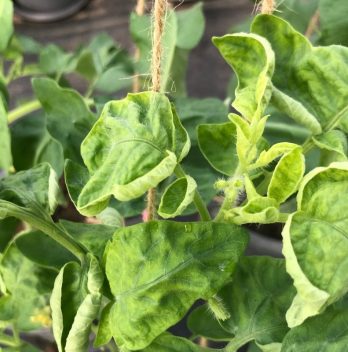
    One culprit to your tomato leaves curling is a virus. There are 3 main viruses that can cause your tomato plant to curl. They include:

    1.    Curly Top Virus: Tomato Plant Diseases Curled Leaves

    Symptoms: Once you notice the top portion of the plant curling upward or the whole leaves pointing upwards, it may be a sign of the curly top virus.

    Curly top virus in tomato plant is caused by leaf-hoppers pests chewing your tomato plant. The pest mostly chooses one plant to chew. The good thing is that the virus won’t spread to other plants even if the infected and uninfected tomato plants are touching each other.

    But when these leaf-hoppers bugs chew on an infected plant and fly to chew on another uninfected plant, chances are the leaf-hopper bugs will give the uninfected plant that virus.

    You can still allow the plant to attain maturity and harvest your crop. This is if the plant is already growing fruit, the plant can still produce ripened fruit. However, if they were infected in their early stage, their growth may be stunted and ripen prematurely.

    But the best thing to do is to get rid of the plant to avoid leaf-hoppers spreading the virus to uninfected plants when they chew on them.

    Organic Neem Bliss 100% Pure Cold Pressed Neem Seed Oil

    4176HQtT+WL

    2.    Tomato Yellow Leaf Curl

    Symptoms: Leaves can curl upward or downward and the leaf can roll in a cup-like fashion. More symptoms are marginal yellowing of leaves, leaf size reduction, dropping of flowers or fruit, and stunted plant growth.

    Tomato yellow leaf curl is spread by whiteflies. The best thing to do is to keep the population of whiteflies in your garden under control. You can do this by spraying neem oil once or twice every week so whiteflies won’t come close to your plant. But once the disease infected the plant and manifested, it’s hard to get rid of it.

    However, you can also do this to help your plant: get a big trash bag and wrap it by covering the whole tomato plant. Then tie the open end of the bag around the tomato trunk at soil level.

    Cut the plant off at the soil level and allow it to sit in the hot sun for a day or two. This will kill all the whiteflies that contain most of the virus. Then begin a neem spraying scheme after this.

    3.    Tomato Mosaic Virus

    Symptoms: Leaves rolling upwards and coloring of leaves such as internal browning. The plant may also have stunted growth.

    Tomato Mosaic Virus

    The best thing is to remove infected plants and get rid of them. This mosaic virus can live in the soil for up to 2 years. Therefore, when you’re watering your tomato plant, water the base and never allow water to splash over the leaves.

    When you do this, it will reduce the chances of the mosaic virus getting into your plant leaves. This is just in case the mosaic virus still lives in the soil.

    The best way to overcome the tomato mosaic virus is to grow resistant varieties.

    Other Reasons For Tomatoes Leaves Curling

    Apart from disease-related issues, tomato plant leaves can be all curled up for other reasons. We have physiological reasons which are often resolvable. Then we have the herbicide drift.

    • Physiological Reasons: Physiological reasons are caused by environmental stress. This environmental stress can include heat, under watering, overwatering, dry weather, excess nitrogen application, etc. Usually, the leaves won’t change their green color but they will curl upward and most of these causes are remediable.
    • Herbicide Drift: This is when you spray herbicide in your garden or you live close to where one has been sprayed, some of the residues can drift over your tomato plants. This can cause your tomato leaves to curl. Your plant may recover from this. But if they don’t it’s best you pull out the whole plant and dispose of it.
    Other Reasons For Tomatoes Leaves Curling

    Preventive Measures For Tomato Plant Leaf Curl

    Tomatoes may be easy to grow but they can as well be tricky to grow. You need to keep a close eye on your tomatoes as they grow so you don’t miss even the slightest changes that may occur. So, always watch your tomatoes plant and act as soon as you notice any problem.

    Another great tip is to go for virus infestation is to plant resistant tomato varieties of these diseases.

    FAQ’s

    How do you treat curled tomato leaves?

    Curling is a disease that affects only tomatoes. It is caused by viruses, bacteria or fungi. It appears when there is high humidity. When a plant is affected by the disease it can look like a leaf that has been rolled up. The disease can also affect the fruits.If you are treating your tomatoes for this problem, you should look for the symptoms of the disease and follow these steps:
    – Check the leaves for signs of wilting or yellowing
    – Look for any other problems with the leaves – they may be unevenly coloured, or they may have spots or crinkles on them
    – If you can see signs of a fungal infection, there may be some mould on the leaves – if so, remove the leaves and disinfect the area where they were growing
    – If you have found that the cause of your curled tomato leaves is a virus, you should first make sure that the virus is not spreading to other plants in your garden. You can do this by spraying a product called ‘Bordeaux mix’. This is a spray that contains a pesticide that kills viruses.
    You can use an anti-fungal spray. You can also remove the affected leaves.

    Tomato leaves can be also damaged by insects. I would recommend using Bt for them. There are many types available, some that are used against leaf feeding caterpillars and some that are used against slugs. It’s best to use a combination of the two. The Bt products that are used against leaf feeding caterpillars work very well. Bt for slugs is effective at controlling them in the garden, but it will not kill the slugs in your greenhouse .

    Can you cure tomato leaf curl virus?

    Tomato leaf curl virus (TLCV) is one of the most devastating viruses in the world and has been present for years. It causes serious damage to tomato crops worldwide. There is no known cure for TLCV, and it is difficult to grow tomatoes without being infected by it. However, there are some ways to control TLCV, including using chemical sprays, breeding, and grafting. These methods are expensive and time-consuming. 
    The most common method of controlling TLCV is through the use of resistant varieties. Tomato plants that have a resistance gene against TLCV can be grown without being affected by the virus. Although the resistant varieties are available, they are not always effective in preventing the spread of the virus, and they do not always produce good yield. Insecticides are the most common way to control TLCV, but they may not be as effective as expected. The virus is carried by aphids and thrips, and they can transmit the virus to other tomato plants in the same field, or to other plants in the same garden. Insecticides that kill these pests are not 100 percent effective against TLCV, because it can be transferred to another plant through the insecticide’s residual effect. In some countries, farmers use an organic method to prevent the virus from spreading. They plant two tomato crops, one with the resistant varieties and one without. This allows the virus to remain in the soil and prevent it from spreading.
     

    Closing Remark On Tomato Plant Diseases Curled Leaves

    Tomato plants having all curled up leaves may be solvable or not. The key to solving tomato plant leave curl is to correctly identify the problem before you administer any solution.

  • Where Did Green Beans Originate?

    Where Did Green Beans Originate?

    Green bean is a type of common bean and they are the unripe young fruit of different varieties. Green beans are harvested while the bean is still in their pod and even before they have the chance to mature. But did you know where green beans originate from? Let’s find out.

    Green beans are one of the most-loved vegetables and they are common staples in many kitchens across different countries including the United States. This bean is a very nutritious food and it is loaded with vitamins A, C, and K. They are as well rich in fiber and folic acid.

    With their popularity and how people love to integrate these beans into their various meals, you may begin to wonder where green beans come from. Not too worry. We will be discussing where these green beans originate from and talk more about this great-tasting vegetable. So, let’s begin.

    Origin Of Green Beans

    So, the question is where do green beans come from? Green beans originate from Central America and South America. There is also evidence that this bean variety has been cultivated in Mexico and Peru for thousands of years.

    This bean variety was introduced to the Mediterranean region in 1492 by Christopher Columbus. Green bean was cultivated all around Italy, Turkey, and Greece around the 17th century.

    Origin Of Green Beans

    As of today, this tasteful and nutritious crop is virtually everywhere. Green beans are grown in many different states in the US. Some of the top states that produce green beans in the United States are Florida, New York, and Wisconsin. Green beans tend to grow in almost any soil.

    More About Green Beans

    Green bean botanical name is Phaseolus vulgaris and they are referred to by different names such as snap beans, string beans, snaps, French beans, and haricot vert. There are over 150 varieties of green beans that are widely grown throughout North America, South America, and Europe.

    This bean variety is a very versatile vegetable that is widely available in the fresh, canned, or even frozen state. Green beans are usually green. But there are some cultivars that may come in different colors such as purple, yellow, red, or even striated. But most times, the beans inside them are usually green.

    Before now, the green beans that were cultivated weigh back were often tough and stringy. This type of green beans was the old cultivars. However, things were changed and farmers began cross-breeding and experimenting aiming for a palatable green bean.

    This resulted in the newer recent cultivar and this type of green beans has been bred to reduce their strings. Therefore, they are known as stringless beans and the term string beans is virtually an outdated term.

    Green Bean Seeds – Kentucky Dreamer – Bush Type Stingless

    Green Beans Applications

    These great-tasting green beans are widely eaten around the world and they are available as fresh, canned, as well as frozen.

    Fresh beans tend to feel crispy and bright green. Green beans can be boiled, steamed, stir-fries, baked or even eaten raw. However, the canned green beans should be rinsed and drained and this will help reduce the sodium content by about 41 percent.

    Read more about How Far Apart To Plant Pole Beans

    Nutritional Value Of Green Bean

    Green bean offers so many nutritional and health benefits. Here are some of the nutritional benefits of green beans:

    Green beans are a great source of vitamins C, A, E, K, amongst others.

    • Vitamin A is very essential for a healthy vision, the health of your immune, as well as reproduction.
    • Vitamin C is an antioxidant that aids in boosting the immune system and it helps produce collagen that protects the skin from oxidative stress. One cup of green beans contains about 12.2 mg and this is around 25% of the recommended daily intake.

    Green beans are also rich in vital minerals such as manganese, potassium, zinc, calcium, phosphorus, and iron. A single cup of the green bean contains 25 mg of manganese, 211 mg of potassium, 0.24 mg of zinc, 37 mg of calcium, 38 mg of phosphorous, and 1.03 mg of iron.

    Nutritional Value Of Green Bean

    These minerals help support healthy bones, improve metabolism, and it also enhances wound healing.

    More Health Benefits Of Green Beans

    1. Healthy Weight: you can maintain a healthy weight as they are low in calories. A cup of green beans contains about 31 calories. They almost do not have any fat and their sugar content is about 3.6 grams.

    2. Healthy Heart: because green bean has very low cholesterol and low fat, they are safe for the heart. High cholesterol foods can deposit and build up fat in your arteries, thereby decreasing blood flow to the heart and brain. This can predispose you to heart attack or even stroke. But green beans being a friendly heart food makes them very safe and healthy for your heart.

    3. Gut Health: green bean is loaded with fiber and it will help your digestive system run smoothly and healthily.

    4. Pregnancy Health: green bean is awesome for the pregnancy journey. It is rich in folate and vitamin B which are two important nutrients necessary for the growth and development of the growing fetus. Consuming a single cup of green bean contains approximately 1/3 of the daily recommended amount of folate and vitamin B.

    5. Strong Bones: green bean is rich in Vitamin K which provides strong bones and also helps in blood clotting. Deficiency of this essential vitamin K may predispose one to osteoporosis. A cup of green beans can help you meet 20 percent of your daily vitamin K intake.

    FAQ’s

    Where and when did beans originate?

    Green beans are a vegetable that has been cultivated for thousands of years. They are native to the Americas, where they were first found growing wild.

    The earliest evidence of green beans was discovered in Peru. The beans were found in the tombs of an ancient civilization known as the Moche. They were discovered in tombs dating back to about 1,000 A.D.

    The beans were identified as being the same as the beans we know today. The beans were found in the tombs with other food items, such as corn and potatoes. The beans were also found in the homes of the Moche people.

    How much are they incorporated in people’s diets?

    Today, green beans are one of the most popular vegetables in the world. They have become one of the most widely eaten vegetables in the world. They are available year round, and they can be enjoyed cooked or raw. Green beans can be used in many different ways. They can be cooked as a side dish, used in salads, or they can be added to soups and stews. They can even be eaten raw, like in a salad. Green beans are also a healthy vegetable.

    What are the nutritional benefits of green beans?

    They are loaded with nutrients that help keep you healthy. Some of the nutrients found in green beans include: Fiber – Green beans have 5 grams of fiber per cup of cooked beans. This is more than any other vegetable. It helps keep your digestive tract healthy, helps to reduce blood cholesterol levels, and it may even help to prevent cancer. Vitamin C – Green beans are packed with vitamin C.

    What is the best kind of green bean to cook?

    The Sugar Snap green bean is the best for eating. The seeds are small and they are sweet. Sugar snap beans have a crisp texture when cooked. They are best when used in salads. They are very popular with kids because they look like little peas.

    What are green beans classified as?

    Although they are referred to as beans, they actually aren’t beans, but are rather classified as legumes.

    Recap On Where Are Green Beans From

    There are so many things to love about the green bean. You can enjoy their great taste, their numerous nutritional benefits, the ease with which they can be incorporated into our various meals, and so on.

    So here’s a quick recap on what we’ve discussed on where did green beans originate:

    • Green beans originate from Central America and South America.
    • They have been cultivated in Mexico and Peru for thousands of years.
    • Even though they go by the name green bean, they are not always green. They can come in other colors such as purple, red, yellow, and striated.
    • They are loaded with many health benefits.
  • Green Bean Trellis – How To Build One

    Green Bean Trellis – How To Build One

    Green bean variety that tends to climb requires stable support. Trellis is one common framework used for a plant that requires support such as green beans.

    Green bean is a type of common bean and they are the unripe variety of beans. They are a popular staple that makes up part of our diet. This bean is also referred to by different names such as string bean, snap bean, French bean, and snaps.

    Green beans come in two varieties namely pole bean and bush bean. The bush bean does not require support. But the pole beans will usually require support.

    It is only ideal for growers to support their green bean that tends to grow in a climbing manner. This is why we will be looking at green bean trellis.

    About Green Beans

    Green bean is a type of common bean. It originated from Central America and South America. It has been researched that these green beans have been cultivated in Mexico and Peru for thousands of years.

    Green beans were grown by North Americans and these beans were planted with corn to allow it to grow up a stalk with the corn. As of today, the green bean is an essential crop known almost everywhere.

    About Green Beans

    Why Green Bean Require Supports

    As we mentioned, green beans come in two varieties which are bush beans and pole beans. The major difference between these two beans varieties is their growing styles.

    • Bush beans tend to grow in a bushy manner or compactly and can attain up to two feet height. Therefore this green beans variety doesn’t require support.
    • On the other hand, pole beans growing style is vining and can attain 10 to 15 feet height. Therefore this bean variety requires support such as trellis or staking.

    So, for the purpose of this article, let’s look into how to support your green bean plant using a trellis.

    Choosing The Right Trellis For Green Beans

    There are different types of trellis you can use to support your vining green bean and help maximize growth and production.

    Choosing the ideal type of bean trellis will depend on your personal preference, availability of garden space, durability, and budget. So, put these in mind when selecting the type of trellis to use in your garden.

    The common trellis you can go for include:

    • Teepee Trellis
    • String trellises
    • Livestock panels

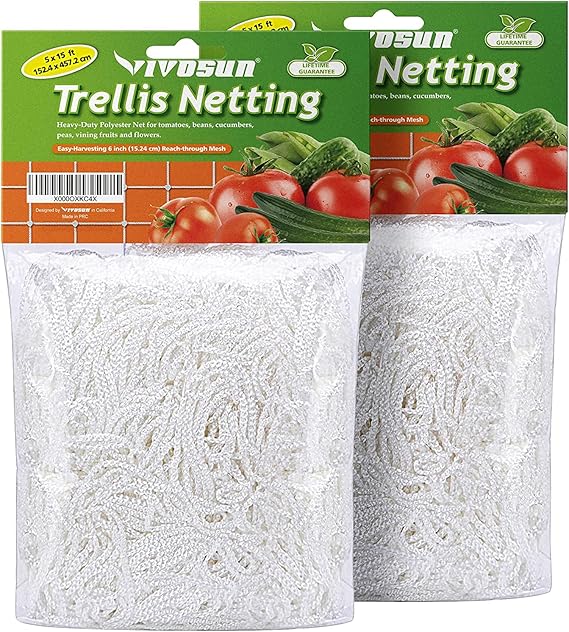
    VIVOSUN 2 Pack Heavy Duty Polyester Plant Trellis Netting 5 x 15ft

    81c+y7Z3TCL. AC SX569

    Let’s dive in further by looking at their details and how to build them.

    Types Of Trellis To Use And How To Build Them

    So, here are the details of the types of green bean fence or trellis you can use for your pole bean variety and how to build them:

    1.    Teepee Trellis

    Teepee trellis is easy and inexpensive to make. Also, if you’re short of garden space, teepee trellis may just be what you need.

    To build teepee trellis, you will need

    • 5 to 7 bamboo poles or sturdy branches (should be 8 to 10 feet tall)
    • Twines, ropes, or wire
    • Scissors

    To begin, dig up the soil in your garden and push the end of each pole about 6 inches into the ground. Then the spacing for each pole should be about 6 to 10 inches apart. Cover up the hole by packing the soil around the poles firmly.

    Then carefully bend the tops of the poles inwards aiming towards the center of the circle. Ensure this is done slowly and carefully to avoid snapping the poles. Once this is done, use the rope, twine, or wire to bind the gathered top poles together. Secure them well and tie the knot.

    How To Build Teepee Trellis

    You now plant your pole bean seeds or seedlings around the base leg of each pole. Green beans tend to grow rapidly. As they grow, they will climb to the top of the pole.

    You can also train the plant by carefully wrapping the seedlings on the twine. But most times, they tend to climb on their own. But you can do this just to help any stray plant that goes in the wrong direction.

    2.    String Or Twine Trellises

    String trellises tend to be time-consuming to construct. But they are also less expensive to construct. Here’s what you’ll require to build a string trellis:

    • Posthole digger
    • 3-inch deck screw
    • String or twine
    • Drill
    • Garden staples
    • 2 by 4-inch lumber or timber
    • 8 to 10-foot post

    Using a post hole digger, dig a hole of about 8 to 10 inches at each end of the bean row. The holes should be spaced 6 feet apart. Dig in a 6 to 8-foot wooden post into each hole. Secure them firmly.

    Create a top crossbar by laying a 2 by 4 on the top of the posts. With the help of a drill and 3-inch deck screw, attach the board to the post. Then push garden staples into the ground between the two posts and the staples should be spaced 6 inches apart. Do this process again for the row on the other side.

    The end of the garden length string or twine should be tied to one end of the crossbar. The string or twine should be looped into the round and under the first staple. Keep on looping the string through the staples and over the crossbar until you get to the end. Tie it off and cut off the excess string.

    Then plant your beans beneath the structure and watch it grow and climb up the string.

    3.    Livestock Panels

    The livestock panel can be used multiple times. This type of trellis often measures about 16 feet long and 5 feet wide.

    For an easy-to-construct trellis, allow the livestock panels to lean horizontally or vertically against your garden wall. Then sow your seeds beneath and the vines will grow up and over it.


    FAQ’s

    How do you make a home made green bean trellis?

    A garden without a trellis can be a problem, especially if you have a long row of peas or beans to grow. As the plants grow taller and taller, it can become increasingly difficult to keep them supported without causing damage. If you want to grow peas or beans, you’re going to need a trellis. Not only does a trellis help you grow taller vegetables, but it also helps keep your plants safe from pests and provides support for them as they grow. Trellises can be made out of wood, metal, plastic or fabric.
    A trellis is essentially a vertical support that can be attached to the ground or to a pole.

    The simple trellis is made out of string and can be tied to stakes in the ground or tied to a pole. This is a great option for gardeners who want a basic trellis and don’t want to spend a lot of time assembling it.

    The vertical trellis is one of the most common types of trellis used in gardening. A vertical trellis is usually made of wood and has multiple supports on each side of the trellis. This allows you to grow taller plants without bending over. You can find vertical trellises made out of wood, metal or plastic. A vertical trellis is ideal for growing taller vegetables such as cucumbers, tomatoes, beans and peas. The horizontal trellis A horizontal trellis is similar to a simple trellis, but it is attached to stakes on both sides of the garden. The horizontal trellis is great for growing a wide variety of crops, including peppers, eggplants, melons and cucumbers. It’s also useful for growing shorter vegetables such as lettuce, spinach and broccoli.

    What are the different types of trellis?

    There are two main types of trellises: wire and wood. Wire is much easier to use than wood and can be used for a variety of structures, including arbors, pergolas, fences and privacy screens. However, it can be expensive. If you have enough space, wood is by far the best choice for most projects. It’s more expensive, but it lasts forever and will look good for years.

    Also, trellises come in many different shapes and sizes. One of the most popular shapes is a “zig-zag” trellis. It consists of a series of parallel slats attached to a single vertical post. These are great for supporting climbing vines like grapes, cucumbers or melons. The horizontal slats provide plenty of support while allowing the vines to grow between them. Another common type of trellis is the arbor trellis. This is a square or rectangular frame made from metal or wood. It has two sets of horizontal slats on either side of the structure. The slats are usually spaced evenly apart. Arbors are popular for growing small fruits and vegetables, including strawberries, apples, pears, plums, cherries and more. If you have space, you can also build a latticework trellis.

    Additional Say: Green Bean Trellis

    Building green bean trellis is needed to support your vining pole bean. This way, they can grow to flourish as well as maximize production at the end of their growing season.

    So, follow our guidelines on how to build trellis for your pole beans variety.