Author: Eunice

  • Can You Eat Cross Pollinated Squash? Yes Or No?

    Can You Eat Cross Pollinated Squash? Yes Or No?

    Can you eat cross-pollinated squash? This is one common question that some growers would like to know and we will answer this in this post. We have different types of squash and they come from the family of Cucurbitaceae plants. Squash examples include zucchini, pumpkins, guard, and the like.

    Squash is a type of fruit that has seeds in its internal part and they are derived from a flowering plant of plants.

    Cross-pollination happens when two separate plants exchange their pollen grains and pistil to give rise to a new variety that has the characteristic of the two parent plants. Now cross-pollination can occur between different types of squash variety.

    It is possible for different squash varieties that are planted close to each other to cross-pollinate even when that is not our intention in the first place. Can you eat cross-pollinated squash? Is cross-pollinated edible the question we would like to know?

    So, this article will give you the answer to your troubling questions about if you can eat cross-pollinated squash.

    Are Cross Pollinated Squash Edible Or Consumable?

    Can you eat cross-pollinated squash? The straight-up answer is that cross-pollinated squash is mostly inedible. It isn’t a good thing to consume cross-pollinated squash. The reason is that they contain a large amount of cucurbitacin. Consuming cross-pollinated squash may simply be toxic to your health.

    Now the normal squash contains a reasonable amount of cucurbitacin which is safe for consumption. However, the high concentration of cucurbitacin tends to taste very bitter.

    Are Cross Pollinated Squash Edible Or Consumable

    Squash Cross-Pollination

    From what we mentioned above, cross-pollination occurs by exchanging male and female gametes between two separate plants to produce offspring. Cross-pollination does occur among squash. If you plant two same or different squash varieties, they may cross-pollinate with each other to yield new offspring.

    Cross-pollination can occur in squashes and pumpkins. All these species can cross-pollinate with each other.

    Check Out A Guide On When To Pick Basil Leaves

    Seed Saving From Squash

    It is pretty rewarding to save seeds from your garden. However, you need to be careful of the type of seed being saved particularly if they have been cross-pollinated. If the seeds of cross-pollinated offspring of squash are saved and planted the following year, it may give rise to a totally different plant that is inedible.

    Although, not all types of squash are compactable to cross-pollinate. Below we have listed some categories of squash that tend to cross-pollinate with each other.

    What Squash Will Cross Pollinate With Other Squash?

    As we have mentioned, different squash can cross-pollinate with each other. The following squashes from each group can cross-pollinate with each other.

    • Zucchini, acorn, delicata, pattypan, yellow crookneck, and spaghetti squash. Pumpkins and gourds can also cross-pollinate with these groups of squash.
    • Buttercup, butternut, Hubbard, and turban squash.

    All these plants can be easily cross-pollinated by insects. Their separate male and female flower increase the chances of the female flower becoming fertilized with different pollen grains from a different variety of species or the same species. These combinations of plants may end up yielding inedible fruits.

    Read more about What Does An Artichoke Plant Look Like?

    Why Cross Pollinated Squash Tends To Be Toxic?

    Normally, the plants of the Cucurbitaceae family are meant to produce a toxic compound which is cucurbitacin. This toxic compound usually acts as a natural defense against insects.

    This cucurbitacin toxic compound is present in wild squash, cucumbers, as well as other cucurbits in a substantial amounts. So, because of the large amount of cucurbitacin compound in the wild, these types of squash and cucumbers tend to taste very bitter.

    However, the domesticated variety often contains a very little amount of this compound that isn’t harmful to humans when consumed. Also, the domesticated squash variety that is grown in the garden and the ones purchased from the stores usually have a less bitter taste. And this is due to the varying amount of bitter compound.

    But some factors can cause this bitter and toxic compound to increase its concentration in squash. They are; other product that has been cross-pollinated with wild plants and some types of stress during their growth (stress like lack of water or poor fertilization).
    Our Pick
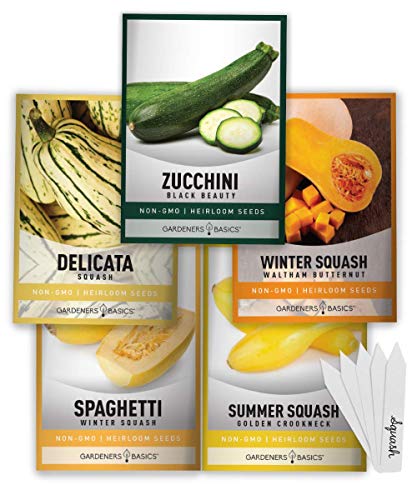
    Squash Seeds for Planting 5 Individual Packets – Zucchini, Delicata, Butternut, Spaghetti and Golden Crookneck
    $9.95

    Gardeners Basics Squash Seeds for Your Non-GMO Heirloom Vegetable Garden

    Check Amazon Price
    We earn a commission if you make a purchase, at no additional cost to you.
    12/02/2025 05:03 pm GMT

    Therefore, if you come across any squash such as zucchini, pattypan, acorn squash, and the like, and you didn’t plant them in your garden, you should definitely avoid them. Even consuming a small amount of this type of cross-pollinated squash can be pretty toxic to your health.

    Click Here to Learn How Much Bone Meal Per Tomato Plant?

    Can Insect Pollinating Bees Cross Pollinate Squash?

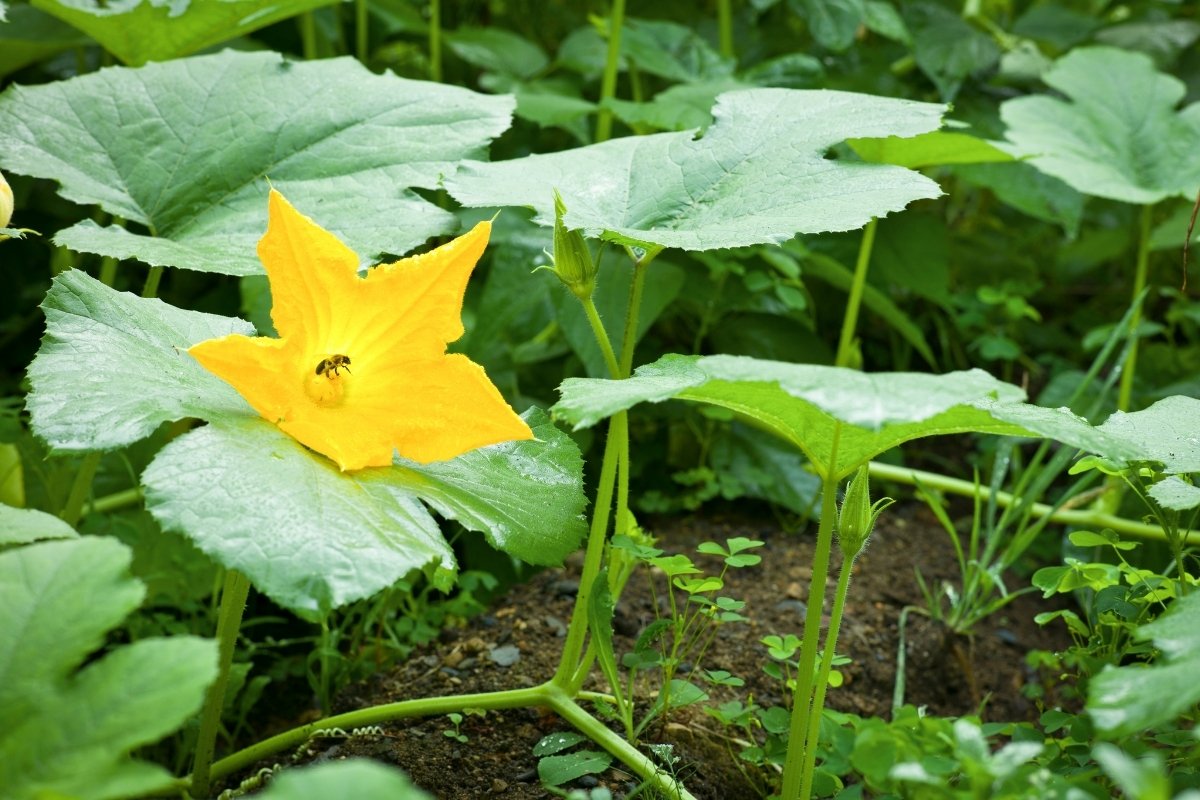
    Squash are insect-pollinated plants. Hence bees can cross-pollinate squash. You may even be growing just one type of squash variety in your garden, bees can simply collect a different pollen grain from your neighborhood and cross-pollinate it with yours. Then this gives rise to new offspring.

    As we said, you should totally avoid any type of squash you didn’t plant in your garden. They are simply toxic squash and should be removed from your garden.

    How To Avoid Cross-Pollinated Squash In Your Garden

    If you wish to avoid cross-pollination between squashes, do the following;

    • It is required you separate them by a good distance of one and a half to a mile.
    • Additionally, you can build some barriers to drastically reduce the chances of pollinators cross-pollinating your plants. Large barriers such as thick standing trees, a hill, large buildings, and so on may help slow down pollinators from around your neighborhood.
    • Furthermore, you can cage or net your entire plants. Or you can simply tape new male and female flowers as they begin to form (i.e. right before they open). But this method usually requires hand pollination of flowers once they are ready to pollinate.
    How To Avoid Cross Pollinated Squash In Your Garden

    Can Cantaloupe Cross-Pollinate With Zucchini?

    It’s unlikely that cantaloupe will cross-pollinate with zucchini. The female flower of each crop will only be fertilized with pollen from the same species. Cantaloupe and zucchini are both members of the Cucurbitaceae family. As a result, these fruits can cross-pollinate. However, the natural occurrence is rare. 

    Cross-pollination occurs when one plant’s pollen is transferred to another’s stigma. This results in fertilization and the production of seeds. Bees and other critters are responsible for this. It can happen when these insects visit flowers on both plants and transfer pollen from one to the other. Cross-pollination can also occur when pollen is carried by the wind or when humans inadvertently transfer pollen from one plant to another by handling the flowers or plants.

    You can separate the plants if you are worried about cross-pollination between your cantaloupe and zucchini crops. Plant them in different areas of your garden or use physical barriers like netting screens to separate them. Alternatively, choose cantaloupe and zucchini varieties that aren’t prone to cross-pollination. 

    How Do You Cross-Pollinate Zucchini?

    To cross-pollinate zucchini, you can follow these steps:

    1. Identify the male and female flowers on the zucchini plant. Male flowers have a thin stem on the plant’s main branches. Female flowers have a small, immature zucchini at the base of the flower and are located on the main stem or branches of the plant.
    2. Gently remove the petals from a male flower to expose the stamen, which is the pollen-producing part of the flower.
    3. Use a small paintbrush or cotton swab to gently dab the stamen on the stigma of a female flower. The stigma is the sticky, receptive part of the female flower that receives the pollen.
    4. Repeat this process with multiple female flowers to ensure cross-pollination.

    It’s important to know that zucchini plants can also self-pollinate. This means they can produce fruit without cross-pollination. However, cross-pollinating can help improve the genetic diversity of the plant and may result in stronger, healthier plants and fruit.

    There are several reasons to consider cross-pollinating your zucchini plants. These include:

    Improves Genetic Diversity

    Cross-pollination introduces new genetic material into the plant, which can result in offspring with traits that are different from those of their parents. This can lead to plants that are more resistant to diseases and pests and that are better adapted to their environment.

    Increased Fruit Production

    Cross-pollination can lead to more flowers and fruit, as the plant’s genetics may be more favorable for fruit production.

    Improved Fruit Quality

    Cross-pollination can result in improved size, shape, and flavor, as well as longer shelf life.

    Increased Seed Viability

    Cross-pollination can result in seeds that are more viable and able to germinate and grow into healthy plants.

    Whether you leave your zucchini plants to self-pollinate or offer a helping hand is up to you. Although cross-pollination has added benefits, it can be tricky to master. 

    Conclusion

    So, we have answered the question; can you eat cross-pollinated squash? Hence, if you encounter a cross-pollinated squash, it is very likely they contain a huge amount of the toxic compound cucurbitacin.

    So, do well to avoid eating them so you don’t experience serious illness as a result of consuming them.

    FAQ’s

    Are Cross Pollinated Squash Edible?

    No. Cross pollinated squashes aren’t edible. Because they contain a large amount of cucurbitacin.

    What Squash Will Cross Pollinate?

    Zucchini, acorn, delicata, patty pan, yellow crookneck, and spaghetti squash are squashes that can cross pollinate each other.

    Can Bees Cross Pollinate Squash?

    Yes. Bees can pollinate squash because squash are insect pollinated plants.

  • Ebb And Flow Hydro Systems

    Ebb And Flow Hydro Systems

    Hydroponics gardens are excellent ways of growing different plants without soil and ebb and flow hydro systems are one type of hydroponic system. Ebb and flow hydro systems are fairly easy to use if you have the right knowledge and you can set them up easily.

    Ebb and flow hydro systems are a versatile hydroponic system that is widely recognized and they are also regarded as flood and drain systems.

    Understanding the principle of ebb and flow system setup is a great way to go about building, using, and maintaining this hydroponic system.

    In this article, you will find out how to set up an ebb and flow system, the advantages and disadvantages of it, the best growing medium to use for this system, and so on. So, let’s delve in and discuss more on the ebb and flow hydro system.

    Ebb And Flow Hydroponic System

    As we mentioned, the ebb and flow hydro system is a type of hydroponics system and it is also referred to as a flood and drain system.

    This type of hydroponic is a versatile system as it can accommodate containers or pots of different sizes. They can even be customized to grow just about any kind of plant and achieve great results.

    How Do You Set Up An Ebb And Flow Hydroponic System?

    The setup of ebb and flow may vary depending on how you wish to customize your setup. However, you should know that all these different set up works under the same concept.

    The main components to set up an ebb and flow system are plant tray, timer, nutrient solution reservoir, and submersible pump.

    ·         Plant Or Flood Tray

    This plant tray is a big and shallow container. It is also referred to as the flood tray. This is where the plants are placed in pots that are perforated and filled with growing medium. The flood or plant tray is always flooded by pumping nutrient-filled water from the reservoir below.

    So, the nutrient-filled water flows from the pot below up into the plant’s root. Then the water is drained back outside and this allows the root of the plant to become dry and receives oxygen. Then after this, the tray is flooded again and the mechanism continues.

    ·         Reservoir, Timer, And Submersible Pump Action

    Directly below the flood or plant tray, you will find the reservoir. The setup from the reservoir connects to the flood tray through a drain tube or fill tube. The drain tube is connected to the submersible pump with a timer. This timer help control the flow of water up into the flood tray.

    Then the power of gravity allows the tube to be pulled back out and drained into the reservoir once the plant tray has been flooded. So, the water is reused as this mechanism is repeated time and time again.

    Hydrofarm Active Aqua Grow Flow Ebb & GRO 12 Site 2Gal Hydroponic System

    71uSWfgV9ZL. AC SX569

    This nutrient-filled water from the reservoir can be reused for up to a week. But the nutrient-filled water will need to be changed so to maintain and renew nutrients for the plants.

    Customization of your ebb and flow hydro system is possible with the timer and submersible pump. It allows you to control the length and frequency of watering according to your garden or plant needs.

    Check Out When To Harvest Oyster Mushrooms – Guide On The Best Harvest Time

    What Is The Best Grow Medium For Ebb And Flow?

    When it comes to the best-growing media to be used in your ebb and flow hydro systems, any grow media is actually great to be used. Anything from coco coir to Hydroton, perlite, Rockwool, oasis cubes, and so on.

    What Is A Major Advantage Of The Ebb And Flow System?

    We have discussed the setup of ebb and flow hydro systems. Now let’s delve into the advantages they offer:

    • Affordability: this type of hydro system is pretty affordable and efficient. It is a low-cost hydroponic system that can save you money especially if you build it yourself.
    • No expertise is Needed: you don’t need to be an expert to set up the ebb and flow hydro system. This is in comparison to other complex and expensive hydroponic system that usually requires the knowledge of an expert. Hence, it is easy to build a hydroponic system.
    • Easy Operation: the operation of this hydroponic system is also pretty easy. Just make sure optimal nutrient solution is always available to your plants.
    What Is A Major Advantage Of The Ebb And Flow System
    • Abundant Nutrient Supply for Plants: additionally, your plants get abundant nutrient supply because of the flood and drain concept. Your plant or grow tray is frequently flooded with nutrient-filled water. This is beneficial to plants such as strawberries that need heavy loads of nutrients.
    • Little to no Technical Assistance or Supervision: again, this hydro system doesn’t need too much supervision and maintenance. Therefore, little to no technical assistance will be required. When it comes to using these ebb and flow hydro systems, your chances of achieving great success with plants that don’t do well in other hydroponic systems are increased. For instance, you can grow plants such as beans, tomatoes, cucumbers, and other media to large-sized plants.

    Read more about Vertical Hydroponics System

    What Are The Disadvantages Of Ebb And Flow?

    Even though ebb and flow hydro systems offer great benefits, there are still some cons to this hydroponic system. They include:

    1. Possible PH Fluctuation: There is the possibility of pH fluctuation if the system fails. It may cause water to overflow into the containers and consequently flood the pants in your flood trays. Hence, this causes unbearable pH that can have harmful effects on your farm.
    2. Possible Power Failure: Any equipment failure that may be due to power failure can cause your system not to operate. Thereby causing system failure.
    3. Possible Breakdown of The System: Your ebb and flow system may break down due to any little mistake. This is why you need to be extra careful with setting up your system. The most common breakdown experienced by most growers is with their pumping machines.
    What Are The Disadvantages Of Ebb And Flow

    Conclusion

    Ebb and flow hydro systems are easy to use hydroponic and they are also cost-effective. This hydroponic system is versatile and customizable. Hence, this makes it an excellent choice for hobbyist hydroponic rowers.

    FAQ’S

    How Do You Set Up An Ebb And Flow Hydroponic System?

    The set up of ebb and flow may vary depending on how you wish to customize your set up. However, you should know that all these different set up works under the same concept.
    The main components to set up an ebb and flow system are plant tray, timer, nutrient solution reservoir, and submersible pump.
    • Plant or flood tray
    This plant tray is a big and shallow container. It is also referred to as the flood tray. This is where the plants are placed in pots that are perforated and filled with growing medium. The flood or plant tray is always flooded by pumping nutrient-filled water from the reservoir below.
    So, the nutrient-filled water flows from the pot below up into the plant’s root. Then the water is drained back outside and this allows the root of the plant to become dry and receives oxygen. Then after this, the tray is flooded again and the mechanism continues.
    • Reservoir, timer, and submersible pump action
    Directly below the flood or plant tray, you will find the reservoir. The set up from the reservoir connects to the flood tray through a drain tube or fill tube. The drain tube is connected to the submersible pump with a timer. This timer help control the flow of water up into the flood tray.
    Then the power of gravity allows the tube to be pulled back out and drained into the reservoir once the plant tray has been flooded. So, the water is reused as this mechanism is repeated time and time again.
    This nutrient-filled water from the reservoir can be reused for up to a week. But the nutrient-filled water will need to be changed so to maintain and renew nutrients for the plants.
    Customization of your ebb and flow hydro system is possible with the timer and submersible pump. It allows you to control the length and frequency of watering according to your garden or plant needs.

    What Are The Disadvantages Of Ebb And Flow?

    Even though ebb and flow hydro systems offer great benefits, there are still some cons to this hydroponic system. They include:
    1. Possible PH fluctuation: there is the possibility of pH fluctuation if the system fails. It may cause water to overflow into the containers and consequently flood the pants in your flood trays. Hence, this causes unbearable pH that can have harmful effects on your farm.
    2. Possible power failure: any equipment failure that may be due to power failure can cause your system not to operate. Thereby causing system failure.
    3. Possible breakdown of the system: your ebb and flow system may break down due to any little mistake. This is why you need to be extra careful with setting up your system. The most common breakdown experienced by most growers is with their pumping machines.

    What Is A Major Advantage Of The Ebb And Flow System?

    We have discussed the set up of ebb and flow hydro systems. Now let’s delve into the advantages they offer:
    1. Affordability: this type of hydro system is pretty affordable and efficient. It is a low cost hydroponic system that can save you money especially if you build it yourself.
    2. No expertise is needed: you don’t need to be an expert to set up the ebb and flow hydro system. This is in comparison to other complex and expensive hydroponic system that usually requires the knowledge of an expert. Hence, it is an easy to build a hydroponic system.
    3. Easy operation: the operation of this hydroponic system is also pretty easy. Just make sure optimal nutrient solution is always available to your plants.
    4. Abundant nutrient supply for plants: additionally, your plants get abundant nutrient supply because of the flood and drain concept. Your plant or grow tray is frequently flooded with nutrient-filled water. This is beneficial to plants such as strawberries that need heavy loads of nutrients.
    5. Little to no technical assistance or supervision: again, this hydro system doesn’t need too much supervision and maintenance. Therefore, little to no technical assistance will be required. When it comes to using these ebb and flow hydro systems, your chances of achieving great success with plants that don’t do well in other hydroponic systems are increased. For instance, you can grow plants such as beans, tomatoes, cucumbers, and other media to large sized plants.

    What Is The Best Grow Medium For Ebb And Flow?

    When it comes to the best growing media to be used in your ebb and flow hydro systems, any grow media is actually great to be used. Anything from coco coir to Hydroton, perlite, Rockwool, oasis cubes, and so on.

  • When To Harvest Oyster Mushrooms – Guide On The Best Harvest Time

    When To Harvest Oyster Mushrooms – Guide On The Best Harvest Time

    Do you know when to harvest oyster mushrooms? In this guide, you will learn or find out how and when you can correctly harvest oyster mushrooms.

    One mushroom variety that is commonly loved by most gardeners is oyster mushrooms. When it comes to growing oyster mushrooms, it can be a fairly easy thing to do so far you have the right knowledge on how to go about it.

    So, once you’re done growing your oyster mushroom, the right time to harvest is also important to know. This is so you harvest them properly and you don’t keep them past their due date.

    So, in this article, we will be looking into when to harvest oyster mushrooms. So, keep on reading to know more about the harvesting period for oyster mushrooms.

    When To Harvest Oyster Mushrooms

    Getting to know when to harvest oyster mushrooms is pretty important so you don’t keep them past their due date harvest them too early.

    So, the stage we gardeners are always anticipating when growing our oyster mushroom is the harvesting period. We would like to know when to harvest oyster mushrooms.

    Once, you’ve successfully introduced your spawn and inoculated it into the growing medium of your choice, then your mushroom should begin to fruit.

    When To Harvest Oyster Mushrooms

    The fruiting stage is the phase to look out for as this is the stage you should start getting ready to harvest your oyster mushrooms. This is because as fruiting begins, things tend to move very fast so far you are maintaining nicely hydrated fungus.

    So, fruiting usually commences once the substrate has been entirely colonized by the spawn. This fruiting you see is the last surviving response of the mycelium.

    During this fruiting period, you should begin to notice your mushrooms growing bigger every hour. Therefore, it is imperative you keep a close eye on your mushrooms and start preparing to harvest your oyster mushrooms. This is so your mushroom doesn’t grow too big and dry.

    Click Here to Learn more about:

    How Do You Know When Oyster Mushrooms Are Ready?

    So, to know when to harvest oyster mushrooms, there are some physical characteristics you should notice.

    Once you notice your oyster mushrooms are starting to flatten out at the top of the edges or they begin to turn upwards, then it’s time to harvest. They should be harvested at this point and harvesting should not be delayed so they don’t start to drop lots of spores.

    Although, this stage may be quite confusing to judge particularly if it’s your first time growing oyster mushroom. But with frequent practice and the right guide, you should become familiar with it.

    Additionally, if you see that your oyster mushrooms are growing larger, then harvesting time is set. Also, if they are beginning to dry out or they are dropping lots of dust, then it’s time to harvest. Drying out is a sign that the oyster mushroom has been left to grow longer and should have been harvested sooner. But you can still go ahead and harvest them.

    Furthermore, when you buy a complete mushroom kit, it usually comes with instructions for you to know the particular time frame for picking your oyster mushroom. You can follow this time frame and work on it.

    You can also make an estimate of when your oyster mushroom should be ready depending on the conditions your mushroom grew under.

    Read more about When To Plant Bush Beans

    How To Harvest Oyster Mushrooms

    When it comes to harvesting your oyster mushroom, you should aim to harvest the edge of the mushroom cap once you see these caps have begun to flatten out. These mushroom caps can be twisted with your hands or you can cut the cluster off with a sharp knife or scissors.

    How Long Do Oyster Mushrooms Take To Grow?

    Oyster mushrooms are easy to grow and they are fast growers. They can grow as fast as 20 days or they may take some weeks. However, how fast they grow usually depends on the type of species you’re growing and the process by which you choose to grow them.

    Root Mushroom Farm—Golden Oyster Mushroom – All in one Gourmet Mushroom Growing kit

    71QlzXEOGYL. AC SL1500

    Here are a few things to consider you should know about how long your oyster mushroom may take to grow:

    • If you’re just buying a complete mushroom grow kit and just fruiting, then it can take around 10 days for the mushroom to form.
    • The type of oyster mushroom species you choose can also determine the period length they tend to grow.
    • If you are using a low nutrient regime, then it may take longer to grow.
    • Using a high nutrient substrate on the other hand can increase your yield and fruiting can happen faster. However, a high nutrient plan requires sterilizing media, and a lab is required for inoculations.
    • Some substrate can also determine how fast your oyster mushroom can grow. Some of these substrates include straw, toilet paper, woodchips, etc. These substrates can take around 3 to 5 weeks to grow. But using substrates such as logs for instance can take about 6 months or more to grow.

    How Many Times Can You Harvest Oyster Mushrooms?

    You can harvest your mushroom about 3 times before the mycelium fruit is exhausted. And you can get a new flush of mushrooms approximately every 10 days for 5 to weeks depending on the variety of oyster mushrooms.

    How Do You Store Oyster Mushrooms After Harvesting?

    Now that we know when and how to harvest our oyster mushrooms, then let’s get to know how to store them.

    So, after harvesting your oyster mushroom, you should wrap them in a damp paper towel. Then put them in a brown paper bag. Once you do this, it will stop them from drying out.

    How Do You Store Oyster Mushrooms After Harvesting

    Then you should keep your wrapped oyster mushroom at the bottom of the fridge with other vegetables. This part shouldn’t be as cold as other parts of the fridge.

    When To Harvest Oyster Mushrooms Conclusion

    Oyster mushrooms are great-tasting mushrooms that you and your family can eat and they are very healthy. Harvesting these mushrooms is pretty easy and we have given you some good tips on how to go about it. So, do well to look through our guide.

    FAQ’S

    How Long Do Oyster Mushrooms Take To Grow?

    Oyster mushrooms are easy to grow and they are fast growers. They can grow as fast as 20 days or they may take some weeks. However, how fast they grow usually depends on the type of species you’re growing and the process by which you choose to grow them.
    Here are a few things to consider you should know about how long your oyster mushroom may take to grow:
    • If you’re just buying a complete mushroom grow kit and just fruiting, then it can take around 10 days for the mushroom to form.
    • The type of oyster mushroom species you choose can also determine the period length they tend to grow.
    • If you are using a low nutrient regime, then it may take longer to grow.
    • Using a high nutrient substrate on the other hand can increase your yield and fruiting can happen faster. However, a high nutrient plan requires sterilizing media, and a lab is required for inoculations.
    • Some substrate can also determine how fast your oyster mushroom can grow. Some of these substrates include straw, toilet paper, woodchips, etc. These substrates can take around 3 to 5 weeks to grow. But using substrates such as logs for instance can take about 6 months or more to grow.

    How To Harvest Oyster Mushrooms

    When it comes to harvesting your oyster mushroom, you should aim to harvest the edge of the mushroom cap once you see these caps have begun to flatten out. These mushroom caps can be twisted with your hands or you can cut the cluster off with a sharp knife or scissors.

    How Do You Know When Oyster Mushrooms Are Ready?

    So, to know when to harvest oyster mushrooms, there are some physical characteristics you should notice.
    Once you notice your oyster mushrooms are starting to flatten out at the top of the edges or they begin to turn upwards, then it’s time to harvest. They should be harvested at this point and harvesting should not be delayed so they don’t start to drop lots of spores.
    Although, this stage may be quite confusing to judge particularly if it’s your first time growing oyster mushroom. But with frequent practice and the right guide, you should become familiar with it.
    Additionally, if you see that your oyster mushrooms are growing larger, then harvesting time is set. Also, if they are beginning to dry out or they are dropping lots of dust, then it’s time to harvest. Drying out is a sign that the oyster mushroom has been left to grow longer and should have been harvested sooner. But you can still go ahead and harvest them.
    Furthermore, when you buy a complete mushroom kit, it usually comes with instructions for you to know the particular time frame for picking your oyster mushroom. You can follow this time frame and work on it.
    You can also make an estimate of when your oyster mushroom should be ready depending on the conditions your mushroom grew under.

    How Many Times Can You Harvest Oyster Mushrooms?

    You can harvest your mushroom about 3 times before the mycelium fruit is exhausted. And you can get a new flush of mushrooms approximately every 10 days for 5 to weeks depending on the variety of oyster mushrooms.

    How Do You Store Oyster Mushrooms After Harvesting?

    Now that we know when and how to harvest our oyster mushrooms, then let’s get to know how to store them.
    So, after harvesting your oyster mushroom, you should wrap them in a damp paper towel. Then put them in a brown paper bag. Once you do this, it will stop them from drying out.
    Then you should keep your wrapped oyster mushroom at the bottom of the fridge with other vegetables. This part shouldn’t be as cold as other parts of the fridge.

  • Grow Room Cost Calculator

    Grow Room Cost Calculator

    Do you have a grow room where different sizes of plants are grown in a controlled environment? If the answer is yes. Then a grow room cost calculator is important for proper planning. So, let’s discuss grow room cost calculator.

    A typical or a commercial grow root setup is fast becoming a thing in the United State. Electricity will surely be required in your grow room. So, calculating the cost of electricity for your grow room and other things to be used is essential so you can understand how to run your system and so you don’t go out of budget.

    It may be pretty confusing calculating the cost of electricity that your grow will consume. But with the right knowledge, you can work your way around it.

    So, this is why we would be discussing grow room cost calculator so you can plan your indoor garden properly.

    How Much Would A Grow Room Cost?

    The cost of your grow room usually depends on some factors. You need to factor in all the equipment and supplies to determine the cost you will be using inside your grow room. But you can read below to have a brief idea of the cost of a grow room.

    How Much Would A Grow Room Cost

    How Much Does It Cost To Start A Growing Operation?

    Before you begin making serious plans to start a grow room operation, you need to ask yourself how much the cost for a grow room operation is. It is a very crucial question so you can make proper plans.

    Answering this question may not be so easy or straightforward, but we would give you some clue as to the estimated cost so you can be enlightened on this.

    Now when it comes to estimating the cost of grow-room operation, there are some things or factors that need to be considered when establishing the operation cost.

    Factors such as light, temperature, ventilation, irrigation, climate control, and so on should be considered. This is because all these things need to be artificially controlled.

    However, an average estimate for a grow room cost operation for a large-scale operation is around 42 dollars per square foot. But this estimated cost can vary in many ways and this depends on the type of facilities and cultivation methods.

    Take for example; when we are referring to the start-up cost per square foot for a greenhouse, it is around 50 dollars. Then for an indoor grow room cost on the other hand is around 75 dollars per square foot. But outdoor cultivation is the least expensive at around 10 dollars per square foot.

    But let’s generally look into more details on some factors that can determine the cost of grow room so that you can make proper plans.

    How Much Does It Cost To Start A Growing Operation

    Grow Room Cost Calculator: Some Factor To Determine Cost

    • Light

    Grow lights are essential for an indoor room cost calculator. So, when it comes to grow-light. We have two most common types and they are light-emitting diodes (LED) and high-intensity discharge (HID). LED grow lights usually cost more while HID is moderately priced.

    However, HID grow light emits lots of heat and can increase the cost of your climate control. LED on the other hand doesn’t generate too much heat. They only tend to be more expensive. However, LED grow light may consume more electricity thereby making you save more money eventually.

    • Climate Control And Temperature

    You need to have an upper hand regarding the climate control of your grow room. This is because climate control tends to have a good impact on the well-being and profit of your plants. This is particularly important when it comes to temperature. Air circulation and humidity are also other climate conditions to factor in.

    Therefore, you should put things in place such as fans, air conditioners, and so on.

    • Irrigation

    Even hand watering can be used in your grow room; making use of an ideal irrigation system will make things much easier for you. Also, the ideal irrigation system will deliver the appropriate amount of water to each of your plants.

    VIVOSUN 48” x 48” x 80” Hydroponic Mylar Grow Tent with Observation Window

    Grow Room Electricity Calculator

    Grow room cost calculator can be estimated using the formula:  Cost of electricity x Number of hours x Watts/ 1000) = Total cost

    So, let’s look into each part of the equation above to determine how to get our values for the equation.

    • Cost Of Electricity

    The cost of electricity is mainly what you pay for your electricity and this is mostly found in your electricity bill. The cost of electricity is measured in kWh.

    • Number Of Hours

    You will need to run your electrical appliance in your grow room. This needs to be estimated.

    For instance, most growers like to keep their grow light on for about 18 hours. Then switch the grow light off for about 12 hours just to give the plant some rest. This is to achieve a light and dark phase for your plants.

    On the other hand, some growers can opt to keep their grow lights all through 24 hours every day because it helps speed up the vegetative phase.

    • Watts

    With the different electrical appliances, you have in your grow room, they all will draw some number of watts from the wall. These electrical appliances include grow-light, rotating fans, exhaust, and so on. All these electrical appliance wattage needs to be calculated. Grow room cost calculator needs their values to estimate the cost of your grow room.

    So, after obtaining all these listed above values, you can input them into the equation. Then divide it by 1000 just to convert the number of watts to KiloWatts (kW).

    Number Of Hours

    Do Grow Lights Use A Lot Of Electricity?

    The electricity used by your grow light usually depends on the type of grow light used. The most common grow light known to indoor growers are light-emitting diodes (LED) and high-intensity discharge (HID).

    Even though LED grow lights are usually more expensive than HID, LED grow light usually consumes lesser wattage compared to HID grow lights.  LED also offers bright light with lesser wattage. HID on the other hand consumes more wattage and doesn’t give much brightness,

    Grow Light Cost Calculator – Additional Say

    You can calculate your grow light cost by knowing the amount of time you will be running your grow light. You should note that different stages of the plant phase (vegetative, flowering, and fruiting) require different light duration.

    Then figure out the actual wattage your grow light consumes from the wall to determine the grow light cost.

    FAQs

    How Much Would A Grow Room Cost?

    The cost of your grow room usually depends on some factors. You need to factor in all the equipment and supplies to determine the cost you will be using inside your grow room. But you can read below to have a brief idea of the cost of a grow room.

    How Much Does It Cost To Start A Growing Operation?

    Before you begin making serious plans to start a grow room operation, you need to ask yourself how much the cost for a grow room operation is. It is a very crucial question so you can make proper plans.
    Answering this question may not be so easy or straightforward, but we would give you some clue as to the estimated cost so you can be enlightened on this.
    Now when it comes to estimating the cost of grow room operation, there are some things or factors that need to be considered when establishing the operation cost.
    Factors such as light, temperature, ventilation, irrigation, climate control, and so on should be considered. This is because all these things need to be artificially controlled.
    However, an average estimate for a grow room cost operation for a large-scale operation is around 42 dollars per square foot. But this estimated cost can vary in many ways and this depends on the type of facilities and cultivation methods.
    Take for example; when we are referring to the start-up cost per square foot for a greenhouse, it is around 50 dollars. Then for an indoor grow room cost on the other hand is around 75 dollars per square foot. But outdoor cultivation is the least expensive at around 10 dollars per square foot.
    But let’s generally look into more details on some factors that can determine the cost of grow room so that you can make proper plans;

    Do Grow Lights Use A Lot Of Electricity?

    The electricity used by your grow light usually depends on the type of grow light used. The most common grow light known to indoor growers are light emitting diodes (LED) and high intensity discharge (HID).
    Even though LED grow lights are usually more expensive than HID, LED grow light usually consumes lesser wattage compared to HID grow lights. LED also offers bright light with lesser wattage. HID on the other hand consumes more wattage and doesn’t give much brightness,

  • Hydroponics Medium Types

    Hydroponics Medium Types

    Let’s talk hydroponics medium types. Hydroponics medium is one of the types of growing medium that may be used for growing plants. A growing medium basically involves any solid material which may be fibers, sponge, pebbles, shreds, or barks. These materials are used to hold nutrient solutions and then slowly released to plant roots.

    So, when using the hydroponic system, the grower does not depend on soil to support plants and supply nutrients. You would rather depend on a selected hydroponic media to provide support for the roots and maintain water content.

    While there are different systems of hydroponics you should know about, these systems work on the basis of suitable materials. This means that the growing media you chose for growing your plants will be as important as the system you use them in.

    The hydroponics growing medium involves the selection of a wide variety of growing media to be used. This is a guide on how to use the hydroponic growing media and the hydroponics medium types are also discussed. The strength of the different growing media is also discussed.

    Before we delve into the major hydroponics medium types, let’s discuss what the medium of hydroponics truly means.

    What Is The Medium Of Hydroponics?

    The growing medium of hydroponics involves a system where the plant growing medium takes the place of soil. The medium does not act as a nutrient provider like the soil but serves as a support to keep the plant upright. Virtually inert materials are used as a growing medium.

    The Hydroponics growing medium basically involves a simple soil-less material that is largely porous. This feature makes it possible for moisture and oxygen to be well circulated to the root system of the plant. Where a non-porous hydroponic material is used, there will be a need for more watering.

    The use of hydroponics growing medium and continuous watering of plants with ordinary water will not yield fruits. For you to get any meaningful result, you must water the plant with nutrient-filled nutrients. This is because, unlike the soil, the hydroponics medium lacks nutrients for growth.

    Although it cannot be said that one hydroponic growing media is better than another, some are easier to use. There are however a lot of factors that must be considered when picking a growing media. The system with which you will use it, and how it’s designed are big factors to consider.

    The goal of a hydroponic system is basically to keep the roots of plants moist- not saturated nor soggy. Where the growing system allows for too much water, the roots will suffocate from lack of oxygen. This would very easily lead to root dying or rot.

    Major Hydroponic Growing Media

    The following are the major types of hydroponics growing media:

    ·         Coconut Coir

    Also referred to as coco coir; it is made from the outer husk of coconuts. Coco coir is a byproduct made from the rough, brown, fibrous husks of coconuts. It is an entirely organic material that holds water exceptionally well and allows for proper aeration. It is also an eco-friendly material, completely renewable, and can easily be composted when no longer needed. Most users use it alongside other media like perlite for best results.

    Coco Bliss Premium Coconut Coir Pith 10 lbs Brick/Block

    Hydroponics Medium Types

    ·         Rockwool – Hydroponics Medium Types

    This is a fascinating material for hydroponic growing media for plants. This material is created by melting rock and thereafter spinning it into fibers. The Rockwool fibers are thereafter compressed into cubes of different sizes used for hydroponic plant growing.

    This media has good water retention abilities and excellent aeration. The drawbacks of this media are that it is not environmentally friendly and it has high pH content. The dust from the fiber may also cause a serious irritant to the eyes.

    ·         Expanded Clay Pellets

    This is one of the most used hydroponic media used in recent times. It is made by expanding clay so as to form round balls of porous material. The clay pellets have the advantage of having a neutral pH level, being reusable, and releasing almost no nutrients to the soil.

    ·         Rocks And Gravel

    Natural rocks gravel processed from rocks such as perlite and vermiculite are also used as growing media. They have the advantage of being cheap, readily available, and drain very well. The downside however is that they are heavy and hold very little water. This makes them very undesirable in systems where the root relies on some water.

    ·         Perlite – Hydroponics Medium Types

    This is one of the most common growing media. Perlite is usually made from volcanic glass. When the volcanic glass which normally contains tiny pockets of water is subjected to high temperature, the water expands.

    This expansion creates thousands of tiny pores from which perlite is gotten. Due to the small size of the perlite, it is used to add drainage, water, and air to a plant growing medium.

    Major Hydroponic Growing Media - Perlite

    Hydroponic Growing Medium Alternatives

    If you are not interested in using hydroponic growing media, you may consider the use of hydroponic alternatives. Below are some growing alternatives:

    • Sawdust: the use of sawdust has recorded some success as a hydroponic growing medium alternative. There are lots of factors that come into play in determining how well this works. The type of wood used and how pure such wood was are a few. Also, there is a high possibility of sawdust being contaminated by diseases or pathogens.
    • Rice Hulls: this is the byproduct of the rice milling process. This process usually involves the use of the coating of unprocessed rice which has peeled off. This alternative is usually used in places where rice processing is largely a practice.
    • Sand: sand is another widely used alternative to the hydroponic growing medium. One major con with the use of sand is that it lacks the ability to retain water and it has very poor aeration abilities. Sand is usually packed together making it difficult for roots to be exposed to air. It however has the advantage of being readily available.
    Hydroponic Growing Medium Alternatives

    Hydroponics Medium Types Conclusion

    Hydroponics Medium is a system as you have seen above that can be used for plant cultivation. It largely involves the absence of soil when growing plants. It offers plants the advantage of media with water retention abilities and excellent aeration.

    Some of the major hydroponic media and their alternatives are discussed above. If you are interested in trying out this method of plant cultivation, this should be a good guide for you.

    FAQ’s

    What Is The Medium Of Hydroponics?

    The growing medium of hydroponics involves a system where the plant growing medium takes the place of soil. The medium does not act as a nutrient provider like the soil but serves as a support to keep the plant upright. Virtually inert materials are used as a growing medium.
    The Hydroponics growing medium basically involves a simple soil-less material that is largely porous. This feature makes it possible for moisture and oxygen to be well circulated to the root system of the plant. Where a non-porous hydroponic material is used, there will be a need for more watering.
    The use of hydroponics growing medium and continuous watering of plants with ordinary water will not yield fruits. For you to get any meaningful result, you must water the plant with nutrient-filled nutrients. This is because, unlike the soil, the hydroponics medium lacks nutrients for growth.
    Although it cannot be said that one hydroponic growing media is better than another, some are easier to use. There are however a lot of factors that must be considered when picking a growing media. The system with which you will use it, and how it’s designed are big factors to consider.
    The goal of a hydroponic system is basically to keep the roots of plants moist- not saturated nor soggy. Where the growing system allows for too much water, the roots will suffocate from lack of oxygen. This would very easily lead to root dying or rot.

  • Hydroponic Nutrient Chart For Vegetables – Helpful Guide To Follow

    Hydroponic Nutrient Chart For Vegetables – Helpful Guide To Follow

    Hydroponic nutrient chart for vegetables can help guide you on the nutrient regime to give your vegetable plants. We will be giving you a helpful tip on the hydroponic nutrient chart here for your vegetables so you can have proper guidance on the nutrients to provide your plants so they can flourish and yield great results.

    Hydroponics majorly deals with growing plants in the absence of soil in which soil is replaced by water. The nutrient solution is usually dissolved in this water and it supplies the plant the required nutrient to grow.

    But do you actually know the type or amount of nutrient plan to supply your vegetables? Let’s delve into the hydroponic nutrient chart for vegetables to know more about this.

    Hydroponic Nutrients Guide

    It is crucial to supply the right balance of nutrients and amounts of nutrient solution in your hydroponic garden. This is important so your plants can grow well. Plants have various needs.

    Here are some tips to guide you when it comes to hydroponic nutrient needs for your hydroponic gardening.

    Hydroponic Nutrients Guide
    • Basic Nutrients

    The basic nutrients are one of the most essential needs of a plant. They are responsible for the biological process that plants needs for survival. Plants need to respire, obtain moisture, and photosynthesize just to survive.

    These basic nutrients responsible for the biological process of plants include hydrogen, oxygen, carbon, and nitrogen. They need to be taken care of first because, without them, plants will die. But plants can still live without other remaining nutrients but they just won’t thrive properly.

    • Macro-nutrients And Micro-nutrients

    So macro and micro-nutrients are the remaining nutrients needed by plants. Macro-nutrients include nitrogen, potassium, phosphorous, calcium, sulfur, and magnesium. Then micro-nutrients include iron, zinc, boron, and manganese.

    What Nutrients For Hydroponic Vegetables?

    The nutrients that your hydroponic vegetables require include nitrogen, phosphorous, potassium, calcium, sulfur, zinc, manganese, and zinc. All these nutrients can help improve the growth and quality of your vegetables.

    Hydroponic Nutrient Chart For Vegetables

    A hydroponic nutrient chart for vegetables has been shown below. So, we’ve given below a chart to describe the nutrient regime for some of your favorite vegetables;

    S/NPlantPPMECpH
    1Asparagus980- 12601.4- 1.86.0- 6.8
    2Artichokes560-12600.8- 1.86.5- 7.5
    3Broccoli1960- 24502.8- 3.56.0-6.5
    4Basil700- 11201.0-1.65.5-6.5
    5Lettuce560- 8400.8- 1.25.5- 6.5
    6Parsley560-12600.8- 1.85.5- 6.0
    7Spinach1260- 16101.8- 2.35.5- 6.6
    8Swiss chard1260- 16101.8- 2.36.0- 6.5
    9Thyme560- 11200.8-1.65.5- 7.0
    10Watercress280- 12600.4- 1.86.5- 6.8
    • PH

    We have also added the pH chart because nutrient and pH usually comes hand in hand. The right pH helps in the appropriate absorption or intake of nutrients by your plants.

    • EC And PPM

    Electrical conductivity, EC, measures the level of salt or nutrient in your hydroponic system. Hence, it is an indirect way of measuring the concentration of the nutrient solution. So, the electrical conductivity of your nutrient solution is measured using an EC meter.

    After measuring the electrical conductivity of the nutrient solution, the value gotten is then converted to a measure of the total dissolved solids in PPM (i.e. part per million).

    Using an EC meter can help in ensuring your nutrient solution is in the right concentration and remain at this state over time. Therefore, you don’t have to worry about nutrients becoming too concentrated.

    How Much Nutrients Do I Need For Hydroponics?

    The amount of nutrients supplied to your hydroponic plants can make a big difference in their outcome. Too little nutrients can hinder your plants from attaining their peak. Then too much nutrient can fry your plants.

    Hydroponic gardening is based on water rather than soil and this water has nutrients that have been dissolved into them. But the question we would like to know is the amount of nutrient solution is needed in your hydroponic garden?

    The answer mainly depends on some factors and they include:

    ·         Reservoir Size

    The size of your hydroponic reservoir is one major determining factor when it comes to how much nutrients your plant needs. Generally, for a 16 gallon of water, you will need around 1 to 2 cups of pre-mixed liquid nutrient solution.

    ·         Plant’s Stage

    The plant stage is another factor to consider. The plant has different growth stages such as seedling stage, flowering stage, vegetative stage, fruiting stage, and so on. Each of these plant stages requires different nutrient amounts. You can buy a pre-mixed nutrient solution or you can make one by yourself.

    When using a pre-mixed solution, you can go for multiple prepared solutions just to achieve your desired ratio.

    On the other hand, when using a prepared hydroponic nutrient solution, it is important to follow the instructions on the label. This is to determine the right amount of nutrients for your reservoir.

    Ideally, less amount of nutrients should be supplied during the early part of your plant’s life cycle. Then you will need to increase the nutrient plan once your plant has reached the big or major part of its growth. While you’re at it, ensure you start with less and increase it along the line so you don’t overdo the nutrient supply.

    ·         The Type Of Plant

    The type of plant is another determining factor when it comes to the amount of nutrients for your hydroponics. For example, peppers and tomatoes need a bit more fertilizer compared to most vegetables or leafy greens.

    The good thing is that you can get some suggestions about the nutrient plan for the type of plant from the nursery where the plant was purchased.

    General Hydroponics HGC718125 FloraMicro 5-0-1

    Hydroponic Nutrient Chart For Vegetables

    Conclusion On Hydroponic Nutrient Chart For Vegetables

    The hydroponic nutrient chart for vegetables has been explained in this guide. So, if you would love to start a vegetable hydroponic garden for your indoor farming, you can look through our guide.

    Even though the amount or dosage of the nutrient is pretty important, you don’t really have to worry about perfection. There are too many factors that can affect the accurate or precise amount that can lead to a perfect nutrient regime.

    Just ensure you do the best you can to supply your plants with the appropriate amounts of the nutrient regime. Then you can see your plant flourish and enjoy that bountiful harvest.

    FAQs

    How much nutrients do I need for hydroponics?

    The amount of nutrients supplied to your hydroponic plants can make a big difference in their outcome. Too little nutrients can hinder your plants from attaining their peak. Then too much nutrient can fry your plants.
    Hydroponic gardening is based on water rather than soil and this water has nutrients that have been dissolved into them. But the question we would like to know is the amount of nutrient solution is needed in your hydroponic garden?
    The answer mainly depends on some factors and they include;
    • Reservoir size
    The size of your hydroponic reservoir is one major determining factor when it comes to how much nutrients your plant needs. Generally, for a 16 gallon of water, you will need around 1 to 2 cups of pre-mixed liquid nutrient solution.
    • Plant’s stage
    The plant has different growth stages such as seedling stage, flowering stage, vegetative stage, fruiting stage, and so on. Each of these plant stages requires different nutrient amounts. You can buy a pre-mixed nutrient solution or you can make one by yourself.
    When using a pre-mixed solution, you can go for multiple prepared solutions just to achieve your desired ratio.
    On the other hand, when using a prepared hydroponic nutrient solution, it is important to follow the instructions on the label. This is to determine the right amount of nutrients for your reservoir.
    Ideally, less amount of nutrients should be supplied during the early part of your plant’s life cycle. Then you will need to increase the nutrient plan once your plant has reached the big or major part of its growth. While you’re at it, ensure you start with less and increase it along the line so you don’t overdo the nutrient supply.
    • The type of plant
    The type of plant is another determining factor when it comes to the amount of nutrients for your hydroponics. For example, peppers and tomatoes need a bit more fertilizer compared to most vegetables or leafy greens.
    The good thing is that you can get some suggestions about the nutrient plan for the type of plant from the nursery where the plant was purchased.

    What nutrients for hydroponic vegetables?

    The nutrients that your hydroponic vegetables require include nitrogen, phosphorous, potassium, calcium, sulfur, zinc, manganese, and zinc. All these nutrients can help improve the growth and quality of your vegetables.

  • How Far Apart To Plant Bush Beans

    How Far Apart To Plant Bush Beans

    How far apart to plant bush beans is one question that may be on your mind as a grower. Beans are common staples we make use of in our various dishes and bush beans are one nice tasting beans variety. When it comes to growing bush beans it is pretty easy to grow particularly in a square foot garden.

    Ideally, beans are of two types which are bush beans and pole beans and their differences mainly refer to their growing style. Then other several beans varieties come from these two types of beans.

    When growing bush beans, they are inclined to spread wide as this is their growing style. They usually don’t require support, unlike pole beans.  But when it comes to their plant spacing, what is the ideal spacing for bush beans?

    In this post, we will be discussing the question; of how far apart to plant bush beans. Now let’s get into this.

    How Far Apart To Plant Bush Beans; Bush Bean Spacing

    We know bush beans variety tends to grow by spreading. But what is the appropriate spacing for bush beans?

    Even though bush beans plant grows in a compacted manner, you still need to space them appropriately for them to grow optimally and flourish.

    How Far Apart To Plant Bush Beans; Bush Bean Spacing

    So, when it comes to the spacing of bush beans, below is the spacing rule you should follow;

    • Seed Spacing; When you’re ready to sow the bush bean seed, you should sow seeds about 3 inches apart. The seed should also be sown about one inch deep into the soil.
    • Row Spacing; When it comes to the row spacing of bush beans, your plants should be spaced 18 to 24 inches apart.
    • Container Spacing; For container spacing, the bush bean seeds should be spaced around 3 inches apart and at most 2 inches from the side of the container or pot.

    Additionally, you can always check the seed package instructions for the appropriate plant spacing for your bush beans.

    How Wide Do Bush Beans Grow?

    The rate at which bush beans tend to spread wide will mainly depend on the type of bush bean variety. Some bush bean variety and their width spacing are;

    • Contender – The contender bush bean that is heat-resistant is inclined to grow about 18 to 30 inches tall and wide. You can harvest your pods in around 55 days. They are resistant to the common mosaic virus (BCMV).
    • Provider – This is a type of vigorous compact bush beans. They can grow up to 18 inches in height and they can spread to about 10 inches wide. Their root system is pretty strong. Harvesting of the provider beans should be ready in around 50 to 60 days. Provider beans variety is not only resistant to the common mosaic virus (BCMV), it is also resistant to powdery mildew and downy mildew.

    Survival Garden Seeds – Provider Bush Bean Seed for Planting

    71Hpy9np ML. AC SL1500
    • Blue Lake 274 – This type of bush bean variety tends to grow 15 to 20 inches tall and spread to about10 inches wide. This makes them ideal for growing in pots or containers and also garden beds. The crop should be ready for harvest in around 50 to 70 days. The blue lake 274 is one popular type of bush bean that is determinate. It is a very high-yielding bush bean variety. These beans are resistant to the common mosaic virus (BCMV).

    How Many Bush Beans Are In A Square Foot Garden?

    Because bush beans tend to grow in a compacted or spreading manner, one can grow them in a small space and still get abundant yield. So, when it comes to a square foot garden, you can actually plant about 9 bush beans per square foot garden.

    How Do Bush Beans Grow Successfully?

    It is quite easy and straightforward to grow bush beans. It is crucial you provide your bush beans with optimal growing conditions to achieve great results.

    So, below are some tips you can follow to successfully grow bush beans:

    ·         Soil

    The bush bean tends to flourish well in clay or silt loam soil that is neutral or sparingly acidic with a pH of around 6 to 7. Therefore, we recommend you perform a soil test for your garden soil to find out the soil pH. Alternatively, you can make use of pH test strips and do the soil test yourself.

    ·         Sunlight

    Bush bean plant will thrive well under full sun supply. Ideally, between 6 to 8 hours of direct sun supply daily would be great.  However, bush beans can still survive or tolerate some shade. But if you want a vigorous and more productive outcome, then you should provide them with full sunlight.

    ·         Fertilizer – How Far Apart To Plant Bush Beans

    Fertilizer application may be quite tricky. This is because legumes such as beans don’t need too much nitrogen supply. They tend to make or fix nitrogen from the air. If you add excess nitrogen to the plant, it will enhance leafy growth rather than pod production. Hence, a fertilizer that is heavy in nitrogen should be avoided for bush beans.

    You can use organic compost, worm casting, sheep manure, and so on to supply your bush bean plant with extra organic matter.

    ·         Climate

    The ideal temperature to grow bush beans successfully with a great outcome is around 65 to 85 degrees Fahrenheit.

    For germination to proceed successfully, the soil temperature must be around 70 to 80 degrees Fahrenheit. However, once the soil drops below 80 degrees Fahrenheit when you’re sowing your seeds, the seeds may rot in the ground even before they have the chance to germinate.

    Therefore, if the weather in your area is cool, do well to wait until the temperature warms up before sowing your seeds.

    ·         Watering

    Bush beans need good drainage and they also require constant moisture. Hence, maintain moist soil and not waterlogged or soggy soil.

    How Do Bush Beans Grow Successfully - Watering

    How Far Apart To Plant Bush Beans: Final Thoughts

    Bush beans are great vegetables to add to your garden collections and you will enjoy lots of benefits from them. They are easy to grow and they offer abundant harvest.

    How far apart to plant bush beans is an important factor to put into consideration so you can enjoy the full growing benefits this plant has to offer.  We have talked about the spacing of bush beans in this post so do well to follow our guidelines on this.

    FAQs

    How Wide Do Bush Beans Grow?

    The rate at which bush beans tend to spread wide will mainly depend on the type of bush bean variety. Some bush bean variety and their width spacing are;
    • Contender; the contender bush bean that is heat-resistant is inclined to grow about 18 to 30 inches tall and wide. You can harvest your pods in around 55 days. They are resistant to the common mosaic virus (BCMV).
    • Provider; this is a type of vigorous compact bush beans. They can grow up to 18 inches in height and they can spread to about 10 inches wide. Their root system is pretty strong. Harvesting of the provider beans should be ready in around 50 to 60 days. Provider beans variety is not only resistant to the common mosaic virus (BCMV), it is also resistant to powdery mildew and downy mildew.
    • Blue lake 274; this type of bush bean variety tends to grow 15 to 20 inches tall and spread to about10 inches wide. This makes them ideal for growing in pots or containers and also garden beds. The crop should be ready for harvest in around 50 to 70 days. The blue lake 274 is one popular type of bush bean that is determinate. It is a very high-yielding bush bean variety. These beans are resistant to the common mosaic virus (BCMV).

    How Many Bush Beans Are In A Square Foot Garden?

    Because bush beans tend to grow in a compacted or spreading manner, one can grow them in a small space and still get abundant yield. So, when it comes to a square foot garden, you can actually plant about 9 bush beans per square foot garden.

    How Do Bush Beans Grow Successfully?

    It is quite easy and straightforward to grow bush beans. It is crucial you provide your bush beans with optimal growing conditions to achieve great results.
    So, below are some tips you can follow to successfully grow bush beans:
    • Soil
    The bush bean tends to flourish well in clay or silt loam soil that is neutral or sparingly acidic with a pH of around 6 to 7. Therefore, we recommend you perform a soil test for your garden soil to find out the soil pH. Alternatively, you can make use of pH test strips and do the soil test yourself.
    • Sunlight
    Bush bean plant will thrive well under full sun supply. Ideally, between 6 to 8 hours of direct sun supply daily would be great. However, bush beans can still survive or tolerate some shade. But if you want a vigorous and more productive outcome, then you should provide them with full sunlight.
    • Fertilizer
    Fertilizer application may be quite tricky. This is because legumes such as beans don’t need too much nitrogen supply. They tend to make or fix nitrogen from the air. If you add excess nitrogen to the plant, it will enhance leafy growth rather than pod production. Hence, a fertilizer that is heavy in nitrogen should be avoided for bush beans.
    You can use organic compost, worm casting, sheep manure, and so on to supply your bush bean plant with extra organic matter.
    • Climate
    The ideal temperature to grow bush beans successfully with a great outcome is around 65 to 85 degrees Fahrenheit.
    For germination to proceed successfully, the soil temperature must be around 70 to 80 degrees Fahrenheit. However, once the soil drops below 80 degrees Fahrenheit when you’re sowing your seeds, the seeds may rot in the ground even before they have the chance to germinate.
    Therefore, if the weather in your area is cool, do well to wait until the temperature warms up before sowing your seeds.
    • Watering
    Bush beans need good drainage and they also require constant moisture. Hence, maintain moist soil and not waterlogged or soggy soil.