Author: Eunice

  • An In-depth Into What Ceramic Metal Halide Is All About

    An In-depth Into What Ceramic Metal Halide Is All About

    One excellent type of high intensity discharge (HID) grow light that can do great works on your indoor plant is ceramic metal halide. Ceramic metal halide is also regarded as light emitting ceramic (LEC) and they are one type of HID lightening that is new in the market.

    As the indoor growing industry keeps evolving, there have been different competition among growers. Now, staying updated when it comes to the latest lighting technology is a good way to maintain a good edge over your garden endeavor. Ceramic metal halide can offer great benefits to your garden with only a few downsides to using them.

    In this article, we will be bringing light to the things you need to know about ceramic metal halide. So, if you’re keen on getting to know more about ceramic metal halide, you’ve come to the right place. Now, let’s delve in for some good information on this.

    What Exactly Is Ceramic Metal Halide Grow Lights?

    Ceramic metal halide is typically a variation and a better version of metal halide (MH). The major difference between MH and CMH is the ‘C’ ceramic in the CMH. A ceramic arch tube that is similar to those used in HPS lamps is used in the CMH brand compared to the quartz used in traditional MH lamps.

    So, the arc tube material in CMH is composed of ceramic material and this material is similar to what is used for HPS lamps. The material is more stable compared to the quartz glass used in MH lamps.

    Additionally, the material is able to tolerate higher temperatures more and it gives more resistance to the aggressive salts. Because a higher temperature is used inside the arc tube, the color stability, efficiency, as well as overall light maintenance are adequately improved.

    This ceramic arc tube operates at higher pressure compared to quartz glass tubes. Now, this allows manufacturers to generate a more accurate variation on the spectrum compared to previous technologies.

    Check Out How To Save Zz Plant From Root Rot?

    Benefits Of Using Ceramic Metal Halide

    Below is the advantage you stand to gain using ceramic metal halide grow light for your indoor plants:

    ·         Durability

    When you use ceramic metal halide, you enjoy long lasting use. This is because CMH arc tubes tend to be more resistant to wear and tear or breakdown. Hence, they tend to last longer compared to HPS and MH lamps.

    Ceramic metal halide lamps can last up to 24,000 hours or more and they can still maintain at least 80% of their original intensity at the 20,000-hour mark. Therefore, this beats the regular 10,000-hour replacement rule for metal halide and high pressure sodium bulbs.

    ·         Offers A Balanced Spectrum

    Ceramic metal can offer you a more balanced spectrum. CM is also preferable when it comes to turning your electricity into usable light.

    Offers A Balanced Spectrum

    So, when we compare CM to MH and HSP lights, MH and HSP tend to waste a lot of energy just so they can generate light at positions or ranges that may not even be used efficiently by your plants. Ceramic metal halide corrects this by offering more efficiency in PAR compared to HSP or MH bulbs. Therefore, this makes them a more preferable single light solution.

    ·         Offers More Color Rendering Index

    Ceramic metal halide also offers a more natural color rendering index (CRI). The color rendering index of a grow light signifies how an object appears to the eyes of humans and how well subtle variations in color shades are shown. So, when CRI is high, it tends to make things look more realistic.

    The rating of the color rendering index is around 80 to 96 CR. When we compare this to the sun’s CRI, the sun tends to be rated 100 CRI.

    So, this generally implies that the color rendering index allows you to see the real color of your plants without making your grow room look purple, yellow, or blue.

    ·         Ultra Violet Radiation

    Ultraviolet rays are good for plants in a safe dose. UV rays at appropriate ranges and intensities are beneficial for plant’s growth and development.

    CMH lights offer UV rays to our plants in a safe dose. Ceramic metal halides provide our plants with UV-A, UV-B, and UV-C light. However, UV-C lights are not safe to the human eye. Hence, most commercial growers make use of glass filters to block the UV-C output while leaving UV-A and UV-B untouched.

    ALPHAPAR 315W CMH CDM Ceramic Metal Halide Grow Light Kit
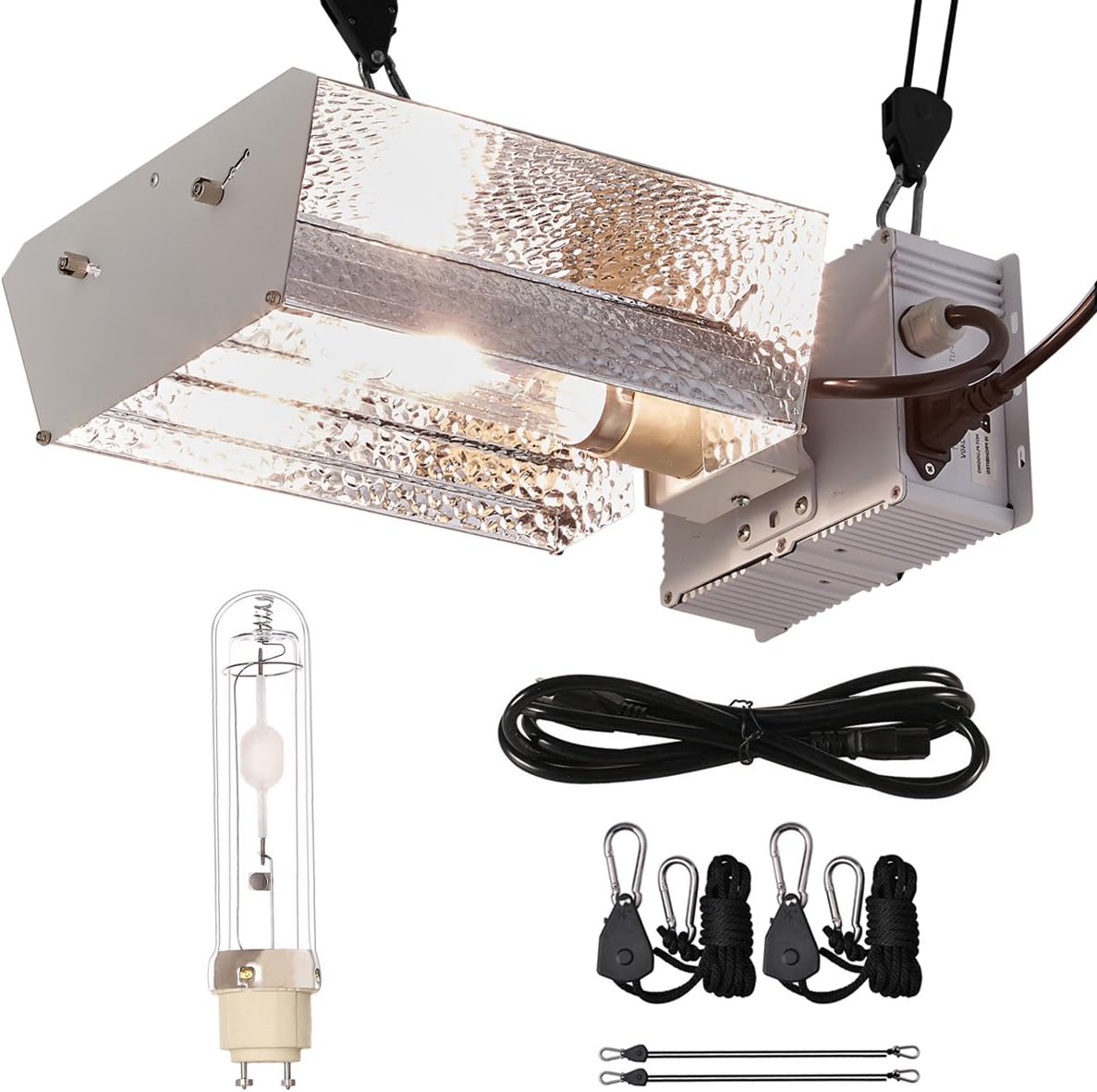
    71o1JdXW9uL. AC SL1200

    Drawback Of Using CMH

    Even though CMH offers great benefits to our growing plants, there are still some downsides to them. They are:

    1. Thermal Output

    The heat generated by CMH is usually high in the infrared portion of the spectrum. This is over 700 nm and this makes CMH generate a lot of heat. Notwithstanding, this is still less compared to 400 watts of other types of HID bulbs.

    1. Offers Weaker Flowering Light Stage Compared To HPS

    HPS lights are still one of the best when it comes to providing lights for your flowering plants. The reason being that HPS bulbs generate more light in the red spectrum compared to CMH.

    1. Initial Investment

    The initial cost is another drawback to using CMH grow lights. For instance, purchasing a high-quality 400 watt HPS or MH grow light kit that includes a ballast, reflector, and bulb can cost about 200 dollars. On the other hand, when you initially invest in a complete kit of 31 watt CMH grow light, it can cost around 500 dollars. But when you look at it from the angle of saving energy, CMH lights will still save you more energy.

    Ceramic Metal Halide Spectrum

    CMH offers a more complete PAR spectrum in a single grow light compared to other HID bulbs such as MH and HSP lights.

    Ceramic Metal Halide Spectrum

    However, you can still pair them up with HPS for an extra boost on the red spectrum and this will benefit your flowering crops in a great way.

    Final Say

    As we can see, ceramic metal halides are great to be used for our indoor growing needs. If you end up going for CMH for your plants, you can be rest assured of supplying good light for your plant’s needs.

    FAQ’s

    Which ceramic metal halide for veg cycle?

    Ceramic metal halide for veg is a type of light that is great to be used for the vegetative stage of a plant.

    Ceramic metal halide which color for growing?

    Ceramic metal halide offers a different color spectrum for growing plants.

    What is ceramic metal halide?

    Ceramic halide is a type of HID light that has only a slight variation to MH and is a better version of metal halide.

  • Basil Companion Plants

    Basil Companion Plants

    A companion plant basically refers to those plants that can be planted closely together successfully. In determining whether plants are companions, factors like pollination, nutrient requirements, amongst others are considered. Basil companion plants are what we will be looking into.

    Basil is one of the herbs that can be easily grown alongside other plants in a garden. Basil plant is known for helping neighboring plants in areas like protection from pests, attracting pollinators, and even insects prevention.

    Now, let’s delve into basil companion plants.

    Basil Companion Planting Herbs

    Here is some of the list of plants that can do well with basil plants being planted closely together:

    1.    Basil And Tomatoes

    These pair do very well when planted together. Some gardeners even argue that the flavor of both plants gets greatly improved when they are grown together. Both plants also require very similar nutrients to flourish, making them even more compatible.

    Basil And Tomatoes

    2.    Peppers – Basil Companion Plants

    These are another two highly compatible plants to grow together. They are both very good pest repellents, providing dense ground cover. Furthermore, pepper plants do very well in humidity, while basil can very easily get heat and moisture from the atmosphere. Indeed, great companions to pair.

    You must however monitor watering both plants carefully so as to keep the balance. This is because too much watering may suffocate the root of the pepper but in some cases, it is good for basil.

    3.    Basil And Root Vegetables

    Another great companion of Basil in the garden is root vegetables. Basil can easily flourish with radishes, carrots, beets, parsnips, and turnips.

    The great scent that basil gives off helps to deter pests from coming around root vegetables. The absence of a plant-like Basil exposes the planted root vegetables to root-infesting pests.

    4.    Basil And Chillies

    Planting Basil and Chillies together is another great pairing that you can do in your garden. Basil can readily repel a large host of insect pests that usually interfere with the growth of chilies.

    Basil And Chillies

    Chilies also thrive in very similar conditions as Basil, especially during summer. Plants like eggplants and capsicums, which bear very similar attributes to chilies also pair well with Basil. Planting these plants alongside Basil will to a large extent improve their individual performance.

    5.    Basil And Parsley Or Chives

    These plants do very well when planted together primarily because of their environmental preferences. These plants all like full sun and have very similar water and soil requirements.

    Planting them together will therefore save you any extra effort that would have been expended in tendering them. You just need to care for them as you should care for your Basil plant and they will come out fine.

    6.    Asparagus – Basil Companion Plants

    Asparagus is a perennial crop that thrives well in sunny conditions. It usually takes between 2 to years to reach full maturity. Basil and Asparagus are good companions to plant together.

    This companion will attract ladybugs to your garden. The advantage of this is that ladybugs help to weed out notorious cabbage aphids. In addition, basil also repels the asparagus beetle which is a pest that disturbs asparagus growth.

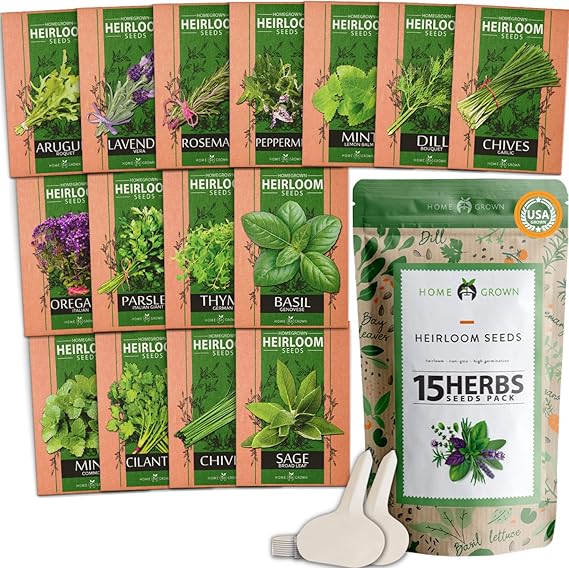
    Home Grown 15 Culinary Herb Seed Vault – 4900+ Heirloom Non-GMO Herb Seeds

    818wfV4WHYL. AC SX569

    7.    Parsley And Basil Companion Plant

    These two plants also do very well when planted together. The reason for this is that they basically require almost exact water and sunlight for growth. Planting them together would therefore result in a splendid yield of both plants.

    8.    Potatoes – Basil Companion Plants

    Planting basil and potatoes do not only improve their individual taste but also brings some beautiful order to your garden. You must however be careful when applying fertilizer to the plants. While potatoes need lots of phosphorus and potassium, basil needs more nitrogen.

    Both plants are however sunlight and water-loving plants. Whereas many other plants will affect the growth of potatoes if planted as a companion, the reverse is the case with basil.

    Plants That Do Not Complement Basil

    As we have seen that there are different plants that complement basil well, there are also plants that don’t do well with basil. These plants should not be planted close to basil as this will affect the growth of both basil and the plant.

    Some of these plants that should be taken far away from basil are common rue, thyme, sage, and cucumbers. The reason why these plants do not complement basil varies widely. The reasons range from differences in the nutrient requirement to differences in sunlight and water requirement.

    Plants That Do Not Complement Basil

    Benefits Of Companion Planting

    Companion planting which is also referred to as inter-cropping comes with varying advantages. Some of these specific benefits of adopting the practice of companion planting are:

    • Repel Insect Pests: the adoption of this practice has a major advantage of detrimental pests being repelled. Some plants naturally secrete toxins or scents that have the ability to repel these detrimental pests. Some of these pests cannot be killed by pesticides.
    • Attract Beneficial Insects: just the way this practice will lead to the repelling of detrimental insects, it also attracts beneficial insects. Some beneficial insects such as bees, butterflies, and birds can be lured into your garden by planting the right companion like a marigolds lure.
    • Improvement of Soil Nutrients: some plants have the ability to add specific nutrients to the soil. Planting such a plant in your garden relieves you of the daunting task of getting that nutrient and applying same in your garden. Nitrogen for instance can be added by Legumes.
    • Provide Cover for the Ground: where some of the soil in your garden is open and not covered by any plant, the room is given to weeds to grow. Planting companion plants that spread on a low level across the ground like oregano will therefore help with this greatly.
    • Provide Shade: where you wish to plant a crop that does not require direct sunlight, you may decide to plant as a companion another plant to give shade. For instance, planting a crop that grows tall and leafy like the zucchini and asparagus may be a good solution to this.
    • Serve as Markers: where you wish to demarcate your farm or garden, you may decide to plant fast-growing plants that will rise and provide the necessary demarcations as quickly as possible.

    |

    Conclusion On Basil Companion Plants

    As you have seen above, companion planting comes with a lot of advantages. Basil is one of those plants that can complement other plants in the garden. Some of the plants that are well complemented by basil are discussed above.

    This should be a good guide to you if you are planning to begin companion planting using basil. Ensure not to plant alongside basil those plants that don’t do well with basil mentioned above.

    FAQ’s

    What are companion vegetable plants to basil?

    Some companion vegetable plants to basil include radishes, carrots, beets, parsnips, and turnips.

    Basil and spinach companion plant?

    Basil is a great companion plant to spinach. They can both thrive in the same garden. They both have very similar water and sunlight requirements.

  • Bell Pepper Sprouts

    Bell Pepper Sprouts

    They are from the Grossum cultivar group of species Capsicum annumm and they are known as bell peppers. Bell pepper sprouts are what we will be looking at in this post.

    Peppers generally are great ingredients to add to all kinds of dishes, either raw or cooked. You can enjoy the delightful taste of bell peppers in your different cooking experiences.

    When it comes to growing bell peppers, it’s not a difficult thing to do. Just have the right knowledge and you are good to go.

    Growing bell pepper from seeds especially is an important thing to look at and once we’ve planted our seeds, we definitely would want some god germination or sprouting.

    So, let’s delve in and get some details about the sprouting of bell peppers.

    About Bell Pepper 

    Bell peppers are characterized by their smooth outer skin that shields the inner crunchy flesh. This pepper is hollow with numerous seeds that tend to cluster in the center and cling to their white inner membrane along their walls.

    Bell pepper is a type of fruit that their cultivars can give rise to different colors that include red, orange, yellow, green, white, and purple. The scientific name of this bell pepper is Capsicum annuum Group and they are sometimes grouped with the less pungent chili variety as sweet peppers.

    Although bell peppers are majorly or botanically classified as fruits, they are commonly used as a vegetable ingredient or side dish.

    About Bell Peppers

    So, in tropical regions, bell peppers are grown as perennial crops.  In colder climates, on the other hand, they are grown as annuals. Their tolerance to cold isn’t so great.

    The growing season of bell peppers tends to be a bit long. Their growing seasons can last up to 90 to even 100 days. Therefore, this implies that once you notice you have a short summer, it is crucial you begin your seeds indoors once things are warming up outdoors.

    Check Out When To Plant Peppers

    Bell Pepper Sprouts: Tips To Seed Germination

    Although growing bell pepper is an easy thing to do, you have still to put some factors into consideration to achieve that successful outcome. This is particularly important when it comes to seed sowing and germination.

    Here are some tips to take note of when it comes to bell pepper sprouting and growing successfully:

    • Peppers love hot environments, especially in their germination stage. Therefore, you would have to allow the outdoor environment especially tour soil to warm up before planting. However, we recommend you begin sowing your seeds indoors to have a better chance.
    • Also, begin your seeding early especially if you have a short summer in your region. But ideally, you should begin your seed indoors early enough.
    • You can either save seeds from organic store-bought bell peppers or you can just purchase the bell pepper seeds.

    • Seeds from red pepper plants are recommended to be used. This is because they are more mature compared to the green ones so you should have a better chance of a good outcome.
    • Then seeds should be set out to dry for a couple of days. After this, you can now sow these seeds or store them in a paper envelope then put them in a dry spot.
    • We generally recommend seeding to be commenced 6 to 8 weeks before the last average frost date in spring. But you can still sow these seeds earlier if you can maintain a healthy and thriving plant.

    Read more about Planting Lettuce Seeds

    Starting Bell Pepper Seeds To Ensure Seed Sprouting

    You can commence seed sowing with the help of a seed starting mix and position them in a warm sunny area. Using cell packs or covering flats with plastics can help speed up germination or sprouting of seeds.

    Additionally, when you provide a constant source of heat such as a seedling heating mat or pad can also be of great help. This is because the soil needs to be around 80 degrees Fahrenheit for the bell pepper seed to sprout. If your soil is warm enough, you should notice some sprouting within ten days.

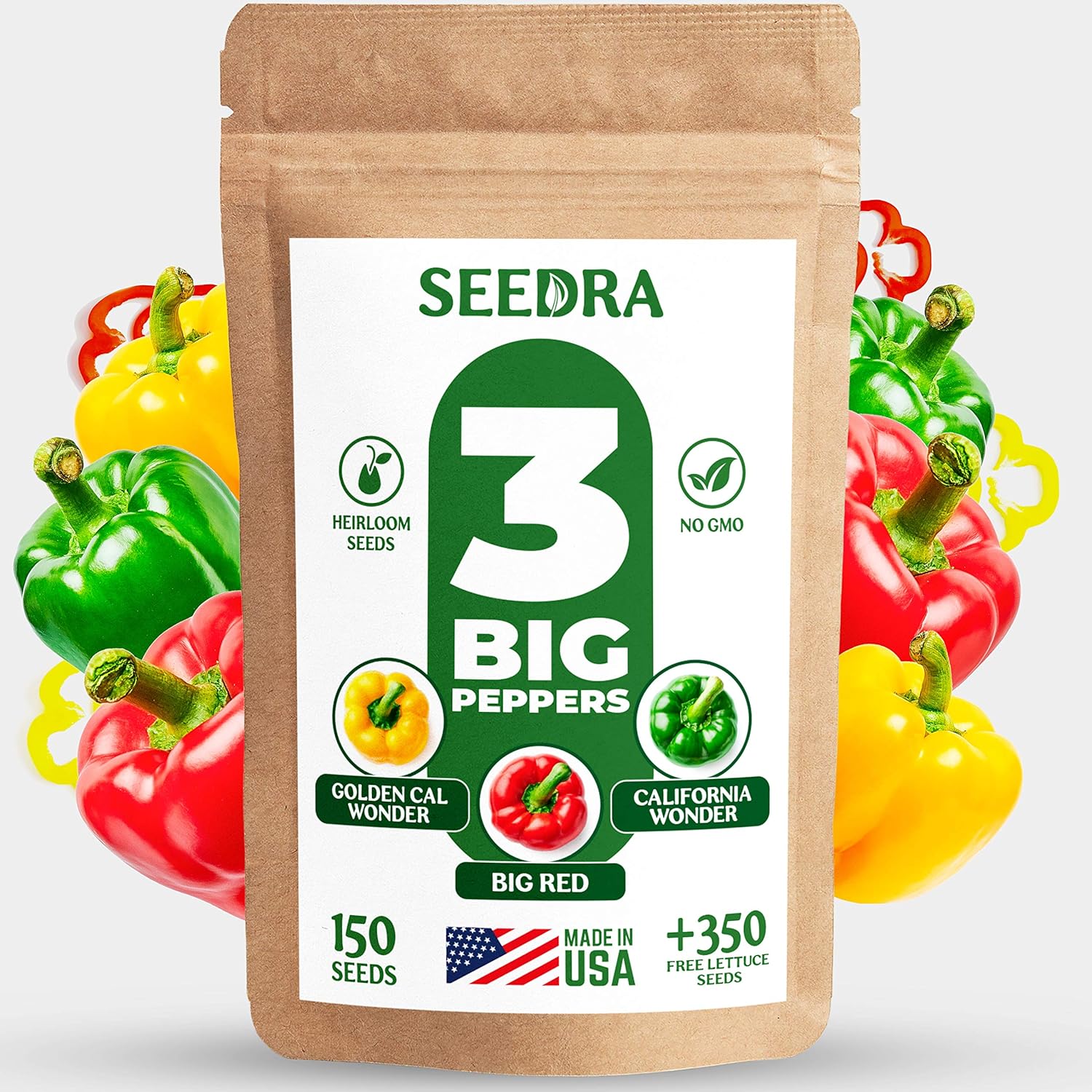
    SEEDRA 3 Bell Peppers – 150 Seeds of California Wonder, Golden Cal Wonder, Big Red Bell Pepper for Planting

    So, when your seeds have sprouted and grown about two to three leaves, you can go ahead and put them in a bigger container. This container should be filled with moist potting soil to minimize settling.

    Organic fertilizer should also be added just to encourage strong and healthy growth. Then always water when needed and maintain a constantly damp soil.

    Harvesting – Bell Pepper Sprouts

    Determining when your bell peppers are ready to be harvested is an easy and straightforward thing. You can start harvesting your peppers once they have attained a length of around 3 to 4 inches. The bell pepper fruit must also be firm and green, red, or other colors, depending on the variety you planted.

    However, if you notice they are somehow thin, then they are not ready for harvest yet. If they have this soggy feel, this implies that they’ve been left for too long.

    Once the first batch of crops has been harvested, you can go ahead and fertilize the plants. this can supply them with extra energy for them to yield another crop.

    Harvesting Bell Peppers

    Closing Remark – Bell Pepper Sprouts

    Bell peppers are warm-loving crops that tend to do well in warm weather so summer is usually the best period to sow seeds or plant these crops.

    So, one of the secrets to successfully sprouting and growing your bell pepper is to grow them in a temperate spot. Peppers generally thrive in warm surroundings. The seeds of bell peppers will require warmth to grow. So, it is recommended you sow your seeds indoors so you can get that ideal sprouting temperature for your bell pepper to germinate.

    Once your bell pepper seeds have sprouted, you can go ahead and transplant outdoors and plant them in a sunny spot. But ensure the temperature outdoors is warm enough to encourage good growth.

    Therefore, it is important you ensure the frost in your area is completely gone as frost can destroy your pepper plant or slow down its growth.

    FAQ’s

    What do bell pepper sprouts look like?

    The sprouts of bell pepper will have about 2 to 3 leaves spouts that tend to be narrow and pointy.

    How many days does red bell pepper start to sprouts?

    Red bell pepper begins to sprout within 10 days.

    How to plant bell pepper sprouts?

    If you want to achieve more successful sprouting, your bell peppers should be planted indoors where you can supply the seeds at the ideal temperature. Then once your seeds have sprouted, you can transplant them outdoors in a sunny spot.

    What do you do after bell pepper seeds sprout?

    Once your bell pepper seeds have germinated, you can go ahead and transplant them outdoors that is if your seeds were sown indoors.

  • Planting Lettuce Seeds

    Planting Lettuce Seeds

    Planting lettuce seeds can be easy for you if you’ve got the right knowledge. Lettuce is a great addition to one’s stock of vegetable garden at home because of its health benefits.

    Hence there comes the importance of attaching them to having them in your kitchen. It’s a crop that likes the cool weather, hence it’s better to plant your lettuce seeds during spring and fall.

    Growing lettuce from seeds to becoming a full crop is known to be one of the easiest. Lettuce seeds grow very fast, in fact, you can start harvesting the baby greens within a month of planting.

    But on average, they take up to 40 to 50 days to mature. The types that are larger or that produce head needs more time to get to maturity. This should be between 60 to 80 days.

    Growing lettuce is beneficial. That is why having them in your garden will provide you with fresh homegrown organic greens for months. So let’s take a look at the process of planting lettuce seeds.

    Different Types Of Lettuce Seeds To Plant

    The lettuce seeds come in varieties that you can choose from. You can find them on seed racks and catalogs, just choose the one that is suits your preference and your regional climate.

    The leaf lettuce still remains the best because of how fast it grows. It also gives you the privilege of having a steady supply of luscious greens for weeks. Let’s look further into the various types of lettuce seeds.

    • Oakleaf: The oakleaf lettuce can be grown as leaf lettuce and can be continuously harvested while growing. It is better to start harvesting it because the plants will produce full-sized heads when they are left to mature. Depending on the variety the leaves can be either red or green and also take the form of oak leaves.
    • Looseleaf: The looseleaf is one of the types of lettuce that can be grown easily. It also grows very fast as it only takes between 5 to 6 weeks to produce large loose heads.
    Different Types Of Lettuce Seeds To Plant - Looseleaf
    • Butterhead: Also called Boston or Bibb, produces beautiful heads with loose soft crisp leaves. The butterhead has varieties that can be grown in regions with high temperatures, suitably during summer. It also has varieties that can be grown in cold regions, suitable for winter.
    • Iceberg: Also known as crisphead lettuce is not an easy variety to grow but you can be lucky with it.
    • Romaine: The romaine lettuce produces tightly closed heads. This variety is known to be an important ingredient in making Caesar salad.
    • Summer Crisp: The summer crisp type is also known as Batavia lettuces. This type looks so much like the loose-leaf type while growing. They begin to produce lovely rounded heads as they grow to maturity. The summer crisp has varieties that can be grown in regions with high temperatures, preferably during summer.

    Planting Lettuce Seeds

    Lettuce is a type of crop that thrives in cool weather. Hence, the best time to grow lettuce is during spring and fall. In temperatures as low as 40 F, your lettuce seeds will germinate.

    But the best temperature for growing and germination is from 60 F and 65 F. To get a successful outcome at growing lettuce, start by choosing a location that gets up to six to eight hours of sunlight. You can also grow your lettuce in a shady spot but must get three to four hours of sun.

    AeroGarden Mixed Romaine Lettuce Seed Pod Kit

    Planting Lettuce Seeds

    But if there’s not enough sunlight, it will be advisable to plant looseleaf varieties. This is because they grow more quickly than the varieties that produce heads. The next thing should be to mix in one or two inches of compost in your garden bed. You may also mix in organic fertilizer with slow release.

    Growing lettuce in containers is also a great idea. This is because the plant has a shallow root system. Lettuce can be grown in pots, baskets, window boxes, or fabric planters. Using any type of container that is four to six inches deep with holes for drainage is also fine.

    In order to be able to harvest your crop early, get plastic or fabric-covered mini tunnels to cover your garden beds. This way, you can trap in solar energy. It can also help to protect your plants from low temperatures and frost during early spring or fall.

    Methods For Planting Lettuce Seeds

    Lettuce seeds can be planted in two ways. They are:

    • Direct Sowing Lettuce Seeds

    This involves directly planting lettuce seeds in garden beds or containers. For direct planting of varieties of seeds of lettuce that produce heads in rows, give the seeds space of two inches apart. This should depend on the varieties you’re planting though.

    Endeavor not to plant the seeds deep down in the soil, remember they need the sunlight to sprout. Go ahead and pour a little amount of soil on your seeds. You can begin thinning when your seedlings are growing well.

    • Transplanting Lettuce Seedlings

    This on the other hand entails transplanting lettuce seedlings that were started indoors or bought from a garden center. You can start by transplanting your seedlings into your garden beds or containers in a grid form. Endeavor to give space of at least ten inches between each seedling.

    If you’re transplanting multicolored varieties, you can bring creativity to play by arranging the colors to form a checkerboard pattern.

    Remember to take note of the specific spacing instructions on the packet of the seeds you bought. Hence, if you’re transplanting in rows, depending on how mature in size of each variety is, give your seedlings space of ten to twelve inches each. And then space the rows by twelve to eighteen inches.

    Check Out The High Phosphorous Fertilizer – King Of Gardening

    Spacing Your Lettuce Plants

    Start thinning your lettuce seedlings once they begin to grow well. Doing this will allow the plants enough space for them to produce good-sized heads when they mature. The ideal spacing should be ten to twelve inches but you can still check the seed packet for specific spacing instructions for each variety.

    If you’re growing baby lettuce, make the spacing between each plant a bit closer at about six to eight inches because of the formation of heads. Romaine lettuce can be grown successfully with this method as this type of lettuce produces tight heads.

    Spacing Your Lettuce Plants

    Conclusion On Planting Lettuce Seeds

    Now that you know a lot about planting lettuce seeds, you can go ahead and enjoy several weeks of luscious, tender, and mild-tasting lettuce from your garden.

    FAQ’s

    How long from planting seeds to picking lettuce?

    Lettuce seeds grow very fast and you can start harvesting your crops as early as possible, depending on the variety you have. The baby can be harvested within a month of planting but for them to mature they take up to 40 to 50 days. But the types that produce heads need more time to get to full maturity which is between 60 to 80 days.

    When to start planting lettuce seeds?

    You can start planting lettuce seeds in spring and fall. Lettuce seeds will definitely germinate in temperatures as low as 40 F. But the best temperatures for planting and growing lettuce seeds are between 60 F and 65 F.

    How many planting seeds yield one lettuce?

    For seed sown directly into the soil, you should have about 10 seeds per foot.

    Can lettuce seeds be planted directly in the ground?

    Sowing lettuce seed directly on the ground is ideal. Sometimes, transplanting lettuce seedlings might not be easy because the seedlings are quite fragile.

  • Quantum Board LED- What Are They?

    Quantum Board LED- What Are They?

    Quantum board LED: what exactly are they and how do they work? The market is full of various types of grow light. Light-emitting diodes (LED) are one efficient and popular type of grow light.

    Quantum board LED is one latest tech that has been getting the LED growing users to begin to ask questions about this type of technology. The fact that it is one of the latest LED techs makes it easy for people to want to jump on it as people like to indulge in new trends.

    But do you know exactly what quantum boards for LEDs are? Do you know if they are as good as they claim? If these questions have been troubling your mind about the quantum board, not too worry.

    By the time you’re almost done reading this page, you should be able to have a good clue on what quantum board LED is all about and its advantages and disadvantages.

    LED Lights

    LED lights have been popularly used amongst indoor growers and they have been widely accepted by many growers over these past few years. This is because they have been offering wonderful lightning capacity to our indoor plants.

    Also, LED lights have now been widely adopted because of economic, energy, as well as environmental reason. However, there is an increasing demand for high-power and high brightness LED lights.

    So, designers came up with a common solution which is to make use of the chip on board (COB) LED style. But now there is this new technology that is known as the quantum boards.

    LED Lights

    Quantum Board LED Grow Light: What Exactly Is It?

    The people who designed or came about the term quantum board are the Horticulture Lighting Group (HLG). This implies that they were the very first group to make the first quantum boards. They were typically the new supplier for LED grow lights.

    So, when we talk about quantum board it refers to a large circuit board that comprises hundreds of mid-power in which LEDs are mounted to it. Then these LEDs are connected are arranged and connected together in series to form strings.

    Now, these strings are joined together in a parallel configuration. This is done just to ensure they are compactable with common high-powered constant current drivers such as HLC 80-H-C, 240-H-C, OR 320-H-C series.

    Click Here to Learn:

    Configuration Of The Boards

    As of now, there are two models available namely QB304 and QB288 where the number in the model numbers represents the number of diodes.

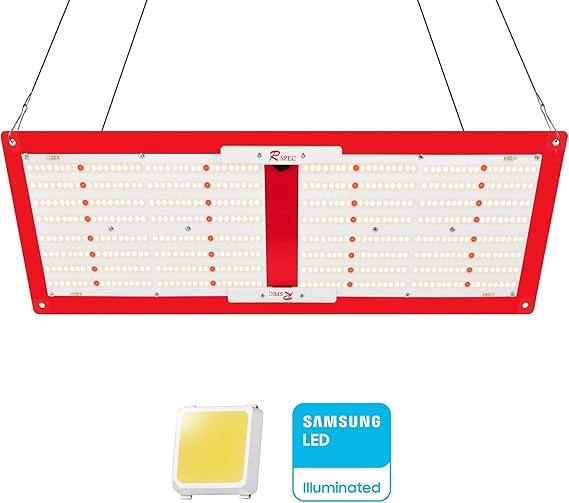
    HLG 300L Rspec 270w 120 Volt- Horticulture Lighting Group Quantum Board LED Grow Light

    71YKq0BHJQL. AC SX569

    Advantages Of Using Quantum Board LED

    There are good benefits when it comes to choosing quantum boards type of grow light compared to other types of regular grow light. So, here are the benefits you stand to gain when using quantum board LED:

    ·         Efficiency

    Quantum board can offer you a better output and will only consume little wattage.

    ·         Spectrum

    There is a generation of full-spectrum white light by the Samsung diodes and this has every visible wavelength of light. These are available in many different color temperatures and they can mimic the natural sunlight making it a great spectrum for plants.

    ·         Light Spread

    The light quantum board generates tends to spread out from many points across a large board. Quantum board type of grow light has a more direct path to the canopy of the coverage area. Compare this to other light that can come from a smaller fixture and emanates further outwards.

    Therefore, you can have a more evenly spread light because there will be less intensity in the middle of the coverage area and more intensity around the outside.

    ·         Affordability

    Compared to the other traditional LEDs or COBs that usually give similar outputs, quantum boards cost less.

    ·         The Option For DIY

    Manufacturers including HLG sell kits that make it easy to set up your own light. Therefore, this can help you save some money.

    ·         Heat Management

    A thin piece of aluminum or sometimes a heatsink is where the quantum board is usually mounted to. This helps pass cool air to the diodes. Therefore, you don’t really need fan for cooling. However, quantum board fixtures still tend to get hot.

    Drawbacks To Quantum Board LED

    Quantum board lights may offer good advantages. However, there are a few downsides to using them.

    Drawbacks To Quantum Board LED
    • Penetration Of Canopy

    Although, quantum board white lights tend to penetrate better into the canopy of your plant due to the presence of green wavelength. This gives quantum grow lights more advantage over blurple LEDs.

    However, more powerful LEDs, such as COBs, tend to give deeper penetration compared to quantum lights.

    • Heat Misconception

    When it comes to thermal management, you need to understand how the quantum board works. Just as LED lights tend to give rise to a huge amount of heat even though they run cooler compared to other types of grow lights, quantum board lights are no exception.

    Just because it’s been said that quantum light runs cool and doesn’t require a fan does not mean they are free from heat. The diodes of quantum boards still tend to heat up a lot.

    But generally, you can expect lesser heat of around 30% when we compare them to HID grow lights.

    • Open Built Components

    Quantum boards are built in a simpler way. LED on the other hand is fixed directly to a board.

    The diodes of quantum boards are often exposed and even their wires may be exposed. However, a couple of the manufacturers of quantum boards have started adding plastic covers to the exposed wires. However, you may still find a lot of them with open-wire.

    This simply implies that the components of quantum boards are less protected but this helps to reduce their cost.

    Open Built Components

    FAQ’s

    What is a quantum board led?

    Quantum board LED is a type of LED light that has small pieces of boards that are lined up with their LED chips.

    How to build a quantum board led for growing weed?

    You can make a quantum board led for growing your weed by making use of the components used in HLG. You can easily purchase components from HLG as well as some other manufacturers that sell DIY kits.

    Why quantum board led?

    Quantum board LED has low energy consumption, they are efficient, and they have a reliable light spectrum and other advantages you stand to gain from using them.

    Conclusion

    So, from the information we’ve listed above, we do hope you’ve had good knowledge of what quantum board LEDs are.


  • UV Light For Plants: Can They Be Beneficial?

    UV Light For Plants: Can They Be Beneficial?

    It is a general knowledge that it is necessary for grow lights to give off a certain wavelength for plants to flourish adequately and grow. But apart from these light wavelengths, some growers have come to terms that UV can benefit plant growth. UV light for plants is one wavelength that has been highly contested.

    Most of our knowledge about ultraviolet light has been non-appealing because we’ve been mostly told to avoid it in our day-to-day activities. However, a minimal dose of ultraviolet light can still be safe to be exposed to.

    You can even assimilate a safe dose of UV light as it can give you a great tan without actually causing any damage to your skin.

    So, if you’ve ever wondered about the importance of UV light to your plants then you can get some information about this here.

    About UV Light

    UV light also referred to as ultraviolet light is a type of light wavelength and also it’s a type of electromagnetic radiation. UV is a light that is invisible to the naked eye of humans and the light is measured in nanometers (nm).

    Although humans can’t see UV light with their naked eyes, many other creatures including plants use it to survive.

    About UV Light

    Between 400 nm to 700 nm is where the visible spectrum of light falls under. Then the wavelength of UV light sits between 10 nm to 400 nm.

    The 3 primary types of UV lights include UV-A, UV-B, and UV-C.

    UV Light For Plants

    Generally, grow lights need to generate a certain wavelength of light for plants to thrive well and develop.

    Grow lights can generate red wavelengths which are necessary for the flowering stage of a plant. Then we have the blue light for the vegetative stage of the plant. And there are other colors or wavelengths of light that can enhance our plant perform photosynthesis and other necessary processes.

    UV light for plants is also a type of wavelength that your plant can benefit from when supplied in a safe dose. Even though some have claimed they didn’t notice a difference in the usage of UV light for their plants: others have however claimed that UV rays can bring out the natural flavor and scent of a plant better than when UV isn’t used.

    But the truth of the matter is that UV lights can be helpful to indoor grow room plants. However, you need to have a good knowledge of how to use these UV lights for your plants.

    Let’s look into the types of UV lights and see how they can benefit our plants.

    Read more about Low Nitrogen Fertilizer

    The Types Of UV Light And Their Benefits To Plants

    1.    UV-A

    UV-A is the most common or abundant type of ultraviolet light on earth that reaches or gets to us here from the sun. This type of UV makes up about 98.7 percent of all types of ultraviolet light that get down to earth. The electromagnetic wavelength of UV-B is between 400 nm to 315 nm.

    Plants are generally exposed to some level of UV light in their natural environment. Hence, UV-A can’t cause harm to your indoor plants if it is included in the grow light you’re using for your plants.

    UV-A light exposure to plants in a safe dose has been shown to enhance the production of CBD and THC.

    2.    UV-B – UV Light For Plants

    UV-B is the second most common type of ultraviolet light to get to us here from the sun. The wavelength is between 314 to 280 nm. This type of ultraviolet ray makes up about 1.3 percent of what’s reaching the earth’s surface.

    When you expose your indoor plants to UV-B in the appropriate dosage, it can benefit your plants this UV-B light spectrum encourages plants to manufacture their own sunscreen.

    UV Plant Lights Grow Lamp Dual Switch for Indoor Plants Veg and Flower 1000w

    71KL ML5+iL. AC SX569

    3.    UV-C – UV Light For Plants

    UV-C light wavelength ranges between 280 nm to 0 nm. This type of ultraviolet light ray is absent in the light rays that reach the earth’s atmosphere. The ozone layer usually absorbs this light wavelength. Therefore, no UV-C wavelength usually penetrates the earth’s surface.

    UV-C light rays can be pretty damaging to both plants and humans. This is why it is prevented by the ozone layers and it does not get to the earth’s atmosphere.

    So, because UV-C wavelengths are not naturally present in the earth’s atmosphere, they are therefore not suitable to be exposed to plants. UV-C can be one pretty damaging light ray to plants if they are exposed to it.

    Can You Use UV Light In Your Grow Room?

    Even with the different drawbacks that we have heard UV light causes, there are still some good to them, especially to our plants.

    UV light for plants can help enhance the quality of your plant’s yield. And you can use UV lights for a large, commercial operation or for smaller, private use.

    The Ideal UV Light For Plants

    Click Here to Learn Is Zucchini A Fruit?

    The Ideal UV Light For Plants

    We can therefore see from the above that both UV-A and UV-B are the most ideal type of ultraviolet light to use for plants. No benefits whatsoever are seen from using UV-C light wavelengths.

    Additional Say – UV Light For Plants

    We have seen that some ultraviolet rays can be quite beneficial to plants. It can even encourage or improve canopy penetration. Thus, it encourages plants to produce more.

    There are primarily three types of ultraviolet light you can find and they are UV-A, UV-B, and UV-C. However, only two of them (UV-A and UV-B) are suitable for plant use.

    Also, ultraviolet light has also been known to encourage different photomorphogenic responses in plants. Plants that are supplied with the appropriate dose of ultraviolet light tend to create a higher level of natural sunscreen compounds that include THC, CBD, antioxidants, flavonoids, terpenes, and vitamins.

    Trichomes are another natural mechanism that can be used to supply protection from UV light. Therefore, plants tend to produce more trichomes that helps manufacture natural sunscreen compound when they are exposed to UV light rays.

    You should also note that some grow lights can naturally emit UV-A light through the means of chemical exchange. Then other grow lights like LED can be built with specialized UV-B bulbs.

    FAQ’s

    Can you use a UV light to grow plants?

    Yes, UV can offer some beneficial properties to your plants. But you need to use them in the correct dose so they don’t cause harm to your plants.

    How to use uv light for plants?

    UV light can be used to speed up germination process when it comes to starting seeds indoors.

    How to make uv light for plants?

    UV lights can be made by passing an electric current through a gas (usually vaporized mercury).

    How long should plants be under UV light?

    The duration of leaving UV lights under your plants will depend on the type of plants been grown and their needs.

  • Low Nitrogen Fertilizer

    Low Nitrogen Fertilizer

    Sometimes, gardeners prefer not to use fertilizers with high nitrogen if their garden soil already contains a high level of nitrogen. Low nitrogen fertilizer is what you need if your soil already contains nitrogen.

    So, before adding fertilizer to your garden, you should consider doing a soil test. This will help in knowing if what your soil needs are low or high nitrogen fertilizer.

    There are plants that do not require a high level of nitrogen such as plants that produce vegetables, fruits, and flowers. But for some other types of plants, the reverse is the case. These are plants that produce large foliage like lawn grass.

    When the level of nitrogen in the soil is high, the plants produce abundant foliage instead of much of the expected crops. But fertilizers with low levels of nitrogen, plants will be able to produce much of their fruits than leaves.

    Therefore, let’s take a look at how to identify and also know the benefits of low nitrogen fertilizer.

    Low Nitrogen Fertilizers: How To Know Fertilizers That Are Low In Nitrogen

    To identify a package of fertilizer that is low in nitrogen, take note of the three numbers on the package. Every fertilizer has three numbers indicated on it and these numbers signify the levels of the three nutrients in the fertilizer. The available nutrients in the fertilizer are represented by these three numbers.

    You will see the nutrients indication as N-P-K. “N” stands for nitrogen, “P” stands for phosphorus while “K” stands for potassium. A fertilizer with low nitrogen will have a low or zero the first number. This means that it’s either the nitrogen in the fertilizer is minimal or there’s none.

    Low Nitrogen Fertilizers - How To Know Fertilizers That Are Low In Nitrogen

    Let’s take for example a package with the indication “5-10-10”. This simply means Nitrogen is 5, Phosphorusis 10 while Potassium is 10. This package contains low nitrogen. But any package with an indication such as “0-10-10” means it contains no nitrogen.

    So, take note that apart from these three nutrient figures which are NPK, choose the one that suits your plant needs.

    Factors To Consider Before Using Fertilizer

    Before adding any type of fertilizer to your soil, be it low or high nitrogen fertilizer, there are factors you need to put into consideration.

    ·         Test The Soil

    Get your soil tested first in order to know the soil pH and nutrient levels. This will help in knowing the decision to make regarding any amendments in your garden. It helps in knowing what will be good to use to make your soil healthy and ready for planting.

    You can get your soil tested yourself by buying a do-it-yourself soil test kit. This can be bought online or from a garden center.

    Another way to get your soil tested is by taking a soil sample and sending it to the agricultural extension lab close to you. The lab will be able to advise you and give you some recommendations, on keeping your soil healthy, based on what you want to plant.

    Test The Soil

    ·         Stick To The Fertilizer Label Instructions

    Check for the instructions labeled on the fertilizer and follow them when you want to add fertilizer to your soil.

    Don’t add too much fertilizer to the soil early. It can cause fertilizer burn, thereby causing serious irreversible damage to your plants. Adding fertilizer to your soil should be a gradual process.

    ·         Overall Soil Health Is Important

    Look to achieve and maintain good overall soil health first. And then, every other thing like using fertilizer, compost, manure, and mulch can follow.

    Keeping your soil in good condition in regards to its texture, water retention, and microorganisms, is very important.

    Manure With Low Nitrogen

    Apart from using commercial fertilizers with a minimal level of nitrogen, there are natural types of soil nutrients that contain low nitrogen.

    A way to add organic material and other necessary nutrients to your garden soil without burning your plants is with low-nitrogen manure. But have it in mind that, it is not all manure that is being made in an equal manner. You should remember that every type of manure has a different level of nitrogen in it.

    Black Kow Composted Cow Manure 4 lb. Size

    810sH8R7KlL. AC SY879

    The level of nitrogen in manure is determined by the type of animal the manure is gotten from. And also, its water content.

    For example, chicken manure contains more nitrogen. For this reason, it will be hotter than that of a cow which can burn the plant. Typically, the nitrogen in chicken manure is 6% by weight and this also depends on the amount of water in it.

    Compost With Low Nitrogen

    Before you begin planting in your garden soil, it is a great idea to first prepare the soil by adding compost.

    This helps to provide nutrients and organic materials to your soil. When looking at the nitrogen content in compost, know that the level of nitrogen in the compost depends on all that is being added to the pile.

    Pile components such as grass clippings or cuttings from pruned plants are “greens” are high in nitrogen. But pile components like sawdust and straw or any other components are “browns” are high in carbon.

    All these components that are contained in the compost decompose gradually with the help of microorganisms.  E.g worms and bacteria in the soil. This way, there will be a gradual release of nutrients to your soil in a small dose.

    Bone Meal

    Bone meal contains is a soil additive that contains a low amount of nitrogen, but lots of calcium and phosphorus. If you want to add calcium or phosphorus to your soil without adding much nitrogen, you can opt for a bone meal.

    Reasons For The Use Of A Low Nitrogen Fertilizer

    Sometimes, a garden soil may contain a high level of nitrogen which can be as a result of adding high-nitrogen fertilizers to the soil improperly in time past. For this reason, it will be advisable to carry out a soil test. Also, get recommendations on the amount of nutrients to add to your soil.

    Too much nitrogen in the soil can lead to plants not producing as many flowers and fruits as they should. Hence, adding fertilizer with less amount of nitrogen can help encourage the plants to produce more flowers and fruits than leaves.

    Low Nitrogen Fertilizer: Conclusion

    With the help of this article, it’s certain you now understand the benefits, as well as everything about a low nitrogen fertilizer. You should have also learned about where and how to get them.

    FAQ’s

    What is a low nitrogen fertilizer?

    Low nitrogen fertilizer is any fertilizer package where the first number amongst the three nutrient numbers is low. For example, a package that has 5-10-10 on it which stands for NPK means that the amount of nitrogen in the fertilizer is low.

    Why is fertilizer with low nitrogen hard to find?

    This may be because most farmers may find it a bit hard to get all the necessary things they need to make low nitrogen fertilizer.

    Which fertilizer is low in nitrogen?

    A fertilizer that is low in nitrogen is the type that the first number in the ratio is low. All fertilizers come with 3 numbers as the ratio of the percentage of each of the nutrients available in them. The first number stands for nitrogen.
    To get a fertilizer with low nitrogen, look out for a package with a low first number.

    What is low nitrogen fertilizer good for?

    Low nitrogen fertilizer is good for encouraging plants to produce more flowers as well as fruits.