Author: Eunice

  • All About Monstera Acacoyaguensis And General Plant Care Tips

    All About Monstera Acacoyaguensis And General Plant Care Tips

    Monstera acacoyaguensis is one uncommon tropical plant that is easy to grow. This plant is a trailing or climbing plant that is native to Belize, Guatemala, and Mexico.

    Monstera acacoyaguensis is a lovely plant that is characterized by its appealing oval, semi-leathery, and glossy green juvenile foliage. The plant looks lovely and it can even be one of your favorite amongst all your collection of plants.

    Now, if you’re new to this plant and you wish to know more about it, then this post will is for you. In this article, we will be educating you on the basic things you need to know about Monstera acacoyaguensis. We will also give you some great plant care tips for this lovely plant.

    Information About Monstera Acacoyaguensis

    Monstera acacoyaguensis is a type of tropical plant that is a subspecies of the Monstera adansonii. Hence, their full name is known to be Monstera adansonii acacoyaguensis. The plant originates from Central America and it thrives well in humid and warm conditions.

    The plant Monstera acacoyaguensis may be regarded as a rare plant but it isn’t as rare as Monstera Obliqua which is another variety of Monstera that is more rare.

    The plant is also referred to as the Swiss cheese plant due to its unique holes and patterns in their leaves and each of its leaves is just like an individual work of art. Once this plant matures, it tends to develop perforations.

    Information About Monstera Acacoyaguensis

    The plant is a climbing plant and once Monstera acacoyaguensis gets fuller, it tends to look messier. The plant of Monstera acacoyaguensis is native to rainforest.

    The size of the Monstera acacoyaguensis plant is about 20 feet (5 m) high when they are outdoors in their native habitat. Then they can about 4 to 6 feet tall or even more when grown at home.

    Monstera acacoyaguensis usually grow close together and intertwine their long aerial roots with neighboring plants then they form a lovely green mat on the floor of the forest.

    Read more about Some Interesting List Of Plant With Purple And Green Leaves

    General Care Tips For Monstera Acacoyaguensis

    If you have plans on introducing Monstera acacoyaguensis to your collection of plants, you will need to have some information on how to take care of this plant for it to flourish. So, below are some growing tips for Monstera acacoyaguensis plant:

    1.    Lightening

    The light requirement for Monstera acacoyaguensis is moderate. Provide the plant with an indirect light that is diffused or filtered. Take note that the plant can’t tolerate direct sun for too long hours on a regular basis or they will get scorched. This is why it is easy to grow them indoors.

    So, when nurturing the plant indoors, you should provide the plant with indirect sunlight and bright light that is facing the east or west window. If there isn’t a natural light, you can make use of a grow light as it can stimulate outdoor sunlight.

    Grow Lights for Indoor Plants, GroDrow 150 LED Grow Light for Seed Starting with Red Blue Spectrum

    81iSbA0oUdL. AC SX679

    Take note that light is crucial to the growth of Monstera acacoyaguensis because it promotes photosynthesis that produces food for the plant.

    The ideal light duration for the young plant of Monstera acacoyaguensis is 14 hours of light daily. Then once the plant matures, it can light duration of 10 hours per day is fine.

    2.    Temperature

    The plant Monstera acacoyaguensis is native to Central America and South America so they are accustomed to light even through the winter periods. The prevailing climate in their native region is warm and hot and this depends on the time of the year.

    But the plant is usually covered by a forest canopy so it can be protected from intense heat. Notwithstanding, the plant still lives in a warm or even hot environment.

    So, the appropriate temperature for Monstera acacoyaguensis is around 65 to 80 degrees Fahrenheit. But it can still do well in temperatures around 55 to 95 degrees Fahrenheit.

    However, this plant isn’t a cold-hardy plant. Hence, ensure you shield the plant away from chilly weather. So, take the plant away from cold months because it won’t survive winter.

    Also, when placed indoors, ensure they aren’t close to anywhere around places such as air conditioners.

    3.    Watering

    Once the topsoil has dried out, you should water your Monstera acacoyaguensis plant. The plant likes to be watered thoroughly and if they are not watered properly, it can cause wilting, but avoid over-watering.

    General Care Tips For Monstera Acacoyaguensis - Watering

    4.    Soil

    Use soil that can hold moisture and the soil should be rich in nutrients. An equal amount of peat moss, sand, and perlite can be used. You can also make use of just peat moss as your potting medium. The pH of the soil should be around 6.5.

    To further improve the humidity of the soil, you can mix a little moss into your soil. However, ensure the root is not covered too much because the plant will need some air in its root system.

    Check Out The Ultimate Care Guide To Growing Philodendron Thai Sunrise

    5.    Potting

    This plant growth rate isn’t slow or fast. The growth rate is somewhere in between. For this reason, repotting every 2 or 3 years may be required.

    So, whenever you’re transplanting, ensure the new pot you will be using is a bit bigger than the old one.

    Spring is the best period to re-pot Monstera acacoyaguensis because this will increase their chances of blooming and also provide healthy growth for new green leaves all through the year.

    Furthermore, ensure the pot has adequate drainage holes for easy flow of excess water.

    6.    Fertilization

    The plant Monstera acacoyaguensis usually requires fertilization once per month. Fertilize only during their growing season (spring to summer).

    Monstera Acacoyaguensis: Final Note

    Monstera acacoyaguensis is one lovely plant that you can add to your collection of plants. They are mostly suitable for indoors and the plant is quite easy to grow and take care of.

    FAQ’s

    Is Monstera Acacoyaguensis rare?

    The plant of Monstera acacoyaguensis is considered rare but it is not as rare as Monstera Obliqua which is another variety of Monstera that is more rare.

    How long does Monstera Acacoyaguensis take to mature?

    The duration it takes for the adult plant of Monstera acacoyaguensis to mature is around 1 to 3 years. However, the exact growth of the plant can vary depending on its growing conditions.

    Does Monstera Adansonii need direct sunlight?

    Ideally, Monstera requires indirect sunlight. The plant will not do well if it has been exposed to direct sunlight for a long period because it can scorch the plant.

    Do Monstera Adansonii like to be misted?

    Yes, the plant likes to be misted because the humidity is a key requirement to its growth. Therefore, if you will be growing this plant indoors, ensure you provide good humidity to the plant by misting the leaves several times a week.

  • The Ultimate Care Guide To Growing Philodendron Thai Sunrise

    The Ultimate Care Guide To Growing Philodendron Thai Sunrise

    Philodendron Thai Sunrise is an interesting plant that is characterized by its lime green elongated leaves. Are you thinking of growing or adding this lovely plant to your collection? Then you should read this piece of information for the appropriate care guide for this plant.

    This Philodendron variety stands out of over 470 varieties and is also very rare. This particular Philodendron, among collectors of uncommon and unusual plants, is in great demand.

    Also, taking care of this plant requires some committed effort so that you can enjoy the plant. If this plant is deprived of sufficient care or maintenance, this unique and rare plant can result in wilting which will be such a pity thing.

    The good news is that taking care of this variety of Philodendrons so far you provide them with adequate care. So, both new gardeners and gardeners with experience in growing flowers can comfortably cope with growing this plant.

    This particular Philodendron variety, like most of the other varieties, will do well in a well-draining soil mix, indirect sunlight that is bright humidity of at least 50%.

    So let’s go into details about how growing and caring for Philodendron Thai sunrise.

    Philodendron Thai Sunrise: Quick Info About Them

    Under the Philodendron family, the Thai sunrise is a variety that is rare. Its features consist of unique, uncommon leaves that are shiny, and have patterns that are lime green and magnificently dark.

    Philodendron Thai sunrise can grow 3 feet high and 12 inches wide. The plant is a cold-hardy plant suitable under USA zones 9 to 11.

    Philodendron Thai Sunrise - Quick Info About Them

    The dark and lime green patterned leaves which are usually 7 to 10 inches long grow on the yellow stem. The unique and striking features give the plant a more pronounced look. Placing the plant close to bright lights will compel you to appreciate its exotic beauty.

    However, I’m sure you wouldn’t want to keep this plant for a long time under the sunlight as it will only do well under filtered sunlight. The thing is that the plant has the tendency to sunburn if left under excess direct sunlight.

    So, a location with shade would be a good spot for the plant to thrive well. However, a bright location will be the best to place for this plant in order for it to flourish well.

    Click Here to Get Info About:

    Philodendron Thai Sunrise Plant Care Guide

    This is the part you’ve probably been looking forward to, which is learning how to care for your rare and exotic philodendron variety. Your philodendron plant will keep flourishing and staying healthy if you can provide the required conditions below.

    1.    Water Requirement

    Philodendron Thai sunrise should ideally be watered only once in two weeks. Use stagnated and lukewarm water. This style of watering applies from spring to fall. Well, this is just like an idea of how the watering schedule should be, as the structure of every plant is wired in different ways with its specific needs.

    These needs are based on the totality of the plant’s environment which is the plant or size of the pot, temperature of the room, and sunlight exposure. Hence, create a watering schedule for your plants based on the aforementioned factors.

    Drip Irrigation Kit,164FT 197 Pack Garden Irrigation System

    81Yw81bgcRL. SX466

    However, test for moisture in the soil, whenever you’re not certain as to when to water your plant, by dipping your finger in the soil. Water your plant if the top inch of the soil is dry. Endeavor to allow the soil to dry out slightly before watering it the next time. Watering during winter should be only two times a month.

    2.    Light Requirement – Philodendron Thai Sunrise

    Philodendrons Thai sunrise prefers light is bright and filtered light. The neon-yellow leaves will become more flourishing and appealing under the preferred type of light. The west or east window as well as a few distances from the south of your window are the best angle for nice preferred light.

    Exposing your plant to direct sunlight can make it get sunburned quickly. Philodendrons Thai sunrise, in their natural environment, usually enjoy growing in an atmosphere of a bright shade of high tropical vegetation protecting the plants from direct sunlight.

    Philodendrons Thai sunrise, unlike other varieties, requires more light so you should take note. This is because of the leave’s bright colors. If it’s being grown in shady spots, it will survive but its growth will be affected due to lack of light. Hence, the leaves will become smaller and less radiant.

    3.    Soil Requirement

    The Thai sunrise, like the many other members of philodendrons, prefers a type of soil that is rich in nutrients and also drains well. Moisture must not be retained in the surrounding of the root system.

    Endeavor to a soil mixture that has been made for philodendrons. You can adopt homemade alternatives that can be made easier if a special soil mixture is not available. This will definitely help in supplying your philodendron plant with all it needs.

    A standard substrate specifically for houseplants can be mixed with perlite or sand in equal measurements. You can also mix the all-purpose substrate, perlite, and peat moss. This way, your plants will be supplied with all the required nutrients and also let your Thai sunrise grow healthier and stronger.

    Read more about Zucchini Plant Not Producing: 4 Common Reasons?

    Additional Say – Philodendron Thai Sunrise

    Philodendron Thai Sunrise is one stunning plant that is ideal for indoors and it can sit well close to your window where you can get the pleasure of this variegated plant. Just make sure the plant doesn’t get too much direct sunlight to avoid scorching the leaves.

    So, this article has given you some guidelines on how you can successfully take care of your Philodendron Thai sunrise plant.

    FAQ’s

    Is philodendron Thai Sunrise rare?

    The plant Philodendron Thai sunrise is indeed a rare type of plant as they are one of the rarest philodendrons grown as of today.

    Is Thai sunrise the same as golden goddess?

    Thai sunrise isn’t the same as a golden goddess because the stripped leaves of Thai sunrise are not present in the golden goddess plant.

    Is philodendron Thai Sunrise a climber?

    Philodendron Thai Sunrise is indeed a climbing plant and it can be a great addition to any plant collection.

    How much sunlight does a philodendron need?

    The plant of Philodendron Thai sunrise needs bright indirect sunlight with a temperature of about 60 to 75 degrees Fahrenheit. Ensure you keep the plant away from direct sunlight because this can cause the plant leaves to burn.

  • Some Interesting List Of Plant With Purple And Green Leaves

    Some Interesting List Of Plant With Purple And Green Leaves

    Plant with purple and green leaves list is what you will get in this post. Some plants stand out impressively and these plants can be used to beautify our landscape.

    When you use purple plants in your landscape, it tends to give this royalty feel because purple is traditionally associated with royalty. Plant with purple and green leaves can adorn and enrich our garden.

    Now, when it comes to combining colors to decorate our landscape, you want to go for colors that combine well with each other and avoid any clashing colors. For instance, pairing foliage with red flowers usually clashes. This is why you should know what flowers or plant colors to mix for your landscape and planting with purple and green leaves goes well.

    So, to further help you choose the ideal type of plants to decorate your garden, we have compiled a list of some plants with purple and green leaves.

    Plant With Purple And Green Leaves: Choosing The Right Purple-Variegated Plant

    When it comes to selecting the ideal variegated purple plant for your garden, it usually depends on some factors. You need to look into factors such as local climate and some growing conditions. Personal taste or preference is another thing to look at when it comes to choosing your purple variegated plant.

    Here, we will be looking at plants with purple and green leaves that are under purple and green shrubs, purple and green houseplants, then purple and green garden plants.

    Choosing The Right Purple-Variegated Plant

    Check Out In-depth Knowledge On What Ox Heart Tomatoes Is

    A.   Purple And Green Garden Plants

    Here are some lists of purple and green garden plants:

    1.    Ornamental Cabbage – Plant With Purple And Green Leaves

    One annual garden plant with purple and green leaves is the ornamental cabbage. It has these showy leaves that come with a unique color pattern. Their leaves create loose rosettes instead of a compact cabbage head.

    Ornamental cabbage color pattern is purple-red and green, green and white, and solid-purple blue. These are usually visual during cool climates that are below 60 degrees Fahrenheit. Therefore, this plant is mostly used between spring and fall in moderate climates and in winter in subtropical and tropical zones.

    2.    Wandering Jew (Tradescantia Zebrine)

    Also, known as the purple inch plant, this species of wandering Jew (Tradescantia) is a type of groundcover plant that has purple and olive green variegated leaves. The plant can grow up to 6 to 12 inches high then they have these trails across the ground in a prostrate manner.

    This plant can be grown both indoors and outdoors, hence they can be classified under both garden plants and houseplants. They tend to grow outdoors as an invasive plant in many regions of the world. Then because of this same growing feature they have, they can also be grown indoors as a trailing houseplant.

    3.    Oyster Plant (Tradescantia Spathacea)

    Characterized by their thick clumps of spear-shaped leaves, their leaves are purple underneath with a green and purple stripe above. They are great for border or ground cover. They tend to grow from 6 to 12 inches tall.

    Rhoeo Oyster Plant 4″ Pot
    $19.50
    • Slow to moderate grower
    • Water: Once top 1-2 inches of soil dries.
    • Sunlight: Bright, indirect light


    Check Amazon Price
    We earn a commission if you make a purchase, at no additional cost to you.
    12/18/2025 02:01 am GMT

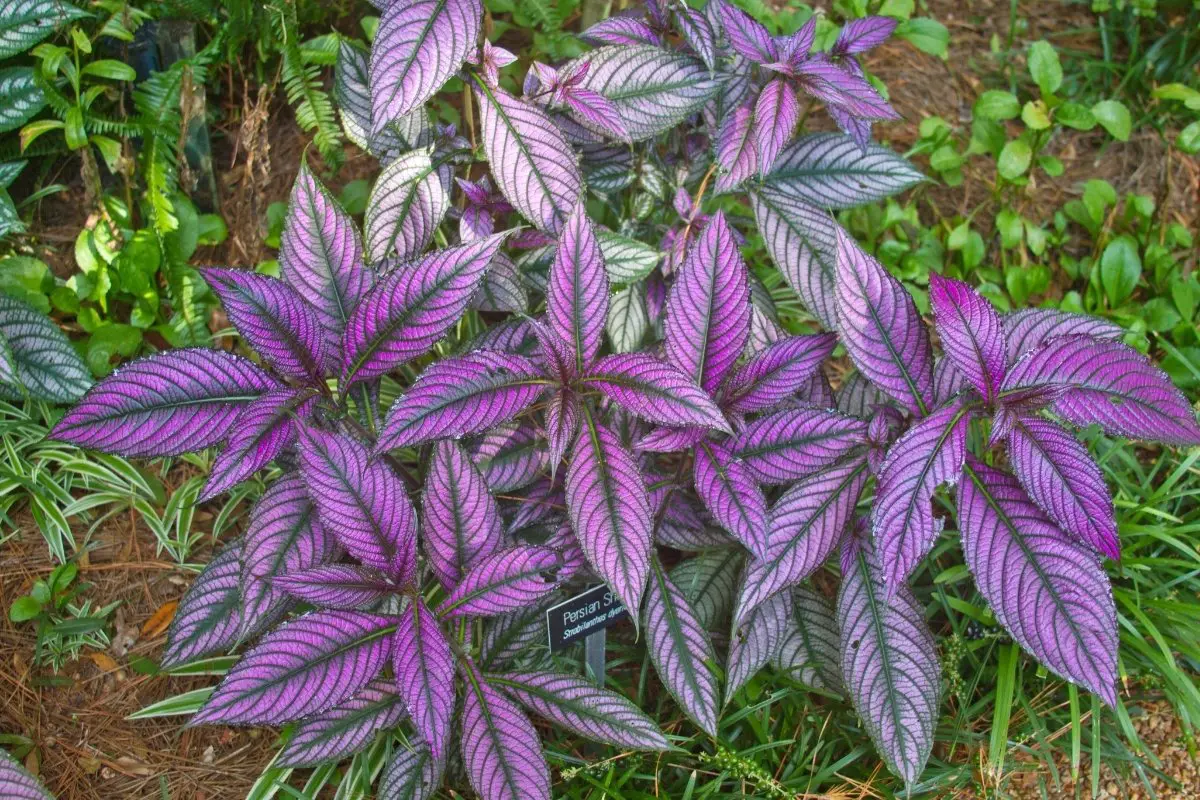
    4.    Persian Shield (Strobilanthes Dyerianus)

    This is an amazing garden plant with radiant purple leaves with silver and green color. You can combine them with a yellow flower and get that stunning and eye-catching effect.

    If you want to stimulate and encourage a bushier plant, ensure your pinch or trim back the buds. Their growth can go as high as 2 feet to 3 feet. Then they should be spaced about 2 feet apart.

    Persian shield in most gardening zones tends to be annual. However, it may last throughout winter in zone 9 to 11.

    Read more about 5 Ways On How To Propagate Rosemary

    5.    Chocolate Chip Bugleweed

    This is a low-growing plant that has purple-green leaves with violet-blue flowers. It is used as a colorful ground cover. The best growing US Department of Agricultural zone to grow them is from 4a to 9a.

    B.   Purple And Green Shrubs

    1.    Chinese Fringe Flower – Plant With Purple And Green Leaves

    This plant is a type of shrub with purple and green leaves. They are ideal to be grown within US Department of Agriculture plant hardiness zone 7 to 10. They are characterized by their shaggy pink flower and shiny foliage and they can make your garden look stunning all year round.

    It is the cultivar Burgundy that has the most pronounced colors with a vibrant reddish blush that covers each purple green leaf.

    2.    Purple Smoke Bush Or Tree

    This is another type of shrub with purple and green leaves and it is a hardy variety that is great for cooler regions. The purple-green foliage also has a light pink margin down its center. You can grow them either in containers or in a garden.

    C.   Purple And Green Houseplants

    There are enough houseplants that are purple and green and some of them include:

    1.    Coleus Plant (Coleus Scutellarioides)

    This plant comes in different cultivars with distinctive variegated leaves. One lovely cultivar is the Sibla type of Coleus and this variety features deeply lobed foliage with a purple center and edges that are bright green.

    Coleus plants have the tendency to grow from 1 to 3 feet high and can spread in a bushy manner up to 3 feet wide.

    This Coleus plant is cold-sensitive which is why they are mostly suitable for a houseplant. However, they can still survive outdoors within the US Department of Agriculture plant hardiness zones 10b to 11a.

    Coleus Plant (Coleus Scutellarioides)

    Final Note – Plant With Purple And Green Leaves

    Plant with purple and green leaves can give your garden that striking look. There are many lists of plants with purple and green stripes foliage that you can pick from to decorate your garden or even your indoor house and we have listed some of them in this article.

    FAQ’s

    Does Wandering Jew like sun or shade?

    The best thing is to provide Wandering Jew with a bit of shade during the hottest time of the day as this can help boost the plant. Then when you are growing Wandering Jew outdoors, make sure you put them in a spot where the temperature stays between 50 to 80 degrees during the most time of the year.

    How poisonous is Wandering Jew?

    The plant of Wandering Jew isn’t poisonous and there are no known records of toxicity. However, none of the parts of the Wandering Jew plant is edible and the hairy stems and stringy sap may cause some little skin irritation to some people.

    Is Strobilanthes poisonous?

    Strobilanthes, which is a member of the Acanthaceae family isn’t poisonous. However, their sap may give slight irritation to some people’s skin.

    Is Tradescantia spathacea toxic?

    Tradescantia isn’t necessarily toxic. The only thing is their leaves contain sap that can be a little irritating to cats, dogs, or even little kid’s mouth.

  • In-depth Knowledge On What Ox Heart Tomatoes Is

    In-depth Knowledge On What Ox Heart Tomatoes Is

    Ox heart tomatoes are characterized by their huge and fleshy fruits. This type of tomato variety may sound new to you or not. But ox heart tomatoes have been around for a very long time (almost a century).

    Ox heart tomatoes are this type of versatile tomato variety that is similar to the beefsteak tomato variety. This tomato variety is quite easy to grow and it can take around 80 days for tomato fruits production. It is also a low-maintenance that can give rise to huge fruit.

    If you’ve ever wondered what an ox heart tomato is all about, here is where you can get some good info about them. We will be discussing some information about this amazing tomato variety and more so continue reading for some insight on them.

    Ox Heart Tomatoes: Some Info About Them  And Their Characteristics

    Ox heart tomatoes come in big sizes and they have this pointed bottom that looks like a beef heart which is where their name is derived from. This unusual shape of ox heart tomato is a result of a mutation that causes their blossom end to become elongated. However, you may find that some are deep ribbed ox heart tomatoes.

    Ox heart tomatoes are categorized to be under the group of beef tomato group and their fruit can weigh around 100 to over 1000 grams.

    This tomato variety is from mid-season to late season. They have a close resemblance to beefsteak tomato and because of this reason, some gardeners may be looking at them as an alternative to the regular beefsteak tomato variety.

    Ox Heart Tomatoes: Some Info About Them  And Their Characteristics

    It’s been suggested that the ox heart tomato originated from Russia as this was where it’s been first mentioned towards the end of the 19th century. Then this ox heart tomato got to the United States where it has been widely cultivated till date. This tomato variety is also popular in France and Italy where their fruits are usually sold at the markets of farmers.

    They are indeterminate and the majority of ox heart tomato comes in red or pink. However, you may still find some yellow, green, orange, or purple just like you can find in other types of tomatoes.

    Just like in most beef tomatoes, the seeds contained in ox heart tomato are usually small. The majority of ox heart tomatoes are heirloom and the newer varieties are hybrid and these tend to yield sterile seeds.

    The good thing is that if you’re able to find an heirloom ox heart tomato variety, then you can easily propagate your oxheart plant using their seeds.

    Check Out General Information About Grape Tomatoes vs Cherry Tomatoes

    What Does Ox Heart Tomatoes Taste Like?

    Ox heart tomatoes have this delightful aromatic sweet taste with a bit of acidic taste.

    Once the fruit of the ox heart plant ripens, it usually turns soft quickly. Therefore, it is best you eat it as soon as possible or process the fruit soon once you’ve harvested them.

    Multicolor Tomato Seed Packet Collection (6 Individual Packets) Non-GMO Seeds by Seed Needs

    Ox Heart Tomatoes

    Some Of The Best Ox Heart Tomato Variety To Go For

    There are many varieties of ox heart tomato. But here are some of the best varieties of ox heart tomatoes you can go for:

    • Orange Russian: this is one lovely ox heart tomato variety that is heart-shaped and orange-marbled. Their fruit can weigh up to 300 grams and they have this amazing taste that is fruity, sweet, and spicy. Also, this variety is best grown in a greenhouse.
    • Coeur de Boeuf: this ox heart variety is well-loved among growers and may even be one of the best known varieties of ox heart tomato. Their fruits form light red fruit with strong ribs. This variety of ox heart is from France and they ripen from the middle of July. They can grow as high as 200 cm and they are ideal for outdoor cultivation with a bit of protection from rain.
    • White Oxheart: this ox heart variety gives rise to light-yellow fruits and the plant can grow as tall as 200 cm. They usually do well and produce great in a greenhouse.
    • Anna Russian: this ox heart tomato variety yields large heart-shaped tomato fruits that changes to deep pink once they are matured or ripe.
    • Bulgarian Oxheart: this variety grows numerous pink heart-shaped tomato fruits during summer. The plant of this variety can grow as tall as 180 cm.

    • Hungarian Heart Tomato: this ox heart tomato variety originated from outside of Budapest Hungary, around 1900. They are characterized by their radiant reddish-pink tomato fruit and they can be almost a pound heavy. Their fruit is quite heavy and meaty just like every other ox heart tomato.

    Click Here to Get Info About:

    Applications Of Ox Heart Tomatoes

    Ox heart tomatoes are great to be used for slicing tomatoes in salads and sandwiches. They also work well when you incorporate them into soups and sauces.

    If by any chance you end up harvesting more ox heart tomatoes than you can consume, these tomatoes are blessed with adequate flesh that makes them ideal for processing and canning.

    But ox heart tomatoes aren’t pasted tomatoes. Hence, it might take longer for them to thicken into sauce or paste.

    Again, thanks to their huge size, these tomatoes are great for stuffing and their scooped-out and meaty innards a nice to be used for sauce and or add to your dishes.

    All in all, these huge ox heart tomatoes are wonderful flavor and versatile in the kitchen.

    Applications Of Ox Heart Tomatoes

    Conclusion On Ox Heart Tomatoes

    We have seen that ox heart tomato is another type of tomato you can go for. Ox heart tomatoes are as huge as beefsteak tomatoes and we have given some in-depth knowledge on what this wonderful tomato variety is.

    FAQ’s

    What does oxheart mean?

    When we talk about oxheart, we are referring to a huge variety of sweet cherries. Then oxheart tomato is a type of tomato variety that is huge and fleshy.

    What can I do with oxheart tomatoes?

    Oxheart tomatoes are nice to be used in our different cooking such as soups and sauces. You can also use them in your sandwich and salads. So, you can enjoy the delightful flavor of oxheart tomato in your kitchen.

    Is ox heart tomato heirloom?

    Most varieties of ox heart tomatoes are heirloom then the newer varieties of ox heart tend to be hybrid that gives rise to sterile seeds.

    Are oxheart tomatoes easy to grow?

    Yes, oxheart tomatoes are pretty easy to grow and it is pretty easy to be successful at growing them. just ensure you provide them with full sun, proper watering, and fertile soil.

  • Fascinating Details About Anthurium Ace Of Spades And The Plant’s Care Tips

    Fascinating Details About Anthurium Ace Of Spades And The Plant’s Care Tips

    Are you fond of collecting rare and unusual plants? Then you should consider Anthurium ace of spade. Anthurium ace of spades plant is one stunning rare hybrid that is characterized by this dramatic ace of spade leaf shape. It is one type of houseplant that will stand well and gorgeously in your home.

    The large velvety leaves of Anthurium ace of spade is so loved because of the feature of color change the plant offers as the plant matures. Anthurium ace of spades is an easy to grow plant and it is great to be planted in pots or terrariums.

    Anthurium ace of spades has some interesting features we will discuss in this post. So, keep on reading to learn more about the Anthurium ace of spade. You will also get some great tips on how to care for the plant.

    Some Fascinating Details About Anthurium Ace Of Spades

    Anthurium ace of spades is one fascinating plant that every plant collector wishes to get their hands on. If you’re keen to know more about this plant, then here are some interesting facts and details about them:

    • Classification: this rare hybrid plant is classified under the family Araceae, subfamily Pothoideae, and genus Anthurium.
    • Foliage: Anthurium ace of spades foliage is dark green, velvety-textured, with a heart-shaped leaves. The leaves display fascinating enchanting changes as they grow from red while in their vegetative stage to bronze. Then they finally turn to dark green once they mature. Their leaves can be as wide as 2 feet and around 2.5 feet tall.
    Some Fascinating Details About Anthurium Ace Of Spades
    • Size of Plant: the plant is a medium-sized plant that can grow up to 2 to 3 feet high with a broad spread. This makes them a good option for an indoor houseplant.
    • Drought Tolerance: Anthurium ace of spades is succulent for water. You don’t need to worry about the plant if you’ve not watered it for days because the thick leaves save water for drier days.
    • Diseases and Pest Resistance: Anthurium ace of spades is quite safe from so many pest and diseases problems. This is because the plant is not so enticing to many pests except spider mites. So, you may be bothered by some spider mites with this plant. but the good thing is that you can easily get rid of them by dabbing or rubbing the leaves using neem oil.

    Click Here to Get To Know How Often To Water Ivy

    Anthurium Ace Of Spades Plant Care Tips

    Anthurium ace of spades is an easy to grow plant that is also easy to maintain or care for. So, below are some plant care tips for Anthurium ace of spade:

    1.    Light Requirement

    The ideal light requirement for this plant is medium to bright indirect light. This light requirement allows this plant to sustain its gorgeous dark foliage colored.

    Because of the dark-colored leaves, too much light is not required by this plant. The reason is that there is more chlorophyll present. Therefore, this implies that the plant can’t withstand too intense sunlight or intense direct sunlight. If the sunlight becomes too intense, it can cause the leaves to burn.

    Mosthink LED Plant Grow Light Strips, Full Spectrum Grow Light for Indoor Plants with Auto ON & Off Timer

    61uhLZz7ylL. AC SX679

    2.    Temperature

    Provide the plant of Anthurium ace of spade with warm and sunny weather all through the year. The climate needs to be consistent so that the plant can thrive better.

    This plant isn’t a cold-hardy plant. So, the appropriate temperature for this plant should be around 65 to 80 degrees Fahrenheit. The temperature of this plant should not drop below 50 degrees.

    Chilly temperatures or a low climate can damage the plant and cause problems to the plant. When the plant is exposed to cold temperatures, growth begins to slow down and it can escalate into cold injury along the line.

    Read More about Major Reasons For Yellow Leaves On Tomato Plants In Containers

    3.    Humidity

    Anthurium ace of spades thrives well in humidity of 70% and above. But make sure the humidity isn’t so high because too much moisture can increase the risk of fungus gnats and bacterial and fungal diseases. Too high humidity can also expose the plant to mold.

    How Often Does Anthurium Ace Of Spade Need To Be Watered?

    The watering requirement for this plant should be in-between (i.e. not too moist and not under-watered). You need to find a balance when it comes to watering this plant and avoid over-watering because this plant is susceptible to over-watering.

    How often Anthurium ace of spades needs to be watered will mainly depend on the time of the year. So, when the season is warm, the plant should be watered about once a week. Then when the summer peaks, you can increase watering to twice or three times a week and this will depend on how hot it is in your zone.

    It is easier to determine when your plant needs watering by simply checking the soil moisture content. When you do check the soil moisture content before you water, it can help in avoiding over-watering.

    Dip your finger 2 inch deep into the soil to check for moisture content. Once you notice the soil is totally dry at 2 inches deep, then it’s time to water again.

    When it is winter period, allow the soil to dry out a little bit more. The reason is because the weather is colder and there is less sun and the plant isn’t growing actively. Hence, watering should be a bit less.

    Conclusion

    Anthurium ace of spades is a stunning plant that has many fascinating things to note about the plant. If you want to know more details about this lovely plant, you can get such info here. We have also listed a few tips on how you can easily take care of this plant.

    FAQ’s

    What is Anthurium ace of spades?

    Anthurium ace of spade is a dramatic evergreen tropical plant that is characterized by its heart-shaped leaves, distinctive dark venation, and a velvety textured touch.

    How can you tell if anthurium is ace of spades?

    Anthurium ace of spades is pretty easy to tell or recognize thanks to its distinctive features. The leaves of Anthurium have the shape of a heart and the leaves appear pale green with a concentric silver-toned vein.

    Do anthuriums like self watering pots?

    Self watering pot may go well with Anthurium plants if you set the self watering pot to water minimally in the right quantity. The plant doesn’t like to be soaked in water so you need to properly set up your self watering planter to fit the watering requirement of Anthurium plants.

    Should you mist An anthurium?

    Yes, you may mister your Anthurium ace of spades by spraying it evenly. However, ensure it is not soggy, and note that misting does not mean you shouldn’t water your plant when needed.

  • Get To Know How Often To Water Ivy

    Get To Know How Often To Water Ivy

    How often to water ivy is what we would like to know. An important thing is for you to always follow the right watering schedule for the kind of location where you’re growing your ivy plants. Be it inside or outside. This will help keep them healthy.

    Your plants will definitely thrive well in the best location and the appropriate growing conditions. When the upper layer, like an inch, or the soil is getting dried your ivy plants need to be watered appropriately.

    Don’t forget to spray the leaves every week with water if you’re growing them indoors. This will help increase humidity.

    In order to prevent root rot and maintain green ivy plant leaves, the requirement is for you to water ivy once a week. However, the climatic condition will determine this.

    You should read further for more enlightenment on how often to water ivy plants be it in your garden or home. So, this article will be shedding more light on the watering requirements for water ivy.

    The Ideal Watering Frequency For Watering Ivy Plants For Both Indoors And Outdoors

    Woodlands and forests are where ivy plants grow and adapt. They grow in soil that is relatively moist and well-draining while being sheltered from humidity and forceful wind.

    You can find ivy growing and thriving in different kinds of habitat which are usually soil types that are evenly moist and contains high organic matter. However, this kind of soil dries out slightly after each interval of watering.

    Watering ivy can be carried out successfully both indoors and outdoors if the water cycle and exact levels of soil moisture of that of their native habitat can be replicated.

    • A quick tip that will always be helpful in knowing how often to water ivy is that, during spring and summer, water your ivy plants once every week. However, watering is needed only once in two weeks during winter.
    • Another tip is to always make sure the first top inch of the soil becomes dry first, then you can go ahead and water your ivy. This is regardless of whether your ivy plants are indoors or outdoors.
    • It is important to spray the leaves with water if you’re growing them indoors. This is because the air indoors, especially with the presence of home appliances like an air conditioner or heater for the winter season, is usually very dry. A low humid micro-climate that is exactly like the one present in ivy’s native woodland environment can be created by misting the leaves. Misting also helps in the reduction of loss of water in the leaves.
    • The pot size also matters as it is much quicker for smaller pots and containers to get dried way faster than pots that are larger.

    Click Here to Get More Info About:

    Watering Frequency Schedule – How Often To Water Ivy

    To create a watering frequency schedule for your ivy plants depending on your regional climate and conditions, firstly check for the level of moisture in the soil. Do this by using your finger to feel the first inch of the surface of the soil. Don’t water the soil yet if the soil feels moist.

    However, if it is that the soil is dried out from the touch, then you have the perfect time to give the soil some watering.

    XLUX Soil Moisture Meter, Plant Water Monitor, Soil Hygrometer Sensor for Gardening

    71rBE3r88DL. AC SX569

    And there you have the perfect scheduled time from knowing the time interval it will take for your ivy plants to need watering. You can incorporate it into your schedule and stick to it. This way, your ivy plants will remain healthy, regardless of if they are indoors or outdoors.

    Check Out All About Golden Goddess Philodendron And General Care For The Plant

    Detecting When Ivy Plants Need Water

    The first obvious sign that indicates ivy plants are not well-watered or going through drought stress is the formation of brown lines on the leaf margins, thereby making the leaf become brown. This is due to the low level of humidity. It could even get worse with every part of the leaves turning brown, crispy, and brown as a result of lack of water.

    Another thing is that leaves will begin to fall off if the soil you’re growing your ivy plants in has dried out. Give your ivy plants some water and spray the leaves immediately you begin to see these signs.

    The ivy plants can be resuscitated after undergoing drought stress by means of misting the leaves. You can do this just once every week.

    Signs That Show That Ivy Plants Have Been Over-watered

    When there is too much water around the root ball of ivy plants, they will begin to turn yellow and their leaves will also fall off. This excess water is due to too much watering and pots that don’t have a good channel for drainage.

    This is why you need to establish the right frequency of how often to water ivy. Ideally, the best soil to plant ivy in is a well-draining soil and damp soil is not the type that its roots can thrive in. When there’s too much water in the soil, oxygen will be excluded.

    Signs That Show That Ivy Plants Have Been Over-watered

    Also, it doesn’t allow root respiration to take place which doesn’t allow the smooth process whereby the roots absorb water and nutrients. This is what causes the leaves to become yellow.

    An ivy plant is hardy, yet it doesn’t recover easily from too much watering but can recover easily from drought. So, in that case, to be on the safer side, endeavor to maintain slightly dry soil.

    How Often To Water Ivy: Conclusion

    Knowing how often to water ivy gives the advantage of preventing unpleasant situations like root rot, symptoms of drought, stunted growth, and more. With this article, it is certain you will learn about when, how, and how much you need to water your ivy plants.

    FAQ’s

    Can you water ivy too much?

    Ivy plant dislikes being watered too much so don’t water the plant too lavishly. To water the right way, make sure the upper inch of the soil is completely dried out.

    How do you save Overwatered ivy?

    To try to save an overwatered ivy plant, try to drain the soil if it’s in a container and improve the water drainage. Repot if necessary to prevent root rot.

    Why is my indoor ivy dying?

    Your indoor ivy may be dying due to underwatering, excess exposure to the sun, or the pot or container used is too small that it makes the soil dries out too fast. Hence, you may notice the leaves turning brown and drying out.

    How can you tell if ivy is underwater?

    You can tell when your ivy is underwatered when you notice wilting of the plant, the lower leaves begin to drop, the leaves start to turn yellow, and you may even notice stunted growth.

  • All About Golden Goddess Philodendron And General Care For The Plant

    All About Golden Goddess Philodendron And General Care For The Plant

    Golden goddess philodendron is one eye-catching houseplant you can grow. This mesmerizing plant is a climbing houseplant that has bold foliage that is pretty visible even across the room.

    Golden goddess philodendron plant is a rare type of hybrid plant that was created in Thailand.  It is also regarded as Malay gold or lemon-lime philodendron. This plant is pretty easy to care for and it can usher in vibrancy and life to any home or indoor spot.

    You can showcase this stunning plant on a tabletop or desk when they are in their small stage. Then you can relocate this plant to a floor planter once they mature.

    We are all about the golden goddess philodendron in this post and we will also look into how you can easily care for this radiant plant.

    Golden Goddess Philodendron: More Details About This Plant

    Golden goddess philodendron is a vibrant-looking plant with bright yellow-green foliage. It is a climbing plant that is usually placed in a climbing spot and this plant can grow up to 6 feet or 2 meters.

    When the plant of golden goddess philodendron is in its young stage, it can serve as a good choice for a desk or tabletop. Now when this plant grows over time with good care, it can grow at tall as 6 feet or even more, and it can grow to become a showpiece.

    Golden Goddess Philodendron - More Details About This Plant

    This plant is an epiphyte plant that flourishes well in warm and bright conditions. The plant prefers medium to bright indirect light. They are vigorous climbers and they may require some assistance to keep upright once they are reaching their maturity stage.

    Check Out Peppers Rotting On Plant – Causes And Solutions

    Caring For Golden Goddess Philodendron

    This wonderful glowing golden goddess philodendron is quite easy to grow and care for. So, the plant is a low-maintenance houseplant and can do well both indoors and outdoors.

    Golden goddess philodendron is also a fast-growing plant and can do well with the help of trellis support as they attain maturity.

    So, below are some general caring tips for the golden goddess philodendron:

    1.    Light

    Golden goddess philodendron plants flourish or grow well with light. However, the light shouldn’t be a direct light because direct light can cause sunburn to the plant.

    Notwithstanding, this stunning plant can still do well with low light. However, it will delight you to know that when you position this plant in a bright spot with indirect sunlight, you can be mesmerized by the radiant yellow color it shows off when bright light hits the plant.

    Indoor Plant Food | All-purpose House Plant Fertilizer

    81q2TgqsEdL. AC SY879

    2.    Watering

    This plant thrives well in humid or damp soil but the plant doesn’t like to waterlog. So, maintain evenly moist soil, especially during the months of spring and summer. Also, note that the amount of water you provide this plant will vary depending on the temperature, light, and humidity.

    However, a general rule is to check for the top 1 to 2 inches of the soil for complete dryness and water again.

    If you’re making use of potting soil, ensure there are enough drainage holes so that excess water can flow out of the soil while you water the plant.

    Also, note that this plant can still withstand being a little under-watered in case watering skips your mind. However, over-watering is not allowed because it can cause adverse effects on the plant.

    Read More About Major Reasons For Yellow Leaves On Tomato Plants In Containers

    3.    Soil

    Being an epiphyte plant, it requires a potting mix that is rich, airy, moist and well-draining soil. A good soil combination is equal parts indoor potting soil, perlite, and orchid bark. Then the plant can also benefit from the addition of bone meal or worm casting to the soil mixture.

    4.    Humidity And Temperatures

    A warm and humid condition is what the golden goddess plant wants. A humidity range between 25% to 49% levels is ideal for the plant to thrive well. However, if your home is dry, you may need to provide the plant with some extra humidity.

    So, during the summer months, maintain moist air. Then during winter, if you have your heater on, note that this may cause your philodendron plant to dry out easily. So, make sure you mist the leaves when needed and you can use a humidifier if possible.

    Then when it comes to temperature, a steady warm temperature between 65 to 5 degrees Fahrenheit is ideal. The philodendron plant doesn’t do so well in chilly or low temperatures.

    5.    Fertilization

    The plant of the golden goddess can benefit a lot from fertilization, especially during its growing season which is the spring and summer months. A balanced fertilizer is recommended and this should be applied during watering periods.

    Avoid over-fertilization because it can cause leaf tip curls and over-fertilization can also damage your plant.

    6.    Trimming

    This climbing plant can appear leggy so this will require some good trimming. Trimming also helps keep things tidy and maintain a good shape of your philodendron plant.

    Make use of a clean sharp pruning shears or scissors and make any cut along the stem. We recommend trimming during spring or summer when the plant is in its active growing period.

    Furthermore, the trimmed parts can make leaf and stem cutting for your neighbor, family, or, friends.  It can even make a nice present due to the scarcity of this unique plant.

    Caring For Golden Goddess Philodendron

    Final Say

    This golden goddess philodendron can be a fascinating plant to have around you as they have this welcoming radiant glow. The plant is very easy to grow and take care of and we have given some tips on how you can take care of this plant.

    FAQ’s

    Is Golden Goddess philodendron rare?

    Yes, this stunning, radiant, and mesmerizing golden goddess philodendron is a rare type of hybrid plant that was created in Thailand.

    How big does a philodendron golden goddess get?

    Golden goddess philodendron can grow so big and can attain a height of up to 6 feet or even more. The plant is also a climbing plant that usually needs support as they mature.

    Are philodendron golden goddess and lemon lime the same?

    Both philodendron golden goddess and lemon lime can serve as house plants. However, they are not the same. The shape of the leaves of these two plants differs and philodendron (6 feet or more) tends to grow a little bigger than lemon lime plants (4 feet to 6 feet).

    Can a golden goddess turn into a Thai sunrise?

    It is not possible for the golden goddess philodendron to turn into a Thai sunrise. Although these two plants can appear similar but if you take a closer look, you will see they are different plants.