Do you know how to sprout potatoes so you can harvest them a little earlier than the expected growth time?
Potatoes do not have seeds, so they grow in a different process than other vegetables. Potatoes grow from the products that you set aside as seeds. These seeds must have ‘eyes’ where the new sprout will form. These eyes sprout and form new tubers that grow into potatoes.
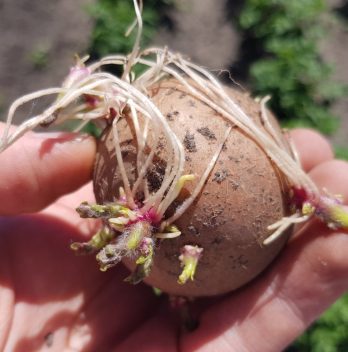
A potato’s eyes form and sprout under the right conditions. Let’s look at the right conditions needed for chitting potatoes.
What Do Potatoes Need To Sprout?
1. Organic Potato Seeds. It’s best to use organically grown potatoes as seed. Chemically grown potatoes have a sprout retardant that slows down sprouting or completely stops them.
2. Darkness and Light. Let’s understand this point here. Potatoes like to sprout in darkness. But you need to expose them to light when they begin sprouting. They are like other seedlings; they will need light to grow. You can keep your potato seeds near a bright window or a fluorescent light to sprout them.
3. Moisture and Warmth. To speed up the sprouting process, keep your potato seeds in an area with good warmth and moisture. Do not put them in standing water as they will rot. You can layer them in damp leaves indoors to create the right environment. When the sprouts are about 1 cm long, they are an ideal length for planting.
How To Sprout Potatoes The Right Way
Start sprouting your potatoes three to four weeks before planting them.
Get your Seeds Ready – Buy your seeds from a reputable potato seed seller or get your own from a previous harvest. Your potato seeds must be organic. Never use potatoes that are treated as they may not sprout.
Place your Potato Seeds where you want them to Sprout – Some people use an open egg carton to sprout their seeds. Put them in a dark place where there are enough warmth and moisture. Once they start sprouting, get a fluorescent light, or keep them near a window. Ensure you keep the potatoes stable so that the fragile sprouts do not get broken. In about 1 week, you will notice that the potatoes are sprouting. After 3 to 4 weeks the potatoes are ready for planting.
Plant the Sprouted Potatoes in the Garden – the same way you would plant un-sprouted potatoes. Be sure to plant the potatoes with the sprouts facing up handling them with care not to break the shoots.
Best Seller
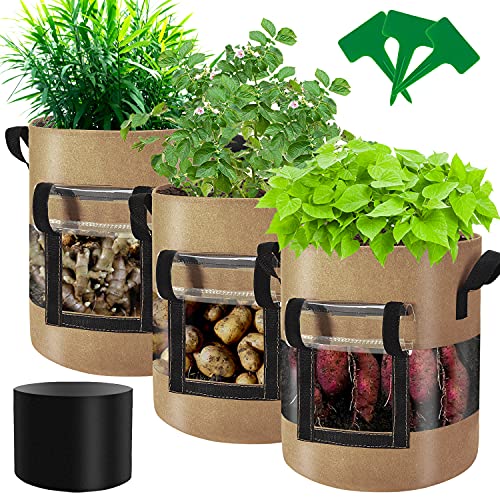
Visible Potato Grow Bags 10 Gallon with Flap
$26.59
3-Pack – Potatoes Growing Containers with Handles and Visible Space, Heavy Duty Thickened Aeratio…
Did you know you can increase the size of your potatoes? Yes, it is possible to do so! Rub off some of the shoots from the tuber before planting to remain with 1 or 2 healthy sprouts. If you leave all the shoots intact, you end up encouraging too much competition on the plant, and the produce will be small potatoes.
FAQs
Do potatoes need to sprout before planting?
Potatoes need to be sprouted before planting. They will grow well, but they won’t be as big. Sprouting them increases the number of eyes on each potato, which means more potatoes per plant. It also increases the number of roots, which means that you’ll harvest more potatoes from the same space.
You can plant potatoes at any time of year, provided that they are healthy and not rotting.
What should I use to sprout them?
You can grow sprouts in a wide variety of ways. You can use a jar, tray, or any other container. You can also use a hydroponic method, where you use a solution of water and nutrients to feed the sprouts. However, the more water and air you give the sprouts, the faster they will grow and the longer they can remain in the jar.
Potato sprouts can be planted in small pots, in a tray, or in a shallow box. They need plenty of light, so they can be grown outside under a tent or greenhouse, or in a sunny window.
Is it easy to sprout potatoes?
Potato sprouts are a nutritious and easy-to-grow way to get a good dose of vitamin C, fiber, potassium, and B vitamins in your diet. The easiest way to grow them is by sprouting. To do so, you simply place the potatoes into a jar with some water, close it up, and let the sprouts grow. They will take about a week to sprout, but it’s best to start them as soon as you can.
Can I plant potatoes with long sprouts?
I would say that is not a good idea. You can do it, but it’s not advisable. The reason is that the sprouts are part of the tuber and will grow until they reach the potato.
How do you speed up a sprouting potato?
My answer has always been: Don’t. You can speed up the growth of a sprouted potato by exposing it to sunlight, but you’ll get no more than a few days more of growth than you would without sun.
Do potatoes sprout in the dark?
It is indeed true, they will sprout in dark.
You can place them under fluorescent lights or lamps with a blue spectrum. Potatoes are a member of the Nightshade Family, along with tomatoes, peppers, eggplant and tobacco.
Best Way To Sprout Potatoes- Conclusion
Now that you have learned how to sprout potatoes, go ahead and grow your own. You will enjoy a good potato harvest a little earlier. You will love the taste of your early harvest with their skins on and deliciously waxy texture!
🥔 Potato Growing Supplies
Potato Grow Bags,Potato Planters with Flap and Handles,Vegetables Garden Planting Bags for Onion,Fruits,Tomato,Carrot (10gallon-4pack)
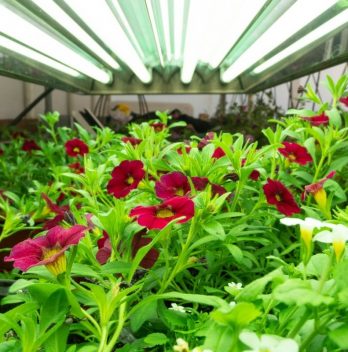
If you are tired of putting your seedlings on a windowsill that doesn’t get much sun, then you should consider t5 grow lights.
T5 grow lights are helpful in the propagation stage of plant development. They are best for their consumption of low power compared to other lighting methods. They emit only a tiny amount of heat. The heat is favorable for vegetative and propagation lighting solutions.
T5 lights are specifically for indoor use. They have features that favor the kind of environment they provide, unlike the t8 and t12 lights. Using these lights enables you to grow your plants on and off season when the sun may be long gone to help with propagation.
What Are T5 Grow Lights?
T5 grow lights are a type of fluorescent lighting for gardening. The T stands for tubular, which is the shape of the lamp. The 5 gives the size of the diameter measured in increments of 1/8 of an inch.
Types Of Fluorescent T5 Grow Light
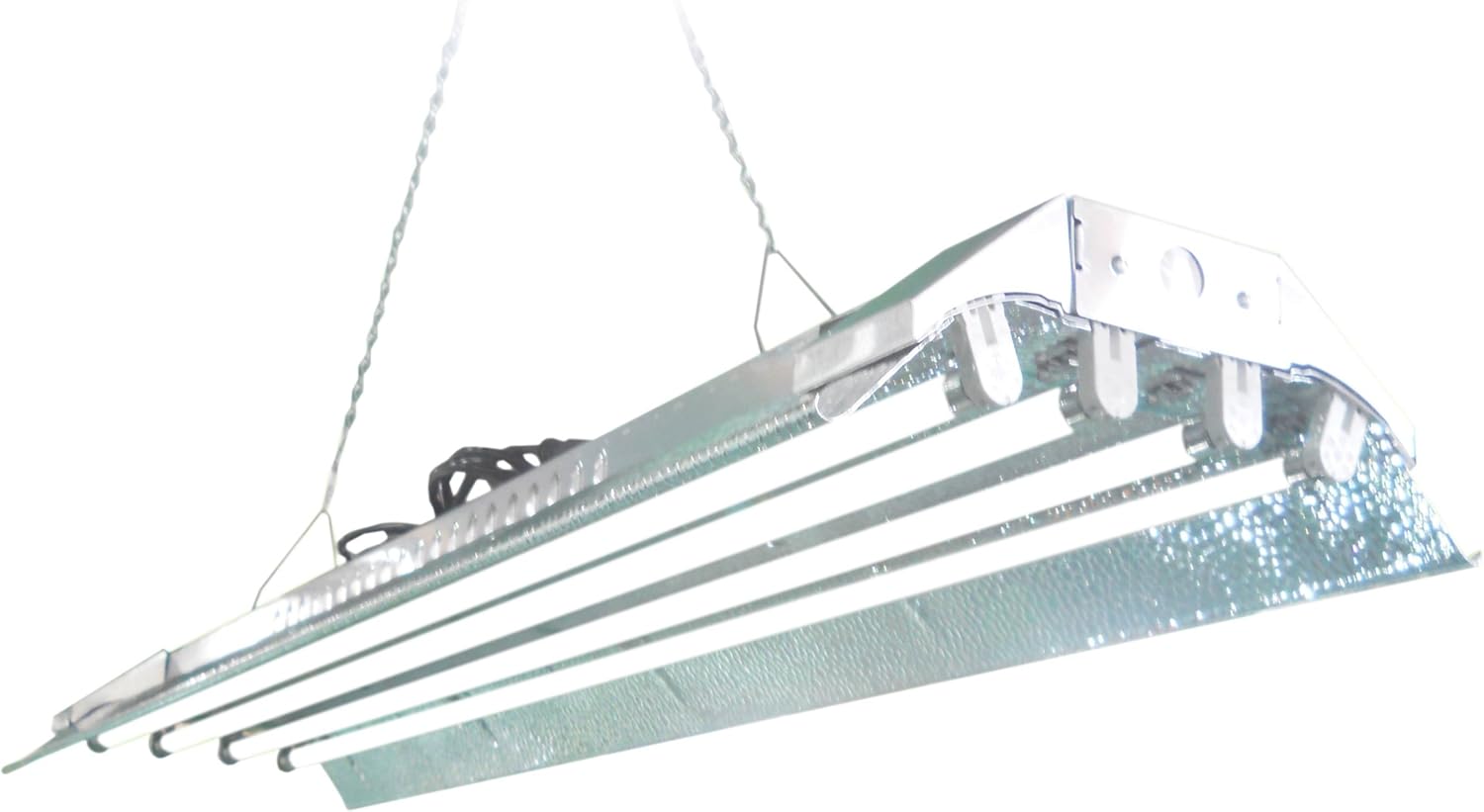
T5 lights are set side by side in a parallel manner, usually in a reflective way. This arrangement offers the greatest spread of light for your gardening needs.
The t5 lights come in four different sizes
2 foot long 2 light panel
2 foot long 4 light panel
4 foot long 4 light panel
4 foot long 8 light panel
The 2 foot long systems come with 24w bulbs while the 4 foot long are supplied with 54w bulbs. The full amount is different for each system. The output is calculated by multiplying the wattage by the total number of lamps.
Recommended Best T5 Grow Lights
There are a lot of t5 manufacturers and resellers in the market today. It is a hard decision to make when choosing one that is of good quality and affordable. Here is an in depth buyer’s guide and our top choices to help you make the right decision.
Durolux t5 is an excellent budget choice and a best seller among the t5 grow lights.
Its key features include:
Lightweight weighing 9.75 inches
Quality light fixture at an affordable price
20,000-lumen output
Comes with hanging hooks, chains, power outlets, and a 14 inch power cord
This light is best suited for growing seedlings but not ideal for fruiting plants. It is advisable to choose the 4 feet long lights for the best results.
Pros
It is more affordable than most options
Comes with hanging hooks, chains, outlet, and cord for easy assembling
It is flexible and easy to move around
Returnable 30 days after sale guarantee
Cons
Gets too hot on the metal around it – needs lots of care to handle
This grow light is a best seller for a reason – it comes in 2 and 4 inches lengths. The 2 inches tube offers 2, 4, or 8 tubes and the 4 inches offers 4, 6, 8, or 12 tubes. The 2 inches bulb is best for indoor gardens. It is perfect for growing in tight spaces either horizontally or vertically.
Key features include:
Has an expected bulb life of 20,000 hours
Comes with an off/on switch for each bulb
Hydrofarm is a well-known manufacturer with this light being their most popular product. You can choose from their variety of bulb sizes and numbers from 96w or 40,000 Lumens to 648w, 60,000. Two tubes of 4 inches can give you up to 6 daily light integrals within a 16 hour performance. This is enough light for growing seedlings.
This light is best for lettuce and other green vegetables that require 12 DLI or above to achieve maximum yield. For this, you need a 4 by 4 inches tube fixture or a larger option.
Pros
Offers a 5-year warranty
Offers a year of coverage against defects
Cons
They emit some heat and can be dangerous to closed spaces
Does not come with hanging chains except its newer option
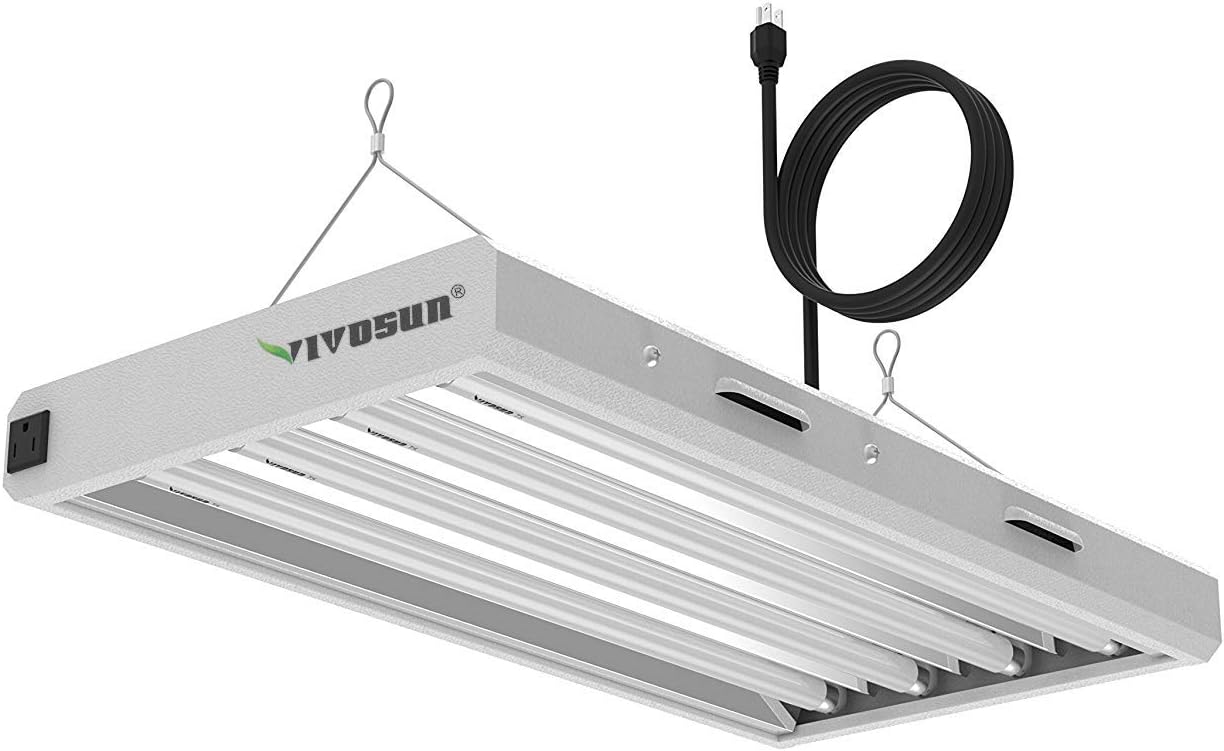
Vivosun has an average lifespan of 20,000 or 2000 lumens with a temperature of 6500k for the vegetative stage and 3000k for the flowering stage. This fluorescent light gives full-spectrum light that includes all colors, UV, and infrared radiations. These are essentials for bacterial protection and plant growth. These tubes also help with growing clones or seedlings.
Pros
Lightweight compared to other t5 lights
Less expensive
Has in built ventilation
Cons
They are more fragile and prone to getting damaged
Do not come with a warranty
No fixtures are not part of the package, you have to buy them separately
Barrina 4 foot integrated light bar includes both the bulb and the fixture and is complete. You don’t need anything else, making it easy to use this t5 LED bulb. These bars replace the 6500K fluorescent tube.
They are best for cloning and seedling growth but not for flowering. This light is effective in supplementing red heavy light like an HPS light. The bars are known to be energy efficient as they only use 20w so you don’t have to use too much power. Though they use less power, they give a similar output of 2200 lumen.
You can actually connect up to 8 bars together and plug the fixtures directly to each other while connecting end to end. You can use the included cords to plug them into each other. The fixtures come with snap clips that make hanging easy.
Pros
They have a 3-year warranty
Very affordable cost
You can use them in different spaces either vertically, horizontally, above or below
Use low power 22w
Can connect up to 8 together
Cons
They do not have a reflector so the light spreads around at a 270-degree angle
Its color spectrum contains far more blue color than red – doesn’t work well for flowering
-For the vegging stage of growth, you’ll want to use a T5 fluorescent grow light with a 6400k spectrum of light– that’s going to give you a white/blueish spectrum. When it’s time to flower you’re going to go with a 2700k bulb to give you a yellowish/white spectrum of light that stimulates flower growth.
-It is short for vegging, which refers to the vegging stage of plant growth
-It is short for vegging, which refers to the vegging stage of plant growth
-egetables need to veg, just like other plants.
And afterward, vegetables that fruit and/or flower will also need to go through the flowering stage of growth.
-l plants veg, i.e. they go through the vegging (or growth) phase. During this phase, they grow. Ideally, they want more blue light during this stage, which is why vegging bulbs emit a cool white light that contains more light in the blue wavelengths (color temp around 6000K to 6500K).
t5 full spectrum grow lights
-High-Output, Full-Spectrum Replacement T5 Bulbs for SunLite® Gardens. When it’s time to replace the light bulbs in your SunLite Garden, these fluorescent bulbs are the perfect choice. The full-spectrum light mimics natural sunlight, encouraging healthy, vigorous growth of seedlings and houseplants.
Full spectrum light encourages healthy plant growth
Choice of three sizes
Sold individually
Note: These bulbs are only for use in fixtures that are designed for T5 bulbs
FAQs
What’s the problem with them?
The main drawback to growing with T5 lights is that they do not provide the same amount of light as a traditional outdoor garden would. While T5 lights are a great way to grow plants for personal use, they are not an ideal method for commercial purposes.
Growing with T5 lights is much more expensive than a traditional outdoor garden.
Are TS5 grow lights?
T5 lights are often referred to as “grow lights” but that’s not quite accurate. The reason being that T5 lights are used for indoor plant growth, whereas grow lights are used for outdoor plants.
The difference is that grow lights are designed to produce a lot of light, whereas T5 lights are designed to produce a lot of light in a very small space. If you want to know the best way to grow weed with T5 lights, then you’ve come to the right place. So, what exactly are T5 lights? T5 lights are also referred to as fluorescent tubes. They’re commonly used to illuminate office spaces, restaurants, and retail stores. In fact, they’re so common that they’re also used indoors for growing weed. T5 lights have an advantage over HID lights in that they use less electricity, which means that you can grow more plants per watt. The downside to T5 lights is that they’re not really suitable for outdoor growing because they don’t provide enough light.
Are they good for growing lettuce?
Yes, I’d recommend getting some T5HO’s and growing from seed. They do fine indoors and if you get a good light schedule (16/8. you can grow an absolute ton of greens indoors. A lot of people are growing lettuce in them right now, and it’s absolutely amazing.
T5 Led Grow Lights Conclusion
T5 grow lights are great when it comes to vegetative growth and propagation. If you have not yet tried the fluorescent lighting for the growth stages, we recommend using a t5 grow light. You will be surprised by the good results you get. As well as the easy way to light up your plants when the natural sunlight is not around. A cool way to still enjoy your favorite vegetables and flowers off-season!
Many homeowners are frustrated by unsatisfactory results from substandard lawn food products and many wonder leave if purely organic lawn food does work.
Ask every homeowner and they will tell you the lawn is as important as any other parts of the home. Everyone dreams of a fuller, greener lawn! This is made possible by feeding fertilizers that can help you maintain your lawn with ease.
Purely organic lawn food is made up of all-natural ingredients that don’t contain any harmful chemicals. There are many great organic fertilizers in the market today. To find the right one, you first need to understand how they work and what kind of results to expect.
Why Use Purely Organic Lawn Food?
Let’s be clear, organic fertilizer has a lot of benefits for both you and your home. Let’s unmask these benefits:
Adds organic matter to the soil
Naturally increases the nutrient exchange
Helps the soil maintain better moisture levels and attract a bigger earthworm population
Lasts long in the soil, therefore, no need to keep adding more
Allows plants to get everything they need without being over-stimulated
Releases nutrients slowly at a pace that makes your grass grow slowly
Gives you breaks from mowing often
They do not contain any dangerous chemicals
Which Works Better Between Purely Organic Lawn Food And Chemical Lawn Fertilizers?
First, understand that both organic and chemical lawn fertilizers give you results. How do you determine what works best for your lawn? Here are a few ways to tell the differences:
Application – Organic fertilizers come in pellet form. The application is easy but can take a while. Applying too much organic fertilizer does not harm your plants. Chemical fertilizers come in liquid form and are easy to apply. Too much of it burns your lawns causing brown spots.
Nutrients – Organic fertilizers have all nutrients that your lawn needs. They also contain a lot of macronutrients that your soil needs. Chemical fertilizers have exact amounts of essential nutrients with most macronutrients missing.
Nutrient release. An organic fertilizer releases its nutrients at a rate that plants can absorb. Because of this advantage, it requires fewer applications. Chemical fertilizers offer a short-term solution providing a quick burst of nutrients. The quick burst of nutrients makes the grass grow fast requiring mowing regularly.
Soil quality. Organic fertilizer is better for soil. It provides natural microorganisms and bacteria that help create a well-balanced eco-system for plant growth. Chemical fertilizers don’t add anything beneficial to the soil, they actually decrease fertility.
An In-depth Review Of Purely Organic Lawn Food
Purely organic lawn food is made using organic ingredients like distillers grains and soy. It is safe to use and delivers outstanding results. It is formulated to provide the nutrients that the lawn needs to become lush and green. All over the country, customers swear by this organic lawn food due to its potency.
This fertilizer contains non-synthetic phosphorous with a 10-0-2 parts composition. Its entire formula consists of natural nutrients required for the healthy growth and maintenance of grass.
Purely organic lawn foods have been used for a long time to maintain sports fields and keep them lush. The results have been satisfying! This fertilizer keeps grass thick and green throughout the year without any traces of scorch.
It has antimicrobial properties that foster the overall health of gardens and yards. The manufacturer recommends four applications in any given season for better results. The application process of purely organic lawn food.
There are two ways on how to carry out the application process. You can either choose the traditional way or use your hands to spread the fertilizer on the lawn.
Using your hands – this method is tedious especially when dealing with large yards. It also results in the uneven distribution of the fertilizer. This leads to strange growth patterns due to uneven distribution.
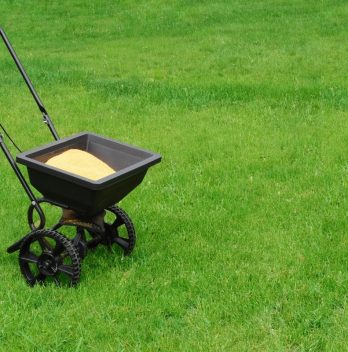
Using the traditional method means you use a spreader. You can either use a rotary or a dropped tool. Using a spreader saves time and gives you an even distribution of the fertilizer. You might need a specific purely organic lawn food distributor. It is possible to find recommendations from the manufacturer’s website.
A 25-pound bag can cover up to 5,000 square feet of turf making it quite cheap. Be sure to water your lawn as soon as you apply the fertilizer. It is essential to ensure the yard stays moist always four days after application. This enhances the proper infiltration of the fertilizer into the soil. It also boosts the root growth and development of the grass.
Is Purely Organic Lawn Fertilizer Safe for Humans?
Yes, purely organic lawn food is safe for humans and pets! This is because the product contains natural ingredients only. It does not harm you or your pets when you come into contact with it. It does not carry a burning effect thus the application is possible as many times as possible without harming the grass. But, it should not be consumed and should be kept away from children and pets.
The Pros and Cons of Using Purely Organic Fertilizer
Let us look at the advantages and disadvantages of using this organic product
Pros
It is very economical
Does not scorch the grass
It is affordable yet effective compared to other natural fertilizers
Contains 100% non-synthetic phosphorous
Has a pleasant odor thanks to 0% manure content
Does not have a limited number of applications or seasons
Family and pet friendly
Meets the municipality restrictions on Phosphate use
Cons
Its packaging is quite bulky at 25 pounds
Purely Organic Lawn Food Vs Other Natural Fertilizers
It is important to compare this product with other organic products and see the differences. That way you make an informed decision when choosing your product. Below is a comparison of the purely organic lawn food against well-known brands:
This natural food covers 5000 square feet of lawn. It is safe for use with humans and pets, and you can walk on it immediately after application.
It contains a natural mixture of natural ingredients safe for children and pets. This product has an NPK of 9-0-2, and you can use it during any season. It should not dry on its own but needs water immediately after application. Do not mow the lawns for two weeks following the application. This fertilizer is best applied to freshly cut grass.
Amazon Choice Selection
Safer Brand Lawn Restore Natural Lawn Fertilizer
$34.49
Non-Burning Fertilizer – 9-0-2 NPK – Covers up to 5,000 Sq Ft
We earn a commission if you make a purchase, at no additional cost to you.
02/10/2026 07:03 pm GMT
This product though safe around children and pets.
Most users highly recommend this lawn food, but others reject it for its bad smell, like that of chicken poop. If you can put up with the smell, then you can go ahead and use it.
Pros
Is safe for children and pets
Contains natural ingredients
Suitable for any grass type
Is not limited to the time of the year it can be applied
No country restriction
Cons
Contains unpleasant smell during application and watering
This lawn fertilizer will cover an area of around 4400 square feet. It has an NPK ration of 9-0-5. It contains natural ingredients that include fish meal, kelp flour, and alfalfa meal. Dr. Earth also contains beneficial soil microbes and mycorrhizae. This is a soil fungus known for improving plant root systems.
This fertilizer is safe for humans and pets and can be used as an all-purpose fertilizer. The application can happen at any time of the year and offers long-term improvements. It has a fishy smell that lingers for a while after application.
Dr. Earth High Nitrogen All Purpose Fertilizer 5-0-2
This organic fertilizer has an NPK ration of 18-0-3. It has very high levels of Nitrogen that improves the green growth of plants. It is an all-natural fertilizer safe for children and pets. The ingredients include feather meal and poultry manure.
It contains extra Iron which helps the lawn achieve a deeper green color. The results are noticeable a few days after application with long-lasting results. The biggest complaint about this lawn fertilizer is the fact that it has a distinctive foul odor. Because it is primarily made from chicken manure, the smell is expected. Some users find the smell unbearable while others accept it.
Espoma Lawn Food for All Seasons. Rich in Natural Organics 15-0-5
$42.08
20 lbs. covers up to 6,000 square feet. Bio-tone formula with Slow Release Nitrogen and Non-Stain…
We earn a commission if you make a purchase, at no additional cost to you.
02/10/2026 06:04 pm GMT
Pros
Made from natural ingredients
Safe for children and pets
Suitable for use all year round
Cons
Carries a bad smell of chicken manure that lingers for a while
FAQ’s
Is Purely organic lawn food the safest?
Yes.
Purely organic lawn food, or POOL, is a very effective, natural and healthy lawn fertilizer. It contains all the nutrients your grass needs to grow and be healthy. When it comes to organic lawn food, there are two main types: POOL that is only organic and does not contain any synthetic fertilizers, pesticides or herbicides POOL that is both organic and non-toxic to pets and wildlife.
Purely organic lawn food is the most complete organic lawn feed available. Purely organic lawn food contains all the nutrients and minerals your lawn needs to grow healthy.
Conclusion
The safety and natural state of this purely organic lawn food are what make it a favorite among the many customers who use it. There is no denying it has gained an overwhelming victory for its outstanding good effects. You can choose to taste the goodness by using it to nourish your lawn.
Understanding the cedar mulch pros and cons is an added advantage for farmers who intend to use it for mulching purposes.
Cedar mulch is a natural product that adds beauty and charm to your garden. It comes from the waste material of the cedar tree. Cedar trees are majestic trees whose origin comes from the Himalayas and the Mediterranean basin.
These trees grow fast and straight making both the wood and mulch obtained renewable. The mulch is one of the favorites of many farmers due to its many benefits.
What Exactly Is Cedar Mulch?
Cedar mulch comes from shavings and clippings of the bark of the cedar trees. It is a by-product of the wood industry from these commonly sought trees. It is used by farmers to cover the gardens and keep the soil moist.
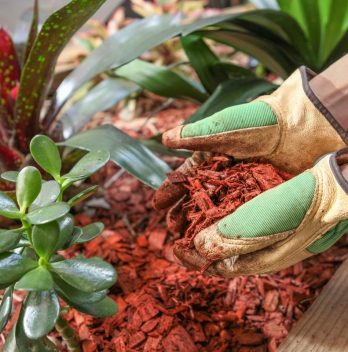
This mulch has an insect repellant effect on the soil that keeps insects away from your garden. The natural color for cedar mulch is reddish-brown. This mulch can be used in its natural state or dyed for aesthetic purposes. If dyed; it turns to black, dark brown, yellowish, or red. That makes it more decorative when used in flower beds and gardens.
What Are Cedar Mulch Pros And Cons?
Each type of mulch comes with its advantages and disadvantages. This makes a huge difference in your garden. Mulch has qualities and drawbacks that are obvious.
Cedar is well known for some outstanding qualities that are an added advantage to your garden. Here are some of those qualities.
Cedar Mulch Pros And Benefits
Is an insect repellant. This is one reason why most gardeners use it. Insects do not like the smell of cedar mulch so they stay away from it. That means they stay away from your garden too.
Lasts longer. Compared to other organic mulches like pine mulch, bark, and straw, it stays longer. Cedar mulch is known to last for years once you put it in your garden.
Has a beautiful natural color. A warm reddish-brown hue is what you get or you choose to color it for an aesthetic purpose which is beautiful too.
Is generally a great ground cover. This is a key quality in choosing the type of mulch you want to use.
Let’s be clear here, cedar mulch is not 100% perfect. It has its downsides and it’s best when you know them before you plan on using it.
Expensive: This mulch costs more than the average mulch.
Repels pollinators and beneficial insects. This is the flip side of the pest control quality of cedar mulch. It affects the ecosystem negatively! Don’t use it if you are planting fruit trees or want your plants to produce flowers.
Releases acetic acid which negatively affects your plants. This only occurs if the mulch has not received enough oxygen when it was stored after production.
Loses colorfast. If you chose it because it was attractive, note that the color will fade off fast.
Has a strong scent. Most people find it nice because it is natural while others find it unpleasant.
FAQs
Are there advantages to cedar mulch?
You can use it in your vegetable garden and you’ll fin it holds moisture well and doesn’t burn easily. It also has a long life and will not rot.
It seems like it would be a great option for the hot weather but I’m not sure if it’s a good idea for the colder temperatures that we have in the winter.
Does cedar mulch hurt plants?
No. Cedar mulch is not harmful to plants, but it may harm insects such as ants. You could use cedar mulch in beds or borders, but if you are trying to protect plants from pests and other animals, it may be harmful to insects such as ants.
Which is better cedar or hardwood mulch?
Hardwoods and softwoods are both good choices, and you’ll find that they can be used interchangeably in many cases.
Cedar is not recommended as a mulch because it has a tendency to attract insects, and if the mulch gets wet, it can rot. However, if you’re using cedar to help prevent soil from drying out, it’s fine. It also helps to protect the trees against disease and pests.
Does cedar mulch have chemicals?
Cedar mulch does not have any chemicals in it. It is natural and is made from the wood of cedar trees. However, there are some potential risks. The biggest problem is that cedar mulch is very porous and will allow water to seep through, which can cause rot. If you want to mulch with cedar, you’ll need to apply a barrier, like a plastic film.
Which is better pine or cedar mulch?
Cedar has a tendency to dry out much faster, especially if it isn’t properly mulched.
It’s also more expensive. Pine mulch doesn’t rot as fast, but it can be harder to work with and get under your plants.
Is it OK to put cedar mulch in a vegetable garden?
It’s OK, but cedar mulch is not as good as other mulches for growing vegetables. Cedar is a good wood for building because it has a natural insecticide and does not rot. Cedar mulch also holds moisture well and is good for keeping the soil cool. However, cedar mulch is not the best mulch for growing vegetables because it tends to be a bit acidic.
This means that it will not be as good a fertilizer or a mulch for vegetables as other types of mulch. If you are putting cedar mulch on top of the soil in your vegetable garden, you should put some other mulch on top of that. You could use straw or leaves, for example, instead of cedar mulch. If you do decide to use cedar mulch, you need to make sure that you are using it in a way that is safe for your plants and safe for the environment. When you use cedar mulch, you can be sure that you are not adding any harmful chemicals to the soil. In addition, you are also reducing the amount of greenhouse gases that your plants produce. One way to use cedar mulch is to put a layer of it around the outside of your garden. This will help to keep insects away from your vegetables. The cedar mulch will also help to prevent weeds from growing in your garden.
This means that it will not be as good a fertilizer or a mulch for vegetables as other types of mulch. If you are putting cedar mulch on top of the soil in your vegetable garden, you should put some other mulch on top of that. You could use straw or leaves, for example, instead of cedar mulch. If you do decide to use cedar mulch, you need to make sure that you are using it in a way that is safe for your plants and safe for the environment. When you use cedar mulch, you can be sure that you are not adding any harmful chemicals to the soil. In addition, you are also reducing the amount of greenhouse gases that your plants produce. One way to use cedar mulch is to put a layer of it around the outside of your garden. This will help to keep insects away from your vegetables. The cedar mulch will also help to prevent weeds from growing in your garden.
Conclusion
Cedar mulch pros and cons help you determine early enough what type of mulch to choose for your garden. Even with the consideration of the plants to grow!
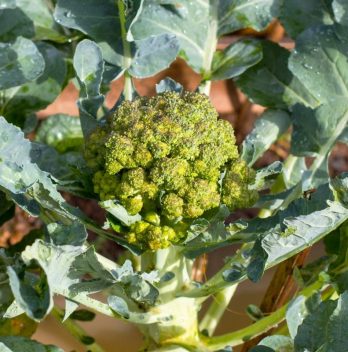
Growing broccoli from seed is quite challenging for beginners but it’s not impossible for those who wish to learn how to do it.
Broccoli is a sun-loving crop that is best grown in the fall or spring. This beautiful good looking green belongs to the cabbage family. It is a close relative of cauliflower, cabbage, Brussels sprouts, and bok choy.
It is a cool weather plant that can yield one or two main harvests in a season. If properly cultivated, it can also yield mini-harvests per growing season. Once you harvest the main head, it will often keep producing smaller side shoots that you can enjoy for a long.
Brocolli is worth growing for its nutritional benefits. It is rich in vitamin A, potassium, iron, folic acid, and fiber.
Growing Broccoli From Seed Tips
Brocolli thrives in temperatures between 60 to 70 degrees Fahrenheit. Mature plants can thrive in cold temperatures of up to 25 degrees Fahrenheit.
This plant is also known to be temperamental! If you plant it too early, it produces small heads called buttons. If you plant it too late, the heads do not form at all, and plants flower and go to seed.
The best time to plant early in the spring season so that it will be ready for harvest when the hot weather arrives. You can also time the late spring season that will see plants mature in cool autumn weather.
Types of Broccoli Seeds To Grow
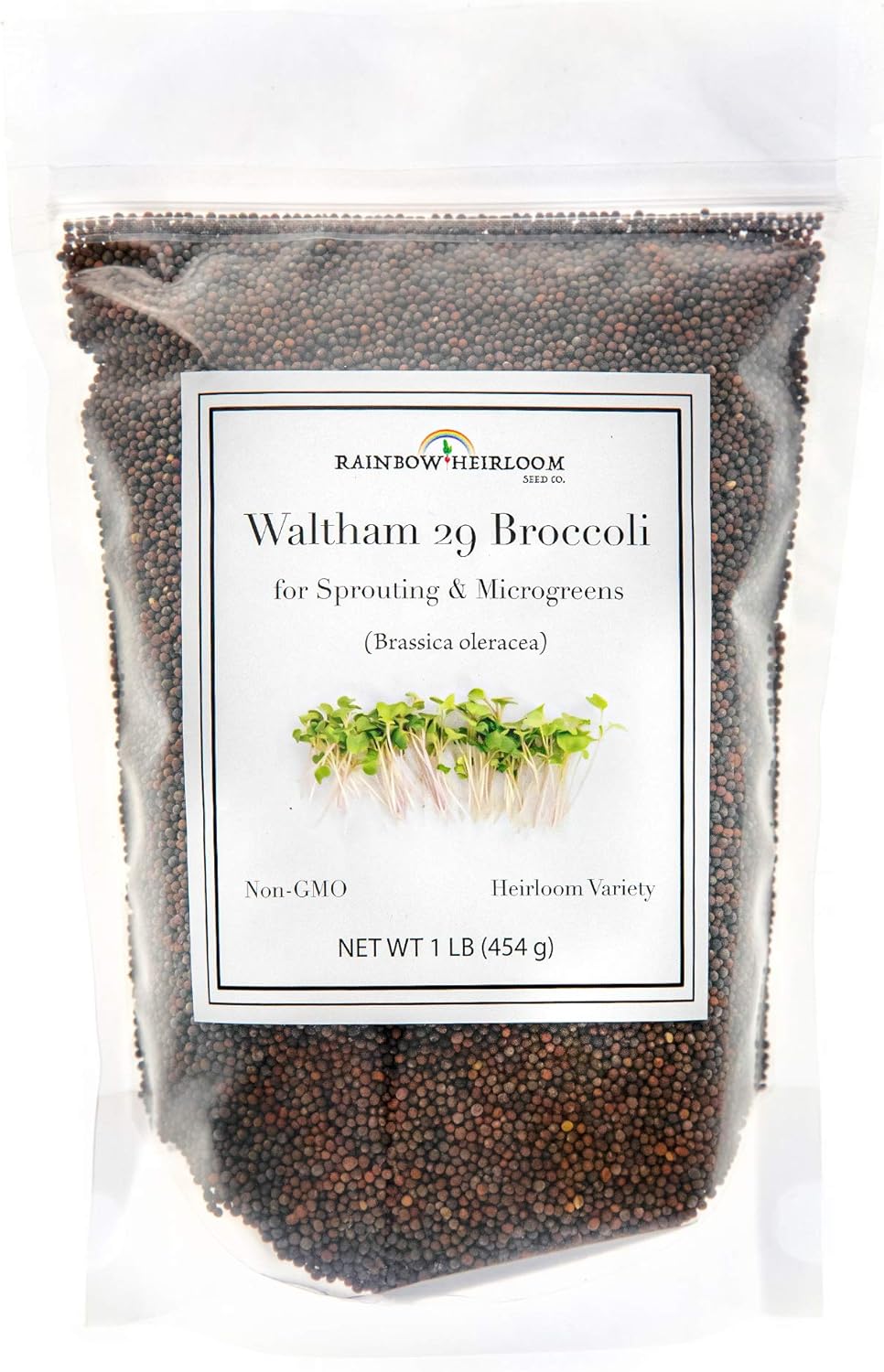
There are several types of broccoli seed varieties that you can grow. Some have larger heads while others have small. There are varieties that mature fast while others take longer. Some varieties even have purple heads.
Here are a few favorable types that you can work with:
Step by Step Process Of Growing Broccoli From Seed
Requirements
Your choice of broccoli seeds
Water
Pre-moistened soil or peat pellets
Heat mat
How To Plan Broccoli Seeds
Step 1: Fill the seed trays with high-quality seed starting soil. Or use pre-moistened peat pellets if that’s what you prefer.
Step 2: Plant one seed per hole by making a shallow hole in the ready soil. Drop the seed into the shallow hole or place it on top and gently press it into the soil.
Step 3: Cover the seeds with soil and gently press down to ensure it comes into contact with the seeds. Since broccoli seeds are so small, they should be planted about 1/8” to ¼” deep.
Step 4: Water the planted seeds. It is best to water the trays from the bottom up so that the soil remains undisturbed. Simply pour water into the tray and allow the soil to soak it up from the bottom.
Step 5: Keep watering when necessary to ensure the soil doesn’t dry out as the seeds germinate.
FAQs
What are the steps to planting broccoli?
There are three main steps in growing broccoli. First, the plants are sown indoors in a seed-starting medium. Second, the seedlings are transplanted into soilless potting mix. Third, they are then transplanted to larger pots, and finally, to the field.
Seeds of broccoli are sown in a seed-starting medium. It’s important to choose a seed starting medium that has a high nitrogen content and is free of any additives that may harm the seedlings. The seeds should be kept moist at all times and not allowed to dry out. When the seedlings are planted, they should be placed about 2 inches deep and about 2 inches apart in the potting mix. You can water your seedlings by placing them in a plastic bag, or by using an automatic watering system.
How deep should they be planted?
Try this Poke a hole in the soil about 12 inches deep and 3 inches wide. Fill the hole with seeds (they should be planted 4 inches apart). Cover them with dirt and water them well.
How can I lantanas brocolli?
A small, sunny pot (I like a 10 litre pot) A potting mix or compost The seed of your choice. I have used purple sprouting broccoli and mini sprouts (which are the same thing as broccoli mini sprouts).
You can use any other type of broccoli seed. A fine mesh sieve An old plastic drinking bottle with a hole in the bottom If you don’t have any of these items, you can buy them at your local nursery or garden centre.
Step 1: Preparing Your Seed Pot Before starting to grow broccoli from seed, you need to prepare your seed pot. The first thing that you need to do is to soak your seeds for two hours. This is important as it removes the protective coating on the seed. You can use a glass jar or bowl with some warm water to soak your seeds. If you are using a plastic container, make sure that you don’t leave your seeds in there for too long as they may dry out.
Step 2: Sowing Your Seeds The next step is to sow your seed into your seed pot.
To do this, sprinkle the seeds evenly over the surface of your pot and then gently pat down the top of the seeds to ensure that all the seeds are evenly distributed in the pot. This can take between three to five days depending on the temperature and the amount of light that you are giving them.
Step 3: Germinating Your Seeds Now that your seeds have germinated, it is time to transplant them into the soil. First, carefully remove all of the seedlings from your seed pot. You can use a pair of scissors or a small knife. Then, place the seedlings into individual pots or trays filled with a mixture of soil and sand. Make sure that the soil has a good amount of compost in it as this will help to support the young plants. Don’t add any fertiliser at this stage as it could harm the roots. When you have transplanted your seedlings, water them well. Do this every day until you see that they have started to grow their first true leaves.
Conclusion
Even though it sounds easy to grow broccoli, it does require some knowledge to get the best out of your seeds. You may not get it first but rest assured the second, third, and fourth times will not be a fail!
A fantastic and very simple way to feed your garden soil and plants is Compost-Tea. Have you heard about this special brew? Compost-tea can be used as a mild liquid fertilizer or plant booster, it also helps the plants deal with small pest issues. And, guess what? Compost tea has been used by farmers for a long time ago. The early Egyptians, Romans, and Greeks brewed it to fertilize their crops. Keep reading to know more about how to make compost tea without a pump.
A Quick Guide to Make Compost Tea Recipe
Compost-tea is in a sort of a way, an infusion of a bag of compost in pure water. As simple as it sounds, it’s in practice very simple too. The procedure goes like this:
Put the compost mesh bag in a bucket of water for a few hours,
Stir a bit for a few times, and… there you go.
Compost-tea is good for the soil and your loved plants because it has a high content of organic matter and holds living colonies of healthy bacteria and fungi. These microbes are in constant dynamics with plant roots systems (rhizosphere), preparing the food for them to absorb it better. Healthy microbes in the soil are like the chefs of plants.
There are two simple procedures to apply the compost-tea, one is fast and requires very little materials or tools. The other way is a bit more complicated to set up and requires diverse tubing and an air pump (similar to the ones used in aquarium set-ups). Let me tell you more about the simple method to achieve a quick & homemade liquid fertilizer. To know everything you would possibly want to learn about compost-tea, visit Rob Avis’ article on Compost-teas and Extracts.
How To Apply The Compost-Tea
Compost-tea has proved to benefit the soil’s nutrition and therefore the plants that grow on it, but in comparison, it’s way simpler to apply it than solid compost itself. After you prepared your compost-tea, the steps to apply it are:
Strain the bigger particles with a sieve or strainer. You can also try with an old piece of cloth (T-shirts are great, so are socks or meshy tights).
Dilute the compost-tea in a 1:4 ratio: 1 part of the compost-tea and 4 parts of rainwater or chlorine-free water.
To apply the diluted compost-tea, you may carefully pour directly to the soil or spray your plants leaves early in the morning or late in the afternoon.
Repeat frequently, maybe once a week or once every fortnight for the first months. After that, space applications to once every three or four months.
Compost-tea is truly a great and easy liquid multipurpose fertilizer that can be prepared a moment before the application. It is rich in beneficial microorganisms that help nurture the soil and the plants that grow of it.
In case you are an experienced Compost-Tea brewer, I recommend you try the procedure with an active aerator (air pump). Deanna Cat has a great article about aerobic (with air) compost-tea brewing at her blog Homestead & Chill.
If you liked this small how-to post about compost-tea, please share it and comment, we love your feedback.
Undoubtedly, the best mycorrhizal products play an important role in plant growth-enhancing the roots, which are a major part of plant development. These fungi help enhance the soil! Which in return provides the roots with better access to air (oxygen) and water.
Mycorrhizal fungi are common in all types of soil where plants grow. They grow a large root network throughout the soil and associate with the root system to create a greater association with plants.
Mycorrhizal fungi do not plant roots. They behave similarly to plant roots. Like roots, they burrow into the soil to collect nutrients and water for the plants. To sustain the fungi, the plants’ leaves send sugars to them as food.
Given that this excellent association is natural adding more mycorrhizal fungi to the soil is essential. These beneficial fungi occur naturally in the soil, but you must introduce them to the seedlings in the hydroponic systems or starter plugs.
Types of the Best Mycorrhizal Products
There are two groups of mycorrhizal fungi – ectomycorrhizal and endomycorrhizal fungi.
The Ectomycorrhizal Fungus
This fungus develops on the exterior of the root cells. Ectomycorrhizae are found in natural environments, mainly in trees or forest ecosystems. They form visible reproductive mushroom-like structures at the feet of the trees they inhabit. This fungus grows between root cells without penetrating them. It is symbiotic with spruces, pines, and most hardwood trees like oak, willow, and beech.
The Endomycorrhizal Fungus
This fungus penetrates plant cells where direct metabolic exchanges occur. It colonizes shrubs and most herbaceous plants without forming visible structures. In the endomycorrhizal fungi class, arbuscular mycorrhizal is the most prevalent in soils. Its name comes from the structures it forms in the plant root cell: the arbuscular. Arbuscules are finely branched root structures. They form within a cell and serve as a metabolic exchange between the fungus and the plant.
Other types of mycorrhizal fungi only exist in nature and are given to specific families of plants. These types are unavailable in commercial products; you can only get them in nature. They include the Orchids, Ericoid, and Arbutoid (the ericaceous family).
Mykos mycorrhizal is an organic and natural fungus. It creates a sponge-like mass highly beneficial to the soil. It helps it collect and store water and nutrients while increasing both intakes. This fungus is a species of the arbuscular mycorrhizal fungi class.
Mykos is a fast-growing beneficial fungus that does not contain any other microbes like the ectomycorrhizae of Trichoderma. This fungus breaks down, cycles, and retains nutrients. It also provides a front-line defense against ecological stresses. Once administered, Mykos will continue to grow and become an extension of the roots. It does this while administering better sustainability and efficiency. The larger and healthier the root system, the more yields the plants produce.
Pros
It helps new plants absorb transplanting shock
Stimulates new root growth
Increases root mass, resulting in more nutrients and moisture absorption
Transports nutrients over large distances and delivers them directly into the root cell
Protects your plants from heat stress and drought
It keeps harmful pathogens from reaching the roots
Improves soil structure of sandy and clay soil
Creates strong roots fast
Cons
Individual plants can connect with other plants through the mycorrhizal network. Even where it’s unwanted, it connects and shares nutrients, water, and sugars.
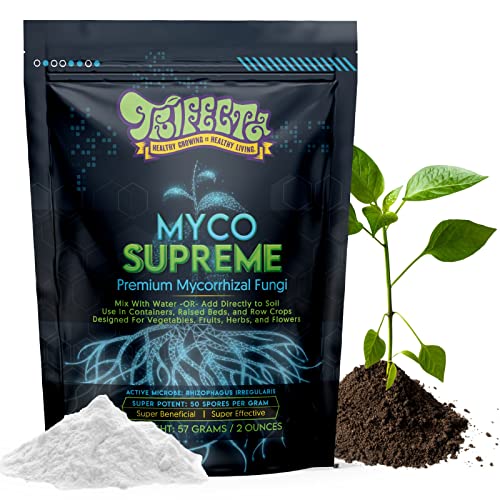
Trifecta – Mycorrhizal Fungi for Soil, Root Stimulator for Plants
$19.95
Ultra Concentrated Mycorrhizae for Plants Strong Roots & Living Soil, Trifecta Myco Supreme Plant Root Stimulator for Tree, Rose and Flowers
This fungus is essential to soil life! It is vital to establish a secondary root system to help with nutrient intake. This fungus is for one-in-a-lifetime use and does not need topping up again. Use it while planting to help improve plant establishment, natural vigor, flowering, and fruiting.
Pros
Grows secondary roots systems fast
Improves uptake of water and nutrients
One treatment lasts a lifetime, making it affordable to use
This is a granular mycorrhizal that consists of 4 species of endomycorrhizal fungi. These are Glomus intraradices, G. etunicatum, G. mosseae, and G. aggregatum. Almost 85% of world plant species form a symbiotic relationship with fungi including trees and vegetables. The fungus increases the effectiveness of rooting in plants. This supports the plant growth, tolerance, and vigor of any ecological extremes. The mycorrhizal propagules promote plant quality and crop performance with their rooting ability.
Pros
Supports faster plant establishment
Accesses water beyond the root zone and delivers to the plant’s vascular network
Absorbs and delivers nutrients to the roots
Improves soil nutrients use
Improves root biomass
Absorbs and transports soil moisture from beyond the root zone to the plant’s roots
Improves stress tolerance
Cons
It is only useful to common plants and vegetables but not trees
Root Naturally – Endo Mycorrhizae
$10.99
Pros:
Granular
Packaged in easy scoop white jar
4 Species Endo-Mycorrhizae (Glomus intraradices, G. mosseae, G. aggregatum, G. etunicatum)
We earn a commission if you make a purchase, at no additional cost to you.
02/10/2026 02:02 pm GMT
What Plants Need Mycorrhizal Fungi?
Several plants benefit from mycorrhizal fungi. These include:
Trees
Oak, pine, and spruce tree species can benefit from mycorrhizal fungi. It can help them extract nutrients and water from the ground by fusing with their roots.
Shrubs
Blueberry, rhododendron, and azalea shrubs are some of those that benefit from this fungi. It can help shrubs obtain more root power and increase their tolerance to environmental stresses.
Vegetable Crops
Carrots, peppers, onions, potatoes, and herbs can benefit from mycorrhizal fungi. It can help increase vegetable resistance against diseases and ensure they get more nutrients from the soil.
Is Mycorrhizal Fungi The Same as Rooting Hormone?
Mycorrhizal fungi and rooting hormones are two different things. However, both can be used to help plants thrive.
Rooting hormones are applied to the cut ends of plants. It helps them develop roots more quickly. You can use a rooting hormone to increase your success rate when propagating plants. Contrarily, mycorrhizal fungi are applied to the soil around the plant roots. It helps plants absorb water and nutrients and withstand drought and disease.
Where Can I Buy Mycorrhizal Fungi Near Me?
There are several places you can buy mycorrhizal fungi. Here are some suggestions:
Local Garden Centers
Nurseries and garden centers carry a variety of gardening supplies. Most stock mycorrhizal fungi. You can visit a garden center near you and ask the staff if mycorrhizal fungi are available for purchase.
Online Retailers
Many online retailers specialize in gardening supplies. Others stock it as part of their general inventory. You can search for retailers near you or those that deliver in your area.
Specialty Stores
You may find mycorrhizal fungi for sale at specialty stores focusing on organic or sustainable gardening supplies. These stores may be more likely to carry a variety of products, including mycorrhizal fungi.
Manufacturers
Going directly to manufacturers is another option. You might find one that sells to the public. Many companies that produce mycorrhizal fungi have websites that allow you to purchase their products online.
How Often Should I Apply Mycorrhizal Fungi?
Many factors influence how often you’ll need to apply mycorrhizal fungi to your soil. Here are a few things to keep in mind:
Follow The Manufacturer’s Instructions
You should also look at the specific instructions provided by the product manufacturer. These instructions will provide the most accurate guidance on how often to apply the mycorrhizal fungi.
Apply Mycorrhizal Fungi at Planting Time
Mycorrhizal fungi are typically most effective when applied to young plants or at the time of planting. This allows the fungi to establish a relationship with the plant’s roots and help the plant absorb water and nutrients more efficiently.
Reapply Mycorrhizal Fungi As Needed
If you use mycorrhizal fungi to help establish new plants or improve plant health, you may need to reapply the product regularly. The specific frequency will depend on the needs of your plants and the particular product you are using.
What Can I Use Instead of Mycorrhizal Fungi?
If you do not want to use mycorrhizal fungi or can not find any, you can use compost, fertilizers, or animal manure. These alternatives can provide many benefits to your plants. However, they may not benefit your plants as mycorrhizal fungi can. You should determine your specific needs and choose an alternative based thereon.
What Eats Mycorrhizal Fungi?
Mycorrhizal fungi can be damaged or destroyed. You should avoid chemical pesticides and limit physical disturbances. Excessive moisture or dryness can also damage the fungi. Taking steps to protect and preserve the mycorrhizal fungi in your soil will help ensure that it benefits your plants.
How to Breed Mycorrhizal Fungi
Breeding mycorrhizal fungi can be a complex process that requires specialized knowledge and expertise. If you are interested in breeding these fungi, I suggest seeking guidance from a professional in the field. Alternatively, you can keep these steps in mind:
The first step in breeding mycorrhizal fungi is to isolate individual strains. You can do this by using surface sterilization or culturing techniques.
Once you have isolated particular strains, you can select specific traits. Good traits include their ability to colonize the roots of individual plant species or withstand certain environmental conditions.
Next, you need to cross-breed your selected strains to create new fungi with the desired traits.
You should test the resulting mycorrhizal fungi strains to ensure their effectiveness.
If your resulting strains are effective, you can mass-produce them for personal use or sale.
Conclusion
Roots are very important to a plant. They anchor the plant in place, resisting the forces of nature like wind and running water. They take in oxygen, water, and nutrients from the soil for the plant to bloom. Roots are also good for the soil! When it rains, the roots hold the soil in place so that it is not washed away. Healthy roots mean healthy soils and healthy plants as well! Now you know an affordable way to grow a healthy root structure that will cause your plants to thrive! Go ahead and excel in your farming!
Organic farmers have been looking for places where to buy pumice for gardening that comes in different sizes. Besides your local stockist, it is critical to see who can deliver pumice to your doorstep.
Pumice is a volcanic rock that provides excellent soil conditioning and improvement. It helps keep nutrients and increase aeration in the soil because of its porous.
It is possible to buy your pumice from the comfort of your home through the online stores. Look at all the options below and see where you can find it easily.
Where To Buy Pumice For Gardening
Pumice For Plants Companies
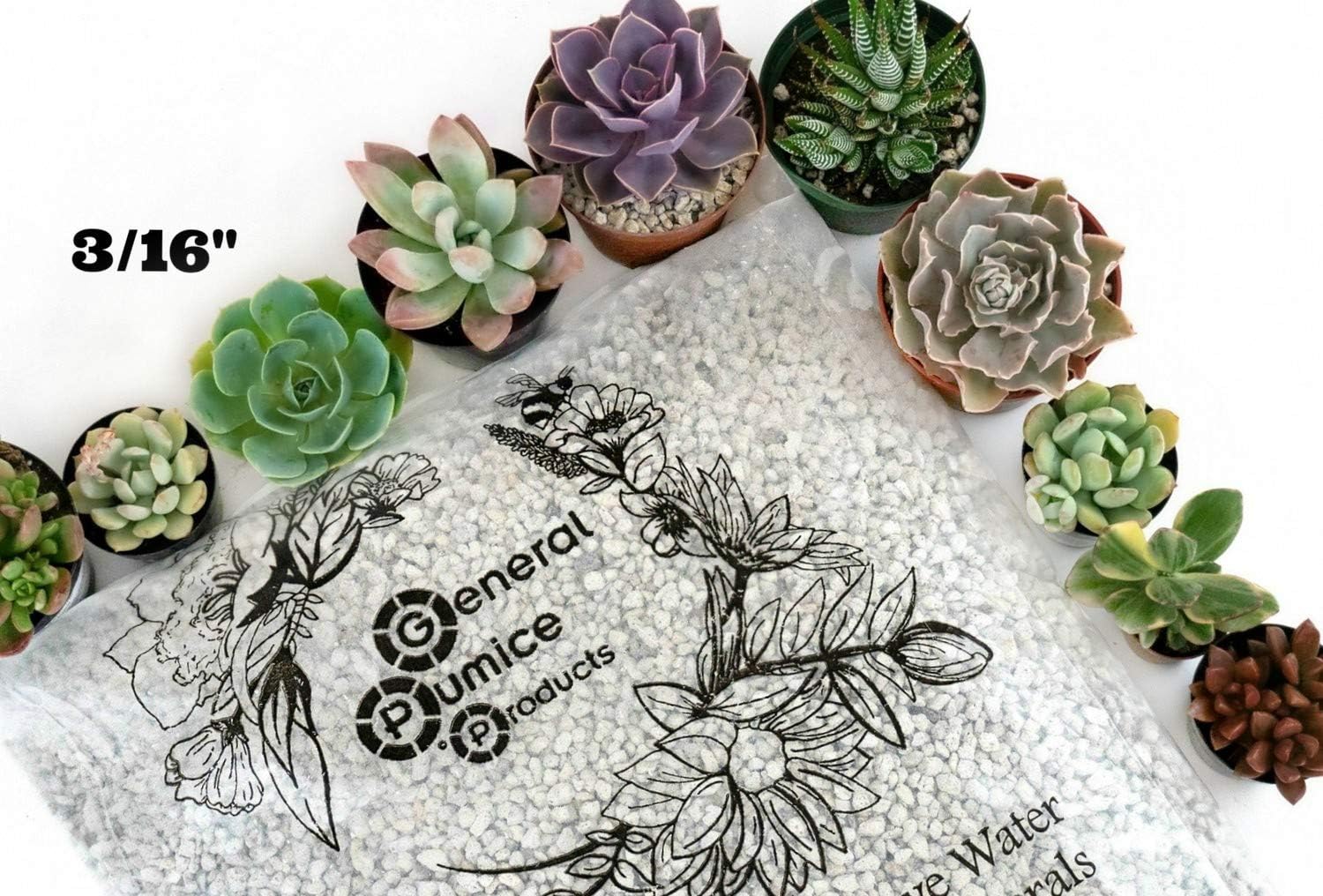
Generalpumiceproducts.com. This is an all American company based in Southern California. They have mastered the sourcing and selling of environmentally friendly pumice. Their promise is to offer the best pumice from their sources. They have two mines in Olancha California. Each bag of pumice that they sell is mined and packaged on-site. Head over to their site and place your orders.
Pumicestore.com. Hess Pumice is a company located in Idaho. It mines and processes pumice to be used in various applications. They are a lead supplier of pumice. Pumice store offers different grades of pumice that match your garden needs. They offer different stone sized bags ranging from 5 to 100 pounds.
Bulk apothecary.com. They began as Brick and Mortar Company in 2010. And have since expanded to pumice stone and other products. They stand out for their exceptional customer service, great quality, and low prices. Before you order, you can also check reviews from past customers.
Ecommerce Stores Where To Buy Pumice For Gardening
Amazon.com. Being the largest retailer in the world, Amazon offers a wide selection of goods. The wide selection means it’s possible to find a variety of one item in different prices and sizes. Pumice is such an item! You can scroll through and select this product from different sellers. An Amazon Prime account gives you an added advantage of free 2-day shipping. Before you place your order, it’s possible to read reviews from other buyers. The competitive pricing and wide selection make it a great platform to order from.
Etsy.com. Independent sellers across the globe can sell their products on Etsy. Gardening is not left out in this e-commerce site. You can browse through the gardening category and find pumice sellers. Many sellers offer free shipping with your purchase. It comes in different sizes, content composition, and price. Check Etsy to see if any seller has the right pumice you need.
Wayfair.com. This e-commerce store has many supplies stocking home décor and gardening products. To qualify for the free shipping, you can order goods over $35 and get them shipped to you at no cost.
Build a soil.com. They specialize in a variety of organic fertilizers. Their pumice stone does not as much variety as other sellers. But they sell a high-quality blend that increases soil health. They offer free shipping on about 37 pounds of weight free shipping.
Pumice is an amazingly versatile stone! In these modern days, it’s getting many uses thus more customers. You now know where to order when you need pumice for your various needs.
Most farmers do not have a proper understanding of what azomite is and how to use it in gardening, especially if they practice organic farming.
The continuous propagation and leaching effects of water deplete the essential minerals and micro-nutrients from the soils. Such soils remain weak and cannot support the production of fruits and vegetables.
Azomite minerals contain micronutrients that supplement the soil. It also balances the minerals needed for growth and overall productivity. Constant use of this mineral rejuvenates your soil, renewing its potency.
What is Azomite?
Azomite is a naturally mined mineral product that is ready to use. It’s a unique rock that comes from a mine in central Utah. Azomite requires no mixing or special preparation before use. It is derived from volcano ash that spewed out millions of years ago. The “What is Azomite” question is now answered, but for more clarification, see the video below.
What is Azomite Video: Azomite Organic Growing Explained.
Azomite contains the widest range of minerals of all rock dust in the world. It provides plants with 70% essential elements, including magnesium, calcium, potassium, and silicon, which are necessary for plant growth.
Facts About Azomite Fertilizer
It’s a natural mineral – 100% natural with no fillers or additives
Does not contain any harmful elements
Requires no special preparation before use
It’s odorless – very friendly to use
Does not restrict water penetration or aeration
Is easily broken down and absorbed into the soil
Does not burn plants
How To Use Azomite For Plants
Azomite should accompany compost, manures, hummus, or other fertilizers. It provides additional nitrogen, potassium, and phosphorous. It can either be lightly turned into the soil surface or applied in the row when planting.
Azomite Application Rate
When Planting: Use ¼ cup per plant. For larger areas, apply 44 lb per acre based on rows that are approximately 18” apart with 12” apart.
For House Plants: Use 1 teaspoon per 2-inch pot with potting soil before planting. Use 1 teaspoon in a 1-gallon watering can quarterly.
For Gardens: Apply 1 lb per 25 root feet or 10 lbs per 100 square feet by watering or top dressing. If planting in rows, mix into the soil along the rows at a rate of 1 lb per 25 ft of row. If using an established bed, sprinkle around each plant.
What is Azomite
For Trees: Apply 1 to 5 lbs each, depending on the tree size. For grapes, roses, and shrubs, use 1 lb per plant, spread it around the root zone, and rake it.
New Lawns: use 5 lb per 1000 square feet.
Established Lawns: use 3 lbs per 100 square feet. Apply once per year in spring or fall, broadcasting evenly and watering it.
When Transplanting Seedlings: Add 1-3 tablespoons per seedling
Where to Buy Azomite
Getting the right azomite is essential. Beat the quacks by buying from the company or finding sellers on Amazon. Be sure to get the right product in its purest form for excellent results.
Amazon Choice Seleciton
Down to Earth Organic White Azomite Powder for Improving Plant Growth 0-0-0.2, 1 lb
$9.99
AZOMITE can improve plant and root system growth, crop yields, and quality as well as re-mineralize nutrient depleted soils
We earn a commission if you make a purchase, at no additional cost to you.
02/10/2026 10:04 am GMT
FAQs What is Azomite, and how is it used in the garden?
How Often Should I Apply Azomite?
The type of plants you are growing, and the specific soil conditions will determine how often you should apply Azomite to the ground. Generally, Azomite is a slow-release fertilizer. You should apply it once or twice a year. If you use Azomite as a soil amendment, you can apply it at planting time or mix it into the soil before planting. If you are using Azomite as a fertilizer, you can apply it according to the instructions on the product label.
It is important not to overapply Azomite. This can lead to excess nutrients in the soil and potentially harm your plants. If you are unsure how often to apply Azomite, consult a local gardening expert or the product manufacturer for more specific advice.
How Long Does it Take for Azomite to Work?
The amount of time it takes for Azomite to affect your plants will depend on a variety of factors. These include the type of plants you are growing and your specific soil conditions. Because Azomite is a slow-release fertilizer, it can take several weeks to months for plants to show improved growth and health.
If you use Azomite as a soil amendment, you may see immediate effects like an improved soil structure and increased water retention. Other benefits will only become apparent over time. It is essential to be patient.
What Color is Azomite?
Azomite is a mineral product composed of minerals and trace elements. It is typically light brown or tan in color and has a granular or powdery texture. Depending on the specific minerals and trace elements it contains, azomite can also sometimes have a reddish or orange tint.
Generally, the color of Azomite is not important. Trace elements and minerals benefit plants.
What is The pH of Azomite?
The pH of Azomite is not a fixed value. It can vary depending on the specific minerals and trace elements that it contains. Generally, Azomite is considered t be neutral to slightly alkaline. Its pH can range from 6.5 to 8.0.
The soil in which you are applying Azomite is a more important factor to consider. This will affect the availability of nutrients to plants.
Does Azomite Have Iron in It?
Azomite does not contain iron as a standalone ingredient, but it may have small amounts of it as a trace element. Iron is an essential nutrient for plant growth and is required in tiny quantities to produce chlorophyll and ensure the proper functioning of enzymes.
While Azomite does not contain large amounts of iron, it can still help plants grow and thrive with the trace amounts it has. Additionally, the other minerals and trace elements present in Azomite can help improve the soil‘s overall health, which can support the uptake of iron by the plants.
Does Azomite Expire?
Azomite does not have an expiration date. It is a natural mineral product that does not spoil or go bad over time. The minerals and trace elements in it do not break down or lose their effectiveness over time.
However, Azomite may lose some potency if it is stored improperly or exposed to extreme conditions such as very high temperatures or prolonged exposure to moisture. It is generally best to keep Azomite in a cool, dry place and to use it within a few years of purchase to ensure that it is at its full potency.
If you are unsure whether your Azomite is still effective, you can consult the manufacturer or a local gardening expert for more information.
How Much Azomite is Needed Per Cubic Foot of Soil?
The amount of Azomite you should use per cubic foot of soil will depend on the specific plants you are growing and the conditions of your soil. Generally, it is recommended that you use 1 – 2 cups f Azomite per cubic foot of soil.
However, this is just a general guideline. You may need to adjust the amount of Azomite you use based on the specific needs of your plants and soil. It is also essential to follow the product label instructions and avoid overapplying Azomite. Doing this can lead to excess nutrients in the ground and potentially harm your plants.
What is Azomite and how is it used in gardening?
Azomite is a natural mineral product used as a soil amendment to provide essential trace elements for plant health.
What are the benefits of using Azomite in soil?
Azomite improves soil fertility, enhances plant growth, and supports stronger roots by supplying 70+ trace minerals.
How do you apply Azomite to plants?
You can apply Azomite by sprinkling it on the soil or mixing it with water as a foliar spray.
Is Azomite safe for organic gardening?
Yes, Azomite is OMRI-listed and approved for organic gardening.
What nutrients are found in Azomite?
Azomite provides minerals like calcium, magnesium, potassium, and iron.
How much Azomite should I add to my soil?
Typically, you apply 1 to 2 pounds of Azomite per 10 square feet for gardens or ½ to 1 pound per inch of pot diameter for potted plants.
Can Azomite improve crop yield?
Azomite can improve crop yield by enhancing nutrient availability and plant health, resulting in more robust growth.
Is Azomite the same as rock dust?
Azomite is a type of rock dust, but it’s unique because it originates from volcanic ash deposits, making it rich in trace minerals.
Conclusion
Nature has a way of healing itself if we give it that chance. Volcanic eruptions are dangerous, especially to those living around the area, but what a blessing in disguise to get the volcanic ash to feed the soil and plants in return! What is Azomite has been answered and now you know how to apply it to your organic garden.
How long to compost chicken manure before use is still one of the commonly asked questions by farmers who rear chicken and use its manure as fertilizer.
Chickens are generous enough to give us eggs and manure. We concentrate on the eggs and forget the manure. We can’t allow the manure to continue accumulating in the coop without using it in our vegetable gardens.
Manure in the coop attracts rodents and flies. It also breeds a harmful environment for your chickens. That’s why you need to clean the coop, remove the manure, and compost it before using it in the garden.
How Long To Compost Chicken Manure?
Chicken manure takes time to mature well. This time depends on the conditions under which the manure is composted. It takes between 6 to 9 months on average for chicken compost manure to ready for use. Although after 9 months the manure is ready for use, some farmers opt to wait for up to 12 months before using it.
To speed the process, you can use a compost catalyst, check a homemade catalyst recipe here.
Composting Chicken Manure Like a Pro
There are steps to follow when composting chicken manure. These steps ensure that you get the best results within the right time frame. Follow us as we take you through the step by step process.
Step 1: Collect chicken manure and used bedding. Chicken farmers use sawdust, shavings, dry leaves, or straw as dry bedding for chicken. The used bedding should be collected together with the manure and put into the compost bin.
Step 2: Use the right proportions. Combine the right ratio of used bedding and manure each time to form a pile. Since farmers use different bedding, it important to follow the rule of 1 part brown and 2 parts green. Yet, because the chicken manure is so high in nitrogen, you can use 1:1 or 2:1 mixture.
Step 3: Use a hot compost recipe. When you combine the right ratio of used bedding and manure, you can now add moisture. Water is the best form of moisture that works as a catalyst. Heating is a very important step as it destroys pathogens.
The compost pile must heat up to 130-150 degrees F and maintain the same temperature for 3 days. Keep the temperature in check using a compost temperature gauge. Temperatures above 160 degrees F can kill the beneficial microorganisms and slow the process.
Step 4: Repeat the heating process. After three days of heating, allow your manure to start cooling. Turn the pile every few weeks to get air into the pile and repeat the heating process every time you turn the pile.
Step 5: Let it cure. Once you are satisfied with the heating and cooling of the entire compost, cover it. Let it cure for about 6 to 9 months on average. If you are uncertain how well your chicken manure has composted, you can give it about 3 more months to cure. It’s ready when most material is dark, sweet-smelling, and crumbly.
When it’s ready for use, spread the composted chicken manure on the garden. It produces excellent results for your vegetables to grow in.
Have you ever transplanted herbs or seedlings in your garden beds? Do you propagate plants from your garden? If you have, you must have noticed that some of the transplants and/or stem cuttings don’t stay alive after a few days. If you follow the instructions of this how-to post, you will achieve better transplants and a higher rate of survival of your cuttings through preparing and applying your homemade root hormone.
In my first gardening years, I started experimenting with plant propagation and transplants, without much success. My cuttings suddenly looked weak, then they languished, and finally wilted. Watering was no solution because the cuttings didn’t have a root system to absorb water or nutrients. Sooner or later I learned some homemade recipes to prepare rooting hormones.
Homemade Root Hormone Willow Water
Willows are very special from which we can prepare a very good root hormone. New branches and leaves from these trees are packed with rooting hormones (from the auxin family). The Willow Water can be prepared in two simple ways, which only vary in the cooking tools, not in the ingredients. For this homemade root hormone, known as willow water, you will need:
A few branching tips of a well-identified Weeping Willow (or another tree from the Salix relatives),
A big jar or container with a lid.
Enough water to cover the willow branch-tips.
How To Prepare and Use Willow Water Root Hormone
1. Collect some young willow branches with new and growing leaves. These branches are yellowish or have a light brownish appearance.
2. Remove the leaves off the branches (you may compost them).
3. Cut the leftover branches in small stems, of about 1” (2.5 cm) long.
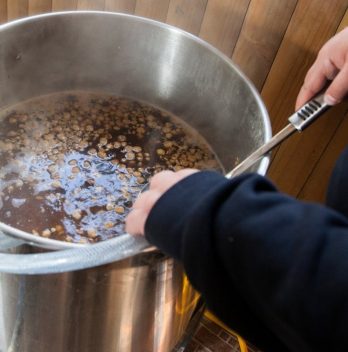
4. Put the branch pieces in the container and cover them with boiling water, just like you would make a very concentrated tea. Let it stand overnight.
5. Strain the willow tea, which now has become the willow water, and keep it in the container until you wish to use it.
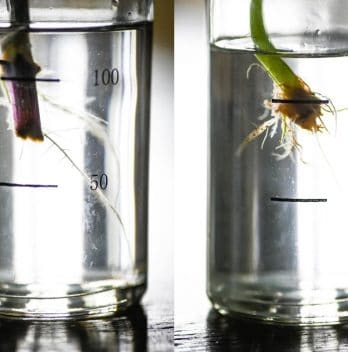
6. To use, pour some of the Willow Water in a flask, add water, and put your cuttings in for a few hours (or overnight) so they can absorb the root hormones in it. Plant the cuttings and observe them for new growth signs in the next few days.
Alternative Procedure to Prepare the Willow Water
There’s another way of preparing the Willow Water, but it takes a bit longer. Follow steps 1-3, put the willow pieces in a jar with water, close the lid. Let it soak for at least three days and proceed with steps 5 and 6.
Useful Tips to Preserve Your Willow Water
The Willow Water can be saved in a jar for up to two months if kept in the fridge. Remember to label it appropriately (with the substance name and date of preparation).
You may also find very deep and interesting info about the willow trees (Salix species) and a detailed procedure to prepare the willow water in Deep Green Permaculture.
In case you can’t get the ingredients for your homemade root hormone, or maybe you don’t have the time to prepare it, here is a small list of the best root hormones available for sale. These products are mostly organic extracts that have a strong growth effect on your plants’ roots.
Rooting hormone is made from the sap of a number of plants. The sap of the American Beech tree is often used, but there are others including the sap of the Japanese Beech (Fagus crenata) and the Sapwood Ash (Fraxinus excelsior). If you want to try making your own, then start by collecting some sap from the trees in question.
Make sure that you clean the sap well before using it, because the plant sap can contain bacteria and fungi. Once you have collected the sap, you will need to boil it for several minutes, or until the bubbles stop rising. You can then strain the sap through a fine mesh strainer and let it cool. If you like, you can add some of this mixture to your garden soil, but this will probably make your plants more susceptible to attack from fungus and disease.
What can I use instead of root hormone?
The most common alternative is to use an organic fertilizer (such as compost) and then water thoroughly. The organic fertilizers have a lot of nutrients that will help the plant grow.
What is a good amount of hormone for a plant?
There isn’t an exact amount of hormones that is right for every plant. When you start with hormones, it’s best to keep a small amount on hand. As you gain experience, you’ll learn how much to add to the soil. Also, as you get more experienced, you’ll be able to tell if a plant needs more or less hormones.
How can I increase my root growth naturally?
If you have a pot with poor drainage, it can be difficult to grow plants that need water. You can use a piece of wood as a base to help the plant stay upright. If you have a large pot, then you will need to dig out the pot and add more drainage. It is important that you get the right soil for your plant. If you are not sure what type of soil to use, then you should get some advice from a gardener or nursery.
Can sugar water help plants grow?
Sugar water is a solution of sugar dissolved in water. Sugar water is made with sugar that has been dissolved in water. The sugar solution provides essential nutrients to the plants. It also attracts water to itself. These are the reasons why using sugar water can help plants grow. The sugar acts as a fertilizer. It encourages the plant to absorb more water and nutrients. It also improves the environment in which the plant is growing. When the sugar water enters the roots of the plant it attracts water to itself.
This leads to a higher level of hydration. When this happens the cell walls are also strengthened. This makes it easier for the plant to absorb nutrients from the soil. Sugar water also helps to improve the root environment. The root environment includes the air around the roots, the soil and the water. By improving the root environment it helps to improve the growth rate of the plant.
Conclusion
I hope you try the Willow Water to improve the success rate of your cuttings in the garden and that you may also feel more confident in the process of plant propagation. Please tell me all about your experiences and if it works its wonders please share this post with your friends and gardening buddies.
Almost all gardening advice gives great tips on both compost and topsoil use but not everybody understands the difference between topsoil vs compost.
Are you struggling to grow plants in poor soil? Is your garden full of clay or sandy soil that you want to replace? If so, you must be looking for ways to improve your garden by either using compost or buying topsoil.
We all know that getting the right soil is by ensuring it has the right nutrients to make the plants thrive. So what happens when the soil is poor?
We have put together information that you need to know what to use when your soil is not in its best state.
The Differences between Top Soil vs. Compost
What is topsoil? Topsoil is a layer of soil out of which your plants grow. It is relatively shallow. Depending on where it’s found, it contains organic matter and nutrients for your plants.
What is compost? Compost is a soil-enriching nutrient that comes from food scraps, dried leaves peelings, eggshells, cardboard, paper, etc. These materials are mixed together in a heap outside or a compost bin and left to decompose. Once well rotten, the mixture is good for the soil and used as manure.
Differences to Help you Choose between the Two
Compost
Topsoil
Full of nutrients to enrich your garden
Great for creating new gardens
Doubles up as mulch
Great for leveling out a lawn
Saves landfills
Helps eliminate weed
Needs space to prepare it
Have to buy if you can’t access it from other farmers
Takes time to prepare and get ready
Certain soils may come with contaminants
What is Best to Use Top Soil vs Compost?
Compost and topsoil are very similar to each other. It is very hard for farmers to distinguish between these two mediums. Adding a layer of topsoil or compost to your garden soil helps add important nutrients to depleted soils. Both equally help improve the overall quality of your current soil. There are many benefits to adding them to your soil because they bring in the nutrients required.
Each of these two has special benefits to the soil and it’s hard to choose one over the other. The best advice is to keep them both as they serve the soil differently. No one can replace the other!
The topsoil retains the soil structure and holds moisture far longer than the compost. It is also relatively affordable to buy.
The compost has more organic matter that the soil requires. The best part of the compost is how it releases its nutrients slowly. Therefore it’s used for an extended period of time.
Where to Buy Compost?
If you don’t have the time to make your own compost, the easiest way to buy compost is online, I have put together a list of products you may try:
Charlie’s Compost– it is made of chicken manure, corn stalks, straw, forest products, hay, clay, and beneficial microbe inoculants.
Wiggle Worm Worm Castings– is an all-purpose natural fertilizer and contains rich proportions of water-soluble nutrients.
Wakefield Biochar– biochar made of wood and compost blended with Mycorrhizal Fungi.
Michigan Peat Compost and Manure– a balanced blend of organic peat and manure, it doesn’t have any odor and can be used in lawns and planting beds.
Fishnure– fish manure compost, it is an organic fertilizer and soil conditioning. The carbon source used to create the proper carbon to nitrogen ratio for this compost is oat straw.
Malibu Biodynamic Compost– it is made in the United States and helps to repair your soil‘s ecosystem.
Conclusion
Ever had 2 pieces of valuable items that you want to choose one over the other. How easy was that decision? Which one did you choose and which one did you not? Do you think you made a wise choice to let one go? Was it wise to keep them both? Now you know, 2 valuables do not compete in the same category! They only go hand in hand!
Learning how to make a homemade compost catalyst enables you to make your pile efficiently available saving you valuable time.
Compost comes from decomposing leaves, papers, eggshells, coffee grounds, and soil. It is rich in nitrogen and carbon which are beneficial to the soil. A new compost usually takes between 1 to 2 months to fully mature.
New compost can benefit from a homemade compost catalyst to help speed up the process. By combining a few basic ingredients found at home your compost pile will be cooking up the nutrients within no time.
How To Make Homemade Compost Catalyst
By learning how to speed up composting and the key factors involved, you can make your own compost within a shorter period of time. A compost pile must be at least 4’x4’x4′ to generate and keep sufficient heat. Too large piles will be too big to compress which limits the oxygen flow.
Place the 5-gallon bucket on sturdy ground. Choose a bucket that has not had any chemicals or any harmful contents. Clean it well before use.
Pour 6 ounce of beer into the bucket – don’t drink any. Beer contains yeast that helps speed up the decomposition process in the compost. You can replace the beer by adding active dry yeast.
Add ½ cup of ammonia to the beer and watch the reaction. Ammonia provides a critical shot of nitrogen. It also helps speed up the breakdown of the compost material.
Pour 2 gallons of warm water into the mixture and mix together.
Add the 12 ounces of regular soda to the mixture. Soda contains extra sugars that help microbes to feed during the decomposition process.
Pour the mixture into a garden sprayer.
Spray this mixture into the compost pile. Using your shovel, mix the pile well to make sure the homemade compost catalyst gets to all corners.
When the heat reaches the first peak temperature, it will kill the yeast, so apply the mix once again to your compost.
Pros and Cons of Using Homemade Compost Catalyst
Not everyone finds the need to make compost in 14 days. To some, it may seem too much work but to others, it’s interesting to make their compost process work faster by using a compost accelerator. Let’s look at the advantages and disadvantages of accelerated decomposing.
Advantages
You get ready compost in a few weeks – unlike the long process of allowing the pile to compose naturally.
You get higher nutrient content due to less leaching in nutrients. The shorter the decomposing period, the more nutrients you preserve.
You get fewer potential weeds and weed seeds – the quickened process that does not allow weeds to form.
Disadvantages
You will use more effort. Unlike allowing nature to take its course, you will need to put in the effort to mix the compost.
You will need more materials. You will need to invest in a little more than just the compost pile.
Conclusion
Life is a journey! And sometimes it takes twists and turns that we never expected. Sometimes it may end up taking us where we did not want to go. If you had the key to drive your own life the way you want, would you take it? Same here, you have the chance to cook up your compost pile within the shortest time possible and still get amazing results. Why not use it?
FAQ
What Is A Compost Accelerator?
A compost accelerator is a booster added to the compost pile to get speedy results for complete composting. It is also known as compost activators or compost starters.
Compost accelerators comprise bacteria and fungi which will help kick start nature’s operation for the decomposition process.
How Long Does It Take For Compost To Break Down?
How long compost takes to break down is about 4 weeks to 12 months to break down. However, if you make use of a tumbler, your compost can break down quicker in a period of 3 weeks to 3 months.
You should also take note that the rate at which compost will break down will depend on some factors. They are:
Size: the size of your materials will determine if decomposition will be fast or slow. The smaller size breaks down more speedily than the bigger size. Thus, to enhance your compost to break down rapidly, chop and shred the materials into smaller sizes. Also, if you want to add things like food scraps, grass, dry leaves, etc to your compost, do so by cutting them into smaller bits.
Turning pile compost: when you turn your pile compost often encourages aeration. It will also enhance the movement of bigger bits towards the center where they are able to decompose faster. The use of a compost tumbler enhances this procedure.
Heat: heat will help speed up the decomposition process in the compost pile.
Does A Compost Pile Need Sun?
If you want to speed up the decomposing process of your compost pile, placing them in the sun will do the job. The compost pile will need the sun to increase the temperature making the fungi and bacteria work faster. However, watering your compost pile once in a while under the full sun might be needed so it does not dry out.
How Do You Know When Your Compost Is Ready?
If you are wondering how do you know when your compost is ready, these characteristics should help you out:
Color: the color of your ready compost pile should be a dark rich color.
Texture: when your compost is ready, the texture should be smooth and friable. Most of the things you added to your compost should not be seen, they should all be smooth. There should also not be too much moisture in it.
Scent: the smell of your readymade compost should be sweet like earth. There shouldn’t be any indication of sourness. If your compost smells sour, it’s a sign of an incomplete decomposition process meaning it needs more time to decompose.
What Will Happen If You Left The Compost Too Long?
You might be wondering what will happen if you left the compost too long? Well, it’s still safe to make use of after years only if the moisture levels are well managed and covered in a dry place.
However, little by little, the compost can begin to break down. The nutrients will start to leach away and the compost pile might begin to show signs of rotting. The fungus can also begin to pollute or contaminate the compost pile.
Learning the key steps of how to mix neem oil for plant use is a huge advantage in allowing nature to cure its own problems.
Neem Tree is one of the plants that show great versatility in combating plant pests. In India, it’s country of origin, has a sacred tree status. This is due to its beneficial ingredients in traditional Ayurvedic medicine.
Neem oil is a prized ingredient used in traditional and modern remedies. The insecticide properties of Neem oil make it a natural supporter of the garden. Simply summed up, neem oil is nature’s gift from plants to plants!
How to Mix Neem Oil for Plants
To make full use of neem Oil, it is vital to learn how to mix it for your plants. When making your own neem insect repellent spray you are free to adjust the concentration. This depends on the purpose and situation. There are no hard rules set in stone for this, only friendly guidelines.
Neem Oil Mixture for Insect Repellent Spray
To make 1 liter or 1 quart of 0.5% dilution of neem plant spray you need:
5 ml or 1 tsp Neem oil – use pure or cold-pressed oil
If you want to make a bigger batch, multiply these quantities by the number of liters you want to increase.
If you need a more concentrated repellent spray, multiply both Neem oil and the amount of non-toxic soap used.
To Make 20 liters or 4 gallons of a 1% Solution of neem Garden Spray you Need:
200 ml or 6.5 oz neem oil
20 liters or 4 gallons of water
30 ml or 5 tbsps of insecticidal soap
If you have trouble trying to dissolve the oil, use more detergent.
Important Points to Note when Mixing Neem Oil Spray:
Use pure, high-quality, organic cold-pressed oil
Use warm water if possible
If making a large batch, first premix the ingredients in a small amount of water. Then pour into a big container with the rest of the water and mix well.
Always mix warm water with soap first
Slowly add the oil while stirring vigorously
Fill the mixture in your sprayer
Keep shaking the mixture while spraying
This mixture should be used within 8 hours after mixing
How to Apply Neem Oil Mixture on Plants
1. Spray this solution only on the leaves. Pests hide on the underside of the leaf, so drench the leaf with the spray. Neem is also good for the soil so don’t worry if you drench the soil too.
2. Always exercise caution when spraying this solution. Before applying it generously, test it on a small area first and watch for adverse effects for a day. If the plant does not get a negative reaction in 24 hours, go ahead and spray the entire area.
3. Do not spray neem oil when the weather is either too hot or cold.
4. Use Neem oil spray as often as your plants need it. Once per week is a good measure and spraying it often will work as a preventative measure.
How Do You Apply Neem Oil to Cucumber Plants?
Neem oil is an excellent insect repellent that works amazingly on cucumbers and other plants from the same family as cucumbers. It is used to deter insects such as cucumber beetles, aphids, and zucchini bug infestation.
The best way to apply neem oil to cucumber plants is to make a mix of water, dish soap, and neem oil and mix evenly. Add neem oil at a ratio of 2-3 tablespoons per gallon of water. This will create a soapy solution that you will then spray onto parts of your cucumber plant. You can spray this mix on both the top and bottom parts of the leaves.
For the best results, repeat the application every 1-10 days until you see signs that the mixture is working.
How Do You Apply Neem Oil to a Jade Plant?
Neem oil application is one of the best and most popular ways to get rid of spider mites on a jade plant. This common and non-toxic product is recommended by almost every experienced gardener.
These are the steps that you should follow if you are going to use neem oil on a jade plant:
add 1 and a half teaspoons of neem oil and 1 teaspoon of liquid dish soap to 1 liter of slightly warm water. Mix this mixture well well to make sure that the oil is evenly dissolved.
Before applying this mixture to the entire plant, first, test it on a small section of a leaf to see if it does not been it. Once you have ascertained that it causes no damage, you can go ahead and spray the entire plant.
Spray the jade plant with the neem oil mixture. Make sure that you get to all the crevices on the top and bottom of the leaves, and ensure they are all evenly coated.
Repeat this process every week until all the pests are no longer visible and you are satisfied with the results.
Which Brand Of Neem Oil is Best For Plants?
There are different brands of neem on the market. It is therefore important to know which brands are legit and which are not. One way to go about this is to look for reviews given by other people on the products before you purchase them, especially if you buy the products online. Another way is trial and error. This is unfortunate, but if you cannot know from the experiences of others, you will have to find out on your own. Here we give you a bit of help by providing you with a list of the best 5 neem oil brands that are reliable and work well for plants;
Neem oil ready-to-use fungicide from Safer
Harris Brand cold-pressed neem oil
Ready to use neem oil from Bonide
Neem Organics neem oil
Cold-pressed neem oil from Plantonix
Remember that regardless of the brand of neem oil you for your plants, it works best if diluted. Full-strength neem oil may damage your plant leaves especially if the plants are young or stressed. Even though this is a natural oil, be careful when using it.
How Do You Dilute Neem Oil For Indoor Plants?
The way to dilute neem oil for indoor plants is as follows:
Mix 1 and a half teaspoons of concentrated neem oil of your choice with 1 teaspoon of liquid dish soap and 1 liter of water
Put this mixture in a spray bottle and mix it well
Test the mixture on a small portion of a plant leaf before spraying it on an entire plant to make sure that it does not damage the plant.
How Often to Water Plants With Neem Oil?
So how often should you water plants that have been treated with neem oil? Well, the plants being treated will need to be watered as needed. Water them a bit more regularly if they have a severe infestation.
Which Indoor Plants Don’t Like Neem Oil?
Neem oil must not be used on herbs such as basil, caraway, cilantro, dill, marjoram, oregano, parsley, or thyme. These herbs have fine, delicate leaves which may burn and get damaged. Treating plants such as arugula, lettuce, peas, and spinach should do with care as they are also susceptible to burn.
What Plants Can Be Sprayed With Neem Oil?
Neem oil is safe to use on most plants. These include potatoes, cucumbers, and most house plants that are used for decoration.
Conclusion
Whoever thought that plants can be medicine to their fellow plants? We all thought plants are food and medicine for humans. Shock is, nature can heal nature! All our complicated knowledge is challenged by simple nature!
FAQs
Is applying neem oil worthwhile when it comes to plants?
Yes. Neem oil is a natural plant extract that has been used by Ayurvedic practitioners for thousands of years. It is one of the most powerful insecticides available, and can help control a wide range of pests. Neem oil can be used topically or in soil or foliar sprays.
What is it made of? Neem oil is a mixture of more than 30 different compounds called azadirachtins. These are all derived from the neem tree (Azadirachta indica), which is native to India, Pakistan and Bangladesh. The most potent of these compounds is azadirachtin A. Other azadirachtins have varying levels of potency. The neem tree produces a milky white sap when cut. This is the source of neem oil. The sap is dried and pressed into oil.
How do you apply neem oil on plants?
You can apply it with a sprayer, but for best results, I prefer the liquid form. You just mist the plants regularly, and as needed. I use this method on my roses, citrus, and potted plants. I usually spray in the morning, before I water. This way the neem is diluted with rainwater and doesn’t splash around too much when I water.
I have used neem oil as a foliar spray. I also had good results when I sprayed it onto the roots of my tomato plants. My experience has been that neem oil is best used on young seedlings or plants that have just germinated.
How much neem oil do I mix with water for plants?
Neem oil can be mixed with water, but how much you use depends on the amount of plant disease and insect problems you are trying to solve. For example, you may find that using a one-to-one dilution works well for your problem. However, if you are having an especially bad infestation of ants, you may need to make a stronger mixture.
The following ratios have been used successfully in our garden:
•1 gallon of neem oil to 1 gallon of water = 1 part neem oil to 9 parts water
•1 gallon of neem oil to 1 gallon of water = 10 parts neem oil to 90 parts water
•1 gallon of neem oil to 1 gallon of water = 100 parts neem oil to 100 parts water
When mixing neem oil, the more concentrated the mixture, the better it will be at killing bugs and keeping them away. If you are mixing up a small quantity of neem oil, I recommend using a funnel. However, if you are mixing up a large quantity, it is best to use a sprayer.
Where can I find neem oil?
You can buy neem oil in the health food section of the grocery store. You can also order it online.
Have you been warned of the risks of composting weeds and you don’t know if you can compost them? Weeding is a dreaded garden activity because it might be hard to get rid of these longlasting and resistant plants. Weeds are plants hard to pull, they give plenty of seeds and multiply everywhere. Sometimes weeds climb on other plants, and in some cases, they can even smother others to death by weight or in a parasitic relation.
We find ourselves weeding through the garden every other day, but weeds keep popping up. We then find ourselves facing a new problem: what to do with the weeds we just pulled? Can you compost weeds?
Can You Compost Weeds?
Weeds never die is a common saying, but what are weeds and why do they “never die”?
Many say weeds shouldn’t be thrown into the compost bin. Weeds have very resistant seeds, that can remain alive even above 65°C (or 149°F). Most composts get to only 45-50°C (°F), because of many factors, such as:
Small size, warm composts need to be at least 1m3 (27 ft³).
Not enough green organic matter was mixed in, in relation to the brown organic matter added. You can fix this lack of Nitrogen in the mix by adding more of the greens or even add some urine (with a concentrated and readily available nitrogen).
Not turning it over often enough. How often do you turn it over? Once a week or once a month?
The climate where you keep the compost is too dry, too wet, or too cold. This can set back the decomposing process in your compost
Composting of Weeds, how to succeed?
In order to succeed in composting weeds, the best thing to do is to observe the most common weeds in the location and learn how they look like in different life stages. Weed out as soon as you spot a weed in your garden, the sooner the better.
Once it flowers, the plant will start producing seeds very quickly, and decomposing the weeds in the compost may not be enough to inactivate the seeds. When you fertilize your soil with the uncomposted weed’s seeds, they will eventually find the conditions to germinate, making it a never-ending process of weeding.
Compost usually warms up, but in order to break the weeds seeds cycle, we must guarantee the heat to persist (above 65°C/ 149°F) during at least fifteen days in a row.
The Quick Guide To Composting Weeds Successfully
Make sure you build a big compost pile to ensure its proper warming process. The size of the compost container should be double the volume of the final compost you want to obtain. You may find very detailed instructions on how to build six different types of compost bins or containers and their optimum sizes in this article.
Cut organic matter into small pieces when possible.
Add enough brown organic matter to balance recently trimmed weeds (green matter). One bucket of green organic matter and one bucket of brown organic matter -or a bit more- is a good volume relation (1:1).
Keep the moisture content between 40 to 60%. The compost mix should feel moist to the touch.
Most importantly: compost weeds before they get to flower.
FAQs
Can weeds go in a compost bin?
Weeds are an organic material that will break down over time. There are several ways you can use weeds in your composting process.
One thing you can do is make a mulch from them, which will add nitrogen and organic matter to your soil. This will help keep weeds down while improving your soil.
You can also add the weeds to your compost bin. This will keep them out of your yard, where they can cause problems. If you are going to add them to your compost bin, be sure to let the weeds sit there for at least two weeks before adding them to the compost pile. This will give them time to decompose. You may not be able to use your compost bin as often if you have a lot of weeds in it. A lot of weeds can be very hard on a compost bin, causing it to become hot and smelly.
If you have a lot of weeds, you may want to try using a worm bin instead. Worms are much better at breaking down the weed seeds than a compost bin is.
Why do people not compost weeds?
The most common reason people avoid composting weeds is that they’re afraid of creating a toxic stew. They worry about mixing plant material and having to filter out the weed seeds. The truth is, you don’t have to worry about this. There are two ways to compost weeds: first, you can let the weeds decompose in place, and second, you can remove them and compost them separately.
If you choose the first option, simply leave the weeds where they are, because they’ll naturally break down into humus in time. If you choose the second option, you can remove weeds from your compost pile, then separate them from the rest of the compost with a screen or a metal strainer. If you do this, you’ll need to add a little extra water and oxygen to the pile, but it’s not that difficult. In either case, you don’t have to worry about weed seeds.
They’re sterile when they germinate, so you can just put the compost directly into the soil. In fact, many gardeners use a single-composting system for all their organic matter. If you’re looking for a simple solution, then this is a great way to go. You’ll save time by doing it all at once, and you won’t have to worry about keeping separate piles of food waste, yard trimmings, and manure.
Why is it a good idea to compost weeds?
Composting weeds is a great way to help our environment. It will help to keep your garden free from nasty weeds, it will also help the environment by helping to remove excess nitrogen from your garden and helping to reduce the amount of water needed for the garden. Composting weeds can help with the process of recycling, weeding, pest control and fertilizing. Composting weeds will help you to save money by not having to buy weed killers.
Composting weeds will help you to grow more plants, it will also help you to grow healthier plants and you will notice that your garden will be healthier than ever before. Composting weeds will help to increase the amount of nutrients in the soil and it will help to make sure that your soil is rich and healthy for your plants. You can find the best place to compost weeds at your local gardening store. They have different methods for composting weeds and they also have all the right tools to help you get started.
Why should you not compost weeds?
– Do not compost your weeds if you have a dog or cat in your house because the weed seeds could get into their food and they could get sick.
– Do not compost your weeds if you have a pet because the weed seeds could get into their food and they could get sick.
– Do not compost your weeds if you have any allergies to weeds or other plant material because the weed seeds could get into their food and they could get sick.
– Do not compost your weeds if you live in an area that gets a lot of rain because the weed seeds could get into their food and they could get sick.
Why Are Weeds Good For The Garden?
The weeds of your garden have functions in the ecosystems.
1. Weeds are plants designed by Nature to regenerate soils. They like to grow especially in borders, eroded or poor soils, and besides trails and roads.
2. Weeds are very resilient plants that prepare the soils for other more nutrient demanding plants in ecological succession.
3. When soil is left bare or is turned around during tilling, seeds of weeds germinate easily and start their life mission: to hold the soil and nurture it.
4. Weeds tend to be highly medicinal, nutritious, or can be extremely toxic.
5. Many weeds have superpowers to absorb high quantities of certain minerals from the soil. Some of them are even used to regenerate heavily polluted soils (from contaminants such as oil, gasoline, and heavy metals).
6. Many animals develop a special relation to these kinds of plants and seek them for specific therapeutic results, including us humans.
7. They have accompanied humans during the ages and have a history of being related to witches, wizards, healers, and shamans all around the world.
If you have more tips, leave in the comments what has worked for you when you compost weeds from your garden.
Go often to the house of thy friend, for weeds soon choke up the unused path.
Every organic farmer who wants to improve their soil pH and add natural nutrients ought to know where to buy sulfur powder and how to add it to the soil.
Sulfur powder is a natural pure element that comes as a yellow powder. It is one of the world’s oldest remedies for human ailments and for improving the soil for farming.
Where to Buy Sulfur Powder?
Most farmers wonder where to buy sulfur powder. It is common to find it in the most popular online markets by verified sellers. Like other online shops, Amazon is one of the best stockists in the world.
We earn a commission if you make a purchase, at no additional cost to you.
02/10/2026 03:04 pm GMT
Where Does Sulfur Powder Come From?
It originates from volcanic emissions and ancient mined sulfur around volcanoes. Today, sulfur comes from a by-product of crude oil and gas processing. It is an essential element containing all living cells.
How to Add It to the Soil
This powder has many benefits to the soil; all farmers need to learn how to add it. Application for this powder depends on the type of soil you are working with. Below is a table showing how the sulfur powder should be distributed to lower the soil pH to 4.5.
Sulfur powder needs to lower the pH of the soil (lb/acre)
SOIL TYPE
CURRENT pH
CLAY
LOAM
SAND
5.0
175
530
800
5.5
350
1030
1600
6.0
530
1540
2300
6.5
660
2020
3030
7.0
840
2560
3800
Advantages of Adding Sulfur Powder to The Soil
This fantastic powder has many health benefits for the soil. They include:
Lowering the soil pH value. The best soil pH ranges from 5.8 to 7.0. Some soils, especially in the limestone regions, may have a high pH of about 8.0 with 50% lime. Such soils lack essential minerals like iron, manganese, and zinc. The leafy plants growing in such soils may become yellow due to deficiencies. Adding sulfur powder to the soil solves these problems.
It is a great fungicide. This powder controls fungus and mildew on leaves. It is best known to prevent mold, especially when applied before the fungus settles on the leaves. It works best when used on dry leaves.
It is best used as a pesticide. Sulfur powder is one of the oldest, best-known pesticides. It is best used in vegetables and fruits. It controls thrips and spider mites. One has to wear a protective mask when applying this powder.
It offers essential nutrients to plants. Sulfur carries essential plant nutrients that include, Potassium, Nitrogen, and Phosphorous. It also improves the soil and assists in fixing phosphorous and nitrogen.
Used as a snake repellant – Snakes do not like the smell of sulfur powder. It is one of the best repellants for your outdoor surroundings without killing them.
Used as an insect repellant on pets. Rubbing sulfur powder on pets eliminates chiggers, ticks, and other pests.
Learn more about organic fertilizers like Kelp Meal.
Where Do Plants Get Sulfur From?
Sulfur is an essential micronutrient for the growth and development of plants. It is mostly absorbed by plants as sulfate from the soil. It is then translocated to plastids in the leaves, where it is then assimilated into organic products,
Sulfur plays a vital role in plant photosynthesis, respiration, and the formation of cell membrane structures. It originates from rocks and minerals released by water weathering, temperature changes, and chemical reactions. When exposed to air, sulfur combines with oxygen to form sulfate which is the form that is available to plants.
Sulfur is stored in raw organic material and humus in most soils. Microorganisms in the soil work to decompose this organic matter, and in the process, the organic sulfur is converted to sulfate, the form in which plants can absorb it.
Does Epsom Salt Add Sulfur to Soil?
Epsom salt is magnesium sulfate, meaning it contains a form of sulfur.
It is essential for plants as it helps their seeds germinate, makes the plants grow bushier, and produces more flowers. It can also help to improve chlorophyll production and deter insects and pests such as slugs and voles. Epsom salt may be a great addition to conventional fertilizer as it can supplement vital nutrients.
The best way to use Epsom salt is to drench the soil with 1 tablespoon of Epsom salt solution for 1 gallon of water. Apply this solution to the soil after seeding to help keep the sulfur levels in the soil up.
Another way to apply sulfur to the soil through Epsom salts is by sprinkling a cup on a seeded bed. This will significantly benefit your plants.
Epsom salts also have the added benefit of adding another nutrient to the soil: magnesium. This can give your plants a boost, but it should only be used when there are deficiencies in the soil.
How Long Does it Take For Sulfur to Lower Soil pH?
One of the cheapest ways to lower the pH of the soil is to add sulfur. Bacteria in the soil transform sulfur into sulfuric acid, which reduces the soil pH.
The application rate needs to be reduced by 2 points to about 2000 lb per square acre area.
Using sulfur to lower soil pH is a slow process so large pH changes are unlikely to happen quickly. It may take up to years to see a noticeable change.
A pH change may take about 2 to 3 months for a smaller area. Make sure you get the best quality Epsom salts to achieve this. Add sulfur this year to lower the pH for the following year or the next growing season. This will give the sulfur and bacteria in the soil enough time to react and produce their required results.
When Do You Apply Sulfur to Soil?
A spring application of sulfur usually works best. It is during this season that you will have the highest activity of bacteria that will transform sulfur to sulphuric acid, which will help lower the pH
Because this is such a slow process, you may have to repeat the application over the years to get the best results.
What Should Sulfur Levels Be in Soil?
The critical limit of sulfur in the soil is approximately 7-15 ppm. Anything below this range may hamper plant growth and production.
Take Away
Finding one powder that takes care of so many problems like this one is not common. This one is beyond doubt!
FAQs
How do you add sulfur powder to soil?
Sulfur (S) is an important mineral that’s often added to the soil. You can add it directly, or if you’re working with a large volume of soil, you can add it as a liquid or powder and then mix in the soil.
You don’t need to add sulfur to the soil, but you can use it as a fertilizer. It is sold as a dry powder for use in garden and flower beds, and you mix it with water and water-soluble fertilizers to create a water-soluble product. It will be available at your local garden center or nursery.
If you need to add sulfur to your soil, you need to find a source of elemental sulfur, or hydrogen sulfide.
Sulfur is applied to the soil as a component of a sulfur-based fertilization program. The amount of sulfur applied to soil is determined by the type of soil and climate you are growing in.
What is sulfur good for?
Sulfur is a key ingredient of soil. It helps plants to absorb nutrients, and it also improves soil structure. Sulfur is found in many different sources such as soil, compost, gypsum, wood ash, seaweed, sulphate of lime, sulphate of magnesia and gypsum.
Sulfur is an essential nutrient for plant growth and development. Plants require sulfate for the synthesis of many important compounds, such as amino acids, fatty acids, proteins, nucleic acids, chlorophyll, and vitamins.
Sulfur is a mineral that can be added to your garden. It will increase the number of healthy plants and decrease the number of sick plants.
If you are trying to boost your soil’s fertility, adding sulfur to your soil is an important step. Sulfur is a key component of the process that converts atmospheric nitrogen into plant-available nitrogen.
Where can you buy powdered sulfur?
Powdered sulfur is sold in chemical supply stores. It’s usually labeled “sulfur”, “sulfate” or “S”. The “powder” part of the label means it’s fine, and not a coarse rock powder. I’ve seen it in a couple of different grades, but I’d suggest the cheapest one that still gets the job done.
You can use elemental sulfur (sulfuric acid) or sodium sulfate. These are sold in garden centers as “plant food”, or as “plant food pellets” (I have not seen them for sale under any other name). They are very cheap and easy to use.
How much sulfur should I add to my soil?
Plants have different needs for sulfur, and you need to test the soil in your garden and add the proper amount. There are different ways to measure sulfur. The most common way is to use the sulfate of potash method. This involves mixing up a little water with the soil.
Sulfur is found in all soils but its availability is low because most plants cannot use it. Sulfur is also very mobile and can be carried out of the soil by water.
Do you know what is and how to use kelp meal? Whether you are growing indoors or outdoor plants, the one element you want to see is healthy plants. With organic farming practices growing more popular, it’s paramount you get acquainted. Organic farming is successful with the use of safe organic fertilizers.
One such fertilizer is Kelp meal. It contains beneficial nutrients that all plants need. It is one of the safest fertilizers with no additives or harmful compounds. Simply ground seaweed! Let us learn how to use kelp meal as fertilizer on houseplants or foods.
What is Kelp Meal?
Kelp meal comes from dried seaweed. The seaweed is brown in color; a type of marine algae. It is a rich product of the ocean, dried, and then pulverized into a meal product and used as a fertilizer.
This organic fertilizer is sustainable. It enhances healthier plant growth as well as promotes fruit and vegetable yields. It contains plentiful benefits for different varieties of plants. You can thus adopt it as a staple in your gardening journey.
Kelp meal is a proven choice of organic fertilizer. It delivers nature’s excellent supply of the world’s finest nutrients.
It contains macronutrients – Nitrogen, Phosphorus, and Potassium (N-P-K). They are present in small amounts that are not harmful to the plants. It also gives sufficient vitamins, amino acids, and over sixty traces of micronutrients.
It preserves your soil’s microorganisms. It does not kill worms and other small insects that provide other nutrients to the soil.
How to use Kelp Meal and Its Application Rate
Kelp meal can either work on its own or with other fertilizer blends. It is such a forgiving organic fertilizer to use in your garden because you cannot overdo it. It is only added multiple times in a year. Its nutrients dissolve much slower than other types making it last longer.
Depending on the size of your garden or style of gardening, you will need to know how much to apply for best results. This is a general guideline to guide you on the application rate:
Outdoor vegetable garden beds: Use one to two pounds per a hundred square feet. Mix with the top three inches of the soil for better absorption. Apply it once or twice during long growing cycles.
When transplanting seedlings: Use one teaspoon per hole, mix with soil and water.
To feed growing plants: Side dress with two teaspoons per plant once or twice per growing season.
House plants: Use one tablespoon per gallon of soil once or twice per year.
FAQs
How do you mix kelp fertilizer?
If you want to grow kelp, you can use the product yourself or you can get it premixed with compost and other materials. You can mix your own kelp fertilizer by combining a few ingredients:
Kelp powder – 1 part Compost – 2 parts Rice hulls – 1 part You will also need to add sand, peat moss and charcoal to the mix.
If you do not have any of these items on hand, you can use your garden store and they should be able to help you find everything you need. When mixing the kelp fertilizer, you will want to mix the kelp powder in first then add the other ingredients.
Kelp powder (or kelp meal) is sold as a powder in most nurseries, and it’s generally easy to find at home improvement stores.
How do I apply kelp to my garden?
Apply kelp to your garden by sprinkling it in a regular, non-chlorinated garden.
The kelp will float and settle, and you can easily harvest it when it has settled. You can also add it to your compost pile.
Kelp contains all of the nutrients that you would expect in a seaweed, and can be used as an organic fertilizer. If you have a garden pond, sprinkle kelp directly on the pond.
You can buy kelp from any store that sells organic food. Kelp is easy to grow.
How often should I use seaweed fertilizer?
Seaweed fertilizers are a great way to provide an extra boost of nutrition to your garden. The best time to apply seaweed fertilizers is after a rain event or when the soil is moist. You can also use them as mulch in your garden beds.
One teaspoon of seaweed fertilizer equals about 1/2 tablespoon of product. In general, it is a good idea to start out slow and work your way up to the recommended dose.
Sprinkle the fertilizer on the top of the soil. Follow up with regular watering, and if possible, a good hard rain. In general, the fertilizer will take effect within 10-14 days. However, this varies from one product to another. The fertilizer may also take longer to work if it has been sitting in a container for too long.
Seaweed fertilizers are available in a wide variety of formulations and sizes. They are usually sold in granular form and are most effective when used in small amounts at the root level. Follow these easy steps to get the best results: Mix the fertilizer into a small amount of water (water will settle at the bottom) in a bucket. Sprinkle the fertilizer in a thin layer over the top of the soil, about 1/2 inch deep. This will provide a consistent dose of nutrients. Water thoroughly and wait for results. If you use an organic fertilizer, you may need to water more often.
Take Away
Kelp meal not only contains a surplus of micronutrients, but it’s also affordable giving you value for your money. With the nutrients absorbing slower than usual, it means a little goes a long way. Just like drinking your coffee from a coffee cup then switching to a drinking straw! You enjoy every sip for longer!
Now you know how to use kelp meal as fertilizer, try it on your plants, and enjoy an organic garden!
One question people want to know is how long does blood meal last in soil. You’ve probably heard about blood meal is beneficial to plants. Perhaps, you’re interested in using it as fertilizer. But maybe, you’re a little bothered by how it’s going to bear positive results.
It’s one thing to have the nutrients available in the soil. It’s another thing how fast they get released for the plant’s consumption. Fertilizers vary in terms of how long they stay in the soil. Some are slow-released while others are readily available. If you’re interested in blood meal, consider these factors.
What is Blood Meal for Plants?
Blood meal is an organic fertilizer that’s made out of dried animal blood coming from slaughterhouses. It has an NPK ratio of 12.5-1.5-0.6. It’s all-natural, a safe choice for sustainable gardeners.
How Long Does Blood Meal Last In Soil?- Factors to Consider
Blood Meal is a slow-release fertilizer that can last around 2 to 6 weeks in soil. In powder or granular form and in varying sizes, Amazon has a wide variety of options for blood meal products like Jobe’s Organic Blood Meal Soil Amendment. To know how long does blood meal last in soil, we have to consider many factors:
Decomposition Process
Type of Organic Material
Depending on the materials used, natural fertilizers take time to decompose. Blood meal has a different decomposition length compared to compost, manure, bone meal, or vegetable scraps. They vary in their composition and complexities.
Type of Microbes
Once applied to the soil, the microbes present will have to feed on blood meal first. They break down complex compounds into consumable forms. This process helps the nutrients become available to the plants.
The efficacy of decomposers is also affected by its environment including temperature, moisture level, soil pH, aeration, and carbon to nitrogen ratio. Providing these ideal conditions will hasten the breaking down process. You may need to do some adjustments before applying the blood meal.
Application Process
Timing
Apply blood meal 2 weeks before planting. This technique gives enough time for the microbes to make nutrients available in time for planting. Also, blood meal has a very high nitrogen content that it can burn the plants when mismanaged. The advanced application makes the concentration tolerable.
Reapply every 2 months to ensure a continuous supply of nutrients especially on the vegetative stage of plants.
Blood Meal Application Rate
Apply 1 cup per 20 square feet of soil. Excessive application is detrimental. Too much nitrogen causes dehydration because of the salts it leaves behind in the plant, burning it. Other effects include susceptibility to diseases and insects. Flowering and fruit set are also compromised.
Final Words
As a slow-release organic fertilizer, blood meal lasts in the soil approximately from 2 to 6 weeks. Results may take a while to show but it surely does its job. Proper use and management lead to healthier and productive plants.
FAQ
What Plants Benefit From Blood Meal?
The plants that benefit from blood meal are plants that are heavy nitrogen feeders. They include cucumbers, tomatoes, peppers, radishes, lettuce, corn, and squash. Cruciferous vegetables such as kale, broccoli, spinach, cauliflower, cabbage, and Brussels sprouts are also included.
Basically, nitrogen is one of the most unstable nutrients in the soil; therefore, if your plants are deficient in nitrogen, blood meal application will be a good solution.
However, some plants should avoid blood meal application. Plants such as legumes already have roots nodules with bacteria that can fix nitrogen from the atmosphere.
How Long Does It Take For Blood Meal To Work?
Blood meal is a quick organic remedy to nitrogen deficiencies in plants. It is always readily available to plants and highly soluble. However, if used inappropriately, especially to young plants, it can burn and injure your plant roots and plant tissues. This is because of the decomposition that takes place in the soil on the addition of blood meal.
Decomposition will determine how fast blood meal works. The soil bacteria which are responsible for the decomposition and making blood meal available will act by breaking down ammonia. These soil bacteria in addition to warm and damp conditions encourage this fast action. And this fast action may be pretty harmful.
Also, doing a soil test to know the amount of nitrogen needed in your soil will be of help. Even better, soil testing can be done with home test kits.
Therefore, ensure you follow instructions and do not exceed the recommended quantity given on blood meal labels.
Can I Mix Blood Meal With Water?
If you are wondering if you can mix blood meal with water, then you should know that most blood meals are highly soluble. Therefore you can mix blood meal with water. However, read the instructions on the label to know if should mix blood meal with water.
Can You Sprinkle Bone Meal On Top Of Soil?
You can sprinkle bone meal evenly on top of the soil. Ensure you also mix to incorporate it well into the soil after sprinkling bone meal on top of your soil. When there is dry weather when sprinkling bone meal, water in thoroughly so it can work into the soil.
Again, if you wish to apply bone meal fertilizer all through its growing season, make sure you sprinkle uniformly on top of the established areas of the soil. You should as well tenderly work it into the soil and minding the root of the plants as you do this.
For applying bone meals on top of established plant soils with containers, sprinkle some bone meal at the beginning of the season. You can then sprinkle again once or twice all through the growing season. This will enhance flowering or encourage fruit ripening as your plants develop.
Slow release or fast release of blood meal fertilizer actually depends on soil temperatures. It is a slow-release when the soil temperatures are moderate or low. However, it is fast releasing in warm temperature. Also, the blood meal will be fast-acting in soggy or damp soil.
Always have in mind that fast action of blood meal which results in the release of more nitrogen can be harmful to your plants.
Aloe Vera is well-known worldwide for its medicinal and agricultural uses. It is a succulent plant, which means it can endure arid climates because of its ability to retain water in its engorged, jelly-like, and plump parts.
Though it is known that aloe is a succulent, one of the most common dilemmas of people who want to grow the plant is knowing how often should you water aloe. It may be because an aloe plant is very easy to take care of, but one simple mistake can also kill this plant easily.
If you’re planning to get aloe as an addition for your indoor plants at home or outdoors in your garden, please continue reading. I hope we can help you take better care of this plant through this article.
How Do You Water Aloe?
Though aloe vera is a succulent, they need water just like any other plants. But, watering an aloe may be tricky and may not be as easy as you think. Research proves that there are different watering needs for this plant.
Take note of the following important factors below to ensure that you are doing the appropriate irrigation for your aloe vera plants:
Depth– you should water aloe deeply and heavily, as it allows built up salts to seep through the soil. Succulent plants are sensitive to chemicals and minerals in water supplies.
Frequency– watering this plant needs to be constant enough to develop growth but not too often as it can drown your plant.
Type of Water – while we’re talking about water supplies, let me tell you that not all kinds of water can be good for aloe vera. Tap water can harm your plant, while filtered water is on the safer side. Some people even use distilled water if their aloe seems to be down and sickly.
Soil Moisture – irrigating your aloe plants cannot be based on your calendar, rather on its soil moisture. To keep it short, you will only need to water your aloe if the soil is thoroughly dry.
How to Check Soil Moisture?
Soil Moisture is one of the key points you need to remember in growing your aloe plant. So we have listed below some of the ways you can keep track of your plant’s soil moisture.
Touch Test
You can dig and put your fingers deep into the soil to touch and feel it. Check whether the soil is completely dry or if it still has moisture in it. Again, only water your aloe if the soil is thoroughly dry.
Soil Moisture Meter
This video shows us how to use a soil moisture meter or sensor. There are a lot of soil moisture meters out in the market, so you don’t need to fret on where to find this item.
I checked out the best moisture meters to make things easier for you, and here are some that I can recommend:
You basically just need to lift your pot up right after you water it; then, after a few days, you can do the same thing and decide if it feels lighter than the last time you watered your aloe plant. If you want to be meticulous and accurate, you can even use a weighing scale, no one will judge you. But obviously, this method is not suitable for aloe plants that are not in pots.
What Are the Cases When Aloe Needs More Water?
Different conditions cause your aloe vera to require various amounts of water during particular times.
Pot size – more petite pots are more likely to dry out quicker than the others.
Weather – aloe plants in brighter/hotter conditions tend to use up more water because the soil definitely dries up more instantaneously. So obviously, you need to water your plants more frequently during summer and even more scarcely in winter.
Type of pot – terra cotta pots is the most recommended for aloe vera plants as it dries out faster than glazed ceramic, plastic, or anything that is not porous in the material.
What Are the Common Problems in Growing Aloe Vera?
Overwatering
This the top most common mistake an aloe plant owner commits, especially for first-time plant owners. When you start seeing soggy, droopy leaves, that’s the first symptom that your aloe is overwatered.
If left untreated, your plants may not recover, as it will definitely develop a mushy base or root rot that will eventually kill your aloe vera.
Drainage Holes
Selecting a pot with drainage holes is one of the most important things to remember when preparing to grow an aloe vera, whether indoors or outdoors. Waterlogged condition for your plant is a definite no-no, thus adding a drainage hole in your pot becomes a necessity.
Excessive Sunlight
Aloe vera needs lots of light but not direct sunlight. You can grow an aloe plant indoors, but it doesn’t mean that it’s a low light plant. Drooping and discoloration of leaves are usually caused by intense sunlight.
Too Much Fertilizer
This succulent does not really need fertilizing as much as other plants, but you can do so if you see that your plant needs more nourishment. Using fertilizers on aloe plants, especially liquid fertilizers, should only be done once a month.
Make sure to remember that you need to water your plant 12 hours before you administer the fertilizer. By the time you use it, just enough water is left to protect the roots of your plant from the strong chemical contents of your fertilizer.
FAQ’s
Do you water aloe from top or bottom?
If you’re growing aloe for its medicinal properties, it’s a good idea to water your aloe plants from the bottom. Aloe plants use their roots to absorb nutrients, so if you water them from the top, they may be shorting out on nutrients.
A healthy plant will usually have a few leaves hanging over the pot. Water in the morning and check the plants again at noon. If they are still looking healthy, you can add a little more water and check them again at dinner.
How can I tell if my aloe vera needs water?
Aloe vera is a succulent that grows in the tropics, and it’s one of the most popular plants at nurseries. It’s also very easy to grow.
The plant requires moderate amounts of water, but it doesn’t need to be watered often.
Aloe vera needs about an inch of water per week.
Do aloe plants need direct sunlight?
The Aloe plant needs plenty of sunlight.
They prefer bright light and warm temperatures. You may want to provide some shade for the first few months, until your indoor plant grows strong enough to tolerate full sun. It can be grown indoors or outdoors, but it prefers a sunny location.
How long can aloe vera go without water?
Aloe vera can go for a few months without water, but it will start to wilt and turn brown. It is best to keep the plant in a cool environment (60-70 degrees Fahrenheit) with bright light (natural or fluorescent). Aloe vera plants also need indirect sunlight and should not be placed near windows. The plant needs regular watering, as it does not like sitting in water.
Where is the best place to put an aloe vera plant?
I would recommend putting it in a sunny window. It should get bright light, direct sun all day and indirect shade during the afternoon or evening. Aloe plants like warm temperatures. They don’t like very cold or very hot temperatures. They also like a humid environment.
How do you make aloe vera grow bigger?
It is possible to make aloe vera grow larger. It is also possible to grow it with a white flower and a green leafy plant. You can grow the plant indoors, but it will take a while. You can buy a seed kit that includes instructions for growing it. Some of these kits include an indoor light bulb.
It is best to grow the plant in a pot or container. The more sunlight and water the plant gets, the better it will grow.
Can I put my aloe plant outside in the summer?
Aloe plants are known to be very hardy. They will do well outdoors all year long and can even survive a light frost. However, they like warm temperatures and should not be placed directly in the sun. You may place it where it gets morning sun and afternoon shade. It should receive direct sunlight during the day and at least half the shade of the sun at night. If you want it to be happy, you should take it inside. But you can’t make it grow without light. If you put it in a sunny spot, it will grow, but it won’t get much bigger than it is now.
Conclusion
There is no general answer or exact irrigation scheme for aloe plants. But, you do need to memorize the key component in growing this plant – water. Knowing when, how, and what to water your plant will help greatly in making your aloe vera survive.
Feel free to comment below if you have additional information regarding the topic or if you have a better suggestion on how to take care of Aloe Vera.
Regardless if you’re a highly-skilled cultivator or just a hobbyist, growing crops can be a difficult task to achieve due to weather conditions, pest infestation, and weed growth that competes with your crops’ nutrients. Fortunately, this problem can be solved with the use of a grow tent.
Given that each plant has its specific temperature, you need to be wary of controlling the desired temperature for your crops to grow. One common dilemma most beginners face is how to increase humidity in grow tent for plants that need enough moisture to grow healthily.
What Is a Grow Tent?
In order to understand the use of a grow tent, it’s practically important to know what it is. A grow tent is used as a preferred alternative in cultivating plants that are difficult to grow.
It’s a transportable grow room that’s suitable for plants that are difficult to cultivate. Indoor plants, for instance, are suitable for grow tent since they’re highly sensitive to weather conditions. Moreover, a grow tent has built-in grow lights for your crops’ insulation which is essential for their growth.
How Important Is a Grow Tent?
There are specific crops that are difficult to grow due to their strict weather requirements. Depending on natural weather alone can be a challenging task as it may vary from time to time. Slight changes in the temperature can hinder the growth of some plants or cause them to deteriorate over time.
Due to the instability of the weather outdoor, some growers seek healthy alternatives for their sensitive crops to grow no matter the weather may be outside. Having a grow tent in your household is more than enough to enclose your plants in one space and receive an equal distribution of the needed requirements like humidity.
This item actually gives growers full control of the climate and lighting for the plants to ensure that they can grow healthily. With grow tent making indoor planting possible, more plants have reached their optimum growth – all thanks to the right amount of temperature and lighting set for indoor plants.
The Importance of Humidity in Plants
Humidity greatly affects your plant’s growth in such a way that it prevents plants from experiencing water evaporation. Keeping the humidity in the environment high allows the stomata (the pores in a plant that absorb water vapor in the air and enable gas exchange) to be open, hence keeping the photosynthesis working by absorbing CO2.
A low amount of water in plants will result in the closure of the stomata which stops the photosynthesis since CO2 is a requirement to keep the said process going. If photosynthesis stops, plants won’t be able to generate food.
Keeping the stomata open is much significant than providing light for your plants. Even under low light, photosynthesis will continue to occur as long as the stomata are open. However, enough source of light and open stomata can provide optimal photosynthesis.
How to Increase Humidity in Grow Tents
Learning the significance of humidity in plants, you should set an effective way for your plants to experience high humidity levels for optimal growth. Without enough humidity in the environment, this will negatively affect its growth as well as its development.
You can increase the total humidity in grow tents through the following:
Lowering the Extraction Fan Level
Making use of a fan is important to allow proper circulation and distribution of air to the plants. There has to be an exchange between the air produced inside the grow tent and outside source to prevent microorganisms from lurking the place.
Setting the fan level lower minimizes the air to dry quicker in contrast to a high setting. If ever you set the fan level higher, the plants nearby will absorb the vapor. Installing a humidifier can be a good option as well.
Lowering the Temperature Inside the Grow Tent
Decreasing the temperature inside the grow tent makes the air moist, hence providing a higher rate of water vapor for your plants to absorb. As a result, your plants won’t get dried up at all and will instead keep on producing energy through photosynthesis since the stomata are open.
To achieve a low-temperature level inside the grow tent, set your heater lower or airconditioner higher. Another way to drop the temperature is lowering the power of the UV light used for your plants as the heat emitted from the light hastens water evaporation.
As mentioned above, moisture is more significant than light for your plant, as the former will continuously open the stomata in your plant and absorb an adequate amount of CO2 for energy production.
Provide Water Sources in the Area
Placing water sources within the vicinity will increase water vapor levels aside from the moist air. There are several ways in providing water sources for your plants, hence making this process less concerning.
The heat generated from the light will gradually evaporate the water which, in return, increases the humidity in the area.
Add Large Plants Inside the Grow Tent
Instead of seeing larger plants competing against the small ones in absorbing nutrients from the environment, they can instead help in the growth and development of younger plants in their own ways by emitting water vapor from their system.
In addition, larger plants have larger stomata which means that more water vapor will be evaporated to the environment for smaller plants to absorb as well.
Conclusion
Cultivating plants can be a difficult and challenging task since you need to be wary of the weather condition, temperature levels, and even possible pest infestation that might eat your plants. Due to these types of problems, growers start considering grow tent as a better alternative to growing highly maintained plants.
A grow tent allows you to take control over the temperature and overall condition of its environment which is an advantage when handling sensitive plants. To fully maximize your plant’s growth, it’s always best to increase the grow tent’s humidity. To achieve this, you need to lower the extraction fan, maintain proper temperature inside the tent, provide water sources, and place large plants inside.
FAQs
Why is the humidity so low in my Grow Tent?
A Grow Tent is basically a portable greenhouse and it comes with built-in lighting and heating facilities. You have a low relative humidity which means that there is not enough water vapor to be held within your air space. Humidity is the amount of water vapor in the air. Relative humidity is the ratio of the amount of water vapor in the air compared to the total amount of water vapor present. You can find the relative humidity using the hygrometer in your grow tent. A relative humidity of 50% or more is usually ideal for plant growth. Raising the humidity level in your Grow Tent is something that you should do at least once a week, as too low humidity levels can cause some plants to wilt.
How can I raise the humidity in my plants using a humidifier?
You can add a humidifier to your plant room to help raise the humidity level. The Grow Tent is designed to be used with a humidifier.
The higher the humidity, the more water your plants will need. You can use a manual humidifier or automatic humidifier to raise the humidity. If you don’t have any extra space for a humidifier, you can also purchase a small, portable humidifier that you can take with you when you go outside.
Humidifiers are good for raising the humidity, but they are not necessary. Some people say that using a humidifier doesn’t seem to make much difference. You can use a simple, inexpensive dehumidifier and place it on top of a radiator or underneath a fan to increase the air flow. Make sure that the radiator is not too close to your plants. You don’t want to heat up the air above your plants.
It’s important to understand that your Grow Tent will not be able to get humid enough to prevent mold, mildew, or any of the other fungi and bacteria that thrive in a dry environment. This means you will need to increase the humidity in your tent when you are growing indoors.
Use a humidifier with a water reservoir attached to it, as this will ensure that you never run out of water. You can use a ‘sponge’ humidifier to raise the humidity level in your Grow Tent.
If you use a sponge humidifier, then you must make sure that you add water regularly.
You must also make sure that the water reservoir is clean and that the sponge is not blocked with dirt or mold. You must also remove any dead or dried up leaves from the sponge before adding more water to it.
If you use a sponge humidifier, then you must replace it with a new one every two months.
How can I raise the humidity in my plants without using a humidifier?
You can try putting a towel in the Grow tent. This works, but it’s hard to keep track of it. I also tried spraying my plants with water from a spray bottle. This seems to work okay, but there is no way to control the amount that goes on the plants.
Alternatively, you can spray water on the surface of the soil in your Grow Tent.
Do not allow the Grow Tent to get too hot, and ensure that the temperature of the air inside your Grow Tent is set at 75°F.