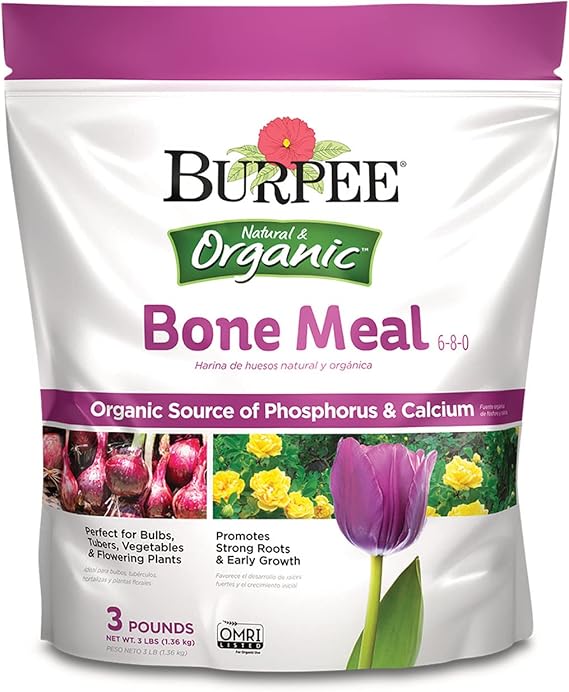
How much bone meal per tomato plant? This article will help you determine how much bone meal you should give per tomato plant and how to effectively use bone meal for tomatoes.
Tomatoes are heavy feeders and require a lot of nutrients. Bone meal is one of the easiest ways to give an extra boost to your tomato’s health and growth. Let’s take a closer look at using bone meal for tomatoes.
Bone Meal Nutrition Facts
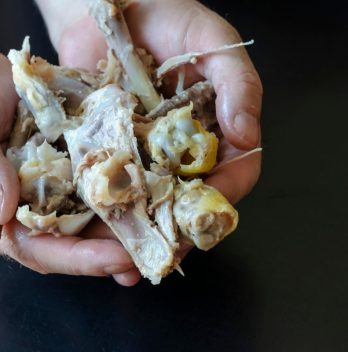
Bone meal made from animal bones is rich in phosphorus, calcium, and nitrogen. It can be used as fertilizer for tomato plants. Both fresh and dried bone meals are available on the market; however, make sure that you buy organic bone meals without any chemical fertilizers or fillers added.
Fresh bone meal contains a high amount of water (moisture) which can cause problems if not removed before storage. The dried form provides more nutrient content than the fresh form because it has fewer moisture contents; thus, making it easy to store for a long time without spoiling.
One tablespoon of bone meal provides seven grams of phosphorus and nine grams of calcium, which equals 13% of the recommended daily value (RDA) for phosphorus and 18% RDA for calcium.
Bone meal supplies important nutrients that help encourage health in plants because it contains both phosphorus and calcium. The ratio between these two minerals can affect how each nutrient contributes to your plants’ overall health. Using too much phosphorus can cause growth problems, especially for seedlings. Excessive phosphorus can stunt a plant’s root growth and interfere with how well a plant absorbs other nutrients.
Bone meal is an organic fertilizer that contains a high amount of calcium, an essential nutrient for promoting strong cell wall development in new blossoms and fruits. Calcium also helps fruit to mature properly after harvest.
You should use bone meal as soon as possible after opening the package because the moisture from the soil or environment may cause it to become moldy or change color over time.
Is Bone Meal Good for Tomatoes?
Bone meal is good for tomato plants. It contains a high amount of calcium that helps in fruit formation. It contains nitrogen and phosphorus which are required by plants to produce chlorophyll while the growing stage and calcium during the fruiting stage.
Please note: you can add bone meal directly to the soil without any preparation or cooking process. However, if you want it cooked before adding it to the soil, you can add it to the compost because raw bone meal contains a high amount of ammonia that can burn roots once mixed with soil.
Now that we know the benefits of this organic fertilizer to tomatoes, how much bone meal per tomato plant?
Use 3 pounds of fresh or 1 pound of dried bone meals for 100 square feet of garden space. For example, how much bone meal per 10 tomato plants? You will need 1/2 pound of bone meal per tomato plant.
Can You Add Too Much Bone Meal?
It is possible to add too much bone meal and hurt your crops. Do not add too much bone meal to the soil because it will cause phytotoxicity in tomato plants. Excess amounts of nitrogen contained in it can damage leaves and slow down fruit formation or growth.
You should avoid adding more than 0.25% nitrogen level to the soil because even if it contains plenty of phosphorus, calcium, magnesium, zinc, copper, sulfur, and other nutrients, an excess amount of nitrogen will burn the roots after absorption by the soil.
Bone Meal for Tomatoes Benefits
Ways to use bone meal for tomato plants:
To boost the health of tomato plants, you can give it every week during the first couple of months of growth. You can also use it as transplanting fertilizer or seedling fertilizers at half the rate of how much you would give to mature plants later on. Bone meal works well for this purpose because it is rich in phosphorus which helps with root formation and healthier stem structure.
Bone meal gives a calcium source that is beneficial for both humans and soil microbes. Calcium accelerates the decomposition speed of dead materials, thus increasing nutrient availability to growing tomatoes faster than compost alone. Organic matter content also improves due to the presence of calcium in bone meal.
Can You Add Bone Meal After Planting?
Bone meal can be added after planting tomatoes if it is dry. However, do not add bone meal to the soil until you are ready to transplant seedlings into them because tomato plants cannot grow properly when nitrogen levels are too high. Especially for seeds that have just emerged, adding too much bone meal will result in yellow leaves or stunted growth.
If you want to use bone meal for tomatoes as fertilizer, it is better to mix organic fertilizers with soil before planting tomatoes.
Bone meal can be used with other organic fertilizers. For example, blood meal, cottonseed meal, and kelp extracts. This combination will provide essential nutrients needed by growing tomatoes. If bone meal is added directly into the garden or container without mixing with other ingredients first, soil microbes may not be able to absorb them properly which can lead to loss of nutrients in time.
Bone meal works best when mixed with compost piles because they allow microbes to break down the materials slowly over time.
You should always water your tomato plants after adding any kind of fertilizers into the soil because soluble nitrogen releases quickly into roots which affects how well it absorbs water. Watering your plants first will allow them to take up the nutrients gradually without getting too much nitrogen.
Using Sugar, Epsom Salt, and Bone Meal for Tomatoes
You may be wondering how else you can use bone meal for your tomatoes. I’ve found that the use of bone meal, along with sugar and Epsom salt works very well. These three are a good trio because the sugar adds sweetness to your tomatoes, the Epsom salts add both sulfur and magnesium and the bone meal adds phosphorus.
To plant your tomatoes, you’ll need to make a hole larger than you usually would for your tomatoes. Then you’ll need to add a cup of bone meal and a cup of sugar, along with a reasonable amount of mulch. Mix them and place them in your hole, evenly distributing them in the soil.
Carefully place your tomato plant into the soil; be sure to bury it reasonably deep. Once planted, add around a cup of Epsom salts on top and mix them into the top of your soil using your hands. Finally, water your tomato plants with a good amount of water – and your tomatoes are ready to go.
Disadvantages of Bone Meal
We’ve already looked at the benefits of using bone meal for your tomato plants, but you may be wondering if there are any disadvantages. While there aren’t too many negatives, there are a few that you may want to be aware of. Let’s take a closer look.
You can only use bone meal in soils below 7 on the pH scale. This may not be ideal. However, a good alternative is rock phosphate, which we’ll be taking a look at later in this article.
If you’re looking for a quick fix, then this probably isn’t the best choice for you, as it’s a fertilizing choice that releases slowly.
If used too much, overfertilization can occur. If this happens, problems may arise for your tomato plants such as yellowing leaves. It can also lead to deficiencies in other nutrients, like zinc and iron.
If not used correctly, the smell can attract unwanted wildlife. However, as long as it’s adequately mixed in, this should not be a problem.
Bone meal is only a good source of phosphorus, so you’ll need to use other fertilizers too, to ensure your tomato plants are receiving all of the nutrients they need.
Rock Phosphate vs Bone Meal
Earlier, we mentioned rock phosphate, which is a great alternative to bone meal, if you’d prefer. However, there are quite a few differences between the two. Let’s take an in-depth look at the two.
They’re similar in that they both contain phosphorus. However, that is where the similarities start and end. The differences between the two are that for the short supply of phosphorus, bone meal is best, whereas, for a long-term supply, phosphorus is best, as it’s slower.
Another main difference between the two is the price. Bone meal starts at around $13 per lb, whereas rock phosphate starts at around $30 per lb. So if you’re looking for a more affordable option, it’s best to use bone meal.
Rock phosphate works best on flowers and other leafy plants, whereas bone meal works best on rooted plants, such as carrots and onions. However, you can choose to use both together, if you’d prefer – and reap the benefits of both.
Final Thoughts: Bone Meal for Tomatoes
Bone meal for tomatoes is beneficial in most cases. Adding too much nitrogen to the soil will hurt plants, although you can add it if your plants are mature enough. You should only use bone meal after preparing the soil with compost or manure and not mix it directly into planting holes.
It s evident that bone meal provides your tomatoes with plenty of benefits like boosting up the nutrient content of the soil, by adding calcium source which creates healthier stem structure and roots.
FAQs
How should you mix bone meals for best results?
You should not mix it directly with planting holes because adding too much phosphorus can affect how healthy tomatoes grow even if they are combined with other organic fertilizers. Therefore, it is better to prepare compost piles or manure before mixing into the soil or using as transplant fertilizer after seeds have germinated and grown some roots.
When should I start fertilizing my tomato plants?
Bone meal should be added to the soil when the first set of tomatoes starts growing. Wait until your plant is about 6 – 8 inches tall before adding bone meal fertilizer. If you add it too early, it will affect how healthy or how tall they grow.
🍅 Tomato Growing Supplies
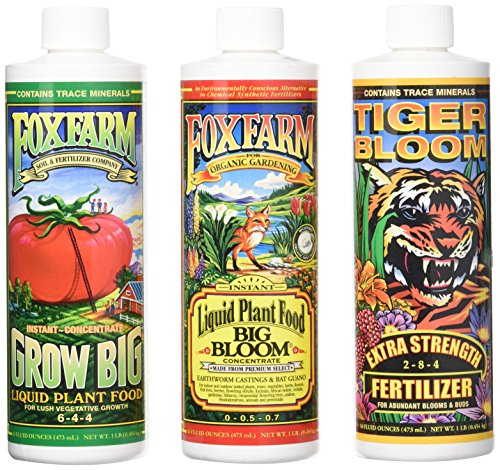
Fox Farm Liquid Nutrient Trio Soil Formula – Big Bloom, Grow Big, Tiger Bloom Pint Size (Pack of 3)
We earn a commission if you make a purchase, at no additional cost to you.
12/11/2025 09:01 pm GMT
Amazon’s Choice
FoxFarm Ocean Forest Potting Soil
$33.99
FoxFarm Ocean Forest Potting Soil is a nutrient-rich blend of aged forest products, bat guano, and earthworm castings, perfect for indoor and outdoor plants. Its pH-balanced formula promotes healthy growth, making it ideal for seedlings, transplants, and mature plants.
Tomato plants can be prone to a bunch of unimaginable problems or diseases capable of taking a toll on the entire crop. The good news is that you can avoid the various problems or diseases that tomato plants tend to be susceptible to. This is why we will be looking into disease resistant tomatoes.
There are over 60 different diseases tomato plants are inclined to catch. With so many unpleasant diseases tomatoes tend to be prone to, it is only right you select the best varieties that can be resistant to most of these various tomato-related diseases.
Diseases-resistant tomatoes have been selected and bred for years to resist some common diseases they tend to be vulnerable to. So, let’s look into the list of disease-resistant tomatoes we can go for when planning on growing our juicy tomatoes.
Selecting Disease Resistant Tomatoes
Even though you can take some measures to manage these diseases such as crop rotations, drip irrigation, sterilization of garden tools, and so on, all these will only control these issues to a limited range. The key to decreasing the issue of tomato disease relies mainly on choosing disease-resistant tomatoes.
The selection of disease-resistant tomatoes has helped a lot in reducing the risk of tomatoes being vulnerable to different diseases. However, this does not guarantee the total immunity of tomatoes to all kinds of diseases. Of all these diseases resistant varieties, no single tomato variety resistant to all diseases has been developed yet. For this reason, when choosing tomato disease-resistant varieties, we recommend you select the ones applicable to your garden.
For instance, a particular tomato breed may thrive or flourish in your garden. On the other hand, this same tomato variety may end up catching a tomato-related disease from another gardener two states away. Therefore, if verticillium wilt or tobacco mosaic virus was once a problem in your garden region in the past years, it is only ideal to choose the tomato variety resistant to this disease.
Disease Resistant Tomatoes
Each variety of tomato resistance is mainly resistant to some or most tomato diseases. However, they aren’t resistant to all types of tomato-related diseases.
When you purchase your disease-resistant tomato seeds varieties, the seed packets or seed labeling often has some abbreviations. These abbreviations or letters mark the disease-resistant variety for that specific tomato breed. Therefore, it’s important to read these abbreviations right so you can know which varieties you are purchasing.
Understanding codes for disease resistant tomatoes
Here is a list of some of the most common disease-resistant tomato variety codes you may find and their meaning:
Apart from these codes, other codes such as HR or IR may as well be written next to the codes. HR means High Resistance and IR means Intermediate Resistance.
Multiple letters seen in a tomato disease-resistant variety name means the tomato is resistant to more than one disease.
So now that we have an idea of some codes you may come across, let’s look at an example. If you come across a seed labeled VFNT, it simply means that the seed has been bred to resist verticillium wilt, fusarium wilt, nematode, and tobacco mosaic virus.
In all this, keep in mind that the label you find on the seed package is simply an indicator. The performance of a specific tomato variety will depend on various factors such as rainfall, soil content, environment, and plant care.
Choosing the Right Tomato Breed for Your Garden
A type of tomato variety may thrive well in your garden and this same variety may not do well for someone else in another state.
This is majorly due to different climates and different soil that produce different patterns for the same tomato variety. Even those regions with slight variations in climate (temperature, rainfall, and air quality) can still cause the same tomato variety to flourish differently for different regions.
For instance, Septoria leaf spot and early blight are tomato-related diseases that tend to progress or thrive in humid regions such as the eastern United States. Therefore, if you live in these regions, it would be wise to select tomato varieties that are resistant to early blight and Septoria leaf spots.
Guidelines for Choosing Tomato Breed
The guidelines below will assist you further on how to find out and select which tomato variety best suits your region:
Recognize the vulnerability your region tends to face – The first important step is to discern which tomato diseases are common in your region. You can do some findings by asking your local nursery owner or having a chat with your local gardeners. You can also put a call through to your local extension office to know which tomato diseases are frequently recorded by local gardeners.
Understand resistant code on the seed package – It’s also important you learn what codes are written on the seed package. We’ve given you some tips above to understand codes you may find on the seed package.
Choose the best that suits your region – At the end of it all, ensure you choose the best tomato variety that suits your region.
Which Tomato Breed is the Hardiest?
Here is a list of some of the best tomato varieties resistant you can go for:
Bush big boy
Bush early girl
Sweet tangerine
Fourth of July
Big beef
Celebrity
Umamin
Super tasty
Big daddy
Summer girl
All of these varieties will resist the most common tomato diseases. That includes nematode, verticillium, fusarium, and tobacco mosaic virus.
Additional Say on Disease Resistant Tomatoes
Knowing a great list of tomato-resistant varieties isn’t just enough. Even after you’ve purchased a hardy tomato breed that can sufficiently avoid these diseases, you need to also imbibe some measures so your plant can flourish.
Here are some preventive measures to take:
Crop rotation.
If you’ve worked on any diseased plant, ensure you disinfect your gardening tools.
Water at the base of the plant.
Maintain moisture conditions and avoid wet and humid conditions that may entertain diseases.
Mulch your soil.
Tomato Seeds Resistant to Blight
Before we look at varieties that are resistant to blight, we must first identify what blight is. You may know blight better as late blight, tomato blight, or potato blight. It unfortunately can cause catastrophic problems for your tomatoes. It’s a fungal disease that will quickly lead tomatoes to rot and die. The more humid the environment, the more likely this is to happen.
Some of the most common seeds resistant to blight are as follows:
Blush beefsteak F1. It’s sweet and juicy, which is unusual for a beefsteak tomato. This tomato usually fruits between July and October, and the best thing about it is that it’s incredibly resistant to blight.
Crimson cherry F1. A sweet but tangy tomato that’s small in size. It’s best at preventing late and early blight. It has an outstanding yield and will continue to fruit until the first frost begins.
Crimson plum F1. If you’re looking to make an incredible Bolognese or ragu, this is the tomato choice for you. It doesn’t contain many seeds and has a rich flavor. This tomato usually fruits between July and October.
Crimson crush F1. Flavorful and fantastic tasting. Even if other plants have blight, the Crimson Crush is hardy enough to not be affected.
Fusarium Wilt Resistant Tomato Varieties
If you’re looking for tomato varieties that are resistant to fusarium wilt, then look no further! You should try one of the following options:
Porterhouse
Sungold
Yellow Pear
Big Daddy
Rutgers
Summer Girl
Super Sauce
Bacterial Wilt Resistant Tomato Varieties
If you’re looking for tomato varieties that are resistant to bacterial wilt, then look no further! You should try one of the following options:
Tropic Bay
Venus
Neptune
Saturn
Kewalo
Disease Resistant Heirloom Tomatoes
If you’re looking for heirloom tomato varieties that are disease resistant, there are many to choose from. Let’s take a closer look at some of the best.
Cherokee Purple: resistant to bacterial speck, fusarium wilt 1, 2, and 3, tomato spotted wilt virus, verticillium wilt, and root-knot nematode
Black Velvet F1: disorder resistant
Caiman F1: resistant to fusarium wilt 1 and 2, tobacco mosaic virus, verticillium wilt, tomato spotted wilt virus, tomato leaf mold, and root-knot nematode
Fargo Yellow Pear: disorder resistant
Delicious: disorder resistant
Damsel F1: resistant to root-knot nematode, late blight, and verticillium wilt
Aosta Valley: resistant to early and late blight
Green Zebra: resistant to Septoria leaf spot and late blight
Legend: resistant to late blight
Chocolate Sprinkles: resistant to fusarium wilt 1, fusarium crown rot, tobacco mosaic virus, and root-knot nematode
Garden Peach: resistant to late blight
Cauralina F1: resistant to fusarium wilt, fusarium crown root, and tomato mosaic virus
Italian Heirloom: resistant to late blight
Marglobe: resistant to fusarium wilt 1 and 2
Chiapas: resistant to early and late blight, and Septoria leaf spot
Mt. Gold: resistant to fusarium wilt 1 and 2
Grandma’s Pick F1: resistant to verticillium wilt, root-knot nematode, and fusarium wilt 1
New Yorker: resistant to verticillium wilt
Mt. Rouge: resistant to root-knot nematode and late blight
Marbonne F1: resistant to tomato mosaic virus and fusarium wilt
Conclusion
I hope this post has helped you to identify the best disease-resistant tomatoes, as well as how best to find the right variety for you. It’s getting easier and easier to grow disease-resistant tomatoes; just be sure to check the abbreviations on any tomato seeds that you buy. Do you have any tips or tricks when it comes to disease-resistant tomatoes? If so, please feel free to let us know in the comments below. And remember, sharing is caring!
FAQs
Which tomato variety is resistant to blight?
Mountain Magic F1 (Medium) is resistant to blight.
If you see symptoms of bacterial blight on your tomato plants, remove them by cutting the stems at the base of the plant. Make sure to wash your hands after removing the infected parts so you don’t spread the bacteria around. If you see the bacteria on the leaves, you can spray them with a mixture of water and bleach to kill the bacteria.
Which tomato variety is resistant to bacterial wilt?
The best known varieties are “Green Zebras” and “Roma”. There are also a number of hybrids that have been bred for this resistance.
If you see any signs of Verticillium wilt, you should remove the plants from the soil as soon as possible to prevent further damage. If you are unable to remove the plants from the ground, you can treat the soil with a fungicide such as copper or sulfur to prevent the disease from spreading.
Are cherry tomatoes disease resistant?
Cherry tomatoes are a great choice for any gardener looking to add a little variety to their vegetable garden. Liike most other types of tomatoes, cherry tomatoes are susceptible to various diseases.
However, they are resistant to a wide variety of diseases, and in some cases the resistance is due to the plant’s own immune system.
Are heirloom tomatoes disease-resistant?
Heirloom tomatoes are not resistant to the major diseases that affect tomato crops, but they can be used as a food source when combined with other plants and insects that provide natural pest control. The best way to prevent diseases is by growing tomatoes in a healthy garden environment that includes annuals and perennials, mulching, regular watering and harvesting regularly.
How do you know if bacteria is wilting of tomatoes?
The first thing to check is whether or not the plant has any signs of disease. There are a number of ways to tell. One of the most reliable is the color of the tomato. If it’s dark green, it’s probably ok. If it’s light green, it may be starting to decay. If it’s yellow or brown, it’s most likely too far gone. Another way is to press your thumb on the stem of the tomato and see how it feels. If it’s waxy, it’s ok. If it’s dry and hard, it’s dead. You can look at the underside of the leaves. If the leaves have turned yellow, this is a sign of bacterial wilt.
What is the hardiest tomato plant?
A tomato plant can be grown in almost any location, but it’s important to choose a site that offers the proper amount of sunlight. Tomatoes are a warm-weather crop, so they need lots of sun. They also like plenty of water, so make sure that you water regularly and give the leaves a good soaking once or twice a week. If you have a big enough garden space, tomatoes are the perfect addition to any vegetable garden. There are many varieties of tomatoes, and many are very different in hardiness. We have found that the most hardy tomato is
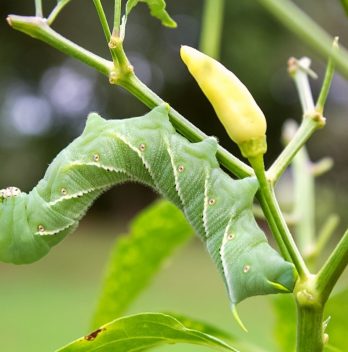
Tomato worms are one common pest that bothers tomato plants and they can ruin your plants. They may look fierce and dangerous, but do tomato hornworms bite?
The huge green tomato worm can grow up to 4 or 5 inches long and they are one of the longest types of caterpillar. There is nothing more devastating than finding tomato worms in your garden feeding on your sweet tomato fruits.
The fact that the tomato worm has a stinger-like horn shape, some may be scared of them. So, if you’ve got tomato worms in your garden and you’re wondering if they bite then you should read on to know the answer to this. We will also discuss what you can do to get rid of these troubling worms.
What Are Tomato Worms?
Tomato worms, also known as hornworms are huge caterpillars that have a tail that looks like a horn. They love to chew on tomatoes, meaning tomato is their favorite food. They not only enjoy fruits, but they can also feed on plant leaves as well as their stems. These worms will eat plant leaves and can render your plant leafless.
Tomato worms will as well feast on other plant’s fruits such as eggplant, pepper, potato, and tobacco plants.
Do Tomato Hornworms Bite?
Even though these worms may look scary and savage, they are not stingers. Therefore tomato worms do not bite. They are harmless to humans and you can even pick them up off your plants anytime you sight them.
Where Do Tomato Worms Come From?
Tomato worms come from eggs laid by the adult moth. These moths are huge heavy-bodied insects that have narrow front wings. They are gray-brown and can have yellow spots on their abdomen.
Life cycle
The tomato worm life cycle begins as eggs are laid by the adult moths. These eggs are laid by the female after mating around summer and the eggs are laid on the host such as tomato, pepper, eggplant, etc. The eggs are oval and smooth with a light green color.
Next, the eggs hatch into caterpillars and the caterpillars are the worms that begin to feed and grow. The caterpillars can feed up until late summer or early fall.
Once they begin to feed and grow, in about 3 to 4 weeks, they become matured green caterpillars. This matured caterpillar will drop from the plants they are feeding into the soil and burrow into the soil. In the soil, they will change or transform into pupae. The pupae will stay in the soil and thrive through winter.
After surviving through winter, the pupae will emerge as adult moths during spring. Then the moths start another generation around mid-summer by depositing their eggs on their host plant.
Identifying Caterpillar on Tomato Plant
The tomato worm caterpillars may be hard to notice because they are green and can blend with your green plants. But once you notice any caterpillar of about 4 to 5 inches of green color and horn-like shape on your plant, then that’s a sign of tomato worm infestation. You need to act fast. If you delay any longer, they will continue to spread causing even bigger problems.
They are capable of devouring your plant leaves and causing serious damage a night. Once they grow bigger and older, they consume more and more. Those fully matured tomato caterpillars can consume a lot at that stage.
So, because of their green camouflaging color, you may not notice them on time. However, you should look closely and also look for droppings and follow the trail.
You can as well identify these worms with black lights. Once it gets dark, scrutinize your plant with the black lights. Tomato worms usually come out in the dark to feed and they will glow in the dark.
Let’s take a look at some control measures we can take to mitigate the situation.
Controlling Tomato Worms
There are various methods of getting rid of tomato worms and they include:
Handpicking
Tomato worms will not bite you so you can simply handpick them when you notice them in your garden. This process may take a while, but it’s totally worth it as you will be saving your plants.
After handpicking them, you can simply drop them in hot soapy water to kill them. You can as well feed them to your chicken or any birds if you raise them.
Spray the plant with soap and water
Another natural way to get rid of these worms is to spray them with liquid dish soap mixed with water. Spray your entire plant and worms until they are all covered. Doing this should eliminate them without causing any havoc to your plants.
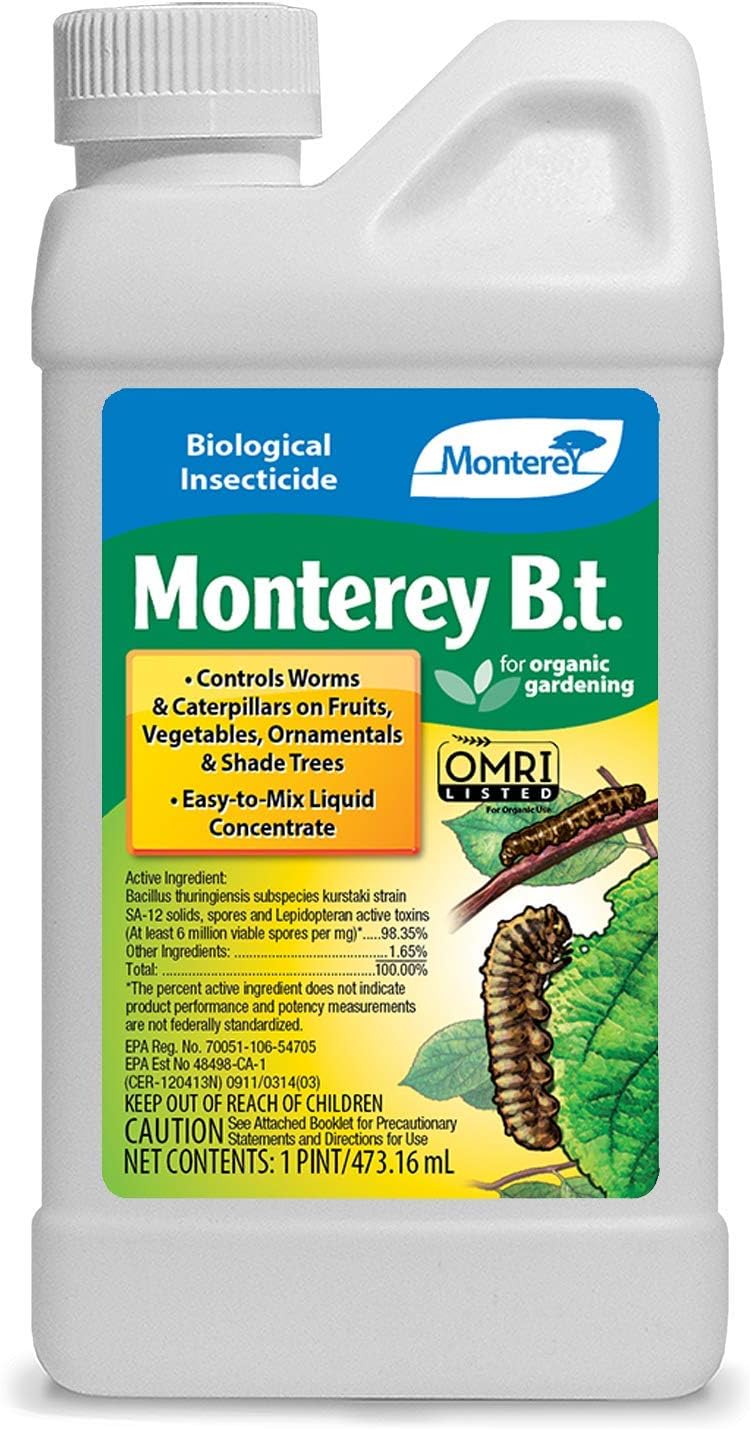
Bacillus Thuringiensis (BT)
If the two natural methods we mentioned above don’t work, you can go for natural pesticides. It is safe to use on your plant and also safe for humans. Bacillus thuringiensis is a natural bacteria found in soil. The worm consumes these bacteria and its digestive system becomes paralyzed and it will eventually die.
Beneficial insects can as well be used to control tomato worms. However, they can only work for a small population. Examples of these beneficial insects are ladybugs, lacewings, paper wasps, and so on. You can obtain these beneficial insects online or from your local garden stores.
Chemical insecticides
Chemical insecticides can be used to control these worms. However, they may not be safe for your organic garden. Notwithstanding, there are good options such as sevin insecticides which are non-systematic. This means they will not penetrate plant tissues and you can simply wash them off after their job is done.
Signs of Tomato Worms Infestation
When you begin to notice your plant leaves having holes or becoming wilted, then you need to have a close inspection of your plant.
You may also notice droppings of these worms on your tomato leaves or the ground. Also, if there are any green caterpillars around your plants, that may be a sign of tomato worm infestation.
Are Tomato Worms Poisonous?
Now that we know that tomato worms do not bite humans, you may be wondering if they are poisonous. You can safely touch tomato hornworms without being concerned about them biting, stinging, or being poisonous. However, you should never ingest these worms. If they are ingested, they may be toxic as tomatoes are part of the nightshade family and these worms remove the toxins from the plant. It’s important to seek medical advice if this happens.
What is the Best Tomato Worm Killer?
When killing tomato hornworms, it’s best to use a low-risk pesticide. There are many low-risk pesticides you can use. But some of my personal favorites are Spinosad, insecticidal soap, or Bacillus thuringiensis. Let’s take a closer look at all three.
Spinosad. It’s derived from a natural microorganism. Can kill tomato hornworms through contact, or ingestion. However, ingestion is the most effective. You’ll notice the effects within one to two weeks. Be sure you keep a watchful eye on it until it’s dried, as it can be harmful to bees.
Insecticidal soap. This doesn’t need to be ingested; contact is enough, but it must be direct. It’s effective against hornworms and what’s great about this is that it isn’t harmful to good insects.
Bacillus Thuringiensis. A bacteria that derive from the soil. Contact is not enough for this pesticide, it must be consumed by the tomato hornworms. The younger the caterpillars, the more effective this method will be. This method is ideal if you’re looking to protect bees and insects.
Can a Tomato Hornworm Sting?
If you take a close look at the tomato hornworm, they are quite terrifying. They look as though they could be dangerous, but as well as not being poisonous, and not being able to bite, they also can not sting you. Apart from being harmful to your garden, they can’t cause any damage to humans whatsoever! They’re nowhere near as scary as they first appear.
Can Bearded Dragons Eat Hornworms?
Bearded dragons have a very versatile diet, and you may be wondering if you can feed them hornworms. And the answer is, absolutely. However, it’s best to buy the hornworms from a reputable store. Hornworms are used as food for many reptiles besides bearded dragons, such as geckos and chameleons.
Hornworms are easy for your bearded dragons to digest, as well as being a great source of calcium and hydration.
Are Tomato Hornworms Poisonous to Dogs?
We’ve mentioned that tomato hornworms can cause problems if ingested by humans, and the same can be said if ingested by your pets. Tomato hornworms can be poisonous to your dogs, so it’s important to seek veterinary advice if you think your dog has swallowed any.
Conclusion: Do Tomato Hornworms Bite?
Tomato worms may look fierce and dangerous but they do not bite humans. However, the damage they will do to your plants can be very serious. Ensure you monitor your plants closely, especially their favorite plants which are tomato, pepper, eggplants, and tobacco plants.
I hope this post has helped to answer the question: “do tomato hornworms bite?” and given you an idea of how to prevent and control them if you do manage to get an infestation. While they can be a nuisance to your garden, it’s a super easy problem to resolve. Do you have any tips and tricks when it comes to removing hornworms? If so, please feel free to let us know in the comments below. And remember, sharing is caring!
FAQs
Do hornworms bite humans?
Hornworms are not harmful to humans. However, they can cause damage to plants. The eggs and larvae are very destructive. They eat grass, soil, and roots. They can also kill plants.
A hornworm may bite if it feels threatened or cornered. They also may bite if they are hungry. If they are hungry, they may be trying to feed on the roots of a plant.
The most common cause of a hornworm bite is in the spring. The adults are out looking for food and the young ones are out looking for mates.
Are green hornworms poisonous?
Some people think that the green hornworm is poisonous because it tastes bad, and they won’t eat it. Others think that the green hornworm is poisonous because it has a very hard exoskeleton which doesn’t easily break down in the stomach. But, they are not.
Where do tomato hornworms go during the day?
Tomato hornworm caterpillars are active during the day, and they may be feeding on leaves or other parts of plants. If you find a large number of them, try to see where they are hiding. Look for places where they might have access to foliage and leaves. You can also check under shrubs and trees for signs of feeding. Hornworms will leave a silken web on their food source. You can also look for frass, or insect droppings.
Tomato hornworms (Manduca sexta) are large, dark-colored caterpillars with a horn on their head and antennae. They feed on the leaves of tomatoes and other nightshade plants like eggplant and peppers. Hornworm larvae chew holes in plant leaves to feed on sap and then pupate. When they emerge as adults, they’ll feed on foliage until they reach maturity.
How do you prevent tomato worms?
Tomato worms are not a problem for everyone. I can’t say that I have ever had problems with them, but when I did, I didn’t know what to do about it. So I want to share some tips on how to get rid of tomato worms in your garden. Tomato Worms – What are they? A common pest for tomatoes, the tomato worm is a small insect, which can be up to 2 inches long. They are most often seen in the garden when the temperatures are warm and humid. You may see them crawling around the base of plants, or laying eggs in the soil. How do you get rid of them? The best way to prevent tomato worm damage is to pick off any infested leaves, and destroy the eggs in the soil. Another good method is to grow plants in containers, so that you can take them out of the garden if they begin to appear. If you do need to control these pests, the easiest solution is to use a systemic pesticide. These products work by killing the pest from the roots down, which will help reduce any future problems. This is one of the best ways to prevent tomato worms, and many other plant pests.
Should you store tomatoes in high or low humidity in the refrigerator to extend their shelf life, or where is the right place to keep them?
There is no joy like going to the farmers market or the grocery store and shopping for your week or months-long groceries. However, before you spend a ton of money on these expensive fruits and vegetables, be sure you know how to them fresh for the longest.
Let’s learn the proper humidity of vegetables that will enable us to store our fresh produce in the right place in the refrigerator.
The Refrigerator
A refrigerator has many compartments to store different kinds of foods. The two drawers in the bottom of your refrigerator are called crisper drawers, and they preserve your vegetables. If you want your vegetables and fruits to last long, it matters where you put them.
Most vegetables should go into the high humidity drawer, while most fruits should go into the low humidity. Of course, there are some exceptions to this, so let’s look into it.
Some crisper drawers are labeled fruit and vegetable making it easy to know where to keep your supplies. You can adjust the humidity level of the drawer by moving the slider. The high setting allows the slider to close the window and hold more air and moisture inside. At the same time, a low humidity setting allows the slider to open the window, letting in more air out of the drawer.
So Why Does it Matter: Vegetables Low or High Humidity?
It matters because of ethylene. Ethylene is a plant hormone available in fruits and vegetables. Lots of fruits and vegetables release this hormone as a sign for fruit vegetables to ripen.
Not all vegetables respond to Ethylene the same. For susceptible vegetables, this gas makes them get over-ripe and go bad very fast. For example, suppose you trap an ethylene-sensitive vegetable like lettuce inside a high-humidity drawer when it’s closed with an ethylene-producing fruit like an apple; in that case, the lettuce will go bad fast.
Now you know why your veggies have been going bad too fast. It’s because you mixed them with the wrong vegetables and fruits, and kept the drawer closed.
However, opening the little window in the drawer to make it a low-humidity drawer is enough to let the Ethylene out. The rest of the refrigerator is big enough to dilute this gas for a limited effect on the rest of the produce in the refrigerator. Ethylene is a plant hormone and does not affect people at all.
So Do You Store Tomatoes in High or Low Humidity?
That said, what should you store in a low-humidity-open window drawer? Fruits and vegetables that produce Ethylene should be stored there. These include apples, tomatoes, avocadoes, citrus fruit, kiwi fruit, blueberries, green onions, melons, okra, peaches, mushrooms, nectarines, plums, grapes, and pears.
What about the high-humidity closed window drawer? In this drawer, you should store fruits and vegetables that are sensitive to the effects of ethylene. They include – zucchini, carrots, cauliflower, broccoli, asparagus, cucumbers, leafy greens, green beans, lettuce, peppers, peas, spinach, and summer squash.
The humidity settings on both of these drawers work best when the drawers are 2/3 full. Ensure that you do not stock up on these drawers too full.
Now to answer the question, should you store tomatoes in high or low humidity? If you have to keep them in the refrigerator, store them in low humidity with an open window. However, the best way to store them is out at the counter.
The Best Way to Store Your Produce
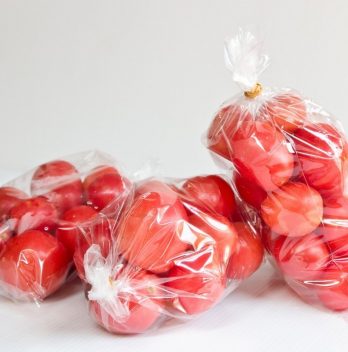
It is best to store your produce in the packaging you bought them in. If you need to change it, loosely wrap it in paper or perforated plastic bags. Allow your produce to breathe. This allows the ethylene gas to escape, keeping away any extra moisture from getting trapped inside. Extra moisture is a breeding ground for bacteria and can make your produce go bad fast.
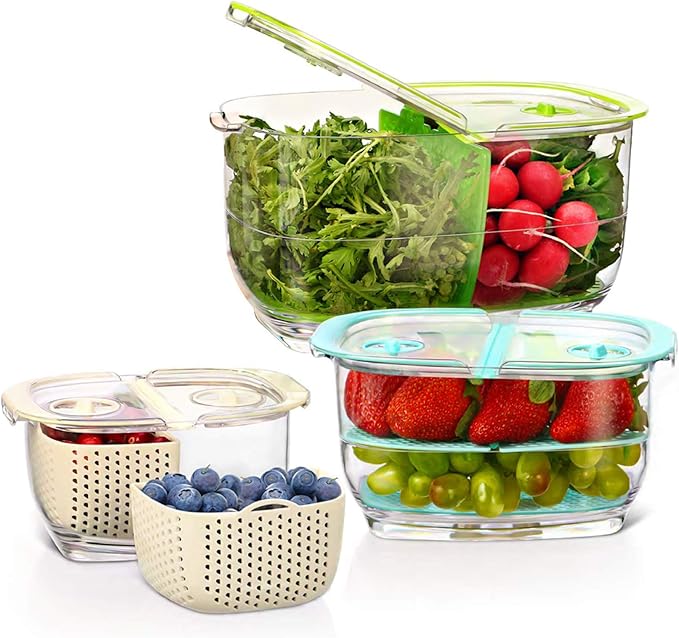
There are plastic vented containers that you can buy to help you store your produce in better condition. They help keep your fruits and vegetables in a healthy state, away from any danger of rot. They have a tray that collects the water sitting in a puddle of water, and the lid is invented to let the Ethylene out. These two qualities keep your produce fresh.
Is Everything Else Stored in the Refrigerator?
Please note, not everything belongs in the refrigerator! Some fruits and veggies will do best when left on the counter. And the best thing is the more you see them, the much you are bound to eat them.
Bananas and tomatoes are some of the food that should never go into the refrigerator. The refrigeration temperatures keep bananas from getting any riper and sweeter. Tomatoes will get a mealy texture and lose their natural flavor when refrigerated. Keeping your tomatoes out of the compressed humidity helps them last longer.
Citrus fruits can also be stored at room temperature on the counter for 7-10 days. If they are refrigerated, they pick up some odors from the refrigerator.
Melons, summer squash, cucumber, eggplant, and zucchini all do better on the counter at room temperature. Once melons ripen, consume them within 7 days. The vegetables can only last a couple of days on the counter, so use them as soon as you can.
Some fruits and vegetables even ripen better if you leave them on the counter. If you are not ready to eat them when they get ripe, you can now put them in the refrigerator to extend them a few days. Fruits like avocados, apples, kiwis, peaches, nectarines, pears, and plums all fall into this category.
Once you cut your fruit and vegetables, all the remaining pieces should be refrigerated and used within 2 to 4 days.
Best Humidity for Vegetable Drawer
You may be wondering what the humidity should be for your vegetable dray. Well, the truth is, the refrigerator vegetable drawer humidity setting all depends on which fruit and vegetables you’re storing. For example, some prefer high humidity, while others prefer low.
Generally, it’s best to keep your drawer at low humidity. This is to stop the food from perishing too quickly. If your food is prone to rotting quickly, opt for low humidity. If your food is prone to wilting quickly, opt for high humidity. Let’s take a closer look at some examples.
Some foods that should be kept in a high-humidity drawer are as follows:
strawberries
watermelon
asparagus
eggplant
green beans
okra
peas
cucumber
lettuce (and other leafy greens)
peppers
cauliflower
broccoli
carrots
Brussels
herbs
Some foods that should be kept in a low-humidity drawer are as follows:
peaches
pears
plums
avocado
bananas
figs
mangoes
melons
apples
papayas
kiwis
What Should the Humidity of Refrigerator Be?
You may be curious as to what the humidity of your refrigerator should be. It may surprise you that many factors can affect the humidity of your fridge, which is why you should be careful where you store certain foods. For example, foods that are prone to wilting should be kept in a high-humidity drawer. Whereas foods that are prone to rotting quickly should be kept in a low-humidity drawer.
The humidity can change when:
You open your fridge. If you leave your fridge open for more than a few seconds, warm air will enter the fridge and even when closed, the humidity will have risen dramatically.
Contents. This is why it’s recommended to allow food to come to room temperature before you place it in the fridge. If you place hot food into the fridge, the humidity will rise dramatically.
All you need to know is the best places to store certain foods; at either high or low humidity. The temperature of your refrigerator often changes slightly throughout the day, so there is no set humidity in your fridge should be.
Humidity Control in Fridge for Vegetables
You may be curious about how to control the humidity in your fridge for foods like fruits and vegetables. The best way is to use the zones in your fridge correctly. For example, foods prone to perishing quickly such as plums and pears should be kept in low humidity. Whereas foods prone to wilting, such as asparagus, need to keep in high humidity.
You should also only leave your fridge open for very short bursts of time, and never place hot food directly into the fridge. Both of these will help to control the humidity in the fridge.
Should Tomatoes Be Stored in the Refrigerator?
It is not recommended to store tomatoes in the refrigerator, but that’s not to say you can’t if you want to. It’s not recommended because it can alter both the flavor and texture – and not for the better! However, if you opened your tomatoes, or chopped them pre-emptively, you should keep them in the fridge, in an airtight container, for best results.
Conclusion: Tomatoes High or Low Humidity?
It is essential to learn the nitty-gritty of every sector of life, and learning about high or low humidity for veggies is part of our daily life. The last thing we want is for you to spend all the money shopping only to lose half of the stuff you bought because you stored them in the wrong place.
Remember always to keep your refrigerator clean and well-stocked for that quick dinner when you are running late from work. Besides, appreciate your counter and pantry where you also store other types of foods. Keep your potatoes in the pantry in a cool, dry place away from moisture.
I hope this post has helped to answer the question of whether it’s best to keep tomatoes in high or low humidity. If you have any tips or tricks when it comes to storing tomatoes, please feel free to let us know in the comments below. And remember, sharing is caring!
FAQs
What is the best way to store tomatoes?
The best way to store tomatoes is in a cool, dark place. Tomatoes are sensitive to light and heat. So what you should do is store them in an open window drawer that has low humidity.
However, the answer to this question depends on your needs and goals. If you just want to store tomatoes for a few days, there are several ways that can work. I have found the easiest way is to simply put them in a plastic bag in the refrigerator. This will keep them safe and preserve their flavor. If you want to store tomatoes for longer periods of time, then you will need to use something different.
Generally speaking, a refrigerator is not a very good place for storing tomatoes. They will shrivel and lose flavor if left at room temperature.
The first thing I do with any produce is cut it into slices.
Then I place them on a baking sheet lined with parchment paper. I then cover the whole thing with a plastic wrap and put it in the fridge. This helps keep the produce from drying out and keeps it fresh for longer.
How does the ripening process work?
When the tomato is ripe it releases a chemical into the pod. This chemical causes the pod to ripen. It also allows the fruit to be eaten. This process is called “ripening” or “de-greening.” The skin of the tomato is made up of two layers, the exocarp and the endocarp. The exocarp is the outermost layer of the fruit. The endocarp is the innermost layer. The exocarp is what you see when you pick up the tomato. It is the part that has been cut off from the stem. The endocarp is the part that is left on the stem. It is the part that is used in canning. It is important to note that both layers are edible.
This is the best way I’ve found to keep my tomatoes from turning green. The idea is to keep them in the refrigerator. As long as they are kept cool and out of direct sunlight, they should remain fresh for a week or two.
What’s a good alternative to canning them?
If you don’t want to can them, your best bet is to freeze them.
You’ll want to let them thaw out first, then place them in the fridge. This should keep them from getting moldy.
Do you have bluegill in your aquarium and you’re wondering what do bluegill eat? We will let you know in this post.
Generally, various fish needs special care no matter the type of fish you choose to raise. It is pretty easy to care for various fish, especially the bluegill, as they require you to provide them basic care such as clean water, good space, as well as fish feed.
Bluegill fish will feed on a whole lot of things, so read on to discover what do bluegill eat.
Facts About Bluegill Fish
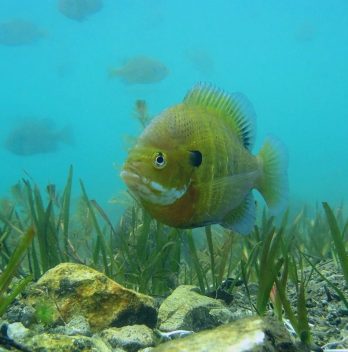
Bluegill fish are long-bodied freshwater sunfish. They are native to North America and they dwell mostly in lakes, rivers, and ponds. Bluegill fish are one common loving fish raised among aquarium hobbyists.
They are quite friendly fish to have in your home aquarium and they possess some fascinating habits you would love to witness. Habits like doing hide and seek from predators by taking cover at the back of any covering or shield in your aquarium.
They can grow up to 2kg to 2.5 kg in weight. Bluegill can also grow as long as 12 inches or more. They can live up to 4 or 6 years.
Bluegill fish are carnivores. This implies they are capable of feeding on other little types of fish or small animals. So, here is what you can feed your bluegill fish in your aquarium:
1. Minnows
One common little fish to feed your bluefish is a minnow. Minnows are normally dropped around feeding time in the aquarium and the bluegill fish goes hunting them. You can trim the minnow’s tail and not worry about shedding blood in your aquarium. Trimming is done so they won’t be able to swim and it will be easier for your bluegill fish to catch and feed on them.
2. Shiner fish
Shiner fishes are little fish you can feed your bluegill with. Their size is about 2 to 3 inches which makes them perfect for feeding matured bluegill fish. You can purchase them from bait shops and they are also used as bait for capturing bluegill fish in the wild.
3. Shad fish
Shad fish are tiny and they can be fed to bluegill fish. Although they might be scarce to find, they can be added to the list of food to feed bluegill.
4. Baitfish
The baitfish are primarily used in the wild for catching bluegill fish from their natural habitat. Bluegill enjoys feeding on baitfish; especially the bigger-sized bluegill fish. Most bluegill keepers prefer feeding them with baitfish because they are readily available in pet shops. They are also not so pricey.
5. Suckerfish
Little fish like the sucker is also included in the food for your bluegill fish. This slender cylindrical-bodied fish is one of the bluegill favorites and they will enjoy feeding on these little fishes.
6. Larvae & insects
Larvae and insects are not left out of the various kinds of food you can feed your bluegill. As we mentioned earlier, bluegill fish feast on little animals such as larvae and insects. Examples are crickets, grasshoppers, and mealworms. If you wish to lure bluegill to the surface in their wild natural habitat, insects are best used as bait.
TetraPond Pond Sticks 2.65 Pounds, Pond Fish Food, For Goldfish And Koi
We earn a commission if you make a purchase, at no additional cost to you.
03/07/2026 10:03 pm GMT
7. Water insects
Another food you can feed your bluegill is water insects they are rich in nutrients for your fish. They will feed on insect larvae, mosquito larvae, any eggs laid in water, and even water bugs.
8. Crustacean
Crustaceans such as small freshwater shrimps and small crayfish are not left out of food to feed your bluegill fish. They can be purchased easily from fish or feed shops.
9. Zooplankton
It is the young bluegill fish that mostly feed on zooplankton and this also supplies them with adequate nutrients to grow.
10. Fish pellets & dried worms
Bluegill fish will also feed on dried worms and fish pellets. They are cheap and available in fish or feed shops.
Other bluegill foods you can also add to your fish feed are terrestrial insects and water insects.
Stocking Density for Bluegill in an Aquarium
Bluegill fish requires adequate spacing. Therefore, they can take up to 50 to 70 gallons of water. The required pH should fall around 6.8 to 7.2. Bluegill fish can also live along with tank mates of other species of fish.
Additional Note: What to Feed Bluegill in an Aquarium
When feeding your aquarium bluegill, you will need to monitor them. You should feed them during the day and the feeding session should be short (about 15 seconds). Also. try not to overfeed them as this could lead to your tank being polluted. Remove any leftover food and readjust the feeding portion the next time.
What to Feed Baby Bluegill?
You may be wondering what the best food is to feed your baby bluegills. Let’s take a closer look at what you should include in their diet. Bluegills eat both other animals and plants. You can expect them to enjoy foods such as plants, insects, and other small fish or insects.
You may want to consider adding the following to your tank for your bluegills: bloodworms and baby brine shrimp. They’ll also enjoy fish flakes, pellets, or even frozen food such as krill. If you’re looking for a less expensive option, fish flakes are a great starting point. However, you must offer other foods to ensure they’re getting a balanced diet.
When Do Bluegill Spawn?
You may be curious as to when bluegill spawns. This usually takes place in June, but it can happen anytime from May to August. You should ensure that have you your gravel in the tank so that the bluegills can make a nest. It’s also important to keep the temperature of the aquarium between 68-80F.
How Fast Does Bluegill Grow?
How quickly bluegills grow depends on a variety of aspects. Such as the type of bluegill, how healthy and active they are, and also the size of the area they’re kept in. However, some estimations can be made. Bluegills can take up to five years before they’ve fully matured. However, if they’re in a large area of water, they may not stop growing!
After around a year, it should be around 4-6 inches in length. After two years of age, it should be around 6-8 inches in length. After three years of age, it should be around 8-8.8 inches in length. After four years of age, it should be around 8.8-9.4 inches in length. After five years of age, it should be around 10 inches in length.
Typically, in the wild, bluegill lives for around 5-6 years. However, their lifespan can double if they’re kept in captivity. It’s also worth noting that where the growing season is longer, due to warmer weather, bluegill will grow more quickly.
Bluegill Temperature Range
Bluegill fish are tolerant to many temperatures, which is why they’re a great fish to have. They can tolerate temperatures as high as 95F! However, for your bluegills to thrive and grow to a good, healthy size, the tank should be kept between 68-80F, for best results.
Do Hybrid Bluegill Reproduce?
You may have heard that the hybrid bluegill can not reproduce. However, this is not the case! While it’s more often for them to be sterile than not, they can sometimes still reproduce. What’s most interesting about when hybrid bluegills reproduce is that the offspring will be one of two species: the bluegill, or green sunfish.
Conclusion: What Do Bluegill Eat?
I hope this post has helped to answer the question “what do bluegill eat?” and given you an idea of what diet is best to ensure your bluegill fish are thriving. Do you have any tips and tricks when it comes to supplying your bluegill with the best diet? If so, please feel free to let us know in the comments below. And remember, sharing is caring!
FAQs
What do Bluegill fish eat?
The diet of a fish can be a very important part of its life. Some fish are carnivores; others are omnivores; and some are herbivores. In addition to the food they eat, the diet of each fish species is affected by the type of water it lives in and its size. The food in a fish’s diet may change throughout its life. For example, when a fish reaches sexual maturity, it may begin eating a different diet than it did before that time.
A bluegill’s diet is based on the foods that are found in a natural environment.
The food of choice for bluegills in an aquarium is a mix of pellets and live foods, according to the University of Michigan. Pellets are made up of ground fish meal, fish oil, corn and other ingredients that help grow the fish, while live foods include small invertebrates like shrimp, mosquito larvae and daphnia. Live foods may also be available as frozen or canned items.
They will eat any pellet food available, and they are not picky about what kind of food they eat. Pellets are also easier to handle for the fish than flakes. Flake food is more expensive than pellets and has a longer shelf life. You can get the same nutrients in a smaller amount from pellets.
Do they eat a lot?
Yes they do, and you should definitely consider feeding them a pretty broad diet so the they may get all the nutrients that they need.
They are a bit like a catfish in that they have a very strong, aggressive bite.
If you don’t want them to die, try feeding them meat chunks (cat, dog, rabbit, etc). A popular food for them in tanks are frozen bloodworms.
What are the best kind of pellets for them?
The most commonly recommended food for bluegills in an aquarium is the algae-based “semi-pellet” diet, which contains protein, vitamins and minerals. Other foods include small pieces of shrimp or other crustaceans and live plants. Bluegills are bottom-feeding fish that eat primarily algae, insects and other plant material.
Can they feed alongside other fish?
They can be kept with other types of fish such as catfish and sunfish. Diet Bluegills feed on microalgae (sometimes called “semi-pellets”) and small organisms such as worms, insect larvae, mollusks, and detritus. These organisms are found in the water column. Bluegills also eat zooplankton, the microscopic animals that drift through the water. Bluegills are omnivorous. They will eat both plant and animal matter. The preferred food is a diet of live algae and detritus (decaying plant and animal matter) found in the bottom of an aquarium.
How do you find excellent top-feed hydroponic drip system supplies? Look to our guide and you can find some nice recommendations and great tips for making an excellent choice. You will also find some useful information about top-feed drip system hydroponics.
The top-feed drip hydroponics system is great for both small home-based and large commercial hydroponic setups. You get to have control over your hydroponics system with a top drip system. This system is also an excellent choice for a broad range of plants and herbs.
So, let’s talk about the top-feed hydroponic drip system.
What is a Hydroponic Drip System?
When it comes to hydroponics, there is really no particular way or fixed way of building up a hydroponic system. The versatility of the system is what we admire. One of these various ways of setting up a hydroponic system is through the drip system.
A hydroponic drip system exclusively makes use of drip emitters to directly feed your plants with nutrients and water. This system is not peculiar or unique to just hydroponics. A drip system has been and is still popularly used in outdoor garden irrigation to provide water to traditional plants. It has now been successfully modified to work with a hydroponics system.
Also, the system is easy setup, especially for beginners. It only requires a couple of parts to set up at the same time providing an efficient hydroponic system.
The most interesting advantage we admire about the drip hydroponics system is that it offers you control over your hydroponics garden. You can control the amount of water and nutrients you feed your hydroponic plants.
The feed drip hydroponics system is most suitable for commercial growers. Therefore, among most hydroponic commercial growers, it is one of the best-loved hydroponic systems compared to other systems.
Types of Hydroponic Drip Systems
There are majorly two types of top-feed hydroponic drip systems. They are:
Recovery or recirculating drip system
It is commonly used by home-based growers. This type of system allows the recovery of excess nutrient solution back into the reservoir to be reused. The disadvantage is that as the nutrients are reused, there is a change in nutrient composition level and pH.
The recirculating drip system will need to be monitored consistently to adjust the pH level and balance the nutrient solutions.
Non-recovery or non-recirculating drip system
Non-recirculating drip systems are mostly used by commercial growers. In the non-recovery drip system, nutrient solutions are not recovered. Even though it sounds wasteful, the fact is there is usually just a little waste.
This is because as you time the flow for each cycle, you will have an idea of the number of nutrients used in a specified time. This allows growers to reduce or adjust the next amount of nutrient solution down to the watering time. Therefore, there is usually minimal run-off after each dripping time has elapsed.
The top-feed drip hydroponic system is a great solution for growing plants without soil. It uses a pump to deliver nutrient-rich water directly to the plant roots, ensuring efficient growth and healthy plants. This method is ideal for growing a wide variety of plants, including leafy greens and herbs, both indoors and outdoors.
It’s a low-maintenance system that works well for beginners and experienced gardeners alike, providing a consistent supply of water and nutrients
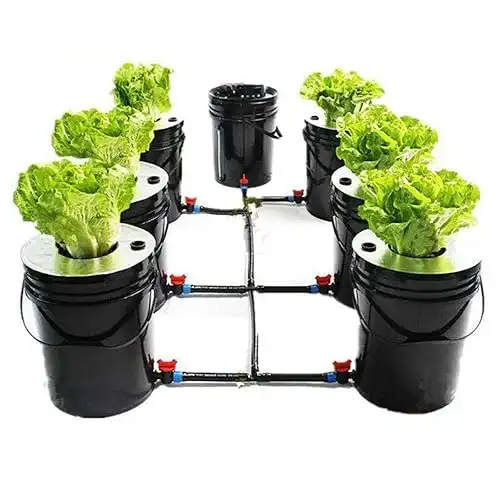
Hydroponic System, Growing System Kit 7 Bucket 5 Gallon Recirculating Deep Water Aquaculture
Hydroponic Growing Kit with Pump, Air Stone and Water Leveling Device for Indoor/Outdoor Leafy Ve…
Pros:
Efficient Growth: Ideal for indoor/outdoor leafy vegetables with fast, consistent growth.
Recirculating System: Maintains water and nutrient levels, reducing waste.
Complete Kit: Includes pump, air stone, and water leveling device, so no extra purchases needed.
Large Capacity: 7 buckets, each 5 gallons, offering a significant growing area.
Cons:
Setup Complexity: Some users may find initial assembly challenging.
Space Requirement: Requires a larger space due to its size
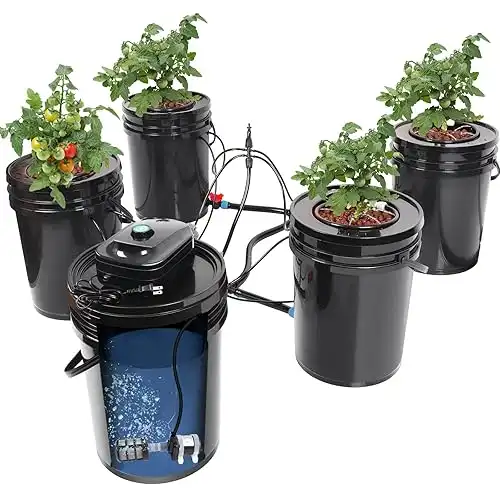
The RDWC Top Feed Drip Hydroponics System is a high-efficiency hydroponic kit perfect for growing a wide range of plants. It features a recirculating deep water culture system that continuously feeds oxygen and nutrients to plant roots. With 4 buckets, a reservoir, a water pump, and a drip kit, it’s designed for those serious about indoor gardening.
This setup helps plants grow faster and healthier, making it ideal for both beginners and advanced growers. It’s easy to maintain and works well for leafy greens and other crops. This system is excellent for serious growers aiming for high yields.
RDWC Top Feed Drip Hydroponics Systems, Recirculating Deep Water Culture Hydroponic Bucket System
$159.99
5 Gallon Hydroponics Growing System Kit with Water Pump, Air Pump(4 Bucket + Reservoir + Drip Kit…
Pros:
Efficient Growth: Recirculating deep water culture (RDWC) provides a steady supply of oxygen and nutrients for faster plant growth.
Complete Kit: Includes water pump, air pump, 4 buckets, a reservoir, and a drip kit—everything you need to get started.
Minimal Maintenance: The recirculating system requires less frequent nutrient adjustments.
Cons:
Setup Complexity: Initial installation can be tricky for beginners.
Space Requirement: Takes up a larger area due to multiple buckets
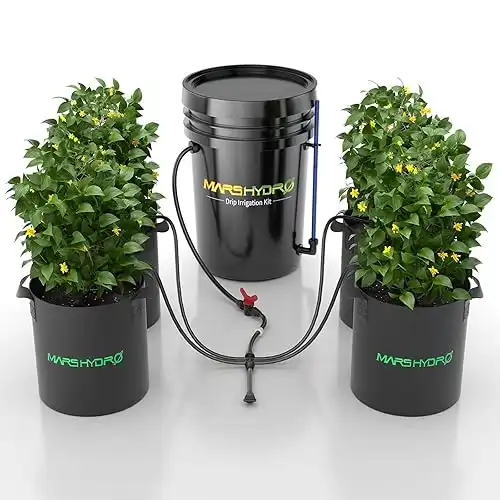
The MARS HYDRO Auto Drip Irrigation Kit is a versatile watering system designed for indoor gardens, lawns, and greenhouses. It features a 5-gallon bucket, 22W water pump, and 8 drip emitters, providing a reliable automatic watering solution.
This kit is great for small to medium-sized indoor gardens.
MARS HYDRO Auto Drip Irrigation Kits Garden Watering System
For Indoor, Lawn, Greenhouse, Yard, 5-Gallon Bucket 22W Water Pump with 8 Drip Emitters
Pros:
Automatic Watering: Ensures consistent hydration for plants, reducing manual labor.
Energy Efficient: The 22W pump consumes minimal electricity.
Versatile Use: Suitable for indoor, greenhouse, or lawn setups.
Cons:
Limited to Small/Mid Gardens: May not be ideal for larger operations.
Pump Noise: Some users may find the pump noise noticeable.
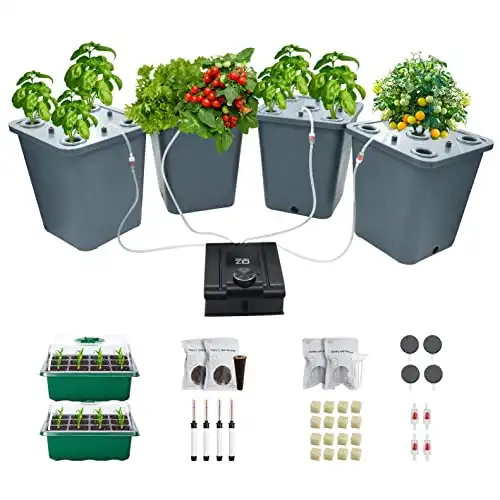
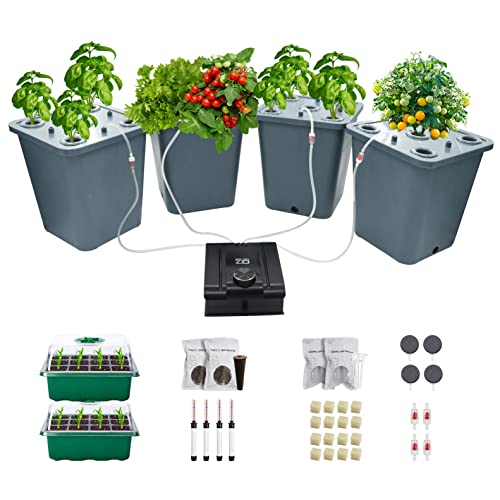
The LAWNFUL 4 Hydroponic Buckets Kit offers a complete deep water culture (DWC) hydroponic system perfect for growing herbs, tomatoes, and vegetables indoors. It includes four 5-gallon buckets, an air pump, and a germination tray, allowing gardeners to start from seed and grow plants to maturity. The system delivers oxygen directly to the plant roots, promoting faster growth and healthier plants.
With this kit, you get a reliable indoor gardening solution that supports multiple plants at once, making it ideal for both beginners and experienced gardeners.
This kit is perfect for those looking to grow a variety of plants in a controlled indoor environment, offering high efficiency and versatility for small-scale hydroponic gardening.
Hydroponic Buckets Kit for Plants, Hydroponics Growing System
$99.99
LAWNFUL 4 Hydroponic system for Herbs/Tomato/Vegetables, DWC System with Air Pump; Germinat…
Pros:
Complete Hydroponic Solution: Includes air pump, buckets, and germination tray.
Multiple Buckets: Allows you to grow several plants at the same time.
Faster Growth: The DWC system boosts oxygen and nutrient uptake, resulting in quicker plant growth.
Cons:
Space Requirement: Due to the size of the four buckets, you’ll need a decent amount of space indoors.
Assembly Complexity: Some beginners might find it challenging to set up the system at first.
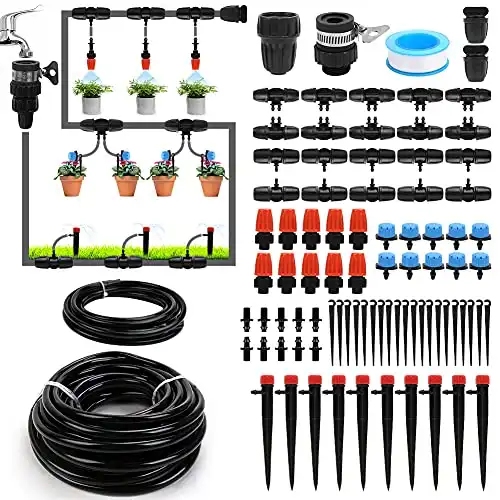
These garden drip hydroponic supplies are quite easy to put together with the use of the user manual for your guidance when installing.
We admire the adjustable dripper that meets your various watering needs which also allows you total control of your drip system. It also comes with a universal faucet allowing you to connect any kind of faucet brand.
These drip hydroponic supplies offer you a cool heat environment, especially for your outdoor garden. The tubing hose is of standard quality and has UV resistance and is made of chemical-resistant materials making it safe.
Additionally, it comes with support stakes for your plants, and apart from a hydroponic garden, it is ideal for lawns, terraces, etc.
The drawback it does not come with gallon pots or pumps, it only provides supplies to set up parts of your drip hydroponics system.
Drip Irrigation System, Garden Watering System Kit,
100ft 3/8" & 1/4" Irrigation Sprinkler System for Lawn Greenhouse, Auto…
Pros:
Adjustable drippers for your plant’s watering needs.
Easy to set up with a user manual as a guide.
UV resistance and chemical resistance made materials.
We earn a commission if you make a purchase, at no additional cost to you.
How to Choose the Best Hydroponic Drip System
The keys to picking the best hydroponic drip system include:
Installation and operations: One of the things to consider when choosing your top feed drip system is installed. It must be easy to set up without any need for plumbing skills to make your installation comfortable.
Operations: The top feed drip system must also be easy to operate so you can make your hydroponic experience easy and comfortable.
Accommodation: Be aware of the type of plant size this drip feed system can accommodate. This will guide you in case you plan on planting small or large plants.
Drip Hydro Nutrients Review: Worth It?
You may be familiar with Drip Hydro, as it’s a popular product among budding growers. However, is it worth it? We found that it’s both easy to use and affordable, which makes it a great addition to any garden. It’s a liquid that’s full of nutrients such as CalMag. Adding this to your plants means your plants will thrive to the best of their ability.
What is a Hydroponic Auto Feed System?
A hydroponic auto-feed system is better known as an automatic dose system. This is simply a way to add controlled doses of substances such as chemicals and nutrients to your plants, to encourage their growth and health. Not only does it dose your plants for you, but it also monitors them too. It will measure aspects such as temperature and pH. Once it has gathered this knowledge, it’ll provide your plants with the support they need.
What’s great about this kind of system is that you can set your own timers to dose and monitor your plants for you, as well as which nutrients to use.
DIY Drip Hydroponic System
Making your own hydroponic drip system couldn’t be easier! And it’s the most affordable option too. To make a top feed bucket drip system, you’ll need the following ingredients:
a suitable-sized container for whatever it is you’re growing
growing medium such as perlite or vermiculite
a pump
organic nutrient solution
an air stone
You’ll be able to buy all of these at gardening centers, or from online stores such as Amazon.
Now all you need to do is:
Location. Pick the best space for your hydroponic drip system. This should be somewhere that has ample sunlight and ventilation.
Choose Reservoir. Choose the size dependent on how many plants you’re looking to grow. You’ll then need to drill holes to accommodate your plants.
Prepare Area. A plastic tray is more than good enough for your growing area. However, it can be more complex than this if you’d decide.
Fill Reservoir. Use filtered water and nutrients to fill your reservoir until it reaches the desired level.
Fill Grow Area. Add your growing media such as perlite or vermiculite to the growing area (such as your plastic tray). It should be moist, but not over-watered.
Add Seeds. Plant your seeds into the growing area; ensuring it’s deep enough.
Add Pump. There is no best pump for this, as long as it’s able to circulate water, this will do just fine! However, it must be big enough for the number of plants that you’re growing. Then set a timer for your pump.
Add Tubing. Once everything is set up, add your tubing to your grow area.
Place Air Stone. Add your air stone and your system is ready to go! Now all you need to do is turn the pump on.
Monitor. It’s important to check on your hydroponic drip system regularly to ensure that your plants are thriving and receiving everything that they need.
Product Image
Product Name / Price
Primary Button
Our Pick
Hydroponic System, Growing System Kit 7 Bucket 5 Gallon Recirculating Deep Water Aquaculture
The top-feed hydroponic drip system is an excellent system you can choose from out of all the various systems available.
There are so many advantages to enjoy with this system. The top feed drip emitters allow you to set a different amount of flow for different plants at the same time to allow you to save water and nutrient solution. There is also the privilege of cultivating various plants from small to large.
We hope our recommendations will guide you in making the right decision. We do wish you a happy growing system! Do you have any recommendations for your own hydroponic drip system to share with us? If so, please feel free to let us know in the comments below. And remember, sharing is caring.
FAQs
How do you build a top drip hydroponic system?
A top drip hydroponic system consists of a reservoir, an overflow pipe, a nutrient supply line and a pump.
A filter and a drip tray are optional additions to the system. A drip hydroponic system is one of the best options for growing plants in small spaces. It allows the use of a small amount of water and nutrients for the entire growing cycle of a plant. The reservoir is the heart of the system and it is usually made out of polyethylene, or glass. It stores water from your tap or a water tank that can be refilled as needed.
The overflow pipe is connected to the bottom of the reservoir and it allows excess water to drain into the reservoir when it is full. This excess water will then be used to water the plants in the drip tray. The overflow pipe should be located at the bottom of the reservoir so that it drains into the reservoir. The nutrient supply line connects the reservoir to the top of the reservoir. It supplies water and nutrients to the plants. The pump is usually located at the top of the reservoir, near the overflow pipe. It pushes the water and nutrients through the lines to the plants. An ideal drip hydroponic system is one that uses a single-stage pump. A single-stage pump uses less energy than a two-stage pump, and a two-stage pump is a must if you are growing hydroponically.
What is the most efficient hydroponic system?
For indoor growing, I’d recommend a hydrofarm system by Hydrofarm. They’re not cheap but they’re very powerful, efficient, and reliable. They’re also easy to maintain and use. The system consists of 2 pumps, a reservoir, a filtration tank, and a controller. You can control the amount of water going into the reservoir via a pump controller. In addition to the reservoir, there’s also a separate filtration tank. The filtration tank has a built in filter which is used to remove impurities from the water before it gets pumped into the reservoir. This means that you can put your plants in the reservoir for up to 3 months without having to add oxygen. For outdoor growing, I’d recommend the AeroGarden series. They’re a little more expensive but they’re easier to use than a Hydrofarm system. They’re also very easy to maintain and use. They come with a reservoir which contains a filter and a pump. The reservoir is also connected to the controller. The controller has 3 main functions: 1. It regulates the amount of water going into the reservoir 2. It automatically adds oxygen to the water 3. It monitors the temperature and the pH of the water. The controller has 2 settings, High and Low. If you set the controller to low, it will only add oxygen when it detects a high demand for oxygen (when the air gets really dry). This means that if you’re growing in a warm area, you’ll only need to add oxygen when the air gets really dry. If you want to grow plants in a large reservoir, you can set the controller to high. This way, the controller will add oxygen even when there’s not much demand for oxygen.
Unusual things may occur with your cucumber plants such as them turning round. Then you begin to wonder: Why do I have a round cucumber?
This is due to them noticing an unusual growth pattern of cucumbers. Instead of the familiar long protruding shape of a cucumber, the cucumbers turn out to be deformed and round in shape.
Most times, it could be due to external influences such as water, light, heat, nutrients, pests, and diseases, as well as pollination. And sometimes, it might be the type of variety that was planted.
Although, cucumbers are a very fast-growing plant, such that, they can start producing fruits and can be harvested within six weeks after planting, with all things being equal. If you put the right things into practice, getting a successful result of long green juicy cucumbers is possible.
Let’s get more answers to your question: why do I have a round cucumber?
Round Cucumber Varieties
Different varieties of cucumbers come in different shapes and sizes. Apart from the regular long thin green cucumbers, which can be up to 8 inches in length and 2 inches in diameter, there are other types.
There is the fat and dwarf type of cucumbers. Their lengths are usually about 5 to 6 inches. And there are also round types of cucumbers too. So it happens that cucumbers can take different types of forms due to their variety.
Why Are Your Cucumbers Round?
Sometimes, you get to your garden or even at the grocery store and you see cucumbers with unusual shapes, unlike the regular long thin ones.
This keeps you bothered because you’ve put in the work to grow your cucumber plants. You are also in the expectation of harvesting the type of cucumbers you want.
Let’s take a look at the reasons why cucumbers become round and deformed.
1. Shortage of nutrients
A situation whereby there’s a shortage of nutrients available to cucumbers can be unpleasant to the plants. This can lead to the cucumber becoming round, stout, or short. And then you keep wondering and asking; why do I have a round cucumber?
Cucumbers require lots of nutrients while growing. Before planting your cucumber, prepare the soil first by mixing compost and organic mulch in the soil. Do this a few weeks ahead of planting your cucumbers.
This will help in making the necessary nutrients available for the plants. However, you can first add little or no fertilizer to the soil if it’s fertile. Once you notice a kind of abnormal growth or unusual changes in your cucumbers, like yellowing, get a fertilizer with an NPK of 5-5-10.
The plants need lots of phosphorus, potassium, and even more, nitrogen to be healthy again.
Water in the right proportion is a necessity for cucumber plants for healthy growth. This means not watering your cucumber plants well can affect the growth of the cucumbers. This will result in a low harvest and deformed cucumbers.
Lack of water also leads to wilting of the plants in the sun due to dehydration. The solution is for you to water your plants once or twice every week, depending on the condition of the soil, if it’s wet or not.
Make sure you always check for soil dryness to know when it needs watering.
Water the plants more if it is dry. This way, they get to have enough water for themselves but endeavor not to over-water the plants.
Another factor that can affect the looks of cucumbers is the environment where they are being planted. The soil for growing cucumbers must be well-draining. This helps to foster the aeration, draining, and circulation of water in the soil.
Another factor to look out for is the temperature. If the temperature is below 50 degrees Fahrenheit and no form of light is available to the plants, their growth will be stunted. Furthermore, a high temperature of around 95 degrees Fahrenheit and above is a no-no for these plants. This will reduce pollination, thereby resulting in lower plant yield, fruit size, shape, and quality.
4. Poor pollination – Why are my cucumbers round?
The main cause that can be attributed to underdeveloped or deformed cucumbers is pollination. The cucumbers won’t develop well or will have stunted growth if the flowers are not pollinated fully. On the same plant, there are cucumber cultivars with male and female flowers.
To transfer the pollen in them, they need pollinators. Hence, the lack of pollinators like bees, hummingbirds, and butterflies, in the garden, may lead to the ineffectiveness of the pollination process. To have more pollinators come to your cucumber garden, grow plants that have much pollen and nectar.
Furthermore, adopt more natural and eco-friendly methods of preventing the rampaging of pests in your garden. Like handpicking, shielding, and setting traps. Do this instead of the use of pesticides. This is because pesticides will kill the pollinating insects also.
Tips for Growing Better and Healthy Cucumbers
The following cucumber growing tips will help you in growing healthy cucumbers and harvesting quality cucumbers in your garden:
You can start your cucumbers with seeds indoors. Start them indoors three to four weeks ahead of the time you will be transplanting them into the ground.
Make sure the temperature of the soil is above 70 degrees Fahrenheit before you transplant the seedlings directly or plant the seeds in the ground.
If you’re planting the seeds directly, plant the seeds with a space of at least 36 inches apart.
Cucumber plants prefer loose well-draining soil. Hence, don’t choose a location with hard soil and small planting space.
The best soil to plant your cucumbers in is light and lovely sandy soil.
For clay soil, mix peat or compost in the soil for better soil.
Add more compost to the soil once you notice the appearance of new shoots. This helps the buds to grow more.
The habitat where your cucumber plants are grown must have good drainage. This will help the plants not to get rotten because the surrounding won’t get waterlogged. Hence, water gets to drain quickly.
Types of Round Cucumber
Many cucumbers actually grow round, so if you’re growing these varieties and notice that they’re growing round in shape – it simply means you’re looking after them as they should be, and they’re thriving! Let’s take a closer look at some of the most popular varieties.
Lemon cucumber
You may be wondering what does a lemon cucumber look like? And these cucumbers get their name because they simply look like lemons! Their scientific name is Cucumis sativus and they’re a fast-growing cucumber. When full-sized, they’re around 2-3 inches in length. While they are small, they are absolutely delicious! They are mild in taste and work well in a salad. What’s great about lemon cucumbers is that not only are they lemon shaped, but they’re also yellow too!
It’s important to plant your lemon cucumbers in a place where they have full sun. They need full sun to thrive. They do best in temperatures between 60-90F. As well as this, they’ll need around an inch of water per week to keep the soil moist. It’s important to keep the routine of watering your plants, so as not to stress your cucumbers.
The pH of the soil should be between 6.5-7.0 and if cared for, will reach maturity in around 60 days.
Apple crystal cucumber
The scientific name for this cucumber is Cucumis sativus and they’re a fast-growing cucumber. When full-sized, they’re around 3 inches in length. It gets its name because once grown, it looks just like a green apple; in shape and color. It’s a sweet variety that works well in dishes such as salads.
This cucumber needs around 6-8 hours of sunlight per day to thrive. They do best in temperatures above 60F. They’ll need watering 2-3 times a week.
The pH of the soil should be around 6.5-7.0, and if cared for, will reach maturity in around 60-70 days.
Mandurian round cucumber
The scientific name for this cucumber is Cucumis melo and they’re a fast-growing cucumber. When full-sized, they’re around 2 inches in length. It is often mistaken for a small watermelon! And this variety is another great addition to salad dishes.
This cucumber needs around 6-8 hours of sunlight per day to thrive. They do best in temperatures around 85F. They’ll need watering around once a week. However, you’ll need to increase this in hotter months.
The pH of the soil should be around 5.6-7, and if cared for, will reach maturity in around 65-80 days.
Maroon cucumber
The scientific name for this cucumber is Cucumis anguria and they’re a fast-growing cucumber. When full-sized, they’re around 2 inches in length. It’s usually pale green, is mild in flavor, and works well in dishes such as salad.
This cucumber needs full sun to thrive and soil should be kept moist at all times. The temperature should be kept between 60-90F.
The pH of the soil should be slightly acidic, and if cared for, will reach maturity in around 60-65 days.
Cucamelon
The scientific name for this cucumber is Melothria scabra and they’re a fast-growing cucumber. When full-sized, they’re around an inch in length. They’re quite bitter, which is quite unusual for a cucumber!
This cucumber needs full sun to thrive and be sure to give at least one inch of water per week. The temperature should be around 78F.
The pH of the soil should be slightly acidic, and if cared for, will reach maturity in 65-75 days.
Conclusion: Round Cucumbers
At this point, it is certain that you already have an answer to the question: why do I have a round cucumber?
With the tips mentioned above on how to improve the unpleasant state of cucumbers, you should now be able to get the best results out of your quest of planting cucumbers. Do you have any of your tips and tricks when it comes to round cucumbers? If so, please feel free to let us know in the comments below. And remember, sharing is caring!
FAQs
Are round cucumber edible
If the cucumber is not the variety that is round in shape, then it is not edible. When cucumbers grow into a round deformed shape, it means they are not healthy and they are low in quality. Hence may not be a good idea to eat them.
What causes curved cucumber
Deformity in the development of cucumbers is a result of factors like ineffective pollination process, shortage of nutrients, lack of water, and many others.
Why are my cucumbers yellow and round
A number of factors can lead to your cucumbers being yellow and round but the main cause for it is poor pollination. This is when there are not many pollinators in your cucumber garden. Pollinators help to affect the process of pollination and fertilization of the pollen in the male and female flowers. Other factors like overwatering, lack of nutrients available to the plants, and others can lead to cucumbers becoming yellow and round.
As someone who’s been growing his own plants, I can say that one of the most beneficial nutrients I gave my crops is sugar. I know it might sound weird; after all, sugar is deemed unhealthy for people. However, the same can’t be said for plants. For them, sugar can act as a valuable source of nutrients and energy, thereby boosting the overall quantity and quality of your harvest. In this article, we’re going to answer the question: how often should I use molasses on my plants?
When Should I Add Molasses to My Plants?
When plants start to mature and bloom, they will need more carbohydrates than they can produce. While molasses can be beneficial for plants throughout their entire life cycle, it is best if you add it during your plants’ transition from their vegetative to the blooming stage. The reason is that it is during these stages that their sugar need is at their highest. With the extra carbohydrates found in molasses, you can give your plants a major boost and help them produce more flowers than usual. However, before you even grab your bottle of molasses and start pouring it on your plants, here are a few things you should know first.
What is Molasses?
Molasses is basically the by-product of sugar beets or sugar cane and is extracted from the said crops to collect a highly viscous liquid. Despite being a by-product, it is actually rich in essential vitamins and minerals. This explains why molasses can be used to provide plants with the nutrients they need as well.
Using Molasses for Gardening
Using molasses for growing plants is actually something that has been put into practice for quite some time already. Since it contains a lot of calcium, iron, potassium, magnesium, sulfur, and lots of micronutrients, you can use them to provide your plants with a quick source of energy. Apart from that, it can also encourage the growth of microorganisms to help your plants grow. The key minerals which make molasses healthy for people can be beneficial for plants as well. For instance, calcium and potassium play an important role during a plant’s budding and flowering stages. What makes it even better is the fact that molasses can act as a natural “chelating” agent, thereby binding nutrients so they can be absorbed by the plants. When molasses are combined with organic fertilizers, you can create food that is used by the healthy microbes found in the soil. The higher the number of healthy microbes, the healthier your plants will get.
Benefits of Using Molasses on Plants
Earlier, we talked about molasses being beneficial for plants. However, how exactly is it good for them? To learn more about it, here are the benefits of molasses on plants worth noting:
It comes with a high carbohydrate content
Due to molasses being a by-product of the sugar refining process, it is packed with carbohydrates which serve as an instant food source for healthy microbes in the soil. By regularly feeding the soil, they will be able to support more beneficial microbes. This, in turn, will provide the plants with more nutrients that are essential for optimal health and growth.
It contains trace minerals
Another important benefit of molasses is that it contains a good amount of trace minerals which are essential for your plant’s growth. These trace minerals come in the form of calcium, iron, potassium, and sulfur which are all helpful in keeping your plants healthy.
It can act as a chelating agent
As mentioned earlier, molasses can act as a chelating agent. This is important since some nutrients are “locked” in the soil, thereby making it hard, even impossible, for plants to absorb. Molasses binds these “locked” nutrients through the process known as chelation. As a result, molasses will “unlock” those nutrients, making them easy to absorb for the plants.
How to Apply It to Your Plants
Now that you’ve known when you should apply molasses to your plants, the next step is to apply it. Before you do so, do keep in mind that adding molasses into your plant’s feeding cycle is most effective when you combine it with an organic fertilizer. This is because adding molasses will help make all of the fertilizer’s nutrients readily absorbable by your plants. If you prefer a more DIY approach, you can use blackstrap molasses, particularly the unsulfured type. Once you have it, add it to your fertilizer at around 1/4 cup per gallon. Although you might have heard of some people mentioning that you should spray the solution directly on your plants, the problem is that the residue can end up attracting pests to your grow room. You can get the most benefits of molasses in your nutrient solution if you use a soil-based system for your plants. However, it can work on hydroponic systems as well. Just make sure to check its pH before you give it since the sugars will make it acidic. Once your plants are nearing the end of their growing cycle (particularly two to three weeks prior), stop giving them molasses and fertilizers. Instead, you should give them water to “flush” out all those unused nutrients. If there are still leftover molasses, you can combine it with water at one cup per gallon and then pour it into your compost pile. This way, it can stimulate healthy microbes in there too.
How Often Should I Use Molasses on My Plants?
The reason you’re likely reading this article is to find out how often you should use molasses on your plants. It’s best to use a small amount on individual plants every two weeks or so. While you may be tempted to apply more often, it’s important not to do so. This is because it can even cause damage to your plants, such as causing an imbalance in the pH of the soil.
Should You Use Molasses for Tomatoes?
Molasses can be used for many reasons, including to help your tomatoes. As well as aiding the tomatoes in growth and energy, molasses have also been known to make your tomatoes taste even sweeter too! However, it all comes down to the gardener as to whether they think molasses are suited to their tomato plants. If you add molasses to your tomatoes, it’s important to add the molasses to water first. This creates a diluted mixture so that you don’t overwhelm your tomato plants. Once diluted, you can either choose to spray or pour it onto your plants. Use once every two weeks in the mornings, for best results.
Should I Use Unsulfured Molasses for Plants?
Yes. It is important to use unsulfured molasses for your plants. If it’s not labeled whether the molasses are sulfur or unsulfured, they are likely unsulfured. This simply means that it’s concentrated and pure sugarcane. However, if they’re sulfured, it means that sulfur dioxide has been added. Unsulfured molasses are then added to your plant directly or can be added to compost tea or liquid fertilizers.
Should You Use Organic Molasses for Plants?
You may be curious as to whether you should use organic molasses for your plants. And it’s encouraged to use organic blackstrap molasses. We’ve already established that unsulfured molasses are the best choice, and when molasses are unsulfured, they can be classed as organic. This is because they’re free from any chemicals or additives.
Does Molasses Fatten Up Buds?
You may be curious as to whether molasses can fatten up your buds. The answer is: absolutely! Much like a human eating sugary foods to help put weight on – the same could be said for your plant buds. Another reason is that it contains potassium. Potassium is known to encourage fast and healthy growth. If you’re looking for fat buds, molasses is the miracle ingredient you’re looking for!
How to Apply Molasses
Applying molasses to your plants is super easy to do. Before you begin, you should dilute your molasses, rather than directly adding it to your plants. For every gallon of water, add around one cup of molasses. Mix well and then add to a sprayer or pour onto your soil. Another method you can use for veggies is to mix around 1/4 cup of unsulfured molasses, 1 cup of milk, and 4 cups of water. Mix well and add to a sprayer. Whichever method you use, you should not apply it to your plants more than once every two weeks or so. Remember, using molasses too often to feed your plants can cause damage and cause a pH imbalance in the soil.
Conclusion: How Often Should I Use Molasses on My Plants?
Apart from giving plants a major boost, molasses is also capable of warding off pests, thereby making your garden pest-free. Based on experience, I was able to enjoy healthy plants by adding molasses to my fertilizer solution. If you haven’t tried doing it yet, then now is the time to do so. I personally use the organic blackstrap molasses from Plantation, and so far, the results were impressive. How about you? Have you tried applying molasses to your plants? If so, what were the results so far? Please leave a comment below. As always, thanks for reading!
FAQs
How do you apply molasses to plants?
ou use molasses as a mulch, spread it around your plants. The amount you put on the plants will depend on how much of a mulch you want. If you are using more than an inch or so, then you can spread it on top of the soil or mix it into the top inch or so of soil.
When should I start planting molasses?
Molasses is a great way to provide nutrition for your plants and is an excellent source of potassium, magnesium, zinc and iron. I started using molasses around five years ago and planted it right after I finished my first season of growing.
It worked well and I started using molasses for everything I grow. Now I’m on to my second season of growing and I’m thinking about planting molasses in my garden next year. Molasses contains a high amount of sugar so it’s best used in combination with other nutrients. I’ve found that it can be very effective when used as a foliar spray. It can also be used as a soil drench. I’ve found that molasses is very effective when used in combination with kelp, fish emulsion or blood meal.
What plants benefit from molasses?
Plants that benefit from molasses include both those that have a preference for the sugar in molasses and others that grow better with it. The best known and most commonly used of these is sugar beet. Molasses is also used to feed pigs, chickens, horses and cattle. It is also used as a fuel for heating and cooking and for making soap.
Molasses is made by pressing or boiling the juice of sugar cane. It can be made from a mixture of sugar cane and sugar beet, but sugar cane is preferred because it has a higher sugar content than sugar beet.
How should I use molasses on my plants?
Molasses is a great plant food, and it has been used by gardeners for centuries. It’s been used as a feed for animals, as well as being an additive in the home for making bread and baked goods. It is rich in nutrients that are readily available to your plants, including calcium, phosphorus, nitrogen, potassium, magnesium, sulfur and iron.
The only downside is that molasses is sticky and can be hard to get out of your soil after application. You can apply it directly to your plants or mix it into a water-soluble fertilizer such as Fish emulsion or Liquid Fertilizer. You can also add molasses to your compost or use it as a mulch.
Does molasses lower pH?
Yes, it can. Molasses is a byproduct of the sugar industry. It’s a thick, dark brown syrup that contains about 40% sucrose. Sugar cane has been around for a long time and has been refined to make many products including molasses. Molasses is acidic, but it doesn’t seem to be as acidic as vinegar or citric acid.
So you have a termite problem, and are wondering does salt kill termites? What can one use to treat this problem?
Termites are such a nuisance for gardeners as they naturally occur in soils. If you find termites in the garden, it means they have found a good source of food. Termites feed on cellulose that exists in either wood or plant remains.
Termites tend to stay hidden first before spreading especially in an outdoor setting. It’s very hard to spot termites when they are in the larvae stage. However, once they grow, they are attracted to the light and become active in your garden.
Termites can be detrimental to wood structures, that’s why it’s best to destroy them. So does salt kill termites? Let’s learn all about it.
Does Epsom Salt Kill Termites?
Epsom salt is a naturally occurring mineral that can be used in a hundred ways around your home and garden. Many gardeners swear by this inexpensive product, however, personal opinions can be mixed.
Epsom is used in various ways and one of them is to kill termites. This falls in the category of using Epsom as an insect solution. Here are a few ways you can use Epsom salt to kill termites.
As a Mixture. Mix about 240ml of Epsom salt and 5 gallons of water and spray this where you have termites and any other destructive insects. Spray a good amount of this mixture several times in case some insects are too stubborn to die. In the case of termites, spray repeatedly so you can destroy the larvae too. This product not only kills insects but it deters them from your home and garden.
As Dry Epsom Salt. Sprinkling dry Epsom salt in areas where you notice termites or slugs is an effective measure. Epsom salt is known for its effect on insects by drying them up to the point of death. You can use the dry Epsom salt around your young seedlings to keep insects away from them. As a bonus, your seedlings benefit from a boost of magnesium and sulfur.
Termites are attracted to damp places. If you are a homeowner, you need to keep watch on damp areas or wood around your yard. This can become an ideal breeding ground for termites.
In any place where moisture collects, termites will breed there in large numbers. Be sure to remove all such breeding grounds and if it proves impossible, pour a generous amount of Epsom salts in the moist areas to eliminate termites.
Remove every item that causes the ground to be too moist, especially if you live in areas that have a high likelihood of breeding termites. Keep an eye on areas that are pooling water across your garden and yard.
Nematodes are naturally occurring roundworms and they can kill termites. They are an effective natural insecticide because of their gut bacterium. Once a nematode enters a termite’s body, it releases bacteria that start to slowly kill it.
Nematodes are easy to find because they live in a variety of habitats. They do not cause any harm to plants, pets, or humans thus a very organic way to deal with termites. When you introduce nematodes to your garden, they will serve you for a lifetime because they will continue to multiply while keeping the termites at bay. They breed very fast and can start as fast as the first 24 to 48 hours after they are first released. Even if you are facing a huge termite threat, nematodes can kill a ton of termites and other household insects within a very short time.
Boric acid is available in powder form and is one of the best ways to eliminate destructive insects. This acid once ingested, complicates termites or any other insect’s digestive system eventually leading to death. This will take about 3 to 7 days for the acid to work in the insects.
Boric acid is also friendly and less toxic compared to other acids. To use it, prepare a simple concoction of boric acid powder, sugar, and water to attract the termites. Be sure to use a dust mask and goggles when preparing this mixture. The termites will start moving the boric acid back to their colony and start to die off. Add this mixture for 3 to 5 days until you cannot see any termites left.
How Does Salt Kill Termites?
You may be wondering how salt kills termites, and it’s pretty simple really. Salt works as dehydration for termites. If you’re familiar with termites, you’ll know that to thrive, they need a moist environment. With salt acting as a dehydrator, this means that they will dry out and eventually die from lack of water and moisture.
However, depending on the type of termite, it may not be as effective as other methods. For example, if you have dry or damp wood termites, it won’t work as well, and you may need another solution.
Does Epsom Salt Kill Termites?
Yes. The reason Epsom salt kills termites is that it has a high level of magnesium and the magnesium will destroy the termites. What’s great about Epsom salt is that it isn’t harmful to plants or humans too; which isn’t the case for other types of pesticides.
Will Epsom Salt Kill Nematodes?
You may be curious as to whether Epsom salt kills nematodes. And the truth is, it isn’t known whether it kills them or not. As they can survive in so many environments, and some are good, while others are bad; it is simply not known. If you are concerned about a nematode infestation, try using a product that is made to eliminate nematodes, for best results.
Does Epsom Salt Keep Bugs Away?
So we’ve established that Epsom salt can kill bugs, but can they keep bugs away? The answer is…absolutely! It’s thought to both kill bugs and keep them away, which is why it’s such a great solution to use. Use around a cup of Epsom salt for every 5 gallons of water. Mix well, and then add using a sprayer.
How Do I Permanently Get Rid of Termites?
Permanently getting rid of termites can be a challenge. However, there are many ways you can do this. Let’s take a closer look.
Liquid barrier. This works to keep termites away, as well as exterminate any that are already there. What’s great about this method is that you can use it inside and outside of your home.
Bait. If your termite problem is smaller, try using a small amount of poisoned bait. This is just as effective as the liquid method, but simply less radical.
Boric acid. This method works on termites, as well as other bugs. It will take around 3-7 days for your termites to be exterminated. This method is good if you’re looking for a less toxic method.
Diatomaceous earth. If you’re looking for a method that is 100% non-toxic and completely natural, this is the method for you. It’s a slightly slower way of killing termites, but they will eventually dry out and die.
Chemical treatment. We recommend only using this method outside, as it’s not ideal to have in your home. It’s also one of the easiest methods to obtain too.
Good nematodes. Another natural option is using good nematodes. This will only work if your termite problem is on the smaller side. These types of nematodes usually eat insects, like termites.
What Does Salt Do to Termites?
Salt simply dehydrates termites. They begin to dry out and then will eventually die from lack of moisture and water.
What Scent Do Termites Hate?
There are many scents that termites do not like. Some of these include:
cloves
tea tree oil
cinnamon
garlic
geranium
cedarwood
Conclusion: Does Salt Kill Termites?
I hope this post has helped to answer the question: does salt kill termites? Knowing the best way to eliminate termites will save you time and money. Avoid using over-the-counter insect spray or pine sleepers, or even relocation methods in fighting termites.
Insect sprays are known to kill plants and not termites; some of the termites on the surface might be affected but the deeper problem is left untouched. If you have a big termite infestation, use Epsom salt or nematodes. These are some of the best methods you can trust.
So next time someone asks you does Epsom salt kill termites, you know how to answer. Do you have any tips or tricks when it comes to eliminating termites? If so, please feel free to let us know in the comments below. And remember, sharing is caring!
FAQs
Does Epsom salt keep bugs away?
Epsom salt is able to keep different types of bugs away as it kills them slowly. Epsom salt is friendly to use in the garden, in human life, and with your pets.
What does salt do to termites?
Epsom salt is effective on insects and termites alike. Once fed, the insects and termites start to dry off to the point of death within a few days of ingestion.
How do I permanently get rid of termites?
Using Epsom salt for a good amount of time, it will eliminate even the larvae. You can also use nematodes which is an organic way to destroy termites and other insects.
What scent do termites hate?
Termites love to eat a lot of plants and trees, however, it has been recorded that termites do not like the smell of cinnamon, cedarwood, geranium, tea tree oil, garlic buds, and gloves. Termites have an antenna to smell making it easy to choose their food source.
The oyster mushroom is a popular edible mushroom that is loved by many. Different substrates can be used for growing this oyster mushroom. But do you know which is the best substrate for oyster mushrooms? Let’s find out.
Oyster mushrooms are a group of gilled mushrooms, and this means they are classified as fungi. However, they are the type of fungi that is totally different from plants. Oyster mushrooms can be enjoyed in your various dishes. They are also known for their great health benefits.
So, this article covers what you need to know about growing an oyster mushroom, choosing the best substrate for oyster mushrooms, and so on. So, continue reading for some knowledge on this.
About Oyster Mushroom
The popular edible oyster mushroom (Pleurotus ostreatus) is a member of the Pleurotus genus. The oyster mushroom is a close relative to the king oyster mushroom, and the oyster mushroom is one of the most cultivated mushrooms around the world.
These mushrooms were first cultivated by the Germans during World War II. Then this mushroom is now been grown commercially around the world for food.
The shape of the oyster mushroom tends to be a funneled-shaped cap. It has a white to light brown, to a darker brown color. The flesh is white, then the gills appear whitish-yellow and run up a short off-center stem. The gills of oyster mushrooms tend to be recurrent, and the stalks are short and stout.
You can find oyster mushrooms in the forest in both temperate and tropical climates. These mushrooms are saprotrophic and are mostly found as fungi on hardwood trees. They can as well be found in unhealthy dying or dying trees or on decaying conifer woods.
Surprisingly, oyster mushrooms are carnivores that kill and digest nematodes just to obtain nitrogen from them.
Oyster mushrooms are edible and can be enjoyed in various dishes such as pasta and stir-fries. These mushrooms can be eaten raw or you can cook them. They also offer impressive health benefits.
What is the Best Substrate for Oyster Mushrooms?
Generally, when it comes to choosing the best substrate for mushrooms, straw is the most used for growing mushrooms. However, there are other varieties of substrate that you can go for. It all depends on what you have available.
Other substrates such as wheat straws, sawdust pellets, coffee grounds, cardboard, coco coir, as well as other agricultural waste by-products all make an ideal growing medium for oyster mushrooms. Just go for the substrate that is easier to access.
Wood pellets are also a great substrate to be used for your oyster mushroom. This is because they come sterilized. You just need to add water to get a good growing substrate for your mushrooms.
How Do You Make Oyster Mushroom Substrate?
A substrate is a medium for growing things. A substrate is used to grow mycelium that provides the root of the mushroom. Now, this is essential for the successful cultivation of mushrooms.
Preparing your substrate refers to the process of inoculation. Now inoculation is the point where you add the mushroom spawns to your growing medium.
So, when it comes to making or preparing your substrate for oyster mushrooms, you need to be very careful not to contaminate the substrate. Contamination can encourage mold to begin to grow on the substrate and mushrooms, which is what we don’t want.
Therefore, ensure you wash your hands properly and use a clean kitchen gloves. Then use mild bleach to wipe down all surfaces to eliminate any microorganisms or germs.
Once you’ve successfully prepared the growing substrate, you can then proceed to the next stage. You can learn further about how you can grow this mushroom below.
How to Grow Oyster Mushrooms
Growing oyster mushrooms can be an easy thing if you get the right knowledge about them. Although oyster mushrooms are usually seen growing abundantly in the wild, you can grow oyster mushrooms in your home.
Then you will need growing bags or containers (note that oyster mushrooms can be grown in buckets or even Ziploc bags)
However, you can obtain ready-made growing kits for your oyster mushrooms from some retailers.
The process of growing oysters can be broken down into 3 phases:
Oyster mushroom growth stages
Inoculation
The substrate material of your choice is mixed with the oyster mushroom spawn. The growing medium, which is the substrate, should be placed in the bag or container. Make sure there are holes or air filters in the bag for air exchange.
Incubation
Next, place the bags in a warm dark room. This is to incubate and begin the first phase of growth.
For the spawn to grow a full web of root-like threads of mycelium and colonize the growing medium; it only needs about 10 to 14 days to achieve this.
Fruiting
The mushroom will begin fruiting once the growing substrate has been totally colonized by the spawn. Then the bags or containers will need to be exposed to autumn-like conditions with fresh oxygen, low light levels, high humidity, and cooler temperatures.
Doing this will signal the mycelium to begin to produce mushrooms. The small pins will start to sprout. So, you will start to notice oyster mushroom pins coming out from the holes of the bag.
The last surviving response of the mycelium results in fruiting. In the wild, this fruiting is a result of the response to stress from the mycelium that happens due to changes in the environment.
Hence, imitation of this stress in the form of starvation will give rise to the survival response in your bag or container.
In just about 5 to 7 days, the tiny pins sprouting will grow and develop into a full-size mushroom.
Oyster Mushroom Cultivation Using Sawdust
If you’re wondering how to cultivate oyster mushrooms using sawdust, then look no further. For this recipe, you’ll need the following ingredients:
5 cups of sawdust (ensure you use hardwood pellets)
1.4 liters of water
1 cup of wheat bran
Now all you need to do is:
Once you’ve measured your ingredients, place your pellets and water into a container, and mix well. At this point, it should look more like the sawdust you’re familiar with. You can use either warm or cool water for this.
Once your pellets are sawdust and loose, add your cup of wheat bran. Distribute evenly in the sawdust and mix well.
Now add the sawdust mixture to grow bags. For every grow bag, you’ll need around 4 lbs and 4oz of the mixture.
Once you’ve added the mixture to your grow bag, you’ll need to add a filter to help fight against contamination. Add the filter and then fold the top of the bag over a few times.
Place the grow bag(s) into a pressure sterilizer. They can be placed on top of one another. Ensure the bags aren’t in direct contact with the base of the sterilizer. Add the water and place something heavy on top to secure the bags. Then leave for around two and a half hours.
Leave to cool for around 8 hours, or overnight. Add grain spawn to your bags and tie them with a zip tie. Shake the bag well.
Leave for around 10-21 days before you notice any results. However, check frequently to see if any problems or contamination are occurring. Once colonization has happened, your mushrooms are set to fruit! Simply cut off the top of your bag and get ready to grow!
Best Wood for Oyster Mushrooms
If you’re wondering what the best wood is for oyster mushrooms, then look no further. You can use either softwood or hardwood. However, I prefer to use softwood. Common favorites for mushrooms are soft maple, aspen, or birch sweet gum.
How to Sterilize Mushroom Substrate
You can sterilize the mushroom substrate with or without a pressure cooker. We’ll be taking a look at how to do both. Sterilization is important for some mushroom substrates as it’s the best way to avoid contamination. It’s important to note that simply boiling the substrate probably isn’t enough. Temperatures must be above 120C to remove all pollutants.
Using a pressure cooker, all you need to do is add the substrates to the cooker and cover them with water. Add the lid and allow the temperature to reach 120C to sterilize your substrate.
If you can not use a pressure cooker for this, you can try fractional sterilization. This is boiling jars until they reach 120C. You can use either an oven or an autoclave for this. However, this may cause your substrate to dry out and render it unusable, so you have to be extremely careful when using this method.
Conclusion: Best Substrate for Oyster Mushrooms
When it comes to selecting the best substrate for oyster mushrooms, it really comes down to which substrate you can easily obtain. Most types of substrates will work just fine. Therefore, you can simply go for what you have available.
Do you have any other ideas for the best substrate for oyster mushrooms? If so, please feel free to let us know in the comments below. And remember, sharing is caring!
Lunchbox sweet peppers plants tend to yield brightly colored miniature peppers. You can as well choose the color of fruit you want by harvesting them at different times.
You can harvest them when they are green, yellow, or orange, or you can just wait for them to become red. They grow to an average length of 6 inches. Lunchbox sweet peppers are the perfect choice for gardens that have limited space or container gardens.
These sweet peppers are great for making various dishes and they taste so great when they are fried.
5. Carmen Sweet Pepper
Carmen sweet pepper is an elongated type of sweet pepper, about 6 inches long. It is an Italian bull’s horn pepper variety that tastes so great especially when fried. Carmen sweet pepper will also change from green to red as they mature.
6. Sweet Chocolate Sweet Pepper
This type of bell pepper variety has its fruit colored like chocolate and it has a very sweet taste. During the early maturing stage of the sweet chocolate pepper, the fruit turns dark brown on the outside and deep red on the inside once they are fully matured.
The sweet chocolate sweet pepper will work great in raw salads as well as roasted dishes.
7. Candy Apple Bell Pepper
The candy apple bell pepper is another great-tasting sweet pepper variety. It has a bulky mass fruit that is about 5 inches and it attains maturity in about 70 days.
8. Gourmet Sweet Pepper
Gourmet sweet pepper is another bell pepper that is characterized by its thick wall and blocky shape. Its appearance is charming and it has bright orange skin and juicy flesh that has a sweet and fruity flavor. They are about 3 inches wide and 5 inches long.
When to Pick Carmen Italian Sweet Pepper?
You may be curious as to when is best to pick the Carmen Italian sweet pepper. With this type of pepper, it’s best to wait until it’s a vibrant red color. The more vibrant the pepper is, the sweeter the taste will be. If you prefer your sweet peppers slightly less sweet, then you can pick them whilst they’re green and they’ll be completely safe to eat.
Bell Pepper Cultivars
There are many bell pepper cultivars that we haven’t yet taken a look at. Here are some other varieties of popular bell peppers, which, of course, will be sweet.
Antebellum. This is a type of bell pepper that is most often dark green. It takes around 73-75 days to reach maturity. It has a high resistance to the mosaic virus.
Bayonet. This is a type of bell pepper that ranges from green to red. It takes a medium amount of time to reach maturity. It has a high resistance to the mosaic virus.
Blitz. This is a type of bell pepper that ranges from light green to red. It takes around 70-75 to reach maturity, once it has been transplanted. It has a high resistance to the mosaic virus.
Garfield. This is a type of bell pepper that ranges from green to orange in color. It grows best in the main growing season. It’s known for its bright orange color and its exceptionally large fruit. It has a high resistance to the mosaic virus.
Galileo. This is a type of bell pepper that ranges from dark green to red. It takes around 70 days to reach maturity.
Are Mini Sweet Peppers the Same as Bell Peppers?
You may be wondering if the mini sweet peppers you see in grocery stores are the same as regular bell peppers. The simple answer is: no. The mini sweet peppers are, of course, significantly smaller in size. As well as the size difference, they are usually much sweeter and much more flavorful than bell peppers. However, just like bell peppers, they come in a range of colors and shapes.
What Are Jingle Bell Peppers?
You may have heard of Jingle Bell peppers, as they’re a popular cultivar for sweet bell peppers. They’re a fast grower and only take around 55 days until they reach maturity and are ready to harvest. These are small peppers that are vibrant red. They’re only around 2 inches in length and just 1.5 inches in width. You can harvest Jingle Bell peppers when they’re green, but they will not be as sweet as you’re likely wanting them to be.
Nutrition of Red Bell Peppers
You may be wondering what the nutrition is when it comes to the sweetest bell pepper. Each cup of chopped, raw, red bell pepper contains the following:
calories: 39
fat: 0.5g
sodium: 6mg
carbohydrates: 9g
fiber: 3.1g
sugar: 6.3g
protein: 1.5g
potassium: 315mg
vitamin c: 190mg
As you can probably tell from the nutritional information, red bell peppers are bursting with both sweetness and goodness.
Final Say: Which Bell Pepper is the Sweetest?
Bell peppers come in different colors such as green, yellow, orange, purple, red, and so on. These peppers can be picked early to derive colorful fruits. But once the majority of these bell peppers are left on the vine to mature, they tend to become red.
So, when it comes to which bell pepper is the sweetest, we have concluded that the red bell pepper takes the lead. Do you have any other answer as to which bell pepper is the sweetest? If so, please feel free to let us know in the comments below. And remember, sharing is caring!
FAQs
How do you pick the sweetest bell pepper?
This is a question I am often asked by friends and family when it comes to peppers. Most people are familiar with bell peppers, but not all know the difference between sweet and hot peppers. Sweet peppers are grown for their delicious flavor, not heat, so the hotter the pepper, the less sweet it will be.
Sweet peppers are typically available year round and can be found in most grocery stores. There are hundreds of varieties of sweet peppers available, including different colors, shapes, sizes, and flavors. They are most commonly found in two categories: yellow and green. Yellow bell peppers are sweeter and milder than green bell peppers. They have a richer flavor and tend to be more tender. Green bell peppers, on the other hand, have a spicy flavor and tend to be crispier. They are generally more popular because they are easier to find in stores. Sweet Bell Peppers peak during the summer months. Some of my favorite sweet peppers include: Anaheims, Maui Kaimoas, Poblanos, and Serranos. Sweet peppers are grown for their delicious flavor, not heat, so the hotter the pepper, the less sweet it will be.
Which is sweeter yellow or orange bell pepper?
There are so many choices: yellow, green, red, orange, purple, and striped.
When it comes to the color of the bell pepper, people have a hard time choosing between these two. Yellow Bell Peppers are the ones that are considered to be the most sweet. They are used to make sauces and soups, especially in Mexico. The flesh can be peeled easily and is usually crunchy.
In addition to being sweet, yellow bell peppers are also high in vitamin A, C, and K. They are low in calories and fat, but have a moderate amount of sodium. Red Bell Pepper These red bell peppers are considered to be spicy. They are used to make sauces and soups, especially in India.
Which bell peppers are the best for cooking?
When you buy bell peppers, you can find them in a variety of colors, shapes, and sizes. Some are round, some are long and skinny, some are shaped like stars, some have stripes, and some are heart-shaped. Some bell peppers are sweet, some are spicy, some are mild, and some are hot. The best way to figure out which bell peppers are the best for cooking is by looking at their size.
For example, the “small green” bell peppers tend to be sweeter and milder than “large” peppers. I generally find that the smaller peppers have a longer cooking time. I’d also suggest using bell peppers that have been picked fresh from the garden – not ones that have been sitting around in the fridge for a long time.
Lunchbox sweet peppers plants tend to yield brightly colored miniature peppers. You can as well choose the color of fruit you want by harvesting them at different times.
You can harvest them when they are green, yellow, or orange, or you can just wait for them to become red. They grow to an average length of 6 inches. Lunchbox sweet peppers are the perfect choice for gardens that have limited space or container gardens.
These sweet peppers are great for making various dishes and they taste so great when they are fried.
5. Carmen Sweet Pepper
Carmen sweet pepper is an elongated type of sweet pepper, about 6 inches long. It is an Italian bull’s horn pepper variety that tastes so great especially when fried. Carmen sweet pepper will also change from green to red as they mature.
6. Sweet Chocolate Sweet Pepper
This type of bell pepper variety has its fruit colored like chocolate and it has a very sweet taste. During the early maturing stage of the sweet chocolate pepper, the fruit turns dark brown on the outside and deep red on the inside once they are fully matured.
The sweet chocolate sweet pepper will work great in raw salads as well as roasted dishes.
7. Candy Apple Bell Pepper
The candy apple bell pepper is another great-tasting sweet pepper variety. It has a bulky mass fruit that is about 5 inches and it attains maturity in about 70 days.
8. Gourmet Sweet Pepper
Gourmet sweet pepper is another bell pepper that is characterized by its thick wall and blocky shape. Its appearance is charming and it has bright orange skin and juicy flesh that has a sweet and fruity flavor. They are about 3 inches wide and 5 inches long.
When to Pick Carmen Italian Sweet Pepper?
You may be curious as to when is best to pick the Carmen Italian sweet pepper. With this type of pepper, it’s best to wait until it’s a vibrant red color. The more vibrant the pepper is, the sweeter the taste will be. If you prefer your sweet peppers slightly less sweet, then you can pick them whilst they’re green and they’ll be completely safe to eat.
Bell Pepper Cultivars
There are many bell pepper cultivars that we haven’t yet taken a look at. Here are some other varieties of popular bell peppers, which, of course, will be sweet.
Antebellum. This is a type of bell pepper that is most often dark green. It takes around 73-75 days to reach maturity. It has a high resistance to the mosaic virus.
Bayonet. This is a type of bell pepper that ranges from green to red. It takes a medium amount of time to reach maturity. It has a high resistance to the mosaic virus.
Blitz. This is a type of bell pepper that ranges from light green to red. It takes around 70-75 to reach maturity, once it has been transplanted. It has a high resistance to the mosaic virus.
Garfield. This is a type of bell pepper that ranges from green to orange in color. It grows best in the main growing season. It’s known for its bright orange color and its exceptionally large fruit. It has a high resistance to the mosaic virus.
Galileo. This is a type of bell pepper that ranges from dark green to red. It takes around 70 days to reach maturity.
Are Mini Sweet Peppers the Same as Bell Peppers?
You may be wondering if the mini sweet peppers you see in grocery stores are the same as regular bell peppers. The simple answer is: no. The mini sweet peppers are, of course, significantly smaller in size. As well as the size difference, they are usually much sweeter and much more flavorful than bell peppers. However, just like bell peppers, they come in a range of colors and shapes.
What Are Jingle Bell Peppers?
You may have heard of Jingle Bell peppers, as they’re a popular cultivar for sweet bell peppers. They’re a fast grower and only take around 55 days until they reach maturity and are ready to harvest. These are small peppers that are vibrant red. They’re only around 2 inches in length and just 1.5 inches in width. You can harvest Jingle Bell peppers when they’re green, but they will not be as sweet as you’re likely wanting them to be.
Nutrition of Red Bell Peppers
You may be wondering what the nutrition is when it comes to the sweetest bell pepper. Each cup of chopped, raw, red bell pepper contains the following:
calories: 39
fat: 0.5g
sodium: 6mg
carbohydrates: 9g
fiber: 3.1g
sugar: 6.3g
protein: 1.5g
potassium: 315mg
vitamin c: 190mg
As you can probably tell from the nutritional information, red bell peppers are bursting with both sweetness and goodness.
Final Say: Which Bell Pepper is the Sweetest?
Bell peppers come in different colors such as green, yellow, orange, purple, red, and so on. These peppers can be picked early to derive colorful fruits. But once the majority of these bell peppers are left on the vine to mature, they tend to become red.
So, when it comes to which bell pepper is the sweetest, we have concluded that the red bell pepper takes the lead. Do you have any other answer as to which bell pepper is the sweetest? If so, please feel free to let us know in the comments below. And remember, sharing is caring!
FAQs
How do you pick the sweetest bell pepper?
This is a question I am often asked by friends and family when it comes to peppers. Most people are familiar with bell peppers, but not all know the difference between sweet and hot peppers. Sweet peppers are grown for their delicious flavor, not heat, so the hotter the pepper, the less sweet it will be.
Sweet peppers are typically available year round and can be found in most grocery stores. There are hundreds of varieties of sweet peppers available, including different colors, shapes, sizes, and flavors. They are most commonly found in two categories: yellow and green. Yellow bell peppers are sweeter and milder than green bell peppers. They have a richer flavor and tend to be more tender. Green bell peppers, on the other hand, have a spicy flavor and tend to be crispier. They are generally more popular because they are easier to find in stores. Sweet Bell Peppers peak during the summer months. Some of my favorite sweet peppers include: Anaheims, Maui Kaimoas, Poblanos, and Serranos. Sweet peppers are grown for their delicious flavor, not heat, so the hotter the pepper, the less sweet it will be.
Which is sweeter yellow or orange bell pepper?
There are so many choices: yellow, green, red, orange, purple, and striped.
When it comes to the color of the bell pepper, people have a hard time choosing between these two. Yellow Bell Peppers are the ones that are considered to be the most sweet. They are used to make sauces and soups, especially in Mexico. The flesh can be peeled easily and is usually crunchy.
In addition to being sweet, yellow bell peppers are also high in vitamin A, C, and K. They are low in calories and fat, but have a moderate amount of sodium. Red Bell Pepper These red bell peppers are considered to be spicy. They are used to make sauces and soups, especially in India.
Which bell peppers are the best for cooking?
When you buy bell peppers, you can find them in a variety of colors, shapes, and sizes. Some are round, some are long and skinny, some are shaped like stars, some have stripes, and some are heart-shaped. Some bell peppers are sweet, some are spicy, some are mild, and some are hot. The best way to figure out which bell peppers are the best for cooking is by looking at their size.
For example, the “small green” bell peppers tend to be sweeter and milder than “large” peppers. I generally find that the smaller peppers have a longer cooking time. I’d also suggest using bell peppers that have been picked fresh from the garden – not ones that have been sitting around in the fridge for a long time.
They are a kind of pepper plant that will yield different colors of fruits such as green, yellow, orange, purple, white, and red. All the structures and shapes of these different colors of peppers tend to be similar no matter their colors.
Bell peppers are native to Central America, South America, and Mexico. However, China is the world’s biggest producer and distributor of this pepper. Summer’s peak through September is one of the best periods you can find these peppers from farmers around you.
These sweet peppers can be enjoyed plain, without a veggie dip, or you can simply cook them in your meal. You can as well stuff bell peppers filled with ground beef, garlic, tomatoes, and onion.
Bell peppers are as well loaded with great vitamins such as vitamin A, vitamin C, potassium, fiber, and so on.
So, which bell pepper is the sweetest? As bell pepper matures on the plant, the color changes from green, yellow, orange, and then to red. Green pepper tends to be more vegetal tasting and it features a bitter flavor. Orange and yellow bell peppers are sweeter.
However, red bell pepper is the sweetest because red bell pepper has been allowed to mature properly on the vine.
Types of Sweet Peppers
As we mentioned, bell peppers are also regarded as sweet peppers. There are many types of sweet pepper but let’s look into some of the types of sweet pepper varieties:
1. Sweet California Wonder Bell Pepper
The California wonder pepper is a variety of sweet bell pepper. This type of pepper is one of the gardener’s most loved sweet pepper varieties. This pepper variety yields a mass of blocky 4 inches of bell pepper fruit.
Sweet California Wonder peppers are garden standard peppers. Their seeds can be obtained in garden centers as well as gardening websites. They can be incorporated into your various dishes in many ways. They are mostly enjoyed as stuffed peppers and are perfect for salads and salsa.
2. Cabernet Sweet Bell Pepper
The cabernet sweet bell pepper is elongated, about 8 inches long. As this bell pepper variety matures, it changes from a glossy green to red fruit. They have a very pleasant and sweet taste. The cabernet sweet bell pepper plant is resistant to the tobacco mosaic virus.
3. Cupid Sweet Pepper
Another great-tasting bell pepper variety is the cupid sweet pepper. You can harvest these peppers in about 55 days if you prefer the green fruit. If you however prefer them red and mature, you should harvest them 75 days after planting.
Lunchbox sweet peppers plants tend to yield brightly colored miniature peppers. You can as well choose the color of fruit you want by harvesting them at different times.
You can harvest them when they are green, yellow, or orange, or you can just wait for them to become red. They grow to an average length of 6 inches. Lunchbox sweet peppers are the perfect choice for gardens that have limited space or container gardens.
These sweet peppers are great for making various dishes and they taste so great when they are fried.
5. Carmen Sweet Pepper
Carmen sweet pepper is an elongated type of sweet pepper, about 6 inches long. It is an Italian bull’s horn pepper variety that tastes so great especially when fried. Carmen sweet pepper will also change from green to red as they mature.
6. Sweet Chocolate Sweet Pepper
This type of bell pepper variety has its fruit colored like chocolate and it has a very sweet taste. During the early maturing stage of the sweet chocolate pepper, the fruit turns dark brown on the outside and deep red on the inside once they are fully matured.
The sweet chocolate sweet pepper will work great in raw salads as well as roasted dishes.
7. Candy Apple Bell Pepper
The candy apple bell pepper is another great-tasting sweet pepper variety. It has a bulky mass fruit that is about 5 inches and it attains maturity in about 70 days.
8. Gourmet Sweet Pepper
Gourmet sweet pepper is another bell pepper that is characterized by its thick wall and blocky shape. Its appearance is charming and it has bright orange skin and juicy flesh that has a sweet and fruity flavor. They are about 3 inches wide and 5 inches long.
When to Pick Carmen Italian Sweet Pepper?
You may be curious as to when is best to pick the Carmen Italian sweet pepper. With this type of pepper, it’s best to wait until it’s a vibrant red color. The more vibrant the pepper is, the sweeter the taste will be. If you prefer your sweet peppers slightly less sweet, then you can pick them whilst they’re green and they’ll be completely safe to eat.
Bell Pepper Cultivars
There are many bell pepper cultivars that we haven’t yet taken a look at. Here are some other varieties of popular bell peppers, which, of course, will be sweet.
Antebellum. This is a type of bell pepper that is most often dark green. It takes around 73-75 days to reach maturity. It has a high resistance to the mosaic virus.
Bayonet. This is a type of bell pepper that ranges from green to red. It takes a medium amount of time to reach maturity. It has a high resistance to the mosaic virus.
Blitz. This is a type of bell pepper that ranges from light green to red. It takes around 70-75 to reach maturity, once it has been transplanted. It has a high resistance to the mosaic virus.
Garfield. This is a type of bell pepper that ranges from green to orange in color. It grows best in the main growing season. It’s known for its bright orange color and its exceptionally large fruit. It has a high resistance to the mosaic virus.
Galileo. This is a type of bell pepper that ranges from dark green to red. It takes around 70 days to reach maturity.
Are Mini Sweet Peppers the Same as Bell Peppers?
You may be wondering if the mini sweet peppers you see in grocery stores are the same as regular bell peppers. The simple answer is: no. The mini sweet peppers are, of course, significantly smaller in size. As well as the size difference, they are usually much sweeter and much more flavorful than bell peppers. However, just like bell peppers, they come in a range of colors and shapes.
What Are Jingle Bell Peppers?
You may have heard of Jingle Bell peppers, as they’re a popular cultivar for sweet bell peppers. They’re a fast grower and only take around 55 days until they reach maturity and are ready to harvest. These are small peppers that are vibrant red. They’re only around 2 inches in length and just 1.5 inches in width. You can harvest Jingle Bell peppers when they’re green, but they will not be as sweet as you’re likely wanting them to be.
Nutrition of Red Bell Peppers
You may be wondering what the nutrition is when it comes to the sweetest bell pepper. Each cup of chopped, raw, red bell pepper contains the following:
calories: 39
fat: 0.5g
sodium: 6mg
carbohydrates: 9g
fiber: 3.1g
sugar: 6.3g
protein: 1.5g
potassium: 315mg
vitamin c: 190mg
As you can probably tell from the nutritional information, red bell peppers are bursting with both sweetness and goodness.
Final Say: Which Bell Pepper is the Sweetest?
Bell peppers come in different colors such as green, yellow, orange, purple, red, and so on. These peppers can be picked early to derive colorful fruits. But once the majority of these bell peppers are left on the vine to mature, they tend to become red.
So, when it comes to which bell pepper is the sweetest, we have concluded that the red bell pepper takes the lead. Do you have any other answer as to which bell pepper is the sweetest? If so, please feel free to let us know in the comments below. And remember, sharing is caring!
FAQs
How do you pick the sweetest bell pepper?
This is a question I am often asked by friends and family when it comes to peppers. Most people are familiar with bell peppers, but not all know the difference between sweet and hot peppers. Sweet peppers are grown for their delicious flavor, not heat, so the hotter the pepper, the less sweet it will be.
Sweet peppers are typically available year round and can be found in most grocery stores. There are hundreds of varieties of sweet peppers available, including different colors, shapes, sizes, and flavors. They are most commonly found in two categories: yellow and green. Yellow bell peppers are sweeter and milder than green bell peppers. They have a richer flavor and tend to be more tender. Green bell peppers, on the other hand, have a spicy flavor and tend to be crispier. They are generally more popular because they are easier to find in stores. Sweet Bell Peppers peak during the summer months. Some of my favorite sweet peppers include: Anaheims, Maui Kaimoas, Poblanos, and Serranos. Sweet peppers are grown for their delicious flavor, not heat, so the hotter the pepper, the less sweet it will be.
Which is sweeter yellow or orange bell pepper?
There are so many choices: yellow, green, red, orange, purple, and striped.
When it comes to the color of the bell pepper, people have a hard time choosing between these two. Yellow Bell Peppers are the ones that are considered to be the most sweet. They are used to make sauces and soups, especially in Mexico. The flesh can be peeled easily and is usually crunchy.
In addition to being sweet, yellow bell peppers are also high in vitamin A, C, and K. They are low in calories and fat, but have a moderate amount of sodium. Red Bell Pepper These red bell peppers are considered to be spicy. They are used to make sauces and soups, especially in India.
Which bell peppers are the best for cooking?
When you buy bell peppers, you can find them in a variety of colors, shapes, and sizes. Some are round, some are long and skinny, some are shaped like stars, some have stripes, and some are heart-shaped. Some bell peppers are sweet, some are spicy, some are mild, and some are hot. The best way to figure out which bell peppers are the best for cooking is by looking at their size.
For example, the “small green” bell peppers tend to be sweeter and milder than “large” peppers. I generally find that the smaller peppers have a longer cooking time. I’d also suggest using bell peppers that have been picked fresh from the garden – not ones that have been sitting around in the fridge for a long time.
Bell peppers come in different varieties as well as colors. We have green bell pepper, yellow bell pepper, orange bell pepper, and red bell peppers. But which bell pepper is the sweetest? Let’s take a closer look.
The bell pepper comes in so many various colors, they can practically be considered a rainbow. This pepper is casually classified as a vegetable because of its versatile role in culinary relations. However, in the world of farming, peppers are generally categorized as fruits.
Bell peppers have been incorporated into our various dishes as they make delicious and colorful additions to our different meals. But what we would like to know is which bell pepper is the sweetest among all the varieties and colors are known. So, let’s get right into this.
Information on Bell Peppers
Bell pepper is a type of fruit cultivar in the group of species Capsicum annuum and they belong to the nightshade family. Bell peppers are also called sweet peppers.
Even though they are from the Capsicum species, they are the only species of Capsicum that does not produce capsaicin. Capsaicin is a chemical present in most peppers and it is responsible for their spiciness. However, bell pepper types don’t have this capsicum species. Therefore, bell peppers are regarded as sweet peppers because they tend to be sweet and not spicy.
They are a kind of pepper plant that will yield different colors of fruits such as green, yellow, orange, purple, white, and red. All the structures and shapes of these different colors of peppers tend to be similar no matter their colors.
Bell peppers are native to Central America, South America, and Mexico. However, China is the world’s biggest producer and distributor of this pepper. Summer’s peak through September is one of the best periods you can find these peppers from farmers around you.
These sweet peppers can be enjoyed plain, without a veggie dip, or you can simply cook them in your meal. You can as well stuff bell peppers filled with ground beef, garlic, tomatoes, and onion.
Bell peppers are as well loaded with great vitamins such as vitamin A, vitamin C, potassium, fiber, and so on.
So, which bell pepper is the sweetest? As bell pepper matures on the plant, the color changes from green, yellow, orange, and then to red. Green pepper tends to be more vegetal tasting and it features a bitter flavor. Orange and yellow bell peppers are sweeter.
However, red bell pepper is the sweetest because red bell pepper has been allowed to mature properly on the vine.
Types of Sweet Peppers
As we mentioned, bell peppers are also regarded as sweet peppers. There are many types of sweet pepper but let’s look into some of the types of sweet pepper varieties:
1. Sweet California Wonder Bell Pepper
The California wonder pepper is a variety of sweet bell pepper. This type of pepper is one of the gardener’s most loved sweet pepper varieties. This pepper variety yields a mass of blocky 4 inches of bell pepper fruit.
Sweet California Wonder peppers are garden standard peppers. Their seeds can be obtained in garden centers as well as gardening websites. They can be incorporated into your various dishes in many ways. They are mostly enjoyed as stuffed peppers and are perfect for salads and salsa.
2. Cabernet Sweet Bell Pepper
The cabernet sweet bell pepper is elongated, about 8 inches long. As this bell pepper variety matures, it changes from a glossy green to red fruit. They have a very pleasant and sweet taste. The cabernet sweet bell pepper plant is resistant to the tobacco mosaic virus.
3. Cupid Sweet Pepper
Another great-tasting bell pepper variety is the cupid sweet pepper. You can harvest these peppers in about 55 days if you prefer the green fruit. If you however prefer them red and mature, you should harvest them 75 days after planting.
Lunchbox sweet peppers plants tend to yield brightly colored miniature peppers. You can as well choose the color of fruit you want by harvesting them at different times.
You can harvest them when they are green, yellow, or orange, or you can just wait for them to become red. They grow to an average length of 6 inches. Lunchbox sweet peppers are the perfect choice for gardens that have limited space or container gardens.
These sweet peppers are great for making various dishes and they taste so great when they are fried.
5. Carmen Sweet Pepper
Carmen sweet pepper is an elongated type of sweet pepper, about 6 inches long. It is an Italian bull’s horn pepper variety that tastes so great especially when fried. Carmen sweet pepper will also change from green to red as they mature.
6. Sweet Chocolate Sweet Pepper
This type of bell pepper variety has its fruit colored like chocolate and it has a very sweet taste. During the early maturing stage of the sweet chocolate pepper, the fruit turns dark brown on the outside and deep red on the inside once they are fully matured.
The sweet chocolate sweet pepper will work great in raw salads as well as roasted dishes.
7. Candy Apple Bell Pepper
The candy apple bell pepper is another great-tasting sweet pepper variety. It has a bulky mass fruit that is about 5 inches and it attains maturity in about 70 days.
8. Gourmet Sweet Pepper
Gourmet sweet pepper is another bell pepper that is characterized by its thick wall and blocky shape. Its appearance is charming and it has bright orange skin and juicy flesh that has a sweet and fruity flavor. They are about 3 inches wide and 5 inches long.
When to Pick Carmen Italian Sweet Pepper?
You may be curious as to when is best to pick the Carmen Italian sweet pepper. With this type of pepper, it’s best to wait until it’s a vibrant red color. The more vibrant the pepper is, the sweeter the taste will be. If you prefer your sweet peppers slightly less sweet, then you can pick them whilst they’re green and they’ll be completely safe to eat.
Bell Pepper Cultivars
There are many bell pepper cultivars that we haven’t yet taken a look at. Here are some other varieties of popular bell peppers, which, of course, will be sweet.
Antebellum. This is a type of bell pepper that is most often dark green. It takes around 73-75 days to reach maturity. It has a high resistance to the mosaic virus.
Bayonet. This is a type of bell pepper that ranges from green to red. It takes a medium amount of time to reach maturity. It has a high resistance to the mosaic virus.
Blitz. This is a type of bell pepper that ranges from light green to red. It takes around 70-75 to reach maturity, once it has been transplanted. It has a high resistance to the mosaic virus.
Garfield. This is a type of bell pepper that ranges from green to orange in color. It grows best in the main growing season. It’s known for its bright orange color and its exceptionally large fruit. It has a high resistance to the mosaic virus.
Galileo. This is a type of bell pepper that ranges from dark green to red. It takes around 70 days to reach maturity.
Are Mini Sweet Peppers the Same as Bell Peppers?
You may be wondering if the mini sweet peppers you see in grocery stores are the same as regular bell peppers. The simple answer is: no. The mini sweet peppers are, of course, significantly smaller in size. As well as the size difference, they are usually much sweeter and much more flavorful than bell peppers. However, just like bell peppers, they come in a range of colors and shapes.
What Are Jingle Bell Peppers?
You may have heard of Jingle Bell peppers, as they’re a popular cultivar for sweet bell peppers. They’re a fast grower and only take around 55 days until they reach maturity and are ready to harvest. These are small peppers that are vibrant red. They’re only around 2 inches in length and just 1.5 inches in width. You can harvest Jingle Bell peppers when they’re green, but they will not be as sweet as you’re likely wanting them to be.
Nutrition of Red Bell Peppers
You may be wondering what the nutrition is when it comes to the sweetest bell pepper. Each cup of chopped, raw, red bell pepper contains the following:
calories: 39
fat: 0.5g
sodium: 6mg
carbohydrates: 9g
fiber: 3.1g
sugar: 6.3g
protein: 1.5g
potassium: 315mg
vitamin c: 190mg
As you can probably tell from the nutritional information, red bell peppers are bursting with both sweetness and goodness.
Final Say: Which Bell Pepper is the Sweetest?
Bell peppers come in different colors such as green, yellow, orange, purple, red, and so on. These peppers can be picked early to derive colorful fruits. But once the majority of these bell peppers are left on the vine to mature, they tend to become red.
So, when it comes to which bell pepper is the sweetest, we have concluded that the red bell pepper takes the lead. Do you have any other answer as to which bell pepper is the sweetest? If so, please feel free to let us know in the comments below. And remember, sharing is caring!
FAQs
How do you pick the sweetest bell pepper?
This is a question I am often asked by friends and family when it comes to peppers. Most people are familiar with bell peppers, but not all know the difference between sweet and hot peppers. Sweet peppers are grown for their delicious flavor, not heat, so the hotter the pepper, the less sweet it will be.
Sweet peppers are typically available year round and can be found in most grocery stores. There are hundreds of varieties of sweet peppers available, including different colors, shapes, sizes, and flavors. They are most commonly found in two categories: yellow and green. Yellow bell peppers are sweeter and milder than green bell peppers. They have a richer flavor and tend to be more tender. Green bell peppers, on the other hand, have a spicy flavor and tend to be crispier. They are generally more popular because they are easier to find in stores. Sweet Bell Peppers peak during the summer months. Some of my favorite sweet peppers include: Anaheims, Maui Kaimoas, Poblanos, and Serranos. Sweet peppers are grown for their delicious flavor, not heat, so the hotter the pepper, the less sweet it will be.
Which is sweeter yellow or orange bell pepper?
There are so many choices: yellow, green, red, orange, purple, and striped.
When it comes to the color of the bell pepper, people have a hard time choosing between these two. Yellow Bell Peppers are the ones that are considered to be the most sweet. They are used to make sauces and soups, especially in Mexico. The flesh can be peeled easily and is usually crunchy.
In addition to being sweet, yellow bell peppers are also high in vitamin A, C, and K. They are low in calories and fat, but have a moderate amount of sodium. Red Bell Pepper These red bell peppers are considered to be spicy. They are used to make sauces and soups, especially in India.
Which bell peppers are the best for cooking?
When you buy bell peppers, you can find them in a variety of colors, shapes, and sizes. Some are round, some are long and skinny, some are shaped like stars, some have stripes, and some are heart-shaped. Some bell peppers are sweet, some are spicy, some are mild, and some are hot. The best way to figure out which bell peppers are the best for cooking is by looking at their size.
For example, the “small green” bell peppers tend to be sweeter and milder than “large” peppers. I generally find that the smaller peppers have a longer cooking time. I’d also suggest using bell peppers that have been picked fresh from the garden – not ones that have been sitting around in the fridge for a long time.
If you notice the leaves turning yellow during the flowering of your plant life cycle it could be a warning sign. Your plants’ leaves may begin to turn yellow for a couple of reasons and we will be discussing this in this post.
When the yellowing of leaves occurs, it is usually something mild that can be fixed easily. You must get to the root of the cause and confer solutions to fix the problem.
This guide will assist you on how to fix the cause of leaves turning yellow during flowering and ways of preventing future occurrences. So, let’s begin.
Leaves Turning Yellow During Flowering
Firstly, when you notice your leave turning yellow towards the end or during their late flowering stage, you should know there’s usually no cause for alarm.
It’s a good indicator that your plants have received adequate nutrients for blooming. Thus, your flowers will invest all their energy and resources in flower production during the final or late weeks. This process is called senescence and it means the yellowing and dying of plants leave naturally.
When you’re certain senescence is what you have, you should refrain from doing anything such as washing off your soil or growing medium. Flushing your plant system will only make matters worse as there was no issue in the first instance. All you need do is sit back and get ready for harvest.
Reasons for Leaves Turning Yellow During Flowering Stage
Generally, when your leaves start to turn yellow, it’s usually caused by a lack or loss of chlorophyll and this is known as chlorosis. When this occurs during the plants’ early flowering phase or anytime during the vegetative phase, it may signify an underlying issue that needs to be resolved.
Below are some of the reasons why you may have yellowing leaves during the flowering stage of your plants:
1. Nutrient deficiency
When one or more nutrients are deficient (especially macronutrients), there will be yellowing of leaves during the flowering stage. Also, an excess quantity of nutrients may cause leaves to turn yellow but this is in rare cases.
To solve the situation, ensure you provide your plants with the correct nutrient scheme and balance the pH for nutrient uptake.
2. Lack of nitrogen
For instance, when you notice the lower part of leaves turns yellow, it may be due to a lack of nitrogen. However, note that in some cases, nitrogen deficiency may not mean an insufficient supply of nitrogen to your plant.
It may signify your pH values are not correct and incorrect pH values can cause specific nutrients to unabsorbable by plant roots. Thus, this can cause nitrogen deficiency.
To fix the issue, check your nutrient scheme to know if there is the right nitrogen amount. If the nitrogen amount is correct, ensure your pH is balanced for optimal nutrient absorption.
3. Temperature
Fluctuating temperatures can cause leaves to turn yellow during flowering especially when the temperature falls out of desired range. The ideal temperature for the day cycle is 80 degrees Fahrenheit while for the night cycle is 60 degrees Fahrenheit.
These temperature ranges must not drop or exceed these values. If it drops or exceeds for more than a day, yellowing of leaves may occur.
4. Light burn and inadequate light
Another culprit is growing light burns. When the grow light is too strong and emits too much heat it can burn the leaves. This in turn will cause the leaves to turn yellow.
To fix the situation, position your grow light a little further from your plants. Also, if your grow lights are dimmable, dim them.
On the other hand, inadequate light can predispose your leaves to turn yellow. This is because they are not receiving enough light in their growing stage. So, ensure your plants receive good light quality for optimal growth.
Inappropriate pH values can cause the leaves to turn yellow during the flowering stage. All nutrients need a particular pH range to adequately be absorbed by plant roots. If the range falls out, there will be a nutrient lockout.
This is solved by ensuring the nutrient pH does not fall out of range. Thus, you need to always monitor the pH range with the right pH meters.
6. Over-watering or under watering
Both over-watering and under-watering can cause leaves to turn yellow during flowering. Over-watering will cause root clogging thereby restricting oxygen flow around the plant roots. This can encourage bad microorganisms and pathogens.
When you notice the dropping of leaves and yellowing of leaves, then it’s likely caused by over-watering.
Solve this issue by watering your plant less. Also, if you have any issues with water drainage, you should resolve the problem so your plant root can breathe easily.
Underwatering can as well cause the yellowing of leaves. If you notice wilted leaves and your plant looking stressed, that may be a sign of under-watering. Solve the issue by watering your plants adequately.
7. Pests
A pest infestation can as well cause the yellowing of leaves during the flowering stage. This is why you should ensure your grow tent is sealed appropriately. Also, ensure you scrutinize any clones or new plants you bring into your indoor garden for pests.
Scrutinize your grow area and plants for any crawling or flying insects. If you notice any, implement means of getting rid of them.
Additionally, keep a good and clean growing space. Avoid over-watering or making a mess around your grow space as this can invite pest infestations.
Should I Remove Yellow Leaves During Flowering?
You may be wondering if it’s best to remove the yellowing leaves during flowering. This is not recommended before you identify the cause of the problem; particularly if your plant is young. If you’ve identified the problem, then you can simply remove the yellow flowers. However, if this is happening near the final weeks of flowering, your plant is simply experiencing senescence and the yellow flowers will likely fall off on their own.
Which Leaves to Remove During Flowering?
If you’re unsure which leaves to remove, simply tackle your pruning the same way you would with veggies. If there are any particularly large leaves or leaves that are looking as though they’re dying, simply pinch them to remove them. However, it’s best not to do this too often; every few weeks or so is best.
Tips of Leaves Turning Yellow During Flowering: Why?
If you’ve noticed that just the tips of your leaves are turning yellow during flowering, there may be a few reasons for this. When flowering occurs, the majority of the energy that the plants receive will be directed to the flowers, rather than the leaves. Because of this, you may notice that the first thing to turn yellow is the tips of the leaves.
Another reason could be due to a lack of nutrients. For example, if your plant is deficient in potassium, the tips will turn yellow, while the rest of the leaf remains green. It could also mean that your plant is deficient in iron. When this happens, yellow veins will appear on the tip of your leaves.
Top Leaves Yellowing Flowering: Why?
If your top leaves are yellowing during flowering, this can be for a few reasons. Let’s take a look at some of the most common reasons.
Root problems. Your plant roots can be damaged for many reasons, including root rot. When there’s a problem with your roots, this impacts the entire plant. This can then lead to a lack of nutrients and eventually, your leaves turning yellow. To check your roots, simply pull your plant out carefully and take a look. They should look white and yellow. However, if they have an off smell and are dark in color, it’s likely that it’s rotten and should be discarded.
Deficiency in nutrients. Depending on what your plant is deficient in, will depend on which part of the leaves are yellowing. For example, if your plant is deficient in nitrogen, it will be yellow all over, starting with the oldest leaves. If your plant is deficient in potassium, the edges of the leaves will first turn yellow, but the inside will be green. If your plant is deficient in magnesium, the yellowing will be patchy and veiny. If your plant is deficient in iron, the yellowing will affect the veins and tips of the leaves first. And finally, if your plant is deficient in sulfur, you’ll know for sure because the yellowing will happen to the new leaves first.
Watering. If you water your plants too much, your roots will drown and will be unable to receive what it needs to thrive, resulting in yellow leaves. If you water your plants too little, your plants can’t absorb the nutrients it needs, and the leaves will turn yellow. This is why it’s important to use well-draining soil.
Soil pH. Most plants do best with a pH of 6.0-7.0. However, you should always check depending on which plant you’re growing, as this can differ slightly from plant to plant. However, if the pH is off from what it should be, your plants will struggle to thrive and the leaves turning yellow will be the first sign of this.
Conclusion: Leaves Turning Yellow During Flowering
When it comes to leaves turning yellow during flowering, most of the time it won’t be anything too serious. However, in other cases, they may signify a serious situation. Whichever the case may be, ensure you are enlightened on determining the situation and how and when to act.
If the leaves turning yellow during flowering happens at the later stage of flowering, it may not mean any issue at all. However, if it happens during the early flowering stage or even during the vegetative stage, it usually signifies an issue that needs to be fixed.
Do you have any tips or tricks when it comes to leaves turning yellow during flowering? If so, please feel free to let us know in the comments below. And remember, sharing is caring!
FAQs
Why are the leaves yellowing during flowering?
The first thing that you need to understand is that this can happen for a number of reasons, so you shouldn’t automatically suppose that it is because of a single factor.
It is usually being caused by a lack of chlorophyll in the leaves.
I’ve seen this in a number of perennials (Iris, Vinca, Echinacea) and it’s been puzzling me for a while. The plants are usually in full flower, but the leaves are yellowing. Is this a sign of stress? I don’t think so because it happens before the plant is stressed by drought or heat or anything else. It’s just happening when the flowers are blooming.
This is a very common problem with many plants, especially when flowering. You can try to correct the problem by using fertilizer during the summer months. It is also common for many plants to start blooming too early, or flowering too late. This may also be due to over watering, or under watering. I know that when I have a lot of blooms on my garden, I water more often than I need to. When I have few blooms, I water less often.
You could be seeing a condition called “flower drop.” That’s what happens when the plant’s energy is used up in the production of flowers. The leaves turn yellow because they’re getting less light.
What are questions that I can ask to determine if my plants should be happy?
1. Is the plant getting enough light?
2. Does the soil have enough nutrients?
3. Are there any diseases or pests in the garden?
4. Are there any pests or diseases on your houseplants?
5. How often is the plant watered?
6. How much light does the plant get?
7. Do you fertilize? If so, how much?
8. Do you have too much or too little water?
9. What are you feeding your plants?
10. Are you giving your plants enough light?
How do I know if it’s leaf burn?
If the leaves have been yellowing for a week or more, and there are no signs of insects or disease, the cause is probably leaf burn. It is common with many plants and can be caused by any number of things. The most common causes are too much water or fertilizer, or exposure to high temperatures (like direct sunlight). Burned leaves may show up as yellowing, wilting, or even spotting on the surface of the leaves. In some cases, it may be best to remove the plant from the affected area and repot it in fresh soil. If this is the case, you may want to use a pot that drains well. Yellowing of leaves is also sometimes seen in plants that have not received enough light. The leaves may look a little scorched, and the plant may seem to be “dying” right before your eyes. But the yellowing will only last a few days.
What are the most obvious causes?
The problem could be that the plant doesn’t have enough fertilizer or nutrients, or that the plant isn’t getting enough water. You might want to try fertilizing in the fall. If it doesn’t help, you can also try planting a plant that grows better in a warmer climate.
There are different types of string beans you can grow and enjoy amazing recipes from them despite their differences.
Did you know that green beans, string beans, snap beans, and wax beans are all but the same thing? The slight differences they have are mainly in shape or color that separates one type from another.
All of these green beans are interchangeable in recipes, with each standing out in its delicacy. Some beans have a bit more texture and are chewy, while others are smooth and cook quickly. Bigger beans like Romanos take longer to cook than skinnier beans like haricot verts.
With this information in mind, feel free to grow different types of string beans in your garden, mixing them around for a better crop.
Green beans or string beans are easy to grow from seed and do well almost in every area of the US. You can choose from many varieties, but you need to be aware of the care and maintenance of a particular type requires.
Fun Facts About Types of String Beans
There are over 500 cultivars of green beans, and some of them are not even green in color. You can grow purple, red, streaked, or white string beans if that’s what strikes your passion. However, the beans inside the pod will always be green.
Many years ago, green beans originated in the Andes, which is now Peru. Columbus brought them to the new world in 1493.
The strings were bred out of string beans in 1894, with almost all varieties being stringless today.
Green beans are nitrogen fixers meaning the plants give nitrogen into the soil. This eliminates the need to add nitrogen fertilizers before planting the next crop.
The US produces 60% of commercially grown green beans; primarily produced in States like Michigan, Wisconsin, and Illinois.
Green beans contain carotenoids associated with red veggies and oranges. They are also rich in Vitamin C and full of fiber and protein.
The first bush bean was drawn in 1542 by a German doctor interested in plants’ medicinal properties.
For the longest time, native Americans planted beans together with corn and squash, calling them the three sisters. Corn was planted first, followed by beans to help support the bean bushes, which in turn provided nitrogen for the corn. Squash was later planted to provide shade and help retain water.
Purple string beans are a purple version of the classic green beans. Once cooked, they lose their purple color. If you want to preserve as much color as possible, you can consider them for recipes or lightly steam them and dip them in ice water.
Green beans
Green beans are long, rounded, and green in color. Heirloom varieties still have a favorite strain running down the sides. However, most varieties today have been bred out of the strings. Steamed green beans are delicious with a sprinkle of salt and a put of butter. You can also turn them into pickles and enjoy them for prolonged seasons.
Romano beans or flat beans or Italian green beans
Romano beans are wide and flat with a good flavor. The smaller ones tend to be more tender, while the larger ones have developed beans inside. Romano beans require a little more cooking than other pole beans, but they also have more flavor. Try braising your Romano beans to bring out the nutty, sweet flavor.
Fillet beans or haricot verts or French green beans
These beans are skinny and delicate. They are green in color, but yellow varieties are also available. Most gardeners consider haricot verts the best green beans because they cook fast and are tasty. Most people like to blanch them quickly and use them in salads.
Long beans
Also known as yard-long beans, they are entirely different from most green beans. They are extraordinary in length, similar in flavor, and lean on green beans mainly in the way they are cooked. These long beans can grow between 12 and 18 inches long, retaining the best flavor and tender texture.
Wax beans
Wax beans look like green beans except for their yellow coloring. You can use them in any dish as you would green beans if you’re not affected by their color. Remember that the color of the final dish will be different.
Caring For Types of String Beans
String beans require plenty of sun and tolerate different soil conditions. They do not require fertilizers because of their ability to draw nitrogen into the soil. However, like most vegetables, they benefit from organic compost manure.
If you plant your string beans from seed, ensure that the danger of frost has already passed to protect your seats from dying. Keep the soil moist until the seedlings appear, then you can allow your soil to dry in between waterings. Once your beans flower and pods begin to grow, soak them in water during the summer season to prevent mildew from forming.
Pick your pods when they are smaller without any beans inside. If you allow them to grow any more significantly, they will be tough. Carefully use your two hands when picking the pods so that you don’t damage the plant. Harvest every few days to keep new flowers and beans growing.
Different Cuts of Green Beans
There are many different cuts of green beans. However, the most popular cut is French-cut green beans. However, to cut them this way, you need to familiarize yourself with the preparation and technique. Let’s take a closer look.
For loose green beans, the best way to do this is to prepare a bowl with water and 1/4 cup of baking soda. Mix well and add your loose green beans. Leave for around 10-15 minutes and then remove your green beans, and leave them to dry. Once dry, cut off the string on each side of the beans.
For bagged green beans, shake your bag and cut the bag and beans, and rotate a few times. Then wash them using the method above.
If you don’t have a bean cutter to French cut your beans you’ll need to do this a different way to ensure they’re even in size. Use the slicer blade of your blender to cut the beans, and pass them through gently. As well as looking great visually, it helps them cook quicker and taste better.
How Many Types of Green Beans Are There?
When it comes to green beans, you may be wondering how many different types there are. There are actually over 130 varieties! They all taste and grow slightly differently. Let’s take a closer look at some of the common favorites we’ve not already looked at in detail.
Tendergreen. A particularly easy green bean to grow produces many beans. It’s an heirloom bean, that grows tender pods that are versatile. They can be kept fresh or frozen.
Contender. Quite a strong-tasting green bean, that tends to grow reasonably quickly too. Can be kept fresh, canned, or frozen.
Kentucky Wonder. A sweet bean will take around 65 days to grow. This is a type of pole bean and you need a trellis to grow this effectively.
Kentucky Blue. This pole bean also needs a trellis to grow. Another sweet green bean, that has a great flavor.
Rattlesnake. This bean has an almost purple hue. They like to grow in humid climates and have an intense sweet flavor.
Scarlet Runner. Another bean is almost purple. A type of pole bean that needs to be grown on a trellis. This bean plant doubles up as an ornamental plant.
Blue Lake. A common bean that can either be grown on a trellis or as a bush bean. This is a versatile bean, that makes for a great side. The pods are sweet in flavor.
Royal Burgundy. As the name suggests, another purple in the color bean. A bush bean that doesn’t need a trellis to grow. These beans love the sun and need at least 8 hours a day.
Do Beans Need a Trellis?
If you’re wondering whether your beans need a trellis to grow, some types do. It all depends on whether you’re growing bush green beans, or pole green beans. Let’s take a closer look at the two.
Bush beans only grow to around two feet tall, because of this, they do not need any vertical support. However, pole beans can grow up to a staggering fifteen feet tall! For this reason, they need a trellis to grow effectively.
They both take a similar amount of time to grow, with pole beans just taking slightly longer. Bush beans are low maintenance, while pole beans need slightly more care and attention.
Final Thoughts
Sadly, the many types of string beans might be obsolete, with many people preferring the stringless varieties. Whether you enjoy the string beans or the stringless, keeping the bean’s culture thriving is essential. Every person in this whole wide world can attest to the beauty of enjoying some type of string beans in their meal.
There you are, go ahead and get busy growing any type of string beans that you like. Try growing one type at a time or grow them mixed depending on the ones you want. In addition, don’t forget to share your produce once it matures, as it will be overwhelmingly good.
Happy gardening to you all hardworking gardeners!
FAQs
What’s the history of string beans?
The answer to this question has to do with the history of the string bean. The history of the string bean can be traced back to China. In the early 1900s, the Chinese had developed a method of growing the string bean in a way that made them grow in long strings that were easy to pick and eat. By the mid-1900s, the United States and other countries were growing these string beans in their own fields and were selling them to customers. This is how the string bean came into existence. It wasn’t until the 1950s and 1960s that the first American farmers grew these string beans. Today, they are grown all over the United States as well as Canada and other countries. The first American farmer who started growing the string bean was named John R. Boudreaux. He grew the string beans in his garden and sold them to local farmers markets and to customers. Eventually, he started a company called the Louisiana Bean Company that was based in New Orleans.
What are the different types of string beans?
String beans are also known as asparagus peas. There are many types of these green vegetables.
There are many different kinds of string beans, some that are used as a vegetable and others that are cooked into sauces and soups. There are green string beans and purple string beans. There are string beans that are white, green, purple or yellow. And then there are string beans that are used for other purposes like the string bean sprouts which are a type of bean that is eaten raw.
What are they good for?
They are good for people who want to lose weight. They contain high amount of fiber and protein which helps to keep you full. They help in maintaining your healthy weight. You can eat them raw or boiled.
What are the best string beans to plant?
The best string bean to grow is probably the runner bean. This is a hardy, bush-type bean that grows to about 1 foot in height and produces large pods, some of which are more than 5 inches long. You can also use pole beans as a string bean. These are vines that grow up to 20 feet long, produce pods in bunches along the vine, and usually only grow to 1 foot high. Pole beans do well in containers.
You may be wondering: how long does lavender take to grow? Let’s take a closer look. It is a perennial plant, meaning it comes back every year. It takes about two to three months for lavender to grow and produce flowers. However, to fully mature, it can take up to two to three years! Lavender takes a relatively short amount of time to grow. It starts as a seed and can take anywhere from a few months to a year before it’s ready for the first harvest. Let’s take a deep dive into all things lavender – and answer the question: how long does lavender take to grow? Read more in detail here: how long does it take for lavender to grow
How Long Does Lavender Take to Grow?
The reason you’re reading this post is that you’re wondering how long it takes for your lavender to grow. The truth is, it all depends on which type of lavender you’re growing. Typically, you’ll notice your lavender flowers around three months after planting. Once it does start to flower, it’s important to prune your lavender plant regularly to ensure it continues to grow and thrive. You’ll know it’s ready to prune when it feels slightly dry. However, for full maturity of your lavender plant, it can be anywhere from two to three years. After this point, your lavender will be a part of your garden for the next decade or so; provided you’re taking care of it adequately. The great thing about lavender is that it’s hardy, can last all year, and is low maintenance. If you want to know more about which types of lavender to grow, you can do so here.
How Fast Does Lavender Grow in Pots?
You may be wondering how fast lavender grows in pots, or if you can even grow lavender in pots! The answer is: you absolutely can. You need to ensure that you provide your lavender in a thriving environment. For example, a terracotta pot is best to use, and it should have good drainage. You’ll also need to provide ample light and water. Lavender needs at least 8 hours of direct sunlight per day. You should also ensure that you’re using well-draining potting soil. After a few months, your first batch of lavender should be ready for harvest.
How Long Does Lavender Last?
You may be wondering what the average life span is when it comes to lavender. Lavender can be grown throughout the year and if cared for adequately, can live for up to 15 years! As long as you’re continuing to prune, harvest and take care of the soil, your lavender will be a part of your garden for years to come.
When to Plant Lavender
While lavender is a perennial plant, you may be wondering what the best time of year is to plant your lavender. The answer is, it all depends on what type of lavender you’re growing, where you’re growing, and what you’re using to grow your lavender in. Typically, the ideal time to plant lavender is Spring, in either April or May. It’s important to never plant your lavender in the Winter, or colder months.
How Long Do Lavender Seeds Last in Germination?
If you’re curious as to how long lavender seeds take to germinate, it’s usually anywhere from 2-4 weeks. However, the time could increase depending on the variety you’re growing. The soil shouldn’t be too moist and only lightly cover the seed with warm soil for best results.
Lavender Germination Temperature
The temperature of your lavender throughout germination is important. The ideal temperature is anywhere between 70-75F. If kept at this temperature, your seeds will likely germinate within 21 days.
How Do I Know if My Lavender is Healthy?
Lavender is a perennial plant that grows in temperate climates. It can grow to be anywhere from two to six feet tall, and the flowers are typically purple or lavender. The leaves are long and narrow, with serrated edges. The flowers have five petals, with one at the top of the flower and four on the stem.
How Can I Make Lavender Grow Faster?
You can plant lavender seeds in a pot of soil and water them regularly. Lavender plants need lots of sunlight to grow, so if you have a window with direct sunlight, that would be the best place for your lavender plants.
Conclusion: How Long Does Lavender Take to Grow?
I hope this post has helped to answer the question: how long does lavender take to grow? And given you an idea of how easy it is to grow lavender at home. It’s a low-maintenance plant, so you can grow lavender effectively and swiftly. Do you have any tips or tricks when it comes to growing lavender? If so, please feel free to let us know in the comments below. And remember, sharing is caring! Watch this video:
One question mostly asked by hydroponic growers is how do I calculate my grow room light? It’s really quite easy to go about this when you have access to the right knowledge. So, this is why we’re going to be giving you the actual grow room light calculator to go about this.
Determining the appropriate light your grow light can cover is important so you can plan properly to get the best yield. Light is directly associated with production or yield; therefore, a feeble light will definitely not suit your plants’ growth.
We will introduce you to various ways to evaluate your grow light coverage using a grow room light calculator. So, continue reading to learn about this.
Grow Room
A grow room is a space where different types of plants can be grown and the growing conditions can be controlled. In a grow room, plants can be grown using grow lights or sunlight, artificial nutrient solutions, soil or non-soil medium, and so on.
Setting up your grow room will require proper planning and putting the right things in place. One of the most important things to put in place is the grow light and you must get the right to grow room light coverage.
Grow Room Lights, Calculator
Grow room light calculator will help you determine the cost of power you will be using during the period of use. There are different ways or tools you can use in evaluating your grow lights’ power consumption. The calculator can be used for most grow light fixtures such as LED CMH, MH, CFL, and HPS.
To evaluate your grow room lights you will need to know some important parameters such as PPF (Photosynthesis Photon Flux) and actual wattage. These parameters are usually listed on the manufacturer’s info of your grow light.
Photosynthesis Photon Flux (PPF)
The entire amount of light in the PAR (Photosynthetic Active Radiation) zone that is emitted by a particular light system every second is known as PPF.
What this means is that PPF calculates the photosynthetic active photons produced by a light source every second. It is measured or expressed in micromoles per second.
Wattage
The amount of electricity or power pulled out of or consumed from the wall is known as wattage (w). When we talk about wattage, there is a difference between actual wattage and labeled wattage.
On a grow light packing, you will likely come across the labeled wattage number that will be boldly seen. However, this may not be the actual wattage. What we need to evaluate grow room coverage is the actual wattage and this can be found if you dig through the information provided by the manufacturer’s data.
Apart from photosynthesis photon flux and wattage values, there are other parameters you can use in calculating the grow room light coverage. So, you can always calculate the grow room light depending on the information you have.
Using Grow Room Light Calculator
To determine the grow room light coverage, simply input your data and use these calculators to evaluate your results:
Note that the grow room light calculator mentioned above is just to have an estimate. Thus, the results that you will get are not the exact evaluations.
Factors to Consider For Grow Room Coverage Calculator
To make your evaluation further accurate, you should put these factors into consideration:
Determine the size space or grow room size you will be growing in.
You should also ensure the grow light you will be using adequately covers your grow space with adequate light. The grow light efficiency should be optimal.
Let’s determine the LED grow light size you will be needing for a particular grow space so your plants can grow excellently. So, to determine this, we need the value of grow light in watts and PAR or PPFD levels.
Even though we use wattage as one of the criteria to determine the power of light, it is not the main deciding unit. The determining factor of light will be the amount of usable light that can reach each square foot of your grow area or space.
In general, the main objective for LED panels should be 32 wattages per square foot of a growing area. This will increase your chances of getting excellent plant growth results.
To evaluate the actual value of wattage needed for a grow room, first determine the size of your grow room. Then go ahead and multiply the value by your desired PPFD range. Then divide the output by the PPFD per wattage of your LED grow light.
You should however note that watts are not the only determiner of your coverage area. Wattage should generally be used for determining the appropriate light fixture size for your grow room. Only use wattage as guidance to evaluate how much power your grow light can offer per square foot of growing space.
For this reason, PPFD (Photosynthetic Active Radiation) and DLI (Daily Light Integral) are the right units for determining the light intensity of a particular grow space. DLI which is Daily Light Integral calculates the total amount of light a plant gets per day. It is measured using the number of moles of photons per square meter daily (mol/m2/d).
Grow Light Distance Calculator
Many factors determine how far the distance should be between your lights. Let’s take a closer look.
First, you’ll need to determine how far your grow light should be from your plants. Unfortunately, there is no one set answer. It all comes down to the variety of plants you’re growing, what type of light you’re using, and also how big your grow tent is.
You may think it’s strange that the variety of plants can affect the distance your grow light should be from the plant, but it definitely does! For example, some plants can thrive in low lights; such as indoor plants. Whereas others like vegetables such as tomatoes need significantly more! Therefore the grow light would need to be much closer.
Other factors that will affect the distance are both the wattage of your lights and the size of your lights. Some grow lights are intense and focus on just one small area, whereas others cover a much larger surface area. It’s also worth mentioning that the higher wattage of your grow lights, produces larger amounts of light, and will determine how close you place it to your plants. You definitely don’t want your plants to burn!
Another aspect you need to consider is the growth stage of your plant. When your plants are new, like seedlings, it goes without saying that they require less light. However, the older they get, the more light they will need, so you’ll likely have to adjust the distance of the grow lights.
You need to calculate all of these factors before you decide how far away your plants need to be from the grow light, and how intense your light needs to be.
Grow Room Calculator Yield
To find out the yield of your grow room, there are many websites that you can use that are fairly accurate. One of my favorites to use is Indoor Yield-O-Rama. This is because it allows you to input the light wattage, the light intensity, your level of gardening expertise, and then which, if any, hydroponic media you use.
It then gives you the estimated crop yield, grows room size, and the amount of light you’ll need for your plants to thrive.
How Many Grow Lights Per Plant?
The amount of grow lights you’ll need for each plant you’re growing depends on several variables. For example, whether you’re growing high-light plants or low-light plants, what stage of growth your plants are at, the size of your grow tent, and how many watts you’ll need for your plants to thrive.
However, the general rule of thumb suggests that for every square foot, you’ll need around 40 watts if you’re using an LED grow light. And if you’re using an HID light, for every square foot, you’ll need around 62 watts.
Final Say on Grow Room Light Calculator
Grow room light calculator will help you evaluate the light intensity required for a specific grow space. This will help you plan and give your plants the appropriate requirements for your plants to grow excellently.
So, you can simply go through our post to learn about grow room light calculator. We hope with the help of our grow light coverage calculator, you can plan and determine the required grow light coverage of your space.
FAQs
How do you calculate grow room lighting?
A grow room may be equipped with one or more grow lights, and the wattage of these lights should match the number of plants you have in your room. Accordingly, one pant requires from 60 to 80 watts and 6 plants from 360 to 400 watts.
What size LED grow light do I need?
A grow light is a lighting system that provides light to the plants in your grow room. Grow lights can be classified into two different categories: fluorescent lights and LED lights. Fluorescent lights are generally used in indoor growing setups, while LED lights are often used in outdoor setups. The most common use for grow lights is to help promote flowering of your plants, but grow lights also play an important role in the vegetative stage of growth as well. LED lights are becoming increasingly popular because they offer many benefits over fluorescent lights. They use less electricity, produce less heat, and can be used in any room without the need for ventilation. In addition to these advantages, LED lights are capable of producing multiple wavelengths of light, which means they can provide light in all the different colors of the spectrum. This makes them ideal for growing plants in a vegetative stage, as they can help your plants stay healthy and vibrant.
The ideal wattage for LED is 32-50 per square foot.
How close should light be to plants?
The answer is different depending on the plant and the type of lighting. There are a number of factors that you should consider when deciding how close your light should be to your plants, including: the color temperature of the light the type of plant (light requirement) the height of the plant how much light the plant gets naturally the distance to any other lights in your room. If your plant gets less than 50% light from natural light, then it is important to keep the light as close to the plant as possible. In general, LED lights should be 6 inches over plants.
How do I choose LED grow lights?
LED grow lights are economical and long lasting. However, not all LED grow lights are the same. How do I know what to buy? What is the difference between an HID grow light, LED grow light and CFL? LED Grow Lights The light emitted from an LED grow light is narrow-spectrum, which means it emits a very specific wavelength of light.
This is important because your plants absorb this specific wavelength of light. You need to be careful when choosing an LED grow light that emits the right wavelengths of light. For instance, an LED grow light with a spectrum of about 650 nanometers will grow tomatoes, peppers, and cucumbers. The reason for this is that tomatoes absorb red light. Red light is a type of visible light that plants absorb and use as a source of energy. Blue light is a type of visible light that is reflected off plants. LED grow lights are also known as LED strip lights or light emitting diodes. They’re a great option because they last a long time. In fact, some LED grow lights are rated at 20,000 hours! That’s about 5 years of continuous use.
4. The philodendron red moon can be kept in a wide variety of environments, including indoors and outdoors. However, it does need sunlight to thrive but should be kept in areas with dappled sunlight as direct full sun can cause damage. The red moon is a popular plant in the home because of its striking appearance.
5. The philodendron red moon can grow in well-drained, peat moss, and sphagnum moss-based soil. The plant has an extensive root system and benefits from soil rich in organic matter. It should be watered when the top two inches of soil are dry. It also does not like sudden temperature changes, so it is best to keep it indoors during the winter months.
6. As with most houseplants, the philodendron red moon will be affected by many pests and diseases. When infested with pests such as aphids, spider mites, or whiteflies, the plant can be harmed. It is important to keep the soil moist and clean to avoid these problems. Be careful as the plant is susceptible to bacterial leaf spots and root rot.
7. The philodendron red moon is sensitive to direct bright sunlight. Too much sun can damage the leaves of the plant. Though it grows best in dappled sunlight, it also grows well in bright, indirect sunlight and afternoon shade.
8. The philodendron red moon does not require fertilizers. However, it can benefit from an occasional fertilizer, such as three times a year. This can help boost the plant’s growth.
9. The philodendron red moon can be maintained using regular watering and dappled sunlight. It will need to be repotted every two to three years. This will allow the roots to grow deeper and help prevent the plant from getting too crowded.
10. The philodendron red moon has several uses in the home and garden. They are grown for their striking appearance, beautiful foliage, and ability to keep their leaves green and healthy all year long. When grown indoors they can be used as houseplants, but when grown outdoors they make an ideal ground cover. They also make a great addition to the garden, as they add color and texture.
Now we’ve looked at the Philodendron Red Moon, let’s take a closer look at the Philodendron Red Sun. This plant is also part of the Araceae family. It’s an ornamental plant that’s relatively easy to care for. The leaves are typically red and yellow. They should be kept away from direct sun, but indirect light is ideal. It’s important to keep the soil moist, but not overwatered.
Philodendron Yellow Flame vs Red Moon
Next is the Philodendron Yellow Flame. This plant is a rare find and it’s very expensive to buy. The leaves are huge and yellow. The Yellow Flame is a climber that requires little care and works great as a houseplant. They do best in warm, or at least, humid, conditions. The soil should be kept moist, but not soggy. The leaves need sunlight, but indirect as best, as you want to avoid scorching.
Philodendron Fertilizer Ratio
You may be wondering what the best fertilizer is to use for Philodendron. Typically, a 20:20:20 fertilizer works best. However, it’s always best to research the specific variety of Philodendrons that you’re growing.
Red Philodendron Varieties
There are many red varieties of Philodendron that we haven’t already looked at. Let’s take a closer look at some of our red favorites.
Philodendron Black Cardinal. While the leaves of this plant eventually turn black, they start as a light bronze color. The flowers themselves will be a deep red color. You’ll need to ensure this plant has enough CalMag as it is prone to being deficient in both. It’s important to grow in moist soil.
Philodendron Green Congo. While the leaves eventually turn green, as the name suggests, they do start as bright red. This plant is native to South America. It’s the perfect indoor houseplant that will blow your mind.
Philodendron Burle Marx. If you’re looking for a plant that’s easy to look out for, then look no further. It grows between two to four feet and is an ideal houseplant. When it flowers, they’ll be small and white. The colors can be red, green, or even silver or gold.
Philodendron Martianum. You may know this plant better as the Flask Philodendron and it comes from Brazil. The flowers will be both white and deep red. The spikes can reach up to three feet! This plant can grow quite large so it must have ample space to grow.
Philodendron Red Congo. You may know this better as the Rojo Congo; a popular, exotic hybrid plant. This is a fast-growing Philodendron that has dark red leaves. It grows to around four feet in height and width and makes for the ideal houseplant. While the leaves will start as green, they will eventually turn red, and then back to green again. It should also sprout one red flower too.
Take Home
The philodendron red moon is a rare plant that is grown by dedicated gardeners. It is best to start from a seedling as it will grow fast and easily. If you don’t have this plant yet, it’s time to get yourself one!
Do you have any interesting facts about this much-loved plant? If so, please feel free to let me know in the comments below. And remember, sharing is caring!
FAQs
How can you tell if a philodendron is a red moon?
The leaf color of the red moon philodendron varies from green to reddish with red stems.
How much light does a red philodendron need?
The red moon philodendron can benefit from dappled sunlight or afternoon shade. It will do fine in the shade, too. Avoid direct sunlight in the heat of the day.
How do you take care of a red moon philodendron?
This philodendron does not require a lot of care. You can water it when the soil is dry, but don’t overwater. The plant also thrives in moist to moderately moist conditions.
Is philodendron red heart rare?
Philodendron red heart is a rare cultivar with the color of the leaves and stems making a beautiful addition to any home.
The philodendron red moon is a rare but loved plant that most gardeners love to grow indoors or outdoors. This is a tropical plant that grows in warm, moist rainforests. It is part of the ornamental Philodendron variety. Let’s take a closer look at the plant and some interesting facts.
Description of the Philodendron Red Moon
The philodendron red moon is a tropical plant that grows to be about three feet tall. It can be grown indoors or outdoors.
This plant does best with bright, dappled sunlight and likes mildly moist soil. It should be grown in temperatures between 60 to 80 degrees Fahrenheit. The humidity levels should be kept above 60 percent for the best growth results.
It can be grown in both indoor and outdoor pots. The plant is sensitive to frost and can be damaged by cold temperatures.
Appearance
The philodendron red moon is a tropical plant that has beautiful green and red leaves with red stems.
Propagation
This is a tropical plant that is easy to grow from cuttings. It can be propagated by taking cuttings from the stems or by starting with a cutting and growing it in soil.
It can also be propagated from seed. Growing from seed can be difficult, however, because of its long dormancy period.
1. It is a fast-growing plant that should be grown in a warm environment.
2. The philodendron red moon is a stunning indoor houseplant.
3. The philodendron red moon is a tropical plant that grows best at temperatures between 60-80 degrees Fahrenheit. In areas with colder temperatures, the philodendron red moon will not grow as well.
4. The philodendron red moon can be kept in a wide variety of environments, including indoors and outdoors. However, it does need sunlight to thrive but should be kept in areas with dappled sunlight as direct full sun can cause damage. The red moon is a popular plant in the home because of its striking appearance.
5. The philodendron red moon can grow in well-drained, peat moss, and sphagnum moss-based soil. The plant has an extensive root system and benefits from soil rich in organic matter. It should be watered when the top two inches of soil are dry. It also does not like sudden temperature changes, so it is best to keep it indoors during the winter months.
6. As with most houseplants, the philodendron red moon will be affected by many pests and diseases. When infested with pests such as aphids, spider mites, or whiteflies, the plant can be harmed. It is important to keep the soil moist and clean to avoid these problems. Be careful as the plant is susceptible to bacterial leaf spots and root rot.
7. The philodendron red moon is sensitive to direct bright sunlight. Too much sun can damage the leaves of the plant. Though it grows best in dappled sunlight, it also grows well in bright, indirect sunlight and afternoon shade.
8. The philodendron red moon does not require fertilizers. However, it can benefit from an occasional fertilizer, such as three times a year. This can help boost the plant’s growth.
9. The philodendron red moon can be maintained using regular watering and dappled sunlight. It will need to be repotted every two to three years. This will allow the roots to grow deeper and help prevent the plant from getting too crowded.
10. The philodendron red moon has several uses in the home and garden. They are grown for their striking appearance, beautiful foliage, and ability to keep their leaves green and healthy all year long. When grown indoors they can be used as houseplants, but when grown outdoors they make an ideal ground cover. They also make a great addition to the garden, as they add color and texture.
Now we’ve looked at the Philodendron Red Moon, let’s take a closer look at the Philodendron Red Sun. This plant is also part of the Araceae family. It’s an ornamental plant that’s relatively easy to care for. The leaves are typically red and yellow. They should be kept away from direct sun, but indirect light is ideal. It’s important to keep the soil moist, but not overwatered.
Philodendron Yellow Flame vs Red Moon
Next is the Philodendron Yellow Flame. This plant is a rare find and it’s very expensive to buy. The leaves are huge and yellow. The Yellow Flame is a climber that requires little care and works great as a houseplant. They do best in warm, or at least, humid, conditions. The soil should be kept moist, but not soggy. The leaves need sunlight, but indirect as best, as you want to avoid scorching.
Philodendron Fertilizer Ratio
You may be wondering what the best fertilizer is to use for Philodendron. Typically, a 20:20:20 fertilizer works best. However, it’s always best to research the specific variety of Philodendrons that you’re growing.
Red Philodendron Varieties
There are many red varieties of Philodendron that we haven’t already looked at. Let’s take a closer look at some of our red favorites.
Philodendron Black Cardinal. While the leaves of this plant eventually turn black, they start as a light bronze color. The flowers themselves will be a deep red color. You’ll need to ensure this plant has enough CalMag as it is prone to being deficient in both. It’s important to grow in moist soil.
Philodendron Green Congo. While the leaves eventually turn green, as the name suggests, they do start as bright red. This plant is native to South America. It’s the perfect indoor houseplant that will blow your mind.
Philodendron Burle Marx. If you’re looking for a plant that’s easy to look out for, then look no further. It grows between two to four feet and is an ideal houseplant. When it flowers, they’ll be small and white. The colors can be red, green, or even silver or gold.
Philodendron Martianum. You may know this plant better as the Flask Philodendron and it comes from Brazil. The flowers will be both white and deep red. The spikes can reach up to three feet! This plant can grow quite large so it must have ample space to grow.
Philodendron Red Congo. You may know this better as the Rojo Congo; a popular, exotic hybrid plant. This is a fast-growing Philodendron that has dark red leaves. It grows to around four feet in height and width and makes for the ideal houseplant. While the leaves will start as green, they will eventually turn red, and then back to green again. It should also sprout one red flower too.
Take Home
The philodendron red moon is a rare plant that is grown by dedicated gardeners. It is best to start from a seedling as it will grow fast and easily. If you don’t have this plant yet, it’s time to get yourself one!
Do you have any interesting facts about this much-loved plant? If so, please feel free to let me know in the comments below. And remember, sharing is caring!
FAQs
How can you tell if a philodendron is a red moon?
The leaf color of the red moon philodendron varies from green to reddish with red stems.
How much light does a red philodendron need?
The red moon philodendron can benefit from dappled sunlight or afternoon shade. It will do fine in the shade, too. Avoid direct sunlight in the heat of the day.
How do you take care of a red moon philodendron?
This philodendron does not require a lot of care. You can water it when the soil is dry, but don’t overwater. The plant also thrives in moist to moderately moist conditions.
Is philodendron red heart rare?
Philodendron red heart is a rare cultivar with the color of the leaves and stems making a beautiful addition to any home.
Do you know how to make a recirculating DWC system? Well, we’ve got you covered here. Recirculating deep water culture also known as RDWC imitates the traditional deep water culture (DWC) by just adding a few modifications.
Deepwater culture is a type of hydroponic system that ensures your plants have constant access to water, nutrient solution, and oxygen all at once. There are also measures put in place for adequate aeration for optimal plant growth.
Setting up your recirculating deep water culture system is pretty easy when you have the right knowledge. This article will go over what you need to know about how to make a recirculating DWC system and many more. So, read on to learn about this.
Recirculating Deep Water Culture
Recirculating the DWC system works just like deep water culture, however, there are a couple of things that will be redesigned. Both RDWC and DWC have their plant roots immersed in nutrient solution and oxygen-filled solution.
The main advantage and difference to recirculating the DWC system are that it’s ideal for large-scaling hydroponic farming. Therefore, several plants can be grown together with the recirculating deep water culture system.
Recirculating deep water culture system works by tubing several buckets or containers. All these containers are connected to a central reservoir.
The major difference between RDWC and DWC is that nutrient solution gets recirculated in recirculating deep water culture. The nutrient solution moves or circulates from one container to the other and finally the reservoir. But in the traditional DWC, the water does not move and it stays in the container.
DIY Recirculating DWC System
Here, we have outlined the process you can follow when it comes to how to make a recirculating DWC system. So let’s begin:
Materials required
Let’s first take a look at the materials required to build your recirculating DWC system:
5-gallon dark-colored buckets with lids (with a drilled hole of about 3 inches)
Net cups of size 3 inches as the drilled hole
Grow medium (e.g. perlite, Hydroton pebbles, coco coir, and so on)
Follow this procedure to learn how to make a recirculating DWC system:
1. Reservoir
Choose the reservoir where you will be storing your hydroponics nutrient. The inline pump should be set inside your reservoir. Also, an air pump and air stone should be in your reservoir.
2. Set up your buckets or containers
Determine the number of buckets or containers you will be using for your recirculating DWC system. The buckets should have lids where you will make a cutting for your net pot to fit in. Inside your net pots, fill them with your preferred growing medium and this is where your plant will be.
Also, holes should be cut on each side of your bucket and connected to your pipe. This pipe will connect to other buckets and back or down to your reservoir. Each bucket or container must have its air stones.
3. Position your plant
You can grow your seeds indoors with net pots that contain a growing medium and transplant them into your RDWC system. You can grow about 2 or 3 plants in each container. Note that your net pot should have a wide mesh at the base so that the plant root can touch the nutrient water container.
4. PH balancing
The next thing is to balance the pH. Different plants require different pH ranges to grow adequately. However, the general pH range for plants is around 5.5 to 6.5.
So, your recirculating deep water culture system is ready to run. If later on, you decide to add extra containers or buckets, you must also add more nutrient solutions to the reservoir. This is to ensure each plant gets the appropriate amount of nutrients to grow optimally.
We also recommend you have 3 plants maximum for each container so your plants can get a sufficient amount of nutrients and oxygen. Having more than 3 plants may increase the risk of nutrient and oxygen competition which can diminish each plant’s survival rate.
How Does RDWC Works?
Recirculating DWC systems always have their plant root submerged in water. But usually, plant roots don’t always like their roots immersed in water; especially all day as they can suffocate. But why is it different in the deep water culture system? Well, let’s find out.
We have 3 major components and keys to the RDWC system and they are:
Oxygen: The most essential part of both deep water and recirculating deep water culture systems is oxygenation. This is because we have plant roots always immersed in water. Therefore, you need to provide all means of oxygenation so your plant does not choke. So, the use of air pumps and air stones solves this air circulation problem.
Water: We can see that water is a great factor in the structure of the RDWC system. Plants are always being fed oxygen-rich water thereby taking away the need of watering your plants constantly as you would have in traditional soil.
Nutrients: Another great component that makes your RDWC system work perfectly is the hydroponics nutrient supplied to your plants. The nutrient originates or comes from the major reservoir and passes along the pipes to reach each connected container.
RDWC and DWC System: Major Difference
So, in the recirculating deep water culture system, the nutrient-filled water is reused and is not drained. However, the traditional deep water culture nutrient solution always remains in the container. Recirculating DWC also allows for large scaling, unlike the traditional deep water culture system.
Bucket Hydroponic System: How to Make Your Own
You may be wondering how to make your own 5-gallon hydroponic bucket system. If this is the case, then look no further! For this guide, you’ll need the following equipment:
5-gallon bucket
net bucket lid
water pump (ideally, aquarium)
air hose
check valve
clay pebbles
air stones (at least 6 inches in size)
Now all you need to do is:
The first thing you need to do is cut a small amount of your air hose (around a few inches or so). To one end, attach to your pump. Now you’re going to attach your air hose to the check valve. Ensure that air can run freely through your valve before moving on to the next step.
With the rest of your hose, cut a piece that is long enough to reach both the check valve and the bottom of your bucket. Try not to make the space between the two more than around 5ft. If the space between the two is too long, it won’t work as efficiently as it should.
Grab your net bucket lid and drill a hole. The hole should be big enough for your hose to go through. Then add your air stone, as well as the lid, and then connect to your air hose.
Now you’ll need to add your clay pebbles to the net pot, as well as whatever it is you’re planting. Then water and add nutrients. It is that simple!
Best 2 Bucket DWC System
When it comes to a 2 bucket DWC system, there are many options you can choose from. But the one from PA Hydroponics is my personal favorite. It comes already drilled and ready to assemble, with all the components you need. It costs around $80 and includes two buckets, 2 bucket lids, 1 bag of clay rocks, an air pump, 2 air stones, 10ft of the airline, 2 water indicator kits, and 4 starter plugs. You can also choose to drill it yourself, which will save you around $15.
Best Water Pump For Hydroponic Systems
The water pump is very important to your hydroponic system, so you’ll need to invest in a good one. If you’re looking for a good one on a budget, I would choose the VicTsing 80 GPH Submersible Water Pump.
It holds less than 20 gallons and weighs just under 6oz. It has an adjustable flow and a cord length of just under 6 feet. It also comes with two adapters: 1/2″ and 3/8″. It’s popular among growers because of its unbeatable price. It may be small but it definitely does the job.
Another amazing pump is the Hydrofarm Active Aqua 400 GPH Submersible Water Pump. It can hold up to 40 gallons and weighs just under 3lb. It has an adjustable flow and comes with two tubing fittings: 1/2″ and 3/4″. This is much bigger than the first option, and also much pricier; so it may not be best if you’re a beginner to hydroponic growing.
Additional Say on How to Make a Recirculating DWC System
Even though you can simply purchase already made recirculating DWC online, you can also build your own as well. Just follow our outlined procedure on how to build a recirculating DWC system. Do you have any tips on tricks when it comes to making a recirculating DWC system? If so, please feel free to let us know in the comments below. And remember, sharing is caring!
FAQs
How do you build a recirculating hydroponic system?
There are two main options when it comes to building a recirculating hydroponic system. You can either build a completely self-contained system or you can have a water system that is connected to your home’s existing plumbing. When it comes to a completely self-contained system, there are many different options when it comes to building your own hydroponic system. If you want to save some money, you can buy a pre-made hydroponic unit from a local garden supply store.
You can use a pump to recirculate the water through the system. The water should be filtered before entering the pump, and also after leaving it (if using an air-lift pump). If the pump is attached to a drain, you’ll need to make sure the drain is not clogged with debris or any other material that would cause blockage. You could also use a sump pump with a hose to pump the water back into the tank.
Hydroponics is a term used to describe the growing of plants in water using a nutrient rich solution. It is a form of cultivation that can be used to grow vegetables and herbs indoors in controlled environments. The advantages of this method are the ability to produce large quantities of high quality vegetables and herbs in an indoor environment. The major disadvantage is that it is more labour intensive than traditional methods. I’m not talking about the time it takes to clean up after harvesting, but the initial setup and maintenance of the system.
How does a recirculating hydroponic system work?
A recirculating hydroponic system is a method of growing plants that involves using water and nutrients to nourish plants in a closed system. It is a very efficient way of growing plants, and can be used to grow a wide variety of plants.
The water is pumped into the grow room, and then circulated through a nutrient solution by means of a pump. The pump draws the solution from the reservoir, and pushes it through a series of filters and pumps that carry the solution to where it can be distributed evenly to the plants.
A recirculating hydroponic system is one of the most effective methods for growing healthy plants indoors. It requires no soil, making it perfect for people who have allergies or other concerns about soil-based plants. The nutrient solution is constantly recirculated, providing a constant supply of fresh nutrients and oxygen to the roots. The only thing that goes out of the system is water. The process The key to a successful recirculating hydroponic system is the design of the system. A simple setup will not work, and will need to be modified or replaced over time. This is because the roots of the plant grow and develop differently as they grow. A large number of plants will also require a different system. As a general rule, the size of the system should be proportional to the space you have available.
‘Can you compost chicken bones’ is one of the frequently asked questions by organic farmers who do not want to waste any material.
Organic farming means using all the waste around the home to make compost manure. All waste is good but some cannot turn into compost manure.
Can You Compost Chicken Bones?
Yes, it is possible to compost chicken bones. Though it takes more work to compost them than the normal waste material, it is possible.
Chicken bones need more time to break down so do not compost them in haste. You may burn them first to quicken the process of breaking them down. So it can work together with the rest of the organic materials you decompose together.
How Do You Compost Chicken Bones?
Do not add chicken bones to the normal compost pile for your fruit and vegetable waste. The bones should go into food waste collection bins instead. This is because the bones get composted differently from the rest of the food matter.
Do not put the chicken bones in the green bin either. Dairy, meat, and bones should not go into the green bin.
The best compost to use for bones is hot compost. Hot composting means putting all the organic matter you need into a heap or a compost bin and then adding some heat to quicken the process. The heat acts as a catalyst which quickens the cooking process.
The best way to compost chicken bones is to chop them off into smaller pieces of about 4cm with secateurs. Carefully break the shells or bone joints into fragments with a hammer. Do not compost any large pieces of bones.
Chicken bones are generally good for plant growth. They supply the plants with organic phosphorous nitrogen nutrients.
Step-by-Step Process: Composting Chicken Bones Fast
Assemble all the chicken bones you have stored in your freezer and allow them to defrost. Lay them out under the sun to defrost properly.
Put them in a container that can be used to burn them, most probably an old cast iron grill.
Add a layer of wood shavings, papers, or cardboard to act as a fire starter. Add well-dried wood depending on the number of bones you are burning.
Place your chicken bones on top of the wood.
Start the fire and allow the bones to burn. The idea is to heat the bones until the fat within them melts and starts to drip out. Fat makes the bones burn and feed the fire.
Allow the bones to burn till they look charred. Let them cool for a while and crush them into smaller chunks with your hands or use a hammer to do so.
You can then dispose of the bones in the compost bin where they’ll decompose.
Can You Compost Meat and Bones?
While you now know that you can compost chicken bones, you may be wondering about other types of bones and meat. The truth is, most fish meat, bones, and seafood can work as compost. But it’s worth noting that some will compost much faster than others. You also should chop your bones and meat into manageable pieces; doing this will increase how quickly it decomposes. Let’s take a closer look at what meat and bones you can compost, and how to do so.
For bones such as chicken, birds, and fish, you should ensure they’re chopped into manageable pieces. It will decay slowly in hot bin compost; but unfortunately, we do not recommend adding it to cold compost.
For shells such as lobster, crab, and cockle, you should crush or break the shells into smaller pieces. It will decay slowly in hot bin compost; but unfortunately, we do not recommend adding it to cold compost.
For cooked meat, that must be it’s in small pieces and no big bones remain. It will decay fast in hot bin compost; but unfortunately, we do not recommend adding it to cold compost.
Can You Compost Cooked Meat?
As mentioned above, you absolutely can compost cooked meat! The truth it, if you can eat it, you can usually compost it! However, most people prefer not to use cooked meat as compost as the trouble with this is that it can cause unwanted attention from wildlife. If you do choose to do this, remove any big bones and chop them into manageable pieces.
How to Dispose of Chicken Bones
You may be wondering what the best way of composting chicken bones is and there are a few ways you can do this. Let’s take a closer look.
The best way is in green waste. Unfortunately, not every city has a green waste program, so this may not be possible for you to do. If it is, we would highly recommend this option as you won’t be contributing to the landfill. As well as this, your city will dispose of the waste accordingly.
Another option is to add to your compost. However, as mentioned above, this is a slow decay rate; even in a hot bin compost. Just be prepared to have your chicken bones composting for a very long time!
If you don’t have either of these options available to you, simply throw them in your usual trash or garbage. Just be sure it’s sealed properly in the bag as they can be dangerous for wildlife.
How Long Does it Take For Chicken Bones to Compost?
You may be wondering how long it takes for your chicken bones to compost. Well, the truth is, it all depends on a variety of factors. It could be months or years; it just comes down to which process you’re following. If you simply bury them as they are, you can expect them to take years to decompose. However, if you add them to hot compost, this will be significantly quicker.
Are Chicken Bones Good For the Soil?
You may be curious as to whether chicken bones are even a good choice for your soil – and the answer is, absolutely! While it can be a lengthy method, it’s certainly one that’s worth the effort. And always remember, smaller chunks are better, and will decompose faster.
Chicken Bones in Compost: Conclusion
By now your question ‘can you compost chicken bones’ are answered in-depth. Why not try the procedure and tell us how it worked for you? If you also try another method to decompose the bones, let us know so we can try it out too.
FAQs
Can you compost a chicken carcass?
Yes, you can compost a chicken carcass. The problem is that the chicken will be eaten before it decomposes and the carcass becomes food for the worms. To prevent this, you need to freeze the chicken carcass immediately after removing it from the bird. This will slow down the decomposition process and make the chicken more available for the worms to eat.
How long does it take to compost chicken bones?
Chicken bones take about 1 month to break down completely. To compost them, place the bones in a bucket with water and a handful of sand or other filler material. Let them sit for two weeks, then move them to a larger container (or a plastic tub).
Check them weekly and stir the compost regularly.
Are chicken bones good fertilizer?
Chicken manure is the most concentrated source of nitrogen and phosphorous in the compost pile.
Chicken manure is also a good source of potassium, magnesium and calcium. Chicken manure can be applied to your garden as an amendment at any time during the growing season. If you have a deep layer of manure on top of the soil, you can apply it as a top dressing or under mulch.
Chicken manure should be added at the rate of 1-2 inches per week. You can add chicken manure to your garden during the growing season. The chicken manure will make your soil better for vegetables.
Are chicken bones good for gardens?
Chicken bones are the best fertilizer for plants because they are rich in nitrogen, phosphorus, calcium and iron. You can use chicken bones as a fertilizer by adding them directly to the soil or using them in compost. If you add them to the soil they will decompose and release the nutrients into the soil. You can use chicken bones as a fertilizer by adding them directly to the soil or using them in compost. If you add them to the soil they will decompose and release the nutrients into the soil. If you use them in compost, they break down and give the compost more nutrients and make it easier to spread on the garden.
Are animal bones good for soil?
Animal manure is a great source of fertilizer. It’s produced by animals that eat plants.
Animals have special digestive systems that convert plant matter into nutrients that can be used by other living things. Soil that has been fertilized with animal manure is generally more fertile than soil that hasn’t been fertilized. The main difference between animal manure and other kinds of fertilizer is that animal manure has a higher nitrogen content. Nitrogen is one of the most important nutrients for plants. If you want to plant grass or flowers, you need to use a lot of nitrogen. So if you have a field that has been fertilized with animal manure, it will be more fertile than a field that hasn’t been fertilized. You can also add nitrogen to your soil by using synthetic nitrogen fertilizers. But it’s expensive, and you can only add a limited amount to your soil at a time.
Succulents are a type of plant that typically have thick leaves and stems with small flowers. They grow in different shapes, colors, textures, and sizes depending on the species. Some succulent plants can reach up to 10 feet tall while some smaller types only get up to 3 or 4 inches high! The “how big can succulents get?” is a question that has been asked many times. The truth is, it all depends on the type of succulent you’re growing. We’ll be taking a closer look at this article.
How Big Can Succulents Get?
The size that succulents can get varies massively. It all depends on what type of succulent you’re growing. In saying that, the average size can be anywhere from 6″ to two feet! However, some varieties can be even taller than that! You simply need to choose the variety that works for you. It’s also important to mention that it all depends on the living conditions of your succulent. To attain the fullest height it can, it needs to be in a thriving environment. For example, they need ample sunlight, nutrients, and of course, water. It’s also worth mentioning that you may need to be patient, as succulents are slow-growing plants.
How to Make Succulents Grow Bigger
You may be wondering how to help your succulents grow bigger and reach their biggest size. Let’s take a closer look at some tips.
Choose species wisely. If you’re wanting a large succulent, you should opt for a species that you know is capable of growing to the size that you’re looking for.
Change the pot regularly. Your succulents need space to grow and changing your pot regularly to a larger size will allow your plants to have the opportunity to expand to the size you’re looking for.
Plant in the garden. Planting in the garden will give your succulent the space to grow, as well as access to ample sunlight, which most succulents need; especially larger ones.
Use succulent potting mix. While your succulents will grow using a standard potting mix, a succulent potting mix will ensure your plants get the nutrients they need to thrive to the fullest.
What Are the Biggest Succulents?
There are many larger varieties of succulents, but some of the tallest can reach up to eight feet tall! And those species are the Elephant Bush and Jade Plant.
How Big Do Mini Succulents Get?
Mini succulents can be tiny! Some of them can only grow up to around an inch tall! Let’s take a closer look at some of the most common types of mini succulents.
Jelly bean plant. This is the plant that will only grow to around an inch in height. It gets its name from its jelly bean-like appearance.
Zebra plant. This plant will grow to around five inches in height. It has stripes, which is how it gets its nickname. It looks similar to an aloe vera but much smaller.
Campfire crassula. This plant will grow to around six inches in height. It has red flowers and is a hardy succulent.
Lithops. Another succulent that’ll only grow to around an inch in height. You may know it better by its nickname: living stones.
Tall Succulent Species
There are many tall species of succulents; some are more common than others. Let’s take a closer look at some of our favorites.
Jade plant. One of the tallest succulents that have been known to grow up to eight feet tall! However, typically, it grows to around five feet. It’s low maintenance and has white flowers.
Queen of the night. The Queen of the Night has been known to grow up to twenty feet tall! However, this is rare. It would need the perfect environment to achieve this height. It has white flowers.
Aloe vera. This is most likely the succulent you’re most familiar with; particularly due to its other uses, such as soothing. It typically grows around three feet in height.
How Fast Does Succulents Grow?
The speed at which succulents grow all comes down to which species you’re growing. However, they are known for being plants that grow slowly. It ranges from around a few months to a year for your succulent to grow. But some can even take three years to hit maturity.
What Does It Mean When a Succulent Flowers?
When succulent flowers, it means that the plant has reached its reproductive phase. This typically happens when the plant is about six inches tall and has leaves that are green and shiny. The plant will then produce flowers on top of the leaves. These flowers will be white or yellow and have a sweet smell.
Should I Let My Succulents Flower?
If you want to let your succulents flower, then it is up to you. However, some people may not want to do this because they believe that the flowers will die and take away from the beauty of their plants.
When Should Succulents Be Pruned?
Succulents should be pruned when they start to get a lot of leaves. This is because succulents need light and air to grow, so if the leaves are blocking that from happening, it’s best to remove them. Succulents are a type of plant that is known for their ability to survive in low-light conditions. This means they can grow in places with little or no sun. However, this also means that they need some other source of light to keep them alive and healthy. Reference: do succulents need sun?
Conclusion – How Big Can Succulents Get
I hope this post has helped to answer the question: “how big can succulents get” and given you an idea of the best ways to make your succulents grow even bigger. Whether you’re looking for a small or large succulent, they’re incredibly diverse and they’ll be one to suit your needs. Do you have any interesting facts about how big succulents can get? If so, please feel free to let us know in the comments below. And remember, sharing is caring! Watch this video:
You may be wondering: how long does it take cow manure to compost? For centuries, new farming techniques have been developed to improve the lives of farmers and food producers as well as to increase food production. These new farming methodologies have been developed through the years, studied, researched, and applied in the farmlands in various corners of the world.
It is not only in farmlands that certain methods are applicable but also in gardening. One of the basic techniques developed in agriculture and horticulture is utilizing animal manure as a fertilizer.
Animal manures have been used in agriculture as a fertilizer to enrich the soil. Dungs from different livestock animals and poultry such as chickens and pigs are utilized. Cow manures have also been popularly used as a fertilizer for soil enrichment for crops and other various seedlings to grow.
However, while cow manure is deemed to be an outstanding fertilizer, fresh cow excrement contains too much salt in it and a high amount of ammonia which can cause plants to burn. Not to mention that this also contains an unpleasant odor.
To get the best out of cow manure without those disagreeable characteristics, it is suggested to do composting on the excrement.
What is Composting?
Composting is the process of putting together biological and organic remnants. Examples of these biodegradable residues include food wastes and scraps, straws, leaf clippings, and of course, animal excrement. These leftovers are gathered; stacked or piled, and blended and slightly wetted to go through a thermophilic decomposition.
Composting products are generally used both in agriculture as a fertilizer and in horticulture; they are used as a viable alternative for peat. It is also noted that compost is put on to enhance the composition of soil and as a microbial supplement to elevate enzymatic activities.
Benefits of Compost
Composting is used to improve soil fertility; the soil‘s capability to store and hold water and moisture; the organic characteristics of the soil; and lastly, its volume and density. Aside from these, compositing has lessened the odor produced in the soil and the number of fly eggs because of the thermophilic reaction taking place during microbial putrefaction.
Unbeknown to many, composting has also helped in eliminating weed seeds and pathogens. Generally, weed seeds happen to pass inside livestock and can multiply in animal manure such as cows. During composting, some weed seeds are eliminated on the 21st day while others take about 42 days to be dispatched.
Thus, through composting, the volume of herbicides or tillage used for weed control has been reduced. Aside from getting rid of weed seeds, composting has also helped in destroying infectious agents such as Escherichia coli in only 3 days if the appropriate heat has been reached (about 131 degrees Fahrenheit).
Composting has also been shown to decrease the density and volume of animal excrement by 50 to 65 percent.
Longevity in Making Compost from Cow Manure
How long does it take cow manure to compost? Normally, the process takes 3 months or less for cow manure to compost. The process depends on several factors; namely, the dimension of the pile utilized for compost, the right combination of carbon and nitrogen content in the compost, and water management. Also, the amount of oxygen being incorporated matters– and of course, the temperature of the compost.
Making a Compost
Choosing the site
Before making compost, you need to look for the appropriate site. Essentially, the area for the compost must have good drainage into the containment pond, and leached water must not reach any water reservoir. Of course, the site must not be placed beside surficial waters. The composition of the soil must be concrete or loaded.
Pile dimension
After selecting a site, you need to gather the manure into a windrow. The dimension of the pile is normally between 10 and 12 feet wide and the height must be 4 to 6 feet. Because of these, in a day or two, the temperature of the pile will reach above 120 degrees Fahrenheit. It must be noted that going for something smaller than the dimension required will cause the pile to not get the exact required heat for a thermophilic reaction while a larger one will cause the pile to acquire less amount of air or oxygen.
Carbon to nitrogen ratio
As soon as the dimensions of the pile have been set, the combination of carbon to nitrogen ratio must be determined. The ratio of carbon to nitrogen must be set to 20:1; loosely, for 20 parts of carbon, there must be one part of nitrogen. This is because approximately half of the metabolized carbon is converted to carbon dioxide. One must also take note that too much nitrogen will cause it to loosen and may cause the pile to smell like vaporous ammonia whereas excess carbon can inactivate nitrogen and decelerate the process of composting.
Water management
Water is another important element in the process of making compost. About 40 to 65 percent of the pore space in the compost requires water, and the compost must have an ample amount of moisture.
Oxygen
A chemical reaction needs to occur; therefore, microorganisms need oxygen to create such a reaction to convert manure to compost. Suitable aerobic conditions must be met. There are different ways to introduce and replenish oxygen in the compost. One, it can be done by turning the compost every 3 days. Second, using a pitchfork, the compost must poke around. Third, it involves the use of Compose Aerator which makes the job easier since air will be established into the pile.
The last fundamental factor that needs to be monitored in the compost is the temperature. A probe-type thermometer can be utilized to observe the temperature of the compost and to detect when to turn the pile. Turning can help the pile if the temperature falls below 110 degrees Fahrenheit. It has been suggested that the temperature of the pile must not be greater than 131 degrees Fahrenheit for 15 days, and turning must be done at least five times.
On the other hand, temperatures must not reach above 160 degrees Fahrenheit which can cause important microorganisms to be eliminated, thus causing a drop in the activity of microbes and decelerating the process.
How Long Does it Take for Cow Manure to Compost?
There is no straight answer to this question, unfortunately. It all depends on a range of factors: such as the temperature, the size of the pile, and the materials you’re composting. However, typically it’ll take around six months. This is from making your cow manure compost and leaving it until it’s ready to stabilize, and then curing it for at least a few months. Doing it this way will ensure the best for your gardens and soil.
Is Cow Manure Good for Gardens?
When it comes to cow manure, you may be wondering if it’s a good fertilizer for your garden. And the answer is – absolutely! It’s an all-purpose fertilizer that’s great for anything you may need fertilizer for. The main draw of cow manure is that it’s bursting with nutrients, but is low in nitrogen. This is ideal if you’re worried about burning your plants. As well as this, it’s low in weed seeds and ideal for improving the structure of your soil.
If you’re wondering how to add compost to your garden, the easiest way is simply to add the cow manure to the area in your garden you need it for.
How to Compost Cow Manure
Composting cow manure doesn’t have to be difficult. You should first start by making two compost bins. You can do this by using pallets. The first is for composting and the second is for curing. Curing can take a few months, but it’s certainly worth the additional effort. The pallet bins should be at least 4 feet high and around 4 feet wide.
Once you have your bins prepared, fill one with cow manure, along with straw, hay, and leaves. The pile should be relatively moist, add a small amount of water so that when squeezed, a trickle of water comes out. But be sure not to add too much. If it’s too wet, add a small amount of organic matter. Using a shovel or pitchfork, turn the compost several times throughout the month; depending on the temperature.
Once cool, add to your curing bin and leave for anywhere between three and six months; the longer the better. Your manure is now ready to use. Just simply add the manure to wherever you need it; no deeper than half an inch deep. This will ensure your soil will get the most from your cow manure compost.
Can You Use Cow Manure for Grass?
As we mentioned, cow manure is an all-purpose fertilizer, so you can also use it for grass too if you’d like. In saying that, you will need large volumes of cow manure which you may not have available to you. If you do or have a smaller patch of grass, simply use cow manure as compost for your grass and watch the benefits unfold before your eyes!
Conclusion: How Long Does it Take Cow Manure to Compost
I hope this post has helped to answer the question: how long does it take cow manure to compost? Overall, composting has benefits that can help the soil and the environment as well. This method is practical in a way that it can help eliminate waste by solving it practically and environmentally. Though the process may take a few weeks to complete, a dark, crumbly, and earthy smell of compost as a final product is not bad after all.
Do you have any tips and tricks when it comes to composting cow manure? If so, please feel free to let us know in the comments below. And remember, sharing is caring!
FAQs
What are some ways to compost cow manure?
The most common method is to spread it on your garden. But this method has several drawbacks, not the least of which is that the manure is mixed with urine and excrement from your animals, and therefore it may carry diseases that can harm your plants. Another popular method is to mix it with a composting bin. This method is effective, but it requires constant vigilance, and if you are away for any length of time, your compost could go bad and attract pests.
You can try to find a friend who has a compost bin or a large quantity of manure and ask him or her if you can dump your scraps in there.
The composting process will turn your manure into a nutrient-rich fertilizer.
If you live in a community that has a composting program, you may be able to dump your scraps there.
What are good steps for composting cow manure?
Cow manure can be composted by adding it to a bin of other materials, including sawdust, shredded paper and straw. This is the preferred method for most composters, as it produces an excellent product with no odor. To compost cow manure, follow these steps:
1. Collect cow manure from the barn, or find a local farmer who has cows that have just given birth.
2. Add the manure to a bin of other materials, such as shredded paper, straw and wood shavings.
3. Turn the mixture once a week.
4. When the pile is at least 6 inches deep, add sand to help keep the pile aerated.
5. Cover the pile with a tarp or plastic to keep it from drying out.
6. Check the pile every few days to make sure it is not burning.
7. After about one month, the compost should be ready.
8. You can spread it on your garden in a fall application. For More Information There are many different methods for composting cow manure, but if you have access to a large quantity of manure, you can apply it to your garden in a fall application.
Can you apply as fertilizer?
If you have access to a cow or horse, you can try spreading it on your lawn as fertilizer. It’s not very effective, however, because cows and horses don’t actually eat grass; they eat green plants. You would need to spread the manure on the grass and then mow it into the soil.