Author: Brian

  • Best Plants For NFT System

    Best Plants For NFT System

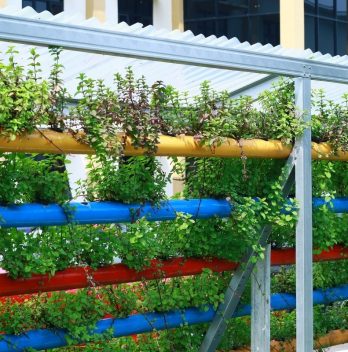
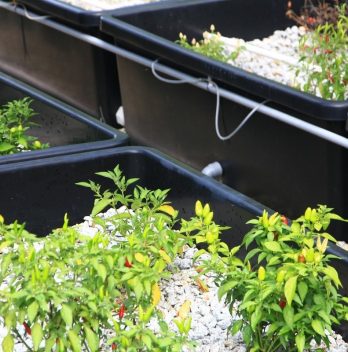
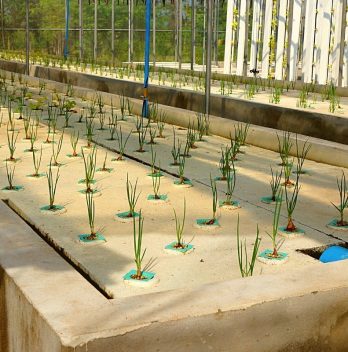
    We will be discussing what plants are best for the NFT system. The versatile Nutrient Film Technique (NFT) is a type of hydroponic system basically used to cultivate leafy greens or vegetables. It is a hydroponics or aquaponics technique that is especially suited for commercial purposes.

    The nutrient film technique makes use of a thin film of hydroponic nutrient solution to run smoothly across the root of your plant. The thin flow of steady nutrient solution to the root of the plants’ channels is where the name of this technique was derived from. Read on to discover the best plants for the NFT system.

    Best Plants Grown In NFT System

    Nutrient film techniques are only fit for growing some particular types of plants. These types of plants include broccoli raab, certain herbs, spinach, salad or leafy greens, cruciferous vegetables.

    Let’s take a look at these plants in details:

    1. Certain Herbs: some certain herbs are ideal for the NFT system and they are the popular options grown in the NFT channel. An excellent type of herbs is basil because they are the simplest and popularly grown. Their root system is not large and they grow pretty fast. Other types of herbs suitable to grow in NFT include cilantro, parsley, Thai, lemon, Genovese, and so on.
    2. Salad or Leafy Greens: they include various types of spinach, lettuce, and arugula.
    3. Brassicaceae Family: also known as cruciferous vegetables include mustard greens and kale. However, the nutrient film technique is not ideal for the types that form heads like broccoli and cabbage because of the space limit. They grow big and have massive roots and their maturity period is lengthened thus, making them inappropriate plants for the NFT system.
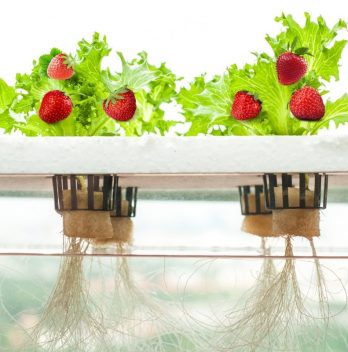
    4. Certain Fruits & Flowers: certain flowers and fruits are not left out in the NFT system. Examples of fruits that can be grown in the NFT channel are strawberries. Strawberries are not big growing fruits and they can fit in a shallow system. Thus, making them ideal for NFT. Examples of flowers that can be grown in NFT channels include orchids, pansies, and nasturtiums.

    NFT system is basically for growing leafy greens with a growth period that is short. However, nutrient film techniques are not suitable for larger or taller plants like cabbage, trees or shrubs, and root crops. They are also not suitable for plants with larger root systems or plants that take longer to grow.

    Characteristics To Consider When Choosing Plants For NFT

    The nutrient film technique (NFT) is a narrow and limited channel that allows a thin flow of nutrient-filled solution below the plant roots. This thin channel allows the upper part of the plant to be subjected to air and also remain dry.

    Therefore, when choosing the plants to grow in your nutrient film system, you should consider the following characteristics.

    Characteristics To Consider When Choosing Plants For NFT
    1. The Root System Should Be Minimal: one crucial thing to consider is the root system. The root system should be minimal and accommodating enough to convey the nutrient solution for your plants’ growth. We don’t want a heavy root system as this can consume all the space available and clog up the nutrient film channel.
    2. Plants Should Be Lightweight: because the nutrient film system is narrow, you should only consider growing lightweight plants. Plants that are heavy and need supports like the heavy-hanging fruits are not ideal for the NFT system.
    3. Short Harvest Period: another thing to consider when choosing plants to be grown in your NFT system is the harvest period. The time to harvest should be short. We are talking about plants attaining maturity within 3 months starting from the seed sowing period. Leafy greens are mainly in this group. Some seed pack comes with the information of the harvest time.

    Planting With NFT System

    To commence planting in the NFT system, we normally start with seeds. Usually, most hydroponic growers prefer starting seeds in cubes and transplanting them into the hydroponic system.

    We recommend the same for NFT and as the seedlings attain a height of about 2 inches; they can be transplanted into the NFT channel. Supply the necessary nutrient solution into your NFT channel till your plant attains harvest size.

    When harvest time comes, harvest your crops by carefully lifting your plants out of the NFT channel.

    VIVOSUN Hydroponics Growing System 90 Plant Sites, 3 Layers 10 Food-Grade PVC-U Pipes Hydroponic Gardening System Grow Kit with Water Pump, Pump Timer, Nest Basket and Sponge for Leafy Vegetables
    $74.99
    We earn a commission if you make a purchase, at no additional cost to you.
    02/10/2026 02:02 pm GMT

    FAQ’s

    What is a NFT system?

    NFT stands for Nutrient Film Technique. Most of the indoor growing enthusiasts are using NFT for growing plants. NFT is a very popular hydroponic method among growers. In fact, NFT has become a favorite among indoor growers.

    If you are a newbie, then you must be wondering about what exactly is NFT hydroponic system. Well, NFT is a very simple technique which can be used for growing plants without any hassle. This is because NFT is a completely new and innovative concept of hydroponics. This technique helps the plants to absorb nutrients from the solution or water which is being used.

    In this method, a nutrient solution is continuously sprayed on the growing media which helps the plants to absorb nutrients through roots. NFT is a very effective way of growing plants. It is also a very cheap method. This technique is mostly used in the greenhouse.

    Is it affordable?

    Yes it is. It is very easy to maintain and requires very little space. It is also a very cheap method. One can easily buy the required equipment at low cost. Using NFT hydroponic system is eco-friendly as it does not use any pesticides, fertilizers or any harmful chemicals.

    What plants can grow in NFT system?

    There is no hard and fast rule, but here are some examples of plants that will grow well in NFTs. The list is not exhaustive, but it will give you an idea of what you can grow. Hydroponic gardeners can use a wide range of plants to grow, as long as they are adapted to low-nutrient, nutrient-poor media. These include herbs, salad greens, lettuce, and radishes, as well as fruits, vegetables, and flowers. 

    Also, sunflowers, lettuce, tomatoes, peppers, cucumbers, melons, squash, herbs, bulbs. If you want to grow a lot of plants, it’s the best choice. I used NFTs for many years and they worked great.

    Can you grow strawberries in NFT hydroponics?

    The best way to grow strawberries is to use a strawberry grow kit. The benefits NFT hydroponics is an environmentally friendly, easy to use system that allows you to grow your strawberries without any soil or water.

    It’s a very simple system that takes only about an hour to set up, and there are no chemicals involved in growing your strawberries. This is a good system for beginners who are just starting to grow their own fruits and vegetables.

    The benefits of growing strawberries in NFT hydroponics are:

    Grow strawberries anywhere (even on a balcony)

    No need to buy soil or nutrients

    Grow strawberries year-round

    Get great looking plants

    Enjoy the benefits of growing your own food Save money (you don’t have to pay for soil or nutrients)

    Easy to grow (no need for expensive equipment)

    You can grow strawberries in a very small space (compared to traditional gardening methods) You can grow strawberries in areas where there isn’t much sunlight

    You don’t have to worry about pests and weeds The system is very simple to use You don’t need any chemicals You can grow your own food and save money The system is inexpensive to purchase and set up

    The system is very easy to use, and it doesn’t require any training.

    Conclusion

    We have concluded that the best plants for NFT systems are mainly leafy greens. The plants should also have minimal root systems, be lightweight, and have a short harvest time.

    If you can comprehend and follow these rules for planting in NFT systems, you can be sure of enjoying a smooth and productive harvest.

  • Transferring Soil Plants To Hydroponic

    Transferring Soil Plants To Hydroponic

    Transferring soil plants to hydroponic is quite possible if you follow the right steps. Rather than waiting on germinating seeds and growling seedlings, you can simply send them into the soil. So, when they reach about 3 to 4 inches long, they are set to be transferred into your hydroponics.

    However, you need to get the process of transferring soil plants to hydroponic correctly or they won’t come out successful.

    This is why we’ve put together this article to enlighten you on the steps to successfully transfer soil plants to your hydroponics system. So, read on to learn.

    Materials Needed For Transferring Soil To Hydroponic

    The following materials are required for transferring your soil plant into a hydroponic system:

    • A plant from dirt.
    • Water to wash off the root system.
    • Growing medium.
    • Net pots.
    • Hydroponic system.

    iDOO 12Pods Indoor Herb Garden Kit

    81zN%2Blc2HfL. AC SX569

    Steps On Transferring Soil Into hydroponic

    Even though transplanting traditional soil plants into the hydroponics system looks pretty easy, it’s important you get the steps right. This way, common errors that some growers make are avoided and you get an accurate result at the end.

    Transferring soil plants to a hydroponic system is pretty easy. Just follow these steps to achieve a smooth transition:

    1. Use Matured Plants Only

    The first thing is to obtain your plant or seedlings and make sure they are fit enough for the transition. Use seedlings that are at least 3 inches tall.

    1. Remove Plants From Soil

    With care, remove the plant from the soil and ensure you don’t pull it out. Make sure the roots are safe and intact as you carefully take them out.

    Remove Plants From Soil
    1. Remove Soil And Clean The Plant

    Next, carefully give the root a little tap and remove the dirt around the plants still ensuring the root is safe. After doing this, go ahead and rinse the plant with water. Try to dip the whole root into the water and rinse carefully.

    If you notice any pests around your plant, rinsing them will take them out. However, you can make use of neem oil to further rid them off.

    1. Place In Hydroponic Net Pots

    Now, get your net pots and put a little growing medium. Gently spread the plant root into the net pot and fill it up with the growing medium of your choice.

    1. Add Appropriate Nutrients

    Supply your plants with the appropriate nutrients. Try not to overfeed or underfeed the nutrient.

    1. Leave Set Up In The Dark

    Allow the plant to adjust its new environment by leaving it in a dim light area for a couple of hours. The root does not really require light to develop.


    Additional Tips To Avoid Shock

    Plant shock when it comes to transferring soil plants to a hydroponic system is not unlikely, especially among beginners. If your transplant fails to develop after transplanting, you might be wondering what you did wrong. Just do a bit of check and try again carefully this time.

    Also, take note of the following tips so you can prevent plant shock as your plant transition into your hydroponics system:

    • Make sure the plant to be transplanted is healthy and matured enough.
    • Prepare your growing medium-well.
    • Sterilize the new environment your plants will be transitioning to. Remember they are vulnerable, so try to keep them healthy.
    • It helps to pick plants to be transplanted during their vegetative and seedlings periods. Never allow them to reach or near their flowering period before transplanting.
    • Make sure the temperature is maintained optimally. Nutrient water temperature should fall between the range of 65 to 75 degrees Fahrenheit.
    • Try to select roots with more hairs or long hairs. This is so the roots are capable of reaching the nutrient reservoir and absorbing adequate nutrients for growth.
    • Try to balance the soil conditions and hydroponic conditions as your plant transition. For example, you need to supply your transplanted plant with the right nutrient for its healing and growth. If you can, it helps to measure the soil nutrient before transplanting so you can keep the same nutrient levels when you transplant.
    Additional Tips To Avoid Shock

    Plants That Has High Chance Of Smooth Transition

    You should know that not all types of plants will transition successfully. Some plants have a higher tendency for the smooth transition than others. Examples are Pepper, tomatoes, spinach, mint, spring onions, basil, parsley, cilantro, and so on.

    Conclusion

    The transition of soil plants into a hydroponic system needs to be done accurately to avoid plant shock. If you follow our guidelines, you can be sure of a successful transition.

  • What To Feed Tilapia In Aquaponics

    What To Feed Tilapia In Aquaponics

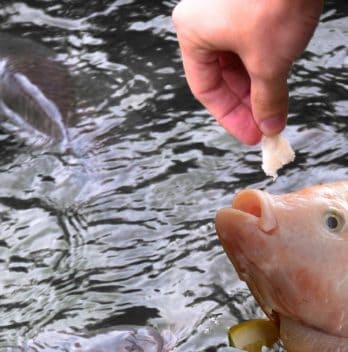
    If you’re into raising tilapia and you’re wondering what to feed your tilapia in aquaponics, we’ve got the right answer for you. One added reason, why most farmers love raising tilapia for their aquaponics, is that they feed on broad varieties of food.

    Tilapia feeds on food sources that are at the bottom of the food chain. However, the best type of food to feed your tilapia for your aquaponics system is to feed them with organic tilapia food. This organic fish food contains the right nutrient requirements for your tilapia and plants.

    Types Of Tilapia & Their Feeding

    First, let’s understand the different stages of tilapia feeding.

    • Newly hatched tilapia known as fry feed on organisms that float on water such as detritus and neuston. Their foods should be in smaller pieces.
    • The juvenile tilapias (fingerlings) are omnivores that is; they can feed on both plants and animals such as worms, insects, duckweed, etc.
    • The adult tilapias are herbivores, so they feed on plants such as algae, duckweed, bacteria, detritus, and other plants.
    Types Of Tilapia & Their Feeding

    What Should You Feed Your Aquaponics Tilapia?

    We mentioned earlier that tilapia can feed on a wide variety of food. In their wild habitat such as streams, lakes, etc, they usually feed on diatoms and a lot of blue-green algae.

    However, you should know to keep them far away from feeding on your algae. This is because algae are needed by your plants in the aquaponics system for nutrient recycling.

    Feeding With Pellets

    Adult tilapia can also be feed with pelleted food which comprises all important nutrients like vitamins, minerals, and proteins. You can as well feed the newly hatched fry with pellets, but they should be in smaller pieces.

    Organic Tilapia Feeding

    If you’re a fan of all organic, then everything that goes into your aquaponics should be organic. Examples of organic food to feed your tilapia fish includes cassava plants, lengko plants, duckweed, sweet potato plants, lettuces, cocoyam leaves, etc. Among all these plants, duckweed has the smallest food sizes and it will fit all stages or sizes of tilapia.

    You can combine these organic foods with commercial fish food to increase their proteins and for a more balanced filled nutrient.

    Other Types Of Tilapia Feed

    • Bran chaff feed such as white bran or wheat bran.
    • Pomace feed and cereal feed such as rice sprouts, malt, etc.
    • Oil cake feed such as rapeseed meal, cottonseed meal, or soybean meal.
    • Animal feed such as blood meal, meat and bone meal, fish meal, etc.
    • Compound feeds are the pelleted feed and extruded feed.

    Common Varieties Of Tilapia: What They Feed On

    The common varieties of tilapia are the Nile tilapia, the Mozambique tilapia, and the Blue tilapia. Here is what they feed on:

    • Nile tilapia feeds on detritus and phytoplankton.
    • Mozambique tilapia feeds on vegetation and bottom algae.
    • Blue tilapia feeds on detritus and zooplankton.

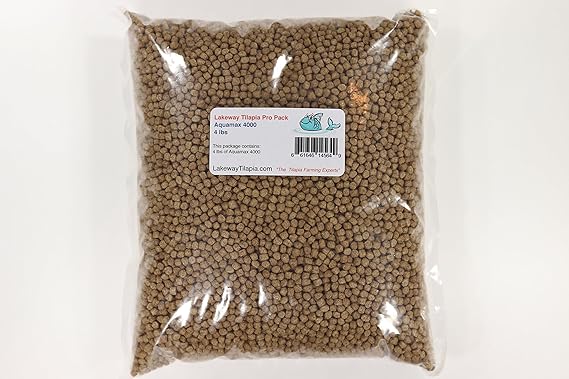
    Lakeway Tilapia Pro Pack 4000 Tilapia Food – 4 Pounds

    91KUEa0GQlL. AC SX569

    Tilapia Nutrient Requirements

    Nutrient requirements in your aquaponics tilapia are crucial so your plants can have access to adequate nutrients.  Although various species of tilapia require various growth periods, thus, their nutrient demand will be a little different.

    Nile tilapia fingerlings for example require about 35% to 40% protein contents. While adult tilapia of about 45 to 50 grams requires 20% to 25% protein content.

    The blue tilapia fingerlings will require a protein content of about 36%. While for the adult blue tilapia, they will require about 26% to 36% protein content.

    Avoid Overfeeding

    You should avoid overfeeding your fish. If you supply your fish with an excess amount of food, these foods will end up in your floating system causing hindrance and water clog. You can scoop out uneaten food. Also, pay attention to how much they eat and readjust when next you feed them.

    You should always feed them twice a day and the food should be eaten within 30 minutes of feeding. However, if you feed them and you notice they aren’t hungry, scoop out the food and don’t feed them for a while.

    Avoid Overfeeding Tilapia

    FAQ’s

    What is the best food to feed tilapia?

    When choosing a tilapia food, you want one that is a good source of calcium and phosphorous, and contains other minerals and vitamins.You can feed them live or frozen. A combination of live and frozen is best, as they both have a more natural flavor. Fish Food – This is another good source of protein. You can purchase dry, freeze-dried, and canned fish food. Tilapia food is typically made from a mix of various ingredients.

    You can also buy foods that are specifically designed for tilapia. Some of these include: Aquarium Fish Food Tilapia – This is a specially formulated tilapia food. It has a high level of calcium, and other nutrients. Tilapia are omnivores, so they need a variety of foods, and this is a good way to ensure that they get all of the nutrients they need. The food will provide them with a more natural flavor, as well as more nutrients.

    Shrimp Food Tilapia – This is another great food for tilapia. It has a natural shrimp flavor, which is beneficial for the health of your fish. Feeding Tilapia Tilapia should be fed on a regular basis. Depending on the size of your tank, you should feed your fish once or twice a day.

    How can I make tilapia grow faster?

    The only thing I can think of is to reduce the size of his ration. If you are feeding him twice a day, he should eat roughly 1/2 of the amount you are feeding the rest of the fish. So if you are feeding 1/4oz. twice a day, then he should eat 1/8oz. of food twice a day. You can also try adding some live plants to the tank. This will increase his appetite.

    What do tilapia eat naturally?

    Tilapia are omnivorous fish that eat both plants and animals. They can be a vegetarian when fed a diet of algae.
    But like most fish, they need meat to survive. So, what’s the best way to feed them? Well, there are two ways to feed them: live food and dry food. Live food is a great option because it keeps your fish in good shape and allows them to grow quickly.

    Tilapia is a freshwater fish that is native to South America and Africa. It is one of the most common fish species in the world, with an estimated total production of about 25 million tons per year. Tilapia are generally kept as aquarium pets, and there are many varieties of them. There are two types of tilapia: the goldfish-like tilapia and the black carp-like tilapia. The goldfish-like tilapia is much smaller than the black carp-like tilapia. Both types of tilapia are commonly found in ponds and tanks in home aquariums. The fish is also known as cichlid or lake tilapia.

    Final Say

    Tilapia feeds on just a bit of everything. It’s why they are the most commonly reared fish in aquaponics. Feeding your tilapia fish the appropriate food will increase their growth in just about 240 days. So, get them eating well so you can have a heavy pound of fish at the same time healthy plants by the end of harvest time.

  • How To Raise Catfish In A Tank

    How To Raise Catfish In A Tank

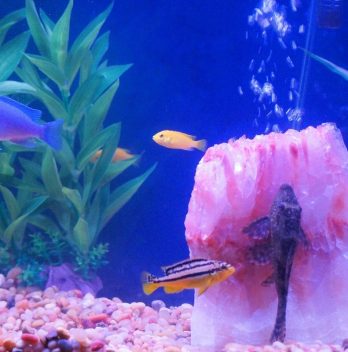
    Let’s explore how to raise catfish in a tank. Catfish is one common fish that are raised among aquarium hobbyist in the United States. It is particularly raised for its delicious taste, healthy, and proteinous features.

    It is easy for anyone to breed or raise catfish in aquaponics, a pond, aquarium, or a fish tank. You don’t even need to be an expert to rear catfish. Continue reading if you would like to know how to raise catfish in a fish tank.

    Why Raise Catfish In A Tank – Features

    You stand to benefit a lot from choosing catfish as the fish to raise either as a hobby or commercial purpose. The following features will give you some good reason why choosing catfish in your fish tank or aquaponics will be of great benefit to you:

    • Catfish is very easy to raise even for beginners especially in aquaponics.
    • They grow and breed rapidly. So you will enjoy a quick harvest.
    • They are also very forgiving and can tolerate even the least oxygenated water environment.
    • With their resilient nature, they are resistant to most fish diseases and they don’t die easily. However, it’s good to give them good conditions so you can enjoy amazing yield.
    • Catfish will serve as a good source of protein for your family.
    • With the right knowledge, you can be sure of a well invested and profitable commercial produce when dealing with catfish.
    Why Raise Catfish In A Tank - Features

    Learn How To Raise Catfish In A Fish Tank

    Even though we mentioned earlier that catfish is pretty easy to raise. It still requires you to accurately pass through the right guidelines for successful catfish production.

    Catfish Per Gallon Of Water

    Before we go into the main steps on how to raise catfish in a fish tank, we need to first understand how many catfish per gallon of water should be stocked in a fish tank.

    The appropriate stocking density for catfish is one pound of fish (fully grown) per 8 gallons of water. This way, they can have more room to access oxygen thereby reducing stress. Also, catfish grow very fast, so they need to have adequate room to fully grow.

    Catfish Tanks

    One crucial point to note is that catfish will require a large tank to grow. The stocking density of 8 gallons per fish we pointed out alone shows that catfish will need a bigger tank.

    Catfish Per Gallon Of Water

    Raising catfish in tanks is very accessible especially if you are unable to acquire a big land for a fish pond. Just ensure the width and depth of the tank is deep enough to provide spacing for your catfish.

    Water Quality

    Another important tip is to make sure your fish tank can generate a good flow of consistent water. Ensure the water quality is good as this will also boost their appetite encouraging them to eat more.  While low water quality will reduce their appetite and make them susceptible to infection thereby reducing catfish growth.

    Learn more about Where to Buy Fish for Aquaponics Systems and the Best Plants for Small Aquaponics

    Choosing The Type Of Catfish

    Once you’re done figuring the appropriate fish tank and water ratio, you can now proceed to choose the type of catfish you want to raise.

    There are different types of catfish to choose from. However, one of the best types is the channel catfish. Channel catfish are very tolerating and they will grow very fast. They can grow approximately at the rate of 3 pounds in just one year.

    You can start with juvenile catfish but make sure they are of good quality. Low-quality juvenile catfish may result in decreased growth or even death.

    To know a healthy juvenile catfish, they should be moving about actively. Also, make sure their body does not have any defects.

    Catfish Feeding

    Catfish can be feed with fish food pellets. We recommend you feed your catfish 2.5% of their body weight. You can do a rough estimation of their weight to determine this.

    Also, ensure you keep a close eye if there’s any uneaten excess food floating or settling at the bottom of the tank. If this is so, then you will need to adjust their feeding so your fish tank is not polluted.

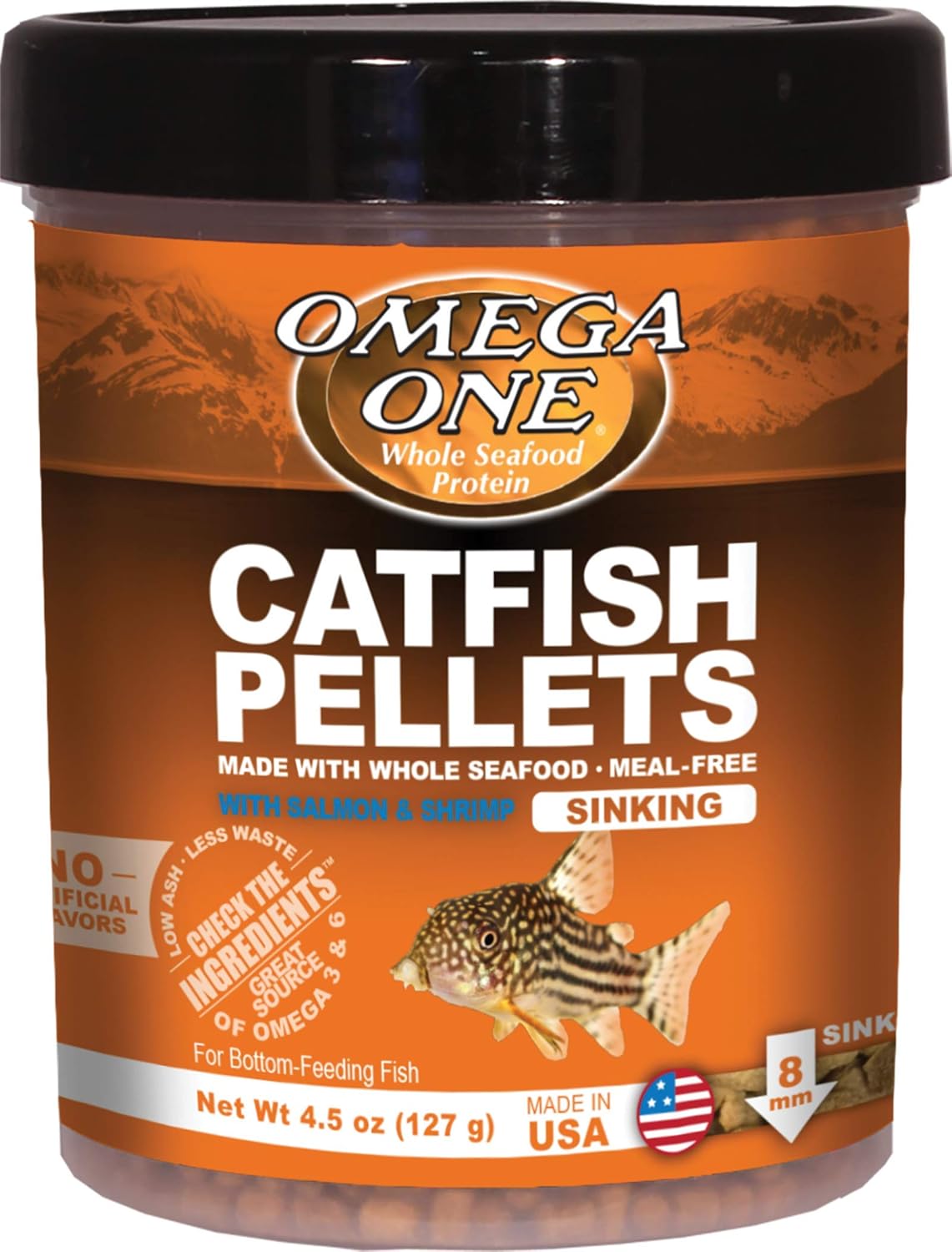
    Omega One Sinking Catfish Pellets with Shrimp

    71YvtU5yC7L. AC SL1500

    FAQ’s

    Can catfish be raised in tanks?

    Yes, but they require a minimum of 4 gallons (1.5 liters) of water to thrive. Catfish are cold-blooded fish so they can’t survive without some sort of heat source. The tank heater is what they need to keep warm. If your tank is too small for the catfish, you’ll have to add a separate heat source. A: The filter should be changed about every two weeks. It is easy to do, but make sure that you use a good quality filter that is designed for aquarium use. A gravel filter is probably the easiest to maintain, but it also uses more water than other filters.

    There are different breeds of catfish, and each breed has different characteristics that make them more suited for certain types of environments than others.

    What are the different ways that you can raise catfish?

    There are different ways to raise catfish. Some people put them in ponds, some people use water tanks and some people use a system called “tournament style”. The problem with pond-raised catfish is that they are usually smaller than tournament-raised catfish. Also, they need a lot of space because you have to keep the water clean and clear for the fish to live.

    Water tanks are a great alternative but it is difficult to raise enough catfish to get good size. That’s why the tournament-style catfishing is so popular because you can catch a lot of big fish in a small area. Most tournament catfishing systems use large plastic water reservoirs that are designed to hold several hundred gallons of water. These systems are used by large commercial catfishermen and they require a lot of maintenance. They can cost thousands of dollars to buy and they can be very expensive to maintain. The best tournament-style catfish system is one that has a self-contained reservoir that does not require a pump or other equipment. This type of system is much less expensive to build and it’s easy to install and maintain. You can have a good tournament-style catfishing system for a fraction of the price of a commercial system.

    How do you raise catfish in a tank?

    It’s pretty easy to raise catfish in a tank, as long as you have the right equipment. You don’t need a fancy aquarium setup to raise catfish in a tank. Just make sure your tank is big enough. They require a lot of space, and they need lots of room to move around. You also need to have a filter and a heater that will keep it clean and warm. There are some other things that you’ll want to consider before you start raising catfish in a tank, however.

    They will eat fish food, but you have to feed them a special diet. It’s called a pellet diet, and you can buy it from your local pet store. 

    Can you have other fish in the tank?

    They don’t like to be kept in an aquarium with other fish, as they don’t get along well. They are very territorial, and won’t let other fish near them.

    Conclusion On How To Raise Catfish In A Tank

    Raising catfish in a tank is absolutely possible with the right knowledge. Simply follow our tips and enjoy great yields of catfish production.

    Remember not to overcrowd catfish in their fish tank so their growth is not hindered. They need enough spacing so they can develop well. One full-grown fish to 8 gallons of water is great.

  • How To Grow Watercress In Aquaponics

    How To Grow Watercress In Aquaponics

    Watercress is one of the easiest and healthiest plants to grow in your aquaponics garden. So, if you’re wondering how to grow watercress in aquaponics, you’ve come to the right place.

    Watercress is a water-loving plant and it is popular for its tasty flavor when added to meals. They are great for adding spice to your soup, fresh salad mix, as well as a sandwich.

    This article attempts to give you the details on how to grow watercress for your aquaponics garden. So let’s begin.

    Why Grow Watercress In Your Aquaponics Farm

    Being a water-loving plant, you can agree it is one of the best leafy green plants to grow in your aquaponics garden. Watercress is a highly nutritious and fast-growing plant. For this reason, watercress is one of the most loving plants to grow especially among commercial hydroponic and aquaponics growers.

    Also, growing watercress for your aquaponics garden will be an amazing way of introducing newbies to the world of aquaponics.

    Why Grow Watercress In Your Aquaponics Farm

    2 Ways To Grow Watercress In Aquaponics

    You can grow watercress easily by planting from their seeds or you can simply grow them from cuttings.

    1.    Propagation From Seeds

    Watercress propagation from seed should begin to show germination between a couple of days or two weeks.

    Plant about 10 to 15 seeds in the net pots growing medium. The seeds will begin to sprout from 3 days and continue to grow for 4 to 5 weeks. Then ready for harvest.

    2.    Propagation From Cuttings

    Watercress can be grown or cultivated from its aerial roots where the nodes of the matured plants are.

    Cut the stem of the watercress and take away the lower parts of the leaves. Lay the cuttings on your aquaponics bed and watch them give rise to new roots in a couple of days.

    You can also obtain bunches of watercress stem from grocery stores.

    Guidelines On How To Grow Watercress In Aquaponics Successfully

    Having decided the method of propagation (either seeds or cuttings), we can now look into the specifications and guidelines to follow. Below are the guidelines on how to successfully grow watercress in an aquaponics garden:

    1. Fish Choice: first things first, choose the appropriate fish you wish. Tilapia, trout, and catfish are the best options if you want a smooth and easy aquaponics process. Also, you should accurately calculate the number and proportion of fish to the water tank. For example, the standard rule is one matured fish per 5 gallons of water.
    2. Water Tank Setup: do the normal aquaponics tanks set up. Place your pump inside the water tank for aeration.
    3. Grow Media: choose an appropriate growing medium for your plant. You can use grow media such as hydroton, rock wool, etc. Remember watercress plants are water-loving so ensure the growing medium used can absorb water.
    4. Spacing: ensure you give your plants adequate spacing. This is so they don’t compete with nutrients from overcrowding. Space them around 9 to 12 inches apart.
    5. Temperature: watercress will do well in a temperate environmental climate. Temperature range from 50 degrees to 60 degrees Fahrenheit will be ideal.
    6. Sunlight or Grow Light: watercress herbs thrive in full sun. However, if you’re growing them indoors, they will do well under high output grow lights.
    7. pH Range: the appropriate pH range for the watercress plant is a slightly acidic and slightly alkaline environment. Therefore, the pH range will be between 6.0 to 7.5. Always test your solution so you can keep track of the nutrient levels.
    8. Fish Feed: you can start with fish pellets as these pellets comprise the complete nutrient balance for your plants’ growth. They contain vitamins, proteins, carbohydrates, and minerals.
    9. Bacteria: another important thing is you should encourage bacteria. It is this bacteria that will convert the fish waste in ammonia into nitrates for plant use.
    10. Add Watercress Plant: lastly, plant your watercress either by seed germination or by cuttings and watch them grow.

    Self-Cleaning Fish Tank That Grows Food, Mini Aquaponic Ecosystem

    81UrJsWk8KL. AC SX569

    FAQ’s

    What can you grow watercress?

    Watercress is a popular, easy to grow green vegetable. It has been cultivated for centuries and is an excellent source of vitamins A, C, E and K. You can grow it in your garden or even in a pot on the patio. This perennial plant grows well in moist soil. It is very adaptable to a variety of growing conditions. Watercress grows best in water or soil with a high humidity content.

    You can grow watercress in a pond, but it will have to be kept in a container if you don’t want it to escape the pond.

    Why is watercress good for aquaponics?

    Here are a few reasons why watercress is such a great plant for aquaponic systems: It’s easy to grow – Watercress can be grown in any garden or window box and can be planted directly into the aquarium.

    Watercress also does well in containers, but the roots tend to spread out more than they do in the soil. It’s low maintenance – Watercress can be harvested regularly without much effort. If you don’t like the taste of the leaves, you can just harvest the roots. Watercress is a fast growing plant that can be harvested within 6-8 weeks. It’s drought tolerant – The roots are able to withstand dry conditions and will continue to grow even if there is not enough water available.

    Watercress is very easy to grow – It doesn’t require much attention and it is quite forgiving when it comes to temperature fluctuations.

    How long does watercress take to grow in aquaponic?

    It takes approximately one month to grow in soil and two weeks in aquaponics.

    Watercress has small, thin leaves that are rich in vitamins and minerals.Watercress is native to the Mediterranean region and grows best in fertile soil with good drainage. The plant can grow up to 4 feet tall.

    What’s the main concern when growing watercress in aquaponic?

    It’s possible to grow watercress in aquaponics but you have to be careful to maintain a healthy balance of bacteria and plants. If you don’t, the bacteria can cause the plants to die. The bacteria are what converts nitrate into nitrite which is what you need for the plant to be able to uptake the nitrates from the water. The plants also require nitrate so the bacteria are essential.

    Final Note

    Having said all these on how to grow watercress in aquaponics: you should know there are other little precautions to be taken for a smooth aquaponics watercress garden. Things like:

    • Monitoring the activities of your fish daily.
    • Observe their feeding pattern.
    • Avoid overfeeding so you don’t clog your aquaponics system and create excess waste that your plant can absorb. Watercress does not do well in clogged or stagnant water. The water needs to be flowing, well circulated, and aerated always for optimal production.

    With that said. We do hope you’ve learned some things on how to grow watercress for your aquaponics garden.

  • How Much Is A Hydroponic System

    How Much Is A Hydroponic System

    How much a hydroponic system cost varies and will solely depend according to your preference. A hydroponic system can be cost-effective or require more if you put some things into consideration. However, you should know it will require an initial investment to get it up and running.

    Hydroponic farming involves the use of a soilless technique to grow plants and it makes use of a nutrient-filled solution for plants’ development. It is pretty easy to venture into with the right knowledge.

    Either you’re into hydroponic farming for business or a hobby; we will give you an idea of how much a hydroponic system cost.

    A Cost-Effective Hydroponic System

    You can get a hydroponics system for a very reasonable price because there are various types of hydroponics systems to choose from.

    Even with the cost-effective type, you can rest assured of enjoying amazing yield. Again, this cost-effective type of hydroponic does not limit you from growing just a few plants. You can grow as many plants as you can at a time with this moderate hydroponics budget like the compact NFT system.

    However, if you invest more money into hydroponics (about $250 to $500) it will offer you extra features and greater designs. It will also allow you to grow more plants and result in abundant yield.

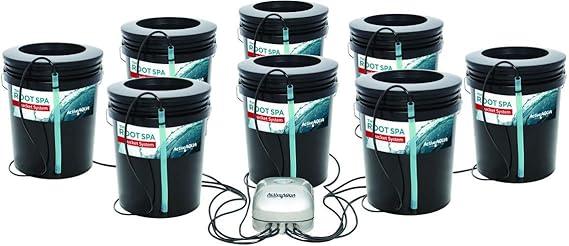
    Hydrofarm RS5GAL8SYS Root Spa 8, 5 Gallon Bucket System

    61awSy 66QL. AC SX569

    Figuring Out How Much A Hydroponic System Will Cost

    A logic we recommend to knowing how much a hydroponics system will cost is to know the components involved with the system.

    You will be better off purchasing a complete hydroponic system rather than sourcing for the various parts as in DIY. Here are the components of a complete hydroponic garden:

    • A hydroponics system.
    • Hydroponic nutrient-filled solutions.
    • Inert media.
    • Light source.
    • Air pump and air stone.

    Types Of Hydroponics Systems

    1. Nutrient film techniques.
    2. Aeroponics.
    3. Deepwater Culture (reservoir method).
    4. Ebb and flow (flood and drain).
    5. Wicking.
    6. Drip system.

    There is also passive hydroponics known as the Kratky method. We can say this is the cheapest type of hydroponics system. It only requires some basic hydroponic components, a container reservoir, and a cover lid opening for plants.

    Types Of Hydroponics Systems

    Types Of Hydroponics Systems According To Cost

    Let’s distinguish the types of hydroponic system standard according to their cost:

    1. High Standard: this type of hydroponics system is of high standard technology that features a complete system control. Commercial growers that seek a high yield of crops for profit usually go for this type. This high-standard technology hydroponic system can cost tens of dollars in thousands. An example is the vertical farming hydroponic system.
    2. Semi-high Standard: this type of hydroponic system is also of standard technology. They are made of quality technology such as water flow control. It also comes with grow light and it has more features. This type of system is used both indoors and outdoors. The cost for this type of hydroponics system is around $350 to $1000.
    3. Moderate Quality/ Standard: this type of is of moderate technology. They are budget-friendly and can be obtained either as a unit or DIY. The cost is about $50 to $200 for both the unit and DIY construction.

    FAQ’s

    Is a hydroponic system worth it?

    The average gardener might look at the price of a hydroponic system and scoff, thinking, “Why would I spend so much money on something that isn’t going to work?”. But it doesn’t have to be this way! A hydroponic system can be installed for a fraction of the cost of an outdoor system. And the quality of your plants is going to be better.

    Here are some great reasons why you should consider a hydroponic system as an option. Hydroponics vs. Indoor Farming: Why You Should Consider a Hydroponic System

    It’s Easy

    If you’re looking to start growing in a new way, there’s nothing like having the freedom to grow whatever you want, whenever you want. This is the main reason why many people opt for hydroponic systems over indoor farming. With hydroponics, you can grow almost any type of plant with no soil or other restrictions. You’re free to grow the exact plant you want at any time of year, and you won’t need to spend a lot of time tending to your crops.

    It’s Safe

    Hydroponic gardening is much safer than growing crops in soil because it eliminates the risk of disease. In fact, you won’t even have to worry about pests, which means that you can plant a wide variety of fruits and vegetables without having to be concerned about insects.

    It’s Affordable

    You can buy a simple hydroponic system for a reasonable price. The systems you can find at your local garden center are usually only going to cost as little as a $100, and that’s a fraction of what it would cost to grow plants in soil, and it will still provide you with the ability to grow food all year long.

    It’s Eco-Friendly

    When you use a hydroponic system, you won’t need to use any pesticides or fertilizers. This is an important benefit because pesticides can have negative effects on the environment and can even be dangerous to humans. With hydroponics, you won’t have to worry about those things.

    In a hydroponic garden, you take the seedlings out of the ground, and you grow them in a nutrient solution that you mix with water. The nutrients are then absorbed by the roots of the plants, and the leaves will get all the water they need from the air.

    Why is hydroponic so expensive?

    There are many factors that go into the price of hydroponics, but the biggest factor is that it’s a new product. There’s no established market for hydroponics as there is for other products in agriculture, such as seeds, fertilizers and pesticides. But hydroponic growers are starting to see some of the same problems that traditional growers have seen with these other products.

    For example, hydroponic plants have been known to develop nutrient deficiencies because they don’t receive all of the nutrients that they need from the soil or nutrient solution. This is why many hydroponic growers use a combination of liquid fertilizer and soil amendments. The cost of growing food, which includes the cost of water, electricity and fertilizers can be quite great. 

    When you grow plants in a hydroponic system, you can control the water quality better than you could in a soil-based system.

    You are paying for the inputs and then charging a premium for the product. Hydroponics is a high maintenance hobby and it requires more equipment and labor. But that doesn’t mean it can’t be done cheaply. You can still do a great job of growing plants in a container without spending a fortune.

    Can you save money hydroponics?

    It is possible to save money hydroponics but it is not easy. You will need to understand what your needs are and what you want to grow and then set out to buy the best equipment that meets those needs and meets your budget. You can save money hydroponics by growing less than you would otherwise, by growing in a less expensive environment, by using cheaper seeds and by growing your own supplies.

    Grow less, grow faster. This is one of the most important ways to save money hydroponics. If you do not have enough space for a full size hydroponic system, do not grow as much or as fast. In a small space, you can get away with only a few trays. You could even grow in a single tray if you wanted to. It is also possible to grow more on less space by using smaller pots or growing containers. The same is true for light. Do not use as much light as you would otherwise. A lot of people think that they need lots of light when they start a hydroponic garden. This is not true. You will be fine with as little as 1/3 of the light you would normally need.

    Other Cost To Consider

    There are additional things you should also consider when it comes to knowing how much a hydroponic system cost. There might be some additional materials you may need to purchase even with your complete hydroponic system.

    For a DIY construction, there will always be arising needs or expenses. You may need to invest in nutrient solutions, grow medium, grow light, etc.

    Other Cost To Consider - Hydroponic System

    However, already built hydroponics may also require extra. For instance, already made hydroponics may still require you to purchase a pH meter, grow medium, grow light, or even nutrient solutions. Just a grow light might cost $15 to $20.

    • Space: another factor to consider is space, ensure you have space for your hydroponic system. If not, that’s an extra and you might need to purchase or rent a farm space. You will have to decide if your space is for a horizontal or vertical system. However, space will solely depend on if you’re considering large-scale hydroponics farming.
    • Size: the size of your hydroponics system will also determine how much a hydroponics system will cost. A smaller hydroponics system used for a hobby will be less expensive. However, if you’re thinking of a higher yield, a larger hydroponics system will be required and it will be pretty expensive.

    Therefore, it’s crucial you consider all these factors so you can accurately sum up how much it will cost to build a complete hydroponics system.

  • Rootech Cloning Gel Review

    Rootech Cloning Gel Review

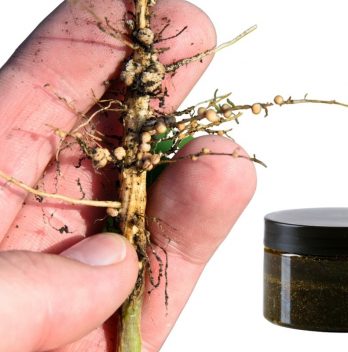
    Cloning in a hydroponic garden is common and rooting hormone is one way to boost the success rate of your cloning. You might be wondering which rooting hormone to go for with so many options in the market. This is why we have put together the Rootech cloning gel review.

    Rootech cloning gel is pretty easy to use compared to most cloning gel. Cloning is a common method among farmers that prefers not to start plant propagation with seeds.

    Cloning is a quicker and more efficient technique of plant propagation even for beginners. Now, the application of rooting hormones such as Rootech cloning gel will improve the success rate of your plant propagation.

    Info On Rootech Cloning Gel

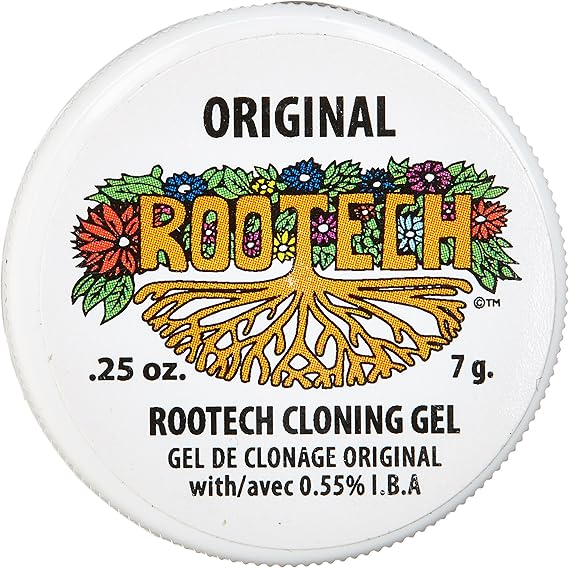
    Technaflora Rootech cloning gel is an amazing rooting hormone for cloning. It is a ready-to-use rooting hormone gel in optimizing rapid, healthy, and substantial root development.

    Rootech cloning gel is formulated with a high concentration of rooting hormone supplying your cloned plant with the right ingredient it can make use of immediately when applied. Therefore, it is one of the best in the market and it works for various plants.

    Info On Rootech Cloning Gel

    Rootech Cloning Gel Success Rate

    Rootech cloning gel success rate is top-notch even for the most difficult plant. We will give it a 95% success rate. We love the fact that it is easy to use and it comes in a thick gel with no mess. Even a small amount will do the job perfectly as it is highly concentrated and it can as well be diluted. It also comes in various sizes.

    Advantages & Features Of Rootech Gel

    You enjoy the best features while using Rootech cloning gel. Some of them are:

    • Rootech cloning gel is made of ultra-thick and smooth gel which has no hot spots. Therefore, there’s no worry about plant tissues and young roots burns.
    • It accelerates healthy root growth.
    • There’s no worry of washing off when watering as it is made of thick and rich ingredients that will hold on to your plant cuttings even with top watering.
    • If you wish to dilute it, be rest assured it mixes well with water for smooth dilution.
    • Even the most difficult plant can be successfully propagated with Rootech cloning gel.
    • Rootech cloning gel works amazing when cloning plants for vegetative propagation. Your cloned root should begin to root in about a week of using this rooting hormone gel. It can be used in various growing mediums such as Rockwool, rapid rooter, etc. The resulting plants should be ready to be transplanted in about 2 to 3 weeks of using Rootech cloning gel.

    Technaflora Rootech Gel for Plants, 7-Grams (2-pack)

    91PRd78CBeL. AC SX569

    Rootech Cloning Instructions

    As we have mentioned earlier, Rootech cloning gel is pretty easy to use. Let’s take a look at how you can use Rootech for your plant propagation.

    The materials required for cloning with Rootech in plant propagation are growing medium, propagation tray, cuttings from the stem, humidity dome, heating pad, and Rootech cloning gel.

    1. Get your Rootech gel and put some amount in a separate clean container. Store the rest of the unused Rootech cloning gel in the refrigerator.

    2. Next, obtain your growing medium such as Rockwool. Drill a small hole in the Rockwool plugs where the bottom of the stem will enter.

    3. Cut the plant to be cloned with a sharp sterile cutting tool and cut directly under the node. Prepare the stem by dipping each bottom of the cuttings with Rootech cloning gel.

    4. Now, put your set up in the cube holes of the propagation tray and water your plugs in a little to soak water.

    5. Then place your set up under a heating pad and cover it with a humidity dome. Feed them with grow light as they begin to grow.

    6. Spray mist your set up to prevent them from drying out and monitor daily. You should begin to see the first root coming out in about a week. In 2 to 3 weeks, the roots should be developed enough to be transplanted into your hydroponics or traditional soil.

    Using Rootech Cloning Gel

    FAQ’s

    What is Rootech cloning gel?

    Rootech cloning gel is a solution that is used to clone or produce multiple plants from a single seed. This gel can be used for any type of plant such as trees, shrubs, and herbs. The gel is available in a tube or a spray can. It comes in different colors such as red, yellow, green, blue, etc. The cloning gel is the best tool for cloning because it is the most effective. If you want to get the highest percentage of success rate, this is the only way to go. Using cloning gel will help to remove the seed coat and make a small cut in the seed. This will help the new plant to germinate easily. The gel is made from the root cells of the mother plant. The gel is used to separate the seed coat from the embryo or seedling. Once the gel has been applied, you can then plant the seed into the gel. The gel will protect the seedling from getting wet while you wait for it to sprout. Is rootech cloning gel safe for plants? Yes, it is 100% safe. There are no harmful chemicals or toxins in this gel. You can use this gel for any type of plant. It is not only safe for vegetables and fruits but it is also safe for flowers and trees. It is safe to use for any type of plant. Is rootech cloning gel expensive? It is not very expensive at all. You can buy this product from your local garden center for about $15-20.

    Is cloning gel necessary?

    The reason you would use cloning gel is to get the plant cuttings to root quickly. You want to get the cuttings as close to the time of transplanting as possible, which means that you don’t have to wait for them to grow roots before you can move them into a larger pot. If you are using soil, then you will want to start them in something like Miracle-Gro Root Booster (or equivalent) as it will give them the right amount of nutrients. Potting mixes will work but if you’re starting from seed, it’s best to avoid potting mixes as they contain too much sand, which could cause problems with the seedlings’ root systems.

    What can I use instead of cloning gel?

    You can use a regular petri dish with a thin layer of agar or gelatin.

    The agar or gelatin will act as the substrate that supports the roots of the plant. You can also use regular soil if you want to be more accurate with your measurements. I would suggest that you make sure that you are measuring the depth of the pot to make sure it is the correct size.

    Final Say

    The Rootech cloning gel is definitely an excellent rooting hormone for accelerating root development. The powerful rooting hormone can work even with the most challenging type of plant.

    You will enjoy massive root growth and it is easy to use especially for beginners. Therefore, it is the choice for most gardeners and we would highly recommend it for hydroponic cloning in plant propagation.

    We do hope you enjoyed our review on Rootech cloning gel.

  • 5 Best Air Stones For DWC- Buying Guide

    5 Best Air Stones For DWC- Buying Guide

    If you’re into hydroponics and you’re searching for the best air stone for DWC, we will guide you into this. We have reviewed some of the best air stones for your DWC hydroponics gardening and our guide will assist you in choosing the best options.

    We will also enlighten you on other things you need to know about air stones for DWC such as: how it works, size requirements, etc. So, read on to learn.

    Importance Of Air Stones For DWC

    An air stone in hydroponic gardening is very essential for a deep water culture system (DWC). In a standard situation, the root of your plant will require oxygen to grow healthily. Plants grown in the soil get oxygen from the soil. However, in hydroponics, there’s no soil, thus, plants can’t get their oxygen the normal way they do from the soil.

    For this reason, air stones are required. Airstone paired with an air pump will help in air circulation for your plant’s roots so they can grow optimally. Without a good air stone, your deep water culture hydroponics system will choke the plants and they will most likely die.

    How Air Stones Work In DWC

    Air stones are usually paired with an air pump to yield bubbles of oxygen. The bubbles of oxygen diffuse into the DWC system supplying nutrients to plants.

    Size Of Air Stone Needed

    Airstone comes in various sizes and choosing the right size will depend on the size of your hydroponic farm. The right size will adequately supply good oxygen for your hydroponic system.

    The standard size for a 5-gallon bucket DWC for example will be one 6 inch air stone or two 3 or 4-inch air stone.

    DWC Airstone Requirement: How Much Is Needed?

    Generally, the required air stone for DWC should be able to supply around 1 Liter per minute (LPM). This should generate aeration and airflow for each water gallon.

    So, let’s say your DWC system is a 5-gallon water reservoir; 5 LPM air stones will be needed for optimal oxygenation. This also means if you have a 10-gallon water reservoir, 10 LPM air stones will be required for aeration.

    Also, note that too much or too little oxygen can affect your DWC system adversely. Inadequate oxygen will result in low productivity. Excess oxygen may result in too much algae growth and also affect your plant’s development.

    DWC Airstone Requirement - How Much Is Needed

    Types Of Air Stones For Hydroponics

    There are 3 types of air stones you can use for your DWC hydroponics, they are:

    Round Disc: this type is a round disc-shaped air stone that will supply bubbles of oxygen for your DWC hydroponics.

    Eco Plus: eco plus are great for hydroponics gardening. They work quietly without sound disturbance and are commonly used by commercial hydroponics farmers.

    Micro Pour: micro pour is another type of air stone that generates the tiniest bubbles compared to other air stones.

    Check out the Cheapest hydroponic Growing Medium

    Buying Guide

    Let’s take a look at some things to consider when choosing the best air stones for your DWC.

    1. Aeration: The first and important point to consider when going for air stones for DWC is aeration. After all, the aim of getting an air stone for your DWC is to provide adequate aeration for your plants. So, will this air stone generate optimal air circulation for your plant roots? Ensure the answer is yes! Also, ensure the bubbles produced should are small because plants benefit more from smaller bubbles.

    2. Steadiness: Another question to ask is: Will it stay steady in one place? Even if it is lightweight, make sure it can stay steady with the use of a suction cup so it does not float upwards.

    Buying Guide - Steadiness

    3. Materials Used: The materials used for the air stone should be Eco-friendly and healthy. It should be safe for both fish and hydroponic plants.

    4. Water Clog: You should also ensure there’s no worry about water clogging in the air stone you are choosing.

    How We Picked The Best Air Stones For DWC

    Here’s the list of the 5 best air stones you can find for your DWC system, so read on to decide your best pick:

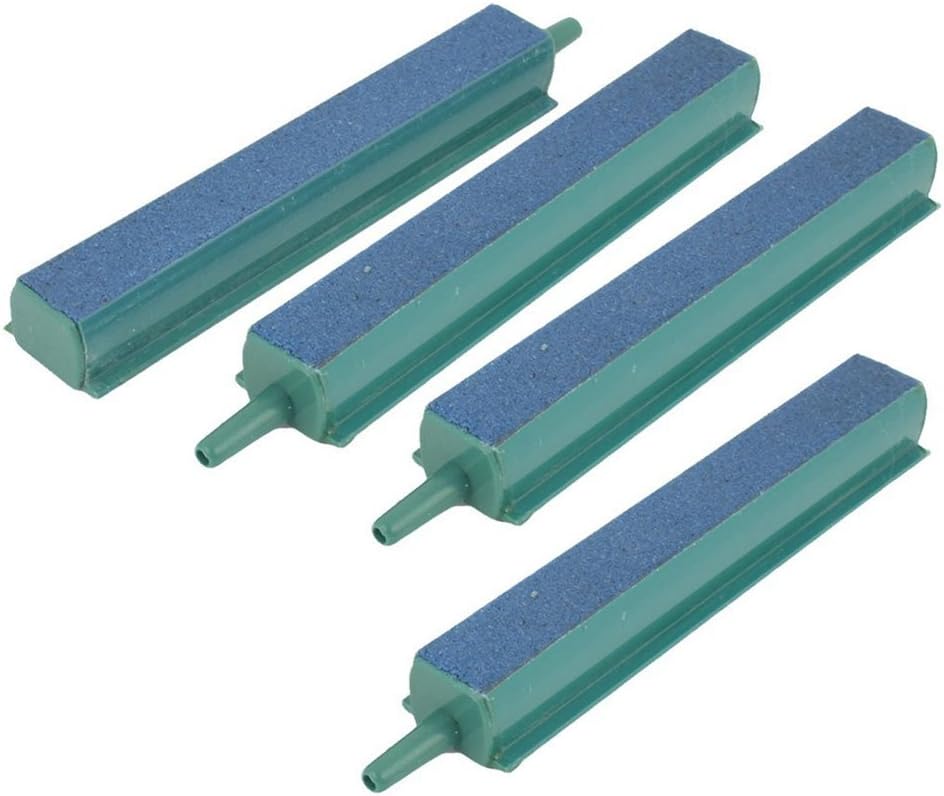
    1.    Pawfly 4PCS Air Stone Bar 4 Inch Bubble Release Mineral Airstones for Fish Tank Aquarium Pump

    The Pawfly air stone is a great option when picking the best air stones for your DWC. It is a 4 inch and 4 pieces air stone bar. It will generate small bubbles and aerate your deep water culture system.

    This air stone is durable and affordable and the air stone is quite sturdy. It is also made of non-toxic mineral materials and it comes with everything needed.

    An added advantage is that this type of air stone has some weight and it will stay steady in a place. Therefore, you don’t need to invest extra cost in purchasing a suction cup for your air stone.

    The drawback is that this air stone is not too ideal for bigger tanks or reservoirs. It might require multiple air stones to meet up with larger tanks.

    Pros                                                               

    • Sturdy and stays in one place.
    • Supplies small bubble aeration.
    • Made of non-toxic materials.
    • Suction cup not needed.

    Cons

    • Might need multiple air stones for a larger reservoir.
    616BXbLtwPL. AC SL1000

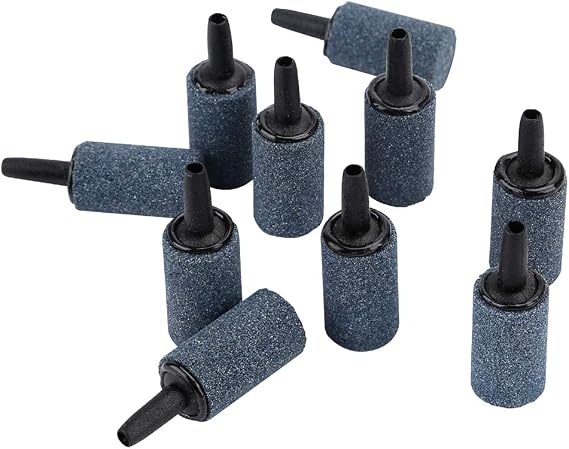
    2.    Pawfly 1 Inch Air Stone 10 Pieces Cylinder Bubble Diffuser Airstones for Aquarium Fish Tank Pump Grey/Blue

    The one-inch Pawfly air stone is a perfect choice for generating oxygen in tiny bubbles for your deep water culture hydroponics system. It is also ideal for aquarium and aquaponics fish tanks and the price is fairly decent.

    There’s no stress of water clogging as it will evenly diffuse air throughout your DWC system. Thus, your plants will enjoy optimal aeration and nutrient absorption.

    Another added advantage of this great air stone is its great compatibility with most air pumps. It can be driven by Nano air pumps making it a perfect choice for your DWC hydroponics system. To get optimal results, you will need air pump power between the range of 2W to 4W so they can work efficiently.

    The only downside is that you will need to get a suction cup because it’s lightweight so to keep it steady in one place. If you don’t get a suction cup, whenever it starts to pump air, it may float to the top rather than staying down.

    Pros

    • Compactable with air most pump.
    • Generates adequate water bubbles for aeration.
    • Easy to use and clean.
    • No clogging.

    Cons

    • A suction cup is needed.
    616NpobQcJL. AC SX569

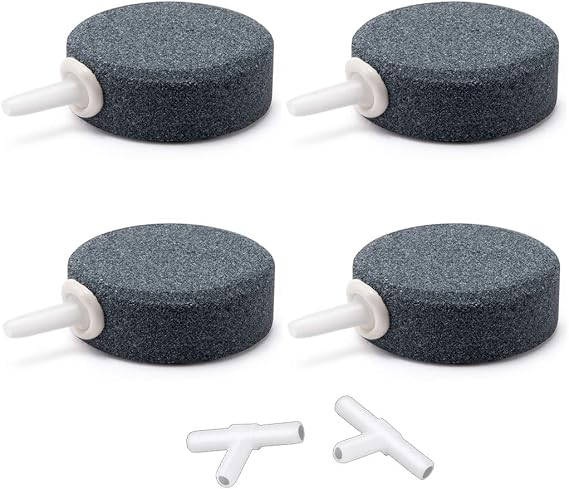
    3.    Wenshall 1.6″ Small Round Air Stones for Aquariums Oxygen Diffuser Fish Tank Air Bubbler for Hydroponics Aquariums Oxygen Stone 4/8pcs

    The Wenshall air stone is an ideal choice for a small DWC. This air stone has amazing functionality and will provide your DWC with sufficient aeration.

    The package consists of 4 pieces of air stones and 2 pieces. The materials used are environmentally friendly to either your fish tanks or hydroponics plants.

    It comes with 4 suction cups and 2 check valves. The suction cups will help the air stone stay fit in a place. The check valves will as well keep the water from siphoning backward.

    The downside is that it doesn’t come with an air pump and air tubes.

    Pros

    • Great for air circulation.
    • Comes with 4 suction cups to keep the air stone steady.
    • Made of healthy materials.

    Cons

    • Air pump and air tubes not included.

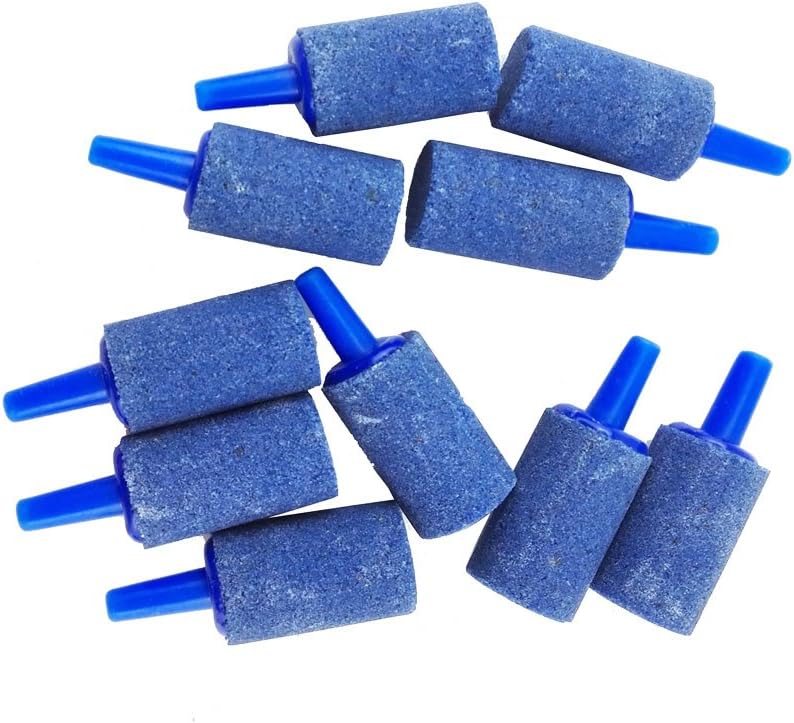
    4.    Yueton Pack of 10 Cylinder Aquarium Bubble Air Stone Fish Tank Aerator

    This 10 cylinder pack air stone by Yueton and is made of mineral in-built and non-toxic plastic materials. It’s another great option for providing standard bubbles for optimal aeration for your DWC system.

    This air stone will fit in well with 4mm inner diameter soft tubes. It is also affordable and easy to install.

    We also admire the bright beautiful blue color to add beauty to your hydroponic system. You also don’t have to worry about clogged air stones

    The drawback we know of is that if you try to change or remove one of them from the tubing, it might crumble. We recommend you to take the air stone out of your reservoir completely if you wish to change them. Also, do not press them too hard so they don’t fall apart.

    Pros

    • Provides good aeration.
    • No clogging.
    • Made of non-toxic materials.
    • Easy to install.

    Cons

    • Might fall apart when changing from the tubing.
    61ARQ%2BGnvyL. AC SL1035

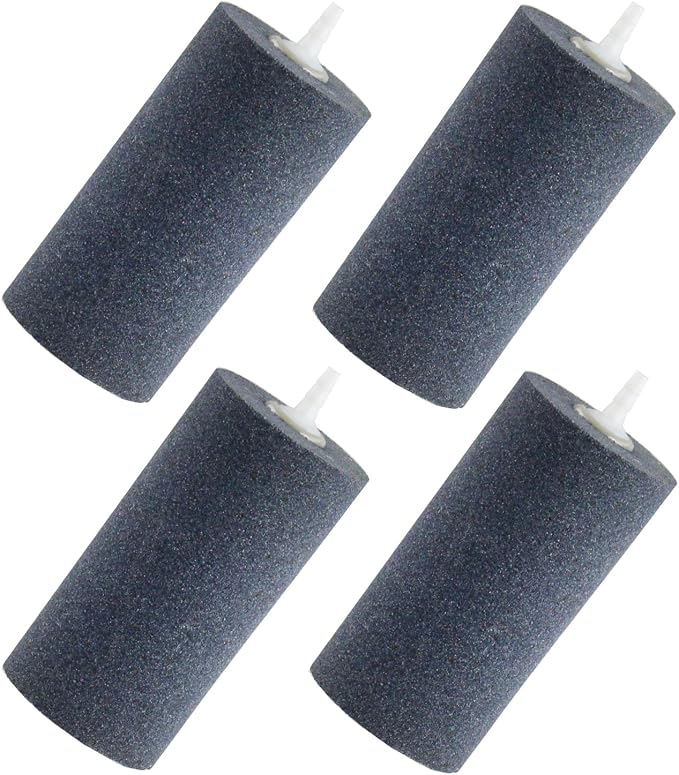
    5.    AQUANEAT Air Stone, 4 X 2 Inch Large Air Stone Cylinder, Aerator Bubble Diffuser, Air Pump Accessories for Hydroponic Growing System

    Aquaneat air stone is another option for generating optimal aeration for your DWC system. They are durable even after washing. They are also made of environmentally friendly materials for both your fish and hydroponic plants.

    It will work excellently well when paired with a high output air pump of at least 8W to 10W. This air stone will perfectly connect and fit a standard airline tubing of 3/16 inches.

    Note that pre-soak is required before use.

    Pros

    • Generates high aeration capacity when paired with a high output air pump.
    • Eco-friendly materials.

    Cons

    • Requires pre-soak before use.
    81qW1GeKVwL. AC SX679
     

    FAQ’s

    Which air stone is best for DWC?

    The Air Stone will help to keep your fish tank or aquarium clean and oxygenated by sucking up all the waste that the fish create. If you have an indoor set up, you should be fine with just one Air Stone.

    However, It really depends on what you’re trying to do. I’m not sure what your setup is like, but I would recommend a small airstone that can be placed above the substrate. The substrate should not touch the airstone. This will allow air to flow over the substrate and into the water without disturbing it too much. If your setup allows for it, I would also recommend a larger airstone in another area of the tank.
    That way you can blow air into the substrate at different points throughout the tank to keep it moving. I think this is an important point. I have been using a small airstone (about 1/2 gal. capacity) for about 6 months now. It is placed about 1 inch off the surface of the substrate. My tank has a 20 gallon tank and the airstone is about 1 inch off the bottom. The water is about 4 inches deep. I have never seen a problem with this setup. It is so easy to clean up any water that comes from the airstone. I would also like to add that I use a small aquarium pump to circulate my water. It is not a big one, but it is powerful enough to circulate the water.

    Are air stones necessary for DWC?

    Air stones are used to prevent the buildup of algae and other organic matter on the water surface, which can cause the pump to work harder. They’re also useful in a fishless (closed) tank because the pump is typically submerged in the tank. In an open tank, they are unnecessary. An air stone is essentially a fine mesh screen that fits over a pump or aquarium filter outlet.

    It prevents the buildup of algae and debris while allowing water to flow freely. If you do not have an air stone, make sure to turn off your pump when not using it. This will save electricity and help prevent algae growth.

    What is the difference between an air stone and a diffuser?

    The diffuser is the part of the aquaponics system that releases the oxygen back into the water to make it more appealing to fish. The air stone is the part that helps to disperse the bubbles in the water. They work together to create the most efficient system. Diffusers are used to keep oxygen levels high in the aquarium by allowing air to escape through holes or slits in the tank, thus increasing the amount of dissolved oxygen in the water.

    This will help to support a higher level of fish life in your system. Air stones  also make it easier for the plants to absorb nutrients from the water.

    Conclusion

    As you can see there are great options for choosing the best air stones for your DWC system. If you’ve decided to purchase one for your hydroponics, then any of the picks in our review should be an excellent place to commence your search.

  • Kratky Method For Strawberries

    Kratky Method For Strawberries

    can If you wish to learn about growing strawberries using the Kratky method, we will let you know in this post. A Kratky method is a form of passive hydroponic method and it is known as the simplest form of hydroponic system.

    This type of simple hydroponic technique is named after Bernard Kratky who’s a researcher at the University of Hawaii. You can grow various plants such as herbs, leafy greens, pepper, or tomatoes, as well as strawberries successfully using the Kratky technique.

    Kratky Method

    The Kratky method is another great way of growing various plants without the use of soil or dirt. The plants are suspended above a nutrient solution and it’s a clean and productive way of gardening.

    The only difference is Kratky technique does not make use of an air pump or aeration for air and water circulation. Therefore, no electricity is needed.

    How To Grow Strawberries With Kratky Method

    There are two ways you can grow strawberries from. You can grow strawberries from seeds or a young strawberry plant. However, we recommend you grow strawberries from young plants because growing them from seeds might take a while to get results.

    Growing Strawberries With Young Plant

    For growing strawberries using the Kratky method, you will need the following materials:

    • Container to serve as a reservoir for holding nutrients (most growers use 5-gallon bucket).
    • Net cups.
    • A cover lid or grow tray to insert the net cups.
    • Growing media (such as hydrotons balls, pebbles, rock wool, coco coir, etc).
    • Healthy young strawberry plants.

    To grow strawberries using young strawberry plants, you will need to obtain a healthy young plant either from the soil or from an existing hydroponic strawberry garden. Make sure you rinse off the roots if you are taking your strawberry plants from the soil.

    Next, get your net pots and slide the little plants into the net pots. Fill the net pots with your desired growing medium to support your strawberry plant. Try gently pull some roots of the young plants so that they can come out at the bottom of the net pots.

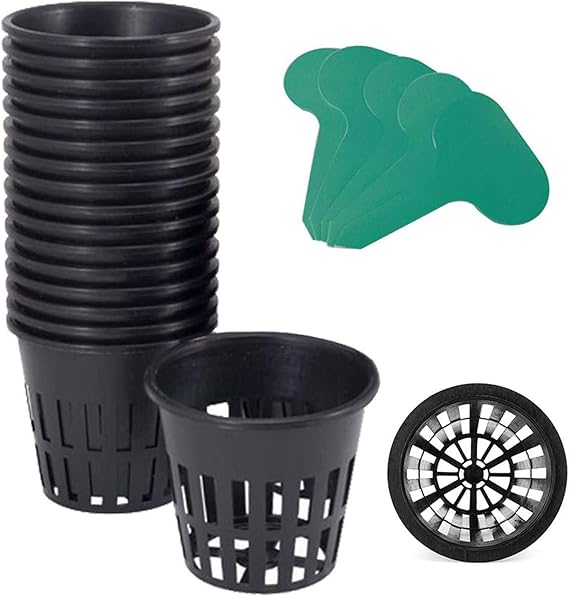
    GROWNEER 25 Packs 3 Inch Net Cups Slotted Mesh Wide Lip

    Kratky Method Strawberries - Net cups

    By doing this, you can perfectly set the roots to sit in the nutrient-filled water. Only the tips of the roots should touch the nutrient solution, we don’t want any part of the upper plant submerged in water. The gaps between the roots supply oxygen to the plants from inside the nutrient container.

    Kratky Nutrient Solution

    Now you can set them in your Kratky nutrient solution. Supply your set up with some grow lights if you’re growing indoors. However, if you’re growing outdoor, find a good sunny spot in your yard and you’re good to go. You should begin to see a new leaf and root growth in a couple of days. After about a month, you should notice some good growth with your strawberry plant with flowers and broad leaves. You should also begin to see some little strawberries growing.

    When the nutrient solution has almost been exhausted, your strawberry plant should have been ready for harvest. This means a single nutrient solution should be enough to go for a growing cycle and no need for replacement. However, if you notice the nutrients solutions are almost completely dried or used up, you should replace them.

    Strawberry Runners

    When strawberry plants get fully established, they will begin to shoot out runners. It will be a great thing if you can cut and replant or clone these runners to another setup so you can have some new strawberry plants. This will also help trim their edges so they don’t look too bushy.

    Strawberry Runners

    Recommended Temperature For Kratky Strawberry

    Temperature is one of the most crucial requirements for strawberry plants. Without the right temperatures, your plant will be slow in flower and fruit yield therefore, no production good growth and production.

    The appropriate temperature range for strawberries is around 60 to 70 degrees.

    Light Requirements

    Strawberry plants usually consume a lot of energy. Therefore, the appropriate light requirements we recommend for your strawberry plants will be 14 to 16 hours daily. This way, your strawberry plant will be well established and yield plenty of fruits.

    Harvesting

    After about 8 to 10 weeks of planting your strawberry, they should start showing their lovely bright red colors. This means they should be ready for picking.

    Harvesting

    FAQ’s

    What can you grow with the Kratky method?

    The Kratky method is a simple way to create a vegetable garden in an urban setting. It’s an easy-to-grow and versatile system, requiring little space and only the time and effort it takes to plant your seeds and water them every few days. It’s also a great way to enjoy fresh vegetables right from the garden.

    Here are some of the most common vegetables you can grow with the Kratky method. Arugula Arugula is one of the easiest plants to grow in the Kratky method. This cool-weather herb is a great addition to any salad or pasta dish. If you want a quick harvest, you can start arugula seeds indoors a month or two before planting out. In cooler climates, wait until the last week of March or first week of April to plant outside. Asparagus Asparagus is another favorite.

    It’s not only delicious, it’s one of the earliest vegetables to mature. You can start asparagus indoors in late February or early March and transplant outdoors after all danger of frost has passed. If you grow in a warm climate, you can expect your asparagus to be ready for harvest in about six weeks. I recommend growing your own because they are much fresher than what you can find at a store. Celery can be planted in May in cooler climates and in July in warmer climates. It will produce for about two months. Chives Chives, carrots and cauliflower are another great plant to grow with the Kratky method.

    Can you grow strawberries using Kratky method?

    You can certainly grow strawberries using the Kratky method. The only thing to keep in mind is that it will take a while for the strawberries to mature. You can start with seeds or transplants (which are called “strawberries” in nurseries).
    Using Kratky Method Kratky Method is a way of growing strawberries in a small area. It’s an old method that was used by people in the past. You can still find it being used today for growing strawberries. The Kratky method is simple and requires very little equipment. You can do this all by yourself.

    There are many ways to grow strawberries using the Kratky method. You can grow them in pots or planters, but a good place for growing strawberries is a sunny spot in your garden. If you have a lot of room in your garden, you can also plant them in rows. You will need to get started with your strawberries by planting them. You can either buy them from a store or you can start them from seed.
    The seeds are tiny and very fragile, so it’s best to buy them already planted. They should be planted right away because they take a long time to grow. Once you have your plants, you will need to keep them watered. If they dry out, the leaves will wilt and the fruit will be damaged. You will need to water them at least once every day for about 10 days after planting. After that, they will need to be watered every other day.

    How do you start the Kratky seed?

    If you start the Kratky seed, then you need to wait until it has germinated. You can do this by placing the seed in a paper cup, with a plastic wrap and water on top of the cup. Check the cup every day and make sure that there is enough water. If you don’t want to use the paper cup, you can use an old, clean coffee cup or even a flowerpot.

    You can start to plant your seedlings as soon as they are about 5cm tall. As long as you plant them in a sunny spot, you should be fine.

    Final Say On Kratky Method Strawberries

    Growing strawberries using the Kratky method is pretty easy and beneficial. It is a soil-free method that will result in abundant fruit production all year round. You also, get to enjoy the fresh and juicy fruits at the comfort of your home.

  • What Is A Bulkhead Fitting For Aquaponics

    What Is A Bulkhead Fitting For Aquaponics

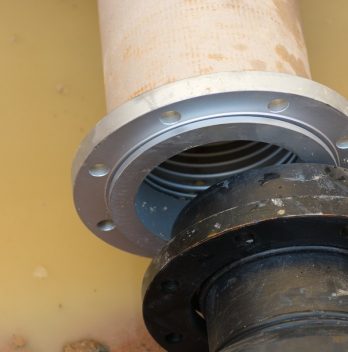
    The question we’re going to be answering today is: what is a bulkhead fitting? A bulkhead fitting is a point of attachment for connecting pipes to tanks or reservoirs.

    Bulkhead fitting helps secure your piping connections thereby preventing leakage. It also helps give the right direction to where water is required to flow through.

    Bulkhead fittings are especially used in hydroponics or aquaponics plumbing connections. These fittings are used to fill water or drain water easily from your hydroponics or aquaponics system.

    Let’s discuss further the key components of bulkhead fittings, how to install a bulkhead fitting, and their uses.

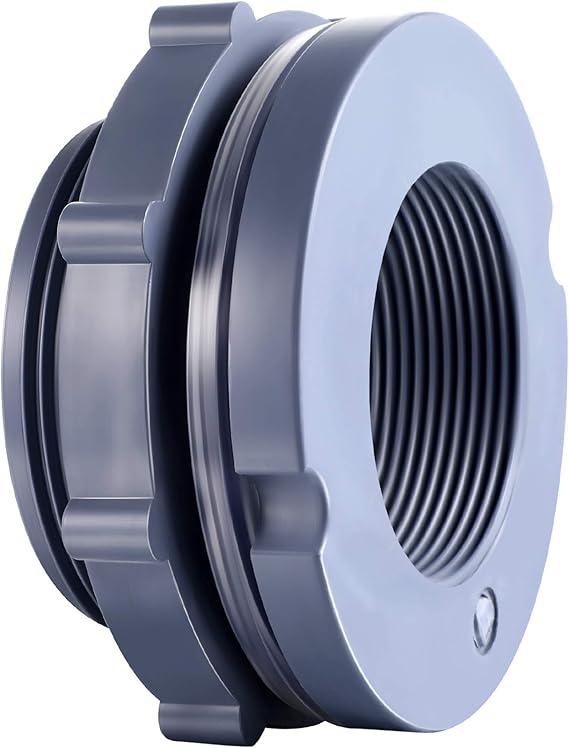
    Main Parts Of Bulkhead Fitting

    Bulkhead fitting materials are usually made of fortified and long-lasting components such as PVC, brass, plastic, and other quality materials. Most parts you will find in bulkhead fittings consist mainly of 3 parts.

    • Body of Bulkhead: the first part of the bulkhead is the body which is the exterior and interior threads.
    • Gasket: the next part of the bulkhead is the gasket. It might come in one or two. The gasket will fit onto the body of the bulkhead.
    • Nut: the third and last part is the nut or locknut. The nut is attached to the exterior thread. It will thread into the place of the bulkhead fittings seating up against the gasket thereby creating a tightly sealed water tank.

    Outus PVC Bulkhead Fitting for Rain Barrels, Aquariums, Ponds, or Water Tanks

    61kQQvLJ8%2BL. AC SX569

    Let’s move forward by learning how to install the bulkhead fittings.

    How To Install A Bulkhead Fitting

    Below are the steps to installing bulkhead fittings:

    1. Hole Drilling: a bulkhead fitting is installed by first cutting or drilling a hole by the bottom of the tank or reservoir to which the pipes can be connected. Make sure you measure and determine the size of the bulkhead exterior so you know the size of the hole to drill.

    2. Bulkhead Fitting: after drilling the hole, you can now insert the bulkhead fitting with the threads inside or outside the tank or reservoir (whichever way you want it to fit your connections).

    3. Gasket and Locknut Fittings: then fit the gasket into place. If you have two gaskets, use each one on either side of the walls. Now thread the locknut down by tightening it with your hand to apply pressure to the gasket. The locknut will then provide a good tight liquid seal with no leaks. But make sure not to over-tighten too much so you don’t break or distort the gasket thereby causing a leak.

    Having fixed all that, you can now go-ahead to connect any type of pipes or PVC fittings.

    Benefits Of Using Bulkhead Fittings

    • Bulkhead fitting will create a perfectly tight liquid sealed connection.
    • They are great for hydroponics or aquaponics plumbing connections.
    • They allow for easy flow of water through the tanks or reservoir.
    • There’s no problem with water leakage with bulkhead fittings.

    Other Uses of Bulkhead Pipe Fitting

    • They are used in hot water pipe systems especially the brass bulkhead fittings.
    • Bulkhead fittings are used in hydroponic and aquaponic systems for connecting pipes to allow easy drainage along with the water tank or reservoir.
    • They are also used in ponds for installing water to connect pipes that enable easy drainage. This makes changing water easier rather than scooping water out of the bucket.
    • The kitchen sink also makes use of several bulkhead fittings for easy flow of water.
    • Generally used in transporting liquid containers.
    • They are as well used in any type of mechanism that requires large drums or barrels that needs to be filled with water.
    Other Uses of Bulkhead Fittings

    What To Consider When Purchasing Bulkhead Fittings

    Anytime you purchase a bulkhead fitting, always consider the type of liquid that will flow through your fittings. If it is a hot liquid you should go for the strong type such as the brass bulkhead fittings. If you will be working with cool water you can go for the regular type.

    Also, put into consideration the speed or pressure at which your water will be flowing. For instance, high speed or pressure will need a strong fitting and vice versa.

    All these considerations are to make sure you don’t end up with a distorted or cracked gasket due to pressure. The goal is to prevent any leakage.

    Find out the 5 Top Feed Drip System Hydroponics and 5 Best Hydroponic Kits You Can Find

    FAQ’s

    What is a bulkhead fitting?

    The most common bulkhead fitting for aquaponics is the standard 1-1/4″ x 1-1/2″ copper pipe. This is an ideal fit for a single tank setup, where you have one sump and one fish tank. However, the 1-1/4″ diameter of the pipe is also too large to be easily used in multiple tanks (more on that later). 

    It is a good choice for any aquaponic system where there is only one fish tank or sump, but it is not suitable for multiple tanks. It is also not recommended for systems where water must pass through a filter. Most standard 1-1/4″ x 1-1/2″ copper pipes are made with 1/8″ thick walls, which is not strong enough for more than one tank. If you have more than one tank in your system, you will need to upgrade to a stronger bulkhead fitting. If you are planning to put your aquaponics in multiple tanks, you should use a bulkhead fitting that has at least 3/8″ thick walls.

    How do you install a bulkhead fitting?

    The standard method is to use a drill and a 1/4″ bit. If you don’t have a drill, then you can use a 1/4″ drill bit. Attach the bulkhead fitting to the edge of the wall with a screw. Drill a hole through the bulkhead fitting and into the stud. Insert a washer (or two) into the hole.

    Attach the screw into the bulkhead fitting, and the washer will hold it in place.

    How do I stop bulkhead fitting from leaking?

    There are many reasons why you might have a leak. First, I would check your system for leaks in the main tank or other components. If you find any, they will need to be repaired before anything else. Second, I would take a good look at the fitting and see if you can identify what is causing the leak. Some leaks occur because of manufacturing defects. Others occur because of damage to the fitting. You may have to disassemble the bulkhead to get a better view.

    Third, you may need to look at the valve that controls the flow of water. If the valve is damaged, it could be leaking as well.

    How do you replace a bulkhead?

    The best thing to do would be to remove the old one and then install the new one. If it is a solid piece of material, it may be difficult to remove without destroying it, but if you can cut it off with a hacksaw or similar tool, it shouldn’t take more than an hour or two to do so. 

    Once the old one is removed, install the new one

    How do you seal a bulkhead fitting?

    If your bulkhead is a simple pipe fitting that has no special features (eg, a threaded nut), then there is no need for a seal. The pipe will be pressed tightly against the wall of the tank, so there won’t be any leakage. If your pipe fitting has a threaded nut, then you’ll need to use an appropriate sealant to prevent leakage.

    Conclusion

    With that said, we do hope you have grabbed one or two things about what a bulkhead fitting is. If you have any questions feel free to drop a comment and we will respond.

  • Aquaponics Filtering Systems – An Overview

    Aquaponics Filtering Systems – An Overview

    Let’s talk about aquaponics filtering systems. We’ve discussed in our previous posts that aquaponics farming involves fish and plants and the fish waste materials are used by plants as nutrients. Vice versa, plants help the fish by filtering water with their plant roots thereby returning good water to the fish tank or pond.

    Even though there is a symbiotic relationship between the fish and plants that filter the system, not all the waste is filtered. This is why aquaponics filtering systems are required to maintain good water quality for an optimal aquaponics system.

    What Is An Aquaponics Filtering Systems

    Aquaponics filtering systems help filter excess waste, especially solid waste out of your aquaponics system. The system will ensure a clean and healthy environment for both fish and plants. Let’s take a look at 3 major types of aquaponics filtering systems.

    Types Of Aquaponics Filtrating System

    Although we have various types of filtering systems, we will talk about the 3 major types. They are:

    1. Swirl Filters

    This type of filter is the most commonly used for grow beds. They can be purchased online or made at home (DIY). This type of filter system makes use of a large barrel-shaped container. Inside the barrel, there is a basket that filters solid waste outside. The swirl filter works by collecting water from the fish tank.

    Types of Aquaponics Filtrating System - Swirl Filters

    As the barrel fills up, the swirl effect is generated slowing down the rising water level. This helps the solid particles to move and settles at the base of the container. The filtered nutrient water now moves out from the top of the container through the pipe and feeds the plant beds with filtered water.

    Note that the barrel must be cleaned from time to time because of the settled particles. Use clean water only and never use soap to wash the barrel so you don’t kill the beneficial bacteria. The goal is just to remove only the settled particles at the bottom of the barrel.

    2. Raft Water Filter

    The raft water filter is another excellent way of filtering your aquaponics systems. It has two or three filter layers or chambers where solid particles pass through. The chambers feature large pieces of foams serving as the filters. These large foams are placed at the top of the fish tank; therefore, water will pass these chambers.

    As the water moves, the first filter layer collects the solid particles before it enters the next filter layer. When the water moves, the solid particles move down the base of the tank. After the water has passed through all the chambers, the filtered nutrient water can now be pumped into the plant beds for use.

    The raft water filter is mostly used in large tanks therefore, it usually takes up space.

    3. Radial Flow Filter

    The radial flow filter system makes use of a 50 gallons barrel. There is a pipe connection that comes from the fish tank into the middle of the barrel. The pipe is also seen coming out at the top of the barrel facing 90 degrees. Therefore, water with solid particles flows down into the barrel through the pipe.

    Solid particles are settled at the bottom of the barrel. Clean nutrient-rich water is filtered up through the 90 degrees upper pipe and passed to the grow beds for plant use.

    Why You Need Aquaponics Filtering Systems

    Excess waste such as solid waste can become quite a challenge in your aquaponics when they are produced in the fish tank. These solids are pushed and get into the pumps and into your grow beds causing build-up. It can become an issue getting rid of these particles from the water as they can cause your water quality to depreciate.

    Fishes produce ammonia waste but the ammonia is needed in nitrates by the plants. Therefore, it’s the availability of bacteria occurring naturally in your aquaponics system that will convert ammonia into nitrates needed by plants.

    POND BOSS Filter Kit with Pump

    61aHSjWsaSL. AC SL1200

    These particles can clog your grow beds reducing the surface areas for these beneficial bacteria to live, thereby decreasing their activities.

    This is why installing aquaponics filtering systems for your aquaponics is essential so your system can enjoy clean nutrient-filled water.

    Read more about:

    Additional Info On Aquaponics Filtration Systems

    You should know there are things you can do to reduce solid particles in your system. This way, you can reduce or put an end to the number of solid particles clogging your system.  Simply follow these tips:

    • Avoid overfeeding your fish to reduce uneaten food and clogged-up pipes.
    • Figure out the correct proportion of fish size required for your aquaponics system. This way, you won’t have too many fish that can cause too much or excess waste than your plant can absorb.
  • How Fast Do Tilapia Grow?

    How Fast Do Tilapia Grow?

    If you’re wondering how fast tilapia grow, we will let you know in this article. Tilapia is one of the most widely farmed fish and you will enjoy raising tilapia be it for business, which is pretty lucrative, or for consumption, or even for ornamental purposes because tilapia is a good-looking fish.

    Tilapia are fast-growing fish whether you decide to grow them in a tank, a pond, or a hapa. This is why they are one of the most loved fish to raise in aquaponics or fish culture. Let’s explore how fast tilapia fish grow and some requirements for tilapia’s fast growth rate. So, read on to find out.

    Know-How Fast Tilapia Grow

    Tilapia start from eggs, and then grow from hatchlings to fingerlings, and then to the adult or harvesting stage. How fast tilapia grow from the hatchling stage to adult or harvest size can take 8 to 9 months or 240 days. However, the fingerlings to adult or harvest size stage can take up to 6 months or 26 weeks.

    Most of the time in these 240 days is spent in the hatchling period rather than the grow-out stage. Their fast growth rate is at the hatchling period as they gain more ounces in this stage, thereby giving them accelerated growth. It is for this reason (fast growth rate) they are one of the best fish for aquaponics.

    After 8 to 9 months or 240 days, the tilapia growth rate flattens. The rest of the tilapia’s life after this stage will only experience little growth per year. The growth rate can be as low as a few ounces per year.

    How Long Does It Take For Tilapia To Grow Into Full Size

    Tilapia fish will grow from hatchling to full size around 240 days. At the grown stage, the full size of your tilapia fish should be between 15 to 20 ounces or 450 to 565 grams.

    Requirements For Fast Tilapia Growth Rate: Factors To Consider

    You get the best growth rate for your tilapia if all growing requirements are met especially at their hatchling stage. Below are the recommended growth rate needed for your tilapia:

    • Clean water and dissolved oxygen: clean or good water quality is one of the most important requirements for the efficient growth of your tilapia fish. Dissolved oxygen increases the survival rate and also food intake so your tilapia can grow adequately. If you’re making use of a pond, atmospheric oxygen and photosynthesis will supply good oxygen for your tilapia to grow. However, if you’re making use of a tank, you will need to provide additional artificial aeration to support your tilapia fish.

    Bluelab PENPH pH Pen Fully Waterproof Pocket Tester

    61s4QWFO2RL. AC SL1500
    • Stocking Density: together with good aeration or dissolved oxygen, tilapia fish should be stocked in the right proportion. The fish stocking density should be proportionate to your tank or pond size. This way, there won’t be food or space competition. Failure to maintain the right stocking density can cause depreciation of growth as the fish will compete for space and food.
    • Food: Another requirement for tilapia’s good growth rate is food. Tilapia can feed or survive on varieties of food. However, they are mostly fed with plant-based food as these are more beneficial and will encourage optimal growth. If you’re raising tilapia in a pond, you can feed them with algae. If you’re however raising them in a fish tank, feed them with plant-based, artificial food from any local store, or order some from Amazon.
    • Water Temperature: tilapia are warm-water fish. Therefore, you should ensure their water temperature is in the right range. With the right temperature, tilapia will metabolize adequately, thereby increasing their survival and growth rate. Maintain water temperatures of 75 to 86 degrees Fahrenheit. When the temperature drops below 50 degrees, metabolism slows down which causes survival and growth rate to diminish. Temperatures below 40 degrees will be fatal to your tilapia fish and they will most likely die.

    Tilapia Breeds That Are Fast Growing

    Among the various tilapia varieties we have, here are the fast-growing breeds you can find:

    • Nile tilapia (Oreochromis niloticus).
    • Mozambique tilapia (Oreochromis mossambicus).
    Tilapia Breeds That Are Fast Growing

    Tilapia is one of the best fish to raise in aquaponics because of its rapid growth rate. The fastest-growing tilapia breeds are the Nile and Mozambique tilapia.

    Tilapia experienced the fastest growth rate around the hatchling period. Therefore, if you want to enjoy a faster or bigger growth rate, you should follow our recommended requirements mentioned above.

    We do hope you have learned one or two things from this article. If you would like to learn more about tilapia, there are other related articles on tilapia for you to learn more.

    FAQ’s

    How fast do tilapia multiply?

    The growth rate of Tilapia is around 2.0 inches per week (depending on the size) for juvenile fish, and 3.0 inches per month for adult fish. If you are buying fish to keep for your aquarium, you should buy the smallest size that will fit comfortably into your tank.

    Tilapia like to eat a variety of foods, but the most important thing is that it eats live food. It does not like dry or dead food, and it also does not like frozen food. Tilapia require live food because they have small stomachs. You can give them frozen food once a week, but do not feed it to them more than once a week.

    What makes tilapia grow faster?

    If you’re looking for a fish to grow as quickly as possible, tilapia is the way to go.Tilapia have a large appetite and will eat more than most other fish. They can grow up to eight inches long and weigh up to three pounds. They also have an active metabolism that helps them grow fast.

    The most common varieties of tilapia are: White Tilapia – These are the most common variety of tilapia and are generally the smallest. They can reach up to four inches long and weigh between one and two pounds. White tilapia are also the easiest to breed. Pink Tilapia – These are sometimes called rose tilapia or “Ruby” tilapia.They have red pigment in their skin and they are slightly larger than white tilapia. Black Tilapia – These are also known as tiger tilapia and have a dark-colored flesh. They are usually the largest variety of tilapia. They can grow up to six inches long and weigh up to three pounds.  Tilapia are a low maintenance species and require little more than a shallow water bath. They do like to be kept in water with a pH of 2.5 –3.5 and a temperature of 74°F – 77°F. They also enjoy being kept in a slightly acidic environment.

    How big does a tilapia get?

    Tilapia can grow up to 2.5 feet ( 3.8m) in length, and weigh as much as 30 pounds (13kg). The average size of a male tilapia is around two inches, and a female is about one inch.

    The largest adult male is about 3-4 pounds, but most are smaller than half that weight.

    There are also a few larger females, but they are rare. How do they eat? Tilapias are omnivores that eat small invertebrates, plants, and algae.

    How much space do tilapia need?

    Aquaculture is the farming of fish, shellfish or other aquatic organisms. Tilapia is one of the most popular fish in aquaculture, especially in Asia and Africa. It has been farmed for over a thousand years. As with any farm animal, tilapia are kept in a controlled environment to provide them with food, water and shelter.

    Tilapia are easy to keep but require a lot of space. They are omnivorous so they eat both plants and animals. Tilapia need at least 20 square meters per fish. However, you can also keep tilapia in a tank that’s not as big as this. The fish will just have to be a bit closer together. Tilapia grow quickly, so they’re ready to harvest when they’re between 30-45cm long. They can live for up to five years if kept properly. If you choose to rear tilapia in an indoor aquarium, the water should be about 18 degrees Celsius.

  • How To Trim Basil To Promote Growth

    How To Trim Basil To Promote Growth

    Who doesn’t love the basil plant especially for its amazing taste and pleasant aroma when it comes to cooking? Now, if you’re wondering how to trim basil to promote healthy growth, just follow our tips and your basil will enjoy optimal growth.

    Basil plants are popularly grown for their flavored attribute. They add a blend of that sweet basil taste and aroma to your meal and they will offer great benefits to your health. Therefore, growing basil plant in your garden is pretty rewarding and trimming is one essential procedure for you to enjoy maximum yield.

    Keep reading to learn more on how to trim basil to promote growth.

    How to Trim Basil to Promote Growth

    As we know, pruning basil plants promotes growth. All types of basil plants (be it lemon basil, Thai basil, Genovese basil, etc) benefits from efficient pruning. Trimming your basil plants is important even if you’re growing them in containers or garden beds.

    Tips to Pruning Basil Plants

    Trimming basil leaves is crucial for the health of your plant growth. Follow the tips below to learn how to trim basil plants to promote abundant growth.

    1. Get a pair of scissors to trim your basil plant. We recommend you always use a blunt tool like scissors. Never use your hands to pinch them so you don’t tear the stem and risk harming your basil plant.

    2. Aim to trim the main stem so it will result in the redistribution of growth hormone close to the plants and yield fuller or thicker basil.

    3. Around the main stem, you should see some tiny leaves developing. When the main stem is trimmed, optimal growth is directed towards the tiny basil leaves developing. Ensure you don’t disturb those little buddies as you trim the basil around them.

    4. After a couple of weeks, these tiny leaves will develop into a new branch. This will then allow you to trim the new branches again around or above the new set of basil leaves. Thus, new branches will develop giving you endless yield as you trim over and over.

    5. Ensure you remain some set of large leaves towards the end of the basil plant as this is essential. This way, these plants will be in charge of converting sunlight into energy for continuous growth.

    6. Trim from the top crown and move a little to the bottom. Depending on how many branches you have, trim the basil plants on each branch to achieve a fuller plant.

    Read more about Growing Microgreens Hydroponically

    When to Trim Basil Plants to Promote Growth

    Basil plants are easy to grow in both growing beds and hydroponics gardens and they are fast growers. This is why trimming should be done as early as their seedling stage.

    When to Trim Basil Plants to Promote Growth

    The appropriate period to trim your basil plant to promote growth is early in the season. Trim when your basil plant is about 6 to 8 inches and with about 6 to 8 leaves.

    When necessary, you should always trim your basil plant every two to three weeks all through the season to promote growth.

    Check out When to Harvest Broccoli

    Advantages of Trimming Basil Plants

    The various benefits your basil plant stand to gain from trimming are as follows:

    • When you trim your basil plants frequently, you enjoy optimal growth of amazing vegetation all through the season.
    • Trimming your basil plants allows the growth hormone of the pruned main stem to be redistributed all over the plants around the trimmed basil.
    • Your basil plant will always produce vegetation when trimmed rather than producing flowers.
    • You can even go ahead and make use of the pruned main stem for your cooking. So, you see, there isn’t much waste from pruning basil!

    Jobe’s Organics Herb Fertilizer Spikes

    61 i7YyCdYL. AC SL1000

    Tips for Buying Basil Plants

    When you want to purchase basil plants, we recommend you preferably go for the trimmed ones. You should preferably opt for the short and bushy basil plant.

    FAQ’s

    Does pruning basil help it grow?

    If you’re growing your own basil, then you’ve probably already heard about how beneficial pruning can be to the plants. But did you know that you could also help basil grow better by pruning it? If you’ve got some basil plants in pots on your patio or in your garden, then you can keep them healthy and attractive with a few pruning techniques.

    You might be thinking that you don’t have to prune basil at all, but that’s not true. When you prune your basil, you’ll help it grow stronger and healthier.

    Here are just a few of the benefits of pruning basil:

    1. It Grows Better

    By removing dead or damaged parts of the plant, you can encourage new growth.

    2. It Keeps the Plant Strong and Healthy

    When you prune your basil, you can help prevent pest problems.

    3. It Lengthens the Growing Season

    If you want to enjoy fresh basil all summer long, you should prune your plants once a week.

    4. It Makes Your Leaves Perfectly Curled T

    he perfect way to present your leaves is when you prune them. If you leave too much leaf, it will look messy.

    5. It Allows for More Flowers to Grow

    When you prune your plants, you’ll make room for more flowers.

    Does trimming help basil grow flowers?

    Yes, if you cut back the stems of your basil plants in the late winter or early spring, they will have more energy to produce leaves and flowers. You should wait until after the last frost date for your area. If you do not want to wait that long, you can prune in the summer, but you must wait until all of the leaves on the plant are brown.

    You can prune basil to make it grow better, but you don’t have to.

    It is best to let your basil grow as big as possible. The more you use, the more it will produce. However, if you want to make it grow larger, you can prune the main stem of your basil back in early summer. This will help the plant grow more bushy and produce more leaves.

    How do you trim basil to make it bushy?

    Cut off the bottom leaves The bottom leaves on your basil plants are called “crowns.” They can grow up to 4-6 inches in length, but they don’t get as big or bushy as the leaves that grow at the top of the plant.

    You can use the knife, scissors or a pair of clippers to cut the stems. A pair of clippers is probably the easiest and most effective. The clippers have an adjustable blade that can be used for different thicknesses of stems. 

    You can cut back the top as well. The reason for this is that if the plant gets too large, the top can’t support itself anymore and it will fall over. If you cut the top back to where it can support itself, it will stay upright. 

    Pruning Basil

    By the end of the season, you should have that wide, full, and tall basil plants with many branches. Therefore, trimming your basil plants offers you an endless harvest.

    The goal of trimming the basil plant is to prevent it from entering the flowering phase. Therefore, it will always continue to produce some good leaves which is what we want.

    Although most growers would like to have basil leaves forever: it may come to a point where we might not be able to control such forever. They might later start to grow flowers thereby, halting or reducing vegetative production. But such comes at a much later period and we would have already enjoyed plenty of basil leaves for a long time.

  • Raising Salmon At Home

    Raising Salmon At Home

    Salmon is one of the most consumed foods and the most imported seafood in the US. Getting started with raising salmon at home is not so complicated with the right knowledge and we will enlighten you on this.

    You can raise salmon fish at home or in your backyard pond. Therefore, this will be an amazing way of obtaining fresh and locally made salmon fish for consumption or simply raising them as pets.

    Materials Needed for Raising Salmon at Home

    The following materials are required to get started with raising salmon at home:

    • Fish tanks or aquarium
    • Incubation tray
    • Styrofoam
    • Water
    • Salmon eggs

    Tetra Aquarium 20 Gallon Fish Tank Kit

    71 1y5AeZML. AC SX679

    How to Raise Salmon at Home

    Home fish farming is an awesome experience. One of the best ways of raising salmon at home is through the use of closed containment. Raising salmon in a solid closed tank or containment will mainly protect the eggs from pathogens or diseases.

    Another benefit of raising salmon from tanks at home is there will be fewer needs for chemicals. Therefore, you enjoy your salmon fish fresh, safe, and healthier. So, here are the tips to guide you in raising salmon fish at home.

    Stages

    1.    Incubation Stage

    Growing salmon can take up to two years from the egg stage. The stages begin with the egg and they are placed in the incubation tank. Ensure you rinse the tank with water before placing your salmon eggs. You can also clean the front of the tank or aquarium to have a clear vision.

    The eggs are in the incubation trays for about 6 to 8 weeks. The tank can be covered with Styrofoam to prevent light from entering allowing the egg to incubate. Put some gravel or rocks in the tank as the eggs will live under the rocks feeding on their yolk. As the eggs of salmon are allowed to hatch, ensure you monitor them as the eggs progress.

    The eggs will hatch and turn into alevin and are at the alevin stage for 30 to 50 days. They prefer to be in the dark at the alevin stage.

    Incubation Stage

    Also, make sure you remove the eggs shells and less active eggs or dead eggs as they hatch daily. The alevin now develops into young fish called fry. You can then remove the Styrofoam after they are done hatching.

    Read more about the 5 Best Hydroponic Kits You Can Find

    2.    Fry System

    The young fish are now moved into the fry tank for a period of 6 to 7 months. In the frying system or tank, the fry is then ready for its first feeding.

    3.    Feeding Stage

    When the fish has fed on their egg sac, you can now proceed to drop food in its tank. The fry is fed with commercial fish feeds which are made to fit the life stages of the various fish sizes. The fish feed sizes range from crumbs to pellet sizes.

    4.    Fingerlings Tank

    They are then transferred into the fingerlings tank for 5 months.

    5.    Smoltification Stage

    As the fish grow in size and reach about 40 grams, smoltification is induced. Notification is an advanced series in which the fish undergo a biochemical, physiological, and morphological transformation.

    When smoltification has taken place, the fish are known as smolt. Salmon smolt is preferred in aquaculture or aquaponics reason being they grow faster.

    Smoltification Stage

    6.    Fish Sampling

    A sampling of the salmon fish is carried out every two months to keep a good eye on their performance rate. When the fish reach 700 grams to 800 grams, they can now be moved to the grow-out tanks.

    7.    Growout tank

    They are now about a year old and transferred to the grow-out tank. Sampling is again done every two months and they can spend 12 months or more here based on the target size you want.

    8.    Harvest

    When your salmon fish has grown to the preferred target size of about 10 to 12 pounds, you can proceed to harvest.

    Learn about Where To Buy Fish For Aquaponics System

    How Much is Farm-Raised Salmon?

    The price of farm-raised salmon greatly varies. Several factors influence this. These include the farm location, the size and quality of the fish, and the time of the year. 

    Generally, farm-raised salmon tends to be less expensive than wild-caught salmon. In 2021, the US average price of farm-raised salmon was between $7 – $12 per pound. Prices can be higher or lower depending on the specific type of salmon purchased. 

    You should always shop around to see where you can get the best deals. Buying in bulk and directly dealing with farmers can also save you money.

    Does Farm-Raised Salmon Have Bones? 

    Like wild-caught salmon, farm-raised salmon can have bones. However, the fillets you buy in-store usually have no bones. The bones in farm-raised salmon also tend to be smaller and softer than those in wild-caught salmon. You’ll have an easier time removing them. 

    If you find bones in your salmon, you can remove them with sterile tweezers or nose pliers. Gently pull the visible bones or simply remove them as you would with any other type of fish. 

    Where is The Best Farm-Raised Salmon From?

    The quality of farm-raised salmon varies depending on the specific farming practices used. You should always research the farm or producer before purchasing farm-raised salmon. 

    Many countries and regions around the world produce high-quality salmon. The top producers are: 

    Norway

    This country is one of the world’s largest producers of farm-raised salmon. Norway is known for its high-quality fish and sustainable farming practices. 

    Chile

    Another major producer of farm-raised salmon in Chile. High-quality fish and low production costs go hand in hand in this country. 

    Scotland

    This country produces high-quality fish through sustainable farming projects. It’s a smaller producer of farm-raised salmon, but it makes this list nonetheless!

    Canada

    Several large-scale fish farming operations are located on Canada’s Atlantic Pacific coasts. This country is a major producer of farm-raised salmon. 

    Is Outback Steakhouse Salmon Farm-Raised?

    Outback Steakhouse is part of the Bloomin’ Brands group of restaurants. This group has committed to sourcing seafood from sustainable sources and working with suppliers using responsible fishing practices. However, it is unclear whether Outback Steakhouse serves farm-raised or wild-caught salmon. The restaurant chain does not disclose information about the sources of its seafood on its website or its menus.

    If you prefer one type of salmon over the other, you should ask the restaurant chain head or staff for more information before ordering. You can also consider looking for other menu items made with sustainably sourced seafood or asking the staff for recommendations.

    Is Egg Harbor Salmon Farm-Raised?

    Egg Harbor salmon is GMO- and antibiotic-free. It is sourced from the Faroe Islands. Salmon on these farms are responsibly raised in the North Atlantic Ocean. 

    Is Canadian Salmon Farm-Raised?

    Some of the salmon produced in Canada is farm-raised. Canada is a big producer of farm-raised salmon and has several large-scale fish farming operations. However, not all salmon produced in Canada is farm-raised. Many fish are wild-caught in the oceans off the coast of this country. 

    You should always check the label or ask the supplier if you’re uncertain about the source of salmon before purchasing it. You can also look for sustainably sourced seafood certified by organizations like the Marine Stewardship Council (MSC) or the Aquaculture Stewardship Council (ASC). These certifications indicate that the product was produced responsibly and sustainably. 

    How Much Salmon is Farm-Raised?

    Farm-raised salmon is a significant source of seafood worldwide. According to the United Nations Food and Agriculture Organization (FAO), about 70% of the global production of salmon is farm-raised.

    The production of farm-raised salmon has increased significantly in recent decades, as demand for seafood has grown and wild-caught fish stocks have come under pressure. Farm-raised salmon can be produced in various locations, including coastal areas, inland areas, and offshore platforms.

    Additional Note on Raising Salmon at Home

    Ensure you keep the tank or aquarium at a convenient temperature that is suitable for your salmon fish. They are cold water-loving fish. So, you can make use of a refrigerating unit with a device capable of keeping track of and controlling the temperature of the tank.

    Maintain a temperature of 45 degrees Fahrenheit. Note that temperatures above 55 degrees Fahrenheit can terminate the life of your salmon fish. Therefore, always keep an eye on the temperature daily.

    There should also be an aerator so your tank can have an adequate oxygen supply. Always filter the water to reduce ammonia because too much ammonium can kill your salmon fish.

    FAQ’s

    Can salmon be kept as pets?

    What about the health of salmon? Salmon are not suitable for pet keeping. They are cold blooded and have a low tolerance for stress. They should be kept in temperatures between 26-29°C. This is because they have a higher metabolic rate than other fish species. When their body temperature drops, they start to shiver and their metabolism increases. This causes a rapid increase in metabolism and the production of lactic acid. The accumulation of lactic acid causes a lack of oxygen in the blood and eventually leads to death. If you keep salmon as a pet, you should also have some experience with fish keeping.

    How do you make a salmon farm?

    e are going to break down the process into three parts: planning, building and operating. To start planning your salmon farm you need to look at your specific needs and what your budget will be. You also want to take into consideration how many fish you want to produce and how large they will be.

    The more salmon that are produced the more space you will have to build your facility. You may also consider how big the fish will get. 

    The second step is to build the facility. You will need to decide on the location of your farm. You will need to make sure that the area is safe for the fish and the equipment.

    You may want to look into the possibility of having a power source. This can be very important if you need to provide electrical service to the farm. You may also want to look into purchasing your own generators. These are very important when you start producing fish because the electricity may not always be available. Finally you need to consider how you will operate your farm. You will need to make sure that you have enough room to store all of the equipment and supplies that you will need. You will also need to make sure that your facilities are up to code, and that you have enough staff to run the farm. You will also need to make sure that you have enough water to keep the fish alive.

    How long does it take a salmon to grow?

    Salmon are anadromous fish, meaning they spawn in fresh water and live in the ocean. Salmon typically grow very fast during their first year, and then grow very slowly during their second year. 

    The average length of a salmon at age one is 2-3 inches long and at age two is 3-4 inches long. After age three, most salmon begin to grow more slowly, with growth rates similar to other fish species.

    Why is salmon farming good?

    The most important reason why we are in favour of the salmon farming industry is because it has brought about a sustainable future for wild fish stocks. It has allowed for an increase in salmon production, whilst at the same time ensuring that there is no over-fishing of wild stocks. This has led to more and more wild stocks being left to grow naturally in their natural environment, rather than being fished out and wiped from the face of the Earth.

    The most famous example of this is probably the Fraser River sockeye salmon, which was once in such danger of extinction that its population was reduced to less than 10 fish. However, with the help of the salmon farming industry, it now numbers in excess of 100,000 fish, and has been left to grow naturally without being fished out.
  • Deep Water Culture System Designs

    Deep Water Culture System Designs

    Deep water culture system is one common type of hydroponics system among hydroponic growers. The design is not so difficult and the materials needed are accessible and won’t cost you much stress. So, this article attempts to give you some information about deep water culture system designs.

    So, let’s dive in to gain some knowledge.

    Deep Water Culture System Designs Setup

    Deep water culture system designs are pretty easy to set up. What it takes to construct this system is so easy and it will be worth any hydroponics grower time. Now if you love to learn and create new things by putting them together, designing a deep water culture system will interest you.

    Let’s take a look at the materials used in constructing deep water system designs and the various types you can go for. All these materials can be purchased on Amazon, a local hydroponics supply store, or home depot.

    Materials Needed For DIY DWC System

    • Gallon buckets
    • Net poles for holding plants
    • Air pump and airstones for tank oxygenation
    • Airline tubing
    • Nutrient solution
    • pH control kit
    • Growing media to be filled inside the net poles

    Deep Water Culture (DWC) Hydroponic Bubbler Bucket Kit

    Types of Deep Water Culture System Designs

    1. Traditional Method: Attach the pump to the airline tubing and link the tubing to the airstone. Now put the airstone in the bucket and fill up the container with water. Do the necessary pH adjustments and put in your nutrients and begin seeding. As your plants begin to sprout and germinate, the roots will begin to touch the water. Your plants will receive adequate nutrients and water and they begin to enjoy optimal growth.

    2. Recirculating Deep Water Culture System: the recirculating DWC is great for both beginners and large scale. This method consists of several individual buckets or containers. These buckets are all linked to a central reservoir which circulates to feeds the plants in each bucket and returns to its reservoir. Make sure you calibrate each bucket and always monitor the pH and adjust accordingly.

    3. Bubbleponics: the bubbleponics is similar to the common deep water culture system. However, it is only perfect for small plants that their root system isn’t long enough to reach the nutrient reservoir. This system makes use of a water pump which is placed inside the reservoir. Oxygenated water is pumped towards the net cups where it can reach the roots of the plants. It flows along with the growing medium to wicks up water and later returns into the reservoir tank.

    Bubbleponics

    4. Kratky Method: the Kratky method is similar to the regular DWC but it just doesn’t make use of a water pump. The design of the Kratky method is set up in a way that there is a gap between the surface of the nutrient mix and plant roots. Half of the roots are submerged in the nutrient mix and the other half is left hanging in the air. The roots of the plants adapt and grow longer downwards as the water level drops.

    Deep Water Culture Requirements: How It Works

    • Nutrients: the nutrients in your DWC system will need to be monitored closely to maintain pH balance. The pH level should be between 5.5 to 6.5.
    • Aeration: air circulation is essential in the DWC system because plants require oxygen for optimal growth. Thus, air pumps are very important in the deep water culture system. The size of the tank will determine the size and strength of the pump. We recommend you use an air pump of 2 outlets or more. This way, you can attach air stones separately and this will deliver oxygen adequately. Keep the air pumps running at all times to maintain a well-aerated solution. Failure to do this can cause your plants to die quickly.
    • Reservoir: your reservoir can be a dark container. Make sure light doesn’t enter the reservoir to prevent algae growth. The algae growth can decrease air circulation to your root. We recommend you cover the top of your reservoir tank with a reflective material. This will reflect light away from your reservoir tank preventing your tank from light and heat.

    FAQ’s

    What are the most common deep water culture designs?

    The most commonly used type of grow box is the so called “deep water culture” or DWC hydroponic systems. These are very popular because they can be set up and run with minimal technical skills, they are very efficient in terms of light and space utilization and they are easy to maintain. They also provide a great variety of different plants in a very simple way.

    Pros: Very cheap and easy to setup and run.

    However, the disadvantage of these systems is that they are not very efficient in terms of light and space utilization.

    How does DWC hydroponics work?

    DWC uses a series of small chambers that are used to house plants and to provide them with the nutrients they need to grow. The chambers are connected to each other by a network of tubes, which is the way in which water passes through the system. The roots of the plants are suspended in a nutrient solution, which is pumped from one chamber to another, depending on the plant’s needs.

    DWC is a complete hydroponic system that allows you to grow your own plants without soil, water or electricity. The roots of the plant are in contact with a nutrient-rich liquid while the leaves receive light from an LED lamp. DWC uses the principle of nutrient recycling. It works by first filtering and recycling nutrients from the plant’s roots through a perforated plate into a nutrient solution.

    The plant absorbs the nutrients and grows. When the plant needs more nutrients, it is harvested and the process is repeated. DWC has the potential to produce food for a family of four on a single acre of land with no water or electricity. The benefits of growing your own food are numerous. You will save money, have better quality food and know exactly where your food comes from. Plus, you can grow your own food in a very safe way.

    DWC can be used to grow crops in space, as well as to provide plants with the essential nutrients they require for growth.

    Is it becoming popular?

    Hydroponic DWC gardening is one of the fastest growing trends in the world today. It’s not just for green thumbs anymore, it’s for anyone with a green thumb and an open mind! You can grow your own fruits, vegetables, herbs, even flowers. Hydroponics systems have been around for a long time but they were only used by the military and NASA. Hydroponics is a way to grow plants without soil.

    IS there an obvious best design?

    No. This is a difficult question because they are not the same. Both have their benefits and disadvantages. You need to think about what you want from your plants and choose accordingly.

    DWC Hydroponics

    As we have mentioned, deep water culture system designs are easy to construct and it offers a maximum yield of crops.  However, always have in mind that aeration is the key in deep water culture system designs.

    So, you can try any types of these DWC systems and enjoy greater yield.

  • Best pH For Hydroponic Tomatoes

    Best pH For Hydroponic Tomatoes

    The question we are going to answer in this article is: what is the best pH for hydroponic tomatoes?

    Growing in hydroponics has different requirements to maintain a steady and rewarding process. pH is one key factor in hydroponics and we are going to be talking about the best pH for hydroponic tomatoes. So, read on to learn.

    Some Info About Hydroponics pH

    In hydroponics, pH is very crucial in gratifying you with successful hydroponics farming. Even if you maintain other requirements such as lighting, temperature, aeration, nutrient, humidity, plant spacing, good growing medium, and humidity: if you fail to maintain the correct nutrient solution pH range, your plants will malfunction.

    A consensus among farmers has agreed that the most appropriate pH for hydroponics should be slightly acidic which is 5.5 to 6.5 ranges.

    Some Info About Hydroponics pH

    Best pH for Hydroponic Tomatoes

    The best pH for your growing hydroponic tomatoes for water should range from 5.0 to 6.8 for adequate nutrient take up. While the best pH nutrient solution for hydroponic tomatoes should range from 5.5 to 6.0.

    Ensure you always test the pH levels of your nutrients solutions with good testing kits so your hydroponics tomatoes are always in the right pH range.

    Why pH is Important for Hydroponic Tomatoes

    The pH in hydroponics tomatoes is very important to aid nutrient absorption. The rate at which nutrients are absorbed in hydroponics plants varies with different pH levels. You need to create the appropriate environments which will support the absorption of essential nutrients by plant roots and maintaining the right pH is the way to go.

    If you fail to provide the right pH for your hydroponics tomato plants, they stand a chance of nutrient lockout. This means your tomatoes will starve even if you are providing them with adequate nutrients. They just won’t absorb them.

    Measuring pH Levels In Hydroponic

    As we have made it clear that the pH of your nutrient solution is a crucial factor, keeping track of it is important. Therefore, ensure you always test your nutrient solution pH after adding nutrients or adjusters.

    Some great measuring tools are the pH testing solution, pH test strips, and digital pH meter.

    Adjusting pH Levels In Hydroponics Tomatoes

    Keeping track of pH and adjudging appropriately will guarantee the availability of nutrients to your hydroponics tomatoes. Anytime you realize your pH test levels are out of range, that’s a sign your hydroponics needs appropriate adjustments.

    However, we recommend you allow a bit of pH level falls out. This is because most plants do not like abrupt changes in their growing environment like an abrupt change in a pH nutrient solution. It can cause stress to your plants. We recommend you allow your plant to adjust a forgiving perspective to slight pH changes.

    Availability of Nutrients For pH Requirements In Hydroponic Tomatoes

    Some nutrients can be influenced differently by changes in pH levels than other nutrients. Nutrients such as sulfur, nitrogen, phosphorous, potassium, and others are made available across a different range of pH scale.

    Any deficiency in most of these nutrients can affect your hydroponics tomatoes crop yields. Too low pH levels will bring about excessive nutrient uptake and availability which can cause some disorder. Also, too high pH levels will bring about impediments to nutrient uptake and availability.

    General Hydroponics pH Control Kit for a Balanced Nutrient Solution

    81Pm5DEtpTL. AC SX679

    Causes Of Change In Hydroponic Tomatoes pH

    Different factors can cause your hydroponics tomatoes pH to change. They include:

    • Organic Factors: organic factors such as algae and bacteria can cause slight changes in your hydroponics tomatoes. The solution you need to take is by maintaining a slightly acidic solution. Another way is by keeping the roots of plants clean and getting rid of any dead root materials.
    • Gallon per Plant: another factor that can cause the pH of your solution to change is if the amount of solution falls below 1 gallon per plant. This will cause changes in the concentration of your plants’ solution thereby causing a change in pH. Topping up your reservoir with the appropriate amount of water will solve this problem.
    • Grow Media: the type of growing media you use for your hydroponic tomatoes matters. Some grow media can react with your solution, causing a pH imbalance. Grow media such as gravel, river rock, and unprepared Rockwool may interfere with the pH level of your system. The solution is to soak your inorganic grow media in pH-adjusted water before use and you’re good to go.
    Causes Of Change In Hydroponic Tomatoes pH

    FAQ’s

    What is the best pH level for hydroponics?

    The best pH level for hydroponics depends on many factors, such as what kind of plant you are growing, and what nutrients you are using. There are many different ways to measure pH, but in hydroponics, we mostly use the ph scale.
    1.The ph scale is a logarithmic scale that measures the concentration of hydrogen ions in water. This scale has 7 levels: ph 1 is acidic, ph 7 is basic, and all numbers in between are neutral. In the following table, you can see what the numbers mean
    1 Neutral pH
    2 Slightly alkaline pH
    3 Neutral pH
    4 Slightly alkaline pH
    5 Neutral pH
    6 Slightly alkaline pH 7 Basic pH 8 Extremely alkaline pH
    The ideal ph level for growing plants varies depending on the nutrients used. For example, some nutrients will be more beneficial at an acidic pH, while others will be more beneficial at a slightly alkaline pH.
    The best level for hydroponics is between 5.5 and 6.

    What’s the best pH for tomatoes?

    Tomatoes need at least a pH of 2.2 to be edible, and ideally about 3.6 to be sweet. Most home gardens will have an acidity around 4.5, which is fine for eating. If you want more acidity, you can add lime to your soil, but it will reduce the calcium that plants need to grow. The pH of a tomato can also vary from plant to plant.

    If your soil is more acidic than that, you can add lime (calcium hydroxide) to it. On the other hand, if your soil is more alkaline than that, you can add sulfur or gypsum (calcium sulfate). But be aware that if you add too much of either, it will lead to nutrient deficiencies in your plants.

    If you’re not sure what your soil pH is, test it with a soil pH tester.

    Do nutrients raise or lower pH?

    There are three main groups of nutrients that affect pH: The inorganic ions (e.g., H+ and K+), which contribute positively to pH. The ratio of these ions to the total nutrient solution is called the ionic strength, and high ionic strengths cause acidity. Proteins, which contribute negatively to pH. The most important proteins for buffering in soil are legumes (clovers, vetches, etc.).
    Soils with high protein content have a lower pH. Organic matter, which contributes positively to pH.
    To increase or decrease the pH of my soil, you can use organic and inorganic acidifying agents to alter pH. Organic acids such as acetic acid and phosphoric acid have low concentrations of H+ and are slow acting. Inorganic acids such as hydrochloric acid and sulfuric acid have high concentrations of H+ and are rapid acting.

    How does the pH of soil affect plant growth?

    The pH of the soil affects how quickly plants take up nutrients. A higher pH will reduce the rate of nutrient uptake by plants. This is because there are fewer hydrogen ions in the soil solution, making it more difficult for the plants to absorb nutrients.

    Conclusion

    We have concluded that the best pH for hydroponic tomatoes ranges from 5.5 to 6.5 for optimal nutrient uptakes. Ensure you always keep track of your pH levels and adjust accordingly.

    Follow our guidelines on pH hydroponic tomatoes and you will enjoy a rewarding process. We do wish you a smooth hydroponic tomatoes garden.

  • Killing Fungus Gnats In Hydroponics

    Killing Fungus Gnats In Hydroponics

    One of the most common annoying pests that can frustrate your hydroponic garden is fungus gnats. If you are looking for solutions to killing fungus gnats in your hydroponics garden, we have the answer for you here.

    These repugnant pests are usually seen flying around hydroponic gardens be it in an indoor garden, houseplants, or greenhouse. They can reproduce so rapidly and the females are capable of laying up to a thousand eggs. They are also known as fungus gnats because they can infect your plants with fungal disease.

    Both the adult gnats and their larvae are perilous to the health of your plants. Therefore, getting rid of these troublesome flies is crucial to avoid infestation of your garden.

    What are Fungus Gnats

    Fungus gnats are flying pests that can infect your garden with fungal infection. A female gnat can lay hundreds of eggs at a time and they love to lay eggs in damp or algae environments. They can be found flying and walking about on your grow medium and the base of your plants.

    Adult fungus gnats will lay eggs that will cause havoc to your garden. It is their larvae that will feast on your plant roots system and eat away and exposing your plant root to pathogens. Gnat larvae will chew deep into your plant root in turn cause stunted growth, loss of foliage, and discoloration of leaves.

    Fungus gnats are common pests to plants such as cucumbers, peppers, mushrooms, wheat, clover, lettuce, soybeans, alfalfa, Potato, and corn.

    A garden that is seriously infested with gnats will display symptoms of nutrient deficiency because the root system has been impaired.

    Killing Fungus Gnats In Hydroponics

    Taking control of the situation is very important when your garden starts to experience fungus gnat invasion. So, here are the various methods you can use in killing fungus gnats in your hydroponics garden:

    Biological Method Of Killing Gnats

    • Hydrogen Peroxide: an effective way in killing fungus gnats in your hydroponics garden is to use 3 percent hydrogen peroxide. Dilute 3 percent hydrogen peroxide with water. Make use of 2 tablespoons for one gallon. We recommend you start by using a little portion for the first one or two weeks then increase the portion afterward. Even though hydrogen peroxide is very effective, it can burn your plants. Therefore, use them with care. However, we recommend you other methods before you settle for hydrogen peroxide. If other methods fail, then you can try using them.
    • Commercial Products: there are several commercial products to use to killing fungus gnats in your hydroponics garden. They are pretty effective just make sure you follow instructions and your hydroponic garden will be good to go.

    Bonide (BND951) – Systemic House Plant Insect Control, 0.22% Imidacloprid

    712Je 7cwhL. AC SY879

    Natural Method Of Killing Fungus Gnats

    • Sticky traps: sticky traps can be used to catch and kill fungus gnats. If you can kill them, you have the chance of preventing them from laying eggs, thus reducing hydroponic garden infestation.
    • Vinegar: put some vinegar inside a jar. Fungus gnats are usually attracted to the sweet-smelling vinegar. You can cover the vinegar jar with a thin cover and puncture a hole or two. They will fly through the jar holes to reach the sweet-smelling vinegar and eventually drown.

    Preventing Fungus Gnats Problems In Hydroponics

    Preventing the future occurrence of fungus gnats will go a long way to keeping your hydroponic garden healthy. Here are the ways you can prevent fungus gnat infestation:

    • Shut all doors and windows in your hydroponic garden. Fungus gnats can gain access to your indoor hydroponic garden by simply flying in through your windows or doors.
    • Double-check any new plants (be it clones or transplanted plants) you may want to introduce to your hydroponics garden. A single fungus gnat eggs infected plant can wreak havoc to your hydroponic garden.
    • Between watering, allow the upper part of your plant to dry out before you water again. Therefore, you should maintain a dry environment at the top part of your growing medium. This will discourage fungus gnats from laying their eggs as they like damp areas.
    • Remove any access to fungus gnat food source by getting rid of any dead plant matter or algae.
    Preventing Fungus Gnats Problems in Hydroponics

    FAQ’s

    How do you kill fungus gnats in DWC?

    The best way to kill the gnats is to spray them with a solution of bleach and water. I have been using a solution of one part bleach, three parts water for years, but recently started adding a few drops of dish soap as well.

    How do you keep gnats out of hydroponics?

    The only thing you need is something to cover the top of the tank with. If you have a larger tank you can use a fan to blow the air out the sides. I have used a “gnat trap” on my last two grow’s. It is a piece of plastic tubing about 3 inches in diameter. It’s placed at the bottom of the tank.

    Where do fungus gnats come from?

    Fungus gnats (Diptera: Tephritidae) are common pests of flowers, crops, and trees in many parts of the world. They are among the most common insects found on plants. The most common species are the European red mite (Panonychus ulmi), the American red mite (Panonychus citri), and the Asian citrus psyllid (Diaphorina citri).

    These three species are considered to be the most important insect pests of citrus fruit. All species of fungus gnats are blood-sucking parasites of living plants. Females lay their eggs in the soil or on decaying organic matter near plant roots, and larvae emerge as adults in two to four weeks. Adults feed on a variety of plants, including trees, fruit, and vegetables. They can be difficult to control because they are often very abundant in infested areas and will breed rapidly under favorable conditions. A wide range of pesticides may be used to control these pests. Commonly used products include insecticides such as organophosphates, carbamates, pyrethroids, and chlorinated hydrocarbons.

    How do I know if my plants have fungus gnats?

    Many people don’t realize that the common housefly is a fungus gnat, which has a similar appearance. Here’s a great way to find out: If you see flies buzzing around your garden or in your home, then it’s probably a fungus gnat. In fact, many people are more familiar with this pest than they are with the housefly. They’re small and brown, and they have two long legs. And most importantly, they bite!

    Here’s another fun fact: The housefly will eat fungus gnats. When you see them flying around your garden, you can usually hear them chirping. But you’ll also notice that the housefly is more attracted to fungus gnats than it is to other insects. This means that when you see the housefly fluttering around your garden, it’s probably trying to help out by eating fungus gnats!

    How do you get rid of fungus gnats naturally?

    You can try using sprays and traps to bleach and alcohol. What really works to spray a diluted mixture of soap and water. It kills them before they have a chance to reproduce.

    Additional Information

    It is pretty common to have fungus gnats issues among hydroponic growers. Therefore, the key to beating this problem is to act fast as they can be easily controlled.

    The victim that suffers from fungus gnat is mostly indoor gardeners, be it home or greenhouse. Outdoor garden fungus gnat issues are usually controlled by seasonal weather changes and natural predators that feed on them.

    Ensure you follow our preventive measure tips to avoid fungus gnat infestation in your hydroponic garden.

  • Recommended Growstones For Aquaponics

    Recommended Growstones For Aquaponics

    You need to know not all hydroponic growing media are suitable for aquaponics. So, one of the most appropriate growing media for your aquaponics is growstones. We will be discussing more growstones for aquaponics so read on to find out.

    Growstones are great bio-filters for growing fish and veggies in your aquaponics garden. They have excellent physical integrity and you will enjoy a smooth, clean and healthy aquaponics system.

     What Are Growstones?

    Growstones are growing media used in supporting soil-free plants in hydroponics or aquaponics. Growstones also known as hydro stones are the best growing media for your aquaponics system.

    They are basically made from glass and they come in various sizes. Growstones are lightweight and porous.

    They are good replacements for other grow media such as perlite, and if you know perlites, you should know it’s a mined mineral. Perlite is very easy to break and turn into a fine powder which is why growstones is a more reliable alternative for your aquaponics.

     What are Growstones

    Growstones are a highly sustainable renewable resource and they can also replace clay pebbles. They can be used in aquaponics as well as all types of hydroponics.

    What Growstones Has To Offer Your Aquaponics System

    The benefits growstones offers your aquaponics gardens are as follows:

    • Growstones are reusable.
    • They will supply your aquaponics plants with good aeration. Even if you overwater your aquaponics plants, you don’t need to worry about root rot because of its top-notch aeration abilities. So be rest assured of a healthier root system with growstones.
    • Using fewer growstones than when you use perlite or other grow medium for your aquaponics will even give you better results.
    • Growstones have an excellent surface area which gives room for bacteria that helps convert ammonia from fish waste to nitrates to be used by the plants.

    • Growstones have excellent moisture retention. They can wick water up to 3 to 4 inches above the growing medium.
    • They will not break down or decompose into water or your system and they will maintain their physical integrity at all times. Thus, the fish reservoir tank will always remain clean throughout.
    • Growstones will give a neutral pH if presoaked for a couple of days before use.
    • Even though they are made from glass, growstones will not injure or cut you when you handle them. Also, even if growstones break, they won’t harm you.

    Recommended Growstones For Aquaponics

    Here are some growstones we recommend for your aquaponics system:

    1.    Growstone 950HY33CF, 9-Liter Hydro Stones

    The Growstone 950HY33CF is a Gs-1 hydro stone made from recycled glass. It is a great choice for the aquaponics system, hydroponics system, as well as traditional soil mix.

    It has all the properties that a growstones will offer such as optimum aeration, good drainage, and it’s a clean grow medium. This growstone will also decrease over-watering that can predispose your plant to root rot thus offering your plants a healthy and clean environment.

    They are great for your aquaponics plants root as they will improve nutrient absorption that will improve healthy plant growth.

    It also has a great surface area that encourages nitrifying bacteria that converts the fish waste to plant nutrients.

    2.    Growstone 750GC2L12 Gnat Nix Control, 2-Liter

    Growstone Gnat Nix control is another recommended medium you can use for your aquaponics or hydroponics system.

    We particularly appreciate this growstone gnat nix control because it will offer an additional gnat control for your aquaponics garden. We do know that gnats are a common pest most soilless growers’ encounter. It will also help reduce over or under watering that can cause root rot. Therefore, your plants can grow healthily.

    They are great for moisture absorption, drainage, and oxygenation. All these excellent qualities will improve your aquaponics plant development and result in greater yields.

    91UmHpGkI1L. AC SY741

    3.    Growstone 100516218 Mix This Soil Aerator Bag 9ltr, 9-Liter

    This growstone mix has been carefully mixed to suit both your hydroponics and aquaponics. It will also suit your fish as they have a good surface area that aids bacteria in converting ammonia to nitrates for plant use.

    It can replace clay pebbles or perlite and it’s 100 percent made from recycled glass. Promotion of moisture absorption, good drainage, and aeration. They will also improve nutrient absorption which will help in your aquaponics plant growth.

    It will also improve aeration and drainage in traditional soil, coco coir, peat, or compost.

    91aku9uQ6gL. AC SY879

    FAQ’s

    What are brownstones?

    Growstones are made of quartz that is treated to be hard and scratch-resistant. Growstones are used in conjunction with plants, which grow into the stone to anchor it in the ground. Growstones can be used in many different applications including growing succulents, herbs, cacti and more!

    Growstones are made from quartz and are treated with a special adhesive that makes them extremely durable.

    What are they good for?

    The benefits of using growstones are numerous.

    They are an easy way to have a garden or pot without the hassle of having to constantly water and maintain your plant’s soil. This means that you can enjoy your garden throughout the year and not have to worry about watering. You don’t have to continuously fertilize and weed your plant’s soil either, since growstones keep your plant’s roots planted into the ground. Growstones also provide a more stable environment for plants since they are much easier to move than pots. They also do not need to be watered as often because the soil is already moistened when the plant is placed in them

    What sizes do they come in?

    Growstones come in many different sizes so you can choose which one will work best for you.

    These sizes range from the smallest size, which is about 1 inch by 2 inches, to the largest size, which is about 6 inches by 12 inches. The smaller sizes of growstones are great for planting small seeds or seedlings while the larger ones are ideal for large plants.

    What’s a quality grow stone product?

    Growstones are from Aqua-Tropical Technologies are designed to help you in your quest for high-quality plants that grow and thrive in an aquaponics system.

    Growstones are a series of three, pre-cut plant containers that are specifically designed for use in an aquaponics system. They are made of a high quality plastic and they feature a built-in reservoir for water circulation and aeration.

    What are the advantages of these kinds of stones?

    Growstones have several advantages over other stones: They can be used for growing both fish and plants They are made from recycled glass They are durable They are easy to clean They come in various sizes They are dishwasher safe They are biodegradable Growstones are made from 100% recycled glass, and the material is durable and very strong. The pieces are also dishwasher safe, which is a huge advantage if you are cleaning your system often.

    Conclusion On Growstones For Aquaponics

    Growstones are perfect for the aquaponics system because they will offer you a problem-free aquaponics growing medium.

    With that said, we do hope you have learned some things about growstones for aquaponics. If you have any questions don’t hesitate to ask us as we will give you a quick reply.

  • Nutrient Lockout Symptoms

    Nutrient Lockout Symptoms

    When you notice your plants start showing discolored leaves or poor growth, these might be symptoms of a nutrient lockout.
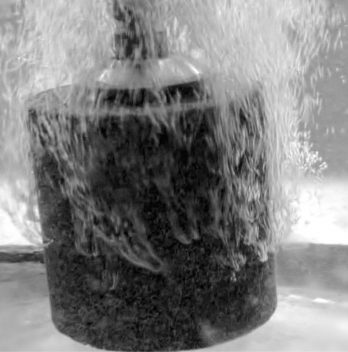
    A nutrient lockout can be put as plants’ inability to absorb or take in nutrients. These nutrients are available, but your plants can’t just take in these nutrients; thus, the occurrence of a nutrient lockout.

    Nutrient lockouts occur frequently among hydroponic growers. Most of the time, newbies are frightened when this occurs because they might think they did something wrong. The vital thing you should know is that both skilled and newbie growers experience a nutrient lockout. Also, making the right move to solving the problem is important to save your garden.

    Nutrient Lockout Symptoms

    Identifying nutrient lockout symptoms is very important. If you mistakenly diagnose nutrient lockout as something else, you may do the exact opposite of what’s needed, making matters worse for your plants’ health.

    Below are the symptoms you will observe when it comes to diagnosing nutrient lockout:

    • Discoloration of leaves
    • A few leaf burns.
    • Plants stunted growth.
    • Deformity of plant structure.
    Nutrient Lockout Symptoms in your plant

    These symptoms are quite confusing because they are similar to plant undernutrition. Some growers may not be conversant with these issues, and they may think their plants need more nutrients, so they add more nutrients.

    This worsens the situation because the plants’ environment is exposed to more salts or nutrients. This, in turn, affects the system’s pH, causing more nutrient lockout.

    Therefore, ensure you know the correct diagnoses to avoid nutrient overfeeding.


    Read more about General Hydroponic Nutrients for Soil

    Causes Of Nutrient Lockout

    The causes of nutrient lockout are:

    • Inappropriate pH Range: inappropriate pH range in soil or water can cause a nutrient lockout. pH levels should be maintained and kept between 5.5 and 6.5. It should also be measured routinely. Various types of minerals contained in nutrients can only be absorbed by your plant at exact pH ranges. When your pH levels do not meet some particular ranges, an adjustment will be needed quickly.
    • Build-up of Excess Minerals: when excess minerals in your reservoir build-up, it will cause a nutrient lockout. Always replace your nutrient solution every week or two weeks and keep your reservoir clean. Also, you can use clean water to rinse off excess nutrients from your plants’ roots.
    • Adding too many Nutrients: adding excess nutrients to your garden can also cause your plants not to be able to absorb nutrients. Nutrients contain salts and too much of it increases the pH of your garden causing the nutrient lockout. Ensure you follow instructions and apply the right amount of nutrients to your plant solution.
    • Inappropriate Mixing of Hydroponics Nutrients: when you don’t mix your hydroponics nutrients properly, it can cause the inability of the roots of your plants to absorb nutrients. Always read and follow instructions from your nutrient pack or bottle to mix appropriately.

    Solutions Nutrient Lockout

    After recognizing and confirming nutrient lockout symptoms in your hydroponics or soil, the next step is to solve the problem. Here’s how to fix nutrient lockout:

    Flushing

    To save your garden, the first thing to do is nutrient flushing. We recommend you clean your soil or growing medium by saturating it with fresh water for 24 hours or so. Also, go ahead and empty your reservoir and rinse it well.

    You can also use a special bleaching agent to flush out excess nutrients that have built up in your garden.

    After successfully flushing your garden, allow the soil to dry. If you are making use of hydroponics, make sure you feed your plants with the correct amount of nutrients afterward.

    How To Reduce Risk Of Nute Lockout

    Just as it is important to identify and fix nutrient lockout, it is also crucial to reduce the risk of re-occurrence or running into one.

    You can avoid the risk of a nutrient lockout by judiciously checking the pH level of your system. Also, when you want to change your nutrient solution, do so carefully by checking the pH level of your growing medium.

    If you notice any changes in pH, flush your system when necessary. You should also ensure you don’t do flushing close to your crop harvesting time.

    Digital Soil pH Meter, Industrial Grade Soil pH Tester

    Calibration-Free LCD Display, High Accuracy Soil pH Pen, Soil pH Monitor for Garden, Lawn, Plant …

    We earn a commission if you make a purchase, at no additional cost to you.

    FAQ’s

    Can overwatering cause nutrient lockout?

    The amount of nitrogen that a plant can take up depends on the amount of water that it receives. If there is too little water, the plant will not be able to take up enough nitrogen and therefore become stressed. However, if there is too much water, plants are subjected to osmotic stress (the ability of the plant to hold water is impaired). This can lead to nutrient lockout, where the plant has no access to nutrients in the soil and cannot take them up.

    When the roots are flooded with water, the excess water causes the cells in the root to swell, which reduces the cell’s ability to absorb water and nutrients. Overwatering also damages the root system by reducing the ability of the roots to absorb water and nutrients. In the long term, overwatering can lead to nutrient deficiency.

    Can you reverse nutrient lockout?

    I would not be so quick to add a new fertilizer. The reason for this is that some fertilizers will lock up nitrogen in the soil and others will do the same with phosphorous. The best way to test is to wait until your soil is at least somewhat aerated, then take a sample and test it. You should be able to tell if there is a problem by testing the soil. If you notice that the soil is acidic, then you may need to add lime. If the soil is alkaline, then you may need to add something that will raise the pH. What I would suggest is to test the soil first, then you can add the new fertilizer.

    What does nitrogen toxicity look like?

    The first thing that comes to mind when I think of nitrogen toxicity is how it affects plant growth. Nitrogen toxicity often results in stunted growth, which is a condition where the plant grows at a slower rate than normal and is often characterized by a smaller, bushier plant. In addition, nitrogen toxicity often leads to yellowing and chlorosis of the leaves and/or stems, and discoloration or wilting of the leaves. Nitrogen toxicity in plants can result from exposure to nitrogenous fertilizers, excessive nitrogen in the soil, or high nitrogen levels in the soil.

    How do you fix overfed plants?

    This is a common problem in gardeners’ lives, but it’s a simple fix. The first thing to do is to decide what type of plant you’re dealing with. If the plant is a perennial or shrub, it should be pruned to encourage new growth and to maintain the desired shape.

    The next step is to figure out how much fertilizer you’ve applied. If your soil test results show that the plant requires more nutrients than the soil can provide, your best option is to add composted manure, fish emulsion or kelp meal to the soil around the base of the plant. If you prefer not to use manures, then consider applying a liquid fertilizer. Be sure to follow the manufacturer’s instructions for application. For instance, many fertilizers have specific rates for different plants, and you’ll want to use those rates when you apply fertilizer.

    Bottom Line

    The bottom line, nutrient lockout symptoms are common, especially in hydroponics. Regularly taking precautions in advance can avoid or reduce the risk of a nutrient lockout.

    Monitoring pH levels, using the correct amount of nutrients, and routinely flushing when necessary are all excellent practices for keeping your garden safe.

  • Super Oxygenated Water For Plants

    Super Oxygenated Water For Plants

    Super oxygenated water in plants enhances nutrients absorption as well as root growth, especially in hydroponics. It will also assist the vegetative phase and flowering phase of your plant. This is why the importance of dissolved oxygen in plants cannot be overemphasized.

    In this guide, we will be discussing super oxygenated water for plants and more. So read on to gain some knowledge.

    Is Super Oxygenated Water Good for Plants?

    Oxygen is definitely good for plants. You might be wondering how plants need oxygen because they take in carbon dioxide in exchange for releasing oxygen. Even though this is true, plants do need oxygen just as you and I need oxygen to breathe.

    Super oxygenated water in plants equals dissolved oxygen. Dissolved oxygen is the driving force of all types of plant systems in general. Be it traditional plants or hydroponic plants, oxygen plays a significant role in your plant’s health.

    Is Super Oxygenated Water Good for Plants

    Importance of Super Oxygenated Water for Plants

    • Nutrients Absorption: super oxygenation of water in plants improves the absorption or uptake of nutrients from your plants’ roots. Let’s take organic phosphate as an example. The presence of oxygen in your plants’ roots will oxidize organic phosphate into absorbable inorganic phosphate which can be easily absorbed and use by plants.
    • Sufficient Growth: super oxygenated water in your plant will increase your plant’s growth and development of roots resulting in better yield.
    • Aerobic Respiration: oxygen is needed by the plant root system for aerobic respiration. This aerobic respiration is an essential activity that supplies the energy needed for plant root development.
    • Prevent Root Rot: you need to make sure the root of your plants have access to adequate oxygen so they don’t start to rot.

    How to Oxygenate Water for Plants

    Water is an important factor especially when it comes to hydroponics. Oxygenated water is also a significant element in your hydroponics or aquaponics system for healthy growth.

    How to Increase Dissolved Oxygen in Water for Hydroponics Plants

    Oxygenating water for plants in hydroponics is essential. The roots of your plants will need to have a nice environment so they can breathe easily.

    As we know the roots are embedded in the grow beds which are made up of growing media. This is why the media needs to have the ability to access adequate oxygenation for the plant roots.

    So, below are some ways you can oxygenate your hydroponics plants:

    Airstone: one common method of supplying super oxygenated water to your hydroponic plants is by making use of an air stone. The pump in the hydroponics is attached to the air stone and the air is pushed through the stone. There are various sizes and shapes of air stone which makes them easy to fit excellently well into your hydroponic system. Even though some air stone produces large bubbles, we recommend purchasing the ones that produce smaller bubbles for the efficiency of supplying adequate oxygen to your root system.

    Air Diffusers: another way is by using an air diffuser. Air diffusers distribute air into water by their bendable tubes. They are made up of bendable tubes having holes inside them which they use in distributing oxygen. Air diffusers release air or oxygen evenly into the tubes with their evenly distributed holes.

    Siphon: the common ebb and flow (or flood and drain) in the hydroponics system makes use of siphon. Siphon is a method that spontaneously drains water from a hydroponic grow bed. As water is siphoned from the grow bed, it unveils or opens the plant root hair system to air. This process supplies oxygen to the root of the plant.

    AQUANEAT Air Stone, 4 X 2 Inch Large

    81iYEL5PeDL. AC SL1500

    Oxygenated Water for Aquaponics Plants

    When it comes to aquaponics, it is essential for both your fish and plants to have adequate oxygen.

    This is because oxygen plays a crucial role to fish development. With adequate oxygen, your fish will be very efficient in providing your plants with good nutrients and it will also increase the production of more fish for your plants’ development. Deprived of oxygen both in your fish and plants may cause them to die.

    Factors that Affects Oxygen Concentration in Plants

    The main factors that affect the oxygen concentration in plants are temperatures. Temperatures are a critical determinant of oxygen in plants.

    During hot weather such as summer, the temperature increases and it causes a decrease in oxygen availability.

    At night when the temperature is cool, there is the presence of algae in your water tank. Even though we always try to minimize the presence of algae, a little bit is important to produce oxygen in your water tank.

    Factors that Affects Oxygen Concentration in Plants

    FAQ’s

    How do you make oxygenated water for plants?

    The process of making oxygenated water is known as hydroponics. It requires a special type of soil, called aeroponic media, and a special lamp that provides the light needed by the plants to grow. The oxygenated water is added to the soil in a small reservoir above the roots of the plants. In order to make this kind of system, you need some special equipment. such as an air stone.

    What does aerating water do for plants?

    Aerating your pond water is a great way to get the air in the water. It also helps keep the oxygen levels higher. You can use an aerator with or without electricity. You can buy them at almost any garden store. They will run on either electricity or battery power. It depends on what you like better.

    What is highly oxygenated water?

    Highly oxygenated water is water that has been exposed to pure oxygen. This process removes the carbon dioxide from the water and replaces it with oxygen. The amount of oxygen in the water is controlled by the concentration of dissolved oxygen (DO) in the water. The higher the concentration of DO in the water, the more oxygen the water will contain.

    How do you increase oxygen in soil?

    The most obvious way to increase oxygen is to add compost, but it may also be possible to improve your soil by adding extra organic matter, or by adding nitrogen fertiliser. So basically, adding compost would probably be the most effective way to increase oxygen.

    How do you give plants oxygen?

    Plants breathe by using the carbon dioxide we exhale and the water vapor we perspire. Plants take oxygen from the air and use it to make sugars and water. They can’t make oxygen out of nothing so they have to take it from the air. There are many different ways plants do this. For example, some plants use water to absorb the oxygen and then release it back into the air through their leaves, while others use the process known as diffusion. Diffusion is when a gas (oxygen) passes from a low concentration to a high concentration. Diffusion is a very slow process so it would not be practical to use it to remove all the oxygen from the air, but it is good at removing smaller amounts. This is what plants use to breathe.  
     

    Do all plants release oxygen?

    There are two ways to answer this question. The first is to describe the process of photosynthesis and how it works in a general way. The second is to look at specific plants and see what happens when they are exposed to different levels of light. The general description In photosynthesis, light energy is captured by chlorophyll molecules in green plants and algae. These chlorophyll molecules then bind with carbon dioxide, water, and other substances to form glucose.
    The process releases oxygen as a waste product. The waste oxygen is expelled into the air.
    Some plants will actually release more oxygen when exposed to light. 

    Conclusion

    Super oxygenated water is pretty important for the growth of your plants and the development of your plants’ roots.

    Therefore, always ensure you provide sufficient oxygen for your plants so you can enjoy bountiful yield.