Author: Brian

  • Is Italian Squash The Same As Zucchini?

    Is Italian Squash The Same As Zucchini?

    If you enjoy gardening, you likely have grown some variety of squash. You may have wondered, is Italian squash the same as zucchini? With so many different varieties, it can be confusing to know which squash is which.

    Due to its abundance and versatility, many people choose to grow zucchini in their gardens. This beloved veggie goes great with both savory and sweet dishes. It is a popular squash that has a great flavor and texture.

    Is Italian Squash The Same As Zucchini?

    Zucchini is a variety of summer squash that is popular in Italian cooking due to its heritage. It is notable for a slightly sweet, mild flavor that makes it ideal for sweet and savory dishes. In sweet dishes, it provides moisture to the dish without affecting the flavor.

    So is Italian squash the same as zucchini? Well, since zucchini is so popular in Italian cooking, it is sometimes referred to as Italian squash. However, there are also other varieties of summer squash that are referred to as Italian squash. The term is used frequently in culinary terms.

    Italian Squash Is The Same as Zucchini

    Some recipes will use the terms zucchini and Italian squash interchangeably. If it is an Italian recipe, there is a good chance that it will say Italian squash when referring to zucchini.

    Summer Vs Winter Squash

    There are many different types of squash that can be broken into two different categories: summer and winter. The biggest difference between summer and winter squashes is their skin. Winter squashes have a hard skin, whereas summer squashes have soft skin.

    The tougher skin on winter squash allows them to survive cold temperatures. Unlike winter squashes, the skin of summer squashes can be eaten.

    Summer squash has a moist interior and is great for eating raw, frying, grilling, sauteing, and baking. Winter squash does not taste good raw and is a better option for baking and cooking. Both types are ideal for both sweet and savory dishes.

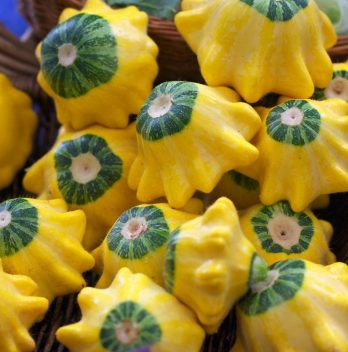
    The most popular summer squashes include zucchini, yellow squash, and Patty Pan. The most common winter squashes include acorn, butternut, and spaghetti. Both winter and summer varieties are full of beneficial nutrients and make a wonderful addition to your diet.

    Though it is often referred to as a vegetable, squash is technically a fruit.  However, culinarily wise it is generally prepared as a vegetable.

    History Of Zucchini

    Summer squash dates back thousands of years to 5500 BC to Central and South America. It was an important part of their diets, as it provided an excellent source of nutrition.
    It is believed that Italians are responsible for breeding modern zucchini, hence why it is sometimes called Italian squash. The zucchini they grew comes from squash that came from colonial America. In fact, the word squash actually translates to “Zucca” in the Italian language.

    The zucchini we know and love today came from Milan, Italy during the 19th century. Different early varieties come from areas near Milan in Italy. During the 1920s, Italian immigrants brought it over to America and it soon became a staple in many gardens and kitchens.

    In some places, such as the United Kingdom, it is called courgette. It is a popular plant as it is easy to grow in many summer climates and is great for gardeners of all experience levels.

    Zucchini is low in calories and is heart-healthy. Though it is typically green, it can also be yellow as well in color. However, yellow zucchini and yellow squash are two different things, though they are both a variety of summer squash.

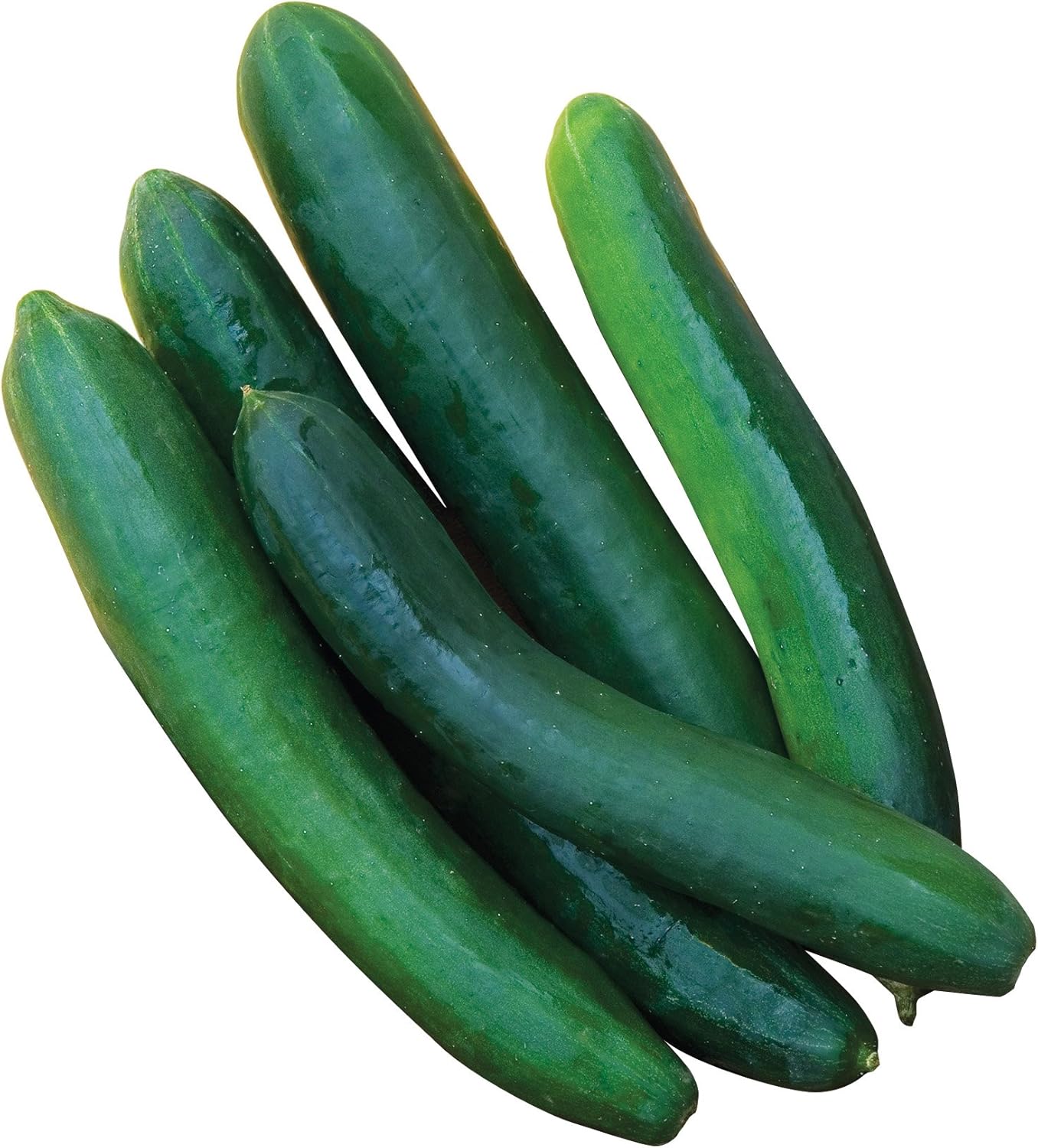
    Seeds of Change 5800 Dark Star Zucchinie, Green

    71yqayIAs L. AC SY879

    How To Grow Zucchini

    Zucchini grows best in rich, organic soil with a pH level between 6.0 and 7.5. They strive in full sun, though they can often grow in partial sun as well. They are a hardy plant and will produce an abundance of fruit when healthy.

    It is best to plant your zucchini three to four inches apart when the temperature of the soil is between 65 to 70 degrees Fahrenheit. They need regular watering, around one to two inches a week. The ideal time to harvest them is when they are five to eight inches long.

    Once you harvest it, zucchini will last for around one week, maybe two depending on the conditions. You should store it in a cool, dry location such as the crisper drawer of your fridge.

    Common Recipes That Use The Italian Squash, Zucchini

    There are many recipes that call for zucchini thanks to its high moisture level and mild flavor. It is a common addition to many summer dishes, as that is when it is most plentiful.

    There are many popular savory dishes that use this common summer squash. In Italian cuisine, it is popular to stew it with tomatoes, olive oil, and fresh herbs. In addition, it is often sauteed and served with pasta, herbs, and cheese.

    Common Recipes That Use The Italian Squash, Zucchini

    One of the most popular zucchini dishes is ratatouille, which also includes other summer vegetables and olive oil. In addition, is also common in soups, casseroles, or even by itself.

    In baking, it is a popular choice for bread, as it provides an incredibly moist texture. It is also used for cakes, cookies, and muffins.

    FAQs

    What type of squash is zucchini?

    Zucchini, also known as courgette or cucumber melon, is an excellent summer vegetable. It is in the same family as squash and pumpkins, but is a summer vegetable rather than a winter one. It has green leaves with a bump on the end of each leaf which are edible and can be used in salads or stir-fries.
    Zucchini is also a popular ingredient in soups, pasta dishes, and casseroles.

    Is zucchini the same as pumpkin?

    No, zucchini is not the same as pumpkin. Pumpkin is a large fruit that grows from a vine like cucumbers and squash. Zucchini is a vegetable that looks like a long, thick cucumber. Pumpkin seeds are found inside the fruit. How do you cook zucchini? Zucchini is best cooked by grilling, baking, or roasting. It is a good vegetable to grill because it can be cut into slices or chunks, and can be marinated with different seasonings before being grilled. Grilling also gives it a more crunchy texture. Baking and roasting gives it a softer texture.

    What is the secret to growing zucchini?

    Zucchinis are not picky about soil type. They can grow in full sun or partial shade. Zucchinis are easy to grow and most gardeners enjoy them. You can also grow them indoors in a pot. Step 1 Choose a location in your garden for the zucchini. A good location is in a sunny spot with good drainage.

    Step 2 Prepare the soil. Add organic matter to the soil. The best type of organic matter for growing zucchinis is composted manure or leaf mold. Another option is to add fertilizer to the soil. A general rule of thumb is 1 teaspoon of fertilizer per 4 square feet of soil. Step 3 Plant the seed. You can plant the seed directly into the soil or in a small pot. You can also plant the seed into the ground and then transplant it after it grows into a zucchini plant. Step 4 Water the plants. Zucchinis need water every day during hot weather and only every other day in cold weather. Step 5 Harvest the zucchini. The zucchini fruits should be harvested when they are about 3 inches in diameter. You can cut them off the plant or you can wait for them to fall off on their own.

    Do zucchini need full sun?

    As a general rule, plants need full sun.

    How do you eat Italian squash?

    Zucchini is a vegetable that can be used in many different ways, including as a side dish, as a main course, or as part of a meal. There are many ways to cook zucchini, and it can be served in a variety of dishes. 

    You can serve it raw, as a pasta substitute, as a side dish, or as a pizza base. Zucchini is delicious in a baked lasagna or stuffed with chicken. Zucchini is one of the most versatile vegetables, and it can be prepared in many different ways. It can be grilled, fried, sautéed, or roasted.  It can be used as a substitute for other vegetables, such as potato, eggplant, and pumpkin.

    Italian Squash And Zucchini: The Same Thing

    If you see a recipe that calls for Italian squash, it is safe to assume that it is referring to zucchini. Though summer squashes go back thousands of years to Central and South America, zucchini actually comes from Italy. It wasn’t until the 19th century that people began to grow it in Italy before it quickly spread all over the world.

    Squash Italian, as some might say, can be used in both sweet and savory dishes. It is quite simple to grow, as it just needs rich, organic soil, full sun, and one to two inches of water a week. It is also extremely healthy and versatile due to its mild flavor and moist texture.

    Do you have any questions regarding is Italian squash the same as zucchini? If so, please ask any questions regarding squash, for both the summer and winter kinds, in the comment section below.

  • Green Bean Trellis – How To Build One

    Green Bean Trellis – How To Build One

    Green bean variety that tends to climb requires stable support. Trellis is one common framework used for a plant that requires support such as green beans.

    Green bean is a type of common bean and they are the unripe variety of beans. They are a popular staple that makes up part of our diet. This bean is also referred to by different names such as string bean, snap bean, French bean, and snaps.

    Green beans come in two varieties namely pole bean and bush bean. The bush bean does not require support. But the pole beans will usually require support.

    It is only ideal for growers to support their green bean that tends to grow in a climbing manner. This is why we will be looking at green bean trellis.

    About Green Beans

    Green bean is a type of common bean. It originated from Central America and South America. It has been researched that these green beans have been cultivated in Mexico and Peru for thousands of years.

    Green beans were grown by North Americans and these beans were planted with corn to allow it to grow up a stalk with the corn. As of today, the green bean is an essential crop known almost everywhere.

    About Green Beans

    Why Green Bean Require Supports

    As we mentioned, green beans come in two varieties which are bush beans and pole beans. The major difference between these two beans varieties is their growing styles.

    • Bush beans tend to grow in a bushy manner or compactly and can attain up to two feet height. Therefore this green beans variety doesn’t require support.
    • On the other hand, pole beans growing style is vining and can attain 10 to 15 feet height. Therefore this bean variety requires support such as trellis or staking.

    So, for the purpose of this article, let’s look into how to support your green bean plant using a trellis.

    Choosing The Right Trellis For Green Beans

    There are different types of trellis you can use to support your vining green bean and help maximize growth and production.

    Choosing the ideal type of bean trellis will depend on your personal preference, availability of garden space, durability, and budget. So, put these in mind when selecting the type of trellis to use in your garden.

    The common trellis you can go for include:

    • Teepee Trellis
    • String trellises
    • Livestock panels

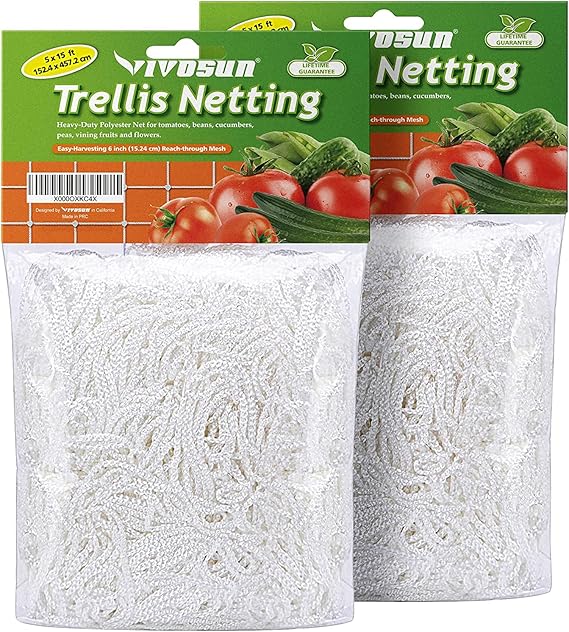
    VIVOSUN 2 Pack Heavy Duty Polyester Plant Trellis Netting 5 x 15ft

    81c+y7Z3TCL. AC SX569

    Let’s dive in further by looking at their details and how to build them.

    Types Of Trellis To Use And How To Build Them

    So, here are the details of the types of green bean fence or trellis you can use for your pole bean variety and how to build them:

    1.    Teepee Trellis

    Teepee trellis is easy and inexpensive to make. Also, if you’re short of garden space, teepee trellis may just be what you need.

    To build teepee trellis, you will need

    • 5 to 7 bamboo poles or sturdy branches (should be 8 to 10 feet tall)
    • Twines, ropes, or wire
    • Scissors

    To begin, dig up the soil in your garden and push the end of each pole about 6 inches into the ground. Then the spacing for each pole should be about 6 to 10 inches apart. Cover up the hole by packing the soil around the poles firmly.

    Then carefully bend the tops of the poles inwards aiming towards the center of the circle. Ensure this is done slowly and carefully to avoid snapping the poles. Once this is done, use the rope, twine, or wire to bind the gathered top poles together. Secure them well and tie the knot.

    How To Build Teepee Trellis

    You now plant your pole bean seeds or seedlings around the base leg of each pole. Green beans tend to grow rapidly. As they grow, they will climb to the top of the pole.

    You can also train the plant by carefully wrapping the seedlings on the twine. But most times, they tend to climb on their own. But you can do this just to help any stray plant that goes in the wrong direction.
    2.    String Or Twine Trellises

    String trellises tend to be time-consuming to construct. But they are also less expensive to construct. Here’s what you’ll require to build a string trellis:

    • Posthole digger
    • 3-inch deck screw
    • String or twine
    • Drill
    • Garden staples
    • 2 by 4-inch lumber or timber
    • 8 to 10-foot post

    Using a post hole digger, dig a hole of about 8 to 10 inches at each end of the bean row. The holes should be spaced 6 feet apart. Dig in a 6 to 8-foot wooden post into each hole. Secure them firmly.

    Create a top crossbar by laying a 2 by 4 on the top of the posts. With the help of a drill and 3-inch deck screw, attach the board to the post. Then push garden staples into the ground between the two posts and the staples should be spaced 6 inches apart. Do this process again for the row on the other side.

    The end of the garden length string or twine should be tied to one end of the crossbar. The string or twine should be looped into the round and under the first staple. Keep on looping the string through the staples and over the crossbar until you get to the end. Tie it off and cut off the excess string.

    Then plant your beans beneath the structure and watch it grow and climb up the string.

    3.    Livestock Panels

    The livestock panel can be used multiple times. This type of trellis often measures about 16 feet long and 5 feet wide.

    For an easy-to-construct trellis, allow the livestock panels to lean horizontally or vertically against your garden wall. Then sow your seeds beneath and the vines will grow up and over it.


    FAQ’s

    How do you make a home made green bean trellis?

    A garden without a trellis can be a problem, especially if you have a long row of peas or beans to grow. As the plants grow taller and taller, it can become increasingly difficult to keep them supported without causing damage. If you want to grow peas or beans, you’re going to need a trellis. Not only does a trellis help you grow taller vegetables, but it also helps keep your plants safe from pests and provides support for them as they grow. Trellises can be made out of wood, metal, plastic or fabric.
    A trellis is essentially a vertical support that can be attached to the ground or to a pole.

    The simple trellis is made out of string and can be tied to stakes in the ground or tied to a pole. This is a great option for gardeners who want a basic trellis and don’t want to spend a lot of time assembling it.

    The vertical trellis is one of the most common types of trellis used in gardening. A vertical trellis is usually made of wood and has multiple supports on each side of the trellis. This allows you to grow taller plants without bending over. You can find vertical trellises made out of wood, metal or plastic. A vertical trellis is ideal for growing taller vegetables such as cucumbers, tomatoes, beans and peas. The horizontal trellis A horizontal trellis is similar to a simple trellis, but it is attached to stakes on both sides of the garden. The horizontal trellis is great for growing a wide variety of crops, including peppers, eggplants, melons and cucumbers. It’s also useful for growing shorter vegetables such as lettuce, spinach and broccoli.

    What are the different types of trellis?

    There are two main types of trellises: wire and wood. Wire is much easier to use than wood and can be used for a variety of structures, including arbors, pergolas, fences and privacy screens. However, it can be expensive. If you have enough space, wood is by far the best choice for most projects. It’s more expensive, but it lasts forever and will look good for years.

    Also, trellises come in many different shapes and sizes. One of the most popular shapes is a “zig-zag” trellis. It consists of a series of parallel slats attached to a single vertical post. These are great for supporting climbing vines like grapes, cucumbers or melons. The horizontal slats provide plenty of support while allowing the vines to grow between them. Another common type of trellis is the arbor trellis. This is a square or rectangular frame made from metal or wood. It has two sets of horizontal slats on either side of the structure. The slats are usually spaced evenly apart. Arbors are popular for growing small fruits and vegetables, including strawberries, apples, pears, plums, cherries and more. If you have space, you can also build a latticework trellis.

    Additional Say: Green Bean Trellis

    Building green bean trellis is needed to support your vining pole bean. This way, they can grow to flourish as well as maximize production at the end of their growing season.

    So, follow our guidelines on how to build trellis for your pole beans variety.

  • How To Cross Breed Pepper Plants: Helpful Guidelines

    How To Cross Breed Pepper Plants: Helpful Guidelines

    Many known pepper varieties are grown worldwide by farmers. Crossbreeding pepper plants of different varieties is a fairly easy task. If you wish to know more about this, then read on to find out how to crossbreed pepper plants.

    With the appropriate knowledge, you can cross-breed two pepper varieties and generate a brand new desirable pepper offspring. Basically, people cross breed plants like pepper to generate a tasty, hot, or more aesthetically pleasing pepper hybrid.

    In this post, we will be sharing amazing details on how to successfully cross-breed pepper plants to yield a more desirable pepper plant. So, let’s begin.

    Cross Breeding Peppers

    It is the desire of every gardener to have a bountiful and worthy harvest at the end of the growing season. One way to achieve this is by selecting some of the best parent plants and cross-breeding them to achieve more desirable offspring.

    Crossbreeding pepper can become an easy and straightforward thing for you if you get the right knowledge. But also have in mind that crossbreeding takes time, dedication, and patience to get successful results.

    Cross Breeding Peppers

    When it comes to crossbreeding, the plants that are used in crossbreeding are referred to as the parent plants. Then the resulting pepper plant is regarded as the hybrid. Crossbreeding pepper plants implies that we interceding with the natural reproductive process of pepper plants.

    Pepper plants are cross-bred thanks to the anatomy of their flowers. The flowers are responsible for the production of seed-bearing fruits. On a single pepper plant, you will find both male and female reproductive parts. Hence, this allows for self-pollination.

    Important Note On How To Cross Breed Peppers

    Firstly, you need to understand that peppers are capable of self-pollination. Under normal conditions, pepper plants will self-pollinate once the flower has been fertilized by compactable pollen. A bee buzzing around plants, a rush of wind, or even an ant can initiate the process of self-pollination.

    It is important to prevent self-pollination from peppers since our goal is to crossbreed our desired traits. Therefore, we need to manipulate the pepper plant.

    • This brings us to the process of emasculation. Since we don’t want the parent plants to self-pollinate, we need to carefully remove some reproductive parts. The male reproductive part is removed from the maternal (mother) pepper flower plant. The maternal parts are left alone because they are chosen to bear fruit.
    Important Note On How To Cross Breed Peppers

    So, let’s further look into guidelines on how to crossbreed pepper plants.

    Guidelines On How To Cross Breed Pepper Plants

    Here are the guidelines on how to breed peppers the right way:

    1.    Grow The Parent’s Plants

    The main purpose of cross-breeding pepper is to combine two pepper varieties to produce the desired offspring. Therefore, obtain the seeds of the parent variety you wish to combine and grow them. Make sure the seeds are quality seeds to boost your chance of getting great results.

    2.    Locate The Flowers Before They Bloom To Emasculate Them

    As we’ve mentioned, this process is very important. So, finding the parent flowers before they bloom and when they’re about to bloom means they are mature enough. They can be identified easily by their green outer petals or unfurled sepals.

    3.    Cut Or Remove All Bloomed Flowers

    Cut down the bloom flowers to at least a quarter-inch down the stem and leave the unbloomed flowers. Ensure you use sharp scissors or tools and rub some alcohol on them and wear some new pair of latex gloves before you begin.

    Once you’re done, clean the scissors with methylated spirit and throw away the gloves. Wear new gloves and move to the next plant and do the same.

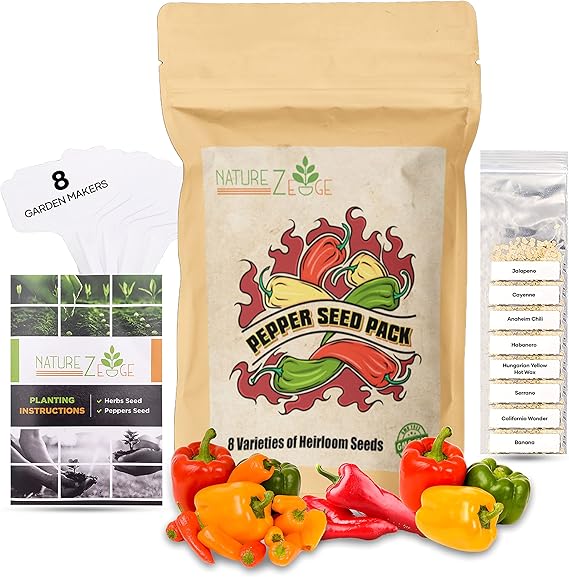
    Pepper Seeds 8 Varieties for Planting in Your Garden, Heirloom Seeds Starter Kit, Non-GMO

    816arUp7IKS. AC SX569

    4.    Reveal The Pistil Of The Unbloomed Flowers On One Of The Parent Pepper

    This is done by peeling away the unbloomed petals carefully with sterilized tweezers. Wear a pair of gloves when doing this. Once you’ve done this correctly, you will see several stamens.

    Once the stamen (male reproductive part) has been exposed, emasculate them with the help of small, sharp, and sterile scissors. The pistil (female reproductive part) is then exposed. Do not damage or touch this pistil as it will be responsible for bearing the resulting fruit.

    Discard the stamen you got from the first parent flower and tie small strings around the stem of the flower.

    5.    Second Flower Stamen Harvesting

    Move to the second pepper flower and wear a new pair of gloves. Just like you did to the first pepper plant, carefully harvest the stamen of the second flower.

    6.    Fertilize The First Pepper Plant Manually

    From the harvested stem of the second plant, cut the stamen open carefully with the help of a dissecting needle. Then with the help of the needle’s tip, go ahead and scoop out the pollen inside.

    Then apply the scooped pollen on the exposed pistil on the first pepper plant. Make sure the pollen is applied on the top part which is known as the stigma. Therefore, you have achieved manual pollination.

    7.    Observe The Manually Pollinated Flower

    Once you’ve accomplished the manual pollination, watch the plant closely. If the manual pollination was successful, in about 3 or 4 days, the ovary which is located below the pistil will start to swell. This is a good sign of successful pollination. However, if the ovary refuses to swell, it means it was unsuccessful. This is usually caused by damage of pistil during emasculation. This is why you should be extra careful when clipping the stamens.

    So, the successfully fertilized ovary will grow to become fruit. The resulting fruit and the seeds are referred to as a hybrid. So, if the fruits are exactly what you desired, their seeds can now be used to propagate your new crossbreed pepper plant species.

    How To Cross Breed Pepper Plants: Final Say

    Once you’ve successfully flowed our guiltiness on how to crossbreed pepper plants, cross-breeding your pepper variety should be easy. You can now make tastier or hotter pepper species than what is readily available in your region.

    Find more information about Jalapeno Plant Spacing

  • How To Know When A Pumpkin Is Ripe

    How To Know When A Pumpkin Is Ripe

    The big question on most farmers’ minds is how to know when a pumpkin is ripe or ready for harvest. Usually, the color is a good indicator of pumpkin ripeness and the color of most ripe pumpkins is usually orange. But they can as well come in other shades such as blue, white, grey, and even stripe colors.

    Pumpkin is from the family of Cucurbitaceae and they fall under winter squash. We have over 50 varieties of pumpkin. The round orange pumpkin is one of the most common or recognizable pumpkins.

    In this article, we will be sharing great tips on how to know when a pumpkin is ripe or ready for harvest. So, let’s get right into this.

    Some Info On Pumpkin

    Pumpkin is from the gourd family. Pumpkin is a smooth, round, and partially cultivar of winter squash. It has ribbed-like skin and the most common colors tend to be deep yellow to orange.

    It is a nutritious plump nutritious vegetable and it is loaded with great nutrients. Pumpkin has a low-calorie composition. It is as well loaded with vitamins and minerals and these nutrients are included in its seeds, leaves, and juice.

    Some Info On Pumpkin

    There are many ways to use pumpkins in our dishes. Pumpkin can be integrated into soups, salads, desserts, preserves, as well as a substitute for butter.

    Pumpkins are as well used in decorations such as Halloween decorations. They can also be pureed and baked in a pie or you can slow cook them to perfection in your favorite fall soup.

    How Do You Know When A Pumpkin Is Ripe: Helpful Tips

    Pumpkin offers many signs once they are ready for harvest. As long as you know what to watch out for, it’s pretty easy to know how to tell if pumpkin is ripe.

    So here are 5 signs on how to tell when pumpkins are ripe:

    1.    Right Time Of The Year

    Generally, most squash from different varieties takes about 3 to 4 months or even 5 months to attain maturity. This also depends on your climate, the growing conditions, and the variety planted.

    Therefore, the easy way to know when a pumpkin is ripe is by simply keeping a good watch and knowing how long it has been growing. You should compare the growing period to the days to maturity that are on your seed packet.

    Right Time Of The Year

    An important thing to note is that pumpkins can only tolerate light frost and will not get ripe after you’ve harvested them after they’ve been exposed to heavy frost. Therefore, before the frost in your area gets heavy, ensure you harvest all your pumpkin on time.

    Also, they shouldn’t be exposed to temperatures below 32 degrees Fahrenheit. You can simply pick your pumpkin early and allow them to get ripe indoors if your first killing frost is approaching.

    2.    Desired Color Change

    As a general rule, a change in the desired color is a good indicator your gourd is ripe and ready for harvest. Golden-orange is a sign of the fruit attaining maturity.

    Generally, an immature gourd tends to remain green. Therefore, it’s safe to say the pumpkin isn’t matured yet when it’s still green.

    However, there are times when a squash refuses to turn orange even after the stem has died off. If this is the case, the fruit can be ripened off the vine.

    3.    Hard To Puncture Rind With Fingernails

    To know when a pumpkin is ripe, the rind of your pumpkin should be hard and difficult to puncture with your fingernail. This is one of the most popular signs of squash attaining maturity.

    When you puncture the rind of the pumpkin and your fingernails create a small dent and the skin doesn’t puncture, that’s a good indicator your pumpkin is ready for harvest.

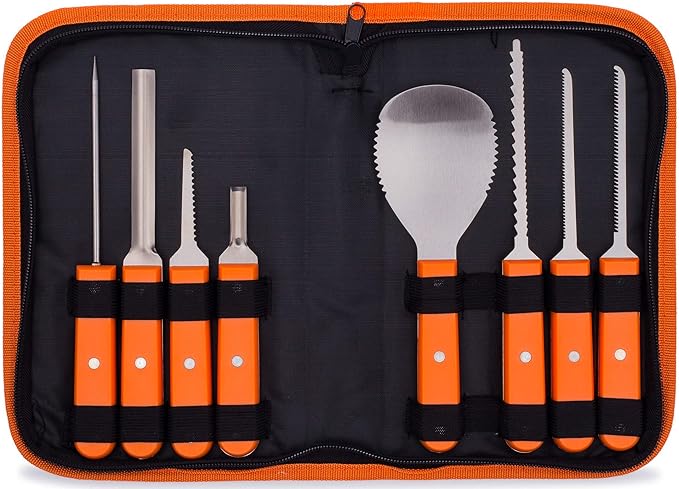
    Professional Pumpkin Carving Kit – Heavy Duty Stainless Steel Tools and Knives with Carrying Case (8 Pieces)

    917RLVFFdiL. AC SX679

    If you’re however growing pumpkin pie, harvesting should be done when the fruit rind is firm but not hard as a rock. This is important especially if you wish to make pies within the next week or you wish to roast and puree the flesh to store in the freezer.

    4.    Stem Turns Brown

    Once you notice the stem of your gourd becomes hard to touch instead of being slightly spongy, check the color of the stem. If the stem is beginning to dry out and turn brown, then the stem is dying. This means the supply to the plant is diminishing.

    However, you can still leave the gourd and allow the entire vine to die around your squash before harvesting them. but ensure this is before the first sign of frost.

    5.    A Hollow Sound Is Generated When You Knock The Rind

    Another method on how to know when a pumpkin is ripe is to gently knock the rind. When you hear a hollow thunk sound, then that’s an indication that it’s ready for harvest.

    How To Harvest Pumpkin

    We now know when a pumpkin is ripe and ready to be picked. Let’s now briefly look into how to harvest them.

    Use a clean sharp tool or knife to harvest pumpkin. Measure the stem at least 3 to 5 inches from the top of the fruit then cut the stem away from the vine.

    The part of the stem you’ve left on your fruit will actually keep o supplying the last residue of nutrients for your fruit. This means it will last long after you must have harvested them.

    It’s important you don’t carry the fruit by the stem as this isn’t a handle. If by any chance the stem breaks off, your fruit will immediately begin to rot. So, ensure you give some support to the sides and base while you carry your squash.

    FAQ’s

    How can you tell if a pumpkin is ripe?

    When it comes to growing pumpkins, you can choose from a wide variety of varieties. However, once you have selected your pumpkin, it is time to get ready for harvest. Once you begin the process of harvesting your pumpkin, you will want to know when it is time to cut it open. There are several methods that you can use to determine if your pumpkin is ripe.

    1. Check The Flesh Color

    One of the best ways to tell if your pumpkin is ripe is by checking its flesh color. Pumpkins with darker orange flesh tend to be sweeter than those with lighter flesh. If you are unsure about the color of your pumpkin, you can take a look at our article on how to choose the perfect pumpkin.

    2. Look For A Pumpkin’s Shape

    If you are going to be eating your pumpkin straight out of the ground, you may want to look for a pumpkin that has a round shape.

    3. Listen For Pumpkin Seeds

    If you have ever picked and eaten a fresh pumpkin, then you know how loud they can be when you crack them open. Pumpkin seeds, however, are much quieter. They are usually only audible if you are right next to the pumpkin when it is being picked.

    4. Check The Pumpkins’ Stem

    It is easy to tell if a pumpkin’s stem is hard or soft. If it is soft, it means that it is still growing and will not be ready for carving until the next fall. If it is hard, it means that the pumpkin is ready to be harvested. If you plan to carve your pumpkin, you should look for pumpkins with stems that are hard and have no cracks.

    What should you consider when picking a pumpkin at the store?

    If it had been picked too early it will be small and not ready to eat. If you wait too late, the pumpkin will have started to dry out and become tough. You can’t use a pumpkin that is too ripe or soft because it will just fall apart.

    Here are some tips to help you choose the perfect pumpkin for your recipe.

    The first thing you should do is look at the size of the pumpkin.

    It is always best to buy a pumpkin that is the same size as your dish. This way you will get the most use out of your ingredients and it will cook evenly. It is also important to note that pumpkins get bigger as they mature so make sure to check the size before you buy.

    If you want to cook the pumpkin in its skin, you may want to look for a smallish pumpkin. If you remove the skin, you can use any size pumpkin. It all depends on what you are cooking. The color If you like the color of the pumpkin, then that is great. However, if you don’t like the color, it doesn’t mean you shouldn’t buy it.

    What happens if you pick a pumpkin too early?

    They quite simply won’t last very long.

    Conclusion On How To Know When A Pumpkin Is Ripe

    It’s pretty fun growing and harvesting pumpkin. How to know when a pumpkin is ripe is also not difficult to determine. Kindly look through the helpful tips we’ve outlined for you and you can easily learn when the right time is to harvest your pumpkin.

  • Types Of Worms That Eat Tomato Plants

    Types Of Worms That Eat Tomato Plants

    If you are a gardener, you will want to know the types of worms that eat tomato plants. They are one of the most popular plants to grow as they are typically easy to maintain and often produce an abundance of tomatoes. However, they are not only popular among people but also worms as well.

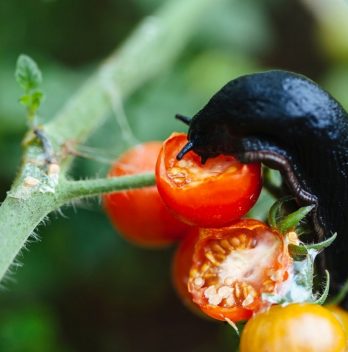
    Worms will commonly eat the leaves, stems, flowers, and fruit of your tomato plant. This can be problematic for your plant, as they can destroy it. Fortunately, by identifying these types of worms you can then know how to keep them away.

    Species Of Worms That Eat Tomato Plants

    No gardener ever wants to see worms eating their tomatoes. It can be frustrating to see all the hard work that went into maintaining your garden ruined by a bunch of hungry insects. By identifying these species, you can help put a stop to their havoc.

    The most common types of tomato-eating worms include tomato hornworms, loopers, armyworms, and cutworms. These worm species can eat all parts of your tomato plant, which can completely destroy the plant. They can be a common problem that many gardeners have to deal with.

    Species Of Worms That Eat Tomato Plants

    These worms that you see on your tomato plants are actually either the larval stage of moths or caterpillars. They are generally brown or green in color, which lets them easily blend into your tomato plant. They can consume the leaves and other parts of tomatoes at a fast rate, so it is best to get rid of them as soon as you notice them.

    Tomato Hornworms

    There are two main types of hornworms, tomato hornworm, and tobacco hornworm. Both types like to eat tomatoes, tobacco, potatoes, eggplants, peppers, and other types of nightshade plants.

    Tomato hornworms are recognizable by their chevron stripes and black horn on the backside of their green bodies. They are the larvae form of the five-spotted hawkmoth. They are one of the most common types of worms you will see on your tomato plants.

    Though tobacco hornworms also have a green body, they have diagonal stripes and a red horn on their backside. They are the larvae form of the Carolina sphinx moth aka the Tobacco Hawk Moth.

    Tomato and tobacco worms both enjoy eating the leaves of tomato plants. They will eat the flesh of the leaf and leave behind the veins.

    Loopers

    The cabbage looper, or simply just the looper, eats a variety of fruits and vegetables including cabbage, tomatoes, beans, celery, lettuce, broccoli, and spinach. They are the caterpillar form of the Owlet moth.

    Monterey LG6150 Garden Insect Spray, Insecticide & Pesticide with Spinosad Concentrate

    81puQQBR1LL. AC SL1500

    These green caterpillars arch their back into a loop as they crawl, hence the name loopers. Oftentimes, the moth will lay their eggs on the underside of the tomato leaves or other vegetable leaves. Then, they will eat parts of the plant as they grow.

    Armyworms

    Armyworms come in many different types and are the larvae form of armyworm moths. They are very destructive and will eat a variety of different plants.

    Most of the time, armyworms will cause the most problems in the summertime. The most common type of armyworm is brown or gray, with the males having white spots whites.

    Female armyworm moths will lay their eggs on the underside of leaves. The larvae will then consume various parts of the plant.

    Cutworms

    Cutworms are one of the most problematic types of worms you can find in your garden. They are the larvae of Turnip moths or Large Yellow Underwing moths. They are generally green, yellow, gray, or brown in color, making it easy for them to camouflage in your garden.

    Cutworms will eat a variety of different plants, mostly eating the leaves, stems, and buds. They are called cutworms because they cut down young plants as they feed on their stems. They can cause lots of damage to gardens, so it is best to get rid of them as soon as you spot them.

    Cutworms

    While some cutworms will continue to eat the plant they cut down, others will move unto other plants to eat their stems. They can easily take out a whole row of young tomato plants in just a couple days’ time.

    How To Get Rid Of Worms On Your Tomato Plants

    Worms on tomato plants can wreak havoc in no time. They will not only target your tomatoes but likely other plants in your garden.

    If you notice worms on your tomato plants, you can carefully pick them off your plants while wearing gloves. Though it can be time-consuming, it is an easy and free way to get rid of your worm problem. Neem oil is also an easy solution to keep worms and other bugs off of your plants.

    Diatomaceous earth is another safe and effective way to rid your garden of unwanted bugs. Diatomaceous earth is made from the fossilized remains of small aquatic creatures known as diatoms. It works by dehydrating and drying out insects.

    Making your garden bird-friendly is another great way to keep bugs at bay. By putting out bird feeders and birdbaths, you will attract different species of birds. These birds will also eat the worms in your garden, helping out your plants.

    FAQs

    What are the worms that eat tomato plants?

    There is a huge number of insects that eats tomato plants. This includes lady beetles, mites, caterpillars, whiteflies, and more. Lady Beetles Lady beetles are probably the most common pest on tomato plants. They eat the leaves, which can cause the plant to wilt and die. If you notice the plant has wilted or has yellow leaves, it is best to pick it up and move it into a different location so it can recover.

    The worms that eats tomato plants are generally small, white and round. The worms may also be found in other parts of your garden such as the flower bed, vegetable garden or even on the lawn.

    There are worms that are actually called “tomato leaf miners”. These are small, soft bodied, white, worm like creatures. They are very tiny and are usually less than 1mm in length. The worms live in the soil surrounding your tomato plants. They come out of the ground and lay their eggs on the leaves of the tomato plant. When they hatch, the larvae begin to eat the leaves. This will eventually kill the plant.

    You should watch out for the caterpillars of the tomato hornworm moth, Manduca sexta. They’re a pest of all kinds of fruit and vegetable crops, including tomatoes, melons, peppers, eggplant, cucumbers, beans, squash, and more. The pest’s larvae are also known as “hornworms” because they have two horns on their head. 

    When should I start to be concerned?

    You should start to worry when they start to multiply and eat a lot- Then you will need to find out what is causing this. Insects and pests are common in the garden. A large variety of insects and pests exist that can cause harm to plants. There are many types of pest and insect problems in the garden. They include insects, such as caterpillars, aphids, mites, beetles and slugs; and diseases, such as mildew, rust, and viruses.

    What’s the biggest with dealing with a hornworm infestation?

    If they’re in your yard, they will eat plants and trees that you have planted or trees that were planted in your yard. They can also destroy your lawn.

    The main problem is that they can cause damage that is difficult to detect. If you are not aware of their presence, they could be causing serious damage to your yard before you know it. They may leave behind eggs that hatch into larvae.

    What plants repel hornworms?

    It is important to plant some plants that will help prevent hornworm damage.

    These include:

    Echinacea – Echinacea is known for its anti-bacterial properties and can help deter hornworms. It is also known to attract beneficial insects. Echinacea should be planted in full sun.

    In areas where there is lots of snow, echinacea should be planted in a warmer area in order to bloom earlier.

    Marigolds – Marigolds are effective at repelling hornworms. They can also deter other insects. Marigolds can be planted in the fall and in the spring as well. They do best when planted in full sun.

    Dill – Dills can be planted in the fall and in the spring. It has been shown to deter hornworms. It also helps attract bees and butterflies. You can plant dill in full sun. Dill will grow best if planted in a well-drained soil.

    Nasturtium – This plant has been known to repel hornworms.

    Keeping Worms Away From Your Garden

    There are various types of tomato worms that can damage and destroy your plants. The most common type of worms you will see on your tomatoes include loopers, armyworms, cutworms, and hornworms.

    Though these types of worms will mainly eat the leaves of your tomato plants, they will also eat the stems, flowers, and fruit as well. Fortunately, there are some simple solutions to keep these pesky bugs away.

    Diatomaceous earth and neem oil are simple and safe products you can add to your plants to keep bugs away. In addition, you can also make your garden more bird-friendly, as they will eat your bugs. You can even pick them off with your hands while wearing gloves.

    Do you have any questions regarding worms that eat tomato plants? If so, please ask any questions regarding the types of worms that eat tomatoes and how to keep them away.

  • Yellow Squash vs Zucchini

    Yellow Squash vs Zucchini

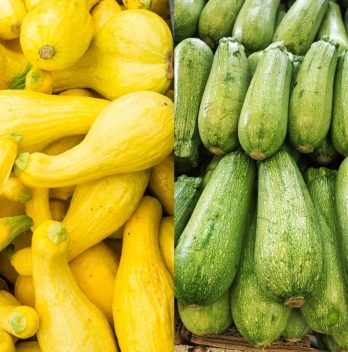
    Zucchini and yellow squash are both popular fruits, though culinary wise they are often referred to as vegetables by how they are prepared. However, many people don’t know the differences between yellow squash vs zucchini. Though they do share many similarities, they are also quite different.

    Zucchini and yellow squash are among some of the easier plants to grow. They make a great addition to your garden, no matter if you are an expert or beginner. There are also so many great dishes you can make with these two fruits.

    Yellow Squash Vs Zucchini

    Both yellow squash and zucchini are a type of summer squash. Though all zucchini is considered a type of squash, not all squash is zucchini.

    Squash refers to a type of plant species within the gourd family. There are two categories of squash: winter, and summer.

    Common winter squash includes butternut, spaghetti, and acorn squash. They have hard skins that are unedible and include tough seeds.

    There are several different types of summer squashes that come in many different shapes and sizes. They can be long, round, flat, straight, or tapered. Unlike winter squashes, they have soft, thin skin that is completely edible.

    Yellow Squash and Zucchini

    Summer squashes, including zucchini and yellow squash, can be eaten raw or cooked. They tend to have mild flavors that can even be slightly sweet. They can be eaten alone or incorporated into many other types of dishes, both sweet and savory.

    Due to their similar appearance, zucchini and yellow squash are often confused. Though they are similar in many ways, the two varieties of squash also differ. They can not always be used interchangeably due to their differences.

    Summer squash grows quickly and is often easy to maintain. They are packed full of many important nutrients, making them a very healthy addition to your diet. Other common varieties include Patty Pan, Cousa, and Zephyr squash.

    Green Zucchini

    Green zucchini is the most recognizabletype of zucchini. It has a rich, deep green color with a long, sometimes tapered shape. The flesh is white and has a mild flavor that can be slightly sweet.

    It can generally be found all year round in grocery stores, but its peak season is in summer. Green zucchini has a soft, thin skin that you can eat or peel off, depending on your preference. You can eat it raw, fried, sauteed, grilled, roasted, and steamed.

    Green zucchini squash is also a popular addition to bread, cakes, cookies, and muffins. It provides baked goods with a wonderful moist texture without changing the flavor. You won’t be able to notice that zucchini was added to baked goods, however, you will be able to taste how delicious it makes them.

    It also tends to grow in abundance, which is why it is so great to add to your baked goods. It also makes amazing fritters, salads, pasta dishes, and much more. No matter how you prepare it, it is a great addition to have in your kitchen.

    Yellow Zucchini

    Yellow zucchini is not to be confused with yellow squash, as they are two different things. Sometimes called golden zucchini, it does not taper at the end like other summer squashes.

    Yellow zucchini also has soft, thin skin that you can eat or peel off if you like. It has white flesh and is typically slightly sweeter than green zucchini. Their cylindrical shape makes them ideal for spiralizing.

    Yellow Zucchinis can often be used interchangeably or with green zucchinis in recipes. They are great for baking, roasting, frying, pasta, sauteing, grilling, and steaming. They also taste delicious when eaten raw and are great for salads and other vegetable dishes.

    Survival Garden Seeds Zucchini & Squash Collection Seed Vault – Non-GMO Heirloom Seeds for Planting

    815t78D9v6S. AC SX569

    Yellow Squash

    Though both green and yellow zucchinis are squash, yellow squash is not a zucchini. Yellow squash comes in two different types, straight neck, and crookneck neck. Both varieties have fatter bottoms that then taper as the neck curves.

    The skin is thin and can be smooth or slightly bumpy, though no matter the texture, it is edible. Their flesh is a creamy white color and they tend to have larger seeds than other types of summer squash.

    Crookneck yellow squash, which is notable for its distinctive bent neck, tends to have waxier skin than the other type. It is generally harvested once it has a more mature crookneck in order for the optimum flavor and texture.

    Straightneck yellow squash tapers at the neck but does not curve. It is best when it is harvested at around six inches long or slightly shorter as this is when it will have its best flavor and texture.

    Summer squash tastes great when you roast, grill, fry, saute or steam it. It also tastes wonderful when it is added with zucchini and baked as a casserole. It has a mild flavor, but it is not as slightly sweet like zucchini is.

    Yellow Squash

    FAQs

    Are yellow squash and zucchini the same?

    No. The difference between them is that zucchini is a member of the Cucurbit family (squash and pumpkin), while yellow squash belongs to the summer squashes (such as the patty pan, and summer squash). Both of these vegetables can be used in many different dishes such as soups, stews, casseroles, and salads.

    They are both delicious and easy to grow. Zucchini is best eaten when it is young, as its flavor becomes more intense as it ages. Yellow squash can be eaten in a variety of ways, but its most popular method is grilling. Both of these vegetables are very low in calories and fat. If you are looking for ways to add variety to your diet, these two vegetables are a great choice.

    What nutrients do they have?

    Zucchini and yellow squash are high in fiber and potassium. These nutrients help regulate blood sugar levels and help prevent constipation. Zucchini and yellow squash are also great sources of vitamins C, A, B6, and K. It is important to get these nutrients in your diet because they will boost your energy and help you stay healthy. Try to eat them every day, but if you can’t find time, at least eat them several times a week.

    Zucchini and yellow squash are great low-calorie foods to eat while losing weight. They contain almost no fat and are low in calories. It is low in calories, has a high water content and contains a number of vitamins and minerals.

    They have a lot of fiber. Zucchini has much more of it than squash because it’s lower in carbs and higher in protein.

    If you are looking for something that will boost your immune system, squash is the way to go.

    Can you eat raw zucchini and yellow squash?

    Zucchini and yellow squash are among the most versatile vegetables on the planet. They can be grilled, fried, roasted, baked, boiled, sautéed, pureed into sauces, or chopped and added to soups.

    You can eat them raw or cooked (although some people are very allergic to it). I personally would not consume it as much as other veggies, as it has a high oxalic acid content, which can cause kidney stones.

    When is the best time to plant zucchini and yellow squash?

    The best time to plant zucchini and yellow squash depends on your climate. Planting in late fall or winter can give you a good crop in the spring. Zucchini and yellow squash plants grow best in warmer weather. They will be more productive when temperatures are above 60°F. In cooler temperatures, they tend to produce less fruit and have a shorter growing season.

    Zucchini plants are very sensitive to heat and drought. They need a lot of water during the summer months to keep from wilting.

    I would recommend you get some small, shallow pots or planter boxes and put your zucchini plants in them. They will grow a lot faster than in the ground.

    Understanding Summer Squashes: Knowing the Difference Between Zucchini vs Yellow Squash

    Both zucchini and yellow squash are a variety of summer squash. They are notable for their mild flavor and soft, thin skins, which differ from the winter varieties of squash. Both of them grow in abundance during the summer season and are full of many beneficial nutrients, making them a great addition to your garden.

    Zucchini can be either green or yellow. Both the green and yellow types can generally be used interchangeably, with the yellow type often being slightly sweeter. They are a great choice for using in both sweet and savory recipes, thanks to their mild flavors and moisture they bring to baked goods.

    Yellow squash can be either straight neck or crookneck. Both types have thin skin, that can be anywhere from smooth to slightly bumpy in texture. They tend to have larger seeds than other varieties of squash and are also great for cooking in many different savory dishes.

    Do you have any questions regarding the similarities and differences between yellow squash vs zucchini? If so, please ask any questions regarding these two popular varieties of summer squash in the comment section down below.

  • Making Soil More Acidic

    Making Soil More Acidic

    Good soil is one of the most important aspects of having a successful garden. Without good soil, your plants will struggle to grow and in some cases, they might not grow at all. Making soil more acidic can help certain plants not only grow but also strive.

    Based on local geography, soils mineral content varies, which in return affects its acidity or alkalinity levels in the soil. This is measured on a pH scale, which allows people to conveniently determine the acidity on their soil. Based on the plants you are growing, you can then research the pH levels they need and test the levels in your soil, adjusting them as needed.

    How To Test For Acidity

    Before starting your garden, it is best to test the acidity levels in your soil. Different plants need more acidic levels, whereas others don’t need much acidity at all. Fortunately, you can use a pH test to determine how acidic your soil is.

    The best time to test the acidity levels of your soil is in the fall. This will then give you plenty of time to adjust your soil if need be before you plant your garden.

    How To Test For Acidity

    When testing your soil, use a hand shovel to dig about four to six inches down to obtain a sample. Once you dig up a good chunk of soil, remove any rocks, sticks, and debris from the soil. In addition, you also want to break up any large clumps of soil.

    In a large bowl, add around one cup of soil along with enough water to make it into the mud. Then, add 1/2 cup of vinegar and stir it into your mud. If your mud begins to foam, fizz, or make bubbles, your soil is alkaline.

    If no bubbling occurs, repeat the process as you did above by making mud with one cup of soil. Then, add 1/2 cup of baking soda and stir it in your mud mixture. If the mud begins to fizz, bubble, or foam, your soil is acidic.

    Using A pH Testing Kit

    You can also test the soil using a soil pH testing kit. This will give you an exact number of acidic your soil is. The pH test works on a scale of 0-14.

    To use a pH testing kit, dig up soil from four to six inches down and remove any rocks and debris. Then, place one to three teaspoons of soil in a clean glass. Pour distilled water into the glass to the same level of the soil.

    Luster Leaf 1601 Rapitest Test Kit for Soil pH, Nitrogen, Phosphorous and Potash

    81lMIyoIrfL. AC SX569

    Shake the mixture well into it becomes well combined and then let it sit for 30 minutes. Then pour your soil sample through a coffee filter, collecting the water into a new clean glass. Be certain to get as much liquid out of it as you can.

    Then place the pH strip into the liquid you collected and leave it in their according to the package’s instructions. Once it has been in the water for as long as it needed to be, compare the color of the strip to the chart of the package.

    It is a good idea to repeat the process with samples from different parts of your garden. This will help you get a good idea of the average pH levels of the soil in your garden.

    Why Acidity Levels Matter

    Many plants thrive in acidic soil because the pH provides them with the nutrients they need to grow. In addition, pH levels in the soil also play a vital role in fertility. By having an ideal acidity level in your soil, the microbiological activity of the soil increases, which leads to improved soil nutrient recycling and release.

    The pH levels in soil also work to maximize the nutrients of N, P, and K that come from fertilizers. Many plants will do best with a pH level that is right in the middle of the scale, however, it does vary by species of plant.

    Why Acidity Levels Matter

    How To Make Soil More Acidic

    Fortunately, if your soil is not acidic enough for your plant’s needs, there are several ways you can increase the acidity levels. Before adjusting your soil‘s acidity, make sure to test multiple areas of your soil to find the average pH level of your garden.

    One of the easiest and most effective ways for how to increase soil acidity is by composting. Since compost is rich in organic matter, it makes your soil more acidic gradually over time, which creates the most benefits for your plants. In addition, it not only improves the structure of the soil but also creates additional benefits for plant growth.

    In addition, you can also use compost tea to increase acidity. Simply add one to two cups of your compost to one to two gallons of water. Allow it to sit for 48 hours, stirring regularly, then strain the compost and spray the liquid in your soil for fast-acting nutrients.

    You can also use organic mulch, coffee grounds, and peat moss to help increase the acidity levels in your soil. In addition, you can also buy soil acidifier at gardening and department stores that is not only easy to use but also effective at improving the pH levels in your garden. However, it can be more expensive than the other options.

    FAQs

    What increases the acidity in the soil?

    There are several factors that can affect soil acidity, for example:

    The amount of nitrogen in the soil. The higher the nitrogen content, the more acidic the soil will be. The type of soil. Soil with clay in it tends to be more acidic than soil with sand in it. Soil with a high calcium carbonate content (found in chalk) tends to be less acidic than soil with a lower calcium carbonate content.

    You will increase the acidity of soil if you use any type of chemical fertiliser. This has nothing to do with what kind of chemical it is or how much it contains, but rather whether you have used a nitrogen, phosphorus and potassium containing chemical or not. 

    How is acidity measured?

    Soil pH is measured on a scale from 0 to 14, where 2.0 is neutral, and below 3.0 is acidic and above 4.0 is alkaline.

    The most common way to test your soil for pH is with a soil testing kit, or with an inexpensive test kit that you can buy at the grocery store or hardware store. To determine if your soil is acidic or alkaline, you can do this with the following procedure:

    1. Fill a bucket with water, and mix in 2 teaspoons of salt per gallon of water.

    2. Stir the soil thoroughly with your hands, and then add it to the water.

    3. Allow the mixture to sit for 5 minutes, and then test the pH with a pH meter.

    4. Record the pH of your soil on a pH chart, and then calculate the percentage of acidity

    If the soil is more acidic than 5 percent, add 1 tablespoon of lime per quart of soil to increase the pH.

    If the soil is more acidic than 15 percent, add 1 teaspoon of sulfur per quart of soil to increase the pH.

    What should I do when my soil has too much acidity?

    You should add some neutralizing agent to the soil. One way to do this is to add lime. Lime is an alkaline compound, so it will neutralize the acidity of your soil.

    How do I fertilize acidic soil?

    The best way to fertilize acidic soils is to use a compost tea that has been produced from compost. The compost will have a high pH and therefore the compost tea will also be high in pH. This means that it will be good at neutralizing acidity.

    What is the most widely used way of making soil more acidic?

    There are a number of ways you can acidify your soil.

    Two of the most common: Lime and Wood Ashes. These are often recommended as “natural” methods for acidifying soils, but they should be used as little as possible as they are highly toxic.

    Lime is an inorganic source of calcium carbonate. The lime reacts with water and releases carbon dioxide gas (CO2).

    The benefits of adding lime are that it increases soil pH, improves drainage, and improves soil structure. It also helps to increase organic matter and nutrient content. The disadvantages are that it can cause high levels of soil salinity, and can be detrimental to some plant species (especially those that like a slightly alkaline soil). It should be noted that lime is not a fertilizer, but rather an acidifying agent.

    Improving Your Soil: Making Soil More Acidic

    Knowing how to make soil acidic can help improve the growth of the plants in your garden. It can provide your plants with the important nutrients they need in order to thrive.

    Before planting your garden, it is a good idea to test the pH levels of your soil in several places to determine if your soil needs more acidity. In addition, be sure to research the plants you are going to add to your garden to find out what pH levels those specific plants require.

    Compost is a great way to improve the acidity of your soil. In addition, you can also use compost tea, mulch, peat moss, and coffee to improve acidity. You can even buy soil acidifier from stores to help enhance your soil.

    Do you have any questions regarding making soil more acidic? If so, please ask any questions about acidic levels in soil in the comment section below.

  • How To Pick A Good Artichoke

    How To Pick A Good Artichoke

    Do you know how to pick a good artichoke? Artichokes are great-tasting vegetables but so many people have little knowledge on how to select a good artichoke. This veg may look a bit intimidating and odd, but they are actually quite easy to prepare.

    Artichoke can be pretty difficult to make. This is usually because of its poky and tightly packed leaves that may seem difficult to dive into. But once you’ve learned to properly cut or trim them and even prepare them, you get to enjoy the tender leaves and their great-tasting flavor.

    In this article, we will be looking at how to pick a good artichoke. We will also be looking at how to trim them properly and prepare them. So continue reading to gain some knowledge on how to choose artichokes and more.

    About Artichoke Plants

    Artichoke is an herbaceous perennial plant. They come from members of Asteraceae family and this family also includes thistles, sunflowers, and dandelions. Most people often think of thistles as prickly weeds, but artichoke has shown that not all weeds are insignificant.

    The majority of the commercial artichoke plant in the United States are grown in California and this is where the main artichoke harvest takes place. This is usually from March through June.

    About Artichoke Plants

    Artichokes may look intimidating and digging into those prickly packed leaves may even cause poked fingers. This may be really frustrating. However, if you don’t mind digging into those tightly packed leaves, you will be rewarded with a slightly tannic, extra nutty, and absolutely delicious outcome.

    Tips On How To Choose An Artichoke

    Here are some tips that will help you pick a good artichoke:

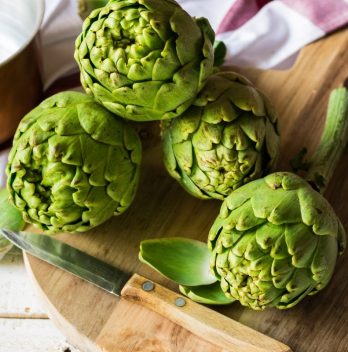
      • One obvious sign of a good artichoke is when they feel heavy in your hand. If you however don’t feel that heaviness or it feels very light, it may be that the artichoke has lost a lot of moisture. It may have also lost some water-soluble nutrients and even some flavor.

      • Another way to know how to pick a good artichoke is to scrutinize the shape. The thorny-packed leaves should be tight and hugging towards the center of the vegetable. Basically, the appearance should not be like a blooming succulent or flower.

      • Another point to note is that once the leaves are opening up from the center, then the artichoke has very likely been sitting out far too long or has become old.

      • Furthermore, the stem will look brown if was cut for just a few hours. However, the stem shouldn’t feel slimy or dry.

    Check out 4 Useful Tips to Help You Choose the Best Organic Seed Starting Mix

    Types Of Artichoke Plants

    Normally, there are two major types of artichoke and they are:

      • Globe artichoke: This type of artichoke is round, large, and globe-like. It is known as the originally improved artichoke and is sometimes referred to as French artichoke. They are about the size of a softball and pretty green. This artichoke variety tends to bud in the first year. They usually reach harvest early (as early; as 75 days).

      • Baby artichoke: the baby artichoke is about 2 to 3 inches long when they are fully matured.

    Types Of Artichoke Plants

    Other Types Of Artichoke:

      • Violetta artichoke: this artichoke variety is a heavy producer of side buds. It is an heirloom variety from Italy. It is characterized by its fascinating purple bud known for its tenderness. This artichoke variety produces elongated (about 3 inches) and 5 inches wide artichoke. Violetta artichoke needs only about 3 foot spacing between plants because it is a smaller plant.

      • Bog heart artichoke: this artichoke variety is a painless one with no prickly leaves. These are basically new varieties and they can handle warm weather. They can even be grown as an annual from seed. They can attain a length of 5 and a half inches.

      • Jerusalem artichoke: this is also known as sunchoke, sunroot, or wild sunflower. They tend to grow about 5 feet to over 9 feet. The part which is edible is a tuber part that looks like ginger root and they are around 3 to 4 inches long.

    Read more about the Difference Between Thai Basil And Regular Basil

    How To Properly Trim Artichoke

    To properly trim an artichoke isn’t so complicated. You just have to understand the process. It requires putting in some extra work after you must have harvested it so it becomes edible.

    Do the following to trim artichoke properly:

      • With a serrated knife, the top third layer of artichoke bud should be trimmed off.

      • Then take away the two outer layers of the leaves around the stem.

      • Next, make use of kitchen shears to trim the sharp tips off the remaining outer leaves.

      • Also, cut off the stem if you want the artichoke to sit flat. If not, just peel it off with a paring knife.

      • The peeled artichoke should be put in a bowl of lemon water. This is to maintain a fresh artichoke until you’re ready to stem.

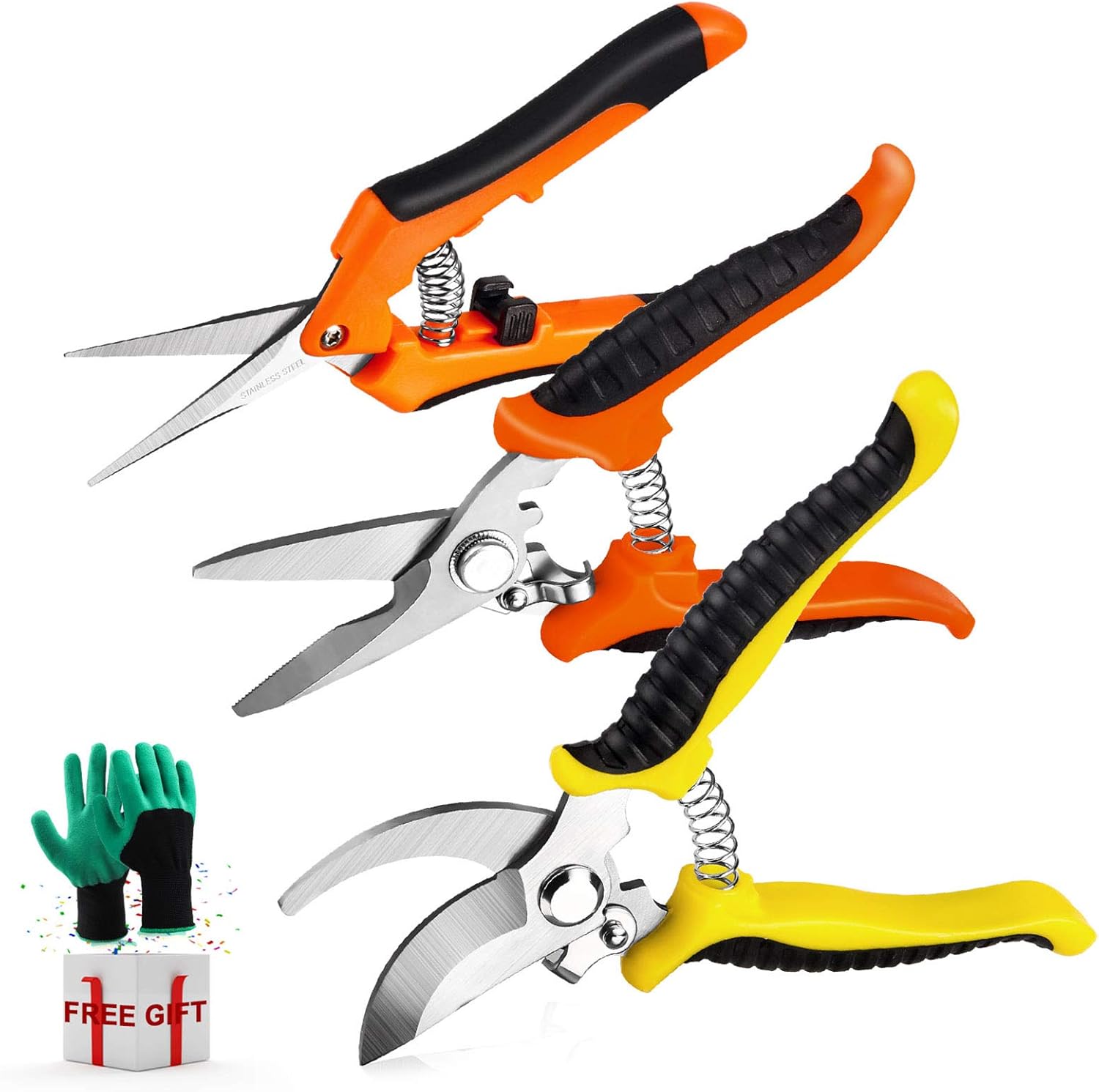
    3 Pack Garden Pruning Shears Stainless Steel Blades Handheld Pruners Set with Gardening Gloves

    71rnsJKQ oL. AC SL1500

    Preparing Artichoke

    Some parts of the artichoke aren’t ideal or pleasant to eat. These unpleasant sides include the stem, the hard outer leaves, and the choke itself. The main focus for preparing artichoke is centered around removing the bits.

    The stem is quite wood. Therefore, cutting them off is the ideal thing to do. You can use your hands, paring knife, or a small-sized knife to remove the first or two outer layers of the leaves. But take note, this may be pretty daunting to peel as you dive into the layers.

    Then cut off the upper inch of the artichoke. This way, any remaining pointy heads will be removed and you have an opening to remove the artichoke. Then with the help of a melon baller or a spoon, take away any fuzzy filaments around the artichoke.

    Find out How To Trim Basil To Promote Growth

    Storing Artichoke

    To store artichoke, put them in a loosely wrapped plastic in the fridge. If the artichoke is fresh, it can last up to a week. But it’s best you use them as soon as possible to enjoy their freshness.

    FAQ’s

    What part of the artichoke do you eat?

    The artichoke is actually the edible flower bud of the globe artichoke (Cynara scolymus). The plant grows in a large head with many small greenish-yellow flowers. Each flower has five petals and a long stalk. The buds are the part of the plant used for cooking.

    Artichokes are members of the thistle family, which also includes sunflowers and chamomile.

    How do you know if an artichoke is ripe?

    It’s a question we’ve all asked ourselves, and there are two simple ways to tell. The first is that it should be firm and feel heavy for its size, with a nice, bright green color. A fresh one can be picked at any time of year. The second way to tell if an artichoke is ripe is to cut it in half and look at the bottom.

    If the leaves on the bottom are dry and papery, then it’s probably ready.

    It’s often hard to say. There is no single sign of ripeness. You can use your senses and look for the following signs: The leaves should be slightly brown (not green) The stems should be slightly brittle The center leaves should be closed, not open. The heart of the flower should be dark purple, not white or yellow. If you have access to a fresh market, then you can ask them.

    I always buy artichokes at the farmers market when they are in season. I usually try to buy them when they are the most colorful. But they also seem to have a different level of ripeness, depending on where they are from.

    They are not really easy to find fresh at a local market. Most of the artichokes that I buy are already cooked and they don’t last long in the fridge.

    Basically, what does a healthy artichoke look like?

    Well, it should have a bright green color, the leaves should be tightly closed, and the bottom of the stem should be firm and dark green. If you cut an artichoke in half, you’ll see the pale yellow inner part of the artichoke that is not edible.

    How do you store raw artichokes?

    I store raw artichokes in a bag of ice (or in the fridge) in the crisper drawer for up to two days.

    When you’re ready to use them, just trim off the stem and pull off the tough outer leaves. I’ve also found that they keep much longer if you cook them first and then store them as you would any other vegetable.

    How To Pick A Good Artichoke: Conclusion

    It’s really easy to know how to pick a good artichoke if you have the right knowledge. Simply look into the tips we gave on how to properly choose a good artichoke.

  • When Do You Harvest Romaine Lettuce?

    When Do You Harvest Romaine Lettuce?

    Romaine lettuce is one versatile and refreshingly crispy type of lettuce. But do you know when to harvest romaine lettuce?

    It is pretty easy to grow romaine lettuce so far you grow them in the right season. But when it comes to harvesting romaine lettuce, you need to know the basics. If you pick romaine lettuce too early or at the wrong time, you may get a woody and bitter-tasting lettuce rather than the tender ones.

    So here’s an easy guide on getting to know when to harvest your romaine lettuce.

    Some Info On Romaine Lettuce

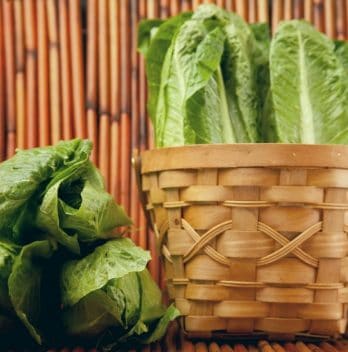
    Romaine lettuce is a crunchy, sturdy, and elongated deep green leaves with great nutritional value. It also forms a closely packed head. This lettuce variety is refreshingly crispy and is popularly used as a base in salads.

    They are so sturdy that they can be held up to heat for grilling. Therefore, they are more tolerant to heat than any other lettuce variety. They will also remain crunchy and won’t wilt quickly especially in salads. Nowadays, romaine lettuce has become a grilling staple along with other vegetables.

    In North America, you can find romaine lettuce usually sold as hearts that the outer leaves have been conveniently taken out. Most of the romaine lettuce grown in the United States is grown in California.

    Some Info On Romaine Lettuce

    Although you may notice only one variety of romaine lettuce in the store, there are actually many cultivars of romaine. Some romaine lettuce tends to have a looser structure compared to the commonly closely packed head. While some have red or speckled leaves.

    Romaine lettuce tends to mature a little longer compared to other lettuce varieties. However, it isn’t necessary you wait until they attain their full size before you harvest them.

    When To Plant & Harvest Romaine Lettuce

    A lot of lettuce varieties can be picked in similar ways. But it helps to always know the right way of harvesting the particular type of lettuce variety you’re growing.

    Romaine lettuce thrives well in cool weather conditions. Therefore, they aren’t so great in hot weather because they can fade quickly.

    Just like any other lettuce variety, it’s ideal to plant romaine lettuce around early spring so you can get a late spring or early summer harvest. You can as well plant romaine lettuce at the end of summer to harvest them in fall.

    As we mentioned, romaine lettuce can take a long time to mature and this usually takes about 3 months. Again, you don’t have to wait till they attain full size to harvest them. However, if you wish to harvest full heads of romaine lettuce, you should keep in mind their long growing season.

    A lot of romaine lettuce variety can take about 65 to 75 days to form a full or matured head. Some cultivars however can take lesser (about 55 days) to attain maturity. Then a couple of other cultivars can take longer.

    Lettuce & Salad Greens Seed Vault – Non-GMO Vegetable Seeds for Outdoors or Indoors

    81NyrqPYhsL. AC SX569

    Plan your harvest time based on the particular variety if you want a whole head of romaine lettuce.  A fully or properly matured whole head romaine lettuce should have a fully formed head, be densely packed, and feel very firm.

    But if you don’t mind harvesting individual leaves or harvesting them before they attain maturity, you can begin picking them once they attain a few inches long. This is usually about a month after planting.

    So you can keep on harvesting romaine leaves until the plant fades. Or simply harvest moderately if you want your romaine lettuce to form head later in the season.

    Guidelines On How To Harvest Romaine Lettuce

    So how do you harvest romaine lettuce? Let’s look into this.

    1.    Harvesting Individual Leaves

    Harvesting individual romaine lettuce can offer you that cut and come again feeling. Just ensure you the outer leaves and leave the central leaves to continue growing. Also, avoid breaking the central stems. You can break the leaves at their base by snapping them or make use of a sharp tool to cut them off.

    Also, ensure you water them regularly especially when the weather is hot to promote new growth. Make sure you remain about 2 or 3 leaves so your lettuce plant has the energy to keep producing.

    However, when you notice your lettuce is preparing to enter seed, it’s best to harvest the whole head to prevent the romaine lettuce from turning bitter.

    One sign to know your lettuce is about to enter the bolting stage is an extra white lettuce sap.

    2.    Harvesting Whole Head Romaine Lettuce

    If you wish to harvest the whole head of romaine lettuce, you will need some patience. But it’s all worth it because you will be rewarded with a lot of crisp, fresh lettuce.

    Once the head has attained full size and they are firm, use a sharp tool to cut the base. We recommend you leave about 2 or 3 inches of the stem to encourage your plant to regrow and generate baby lettuce.

    To avoid bolting, harvest your romaine lettuce head promptly once they feel firm. Another way is to pull the plants out of the ground and trim off the roots. But it’s better to just cut off the heads to avoid disturbing the structure of your soil.

    Additionally, if you notice the lettuce has begun sending up a tall central stalk, that’s a sign of bolting preparation. Hence, it’s important you harvest your romaine lettuce at once to prevent bitter-tasting lettuce.

    Storing Romaine Lettuce

    First, wash your romaine lettuce under running water to remove dirt. Lettuce can be soaked in a salad spinner if you have one. The spinner basket should be inside the bowl then put the lettuce into the basket and fill with water. Once you’re ready to drain it, just lift the basket out and discard the dirty water.

    Storing Romaine Lettuce

    If you however don’t have a salad spinner, you should put your romaine lettuce leaves dry with paper towels. Then put your lettuce inside a container with a lid. Dampen some paper towels and put them on top of your romaine lettuce. Then close the container and put it in the fridge.

    FAQ’s

    When is Romaine lettuce ready to harvest?

    The harvesting of romaine lettuce is dependent on the varieties and growing conditions. The leaves are generally ready to be harvested when they reach a size of 6 to 8 inches in length, which is usually 10 to 14 days after planting. In some cases, depending on the variety, it may take up to two weeks longer.

    Can I eat romaine lettuce when it’s still growing?

    No. Romaine lettuce should be harvested before it reaches its full size. It’s best to harvest lettuce when it’s 6 to 8 inches in length, depending on the variety. Lettuce grows fastest when it is picked before it reaches its full size.

    It’s important to wait so that you get all the nutrients that it has to provide. It contains vitamin C, folate, potassium, iron, fiber, calcium, protein, vitamins A, B1, B2, B3, B5, B6, B9 and B12, omega-3 fatty acids, copper, magnesium and phosphorus.

    What should it look like when it’s ready?

    Romaine lettuce is a member of the butterhead family, which means that it has a thick, fibrous outer leaf called a rind. When you eat romaine lettuce, you are eating the core of the head and the leaves themselves. You don’t want to remove any of the leaves because they are where most of the nutrients are found.

    How do I store romaine lettuce?

    Romaine lettuce should be stored in the refrigerator for no longer than 5 days. The longer you store it, the more the lettuce will start to rot. After 3 days, wrap the leaves in plastic wrap and store them in a plastic bag. Romaine lettuce is very perishable and should not be kept out of the refrigerator longer than 3 days. It is best to use romaine lettuce immediately after purchasing it.

    Can you harvest them in the cold?

    No, this is why many people grow them indoors so that they can have them year-round-

    If you are looking to plant romaine lettuce seeds outdoors, you will want to start them around 10 weeks before your last frost date.

    Will romaine lettuce regrow after cutting?

    Romaine lettuce, which is also known as cos or iceberg lettuce, regrows quite well if it has been cut and stored properly.

    It will lose a little of its crispness and color over time, but it will still taste just fine. If you want to avoid this, simply store your romaine in the refrigerator instead.

    If you can stand to wait a little longer, though, it’s worth it! To make the most of this lettuce, keep it refrigerated until you need it.

    How do you cut it?

    To remove the leaves, first cut off the bottom of the lettuce. Then cut each leaf in half. Holding one half in your hand, cut along the outside edge of the leaf. Continue cutting off each leaf and placing it in your salad bowl. This will keep the leaves from rolling around and mixing together.

    Final Words

    When you can harvest your romaine lettuce mainly depends on if you want whole head lettuce or individual leaves. So, follow our guidelines on how to properly harvest your romaine lettuce.

  • Difference Between Thai Basil And Regular Basil

    Difference Between Thai Basil And Regular Basil

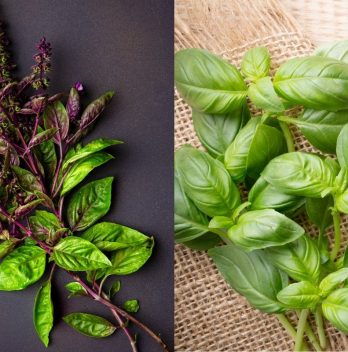
    We have many varieties of basil. There is the common or regular basil, Thai basil, lime basil, Cinnamon basil, Lemon basil, and others. In this article, we will be discussing the difference between Thai basil and regular basil.

    Generally, it has been estimated that there are over 100 varieties of basil and all types of basil are members of the mint family. Both are from the same family. However, we have some slight differences between these two basil varieties.

    We have listed here what makes them unique. We’ve also listed what and how you can use these two basil varieties as well as how they can be substituted. So continue reading to learn more about the difference between Thai basil and regular basil.

    What Is Thai Basil?

    Thai basil is a type of basil variety native to Southeast Asia and it’s also known as chi neang vorng. It is a popular ingredient for cooking and it’s commonly used amongst Southern Asians and Chinese.  The chi neang vorng leaves are so versatile, therefore, used in many recipes.

    Chi neang vorng is a variety of basil that has a touch or feel of anise or black licorice flavor. It offers that pleasant taste or savory, spicy, anise-like note to so many Southeast Asia and Chinese cooking.

    What Is Thai Basil

    This variety is very common in Southeast Asian cuisines, Cambodia, Lao, Vietnamese dishes including Thai recipes. Chi neang vorng has this definite or distinct flavor with that strong black note and a bit of spice on the finishing touch.

    The Regular Sweet Italian Basils

    The most common or regular basil is referred to as sweet basil, Genovese basil, or Italian sweet basil. It is scientifically known as Ocimum basilicum. The tasty green leaves of Italian sweet basil works well with so many dishes. Sweet Italian basil is very common in American and European cooking.

    The regular Italian sweet basil is widely used in American and European cuisines. The leaves are bright green with a green stem.

    Compared to chi neang vorng leaves, the Italian sweet basil leaves are larger. Then sweet variety has a milder flavor than Thai basil and it has a hint of black pepper and subtle anise.

    Difference Between Thai Basil And Regular Basil: Basil vs Thai Basil

    So what is the difference between Thai basil and regular basil? Let’s find out.

    1.    Taste

    The Italian sweet basil has a distinct and more robust taste. The taste has a mix of anise, peppery, and sweet flavor. There are chances you must have tasted the sweet basil in a large variety of dishes.

    Chi neang vorng on the other hand has a milder flavor. It also has an extra aroma of licorice together with a spicy feeling.

    8 Basil Herb Seed Pack – Cinnamon, Dark Opal, Genovese, Holy, Italian, Lemon, Sweet, Thai Basil

    717zoYlNz3L. AC SX569

    2.    Physical Appearance

    It’s pretty easy differentiating Thai basil and the regular sweet basil from their appearance. Let’s take a look at the leaves, stems, and flowers for their physical appearance.

    • Leaves

    The leaves of the Italian sweet basil are bigger and have an oval curly down leaf.

    Contrastingly, chi neang vorng leaves are thinner, narrower, more prolonged, and often straight.

    Also, when you rub the sweet Italian basil leaves with your palm, it becomes less and will generate an intense aroma. Thai basil on the other hand does not have this feature.

    • Stem

    The stem of sweet Italian basil is green while the stem of Thai basil is purple. Also, it has a hairy stem and sweet basil has a smooth stem.

    These two basil varieties tend to grow rigid and can become woody at the end of their life.

    • Flowers

    The flower sweet basil generates at the end of their life is a small white flower. Chi neang vorng flower generates more colorful purple or pink color.

    They both present a small flower and the same shape.

    3.    Culinary Use

    These two basil varieties differ significantly when it comes to culinary use.

    As we mentioned, chi neang vorng is commonly used in East Asia. This basil variety can be used in so many dishes. Some popular Asian dishes are Thai basil chicken, Thai larb or meat salad, pho, and Thai style-curry.

    Additionally, chi neang vorng seeds are often used to make tasty cold drinks. They can also be used as dessert ice cream. They are often added to ice cream because of their ability to reduce water crystals in the mixture.

    The regular sweet Italian basil is widely used in American cooking and European cooking. It is a staple of Mediterranean cuisine especially Italian.

    There are countless dishes that this regular sweet basil can make. You can add them to beans, eggs, chickens, fish, soups, pasta, cheeses, and salad. They can even be used as toppings for pizza.

    • Temperature Effect During Cooking

    When it comes to their temperature behavior during cooking, there is a major difference between these two varieties of basil.

    The regular sweet basil must always be added as a finishing touch while cooking. This is because sweet basil leaves are not as sturdy as the other basil. Hence, it can’t tolerate so much heat.

    Thai basil on the other hand can withstand heat. Hence, you can add it at the very beginning of your cooking together with other ingredients so their flavor can be released gradually.

    Temperature Effect During Cooking

    Can They Be Substituted With Each Other?

    The answer is yes and no and it depends on the recipe.

      • When it comes to some recipes, you can substitute sweet basil if that’s all you have. However, if you’re making a special recipe like the traditional Southeast Asian dish like curry, pho, or spring roll, it’s necessary you choose the original flavor.

      • Substituting Thai basil for sweet basil may not really go well. This is because of the pungent anise flavor of Thai basil that is incomparable to the regular sweet one when it comes to the flavor.

    FAQ’s

    Are Thai basil and Italian basil the same thing?

    Thai basil is not really the same as Italian basil. In fact, it’s a different species altogether, although it has similar characteristics.

    Can you substitute regular basil for Thai basil?

    Yes, you can substitute regular basil for Thai basil. They have the same properties, but the leaves are a bit thinner. You’ll need to cut your Thai basil into smaller pieces and dry it out before using it.

    The two can be used interchangeably in most recipes, but it’s best to buy both when you can. 

    How do I identify Thai basil?

    Thai basil (Ocimum basilicum) is one of the most popular herbs in the world. It’s a fragrant, pungent herb that looks like a cross between sweet basil and tarragon. Thai basil is often used in Thai cooking and can be found in many supermarkets, Asian grocery stores, and online. You’ll know you’ve got it when you see the leaves arranged in a tight cluster, with their stems attached to the bottom.

    It’s also a great addition to Thai dishes, as it complements the sourness of Thai ingredients, such as lime or tamarind.

    How do they look different?

    Thai basil leaves are much smaller, and they grow in a bush rather than a tall stalk.

    Can you substitute regular basil for Thai basil?

    Yes, you can substitute regular basil for Thai basil. They have the same properties, but the leaves are a bit thinner. You’ll need to cut your Thai basil into smaller pieces and dry it out before using it.

    The main thing that you have to keep in mind in terms of using Thai basil as a substitute is that it is spicier in flavor. Thai basil is less delicate than sweet basil and has a sharper, spicier flavor. So you do have token this in mind as you go about using it in your recipes.

    What do you use Thai basil for?

    Thai basil is one of the most popular herbs in Thai cooking, and it’s widely used in Thai dishes. It’s also one of the most versatile herbs you can use in your kitchen. Here are some of the ways to use Thai basil in your kitchen:

    1. Thai basil is a must-have herb for Thai cuisine. You can add it to stir-fries, soups, curries, salads, and desserts. It’s used in most Thai recipes, including green papaya salad, pad Thai, tom yum goong (Thai curry soup), and kung pao chicken.

    2. Thai basil has a strong, fresh flavor and is an excellent addition to Thai dishes. Add Thai basil to chicken soup, Thai tom yum, and Thai noodle soup.

    3. Thai basil is one of the most fragrant herbs. Use it in marinades, sauces, and salad dressings.

    It does make a good pesto. It has a little bit more depth to it. I also think it’s easier to find fresh than regular basil.

    Difference Between Thai Basil And Regular Basil: Final Say

    The two basil are popular and amazing ingredients used in many dishes.

    Both basil varieties may come from the same family; there is still a significant difference between them.

  • Are Cilantro Flowers Edible?

    Are Cilantro Flowers Edible?

    Ever wondered if cilantro flowers are edible? Certainly, they are! The flowers of cilantro possess a pungent herbal flavor and can be integrated into various dishes.

    Not every part of most plants is edible. But it helps to know which part of the plant is suitable for consumption. So, if your cilantro plant has probably bolted or it has entered into its flowering stage: not to worry. You can as well enjoy adding cilantro flowers to your various dishes.

    Generally, cilantro is a tasty herb used in various cooking and they are an excellent source of great vitamins and nutrients.

    So, let’s further look into how cilantro flowers are edible and many more.

    Can You Eat Cilantro Flowers?

    You can certainly eat cilantro flowers because they are edible. It may please you to also know that all of the parts of cilantro plants are edible including the flower. Even cilantro seeds which are known as coriander seeds are edible.

    The plant cilantro is one of the most widely eaten herbs in the world. Cilantro flowers are commonly used in Asian, Indian, and Latin cuisines. It is even becoming more popular in other cuisines.

    Can You Eat Cilantro Flowers

    Are Cilantro Flowers Poisonous?

    As we have mentioned, cilantro flowers are safe to eat. Therefore, there aren’t any toxins found in any part of the plant. Hence, they aren’t poisonous and cilantro flowers are edible. You can even incorporate cilantro flowers into various tasty dishes.

    Are All Parts Of Cilantro Plants Edible?

    We all know cilantro leaves are edible and very flavorful. But most people don’t really know how many parts of cilantro plants are consumable. Well, all parts of cilantro plants are edible! But this does not mean all parts of cilantro plants taste great or are good to be eaten.

    The stem and roots of cilantro are consumable. However, they aren’t so great-tasting enough to use for cooking. But when it comes to the leaves, flowers, as well as seeds of cilantro, they are commonly used in different cuisines.

    How To Get Cilantro To Flowering Stage

    Ideally, if you want to enjoy cilantro flowers, it’s only logical to allow them to enter into the flowering or bolting stage. The cilantro plant thrives well in a cool and moist environment. Usually, if you want to lengthen the period in which cilantro produces leaves, planting them in a cool and moist condition is the way.

    But if you want cilantro to flower, you should allow them to enter the bolting stage that will produce seeds and then flower. You can encourage bolting by planting cilantro during hot weather. When the weather is hot, cilantro will produce seeds and eventually bolt.

    However, you should know that once the cilantro plant has bolted, the leaves will lose their flavor. So, you can’t make good use of their leaves at this stage.

    But cilantro will eventually bolt and produce seeds and flowers because that’s what plants do generally. They are meant to reproduce and ensure they produce the next generation of cilantro plants.

    How Does Cilantro Flower Taste?

    To determine the taste of cilantro flowers is quite tricky. You may think cilantro flowers taste sweet and mild. But in the actual sense, cilantro flowers have a similar taste to cilantro leaves. They tend to have a milder taste slightly tangy.

    The petals of cilantro have a hint of citrus together with a bit of sweetness. Hence, this balances the flower’s mild spiciness.

    A lot of people that have tasted cilantro flowers have agreed the taste is delicious. But this doesn’t mean everyone will like the taste of cilantro flowers. In fact, a group of people may taste cilantro flowers as tangy and delicious. Another group on the other hand may have a gene that makes the taste of cilantro flowers soapy.

    This is mainly because cilantro has a fat molecule that can be gotten from many soaps. Therefore, some sets of people tend to be sensitive enough to feel the soapy taste. This soapy taste overthrows every other subtle flavor the flower has. Hence, it becomes noticeable to some.

    Indoor Herb Garden Starter Kit – Heirloom, Non-GMO Herb Seeds

    81Pr5Td76YL. AC SL1500

    So, if you have never tried tasting cilantro flowers, ensure you try to taste it before you plan on making use of it in any of your dishes. This is to make sure your taste flows well with the flower.

    Cilantro Flowers Cooking Applications

    Cilantro flowers have a more subtle flavor. Hence, they are the perfect substitute for cilantro leaves. So, cilantro flowers can be used as an alternative if you don’t want the flavor of cilantro leaves to overthrow any dish you’re trying to make.

    Cilantro flowers can also go well or pair well with the following: tomato, carrots, zucchini, lamb, chicken, avocado, citrus, lemongrass, and whitefish.

    You can as well use cilantro flowers to make a spicy dish subtle. Cilantro flowers can as well be used to bring out flavors in rich dishes.

    How To Properly Harvest Cilantro Flowers

    If you wish to make use of cilantro flowers for your cooking experience, it’s important to harvest the right way. So, to harvest any herbs generally, the time of the day and temperature matter.

    So, to properly harvest cilantro flowers, do so early in the morning once the dew has evaporated. But ensure the heat of the day has not surfaced.

    We recommend you avoid harvesting cilantro flowers during the middle of the day. This is because the flowers tend to have lower moisture content which makes them wilt and bruise easily. Therefore, if you want fresh flowers, ensure you harvest them when they are still cool.

    How To Properly Harvest Cilantro Flowers

    Additionally, cilantro flowers should be picked when they have fully bloomed. Avoid using buds or partially opened flowers. Also, when the flowers are dying, you shouldn’t make use of them.

    Even though some flowers can be dried before using them, cilantro doesn’t work this way. Cilantro should only be used when it’s fresh or you won’t get that great flavor.

    FAQ’s

    Can you use cilantro once it starts to flower?

    The leaves, stems and flowers of the cilantro plant are all edible, but the seeds should be discarded, as they have a strong, bitter taste. The roots and seed pods are not edible.

    The flowers are a little tricky because they’re so strong-smelling and not as flavorful as the leaves, but you can still use them if you don’t mind the smell.

    Cilantro, like other herbs, has its season. If you start to see flowers or seedpods on the plants, it is time to harvest and enjoy.

    Are they good for you?

    Not only are they edible, they actually have a ton of beneficial properties for people.

    This herb has many health benefits and it can be used for various purposes. It is known to have antibacterial properties. It is an excellent source of vitamin A. It is also a rich source of vitamin C. It is also a good source of iron. It is also known to be helpful for treating anemia. It can be used for treating constipation. It also helps in preventing and treating ulcers. Cilantro flower has a soothing effect on the stomach and intestines. It also helps in regulating blood sugar levels. Cilantro flower can be used for treating diabetes and high blood pressure.

    It also has anti-inflammatory properties. The anti-inflammatory properties of this herb are helpful for treating rheumatoid arthritis, osteoarthritis, and other joint diseases. Cilantro flower is very useful for treating swelling and inflammation in the body. It is also known to have pain-relieving properties. It is also very effective for treating gout 

    Cilantro flower can be used for curing headaches and stomach disorders. You can also use it to treat flatulence, bloating, and indigestion. It is also a good source of calcium. It is a natural diuretic. It is also used for treating indigestion. It can be used for treating respiratory disorders like coughs and colds. It also helps in relieving sinusitis and can be used as a gargle.

    How can you prepare dishes with cilantro flower?

    Cilantro flowers are a great addition to salads. They add an amazing flavor and fragrance to any dish that they are added to. They can be added to salads, stir fry dishes, soups and other dishes.

    They are also a great garnish. If you like cilantro but have a hard time using it in the food that you are making, try adding cilantro flowers to your dishes instead.

    Final Note

    We have seen that the cilantro flowers are definitely edible They can offer you great tasting flavor when added to different dishes and they are a great source of vitamins and minerals.

  • Carrot Seed Germination Time

    Carrot Seed Germination Time

    Carrots are one of the most popular vegetables to grow among gardeners of all experience levels. Not only are they packed full of beneficial nutrients, but they also taste great in many different dishes. If you are planning to grow them in your garden, you will want to know carrot seed germination time.

    In order for a successful harvest, it is important to know how correctly grow carrots. It is important that you have the right conditions in order to let them grow. You want to take careful consideration when growing any vegetable.

    Planting Carrots From Seed

    Once you get the hang of it, carrots are a relatively easy plant to grow. They are biennials, meaning they use the energy they get from the sun to build up big, starchy roots during the winter.

    Carrot seeds do best when they are planted in loose, sandy soil. It is best to plant them in the cooler seasons of the growing season, whether spring or fall. Depending on the variety, they take anywhere from two to four months to grow.

    Before planting your garden, till your soil is at least 12 inches down, make sure there are no rocks or clumps of soil that could impede on growth. Opt to use coffee grounds as a fertilizer instead of nitrogen-rich manure or fertilizer, as they will cause carrots to fork as they grow.

    In some cases, your best option may be to plant carrots in a raised garden bed. This is a good choice if you have soil that is rocky or heavy clay.

    Carrots do best when planted in full sunlight. However, if need be, they will likely do alright in partial sun. When planting your seeds, sow them 1/4 inch deep, 2-3 inches apart in rows that are one foot apart.

    Keep the soil moist by frequently watering your carrots. They can be harvested as immature as baby roots, where they will be sweeter and crunchier. You can also let your carrots grow to be several inches long. Generally, you want them to be bright orange in color and at least 1/2 inch wide.

    How Long Do Carrots Take To Germinate?

    In general, carrots will take six to 10 days to germinate if given optimal conditions. However, it may take two to three weeks for them to germinate. Though uncommon, there is the chance that it can take up to seven weeks for the process to happen.

    Plant Grow Bags 7 Gallon Heavy Duty Thickened with Handles & Large Harvest Window

    71P38n FybL. AC SX569

    Ideal Conditions f¡For Germination: How Long For Carrots To Sprout?

    For ideal carrot germination, you will need proper soil temperature, air circulation, and humidity. For best results, the soil should be somewhere from 65-85 degrees Fahrenheit. A humidity dome can also help speed up the process.

    The soil should be kept wet, but not soggy. There should be proper aeration in the soil, which you can achieve by tilling. It is best to use new, fresh seeds as older seeds will take longer to germinate.

    The colder your soil is, the longer it will likely take to germinate. When the temperature is in the 50s, you can likely expect the seeds to take 10 to 17 days to germinate. If the weather is in the 40s or below, it can take up to seven weeks to germinate, if it does at all.

    Not only will germination take less time when it is between 65-85 degrees Fahrenheit, but there will also be a much higher germination rate. Generally, the best time to plant carrot seeds is in spring, though you can also plant them in the fall as well.

    Ideal Conditions for Germination: How Long for Carrots to Sprout

    Germinating Carrots With A Paper Towel

    If need be, you can germinate your carrot seeds in a paper towel. First, spray a paper towel so it is damp but not soaking wet. Place your carrot seeds spaced apart so they are not touching and then place the paper towel in a plastic bag to trap in the moisture.

    To help the process, place the seeds somewhere warm. Once they are germinated, you can carefully place them in your gardens. Though this is not the ideal way to germinate your seeds, it will generally work.

    How Much Should You Water Carrots?

    In general, carrots will need one inch of water a week. You should keep the soil damp, but it should not be soaked. You don’t want the soil to get hard on top.

    If carrots get too much water they can end up forming weird shapes and having a bitter taste. Too little water and they will likely not grow. In warmer weather, you will need to water your garden more often to ensure they will grow.

    How Much Should You Water Carrots

    Be sure to also regularly weed your carrot garden, though be careful to not accidentally uproot your carrot plants. You don’t want any weeds or plants blocking the sunlight from your carrot plants. In order to strive, your carrots will need plenty of sunlight.

    FAQs

    How do you germinate carrot seeds fast?

    This is the way I have found to be the quickest and easiest to germinate them. Put about 2 cups of fine sand in a large glass jar or bowl. Fill it with water until it’s almost full. Remove the dirt from your seeds by removing the paper coat from the seeds. Add your seeds to the jar or bowl and gently mix in the sand, covering all of the seeds.

    If you don’t get every seed covered, don’t worry, just add more sand. Leave your seeds for 2-3 days. After that, they should be ready to be planted. The process is very easy and can be done in less than 30 minutes. When planting, fill a small container with water and place the seeds in the water. They should float for a while, but not for long. After 5 minutes, remove the seeds from the water and carefully drain the excess water. Then, place your seeds on a piece of paper towel and allow them to dry. Planting them directly into soil may take too much time. This method works best if you are using a large container or jar as your planting pot.

    How do I know they have germinated?

    It’s easy to tell when your seeds have germinated. The first sign will be a tiny sprout starting to emerge from the seed. When it’s done growing, the sprout will start to elongate and become a seedling.

    How long does it take to grow a carrot from a seed?

    It depends on the seed, soil, weather and other factors. The general rule is that it takes at least two months for a carrot seed to germinate and grow into a carrot plant, but it could take as little as a month. If you are starting from seed indoors, it could be as long as 6-8 weeks depending on the conditions.

    What’s a good way to prepare the soil?

    I would use a 1/2″ potting mix. 1/2 of the pot should be filled with potting mix, and the other 1/2 should be filled with peat moss. When planting the seeds, make sure they are evenly distributed in the pot, and then water them well. I usually put the pots in a sunny window for about a week, and then move them to a window that is slightly shaded.

    Why won’t my carrot seeds germinate?

    When you plant seeds, the seed should be fully covered with soil. If you look at the bottom of a packet of carrot seeds, you should see the root vegetable clearly. You should also see that the seed is fully planted.

    If you don’t see anything, then you need to check the following:

    1. Have you watered it enough?

    2. Is the seed moist?

    3. Did you plant the seed deep enough in the soil?

    1. Was the soil damp or dry when you planted the seed?

    2. Did you plant the seed on the right day?

    3. Is there sufficient water?

    4. Was the seed in a sunny place?

    5. Did you put the seed on the right kind of soil?

    6. Is the soil loose?

    7. Are you sure you have the right seeds?

    8. Has the seed been treated with fertilizer?

    Carrot Seed Germination Time: Know Before You Grow

    In general, you can expect your carrots to germinate within six to 10 days. However, it is not uncommon for them to take two to three weeks for germination to happen. In some cases, they may take up to seven weeks to complete the process.

    For the quickest germination time, plant new, healthy carrot seeds in spring. Plant them in soil that is well aerated, with loose, sandy soil being the best option. Make sure to keep the soil wet but not soaked and that they are receiving plenty of sunlight.

    The ideal temperature for germination is between 65-85 degrees. Carrots will also be able to germinate when temperatures are in the 50s. In some cases, they may also germinate in the 40s, but that will not always happen.

    You can also germinate them in damp paper towels that are placed in a plastic bag in a warm environment. Though this may not work as well as planting the seeds in the soil, it is still a reliable option overall.

    Do you have any questions regarding carrot seed germination time? If so, please ask your germination questions or any questions regarding growing carrots in the comment section down below.

  • When To Harvest Patty Pan Squash

    When To Harvest Patty Pan Squash

    Squash is a versatile and healthy fruit that many people grow in their gardens. One of the lesser-known varieties is  Patty Pan squash. If you plan to grow these in your garden, you will want to know when to harvest Patty Pan squash.

    Patty Pan squash, also referred to as Scallop squash, is a variety of summer squash. It has a light, mild flavor and is great for adding to many different recipes. They are round and flat in shape and can be white, green, or yellow in color.

    How To Grow Patty Pan Squash

    Patty Pan squash makes for a great addition to your garden. Like most summer squashes, they are typically planted in the spring, though they can also be planted in the summer. They are a quick-growing plant, as their sprouts and vines grow fast.

    On average, germination to harvest for Scallop squash is 45 to 70 days. Before you plant the seeds, you can soak them in water for 24 hours to allow them to germinate.

    When planting your seeds, you want to wait for the weather to be at least 65 degrees Fahrenheit. It is typically planted in hills or clusters.

    How To Grow Patty Pan Squash

    Make sure to choose a spot for your squash that has full sun so your plants can successfully grow. In addition, be certain that the soil where you plant is rich and drains well.

    When planting your seeds, place the hills two to three hills apart, placing two to three seeds in each hill. The seeds should be planted at least one inch deep.

    If planting your seeds in rows, space the rows 10 inches apart, leaving approximately three feet between each row. Your squash should have plenty of room to grow, as they can spread to up to six feet.

    Planting In A Pot

    Instead of planting your Scallop squash in a garden bed, you can also plant them in a pot. Choose a large pot that has a drainage hole or a large grow bag, that is at least 10 to 12 inches wide and also 10 inches deep. It is best to fill your pot with a mixture of compost, potting soil, a small amount of sand, and a little bit of perlite.

    Place two germinated seeds in the pot about 1/2 inch deep and then water them with around one inch of water. Place your pot somewhere in full sun, though if need be partial sun should also work. Continue to water your plant with one inch of water every week.

    For best results, use a balanced fertilizer every one to two weeks until your plants are ready to harvest. Your squash should then be ready to harvest within eight weeks.

    How Often Should You Water?

    Your squash should be well watered, receiving at least an inch of water a week. If they do not receive enough water, they will drop their flowers and fruits. Placing mulch or straw is a great way to keep the shallow roots cool and moist, allowing the plant to grow healthy.

    Soil And Temperature

    Scallop squash does best in rich, well-drained soil with a pH of 6.1 to 6.5. However, it should do just fine in any rich, well-drained soil.

    Summer squash does best in temperatures between 65 to 75 degrees Fahrenheit. You should wait for the soil to be at least 65 degrees before growing your squash. On hot summer days, the plant may slow down its production, but will then pick production rapidly back up in the fall.

    Organic Potting Mix by Perfect Plants for All Plant Types – Great for Veggies

    61zPBDoSnGS. AC SX569

    When To Pick Patty Pan Squash And How Big Do Patty Pan Squash Get?

    It is important to know when to harvest Patty Pan squash in order to enjoy it at its best. Most of the time they will be ready within 45-70 days of planting.

    You can start picking Patty Pan squash when they are about two inches in diameter and all the way up to four inches in diameter. Each squash will weigh one pound or less.

    When it gets close to 45 days after planting, begin to check your plants on a daily basis. They are capable of reaching harvest size within four days of flowering.

    The squash can grow up to seven inches in diameter, however, they are often best they are two to four inches in diameter. They are a versatile fruit and you can cook them in many different ways including steamed, braised, grilled, raw, fried, and roasted. They are also great to stuff with cooked meat, rice, quinoa or whatever you’d like.

    How To Store Them

    After picking them, you should store your squash in a plastic bag or paper bag that is open in your crisper drawer. The temperature should be set to around 45 to 50 degrees Fahrenheit. Store them unwashed to prevent any moisture from building up.

    Your squash will keep for about three to four days in the fridge. Once you are ready to eat it, thoroughly wash it off. You can eat it with the skin still on.

    How To Store Them

    How do you know when to pick a patty pan squash?

    Well, it’s pretty simple. When the stems are about as long as your little finger and the ends of the leaves are starting to wilt.

    You can pick this squash when it’s small, about eight to 10 inches in diameter, and it will keep for several weeks. You can cut it in half and use it as a main dish, or you can slice it and use it in salads or other dishes. This squash is sweet and delicious when cooked. It has a mild flavor, so you don’t need to add anything to make it taste better.

    The flavor is subtle and the texture is more like a zucchini than a pumpkin. It’s great with savory dishes like meatloaf or in pies and casseroles. The one downside is that it takes a while to get the seeds out.

    What time of the year can you pick it?

    They are available in the spring and summer months, and they are one of the first things you want to plant in your garden. This squash has a long shelf life, which means that you can pick them at any time of year. It’s an excellent choice for your backyard vegetable garden because it doesn’t require much attention.

    How can you cut it when it gets big?

    I love patty pan squash, but it’s pretty large. As far as cutting it up, I usually just cut it into chunks and toss it into the food processor with some garlic and fresh herbs. The trick is to cut it in half lengthwise first so it will fit into the food processor.

    Which are the easiest varieties to grow?

    They are so much fun to play with, and they look so pretty in the garden. However, they are also very easy to grow, which makes them great for a beginner gardener.

    They come in two varieties: green and yellow. The green ones are easier to grow than the yellow ones.

    Can you eat it raw?

    No, patty pan squash has a very delicate skin that needs to be removed before eating.

    Do you prune patty pan squash?

    You don’t need to prune them. They grow very quickly and are ready to harvest after about a month, when they have formed a large number of fruit.

    How do you harvest patty pan squash seeds?

    Squash seeds are pretty easy to harvest. You don’t need any special equipment, just a sharp knife and patience. Cut the squash in half, remove the seeds, then cut the halves into cubes. Cut out the seeds from each cube (you can do this with a spoon or with your fingers).

    A Delicious And Nutritious Summer Squash

    If you want to grow Patty Pan squash, you can do it in your garden or even in a pot. They are relatively easy to grow and do best when planted in spring when the temperature is at least 65 degrees Fahrenheit. They typically take 45-70 days to go from germination to harvest.

    When planting your seeds, plant them in rich soil that has good drainage. Provide your plants with at least one inch of water every week. They will do best in full sun, though your squash will likely still thrive in partial sun.

    You can pick your Scallop squash once they are between two to four inches in diameter or up to seven inches. Once harvested, keep your squash in the fridge in an open bag in the crisper draw. They will stay fresh for up to three to four days and be sure to wait to wash them until you are ready to eat them.

    Do you have any questions on when to harvest Patty Pan squash? If so, please ask any questions on planting and harvesting Patty Pan squash in the comment section down below.

  • Acorn Squash Turning Orange

    Acorn Squash Turning Orange

    Acorn squash turning orange may have you wondering if it’s still in good shape. Depending on the variety of seeds you are growing, acorn squash can vary in color. We can have yellow, dark green, tan, or orange colors of acorn squash.

    However, you may have purchased or harvested a dark green acorn squash and the skin turned orange and you wonder if it’s gone bad. We will discuss this here.

    The skin of your acorn squash turning orange is not so uncommon. We will be explaining why this is so and we will be discussing more information related to this. So, continue reading to gain some knowledge.

    Acorn Squash

    Acorn squash is a winter squash with a mild butter flavor. It can be eaten raw and it’s perfect to be cooked with different dishes.

    They can be botanically classified as fruit. But they are as well considered starchy vegetables which can be used just like other high-carb vegetables like butternut squash, potatoes, and sweet potatoes. Also, the starch level of potatoes is similar to acorn squash.

    Acorn Squash

    Acorn squash is packed with great nutrients for man’s health. They are rich in antioxidants that help in getting rid of toxic elements known as free radicals. Antioxidants protect against adverse health risks such as heart diseases, arthritis, high blood pressure, and even certain cancer.

    Click Here to Get More Info About Squashes:

    Orange Acorn Squash

    Usually, most acorn squash tends to go dark green when ripe. Unless you intentionally planted an orange variety of acorn squash, an orange acorn squash often means they are overripe.

    So whenever you find that your acorn squash has turned orange you can do or notice the following to see if it is still fine to use:

    • Cut the acorn squash open and observe the inner part.
    • The acorn squash should not be moldy or slimy. If it is moldy or slimy. But if it has mold or slimy seeds, it means the acorn squash has gone bad and should be discarded.
    • There shouldn’t be any soft spots in the outer part or inner flesh.
    • You can as well tell the condition from the stem of the acorn squash. When you take a closer look at the stem and you notice the stem limps, that’s a bad sign.

    Squash Seeds- Table Queen Acorn- Heirloom- 40+ Seeds

    51Lyetpnd3L. AC

    Usually, the orange color you may notice means the acorn squash has become a little overripe. Acorn squash turning orange does not mean the squash has gone bad all the time.

    Expert farmers even suggest you go for acorn squash that has dark green and a couple of orange spots on the bottom. This type of appearance usually assures a perfect level of ripeness.

    Check out When Are Butternut Squash Ready To Pick?

    How To Select The Perfect Acorn Squash

    To harvest perfectly ripe acorn squash, ensure they are dark green. Their weight should also be around one to three pounds. If the acorn squash becomes too big, they tend to be stringy and dry.

    Some acorn squash may have a patch of orange color. Usually, the portion that has been in contact with the ground tends to turn from yellow to orange. However, have in mind that we have some orange varieties of acorn squash like the Golden acorn (naturally orange when ripe or ready).

    Additionally, you can know a ripe acorn squash from its rind and skin that will become hard. You can also do a fingernail test by trying to push your fingernail into the squash. If it is difficult to pierce, your acorn squash is ready for harvest.

    Also, to select or buy an ideal acorn squash, choose the ones with shiny, smooth skin that also have a heavy feel to them. This means it has been harvested at the right time.

    Bad Acorn Squash

    To know if your acorn squash has gone bad, just slice it into two. If you notice there are any moldy, slimy, grey seeds, then it’s a sign the squash has gone bad. Also, when the stem of acorn squash limps, that’s a sign it is overly ripe and may have gone bad.

    When the acorn squash has totally turned from green to orange and it doesn’t have any mold or slimy grey seeds, it may be safe to use. But this type of squash will probably be stringy with less flavor.

    How Long Can Acorn Squash Be Stored?

    How you store your acorn squash can contribute to it turning green to orange. This is why you should know the right way to store them so they remain fine and edible for two or even three months.

    So here are some tips for storing acorn squash so they remain edible for a good period:

    • Store acorn squash in a cool, dark, dry place while the stalk is still intact. With the stalk intact, it helps prevent fungi and bacteria from invading the squash. This helps the squash maintains moisture and prevents it from spoiling. But once the acorn squash has turned orange, check if it’s still in good shape and use it right away.
    How Long Can Acorn Squash Be Stored
    • You can as well store acorn squash in the fridge. To store in the fridge, peel the squash and slice it into pieces. Then keep the sliced acorn squash in a sealed container in the fridge. Acorn squash can remain edible for about 3 to 4 days if kept in the fridge this way.
    • You can also cook acorn squash first and then freeze them.
    • Ensure you store them above a temperature of 50 degrees Fahrenheit. Also, hot air can predispose acorn squash to have a shorter shelf life.

    How Long Does it Take Acorn Squash to Mature?

    Most varieties of acorn squash ripen about 80-100 days after they have been planted. To get a more exact date of ripening of the variety you are planting, you must look at the “days to full maturity” or “days to harvest” stated on the packet of your seeds.

    If you are still unsure even after the stated time has arrived, the best way to tell if your acorn squash is ready for harvest is by examining the look and feel of the skin. Ripened acorn squash turns to a dark green color. The part of the squash that is touching the ground will turn from yellow to orange. On top of these factors, the rind or skin of the squash will also become hard.

    Another way to check if an acorn squash is ready is to check the plant’s stem. The stem will become withered and turn to a brown color when the squash has ripened

    The best time to harvest acorn squash if you can time your planting well is when temperatures start to dip down towards freezing night temperatures and both the leaves and vines start to die off. Simply cut the squash off the vine. Leave a piece of the stem on the squash for as long as possible. This will help protect the squash from rotting.

    If you harvest an acorn squash at the right time, when you cook it it will have a slightly firm yet buttery texture. It will also be slightly sweet but not over-ripe and mushy.

    Why is My Acorn Squash White Inside?

    White acorn squash is a variety of acorn squash. It is botanically classified as Cucurbita pepo. It grows on a compact bush and belongs to the family Cucurbitaceae which is the same family that pumpkins and zucchini belong to.

    The white acorn squash is also known as pepper squash because of its color. It is a winter variety and is well known for its amazing storage as well as tender texture

    Acorn squash is quite popular in the United States because of the small space that it requires to grow. It can be used in the preparation of both sweet and savory dishes.

    The white acorn squash is typically ready for harvest between 90-115 days after planting. It is best to harvest it in the fall before the frost. You will know that it is ready for harvest when the rind or skin has a consistent deep color and a very firm texture. If you are still in doubt, open one and use it to check if it is ready before harvesting the rest.

    The white acorn squash is of a small to medium size and can get to lengths of between 12-20 cm and a diameter of 10-12 cm.

    When cooked, the white acorn squash has a smooth and tender texture. It also has a mild and sweet flavor.

    A bit of history about the acorn squash; The regular green squash was domesticated by the Native Americans, and the white is a fairly new variety that was only developed in 1980 by Glenn Drowns, a squash collector and expert. The white acorn squash is quite rare and only found in specialty supermarkets and distributors in the US. 

    Acorn Squash Turning Orange: Conclusion

    Acorn squash turning yellow isn’t always a bad sign. All you have to do is simply examine the squash if it’s in good condition to use. When your acorn squash has orange spots or is slightly orange, it may still be safe to use.

    However, once it has become soft and when you slice your acorn squash open, you notice moldy, slimy, grey seeds, that’s a sign it has gone bad. It should be discarded right away.

    FAQ’s

    Why is my squash turning orange?

    Squash (Cucurbita pepo) is a fruit that can be stored for months. It’s also one of the most commonly grown vegetables in the world. Squash is the main source of vitamin A in our diets, and is an excellent source of fibre, vitamins C, K and B6. In the UK, most squash are grown as part of the winter harvest.
    Squash can turn orange for a number of reasons, including heat stress, or some sort of physical damage to the plant. You may need to keep the soil moist but avoid flooding the plants, and give them a bit of fertilizer. If your squash are getting orange and turning mushy, it could be heat stress. Squash are pretty hardy and will survive in temperatures up to about 115°F for a short period of time, but prolonged exposure to high temperatures can cause leaves to wilt, stems to turn brown, and fruit to turn mushy. To avoid this, keep your plants in a shaded area or under a shade cloth, and give them extra water when the weather gets hot.

    What color should acorn squash be?

    Acorn squash is the perfect winter squash. It has a lovely flavor and is very versatile. It can be used as a substitute for pumpkin in recipes, baked, or simply eaten plain.

    Most of the winter squashes are orange or yellow in color. This is because they have a natural coating on them called “parchment.” Parchment protects the squash from moisture and insects.

    Is orange acorn squash ripe?

    The best way to judge the ripeness of an acorn squash is to look at its color. When you pick up the squash, it should feel heavy for its size and have a nice rich, deep color.
    Another thing to check is that the skin is beginning to split. If it doesn’t, it’s probably not ready. Then you can see if there’s a little give when you gently press down on the bottom of the squash. If it doesn’t give, it’s probably not ready. When you’re ready, the squash should be fairly heavy for its size.
    The squash can be cooked immediately or kept in a cool place for up to three days. If you decide to keep the squash in your refrigerator, wrap it loosely in plastic and store it in a plastic bag or container in the vegetable crisper section of the refrigerator.

    Why is my acorn squash pale?

    If your acorn squash has a pale color, it’s not rotten or rotting. It’s just that the skin on the bottom side of the acorn squash is dry and brown. This means the moisture level in the flesh is low.

    Will acorn squash ripen off the vine?

    corn squash is a summer squash, so it will ripen right on the vine. But you can’t really tell when it’s ripe until you cut into it and see how soft it is. You don’t have to worry about storing it if it’s still green, but it will turn yellow faster if it stays on the vine longer.

  • Is Boston Lettuce The Same As Butter Lettuce?

    Is Boston Lettuce The Same As Butter Lettuce?

    Ever wondered if Boston lettuce is the same as butter lettuce? Then let’s find out. Lettuce is a type of vegetable that comes in different shapes, sizes, colors, and textures. They are used in our cooking to make delicious dishes such as lettuce wrap, salads, add as layers to a sandwich, toppings, and so on.

    Both Boston lettuce and Butter lettuce are a variety of green lettuce and they are the two most popular lettuce varieties in North America. These two green lettuce varieties are closely related. But what we really want to know is, are there any differences between these two green lettuce varieties?

    Let’s learn some tangible info on Boston lettuce and Butter lettuce and find out if Boston lettuce is the same as Butter lettuce.

    Boston Lettuce vs Butter Lettuce

    So the question we want to find out is if Boston lettuce is the same as Butter lettuce. When it comes to Butter lettuce vs Boston lettuce, they may be closely related, but there are still some slight differences between them.

    • Boston Lettuce: The Boston lettuce variety tends to be small, round, and has a loosely formed head. Its leaves are soft supple and they tend to bruise easily. Boston lettuce is bigger and fluffier compared to Butte lettuce.
    • Butter Lettuce: Butter lettuce is a smaller size and the head can be compared to the size of a fist. The leaves are also narrower and darker green than Boston lettuce.
    Boston Lettuce vs Butter Lettuce

    Generally, both Boston lettuce and Butter lettuce are delicious green lettuce and they both make a perfect cup for a cooked ground chicken or shrimp.

    Let’s further look into the details of Boston lettuce and Butter lettuce.

    Butter Lettuces

    So what is butter lettuce? Butter lettuce is a lettuce type that includes Bibb lettuce and its appearance has a bright green or deep reddish-purple hue (or a combination of both at times). Its leaves are so sweet and tender in texture.

    Butter lettuce has loose round-shaped heads and its leaves are sweet and mild in flavor. They are usually sold as a whole head with their roots still attached so as to preserve their freshness.

    The taste of this lettuce variety is a silky-soft-like texture that feels like it’s melting in your mouth. The leaves also offer a mild floral note that pairs well with ripened cheese and citrus-tinged meat.

    Butter lettuce is packed with great vitamins and nutrients. This lettuce variety is a great source of vitamin A, vitamin C, vitamin K, calcium, and iron. And these amazing vitamins help in fighting against inflammatory diseases and help strengthen bones.

    Furthermore, butter lettuce can be divided into two types namely red-leaf and green-leaf. There are seven red-leaf varieties of butter lettuce and nine varieties of green-leaf butter lettuce.

    15 Heirloom Lettuce & Leafy Vegetable Seeds | 4000+ Seeds | Non GMO Bulk Lettuce Seeds for Planting

    81C5W1eWURL. AC SX569

    Here are the seven red-leaf varieties of butter lettuce: four seasons, speckles, Carmona, flashy butter oak leaf, skyphos, blushed butterhead, and Yugoslavian Red.

    Here are the nine green-leaf varieties of butter lettuce: Divina, bibb, Boston bibb, Victoria, tom thumb, buttercrunch, Santoro, kweik, and butter babies.

    Butter lettuces are best stored while the roots are still attached until you are ready to use them. if you wish to make use of half of the head, simply cut the portion needed and store the rest.

    When you’re storing Butter lettuce in the fridge, simply wrap a moist towel around the leaves and put it in an aerated plastic bag in the crisper drawer.

    Read more about How Far Apart Should Lettuce Be Planted?

    Applications Of Butter Lettuce

    We are all familiar with lettuce applications to salads. But when it comes to Butter lettuce, there’s so much to do with this green lettuce variety.

    You can apply them as a nice material to wrap ingredients such as seasoned chicken salad, beef, taco fixings, pulled pork, as well as hamburger. You can also use them in sandwiches and stacking them will offer you a sandwich dish that fulfilling a crunchy green feel without overshadowing other ingredients.

    Boston Lettuce

    Boston lettuce is also known as Tom Thumb, Bibb lettuce, and Buttercrunch. This lettuce variety was developed John Bibb who was a farmer in Kentucky. It was a hybrid of Boston lettuce in the mid-1800s.

    Boston lettuce is a member of the butterhead family. It has a butter-like texture of leaves especially the ones at the heart or internal center of the head. The Boston lettuce was first popularized in Europe. It is now readily available in different supermarkets worldwide.

    This lettuce variety appears like a blooming rose and a soft leaf that parts like rose petals.

    Boston lettuce is as well loaded with vitamins and nutrients. They are a great source of vitamin A, vitamin B, vitamin C, and vitamin K. it is also a great source of calcium, sodium, potassium, and magnesium. Boston lettuce is as well rich in lactucarium and this affects human physiology similar to opium.

    Due to Boston lettuce’s tranquilizing properties, it is occasionally recommended as a natural treatment for heart palpitations, spasms of the intestines, and sleeplessness.

    Boston lettuce is pretty fragile and has the tendency to grow limp rapidly when handled or left unrefrigerated. Therefore, it should preferably be stored in a lightly perforated bag in a vegetable drawer of the refrigerator. Then the humid dial should be turned to a moderate setting.

    Applications Of Boston Lettuce

    Applications Of Boston Lettuce

    Boston lettuce varieties are as well excellent in the use for salad. It can also be used in sandwiches. The leaves of Boston lettuce are great materials to be used as a bed for other dishes. This green lettuce can as well be combined with other types of lettuce and salad greens in a homemade salad.

    Because Boston lettuce leaves are a bit on the large side. It makes them a common wrap meant for appetizers and hors d’oeuvres. It can also be paired with fruits and creamy cheese.

    FAQ’s

    What is the difference between butter lettuce and Boston lettuce?

    Both varieties of lettuce are grown from seed, but when you buy a head of Boston lettuce, it comes from a single stem that has been cut from the plant.
    This means that the head of Boston lettuce has more surface area for nutrients to be absorbed into the lettuce, and it also has more surface area for microbes to live on. When you buy a head of butter lettuce, it comes from multiple stems, so there are less surface areas on the leaves for nutrients to be absorbed and bacteria to live on. While both varieties of lettuce can be used in salads, some people prefer the texture of butter lettuce over Boston lettuce.
    The name “butter lettuce” refers to the fact that the leaves have a smooth, creamy texture and a milder flavor than other lettuces. The leaves of butter lettuce are slightly crunchy, and they have a nice, mild flavor that is similar to celery. Boston lettuce is available year-round and is one of the most popular types of lettuce. It has a milder flavor and a crunchier texture than butter lettuce.

    What lettuce is similar to butter lettuce?

    The only lettuce I can think of that tastes like butter is romaine..It’s similar to the type of lettuce that you use in a sandwich.

    What do you use butter lettuce for?

    Butter lettuce is one of the most common types of lettuce that people use.

    There are so many uses for butter lettuce. If you have a salad with it, it’s good to have some sliced up and sprinkled on top. You can also slice it up and put it in wraps or sandwiches. It has a nice crunchy texture, so you can snack on it. 

    You can use butter lettuce as a garnish for your meals. It looks pretty when you add it to a bowl of soup or salad. It goes really well with avocado, which is another type of lettuce.

    What is Boston lettuce used for?

    In the United States, Boston lettuce is most commonly eaten raw in salads. It can be used in soups, sandwiches, and as a garnish. 

    It is also commonly used in cooking. For example, it can be added to stir-fries, tacos, or pasta dishes. It can be used in place of iceberg lettuce.

    Final Say

    Both Boston lettuce and Butter lettuce are closely related and they are both great tasting green lettuce varieties. There are some slight differences between them such as Boston lettuce leaves being wider and lighter green compared to Butter lettuce.

  • When To Harvest Delicata Squash

    When To Harvest Delicata Squash

    Another sweet-tasting winter squash you can add to your garden is the delicate squash. In this article, we will be giving some tips on how to grow delicata squash and when the appropriate time is to harvest them.

    Delicata squash is a type of winter squash and it is botanically classified as Cucurbita pepo. This squash is known for its delicate tough outer skin and edible skin. Delicata squash grows pretty fast because they have a short growing season.

    But do you know when to harvest delicata squash? Sometimes delicata squash may look like they are ready to be picked when it’s actually not the right time to pick them. It’s important to know the right time to pick them so you won’t pick them too soon.

    So, let’s look into when to harvest delicata squash.

    Delicata Squash Description

    Delicata squash is also known as Bohemian squash and they are a member of the Cucurbitaceous family along with pumpkins and gourds. It is an heirloom variety that was introduced in 1891. It originated from North and Central America.

    This squash appears small to medium in size and it ranges from around 12 to 15 cm in height and 5 to 7 cm in diameter. The shape of the delicata squash is narrow, long, and cylindrical, with grooved skin and lines that run the length of the squash.

    Delicata squash skin is also thin, smooth with a creamy yellow base with green or orange vertical shapes. It has a firm, thick, fine-grained, and yellow to orange flesh with a central, hollow cavity. This cavity contains stringy pulp and many flat, hard, cream-colored seeds. Its season is mostly fall through early winter.

    Delicata Squash Description

    Delicata squash is a very nutritious squash. It is rich in vitamin A, vitamin C, some B vitamins, fiber, beta-carotene, and potassium.

    This squash is so versatile that it can be prepared easily. Its skin is thin and can be eaten with the flesh after cooking and the skin does not need to be removed. The taste is similar to sweet potato. It is great for slicing, stuffing, and roasting.

    Tips To Know When To Pick Delicata Squash

    Squashes like pumpkins are easy to harvest. Just allow the vines to turn brown and crispy and your pumpkin is ready to be picked. However, not all winter squash is that easy to harvest.

    Harvesting delicata squash requires some extra knowledge to pick at the appropriate time. Harvesting delicata squash too early will only give you an unpleasant flavor. So, generally, delicata squash can be harvested roughly 80 to 100 days after planting.

    Here are some tips to know when to harvest delicata squash:

    • Pick delicata squash when the outer part or rind becomes hard and turns beige with an orange hue showing on the squash.
    • To be extra sure, do a thumbnail test with your finger. The skin should be unable to be pierced with your thumbnail. Therefore, there should be no depression or dent on the outer skin.
    • The stem should also be completely dry when delicata squash is ripe and the fruit should snap off easily when you pluck or twist them.
    Tips To Know When To Pick Delicata Squash

    Harvesting Delicata Squash The Right Way

    To harvest delicata squash the right way, prune off the fruits and avoid pulling them. We recommend using sterilized pruning shears. Then leave a long enough stem of about two and a half inches if possible. A short stem can predispose the fruit to rot.

    Tips For Growing Delicata Squash

    Growing delicata is pretty easy. Delicata squash is mostly grown on the vine. However, we also have the bushy variety. Adequate spacing is required for growing vining delicata.

    The vining delicata variety requires about 60 square feet to grow and spread adequately. Bushy or semi-vine variety requires less space so they are ideal for smaller garden space.

    Follow these tips to grow delicata appropriately:

    1.    Location

    Choose a sunny spot to grow your delicata. Delicata requires full sun to ensure their soil remains warm. Therefore, avoid any shaded spot like under the tree or house shade.

    2.    Add Compost To The Soil

    Compost should be added to the soil. 3 inches layer of compost should be tilled. This provides the seeds with nutrients and fertilizer to grow optimally. It will also boost their chance of survival.

    Seed Needs, Delicata Winter Squash (Cucurbita Pepo) Bulk Pack of 200 Seeds Non-GMO

    81u5VQEsQYL. AC SL1500

    3.    Planting

    Seeds should be planted when you’re sure all the dangers of frost have elapsed because seeds won’t germinate in cold soil. Ensure the temperature has been habitually above 70 degrees Fahrenheit for five consecutive days before planting. You can also start your seeds indoors and transplant them into the mounds when they sprout.

    Plant delicata seeds one inch deep into the mounds of soil. You can plant one to six seeds per mound and ensure they are spaced evenly.

    Once they begin to germinate, thin out of them and leave 2 or 3 strongest seedlings per mound.

    4.    Water Thoroughly

    Soaking your mounds is required to give delicata seeds sufficient water to grow. They are in full sun, so the soil tends to evaporate and dry easily.

    Again, when the seeds start to germinate, more water is required. You can water your delicata deeply once a week. However, you can as well water slightly when you notice the top one-inch soil becomes dry.

    Continue to water as they grow. You can always do a deep-watering once per week. Then you can water again sparingly whenever you notice the soil is dry. However, avoid overwatering your delicata plant and avoid watering the leaves but water the soil directly instead.

    Storing Delicata

    Delicata squash is pretty delicate compared to other squash. They tend to go bad more quickly. Therefore, when you’re storing them, ensure they get adequate air circulation.

    Ensure you only store delicata fruits that are in good shape. Use any delicata squash that is showing signs of crack right away.

    Storing Delicata

    You can store delicata squash for about 3 months. Store them at room temperature in a cool, dry place. The temperature should be around 50 to 55 degrees Fahrenheit.

    You can as well freeze the fruit. Just cook the delicata squash till it gets soft. Scoop out the flesh then pack and label in a freezer bag.

    FAQ’s

    How do you know when delicata squash is ready to pick?

    This is the trickiest part of growing delicata squash because, like other squash varieties, they are best harvested when fully ripe.
    Squash, like most vegetables, should be firm. 
    You can test the squash by squeezing it with your fingers. If it feels dense, then it’s done. If it feels spongy, it’s not ready. Delicata squash is a small, round vegetable with a smooth skin and yellow-orange flesh. It has a mild flavor and cooks down into a creamy consistency.

    Can you leave delicata squash on the vine too long?

    Yes. It will go bad. But that doesn’t mean it is unsafe to eat. In fact, when you cook delicata squash, it has more flavor than when you buy it at the grocery store.

    What does a mature delicata squash look like?

    Delicata is a variety of squash. They are very sweet and have a lot of vitamin A. They are generally harvested at about 6 inches in diameter (roughly 1/2″ to 1″) and weigh anywhere from 3-10 lbs. The immature varieties are small, yellow and green in color. As they mature they become orange or red in color. The mature squash are much larger and sturdier. They are cooked and served as a vegetable.

    Does delicata squash need a trellis?

    The plant can do just fine without one.

    Can you eat immature delicata squash?

    Yes! However, it wil notl be as flavorful as mature delicate.

    How big do delicata squash plants get?

    They can be at least 12feet tall, so they’re not really small. They do well in partial shade and need lots of water. Water daily during hot weather.
    It is an easy-to-grow squash, and it produces a lot of delicious fruits that are perfect for stuffing or baking. Delicata squash plants will have a thick, heavy stalk that holds up to 4 or more squash. The fruits are large and weigh 1-2 pounds each. Delicata squash grows well in gardens with full sun.

    Can you eat the skin of the delicata squash?

    Delicata squash has a mild, sweet flavor that goes well with the flavors of summer.Yes, it can be eaten. I have eaten them many times before and after they were baked. The skin is edible, but not as tasty as the flesh. The skin is bitter. It’s mostly a case of personal preference.


    Conclusion On When To Harvest Delicata Squash

    Delicata squash is a great-tasting squash. To have a good idea of when to harvest your delicata squash, simply look through the tips we listed.

  • How Often Do You Water Basil Plant?

    How Often Do You Water Basil Plant?

    The sweet-scented and flavored basil plant is one popular herb grown among farmers. It is crucial you keep your basil plant happy by giving them the right conditions and watering is one crucial factor. So, how often do you water a basil plant?

    Basil plant is a popular herb grown in the garden and used in the kitchen for a wide variety of dishes. They are one of the most loved and well-known herbs in America.

    Basil plants require watering the right way or the plant may die. But how often do you water the basil plant? Let’s look into how frequently you should water your basil plants for both indoor and outdoor gardens.

    How Often To Water Basil

    Basil plants love to be watered sufficiently. They require moist soil but shouldn’t be too soggy. Therefore, the soil of the basil plant shouldn’t be dry because basil leaves can drop when their soil becomes too dry.

    Generally speaking, basil should be watered at least every 3 or 4 days to keep them flourishing. Watering will also depend on temperatures and other weather conditions.

    How Often To Water Basil

    Factors To Consider On How Often To Water Basil Plant

    Watering basil plants may be quite tricky especially for newbies. Overwatering or under watering can stress or even kill basil plants.

    Even though basil plants require sufficient watering, too much watering can predispose the plant to root rot. It can also predispose basil to plant wilting or make the plant distressed and this can attract pests that can destroy your basil.

    So here are some major factors to consider when it comes to watering basil plants:

    • Temperature: If the temperature is high, more watering will be required and vice versa. If it’s raining season, watering will be less.
    • Indoor or Outdoor and Soil Type: Another factor to consider when watering your basil plant is if you’re planting indoors or outdoors. The type of soil used is also another factor (is it a well-draining soil or less draining soil). So, ask yourself, do you have your plant outdoors in nutrient-filled and well-draining soil? Or is your plant in a container and you have the container indoors?

    To water basil correctly, let’s dig in further to learn how often to water our basil plant for both indoor and outdoor gardens.

    How Often To Water Outdoor Basil Plant

    For basil planted outdoors in the garden, watering should be done once weekly especially when it is raining season. But when the temperature rises and there’s an absence of rain, water your basil plant every 3 or 4 days. Also, consider the type of plant used. If it’s well-draining plant water more. If it’s soil that holds moisture very well, you should water less.

    To reduce the stress of watering every time, you can simply enhance moisture retention of your soil. Do this by mulching the soil surface to reduce evaporation and increase water retention by the roots.

    Best Choice Products 48x24x30in Raised Garden Bed, Elevated Wood Planter Box Stand for Backyard

    81h5 uDw2vL. AC SL1500

    How Often To Water Container Basil Plants Grown Outdoor

    Basil grown in pots or containers outdoors should be watered every 3 or 4 days. However, when it’s very hot, you will need to water more. Water the potted basil sufficiently until water drips out of the bottom holes.

    Another tip is to do a soil moisture test by dipping your finger about 2 inches into the soil to check for soil dampness or dryness. This should be done mostly in very hot seasons. If the soil is dry, that’s a sign you need to water.

    How Often To Water Indoor Container Basil Plants

    Basil plant that always remains indoors should be watered every 3 to 5 days. However, you should make adjustments depending on the indoor conditions.

    For instance, if your indoor basil container is placed close to the window where it receives some shaded light, you should adjust the watering scheme accordingly. Also, consider the heat, air conditioner, and humidity in your home.

    However, basil grown indoors requires sunlight and the pots must have good drainage. Therefore, we recommend placing your basil plant close to a window.

    How Often To Water Indoor Container Basil Plants

    Generally, it’s important you pay a bit more attention to your indoor basil plants. We encourage you to do the finger test to detect the moisture content and water accordingly.

    Basil Plants Care

    To care for your basil plants means to keep them happy and thriving. To keep your basil plants happy and flourishing, they need good watering, adequate light conditions, the appropriate soil, and temperature.

    Here are some tips on how to care for your basil plants:

      • Light: basil plant should be supplied with about 6 to 8 hours of direct sunlight to flourish. If you’re planting basil indoors, your plant should be placed in a sunny spot where the temperature keeps warm. Or you can simply supply your basil plant with extra fluorescent light. A general rule equates two hours of fluorescent lightning to one hour of direct sunlight.

      • Plant Food: basil plant should be fed twice a month with a balanced general liquid fertilizer. All-purpose fertilizer can as well be used. This will encourage the growth of new leaves. It’s important you follow the right instruction for the recommended fertilizer to apply on your basil plant to avoid fertilizer burn.

      • Temperature: basil plants thrive well in temperatures between 50 to 80 degrees Fahrenheit. Avoid cold temperatures for basil because too much cold can destroy basil plants. Therefore, the basil plant is sensitive to frost. So, harvest your basil before frost. Also, don’t place your basil plants close to air conditioner vents, doors, or drafty areas.

      • Humidity: maintain and humidity area of about 40 to 60 percent for your basil plant.

      • Pest: whiteflies and aphids infestation is the most common pest that affects basil and they’re common to indoor basil plants. When you brush your basil leaves and you notice any white insects fly out of the plant, the plant may be infested with whiteflies. Make use of insecticidal soap to assist in controlling this kind of pest.

    FAQ’s

    How do I know if my basil is overwatered?

    Overwatering is a problem that can be solved with a little knowledge of the plant. First of all, basil is a tropical plant, so you don’t want to water it in the fall or winter. The best time to water it is in the spring and summer months.

    But what makes basil plants so tricky is that they like to take up a lot of space. You can have a half-inch or even inch of soil on top of your basil leaves. It can be tricky to tell if your basil is too wet. The best way to find out is to cut off a leaf and taste it. If the leaf feels soggy or has any water on it, you need to water more often.

    How do I care for my indoor basil plant?

    The best way to care for your indoor basil plant is to give it the right environment and nutrients. It’s important to provide a light source that will help your indoor basil plant grow well. You should also feed your indoor basil plant regularly. Basil needs a lot of potassium, so you should be sure to add some to the water in which you keep it. This helps it grow bigger and healthier. If you want to give your indoor basil plant a boost, you should use basil tea instead of plain water. It contains more potassium and vitamins than ordinary water. However, there are a few things that you shouldn’t do. You should not water your indoor basil plant too often. This can make the leaves dry out and cause them to become yellow or brown. Also, don’t expose your indoor basil plant to direct sunlight. If you leave it outdoors for long periods of time, it will get too hot.

    Can basil get too much sun?

    It can get too much sun if it’s not properly cared for. Basil should be kept in a shady spot with good drainage, and watered frequently.

    How long will an indoor basil plant live?

    An indoor basil plant can live up to six months if cared for properly.

    If you’re planning on growing your own basil, it is very important to start it in small pots or trays indoors. You want to be sure that the plants don’t have any stressors such as too much light or too little light. It also is important to keep the soil moist so the roots can grow and expand. Indoor basil is usually started in trays or small pots in the spring and then transplanted into larger containers as soon as possible. Keep the plant watered but not overly wet. The soil should be able to dry out between waterings. You want to be sure that the plants are getting enough light. The light should not be too bright or too dim.

    Final Say

    How often to water your basil plant will depend mainly if your basil is planted indoors or outdoors.  Temperature and soil type should also be other factors to consider when it comes to how often to water your basil plant.

  • How To Grow Salad Bowl Lettuce In Containers

    How To Grow Salad Bowl Lettuce In Containers

    Are you a salad lover and you wish to grow salad but have limited space? Did you know you can grow your salad in a bowl? That’s right! So, let’s look into how to grow salad bowl lettuce in containers.

    Growing salads such as lettuce in containers are so easy and fast. It is a common procedure for a small spaced garden. They are also economical because growing container salads are less expensive than purchasing them in the supermarket. Therefore, you can simply enjoy fresh-tasting salads in the comfort of your home.

    In this post, we will be looking at how to grow salad bowl lettuce in containers, the benefits of growing salad bowls, and others. So, let’s dive in.

    Salad Bowl Plant

    Planting in a salad bowl offers you the advantage of growing different greens in a small space. There are different greens to choose from when it comes to salad bow planting. You can grow lettuce as well as other greens such as spinach, arugula, swiss chard, tatsi, bok choi, mustard, etc.

    If you will be planting lettuce in a salad bowl, it’s important you choose which type of lettuce variety you will be growing. You can choose butterhead variety, looseleaf variety, cos (romaine), and crisp ones.

    You can even plant additional flavored plants such as herbs in another bowl. Herbs like mint, parsley, chives, cilantro, and so on can be grown in a salad bowl.

    Salad Bowl Plant

    Growing Salad Bowl Lettuce

    Nothing can hinder you from creating a salad bowl lettuce garden even if you have limited space. All you need is that small space that can receive some sunlight.

    You may use a small balcony, windowsill, outside your kitchen door, or any open space available. You will also need the right type of pot and planting medium.

    So, let’s look into how to grow salad bowl lettuce in containers.

    Tips On How To Grow Salad Bowl Lettuce In Containers

    Growing lettuce in a salad bowl is pretty easy. Here are some tips on how to grow salad bowl lettuce in containers appropriately:

    1.    Choose a pot

    Obtain a wide pot just like a big bowl. You can also choose a rectangular window box as this can serve the same purpose. A plastic pot is perfect because it can be moved easily as it is lightweight.

    The pot should be as wide as you want it to be and should be around 6 to 8 inches deep. Lettuce root is shallow but it requires adequate space for its roots. However, you can grow different varieties in 6 to 12 inches (15 to 30.5 cm) dept pots.

    Mr. Stacky 5-Tier Strawberry and Herb Garden Planter – Stackable Gardening Pots with 10 Inch Saucer

    51+3TyluT+L. AC SY879

    2.    Soil

    Soil is another important component. Ideally, you should select a standard potting mix that is loose and drains well. You can do the job of creating your potting mix. Also, add fertilizer and organic matter to your soil when necessary.

    3.    Planting

    Ideally, starting your lettuce from seeds is great but not compulsory. You can as well purchase young plants that can be transplanted into your salad bowl garden. You can also grow them from cuttings.

    4.    Plant positioning

    Lettuce is a cool weathered crop that is best grown in spring and fall. However, when you indulge in successive sowing of seeds or biweekly planting of starter plants, it can be continued through the sunny summer months.

    Your lettuce bow plant should be positioned in an area that receives bright light all day and just a couple of hours of direct sunlight. You can do a minimum of 4 to 5 hours of sunlight.

    However, when the temperature gets too hot, lettuce tends to bolt. Bolting gives rise to flower production then results in bitter-tasting lettuce.

    To prevent your lettuce from bolting, position them in a shaded spot whenever the weather is very hot. This is one of the benefits of growing lettuce in containers because you can easily move them to better spots when needed.

    5.    Watering

    Everyday watering isn’t necessary. However, ensure you always check the moisture every day by pushing your fingers to check the soil moisture. If you notice the soil is a bit dry, you can water them. But generally, your soil should be a bit moist and not too damp.

    6.    Fertilization

    Lettuce needs fertilizer rich in nitrogen. At the time of planting, compost or rotten manure can be added. You can as well apply compost tea or fish aquarium water. Balanced liquid fertilizer can be added once every 10 to 14 days.

    Benefits Of Growing Lettuce Salad Bowl

    Here are some benefits of growing salad greens such as lettuce:

    • It is easy to grow lettuce in a salad bowl.
    • Harvesting can be done by simply plucking the leaves rather than the entire plant. Hence, there will be a continuous or more supply of fresh lettuce.
    • Growing salad lettuce in containers means there are fewer soil-borne diseases.
    • Your lettuce plant will also be less prone to garden pests.
    • Salad lettuce container garden also allows you to control weeds easily.
    • Growing lettuce in containers gives you the ease of moving them easily to a better spot especially during hot weather to prevent them from bolting.

    Harvesting Salad Bowl Lettuce

    Salad bowl lettuce can be harvested starting from 30 to 40 days after planting. Continuous cutting or harvesting will encourage more growth.

    Loose lettuce should be cut while they’re young. This will give you the feel of cut and come again.

    However, if your container starts to get crowded, you can simply cut the leaves of an entire plant to an inch above the soil. This will allow the plant to regenerate.

    Harvesting Salad Bowl Lettuce

    FAQ’s

    What container is best for lettuce?

    You can use a small plastic tub, but if you have a bunch of lettuce that is getting soft or wilting, I would recommend using a large plastic container with an airtight lid.

    Can you grow lettuce in a bowl?

    Yes. The best way to grow lettuce in a bowl is to start with a seed.

    This is the most popular way to grow lettuce because it’s the cheapest. Lettuce is an easy plant to grow, but it needs a long growing season to produce a steady supply.  It’s also a good idea to keep an eye out for pests when you’re growing lettuce. Lettuce is a cool-season crop, which means it needs long, warm days to produce well. You should plan to have a sunny window or grow your lettuce in a greenhouse. If you don’t have access to a greenhouse, try growing your lettuce in a large plastic container with a light source.

    What is the easiest lettuce to grow?

    The easiest lettuce to grow is romaine lettuce. Lettuce is a cool-season vegetable.
    Romaine lettuce grows quickly and is easy to harvest and care for. It does need some protection from rain, but not much. Head lettuce is available year round. When planting lettuce, be sure to plant at a depth of 2 inches. This helps prevent rot and increases the amount of time the lettuce stays fresh. Lettuce grows best when planted from seed. It takes about 3 weeks from the time you plant to the time it is ready to harvest. You can pick lettuce anytime between two to four weeks after planting. The sooner you harvest, the more time the lettuce has to develop flavor.

    What do I need to grow lettuce indoors?

    There are several things you can do to help your plants grow. Grow the plants in a potting mix that drains well. Place the plants on a sunny windowsill or grow lights.

    Indoor gardeners can water their plants several times a week. Water your plants at least once every day. Watering more often will encourage growth, but it is not necessary. If you notice the soil is too wet, drain away the excess water by placing a colander over the container. It is best to feed your plants a liquid fertilizer to keep them healthy and growing. You can use a fertilizer that contains nitrogen, phosphorus and potassium. If you use a liquid fertilizer, water your plants thoroughly before feeding. Use a potting mix that drains well.

    Can you plant lettuce close together?

    Yes, it is possible to plant lettuce close together. It can be done by planting the seed directly in the ground or by planting it in a greenhouse or cold frame. Seeds should be planted in a sunny location with no shade. The seedlings will grow quickly in the spring and are ready to be transplanted when they are about 3 inches tall. The seedlings should be spaced about 1 foot apart.

    Conclusion On How To Grow Salad Bowl Lettuce In Containers

    Growing salad such as lettuce is a common practice for a small spaced garden. Therefore, you can always enjoy a fresh-tasting salad from your salad bowl garden even if you’re short of space.

    Apart from lettuce, you can as well grow other greens such as spinach, arugula, swiss chard, tatsi, bok choi, mustard, etc

    We have given you some tips on how to successfully grow salad bowl lettuce in containers.

  • Over Watering Cucumbers

    Over Watering Cucumbers

    It’s no news that cucumber plants are thirsty plants that require lots of water to grow. However, this causes some gardeners to over-water cucumber plants. But over-watering your cucumbers plant is not ideal.

    Too much water can damage the cucumber plants when their roots sit in a waterlogged area for too long. This in turn causes the roots to be depleted of oxygen and encourages the growth of toxic fungi that can destroy your cucumber plants.

    In this article, we will be looking at the symptoms and problems you may face when it comes to over-watering cucumbers. Also, we will be looking at how to water your cucumber plants the right way. We will also be discussing how you can correct or deal with overwatering problems you may encounter with your cucumber plants.

    Overwatered Cucumber Plants

    Cucumbers are one thirsty vegetable which means they require lots of watering. But it is important you know how much watering to supply your cucumber plants.

    Over-watering your cucumbers can be pretty detrimental to the health of the plant. When cucumber plants have been overwatered, you begin to notice some adverse symptoms.

    Overwatered Cucumber Plants

    Symptoms Of Over Watering Cucumbers

    The main problems faced with over-watering cucumbers include:

    1.    Yellowing Of Leaves & Crispy Edge

    When the leaves start to turn yellow, this may be an early symptom of over-watering. Once the cucumber plants sit in a waterlogged environment for a long time, they become damaged. This causes nutrient lockout where plants can’t absorb appropriate nutrients. Hence, the leaves start to turn yellow.

    Another common symptom shown by your cucumber leaves when they’ve been over-watered is crispy brown edge and tips. This is because as water is taken up by your cucumber plants, it travels through each leaf and cell to cell by the process of osmosis.

    When the water reaches the outer edge of the leaves, it becomes trapped because the plant has absorbed excess water. Hence, this causes the cells on the edges of the leaves to swell and burst. Therefore, this is when you notice the dead and brown edges of the leaves.

    2.    Root Rot

    As we said, the cucumber plant doesn’t like waterlogged soil. Mostly, cucumbers grown in heavy soil such as clay soil are more prone to water retention rather than draining. It helps to add humus materials like decomposing straws or leaves to enhance drainage.

    When the roots sit too long in a waterlogged environment, it predisposes them to fungus problems. This in turn causes root rots and affects the absorption of nutrients and oxygen.

    Scotts DiseaseEx Lawn Fungicide – Fungus Control, Fast Acting, Treats up to 5,000 sq. ft., 10 lb.

    710N1nUPNFL. AC SX569

    The bad side of this is that if the whole plant system has been affected, it may be impossible to save the cucumber plant. Hence, it’s advisable to remove and destroy the whole plan.

    However, if the damage is minor, you may possibly save your cucumber plant by replanting in new soil with proper drainage. Saving the cucumber plant will depend on the type of fungi the plant has been infected with.

    3.    Powdery Mildew

    Watering your cucumber the wrong way such as overhead watering can predispose them to powdery mildew. Powdery mildew is a common fungi infestation.

    Cucumber plants infected by powdery mildew tend to show spots on leaves. These spots may spread to the stem and fruits. With time, the leaves begin to wilt, turn brown, and fall off. Therefore, this leaves the cucumber plants exposed to the sun.

    When the infection is serious, it results in small and deformed cucumbers. However, this infestation can be easily treated if you notice them early.

    Treat with a natural anti-fungal spray such as neem oil.

    Saving Over-watered Cucumbers Plants

    The first thing is to cease watering the cucumber plants and leave them for several days to let the soil dry. If your cucumbers are grown in a container pot, bring them out and sundry them.

    However, ensure you place them in a shaded spot to protect the upper leaves. Cucumber plant that has been over-watered often has an issue with water transportation throughout the plant cells. We don’t want the leaves to start forming crispy edges that may lead to them drying out and dying.

    Saving Over-watered Cucumbers Plants

    If your cucumber plant is faced with a fungal infection, saving them might be possible. However, this will mainly depend on early identification and fast action.

    How Much Water Do Cucumbers Need?

    Watering cucumber plants the right way is the key to having a healthy and thriving plant. Cucumber plants are to be watered less in cooler spring temperatures when they’ve been planted first. They will require more watering once their growing season takes off.

    So, here are some ways to watering your cucumber plants appropriately:

      • Water your cucumber plants only when needed. Watering should be done preferably in the morning so any excess water in the soil or on the leaves can evaporate off during daytime heat.

      • Water your cucumber once or twice weekly and the watering should be 1 or 2 inches deep. 2 inches dept watering is ideal for dry weather.

      • Before you water again, always check the soil if it’s still moist by digging 1 inch deep. If you notice the soil is still damp, don’t water. Keep checking the soil every day until the soil is almost dry and you can water again. Stop watering when you see the upper part of the soil is damp.

      • The soil should be mulched with straw or wood chips as this helps reduce evaporation. Hence, less watering will be required.

      • Avoid overhead watering. Watering should be done at the ground level of the soil. This way, the leaves of the plants can dry out completely to avoid fungi infestation.

      • Cucumbers grown in containers should have big drainage holes to ease water run out.

    FAQ’s

    How do you fix Overwatered cucumbers?

    Over watering your plants is one of the most common mistakes gardeners make. It’s easy to get it wrong – sometimes it can even be difficult to spot.
    Over watering causes excess moisture in the soil Soil doesn’t drain properly How to tell if a plant needs water. Soil moisture levels vary throughout the growing season. In early spring, you’ll need to water your plants to maintain good soil moisture levels for healthy growth. During the summer months, you’ll need to water less frequently to avoid overwatering. Over winter, you’ll need to keep your plants watered so they can survive through the dormant period until next year.
    When the plants start to wilt, pull them out of the ground and place them in a bucket or container with a drainage hole. Give them a good rinse and check their roots for damage. If they have any roots that are brown or mushy, pull them out. You don’t want to damage the roots when you repot. If they are too large, cut them into smaller pieces and transplant them into larger containers.

    What does an overwatered cucumber look like?

    The cucumbers will still grow and produce, but the cucumbers will not look great. Overwatered cucumbers are green, have a wrinkled skin, and sometimes even the leaves turn brown or yellow.
    When the soil is very wet, the roots are able to take up nutrients, but not air. As a result, the leaves become brown and start to droop. This is because the roots are unable to transport enough oxygen into the plant.

    How often should cucumbers be watered?

    Cucumbers are among the most productive and easiest vegetables to grow. Cucumber plants need water to stay healthy and grow properly. It is important that you water your cucumber plants regularly. Cucumber plants love moist soil and will produce a ton of fruit if you give them enough water. Cucumber plants can survive without much water, but they will not grow or produce as well.

    You can water your cucumbers every two days to keep them happy and healthy. The best time to water your cucumbers is in the morning before they go into the sun. This is when they get their daily dose of light, but do not get too much water at once. If your soil is dry, it will cause your cucumbers to grow slowly and become spindly.

    Do cucumbers like wet soil?

    The answer is yes. Cucumber plants need to be well watered, especially during the hot summer months. In fact, the best time to water your garden is after a rain or two. This will not only give your plants a drink, but it will also help the soil retain moisture. If you have a lot of cucumber plants, it may be a good idea to keep a hose around the garden to water the plants as they need it.

    Cucumber plants are very easy to grow. They are one of the easiest vegetable plants to grow in your garden.

    Final Say

    Cucumbers are water-loving or thirsty plants. But that doesn’t mean we should over-water them. Over-watering cucumbers can predispose them to root rot, yellowing of leaves, crispy edge on the leaves, and powdery mildew.

    So, ensure you water your cucumber plants the appropriate way to avoid any over-watering problems. Follow our tips to watering your cucumber plants the right way.

  • How Much To Water Pepper Plants?

    How Much To Water Pepper Plants?

    Proper watering is essential for the successful growth of every plant. If you plan on growing pepper plants in your garden and you’re wondering how much to water them, we’re all about that in this post.

    An important aspect of every plant’s life is water. Insufficient water supply can cause serious harm to plants or lack of water can cause them to eventually die. Some plants can withstand drought conditions while others cannot. Pepper falls in between this kind of plant.

    Pepper often requires optimal watering especially when they begin to flower up until their harvest time. Let’s dig in and find out how much to water our pepper plants so they can thrive optimally.

    How Often To Water Pepper Plants?

    Either you’re growing sweet peppers or hot peppers, the appropriate watering process is important for your plant to grow and thrive well. Generally, peppers are warm-season plants that won’t flourish in the absence of a moderate supply of water.

    They are thirsty plants that require a fair amount of watering. However, that doesn’t mean they should sit in waterlogged soil. You can use well-tilled soil so it can drain well. However, always ensure adequate water penetration feeds the root system.

    How Often To Water Pepper Plants

    Also, there may be some cases where you will notice your pepper plant wilt slightly especially during the mid-day heat of summer. This is totally normal as they will recover overnight. However, if you notice they are still wilted the next morning, then that’s a sign to begin watering.

    Let’s dig in further to know how much to water our pepper plants for them to flourish optimally.

    How Often Do You Water Pepper Plants?

    The manner in which you water your pepper plant will depend on where you will be growing them. You can decide to grow your peppers in a raised bed, directly on the ground, or even containers. So, you should take all these into account when it comes to watering your pepper plants.

    1.    How Much To Water Pepper Plants In Containers?

    For growing peppers in a container especially indoors, your pepper plants will have no other water source but from your provision.

    Hence, daily watering may be required to meet the needs of your plants. This is because the roots are restricted in the container. Hence, they can’t grow outwards or downwards to reach for water underground. So, your indoor pepper container plants will require enough watering to flourish.

    XLUX Soil Moisture Meter, Plant Water Monitor, Soil Hygrometer Sensor for Gardening

    71rBE3r88DL. AC SX569

    However, if your pepper container plants are placed outdoors such as in your balcony or patio, so much watering may not be required. Your outdoor container pepper plants can obtain moisture from rainfall. But the amount of watering will also depend on the weather pattern in your location. You can always do a simple test by checking the soil daily to know the moisture content.

    Additionally, the watering consistency should be increased during hot seasons. For instance, if you have a temperature around the mid-60s, watering should be done daily. Temperature around the mid-80s should be twice daily.

    2.    How Often To Water Outdoor Peppers?

    Pepper plants grown outdoors needs lesser watering compared to indoor container plants. You may only water them once or twice a week and this will mainly depend on the weather in your region.

    Some experts even suggest lesser watering than this. It is advised to water pepper plants a good amount of watering but this should be done occasionally. Watering pepper plants occasionally can enhance deep root growth. Matter of fact, some pepper growers don’t water their plants until they notice the leaves begin to wilt.

    Can Pepper Be Prone To Overwatering?

    How much to water pepper plants may be quite tricky. Pepper plants are certainly prone to over-watering. Matter of fact, overwatering can end the life of pepper plants. This overwatering issue is one of the main reasons why some people, especially beginners, have problems with planting peppers.

    But once you’ve mastered the act of watering your pepper plants the right way, you can always enjoy optimal growth.

    Therefore, ensure you supply your pepper plants with the right amount of watering so to improve both the quality and quantity of your peppers.

    Signs Of Overwatering Pepper Plants

    There are two major signs to know if you’ve been overwatering your pepper plants. They are:

    • Leaves Discoloration: Yellowing of leaves is one major sign your pepper plants tend to show when they have been over-watered. However, yellowing of leaves can also be a sign of under-watering. But the difference is that over-watered pepper plants tend to appear yellow and limp. Under watered pepper plants appears yellow, brittle, and dry.
    • Rotting Of Roots: Overwatering makes your pepper plants susceptible to rotting of roots. The roots become drenched or drowned in water and this strips them off air circulation.

    Other signs of overwatering are stunted growth and have generally poor health.

    Appropriate Way Of Watering Pepper Plants

    To water your pepper plants the right way, focus on where the stem meets the soil. Ensure you don’t water the plant leaves because this can encourage or give rise to fungal issues such as early blight.

    If your pepper plants have been infested with early blight, you will notice black spots on their stems and leaves.

    Appropriate Way Of Watering Pepper Plants

    FAQ’s

    How much water does a pepper plant need per day?

    It depends on what kind of peppers you’re growing. If you’re just growing a green bell pepper, then you should only need about 1/4 cup of water per plant per day. If you’re growing a red bell pepper, or other type of hot pepper, you’ll need more water.

    Peppers are drought tolerant plants, but they will suffer if it gets too dry for too long. If you live in an area that gets very little rain and it’s been a while since you’ve had a good rain, you may want to water your plants more often than normal. In areas where it doesn’t rain much or at all, you can water once every 2-3 days.

    How do you know if you are overwatering pepper plants?

    When you overwater, you can cause the soil in the pots to dry out and the roots to become weak. Overwatering can also cause the roots of the pepper plant to rot. If your peppers don’t grow well or at all in your pots, they may be overwatered. 

    So, how do you know if you are overwatering your peppers? There are several ways to tell if you are overwatering your peppers. The best way to tell if you are overwatering is to check for damp soil in your pots.  You may also see a little bit of moisture on the leaves and stems of your pepper plants.

    As a result, you may have to remove the plants from the pots and transplant them to new pots with fresh potting soil. 

    Why are leaves falling off my pepper plants?

    It sounds like the weather has been particularly harsh. You might want to take a look at your watering schedule to see if you are giving the plants adequate water during the hot days. Also, it might be a good idea to move the plants indoors if the temperatures get too high. If your plants are indoors, they should be watered daily in the morning, afternoon, and evening. Be careful not to over-water, as you don’t want to overwater your plants. They need enough water to keep the soil moist but not saturated. In your case, you can water your plants twice a week if needed. If you have a very large pot, you might want to water more frequently. In general, the larger the pot, the more often you should water. You can also use a soaker hose to water the plants.

    Do pepper plants regrow every year?

    Pepper plants are annuals, meaning they grow and die each year. The seeds of a pepper plant are viable for only one season. The seedlings that you get from the nursery or garden center are already grown and can be planted in your garden.

    What temperature kills pepper plants?

    The USDA recommends a minimum of 50 degrees Fahrenheit for seedlings. The cooler temperatures of fall and winter will slow plant growth, but it won’t kill them. If you are growing your peppers in a greenhouse, the temperature should be kept at 65-75 degrees Fahrenheit.

    Additional Say On How To Water Pepper Plants

    Pepper plants don’t actually require a lot of water. But watering must be supplied in the right way or proportion. How much to water your pepper plants will depend on if you’re planting indoors or outdoors.

    The weather conditions in your area will also determine how much to water your pepper plants. But note that too much watering that allows your plant to sit in waterlogged soil is not healthy for your pepper plants and this may end up killing them.

    To make your watering plans easy for both indoor and outdoor pepper plants, you can simply set up an automatic drip irrigation system for your pepper plants. All you need do is to set the irrigation system to the appropriate time to water your plants. This can significantly reduce the risk of under-watering or overwatering and your pepper plant will always stay happy thriving.