Author: Brian

  • Can You Eat a Tomato With Seeds Sprouting Inside

    Can You Eat a Tomato With Seeds Sprouting Inside

    In this article, we will discuss and answer the question: Can you eat a tomato with seeds sprouting inside to get to know the truth?

    Have you ever sliced into a beautiful red tomato to find the seeds already sprouting? When the seeds sprout, they look like small,  green, or white wiggly things. Check keenly to be sure these are not worms but sprouting seeds inside the tomato.

    It is common to see tomato seeds sprout inside tomato fruit. This happens because of a lack of hormonal acid. This hormonal acid is what keeps the tomato dormant until the time is right for them to sprout.  The seeds are more likely to grow if the tomato has been exposed to prolonged cold for a few days and then moved to heat. Temperatures below 55 degrees Fahrenheit are too cold for harvested tomatoes.

    So, Where Do These Sprouting Seeds Come From

    Seeds germinating inside the tomato is a process known as vivipary. This process occurs in overripe fruit where seeds have reached maturity, and the ABA abscisic acid’s natural hormone is reduced. In this case, the seed dormancy is lost gradually.

    The tomato fruit allows the vivipary process since the seeds do not dry out in a moist environment inside the fruit.

    So, Where Do These Sprouting Seeds Come From

    Some causes of seeds sprouting inside the fruit are due to long storage in cool temperatures below 55 degrees Fahrenheit. It could also be because the tomato fruit is overripe, has potassium deficiency, or over-fertilization with nitrogen fertilizer.

    However, it is customary to see ripe summer tomatoes begin to sprout their seeds while still whole.

    Can You Eat A Tomato With Seeds Sprouting Inside?

    Yes, you can eat a tomato with seeds sprouting inside. The main reason why the seeds sprout inside the tomato is due to over-ripening.

    Tomatoes that have started to germinate the seeds can have a not-so-sweet taste. However, this is a disputed theory as some people find it tasty while others find it bland.

    All sprouted tomatoes are safe to eat unless you notice other things like fuzz, spots, or squishy tissues. Please note that if a pathogen has infected the tomato, you cannot eat it.

    Some people have gotten ill by eating the sprouted tomatoes overripe; therefore, exercise caution when feeding on these tomatoes. The best use you can put to an overripe tomato is to plant it and allow it to grow.

    Why Do Tomatoes Seeds Sprout?

    As fruits ripen, they develop an abscisic hormone that causes the fruit to develop until it becomes overripe. Once it’s degraded, the release of abscisic acid diminishes because the fruit has reached its peak in ripening.

    The seeds in the fruit change from dormancy to active state. As they become active, they begin germinating, known as vivipary. The vivipary escapes from the seed seeking a moist environment of the tomato for sustenance.

    Vivipary means live birth. Even if you don’t cut open the tomato, the sprouts will make their way out of the fruit through the skin.

    Read more about Can You Eat Carrots That Have Sprouted?

    How To Prevent Seeds Sprouting Inside Tomatoes

    After you harvest or buy your tomatoes, it is essential to store them at room temperature and prevent sunlight from accessing them.  However, allow sufficient air circulation to help them ripen and stay healthy.

    To prevent sprouting, keep your tomatoes in a cool, dry place instead of a warm area but do not refrigerate them.

    When you harvest or buy your tomatoes, use them as soon and as fast as possible.  Allowing your tomatoes to age is giving them a chance to sprout. If you do not intend to cook or eat them soon enough, you could turn them into a tomato paste, or sauce or use them in pizza.

    Food Storage Containers, 3 x 1.5L Fridge Organizer Case with Removable Drain Plate

    71eyC1H0WCL. AC SX679

    Some Reasons To Eat Tomatoes Regularly

    Tomatoes are suitable for the body, and it is essential to eat them as often as possible. Here are some reasons why we should adopt them:

      • Tomatoes have multiple varieties of antioxidants that protect your eyes, heart, and skin. They also have potassium vitamins B, K, and E, and folate.

      • Tomatoes have an antioxidant known as lycopene that protects your cells from free radicals keeping you safe from stomach, lung, or prostate cancer. Lycopene also lowers your blood pressure and cholesterol levels, protecting you from strokes.

      • These fruits have vitamin K which is crucial for bone health and the healing of wounds. It helps in blood clotting in case of an injury and speeds up the healing process.

      • Lycopene also benefits your oral health by strengthening the gums and protecting you from gingivitis and periodontitis.

      • Tomatoes contain the antioxidants lutein and zeaxanthin, which do wonders for your eyes, protecting them from macular damage and blue light.

      • They have high fiber that prevents constipation, lowers cholesterol, and manages diabetes.

    How To Prevent Tomato Seeds From Sprouting While Inside The Tomato

    There are a few steps you can take to prevent your tomatoes from sprouting while still whole.  They include:

      • Grow Your Tomatoes and Remember to Harvest Them on Time.  Growing your tomatoes ensures that you provide them with the right nutrients to get you healthy tomatoes. Ensure that you also harvest them before the cold weather sets in.  This will keep the tomato seeds from being tricked by the weather into dormancy. The seeds inside the tomatoes tend to sprout when tricked into dormancy.

    • Grow Your Own Tomatoes and Remember to Harvest Them on Time 
      • Buy Your Tomatoes From a Farmer’s Market. If you cannot grow your own tomatoes, then buy from a local farmer’s market. Some gardeners who use hydroponic systems produce tomatoes all the time. Indoor farmer’s markets may also surprise you with their produce.

    How Many Days Do Tomato Seeds Take to Germinate?

    Tomatoes grow pretty fast. Their seed can sprout within 10 days under the right conditions. You should keep your tomatoes seed at a warm temperature to ensure they sprout. Spray them with water twice a day to keep them moisturized. Once you see the seeds sprouting, move them to bright light.

    What Temperature is Needed to Germinate Tomato Seeds?

    Tomato seeds don’t need sunlight to germinate, but they do need warmth. Your seeds will germinate in temperatures around 65°F to 85°F. Ideally, a temperature of 104°F should be reached.

    Will Refrigerated Tomato Seeds Germinate?

    Tomato seeds won’t germinate if they’re kept in the fridge. In there, they won’t receive any warmth or moisture.

    If it’ll be a while before you germinate your seeds, I suggest keeping them in the fridge. Many seeds stored in a refrigerator tend to show higher germination rates.

    Once you’re ready to germinate your refrigerated tomato seeds, leave them at room temperature to warm up. You can then continue germinating them as you would normally.

    Will Tomato Seeds Sprout in Water?

    Tomato seeds will not sprout in water. They need warmth to germinate. However, soaking the seed in water for a few days before you start the germination process, helps. Tomato seeds have hard outer shells. Soaking these in water softens them. Your tomatoes will germinate easier.

    How Long Does it Take for Tomato Seeds to Sprout Indoors?

    You can get your tomato seed to sprout faster by germinating them indoors. Tomato seeds kept indoors sprout in about 5 or 6 days under ideal conditions.

    You should keep their soil warm and spray them with water. If you’d like your seeds to germinate healthily, keep them moist and transfer them to sunlight once they break the surface. You can also use a grow light.

    Can You Grow Tomatoes From The Seeds of Canned Tomatoes?

    Tomato seeds from canned tomatoes won’t germinate. During the canning process, tomatoes are cooked at extremely high temperatures. This process damages the seeds.

    How Long Will a Tomato Last in The Fridge?

    After your tomato seeds germinate successfully, you can plant them. If you take good care of your tomato plants, they’ll produce a large harvest. Once your tomatoes are ripe, you can enjoy them on the go or keep them in the fridge.

    Ripe tomatoes will last in a refrigerator for up to two weeks. You can also preserve them in various ways to ensure none of your harvests goes to waste.

    Tomato sauce made with oil and garlic can stay fresh in a tightly sealed container for about 6 months when placed in the fridge. You can dehydrate your tomatoes and leave them as is or reduce them to powder. Both versions can be stored in your refrigerator to keep them fresher for longer.

    If you want to preserve your tomatoes even longer, freezing them is a better choice. Tomatoes will last up to a year in a fridge with freezing temperatures.

    Conclusion

    Once you’ve harvested your tomatoes from your garden, learn how to store them correctly.  Place the tomatoes on a counter or a window seal out of direct sunlight. Keep them at room temperature and don’t stack them up or put them in a plastic bag. This way, you will not have rotten or sprouting tomatoes.

    According to the USDA, this storage method will help them write and develop good flavor and aroma. Then you will have ripe tomatoes that are ready to eat without their seeds germinating.

    Also, to prevent vivipary in tomatoes, fertilize your plant’s orphan when growing with recommended ratios of N, P, and K. The problem does not occur after the fruits mature.

  • Is Adding Lime To Soil For Tomatoes A Good Idea?

    Is Adding Lime To Soil For Tomatoes A Good Idea?

    Are you wondering whether adding lime to soil for tomatoes is a good idea, or you could be messing up your soil by doing so?

    Lime is good for tomato plants, especially if your soil lacks calcium or is too acidic with a low pH. Lime can also help reduce nutrient deficiencies and improve water penetration in the soil.

    However, too much lime raises the pH too much and can block a tomato plant’s uptake of magnesium. Do not add lime without first taking your soil for a test to determine the nutrient content.

    The amount of lime you need depends on your soil‘s nutrient content as well as the pH level. This article will talk about the benefits of lime for tomato plants along with its questions.

    Do Tomatoes Like Lime?

    Tomatoes are often grown in lime-rich soil to prevent the disease blossom end rot. Lime for garden soil is also sometimes used as a fertilizer for tomatoes, though it’s not considered an essential element.

    Lime for garden soil is typically applied as lime slurry or lime water. Lime slurry or lime water can also be sprayed on the leaves of tomato plants to combat aphids, whiteflies, and leafminers. Mix a teaspoonful of lime with a gallon of water until it dissolves. Fill a spray bottle with lime water and apply it thoroughly, including the undersides of leaves.

    Lime for garden soil is also sometimes combined with neem oil or insecticidal soap to treat aphids and other pests on tomato plants.

    Do Tomatoes Like Lime

    Is Lime Suitable For Tomato Plants?

    Lime, generally known as garden or agricultural lime, is suitable for tomato plants when moderated. In some cases adding lime to soil helps solve soil problems.  For example, if your soil is too acidic, adding lime will raise the pH level.

    When lime or calcium carbonate is applied correctly according to the instructions on the package it works properly. The lime you use will vary depending on the current soil pH and the desired PH value.

    No matter what supplement you decide to use in your garden, always do a soil test first. This will give you a clear content for the soil pH and nutrient levels helping you determine what is lacking in your soil.

    A soil test provides information to help you make the right choices when amending your soil with nutrients. If you forgo a soil test,t you might solve a problem that you don’t even have.

    Benefits Of Adding Lime To The Soil For  Tomatoes

    Lime has many benefits for tomato plants when applied correctly; for example, it helps.

    Provides Calcium

    Lime in the garden adds calcium to your soil. Calcium is the most needed nutrient for plant growth especially tomatoes. Lack of calcium in tomatoes and peppers causes them to suffer from a condition known as blossom-end rot. Another cause of blossom end rot is uneven watering which occurs when dry soil does not get enough water.

    Adding lime to your soil improves its water penetration, which solves the problem of dry soil. Lime also activates magnesium which is another essential nutrient for plant growth. Magnesium is the nutrient that provides the chlorophyll molecule. Chlorophyll is what makes plants green and it is an important part of photosynthesis. Photosynthesis is the process where plants turn sunlight water and carbon dioxide into energy and oxygen.

    You can add calcium to your soil without raising the pH by using gypsum calcium sulfate. This, too, adds calcium and sulphur to your soil while keeping the pH stable.

    Raise The Soil pH

    When you add lime to soil it raises the PH value which helps counter the effects of nitrogen in the soil. Too much nitrogen in the soil makes it more acidic over time.

    The proper soil pH is essential as it helps tomatoes absorb enough nutrients for proper growth. Tomatoes thrive in a soil pH between 6.0 and 6.5.  When the pH level drops below 6.0, magnesium and phosphorus become less available to plants.

    Even if you have plenty of nutrients in the soil they will not be available for plants if your soil is too acidic. This is because the plant does not absorb the nutrients through its roots.

    So before you add any extra nutrients to your soil, check the soil pH first and adjust it accordingly. Adding lime keeps the soil pH within the range of 6.0 to 6.5 and prevents nutrient deficiencies in your plants. This could solve all the soil problems you have.

    Dolomite Lime – Pure Dolomitic / Calcitic Garden Lime

    71iEcphnavL. SX466

    Improve Soil Permeability

    Lime improves your soil permeability. This means instead of water staying on top of the soil it will work its way down deeper after irrigation or rainfall. The water is, therefore, less likely to evaporate back into the air.

    When water permeates the soil well, the tomato plant is able to send its roots deeper to get this water. A deeper, more robust root system is a sign of a healthier plant. A healthy plant can resist diseases and fight pests in the garden, eventually leading to a more bountiful harvest at the end of the season.

    Is It Possible To Add Too Much Lime To The Soil For Tomatoes?

    It is true lime has many benefits to your soil; however, it is possible to put too much lime on your garden soil. This is likely to happen if you don’t follow instructions on the package or fail to carry out a soil test before adding.

    When that’s done, you could end up with soil that has too much pH, too high for growing tomatoes or other plants.

    When you notice you have added too much lime into your soil, you can try to reverse the effect by adding elemental sulfur.  It lowers the PH value of the soil. However, it is best to avoid this problem in the first place by using the right amount of line based on

    • Soil consistency
    • Current soil pH value
    • Desired soil pH value
    How Long Does Garden Lime Take To Work

    How Long Does Garden Lime Take To Work?

    The amount of time it takes for lime to work in your soil depends on the type of lime used, the size of lime particles, the soil consistency, and the current soil pH.

    Lime will continue to react in your soil 2 to 3 years after application. The benefits of lime will occur within the first few months after application.

    Conclusion

    Garden lime is good for the soil. However, it is dangerous if humans or pets consume it. It can also harm your tomato plants if you apply too much at once. Remember, lime is caustic and can burn your hands if you expose your bare skin. If you use too much, it will quickly burn your plants.

    You can either use pelletized lime or garden lime.  Pelletized is more expensive than garden lime, however, it does not work faster than garden lime.

  • How Long Is Squash Germination Time?

    How Long Is Squash Germination Time?

    It is essential to know squash germination time before you plant any of the varieties so that you are ready in time for germination.

    Squash is a very versatile plant to grow and comes with many different options for the home garden. Squash is an easy plant to grow with high yields and comes in many different varieties.  They are available in all sorts of shapes, patterns, and sizes that fall into different categories.

    Summer Squash Versus Winter Squash

    Winter squash is harvested at the end of the growing season to enjoy over the winter months.  They include butternut squash, myriad of pumpkins, and spaghetti squash.

    Summer squash is harvested throughout summer and includes examples like crookneck squash, zucchini, and pattypan.

    Summer Squash Versus Winter Squash

    Squash plants are available as bushy or trailing plants. Trailing squash should be left to sprawl over the soil surface or support the trellis or wire mesh. To encourage massive pumpkins, it’s best to leave the stems sprawl on the ground. This way, they will be able to send extra roots as they spread to take up even more valuable nutrients and moisture from the soil.

    What Is Squash Germination Time?

    Germinating squash seeds takes between 7 to 10 days if the weather is warm enough.

    Start your summer squash seeds indoors at least 3 to 4 weeks before your last frost date. If you are sowing the seeds directly outdoors, you will need to wait until the soil temperature has warmed up to 70 degrees Fahrenheit.  If the soil is still too cold, you can protect the seeds or transplants by adding row covers to help keep the soil warm.

    With the right soil temperature, sow the seeds at least 1/2 to 1 inch deep, spacing them between 12 to 18 inches apart. This spacing gives the squash plants enough area to thrive.

    Once your seedlings are ready for transplanting, ensure that the last frost date is passed at least 2 to 3 weeks.

    Growing Squash After Germination Time

    With sprouting squash seeds successful, it’s time to thin them to at least 36 inches apart in all directions. Be sure to keep the soil moisture levels high to allow enough intake of water and nutrients. Summer squash prefers soils with a ph of 5.5 to 6.8 and a good amount of full sun.

    Common pests that affect the summer squash include cucumber beetles, aphids, slugs, flea beetles, and snails. To protect your summer squash from the above problems, ensure that you do not plant them in areas where melons or cucumbers have recently grown. Squash is not a good plant to grow in containers as it does not have enough space to spread out.

    Where To Grow Squash

    Squash prefers a warm sunny, sheltered spot with ideal conditions for good pollination and perfect for fruit development.

    These plants are hungry feeders and require rich fertile soil; you can improve it by including well-rotted compost or old manure. Fill each hole with a mixture of soil and compost manure topping up with a handful of organic fertilizer. This can be done at least 2 weeks before sowing the seeds or planting.

    Harvesting Squash

    Harvest your summer squash as soon as they attend the size that you want. However, besides the size, it is good to allow them to mature long enough for harvest. Summer squash varieties are harvested every day so that they don’t overgrown.  Winter squash and pumpkins are harvested in the fall before the first date of frost.

    To harvest the winter squash, cut either side of the stem to leave a T-shaped stub. Don’t carry your pumpkin by holding the stem as it could detach from the fruit and serve as an entry point for bacterial rot. Move your pumpkin fruits to a warm, dry, and sunny spot to cure.

    If the weather has already turned cold and damp outside, cure your fruits in a greenhouse or next to a sunny windowsill. Curing hardens the skin in readiness for long-term storage. Winter squash and pumpkins can store for up to 6 months at room temperature.

    Our Pick
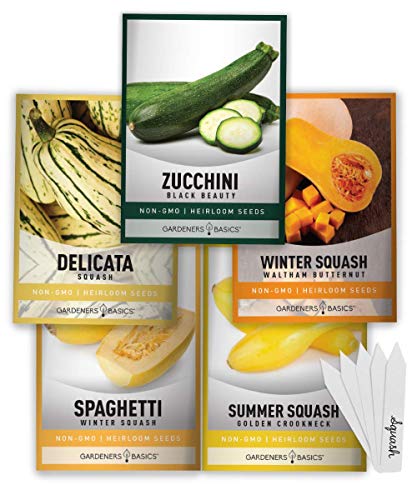
    Squash Seeds for Planting 5 Individual Packets – Zucchini, Delicata, Butternut, Spaghetti and Golden Crookneck
    $9.95

    Gardeners Basics Squash Seeds for Your Non-GMO Heirloom Vegetable Garden

    Check Amazon Price
    We earn a commission if you make a purchase, at no additional cost to you.
    12/16/2025 06:04 am GMT

    FAQs

    What’s the best way to start squash seeds?

    Squash is usually a very easy plant to grow from seed, and they can be started in pots or directly in the garden. They like to have some shade during the hottest part of the day, so they may need to be moved to a partially shaded spot after the first few days. I would recommend starting them out in a pot, and then transplanting into your garden when they are large enough to handle it.

    How long does squash take to germinate?

    Squash seeds start to germinate in about 5 days, and then you need to wait for a few more days for the sprouts to grow. The sprouts will take about two weeks to get to be ready to transplant to your garden. Then you can expect about one or two months before they mature enough to harvest. This is a rough guide, but I’ve grown squash for years with no issues.

    Squash seeds need light to germinate. When they do germinate, they will grow about as fast as any other vegetable or fruit. If you have room in your garden, I would recommend growing squash from seed, since it is easy to transplant them when they are small. Squash can be direct-seeded into the garden, but most people plant them in a seedling bed.

    Why won’t my squash seeds germinate?

    The problem might be that the seeds are old or damaged. They could also be planted in the wrong medium, or the conditions aren’t right. If they’re too old, they’re not going to do much of anything; if they’re damaged, they’ll never sprout.

    Should I soak squash seeds?

    Squash seeds are usually sold in stores or online, but they can be easily grown at home.  However, there is one thing that you should consider before buying seeds: they should be soaked for 8 hours or overnight.

    If you soak seeds for more than 24 hours, then it is impossible to germinate them.

    Can you plant squash seeds right out of the squash?

    Squash seeds can be planted directly in the ground after the vines are harvested, but you’ll need to get the seeds into the ground as soon as possible. The best time to do this is when the soil is warm and moist. If you plant the seeds in the fall, you can let them overwinter in a cold frame or greenhouse. Once spring arrives, cover the seeds with an inch of potting soil and water well.

    What’s a great squash for kids to learn to grow?

    Summer squash is a great vegetable for kids, and can be grown in the summer months when you don’t have access to a garden. These delicious and nutritious vegetables are known for their ability to grow large, long, and strong. They’re also an excellent source of vitamins A and C, as well as fiber.

    What time of the year should I grow squash?

    We grow both summer and winter squashes indoors during the fall months and transplant into the garden when temperatures are in the 50’s. The plants do not tolerate frost and you don’t want to plant anything out until the ground has warmed up.

    Tips To Growing Summer Squash

    Plant Your Squash Seeds Directly In The Garden

    Summer squash varieties are best grown by sowing seeds directly on the ground. This way, the squash sprouts are more robust and do not need to be disturbed when moving to another place. If you live within the Arizona area, take advantage of the monsoon moisture by planting in mid-February through the beginning of April and again from mid-August to the beginning of September. Always check the local planting guides for your date; they will always be after your last frost date. Remember, squash prefers warm soil.

    Most summer squash varieties take between 45 to 60 days from planting to harvest. If starting seeds indoors, do so at least 5 to 6 weeks before the last day of frost in the spring.

    Plant Several Types Of Summer Squash

    To use the summer season, plant several types of summer squash that range from light to dark green, yellow, striped, solid, round, long, or disc-shaped. Although they are similar, they have some differences in flavor texture and uses.  For example, a party pan squash has Stafford texture and cooks better in soups and stews. Zucchini is medium-textured and Lebanese squash has a more tender texture. The 30 summer squash varieties have different textures and different uses.

    Attract As Many Bees As Possible

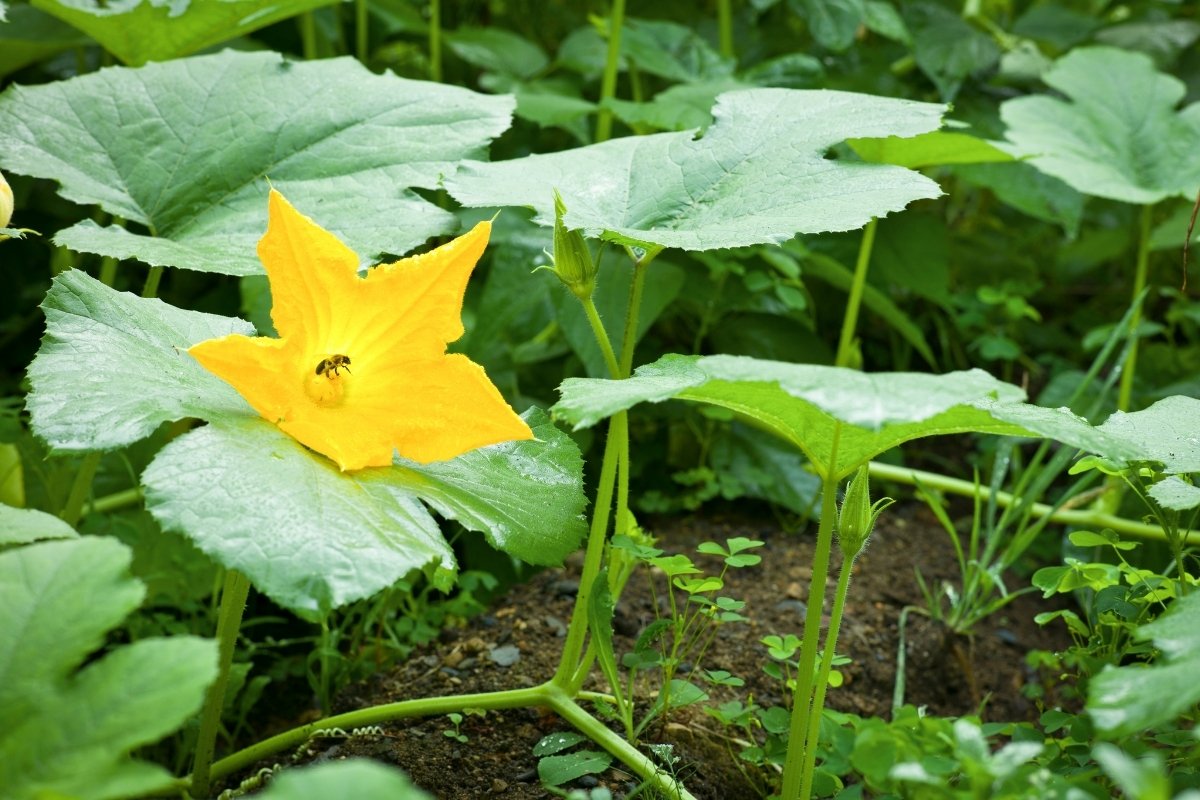
    Planting summer squash varieties are a sure way to attract the beneficial bees as they pollinate and transfer pollen from the male and female plants. The bees are valuable not just for squash but also for other plans that you will grow in your garden.

    Attract As Many Bees As Possible

    Check Your Summer Squash Plants Daily

    Squash plants are susceptible to pests and diseases and especially during the summer. Daily vigilance prevents minor problems from getting out of hand. For example, check for powdery mildew on the leaves. If you notice any is present, pick the leaves and dispose of them away from your compost. Use baking soda solution sulphur spray or milk solution to prevent and treat powdery mildew. You can also spray with neem oil. Check the undersides of leaves for squash bug eggs and remove both the eggs and the adults by hand.

    Harvest Your Summer Squash Early And Often

    Due to the summer heat, the squash family tends to mature fast and quickly. Therefore, it is vital to check them often and harvest them as early as you can to avoid overgrowing.

    Squash grows quickly.  One day, you notice a small one; most probably, it’s ready for harvest the next day. They taste better when tender and young, the more reason you should harvest them early. Harvest squash by cutting through the stem instead of the main vine with a sharp knife when fruits are about 4 to 6 inches long. When they are overgrown, the seeds and skin tend to grow tougher and larger, making them unattractive to eat.

    Picking the fruit often encourages more production. Whatever you cannot consume, store it in the refrigerator for about a week or freeze it for an extended period.

    Find more information about Will A Pumpkin Ripen Off The Vine?

  • Is There A Flower That Looks Like An Artichoke?

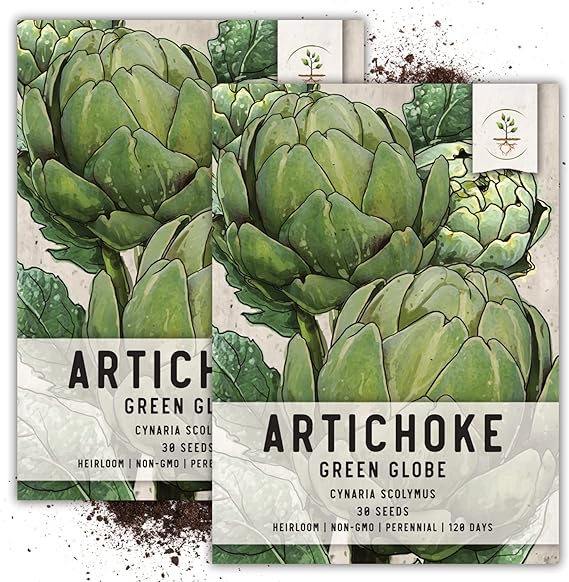
    Is There A Flower That Looks Like An Artichoke?

    Did you know there’s a flower that looks like an artichoke, and it is mainly confused by gardeners who think it is the same plant?

    The cardoon or Cynara cardunculus is a close relative to the artichoke or Cynara scolymus. Both of these plants are members of the Asteraceae family, also called the daisy family. This includes sunflowers, echinaceas, and chrysanthemums.

    The cardoon looks a lot like a cross between an artichoke and a thistle. It produces beautiful thistle-like flowers but does not produce fruit like artichoke. Instead, it has celery-like stalks that are considered a tasty delicacy, either cooked or eaten fresh.

    The cardoon is a beautiful ornamental tropical-looking plant often grown as an architectural plant among the dahlias and verbenas. Its large silver leaves and sculpture-like shape fits nicely as a seasonal accent feature in mixed borders.

    A Flower That Looks Like An Artichoke – The Physical Differences

    Both cardoons and artichokes are widely cultivated in the USDA plant hardiness zones 7 to 9. They are grown both for their ornamental features and edible parts. They both possess violet thistle-like flowers and silver foliage.

    Artichokes produce large flower buds with a more globular shape tighter and less pronounced spines. In contrast, small sharp spines cover the cardoon stalks and could cause severe pain if they prick your skin. It is therefore essential to wear gloves when handling stems or flowers of the cardoons.

    Cardoons have less tidy growth habits than artichokes, although both plants grow to roughly 3 to 5 feet in height.

    A Flower That Looks Like An Artichoke - The Physical Differences

    Cardoon’s History

    Cardoon is native to the Mediterranean region and was treasured in Greek-Roman and Persian cuisines. This plant remained popular and most common in American colonial gardens during the mediaeval and early modern European times.

    Although it lost its popularity in the 19th century, its reputation as original favourite in Spain, France, and Italy continues to grow. These countries produce about 100 metric tons of cardoons annually. The acclaimed iron chef Mario Batali uses the cardoon as one of his favourite vegetables.

    The reputation of this leafy vegetable is beginning to grow in America.

    Cardoon’s Modern Growth And Uses

    The cardoon is a tender perennial plant that looks like a cross between celery and burdock and carries a flavour close to the artichoke.

    Use the leaves and stems steamed or braised in soups or fried. This plant is loaded with vitamins B and C and iron, calcium, phosphorus, magnesium, potassium, and zinc.

    David’s Garden Seeds Cardoon Porto Spineless 8374 (Green) 50 Non-GMO

    The cardoon adapts well to the Redlands dry Mediterranean like climate. It prefers at least 6 hours of sun each day but tolerates partial shade. When growing yet treated the same way you would treat an artichoke.

    Plant your cardoon in rich, well-drained soil and use fertilizer for better yields. Provide adequate water allowing it to dry in between waterings. The plant will grow to about 4 feet tall and 2 feet wide; therefore, it is not suitable to grow it in containers. The cardoon has no serious disease problems except aphids that love to feast on it.

    Edible Parts Of The Flower That Looks Like Artichokes

    Cardoons and artichokes have a similar nutty flavour due to the close relationship even though you eat different parts of their plants.

    For artichokes, consume the large overdeveloped flower buds both the fleshy heart and the petals. Cardoons have soft young leaves, immature flower stalks that you can enjoy raw or cooked.

    Like celery or rhubarb, cardoon stalks taste best when blanched in the garden before harvesting. Wrap the bottom part of the plant to keep the sunlight out. The stems are popularly battered or fried.

    You can boil the main root eat it cold. This plant is also used to flavour liquor and incorporated into cheese production. It is also used for cooking oils as a source of biodiesel fuel and feedstock.

    You can use this plant as a medicinal plant; some say it has mild laxative qualities. It also contains cynarin that has cholesterol-lowering effects, although it cannot exceed the artichokes cynarin component.

    Edible Parts Of The Flower That Looks Like Artichokes

    Cardoon Planting

    Start the seeds indoors in the late winter or early spring. After the danger of frost passes, transplant the seedlings outside. You can also plant from the divided cardoon plants in early spring, leaving plenty of space for growth.

    Cartoons can grow nutritional processes, but they prefer deep rich soils and full sun. Cardoon seeds are available for around 7 years after ripening, starting from September to October.

    Harvesting The Artichoke Looking Flower

    Cardoons are much larger and harder than artichokes. Some people eat the tender flower buds while others at the fleshy, thick leaf stalks that require plentiful irrigation for healthy growth.

    Before harvesting cardoon leaf stalks, you will need to blanch them first. Do this by tying the plant into a bundle, wrapping it with straw, mounding the soil and leaving them for one month.

    Cardoon plants harvested for culinary purposes are treated as annuals and harvested during the winter months in areas where there are mild winters from November to February. They are then sowed afresh in early spring.

    You can eat the tender leaves and stocks fresh in salads and the branched portions used like celery in stews and soups.

    When harvesting, use gardening gloves as the cardoon stem has small, almost invisible spines that can be dangerous. However, there are spineless varieties available for the home gardener.

    Other Flowers That Look Like Artichokes

    Artichoke flowers are flowers that look like artichokes. Specifically, the flowers of an actual artichoke plant (Cynara scolymus). These flowers came up during spring/summer in dry weather conditions and could be considered very pretty flowers. It’s said there were many varieties of these flowers, each with varying flowers and colours.

    List of flowers that look like artichoke flowers:

    • Rabbit Ears (Camelina sativa)
    • Wild Chamomile (Matricaria discoidea)
    • Field Mustard (Brassica rapa)
    • Wild Fennel (Nigella arvensis)
    • Annual Wormwood (Artemisia annua)

    This list isn’t exhaustive and more flowers could look like artichoke flowers.

    Conclusion

    Though the cardoon is a flower that looks like an artichoke, it does not continuously bloom in colder climates.  this is because the growing season is not long enough for blooming to happen.

    Its violet-purple flowers, set in a heavily spined head, are about 2 inches in diameter. Bees and other pollinators love these flowers. Left alone under the right conditions, this plant can succeed and become invasive in mild climates.

    Why not try and grow your cardoons -the flower that looks like artichoke and see how it does.  Please share your cardoon growing journey with us.  It will inspire all of us gardeners in our gardening journey.

    Or have you already started out on some cardoon plants, let us know your experience.

  • Does Adding Sand To Clay Soil Work?

    Does Adding Sand To Clay Soil Work?

    Is it true that adding sand to clay soil makes it better, or is this just a traditional myth passed on from one generation to another?

    There’s no doubt working with heavy soil is a pain. Wrestling with this heavily compacted soil in your garden strains both your body and the plants.

    This soil sticks to your shoes and your working tools and seems to be more challenging to garden with it than any other type of soil. But even with all its disadvantages, clay soil has its benefits.

    If your garden is made up of clay soil, don’t despair; clay has many benefits that it offers. Let’s look at how you can fix your clay soil to make it easier to work with and allow you to reap a good harvest.

    Identifying Clay Soil

    How can you tell that your garden has clay soil? Clay  soil can be easily identified by:

      • It feels rather sticky and dense to the touch

      • Clay is smooth to touch especially when rubbed between the finger and the thumb.

      • It has high moisture and can be rolled into a ball or other shapes without cracking.

      • Heavy clay is shiny when rolled into any shape and then rubbed softly with your hands.

    Identifying Clay Soil

    Adding Sand To Clay Soil

    A notion has been in circulation for many years that says that adding sand to clay soil helps lighten it up. This is an old traditional myth that has no scientific evidence of its efficiency.

    If you add sand to clay soil, it turns your soil into something as hard as wet cement. Any clay soil treated this way becomes tough and eliminates every possibility of both good and harmful living organisms in it.

    What To Do If You Have Clay Soil

    So instead of using sand for clay soil, it is best to reach for an organic matter like leaf mold compost manure or well-aged manure and add it to your clay soil.

    The organic matter never goes wrong in any of the soil types it’s added to.  When added to clay soil:

      • It lightens the soil texture

      • Adds nutrients

      • Discourages compaction

      • Improves drainage and aeration

      • Provides more space

      • Moderates the soil temperature

    All these features are essential for plant growth.

    So to amend your clay soil add as much organic matter as you can; mixing it into your existing clay soil is the aim.  And if you have sand-clay soil because you have started adding some, use the organic matter.   However, before improving the clay, carry out a soil test to incorporate phosphorus, lime, and whatever other nutrients your soil requires.

    Steps To Amend Your Clay Soil

      • Use a spade to loosen the existing soil if it is it’s a small part, or use a tiller to loosen the existing soil over a large area

      • Spread about 2 inches of compost on top of the things soil and mix it with the clay soil

      • Repeat the process two or three times, working in your clay soil until you’re satisfied that it is thoroughly mixed up. Ensure that your clay soil is relatively dry; walking on wet clay soil will damage the structure you’re trying to improve.

      • Spread a few inches of compost over the ground between the plants and the soil and use a narrow spade to turn the compost into the soil

      • Repeat this method at least once, and your soil is ready for planting. Ensure that you work in small patches until your entire garden has freshly turned soil

    When To Do It

    The fall season is a great time to mix your clay with compost because the weather is drier than in the spring. Another reason why it is good to do this in autumn is because of the cooler temperatures that are more pleasant to work under. It becomes an annual part of your soil maintenance to add compost to your clay just before winter.

    In the long run, regular applications of compost manure and other organic matter will continually improve your cell structure and overall health. Therefore, it will become much easier for you to walk in this kind of soil and for your plants to grow in.

    Black Kow Composted Cow Manure 4 lb. Size (1 Bag)

    810sH8R7KlL. AC SY879

    Clay Soil It’s Still A Suitable Type Of Soil

    It is one of the few soils that provides an excellent foundation for healthy plant growth. Its potential lies in its unique properties, making it one of the best soil types for plant growth. The individual particles that make up the clay soil are small compared to other soil types such as sandy loam or silt.

    Clay soil has a more significant water holding capacity due to these tiny particles. They can hold in water and nutrients for your garden and lawn needs very well. If you manage clay soil well it requires less irrigation, less fertilizer yet produces some of the healthiest plants around the world.

    Even if you may feel like you want to differ with the statements above, maybe because you have heavy clay that clods on your boots and tools when working, it is best to test your soil before you make any changes. A soil test takes the guesswork away and provides clear statistics of the composition of your soil. The extension agent can advise what type of crops to grow in the particular soil.

    Your test results could also include ways to improve your clay soil, along with helpful information about its organic matter nutrients and pH. It is advisable to carry out this soil test every 3 to 4 years.

    Ways On How You Can Improve Your Clay Soil

      • To help your soil drain better and reduce trampling’s make raised beds before planting.

      • Consider adopting a new gardening hack of not digging, especially in your raised beds, so that you don’t mix the soil afresh; instead, you use the already well-drained topsoil.

      • Add some extra calcium to your clay soil to help the soil particles separate inside of the clump together.

    Ways On How You Can Improve Your Clay Soil
      • Add lime and gypsum to your clay soil to active ingredients of commercial clay improvers; however, before you add the rest of your garden, test on a small area first to see the changes.

      • Add plenty of bulk organic matter like composted bark old manure to improve the soil and the plant’s nutrients.

      • To reduce summer cracking when the sun is too hot, apply organic mulches around trees and plants to help conserve moisture.


    FAQs

    What is the difference between sandy and clay soil?

    Many soils are a mixture of sand, silt and clay. Sandy soil is a mixture of sand and clay. However, clay soil contains more sand than the other two soils. The most important factor in determining what type of soil you have is to determine if it is an acid or alkaline soil.

    Soil acidity is determined by the amount of lime (calcium) present in the soil. Soils with high amounts of lime are called alkaline. Alkaline soil is good for growing a variety of crops because they like to grow in an alkaline environment. On the other hand, soil that has too much lime is acidic. Acidic soils have low pH levels. Low pH levels make plants grow poorly, and also can cause problems for humans who are sensitive to acidity. Soil pH levels range from 0 to 14. The lower the number, the more acidic the soil is. For example, soil with a pH level of 7 would be considered neutral. A pH level between 5 and 6 would be considered slightly acidic.

    Most soils are classified as acid or alkaline. Clay soils are classified as acid or alkaline, but they are usually classified as alkaline. Clay soil tends to be more alkaline than other soils, because the clay particles are larger and hold onto more alkaline substances. The clay particles also tend to absorb the water in the soil, and prevent the water from reaching the root zone. Therefore, clay soil needs more water than other soils.

    How can I make my clay soil more Sandy?

    Soil compaction is what makes clay soil sandy. If you want to make your soil more sandy, then you need to compact it less. The best way to do this is to use a tiller.

    What are the best soil amendments for clay soil?

    Clay soils are usually high in organic matter and low in nutrients. Clay soils require compost or other organic matter. They should be worked in a way that allows the nutrients to leach into the soil. This can be done by tilling, sub-soiling, or using a rototiller.

    Does lime break up clay soil?

    It depends on how you want to use it. If you are going to add it to your lawn, you can mix it with your soil, but if you are adding it to the soil underneath your lawn, you will want to mix it with your topsoil. It will break up the clay, which is what you need. You will want to let it dry, then mix it into your topsoil.

    Conclusion

    One last word on gardening on your clay soil go for plants that naturally adapt well in clay soil. It is best to work with plants that do well in clay soil than try to force other plants to grow in it. An extension officer should advise you on plants that would do well in your kind of soil especially after soil test results.

    That said, remember adding sand to clay soil is ultimately killing your clay soil and not adding any value to the sandy soil.

  •  A Look At How To Add Potassium To Lawn

     A Look At How To Add Potassium To Lawn

    Let’s learn how to add potassium to the lawn as it’s an essential micronutrient that prevents diseases and promotes healthy growth.

    Your lawn requires a good amount of potassium, depending on the naturally present amount in the soil.  If your soil is naturally low in potassium, you will need to supplement it with are potassium-rich fertilizer.  To determine how much potassium is in your soil, you will need to conduct a soil test.  A soil test showcases what is available, and the nutrient is missing from the soil for more accessible nourishment of your soil.

    What Is Potassium?

    Potassium, sometimes referred to as potash, is an essential nutrient that your soil requires. It helps your grass take other nutrients and use them.  It also helps in building strong cell walls within the grass or plants.

    These cell walls are what keep your plants healthy and resilient in times of stress like disease, drought, or severe temperatures.

    What Is Potassium

    As your grass grows, potassium lawn fertilizer is needed for that growth.  It helps the grass get strong deep roots and causes it to grow faster. A lawn that lacks enough potassium may grow slowly and have shallow roots.  This means the grass won’t be able to withstand environmental stress as best as it should.

    How To Carry Out A Soil Test

    You can carry out the soil test on your own by buying a soil test kit from your gardener’s shop. You can also ask your local extension officer to provide soil containers and information on performing a soil test full stop use a hand trowel to collect soil samples from around your lawn.

    Scoop about 10 to 15 samples from your yard at a depth of 3 inches and combine them. Leave the soil samples to dry and package them in containers you are provided with by the extension officer. After that, male the soil samples to the extension officer for testing and wait for results.  Results take about 3- 5 days.

    How To Tell If Your Lawn Has Enough Potassium

    There are a few signs to look out for when you’re trying to decide if your soil has enough potassium.  Your grass will show signs of stress that include slow growth, yellowing or being highly susceptible to changes in temperature.

    Sometimes just looking at your grass with your physical eyes might not give you the results that you want. So it is advisable to test your soil for potassium deficit before drawing conclusions.

    Luster Leaf 1601 Rapitest Test Kit for Soil pH, Nitrogen, Phosphorous and Potash, 1 Pack

    81lMIyoIrfL. AC SX569

    Choosing A Lawn Potassium Fertilizer

    Lawn fertilizer has a high ratio of potassium. This fertilizer is rated using three numbers representing the percentage of nitrogen, phosphorous, and potassium they contain. The third number in the sequence presents the concentration of potassium in the fertilizer. In most cases, you can use a fertilizer that has all of the three macronutrients. If your lawn has less than 25 parts per million of potassium, use a fertilizer with a high potassium concentration for yards.

    Adding Potassium To Your Lawn

    Once you learn your lawn is lacking enough potassium, it’s time to add some.

    Apply potassium fertilizer biannually each spring and fall. You will have to add this fertilizer based on the results of the soil test. Your extension officer should advise you what type of potassium fertilizer you should purchase and how much you should apply.

    For example, 6 pounds of potassium can go 1,000 sq ft of lawn; this applies to lawns that are between 0 to 25 PPM. Yards that are between 25 to 50 PPM require 4 pounds of fertilizer.  Those with 50 to 75 PPM need to pounds of fertilizer, while those that are between 75 and 100 will need 1 lb per 1,000 square feet.

    Ensure that you spread your potassium fertilizer evenly all over the lawn. Feed your lawn when the weather is excellent and the soil is dry.

    You can also use compost three times a year to increase potassium levels within your soil.

    Choosing The Best Potassium For Your Lawn

    When choosing the best potassium product for your soil you can use either a long-term or short-term solution. We recommend choosing soluble potassium to help stimulate photosynthesis in plants allowing your grass to remain healthy for long. The main advantage of soluble fertilizers is that they dissolve quickly in water, delivering them into the grass relatively quickly.

    Most people opt for fast-acting solutions like potassium sulfate or potassium chloride is there a cheaper option. These two minerals are commonly used for lawn winterizing. Either of these two are a good option but potassium sulphate is a better option as it doesn’t interfere with the good bacteria in the soil.

    Before applying any fertilizer, read the label carefully and gather all the information about it as much as possible.

    Here are some potential solutions that you can use

    • Use Dried Kelp Meal.  It has a lot of nutrients that are valuable to the soil and when used it restores potassium levels in your soil
    • Use Hardwood Ash.   This powder is full of potassium and you can apply straight to the soil or add it to your compost. It is especially significant if you want to increase the pH levels of your soil as well, but before you do so and sure that you monitor your grounds’ acidity.
    • Use Sulphate Of Potash Magnesia.  This is also known as Sul Po Mag. It is pretty affordable and increases the levels of both magnesium and potassium in the soil.
    Choosing The Best Potassium For Your Lawn

    You can also choose the slow-releasing potassium fertilizers as they will feed your grass slowly for a long time.

    FAQs

    How do I raise the potassium in my yard?

    Potassium is an important element that makes up a plant’s cells. A deficiency of potassium can lead to stunted growth, poor flowering and reduced yields. Potassium is also used by plants as an energy source. The most effective way to supply potassium is to use rock phosphate or bonemeal. These fertilizers contain a high concentration of potassium. Use them at recommended rates to avoid excess applications and damage to the soil. Organic Potassium can be added to the compost pile or applied directly to the garden as a foliar feed. If you are using manure, apply it as a top dressing after the first application of fertilizer, or use a high-potassium fertilizer such as blood meal. If you are not using manure, use a low-phosphorus fertilizer such as 10-10-10. When you apply potassium fertilizer, apply only enough to cover the top inch of soil.

    How do you fix potassium deficiency in soil?

    Potassium is the most abundant cation in the earth’s crust. It is present in all living organisms and many minerals and rocks. Potassium is a macronutrient needed for growth and development of plants. Plants also need phosphorus, nitrogen, and sulfur to make up the major part of their biomass. These elements are called micronutrients, which are needed in smaller amounts than macronutrients.

    When potassium is not available in sufficient quantities to meet the plant’s needs, the plant may experience leaf chlorosis and leaf spots. These symptoms usually occur if the potassium is present in the soil at more than 100 times the normal amount. The most common symptoms of potassium deficiency include poor fruit set, leaf spot, and reduced growth. There are several methods to correct potassium deficiency. If you want to increase potassium levels in your soil, you can add potassium-rich compost or manure to your soil. You can also buy potassium-rich compost from a local nursery. If you are using a potassium-rich compost, make sure that you also have a source of nitrogen and phosphorus in your soil. You can also apply a potassium fertilizer to your soil.

    What is a natural potassium fertilizer?

    The most populars is wooden ash.
    Potassium is a naturally occurring mineral that helps maintain the pH balance of the soil. Potassium helps plants absorb water, and it also promotes the growth of roots.

    The use of potassium in the form of a fertilizer is known as potassium (K) fertilization. Potassium can be applied to the soil in two ways: as a foliar spray, or as a root-applied fertilizer.

    A natural potassium fertilizer can be applied at any time of year, but it should not be applied in the fall or spring when the plants are dormant.

    Can you put too much potassium in your lawn?

    The answer to that question is a big “maybe.” But it’s not a good idea to add a lot of potassium to your lawn. It can do harm to your lawn, and the best way to deal with this problem is to keep an eye on your potassium levels in the soil and not apply too much at once. Potassium is one of the macronutrients that lawns need in order to grow properly.

    Final Thoughts

    Lack of potassium is a significant problem for any homeowner who wants to have a nice yard. Besides grass it also affects other plants in your garden; this is why you need to test your soil regularly to ensure it has enough potassium.

    Now that you know how to add potassium to the lawn you shouldn’t have any issue regulating potassium levels in your soil. It is easy to handle the potassium problem, whether in your yard or garden.  Always ensure you test your soil at least twice a year for an updated review.  Happy gardening!

  • A Guide On Planting Carrots In The Fall

    A Guide On Planting Carrots In The Fall

    Is planting carrots in the fall possible? Yes, it is, but it depends on where you grow your carrots or where you live.

    Gardeners in the south have the advantage of sowing carrots in the fall for winter harvest. Northern gardeners always start their carrots planting in midsummer to harvest them in the fall and early winter.

    The beauty of growing carrots is that many planting and harvesting windows keep these nutritious roots on our plates throughout the year.

    Orange carrots are the most common carrots, but you can try planting yellow, white, crimson, or even purple ones. Besides the carrot color, choosing the right size and shape that suits your soil is critical. Carrots’ size and shape vary by type – ball type Danvers and chantey carrots have a blocky shape that handles heavy or shallow soil. In comparison, slender types like imperator and Nantes carrots require deep loose soil.

    Let’s Look At Planting Carrots In The Fall

    With the calendar turning to September most gardeners, begin to think of wrapping up the gardening season. However, there is still time to plant several vegetables that can withstand the cold season for the southern gardeners.

    Northern gardeners are limited to planting radishes, spinach, lettuce, and arugula in September, while southern and Western gardeners have the luxury of growing a wider variety of vegetables.

    Carrots and peas are the two common crops that are planted in warmer areas for fall harvest.   Both crops mature in a few months after planting and tolerate a light frost thriving during the cold. Both crops can be harvested while still immature to yield some tasty vegetables in case the temperatures dip earlier than expected.

    Let's Look At Planting Carrots In The Fall

    If you live in a mild winter climate, you can also try overwintering some carrots or peas planted in the fall for harvest in the following spring.

    Carrot Varieties For Planting In The Fall

    Choose a variety that grows quickly to ensure they are mature before the days grow too short and the temperatures become too cold. Here are some excellent carrot varieties to try:

    • Merida – This type produces a 7-inch long Nantes-type carrot. It can be planted in the fall for spring harvest, as it is slow to get bitter in spring.
    • Primo – This is a Nantes type of carrot that matures within 60 days from seeding. It colors up early, providing a good harvest is baby carrots.
    • Red Cored Chantenay – This type matures in 68 days after seeding, producing 6-inch long blocky carrots. This type is adaptable to many soil types.
    • Little Finger – This type produces 3 to 4-inch long carrots that color up quickly and mature only after 65 days.

    When To Plant Fall Carrots

    The best time to plant carrots in the fall is September in raised beds if you live in the South and West areas. Prepare the bed by removing previous crops and weeds, loosening the soil, and adding at least half an inch thick layer of compost. Work the compost into the ground.

    Once the soil is ready, sprinkle the carrot seed on top of the smooth seedbed and cover it with a quarter-inch layer of soil. Because the weather is still warm in September, shade the planting bed using a shade cloth during the 90-degree days and keep the soil evenly moist. If the soil dries out or the weather becomes too hot, the seeds won’t germinate. Water them well and leave them to grow.

    Once the carrots have germinated and the tops have grown a few inches tall, the carrots are at least 2 inches apart.  3 weeks later, then again to 3 or 4 inches apart. Fertilize after the first thinning with a quick-acting fertilizer like the 5-10-10. Avoid using high-level nitrogen fertilizers or fresh manure.

    You can start harvesting your carrots as soon as they show color. To overwinter them, bulge with a 6 to 8-inch thick layer of hay or straw before the ground freezes. When ready to harvest, pull the straw back to clear the way for harvesting.

    When Should Southern Gardeners Sow Their Carrots?

    After the hot summer has passed and the fall begins, it is time for Southern gardeners to prepare their gardens and plant carrot seeds. Southern gardeners with a warm or mild winter can sow carrot seed in the early fall, that is, September. If they sow in September, they can harvest throughout the winter and into

    Carrots can reliably be sown outside in the fall without protection from the weather patterns. Gardeners across South Carolina, Florida, and Sacramento can grow fall carrots with ease.

    If you’re not sure about the region you are leaving and growing carrots in the fall, you can check your weather forecast for advice for gardening.

    10 Carrot Seeds Variety Pack for Planting Indoor & Outdoors 3600+ Non-GMO

    A10BWqfMBNL. AC SX569

    Carrot Planting Tips For Southern Gardeners

    It is possible to sow your carrot seed throughout the fall and winter if you live in the Deep South. You can aim to harvest carrots in the most excellent parts of the winter as they will have the sweetest flavor at this time.

    Gardeners in the upper South cancel carrots from late August into September. They are planting window is a bit shorter compared to the deep South. However, they have cooler winter temperatures that make their carrots super sweet.

    The best way to store mature carrots is to leave them in the ground and harvest them only when needed. This is great for cold and mild weather.   However, if your climate is seriously warming up and you’re expecting hotter days ahead, it is best to pull your mature carrots and store them in the root cellar or any other cool, dark and dry place in your house. Scorching weather makes your roots beta and causes the plants to bolt.

    Consider putting a shade cloth on the carrot bed until the plants become established; this will help to conserve moisture and cool the soil temperature until the winter weather sets in.

    Find more information about Carrots Planting Spacing – What You Should Know

    When Should Northern Gardeners Grow Their Carrots?

    Northern gardeners should plant carrot seeds in mid-to-late summer to get a fall or winter harvest.

    Over the past many years, the northern governors have perfected extending their current season resulting in a bountiful harvest in early winter.

    When Should Northern Gardeners Grow Their Carrots

    How Many Carrot Seeds Should You Plant?

    There are different methods of sowing carrot seeds that can be used. When planting carrot seeds in the soil in neat rows with carefully made holes, it is okay to put one seed per hole if you trust that your seeds are viable or are fairly new seeds. If your seeds are a bit old and/or you are unsure of their viability, you may put multiple seeds in a single hole to give yourself some guarantee. If multiple seedlings come up, you can always separate them so you have nothing to lose by doing this.

    Another way of sowing carrot seeds is to scatter them lightly across a wide surface area of soil. Just make sure that they have sufficient space to grow well, and if they grow in clumps thin them out and event space them otherwise they will not grow to maturity.

    Both these sowing methods have been used with success over the years. Choose the one that you think will be best for you, or try both methods in two different areas and see which one works better.

    How Deep Should The Soil Be to Grow Carrots?

    Generally, carrots require deep, loose soil to grow well. If the soil is a bit hard, the root will not grow well and may get stunted or twisted which is not ideal.

    The depth in that you should dig the soil for growing carrots depends on the variety of carrots that you are going to plant. Different carrot varieties have different maximum lengths that they will grow to. 

    Dig or till the soil deeply to give your carrots the best growth chance. For varieties that have long roots, you will have to dig the soil to depths of between 12 and 16 inches. Otherwise select varieties with shorter roots that will not need much depth.

    When to Plant Carrots in Zone 11?

    Zone 11 is one of the warmest hardiness zones, and gets no frost throughout the year. Carrot seeds should be planted in the soil at least two to three weeks before the last spring day. The earlier you can plant carrots seedlings in Zone 11 is January, but if you don’t want to take any chances it is best to wait until February.

    When Can I Plant Carrots in Zone 7?

    In the USDA zone 7, plants such as carrots which prefer cooler temperatures are best planted outdoors in early February. This will give them enough time for the last spring frost days to pass before they germinate, otherwise, they would get frost damage and eventually die.

    When Do You Plant Carrots in Pots?

    Because pots are easy to move around and position in any area where you want them, you can plant carrots in pots at any time of the year. This is if you can provide them with the right growing conditions such as the right temperature, sufficient light (whether natural or artificial), have a good irrigation schedule, and provide them enough nutrients for growth.

    Growing plants in pots work best if you have controlled indoor environments such as greenhouses.

    How Much Sun Does a Carrot Plant Need?

    Carrots prefer full sun but can also tolerate partial shade. For the best growth and production of your carrot plants, you need to make sure they get between 8-10 hours of direct sunlight per day.

    Conclusion

    As we have seen, planting carrots in the fall as possible will require some techniques for you to show at the right time and harvest an excellent crop.

    Find more information about A Guide On What Do Carrot Plants Look Like?